


2859 Résultats
Classification:
photographies
photographies
Actions:
Numéro de référence:
PH1987:1064
Description:
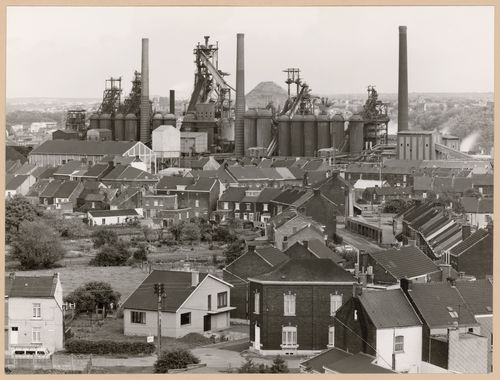
- The group of 86 photographs PH1987:0996 - PH1987:1081 by Bernd and Hilla Becher show 75 views of steel mill blast furnaces and 11 views of mines. There are 45 views of steel mill blast furnaces in Germany, 15 in the United States, and five in each of France, Luxembourg and Belgium. There are five views of mines in Germany, two in Belgium, two in the United States, and one in each of France and Wales. - The group of 86 photographs PH1987:0996 - PH1987:1081 by Bernd and Hilla Becher show five views of steel mill blast furnaces in Belgium including: two views of the Cockerill steel mill in Ougrée (PH1987:1048 and PH1987:1063); two views of the Hainaut-Sambre steel mill in Montignies-sur-Sambre (PH1987:1049 and PH1987:1064); and one view of the Boel Steel Plant in La Louvière (PH1987:1053). - The photographers have not indicated the exhibition layout for the group of eleven photographs PH1987:1060 - PH1987:1070 of views of blast furnace "landscapes" which are numbered from "P 1" through "P 11" (Kicken Pauseback, 1987).
PH1987:1064
Description:
- The group of 86 photographs PH1987:0996 - PH1987:1081 by Bernd and Hilla Becher show 75 views of steel mill blast furnaces and 11 views of mines. There are 45 views of steel mill blast furnaces in Germany, 15 in the United States, and five in each of France, Luxembourg and Belgium. There are five views of mines in Germany, two in Belgium, two in the United States, and one in each of France and Wales. - The group of 86 photographs PH1987:0996 - PH1987:1081 by Bernd and Hilla Becher show five views of steel mill blast furnaces in Belgium including: two views of the Cockerill steel mill in Ougrée (PH1987:1048 and PH1987:1063); two views of the Hainaut-Sambre steel mill in Montignies-sur-Sambre (PH1987:1049 and PH1987:1064); and one view of the Boel Steel Plant in La Louvière (PH1987:1053). - The photographers have not indicated the exhibition layout for the group of eleven photographs PH1987:1060 - PH1987:1070 of views of blast furnace "landscapes" which are numbered from "P 1" through "P 11" (Kicken Pauseback, 1987).
Personnes et institutions:
Sujet:
architecture, ingénierie
architecture, ingénierie
Date:
1972
1972
Titre:
General view of Hainaut-Sambre steel mill, Montignies-sur-Sambre, Charleroi, Belgium
Actions:
PH1987:1064
Description:
- The group of 86 photographs PH1987:0996 - PH1987:1081 by Bernd and Hilla Becher show 75 views of steel mill blast furnaces and 11 views of mines. There are 45 views of steel mill blast furnaces in Germany, 15 in the United States, and five in each of France, Luxembourg and Belgium. There are five views of mines in Germany, two in Belgium, two in the United States, and one in each of France and Wales. - The group of 86 photographs PH1987:0996 - PH1987:1081 by Bernd and Hilla Becher show five views of steel mill blast furnaces in Belgium including: two views of the Cockerill steel mill in Ougrée (PH1987:1048 and PH1987:1063); two views of the Hainaut-Sambre steel mill in Montignies-sur-Sambre (PH1987:1049 and PH1987:1064); and one view of the Boel Steel Plant in La Louvière (PH1987:1053). - The photographers have not indicated the exhibition layout for the group of eleven photographs PH1987:1060 - PH1987:1070 of views of blast furnace "landscapes" which are numbered from "P 1" through "P 11" (Kicken Pauseback, 1987).
General view of Hainaut-Sambre steel mill, Montignies-sur-Sambre, Charleroi, Belgium
Actions:
PH1987:1064
Description:
- The group of 86 photographs PH1987:0996 - PH1987:1081 by Bernd and Hilla Becher show 75 views of steel mill blast furnaces and 11 views of mines. There are 45 views of steel mill blast furnaces in Germany, 15 in the United States, and five in each of France, Luxembourg and Belgium. There are five views of mines in Germany, two in Belgium, two in the United States, and one in each of France and Wales. - The group of 86 photographs PH1987:0996 - PH1987:1081 by Bernd and Hilla Becher show five views of steel mill blast furnaces in Belgium including: two views of the Cockerill steel mill in Ougrée (PH1987:1048 and PH1987:1063); two views of the Hainaut-Sambre steel mill in Montignies-sur-Sambre (PH1987:1049 and PH1987:1064); and one view of the Boel Steel Plant in La Louvière (PH1987:1053). - The photographers have not indicated the exhibition layout for the group of eleven photographs PH1987:1060 - PH1987:1070 of views of blast furnace "landscapes" which are numbered from "P 1" through "P 11" (Kicken Pauseback, 1987).
Classification:
photographies
photographies
Date:
1972
1972
Personnes et institutions:
Sujet:
architecture, ingénierie
architecture, ingénierie
Niveau de description archivistique:
Projet
Projet
Numéro de référence:
AP075.S1.1965.PR01
Description:
This project series documents Cornelia Hahn Oberlander's landscape project for the outdoor playground of the Children's Creative Centre. The Centre was part of the Canadian Federal Pavilion built for the Universal and International Exposition of 1967 (Expo 67), located at the south end of Notre-Dame Island in Montréal. Oberlander worked on this project from 1965-1966. She based her design on children's spontaneous exploration, to encourage self-motivation and creative play. The playground included a rolling terrain, looping paths, a wobble walk made of short logs embeded in the ground, a canal, and "giant wooden building pieces and a rocking boat in water replaced static sculptures". [1] The playground included a sand beach-like area with drifwood and plants to be used as play props. At the centre of the playground was a grass mound with an interior cave and a high wooden platform only reachable by a commando rope. A forty-foot long circulating water channel was situated in the east section of the playground and included two small islands linked by bridges, but was narrow enough to allow children to jump over it. The project series contains sketches, preliminary landscape concept plans, site plans, general landscape plans at different stages of design development, several sections and detail drawings for the playground's equipment and installations, and presentation drawings, including perspective views. The project series also contains architectural, electrical, and structural drawings of the Pavilion, which were provided to Oberlander for reference. Also included are photographs of the playground, research material on playgrounds, and articles and publications on the project, including Oberlander's writings, and publications on Expo '67. Source: [1] Herrington, Susan. Cornelia Hahn Oberlander: Making the Modern Landscape, University of Virginia Press, 2014, 304 pages. p. 106.
AP075.S1.1965.PR01
Description:
This project series documents Cornelia Hahn Oberlander's landscape project for the outdoor playground of the Children's Creative Centre. The Centre was part of the Canadian Federal Pavilion built for the Universal and International Exposition of 1967 (Expo 67), located at the south end of Notre-Dame Island in Montréal. Oberlander worked on this project from 1965-1966. She based her design on children's spontaneous exploration, to encourage self-motivation and creative play. The playground included a rolling terrain, looping paths, a wobble walk made of short logs embeded in the ground, a canal, and "giant wooden building pieces and a rocking boat in water replaced static sculptures". [1] The playground included a sand beach-like area with drifwood and plants to be used as play props. At the centre of the playground was a grass mound with an interior cave and a high wooden platform only reachable by a commando rope. A forty-foot long circulating water channel was situated in the east section of the playground and included two small islands linked by bridges, but was narrow enough to allow children to jump over it. The project series contains sketches, preliminary landscape concept plans, site plans, general landscape plans at different stages of design development, several sections and detail drawings for the playground's equipment and installations, and presentation drawings, including perspective views. The project series also contains architectural, electrical, and structural drawings of the Pavilion, which were provided to Oberlander for reference. Also included are photographs of the playground, research material on playgrounds, and articles and publications on the project, including Oberlander's writings, and publications on Expo '67. Source: [1] Herrington, Susan. Cornelia Hahn Oberlander: Making the Modern Landscape, University of Virginia Press, 2014, 304 pages. p. 106.
Personnes et institutions:
Date:
1965-1971
1965-1971
Titre:
Children's Creative Centre Playground, Canadian Federal Pavilion, Expo '67, Montréal, Québec (1965-1967)
Actions:
AP075.S1.1965.PR01
Description:
This project series documents Cornelia Hahn Oberlander's landscape project for the outdoor playground of the Children's Creative Centre. The Centre was part of the Canadian Federal Pavilion built for the Universal and International Exposition of 1967 (Expo 67), located at the south end of Notre-Dame Island in Montréal. Oberlander worked on this project from 1965-1966. She based her design on children's spontaneous exploration, to encourage self-motivation and creative play. The playground included a rolling terrain, looping paths, a wobble walk made of short logs embeded in the ground, a canal, and "giant wooden building pieces and a rocking boat in water replaced static sculptures". [1] The playground included a sand beach-like area with drifwood and plants to be used as play props. At the centre of the playground was a grass mound with an interior cave and a high wooden platform only reachable by a commando rope. A forty-foot long circulating water channel was situated in the east section of the playground and included two small islands linked by bridges, but was narrow enough to allow children to jump over it. The project series contains sketches, preliminary landscape concept plans, site plans, general landscape plans at different stages of design development, several sections and detail drawings for the playground's equipment and installations, and presentation drawings, including perspective views. The project series also contains architectural, electrical, and structural drawings of the Pavilion, which were provided to Oberlander for reference. Also included are photographs of the playground, research material on playgrounds, and articles and publications on the project, including Oberlander's writings, and publications on Expo '67. Source: [1] Herrington, Susan. Cornelia Hahn Oberlander: Making the Modern Landscape, University of Virginia Press, 2014, 304 pages. p. 106.
Children's Creative Centre Playground, Canadian Federal Pavilion, Expo '67, Montréal, Québec (1965-1967)
Actions:
AP075.S1.1965.PR01
Description:
This project series documents Cornelia Hahn Oberlander's landscape project for the outdoor playground of the Children's Creative Centre. The Centre was part of the Canadian Federal Pavilion built for the Universal and International Exposition of 1967 (Expo 67), located at the south end of Notre-Dame Island in Montréal. Oberlander worked on this project from 1965-1966. She based her design on children's spontaneous exploration, to encourage self-motivation and creative play. The playground included a rolling terrain, looping paths, a wobble walk made of short logs embeded in the ground, a canal, and "giant wooden building pieces and a rocking boat in water replaced static sculptures". [1] The playground included a sand beach-like area with drifwood and plants to be used as play props. At the centre of the playground was a grass mound with an interior cave and a high wooden platform only reachable by a commando rope. A forty-foot long circulating water channel was situated in the east section of the playground and included two small islands linked by bridges, but was narrow enough to allow children to jump over it. The project series contains sketches, preliminary landscape concept plans, site plans, general landscape plans at different stages of design development, several sections and detail drawings for the playground's equipment and installations, and presentation drawings, including perspective views. The project series also contains architectural, electrical, and structural drawings of the Pavilion, which were provided to Oberlander for reference. Also included are photographs of the playground, research material on playgrounds, and articles and publications on the project, including Oberlander's writings, and publications on Expo '67. Source: [1] Herrington, Susan. Cornelia Hahn Oberlander: Making the Modern Landscape, University of Virginia Press, 2014, 304 pages. p. 106.
Niveau de description archivistique:
Project
Project
Date:
1965-1971
1965-1971
Personnes et institutions:
Niveau de description archivistique:
Projet
Projet
Numéro de référence:
AP075.S1.1983.PR01
Description:
Project series documents Cornelia Hahn Oberlander's design for the interior and exterior landscape of National Gallery of Canada in Ottawa. Oberlander worked on this project from 1983-1995 with architects Moshe Safdie and John C. Parkin. Oberlander's overall concept for the landscaping was based on the building organizational pattern of a city. She created "a pathway system that connected the front of the National Gallery to Nepean Point behind the gallery." [1] Oberlander landscape design includes the design of three exterior area and a courtyard. Each space is design in relations to the art displayed in the immediate indoor gallery: the Taiga Garden "flanks the gallery's interior glass-and-concrete collonade that leads to the Canadian and Aboriginal Art galleries." [2]; the Minimalist Courtyard relates to the modern art collection gallery; the zigzag-shaped pathway passes between the National War Museum and the new gallery; and interior courtyard links the restored ninetheeth-century Rideau Chapel relocated inside the National Gallery and provides and church-like atmosphere. The project series contains textual records, including specifications, correspondence, documentation, financial documents, plant lists, press clippings about the project, and Oberlander's concept development notes. The project is also recorded through photographic materials, such as slides and photographs of the construction of the building and the landscape work and the photographs of the completed project. The project series also includes conceptual drawings, design develepment drawings, working drawings and presentation drawings, including landscape plans, planting plans, grading and irrigation plans and building plans used as reference. Source: [1] Herrington, Susan. Cornelia Hahn Oberlander: Making the Modern Landscape, University of Virginia Press, 2014, 304 pages, p. 165. [2] Herrington, Susan. Cornelia Hahn Oberlander: Making the Modern Landscape, University of Virginia Press, 2014, 304 pages, p. 166.
AP075.S1.1983.PR01
Description:
Project series documents Cornelia Hahn Oberlander's design for the interior and exterior landscape of National Gallery of Canada in Ottawa. Oberlander worked on this project from 1983-1995 with architects Moshe Safdie and John C. Parkin. Oberlander's overall concept for the landscaping was based on the building organizational pattern of a city. She created "a pathway system that connected the front of the National Gallery to Nepean Point behind the gallery." [1] Oberlander landscape design includes the design of three exterior area and a courtyard. Each space is design in relations to the art displayed in the immediate indoor gallery: the Taiga Garden "flanks the gallery's interior glass-and-concrete collonade that leads to the Canadian and Aboriginal Art galleries." [2]; the Minimalist Courtyard relates to the modern art collection gallery; the zigzag-shaped pathway passes between the National War Museum and the new gallery; and interior courtyard links the restored ninetheeth-century Rideau Chapel relocated inside the National Gallery and provides and church-like atmosphere. The project series contains textual records, including specifications, correspondence, documentation, financial documents, plant lists, press clippings about the project, and Oberlander's concept development notes. The project is also recorded through photographic materials, such as slides and photographs of the construction of the building and the landscape work and the photographs of the completed project. The project series also includes conceptual drawings, design develepment drawings, working drawings and presentation drawings, including landscape plans, planting plans, grading and irrigation plans and building plans used as reference. Source: [1] Herrington, Susan. Cornelia Hahn Oberlander: Making the Modern Landscape, University of Virginia Press, 2014, 304 pages, p. 165. [2] Herrington, Susan. Cornelia Hahn Oberlander: Making the Modern Landscape, University of Virginia Press, 2014, 304 pages, p. 166.
Personnes et institutions:
Date:
1983-2005
1983-2005
Titre:
National Gallery of Canada, Ottawa, Ontario (1983-1990)
Actions:
AP075.S1.1983.PR01
Description:
Project series documents Cornelia Hahn Oberlander's design for the interior and exterior landscape of National Gallery of Canada in Ottawa. Oberlander worked on this project from 1983-1995 with architects Moshe Safdie and John C. Parkin. Oberlander's overall concept for the landscaping was based on the building organizational pattern of a city. She created "a pathway system that connected the front of the National Gallery to Nepean Point behind the gallery." [1] Oberlander landscape design includes the design of three exterior area and a courtyard. Each space is design in relations to the art displayed in the immediate indoor gallery: the Taiga Garden "flanks the gallery's interior glass-and-concrete collonade that leads to the Canadian and Aboriginal Art galleries." [2]; the Minimalist Courtyard relates to the modern art collection gallery; the zigzag-shaped pathway passes between the National War Museum and the new gallery; and interior courtyard links the restored ninetheeth-century Rideau Chapel relocated inside the National Gallery and provides and church-like atmosphere. The project series contains textual records, including specifications, correspondence, documentation, financial documents, plant lists, press clippings about the project, and Oberlander's concept development notes. The project is also recorded through photographic materials, such as slides and photographs of the construction of the building and the landscape work and the photographs of the completed project. The project series also includes conceptual drawings, design develepment drawings, working drawings and presentation drawings, including landscape plans, planting plans, grading and irrigation plans and building plans used as reference. Source: [1] Herrington, Susan. Cornelia Hahn Oberlander: Making the Modern Landscape, University of Virginia Press, 2014, 304 pages, p. 165. [2] Herrington, Susan. Cornelia Hahn Oberlander: Making the Modern Landscape, University of Virginia Press, 2014, 304 pages, p. 166.
National Gallery of Canada, Ottawa, Ontario (1983-1990)
Actions:
AP075.S1.1983.PR01
Description:
Project series documents Cornelia Hahn Oberlander's design for the interior and exterior landscape of National Gallery of Canada in Ottawa. Oberlander worked on this project from 1983-1995 with architects Moshe Safdie and John C. Parkin. Oberlander's overall concept for the landscaping was based on the building organizational pattern of a city. She created "a pathway system that connected the front of the National Gallery to Nepean Point behind the gallery." [1] Oberlander landscape design includes the design of three exterior area and a courtyard. Each space is design in relations to the art displayed in the immediate indoor gallery: the Taiga Garden "flanks the gallery's interior glass-and-concrete collonade that leads to the Canadian and Aboriginal Art galleries." [2]; the Minimalist Courtyard relates to the modern art collection gallery; the zigzag-shaped pathway passes between the National War Museum and the new gallery; and interior courtyard links the restored ninetheeth-century Rideau Chapel relocated inside the National Gallery and provides and church-like atmosphere. The project series contains textual records, including specifications, correspondence, documentation, financial documents, plant lists, press clippings about the project, and Oberlander's concept development notes. The project is also recorded through photographic materials, such as slides and photographs of the construction of the building and the landscape work and the photographs of the completed project. The project series also includes conceptual drawings, design develepment drawings, working drawings and presentation drawings, including landscape plans, planting plans, grading and irrigation plans and building plans used as reference. Source: [1] Herrington, Susan. Cornelia Hahn Oberlander: Making the Modern Landscape, University of Virginia Press, 2014, 304 pages, p. 165. [2] Herrington, Susan. Cornelia Hahn Oberlander: Making the Modern Landscape, University of Virginia Press, 2014, 304 pages, p. 166.
Niveau de description archivistique:
Project
Project
Date:
1983-2005
1983-2005
Personnes et institutions:
Classification:
dessins, photographies
Quantité:
131 photograph(s) photomechanical print
dessins, photographies
Quantité:
131 photograph(s) photomechanical print
Titre:
V.S. Balikhin Archive
V.S. Balikhin Archive
Actions:
Numéro de référence:
PH1998:0020:001-131
Description:
- This archive which was collected by the Soviet architect, V.S. Balikhin (1893-1953), includes 129 views of cities, towns, and/or projects designed by various architects from 1923 through 1935, one photograph of a perspective drawing (PH11998:0020:112) and one magazine article by Balikhin (PH1998:0020:131). The photographer(s) of this archive have not been determined. -- There are 63 views of subjects in Moscow (PH1998:0020:001-028; PH1998:0020:033-067), mostly of housing, and these include: 20 views of the Dubrovka complex; 16 views of the Usachevka complex; 6 views of the Shabolovka complex; 3 views of the Dangauerovka complex; 2 views of the Serpukhovskii complex; 2 views of the Sharikopodshipnik [Bearing] plant complex; 1 view of the AMO plant complex; 2 views of the house-commune of the students of the Textile Institute; 2 views of the housing complex at 45/51 Bol'shaia Pirogovskaia Street; and 1 view of a student dormitory complex on Donskoi Val. Other subjects in Moscow include 3 views of the street decorations for the celebration of the 17th anniversary of the October Revolution, 2 views of Sverdlova Square, and one view of the Foto Insnab building, a market, and a park. -- There are 4 views of the village of Kozhukhovo near Moscow (PH1998:0020:029-032) including views of houses, barracks, a summer stage, and tents. -- The 18 views of Sverdlovsk (now Ekaterinburg, Russia) (PH1998:0020:113-130) include 7 views of 1905 Goda Square showing the various buildings around the square; 3 views of the Second House of Soviets; 2 views of the monument to Iakov Sverdlov, one with the "Chekist City" housing complex in the background (now Hotel Iset'); 2 views of the water sports station Dinamo; and one view of the Verkhne-Isetskii metalworking plant, the District Trade Union Soviet garden, the Higher Communist Agricultural School in Narodnoi Mesti Square, and a collage of views of a city square in 1914 and 1933. -- The 17 views of Magnitogorsk (PH1998:0020:096-112) include the earth-made shack constructed by the first inhabitants of the area; a city view; 14 views of the First Block showing mostly housing; and one photograph of a perspective drawing for the Second Block. -- The 10 views of Novosibirsk (PH1998:0020:086-095) include housing, government office buildings, a multipurpose building, a Palace of Labor, and the Sibir' Hotel. -- There are 14 photographs of subjects in cities and towns in Kemerovskaia oblast', a subdivision of southern Russia in Asia, and these include: 6 views of Prokopyevsk (PH1998:0020:072-077) showing clubs or palaces of culture and housing; 4 views of Kemerovo (PH1998:0020:068-071) showing the Palace of Labor, housing, and general views of the city; 3 views of Leninsk-Kuznetskiy (PH1998:0020:078-080) showing a house, clubs, and a playground; 1 view of Kuznetsk (now Novokuznetsk) (PH1998:0020:081) showing housing; and 3 views of Stalinsk (now Novokuznetsk) (PH1998:0020:082-085) showing housing and an hotel.
PH1998:0020:001-131
Description:
- This archive which was collected by the Soviet architect, V.S. Balikhin (1893-1953), includes 129 views of cities, towns, and/or projects designed by various architects from 1923 through 1935, one photograph of a perspective drawing (PH11998:0020:112) and one magazine article by Balikhin (PH1998:0020:131). The photographer(s) of this archive have not been determined. -- There are 63 views of subjects in Moscow (PH1998:0020:001-028; PH1998:0020:033-067), mostly of housing, and these include: 20 views of the Dubrovka complex; 16 views of the Usachevka complex; 6 views of the Shabolovka complex; 3 views of the Dangauerovka complex; 2 views of the Serpukhovskii complex; 2 views of the Sharikopodshipnik [Bearing] plant complex; 1 view of the AMO plant complex; 2 views of the house-commune of the students of the Textile Institute; 2 views of the housing complex at 45/51 Bol'shaia Pirogovskaia Street; and 1 view of a student dormitory complex on Donskoi Val. Other subjects in Moscow include 3 views of the street decorations for the celebration of the 17th anniversary of the October Revolution, 2 views of Sverdlova Square, and one view of the Foto Insnab building, a market, and a park. -- There are 4 views of the village of Kozhukhovo near Moscow (PH1998:0020:029-032) including views of houses, barracks, a summer stage, and tents. -- The 18 views of Sverdlovsk (now Ekaterinburg, Russia) (PH1998:0020:113-130) include 7 views of 1905 Goda Square showing the various buildings around the square; 3 views of the Second House of Soviets; 2 views of the monument to Iakov Sverdlov, one with the "Chekist City" housing complex in the background (now Hotel Iset'); 2 views of the water sports station Dinamo; and one view of the Verkhne-Isetskii metalworking plant, the District Trade Union Soviet garden, the Higher Communist Agricultural School in Narodnoi Mesti Square, and a collage of views of a city square in 1914 and 1933. -- The 17 views of Magnitogorsk (PH1998:0020:096-112) include the earth-made shack constructed by the first inhabitants of the area; a city view; 14 views of the First Block showing mostly housing; and one photograph of a perspective drawing for the Second Block. -- The 10 views of Novosibirsk (PH1998:0020:086-095) include housing, government office buildings, a multipurpose building, a Palace of Labor, and the Sibir' Hotel. -- There are 14 photographs of subjects in cities and towns in Kemerovskaia oblast', a subdivision of southern Russia in Asia, and these include: 6 views of Prokopyevsk (PH1998:0020:072-077) showing clubs or palaces of culture and housing; 4 views of Kemerovo (PH1998:0020:068-071) showing the Palace of Labor, housing, and general views of the city; 3 views of Leninsk-Kuznetskiy (PH1998:0020:078-080) showing a house, clubs, and a playground; 1 view of Kuznetsk (now Novokuznetsk) (PH1998:0020:081) showing housing; and 3 views of Stalinsk (now Novokuznetsk) (PH1998:0020:082-085) showing housing and an hotel.
Personnes et institutions:
Sujet:
architecture, portrait, sculpture
architecture, portrait, sculpture
Date:
published before 15 September 1936
published before 15 September 1936
Titre:
V.S. Balikhin Archive
Actions:
PH1998:0020:001-131
Description:
- This archive which was collected by the Soviet architect, V.S. Balikhin (1893-1953), includes 129 views of cities, towns, and/or projects designed by various architects from 1923 through 1935, one photograph of a perspective drawing (PH11998:0020:112) and one magazine article by Balikhin (PH1998:0020:131). The photographer(s) of this archive have not been determined. -- There are 63 views of subjects in Moscow (PH1998:0020:001-028; PH1998:0020:033-067), mostly of housing, and these include: 20 views of the Dubrovka complex; 16 views of the Usachevka complex; 6 views of the Shabolovka complex; 3 views of the Dangauerovka complex; 2 views of the Serpukhovskii complex; 2 views of the Sharikopodshipnik [Bearing] plant complex; 1 view of the AMO plant complex; 2 views of the house-commune of the students of the Textile Institute; 2 views of the housing complex at 45/51 Bol'shaia Pirogovskaia Street; and 1 view of a student dormitory complex on Donskoi Val. Other subjects in Moscow include 3 views of the street decorations for the celebration of the 17th anniversary of the October Revolution, 2 views of Sverdlova Square, and one view of the Foto Insnab building, a market, and a park. -- There are 4 views of the village of Kozhukhovo near Moscow (PH1998:0020:029-032) including views of houses, barracks, a summer stage, and tents. -- The 18 views of Sverdlovsk (now Ekaterinburg, Russia) (PH1998:0020:113-130) include 7 views of 1905 Goda Square showing the various buildings around the square; 3 views of the Second House of Soviets; 2 views of the monument to Iakov Sverdlov, one with the "Chekist City" housing complex in the background (now Hotel Iset'); 2 views of the water sports station Dinamo; and one view of the Verkhne-Isetskii metalworking plant, the District Trade Union Soviet garden, the Higher Communist Agricultural School in Narodnoi Mesti Square, and a collage of views of a city square in 1914 and 1933. -- The 17 views of Magnitogorsk (PH1998:0020:096-112) include the earth-made shack constructed by the first inhabitants of the area; a city view; 14 views of the First Block showing mostly housing; and one photograph of a perspective drawing for the Second Block. -- The 10 views of Novosibirsk (PH1998:0020:086-095) include housing, government office buildings, a multipurpose building, a Palace of Labor, and the Sibir' Hotel. -- There are 14 photographs of subjects in cities and towns in Kemerovskaia oblast', a subdivision of southern Russia in Asia, and these include: 6 views of Prokopyevsk (PH1998:0020:072-077) showing clubs or palaces of culture and housing; 4 views of Kemerovo (PH1998:0020:068-071) showing the Palace of Labor, housing, and general views of the city; 3 views of Leninsk-Kuznetskiy (PH1998:0020:078-080) showing a house, clubs, and a playground; 1 view of Kuznetsk (now Novokuznetsk) (PH1998:0020:081) showing housing; and 3 views of Stalinsk (now Novokuznetsk) (PH1998:0020:082-085) showing housing and an hotel.
V.S. Balikhin Archive
Actions:
PH1998:0020:001-131
Description:
- This archive which was collected by the Soviet architect, V.S. Balikhin (1893-1953), includes 129 views of cities, towns, and/or projects designed by various architects from 1923 through 1935, one photograph of a perspective drawing (PH11998:0020:112) and one magazine article by Balikhin (PH1998:0020:131). The photographer(s) of this archive have not been determined. -- There are 63 views of subjects in Moscow (PH1998:0020:001-028; PH1998:0020:033-067), mostly of housing, and these include: 20 views of the Dubrovka complex; 16 views of the Usachevka complex; 6 views of the Shabolovka complex; 3 views of the Dangauerovka complex; 2 views of the Serpukhovskii complex; 2 views of the Sharikopodshipnik [Bearing] plant complex; 1 view of the AMO plant complex; 2 views of the house-commune of the students of the Textile Institute; 2 views of the housing complex at 45/51 Bol'shaia Pirogovskaia Street; and 1 view of a student dormitory complex on Donskoi Val. Other subjects in Moscow include 3 views of the street decorations for the celebration of the 17th anniversary of the October Revolution, 2 views of Sverdlova Square, and one view of the Foto Insnab building, a market, and a park. -- There are 4 views of the village of Kozhukhovo near Moscow (PH1998:0020:029-032) including views of houses, barracks, a summer stage, and tents. -- The 18 views of Sverdlovsk (now Ekaterinburg, Russia) (PH1998:0020:113-130) include 7 views of 1905 Goda Square showing the various buildings around the square; 3 views of the Second House of Soviets; 2 views of the monument to Iakov Sverdlov, one with the "Chekist City" housing complex in the background (now Hotel Iset'); 2 views of the water sports station Dinamo; and one view of the Verkhne-Isetskii metalworking plant, the District Trade Union Soviet garden, the Higher Communist Agricultural School in Narodnoi Mesti Square, and a collage of views of a city square in 1914 and 1933. -- The 17 views of Magnitogorsk (PH1998:0020:096-112) include the earth-made shack constructed by the first inhabitants of the area; a city view; 14 views of the First Block showing mostly housing; and one photograph of a perspective drawing for the Second Block. -- The 10 views of Novosibirsk (PH1998:0020:086-095) include housing, government office buildings, a multipurpose building, a Palace of Labor, and the Sibir' Hotel. -- There are 14 photographs of subjects in cities and towns in Kemerovskaia oblast', a subdivision of southern Russia in Asia, and these include: 6 views of Prokopyevsk (PH1998:0020:072-077) showing clubs or palaces of culture and housing; 4 views of Kemerovo (PH1998:0020:068-071) showing the Palace of Labor, housing, and general views of the city; 3 views of Leninsk-Kuznetskiy (PH1998:0020:078-080) showing a house, clubs, and a playground; 1 view of Kuznetsk (now Novokuznetsk) (PH1998:0020:081) showing housing; and 3 views of Stalinsk (now Novokuznetsk) (PH1998:0020:082-085) showing housing and an hotel.
Classification:
dessins, photographies
Quantité:
131 photograph(s) photomechanical print
dessins, photographies
Quantité:
131 photograph(s) photomechanical print
Date:
published before 15 September 1936
published before 15 September 1936
Personnes et institutions:
Sujet:
architecture, portrait, sculpture
architecture, portrait, sculpture
Titre:
Fried. Krupp Essen A/R
Fried. Krupp Essen A/R
Actions:
Numéro de référence:
PH1983:0485
Description:
Portfolio of photographs showing cast-steel muzzle-loading guns and artillery, fortress and siege mortars, coast and landing guns, workshops, machinery and company products, manufactured by the Krupp armament plant in Essen/Ruhr river valley (in Prussia). This portfolio shows different models of guns and canons, locomotive wheels, exterior views of the factory with large chimneys and line-ups of workers, a panorama showing the factory complex and dwellings built for the workers, mines, inside views of the factory with machinery and two maps : one of the layout of the grounds that is colour-coded to indicate growth between 1861 and 1871 - Rhenish Prussia (Rhein provinz), and one of the world distribution of Krupp representatives - District of Essen, Europe, Germany and the World. This portfolio was compiled and probably sent, like many others by the company, to Krupp Cast Steel Works agents throughout Europe or used as a presentation catalogue for international expositions.
PH1983:0485
Description:
Portfolio of photographs showing cast-steel muzzle-loading guns and artillery, fortress and siege mortars, coast and landing guns, workshops, machinery and company products, manufactured by the Krupp armament plant in Essen/Ruhr river valley (in Prussia). This portfolio shows different models of guns and canons, locomotive wheels, exterior views of the factory with large chimneys and line-ups of workers, a panorama showing the factory complex and dwellings built for the workers, mines, inside views of the factory with machinery and two maps : one of the layout of the grounds that is colour-coded to indicate growth between 1861 and 1871 - Rhenish Prussia (Rhein provinz), and one of the world distribution of Krupp representatives - District of Essen, Europe, Germany and the World. This portfolio was compiled and probably sent, like many others by the company, to Krupp Cast Steel Works agents throughout Europe or used as a presentation catalogue for international expositions.
Personnes et institutions:
Sujet:
ingénierie
ingénierie
Date:
between ca.1861 and ca. 1872
between ca.1861 and ca. 1872
Titre:
Fried. Krupp Essen A/R
Actions:
PH1983:0485
Description:
Portfolio of photographs showing cast-steel muzzle-loading guns and artillery, fortress and siege mortars, coast and landing guns, workshops, machinery and company products, manufactured by the Krupp armament plant in Essen/Ruhr river valley (in Prussia). This portfolio shows different models of guns and canons, locomotive wheels, exterior views of the factory with large chimneys and line-ups of workers, a panorama showing the factory complex and dwellings built for the workers, mines, inside views of the factory with machinery and two maps : one of the layout of the grounds that is colour-coded to indicate growth between 1861 and 1871 - Rhenish Prussia (Rhein provinz), and one of the world distribution of Krupp representatives - District of Essen, Europe, Germany and the World. This portfolio was compiled and probably sent, like many others by the company, to Krupp Cast Steel Works agents throughout Europe or used as a presentation catalogue for international expositions.
Fried. Krupp Essen A/R
Actions:
PH1983:0485
Description:
Portfolio of photographs showing cast-steel muzzle-loading guns and artillery, fortress and siege mortars, coast and landing guns, workshops, machinery and company products, manufactured by the Krupp armament plant in Essen/Ruhr river valley (in Prussia). This portfolio shows different models of guns and canons, locomotive wheels, exterior views of the factory with large chimneys and line-ups of workers, a panorama showing the factory complex and dwellings built for the workers, mines, inside views of the factory with machinery and two maps : one of the layout of the grounds that is colour-coded to indicate growth between 1861 and 1871 - Rhenish Prussia (Rhein provinz), and one of the world distribution of Krupp representatives - District of Essen, Europe, Germany and the World. This portfolio was compiled and probably sent, like many others by the company, to Krupp Cast Steel Works agents throughout Europe or used as a presentation catalogue for international expositions.
Date:
between ca.1861 and ca. 1872
between ca.1861 and ca. 1872
Personnes et institutions:
Sujet:
ingénierie
ingénierie
Niveau de description archivistique:
Projet
Projet
Numéro de référence:
AP018.S1.1971.PR07
Description:
This project series documents the design and construction of the Health Sciences Complex at Memorial University (MUN) in St. John’s, Newfoundland from 1971-1976. The office identified the project number as 7111. The Health Sciences Complex was built to replace the St. John’s General Hospital. Constructed on MUN’s north campus, the hospital would integrate the university’s medical school to create a teaching hospital. The design included classrooms, labs, and a library for the students. The St. John’s General Hospital and MUN medical school would retain their independence and authority while sharing the space. The proposed design called for a banal building that was always unfinished so that future expansions and changes could be easily accommodated. The project also included the construction of the Utilities Annex building, a separate building to house heating and cooling plants, generators and electrical distribution. Having these facilities in a separate building would allow them to expand the hospital without crucial systems getting in the way. The main expansion envisioned in the scope of this project was the Life Sciences Complex, a university building and hospital connected to the Health Sciences Complex. In the project materials, the project is often referred to as The Health and Life Sciences Complex, although only the Health Sciences Complex was constructed under this project number. The original budget for the project was $60 million, a figure which included the Life Sciences Complex. The project is recorded through drawings, photographic materials, boards of material samples, a painting and textual records dating from 1971-1978. The textual records include correspondence with the client and consultants, meeting minutes and reports, consultancy records, a systems report, food facilities planning records, outline specifications, product catalogues for hospital equipment, research, project proposals, financial documentation and schedules. All of the drawings issued for tender are arranged within the textual materials. There are also two presentation boards, one of a project painting and the other of a photograph of the site model. Box AP018.S1.1971.PR07.049 contains an index to the textual records, which was created by the office.
AP018.S1.1971.PR07
Description:
This project series documents the design and construction of the Health Sciences Complex at Memorial University (MUN) in St. John’s, Newfoundland from 1971-1976. The office identified the project number as 7111. The Health Sciences Complex was built to replace the St. John’s General Hospital. Constructed on MUN’s north campus, the hospital would integrate the university’s medical school to create a teaching hospital. The design included classrooms, labs, and a library for the students. The St. John’s General Hospital and MUN medical school would retain their independence and authority while sharing the space. The proposed design called for a banal building that was always unfinished so that future expansions and changes could be easily accommodated. The project also included the construction of the Utilities Annex building, a separate building to house heating and cooling plants, generators and electrical distribution. Having these facilities in a separate building would allow them to expand the hospital without crucial systems getting in the way. The main expansion envisioned in the scope of this project was the Life Sciences Complex, a university building and hospital connected to the Health Sciences Complex. In the project materials, the project is often referred to as The Health and Life Sciences Complex, although only the Health Sciences Complex was constructed under this project number. The original budget for the project was $60 million, a figure which included the Life Sciences Complex. The project is recorded through drawings, photographic materials, boards of material samples, a painting and textual records dating from 1971-1978. The textual records include correspondence with the client and consultants, meeting minutes and reports, consultancy records, a systems report, food facilities planning records, outline specifications, product catalogues for hospital equipment, research, project proposals, financial documentation and schedules. All of the drawings issued for tender are arranged within the textual materials. There are also two presentation boards, one of a project painting and the other of a photograph of the site model. Box AP018.S1.1971.PR07.049 contains an index to the textual records, which was created by the office.
Personnes et institutions:
Date:
1970-1978
1970-1978
Titre:
Memorial University of Newfoundland, Health Sciences Complex, St. Johns, Newfoundland (1971-1976)
Actions:
AP018.S1.1971.PR07
Description:
This project series documents the design and construction of the Health Sciences Complex at Memorial University (MUN) in St. John’s, Newfoundland from 1971-1976. The office identified the project number as 7111. The Health Sciences Complex was built to replace the St. John’s General Hospital. Constructed on MUN’s north campus, the hospital would integrate the university’s medical school to create a teaching hospital. The design included classrooms, labs, and a library for the students. The St. John’s General Hospital and MUN medical school would retain their independence and authority while sharing the space. The proposed design called for a banal building that was always unfinished so that future expansions and changes could be easily accommodated. The project also included the construction of the Utilities Annex building, a separate building to house heating and cooling plants, generators and electrical distribution. Having these facilities in a separate building would allow them to expand the hospital without crucial systems getting in the way. The main expansion envisioned in the scope of this project was the Life Sciences Complex, a university building and hospital connected to the Health Sciences Complex. In the project materials, the project is often referred to as The Health and Life Sciences Complex, although only the Health Sciences Complex was constructed under this project number. The original budget for the project was $60 million, a figure which included the Life Sciences Complex. The project is recorded through drawings, photographic materials, boards of material samples, a painting and textual records dating from 1971-1978. The textual records include correspondence with the client and consultants, meeting minutes and reports, consultancy records, a systems report, food facilities planning records, outline specifications, product catalogues for hospital equipment, research, project proposals, financial documentation and schedules. All of the drawings issued for tender are arranged within the textual materials. There are also two presentation boards, one of a project painting and the other of a photograph of the site model. Box AP018.S1.1971.PR07.049 contains an index to the textual records, which was created by the office.
Memorial University of Newfoundland, Health Sciences Complex, St. Johns, Newfoundland (1971-1976)
Actions:
AP018.S1.1971.PR07
Description:
This project series documents the design and construction of the Health Sciences Complex at Memorial University (MUN) in St. John’s, Newfoundland from 1971-1976. The office identified the project number as 7111. The Health Sciences Complex was built to replace the St. John’s General Hospital. Constructed on MUN’s north campus, the hospital would integrate the university’s medical school to create a teaching hospital. The design included classrooms, labs, and a library for the students. The St. John’s General Hospital and MUN medical school would retain their independence and authority while sharing the space. The proposed design called for a banal building that was always unfinished so that future expansions and changes could be easily accommodated. The project also included the construction of the Utilities Annex building, a separate building to house heating and cooling plants, generators and electrical distribution. Having these facilities in a separate building would allow them to expand the hospital without crucial systems getting in the way. The main expansion envisioned in the scope of this project was the Life Sciences Complex, a university building and hospital connected to the Health Sciences Complex. In the project materials, the project is often referred to as The Health and Life Sciences Complex, although only the Health Sciences Complex was constructed under this project number. The original budget for the project was $60 million, a figure which included the Life Sciences Complex. The project is recorded through drawings, photographic materials, boards of material samples, a painting and textual records dating from 1971-1978. The textual records include correspondence with the client and consultants, meeting minutes and reports, consultancy records, a systems report, food facilities planning records, outline specifications, product catalogues for hospital equipment, research, project proposals, financial documentation and schedules. All of the drawings issued for tender are arranged within the textual materials. There are also two presentation boards, one of a project painting and the other of a photograph of the site model. Box AP018.S1.1971.PR07.049 contains an index to the textual records, which was created by the office.
Niveau de description archivistique:
Project
Project
Date:
1970-1978
1970-1978
Personnes et institutions:
Classification:
documents textuels, graphique
Quantité:
26 textual record(s)
documents textuels, graphique
Quantité:
26 textual record(s)
Actions:
Numéro de référence:
DR1987:0865:001-023
Description:
- This group of correspondence, clippings and other documents was compiled by the architect, Lloyd Wright, for his own record while he was pursuing the commission for Boeing Airport, Burbank, Los Angeles County, California. He was not successful in obtaining the commission. The correspondence includes letters to and from Lloyd Wright, drafts for and carbon copies of these same letters, and telegrams to Lloyd Wright. Other documents include three newspaper clippings, an estimate and notes. Of the clippings, one reports on the beginning of work on Boeing Airport, the second announces a new meteorological station for pilots in the San Fernando Valley, and includes details of other aviation industry investments in the area, and the third is another account of the initiation of Boeing Airport. The latter clipping is folded up with a sheet noting the address of Lloyd St. John. Although the estimate is not identified by project name, it was probably prepared for Lloyd Wright's Boeing Airport proposal, which included an airport, manufacturing plant and other amenities, all mentioned in the estimate.
DR1987:0865:001-023
Description:
- This group of correspondence, clippings and other documents was compiled by the architect, Lloyd Wright, for his own record while he was pursuing the commission for Boeing Airport, Burbank, Los Angeles County, California. He was not successful in obtaining the commission. The correspondence includes letters to and from Lloyd Wright, drafts for and carbon copies of these same letters, and telegrams to Lloyd Wright. Other documents include three newspaper clippings, an estimate and notes. Of the clippings, one reports on the beginning of work on Boeing Airport, the second announces a new meteorological station for pilots in the San Fernando Valley, and includes details of other aviation industry investments in the area, and the third is another account of the initiation of Boeing Airport. The latter clipping is folded up with a sheet noting the address of Lloyd St. John. Although the estimate is not identified by project name, it was probably prepared for Lloyd Wright's Boeing Airport proposal, which included an airport, manufacturing plant and other amenities, all mentioned in the estimate.
Personnes et institutions:
Sujet:
architecture
architecture
Date:
printed 1929 ?
printed 1929 ?
Titre:
Boeing Airport, Burbank, California: Correspondence and other documents relating to Lloyd Wright's design
Actions:
DR1987:0865:001-023
Description:
- This group of correspondence, clippings and other documents was compiled by the architect, Lloyd Wright, for his own record while he was pursuing the commission for Boeing Airport, Burbank, Los Angeles County, California. He was not successful in obtaining the commission. The correspondence includes letters to and from Lloyd Wright, drafts for and carbon copies of these same letters, and telegrams to Lloyd Wright. Other documents include three newspaper clippings, an estimate and notes. Of the clippings, one reports on the beginning of work on Boeing Airport, the second announces a new meteorological station for pilots in the San Fernando Valley, and includes details of other aviation industry investments in the area, and the third is another account of the initiation of Boeing Airport. The latter clipping is folded up with a sheet noting the address of Lloyd St. John. Although the estimate is not identified by project name, it was probably prepared for Lloyd Wright's Boeing Airport proposal, which included an airport, manufacturing plant and other amenities, all mentioned in the estimate.
Boeing Airport, Burbank, California: Correspondence and other documents relating to Lloyd Wright's design
Actions:
DR1987:0865:001-023
Description:
- This group of correspondence, clippings and other documents was compiled by the architect, Lloyd Wright, for his own record while he was pursuing the commission for Boeing Airport, Burbank, Los Angeles County, California. He was not successful in obtaining the commission. The correspondence includes letters to and from Lloyd Wright, drafts for and carbon copies of these same letters, and telegrams to Lloyd Wright. Other documents include three newspaper clippings, an estimate and notes. Of the clippings, one reports on the beginning of work on Boeing Airport, the second announces a new meteorological station for pilots in the San Fernando Valley, and includes details of other aviation industry investments in the area, and the third is another account of the initiation of Boeing Airport. The latter clipping is folded up with a sheet noting the address of Lloyd St. John. Although the estimate is not identified by project name, it was probably prepared for Lloyd Wright's Boeing Airport proposal, which included an airport, manufacturing plant and other amenities, all mentioned in the estimate.
Classification:
documents textuels, graphique
Quantité:
26 textual record(s)
documents textuels, graphique
Quantité:
26 textual record(s)
Date:
printed 1929 ?
printed 1929 ?
Personnes et institutions:
Sujet:
architecture
architecture
Classification:
archives
Niveau de description archivistique:
Fonds
archives
Niveau de description archivistique:
Fonds
Numéro de référence:
AP176
Résumé:
Karl Chu X PHYLUM project records, 1998-2014 (predominant 1998-2002), documents the development and design process of Chu’s project X PHYLUM. The archive consists exclusively of original born-digital material.
AP176
Résumé:
Karl Chu X PHYLUM project records, 1998-2014 (predominant 1998-2002), documents the development and design process of Chu’s project X PHYLUM. The archive consists exclusively of original born-digital material.
Personnes et institutions:
Date:
1998-2014
1998-2014
Titre:
Documents d’archives de Karl Chu pour le projet X Phylum
Actions:
AP176
Résumé:
Karl Chu X PHYLUM project records, 1998-2014 (predominant 1998-2002), documents the development and design process of Chu’s project X PHYLUM. The archive consists exclusively of original born-digital material.
Documents d’archives de Karl Chu pour le projet X Phylum
Actions:
AP176
Résumé:
Karl Chu X PHYLUM project records, 1998-2014 (predominant 1998-2002), documents the development and design process of Chu’s project X PHYLUM. The archive consists exclusively of original born-digital material.
Classification:
archives
Niveau de description archivistique:
Fonds
archives
Niveau de description archivistique:
Fonds
Date:
1998-2014
1998-2014
Personnes et institutions:
Classification:
photographies
photographies
Actions:
Numéro de référence:
PH1987:1048
Description:
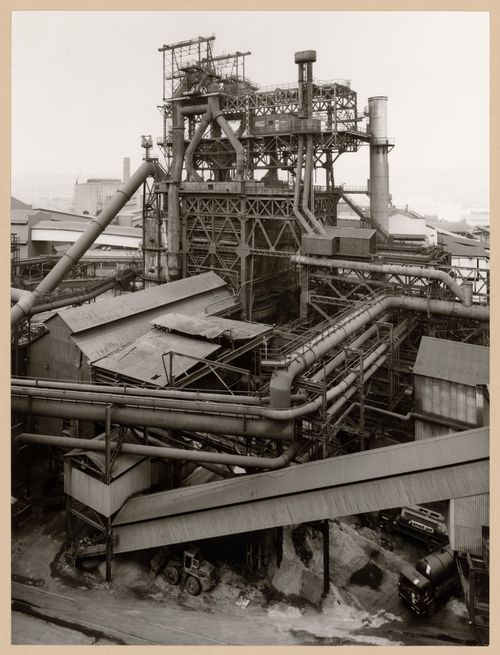
- The group of 86 photographs PH1987:0996 - PH1987:1081 by Bernd and Hilla Becher show 75 views of steel mill blast furnaces and 11 views of mines. There are 45 views of steel mill blast furnaces in Germany, 15 in the United States, and five in each of France, Luxembourg and Belgium. There are five views of mines in Germany, two in Belgium, two in the United States, and one in each of France and Wales. - The group of 86 photographs PH1987:0996 - PH1987:1081 by Bernd and Hilla Becher show five views of steel mill blast furnaces in Belgium including: two views of the Cockerill steel mill in Ougrée (PH1987:1048 and PH1987:1063); two views of the Hainaut-Sambre steel mill in Montignies-sur-Sambre (PH1987:1049 and PH1987:1064); and one view of the Boel Steel Plant in La Louvière (PH1987:1053). - The photographers indicate that the group of six photographs PH1987:1048 - PH1987:1053 of views of blast furnaces should be exhibited in two rows arranged from left to right and top to bottom in numerical order according to the photographers' inscriptions "M 1" through "M 6",. Photograph PH1987:1048 would therefore be at the far left of the upper row, while photograph PH1987:1053 would be at the far right of the bottom row (Kicken Pauseback, 1987).
PH1987:1048
Description:
- The group of 86 photographs PH1987:0996 - PH1987:1081 by Bernd and Hilla Becher show 75 views of steel mill blast furnaces and 11 views of mines. There are 45 views of steel mill blast furnaces in Germany, 15 in the United States, and five in each of France, Luxembourg and Belgium. There are five views of mines in Germany, two in Belgium, two in the United States, and one in each of France and Wales. - The group of 86 photographs PH1987:0996 - PH1987:1081 by Bernd and Hilla Becher show five views of steel mill blast furnaces in Belgium including: two views of the Cockerill steel mill in Ougrée (PH1987:1048 and PH1987:1063); two views of the Hainaut-Sambre steel mill in Montignies-sur-Sambre (PH1987:1049 and PH1987:1064); and one view of the Boel Steel Plant in La Louvière (PH1987:1053). - The photographers indicate that the group of six photographs PH1987:1048 - PH1987:1053 of views of blast furnaces should be exhibited in two rows arranged from left to right and top to bottom in numerical order according to the photographers' inscriptions "M 1" through "M 6",. Photograph PH1987:1048 would therefore be at the far left of the upper row, while photograph PH1987:1053 would be at the far right of the bottom row (Kicken Pauseback, 1987).
Personnes et institutions:
Sujet:
architecture, ingénierie
architecture, ingénierie
Date:
1980
1980
Titre:
View of a blast furnace of Cockerill steel mill, Ougrée, Belgium
Actions:
PH1987:1048
Description:
- The group of 86 photographs PH1987:0996 - PH1987:1081 by Bernd and Hilla Becher show 75 views of steel mill blast furnaces and 11 views of mines. There are 45 views of steel mill blast furnaces in Germany, 15 in the United States, and five in each of France, Luxembourg and Belgium. There are five views of mines in Germany, two in Belgium, two in the United States, and one in each of France and Wales. - The group of 86 photographs PH1987:0996 - PH1987:1081 by Bernd and Hilla Becher show five views of steel mill blast furnaces in Belgium including: two views of the Cockerill steel mill in Ougrée (PH1987:1048 and PH1987:1063); two views of the Hainaut-Sambre steel mill in Montignies-sur-Sambre (PH1987:1049 and PH1987:1064); and one view of the Boel Steel Plant in La Louvière (PH1987:1053). - The photographers indicate that the group of six photographs PH1987:1048 - PH1987:1053 of views of blast furnaces should be exhibited in two rows arranged from left to right and top to bottom in numerical order according to the photographers' inscriptions "M 1" through "M 6",. Photograph PH1987:1048 would therefore be at the far left of the upper row, while photograph PH1987:1053 would be at the far right of the bottom row (Kicken Pauseback, 1987).
View of a blast furnace of Cockerill steel mill, Ougrée, Belgium
Actions:
PH1987:1048
Description:
- The group of 86 photographs PH1987:0996 - PH1987:1081 by Bernd and Hilla Becher show 75 views of steel mill blast furnaces and 11 views of mines. There are 45 views of steel mill blast furnaces in Germany, 15 in the United States, and five in each of France, Luxembourg and Belgium. There are five views of mines in Germany, two in Belgium, two in the United States, and one in each of France and Wales. - The group of 86 photographs PH1987:0996 - PH1987:1081 by Bernd and Hilla Becher show five views of steel mill blast furnaces in Belgium including: two views of the Cockerill steel mill in Ougrée (PH1987:1048 and PH1987:1063); two views of the Hainaut-Sambre steel mill in Montignies-sur-Sambre (PH1987:1049 and PH1987:1064); and one view of the Boel Steel Plant in La Louvière (PH1987:1053). - The photographers indicate that the group of six photographs PH1987:1048 - PH1987:1053 of views of blast furnaces should be exhibited in two rows arranged from left to right and top to bottom in numerical order according to the photographers' inscriptions "M 1" through "M 6",. Photograph PH1987:1048 would therefore be at the far left of the upper row, while photograph PH1987:1053 would be at the far right of the bottom row (Kicken Pauseback, 1987).
Classification:
photographies
photographies
Date:
1980
1980
Personnes et institutions:
Sujet:
architecture, ingénierie
architecture, ingénierie
Classification:
photographies
photographies
Titre:
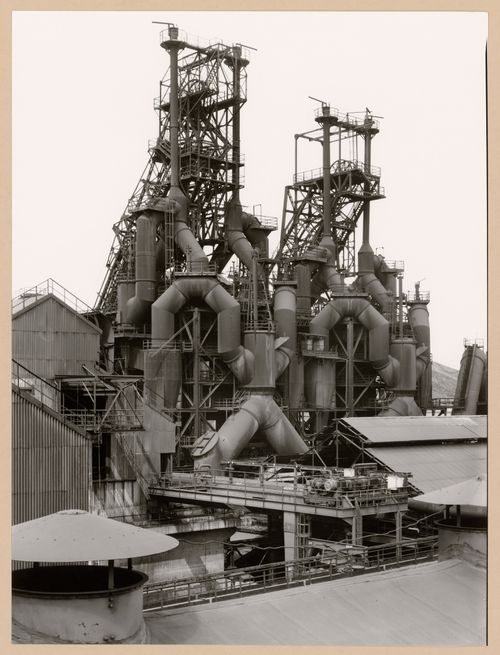
View of a blast furnace of Hainaut-Sambre steel mill, Montignies-sur-Sambre, Charleroi, Belgium
View of a blast furnace of Hainaut-Sambre steel mill, Montignies-sur-Sambre, Charleroi, Belgium
Actions:
Numéro de référence:
PH1987:1049
Description:
- The group of 86 photographs PH1987:0996 - PH1987:1081 by Bernd and Hilla Becher show 75 views of steel mill blast furnaces and 11 views of mines. There are 45 views of steel mill blast furnaces in Germany, 15 in the United States, and five in each of France, Luxembourg and Belgium. There are five views of mines in Germany, two in Belgium, two in the United States, and one in each of France and Wales. - The group of 86 photographs PH1987:0996 - PH1987:1081 by Bernd and Hilla Becher show five views of steel mill blast furnaces in Belgium including: two views of the Cockerill steel mill in Ougrée (PH1987:1048 and PH1987:1063); two views of the Hainaut-Sambre steel mill in Montignies-sur-Sambre (PH1987:1049 and PH1987:1064); and one view of the Boel Steel Plant in La Louvière (PH1987:1053). - The photographers indicate that the group of six photographs PH1987:1048 - PH1987:1053 of views of blast furnaces should be exhibited in two rows arranged from left to right and top to bottom in numerical order according to the photographers' inscriptions "M 1" through "M 6",. Photograph PH1987:1048 would therefore be at the far left of the upper row, while photograph PH1987:1053 would be at the far right of the bottom row (Kicken Pauseback, 1987).
PH1987:1049
Description:
- The group of 86 photographs PH1987:0996 - PH1987:1081 by Bernd and Hilla Becher show 75 views of steel mill blast furnaces and 11 views of mines. There are 45 views of steel mill blast furnaces in Germany, 15 in the United States, and five in each of France, Luxembourg and Belgium. There are five views of mines in Germany, two in Belgium, two in the United States, and one in each of France and Wales. - The group of 86 photographs PH1987:0996 - PH1987:1081 by Bernd and Hilla Becher show five views of steel mill blast furnaces in Belgium including: two views of the Cockerill steel mill in Ougrée (PH1987:1048 and PH1987:1063); two views of the Hainaut-Sambre steel mill in Montignies-sur-Sambre (PH1987:1049 and PH1987:1064); and one view of the Boel Steel Plant in La Louvière (PH1987:1053). - The photographers indicate that the group of six photographs PH1987:1048 - PH1987:1053 of views of blast furnaces should be exhibited in two rows arranged from left to right and top to bottom in numerical order according to the photographers' inscriptions "M 1" through "M 6",. Photograph PH1987:1048 would therefore be at the far left of the upper row, while photograph PH1987:1053 would be at the far right of the bottom row (Kicken Pauseback, 1987).
Personnes et institutions:
Sujet:
architecture, ingénierie
architecture, ingénierie
Date:
1984
1984
Titre:
View of a blast furnace of Hainaut-Sambre steel mill, Montignies-sur-Sambre, Charleroi, Belgium
Actions:
PH1987:1049
Description:
- The group of 86 photographs PH1987:0996 - PH1987:1081 by Bernd and Hilla Becher show 75 views of steel mill blast furnaces and 11 views of mines. There are 45 views of steel mill blast furnaces in Germany, 15 in the United States, and five in each of France, Luxembourg and Belgium. There are five views of mines in Germany, two in Belgium, two in the United States, and one in each of France and Wales. - The group of 86 photographs PH1987:0996 - PH1987:1081 by Bernd and Hilla Becher show five views of steel mill blast furnaces in Belgium including: two views of the Cockerill steel mill in Ougrée (PH1987:1048 and PH1987:1063); two views of the Hainaut-Sambre steel mill in Montignies-sur-Sambre (PH1987:1049 and PH1987:1064); and one view of the Boel Steel Plant in La Louvière (PH1987:1053). - The photographers indicate that the group of six photographs PH1987:1048 - PH1987:1053 of views of blast furnaces should be exhibited in two rows arranged from left to right and top to bottom in numerical order according to the photographers' inscriptions "M 1" through "M 6",. Photograph PH1987:1048 would therefore be at the far left of the upper row, while photograph PH1987:1053 would be at the far right of the bottom row (Kicken Pauseback, 1987).
View of a blast furnace of Hainaut-Sambre steel mill, Montignies-sur-Sambre, Charleroi, Belgium
Actions:
PH1987:1049
Description:
- The group of 86 photographs PH1987:0996 - PH1987:1081 by Bernd and Hilla Becher show 75 views of steel mill blast furnaces and 11 views of mines. There are 45 views of steel mill blast furnaces in Germany, 15 in the United States, and five in each of France, Luxembourg and Belgium. There are five views of mines in Germany, two in Belgium, two in the United States, and one in each of France and Wales. - The group of 86 photographs PH1987:0996 - PH1987:1081 by Bernd and Hilla Becher show five views of steel mill blast furnaces in Belgium including: two views of the Cockerill steel mill in Ougrée (PH1987:1048 and PH1987:1063); two views of the Hainaut-Sambre steel mill in Montignies-sur-Sambre (PH1987:1049 and PH1987:1064); and one view of the Boel Steel Plant in La Louvière (PH1987:1053). - The photographers indicate that the group of six photographs PH1987:1048 - PH1987:1053 of views of blast furnaces should be exhibited in two rows arranged from left to right and top to bottom in numerical order according to the photographers' inscriptions "M 1" through "M 6",. Photograph PH1987:1048 would therefore be at the far left of the upper row, while photograph PH1987:1053 would be at the far right of the bottom row (Kicken Pauseback, 1987).
Classification:
photographies
photographies
Date:
1984
1984
Personnes et institutions:
Sujet:
architecture, ingénierie
architecture, ingénierie


