


4347 Résultats
Classification:
livres
livres
Actions:
Prix:
$35.00
(disponible sur commande)
Résumé:
La découverte scientifique et la maîtrise de l'électricité ont bouleversé notre société au même titre que l'invention de l'écriture alphabétique durant l'Antiquité et de l'imprimerie à caractères mobiles au XVe siècle. Il ne s'agit pas seulement d'un phénomène naturel mis au service de l'homme par la science, mais d'un élément central de l'épistémè moderne : l'électricité(...)
$35.00
(disponible sur commande)
Résumé:
La découverte scientifique et la maîtrise de l'électricité ont bouleversé notre société au même titre que l'invention de l'écriture alphabétique durant l'Antiquité et de l'imprimerie à caractères mobiles au XVe siècle. Il ne s'agit pas seulement d'un phénomène naturel mis au service de l'homme par la science, mais d'un élément central de l'épistémè moderne : l'électricité(...)
Sujet:
Théorie/ philosophie
Théorie/ philosophie
Publication:
septembre 2011
septembre 2011
Titre:
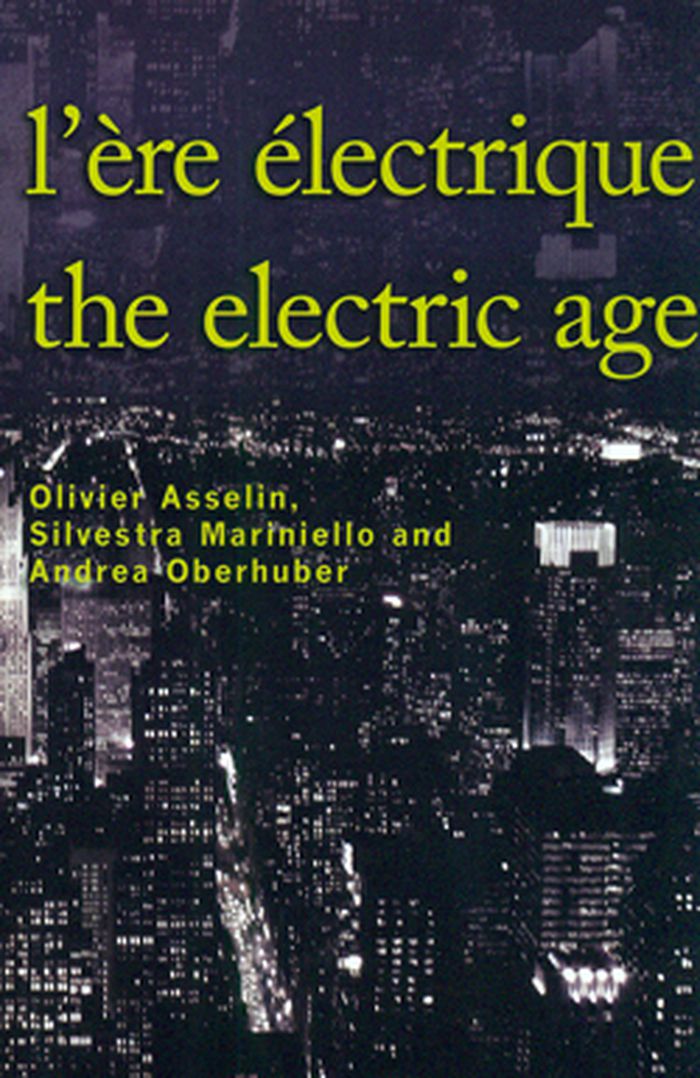
L'ère électrique / The electric age
Actions:
Prix:
$35.00
(disponible sur commande)
Résumé:
La découverte scientifique et la maîtrise de l'électricité ont bouleversé notre société au même titre que l'invention de l'écriture alphabétique durant l'Antiquité et de l'imprimerie à caractères mobiles au XVe siècle. Il ne s'agit pas seulement d'un phénomène naturel mis au service de l'homme par la science, mais d'un élément central de l'épistémè moderne : l'électricité a inspiré des écrivains et des artistes, a servi de force d'impulsion au monde de l'industrie et de l'innovation et a redéfini les comportements sociaux. En explorant l'incidence de l'électricité sur le savoir, les pratiques sociales, les médias, la vie sociale et les expériences personnelles, cet ouvrage tente d'en saisir les aspects techniques et culturels dans toute leur complexité. -- The scientific discovery and mastery of electricity created as many important changes in modern society as did the invention of alphabetical writing in antiquity and movable type in the fifteenth century. It is more than a natural phenomenon that science has harnessed for human use; it is a central feature of the modern episteme. It has inspired writers and artists, propelled industry and innovation, and reshaped human social behaviour. Looking at a variety of topics including film, politics, and contemporary art, this volume explores the impact of electricity on knowledge, social practices, media, community life, and subjective experience.
L'ère électrique / The electric age
Actions:
Prix:
$35.00
(disponible sur commande)
Résumé:
La découverte scientifique et la maîtrise de l'électricité ont bouleversé notre société au même titre que l'invention de l'écriture alphabétique durant l'Antiquité et de l'imprimerie à caractères mobiles au XVe siècle. Il ne s'agit pas seulement d'un phénomène naturel mis au service de l'homme par la science, mais d'un élément central de l'épistémè moderne : l'électricité a inspiré des écrivains et des artistes, a servi de force d'impulsion au monde de l'industrie et de l'innovation et a redéfini les comportements sociaux. En explorant l'incidence de l'électricité sur le savoir, les pratiques sociales, les médias, la vie sociale et les expériences personnelles, cet ouvrage tente d'en saisir les aspects techniques et culturels dans toute leur complexité. -- The scientific discovery and mastery of electricity created as many important changes in modern society as did the invention of alphabetical writing in antiquity and movable type in the fifteenth century. It is more than a natural phenomenon that science has harnessed for human use; it is a central feature of the modern episteme. It has inspired writers and artists, propelled industry and innovation, and reshaped human social behaviour. Looking at a variety of topics including film, politics, and contemporary art, this volume explores the impact of electricity on knowledge, social practices, media, community life, and subjective experience.
Classification:
livres
livres
Publication:
septembre 2011
septembre 2011
Sujet:
Théorie/ philosophie
Théorie/ philosophie
Classification:
livres
livres

Titre:
Klaus Scherübel: VOL.13
Klaus Scherübel: VOL.13
Actions:
Prix:
$38.00
(disponible en magasin)
Résumé:
Faisant suite à une série d’expositions monographiques présentée entre 2008 et 2011 en Europe et en Amérique du Nord, cette publication propose un premier aperçu de l’œuvre multiforme de l’artiste austro-canadien Klaus Scherübel. Ancrée dans la tradition de l’art conceptuel, la pratique de Scherübel résiste à toute catégorisation facile. Son travail propose une(...)
$38.00
(disponible en magasin)
Résumé:
Faisant suite à une série d’expositions monographiques présentée entre 2008 et 2011 en Europe et en Amérique du Nord, cette publication propose un premier aperçu de l’œuvre multiforme de l’artiste austro-canadien Klaus Scherübel. Ancrée dans la tradition de l’art conceptuel, la pratique de Scherübel résiste à toute catégorisation facile. Son travail propose une(...)
Titre:
Klaus Scherübel: VOL.13
Actions:
Prix:
$38.00
(disponible en magasin)
Résumé:
Faisant suite à une série d’expositions monographiques présentée entre 2008 et 2011 en Europe et en Amérique du Nord, cette publication propose un premier aperçu de l’œuvre multiforme de l’artiste austro-canadien Klaus Scherübel. Ancrée dans la tradition de l’art conceptuel, la pratique de Scherübel résiste à toute catégorisation facile. Son travail propose une investigation systématique de l’activité artistique mettant en question les frontières séparant les fonctions d’artiste, d’historien, de conservateur, d’éditeur, de commanditaire ou de spectateur. En utilisant une variété de stratégies esthétiques, ses entreprises artistiques reconsidèrent des œuvres, des concepts et des genres issues des arts visuels, de la littérature du cinéma et de la télévision. VOL. 13 documente et analyse quelques uns de ses projets les plus connus des vingt dernières années incluant la série Untitled (The Artist at Work) ainsi que ses projets de livre dédiés aux entreprises littéraires et conceptuels du poète français Stéphane Mallarmé et de l’écrivain fictif Jack Torrance tiré du film d’horreur The Shining. Il contient des essais de Jean-François Chevrier et de Patrice Loubier ainsi qu’une entrevue entre Helmut Draxler et l’artiste. Scherübel a personnellement pris en charge la conception de cet ouvrage, nous offrant tout autant une publication sur sa démarche autoréflexive qu’un prolongement de celle-ci.
Klaus Scherübel: VOL.13
Actions:
Prix:
$38.00
(disponible en magasin)
Résumé:
Faisant suite à une série d’expositions monographiques présentée entre 2008 et 2011 en Europe et en Amérique du Nord, cette publication propose un premier aperçu de l’œuvre multiforme de l’artiste austro-canadien Klaus Scherübel. Ancrée dans la tradition de l’art conceptuel, la pratique de Scherübel résiste à toute catégorisation facile. Son travail propose une investigation systématique de l’activité artistique mettant en question les frontières séparant les fonctions d’artiste, d’historien, de conservateur, d’éditeur, de commanditaire ou de spectateur. En utilisant une variété de stratégies esthétiques, ses entreprises artistiques reconsidèrent des œuvres, des concepts et des genres issues des arts visuels, de la littérature du cinéma et de la télévision. VOL. 13 documente et analyse quelques uns de ses projets les plus connus des vingt dernières années incluant la série Untitled (The Artist at Work) ainsi que ses projets de livre dédiés aux entreprises littéraires et conceptuels du poète français Stéphane Mallarmé et de l’écrivain fictif Jack Torrance tiré du film d’horreur The Shining. Il contient des essais de Jean-François Chevrier et de Patrice Loubier ainsi qu’une entrevue entre Helmut Draxler et l’artiste. Scherübel a personnellement pris en charge la conception de cet ouvrage, nous offrant tout autant une publication sur sa démarche autoréflexive qu’un prolongement de celle-ci.
Classification:
livres
livres
Publication:
mars 2012
mars 2012
Classification:
livres
livres
Titre:
Francesca Woodman's notebook
Francesca Woodman's notebook
Actions:
Prix:
$49.95
(disponible sur commande)
Résumé:
The American photographer Francesca Woodman (1958-1981) spent a brief portion of her childhood in the countryside around Florence, living with her parents in an old farm whose dilapidated interiors were later to influence the backdrops of her mesmerizing self-portraits. In 1977 she returned to Italy, studying in Rome on a year-long RISD honors program. During this tenure,(...)
$49.95
(disponible sur commande)
Résumé:
The American photographer Francesca Woodman (1958-1981) spent a brief portion of her childhood in the countryside around Florence, living with her parents in an old farm whose dilapidated interiors were later to influence the backdrops of her mesmerizing self-portraits. In 1977 she returned to Italy, studying in Rome on a year-long RISD honors program. During this tenure,(...)
Titre:
Francesca Woodman's notebook
Actions:
Prix:
$49.95
(disponible sur commande)
Résumé:
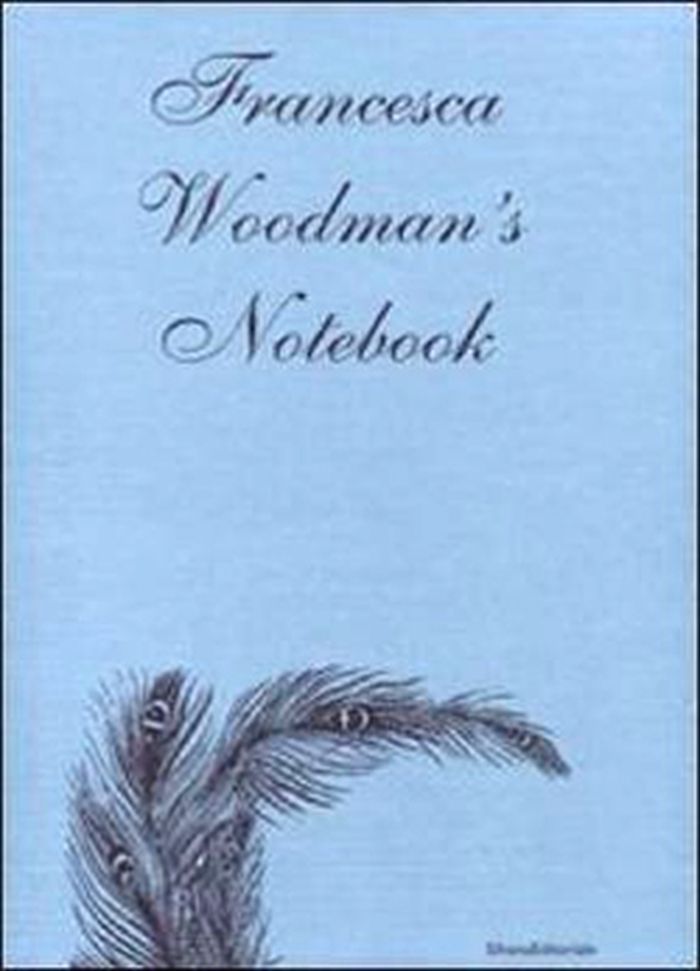
The American photographer Francesca Woodman (1958-1981) spent a brief portion of her childhood in the countryside around Florence, living with her parents in an old farm whose dilapidated interiors were later to influence the backdrops of her mesmerizing self-portraits. In 1977 she returned to Italy, studying in Rome on a year-long RISD honors program. During this tenure, Woodman found five tattered school exercise books, printed in 1906, side-stapled and inscribed in fine cursive penmanship with notes from physics lectures or poems in English and Italian. To these evocative objects, Woodman--already fully formed as the photographer we recognize and admire today--added her characteristic black-and-white photographs, either as small paper prints or as prints made on transparent film that allows the writing beneath to show through, further embellishing them with her own captions or remarks. This facsimile edition of one of these notebooks was selected for publication by Woodman's mother and father as an artist's book of particular beauty and revelatory content that provides unprecedented insight into the emphatically narrative logic of Woodman's photography. Housed in a lightweight printed box, it includes an afterword by George Woodman, Francesca's father, that contextualizes the work within the photographer's artist's book production.
Francesca Woodman's notebook
Actions:
Prix:
$49.95
(disponible sur commande)
Résumé:
The American photographer Francesca Woodman (1958-1981) spent a brief portion of her childhood in the countryside around Florence, living with her parents in an old farm whose dilapidated interiors were later to influence the backdrops of her mesmerizing self-portraits. In 1977 she returned to Italy, studying in Rome on a year-long RISD honors program. During this tenure, Woodman found five tattered school exercise books, printed in 1906, side-stapled and inscribed in fine cursive penmanship with notes from physics lectures or poems in English and Italian. To these evocative objects, Woodman--already fully formed as the photographer we recognize and admire today--added her characteristic black-and-white photographs, either as small paper prints or as prints made on transparent film that allows the writing beneath to show through, further embellishing them with her own captions or remarks. This facsimile edition of one of these notebooks was selected for publication by Woodman's mother and father as an artist's book of particular beauty and revelatory content that provides unprecedented insight into the emphatically narrative logic of Woodman's photography. Housed in a lightweight printed box, it includes an afterword by George Woodman, Francesca's father, that contextualizes the work within the photographer's artist's book production.
Classification:
livres
livres
Publication:
mars 2012
mars 2012
Classification:
livres
livres
Actions:
Prix:
$63.95
(disponible sur commande)
Résumé:
In Soviet Salvage, Catherine Walworth explores how artists on the margins of the Constructivist movement of the 1920s rejected “elitist” media and imagined a new world, knitting together avant-garde art, imperial castoffs, and everyday life. Applying anthropological models borrowed from Claude Lévi-Strauss, Walworth shows that his mythmaker typologies—the “engineer”(...)
$63.95
(disponible sur commande)
Résumé:
In Soviet Salvage, Catherine Walworth explores how artists on the margins of the Constructivist movement of the 1920s rejected “elitist” media and imagined a new world, knitting together avant-garde art, imperial castoffs, and everyday life. Applying anthropological models borrowed from Claude Lévi-Strauss, Walworth shows that his mythmaker typologies—the “engineer”(...)
Publication:
septembre 2018
septembre 2018
Titre:
Soviet salvage: Imperial debris, revolutionary reuse, and Russian Constructivism
Actions:
Prix:
$63.95
(disponible sur commande)
Résumé:
In Soviet Salvage, Catherine Walworth explores how artists on the margins of the Constructivist movement of the 1920s rejected “elitist” media and imagined a new world, knitting together avant-garde art, imperial castoffs, and everyday life. Applying anthropological models borrowed from Claude Lévi-Strauss, Walworth shows that his mythmaker typologies—the “engineer” and “bricoleur”—illustrate, respectively, the canonical Constructivists and artists on the movement’s margins who deployed a wide range of clever make-do tactics. Walworth explores the relationships of Nadezhda Lamanova, Esfir Shub, and others with Constructivists such as Aleksei Gan, Varvara Stepanova, and Aleksandr Rodchenko. Together, the work of these artists reflected the chaotic and often contradictory zeitgeist of the decade from 1918 to 1929 and redefined the concept of mass production. Reappropriated fragments of a former enemy era provided a wide range of play and possibility for these artists, and the resulting propaganda porcelain, film, fashion, and architecture tell a broader story of the unique political and economic pressures felt by their makers. An engaging multidisciplinary study of objects and their makers during the Soviet Union’s early years, this volume highlights a group of artists who hover like free radicals at the border of existing art-historical discussions of Constructivism and deepens our knowledge of Soviet art and material culture.
Soviet salvage: Imperial debris, revolutionary reuse, and Russian Constructivism
Actions:
Prix:
$63.95
(disponible sur commande)
Résumé:
In Soviet Salvage, Catherine Walworth explores how artists on the margins of the Constructivist movement of the 1920s rejected “elitist” media and imagined a new world, knitting together avant-garde art, imperial castoffs, and everyday life. Applying anthropological models borrowed from Claude Lévi-Strauss, Walworth shows that his mythmaker typologies—the “engineer” and “bricoleur”—illustrate, respectively, the canonical Constructivists and artists on the movement’s margins who deployed a wide range of clever make-do tactics. Walworth explores the relationships of Nadezhda Lamanova, Esfir Shub, and others with Constructivists such as Aleksei Gan, Varvara Stepanova, and Aleksandr Rodchenko. Together, the work of these artists reflected the chaotic and often contradictory zeitgeist of the decade from 1918 to 1929 and redefined the concept of mass production. Reappropriated fragments of a former enemy era provided a wide range of play and possibility for these artists, and the resulting propaganda porcelain, film, fashion, and architecture tell a broader story of the unique political and economic pressures felt by their makers. An engaging multidisciplinary study of objects and their makers during the Soviet Union’s early years, this volume highlights a group of artists who hover like free radicals at the border of existing art-historical discussions of Constructivism and deepens our knowledge of Soviet art and material culture.
Classification:
livres
livres
Publication:
septembre 2018
septembre 2018
Classification:
livres
livres
Titre:
Rice's architectural primer
Rice's architectural primer
Actions:
Prix:
$32.00
(disponible sur commande)
Résumé:
A beautifully packaged, idiosyncratic introduction to British building styles, by the acclaimed illustrator and architectural enthusiast Matthew Rice. Covering the grammar and vocabulary of British buildings and the evolution of styles from Norman castles to Norman Foster, the aim is to enable the reader to recognise, understand and date any British building. As(...)
$32.00
(disponible sur commande)
Résumé:
A beautifully packaged, idiosyncratic introduction to British building styles, by the acclaimed illustrator and architectural enthusiast Matthew Rice. Covering the grammar and vocabulary of British buildings and the evolution of styles from Norman castles to Norman Foster, the aim is to enable the reader to recognise, understand and date any British building. As(...)
Titre:
Rice's architectural primer
Actions:
Prix:
$32.00
(disponible sur commande)
Résumé:
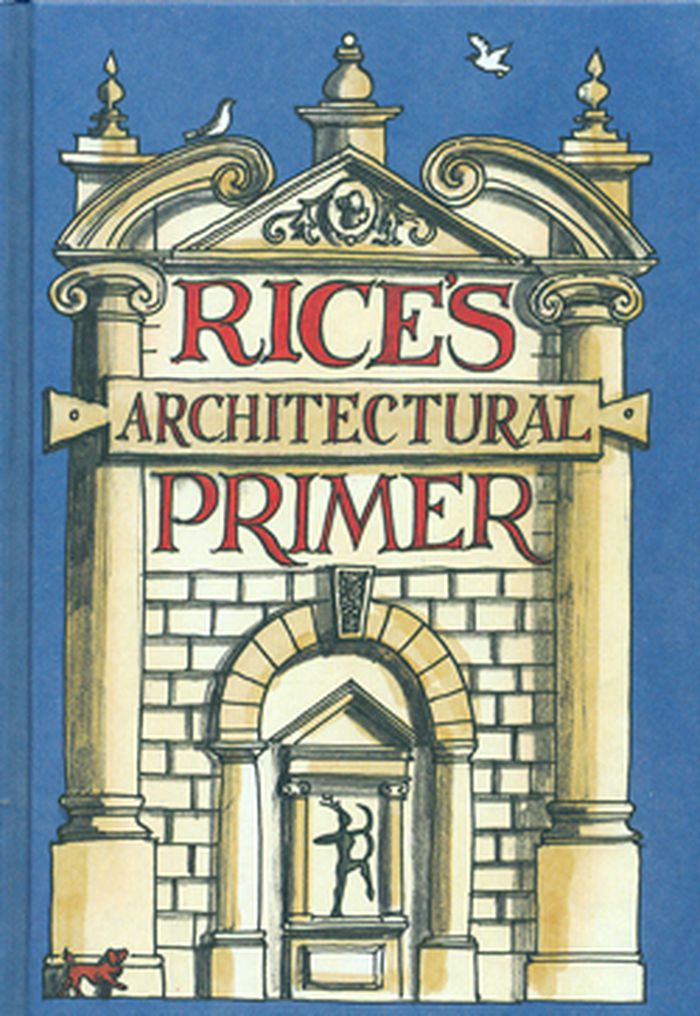
A beautifully packaged, idiosyncratic introduction to British building styles, by the acclaimed illustrator and architectural enthusiast Matthew Rice. Covering the grammar and vocabulary of British buildings and the evolution of styles from Norman castles to Norman Foster, the aim is to enable the reader to recognise, understand and date any British building. As Matthew Rice says, ‘Once you can speak any language, conversation can begin, but without it communications can only be brief and brutish. The same is the case with Architecture: an inability to describe the component parts of a building leaves one tongue-tied and unable to begin to discuss what is or is not exciting, dull or peculiar about it.’ With this book in your hand, pocket or car, buildings will break down beguilingly into their component parts, ready for inspection and discussion. There will be no more references to that curly bit on top of the thing with the square protrusions. Ungainly and inept descriptions will be a thing of the past and, fluent in the world of volutes, hood moulds, lobed architraves and bucrania, you will be able to leave a cathedral or country house with as much to talk about as a film or play.
Rice's architectural primer
Actions:
Prix:
$32.00
(disponible sur commande)
Résumé:
A beautifully packaged, idiosyncratic introduction to British building styles, by the acclaimed illustrator and architectural enthusiast Matthew Rice. Covering the grammar and vocabulary of British buildings and the evolution of styles from Norman castles to Norman Foster, the aim is to enable the reader to recognise, understand and date any British building. As Matthew Rice says, ‘Once you can speak any language, conversation can begin, but without it communications can only be brief and brutish. The same is the case with Architecture: an inability to describe the component parts of a building leaves one tongue-tied and unable to begin to discuss what is or is not exciting, dull or peculiar about it.’ With this book in your hand, pocket or car, buildings will break down beguilingly into their component parts, ready for inspection and discussion. There will be no more references to that curly bit on top of the thing with the square protrusions. Ungainly and inept descriptions will be a thing of the past and, fluent in the world of volutes, hood moulds, lobed architraves and bucrania, you will be able to leave a cathedral or country house with as much to talk about as a film or play.
Classification:
livres
livres
Publication:
septembre 2009
septembre 2009
Classification:
livres
livres
Titre:
Fred Sandback: drawings
Fred Sandback: drawings
Actions:
Prix:
$60.00
(disponible sur commande)
Résumé:
The American Fred Sandback (1943–2003), regarded as one of the major sculptors of his generation, had from the beginning of his art career initially used drawings to formulate on paper his ideas of sculptural volumes. Soon he went from depicting isolated elements to thinking of sculpture in relationship to space and to exploring its possibilities on paper. In the 1980s,(...)
$60.00
(disponible sur commande)
Résumé:
The American Fred Sandback (1943–2003), regarded as one of the major sculptors of his generation, had from the beginning of his art career initially used drawings to formulate on paper his ideas of sculptural volumes. Soon he went from depicting isolated elements to thinking of sculpture in relationship to space and to exploring its possibilities on paper. In the 1980s,(...)
Titre:
Fred Sandback: drawings
Actions:
Prix:
$60.00
(disponible sur commande)
Résumé:
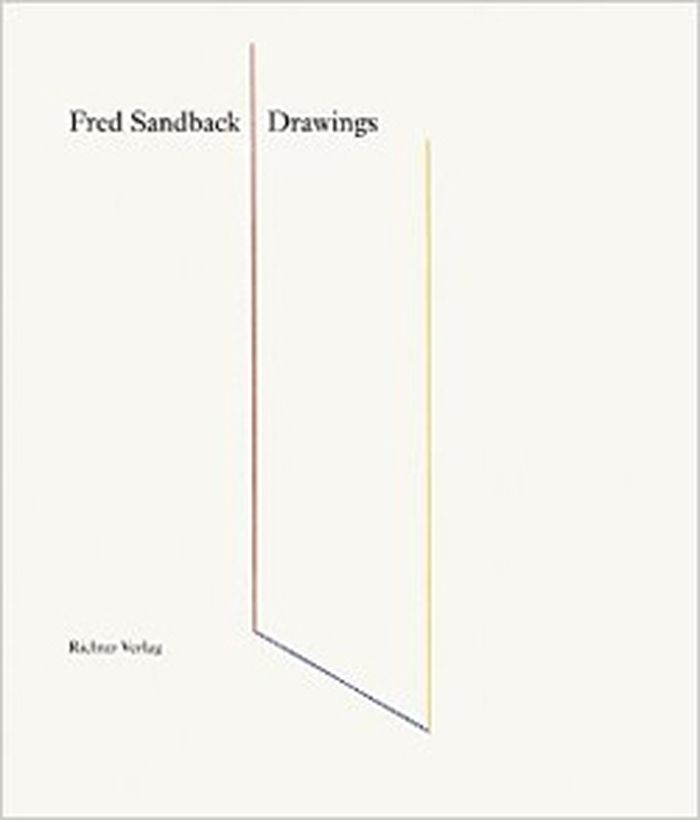
The American Fred Sandback (1943–2003), regarded as one of the major sculptors of his generation, had from the beginning of his art career initially used drawings to formulate on paper his ideas of sculptural volumes. Soon he went from depicting isolated elements to thinking of sculpture in relationship to space and to exploring its possibilities on paper. In the 1980s, Sandback expanded his drawing vocabulary to include work in acrylic, in the pochoir technique or in pastel, which look much more pictorial in contrast to his earlier works on paper. The issue was now less about conceiving sculptures and more about modulating space. As regards sculpture, Sandback no longer thought of it as a given spatial volume, but as a sensual phenomenon per se, which he explored in the drawing. In his late drawings, Sandback moved away from the conditions of a coherent space in order to conceive of sculptures that are boundless from all sides. Only a specific section of the whole is intimated in the drawing, for which Sandback invented unusual techniques: actual incisions instead of drawn lines, for instance, or painterly traces on transparent film. This publication of Sandback’s drawings assembles works from over thirty years, supplemented by sculpture.
Fred Sandback: drawings
Actions:
Prix:
$60.00
(disponible sur commande)
Résumé:
The American Fred Sandback (1943–2003), regarded as one of the major sculptors of his generation, had from the beginning of his art career initially used drawings to formulate on paper his ideas of sculptural volumes. Soon he went from depicting isolated elements to thinking of sculpture in relationship to space and to exploring its possibilities on paper. In the 1980s, Sandback expanded his drawing vocabulary to include work in acrylic, in the pochoir technique or in pastel, which look much more pictorial in contrast to his earlier works on paper. The issue was now less about conceiving sculptures and more about modulating space. As regards sculpture, Sandback no longer thought of it as a given spatial volume, but as a sensual phenomenon per se, which he explored in the drawing. In his late drawings, Sandback moved away from the conditions of a coherent space in order to conceive of sculptures that are boundless from all sides. Only a specific section of the whole is intimated in the drawing, for which Sandback invented unusual techniques: actual incisions instead of drawn lines, for instance, or painterly traces on transparent film. This publication of Sandback’s drawings assembles works from over thirty years, supplemented by sculpture.
Classification:
livres
livres
Publication:
août 2014
août 2014
Classification:
livres
livres
Titre:
What comes after farce?
What comes after farce?
Actions:
Prix:
$33.95
(disponible sur commande)
Résumé:
If farce follows tragedy, what follows farce? Where does the double predicament of a post-truth and post-shame politics leave artists and critics on the left? How to demystify a hegemonic order that dismisses its own contradictions? How to belittle a political elite that cannot be embarrassed, or to mock party leaders who thrive on the absurd? How to out-dada President(...)
$33.95
(disponible sur commande)
Résumé:
If farce follows tragedy, what follows farce? Where does the double predicament of a post-truth and post-shame politics leave artists and critics on the left? How to demystify a hegemonic order that dismisses its own contradictions? How to belittle a political elite that cannot be embarrassed, or to mock party leaders who thrive on the absurd? How to out-dada President(...)
Titre:
What comes after farce?
Actions:
Prix:
$33.95
(disponible sur commande)
Résumé:
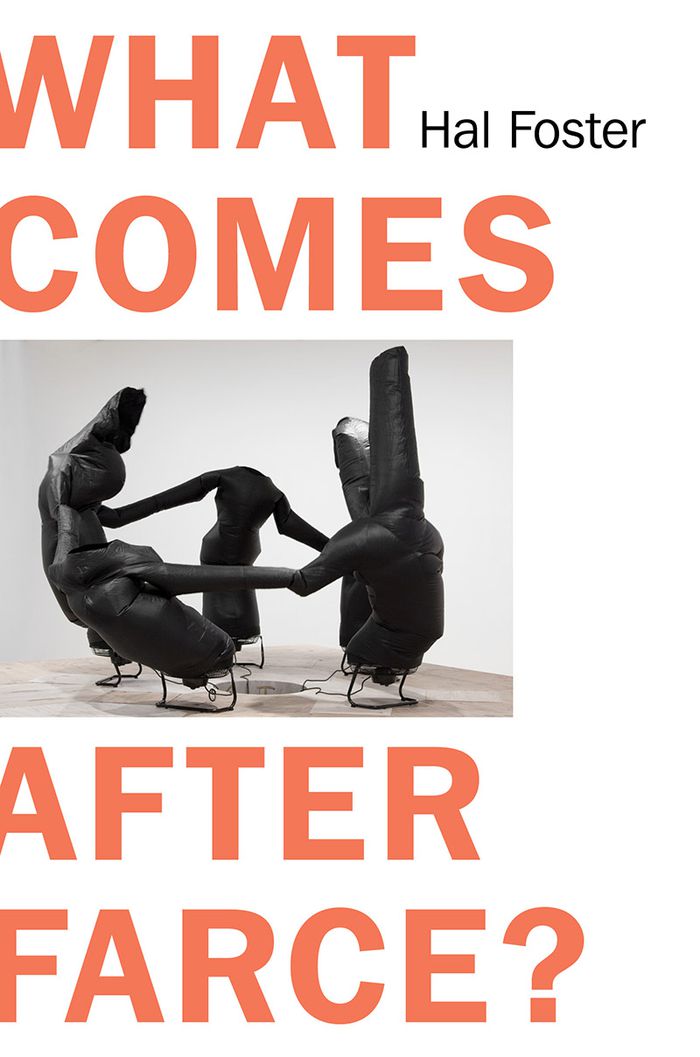
If farce follows tragedy, what follows farce? Where does the double predicament of a post-truth and post-shame politics leave artists and critics on the left? How to demystify a hegemonic order that dismisses its own contradictions? How to belittle a political elite that cannot be embarrassed, or to mock party leaders who thrive on the absurd? How to out-dada President Ubu? And, in any event, why add outrage to a media economy that thrives on the same? 'What Comes After Farce?' comments on shifts in art, criticism, and fiction in the face of the current regime of war, surveillance, extreme inequality, and media disruption. A first section focuses on the cultural politics of emergency since 9/11, including the use and abuse of trauma, paranoia, and kitsch. A second reviews the neoliberal makeover of art institutions during the same period. Finally, a third section surveys transformations in media as reflected in recent art, film, and fiction. Among the phenomena explored here are “machine vision” (images produced by machines for other machines without a human interface),“operational images” (images that do not represent the world so much as intervene in it), and the algorithmic scripting of information so pervasive in our everyday lives.
What comes after farce?
Actions:
Prix:
$33.95
(disponible sur commande)
Résumé:
If farce follows tragedy, what follows farce? Where does the double predicament of a post-truth and post-shame politics leave artists and critics on the left? How to demystify a hegemonic order that dismisses its own contradictions? How to belittle a political elite that cannot be embarrassed, or to mock party leaders who thrive on the absurd? How to out-dada President Ubu? And, in any event, why add outrage to a media economy that thrives on the same? 'What Comes After Farce?' comments on shifts in art, criticism, and fiction in the face of the current regime of war, surveillance, extreme inequality, and media disruption. A first section focuses on the cultural politics of emergency since 9/11, including the use and abuse of trauma, paranoia, and kitsch. A second reviews the neoliberal makeover of art institutions during the same period. Finally, a third section surveys transformations in media as reflected in recent art, film, and fiction. Among the phenomena explored here are “machine vision” (images produced by machines for other machines without a human interface),“operational images” (images that do not represent the world so much as intervene in it), and the algorithmic scripting of information so pervasive in our everyday lives.
Classification:
livres
livres
Publication:
juin 2020
juin 2020
Sujet:
Théorie/ philosophie
Théorie/ philosophie
Classification:
livres
livres
Prix:
$38.95
(disponible sur commande)
Résumé:
Since its publication twenty years ago, Brian Massumi's pioneering ''Parables for the virtual'' has become an essential text for interdisciplinary scholars across the humanities. Massumi views the body and media such as television, film, and the internet as cultural formations that operate on multiple registers of sensation. Renewing and assessing William James's radical(...)
$38.95
(disponible sur commande)
Résumé:
Since its publication twenty years ago, Brian Massumi's pioneering ''Parables for the virtual'' has become an essential text for interdisciplinary scholars across the humanities. Massumi views the body and media such as television, film, and the internet as cultural formations that operate on multiple registers of sensation. Renewing and assessing William James's radical(...)
Titre:
Parables for the virtual: movement, affect, sensation
Actions:
Prix:
$38.95
(disponible sur commande)
Résumé:
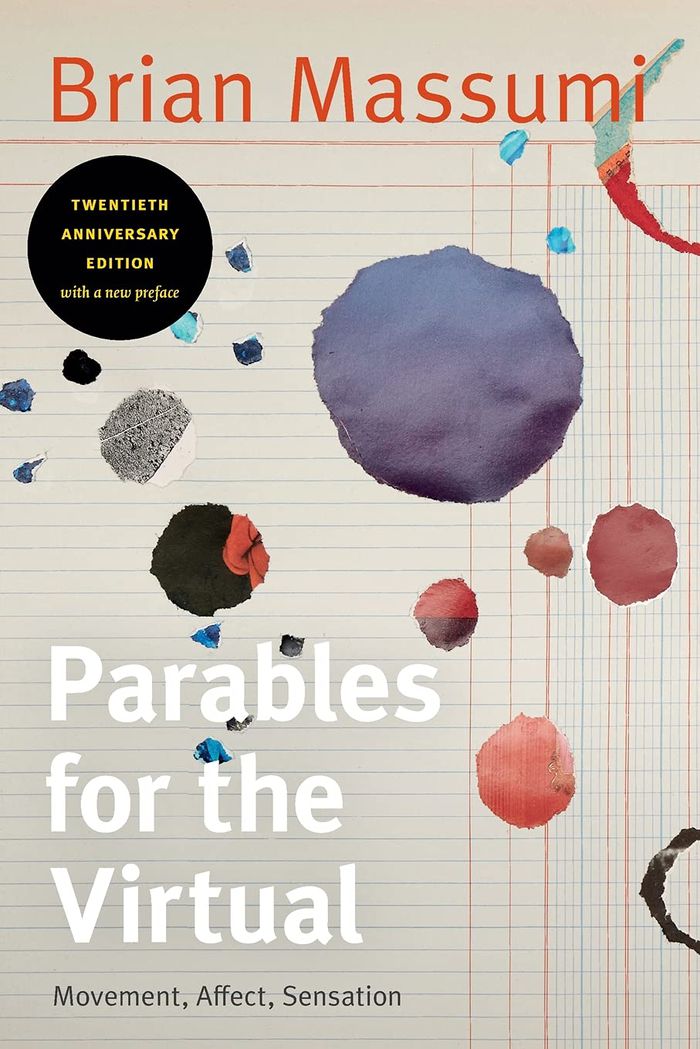
Since its publication twenty years ago, Brian Massumi's pioneering ''Parables for the virtual'' has become an essential text for interdisciplinary scholars across the humanities. Massumi views the body and media such as television, film, and the internet as cultural formations that operate on multiple registers of sensation. Renewing and assessing William James's radical empiricism and Henri Bergson's philosophy of perception through the filter of the postwar French philosophy of Deleuze, Guattari, and Foucault, Massumi links a cultural logic of variation to questions of movement, affect, and sensation. Replacing the traditional opposition of literal and figural with distinctions between stasis and motion and between actual and virtual, Massumi tackles related theoretical issues by applying them to cultural mediums as diverse as architecture, body art, the digital art of Stelarc, and Ronald Reagan's acting career. The result is an intriguing combination of cultural theory, science, and philosophy that asserts itself in a crystalline and multifaceted argument. This twentieth anniversary edition includes a new preface in which Massumi situates the book in relation to developments since its publication and outlines the evolution of its main concepts. It also includes two short texts, "Keywords for Affect" and "Missed Conceptions about Affect," in which Massumi explicates his approach to affect in ways that emphasize the book's political and philosophical stakes.
Parables for the virtual: movement, affect, sensation
Actions:
Prix:
$38.95
(disponible sur commande)
Résumé:
Since its publication twenty years ago, Brian Massumi's pioneering ''Parables for the virtual'' has become an essential text for interdisciplinary scholars across the humanities. Massumi views the body and media such as television, film, and the internet as cultural formations that operate on multiple registers of sensation. Renewing and assessing William James's radical empiricism and Henri Bergson's philosophy of perception through the filter of the postwar French philosophy of Deleuze, Guattari, and Foucault, Massumi links a cultural logic of variation to questions of movement, affect, and sensation. Replacing the traditional opposition of literal and figural with distinctions between stasis and motion and between actual and virtual, Massumi tackles related theoretical issues by applying them to cultural mediums as diverse as architecture, body art, the digital art of Stelarc, and Ronald Reagan's acting career. The result is an intriguing combination of cultural theory, science, and philosophy that asserts itself in a crystalline and multifaceted argument. This twentieth anniversary edition includes a new preface in which Massumi situates the book in relation to developments since its publication and outlines the evolution of its main concepts. It also includes two short texts, "Keywords for Affect" and "Missed Conceptions about Affect," in which Massumi explicates his approach to affect in ways that emphasize the book's political and philosophical stakes.
Classification:
livres
livres
Publication:
septembre 2021
septembre 2021
Sujet:
Théorie/ philosophie
Théorie/ philosophie
Classification:
livres
livres
Titre:
In praise of copying
In praise of copying
Actions:
Prix:
$24.95
(disponible sur commande)
Résumé:
This book is devoted to a deceptively simple but original argument : that copying is an essential part of being human, that the ability to copy is worthy of celebration, and that, without recognizing how integral copying is to being human, we cannot understand ourselves or the world we live in. In spite of the laws, stigmas, and anxieties attached to it, the word(...)
$24.95
(disponible sur commande)
Résumé:
This book is devoted to a deceptively simple but original argument : that copying is an essential part of being human, that the ability to copy is worthy of celebration, and that, without recognizing how integral copying is to being human, we cannot understand ourselves or the world we live in. In spite of the laws, stigmas, and anxieties attached to it, the word(...)
Titre:
In praise of copying
Actions:
Prix:
$24.95
(disponible sur commande)
Résumé:
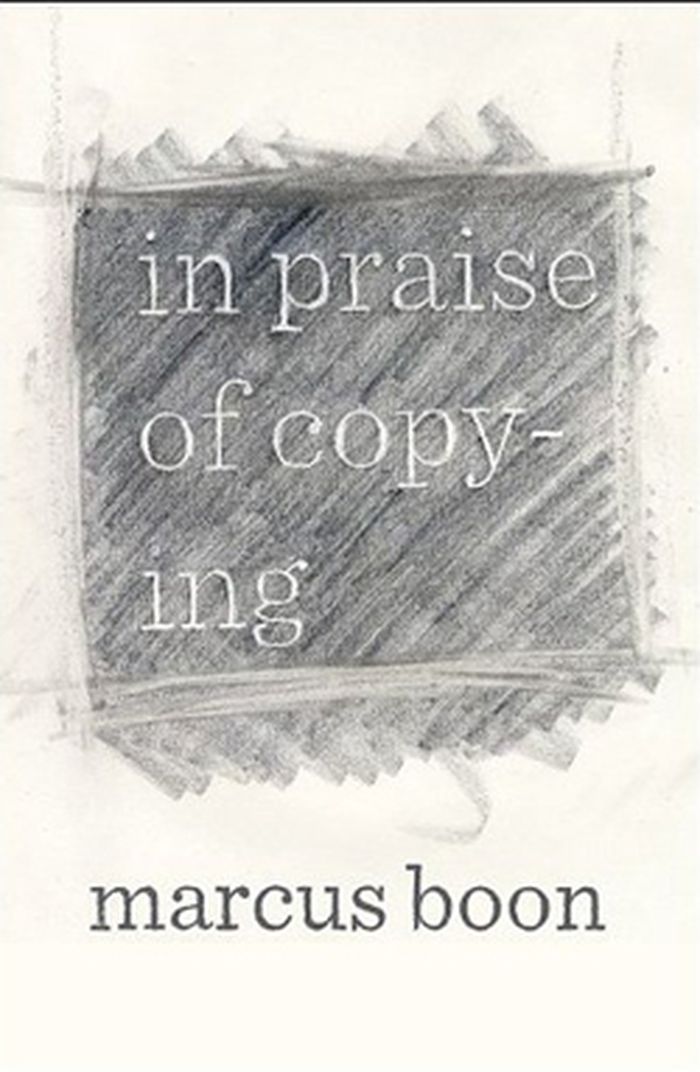
This book is devoted to a deceptively simple but original argument : that copying is an essential part of being human, that the ability to copy is worthy of celebration, and that, without recognizing how integral copying is to being human, we cannot understand ourselves or the world we live in. In spite of the laws, stigmas, and anxieties attached to it, the word “copying” permeates contemporary culture, shaping discourse on issues from hip hop to digitization to gender reassignment, and is particularly crucial in legal debates concerning intellectual property and copyright. Yet as a philosophical concept, copying remains poorly understood. Working comparatively across cultures and times, Marcus Boon undertakes an examination of what this word means — historically, culturally, philosophically — and why it fills us with fear and fascination. He argues that the dominant legal-political structures that define copying today obscure much broader processes of imitation that have constituted human communities for ages and continue to shape various subcultures today. Drawing on contemporary art, music and film, the history of aesthetics, critical theory, and Buddhist philosophy and practice, In Praise of Copying seeks to show how and why copying works, what the sources of its power are, and the political stakes of renegotiating the way we value copying in the age of globalization.
In praise of copying
Actions:
Prix:
$24.95
(disponible sur commande)
Résumé:
This book is devoted to a deceptively simple but original argument : that copying is an essential part of being human, that the ability to copy is worthy of celebration, and that, without recognizing how integral copying is to being human, we cannot understand ourselves or the world we live in. In spite of the laws, stigmas, and anxieties attached to it, the word “copying” permeates contemporary culture, shaping discourse on issues from hip hop to digitization to gender reassignment, and is particularly crucial in legal debates concerning intellectual property and copyright. Yet as a philosophical concept, copying remains poorly understood. Working comparatively across cultures and times, Marcus Boon undertakes an examination of what this word means — historically, culturally, philosophically — and why it fills us with fear and fascination. He argues that the dominant legal-political structures that define copying today obscure much broader processes of imitation that have constituted human communities for ages and continue to shape various subcultures today. Drawing on contemporary art, music and film, the history of aesthetics, critical theory, and Buddhist philosophy and practice, In Praise of Copying seeks to show how and why copying works, what the sources of its power are, and the political stakes of renegotiating the way we value copying in the age of globalization.
Classification:
livres
livres
Publication:
mars 2013
mars 2013
Sujet:
Théorie/ philosophie
Théorie/ philosophie
Classification:
livres
livres
Titre:
The Bauhaus: #itsalldesign
The Bauhaus: #itsalldesign
Actions:
Prix:
$95.00
(disponible sur commande)
Résumé:
This volume offers a comprehensive overview of the extended concept of design that was initiated at the Bauhaus. Alongside rare exhibits from design, architecture, art, film and photography--some of which have never previously been published--the book documents the development processes as well as the socio-political concepts behind the Bauhaus. To underline their(...)
$95.00
(disponible sur commande)
Résumé:
This volume offers a comprehensive overview of the extended concept of design that was initiated at the Bauhaus. Alongside rare exhibits from design, architecture, art, film and photography--some of which have never previously been published--the book documents the development processes as well as the socio-political concepts behind the Bauhaus. To underline their(...)
Titre:
The Bauhaus: #itsalldesign
Actions:
Prix:
$95.00
(disponible sur commande)
Résumé:
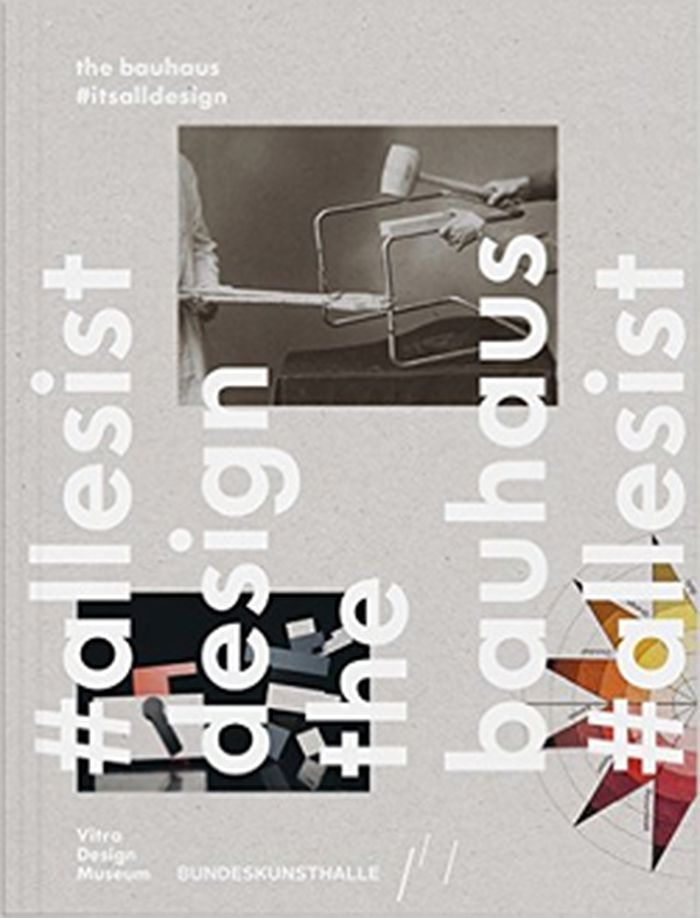
This volume offers a comprehensive overview of the extended concept of design that was initiated at the Bauhaus. Alongside rare exhibits from design, architecture, art, film and photography--some of which have never previously been published--the book documents the development processes as well as the socio-political concepts behind the Bauhaus. To underline their relevance for today's creative practice, these ideas are contrasted to current themes in design such as the digital revolution, and the works of numerous present-day artists and designers. The lavishly illustrated publication features essays by renowned authors such as Arthur Rüegg and Jan Boelen, a glossary of the basic ideas behind design at the Bauhaus, as well as a detailed catalogue section. Among others, Olaf Nicolai, Adrian Sauer, Wilfried Kühn and Joseph Grima have created artistic works on the topic especially for the exhibition. Numerous short articles by distinguished designers, artists and architects from all over the world, who, with their ideas, projects and theories reflect on the topicality of the Bauhaus and its influence on 21st-century design, form part of this new and contemporary look at the movement. With works by Josef Albers, Marcel Breuer, Walter Gropius, Marianne Brandt, Wassily Kandinsky, Ludwig Mies van der Rohe, Herbert Bayer and many others.
The Bauhaus: #itsalldesign
Actions:
Prix:
$95.00
(disponible sur commande)
Résumé:
This volume offers a comprehensive overview of the extended concept of design that was initiated at the Bauhaus. Alongside rare exhibits from design, architecture, art, film and photography--some of which have never previously been published--the book documents the development processes as well as the socio-political concepts behind the Bauhaus. To underline their relevance for today's creative practice, these ideas are contrasted to current themes in design such as the digital revolution, and the works of numerous present-day artists and designers. The lavishly illustrated publication features essays by renowned authors such as Arthur Rüegg and Jan Boelen, a glossary of the basic ideas behind design at the Bauhaus, as well as a detailed catalogue section. Among others, Olaf Nicolai, Adrian Sauer, Wilfried Kühn and Joseph Grima have created artistic works on the topic especially for the exhibition. Numerous short articles by distinguished designers, artists and architects from all over the world, who, with their ideas, projects and theories reflect on the topicality of the Bauhaus and its influence on 21st-century design, form part of this new and contemporary look at the movement. With works by Josef Albers, Marcel Breuer, Walter Gropius, Marianne Brandt, Wassily Kandinsky, Ludwig Mies van der Rohe, Herbert Bayer and many others.
Classification:
livres
livres
Publication:
octobre 2015
octobre 2015
Sujet:
Modernisme
Modernisme


