


7799 Résultats
Niveau de description archivistique:
Série(s)
Série(s)
Numéro de référence:
AP144.S3
Description:
Series documents the professional and personal activities of Cedric Price primarily through textual records. The organization of the documents follows Price's own filing system and reflects his activities and interests, which include education and teaching, lectures, exhibitions and writing, travel and politics, professional associations and the management of the office. Price's involvement in a wide variety of professional associations is documented, including: the Royal Agricultural Society (now Royal Agricultural Society of England), the International Institute of Design (IID), London Subterranean Survey Assocation (LSSA), Centre for Environmental Studies (C.E.S.), Royal Aeronautical Society (R.Ae.S.), and Society for Underwater Technology (SUWT). Material in the series includes correspondence relating to publications and annotated drafts of articles, original layouts for articles that were published in "Cedric Price Supplement", 'Architectural Design', (1970-1972) and clippings relating to projects and other subjects. Also included are office diaries dated between 1971 and 1994.
AP144.S3
Description:
Series documents the professional and personal activities of Cedric Price primarily through textual records. The organization of the documents follows Price's own filing system and reflects his activities and interests, which include education and teaching, lectures, exhibitions and writing, travel and politics, professional associations and the management of the office. Price's involvement in a wide variety of professional associations is documented, including: the Royal Agricultural Society (now Royal Agricultural Society of England), the International Institute of Design (IID), London Subterranean Survey Assocation (LSSA), Centre for Environmental Studies (C.E.S.), Royal Aeronautical Society (R.Ae.S.), and Society for Underwater Technology (SUWT). Material in the series includes correspondence relating to publications and annotated drafts of articles, original layouts for articles that were published in "Cedric Price Supplement", 'Architectural Design', (1970-1972) and clippings relating to projects and other subjects. Also included are office diaries dated between 1971 and 1994.
Personnes et institutions:
Date:
1955-2006
1955-2006
Titre:
Professional and Personal Records
Actions:
AP144.S3
Description:
Series documents the professional and personal activities of Cedric Price primarily through textual records. The organization of the documents follows Price's own filing system and reflects his activities and interests, which include education and teaching, lectures, exhibitions and writing, travel and politics, professional associations and the management of the office. Price's involvement in a wide variety of professional associations is documented, including: the Royal Agricultural Society (now Royal Agricultural Society of England), the International Institute of Design (IID), London Subterranean Survey Assocation (LSSA), Centre for Environmental Studies (C.E.S.), Royal Aeronautical Society (R.Ae.S.), and Society for Underwater Technology (SUWT). Material in the series includes correspondence relating to publications and annotated drafts of articles, original layouts for articles that were published in "Cedric Price Supplement", 'Architectural Design', (1970-1972) and clippings relating to projects and other subjects. Also included are office diaries dated between 1971 and 1994.
Professional and Personal Records
Actions:
AP144.S3
Description:
Series documents the professional and personal activities of Cedric Price primarily through textual records. The organization of the documents follows Price's own filing system and reflects his activities and interests, which include education and teaching, lectures, exhibitions and writing, travel and politics, professional associations and the management of the office. Price's involvement in a wide variety of professional associations is documented, including: the Royal Agricultural Society (now Royal Agricultural Society of England), the International Institute of Design (IID), London Subterranean Survey Assocation (LSSA), Centre for Environmental Studies (C.E.S.), Royal Aeronautical Society (R.Ae.S.), and Society for Underwater Technology (SUWT). Material in the series includes correspondence relating to publications and annotated drafts of articles, original layouts for articles that were published in "Cedric Price Supplement", 'Architectural Design', (1970-1972) and clippings relating to projects and other subjects. Also included are office diaries dated between 1971 and 1994.
Niveau de description archivistique:
Series
Series
Date:
1955-2006
1955-2006
Personnes et institutions:
Niveau de description archivistique:
Projet
Projet
Numéro de référence:
AP143.S4.D12
Description:
This project series documents House IV, an unexecuted project designed for unknown clients in Falls Village, Connecticut. Materials in this file were produced in 1970 and 1971. Documents include fifty-eight conceptual drawings (files: DR1994:0132:001-058) and presentation plans that show the internal organization of the house. Although never realized, House IV was extensively published, particularly as a series of axonometrics showing the transformations of the original cube. Some of the files documenting this are a set of axonometric drawings (DR1994:0132:120-184) and copies mounted on board (DR1994:0132:185-198). Other files, including files of photographic materials, document the layout of these drawings for publication. Also included are studies for exterior and interior elevations and silhouettes painted on mylar (DR1994:0132:214-230). Conceptual drawings and design development drawings include plans, elevations, and axonometrics. Presentation/publication drawings also include plans, elevations, sections, and axonometrics. Also included in this project series is a completed model.
AP143.S4.D12
Description:
This project series documents House IV, an unexecuted project designed for unknown clients in Falls Village, Connecticut. Materials in this file were produced in 1970 and 1971. Documents include fifty-eight conceptual drawings (files: DR1994:0132:001-058) and presentation plans that show the internal organization of the house. Although never realized, House IV was extensively published, particularly as a series of axonometrics showing the transformations of the original cube. Some of the files documenting this are a set of axonometric drawings (DR1994:0132:120-184) and copies mounted on board (DR1994:0132:185-198). Other files, including files of photographic materials, document the layout of these drawings for publication. Also included are studies for exterior and interior elevations and silhouettes painted on mylar (DR1994:0132:214-230). Conceptual drawings and design development drawings include plans, elevations, and axonometrics. Presentation/publication drawings also include plans, elevations, sections, and axonometrics. Also included in this project series is a completed model.
Personnes et institutions:
Date:
1970-1971
1970-1971
Titre:
House IV, Falls Village, Connecticut (1970-1971)
Actions:
AP143.S4.D12
Description:
This project series documents House IV, an unexecuted project designed for unknown clients in Falls Village, Connecticut. Materials in this file were produced in 1970 and 1971. Documents include fifty-eight conceptual drawings (files: DR1994:0132:001-058) and presentation plans that show the internal organization of the house. Although never realized, House IV was extensively published, particularly as a series of axonometrics showing the transformations of the original cube. Some of the files documenting this are a set of axonometric drawings (DR1994:0132:120-184) and copies mounted on board (DR1994:0132:185-198). Other files, including files of photographic materials, document the layout of these drawings for publication. Also included are studies for exterior and interior elevations and silhouettes painted on mylar (DR1994:0132:214-230). Conceptual drawings and design development drawings include plans, elevations, and axonometrics. Presentation/publication drawings also include plans, elevations, sections, and axonometrics. Also included in this project series is a completed model.
House IV, Falls Village, Connecticut (1970-1971)
Actions:
AP143.S4.D12
Description:
This project series documents House IV, an unexecuted project designed for unknown clients in Falls Village, Connecticut. Materials in this file were produced in 1970 and 1971. Documents include fifty-eight conceptual drawings (files: DR1994:0132:001-058) and presentation plans that show the internal organization of the house. Although never realized, House IV was extensively published, particularly as a series of axonometrics showing the transformations of the original cube. Some of the files documenting this are a set of axonometric drawings (DR1994:0132:120-184) and copies mounted on board (DR1994:0132:185-198). Other files, including files of photographic materials, document the layout of these drawings for publication. Also included are studies for exterior and interior elevations and silhouettes painted on mylar (DR1994:0132:214-230). Conceptual drawings and design development drawings include plans, elevations, and axonometrics. Presentation/publication drawings also include plans, elevations, sections, and axonometrics. Also included in this project series is a completed model.
Niveau de description archivistique:
File 12
File 12
Date:
1970-1971
1970-1971
Personnes et institutions:
Niveau de description archivistique:
Projet
Projet
Titre:
Shantasea Development
Shantasea Development
Numéro de référence:
AP144.S2.D72
Description:
File documents an unexecuted project for a multiple use building in Birmingham, England, for Shantasea Limited. Cedric Price resigned as the architect for the project and took on the role of architect for Birmingham and Midland Institute (BMI), one of the proposed tenants for the Shantasea project. The multi-functional centre was to include a theatre, TV studios, an audio-visual exhibition area, retail stores, offices, a meeting hall, a gallery, a seminar area, a library, and parking within an approx. 3,500,000 square-foot area. Drawings include sections showing preliminary circulation patterns, and design development drawings for seven alternate schemes, each with different total square footage. Volumetric studies compare functions and areas for each design. Diagrammatic plans and sections explore vertical and horizontal circulation patterns, alternate layouts for parking, and the relationship between areas of the building for BMI and those shared by BMI and other tenants. Material in this file was produced between 1967 and 1970. File contains conceptual drawings, design development drawings, and textual records.
AP144.S2.D72
Description:
File documents an unexecuted project for a multiple use building in Birmingham, England, for Shantasea Limited. Cedric Price resigned as the architect for the project and took on the role of architect for Birmingham and Midland Institute (BMI), one of the proposed tenants for the Shantasea project. The multi-functional centre was to include a theatre, TV studios, an audio-visual exhibition area, retail stores, offices, a meeting hall, a gallery, a seminar area, a library, and parking within an approx. 3,500,000 square-foot area. Drawings include sections showing preliminary circulation patterns, and design development drawings for seven alternate schemes, each with different total square footage. Volumetric studies compare functions and areas for each design. Diagrammatic plans and sections explore vertical and horizontal circulation patterns, alternate layouts for parking, and the relationship between areas of the building for BMI and those shared by BMI and other tenants. Material in this file was produced between 1967 and 1970. File contains conceptual drawings, design development drawings, and textual records.
Personnes et institutions:
Date:
1967-1970
1967-1970
Titre:
Shantasea Development
Actions:
AP144.S2.D72
Description:
File documents an unexecuted project for a multiple use building in Birmingham, England, for Shantasea Limited. Cedric Price resigned as the architect for the project and took on the role of architect for Birmingham and Midland Institute (BMI), one of the proposed tenants for the Shantasea project. The multi-functional centre was to include a theatre, TV studios, an audio-visual exhibition area, retail stores, offices, a meeting hall, a gallery, a seminar area, a library, and parking within an approx. 3,500,000 square-foot area. Drawings include sections showing preliminary circulation patterns, and design development drawings for seven alternate schemes, each with different total square footage. Volumetric studies compare functions and areas for each design. Diagrammatic plans and sections explore vertical and horizontal circulation patterns, alternate layouts for parking, and the relationship between areas of the building for BMI and those shared by BMI and other tenants. Material in this file was produced between 1967 and 1970. File contains conceptual drawings, design development drawings, and textual records.
Shantasea Development
Actions:
AP144.S2.D72
Description:
File documents an unexecuted project for a multiple use building in Birmingham, England, for Shantasea Limited. Cedric Price resigned as the architect for the project and took on the role of architect for Birmingham and Midland Institute (BMI), one of the proposed tenants for the Shantasea project. The multi-functional centre was to include a theatre, TV studios, an audio-visual exhibition area, retail stores, offices, a meeting hall, a gallery, a seminar area, a library, and parking within an approx. 3,500,000 square-foot area. Drawings include sections showing preliminary circulation patterns, and design development drawings for seven alternate schemes, each with different total square footage. Volumetric studies compare functions and areas for each design. Diagrammatic plans and sections explore vertical and horizontal circulation patterns, alternate layouts for parking, and the relationship between areas of the building for BMI and those shared by BMI and other tenants. Material in this file was produced between 1967 and 1970. File contains conceptual drawings, design development drawings, and textual records.
Niveau de description archivistique:
File 72
File 72
Date:
1967-1970
1967-1970
Personnes et institutions:
Niveau de description archivistique:
Projet
Projet
Numéro de référence:
AP018.S1.1967.PR02
Description:
This project series documents terminal 2 at Toronto International Airport in Mississauga, Ontario from 1967-1972. The office identified the project number as 67121. This project consisted of the first stage of phase two of the building's construction. The three-storey terminal had a linear design with 31 gates and was commissioned by the government Department of Transport Air Services. Terminal One, known as Aeroquay One and also designed by John B. Parkin Associates, could no longer accommodate the growing number of passengers and the wingspan of larger jets. This terminal was constructed to meet the new needs of the airport. The project is recorded through reprographic copies of drawings dating from 1970-1971, which include construction plans, elevations, details, and mechanical, electrical and structural drawings. Some drawings in this project series were created by the architectural firm Searle, Wilbee, Rowland, which was one of the names used for Parkin's firm after the merger of John B. Parkin Associates with Winnipeg-based firm Smith, Carter and Searle.
AP018.S1.1967.PR02
Description:
This project series documents terminal 2 at Toronto International Airport in Mississauga, Ontario from 1967-1972. The office identified the project number as 67121. This project consisted of the first stage of phase two of the building's construction. The three-storey terminal had a linear design with 31 gates and was commissioned by the government Department of Transport Air Services. Terminal One, known as Aeroquay One and also designed by John B. Parkin Associates, could no longer accommodate the growing number of passengers and the wingspan of larger jets. This terminal was constructed to meet the new needs of the airport. The project is recorded through reprographic copies of drawings dating from 1970-1971, which include construction plans, elevations, details, and mechanical, electrical and structural drawings. Some drawings in this project series were created by the architectural firm Searle, Wilbee, Rowland, which was one of the names used for Parkin's firm after the merger of John B. Parkin Associates with Winnipeg-based firm Smith, Carter and Searle.
Personnes et institutions:
Date:
1970-1971
1970-1971
Titre:
Toronto International Airport Terminal Number Two, Phase Two Stage One, Mississauga, Ontario (1967-1972)
Actions:
AP018.S1.1967.PR02
Description:
This project series documents terminal 2 at Toronto International Airport in Mississauga, Ontario from 1967-1972. The office identified the project number as 67121. This project consisted of the first stage of phase two of the building's construction. The three-storey terminal had a linear design with 31 gates and was commissioned by the government Department of Transport Air Services. Terminal One, known as Aeroquay One and also designed by John B. Parkin Associates, could no longer accommodate the growing number of passengers and the wingspan of larger jets. This terminal was constructed to meet the new needs of the airport. The project is recorded through reprographic copies of drawings dating from 1970-1971, which include construction plans, elevations, details, and mechanical, electrical and structural drawings. Some drawings in this project series were created by the architectural firm Searle, Wilbee, Rowland, which was one of the names used for Parkin's firm after the merger of John B. Parkin Associates with Winnipeg-based firm Smith, Carter and Searle.
Toronto International Airport Terminal Number Two, Phase Two Stage One, Mississauga, Ontario (1967-1972)
Actions:
AP018.S1.1967.PR02
Description:
This project series documents terminal 2 at Toronto International Airport in Mississauga, Ontario from 1967-1972. The office identified the project number as 67121. This project consisted of the first stage of phase two of the building's construction. The three-storey terminal had a linear design with 31 gates and was commissioned by the government Department of Transport Air Services. Terminal One, known as Aeroquay One and also designed by John B. Parkin Associates, could no longer accommodate the growing number of passengers and the wingspan of larger jets. This terminal was constructed to meet the new needs of the airport. The project is recorded through reprographic copies of drawings dating from 1970-1971, which include construction plans, elevations, details, and mechanical, electrical and structural drawings. Some drawings in this project series were created by the architectural firm Searle, Wilbee, Rowland, which was one of the names used for Parkin's firm after the merger of John B. Parkin Associates with Winnipeg-based firm Smith, Carter and Searle.
Niveau de description archivistique:
Project
Project
Date:
1970-1971
1970-1971
Personnes et institutions:
Niveau de description archivistique:
Série(s)
Série(s)
Titre:
Housing Research Projects
Housing Research Projects
Numéro de référence:
AP149.S1
Description:
Series related to the Minimum Cost Housing Group projects and publications, including the publications known as the "The Problem is" series about low-cost housing between 1971 and 1978 and all the other publications related to projects from 1984 to 2004. This series documents publications about the projects of prefabricated houses for the developing countries, a self-sufficient habitable low-cost house, low-cost sanitation systems, sulphur concrete for low-cost housing, building components from secondary use, rooftop gardens and urban agriculture, domestic water saving devices, human settlement developement or improvement in developping countries and in Native American communities. The material in this series was produced between 1970 and 2011. The file contains textual records, mainly dummies for the publications, office records and reports, photographic material related to the projects, copies of the publications, a few drawings and plans related to the housing project and samples of the sulphur bricks developed by the Minimum Cost Housing Group.
AP149.S1
Description:
Series related to the Minimum Cost Housing Group projects and publications, including the publications known as the "The Problem is" series about low-cost housing between 1971 and 1978 and all the other publications related to projects from 1984 to 2004. This series documents publications about the projects of prefabricated houses for the developing countries, a self-sufficient habitable low-cost house, low-cost sanitation systems, sulphur concrete for low-cost housing, building components from secondary use, rooftop gardens and urban agriculture, domestic water saving devices, human settlement developement or improvement in developping countries and in Native American communities. The material in this series was produced between 1970 and 2011. The file contains textual records, mainly dummies for the publications, office records and reports, photographic material related to the projects, copies of the publications, a few drawings and plans related to the housing project and samples of the sulphur bricks developed by the Minimum Cost Housing Group.
Personnes et institutions:
Date:
1970-2011
1970-2011
Titre:
Housing Research Projects
Actions:
AP149.S1
Description:
Series related to the Minimum Cost Housing Group projects and publications, including the publications known as the "The Problem is" series about low-cost housing between 1971 and 1978 and all the other publications related to projects from 1984 to 2004. This series documents publications about the projects of prefabricated houses for the developing countries, a self-sufficient habitable low-cost house, low-cost sanitation systems, sulphur concrete for low-cost housing, building components from secondary use, rooftop gardens and urban agriculture, domestic water saving devices, human settlement developement or improvement in developping countries and in Native American communities. The material in this series was produced between 1970 and 2011. The file contains textual records, mainly dummies for the publications, office records and reports, photographic material related to the projects, copies of the publications, a few drawings and plans related to the housing project and samples of the sulphur bricks developed by the Minimum Cost Housing Group.
Housing Research Projects
Actions:
AP149.S1
Description:
Series related to the Minimum Cost Housing Group projects and publications, including the publications known as the "The Problem is" series about low-cost housing between 1971 and 1978 and all the other publications related to projects from 1984 to 2004. This series documents publications about the projects of prefabricated houses for the developing countries, a self-sufficient habitable low-cost house, low-cost sanitation systems, sulphur concrete for low-cost housing, building components from secondary use, rooftop gardens and urban agriculture, domestic water saving devices, human settlement developement or improvement in developping countries and in Native American communities. The material in this series was produced between 1970 and 2011. The file contains textual records, mainly dummies for the publications, office records and reports, photographic material related to the projects, copies of the publications, a few drawings and plans related to the housing project and samples of the sulphur bricks developed by the Minimum Cost Housing Group.
Niveau de description archivistique:
Series
Series
Date:
1970-2011
1970-2011
Personnes et institutions:
Niveau de description archivistique:
Série(s)
Série(s)
Numéro de référence:
AP115.S1
Description:
Cette série porte sur le travail de documentation photographique de Robert Duchesnay d'un des exemples construit du Dymaxion Dwelling Machine, à Wichita, Kansas, aux États-Unis. Le Dymaxion Dwelling Machine, concept conçu par Buckminster Fuller et considéré comme le précurseur du dôme géodésique, visait a créer un mode d'habitation donnant un maximun d'espace pour un minimum de coût et de matériaux. L'exemple du Wichita House est conçu par Fuller en 1945-1946. "L'apparence de cette machine à habiter ressemble quelque peu à une soucoupe volante. Avec sa peau externe en aluminium et ses fenêtres en plexiglass, elle offre un surface élégante et profilée, tout en renferman un espace au sol de 1100 pieds carrées." [1] Le Dymaxion Dwelling Machine est abandonné en 1970, pour être finalement acquise en 1990 par le Henry Ford Museum à Detroit, au Michigan. La structure est démantelé la même année avec l'aide d'un ancien collaborateur de Buckminster Fuller, Jay Baldwin. Le Dymaxion Dwelling Machine est toujours visible au Ford Museum. La série contient des photographies de la Wichita House avant et durant le démantèlement, brochures et feuillets du Wichita Art Museum présentant l'exposition de Robert Duchesnay sur le bâtiment, correspondance reçue par Duchesnay sur son projet de documentation des dômes géodésiques de Buckminster Fuller, et coupures de presse sur le Dymaxion Dwelling Machine et le démantèlement de la Wichita House. [1] Robert Duchesnay, "Dymaxion Dwelling Machine", 2022, https://robertduchesnay.com/fr/dymaxion-fr/ (page consultée 27 février 2023).
AP115.S1
Description:
Cette série porte sur le travail de documentation photographique de Robert Duchesnay d'un des exemples construit du Dymaxion Dwelling Machine, à Wichita, Kansas, aux États-Unis. Le Dymaxion Dwelling Machine, concept conçu par Buckminster Fuller et considéré comme le précurseur du dôme géodésique, visait a créer un mode d'habitation donnant un maximun d'espace pour un minimum de coût et de matériaux. L'exemple du Wichita House est conçu par Fuller en 1945-1946. "L'apparence de cette machine à habiter ressemble quelque peu à une soucoupe volante. Avec sa peau externe en aluminium et ses fenêtres en plexiglass, elle offre un surface élégante et profilée, tout en renferman un espace au sol de 1100 pieds carrées." [1] Le Dymaxion Dwelling Machine est abandonné en 1970, pour être finalement acquise en 1990 par le Henry Ford Museum à Detroit, au Michigan. La structure est démantelé la même année avec l'aide d'un ancien collaborateur de Buckminster Fuller, Jay Baldwin. Le Dymaxion Dwelling Machine est toujours visible au Ford Museum. La série contient des photographies de la Wichita House avant et durant le démantèlement, brochures et feuillets du Wichita Art Museum présentant l'exposition de Robert Duchesnay sur le bâtiment, correspondance reçue par Duchesnay sur son projet de documentation des dômes géodésiques de Buckminster Fuller, et coupures de presse sur le Dymaxion Dwelling Machine et le démantèlement de la Wichita House. [1] Robert Duchesnay, "Dymaxion Dwelling Machine", 2022, https://robertduchesnay.com/fr/dymaxion-fr/ (page consultée 27 février 2023).
Personnes et institutions:
Date:
1990-1992
1990-1992
Titre:
Dymaxion Dwelling Machine, Wichita, Kansas
Actions:
AP115.S1
Description:
Cette série porte sur le travail de documentation photographique de Robert Duchesnay d'un des exemples construit du Dymaxion Dwelling Machine, à Wichita, Kansas, aux États-Unis. Le Dymaxion Dwelling Machine, concept conçu par Buckminster Fuller et considéré comme le précurseur du dôme géodésique, visait a créer un mode d'habitation donnant un maximun d'espace pour un minimum de coût et de matériaux. L'exemple du Wichita House est conçu par Fuller en 1945-1946. "L'apparence de cette machine à habiter ressemble quelque peu à une soucoupe volante. Avec sa peau externe en aluminium et ses fenêtres en plexiglass, elle offre un surface élégante et profilée, tout en renferman un espace au sol de 1100 pieds carrées." [1] Le Dymaxion Dwelling Machine est abandonné en 1970, pour être finalement acquise en 1990 par le Henry Ford Museum à Detroit, au Michigan. La structure est démantelé la même année avec l'aide d'un ancien collaborateur de Buckminster Fuller, Jay Baldwin. Le Dymaxion Dwelling Machine est toujours visible au Ford Museum. La série contient des photographies de la Wichita House avant et durant le démantèlement, brochures et feuillets du Wichita Art Museum présentant l'exposition de Robert Duchesnay sur le bâtiment, correspondance reçue par Duchesnay sur son projet de documentation des dômes géodésiques de Buckminster Fuller, et coupures de presse sur le Dymaxion Dwelling Machine et le démantèlement de la Wichita House. [1] Robert Duchesnay, "Dymaxion Dwelling Machine", 2022, https://robertduchesnay.com/fr/dymaxion-fr/ (page consultée 27 février 2023).
Dymaxion Dwelling Machine, Wichita, Kansas
Actions:
AP115.S1
Description:
Cette série porte sur le travail de documentation photographique de Robert Duchesnay d'un des exemples construit du Dymaxion Dwelling Machine, à Wichita, Kansas, aux États-Unis. Le Dymaxion Dwelling Machine, concept conçu par Buckminster Fuller et considéré comme le précurseur du dôme géodésique, visait a créer un mode d'habitation donnant un maximun d'espace pour un minimum de coût et de matériaux. L'exemple du Wichita House est conçu par Fuller en 1945-1946. "L'apparence de cette machine à habiter ressemble quelque peu à une soucoupe volante. Avec sa peau externe en aluminium et ses fenêtres en plexiglass, elle offre un surface élégante et profilée, tout en renferman un espace au sol de 1100 pieds carrées." [1] Le Dymaxion Dwelling Machine est abandonné en 1970, pour être finalement acquise en 1990 par le Henry Ford Museum à Detroit, au Michigan. La structure est démantelé la même année avec l'aide d'un ancien collaborateur de Buckminster Fuller, Jay Baldwin. Le Dymaxion Dwelling Machine est toujours visible au Ford Museum. La série contient des photographies de la Wichita House avant et durant le démantèlement, brochures et feuillets du Wichita Art Museum présentant l'exposition de Robert Duchesnay sur le bâtiment, correspondance reçue par Duchesnay sur son projet de documentation des dômes géodésiques de Buckminster Fuller, et coupures de presse sur le Dymaxion Dwelling Machine et le démantèlement de la Wichita House. [1] Robert Duchesnay, "Dymaxion Dwelling Machine", 2022, https://robertduchesnay.com/fr/dymaxion-fr/ (page consultée 27 février 2023).
Niveau de description archivistique:
Série
Série
Date:
1990-1992
1990-1992
Personnes et institutions:
Classification:
archives
Niveau de description archivistique:
Fonds
archives
Niveau de description archivistique:
Fonds
Titre:
Fonds Stelco
Fonds Stelco
Numéro de référence:
AP017
Résumé:
The Stelco fonds, 1902-1982, documents the buildings of the Steel Company of Canada’s two Montréal sites, located on Notre-Dame street in Little Burgundy and in Saint-Henri. The fond is composed of drawings showing site plans and elevations.
AP017
Résumé:
The Stelco fonds, 1902-1982, documents the buildings of the Steel Company of Canada’s two Montréal sites, located on Notre-Dame street in Little Burgundy and in Saint-Henri. The fond is composed of drawings showing site plans and elevations.
Personnes et institutions:
Date:
1902-1982
1902-1982
Titre:
Fonds Stelco
Actions:
AP017
Résumé:
The Stelco fonds, 1902-1982, documents the buildings of the Steel Company of Canada’s two Montréal sites, located on Notre-Dame street in Little Burgundy and in Saint-Henri. The fond is composed of drawings showing site plans and elevations.
Fonds Stelco
Actions:
AP017
Résumé:
The Stelco fonds, 1902-1982, documents the buildings of the Steel Company of Canada’s two Montréal sites, located on Notre-Dame street in Little Burgundy and in Saint-Henri. The fond is composed of drawings showing site plans and elevations.
Classification:
archives
Niveau de description archivistique:
Fonds
archives
Niveau de description archivistique:
Fonds
Date:
1902-1982
1902-1982
Personnes et institutions:
Classification:
dessins
dessins
Numéro de référence:
DR1995:0179:001-008
Description:
- This group of drawings are for a "truck transportable week-end house to be located on a beach in North Wales, UK" ('Architectural Design', 511). Accordion-shaped extendible boxes with cross bracing are designed to be pulled out by car from a fixed central core onto structural rail sections leveled on jacks. The fixed central core consists of living, dining, kitchen and bathroom facilities. Four extendible boxes house additional sleeping quarters along with a carport and a dock which is shown extended out into the water. Two sketches have apparently been redrawn from originals by Cedric Price in order to clarify ideas for publication in 'Architectural Design', (May 1970) (DR1995:0179:007 - DR1995:0179:008).
DR1995:0179:001-008
Description:
- This group of drawings are for a "truck transportable week-end house to be located on a beach in North Wales, UK" ('Architectural Design', 511). Accordion-shaped extendible boxes with cross bracing are designed to be pulled out by car from a fixed central core onto structural rail sections leveled on jacks. The fixed central core consists of living, dining, kitchen and bathroom facilities. Four extendible boxes house additional sleeping quarters along with a carport and a dock which is shown extended out into the water. Two sketches have apparently been redrawn from originals by Cedric Price in order to clarify ideas for publication in 'Architectural Design', (May 1970) (DR1995:0179:007 - DR1995:0179:008).
Personnes et institutions:
Date:
1960
1960
Titre:
Hague Hole extendable portable beach house: Conceptual drawings, annotated sketches and diagrams
Actions:
DR1995:0179:001-008
Description:
- This group of drawings are for a "truck transportable week-end house to be located on a beach in North Wales, UK" ('Architectural Design', 511). Accordion-shaped extendible boxes with cross bracing are designed to be pulled out by car from a fixed central core onto structural rail sections leveled on jacks. The fixed central core consists of living, dining, kitchen and bathroom facilities. Four extendible boxes house additional sleeping quarters along with a carport and a dock which is shown extended out into the water. Two sketches have apparently been redrawn from originals by Cedric Price in order to clarify ideas for publication in 'Architectural Design', (May 1970) (DR1995:0179:007 - DR1995:0179:008).
Hague Hole extendable portable beach house: Conceptual drawings, annotated sketches and diagrams
Actions:
DR1995:0179:001-008
Description:
- This group of drawings are for a "truck transportable week-end house to be located on a beach in North Wales, UK" ('Architectural Design', 511). Accordion-shaped extendible boxes with cross bracing are designed to be pulled out by car from a fixed central core onto structural rail sections leveled on jacks. The fixed central core consists of living, dining, kitchen and bathroom facilities. Four extendible boxes house additional sleeping quarters along with a carport and a dock which is shown extended out into the water. Two sketches have apparently been redrawn from originals by Cedric Price in order to clarify ideas for publication in 'Architectural Design', (May 1970) (DR1995:0179:007 - DR1995:0179:008).
Classification:
dessins
dessins
Date:
1960
1960
Personnes et institutions:
Classification:
photographies
photographies
Actions:
Numéro de référence:
PH2018:0005:002
Description:
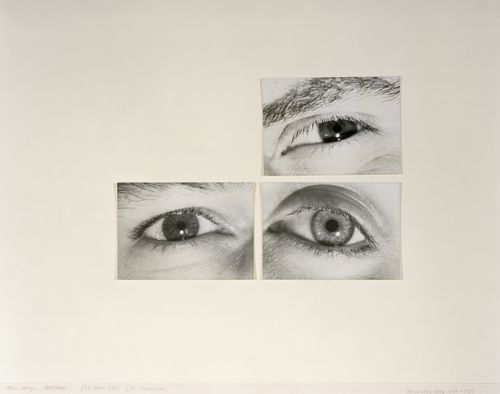
Photograph by Stefano Graziani of the following work: Gordon Matta-Clark, Eyes, 1970-1978, gelatin silver prints, 12.6 x 17.7 cm (each image), PHCON2002:0016:012:050, Estate of Gordon Matta-Clark on deposit at the Canadian Centre for Architecture, © Estate of Gordon Matta-Clark Questioning Pictures is a 36 photograph project commissioned by Fondazione Prada, Milan. Artist Stefano Graziani investigates archival and conservation systems in a number of museums. Through photographing museum objects, Graziani, focusing on the relationship between photographs, the museum objects and the power structures at play within institutions. The museums include the Canadian Centre for Architecture (CCA) in Montréal, Canada; Sir John Soane’s Museum in London, UK; the Kunstmuseum Basel, Switzerland; Museum Insel Hombroich in Neuss, Germany; the Museo di Castelvecchio in Verona, Italy; and the Plaster Cast Gallery at Museo Canova in Possagno, Italy.
PH2018:0005:002
Description:
Photograph by Stefano Graziani of the following work: Gordon Matta-Clark, Eyes, 1970-1978, gelatin silver prints, 12.6 x 17.7 cm (each image), PHCON2002:0016:012:050, Estate of Gordon Matta-Clark on deposit at the Canadian Centre for Architecture, © Estate of Gordon Matta-Clark Questioning Pictures is a 36 photograph project commissioned by Fondazione Prada, Milan. Artist Stefano Graziani investigates archival and conservation systems in a number of museums. Through photographing museum objects, Graziani, focusing on the relationship between photographs, the museum objects and the power structures at play within institutions. The museums include the Canadian Centre for Architecture (CCA) in Montréal, Canada; Sir John Soane’s Museum in London, UK; the Kunstmuseum Basel, Switzerland; Museum Insel Hombroich in Neuss, Germany; the Museo di Castelvecchio in Verona, Italy; and the Plaster Cast Gallery at Museo Canova in Possagno, Italy.
Personnes et institutions:
Date:
2017
2017
Titre:
Questioning Pictures: Photograph of three gelatin silver prints of eyes by Gordon Matta-Clark, 1970-1978
Actions:
PH2018:0005:002
Description:
Photograph by Stefano Graziani of the following work: Gordon Matta-Clark, Eyes, 1970-1978, gelatin silver prints, 12.6 x 17.7 cm (each image), PHCON2002:0016:012:050, Estate of Gordon Matta-Clark on deposit at the Canadian Centre for Architecture, © Estate of Gordon Matta-Clark Questioning Pictures is a 36 photograph project commissioned by Fondazione Prada, Milan. Artist Stefano Graziani investigates archival and conservation systems in a number of museums. Through photographing museum objects, Graziani, focusing on the relationship between photographs, the museum objects and the power structures at play within institutions. The museums include the Canadian Centre for Architecture (CCA) in Montréal, Canada; Sir John Soane’s Museum in London, UK; the Kunstmuseum Basel, Switzerland; Museum Insel Hombroich in Neuss, Germany; the Museo di Castelvecchio in Verona, Italy; and the Plaster Cast Gallery at Museo Canova in Possagno, Italy.
Questioning Pictures: Photograph of three gelatin silver prints of eyes by Gordon Matta-Clark, 1970-1978
Actions:
PH2018:0005:002
Description:
Photograph by Stefano Graziani of the following work: Gordon Matta-Clark, Eyes, 1970-1978, gelatin silver prints, 12.6 x 17.7 cm (each image), PHCON2002:0016:012:050, Estate of Gordon Matta-Clark on deposit at the Canadian Centre for Architecture, © Estate of Gordon Matta-Clark Questioning Pictures is a 36 photograph project commissioned by Fondazione Prada, Milan. Artist Stefano Graziani investigates archival and conservation systems in a number of museums. Through photographing museum objects, Graziani, focusing on the relationship between photographs, the museum objects and the power structures at play within institutions. The museums include the Canadian Centre for Architecture (CCA) in Montréal, Canada; Sir John Soane’s Museum in London, UK; the Kunstmuseum Basel, Switzerland; Museum Insel Hombroich in Neuss, Germany; the Museo di Castelvecchio in Verona, Italy; and the Plaster Cast Gallery at Museo Canova in Possagno, Italy.
Classification:
photographies
photographies
Date:
2017
2017
Personnes et institutions:
Classification:
photographies
photographies
Actions:
Numéro de référence:
PH2018:0005:026
Description:
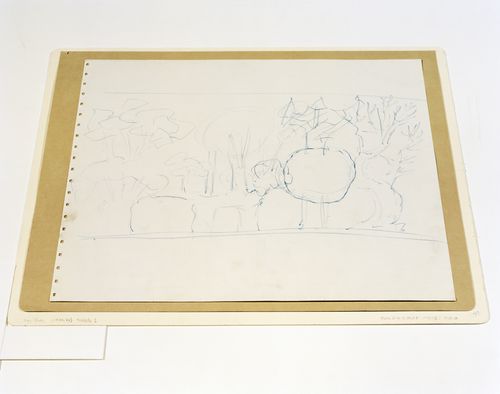
Photograph by Stefano Graziani of the following work: Gordon Matta-Clark, tree study, 1970-1971, blue pencil on paper, 35.6 x 43.2 cm, PHCON2002:0016:060, Gordon Matta-Clark Collection, Canadian Centre for Architecture, Gift of Estate of Gordon Matta-Clark, © Estate of Gordon Matta-Clark Questioning Pictures is a 36 photograph project commissioned by Fondazione Prada, Milan. Artist Stefano Graziani investigates archival and conservation systems in a number of museums. Through photographing museum objects, Graziani, focusing on the relationship between photographs, the museum objects and the power structures at play within institutions. The museums include the Canadian Centre for Architecture (CCA) in Montréal, Canada; Sir John Soane’s Museum in London, UK; the Kunstmuseum Basel, Switzerland; Museum Insel Hombroich in Neuss, Germany; the Museo di Castelvecchio in Verona, Italy; and the Plaster Cast Gallery at Museo Canova in Possagno, Italy.
PH2018:0005:026
Description:
Photograph by Stefano Graziani of the following work: Gordon Matta-Clark, tree study, 1970-1971, blue pencil on paper, 35.6 x 43.2 cm, PHCON2002:0016:060, Gordon Matta-Clark Collection, Canadian Centre for Architecture, Gift of Estate of Gordon Matta-Clark, © Estate of Gordon Matta-Clark Questioning Pictures is a 36 photograph project commissioned by Fondazione Prada, Milan. Artist Stefano Graziani investigates archival and conservation systems in a number of museums. Through photographing museum objects, Graziani, focusing on the relationship between photographs, the museum objects and the power structures at play within institutions. The museums include the Canadian Centre for Architecture (CCA) in Montréal, Canada; Sir John Soane’s Museum in London, UK; the Kunstmuseum Basel, Switzerland; Museum Insel Hombroich in Neuss, Germany; the Museo di Castelvecchio in Verona, Italy; and the Plaster Cast Gallery at Museo Canova in Possagno, Italy.
Personnes et institutions:
Date:
2017
2017
Titre:
Questioning Pictures: Photograph of Tree study, blue pencil on paper by Gordon Matta-Clark, 1970-1971
Actions:
PH2018:0005:026
Description:
Photograph by Stefano Graziani of the following work: Gordon Matta-Clark, tree study, 1970-1971, blue pencil on paper, 35.6 x 43.2 cm, PHCON2002:0016:060, Gordon Matta-Clark Collection, Canadian Centre for Architecture, Gift of Estate of Gordon Matta-Clark, © Estate of Gordon Matta-Clark Questioning Pictures is a 36 photograph project commissioned by Fondazione Prada, Milan. Artist Stefano Graziani investigates archival and conservation systems in a number of museums. Through photographing museum objects, Graziani, focusing on the relationship between photographs, the museum objects and the power structures at play within institutions. The museums include the Canadian Centre for Architecture (CCA) in Montréal, Canada; Sir John Soane’s Museum in London, UK; the Kunstmuseum Basel, Switzerland; Museum Insel Hombroich in Neuss, Germany; the Museo di Castelvecchio in Verona, Italy; and the Plaster Cast Gallery at Museo Canova in Possagno, Italy.
Questioning Pictures: Photograph of Tree study, blue pencil on paper by Gordon Matta-Clark, 1970-1971
Actions:
PH2018:0005:026
Description:
Photograph by Stefano Graziani of the following work: Gordon Matta-Clark, tree study, 1970-1971, blue pencil on paper, 35.6 x 43.2 cm, PHCON2002:0016:060, Gordon Matta-Clark Collection, Canadian Centre for Architecture, Gift of Estate of Gordon Matta-Clark, © Estate of Gordon Matta-Clark Questioning Pictures is a 36 photograph project commissioned by Fondazione Prada, Milan. Artist Stefano Graziani investigates archival and conservation systems in a number of museums. Through photographing museum objects, Graziani, focusing on the relationship between photographs, the museum objects and the power structures at play within institutions. The museums include the Canadian Centre for Architecture (CCA) in Montréal, Canada; Sir John Soane’s Museum in London, UK; the Kunstmuseum Basel, Switzerland; Museum Insel Hombroich in Neuss, Germany; the Museo di Castelvecchio in Verona, Italy; and the Plaster Cast Gallery at Museo Canova in Possagno, Italy.
Classification:
photographies
photographies
Date:
2017
2017
Personnes et institutions:


