


453 Résultats
Classification:
livres
livres
Prix:
$42.50
(disponible sur commande)
Résumé:
Picking up on architecture’s tradition of teaching professional experience to students through conversation, this book provides insight into the ideas, methods, and memories of Günther Vogt, and questions the attitude that this innovative landscape architect adopts towards his profession. With reference to five different locations, Günther Vogt speaks about current themes(...)
$42.50
(disponible sur commande)
Résumé:
Picking up on architecture’s tradition of teaching professional experience to students through conversation, this book provides insight into the ideas, methods, and memories of Günther Vogt, and questions the attitude that this innovative landscape architect adopts towards his profession. With reference to five different locations, Günther Vogt speaks about current themes(...)
Publication:
août 2012
août 2012
Titre:
Vogt architects: Landscape as a cabinet of curiosities
Actions:
Prix:
$42.50
(disponible sur commande)
Résumé:
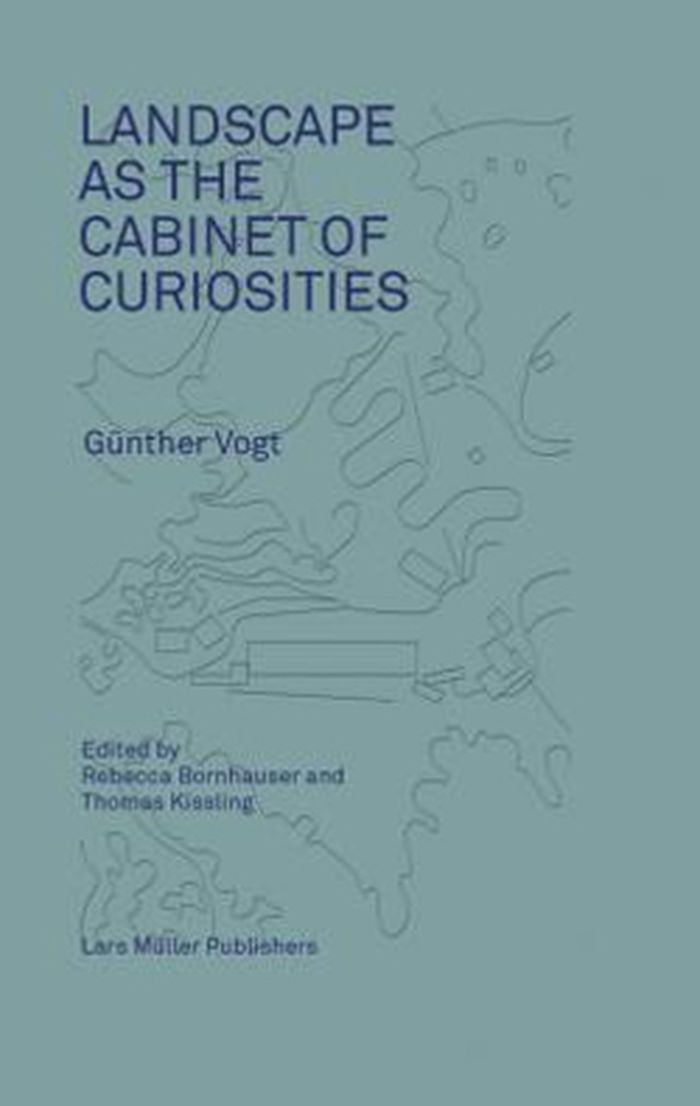
Picking up on architecture’s tradition of teaching professional experience to students through conversation, this book provides insight into the ideas, methods, and memories of Günther Vogt, and questions the attitude that this innovative landscape architect adopts towards his profession. With reference to five different locations, Günther Vogt speaks about current themes of landscape architecture and its relationship to architecture and the city, about his teaching at the ETH Zürich, and about the work of Vogt Landscape Architects; he describes his perception of the landscape as a cabinet of curiosities, tells how he collects various phenomena and individual elements, relates them to each other and rearranges them. And in the reader’s mind’s eye unfolds a cosmos, in which the lack of wholeness of nature seems to be a gain rather than a loss.
Vogt architects: Landscape as a cabinet of curiosities
Actions:
Prix:
$42.50
(disponible sur commande)
Résumé:
Picking up on architecture’s tradition of teaching professional experience to students through conversation, this book provides insight into the ideas, methods, and memories of Günther Vogt, and questions the attitude that this innovative landscape architect adopts towards his profession. With reference to five different locations, Günther Vogt speaks about current themes of landscape architecture and its relationship to architecture and the city, about his teaching at the ETH Zürich, and about the work of Vogt Landscape Architects; he describes his perception of the landscape as a cabinet of curiosities, tells how he collects various phenomena and individual elements, relates them to each other and rearranges them. And in the reader’s mind’s eye unfolds a cosmos, in which the lack of wholeness of nature seems to be a gain rather than a loss.
Classification:
livres
livres
Publication:
août 2012
août 2012
Classification:
livres
livres
Actions:
Prix:
$76.00
(disponible sur commande)
Résumé:
This volume addresses the widespread tendency to discard broken items rather than to refurbish them. Despite the negative ecological effects of overconsumption, overproduction and waste, the habit of replacing rather than repairing goods has persisted and even worsened over recent decades. To counteract this trend, students at the University of Applied Sciences in Munich(...)
$76.00
(disponible sur commande)
Résumé:
This volume addresses the widespread tendency to discard broken items rather than to refurbish them. Despite the negative ecological effects of overconsumption, overproduction and waste, the habit of replacing rather than repairing goods has persisted and even worsened over recent decades. To counteract this trend, students at the University of Applied Sciences in Munich(...)
Sujet:
Expositions en cours
Expositions en cours
Publication:
janvier 2023
janvier 2023
Titre:
Upgrade: Making things better
Actions:
Prix:
$76.00
(disponible sur commande)
Résumé:
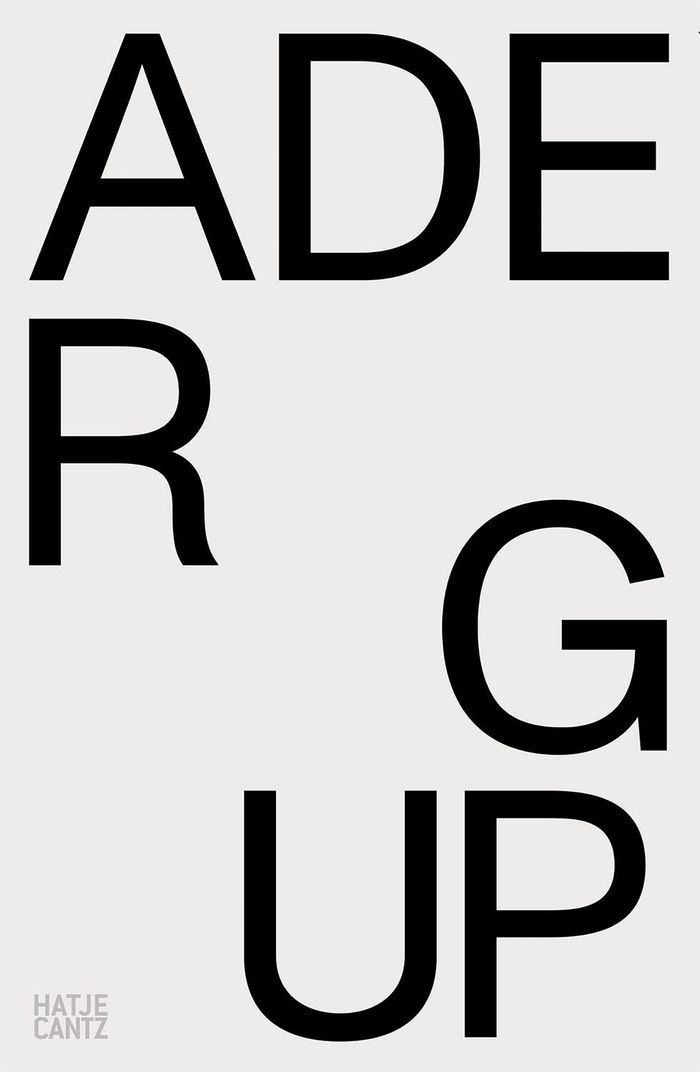
This volume addresses the widespread tendency to discard broken items rather than to refurbish them. Despite the negative ecological effects of overconsumption, overproduction and waste, the habit of replacing rather than repairing goods has persisted and even worsened over recent decades. To counteract this trend, students at the University of Applied Sciences in Munich and ETH Zurich have been developing imaginative concepts for repairing a wide variety of objects, applying them both manually and by using digital techniques such as 3D printing. Beyond restoration, many projects develop and improve the repaired objects constructively, materially, or even in terms of design, lending them new value. This publication presents a variety of approaches and projects, plus essays by notable personalities from the fields of architecture, preservation, materials science, design, manufacturing and craft.
Upgrade: Making things better
Actions:
Prix:
$76.00
(disponible sur commande)
Résumé:
This volume addresses the widespread tendency to discard broken items rather than to refurbish them. Despite the negative ecological effects of overconsumption, overproduction and waste, the habit of replacing rather than repairing goods has persisted and even worsened over recent decades. To counteract this trend, students at the University of Applied Sciences in Munich and ETH Zurich have been developing imaginative concepts for repairing a wide variety of objects, applying them both manually and by using digital techniques such as 3D printing. Beyond restoration, many projects develop and improve the repaired objects constructively, materially, or even in terms of design, lending them new value. This publication presents a variety of approaches and projects, plus essays by notable personalities from the fields of architecture, preservation, materials science, design, manufacturing and craft.
Classification:
livres
livres
Publication:
janvier 2023
janvier 2023
Sujet:
Expositions en cours
Expositions en cours
Classification:
livres
livres
Actions:
Prix:
$47.00
(disponible sur commande)
Résumé:
An exploration of the Alpine region’s dynamic topography, conceived for the 17th Venice Architecture Biennale. For "How Will We Live Together", VOGT Landscape Architects has collaborated with the Chair of Günther Vogt at ETH Zurich, Institute of Landscape and Urban Studies on a publication that excavates the dynamic landscape of the Alpine region, with a particular focus(...)
$47.00
(disponible sur commande)
Résumé:
An exploration of the Alpine region’s dynamic topography, conceived for the 17th Venice Architecture Biennale. For "How Will We Live Together", VOGT Landscape Architects has collaborated with the Chair of Günther Vogt at ETH Zurich, Institute of Landscape and Urban Studies on a publication that excavates the dynamic landscape of the Alpine region, with a particular focus(...)
Titre:
Solid, Fluid, Biotic: Changing alpine landscapes. VOGT Landscape Architects
Actions:
Prix:
$47.00
(disponible sur commande)
Résumé:
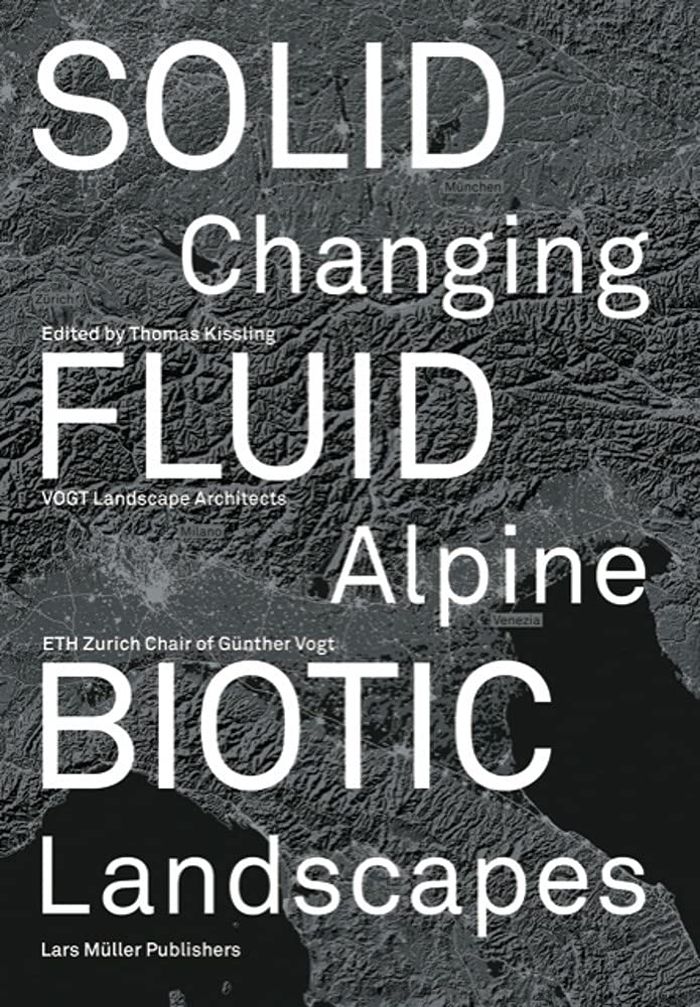
An exploration of the Alpine region’s dynamic topography, conceived for the 17th Venice Architecture Biennale. For "How Will We Live Together", VOGT Landscape Architects has collaborated with the Chair of Günther Vogt at ETH Zurich, Institute of Landscape and Urban Studies on a publication that excavates the dynamic landscape of the Alpine region, with a particular focus on hydrological, biological and geological aspects of the topography. Characterized by a great diversity in all spatial dimensions and qualities, the Alps are not a stable structure, but a dynamic and sensitive organism, defined at the same time by intensive cultivation by humankind. Here, boundaries are ceaselessly overcome and continuously shifted. This book documents the contributions at the Biennale exploring the nature of alpine topography and complements them with scientific essays, artistic works and comprehensive photographs taken during field trips to the Alps.
Solid, Fluid, Biotic: Changing alpine landscapes. VOGT Landscape Architects
Actions:
Prix:
$47.00
(disponible sur commande)
Résumé:
An exploration of the Alpine region’s dynamic topography, conceived for the 17th Venice Architecture Biennale. For "How Will We Live Together", VOGT Landscape Architects has collaborated with the Chair of Günther Vogt at ETH Zurich, Institute of Landscape and Urban Studies on a publication that excavates the dynamic landscape of the Alpine region, with a particular focus on hydrological, biological and geological aspects of the topography. Characterized by a great diversity in all spatial dimensions and qualities, the Alps are not a stable structure, but a dynamic and sensitive organism, defined at the same time by intensive cultivation by humankind. Here, boundaries are ceaselessly overcome and continuously shifted. This book documents the contributions at the Biennale exploring the nature of alpine topography and complements them with scientific essays, artistic works and comprehensive photographs taken during field trips to the Alps.
Classification:
livres
livres
Publication:
décembre 2021
décembre 2021
Classification:
livres
livres
Actions:
Prix:
$75.00
(disponible sur commande)
Résumé:
With more than 150 illustrations, this monograph offers the first in-depth look at the genesis of the Steiger House, a masterpiece of modern Swiss architecture, situated in the Doldertal in Zurich near other modernist houses, such as the Doldertal Houses by Roth and Breuer (1936) and the Fellowship Home (1960). Its central hall relates to Villa la Rotonda by Andrea(...)
$75.00
(disponible sur commande)
Résumé:
With more than 150 illustrations, this monograph offers the first in-depth look at the genesis of the Steiger House, a masterpiece of modern Swiss architecture, situated in the Doldertal in Zurich near other modernist houses, such as the Doldertal Houses by Roth and Breuer (1936) and the Fellowship Home (1960). Its central hall relates to Villa la Rotonda by Andrea(...)
Sujet:
Architecture, monographies
Architecture, monographies
Publication:
février 2025
février 2025
Titre:
The Steiger House Doldertal, Zurich 1959. Rudolf Steiger, Flora Steiger
Actions:
Prix:
$75.00
(disponible sur commande)
Résumé:
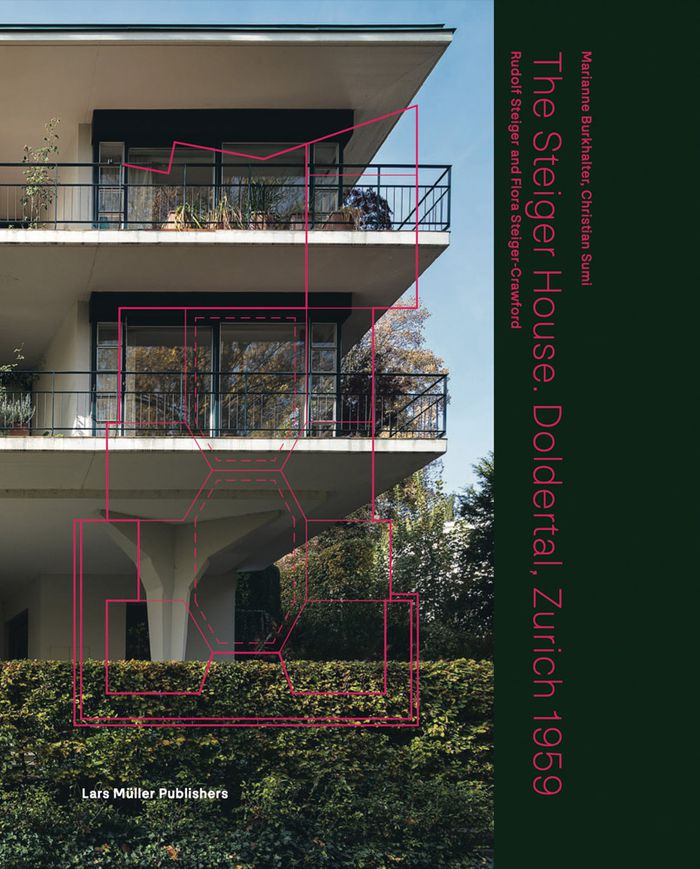
With more than 150 illustrations, this monograph offers the first in-depth look at the genesis of the Steiger House, a masterpiece of modern Swiss architecture, situated in the Doldertal in Zurich near other modernist houses, such as the Doldertal Houses by Roth and Breuer (1936) and the Fellowship Home (1960). Its central hall relates to Villa la Rotonda by Andrea Palladio. Detailed analyses illustrate the central layout and outline the chronology, typology and construction of the building. Further contributions illuminate its relation to local topography, the cultural context of the building, and important historical and contemporary architectural references, including the Steiger House's famous neighbors, the Doldertal Houses. The Swiss architect couple Flora Steiger-Crawford (1899–1991, also a sculptor) and Rudolf Steiger (1900–82) are important representatives of the Swiss avant-garde, and Flora Crawford was the first female architect to graduate from ETH Zurich.
The Steiger House Doldertal, Zurich 1959. Rudolf Steiger, Flora Steiger
Actions:
Prix:
$75.00
(disponible sur commande)
Résumé:
With more than 150 illustrations, this monograph offers the first in-depth look at the genesis of the Steiger House, a masterpiece of modern Swiss architecture, situated in the Doldertal in Zurich near other modernist houses, such as the Doldertal Houses by Roth and Breuer (1936) and the Fellowship Home (1960). Its central hall relates to Villa la Rotonda by Andrea Palladio. Detailed analyses illustrate the central layout and outline the chronology, typology and construction of the building. Further contributions illuminate its relation to local topography, the cultural context of the building, and important historical and contemporary architectural references, including the Steiger House's famous neighbors, the Doldertal Houses. The Swiss architect couple Flora Steiger-Crawford (1899–1991, also a sculptor) and Rudolf Steiger (1900–82) are important representatives of the Swiss avant-garde, and Flora Crawford was the first female architect to graduate from ETH Zurich.
Classification:
livres
livres
Publication:
février 2025
février 2025
Sujet:
Architecture, monographies
Architecture, monographies
Classification:
périodiques
périodiques
Actions:
Prix:
$39.95
(disponible en magasin)
Résumé:
Internationally known for his labors as head of the famous magazine Quaderns between 1981 and 1990, Josep Lluís Mateo has never abandoned his professional practice as an architect, building not only in Spain, but in various European countries, an activity he currently combines with teaching at the ETH in Zurich. This monographic issue presents his most recent projects(...)
$39.95
(disponible en magasin)
Résumé:
Internationally known for his labors as head of the famous magazine Quaderns between 1981 and 1990, Josep Lluís Mateo has never abandoned his professional practice as an architect, building not only in Spain, but in various European countries, an activity he currently combines with teaching at the ETH in Zurich. This monographic issue presents his most recent projects(...)
Sujet:
Revues
Revues
Publication:
février 2002, Barcelona
février 2002, Barcelona
Titre:
2G 25 : Josep Lluis Mateo, recent work
Actions:
Prix:
$39.95
(disponible en magasin)
Résumé:
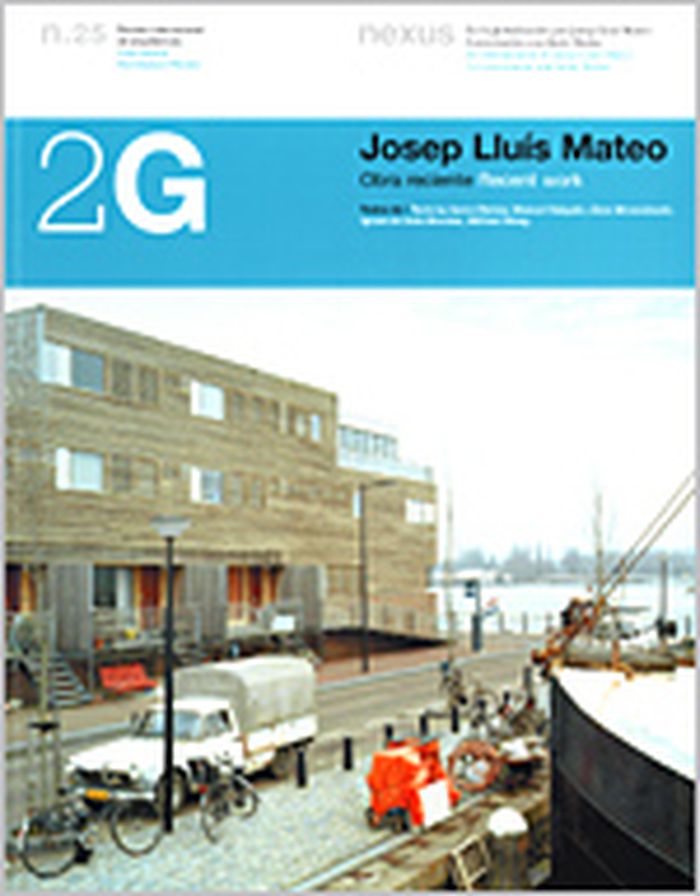
Internationally known for his labors as head of the famous magazine Quaderns between 1981 and 1990, Josep Lluís Mateo has never abandoned his professional practice as an architect, building not only in Spain, but in various European countries, an activity he currently combines with teaching at the ETH in Zurich. This monographic issue presents his most recent projects and buildings. Among his built works are the housing block on Borneo Island (Amsterdam), two groups of apartments in Barcelona, a covered swimming pool in Girona, and the Barcelona International Convention Center, due to be inaugurated in 2004. This number features essays by such prestigious international critics as Wilfried Wang, Ákos Moravánszky, Manuel Delgado, Aaron Betsky and Ignasi de Solà-Morales, and is complemented by a conversation with Iñaki Ábalos, a text by Mateo himself, "In Globalization", and photos taken especially for this issue by Xavier Ribas.
2G 25 : Josep Lluis Mateo, recent work
Actions:
Prix:
$39.95
(disponible en magasin)
Résumé:
Internationally known for his labors as head of the famous magazine Quaderns between 1981 and 1990, Josep Lluís Mateo has never abandoned his professional practice as an architect, building not only in Spain, but in various European countries, an activity he currently combines with teaching at the ETH in Zurich. This monographic issue presents his most recent projects and buildings. Among his built works are the housing block on Borneo Island (Amsterdam), two groups of apartments in Barcelona, a covered swimming pool in Girona, and the Barcelona International Convention Center, due to be inaugurated in 2004. This number features essays by such prestigious international critics as Wilfried Wang, Ákos Moravánszky, Manuel Delgado, Aaron Betsky and Ignasi de Solà-Morales, and is complemented by a conversation with Iñaki Ábalos, a text by Mateo himself, "In Globalization", and photos taken especially for this issue by Xavier Ribas.
Classification:
périodiques
périodiques
Publication:
février 2002, Barcelona
février 2002, Barcelona
Sujet:
Revues
Revues
Classification:
livres
livres
Actions:
Exemplaires:
Description:
x, 98 pages : illustrations ; 18 cm.
Description:
x, 98 pages : illustrations ; 18 cm.
Auteur:
Sujet:
Publication:
Minneapolis : University of Minnesota Press, [2016], ©2016
Minneapolis : University of Minnesota Press, [2016], ©2016
Titre:
Digital Stockholm syndrome in the post-ontological Age / Mark Jarzombek.
Actions:
Exemplaires:
Description:
x, 98 pages : illustrations ; 18 cm.
Digital Stockholm syndrome in the post-ontological Age / Mark Jarzombek.
Actions:
Exemplaires:
Description:
x, 98 pages : illustrations ; 18 cm.
Classification:
livres
livres
Publication:
Minneapolis : University of Minnesota Press, [2016], ©2016
Minneapolis : University of Minnesota Press, [2016], ©2016
Auteur:
Sujet:
Classification:
livres
livres
Titre:
AV Monographs 248: E2A
AV Monographs 248: E2A
Actions:
Prix:
$72.00
(disponible en magasin)
Résumé:
Strong and ironic, material and program-based, contained and purposeful are some of the adjectives that could be used to sum up the sound and lucid oeuvre of Piet and Wim Eckert (born in 1968 and in 1969, respectively). After graduating at the ETH Zürich and a period working at the studio of Rem Koolhaas in Rotterdam and living in cities like Los Angeles or Seoul, they(...)
$72.00
(disponible en magasin)
Résumé:
Strong and ironic, material and program-based, contained and purposeful are some of the adjectives that could be used to sum up the sound and lucid oeuvre of Piet and Wim Eckert (born in 1968 and in 1969, respectively). After graduating at the ETH Zürich and a period working at the studio of Rem Koolhaas in Rotterdam and living in cities like Los Angeles or Seoul, they(...)
Titre:
AV Monographs 248: E2A
Actions:
Prix:
$72.00
(disponible en magasin)
Résumé:
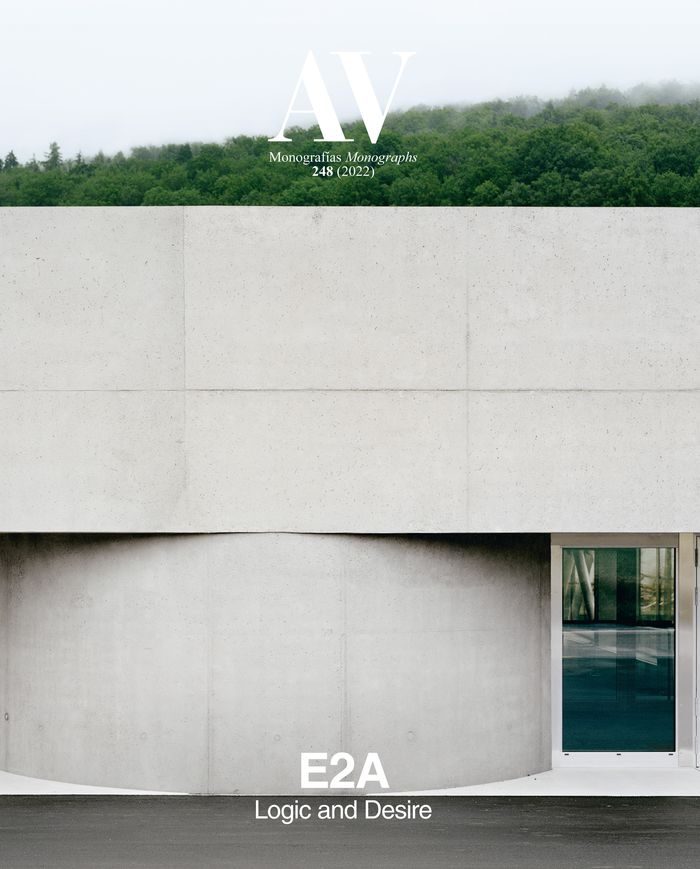
Strong and ironic, material and program-based, contained and purposeful are some of the adjectives that could be used to sum up the sound and lucid oeuvre of Piet and Wim Eckert (born in 1968 and in 1969, respectively). After graduating at the ETH Zürich and a period working at the studio of Rem Koolhaas in Rotterdam and living in cities like Los Angeles or Seoul, they set up their own office, E2A, in 2001. Two decades later, AV Monographs gathers a selection of twenty works that reflect the intellectual maturity and constructive precision of the Zurich-based studio. Despite the scarce geographic variety (only two of the buildings featured are outside of Switzerland), the projects published on these pages address a wide range of programs, from schools to sport centers and headquarters for newspapers, foundations or factories via single-family houses, apartment buildings, mixed-use blocks and even a police station.
AV Monographs 248: E2A
Actions:
Prix:
$72.00
(disponible en magasin)
Résumé:
Strong and ironic, material and program-based, contained and purposeful are some of the adjectives that could be used to sum up the sound and lucid oeuvre of Piet and Wim Eckert (born in 1968 and in 1969, respectively). After graduating at the ETH Zürich and a period working at the studio of Rem Koolhaas in Rotterdam and living in cities like Los Angeles or Seoul, they set up their own office, E2A, in 2001. Two decades later, AV Monographs gathers a selection of twenty works that reflect the intellectual maturity and constructive precision of the Zurich-based studio. Despite the scarce geographic variety (only two of the buildings featured are outside of Switzerland), the projects published on these pages address a wide range of programs, from schools to sport centers and headquarters for newspapers, foundations or factories via single-family houses, apartment buildings, mixed-use blocks and even a police station.
Classification:
livres
livres
Publication:
mars 2023
mars 2023
Sujet:
Revues
Revues
Classification:
livres
livres
Titre:
CARTHA: Building identity
CARTHA: Building identity
Actions:
Prix:
$49.95
(disponible sur commande)
Résumé:
In their new book, the international CARTHA network engages with the question of forming identity in society and the role that architecture plays in this process. Inspired by Jacques Lacan’s approach from psychoanalysis, CARTHA’s members break down the identity-formation process into four sub-steps, which they explore in interviews: Maarten Delbeke, professor of history(...)
$49.95
(disponible sur commande)
Résumé:
In their new book, the international CARTHA network engages with the question of forming identity in society and the role that architecture plays in this process. Inspired by Jacques Lacan’s approach from psychoanalysis, CARTHA’s members break down the identity-formation process into four sub-steps, which they explore in interviews: Maarten Delbeke, professor of history(...)
Sujet:
Théorie de l’architecture
Théorie de l’architecture
Publication:
août 2024
août 2024
Titre:
CARTHA: Building identity
Actions:
Prix:
$49.95
(disponible sur commande)
Résumé:
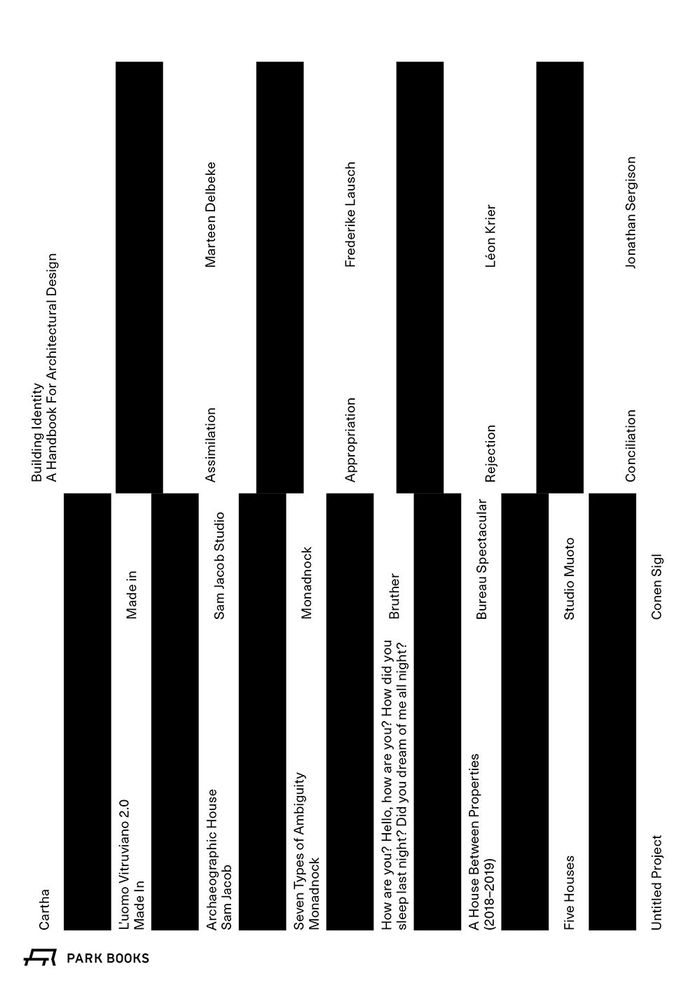
In their new book, the international CARTHA network engages with the question of forming identity in society and the role that architecture plays in this process. Inspired by Jacques Lacan’s approach from psychoanalysis, CARTHA’s members break down the identity-formation process into four sub-steps, which they explore in interviews: Maarten Delbeke, professor of history and theory of architecture at ETH Zurich, talks about ''Assimilation''; Frederike Lausch, researcher at TU Darmstadt’s Department of Architecture, about ''Appropriation''; Rob Krier, Berlin and Liguria-based architect and sculptor, about ''Denial'', and Jonathan Sergison, London-based architect, about ''Reconciliation''. These conversations make up the cornerstones for a new, experimental design methodology, which has been tested in practice by architecture firms Bruther (Bordeaux), Bureau Spectacular (Los Angeles), Conen Sigl (Zurich), Made In (Geneva / Zurich), Monadnock (Rotterdam), Studio Muoto (Paris), and Sam Jacob Studio (London). ''CARTHA—Building Identity'' features a variety of buildings—houses, cottages, apartments—designed in the context of these insights.
CARTHA: Building identity
Actions:
Prix:
$49.95
(disponible sur commande)
Résumé:
In their new book, the international CARTHA network engages with the question of forming identity in society and the role that architecture plays in this process. Inspired by Jacques Lacan’s approach from psychoanalysis, CARTHA’s members break down the identity-formation process into four sub-steps, which they explore in interviews: Maarten Delbeke, professor of history and theory of architecture at ETH Zurich, talks about ''Assimilation''; Frederike Lausch, researcher at TU Darmstadt’s Department of Architecture, about ''Appropriation''; Rob Krier, Berlin and Liguria-based architect and sculptor, about ''Denial'', and Jonathan Sergison, London-based architect, about ''Reconciliation''. These conversations make up the cornerstones for a new, experimental design methodology, which has been tested in practice by architecture firms Bruther (Bordeaux), Bureau Spectacular (Los Angeles), Conen Sigl (Zurich), Made In (Geneva / Zurich), Monadnock (Rotterdam), Studio Muoto (Paris), and Sam Jacob Studio (London). ''CARTHA—Building Identity'' features a variety of buildings—houses, cottages, apartments—designed in the context of these insights.
Classification:
livres
livres
Publication:
août 2024
août 2024
Sujet:
Théorie de l’architecture
Théorie de l’architecture
Classification:
livres
livres
Actions:
Prix:
$49.95
(disponible sur commande)
Résumé:
Since the beginning of the 1990s, Miroslav Šik has been recognised as one of the actively innovative and analytical spirits of the Swiss and German-speaking architectural discussion. His architecture is not spectacular, nor does he flirt with short-lived architectural trends. In a manner of speaking, Miroslav Šik seeks the subversive and powerful middle path between banal(...)
$49.95
(disponible sur commande)
Résumé:
Since the beginning of the 1990s, Miroslav Šik has been recognised as one of the actively innovative and analytical spirits of the Swiss and German-speaking architectural discussion. His architecture is not spectacular, nor does he flirt with short-lived architectural trends. In a manner of speaking, Miroslav Šik seeks the subversive and powerful middle path between banal(...)
Sujet:
petits formats
petits formats
Publication:
janvier 1900, Luzern
janvier 1900, Luzern
Titre:
Old-new : Miroslav Šik / de aedibus 2
Actions:
Prix:
$49.95
(disponible sur commande)
Résumé:
Since the beginning of the 1990s, Miroslav Šik has been recognised as one of the actively innovative and analytical spirits of the Swiss and German-speaking architectural discussion. His architecture is not spectacular, nor does he flirt with short-lived architectural trends. In a manner of speaking, Miroslav Šik seeks the subversive and powerful middle path between banal and over-ambitious architecture. His interest and attention is focused on the people who live in the buildings and populate the cites, and he is concerned with the necessary rather than the superfluous. The book introduces three recent works by the Zurich architect and professor at the ETH Zurich in subtle photographs by Christian Kerez and Walter Mayr, accompanied by plans. The high-quality texts draw attention to architectural cross-references and plumb the depths of the attributes of a powerful new whole that has emerged from a building complex. Selected texts by Miroslav Šik document the foundations of his rich theoretical basis.
Old-new : Miroslav Šik / de aedibus 2
Actions:
Prix:
$49.95
(disponible sur commande)
Résumé:
Since the beginning of the 1990s, Miroslav Šik has been recognised as one of the actively innovative and analytical spirits of the Swiss and German-speaking architectural discussion. His architecture is not spectacular, nor does he flirt with short-lived architectural trends. In a manner of speaking, Miroslav Šik seeks the subversive and powerful middle path between banal and over-ambitious architecture. His interest and attention is focused on the people who live in the buildings and populate the cites, and he is concerned with the necessary rather than the superfluous. The book introduces three recent works by the Zurich architect and professor at the ETH Zurich in subtle photographs by Christian Kerez and Walter Mayr, accompanied by plans. The high-quality texts draw attention to architectural cross-references and plumb the depths of the attributes of a powerful new whole that has emerged from a building complex. Selected texts by Miroslav Šik document the foundations of his rich theoretical basis.
Classification:
livres
livres
Publication:
janvier 1900, Luzern
janvier 1900, Luzern
Sujet:
petits formats
petits formats
Classification:
livres
livres
Titre:
The Things Around Us
The Things Around Us
Actions:
Prix:
$35.00
(disponible en magasin)
Résumé:
Embedded in politically and economically charged sites in the Pearl River Delta, Mongolia, and the European Union, 51N4E (Johan Anrys and Freek Persyn) and Rural Urban Framework (Joshua Bolchover and John Lin) operate in expanded ecologies of architectural practice, questioning the role of the architect today. By collaborating with policymakers, local contractors, and(...)
$35.00
(disponible en magasin)
Résumé:
Embedded in politically and economically charged sites in the Pearl River Delta, Mongolia, and the European Union, 51N4E (Johan Anrys and Freek Persyn) and Rural Urban Framework (Joshua Bolchover and John Lin) operate in expanded ecologies of architectural practice, questioning the role of the architect today. By collaborating with policymakers, local contractors, and(...)
Titre:
The Things Around Us
Actions:
Prix:
$35.00
(disponible en magasin)
Résumé:
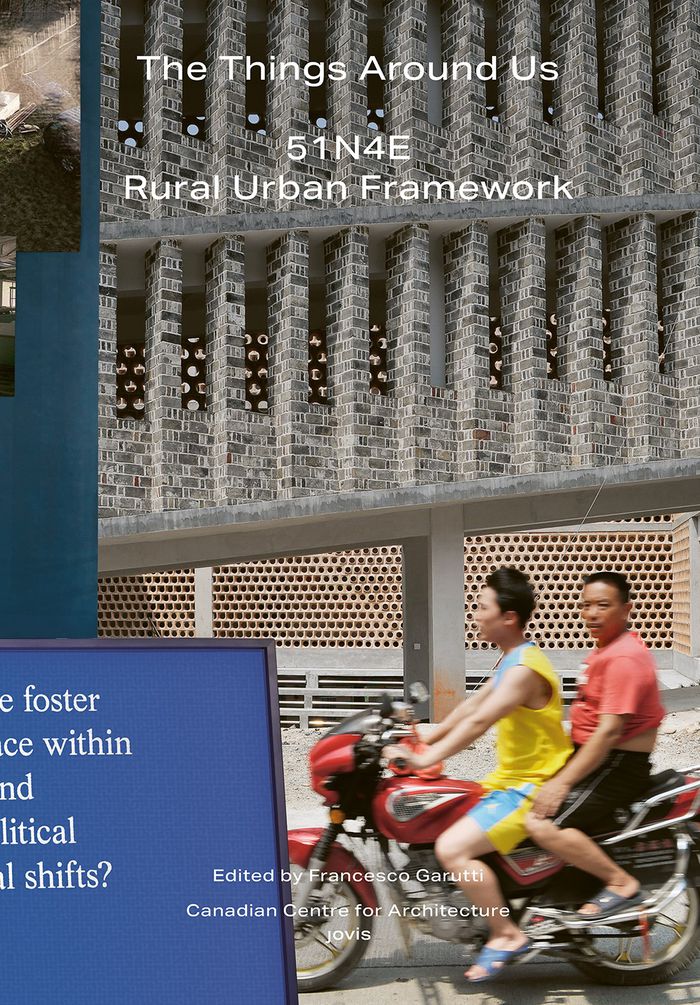
Embedded in politically and economically charged sites in the Pearl River Delta, Mongolia, and the European Union, 51N4E (Johan Anrys and Freek Persyn) and Rural Urban Framework (Joshua Bolchover and John Lin) operate in expanded ecologies of architectural practice, questioning the role of the architect today. By collaborating with policymakers, local contractors, and NGOs, and by engaging their respective labs at ETH Zu¨rich and the University of Hong Kong as key research locations, both offices investigate new forms of cooperation and dialogue as crucial strategies for design. 51N4E and RUF work at the seams of urbanization, with projects situated in transitional settlements in Ulaanbaatar, the rural regions of China, the transforming neighborhoods of Brussels, and Albania’s shifting public spaces. This publication compares their research and design processes in order to question the extents and certainties of architecture against backdrops of indeterminate notions of citizenship, unstable stages of urbanization, and insecure economies and ecologies.
The Things Around Us
Actions:
Prix:
$35.00
(disponible en magasin)
Résumé:
Embedded in politically and economically charged sites in the Pearl River Delta, Mongolia, and the European Union, 51N4E (Johan Anrys and Freek Persyn) and Rural Urban Framework (Joshua Bolchover and John Lin) operate in expanded ecologies of architectural practice, questioning the role of the architect today. By collaborating with policymakers, local contractors, and NGOs, and by engaging their respective labs at ETH Zu¨rich and the University of Hong Kong as key research locations, both offices investigate new forms of cooperation and dialogue as crucial strategies for design. 51N4E and RUF work at the seams of urbanization, with projects situated in transitional settlements in Ulaanbaatar, the rural regions of China, the transforming neighborhoods of Brussels, and Albania’s shifting public spaces. This publication compares their research and design processes in order to question the extents and certainties of architecture against backdrops of indeterminate notions of citizenship, unstable stages of urbanization, and insecure economies and ecologies.
Classification:
livres
livres
Publication:
avril 2021
avril 2021
Sujet:
Publications du CCA
Publications du CCA


