


6146 Résultats
Niveau de description archivistique:
Projet
Projet
Numéro de référence:
AP148.S1.1972.PR02
Description:
Project series documents Poli's design and development work on the Supersurface project created with Superstudio in 1972. Part of Superstudio's project, "Five Fundamental Acts: Life, Education, Ceremony, Love and Death", included films created on each theme, Supersurface was the first in the series ("Life"), and was shown at the 1972 exhibition "Italy: The New Domestic Landscape, Achievements and Problems in Italian Design" at the Museum of Modern Art (MoMA) in New York. The final film had a running time of 15 minutes and was shot in colour on 16 mm film. Material predominantly includes project drawings, collages and sketches, along with a textual and drawn storyboard for the film. The storyboard was sent in a folder made by Poli, which has been retained as part of the fonds. Material in the folder has been kept in the order in which Poli transferred it. Of note are also 3 larger drawings, one of which is a collage of photos featuring Poli, and another is an immense brightly-coloured collage of a young woman on the edge of a sea with a machine floating beaming down on her. These drawings have been signed Alessandro Poli-Superstudio. Also included is a copy of "L'Espresso" magazine dated 4 June 1972 (no. 23), featuring Umberto Eco's article "Dal cucchiaio alla città".
AP148.S1.1972.PR02
Description:
Project series documents Poli's design and development work on the Supersurface project created with Superstudio in 1972. Part of Superstudio's project, "Five Fundamental Acts: Life, Education, Ceremony, Love and Death", included films created on each theme, Supersurface was the first in the series ("Life"), and was shown at the 1972 exhibition "Italy: The New Domestic Landscape, Achievements and Problems in Italian Design" at the Museum of Modern Art (MoMA) in New York. The final film had a running time of 15 minutes and was shot in colour on 16 mm film. Material predominantly includes project drawings, collages and sketches, along with a textual and drawn storyboard for the film. The storyboard was sent in a folder made by Poli, which has been retained as part of the fonds. Material in the folder has been kept in the order in which Poli transferred it. Of note are also 3 larger drawings, one of which is a collage of photos featuring Poli, and another is an immense brightly-coloured collage of a young woman on the edge of a sea with a machine floating beaming down on her. These drawings have been signed Alessandro Poli-Superstudio. Also included is a copy of "L'Espresso" magazine dated 4 June 1972 (no. 23), featuring Umberto Eco's article "Dal cucchiaio alla città".
Personnes et institutions:
Date:
1971-1972
1971-1972
Titre:
Supersuperficie [Supersurface] (1972)
Actions:
AP148.S1.1972.PR02
Description:
Project series documents Poli's design and development work on the Supersurface project created with Superstudio in 1972. Part of Superstudio's project, "Five Fundamental Acts: Life, Education, Ceremony, Love and Death", included films created on each theme, Supersurface was the first in the series ("Life"), and was shown at the 1972 exhibition "Italy: The New Domestic Landscape, Achievements and Problems in Italian Design" at the Museum of Modern Art (MoMA) in New York. The final film had a running time of 15 minutes and was shot in colour on 16 mm film. Material predominantly includes project drawings, collages and sketches, along with a textual and drawn storyboard for the film. The storyboard was sent in a folder made by Poli, which has been retained as part of the fonds. Material in the folder has been kept in the order in which Poli transferred it. Of note are also 3 larger drawings, one of which is a collage of photos featuring Poli, and another is an immense brightly-coloured collage of a young woman on the edge of a sea with a machine floating beaming down on her. These drawings have been signed Alessandro Poli-Superstudio. Also included is a copy of "L'Espresso" magazine dated 4 June 1972 (no. 23), featuring Umberto Eco's article "Dal cucchiaio alla città".
Supersuperficie [Supersurface] (1972)
Actions:
AP148.S1.1972.PR02
Description:
Project series documents Poli's design and development work on the Supersurface project created with Superstudio in 1972. Part of Superstudio's project, "Five Fundamental Acts: Life, Education, Ceremony, Love and Death", included films created on each theme, Supersurface was the first in the series ("Life"), and was shown at the 1972 exhibition "Italy: The New Domestic Landscape, Achievements and Problems in Italian Design" at the Museum of Modern Art (MoMA) in New York. The final film had a running time of 15 minutes and was shot in colour on 16 mm film. Material predominantly includes project drawings, collages and sketches, along with a textual and drawn storyboard for the film. The storyboard was sent in a folder made by Poli, which has been retained as part of the fonds. Material in the folder has been kept in the order in which Poli transferred it. Of note are also 3 larger drawings, one of which is a collage of photos featuring Poli, and another is an immense brightly-coloured collage of a young woman on the edge of a sea with a machine floating beaming down on her. These drawings have been signed Alessandro Poli-Superstudio. Also included is a copy of "L'Espresso" magazine dated 4 June 1972 (no. 23), featuring Umberto Eco's article "Dal cucchiaio alla città".
Niveau de description archivistique:
Project
Project
Date:
1971-1972
1971-1972
Personnes et institutions:
Classification:
événements
événements
Titre:
Le rôle élargi: SITU
Le rôle élargi: SITU
Actions:
Description:
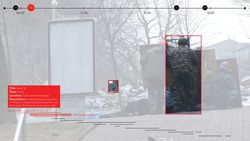
Bradley Samuels présente le travail récent de SITU Research et le rôle joué par la recherche au sein de la pratique de SITU dans son ensemble. Une série d’études de cas sera présentée, explorant le rôle élargi de la pratique architecturale et spatiale à travers un éventail de domaines, des droits humains à la politique publique, de la science de la terre au design(...)
Bradley Samuels présente le travail récent de SITU Research et le rôle joué par la recherche au sein de la pratique de SITU dans son ensemble. Une série d’études de cas sera présentée, explorant le rôle élargi de la pratique architecturale et spatiale à travers un éventail de domaines, des droits humains à la politique publique, de la science de la terre au design(...)
Localisation:
Théâtre Paul-Desmarais
Théâtre Paul-Desmarais
Date:
14 janvier 2016
14 janvier 2016
Titre:
Le rôle élargi: SITU
Actions:
Description:
Bradley Samuels présente le travail récent de SITU Research et le rôle joué par la recherche au sein de la pratique de SITU dans son ensemble. Une série d’études de cas sera présentée, explorant le rôle élargi de la pratique architecturale et spatiale à travers un éventail de domaines, des droits humains à la politique publique, de la science de la terre au design(...)
Le rôle élargi: SITU
Actions:
Description:
Bradley Samuels présente le travail récent de SITU Research et le rôle joué par la recherche au sein de la pratique de SITU dans son ensemble. Une série d’études de cas sera présentée, explorant le rôle élargi de la pratique architecturale et spatiale à travers un éventail de domaines, des droits humains à la politique publique, de la science de la terre au design(...)
Classification:
événements
événements
Date:
14 janvier 2016
14 janvier 2016
Localisation:
Théâtre Paul-Desmarais
Théâtre Paul-Desmarais
Niveau de description archivistique:
Projet
Projet
Numéro de référence:
AP207.S1.2012.PR07
Description:
The project series documents "Human Wall", an installation by Pettena presented at the Galleria Federico Luger in Milan, in 2012. The installation consists of a large rectangular surface handmade with clay and covered in imprints of hands and fingers. "A wall that is described as "human," certainly not just because it is made by man, but rather because the latter's intervention find expression in the choice of a natural material and in the sign that he leaves on its surface with his fingers." [1] Other editions of this installation were also presented at the Utah Museum of Contemporary Art in Salt Lake City, in 2012, and the exhibition "Architetture Naturali/Gianni Pettena" at the Kunst Meran/Merano Arte in Meran, in 2017. The project series contains design studies for the texturing of the wall, photographs of the installation, a video of the montage of the installation in Milan in 2011. Source: [1] Gianni Pettena website, https://www.giannipettena.it/italiano/opere-1/inst-human-wall-2012-1/ (last accessed 27 January 2020)
AP207.S1.2012.PR07
Description:
The project series documents "Human Wall", an installation by Pettena presented at the Galleria Federico Luger in Milan, in 2012. The installation consists of a large rectangular surface handmade with clay and covered in imprints of hands and fingers. "A wall that is described as "human," certainly not just because it is made by man, but rather because the latter's intervention find expression in the choice of a natural material and in the sign that he leaves on its surface with his fingers." [1] Other editions of this installation were also presented at the Utah Museum of Contemporary Art in Salt Lake City, in 2012, and the exhibition "Architetture Naturali/Gianni Pettena" at the Kunst Meran/Merano Arte in Meran, in 2017. The project series contains design studies for the texturing of the wall, photographs of the installation, a video of the montage of the installation in Milan in 2011. Source: [1] Gianni Pettena website, https://www.giannipettena.it/italiano/opere-1/inst-human-wall-2012-1/ (last accessed 27 January 2020)
Personnes et institutions:
Date:
2012-2018
2012-2018
Titre:
Human Wall (2012)
Actions:
AP207.S1.2012.PR07
Description:
The project series documents "Human Wall", an installation by Pettena presented at the Galleria Federico Luger in Milan, in 2012. The installation consists of a large rectangular surface handmade with clay and covered in imprints of hands and fingers. "A wall that is described as "human," certainly not just because it is made by man, but rather because the latter's intervention find expression in the choice of a natural material and in the sign that he leaves on its surface with his fingers." [1] Other editions of this installation were also presented at the Utah Museum of Contemporary Art in Salt Lake City, in 2012, and the exhibition "Architetture Naturali/Gianni Pettena" at the Kunst Meran/Merano Arte in Meran, in 2017. The project series contains design studies for the texturing of the wall, photographs of the installation, a video of the montage of the installation in Milan in 2011. Source: [1] Gianni Pettena website, https://www.giannipettena.it/italiano/opere-1/inst-human-wall-2012-1/ (last accessed 27 January 2020)
Human Wall (2012)
Actions:
AP207.S1.2012.PR07
Description:
The project series documents "Human Wall", an installation by Pettena presented at the Galleria Federico Luger in Milan, in 2012. The installation consists of a large rectangular surface handmade with clay and covered in imprints of hands and fingers. "A wall that is described as "human," certainly not just because it is made by man, but rather because the latter's intervention find expression in the choice of a natural material and in the sign that he leaves on its surface with his fingers." [1] Other editions of this installation were also presented at the Utah Museum of Contemporary Art in Salt Lake City, in 2012, and the exhibition "Architetture Naturali/Gianni Pettena" at the Kunst Meran/Merano Arte in Meran, in 2017. The project series contains design studies for the texturing of the wall, photographs of the installation, a video of the montage of the installation in Milan in 2011. Source: [1] Gianni Pettena website, https://www.giannipettena.it/italiano/opere-1/inst-human-wall-2012-1/ (last accessed 27 January 2020)
Niveau de description archivistique:
Project
Project
Date:
2012-2018
2012-2018
Personnes et institutions:
Niveau de description archivistique:
Sous-série
Sous-série
Numéro de référence:
AP197.S1.SS3
Description:
This subseries documents Frampton's activities as Graham Foundation Fellow at the Institute for Architecture and Urban Studies (IAUS), including the development and design of IAUS’s only built project, the Low-Rise High-Density (LRHD) housing project in Brooklyn, New York. Also documented in this series are some of Frampton's other activities for IAUS. Frampton was not only co-founding editor of IAUS's magazine, "Oppositions" (1973), but also served as an editor for all of IAUS's publications; their journal, book series, and catalogue series. IAUS also served as a cultural space that held lectures for highschool and undergraduate students. Materials in this subseries consist of elevation and site drawings for the LRHD housing project and photographic materials for MoMA’s exhibition on the LRHD. Textual documentation is comprised of IAUS’s original application to the Ford Foundation and drafts of Frampton’s writings on the LRHD as well as IAUS meeting minutes, IAUS by-laws, announcement pamphlets, booklets, IAUS research programs and outlines of seminar sessions, correspondence, postcards, and posters. The subseries also includes an IAUS watch.
AP197.S1.SS3
Description:
This subseries documents Frampton's activities as Graham Foundation Fellow at the Institute for Architecture and Urban Studies (IAUS), including the development and design of IAUS’s only built project, the Low-Rise High-Density (LRHD) housing project in Brooklyn, New York. Also documented in this series are some of Frampton's other activities for IAUS. Frampton was not only co-founding editor of IAUS's magazine, "Oppositions" (1973), but also served as an editor for all of IAUS's publications; their journal, book series, and catalogue series. IAUS also served as a cultural space that held lectures for highschool and undergraduate students. Materials in this subseries consist of elevation and site drawings for the LRHD housing project and photographic materials for MoMA’s exhibition on the LRHD. Textual documentation is comprised of IAUS’s original application to the Ford Foundation and drafts of Frampton’s writings on the LRHD as well as IAUS meeting minutes, IAUS by-laws, announcement pamphlets, booklets, IAUS research programs and outlines of seminar sessions, correspondence, postcards, and posters. The subseries also includes an IAUS watch.
Personnes et institutions:
Date:
1970-2015
1970-2015
Titre:
Institute for Architecture and Urban Studies (IAUS) (1970-1982)
Actions:
AP197.S1.SS3
Description:
This subseries documents Frampton's activities as Graham Foundation Fellow at the Institute for Architecture and Urban Studies (IAUS), including the development and design of IAUS’s only built project, the Low-Rise High-Density (LRHD) housing project in Brooklyn, New York. Also documented in this series are some of Frampton's other activities for IAUS. Frampton was not only co-founding editor of IAUS's magazine, "Oppositions" (1973), but also served as an editor for all of IAUS's publications; their journal, book series, and catalogue series. IAUS also served as a cultural space that held lectures for highschool and undergraduate students. Materials in this subseries consist of elevation and site drawings for the LRHD housing project and photographic materials for MoMA’s exhibition on the LRHD. Textual documentation is comprised of IAUS’s original application to the Ford Foundation and drafts of Frampton’s writings on the LRHD as well as IAUS meeting minutes, IAUS by-laws, announcement pamphlets, booklets, IAUS research programs and outlines of seminar sessions, correspondence, postcards, and posters. The subseries also includes an IAUS watch.
Institute for Architecture and Urban Studies (IAUS) (1970-1982)
Actions:
AP197.S1.SS3
Description:
This subseries documents Frampton's activities as Graham Foundation Fellow at the Institute for Architecture and Urban Studies (IAUS), including the development and design of IAUS’s only built project, the Low-Rise High-Density (LRHD) housing project in Brooklyn, New York. Also documented in this series are some of Frampton's other activities for IAUS. Frampton was not only co-founding editor of IAUS's magazine, "Oppositions" (1973), but also served as an editor for all of IAUS's publications; their journal, book series, and catalogue series. IAUS also served as a cultural space that held lectures for highschool and undergraduate students. Materials in this subseries consist of elevation and site drawings for the LRHD housing project and photographic materials for MoMA’s exhibition on the LRHD. Textual documentation is comprised of IAUS’s original application to the Ford Foundation and drafts of Frampton’s writings on the LRHD as well as IAUS meeting minutes, IAUS by-laws, announcement pamphlets, booklets, IAUS research programs and outlines of seminar sessions, correspondence, postcards, and posters. The subseries also includes an IAUS watch.
Niveau de description archivistique:
Subseries
Subseries
Date:
1970-2015
1970-2015
Personnes et institutions:
Niveau de description archivistique:
Projet
Projet
Numéro de référence:
AP178.S1.2003.PR02
Description:
This project series documents the Recupero del Palazzo Donnaregina / Museu de Arte Contemporâneo in Napoli, Italy. While the records were held in the office’s archives this project was assigned the number 55/00. The office assigned the date 2003 for this project. The Palazzo Donnaregina was built during the 19th century and served multiple functions during his history, including a bank and a school of administration. In 2001, the building was abandoned after a flood. In 2005, the Campania Regional Government bought the building and leased it to the Fondazione Donnaregina per le arti contemporane. Àlvaro Siza and the Studio DAZ-Dumontet Antonini Zaske were selected to renovate and repurpose the builsing into a contemporary art museum. The museum included exhibition halls, a library, a bookshop, and a mediatheque. The project was realized. Documenting this project are sketches, studies, design development drawings, plans, and details. Textual material includes project documentation, catalogs from suppliers, and correspondence. Photographic material documents Siza's visits, project site, and construction work.
AP178.S1.2003.PR02
Description:
This project series documents the Recupero del Palazzo Donnaregina / Museu de Arte Contemporâneo in Napoli, Italy. While the records were held in the office’s archives this project was assigned the number 55/00. The office assigned the date 2003 for this project. The Palazzo Donnaregina was built during the 19th century and served multiple functions during his history, including a bank and a school of administration. In 2001, the building was abandoned after a flood. In 2005, the Campania Regional Government bought the building and leased it to the Fondazione Donnaregina per le arti contemporane. Àlvaro Siza and the Studio DAZ-Dumontet Antonini Zaske were selected to renovate and repurpose the builsing into a contemporary art museum. The museum included exhibition halls, a library, a bookshop, and a mediatheque. The project was realized. Documenting this project are sketches, studies, design development drawings, plans, and details. Textual material includes project documentation, catalogs from suppliers, and correspondence. Photographic material documents Siza's visits, project site, and construction work.
Personnes et institutions:
Date:
2003-2006
2003-2006
Titre:
Recupero del Palazzo Donnaregina, Museu de Arte Contem. [Restoration of the Palazzo Donnaregina, Museum of contemporary Art], Naples, Italy (2003)
Actions:
AP178.S1.2003.PR02
Description:
This project series documents the Recupero del Palazzo Donnaregina / Museu de Arte Contemporâneo in Napoli, Italy. While the records were held in the office’s archives this project was assigned the number 55/00. The office assigned the date 2003 for this project. The Palazzo Donnaregina was built during the 19th century and served multiple functions during his history, including a bank and a school of administration. In 2001, the building was abandoned after a flood. In 2005, the Campania Regional Government bought the building and leased it to the Fondazione Donnaregina per le arti contemporane. Àlvaro Siza and the Studio DAZ-Dumontet Antonini Zaske were selected to renovate and repurpose the builsing into a contemporary art museum. The museum included exhibition halls, a library, a bookshop, and a mediatheque. The project was realized. Documenting this project are sketches, studies, design development drawings, plans, and details. Textual material includes project documentation, catalogs from suppliers, and correspondence. Photographic material documents Siza's visits, project site, and construction work.
Recupero del Palazzo Donnaregina, Museu de Arte Contem. [Restoration of the Palazzo Donnaregina, Museum of contemporary Art], Naples, Italy (2003)
Actions:
AP178.S1.2003.PR02
Description:
This project series documents the Recupero del Palazzo Donnaregina / Museu de Arte Contemporâneo in Napoli, Italy. While the records were held in the office’s archives this project was assigned the number 55/00. The office assigned the date 2003 for this project. The Palazzo Donnaregina was built during the 19th century and served multiple functions during his history, including a bank and a school of administration. In 2001, the building was abandoned after a flood. In 2005, the Campania Regional Government bought the building and leased it to the Fondazione Donnaregina per le arti contemporane. Àlvaro Siza and the Studio DAZ-Dumontet Antonini Zaske were selected to renovate and repurpose the builsing into a contemporary art museum. The museum included exhibition halls, a library, a bookshop, and a mediatheque. The project was realized. Documenting this project are sketches, studies, design development drawings, plans, and details. Textual material includes project documentation, catalogs from suppliers, and correspondence. Photographic material documents Siza's visits, project site, and construction work.
Niveau de description archivistique:
Project
Project
Date:
2003-2006
2003-2006
Personnes et institutions:
Classification:
événements
événements
Actions:
Description:
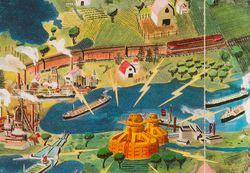
Joignez-vous à nous à Toronto pour une conversation entre Naomi Klein, auteur et activiste, et Mirko Zardini, directeur du CCA, qui portera sur les perspectives tendues et conflictuelles de ce que l’on appelle « l’environnement naturel ». Quel rôle joueront les architectes, les architectes de paysage, les urbanistes, les artistes et les activistes dans l’effort de trouver(...)
Joignez-vous à nous à Toronto pour une conversation entre Naomi Klein, auteur et activiste, et Mirko Zardini, directeur du CCA, qui portera sur les perspectives tendues et conflictuelles de ce que l’on appelle « l’environnement naturel ». Quel rôle joueront les architectes, les architectes de paysage, les urbanistes, les artistes et les activistes dans l’effort de trouver(...)
Localisation:
John H. Daniels Faculty of Architecture, Landscape, and Design, University of Toronto
John H. Daniels Faculty of Architecture, Landscape, and Design, University of Toronto
Date:
17 octobre 2016, 18h30
17 octobre 2016, 18h30
Titre:
What Comes After the Environment?
Actions:
Description:
Joignez-vous à nous à Toronto pour une conversation entre Naomi Klein, auteur et activiste, et Mirko Zardini, directeur du CCA, qui portera sur les perspectives tendues et conflictuelles de ce que l’on appelle « l’environnement naturel ». Quel rôle joueront les architectes, les architectes de paysage, les urbanistes, les artistes et les activistes dans l’effort de trouver(...)
What Comes After the Environment?
Actions:
Description:
Joignez-vous à nous à Toronto pour une conversation entre Naomi Klein, auteur et activiste, et Mirko Zardini, directeur du CCA, qui portera sur les perspectives tendues et conflictuelles de ce que l’on appelle « l’environnement naturel ». Quel rôle joueront les architectes, les architectes de paysage, les urbanistes, les artistes et les activistes dans l’effort de trouver(...)
Classification:
événements
événements
Date:
17 octobre 2016
18h30
17 octobre 2016
18h30
Localisation:
John H. Daniels Faculty of Architecture, Landscape, and Design, University of Toronto
John H. Daniels Faculty of Architecture, Landscape, and Design, University of Toronto
Niveau de description archivistique:
Série(s)
Série(s)
Numéro de référence:
AP177.S1
Description:
This series documents Jesse Reiser and Nanako Umemoto’s design process for the Kansai-kan of the National Diet Library competition in 1996. The variety of formats present in the series relate to the firm’s design process for this project, where manual drawings, physical models and CAD software contributed to one another throughout design iteration. Some digital files were created after the competition. Manual drawings include penciled sketches, detailed inked plans and printed CAD files generally taped on larger mylar sheets. They represent either plans or details of the building’s design. The printed renderings most often present elevations and sections of the buildings. For plans, other printed CAD files were inked back on mylar sheets. Drawings are often annotated and precisely identify the different elements of the library’s program. Digital files represent either elements of the architectural design (conveyors, auditorium, store, etc.) or detailed plans, including topographical lines and 3-D models. They include rendered and scanned images and plans in TIFF, GIF, JPEG, PICT (MacIntosh QuickDraw) and FH5 (Macromedia Freehand) file formats. Most CAD models were created in form*Z, although Microstation DGN files and IGES files created in Alias are also present in the project records. The directory “Kansai Documents” contains a few textual records created with the publishing software QuarkXPress, including labels to be printed and used on physical drawings, correspondence and a text by Jesse Reiser for the Reversible Destiny exhibition catalogue in 1997. Most directories and file names are indicative of the file’s content, clearly referring to building elements, although in some cases files names are non-descriptive. For example, some files use the name of one of the assistants (Yama). File names are sometimes repeated in different directories, including files that are part of AP177.S2.001
AP177.S1
Description:
This series documents Jesse Reiser and Nanako Umemoto’s design process for the Kansai-kan of the National Diet Library competition in 1996. The variety of formats present in the series relate to the firm’s design process for this project, where manual drawings, physical models and CAD software contributed to one another throughout design iteration. Some digital files were created after the competition. Manual drawings include penciled sketches, detailed inked plans and printed CAD files generally taped on larger mylar sheets. They represent either plans or details of the building’s design. The printed renderings most often present elevations and sections of the buildings. For plans, other printed CAD files were inked back on mylar sheets. Drawings are often annotated and precisely identify the different elements of the library’s program. Digital files represent either elements of the architectural design (conveyors, auditorium, store, etc.) or detailed plans, including topographical lines and 3-D models. They include rendered and scanned images and plans in TIFF, GIF, JPEG, PICT (MacIntosh QuickDraw) and FH5 (Macromedia Freehand) file formats. Most CAD models were created in form*Z, although Microstation DGN files and IGES files created in Alias are also present in the project records. The directory “Kansai Documents” contains a few textual records created with the publishing software QuarkXPress, including labels to be printed and used on physical drawings, correspondence and a text by Jesse Reiser for the Reversible Destiny exhibition catalogue in 1997. Most directories and file names are indicative of the file’s content, clearly referring to building elements, although in some cases files names are non-descriptive. For example, some files use the name of one of the assistants (Yama). File names are sometimes repeated in different directories, including files that are part of AP177.S2.001
Personnes et institutions:
Date:
1996-2014
1996-2014
Titre:
RUR Architecture working files
Actions:
AP177.S1
Description:
This series documents Jesse Reiser and Nanako Umemoto’s design process for the Kansai-kan of the National Diet Library competition in 1996. The variety of formats present in the series relate to the firm’s design process for this project, where manual drawings, physical models and CAD software contributed to one another throughout design iteration. Some digital files were created after the competition. Manual drawings include penciled sketches, detailed inked plans and printed CAD files generally taped on larger mylar sheets. They represent either plans or details of the building’s design. The printed renderings most often present elevations and sections of the buildings. For plans, other printed CAD files were inked back on mylar sheets. Drawings are often annotated and precisely identify the different elements of the library’s program. Digital files represent either elements of the architectural design (conveyors, auditorium, store, etc.) or detailed plans, including topographical lines and 3-D models. They include rendered and scanned images and plans in TIFF, GIF, JPEG, PICT (MacIntosh QuickDraw) and FH5 (Macromedia Freehand) file formats. Most CAD models were created in form*Z, although Microstation DGN files and IGES files created in Alias are also present in the project records. The directory “Kansai Documents” contains a few textual records created with the publishing software QuarkXPress, including labels to be printed and used on physical drawings, correspondence and a text by Jesse Reiser for the Reversible Destiny exhibition catalogue in 1997. Most directories and file names are indicative of the file’s content, clearly referring to building elements, although in some cases files names are non-descriptive. For example, some files use the name of one of the assistants (Yama). File names are sometimes repeated in different directories, including files that are part of AP177.S2.001
RUR Architecture working files
Actions:
AP177.S1
Description:
This series documents Jesse Reiser and Nanako Umemoto’s design process for the Kansai-kan of the National Diet Library competition in 1996. The variety of formats present in the series relate to the firm’s design process for this project, where manual drawings, physical models and CAD software contributed to one another throughout design iteration. Some digital files were created after the competition. Manual drawings include penciled sketches, detailed inked plans and printed CAD files generally taped on larger mylar sheets. They represent either plans or details of the building’s design. The printed renderings most often present elevations and sections of the buildings. For plans, other printed CAD files were inked back on mylar sheets. Drawings are often annotated and precisely identify the different elements of the library’s program. Digital files represent either elements of the architectural design (conveyors, auditorium, store, etc.) or detailed plans, including topographical lines and 3-D models. They include rendered and scanned images and plans in TIFF, GIF, JPEG, PICT (MacIntosh QuickDraw) and FH5 (Macromedia Freehand) file formats. Most CAD models were created in form*Z, although Microstation DGN files and IGES files created in Alias are also present in the project records. The directory “Kansai Documents” contains a few textual records created with the publishing software QuarkXPress, including labels to be printed and used on physical drawings, correspondence and a text by Jesse Reiser for the Reversible Destiny exhibition catalogue in 1997. Most directories and file names are indicative of the file’s content, clearly referring to building elements, although in some cases files names are non-descriptive. For example, some files use the name of one of the assistants (Yama). File names are sometimes repeated in different directories, including files that are part of AP177.S2.001
Niveau de description archivistique:
Series
Series
Date:
1996-2014
1996-2014
Personnes et institutions:
Classification:
expositions
expositions

Description:
L’Esprit nouveau : l’architecture moderne à Vancouver, 1938–1963, étudie les bâtiments et les ensembles marquants de cette période passionnante de l’histoire de Vancouver. L’exposition réunit des dessins de conception et des photographies d’époque ainsi que des éléments de mobilier et de décoration. Au sortir de la Seconde Guerre mondiale, Vancouver s’affirme comme une(...)
L’Esprit nouveau : l’architecture moderne à Vancouver, 1938–1963, étudie les bâtiments et les ensembles marquants de cette période passionnante de l’histoire de Vancouver. L’exposition réunit des dessins de conception et des photographies d’époque ainsi que des éléments de mobilier et de décoration. Au sortir de la Seconde Guerre mondiale, Vancouver s’affirme comme une(...)
Localisation:
Salles principales
Salles principales
Date:
5 mars 1997 au 25 mai 1997
5 mars 1997 au 25 mai 1997
Titre:
L'Esprit nouveau : l'architecture moderne à Vancouver, 1938-1963
Actions:
Description:
L’Esprit nouveau : l’architecture moderne à Vancouver, 1938–1963, étudie les bâtiments et les ensembles marquants de cette période passionnante de l’histoire de Vancouver. L’exposition réunit des dessins de conception et des photographies d’époque ainsi que des éléments de mobilier et de décoration. Au sortir de la Seconde Guerre mondiale, Vancouver s’affirme comme une(...)
L'Esprit nouveau : l'architecture moderne à Vancouver, 1938-1963
Actions:
Description:
L’Esprit nouveau : l’architecture moderne à Vancouver, 1938–1963, étudie les bâtiments et les ensembles marquants de cette période passionnante de l’histoire de Vancouver. L’exposition réunit des dessins de conception et des photographies d’époque ainsi que des éléments de mobilier et de décoration. Au sortir de la Seconde Guerre mondiale, Vancouver s’affirme comme une(...)
Classification:
expositions
expositions
Date:
5 mars 1997 au
25 mai 1997
5 mars 1997 au
25 mai 1997
Localisation:
Salles principales
Salles principales
Classification:
expositions
expositions
Description:
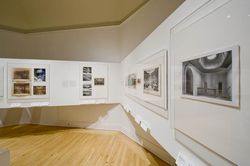
Lumière zénithale : vitrages plafonnants de 1760 à 1960 témoigne de l’évolution de la fenestration zénithale, depuis son apparition à la fin du XVIIIe siècle, lorsque ce type de fenestration fut exploré d’abord à la Halle au blé, à Paris, jusqu’à l’édification de la faculté d’histoire de l’Université de Cambridge (1963-1968) conçue par James Stirling. L’exposition examine(...)
Lumière zénithale : vitrages plafonnants de 1760 à 1960 témoigne de l’évolution de la fenestration zénithale, depuis son apparition à la fin du XVIIIe siècle, lorsque ce type de fenestration fut exploré d’abord à la Halle au blé, à Paris, jusqu’à l’édification de la faculté d’histoire de l’Université de Cambridge (1963-1968) conçue par James Stirling. L’exposition examine(...)
Localisation:
Salle octogonale
Salle octogonale
Date:
23 octobre 2008 au 15 février 2009
23 octobre 2008 au 15 février 2009
Titre:
Lumière zénithale : vitrages plafonnants de 1760 à 1960
Actions:
Description:
Lumière zénithale : vitrages plafonnants de 1760 à 1960 témoigne de l’évolution de la fenestration zénithale, depuis son apparition à la fin du XVIIIe siècle, lorsque ce type de fenestration fut exploré d’abord à la Halle au blé, à Paris, jusqu’à l’édification de la faculté d’histoire de l’Université de Cambridge (1963-1968) conçue par James Stirling. L’exposition examine(...)
Lumière zénithale : vitrages plafonnants de 1760 à 1960
Actions:
Description:
Lumière zénithale : vitrages plafonnants de 1760 à 1960 témoigne de l’évolution de la fenestration zénithale, depuis son apparition à la fin du XVIIIe siècle, lorsque ce type de fenestration fut exploré d’abord à la Halle au blé, à Paris, jusqu’à l’édification de la faculté d’histoire de l’Université de Cambridge (1963-1968) conçue par James Stirling. L’exposition examine(...)
Classification:
expositions
expositions
Date:
23 octobre 2008 au
15 février 2009
23 octobre 2008 au
15 février 2009
Localisation:
Salle octogonale
Salle octogonale
Classification:
archives
Niveau de description archivistique:
Fonds
archives
Niveau de description archivistique:
Fonds
Numéro de référence:
AP058
Résumé:
The Blanche Lemco van Ginkel fonds consists of textual records documenting her participation in professional societies and committees, conferences and lectures, and her administrative and teaching activities at the Faculty of Architecture and Landscape Architecture, University of Toronto, including material relating to the programme and exhibitions. The fonds contains correspondence, reports, minutes, notes, information packages, papers, presentation panels, etc., dating from 1970 to 1992.
AP058
Résumé:
The Blanche Lemco van Ginkel fonds consists of textual records documenting her participation in professional societies and committees, conferences and lectures, and her administrative and teaching activities at the Faculty of Architecture and Landscape Architecture, University of Toronto, including material relating to the programme and exhibitions. The fonds contains correspondence, reports, minutes, notes, information packages, papers, presentation panels, etc., dating from 1970 to 1992.
Personnes et institutions:
Date:
1970-1992
1970-1992
Titre:
Fonds Blanche Lemco van Ginkel
Actions:
AP058
Résumé:
The Blanche Lemco van Ginkel fonds consists of textual records documenting her participation in professional societies and committees, conferences and lectures, and her administrative and teaching activities at the Faculty of Architecture and Landscape Architecture, University of Toronto, including material relating to the programme and exhibitions. The fonds contains correspondence, reports, minutes, notes, information packages, papers, presentation panels, etc., dating from 1970 to 1992.
Fonds Blanche Lemco van Ginkel
Actions:
AP058
Résumé:
The Blanche Lemco van Ginkel fonds consists of textual records documenting her participation in professional societies and committees, conferences and lectures, and her administrative and teaching activities at the Faculty of Architecture and Landscape Architecture, University of Toronto, including material relating to the programme and exhibitions. The fonds contains correspondence, reports, minutes, notes, information packages, papers, presentation panels, etc., dating from 1970 to 1992.
Classification:
archives
Niveau de description archivistique:
Fonds
archives
Niveau de description archivistique:
Fonds
Date:
1970-1992
1970-1992
Personnes et institutions:


