


461 Résultats
Classification:
livres
livres
Titre:
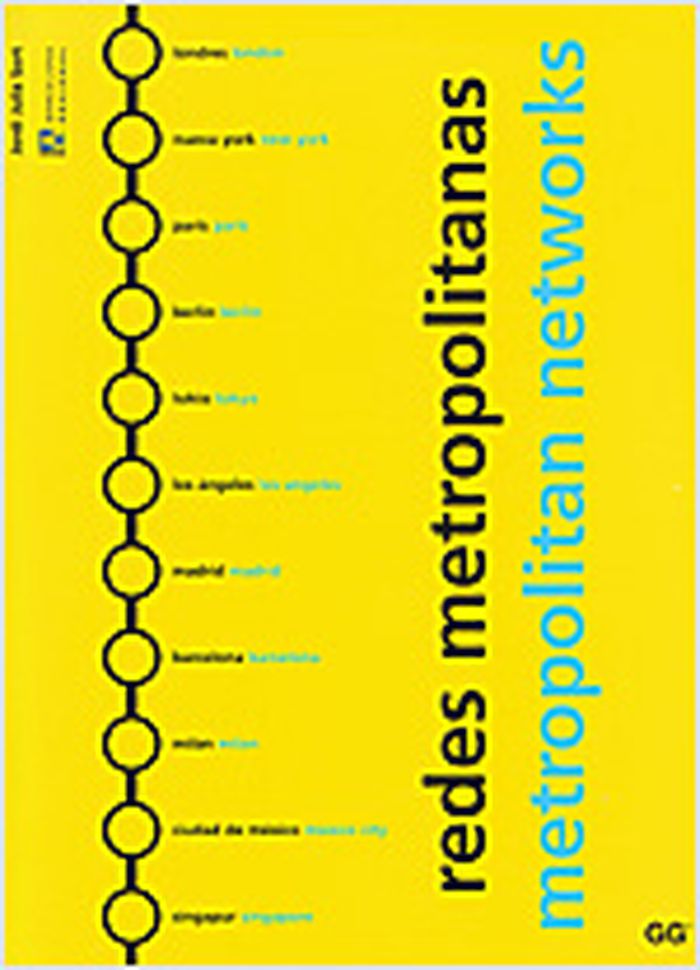
Metropolitan networks
Metropolitan networks
Actions:
Prix:
$71.50
(disponible sur commande)
Résumé:
This book is a study of mass transit networks in urban areas and of their role in shaping the structure of the city. It establishes links between the history, planning and transport networks of eleven international cities (London, New York, Paris, Berlin, Tokyo, Los Angeles, Madrid, Barcelona, Milan, Mexico City and Singapore), in a survey which helps us bring to mind the(...)
$71.50
(disponible sur commande)
Résumé:
This book is a study of mass transit networks in urban areas and of their role in shaping the structure of the city. It establishes links between the history, planning and transport networks of eleven international cities (London, New York, Paris, Berlin, Tokyo, Los Angeles, Madrid, Barcelona, Milan, Mexico City and Singapore), in a survey which helps us bring to mind the(...)
Titre:
Metropolitan networks
Actions:
Prix:
$71.50
(disponible sur commande)
Résumé:
This book is a study of mass transit networks in urban areas and of their role in shaping the structure of the city. It establishes links between the history, planning and transport networks of eleven international cities (London, New York, Paris, Berlin, Tokyo, Los Angeles, Madrid, Barcelona, Milan, Mexico City and Singapore), in a survey which helps us bring to mind the origins of modern means of transport: of conventional railways and their subsequent conversion into metros and tramways, and into today's high-speed trains; of the appearance in the metropolitan context of the motor car and bus, and the arrival of motorways and contemporary airports. In short, the history and morphology of transport networks in our big cities, described through the detailed study and comparative analysis of developments in each of them, all of this with a wealth of images, maps and data of interest.
Metropolitan networks
Actions:
Prix:
$71.50
(disponible sur commande)
Résumé:
This book is a study of mass transit networks in urban areas and of their role in shaping the structure of the city. It establishes links between the history, planning and transport networks of eleven international cities (London, New York, Paris, Berlin, Tokyo, Los Angeles, Madrid, Barcelona, Milan, Mexico City and Singapore), in a survey which helps us bring to mind the origins of modern means of transport: of conventional railways and their subsequent conversion into metros and tramways, and into today's high-speed trains; of the appearance in the metropolitan context of the motor car and bus, and the arrival of motorways and contemporary airports. In short, the history and morphology of transport networks in our big cities, described through the detailed study and comparative analysis of developments in each of them, all of this with a wealth of images, maps and data of interest.
Classification:
livres
livres
Publication:
janvier 2006, Barcelona
janvier 2006, Barcelona
Sujet:
Théorie de l’urbanisme
Théorie de l’urbanisme
Classification:
livres
livres
Actions:
Prix:
$35.00
(disponible sur commande)
Résumé:
The publication presents the designs of six internationally renowned bicycle builders whose embrace of the tradition of working in metal brings striking innovation to their craft. Through their manipulation of steel, aluminum and titanium, the builders of Bespoke produce racing bicycles that speed champion athletes to victory, mountain and cyclocross bicycles built to(...)
$35.00
(disponible sur commande)
Résumé:
The publication presents the designs of six internationally renowned bicycle builders whose embrace of the tradition of working in metal brings striking innovation to their craft. Through their manipulation of steel, aluminum and titanium, the builders of Bespoke produce racing bicycles that speed champion athletes to victory, mountain and cyclocross bicycles built to(...)
Titre:
Bespoke : the handbuilt bicycle
Actions:
Prix:
$35.00
(disponible sur commande)
Résumé:
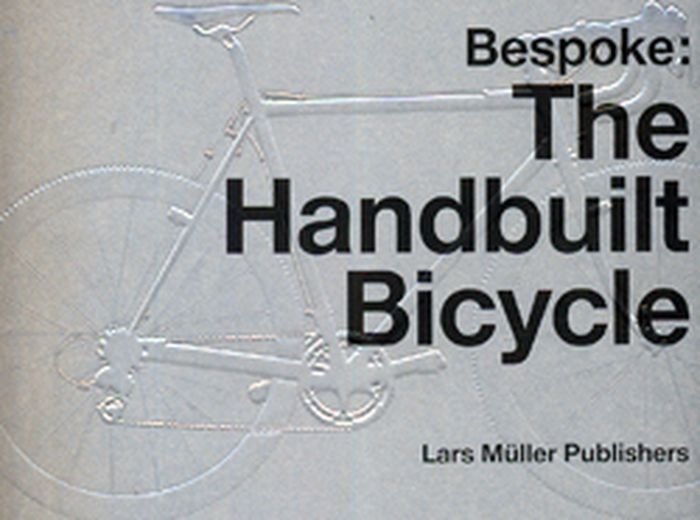
The publication presents the designs of six internationally renowned bicycle builders whose embrace of the tradition of working in metal brings striking innovation to their craft. Through their manipulation of steel, aluminum and titanium, the builders of Bespoke produce racing bicycles that speed champion athletes to victory, mountain and cyclocross bicycles built to negotiate vertiginous terrain, urban bicycles that stylishly convey commuters, and randonneur bicycles elegantly stripped down for epic journeys. Candid portraits including builder’s inspirations, working methods and bicycles, photographed in great detail, highlight this exhibition at New York’s Museum of Arts and Design. Bespoke offers an intimate view of objects that sit squarely at the intersection of art, design, craft and performance. With contributions by Michael Maharam and Sacha White (Vanilla Bicycles) Photographs by D. James Dee. Includes bicycles by the following builders : Mike Flanigan (A.N.T), Jeff Jones, Dario Pegoretti, Richard Sachs, J. Peter Weigle
Bespoke : the handbuilt bicycle
Actions:
Prix:
$35.00
(disponible sur commande)
Résumé:
The publication presents the designs of six internationally renowned bicycle builders whose embrace of the tradition of working in metal brings striking innovation to their craft. Through their manipulation of steel, aluminum and titanium, the builders of Bespoke produce racing bicycles that speed champion athletes to victory, mountain and cyclocross bicycles built to negotiate vertiginous terrain, urban bicycles that stylishly convey commuters, and randonneur bicycles elegantly stripped down for epic journeys. Candid portraits including builder’s inspirations, working methods and bicycles, photographed in great detail, highlight this exhibition at New York’s Museum of Arts and Design. Bespoke offers an intimate view of objects that sit squarely at the intersection of art, design, craft and performance. With contributions by Michael Maharam and Sacha White (Vanilla Bicycles) Photographs by D. James Dee. Includes bicycles by the following builders : Mike Flanigan (A.N.T), Jeff Jones, Dario Pegoretti, Richard Sachs, J. Peter Weigle
Classification:
livres
livres
Publication:
juillet 2010
juillet 2010
Sujet:
Design industriel
Design industriel
Classification:
livres
livres
Prix:
$50.00
(disponible sur commande)
Résumé:
A new world is emerging in China, with urbanization and the wholesale globalization of daily life moving at unprecedented speed. The Communist Party line has been replaced by maxims about working together to build a modern, economically resilient country. Cities are being rigorously adapted to fit this new vision, with disastrous consequences for existing structures and(...)
$50.00
(disponible sur commande)
Résumé:
A new world is emerging in China, with urbanization and the wholesale globalization of daily life moving at unprecedented speed. The Communist Party line has been replaced by maxims about working together to build a modern, economically resilient country. Cities are being rigorously adapted to fit this new vision, with disastrous consequences for existing structures and(...)
Publication:
septembre 2006, Rotterdam
septembre 2006, Rotterdam
Titre:
China contemporary : architecture, art, visual culture
Actions:
Prix:
$50.00
(disponible sur commande)
Résumé:
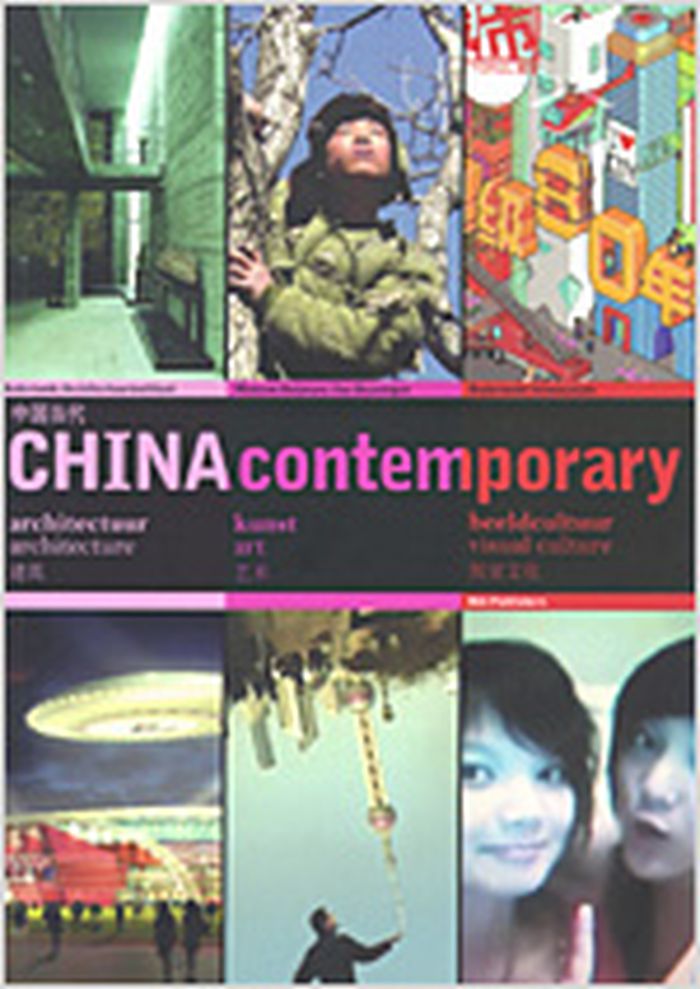
A new world is emerging in China, with urbanization and the wholesale globalization of daily life moving at unprecedented speed. The Communist Party line has been replaced by maxims about working together to build a modern, economically resilient country. Cities are being rigorously adapted to fit this new vision, with disastrous consequences for existing structures and neighborhoods. Social and societal balances have been swiftly, radically altered. Can Chinese identity survive in a consumer society and a radically transformed urban environment, both conceived on a Western model? This first interdisciplinary overview of the country’s contemporary arts, architecture, urban planning and visual culture--including television, photography, newspapers, games and blogs - offers the work of some 20 Chinese artists considering these issues, and projects by some 10 Chinese architectural firms. "China contemporary" finds that a mix of long standing tradition, decades of Communism and hurriedly translated Western capitalism have resulted in an exciting visual and formal idiom.
China contemporary : architecture, art, visual culture
Actions:
Prix:
$50.00
(disponible sur commande)
Résumé:
A new world is emerging in China, with urbanization and the wholesale globalization of daily life moving at unprecedented speed. The Communist Party line has been replaced by maxims about working together to build a modern, economically resilient country. Cities are being rigorously adapted to fit this new vision, with disastrous consequences for existing structures and neighborhoods. Social and societal balances have been swiftly, radically altered. Can Chinese identity survive in a consumer society and a radically transformed urban environment, both conceived on a Western model? This first interdisciplinary overview of the country’s contemporary arts, architecture, urban planning and visual culture--including television, photography, newspapers, games and blogs - offers the work of some 20 Chinese artists considering these issues, and projects by some 10 Chinese architectural firms. "China contemporary" finds that a mix of long standing tradition, decades of Communism and hurriedly translated Western capitalism have resulted in an exciting visual and formal idiom.
Classification:
livres
livres
Publication:
septembre 2006, Rotterdam
septembre 2006, Rotterdam
Classification:
livres
livres

Actions:
Prix:
$54.95
(disponible sur commande)
Résumé:
High-population centers of enormous size are springing up in China with dizzying speed. With them comes an increased demand for migrant workers in the construction sector, factories, and mines. In growth centers like the Pearl River Delta in Southern China, 40 million people have already set out from the underdeveloped provinces to earn their living there. The(...)
$54.95
(disponible sur commande)
Résumé:
High-population centers of enormous size are springing up in China with dizzying speed. With them comes an increased demand for migrant workers in the construction sector, factories, and mines. In growth centers like the Pearl River Delta in Southern China, 40 million people have already set out from the underdeveloped provinces to earn their living there. The(...)
Publication:
septembre 2008, Baden
septembre 2008, Baden
Titre:
From somewhere to nowhere: China's internal migrants
Actions:
Prix:
$54.95
(disponible sur commande)
Résumé:
High-population centers of enormous size are springing up in China with dizzying speed. With them comes an increased demand for migrant workers in the construction sector, factories, and mines. In growth centers like the Pearl River Delta in Southern China, 40 million people have already set out from the underdeveloped provinces to earn their living there. The photographer Andreas Seibert accompanied the workers repeatedly in order to document their everyday lives and their journey to the high-population centers. Their stories are told in a collection of striking photographs that provide a close-up portrait to complement the current discussion of economic growth in China. Accompanying the photographs are texts by two Chinese authors, who researched the social and economic background of the phenomenon and provide a direct look. With its combination of text and images, this volume conveys a unique impression of the scale of this modern migration of peoples.
From somewhere to nowhere: China's internal migrants
Actions:
Prix:
$54.95
(disponible sur commande)
Résumé:
High-population centers of enormous size are springing up in China with dizzying speed. With them comes an increased demand for migrant workers in the construction sector, factories, and mines. In growth centers like the Pearl River Delta in Southern China, 40 million people have already set out from the underdeveloped provinces to earn their living there. The photographer Andreas Seibert accompanied the workers repeatedly in order to document their everyday lives and their journey to the high-population centers. Their stories are told in a collection of striking photographs that provide a close-up portrait to complement the current discussion of economic growth in China. Accompanying the photographs are texts by two Chinese authors, who researched the social and economic background of the phenomenon and provide a direct look. With its combination of text and images, this volume conveys a unique impression of the scale of this modern migration of peoples.
Classification:
livres
livres
Publication:
septembre 2008, Baden
septembre 2008, Baden
Classification:
livres
livres
Actions:
Prix:
$71.00
(disponible sur commande)
Résumé:
Shimmering images, inverted worlds: is the city moving or the viewer and - if both - who is quicker, more authentic, more fleeting? Catherine Gfeller’s photographic and video work, based on incessantly pulsating urban landscapes, is autobiographical insofar as it focuses on New York and Paris, but it is hardly private. Everything here is public, yet nothing can really be(...)
$71.00
(disponible sur commande)
Résumé:
Shimmering images, inverted worlds: is the city moving or the viewer and - if both - who is quicker, more authentic, more fleeting? Catherine Gfeller’s photographic and video work, based on incessantly pulsating urban landscapes, is autobiographical insofar as it focuses on New York and Paris, but it is hardly private. Everything here is public, yet nothing can really be(...)
Publication:
décembre 2010
décembre 2010
Titre:
Catherine Gfeller : pulsations
Actions:
Prix:
$71.00
(disponible sur commande)
Résumé:
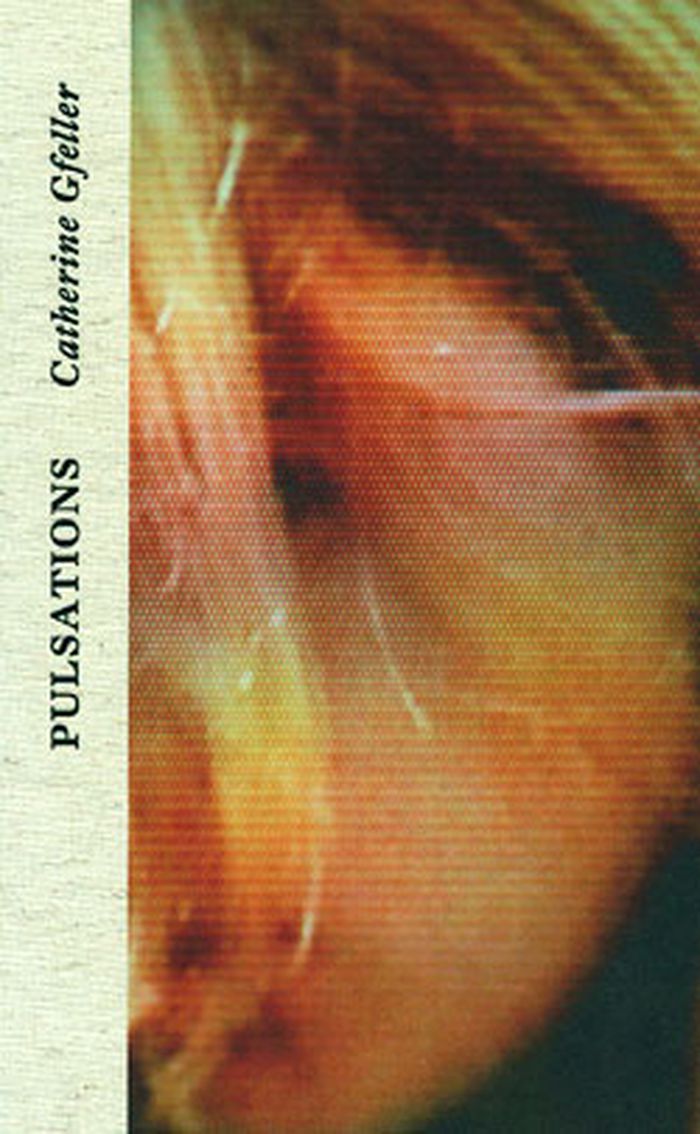
Shimmering images, inverted worlds: is the city moving or the viewer and - if both - who is quicker, more authentic, more fleeting? Catherine Gfeller’s photographic and video work, based on incessantly pulsating urban landscapes, is autobiographical insofar as it focuses on New York and Paris, but it is hardly private. Everything here is public, yet nothing can really be captured. In other groups of works, the artist takes a thoroughly different look at the symbiotic relationship between mankind and the environment, peering behind the anonymous façades of buildings and exposing intimate living spaces. Speed, exhileration and indulgence: "The only form of stability [can be found] in being ‘lulled by the loop’, as if caught up in the unfathomable delirium of repetition." This volume is being published to accompany three museum exhibitions to be held at the Musée des Beaux-art La Chaux-de-Fonds, the Kunstmuseum Luzern, and the Centre Régional d’Art Contemporain Languedoc-Roussillon Sète.
Catherine Gfeller : pulsations
Actions:
Prix:
$71.00
(disponible sur commande)
Résumé:
Shimmering images, inverted worlds: is the city moving or the viewer and - if both - who is quicker, more authentic, more fleeting? Catherine Gfeller’s photographic and video work, based on incessantly pulsating urban landscapes, is autobiographical insofar as it focuses on New York and Paris, but it is hardly private. Everything here is public, yet nothing can really be captured. In other groups of works, the artist takes a thoroughly different look at the symbiotic relationship between mankind and the environment, peering behind the anonymous façades of buildings and exposing intimate living spaces. Speed, exhileration and indulgence: "The only form of stability [can be found] in being ‘lulled by the loop’, as if caught up in the unfathomable delirium of repetition." This volume is being published to accompany three museum exhibitions to be held at the Musée des Beaux-art La Chaux-de-Fonds, the Kunstmuseum Luzern, and the Centre Régional d’Art Contemporain Languedoc-Roussillon Sète.
Classification:
livres
livres
Publication:
décembre 2010
décembre 2010
Classification:
livres
livres
Actions:
Prix:
$85.00
(disponible sur commande)
Résumé:
We are in the midst of redesigning the world and all its systems as we witness the biggest mass movement of people, goods, factories, frenzied finance and ideas in history. Vast fl ows make the new norm nomadic. Yet there is a yearning for belonging, distinctiveness and identity as the ‘anytime, anyplace, anywhere’ phenomenon enabled by digitization is changing how we(...)
$85.00
(disponible sur commande)
Résumé:
We are in the midst of redesigning the world and all its systems as we witness the biggest mass movement of people, goods, factories, frenzied finance and ideas in history. Vast fl ows make the new norm nomadic. Yet there is a yearning for belonging, distinctiveness and identity as the ‘anytime, anyplace, anywhere’ phenomenon enabled by digitization is changing how we(...)
Titre:
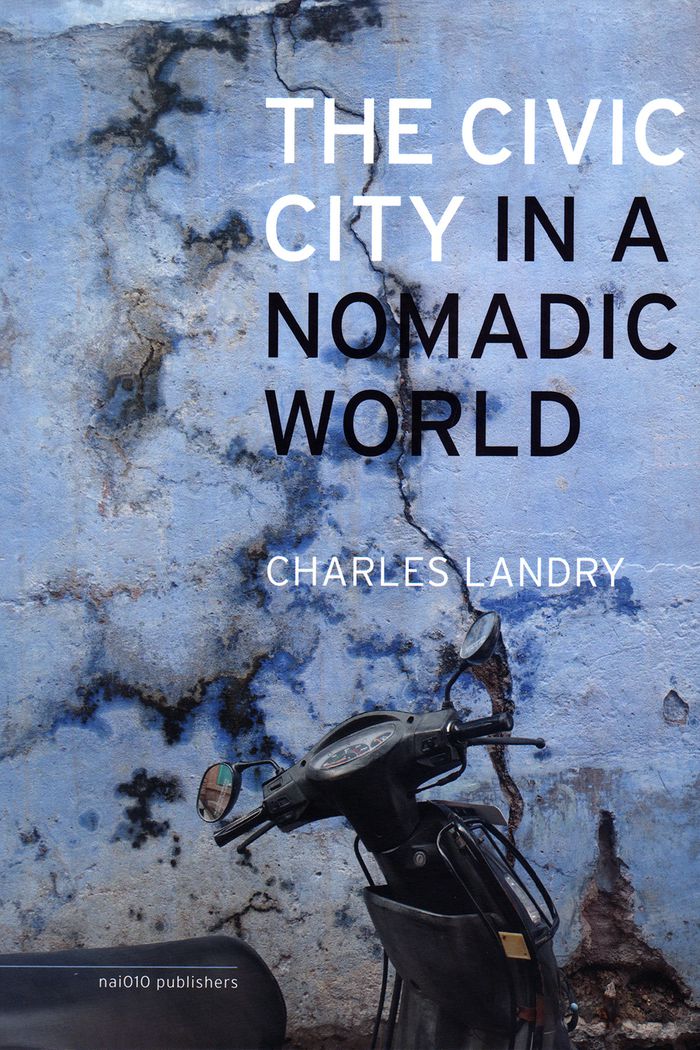
The civic city in a nomadic world
Actions:
Prix:
$85.00
(disponible sur commande)
Résumé:
We are in the midst of redesigning the world and all its systems as we witness the biggest mass movement of people, goods, factories, frenzied finance and ideas in history. Vast fl ows make the new norm nomadic. Yet there is a yearning for belonging, distinctiveness and identity as the ‘anytime, anyplace, anywhere’ phenomenon enabled by digitization is changing how we interact with space, place and time. Old certainties are crumbling and systems are breaking at escalating speed. Apprehension is in the air as we invent a different kind of city. This is the Civic City. It tries to find a pathway through the major faultlines, dilemmas and potentials of our time – shared lives, inequality, environmental distress and urban vitality. This is a place where we reinvent anchorage, an urban commons, connection, but also possibility and inspiration. In this new ground-breaking book, the inventor of the Creative City concept helps us navigate the evolving urban landscapes and its potential.
The civic city in a nomadic world
Actions:
Prix:
$85.00
(disponible sur commande)
Résumé:
We are in the midst of redesigning the world and all its systems as we witness the biggest mass movement of people, goods, factories, frenzied finance and ideas in history. Vast fl ows make the new norm nomadic. Yet there is a yearning for belonging, distinctiveness and identity as the ‘anytime, anyplace, anywhere’ phenomenon enabled by digitization is changing how we interact with space, place and time. Old certainties are crumbling and systems are breaking at escalating speed. Apprehension is in the air as we invent a different kind of city. This is the Civic City. It tries to find a pathway through the major faultlines, dilemmas and potentials of our time – shared lives, inequality, environmental distress and urban vitality. This is a place where we reinvent anchorage, an urban commons, connection, but also possibility and inspiration. In this new ground-breaking book, the inventor of the Creative City concept helps us navigate the evolving urban landscapes and its potential.
Classification:
livres
livres
Publication:
octobre 2017
octobre 2017
Sujet:
Théorie de l’urbanisme
Théorie de l’urbanisme
Classification:
livres
livres
Actions:
Prix:
$54.95
(disponible sur commande)
Résumé:
Vanessa R. Schwartz engagingly presents the jet plane’s power to define a new age at a critical moment in the mid-20th century, arguing that the craft’s speed and smooth ride allowed people to imagine themselves living in the future. Exploring realms as diverse as airport architecture, theme park design, film, and photography, Schwartz argues that the jet created an(...)
$54.95
(disponible sur commande)
Résumé:
Vanessa R. Schwartz engagingly presents the jet plane’s power to define a new age at a critical moment in the mid-20th century, arguing that the craft’s speed and smooth ride allowed people to imagine themselves living in the future. Exploring realms as diverse as airport architecture, theme park design, film, and photography, Schwartz argues that the jet created an(...)
Titre:
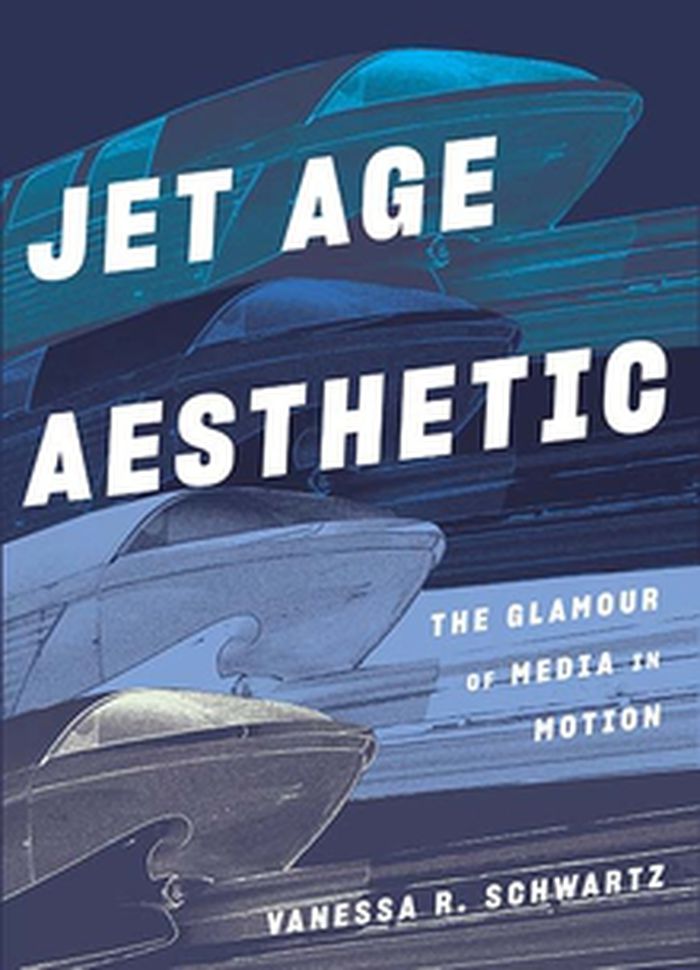
Jet age aesthetic: the glamour of media in motion
Actions:
Prix:
$54.95
(disponible sur commande)
Résumé:
Vanessa R. Schwartz engagingly presents the jet plane’s power to define a new age at a critical moment in the mid-20th century, arguing that the craft’s speed and smooth ride allowed people to imagine themselves living in the future. Exploring realms as diverse as airport architecture, theme park design, film, and photography, Schwartz argues that the jet created an aesthetic that circulated on the ground below. Visual and media culture, including Eero Saarinen’s airports, David Bailey’s photographs of the jet set, and Ernst Haas’s experiments in color photojournalism glamorized the imagery of motion. Drawing on unprecedented access to the archives of The Walt Disney Studios, Schwartz also examines the period’s most successful example of fluid motion meeting media culture: Disneyland. The park’s dedication to “people-moving” defined Walt Disney’s vision, shaping the very identity of the place. The jet age aesthetic laid the groundwork for our contemporary media culture, in which motion is so fluid that we can surf the internet while going nowhere at all.
Jet age aesthetic: the glamour of media in motion
Actions:
Prix:
$54.95
(disponible sur commande)
Résumé:
Vanessa R. Schwartz engagingly presents the jet plane’s power to define a new age at a critical moment in the mid-20th century, arguing that the craft’s speed and smooth ride allowed people to imagine themselves living in the future. Exploring realms as diverse as airport architecture, theme park design, film, and photography, Schwartz argues that the jet created an aesthetic that circulated on the ground below. Visual and media culture, including Eero Saarinen’s airports, David Bailey’s photographs of the jet set, and Ernst Haas’s experiments in color photojournalism glamorized the imagery of motion. Drawing on unprecedented access to the archives of The Walt Disney Studios, Schwartz also examines the period’s most successful example of fluid motion meeting media culture: Disneyland. The park’s dedication to “people-moving” defined Walt Disney’s vision, shaping the very identity of the place. The jet age aesthetic laid the groundwork for our contemporary media culture, in which motion is so fluid that we can surf the internet while going nowhere at all.
Classification:
livres
livres
Publication:
avril 2020
avril 2020
Sujet:
Design, époques et styles
Design, époques et styles
Classification:
livres
livres
Actions:
Exemplaires:
Description:
800 pages : illustrations (chiefly color), maps, plans ; 25 cm
Description:
800 pages : illustrations (chiefly color), maps, plans ; 25 cm
Auteur:
Sujet:
Publication:
Köln ; New York : Taschen, 2001.
Köln ; New York : Taschen, 2001.
Titre:
Harvard Design School guide to shopping / principal editors, Chuihua Judy Chung and Sze Tsung Leong ; [essays by Tae-Wook Cha and others].
Actions:
Exemplaires:
Description:
800 pages : illustrations (chiefly color), maps, plans ; 25 cm
Harvard Design School guide to shopping / principal editors, Chuihua Judy Chung and Sze Tsung Leong ; [essays by Tae-Wook Cha and others].
Actions:
Exemplaires:
Description:
800 pages : illustrations (chiefly color), maps, plans ; 25 cm
Classification:
livres
livres
Publication:
Köln ; New York : Taschen, 2001.
Köln ; New York : Taschen, 2001.
Auteur:
Sujet:
Classification:
livres
livres
Titre:
Shenzhen architectural guide
Shenzhen architectural guide
Actions:
Prix:
$67.95
(disponible sur commande)
Résumé:
The first of its kind, the Shenzhen Architectural Guide is dedicated to the city’s architecture and conceived as an atlas. The pages inside are filled with more than 150 relevant buildings and places that constitute the physical palimpsest of modern China’s most famous foundational town. Founded in 1978 as one of the first Special Economic Zones under Deng Xiaoping’s(...)
$67.95
(disponible sur commande)
Résumé:
The first of its kind, the Shenzhen Architectural Guide is dedicated to the city’s architecture and conceived as an atlas. The pages inside are filled with more than 150 relevant buildings and places that constitute the physical palimpsest of modern China’s most famous foundational town. Founded in 1978 as one of the first Special Economic Zones under Deng Xiaoping’s(...)
Titre:
Shenzhen architectural guide
Actions:
Prix:
$67.95
(disponible sur commande)
Résumé:
The first of its kind, the Shenzhen Architectural Guide is dedicated to the city’s architecture and conceived as an atlas. The pages inside are filled with more than 150 relevant buildings and places that constitute the physical palimpsest of modern China’s most famous foundational town. Founded in 1978 as one of the first Special Economic Zones under Deng Xiaoping’s reforms, Shenzhen is a young city that was essentially built from the ground up at a rapid pace – hence the infamous ‘Shenzhen Speed’. Unlike most places, it has built its fortune on being propelled into the future without any connection to the past. Shenzhen is a place where business, immigration, ports, borders, and nature come together to shape a unique and, at times, mystifying architectural experience. This guide will introduce the reader to Shenzhen’s kaleidoscopic architecture with the help of bilingual coordinates and geodata. It will also refer to the city's political history and cultural geography. By photographing these state-of-the-art works in 2020, the book captures a sort of 'here-and-now' that will soon be transformed once again.
Shenzhen architectural guide
Actions:
Prix:
$67.95
(disponible sur commande)
Résumé:
The first of its kind, the Shenzhen Architectural Guide is dedicated to the city’s architecture and conceived as an atlas. The pages inside are filled with more than 150 relevant buildings and places that constitute the physical palimpsest of modern China’s most famous foundational town. Founded in 1978 as one of the first Special Economic Zones under Deng Xiaoping’s reforms, Shenzhen is a young city that was essentially built from the ground up at a rapid pace – hence the infamous ‘Shenzhen Speed’. Unlike most places, it has built its fortune on being propelled into the future without any connection to the past. Shenzhen is a place where business, immigration, ports, borders, and nature come together to shape a unique and, at times, mystifying architectural experience. This guide will introduce the reader to Shenzhen’s kaleidoscopic architecture with the help of bilingual coordinates and geodata. It will also refer to the city's political history and cultural geography. By photographing these state-of-the-art works in 2020, the book captures a sort of 'here-and-now' that will soon be transformed once again.
Classification:
livres
livres
Publication:
janvier 2023
janvier 2023
Sujet:
Guides des villes
Guides des villes
Classification:
livres
livres
Titre:
Activity diagrams
Activity diagrams
Actions:
Prix:
$116.00
(disponible sur commande)
Résumé:
Due to the rapid development of high-speed transportation and digital-network, the life pattern of modern people also has been rapidly desconstructed and reorganized. To respond such a flexible, multi-layered, and ambiguous period, various contermeasures have been studied in terms of modern architectural programs. As one of the solutions, activity diagrams are a(...)
$116.00
(disponible sur commande)
Résumé:
Due to the rapid development of high-speed transportation and digital-network, the life pattern of modern people also has been rapidly desconstructed and reorganized. To respond such a flexible, multi-layered, and ambiguous period, various contermeasures have been studied in terms of modern architectural programs. As one of the solutions, activity diagrams are a(...)
Publication:
mars 2006, Seoul
mars 2006, Seoul
Titre:
Activity diagrams
Actions:
Prix:
$116.00
(disponible sur commande)
Résumé:
Due to the rapid development of high-speed transportation and digital-network, the life pattern of modern people also has been rapidly desconstructed and reorganized. To respond such a flexible, multi-layered, and ambiguous period, various contermeasures have been studied in terms of modern architectural programs. As one of the solutions, activity diagrams are a methodology which creates an architectural space through a process of analyzing people's behaviors as weel as re-organizing their systems. Modern architecture is already familiarized with the words 'program' and 'diagram'. Many architects throughout the world use these words as a design tool. Therefore, we sought for 9 architects, regardless of nationality, who used their diagrams as aninnovative design tool, and selected 30 architectural works in which their diagrams were applied. Also, we interviewed them on their architectural design methodology through diagrams they are currently using. With this, we could study out a diagram's inclusive meanings and roles within architecture. This book is published in the hope of being an architectural guide to modern architects who have to design relations. Text in English / Korean
Activity diagrams
Actions:
Prix:
$116.00
(disponible sur commande)
Résumé:
Due to the rapid development of high-speed transportation and digital-network, the life pattern of modern people also has been rapidly desconstructed and reorganized. To respond such a flexible, multi-layered, and ambiguous period, various contermeasures have been studied in terms of modern architectural programs. As one of the solutions, activity diagrams are a methodology which creates an architectural space through a process of analyzing people's behaviors as weel as re-organizing their systems. Modern architecture is already familiarized with the words 'program' and 'diagram'. Many architects throughout the world use these words as a design tool. Therefore, we sought for 9 architects, regardless of nationality, who used their diagrams as aninnovative design tool, and selected 30 architectural works in which their diagrams were applied. Also, we interviewed them on their architectural design methodology through diagrams they are currently using. With this, we could study out a diagram's inclusive meanings and roles within architecture. This book is published in the hope of being an architectural guide to modern architects who have to design relations. Text in English / Korean
Classification:
livres
livres
Publication:
mars 2006, Seoul
mars 2006, Seoul


