


10583 Résultats
Classification:
livres
livres
Titre:
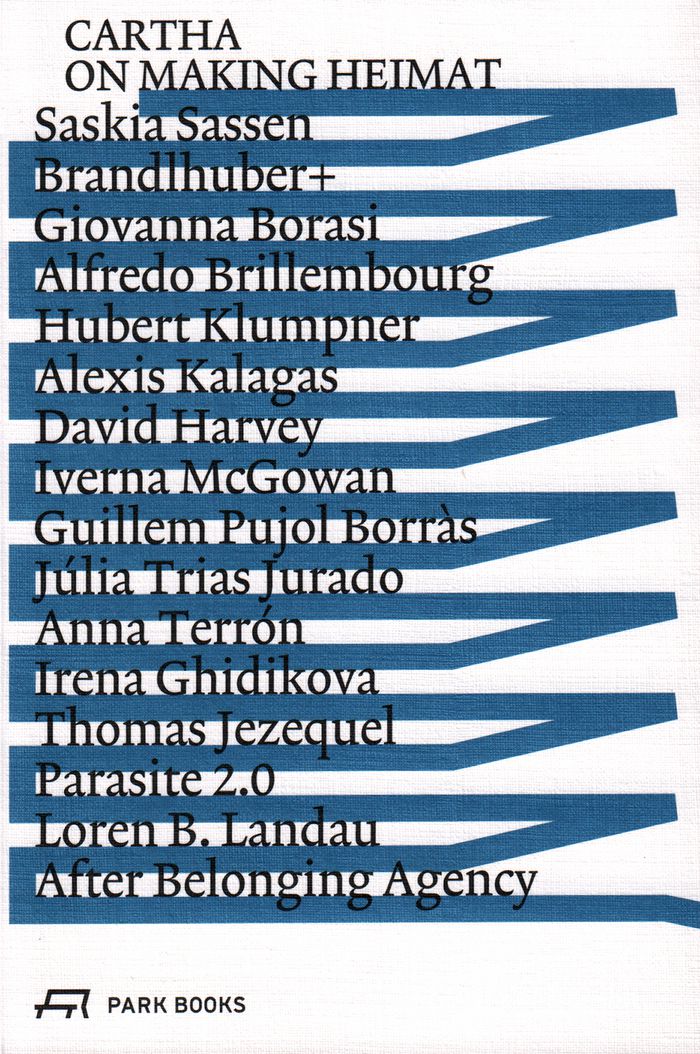
CARTHA: On making heimat
CARTHA: On making heimat
Actions:
Prix:
$29.95
(disponible en magasin)
Résumé:
Since 2014, CARTHA has provided a platform for critical thinking on architecture and society. Founded by an international team of architects and designers, it aims to bridge the gap between theoretical and practical approaches to contemporary architecture. Each year, CARTHA initiates research and publishes four issues on a topic in its online magazine, which are then(...)
$29.95
(disponible en magasin)
Résumé:
Since 2014, CARTHA has provided a platform for critical thinking on architecture and society. Founded by an international team of architects and designers, it aims to bridge the gap between theoretical and practical approaches to contemporary architecture. Each year, CARTHA initiates research and publishes four issues on a topic in its online magazine, which are then(...)
Titre:
CARTHA: On making heimat
Actions:
Prix:
$29.95
(disponible en magasin)
Résumé:
Since 2014, CARTHA has provided a platform for critical thinking on architecture and society. Founded by an international team of architects and designers, it aims to bridge the gap between theoretical and practical approaches to contemporary architecture. Each year, CARTHA initiates research and publishes four issues on a topic in its online magazine, which are then brought together in an annual book. In 2016, CARTHA collaborated with the German Pavilion at the International Architecture Exhibition of the 2016 Venice Biennale. Titled Making Heimat: Germany, Arrival Country, the German Pavilion explored the challenges and potential of the recent influx of refugees to Germany has posed for architecture and urban design, and contributions to CARTHA further reflect on this topic. Contributors include, among others, architect Arno Brandlhuber, critic Marina Otero Verzier, and design studio Urban ThinkTank, and the book also features interviews with Iverna McGowan of Amnesty International; David Harvey of Graduate Center, CUNY; Saskia Sassen of Columbia University; and Giovanna Borasi, of the Canadian Centre for Architecture.
CARTHA: On making heimat
Actions:
Prix:
$29.95
(disponible en magasin)
Résumé:
Since 2014, CARTHA has provided a platform for critical thinking on architecture and society. Founded by an international team of architects and designers, it aims to bridge the gap between theoretical and practical approaches to contemporary architecture. Each year, CARTHA initiates research and publishes four issues on a topic in its online magazine, which are then brought together in an annual book. In 2016, CARTHA collaborated with the German Pavilion at the International Architecture Exhibition of the 2016 Venice Biennale. Titled Making Heimat: Germany, Arrival Country, the German Pavilion explored the challenges and potential of the recent influx of refugees to Germany has posed for architecture and urban design, and contributions to CARTHA further reflect on this topic. Contributors include, among others, architect Arno Brandlhuber, critic Marina Otero Verzier, and design studio Urban ThinkTank, and the book also features interviews with Iverna McGowan of Amnesty International; David Harvey of Graduate Center, CUNY; Saskia Sassen of Columbia University; and Giovanna Borasi, of the Canadian Centre for Architecture.
Classification:
livres
livres
Publication:
octobre 2017
octobre 2017
Sujet:
Théorie de l’architecture
Théorie de l’architecture
Classification:
livres
livres
Prix:
$48.95
(disponible sur commande)
Résumé:
Architects, we like to believe, shape the world as they please. Reinier de Graaf draws on his own tragicomic experiences to present a candid account of what it is really like to work as an architect. To achieve anything, he notes, architects must serve the powers they strive to critique, finding themselves in a perpetual conflict of interest.
$48.95
(disponible sur commande)
Résumé:
Architects, we like to believe, shape the world as they please. Reinier de Graaf draws on his own tragicomic experiences to present a candid account of what it is really like to work as an architect. To achieve anything, he notes, architects must serve the powers they strive to critique, finding themselves in a perpetual conflict of interest.
Titre:
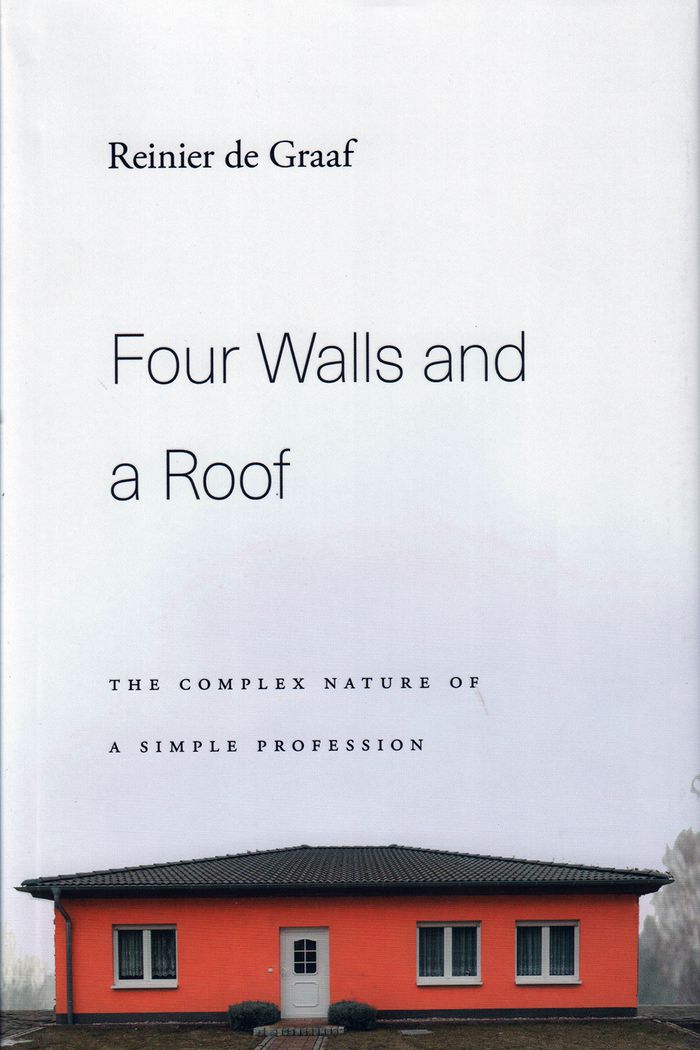
Four walls and a roof: the complex nature of a simple profession
Actions:
Prix:
$48.95
(disponible sur commande)
Résumé:
Architects, we like to believe, shape the world as they please. Reinier de Graaf draws on his own tragicomic experiences to present a candid account of what it is really like to work as an architect. To achieve anything, he notes, architects must serve the powers they strive to critique, finding themselves in a perpetual conflict of interest.
Four walls and a roof: the complex nature of a simple profession
Actions:
Prix:
$48.95
(disponible sur commande)
Résumé:
Architects, we like to believe, shape the world as they please. Reinier de Graaf draws on his own tragicomic experiences to present a candid account of what it is really like to work as an architect. To achieve anything, he notes, architects must serve the powers they strive to critique, finding themselves in a perpetual conflict of interest.
Classification:
livres
livres
Publication:
septembre 2017
septembre 2017
Sujet:
Théorie de l’architecture
Théorie de l’architecture
Classification:
livres
livres
Titre:
Speculative art histories
Speculative art histories
Actions:
Prix:
$32.95
(disponible sur commande)
Résumé:
Situated at the interface of philosophy, aesthetics, and art history, this collection brings together a series of creative responses to the recent speculative turn in Continental philosophy. It gives both a genealogy of speculative art history and a provocatively experimental counter-discourse of new speculative art histories.
$32.95
(disponible sur commande)
Résumé:
Situated at the interface of philosophy, aesthetics, and art history, this collection brings together a series of creative responses to the recent speculative turn in Continental philosophy. It gives both a genealogy of speculative art history and a provocatively experimental counter-discourse of new speculative art histories.
Titre:
Speculative art histories
Actions:
Prix:
$32.95
(disponible sur commande)
Résumé:
Situated at the interface of philosophy, aesthetics, and art history, this collection brings together a series of creative responses to the recent speculative turn in Continental philosophy. It gives both a genealogy of speculative art history and a provocatively experimental counter-discourse of new speculative art histories.
Speculative art histories
Actions:
Prix:
$32.95
(disponible sur commande)
Résumé:
Situated at the interface of philosophy, aesthetics, and art history, this collection brings together a series of creative responses to the recent speculative turn in Continental philosophy. It gives both a genealogy of speculative art history and a provocatively experimental counter-discourse of new speculative art histories.
Classification:
livres
livres
Publication:
octobre 2017
octobre 2017
Sujet:
Théorie de l’art
Théorie de l’art
Classification:
livres
livres
Titre:
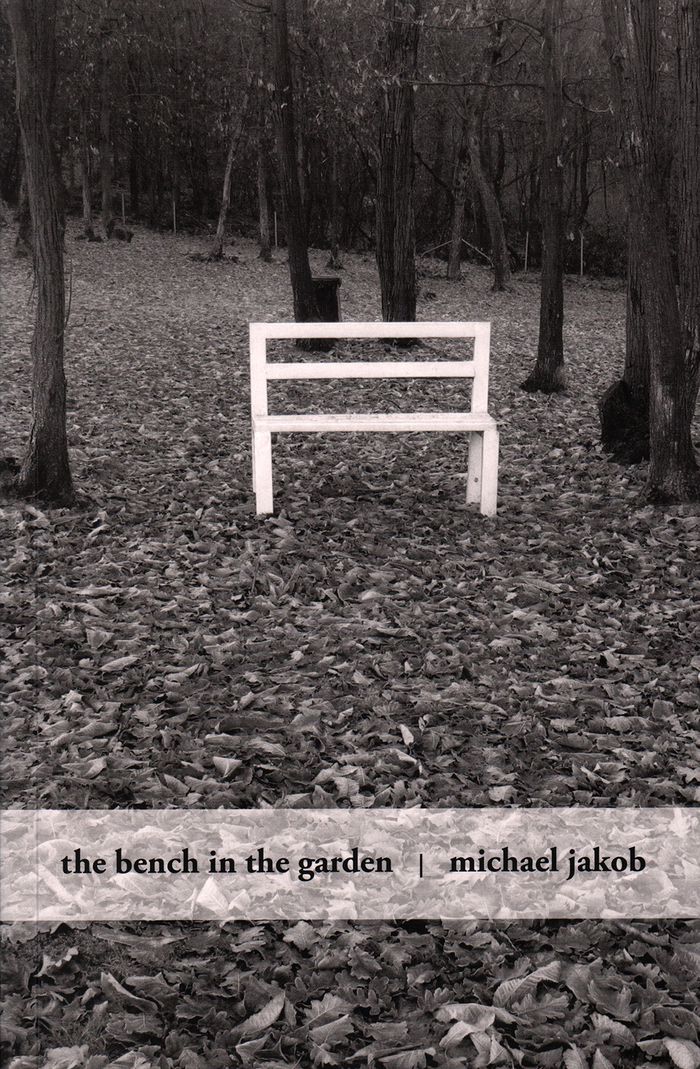
The bench in the garden
The bench in the garden
Actions:
Prix:
$37.95
(disponible sur commande)
Résumé:
The bench, an apparently small and almost irrelevant object, appears to function as a significant object in both through specific physical placement and in a more general sense- that of the blended domain of aesthetics, garden history, architecture, spatiality and subjectivity. The bench acts as a powerful visual machine, regulating the reception of a landscape in what it(...)
$37.95
(disponible sur commande)
Résumé:
The bench, an apparently small and almost irrelevant object, appears to function as a significant object in both through specific physical placement and in a more general sense- that of the blended domain of aesthetics, garden history, architecture, spatiality and subjectivity. The bench acts as a powerful visual machine, regulating the reception of a landscape in what it(...)
Titre:
The bench in the garden
Actions:
Prix:
$37.95
(disponible sur commande)
Résumé:
The bench, an apparently small and almost irrelevant object, appears to function as a significant object in both through specific physical placement and in a more general sense- that of the blended domain of aesthetics, garden history, architecture, spatiality and subjectivity. The bench acts as a powerful visual machine, regulating the reception of a landscape in what it has to offer to its visitors. By transmitting verbal messages through inscriptions, citing other benches as part of a complex walk circuit, providing rest and inviting users to discover new aspects of the site, this highly polysemic element orients and disorients the visitor at the same time.
The bench in the garden
Actions:
Prix:
$37.95
(disponible sur commande)
Résumé:
The bench, an apparently small and almost irrelevant object, appears to function as a significant object in both through specific physical placement and in a more general sense- that of the blended domain of aesthetics, garden history, architecture, spatiality and subjectivity. The bench acts as a powerful visual machine, regulating the reception of a landscape in what it has to offer to its visitors. By transmitting verbal messages through inscriptions, citing other benches as part of a complex walk circuit, providing rest and inviting users to discover new aspects of the site, this highly polysemic element orients and disorients the visitor at the same time.
Classification:
livres
livres
Publication:
juillet 2017
juillet 2017
Sujet:
Théorie du paysage
Théorie du paysage
Classification:
livres
livres
Actions:
Prix:
$36.95
(disponible sur commande)
Résumé:
‘Borgata’, ‘favela’, ‘périurbain’, and ‘suburb’ are but a few of the different terms used throughout the world that refer specifically to communities that develop on the periphery of urban centres. "In what’s in a name?" editors Richard Harris and Charlotte Vorms have gathered together experts from around the world in order to provide a truly global framework for the(...)
$36.95
(disponible sur commande)
Résumé:
‘Borgata’, ‘favela’, ‘périurbain’, and ‘suburb’ are but a few of the different terms used throughout the world that refer specifically to communities that develop on the periphery of urban centres. "In what’s in a name?" editors Richard Harris and Charlotte Vorms have gathered together experts from around the world in order to provide a truly global framework for the(...)
Titre:
What's in a name? Talking about urban peripheries
Actions:
Prix:
$36.95
(disponible sur commande)
Résumé:
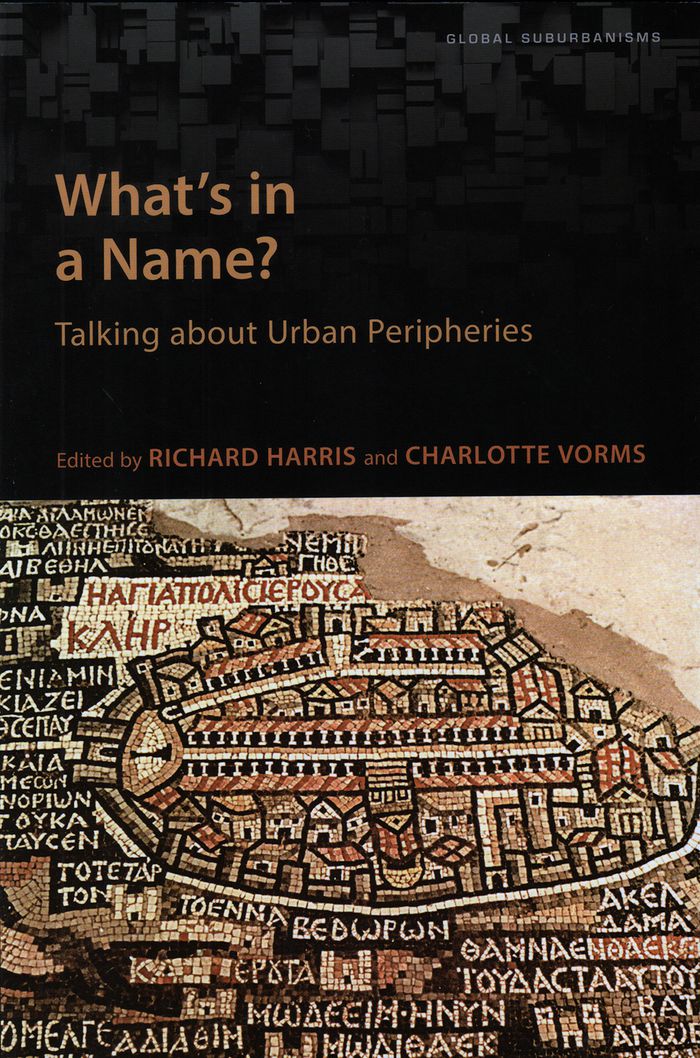
‘Borgata’, ‘favela’, ‘périurbain’, and ‘suburb’ are but a few of the different terms used throughout the world that refer specifically to communities that develop on the periphery of urban centres. "In what’s in a name?" editors Richard Harris and Charlotte Vorms have gathered together experts from around the world in order to provide a truly global framework for the study of the urban periphery. Rather than view these distinct communities through the lens of the western notion of urban sprawl, the contributors focus on the variety of everyday terms that are used, together with their connotations. This volume explores the local terminology used in cities such as Beijing, Bucharest, Montreal, Mumbai, Rio de Janeiro, Rome, Sofia, as well as more broadly across North America, Australia, Southeast Asia, and elsewhere. What’s in a Name? is the first book in English to pay serious and sustained attention to the naming of the urban periphery worldwide. By exploring the ways in which local individuals speak about the urban periphery Harris and Vorms bridge the assumed divide between the global North and the global South.
What's in a name? Talking about urban peripheries
Actions:
Prix:
$36.95
(disponible sur commande)
Résumé:
‘Borgata’, ‘favela’, ‘périurbain’, and ‘suburb’ are but a few of the different terms used throughout the world that refer specifically to communities that develop on the periphery of urban centres. "In what’s in a name?" editors Richard Harris and Charlotte Vorms have gathered together experts from around the world in order to provide a truly global framework for the study of the urban periphery. Rather than view these distinct communities through the lens of the western notion of urban sprawl, the contributors focus on the variety of everyday terms that are used, together with their connotations. This volume explores the local terminology used in cities such as Beijing, Bucharest, Montreal, Mumbai, Rio de Janeiro, Rome, Sofia, as well as more broadly across North America, Australia, Southeast Asia, and elsewhere. What’s in a Name? is the first book in English to pay serious and sustained attention to the naming of the urban periphery worldwide. By exploring the ways in which local individuals speak about the urban periphery Harris and Vorms bridge the assumed divide between the global North and the global South.
Classification:
livres
livres
Publication:
août 2017
août 2017
Sujet:
Théorie de l’urbanisme
Théorie de l’urbanisme
Classification:
livres
livres
Actions:
Prix:
$35.95
(disponible sur commande)
Résumé:
Limité un temps à un genre de la peinture, le paysage est aujourd'hui partout : via les questions d'urbanisme, d'environnement, de développement durable, il occupe l'espace de la plupart des problématiques engageant l'avenir. Géographie, histoire, moeurs, économie, agronomie, arts, littérature, voyages, philosophie, politique aussi bien sûr – tous ces champs, il les(...)
$35.95
(disponible sur commande)
Résumé:
Limité un temps à un genre de la peinture, le paysage est aujourd'hui partout : via les questions d'urbanisme, d'environnement, de développement durable, il occupe l'espace de la plupart des problématiques engageant l'avenir. Géographie, histoire, moeurs, économie, agronomie, arts, littérature, voyages, philosophie, politique aussi bien sûr – tous ces champs, il les(...)
Titre:
Les cahiers de l'École de Bois
Actions:
Prix:
$35.95
(disponible sur commande)
Résumé:
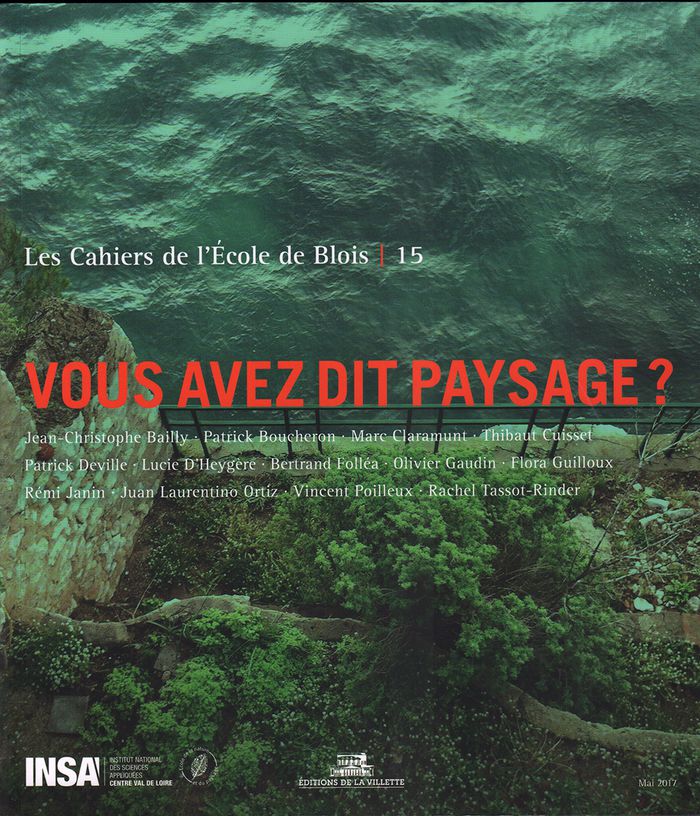
Limité un temps à un genre de la peinture, le paysage est aujourd'hui partout : via les questions d'urbanisme, d'environnement, de développement durable, il occupe l'espace de la plupart des problématiques engageant l'avenir. Géographie, histoire, moeurs, économie, agronomie, arts, littérature, voyages, philosophie, politique aussi bien sûr – tous ces champs, il les croise. Mais dans cette étendue il se perd quelque peu, et d'autant plus facilement que ni ses échelles (de l'infime à l'immense), ni ses modes d'interventions (des grands travaux au jardinage) ne sont fixés. Pourtant cette dispersion, gage de diversité, est le terreau où il se ressource. C'est cette multiplicité des approches que ce numéro explore et interroge.
Les cahiers de l'École de Bois
Actions:
Prix:
$35.95
(disponible sur commande)
Résumé:
Limité un temps à un genre de la peinture, le paysage est aujourd'hui partout : via les questions d'urbanisme, d'environnement, de développement durable, il occupe l'espace de la plupart des problématiques engageant l'avenir. Géographie, histoire, moeurs, économie, agronomie, arts, littérature, voyages, philosophie, politique aussi bien sûr – tous ces champs, il les croise. Mais dans cette étendue il se perd quelque peu, et d'autant plus facilement que ni ses échelles (de l'infime à l'immense), ni ses modes d'interventions (des grands travaux au jardinage) ne sont fixés. Pourtant cette dispersion, gage de diversité, est le terreau où il se ressource. C'est cette multiplicité des approches que ce numéro explore et interroge.
Classification:
livres
livres
Publication:
juillet 2017
juillet 2017
Sujet:
Théorie du paysage
Théorie du paysage
Classification:
livres
livres
Actions:
Prix:
$45.00
(disponible sur commande)
Résumé:
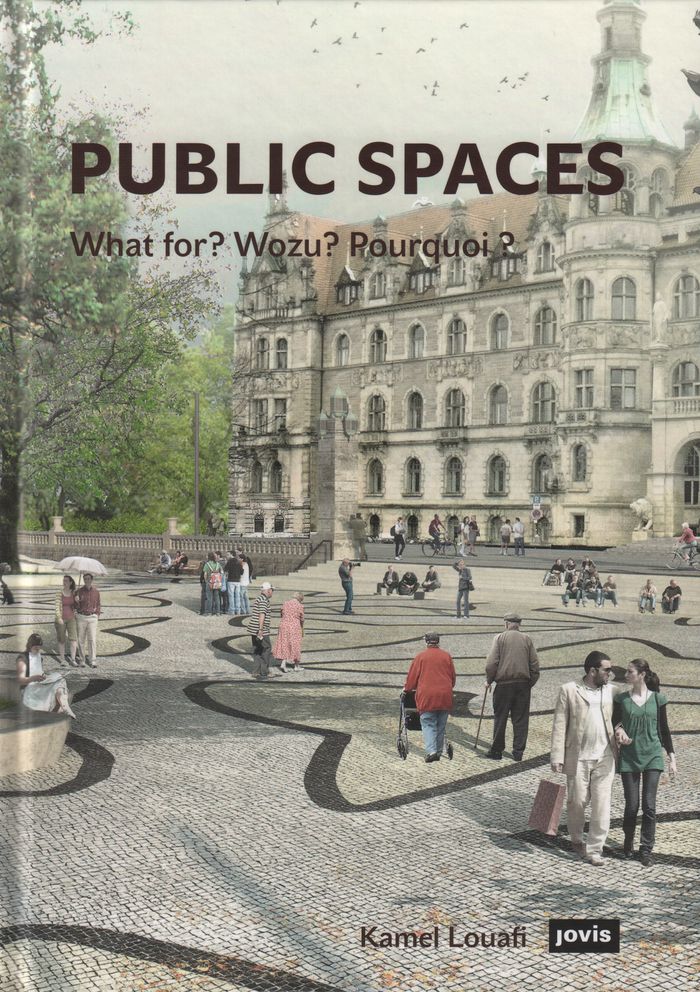
"Public spaces" presents essays and discussions about the planning of public spaces. With contributions from urban architects and regional planners, the volume takes a close look at the Trammplatz in Hanover and the Platz der Fünf Kontinente in Esch-sur-Alzette, Luxembourg.
$45.00
(disponible sur commande)
Résumé:
"Public spaces" presents essays and discussions about the planning of public spaces. With contributions from urban architects and regional planners, the volume takes a close look at the Trammplatz in Hanover and the Platz der Fünf Kontinente in Esch-sur-Alzette, Luxembourg.
Titre:
Public spaces: What for? Wozu? Pourquoi?
Actions:
Prix:
$45.00
(disponible sur commande)
Résumé:
"Public spaces" presents essays and discussions about the planning of public spaces. With contributions from urban architects and regional planners, the volume takes a close look at the Trammplatz in Hanover and the Platz der Fünf Kontinente in Esch-sur-Alzette, Luxembourg.
Public spaces: What for? Wozu? Pourquoi?
Actions:
Prix:
$45.00
(disponible sur commande)
Résumé:
"Public spaces" presents essays and discussions about the planning of public spaces. With contributions from urban architects and regional planners, the volume takes a close look at the Trammplatz in Hanover and the Platz der Fünf Kontinente in Esch-sur-Alzette, Luxembourg.
Classification:
livres
livres
Publication:
octobre 2017
octobre 2017
Sujet:
Théorie de l’urbanisme
Théorie de l’urbanisme
Classification:
livres
livres
Titre:
The social (re)production of architecture: politics, values and actions in contemporary practice
The social (re)production of architecture: politics, values and actions in contemporary practice
Actions:
Prix:
$76.90
(disponible sur commande)
Résumé:
''The Social (Re)Production of Architecture'' brings the debates of the 'right to the city' into today’s context of ecological, economic and social crises. Building on the 1970s' discussions about the 'production of space', which French sociologist Henri Lefebvre considered a civic right, the authors question who has the right to make space, and explore the kinds of(...)
$76.90
(disponible sur commande)
Résumé:
''The Social (Re)Production of Architecture'' brings the debates of the 'right to the city' into today’s context of ecological, economic and social crises. Building on the 1970s' discussions about the 'production of space', which French sociologist Henri Lefebvre considered a civic right, the authors question who has the right to make space, and explore the kinds of(...)
Titre:
The social (re)production of architecture: politics, values and actions in contemporary practice
Actions:
Prix:
$76.90
(disponible sur commande)
Résumé:
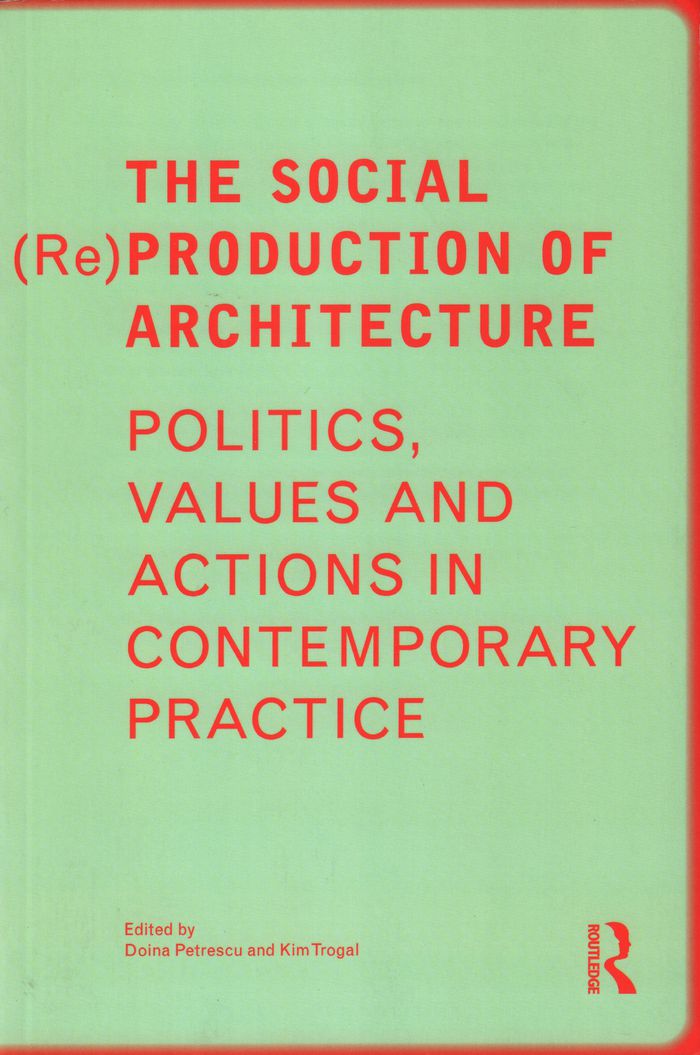
''The Social (Re)Production of Architecture'' brings the debates of the 'right to the city' into today’s context of ecological, economic and social crises. Building on the 1970s' discussions about the 'production of space', which French sociologist Henri Lefebvre considered a civic right, the authors question who has the right to make space, and explore the kinds of relations that are produced in the process. In the emerging post-capitalist era, this book addresses urgent social and ecological imperatives for change and opens up questions around architecture's engagement with new forms of organization and practice. The book asks what (new) kinds of 'social' can architecture (re)produce, and what kinds of politics, values and actions are needed.
The social (re)production of architecture: politics, values and actions in contemporary practice
Actions:
Prix:
$76.90
(disponible sur commande)
Résumé:
''The Social (Re)Production of Architecture'' brings the debates of the 'right to the city' into today’s context of ecological, economic and social crises. Building on the 1970s' discussions about the 'production of space', which French sociologist Henri Lefebvre considered a civic right, the authors question who has the right to make space, and explore the kinds of relations that are produced in the process. In the emerging post-capitalist era, this book addresses urgent social and ecological imperatives for change and opens up questions around architecture's engagement with new forms of organization and practice. The book asks what (new) kinds of 'social' can architecture (re)produce, and what kinds of politics, values and actions are needed.
Classification:
livres
livres
Publication:
août 2017
août 2017
Sujet:
Théorie de l’architecture
Théorie de l’architecture
Classification:
livres
livres

Titre:
Sociologie des villes
Sociologie des villes
Actions:
Prix:
$14.95
(disponible sur commande)
Résumé:
Tokyo, New York, Los Angeles, Londres, Johannesbourg, Paris, Jérusalem, Mumbai, Lagos, Shanghai... Le phénomène urbain s’étend sur la planète. Des global cities aux petites villes, il représente la forme sociale de la modernité. Certaines expériences d’architecture et d’urbanisme mobilisent les recherches en sciences sociales. Comment les groupes sociaux s’adaptent-ils à(...)
$14.95
(disponible sur commande)
Résumé:
Tokyo, New York, Los Angeles, Londres, Johannesbourg, Paris, Jérusalem, Mumbai, Lagos, Shanghai... Le phénomène urbain s’étend sur la planète. Des global cities aux petites villes, il représente la forme sociale de la modernité. Certaines expériences d’architecture et d’urbanisme mobilisent les recherches en sciences sociales. Comment les groupes sociaux s’adaptent-ils à(...)
Titre:
Sociologie des villes
Actions:
Prix:
$14.95
(disponible sur commande)
Résumé:
Tokyo, New York, Los Angeles, Londres, Johannesbourg, Paris, Jérusalem, Mumbai, Lagos, Shanghai... Le phénomène urbain s’étend sur la planète. Des global cities aux petites villes, il représente la forme sociale de la modernité. Certaines expériences d’architecture et d’urbanisme mobilisent les recherches en sciences sociales. Comment les groupes sociaux s’adaptent-ils à ces espaces et comment se les approprient-ils ? La ville crée-t-elle des communautés ou des solitudes ? Existe-t-il des lieux pathogènes ? Comment la distribution des classes sociales s’opère-t-elle ? La tendance à la ségrégation sociale a-t-elle augmenté ? La mixité sociale est-elle possible et organisable ? Par quels groupes sociaux la cité est-elle gouvernée et comment ? La participation des habitants est-elle envisageable ? Que signifie un aménagement urbain durable ? Ce livre propose des éléments de réponse en mobilisant les résultats de nombreuses recherches sociologiques françaises et internationales ainsi qu’un guide méthodologique pour le chercheur débutant.
Sociologie des villes
Actions:
Prix:
$14.95
(disponible sur commande)
Résumé:
Tokyo, New York, Los Angeles, Londres, Johannesbourg, Paris, Jérusalem, Mumbai, Lagos, Shanghai... Le phénomène urbain s’étend sur la planète. Des global cities aux petites villes, il représente la forme sociale de la modernité. Certaines expériences d’architecture et d’urbanisme mobilisent les recherches en sciences sociales. Comment les groupes sociaux s’adaptent-ils à ces espaces et comment se les approprient-ils ? La ville crée-t-elle des communautés ou des solitudes ? Existe-t-il des lieux pathogènes ? Comment la distribution des classes sociales s’opère-t-elle ? La tendance à la ségrégation sociale a-t-elle augmenté ? La mixité sociale est-elle possible et organisable ? Par quels groupes sociaux la cité est-elle gouvernée et comment ? La participation des habitants est-elle envisageable ? Que signifie un aménagement urbain durable ? Ce livre propose des éléments de réponse en mobilisant les résultats de nombreuses recherches sociologiques françaises et internationales ainsi qu’un guide méthodologique pour le chercheur débutant.
Classification:
livres
livres
Publication:
mai 2017
mai 2017
Sujet:
Théorie de l’urbanisme
Théorie de l’urbanisme
Classification:
livres
livres

Titre:
Infinite suburbia
Infinite suburbia
Actions:
Prix:
$106.00
(disponible sur commande)
Résumé:
Infinite Suburbia is the culmination of the MIT Norman B. Leventhal Center for Advanced Urbanism's yearlong study of the future of suburban development. Extensive research, an exhibition, and a conference at MIT's Media Lab, this groundbreaking collection presents fifty-two essays by seventy-four authors from twenty different fields, including, but not limited to, design,(...)
$106.00
(disponible sur commande)
Résumé:
Infinite Suburbia is the culmination of the MIT Norman B. Leventhal Center for Advanced Urbanism's yearlong study of the future of suburban development. Extensive research, an exhibition, and a conference at MIT's Media Lab, this groundbreaking collection presents fifty-two essays by seventy-four authors from twenty different fields, including, but not limited to, design,(...)
Titre:
Infinite suburbia
Actions:
Prix:
$106.00
(disponible sur commande)
Résumé:
Infinite Suburbia is the culmination of the MIT Norman B. Leventhal Center for Advanced Urbanism's yearlong study of the future of suburban development. Extensive research, an exhibition, and a conference at MIT's Media Lab, this groundbreaking collection presents fifty-two essays by seventy-four authors from twenty different fields, including, but not limited to, design, architecture, landscape, planning, history, demographics, social justice, familial trends, policy, energy, mobility, health, environment,economics, and applied and future technologies. This exhaustive compilation is richly illustrated with a wealth of photography, aerial drone shots, drawings, plans, diagrams, charts, maps, and archival materials, making it the definitive statement on suburbia at the beginning of the twenty-first century.
Infinite suburbia
Actions:
Prix:
$106.00
(disponible sur commande)
Résumé:
Infinite Suburbia is the culmination of the MIT Norman B. Leventhal Center for Advanced Urbanism's yearlong study of the future of suburban development. Extensive research, an exhibition, and a conference at MIT's Media Lab, this groundbreaking collection presents fifty-two essays by seventy-four authors from twenty different fields, including, but not limited to, design, architecture, landscape, planning, history, demographics, social justice, familial trends, policy, energy, mobility, health, environment,economics, and applied and future technologies. This exhaustive compilation is richly illustrated with a wealth of photography, aerial drone shots, drawings, plans, diagrams, charts, maps, and archival materials, making it the definitive statement on suburbia at the beginning of the twenty-first century.
Classification:
livres
livres
Publication:
octobre 2017
octobre 2017
Sujet:
Théorie de l’urbanisme
Théorie de l’urbanisme


