


4378 Résultats
Classification:
livres
livres
Actions:
Prix:
$39.95
(disponible sur commande)
Résumé:
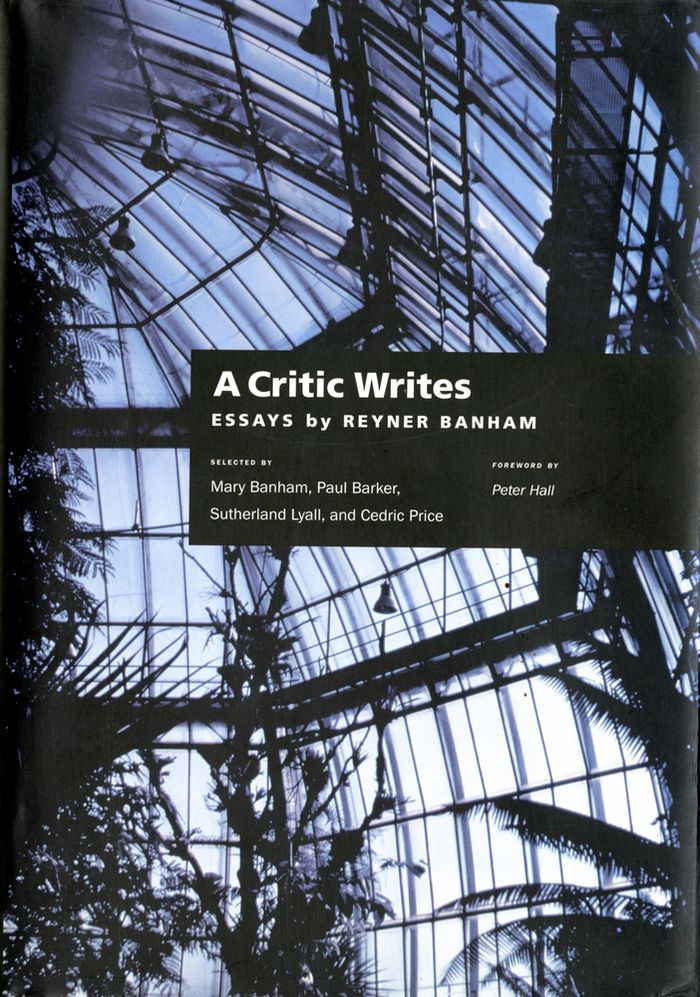
Few twentieth-century writers on architecture and design have enjoyed the renown of Reyner Banham. Born and trained in England and a U.S. resident starting in 1976, Banham wrote incisively about American and European buildings and culture. Now readers can enjoy a chronological cross-section of essays, polemics, and reviews drawn from more than three decades of Banham's(...)
Titre:
A critic writes : essays by Reyner Banham
Actions:
Prix:
$39.95
(disponible sur commande)
Résumé:
Few twentieth-century writers on architecture and design have enjoyed the renown of Reyner Banham. Born and trained in England and a U.S. resident starting in 1976, Banham wrote incisively about American and European buildings and culture. Now readers can enjoy a chronological cross-section of essays, polemics, and reviews drawn from more than three decades of Banham's writings. The volume, which includes discussions of Italian Futurism, Adolf Loos, Paul Scheerbart, and the Bauhaus as well as explorations of contemporary architecture by Frank Gehry, James Stirling, and Norman Foster, conveys the full range of Banham's belief in industrial and technological development as the motor of architectural evolution. Banham's interests and passions ranged from architecture and the culture of pop art to urban and industrial design. In brilliant analyses of automobile styling, mobile homes, science fiction films, and the American predilection for gadgets, he anticipated many of the preoccupations of contemporary cultural studies. Los Angeles, the city that Banham commemorated in a book and a film, receives extensive attention in essays on the Santa Monica Pier, the Getty Museum, Forest Lawn cemetery, and the ubiquitous freeway system. Eminently readable, provocative, and entertaining, this book is certain to consolidate Banham's reputation among architects and students of contemporary culture. For those acquainted with his writing, it offers welcome surprises as well as familiar delights. For those encountering Banham for the first time, it comprises the perfect introduction.
Classification:
livres
livres
Publication:
avril 1999, Berkeley
avril 1999, Berkeley
Sujet:
Théorie de l’architecture
Théorie de l’architecture
Classification:
livres
livres
Actions:
Prix:
$41.95
(disponible sur commande)
Résumé:
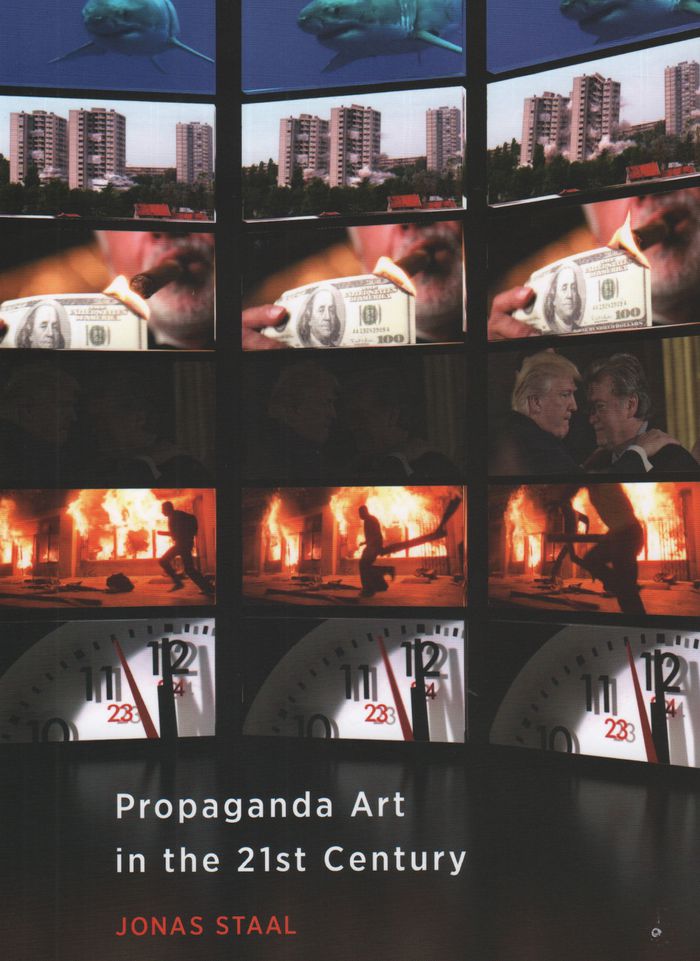
Propaganda art—whether a depiction of joyous workers in the style of socialist realism or a film directed by Steve Bannon—delivers a message. But, as Jonas Staal argues in this illuminating and timely book, propaganda does not merely make a political point; it aims to construct reality itself. Political regimes have shaped our world according to their interests and(...)
Titre:
Propaganda art in the 21st century
Actions:
Prix:
$41.95
(disponible sur commande)
Résumé:
Propaganda art—whether a depiction of joyous workers in the style of socialist realism or a film directed by Steve Bannon—delivers a message. But, as Jonas Staal argues in this illuminating and timely book, propaganda does not merely make a political point; it aims to construct reality itself. Political regimes have shaped our world according to their interests and ideology; today, popular mass movements push back by constructing other worlds with their own propagandas. Staal shows that propaganda is not a relic of a totalitarian past but occurs today even in liberal democracies. He considers different historical forms of propaganda art, from avant-garde to totalitarian and modernist, and he investigates the us versus them dichotomy promoted in War on Terror propaganda art—describing, among other things, a fictional scenario from the Department of Homeland Security, acted out in real time, and military training via videogame. He discusses artistic and cultural productions developed by such popular mass movements of the twenty-first century as the Occupy, activism by and in support of undocumented migrants and refugees, and struggles for liberation in such countries as Mali and Syria. Staal, both a scholar of propaganda and a self-described propaganda artist, proposes a new model of emancipatory propaganda art—one that acknowledges the relation between art and power and takes both an aesthetic and a political position in the practice of world-making.
Classification:
livres
livres
Publication:
septembre 2019
septembre 2019
Sujet:
Théorie de l’art
Théorie de l’art
Classification:
livres
livres
Prix:
$39.95
(disponible sur commande)
Résumé:
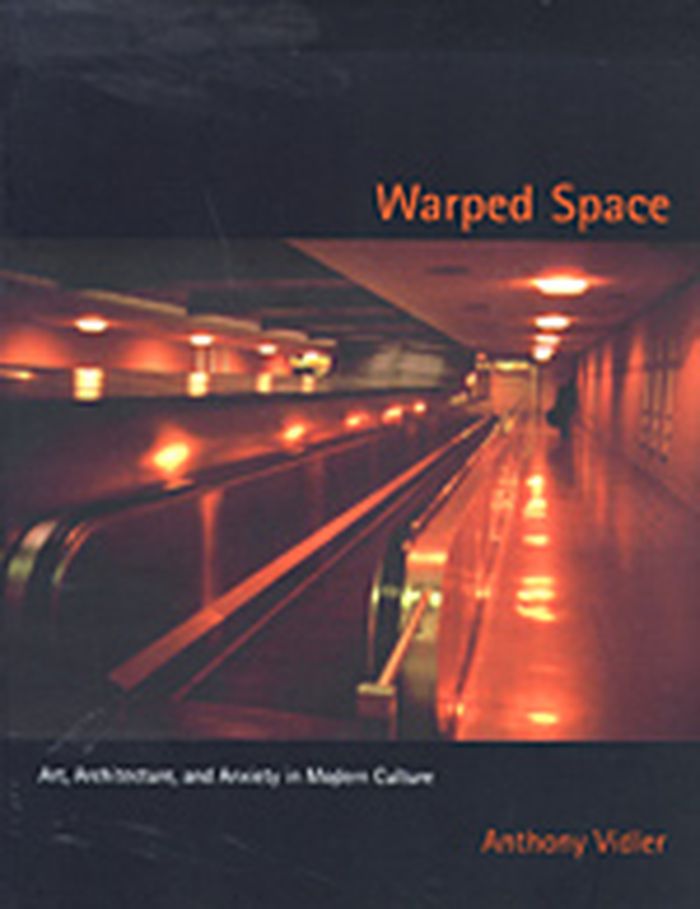
Beginning with agoraphobia and claustrophobia in the late nineteenth century, followed by shell shock and panic fear after World War I, phobias and anxiety came to be seen as the mental condition of modern life. They became incorporated into the media and arts, in particular the (...)
Titre:
Warped space : art, architecture, and anxiety in modern culture
Actions:
Prix:
$39.95
(disponible sur commande)
Résumé:
Beginning with agoraphobia and claustrophobia in the late nineteenth century, followed by shell shock and panic fear after World War I, phobias and anxiety came to be seen as the mental condition of modern life. They became incorporated into the media and arts, in particular the spatial arts of architecture, urbanism, and film. This "spatial warping" is now being reshaped by digitalization and virtual reality. Anthony Vidler is concerned with two forms of warped space. The first, a psychological space, is the repository of neuroses and phobias. This space is not empty but full of disturbing forms, including those of architecture and the city. The second kind of warping is produced when artists break the boundaries of genre to depict space in new ways. Vidler traces the emergence of a psychological idea of space from Pascal and Freud to the identification of agoraphobia and claustrophobia in the nineteenth century to twentieth-century theories of spatial alienation and estrangement in the writings of Georg Simmel, Siegfried Kracauer, and Walter Benjamin. Focusing on current conditions of displacement and placelessness, he examines ways in which contemporary artists and architects have produced new forms of spatial warping. The discussion ranges from theorists such as Jacques Lacan and Gilles Deleuze to artists such as Vito Acconci, Mike Kelley, Martha Rosler, and Rachel Whiteread. Finally, Vidler looks at the architectural experiments of Frank Gehry, Coop Himmelblau, Daniel Libeskind, Greg Lynn, Morphosis, and Eric Owen Moss in the light of new digital techniques that, while relying on traditional perspective, have radically transformed the composition, production, and experience of architecture.
Classification:
livres
livres
Publication:
avril 2002, Cambridge, Mass.
avril 2002, Cambridge, Mass.
Sujet:
Théorie de l’architecture
Théorie de l’architecture
Classification:
livres
livres
Actions:
Prix:
$74.95
(disponible sur commande)
Résumé:
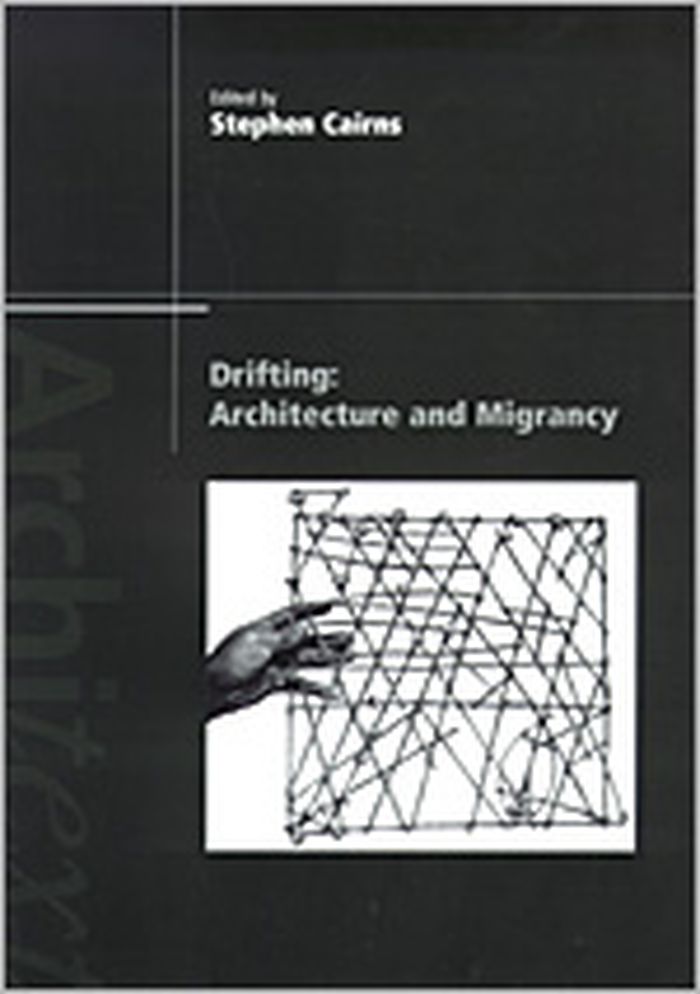
In an era of globalisation, there is an unprecedented scale and nature of contemporary migrant flows, as well as the flow of goods, capital, ideas, images and technology. This sheer number and mobility of contemporary migrants clearly has massively disruptive effects on traditional modes of dwelling however they were manifest in everyday life. But contemporary migrancy(...)
Sujet:
Théorie de l’architecture
Théorie de l’architecture
Publication:
septembre 2003, London / New York
septembre 2003, London / New York
Titre:
Drifting : architecture and migrancy
Actions:
Prix:
$74.95
(disponible sur commande)
Résumé:
In an era of globalisation, there is an unprecedented scale and nature of contemporary migrant flows, as well as the flow of goods, capital, ideas, images and technology. This sheer number and mobility of contemporary migrants clearly has massively disruptive effects on traditional modes of dwelling however they were manifest in everyday life. But contemporary migrancy also has important consequences for the way dwelling is conceptualised more generally. This book is concerned with the modes of dwelling that emerge through migrancy; it is also concerned with the effects these modes of dwelling have for dominant conceptions of space and place; and finally, it is interested in the kinds of architectures that become possible if those effects are taken seriously. This book inspects the intersections between architectures of place and flows of migrancy. It does so without seeking to defend the idea of place, nor lament its passing. Rather, this book is an exploration of the often complex and unorthodox modes of dwelling that are emerging precisely from within the ruins of the idea of place. This exploration is informed by post-structuralist analyses of architecture and urbanism, and their representation in media such as film. It focuses on the Pacific Rim as an intensified zone of global flows. Within the Pacific Rim there are complex tensions between the new economies of Asia and the settler nations of Canada, the US, Australia and New Zealand. These tensions produce difficulties for the narrative of the nation state, and herald conditions that no longer conform to the geo-political norms of the old world.
Classification:
livres
livres
Publication:
septembre 2003, London / New York
septembre 2003, London / New York
Sujet:
Théorie de l’architecture
Théorie de l’architecture
Classification:
livres
livres
Titre:
The gothic
The gothic
Actions:
Prix:
$23.95
(disponible sur commande)
Résumé:
This collection of writings examines the pervasive and influential role of "the Gothic" in contemporary visual culture. The contemporary Gothic in art is informed as much by the stock themes of the eighteenth- and nineteenth-century Gothic novel as it is by more recent permutations of the Gothic in horror film theory, Lacanian psychoanalysis, and Goth subcultures. This(...)
Sujet:
Théorie de l’art
Théorie de l’art
Publication:
octobre 2007, Whitechapel London Cambridge
octobre 2007, Whitechapel London Cambridge
Titre:
The gothic
Actions:
Prix:
$23.95
(disponible sur commande)
Résumé:
This collection of writings examines the pervasive and influential role of "the Gothic" in contemporary visual culture. The contemporary Gothic in art is informed as much by the stock themes of the eighteenth- and nineteenth-century Gothic novel as it is by more recent permutations of the Gothic in horror film theory, Lacanian psychoanalysis, and Goth subcultures. This reader from London's Whitechapel Gallery brings together artists as different as Matthew Barney, Gregor Schneider, Louise Bourgeois, and Douglas Gordon; its intent is not to use "the Gothic" to group together dissimilar artists but rather to shed light on a particular understanding of their practice. Anthony Vidler looks at ideas of the uncanny to explore Rachel Whiteread's House, and Jeff Wall uses the motif of vampirism to analyze fellow artist Dan Graham's Kammerspell; Hal Foster considers Robert Gober's recent work--laden with Christian symbolism, criticism of America as a nexus of power, and fragmented bodies--as an updated American Gothic, and Kobena Mercer examines the Gothic's depiction of the Other in relation to Michael Jackson's pop video Thriller. Texts by artists including Mike Kelley, Damien Hirst, Tacita Dean, Jonathan Meese, and Catherine Sullivan are complemented by extracts from Walpole's genre-establishing gothic novel The Castle of Otranto, William Gibson, Bret Easton Ellis, and Stephen King, among others, and theoretical writings by such key thinkers as Carol Clover, Beatriz Colomina, Julia Kristeva, Eve Kosofsky Sedgwick, Marina Warner, and Slavoj Zizek. The Gothic provides the first comprehensive overview of the uses of Gothic in contemporary visual culture.
Classification:
livres
livres
Publication:
octobre 2007, Whitechapel London Cambridge
octobre 2007, Whitechapel London Cambridge
Sujet:
Théorie de l’art
Théorie de l’art
Classification:
livres
livres
Titre:
Olafur Eliasson
Olafur Eliasson
Actions:
Prix:
$59.95
(disponible sur commande)
Résumé:
Né au Danemark, Eliasson travaille aujourd hui à Berlin. Il reconstitue dans l'espace de la galerie les fragments d'une contrée lointaine et transforme en sculptures des sensations immatérielles ou des phénomènes invisibles. Une simple ouverture circulaire au plafond d'une galerie de Los Angeles, par exemple, suffit à donner l'illusion d'un pâle soleil scandinave et à(...)
Publication:
juin 2007, Paris
juin 2007, Paris
Titre:
Olafur Eliasson
Actions:
Prix:
$59.95
(disponible sur commande)
Résumé:
Né au Danemark, Eliasson travaille aujourd hui à Berlin. Il reconstitue dans l'espace de la galerie les fragments d'une contrée lointaine et transforme en sculptures des sensations immatérielles ou des phénomènes invisibles. Une simple ouverture circulaire au plafond d'une galerie de Los Angeles, par exemple, suffit à donner l'illusion d'un pâle soleil scandinave et à fabriquer un cadran solaire géant, évoquant à la fois les découpes architecturales de Gordon Matta-Clark et l'oculus du Panthéon de Rome. Les ouvres sereines et magnifiques d'Eliasson, inspirées par les thèmes de la nature, de la solitude et de l'introspection, ont été présentées dans les grandes manifestations internationales d'art contemporain, dont la Biennale de Venise en 1999. Dans son essai, la conservatrice Madeleine Grynsztejn étudie la démarche singulière d un artiste qui mêle l'innovation technologique à son art. Le critique et conservateur Daniel Birnbaum s'entretient avec l'artiste de l'implantation des ouvres et de leur environnement immédiat, dans et à l'extérieur du musée. Dans «Focus», le théoricien de l'architecture Michael Speaks se penche sur l'intervention d'Eliasson «Green river» (1998), qu'il compare au film tourné par Antonioni en 1964, «Le Désert rouge». L'artiste a choisi un extrait de L'Évolution créatrice d'Henri Bergson (1907) qui traite de notre rapport subjectif et visuel à la nature, thème également central de son art. Les écrits d'Olafur Eliasson rassemblent un essai sur le plus banal des sujets, le temps qu il fait, et une lettre ouverte intitulée «Chers tous», adressée à tous les spectateurs de ses ouvres sensuelles et sophistiquées.
Classification:
livres
livres
Publication:
juin 2007, Paris
juin 2007, Paris
Classification:
livres
livres

Titre:
St. Peter's
St. Peter's
Actions:
Prix:
$22.95
(disponible sur commande)
Résumé:
Built by the decree of Constantine, rebuilt by some of the most distinguished architects in Renaissance Italy, emulated by Hitler's architect in his vision for Germania, immortalized on film by Fellini, and fictionalized by a modern American bestseller, St. Peter's is the most easily recognizable church in the world. This book is a cultural history of one of the most(...)
Titre:
St. Peter's
Actions:
Prix:
$22.95
(disponible sur commande)
Résumé:
Built by the decree of Constantine, rebuilt by some of the most distinguished architects in Renaissance Italy, emulated by Hitler's architect in his vision for Germania, immortalized on film by Fellini, and fictionalized by a modern American bestseller, St. Peter's is the most easily recognizable church in the world. This book is a cultural history of one of the most significant structures in the West. It bears the imprint of Bramante, Raphael, Michelangelo, Bernini, and Canova. For Grand Tourists of the eighteenth century, St. Peter's exemplified the sublime. It continues to fascinate visitors today and appears globally as a familiar symbol of the papacy and of the Catholic Church itself. The church was first built in the fourth century on what is thought to be the tomb of Peter - the rock upon which Christ decreed his church shall be built. After twelve hundred years, the church was largely demolished and rebuilt in the sixteenth century when it came to acquire its present-day form. St. Peter's awes the visitor by its gigantic proportions, creating a city within itself. It is the mother church, the womb from which churches around the world have taken inspiration. This book covers the social, political, and architectural history of the church from the fourth century to the present. From the threshold, to the subterranean Roman necropolis, to the dizzying heights of the dome, this book provides rare perspectives and contexts for understanding the shape and significance of the most illustrious church in the world.
Classification:
livres
livres
Publication:
octobre 2007, London
octobre 2007, London
Classification:
livres
livres

Prix:
$62.00
(disponible sur commande)
Résumé:
Kara Walker is among the most complex and prolific American artists of her generation. Over the past decade, she has gained international recognition for her room-sized tableaux, which depict historical narratives haunted by sexuality, violence and subjugation and are made using the paradoxically genteel eighteenth-century art of cut-paper silhouettes. Set in the(...)
Titre:
Kara Walker : my complement, my enevy, my oppressor, my love
Actions:
Prix:
$62.00
(disponible sur commande)
Résumé:
Kara Walker is among the most complex and prolific American artists of her generation. Over the past decade, she has gained international recognition for her room-sized tableaux, which depict historical narratives haunted by sexuality, violence and subjugation and are made using the paradoxically genteel eighteenth-century art of cut-paper silhouettes. Set in the antebellum American South, Walker's compositions play off of stereotypes to portray, often grotesquely, life on the plantation, where masters, mistresses and slave men, women and children enact a subverted version of the past in an attempt to reconfigure their status and representation. Over the years, the artist has used drawing, painting, colored-light projections, writing, shadow puppetry, and, most recently, film animation to narrate her tales of romance, sadism, oppression and liberation. Her scenarios thwart conventional readings of a cohesive national history and expose the collective, and ongoing, psychological injury caused by the tragic legacy of slavery. Deploying an acidic sense of humor, Walker examines the dialectics of pleasure and danger, guilt and fulfillment, desire and fear, race and class. This landmark publication, which is sure to win international design awards, accompanies Walker's first major American museum survey. It features critical essays by Philippe Vergne, Sander L. Gilman, Thomas McEvilley, Robert Storr and Kevin Young, as well as an illustrated lexicon of recurring themes and motifs in the artist's most influential installations by Yasmil Raymond, more than 200 full-color images, an extensive exhibition history and bibliography, and a 36-page insert by the artist.
Classification:
livres
livres
Publication:
mars 2007, Minneapolis
mars 2007, Minneapolis
Classification:
livres
livres

Titre:
Dafydd Jones: Screen time
Dafydd Jones: Screen time
Actions:
Prix:
$26.95
(disponible sur commande)
Résumé:
Dafydd Jones is recognized as one of the world's leading social photographers, which over the years has given him unique access to an extraordinary range of social events - from exclusive parties, to the races, to fashion shows, film festivals and debutantes balls• His keen eye, and an instinct for the absurd, has allowed him to capture the behaviour of people who are(...)
Titre:
Dafydd Jones: Screen time
Actions:
Prix:
$26.95
(disponible sur commande)
Résumé:
Dafydd Jones is recognized as one of the world's leading social photographers, which over the years has given him unique access to an extraordinary range of social events - from exclusive parties, to the races, to fashion shows, film festivals and debutantes balls• His keen eye, and an instinct for the absurd, has allowed him to capture the behaviour of people who are either unaware of or indifferent to the camera. ''Screen time'' explores a variety of social situations, from the mundane to the exalted, and features celebrities, actors, models and even the occasional princess - all glued to their phonesAlmost everyone uses a smartphone, and most of us are addicted. In this book, photographer Dafydd Jones shows us just how pervasive our screen addiction has become. In almost every social situation, he shows how the smartphone has killed conversation and changed the way we look at the world. ''In the eighties and nineties,'' says Jones, ''when I photographed young people at parties or balls, I'd find them chatting each other up, or smooching in corners. Now I see them sneaking looks on their iPhones, checking on their Instagram feeds, or whatever it is they're hooked on. They hardly talk to each other, or make eye contact at all. And it's not just a generational thing - it afflicts the oldies too. Who knows what impact it's having in the bedroom. It's probably a race to see what will wipe out humanity first - global climate change or screen-induced sexual indifference.''
Classification:
livres
livres
Publication:
octobre 2019
octobre 2019
Sujet:
Monographies photo
Monographies photo
Classification:
livres
livres
Actions:
Prix:
$52.95
(disponible sur commande)
Résumé:
When recession-plagued New York City abandoned its industrial base in the 1970s, performance artists, photographers, and filmmakers found their own mixed uses for the city's run-down lofts, abandoned piers, vacant lots, and deserted streets. Gordon Matta-Clark turned a sanitation pier into the celebrated work Day's End and Betsy Sussler filmed its making; the photographic(...)
Titre:
Mixed use, Manhattan : photography and related practices, 1970 to the present
Actions:
Prix:
$52.95
(disponible sur commande)
Résumé:
When recession-plagued New York City abandoned its industrial base in the 1970s, performance artists, photographers, and filmmakers found their own mixed uses for the city's run-down lofts, abandoned piers, vacant lots, and deserted streets. Gordon Matta-Clark turned a sanitation pier into the celebrated work Day's End and Betsy Sussler filmed its making; the photographic team Shunk-Kender shot a vast series of images of Willoughby Sharp's Projects: Pier 18 (which included work by Vito Acconci, Mel Bochner, Dan Graham, Matta-Clark, and William Wegman, among others); and Cindy Sherman staged some of her Untitled Film Stills on the streets of Lower Manhattan. This publication documents and illustrates these projects as well as more recent work by artists who continue to engage with the city's public, underground, and improvised spaces. The book (which accompanies a major exhibition) focuses on several important photographic series: Peter Hujar's 1976 nighttime photographs of Manhattan's West Side; Alvin Baltrop's Hudson River pier photographs from 1975-1985, most of which have never before been shown or published; David Wojnarowicz's Rimbaud in New York (1978-1979), the first of Wojnarowicz's works to be published; and several of Zoe Leonard's photographic projects from the late 1990s on. The book includes 70 color and 130 black-and-white images, a chronology of the policy decisions and developments that altered the face of New York City from 1950 to the present; an autobiographical story by David Wojnarowicz; and essays by Johanna Burton, Lytle Shaw, Juan Suarez, and the exhibition's curators, Lynne Cooke and Douglas Crimp.
Classification:
livres
livres
Publication:
septembre 2010
septembre 2010
Sujet:
Espaces Public
Espaces Public


