


10583 Résultats
Classification:
livres
livres
Actions:
Prix:
$131.00
(disponible en magasin)
Résumé:
Upon its publication by the MIT Press in 1972, "Learning from Las Vegas" was immediately influential and controversial. The authors made an argument that was revolutionary for its time—that the billboards and casinos of Las Vegas were worthy of architectural attention—and offered a challenge for contemporary architects obsessed with the heroic and monumental. The physical(...)
$131.00
(disponible en magasin)
Résumé:
Upon its publication by the MIT Press in 1972, "Learning from Las Vegas" was immediately influential and controversial. The authors made an argument that was revolutionary for its time—that the billboards and casinos of Las Vegas were worthy of architectural attention—and offered a challenge for contemporary architects obsessed with the heroic and monumental. The physical(...)
Sujet:
Théorie de l’architecture
Théorie de l’architecture
Publication:
septembre 2017
septembre 2017
Titre:
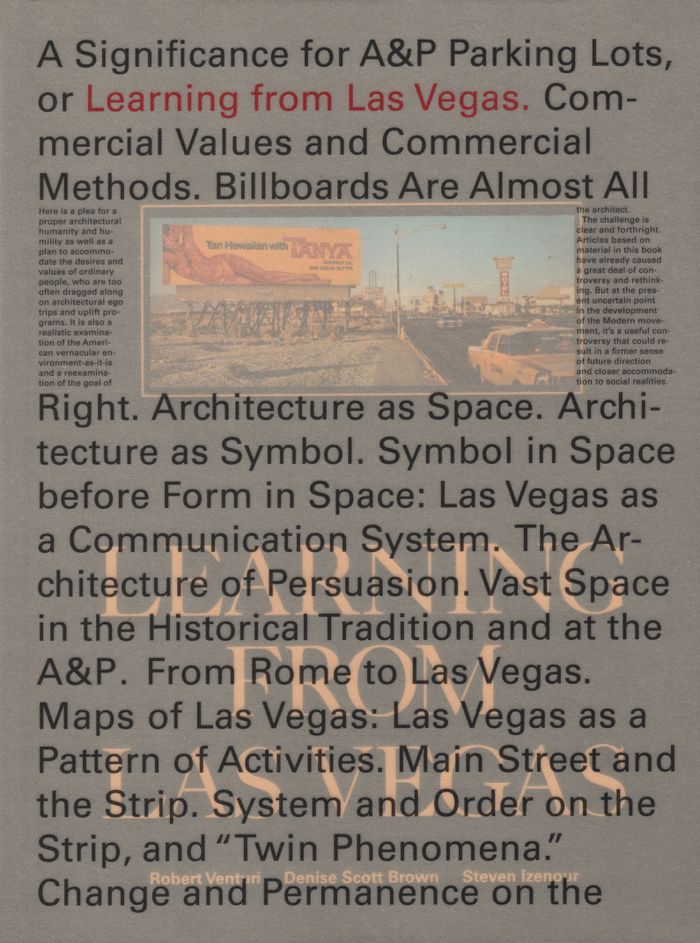
Learning from Las Vegas, facsimile edition
Actions:
Prix:
$131.00
(disponible en magasin)
Résumé:
Upon its publication by the MIT Press in 1972, "Learning from Las Vegas" was immediately influential and controversial. The authors made an argument that was revolutionary for its time—that the billboards and casinos of Las Vegas were worthy of architectural attention—and offered a challenge for contemporary architects obsessed with the heroic and monumental. The physical book itself, designed by MIT’s iconic designer Muriel Cooper, was hailed as a masterpiece of modernist design, but the book’s design struck the authors as too monumental for a text that praised the ugly and ordinary over the heroic and monumental. The MIT Press published a revised version in 1977—a modest paperback that the authors felt was more in keeping with the argument of the book—and the original Cooper-designed book fell out of print and became a highly sought-after collectors’ item; it now sells for thousands of dollars in the rare book market, while the author-redesigned paperback has remained continuously in print at a price affordable to students. Now, decades after the original hardcover edition sold out, the MIT Press is publishing a facsimile edition of the original large-format Cooper-designed edition of Learning from Las Vegas, complete with translucent glassine wrap. This edition also features a spirited preface by Denise Scott Brown, looking back on the creation of the book and explaining her and Robert Venturi’s reservations about the original design.
Learning from Las Vegas, facsimile edition
Actions:
Prix:
$131.00
(disponible en magasin)
Résumé:
Upon its publication by the MIT Press in 1972, "Learning from Las Vegas" was immediately influential and controversial. The authors made an argument that was revolutionary for its time—that the billboards and casinos of Las Vegas were worthy of architectural attention—and offered a challenge for contemporary architects obsessed with the heroic and monumental. The physical book itself, designed by MIT’s iconic designer Muriel Cooper, was hailed as a masterpiece of modernist design, but the book’s design struck the authors as too monumental for a text that praised the ugly and ordinary over the heroic and monumental. The MIT Press published a revised version in 1977—a modest paperback that the authors felt was more in keeping with the argument of the book—and the original Cooper-designed book fell out of print and became a highly sought-after collectors’ item; it now sells for thousands of dollars in the rare book market, while the author-redesigned paperback has remained continuously in print at a price affordable to students. Now, decades after the original hardcover edition sold out, the MIT Press is publishing a facsimile edition of the original large-format Cooper-designed edition of Learning from Las Vegas, complete with translucent glassine wrap. This edition also features a spirited preface by Denise Scott Brown, looking back on the creation of the book and explaining her and Robert Venturi’s reservations about the original design.
Classification:
livres
livres
Publication:
septembre 2017
septembre 2017
Sujet:
Théorie de l’architecture
Théorie de l’architecture
Classification:
livres
livres
Titre:
The future
The future
Actions:
Prix:
$21.95
(disponible sur commande)
Résumé:
The future is like an unwritten book. It is not something we see in a crystal ball, or can only hope to predict, like the weather. In this volume of the MIT Press's Essential Knowledge series, Nick Montfort argues that the future is something to be made, not predicted. Montfort offers what he considers essential knowledge about the future, as seen in the work of writers,(...)
$21.95
(disponible sur commande)
Résumé:
The future is like an unwritten book. It is not something we see in a crystal ball, or can only hope to predict, like the weather. In this volume of the MIT Press's Essential Knowledge series, Nick Montfort argues that the future is something to be made, not predicted. Montfort offers what he considers essential knowledge about the future, as seen in the work of writers,(...)
Titre:
The future
Actions:
Prix:
$21.95
(disponible sur commande)
Résumé:
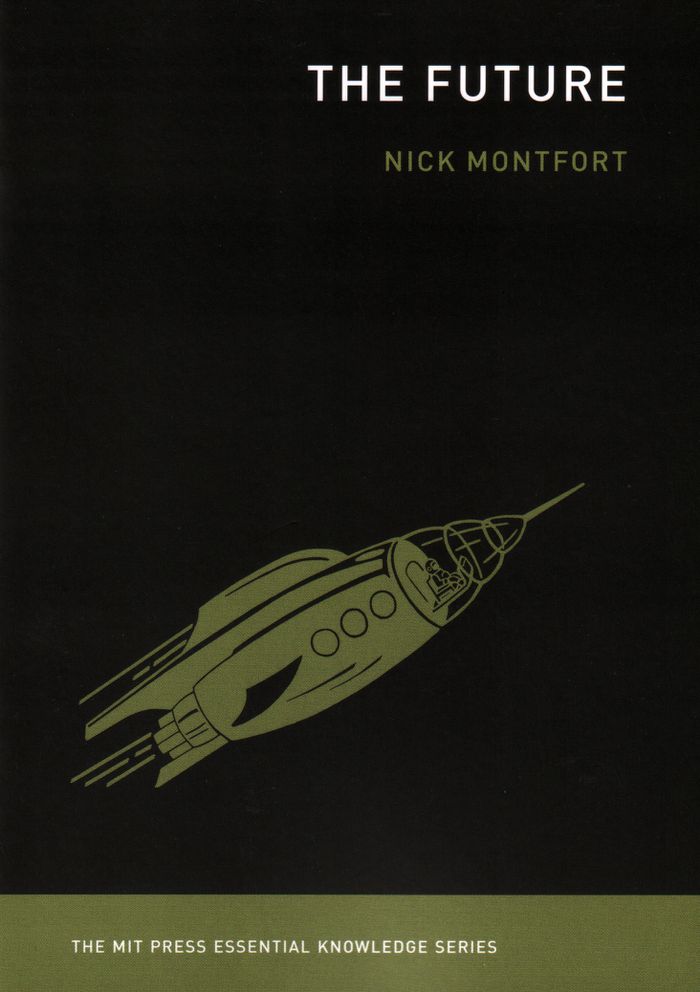
The future is like an unwritten book. It is not something we see in a crystal ball, or can only hope to predict, like the weather. In this volume of the MIT Press's Essential Knowledge series, Nick Montfort argues that the future is something to be made, not predicted. Montfort offers what he considers essential knowledge about the future, as seen in the work of writers, artists, inventors, and designers (mainly in Western culture) who developed and described the core components of the futures they envisioned. Montfort's approach is not that of futurology or scenario planning; instead, he reports on the work of making the future -- the thinkers who devoted themselves to writing pages in the unwritten book.
The future
Actions:
Prix:
$21.95
(disponible sur commande)
Résumé:
The future is like an unwritten book. It is not something we see in a crystal ball, or can only hope to predict, like the weather. In this volume of the MIT Press's Essential Knowledge series, Nick Montfort argues that the future is something to be made, not predicted. Montfort offers what he considers essential knowledge about the future, as seen in the work of writers, artists, inventors, and designers (mainly in Western culture) who developed and described the core components of the futures they envisioned. Montfort's approach is not that of futurology or scenario planning; instead, he reports on the work of making the future -- the thinkers who devoted themselves to writing pages in the unwritten book.
Classification:
livres
livres
Publication:
décembre 2017
décembre 2017
Sujet:
Théorie de l’architecture
Théorie de l’architecture
Classification:
livres
livres
Actions:
Prix:
$48.95
(disponible sur commande)
Résumé:
"Designing San Francisco" is the untold story of the formative postwar decades when U.S. cities took their modern shape amid clashing visions of the future. In this pathbreaking and richly illustrated book, Alison Isenberg shifts the focus from architects and city planners—those most often hailed in histories of urban development and design—to the unsung artists,(...)
$48.95
(disponible sur commande)
Résumé:
"Designing San Francisco" is the untold story of the formative postwar decades when U.S. cities took their modern shape amid clashing visions of the future. In this pathbreaking and richly illustrated book, Alison Isenberg shifts the focus from architects and city planners—those most often hailed in histories of urban development and design—to the unsung artists,(...)
Titre:
Designing San Francisco: art, land and urban renewal in the city by the bay
Actions:
Prix:
$48.95
(disponible sur commande)
Résumé:
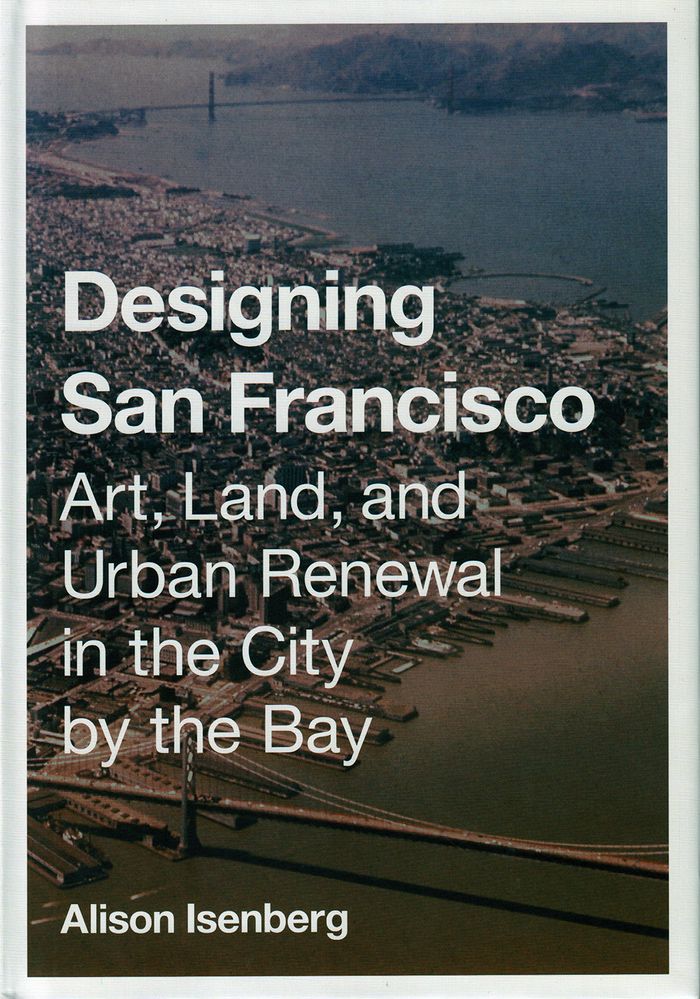
"Designing San Francisco" is the untold story of the formative postwar decades when U.S. cities took their modern shape amid clashing visions of the future. In this pathbreaking and richly illustrated book, Alison Isenberg shifts the focus from architects and city planners—those most often hailed in histories of urban development and design—to the unsung artists, activists, and others who played pivotal roles in rebuilding San Francisco between the 1940s and the 1970s. An evocative portrait of one of the world’s great cities, "Designing San Francisco" provides a new paradigm for understanding past and present struggles to define the urban future.
Designing San Francisco: art, land and urban renewal in the city by the bay
Actions:
Prix:
$48.95
(disponible sur commande)
Résumé:
"Designing San Francisco" is the untold story of the formative postwar decades when U.S. cities took their modern shape amid clashing visions of the future. In this pathbreaking and richly illustrated book, Alison Isenberg shifts the focus from architects and city planners—those most often hailed in histories of urban development and design—to the unsung artists, activists, and others who played pivotal roles in rebuilding San Francisco between the 1940s and the 1970s. An evocative portrait of one of the world’s great cities, "Designing San Francisco" provides a new paradigm for understanding past and present struggles to define the urban future.
Classification:
livres
livres
Publication:
septembre 2017
septembre 2017
Sujet:
Théorie de l’urbanisme
Théorie de l’urbanisme
Classification:
livres
livres
Actions:
Prix:
$63.95
(disponible sur commande)
Résumé:
This book builds on the groundbreaking theoretical framework established in Whitney Davis’s acclaimed previous book, A General Theory of Visual Culture, in which he shows how certain culturally constituted aspects of artifacts and pictures are visible to informed viewers. Here, Davis uses revealing archaeological and historical case studies to further develop his theory,(...)
$63.95
(disponible sur commande)
Résumé:
This book builds on the groundbreaking theoretical framework established in Whitney Davis’s acclaimed previous book, A General Theory of Visual Culture, in which he shows how certain culturally constituted aspects of artifacts and pictures are visible to informed viewers. Here, Davis uses revealing archaeological and historical case studies to further develop his theory,(...)
Titre:
Visuality and virtuality: images and pictures from prehistory to perspective
Actions:
Prix:
$63.95
(disponible sur commande)
Résumé:
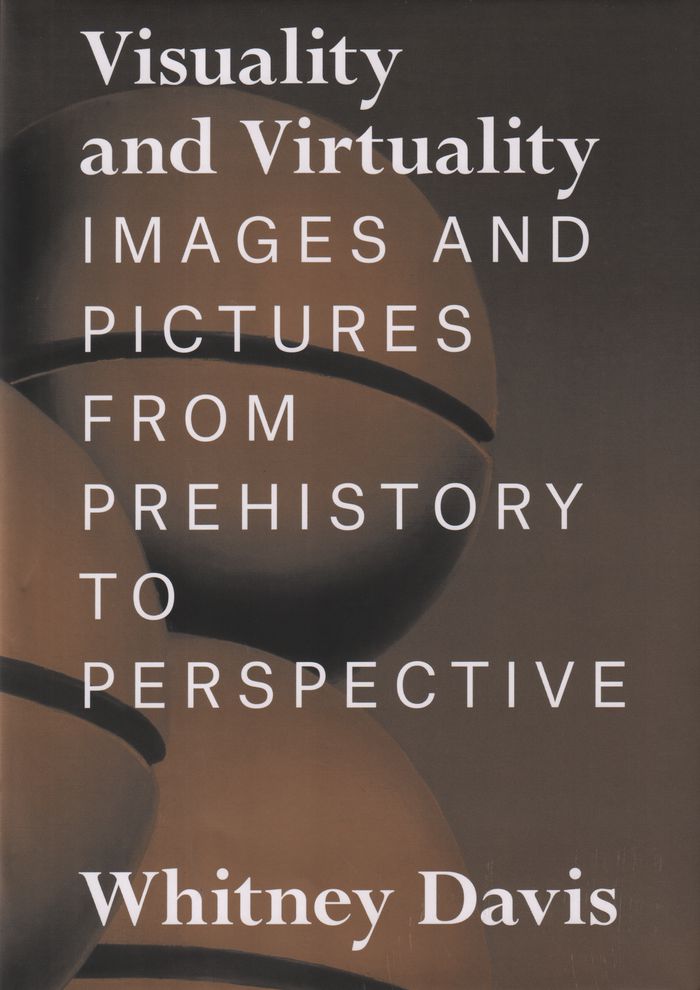
This book builds on the groundbreaking theoretical framework established in Whitney Davis’s acclaimed previous book, A General Theory of Visual Culture, in which he shows how certain culturally constituted aspects of artifacts and pictures are visible to informed viewers. Here, Davis uses revealing archaeological and historical case studies to further develop his theory, presenting an exacting new account of the interaction that occurs when a viewer looks at a picture.
Visuality and virtuality: images and pictures from prehistory to perspective
Actions:
Prix:
$63.95
(disponible sur commande)
Résumé:
This book builds on the groundbreaking theoretical framework established in Whitney Davis’s acclaimed previous book, A General Theory of Visual Culture, in which he shows how certain culturally constituted aspects of artifacts and pictures are visible to informed viewers. Here, Davis uses revealing archaeological and historical case studies to further develop his theory, presenting an exacting new account of the interaction that occurs when a viewer looks at a picture.
Classification:
livres
livres
Publication:
novembre 2017
novembre 2017
Sujet:
Théorie de l’art
Théorie de l’art
Classification:
livres
livres
Prix:
$66.00
(disponible sur commande)
Résumé:
"Plaster monuments" unsettles conventional thinking about copies and originals. As Mari Lending shows, casts were used to restore wholeness to buildings that in reality lay in ruin, or to isolate specific features of monuments to illustrate what was typical of a particular building, style, or era. Arranged in galleries and published in exhibition catalogues, these often(...)
$66.00
(disponible sur commande)
Résumé:
"Plaster monuments" unsettles conventional thinking about copies and originals. As Mari Lending shows, casts were used to restore wholeness to buildings that in reality lay in ruin, or to isolate specific features of monuments to illustrate what was typical of a particular building, style, or era. Arranged in galleries and published in exhibition catalogues, these often(...)
Titre:
Plaster monuments: architecture and the power of reproduction
Actions:
Prix:
$66.00
(disponible sur commande)
Résumé:
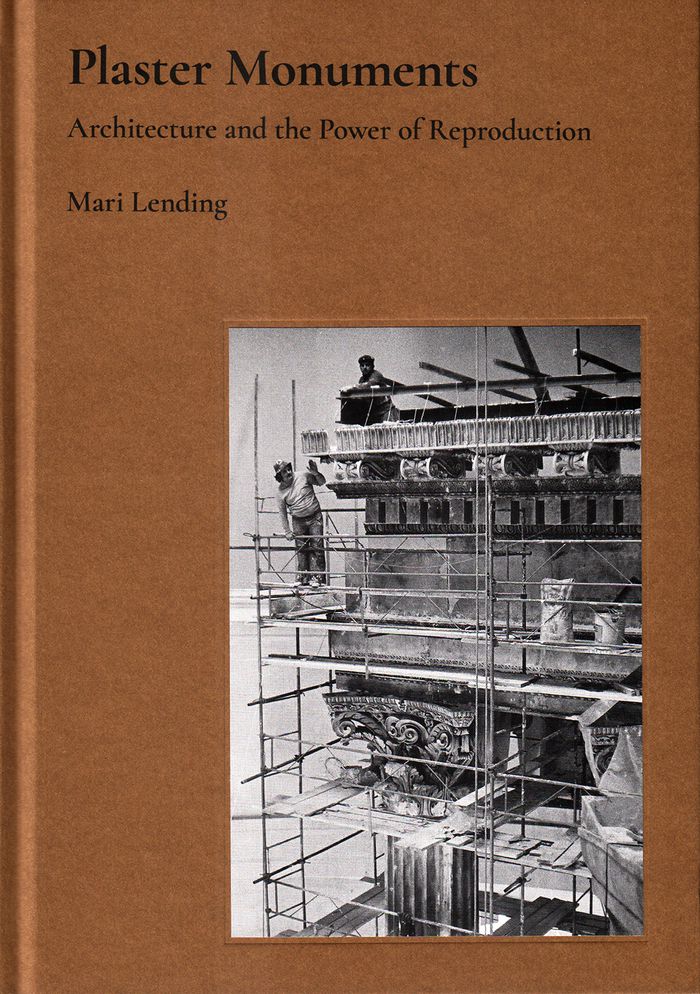
"Plaster monuments" unsettles conventional thinking about copies and originals. As Mari Lending shows, casts were used to restore wholeness to buildings that in reality lay in ruin, or to isolate specific features of monuments to illustrate what was typical of a particular building, style, or era. Arranged in galleries and published in exhibition catalogues, these often enormous objects were staged to suggest the sweep of history, synthesizing structures from vastly different regions and time periods into coherent narratives. The first comprehensive history of these full-scale replicas, "Plaster monuments" examines how they were produced, marketed, sold, and displayed, and how their significance can be understood today.
Plaster monuments: architecture and the power of reproduction
Actions:
Prix:
$66.00
(disponible sur commande)
Résumé:
"Plaster monuments" unsettles conventional thinking about copies and originals. As Mari Lending shows, casts were used to restore wholeness to buildings that in reality lay in ruin, or to isolate specific features of monuments to illustrate what was typical of a particular building, style, or era. Arranged in galleries and published in exhibition catalogues, these often enormous objects were staged to suggest the sweep of history, synthesizing structures from vastly different regions and time periods into coherent narratives. The first comprehensive history of these full-scale replicas, "Plaster monuments" examines how they were produced, marketed, sold, and displayed, and how their significance can be understood today.
Classification:
livres
livres
Publication:
décembre 2017
décembre 2017
Sujet:
Théorie de l’architecture
Théorie de l’architecture
Classification:
livres
livres
Actions:
Prix:
$51.95
(disponible sur commande)
Résumé:
There is a long tradition of comparing cities with organisms as they have similarities in their anatomy. But since cities are brought into life by the presence of people, they are less living beings than urban beings with their own identity. This is based on the behaviors, needs and requirements of the residents. In other words, the anatomy of the city informs its(...)
$51.95
(disponible sur commande)
Résumé:
There is a long tradition of comparing cities with organisms as they have similarities in their anatomy. But since cities are brought into life by the presence of people, they are less living beings than urban beings with their own identity. This is based on the behaviors, needs and requirements of the residents. In other words, the anatomy of the city informs its(...)
Titre:
Urban being: anatomy and identity of the city
Actions:
Prix:
$51.95
(disponible sur commande)
Résumé:
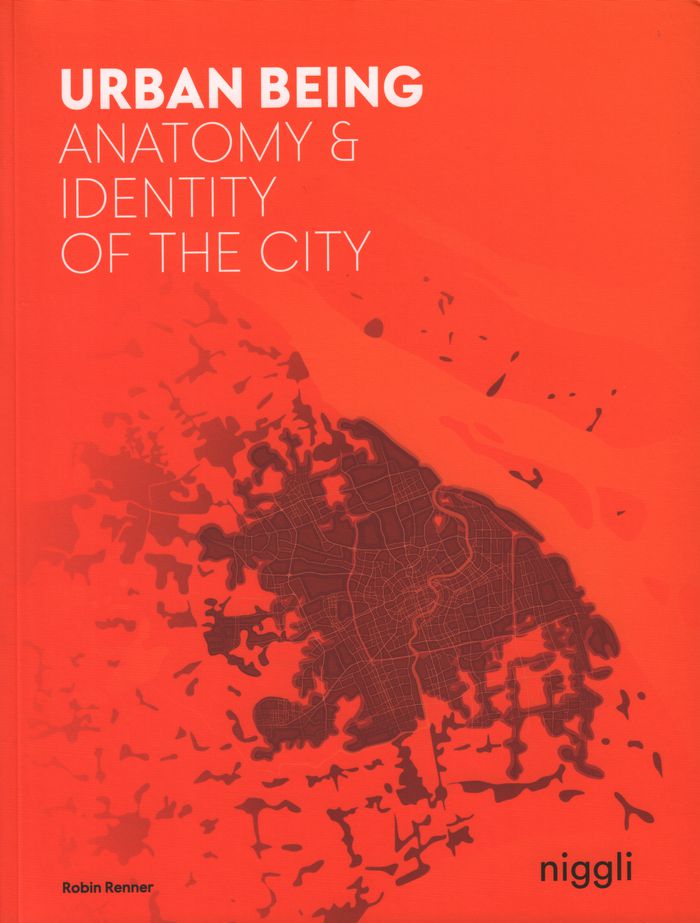
There is a long tradition of comparing cities with organisms as they have similarities in their anatomy. But since cities are brought into life by the presence of people, they are less living beings than urban beings with their own identity. This is based on the behaviors, needs and requirements of the residents. In other words, the anatomy of the city informs its identity – certain city structures, wherever they are, are influenced in similar ways by the people who interact with them. This volume shows and makes understandable these influences on the living environments of the inhabitants. Through detailed charts and elaborate maps generated from satelite images various city structures are compared across five different dimensions and their influence on the city's identity through the lived experience of the inhabitants is discussed. These range from local urban cells, explorable by foot, and urban centers to macro-regions, agglomerations of many hundreds of cities that stretch across thousands of kilometers.
Urban being: anatomy and identity of the city
Actions:
Prix:
$51.95
(disponible sur commande)
Résumé:
There is a long tradition of comparing cities with organisms as they have similarities in their anatomy. But since cities are brought into life by the presence of people, they are less living beings than urban beings with their own identity. This is based on the behaviors, needs and requirements of the residents. In other words, the anatomy of the city informs its identity – certain city structures, wherever they are, are influenced in similar ways by the people who interact with them. This volume shows and makes understandable these influences on the living environments of the inhabitants. Through detailed charts and elaborate maps generated from satelite images various city structures are compared across five different dimensions and their influence on the city's identity through the lived experience of the inhabitants is discussed. These range from local urban cells, explorable by foot, and urban centers to macro-regions, agglomerations of many hundreds of cities that stretch across thousands of kilometers.
Classification:
livres
livres
Publication:
novembre 2017
novembre 2017
Sujet:
Théorie de l’urbanisme
Théorie de l’urbanisme
Classification:
livres
livres
Titre:
Work
Work
Actions:
Prix:
$33.50
(disponible sur commande)
Résumé:
Warhol’s Factory of the 1960s, Minimalism’s assembly-line aesthetics, conceptual and feminist concern with workers’ conditions in the 1970s—these are among the antecedents of a renewed focus on the work of art: labor as artistic activity, as artistic method and as object of artistic engagement. In 2002, the “Work Ethic” exhibition curated by Helen Molesworth at the(...)
$33.50
(disponible sur commande)
Résumé:
Warhol’s Factory of the 1960s, Minimalism’s assembly-line aesthetics, conceptual and feminist concern with workers’ conditions in the 1970s—these are among the antecedents of a renewed focus on the work of art: labor as artistic activity, as artistic method and as object of artistic engagement. In 2002, the “Work Ethic” exhibition curated by Helen Molesworth at the(...)
Titre:
Work
Actions:
Prix:
$33.50
(disponible sur commande)
Résumé:
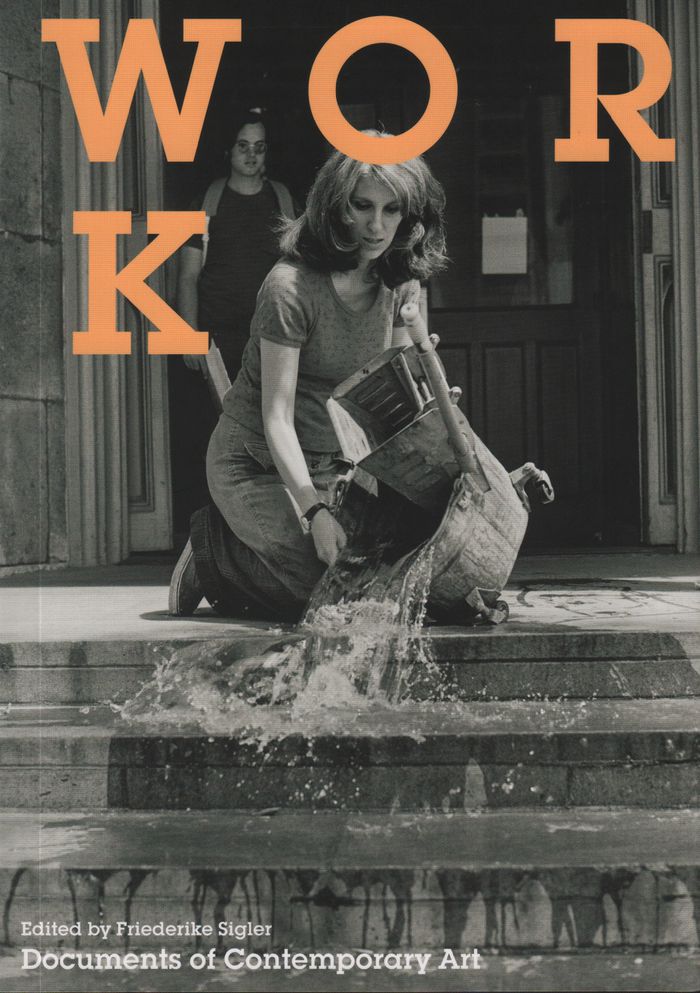
Warhol’s Factory of the 1960s, Minimalism’s assembly-line aesthetics, conceptual and feminist concern with workers’ conditions in the 1970s—these are among the antecedents of a renewed focus on the work of art: labor as artistic activity, as artistic method and as object of artistic engagement. In 2002, the “Work Ethic” exhibition curated by Helen Molesworth at the Baltimore Museum of Art took its cue from recent art to spotlight this earlier era of artistic practice in which activity became as valid as, and often dispensed with, object-production. Revealed through this prism was “dematerialized” art’s close and critical relation to the emergent information age’s criteria of management, production and skill. By 2015, the Venice Biennale reflected artists’ wider concern with global economic and social crises, centered on exploitative and precarious worlds of employment. Yet while art increasingly engages with human travail, work’s significance in itself is seldom addressed by critics. This anthology explicitly investigates work in relation to contemporary art, surveying artistic strategies that grapple with the complexities of being an art worker in the new economy, a postproducer, a collaborator, a fabricator, a striker, an ethical campaigner, or would-be transformer of labor from oppression to liberation.
Work
Actions:
Prix:
$33.50
(disponible sur commande)
Résumé:
Warhol’s Factory of the 1960s, Minimalism’s assembly-line aesthetics, conceptual and feminist concern with workers’ conditions in the 1970s—these are among the antecedents of a renewed focus on the work of art: labor as artistic activity, as artistic method and as object of artistic engagement. In 2002, the “Work Ethic” exhibition curated by Helen Molesworth at the Baltimore Museum of Art took its cue from recent art to spotlight this earlier era of artistic practice in which activity became as valid as, and often dispensed with, object-production. Revealed through this prism was “dematerialized” art’s close and critical relation to the emergent information age’s criteria of management, production and skill. By 2015, the Venice Biennale reflected artists’ wider concern with global economic and social crises, centered on exploitative and precarious worlds of employment. Yet while art increasingly engages with human travail, work’s significance in itself is seldom addressed by critics. This anthology explicitly investigates work in relation to contemporary art, surveying artistic strategies that grapple with the complexities of being an art worker in the new economy, a postproducer, a collaborator, a fabricator, a striker, an ethical campaigner, or would-be transformer of labor from oppression to liberation.
Classification:
livres
livres
Publication:
août 2017
août 2017
Sujet:
Théorie de l’art
Théorie de l’art
Classification:
livres
livres
Titre:
Destruction
Destruction
Actions:
Prix:
$33.50
(disponible sur commande)
Résumé:
The effects and meanings of destruction are central to the work of many of our most influential artists. Since the early 1960s, artists have employed destruction to creative ends. Here destruction changes from a negative state or passive condition to a highly productive category. The destructive subversion of media imagery aims to release us from its controlling effects.(...)
$33.50
(disponible sur commande)
Résumé:
The effects and meanings of destruction are central to the work of many of our most influential artists. Since the early 1960s, artists have employed destruction to creative ends. Here destruction changes from a negative state or passive condition to a highly productive category. The destructive subversion of media imagery aims to release us from its controlling effects.(...)
Titre:
Destruction
Actions:
Prix:
$33.50
(disponible sur commande)
Résumé:
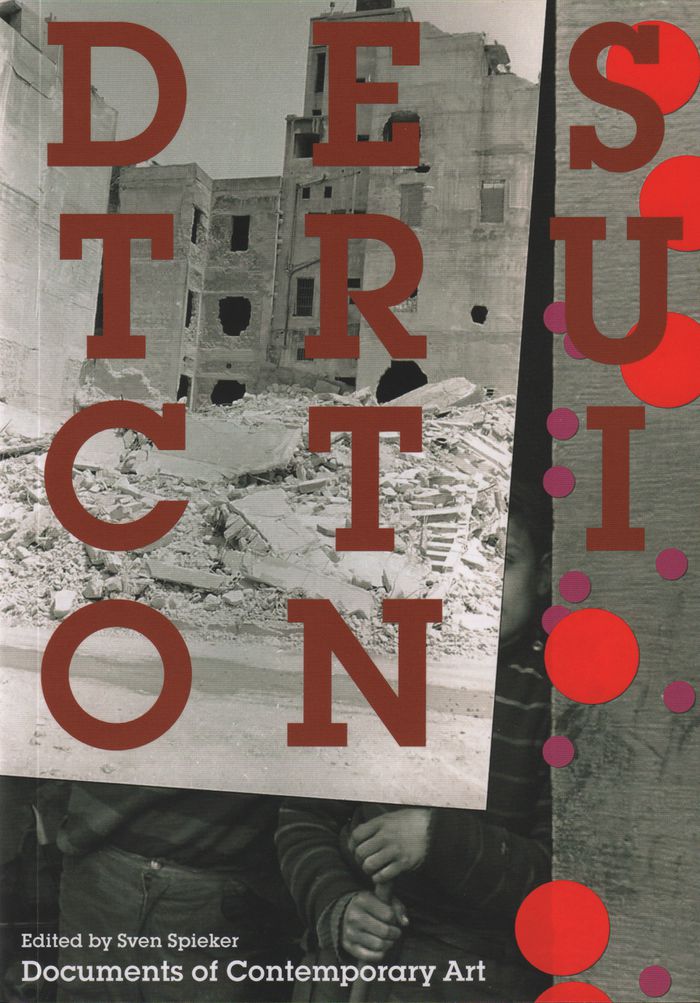
The effects and meanings of destruction are central to the work of many of our most influential artists. Since the early 1960s, artists have employed destruction to creative ends. Here destruction changes from a negative state or passive condition to a highly productive category. The destructive subversion of media imagery aims to release us from its controlling effects. The self-destructing artwork extinguishes art’s fixity as arrested form and ushers in the ephemeral and contingent "open work." This anthology explores artworks that convey the threat of destruction an how they have disrupted the perceived integrity of built structures and institutions. Artistic acts of iconoclasm or risk to the self have raised consciousness of authoritarian oppression. More understated works explore the theme of destruction in armed conflict, media violence, and threats to the environment. These text make up the first collection to be focused systematically on destruction in modern and contemporary art.
Destruction
Actions:
Prix:
$33.50
(disponible sur commande)
Résumé:
The effects and meanings of destruction are central to the work of many of our most influential artists. Since the early 1960s, artists have employed destruction to creative ends. Here destruction changes from a negative state or passive condition to a highly productive category. The destructive subversion of media imagery aims to release us from its controlling effects. The self-destructing artwork extinguishes art’s fixity as arrested form and ushers in the ephemeral and contingent "open work." This anthology explores artworks that convey the threat of destruction an how they have disrupted the perceived integrity of built structures and institutions. Artistic acts of iconoclasm or risk to the self have raised consciousness of authoritarian oppression. More understated works explore the theme of destruction in armed conflict, media violence, and threats to the environment. These text make up the first collection to be focused systematically on destruction in modern and contemporary art.
Classification:
livres
livres
Publication:
août 2017
août 2017
Sujet:
Théorie de l’art
Théorie de l’art
Classification:
livres
livres
Titre:
The largest art
The largest art
Actions:
Prix:
$59.95
(disponible sur commande)
Résumé:
In "The largest art", Brent Ryan argues that urban design encompasses more than architecture, and he provides a foundational theory of urban design beyond the architectural scale. In a "declaration of independence" for urban design, Ryan describes urban design as the largest of the building arts, with qualities of its own. Ryan distinguishes urban design from its sister(...)
$59.95
(disponible sur commande)
Résumé:
In "The largest art", Brent Ryan argues that urban design encompasses more than architecture, and he provides a foundational theory of urban design beyond the architectural scale. In a "declaration of independence" for urban design, Ryan describes urban design as the largest of the building arts, with qualities of its own. Ryan distinguishes urban design from its sister(...)
Titre:
The largest art
Actions:
Prix:
$59.95
(disponible sur commande)
Résumé:
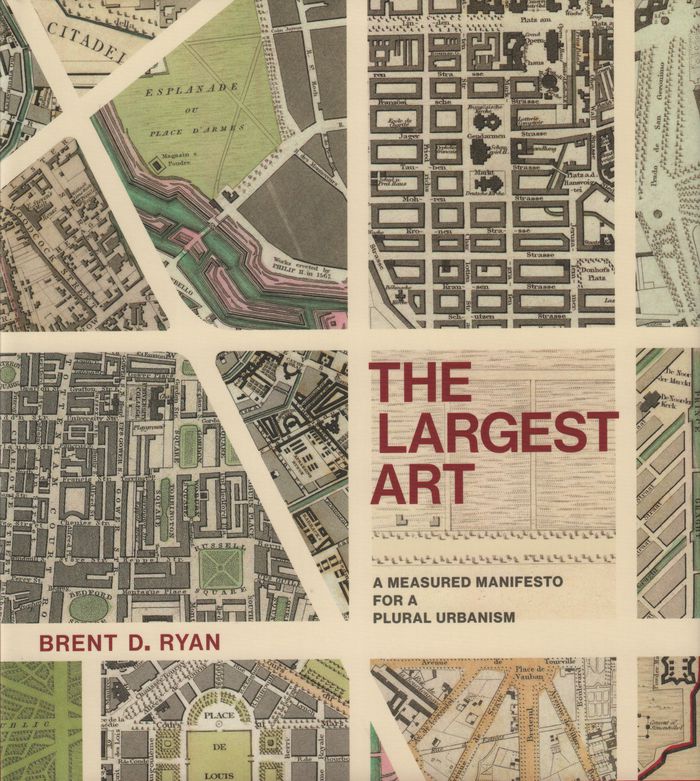
In "The largest art", Brent Ryan argues that urban design encompasses more than architecture, and he provides a foundational theory of urban design beyond the architectural scale. In a "declaration of independence" for urban design, Ryan describes urban design as the largest of the building arts, with qualities of its own. Ryan distinguishes urban design from its sister arts by its pluralism: plural scale, ranging from an alleyway to a region; plural time, because it is deeply enmeshed in both history and the present; plural property, with many owners; plural agents, with many makers; and plural form, with a distributed quality that allows it to coexist with diverse elements of the city. Ryan looks at three well-known urban design projects through the lens of pluralism: a Brancusi sculptural ensemble in Romania, a Bronx housing project, and a formally and spatially diverse grouping of projects in Ljubljana, Slovenia. He revisits the thought of three plural urbanists working between 1960 and 1980: David Crane, Edmund Bacon, and Kevin Lynch. And he tells three design stories for the future, imaginary scenarios of plural urbanism in locations around the world.
The largest art
Actions:
Prix:
$59.95
(disponible sur commande)
Résumé:
In "The largest art", Brent Ryan argues that urban design encompasses more than architecture, and he provides a foundational theory of urban design beyond the architectural scale. In a "declaration of independence" for urban design, Ryan describes urban design as the largest of the building arts, with qualities of its own. Ryan distinguishes urban design from its sister arts by its pluralism: plural scale, ranging from an alleyway to a region; plural time, because it is deeply enmeshed in both history and the present; plural property, with many owners; plural agents, with many makers; and plural form, with a distributed quality that allows it to coexist with diverse elements of the city. Ryan looks at three well-known urban design projects through the lens of pluralism: a Brancusi sculptural ensemble in Romania, a Bronx housing project, and a formally and spatially diverse grouping of projects in Ljubljana, Slovenia. He revisits the thought of three plural urbanists working between 1960 and 1980: David Crane, Edmund Bacon, and Kevin Lynch. And he tells three design stories for the future, imaginary scenarios of plural urbanism in locations around the world.
Classification:
livres
livres
Publication:
octobre 2017
octobre 2017
Sujet:
Théorie de l’urbanisme
Théorie de l’urbanisme
Classification:
livres
livres
Titre:
David Hammons
David Hammons
Actions:
Prix:
$27.95
(disponible sur commande)
Résumé:
In this engaging study, Elena Filipovic collects a vast oral history of the ephemeral action, uncovering rare images and documents, and giving us singular insight into an artist who made an art of making himself difficult to find. And through it, she reveals Bliz-aard Ball Sale to be the backbone of a radical artistic oeuvre that transforms such notions as “art,”(...)
$27.95
(disponible sur commande)
Résumé:
In this engaging study, Elena Filipovic collects a vast oral history of the ephemeral action, uncovering rare images and documents, and giving us singular insight into an artist who made an art of making himself difficult to find. And through it, she reveals Bliz-aard Ball Sale to be the backbone of a radical artistic oeuvre that transforms such notions as “art,”(...)
Titre:
David Hammons
Actions:
Prix:
$27.95
(disponible sur commande)
Résumé:
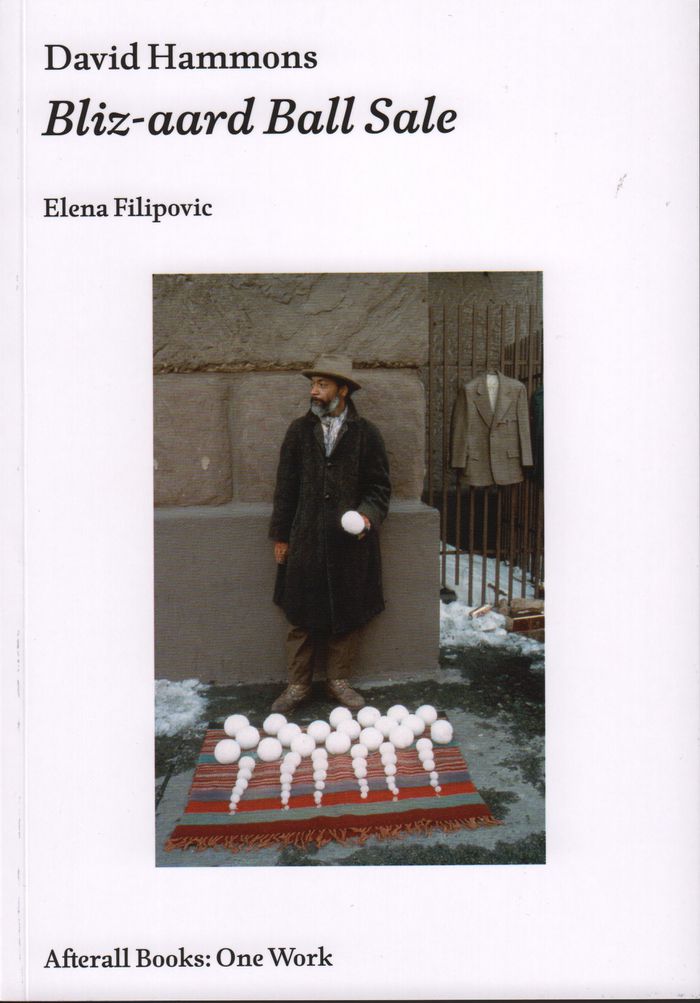
In this engaging study, Elena Filipovic collects a vast oral history of the ephemeral action, uncovering rare images and documents, and giving us singular insight into an artist who made an art of making himself difficult to find. And through it, she reveals Bliz-aard Ball Sale to be the backbone of a radical artistic oeuvre that transforms such notions as “art,” “commodity,” “performance,” and even “race” into categories that shift and dissolve, much like slowly melting snowballs.
David Hammons
Actions:
Prix:
$27.95
(disponible sur commande)
Résumé:
In this engaging study, Elena Filipovic collects a vast oral history of the ephemeral action, uncovering rare images and documents, and giving us singular insight into an artist who made an art of making himself difficult to find. And through it, she reveals Bliz-aard Ball Sale to be the backbone of a radical artistic oeuvre that transforms such notions as “art,” “commodity,” “performance,” and even “race” into categories that shift and dissolve, much like slowly melting snowballs.
Classification:
livres
livres
Publication:
août 2017
août 2017
Sujet:
Théorie de l’art
Théorie de l’art


