


6146 Résultats
Classification:
événements
événements
Actions:
Description:
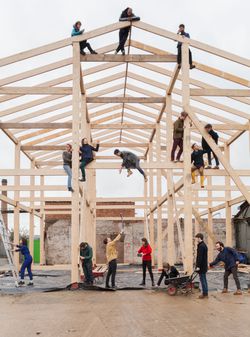
Lewis Jones et Jane Hall sont des membres fondateurs d’Assemble, un collectif multidisciplinaire de quinze membres établi à Londres, et oeuvrant dans les champs de l’architecture, du design et de l’art. Dans cette conférence, ils présenteront le contexte de la formation d’Assemble et leurs pratiques de travail, qui impliquent de nombreux collaborateurs et se situent(...)
Lewis Jones et Jane Hall sont des membres fondateurs d’Assemble, un collectif multidisciplinaire de quinze membres établi à Londres, et oeuvrant dans les champs de l’architecture, du design et de l’art. Dans cette conférence, ils présenteront le contexte de la formation d’Assemble et leurs pratiques de travail, qui impliquent de nombreux collaborateurs et se situent(...)
Localisation:
Théâtre Paul-Desmarais
Théâtre Paul-Desmarais
Date:
21 janvier 2016
21 janvier 2016
Titre:
Assemble : Pratique collective
Actions:
Description:
Lewis Jones et Jane Hall sont des membres fondateurs d’Assemble, un collectif multidisciplinaire de quinze membres établi à Londres, et oeuvrant dans les champs de l’architecture, du design et de l’art. Dans cette conférence, ils présenteront le contexte de la formation d’Assemble et leurs pratiques de travail, qui impliquent de nombreux collaborateurs et se situent(...)
Assemble : Pratique collective
Actions:
Description:
Lewis Jones et Jane Hall sont des membres fondateurs d’Assemble, un collectif multidisciplinaire de quinze membres établi à Londres, et oeuvrant dans les champs de l’architecture, du design et de l’art. Dans cette conférence, ils présenteront le contexte de la formation d’Assemble et leurs pratiques de travail, qui impliquent de nombreux collaborateurs et se situent(...)
Classification:
événements
événements
Date:
21 janvier 2016
21 janvier 2016
Localisation:
Théâtre Paul-Desmarais
Théâtre Paul-Desmarais
Niveau de description archivistique:
Projet
Projet
Numéro de référence:
AP198.S1.1997.PR02
Description:
Project records document the design process for OCEAN North’s competition entry for the Jyväskylä Music and Arts Centre in 1997. The project was titled Terra Cultura by OCEAN North. The international competition called to create a multi-usage space that would include a venue for the symphonic orchestra, a music school, exhibition spaces, and the possibility to host a variety of small cultural events in the Finnish city of Jyväskylä. The proposed site is in the center of the town, across the street from the Jyväskylä city church and its park, and nearby buildings designed by Alvar Aalto. OCEAN North’s concept presents a topological surface as an extension of the surrounding urban scape with two masses that would host the formal functions of the building (concert hall, music school, exhibition halls). The two volumes, or raised blocks, are divided along a diagonal elevated space, which is the extension of the ground’s topological surface filled and dubbed “Liquid Flow Space” by the design team. In their interview with Greg Lynn, Johan Bettum and Kivi Sotamaa mentioned that the idea for Jyväskylä was that it was a cloud. Digital files, in particular, show the process to achieve the projected design. Drawings provide views of streamed particles and of resulting peels. They also include plans, elevations and axonometric views of the structure. Most files are raster or vector images, likely saved from CAD software. A few files are in CAD formats such as Microstation, 3D Studio and form*Z. Digital files also present sine wave analysis and resulting charts for each component of the program. The analysis and charts present the relationships between various components of the building’s program such as the Art Museum, the Concert Halls, the technical space, and the Common facilities. These files are raster images and spreadsheets. Photographs of the site in Jyväskylä and of models built by OCEAN North were digitized and are included with the digital working files. Physical drawings are chiefly floor plans for the building, but also include sections and sketches. Finally, project files include photographic prints of two built models. One of these models, a small model of the conceptual masses of the building structure, is itself in the archive. Photographs show the model in the context of a city scape model. The second model, not part of the archive at CCA, was built at a bigger scale and was an intricate cardboard and wooden stick structure. Sources: Softspace: from a representation of form to a simulation of space, Edited by Sean Lally and Jessica Young. London, New York: Routledge, 2007. Greg Lynn, ed. Archaeology of the Digital 17: OCEAN North, Jyväskylä Music and Arts Centre, Montréal: Canadian Centre for Architecture, 2017. ePub.
AP198.S1.1997.PR02
Description:
Project records document the design process for OCEAN North’s competition entry for the Jyväskylä Music and Arts Centre in 1997. The project was titled Terra Cultura by OCEAN North. The international competition called to create a multi-usage space that would include a venue for the symphonic orchestra, a music school, exhibition spaces, and the possibility to host a variety of small cultural events in the Finnish city of Jyväskylä. The proposed site is in the center of the town, across the street from the Jyväskylä city church and its park, and nearby buildings designed by Alvar Aalto. OCEAN North’s concept presents a topological surface as an extension of the surrounding urban scape with two masses that would host the formal functions of the building (concert hall, music school, exhibition halls). The two volumes, or raised blocks, are divided along a diagonal elevated space, which is the extension of the ground’s topological surface filled and dubbed “Liquid Flow Space” by the design team. In their interview with Greg Lynn, Johan Bettum and Kivi Sotamaa mentioned that the idea for Jyväskylä was that it was a cloud. Digital files, in particular, show the process to achieve the projected design. Drawings provide views of streamed particles and of resulting peels. They also include plans, elevations and axonometric views of the structure. Most files are raster or vector images, likely saved from CAD software. A few files are in CAD formats such as Microstation, 3D Studio and form*Z. Digital files also present sine wave analysis and resulting charts for each component of the program. The analysis and charts present the relationships between various components of the building’s program such as the Art Museum, the Concert Halls, the technical space, and the Common facilities. These files are raster images and spreadsheets. Photographs of the site in Jyväskylä and of models built by OCEAN North were digitized and are included with the digital working files. Physical drawings are chiefly floor plans for the building, but also include sections and sketches. Finally, project files include photographic prints of two built models. One of these models, a small model of the conceptual masses of the building structure, is itself in the archive. Photographs show the model in the context of a city scape model. The second model, not part of the archive at CCA, was built at a bigger scale and was an intricate cardboard and wooden stick structure. Sources: Softspace: from a representation of form to a simulation of space, Edited by Sean Lally and Jessica Young. London, New York: Routledge, 2007. Greg Lynn, ed. Archaeology of the Digital 17: OCEAN North, Jyväskylä Music and Arts Centre, Montréal: Canadian Centre for Architecture, 2017. ePub.
Personnes et institutions:
Date:
1997
1997
Titre:
Terra Cultura – Jyväskylä Music and Arts Centre, international competition entry
Actions:
AP198.S1.1997.PR02
Description:
Project records document the design process for OCEAN North’s competition entry for the Jyväskylä Music and Arts Centre in 1997. The project was titled Terra Cultura by OCEAN North. The international competition called to create a multi-usage space that would include a venue for the symphonic orchestra, a music school, exhibition spaces, and the possibility to host a variety of small cultural events in the Finnish city of Jyväskylä. The proposed site is in the center of the town, across the street from the Jyväskylä city church and its park, and nearby buildings designed by Alvar Aalto. OCEAN North’s concept presents a topological surface as an extension of the surrounding urban scape with two masses that would host the formal functions of the building (concert hall, music school, exhibition halls). The two volumes, or raised blocks, are divided along a diagonal elevated space, which is the extension of the ground’s topological surface filled and dubbed “Liquid Flow Space” by the design team. In their interview with Greg Lynn, Johan Bettum and Kivi Sotamaa mentioned that the idea for Jyväskylä was that it was a cloud. Digital files, in particular, show the process to achieve the projected design. Drawings provide views of streamed particles and of resulting peels. They also include plans, elevations and axonometric views of the structure. Most files are raster or vector images, likely saved from CAD software. A few files are in CAD formats such as Microstation, 3D Studio and form*Z. Digital files also present sine wave analysis and resulting charts for each component of the program. The analysis and charts present the relationships between various components of the building’s program such as the Art Museum, the Concert Halls, the technical space, and the Common facilities. These files are raster images and spreadsheets. Photographs of the site in Jyväskylä and of models built by OCEAN North were digitized and are included with the digital working files. Physical drawings are chiefly floor plans for the building, but also include sections and sketches. Finally, project files include photographic prints of two built models. One of these models, a small model of the conceptual masses of the building structure, is itself in the archive. Photographs show the model in the context of a city scape model. The second model, not part of the archive at CCA, was built at a bigger scale and was an intricate cardboard and wooden stick structure. Sources: Softspace: from a representation of form to a simulation of space, Edited by Sean Lally and Jessica Young. London, New York: Routledge, 2007. Greg Lynn, ed. Archaeology of the Digital 17: OCEAN North, Jyväskylä Music and Arts Centre, Montréal: Canadian Centre for Architecture, 2017. ePub.
Terra Cultura – Jyväskylä Music and Arts Centre, international competition entry
Actions:
AP198.S1.1997.PR02
Description:
Project records document the design process for OCEAN North’s competition entry for the Jyväskylä Music and Arts Centre in 1997. The project was titled Terra Cultura by OCEAN North. The international competition called to create a multi-usage space that would include a venue for the symphonic orchestra, a music school, exhibition spaces, and the possibility to host a variety of small cultural events in the Finnish city of Jyväskylä. The proposed site is in the center of the town, across the street from the Jyväskylä city church and its park, and nearby buildings designed by Alvar Aalto. OCEAN North’s concept presents a topological surface as an extension of the surrounding urban scape with two masses that would host the formal functions of the building (concert hall, music school, exhibition halls). The two volumes, or raised blocks, are divided along a diagonal elevated space, which is the extension of the ground’s topological surface filled and dubbed “Liquid Flow Space” by the design team. In their interview with Greg Lynn, Johan Bettum and Kivi Sotamaa mentioned that the idea for Jyväskylä was that it was a cloud. Digital files, in particular, show the process to achieve the projected design. Drawings provide views of streamed particles and of resulting peels. They also include plans, elevations and axonometric views of the structure. Most files are raster or vector images, likely saved from CAD software. A few files are in CAD formats such as Microstation, 3D Studio and form*Z. Digital files also present sine wave analysis and resulting charts for each component of the program. The analysis and charts present the relationships between various components of the building’s program such as the Art Museum, the Concert Halls, the technical space, and the Common facilities. These files are raster images and spreadsheets. Photographs of the site in Jyväskylä and of models built by OCEAN North were digitized and are included with the digital working files. Physical drawings are chiefly floor plans for the building, but also include sections and sketches. Finally, project files include photographic prints of two built models. One of these models, a small model of the conceptual masses of the building structure, is itself in the archive. Photographs show the model in the context of a city scape model. The second model, not part of the archive at CCA, was built at a bigger scale and was an intricate cardboard and wooden stick structure. Sources: Softspace: from a representation of form to a simulation of space, Edited by Sean Lally and Jessica Young. London, New York: Routledge, 2007. Greg Lynn, ed. Archaeology of the Digital 17: OCEAN North, Jyväskylä Music and Arts Centre, Montréal: Canadian Centre for Architecture, 2017. ePub.
Niveau de description archivistique:
Project
Project
Date:
1997
1997
Personnes et institutions:
Niveau de description archivistique:
Projet
Projet
Titre:
Carbon Tower (2001)
Carbon Tower (2001)
Numéro de référence:
AP174.S1.2001.D1
Description:
This project file documents an unbuilt design by Testa & Weiser for Carbon Tower (2001), a forty-storey building made almost entirely of carbon fibre. The project was developed in parallel with scripting software designed while Peter Testa and Devyn Weiser co-directed the Emergent Design Group at MIT. "The tower consists of an interdependent set of parts: floor plates hang from a diagrid structure of bundled fibres reinforced by two double-helix covered ramps, which are run in and out of the structure and are themselves made of strands woven at a finer scale. A thin composite skin—glass would be too heavy—wraps the tower’s parts together. A collaboration with Arup in 2002 allowed Testa & Weiser to simplify the scheme even further, by moving all core elements, from elevators to structural supports, to the tower’s perimeter. To take full advantage of the flexibility and energy efficiency of composite materials, Testa & Weiser also imagined that the carbon fibre structures would be formed on site through a process called pultrusion."[1] The file contains a large number of digital files documenting the conceptual and design development of the project; consultation with Arup Consulting Engineers, New York; research on composite materials; fabrication of 3D printed physical models by 3D Systems and Windform; and exhibition of the project at several museums and galleries, including the Museum of Contemporary Art, Los Angeles and the Cooper-Hewitt Smithsonian Design Museum, New York. Also contained in the file are 56 paper drawings (including some sketches done on top of printed computer-aided designs) and two 3D printed physical models produced by 3D Systems. Sources: [1] Canadian Centre for Architecture. Archaeology of the Digital 12: Testa & Weiser, Carbon Tower, ed. Greg Lynn (2015), ISBN 978-1-927071-25-0.
AP174.S1.2001.D1
Description:
This project file documents an unbuilt design by Testa & Weiser for Carbon Tower (2001), a forty-storey building made almost entirely of carbon fibre. The project was developed in parallel with scripting software designed while Peter Testa and Devyn Weiser co-directed the Emergent Design Group at MIT. "The tower consists of an interdependent set of parts: floor plates hang from a diagrid structure of bundled fibres reinforced by two double-helix covered ramps, which are run in and out of the structure and are themselves made of strands woven at a finer scale. A thin composite skin—glass would be too heavy—wraps the tower’s parts together. A collaboration with Arup in 2002 allowed Testa & Weiser to simplify the scheme even further, by moving all core elements, from elevators to structural supports, to the tower’s perimeter. To take full advantage of the flexibility and energy efficiency of composite materials, Testa & Weiser also imagined that the carbon fibre structures would be formed on site through a process called pultrusion."[1] The file contains a large number of digital files documenting the conceptual and design development of the project; consultation with Arup Consulting Engineers, New York; research on composite materials; fabrication of 3D printed physical models by 3D Systems and Windform; and exhibition of the project at several museums and galleries, including the Museum of Contemporary Art, Los Angeles and the Cooper-Hewitt Smithsonian Design Museum, New York. Also contained in the file are 56 paper drawings (including some sketches done on top of printed computer-aided designs) and two 3D printed physical models produced by 3D Systems. Sources: [1] Canadian Centre for Architecture. Archaeology of the Digital 12: Testa & Weiser, Carbon Tower, ed. Greg Lynn (2015), ISBN 978-1-927071-25-0.
Personnes et institutions:
Date:
2002-2014
2002-2014
Titre:
Carbon Tower (2001)
Actions:
AP174.S1.2001.D1
Description:
This project file documents an unbuilt design by Testa & Weiser for Carbon Tower (2001), a forty-storey building made almost entirely of carbon fibre. The project was developed in parallel with scripting software designed while Peter Testa and Devyn Weiser co-directed the Emergent Design Group at MIT. "The tower consists of an interdependent set of parts: floor plates hang from a diagrid structure of bundled fibres reinforced by two double-helix covered ramps, which are run in and out of the structure and are themselves made of strands woven at a finer scale. A thin composite skin—glass would be too heavy—wraps the tower’s parts together. A collaboration with Arup in 2002 allowed Testa & Weiser to simplify the scheme even further, by moving all core elements, from elevators to structural supports, to the tower’s perimeter. To take full advantage of the flexibility and energy efficiency of composite materials, Testa & Weiser also imagined that the carbon fibre structures would be formed on site through a process called pultrusion."[1] The file contains a large number of digital files documenting the conceptual and design development of the project; consultation with Arup Consulting Engineers, New York; research on composite materials; fabrication of 3D printed physical models by 3D Systems and Windform; and exhibition of the project at several museums and galleries, including the Museum of Contemporary Art, Los Angeles and the Cooper-Hewitt Smithsonian Design Museum, New York. Also contained in the file are 56 paper drawings (including some sketches done on top of printed computer-aided designs) and two 3D printed physical models produced by 3D Systems. Sources: [1] Canadian Centre for Architecture. Archaeology of the Digital 12: Testa & Weiser, Carbon Tower, ed. Greg Lynn (2015), ISBN 978-1-927071-25-0.
Carbon Tower (2001)
Actions:
AP174.S1.2001.D1
Description:
This project file documents an unbuilt design by Testa & Weiser for Carbon Tower (2001), a forty-storey building made almost entirely of carbon fibre. The project was developed in parallel with scripting software designed while Peter Testa and Devyn Weiser co-directed the Emergent Design Group at MIT. "The tower consists of an interdependent set of parts: floor plates hang from a diagrid structure of bundled fibres reinforced by two double-helix covered ramps, which are run in and out of the structure and are themselves made of strands woven at a finer scale. A thin composite skin—glass would be too heavy—wraps the tower’s parts together. A collaboration with Arup in 2002 allowed Testa & Weiser to simplify the scheme even further, by moving all core elements, from elevators to structural supports, to the tower’s perimeter. To take full advantage of the flexibility and energy efficiency of composite materials, Testa & Weiser also imagined that the carbon fibre structures would be formed on site through a process called pultrusion."[1] The file contains a large number of digital files documenting the conceptual and design development of the project; consultation with Arup Consulting Engineers, New York; research on composite materials; fabrication of 3D printed physical models by 3D Systems and Windform; and exhibition of the project at several museums and galleries, including the Museum of Contemporary Art, Los Angeles and the Cooper-Hewitt Smithsonian Design Museum, New York. Also contained in the file are 56 paper drawings (including some sketches done on top of printed computer-aided designs) and two 3D printed physical models produced by 3D Systems. Sources: [1] Canadian Centre for Architecture. Archaeology of the Digital 12: Testa & Weiser, Carbon Tower, ed. Greg Lynn (2015), ISBN 978-1-927071-25-0.
Niveau de description archivistique:
Project
Project
Date:
2002-2014
2002-2014
Personnes et institutions:
Classification:
expositions
expositions
Actions:
Description:
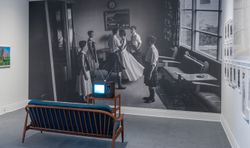
À une époque où l’empreinte de l’homme sur la planète atteint un niveau inégalé, certains pays se distinguent par leur situation enviable et la complexité de leur relation au territoire. Les histoires entourant le Canada sont intimement liées à la découverte et à l’appropriation de ressources naturelles à la fois importantes et diversifiées, ainsi qu’à des points de vue(...)
À une époque où l’empreinte de l’homme sur la planète atteint un niveau inégalé, certains pays se distinguent par leur situation enviable et la complexité de leur relation au territoire. Les histoires entourant le Canada sont intimement liées à la découverte et à l’appropriation de ressources naturelles à la fois importantes et diversifiées, ainsi qu’à des points de vue(...)
Date:
16 novembre 2016 au 9 avril 2017
16 novembre 2016 au 9 avril 2017
Titre:
Le temps presse
Actions:
Description:
À une époque où l’empreinte de l’homme sur la planète atteint un niveau inégalé, certains pays se distinguent par leur situation enviable et la complexité de leur relation au territoire. Les histoires entourant le Canada sont intimement liées à la découverte et à l’appropriation de ressources naturelles à la fois importantes et diversifiées, ainsi qu’à des points de vue(...)
Le temps presse
Actions:
Description:
À une époque où l’empreinte de l’homme sur la planète atteint un niveau inégalé, certains pays se distinguent par leur situation enviable et la complexité de leur relation au territoire. Les histoires entourant le Canada sont intimement liées à la découverte et à l’appropriation de ressources naturelles à la fois importantes et diversifiées, ainsi qu’à des points de vue(...)
Classification:
expositions
expositions
Date:
16 novembre 2016 au
9 avril 2017
16 novembre 2016 au
9 avril 2017
Classification:
expositions
expositions

Classification:
expositions
expositions
Date:
janvier 2018 au
septembre 2018
janvier 2018 au
septembre 2018
Classification:
expositions
expositions
Titre:
Naoya Hatakeyama : Échelles
Naoya Hatakeyama : Échelles
Actions:
Description:
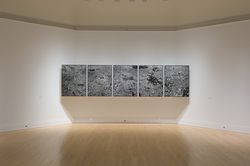
L’œuvre de l’artiste japonais Naoya Hatakeyama interroge en particulier la relation entre ville et nature. Commandées par le CCA, les trois séries de photographies, dont Échelles, captent les maquettes d’architecture existantes de New York et Tokyo sous un angle qui défie les notions d’échelle et la perception de la réalité. Naoya Hatakeyama : Échelles est la quatrième et(...)
L’œuvre de l’artiste japonais Naoya Hatakeyama interroge en particulier la relation entre ville et nature. Commandées par le CCA, les trois séries de photographies, dont Échelles, captent les maquettes d’architecture existantes de New York et Tokyo sous un angle qui défie les notions d’échelle et la perception de la réalité. Naoya Hatakeyama : Échelles est la quatrième et(...)
Localisation:
Salle octogonale
Salle octogonale
Date:
27 septembre 2007 au 3 février 2008
27 septembre 2007 au 3 février 2008
Titre:
Naoya Hatakeyama : Échelles
Actions:
Description:
L’œuvre de l’artiste japonais Naoya Hatakeyama interroge en particulier la relation entre ville et nature. Commandées par le CCA, les trois séries de photographies, dont Échelles, captent les maquettes d’architecture existantes de New York et Tokyo sous un angle qui défie les notions d’échelle et la perception de la réalité. Naoya Hatakeyama : Échelles est la quatrième et(...)
Naoya Hatakeyama : Échelles
Actions:
Description:
L’œuvre de l’artiste japonais Naoya Hatakeyama interroge en particulier la relation entre ville et nature. Commandées par le CCA, les trois séries de photographies, dont Échelles, captent les maquettes d’architecture existantes de New York et Tokyo sous un angle qui défie les notions d’échelle et la perception de la réalité. Naoya Hatakeyama : Échelles est la quatrième et(...)
Classification:
expositions
expositions
Date:
27 septembre 2007 au
3 février 2008
27 septembre 2007 au
3 février 2008
Localisation:
Salle octogonale
Salle octogonale
Classification:
expositions
expositions
Actions:
Description:
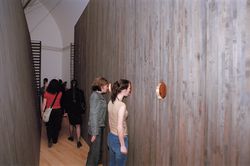
L’exposition Laboratoires explore comment l’architecture peut réagir au monde incertain de l’après 11 septembre et construire un nouveau cadre de réflexion. Six jeunes agences présentent des environnements ou des installations qui examinent le langage fondamental de la pensée architecturale et réaffirment les pouvoirs civilisateurs de l’imagination. Ont participé à cette(...)
L’exposition Laboratoires explore comment l’architecture peut réagir au monde incertain de l’après 11 septembre et construire un nouveau cadre de réflexion. Six jeunes agences présentent des environnements ou des installations qui examinent le langage fondamental de la pensée architecturale et réaffirment les pouvoirs civilisateurs de l’imagination. Ont participé à cette(...)
Localisation:
Salles principales
Salles principales
Date:
18 avril 2002 au 15 septembre 2002
18 avril 2002 au 15 septembre 2002
Titre:
Laboratoires : Six agences de jeunes architectes dans les salles du CCA
Actions:
Description:
L’exposition Laboratoires explore comment l’architecture peut réagir au monde incertain de l’après 11 septembre et construire un nouveau cadre de réflexion. Six jeunes agences présentent des environnements ou des installations qui examinent le langage fondamental de la pensée architecturale et réaffirment les pouvoirs civilisateurs de l’imagination. Ont participé à cette(...)
Laboratoires : Six agences de jeunes architectes dans les salles du CCA
Actions:
Description:
L’exposition Laboratoires explore comment l’architecture peut réagir au monde incertain de l’après 11 septembre et construire un nouveau cadre de réflexion. Six jeunes agences présentent des environnements ou des installations qui examinent le langage fondamental de la pensée architecturale et réaffirment les pouvoirs civilisateurs de l’imagination. Ont participé à cette(...)
Classification:
expositions
expositions
Date:
18 avril 2002 au
15 septembre 2002
18 avril 2002 au
15 septembre 2002
Localisation:
Salles principales
Salles principales
Niveau de description archivistique:
Projet
Projet
Numéro de référence:
AP207.S1.2014.PR05
Description:
The project series documents the installation "Architecture Ondoyante", designed by Pettena and presented at the FRAC Lorraine in Metz, in 2014. The installation consists of hanging long strips of white plastic on the facades of the FRAC building "to confuse the well-defined and somewhat austere space of the building that hosts the FRAC, wrapping it in light and movement would have overturned the grain of static, centuries-old architecture." [1] A similar installation, "Forgiving Architecture" was realized in 2009 at the Athens Biennale. Another edition of the installation was presented in the exhibition "Gianni Pettena. About non conscious architecture" at the Galleria Giovanni Bonelli in Milan, in 2017. The project series contains three sketches, a drawing, and photographs and videos of the installation. Source: [1] Gianni Pettena website, https://www.giannipettena.it/italiano/opere-1/inst-ondoyante-2014-1/ (last accessed 28 January 2020)
AP207.S1.2014.PR05
Description:
The project series documents the installation "Architecture Ondoyante", designed by Pettena and presented at the FRAC Lorraine in Metz, in 2014. The installation consists of hanging long strips of white plastic on the facades of the FRAC building "to confuse the well-defined and somewhat austere space of the building that hosts the FRAC, wrapping it in light and movement would have overturned the grain of static, centuries-old architecture." [1] A similar installation, "Forgiving Architecture" was realized in 2009 at the Athens Biennale. Another edition of the installation was presented in the exhibition "Gianni Pettena. About non conscious architecture" at the Galleria Giovanni Bonelli in Milan, in 2017. The project series contains three sketches, a drawing, and photographs and videos of the installation. Source: [1] Gianni Pettena website, https://www.giannipettena.it/italiano/opere-1/inst-ondoyante-2014-1/ (last accessed 28 January 2020)
Personnes et institutions:
Date:
2013-2015
2013-2015
Titre:
Architecture Ondoyante (2014)
Actions:
AP207.S1.2014.PR05
Description:
The project series documents the installation "Architecture Ondoyante", designed by Pettena and presented at the FRAC Lorraine in Metz, in 2014. The installation consists of hanging long strips of white plastic on the facades of the FRAC building "to confuse the well-defined and somewhat austere space of the building that hosts the FRAC, wrapping it in light and movement would have overturned the grain of static, centuries-old architecture." [1] A similar installation, "Forgiving Architecture" was realized in 2009 at the Athens Biennale. Another edition of the installation was presented in the exhibition "Gianni Pettena. About non conscious architecture" at the Galleria Giovanni Bonelli in Milan, in 2017. The project series contains three sketches, a drawing, and photographs and videos of the installation. Source: [1] Gianni Pettena website, https://www.giannipettena.it/italiano/opere-1/inst-ondoyante-2014-1/ (last accessed 28 January 2020)
Architecture Ondoyante (2014)
Actions:
AP207.S1.2014.PR05
Description:
The project series documents the installation "Architecture Ondoyante", designed by Pettena and presented at the FRAC Lorraine in Metz, in 2014. The installation consists of hanging long strips of white plastic on the facades of the FRAC building "to confuse the well-defined and somewhat austere space of the building that hosts the FRAC, wrapping it in light and movement would have overturned the grain of static, centuries-old architecture." [1] A similar installation, "Forgiving Architecture" was realized in 2009 at the Athens Biennale. Another edition of the installation was presented in the exhibition "Gianni Pettena. About non conscious architecture" at the Galleria Giovanni Bonelli in Milan, in 2017. The project series contains three sketches, a drawing, and photographs and videos of the installation. Source: [1] Gianni Pettena website, https://www.giannipettena.it/italiano/opere-1/inst-ondoyante-2014-1/ (last accessed 28 January 2020)
Niveau de description archivistique:
Project
Project
Date:
2013-2015
2013-2015
Personnes et institutions:
Classification:
événements
événements
Titre:
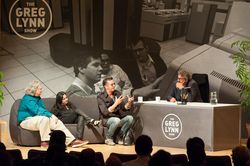
The Greg Lynn Show
The Greg Lynn Show
Actions:
Description:
Greg Lynn sur scène, en conversation avec les architectes de projets inclus dans l’exposition __Archéologie du numérique : Complexité et convention_. Les conversations constituent un des aspects importants du programme Archéologie du numérique du CCA. Greg Lynn a ainsi discuté avec les architectes de projets produits de la fin des années 1980 jusqu’aux années 2000, afin(...)
Greg Lynn sur scène, en conversation avec les architectes de projets inclus dans l’exposition __Archéologie du numérique : Complexité et convention_. Les conversations constituent un des aspects importants du programme Archéologie du numérique du CCA. Greg Lynn a ainsi discuté avec les architectes de projets produits de la fin des années 1980 jusqu’aux années 2000, afin(...)
Date:
11 mai 2016
11 mai 2016
Titre:
The Greg Lynn Show
Actions:
Description:
Greg Lynn sur scène, en conversation avec les architectes de projets inclus dans l’exposition __Archéologie du numérique : Complexité et convention_. Les conversations constituent un des aspects importants du programme Archéologie du numérique du CCA. Greg Lynn a ainsi discuté avec les architectes de projets produits de la fin des années 1980 jusqu’aux années 2000, afin(...)
The Greg Lynn Show
Actions:
Description:
Greg Lynn sur scène, en conversation avec les architectes de projets inclus dans l’exposition __Archéologie du numérique : Complexité et convention_. Les conversations constituent un des aspects importants du programme Archéologie du numérique du CCA. Greg Lynn a ainsi discuté avec les architectes de projets produits de la fin des années 1980 jusqu’aux années 2000, afin(...)
Classification:
événements
événements
Date:
11 mai 2016
11 mai 2016
Niveau de description archivistique:
Projet
Projet
Numéro de référence:
AP164.S1.1999.D2
Description:
The project series documents an open competition. Abalos & Herreros, in collaboration with Queca Ortiz and Empty, S.L., won second place for their design. The firm identified this project as number 115. The intention of their entry was to “[…] answer to the task with an authentic installation, a mellowed and independent equipment independent of the container, which absolutely never provokes a conflict or pretends to improve it, which accepts the value of its configuration and extracts the maximum possibilities of the spatial qualities that the intervention has pretended to enhance. Therefore, it is pretended to develop a program which adds an offer of pedagogic-cultural piece of the town to the basic spaces of the museum. The challenge is to make people live together with the scientific aspects, which interests the cultivated popular-pedagogy visitor, connoisseurs of, and which acts with the intention of excinting, surprising and attracting attention of a mostly youthful and infantile audience. […] The museum’s basic program is completed with temporary exhibition halls, library, lecture room and didactic workshops, assembly hall, café, gift shop and offices.” (ARCH270975) Documenting this project are digital and reference materials, project descriptions, and specifications.
AP164.S1.1999.D2
Description:
The project series documents an open competition. Abalos & Herreros, in collaboration with Queca Ortiz and Empty, S.L., won second place for their design. The firm identified this project as number 115. The intention of their entry was to “[…] answer to the task with an authentic installation, a mellowed and independent equipment independent of the container, which absolutely never provokes a conflict or pretends to improve it, which accepts the value of its configuration and extracts the maximum possibilities of the spatial qualities that the intervention has pretended to enhance. Therefore, it is pretended to develop a program which adds an offer of pedagogic-cultural piece of the town to the basic spaces of the museum. The challenge is to make people live together with the scientific aspects, which interests the cultivated popular-pedagogy visitor, connoisseurs of, and which acts with the intention of excinting, surprising and attracting attention of a mostly youthful and infantile audience. […] The museum’s basic program is completed with temporary exhibition halls, library, lecture room and didactic workshops, assembly hall, café, gift shop and offices.” (ARCH270975) Documenting this project are digital and reference materials, project descriptions, and specifications.
Personnes et institutions:
Date:
1996-2009, predominant 1999
1996-2009, predominant 1999
Titre:
Museo arqueológico Alicante, Spain (1999)
Actions:
AP164.S1.1999.D2
Description:
The project series documents an open competition. Abalos & Herreros, in collaboration with Queca Ortiz and Empty, S.L., won second place for their design. The firm identified this project as number 115. The intention of their entry was to “[…] answer to the task with an authentic installation, a mellowed and independent equipment independent of the container, which absolutely never provokes a conflict or pretends to improve it, which accepts the value of its configuration and extracts the maximum possibilities of the spatial qualities that the intervention has pretended to enhance. Therefore, it is pretended to develop a program which adds an offer of pedagogic-cultural piece of the town to the basic spaces of the museum. The challenge is to make people live together with the scientific aspects, which interests the cultivated popular-pedagogy visitor, connoisseurs of, and which acts with the intention of excinting, surprising and attracting attention of a mostly youthful and infantile audience. […] The museum’s basic program is completed with temporary exhibition halls, library, lecture room and didactic workshops, assembly hall, café, gift shop and offices.” (ARCH270975) Documenting this project are digital and reference materials, project descriptions, and specifications.
Museo arqueológico Alicante, Spain (1999)
Actions:
AP164.S1.1999.D2
Description:
The project series documents an open competition. Abalos & Herreros, in collaboration with Queca Ortiz and Empty, S.L., won second place for their design. The firm identified this project as number 115. The intention of their entry was to “[…] answer to the task with an authentic installation, a mellowed and independent equipment independent of the container, which absolutely never provokes a conflict or pretends to improve it, which accepts the value of its configuration and extracts the maximum possibilities of the spatial qualities that the intervention has pretended to enhance. Therefore, it is pretended to develop a program which adds an offer of pedagogic-cultural piece of the town to the basic spaces of the museum. The challenge is to make people live together with the scientific aspects, which interests the cultivated popular-pedagogy visitor, connoisseurs of, and which acts with the intention of excinting, surprising and attracting attention of a mostly youthful and infantile audience. […] The museum’s basic program is completed with temporary exhibition halls, library, lecture room and didactic workshops, assembly hall, café, gift shop and offices.” (ARCH270975) Documenting this project are digital and reference materials, project descriptions, and specifications.
Niveau de description archivistique:
Project
Project
Date:
1996-2009, predominant 1999
1996-2009, predominant 1999
Personnes et institutions:


