


4906 Résultats
Classification:
livres
livres
Prix:
$35.00
(disponible sur commande)
Résumé:
In the East Falls neighbourhood of Philadelphia, just beyond the northern boundary of the Thomas Jefferson University's East Falls campus, stands the Hassrick House (1958-61), designed by celebrated architect Richard Neutra, an icon of mid-century modern style. Thomas Jefferson University's relationship with the house began in the summer of 2015 when Andrew Hart,(...)
$35.00
(disponible sur commande)
Résumé:
In the East Falls neighbourhood of Philadelphia, just beyond the northern boundary of the Thomas Jefferson University's East Falls campus, stands the Hassrick House (1958-61), designed by celebrated architect Richard Neutra, an icon of mid-century modern style. Thomas Jefferson University's relationship with the house began in the summer of 2015 when Andrew Hart,(...)
Sujet:
Architecture, monographies
Architecture, monographies
Publication:
janvier 2022
janvier 2022
Titre:
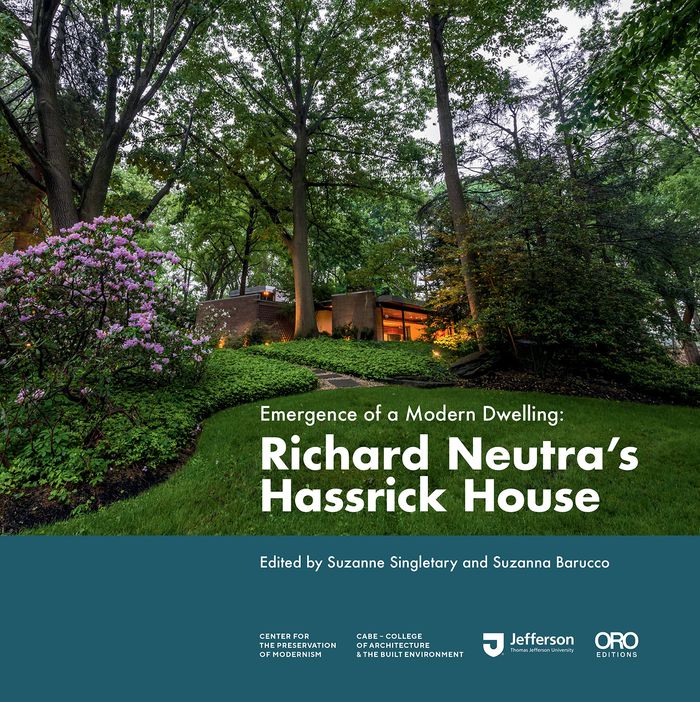
Emergence of a modern dwelling: Richard Neutra's Hassrick house
Actions:
Prix:
$35.00
(disponible sur commande)
Résumé:
In the East Falls neighbourhood of Philadelphia, just beyond the northern boundary of the Thomas Jefferson University's East Falls campus, stands the Hassrick House (1958-61), designed by celebrated architect Richard Neutra, an icon of mid-century modern style. Thomas Jefferson University's relationship with the house began in the summer of 2015 when Andrew Hart, assistant professor of Architecture in the College of Architecture & the Built Environment initiated a series of summer courses to study the house. This publication chronicles the students' findings that shed light on Neutra's design process, his collaboration with his clients, as well as the unsung role of Thaddeus Longstreth as Neutra's proxy negotiator throughout the design and construction stages. During its approximately 63-year lifespan, the Hassrick House tells a saga of design, dwelling, neglect, restoration, and reinvention today as a laboratory for learning. In many respects, the history of the Hassrick House tells an important story of the modernist movement in the US, both regionally and nationally.
Emergence of a modern dwelling: Richard Neutra's Hassrick house
Actions:
Prix:
$35.00
(disponible sur commande)
Résumé:
In the East Falls neighbourhood of Philadelphia, just beyond the northern boundary of the Thomas Jefferson University's East Falls campus, stands the Hassrick House (1958-61), designed by celebrated architect Richard Neutra, an icon of mid-century modern style. Thomas Jefferson University's relationship with the house began in the summer of 2015 when Andrew Hart, assistant professor of Architecture in the College of Architecture & the Built Environment initiated a series of summer courses to study the house. This publication chronicles the students' findings that shed light on Neutra's design process, his collaboration with his clients, as well as the unsung role of Thaddeus Longstreth as Neutra's proxy negotiator throughout the design and construction stages. During its approximately 63-year lifespan, the Hassrick House tells a saga of design, dwelling, neglect, restoration, and reinvention today as a laboratory for learning. In many respects, the history of the Hassrick House tells an important story of the modernist movement in the US, both regionally and nationally.
Classification:
livres
livres
Publication:
janvier 2022
janvier 2022
Sujet:
Architecture, monographies
Architecture, monographies
Classification:
livres
livres
Prix:
$84.95
(disponible sur commande)
Résumé:
Tracing the shifting meanings of photography in the early Soviet Union, Aglaya K. Glebova reconsiders the relationship between art and politics during what is usually considered the end of the critical avant-garde. Aleksandr Rodchenko, a versatile Russian artist and one of Constructivism’s founders, embraced photography as a medium of revolutionary modernity. Yet his(...)
$84.95
(disponible sur commande)
Résumé:
Tracing the shifting meanings of photography in the early Soviet Union, Aglaya K. Glebova reconsiders the relationship between art and politics during what is usually considered the end of the critical avant-garde. Aleksandr Rodchenko, a versatile Russian artist and one of Constructivism’s founders, embraced photography as a medium of revolutionary modernity. Yet his(...)
Titre:
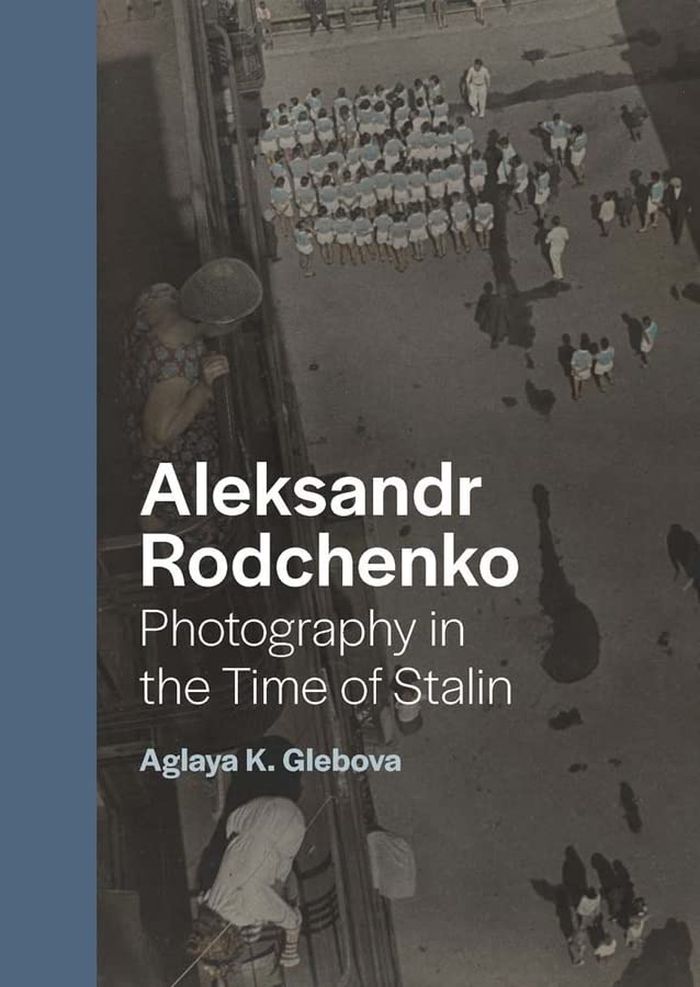
Aleksandr Rodchenko: Photography in the time of Stalin
Actions:
Prix:
$84.95
(disponible sur commande)
Résumé:
Tracing the shifting meanings of photography in the early Soviet Union, Aglaya K. Glebova reconsiders the relationship between art and politics during what is usually considered the end of the critical avant-garde. Aleksandr Rodchenko, a versatile Russian artist and one of Constructivism’s founders, embraced photography as a medium of revolutionary modernity. Yet his photographic work between the late 1920s and the end of the 1930s exhibits an expansive search for a different pictorial language. In the context of the extreme transformations carried out under the first Five-Year Plans, Rodchenko’s photography questioned his own modernist commitments. At the heart of this book is Rodchenko’s infamous 1933 photo-essay on the White Sea–Baltic Canal, site of one of the first gulags. Glebova’s careful reading of Rodchenko’s photography reveals a surprisingly heterodox practice and brings to light experiments in adjacent media, including the collaborative design work he undertook with Varvara Stepanova, Rodchenko’s partner in art and life.
Aleksandr Rodchenko: Photography in the time of Stalin
Actions:
Prix:
$84.95
(disponible sur commande)
Résumé:
Tracing the shifting meanings of photography in the early Soviet Union, Aglaya K. Glebova reconsiders the relationship between art and politics during what is usually considered the end of the critical avant-garde. Aleksandr Rodchenko, a versatile Russian artist and one of Constructivism’s founders, embraced photography as a medium of revolutionary modernity. Yet his photographic work between the late 1920s and the end of the 1930s exhibits an expansive search for a different pictorial language. In the context of the extreme transformations carried out under the first Five-Year Plans, Rodchenko’s photography questioned his own modernist commitments. At the heart of this book is Rodchenko’s infamous 1933 photo-essay on the White Sea–Baltic Canal, site of one of the first gulags. Glebova’s careful reading of Rodchenko’s photography reveals a surprisingly heterodox practice and brings to light experiments in adjacent media, including the collaborative design work he undertook with Varvara Stepanova, Rodchenko’s partner in art and life.
Classification:
livres
livres
Publication:
novembre 2022
novembre 2022
Sujet:
Monographies photo
Monographies photo
Classification:
livres
livres
Actions:
Prix:
$27.95
(disponible sur commande)
Résumé:
With the invention of telecommunications technologies in the late nineteenth century, the radio-electric spectrum became a tool for rethinking the world in which we live. The emission of radio waves did away with physical distances, crossing borders and cultures and acting as a powerful catalyst for trade. Moreover, the radio spectrum is the invisible infrastructure on(...)
$27.95
(disponible sur commande)
Résumé:
With the invention of telecommunications technologies in the late nineteenth century, the radio-electric spectrum became a tool for rethinking the world in which we live. The emission of radio waves did away with physical distances, crossing borders and cultures and acting as a powerful catalyst for trade. Moreover, the radio spectrum is the invisible infrastructure on(...)
Titre:
Invisible fields: geographies of radio waves
Actions:
Prix:
$27.95
(disponible sur commande)
Résumé:
With the invention of telecommunications technologies in the late nineteenth century, the radio-electric spectrum became a tool for rethinking the world in which we live. The emission of radio waves did away with physical distances, crossing borders and cultures and acting as a powerful catalyst for trade. Moreover, the radio spectrum is the invisible infrastructure on which our information and communication technologies have been built. The history of its scientific discovery and how it was gradually colonized by the media, the military complex, and activists and hackers is one of the most fascinating stories of the twentieth century. The future uses of the radio-electric spectrum in the twenty-first century and its new potential are being decided now, with the end of analogue TV broadcasting worldwide marking the most important transformation of uses in the radio-electric space in decades. This catalog sets out to examine these issues and shed a little light on intriguing stories about radio-electric spectrum.
Invisible fields: geographies of radio waves
Actions:
Prix:
$27.95
(disponible sur commande)
Résumé:
With the invention of telecommunications technologies in the late nineteenth century, the radio-electric spectrum became a tool for rethinking the world in which we live. The emission of radio waves did away with physical distances, crossing borders and cultures and acting as a powerful catalyst for trade. Moreover, the radio spectrum is the invisible infrastructure on which our information and communication technologies have been built. The history of its scientific discovery and how it was gradually colonized by the media, the military complex, and activists and hackers is one of the most fascinating stories of the twentieth century. The future uses of the radio-electric spectrum in the twenty-first century and its new potential are being decided now, with the end of analogue TV broadcasting worldwide marking the most important transformation of uses in the radio-electric space in decades. This catalog sets out to examine these issues and shed a little light on intriguing stories about radio-electric spectrum.
Classification:
livres
livres
Publication:
mai 2012
mai 2012
Sujet:
Épistémologie et réseau
Épistémologie et réseau
Classification:
livres
livres
Titre:
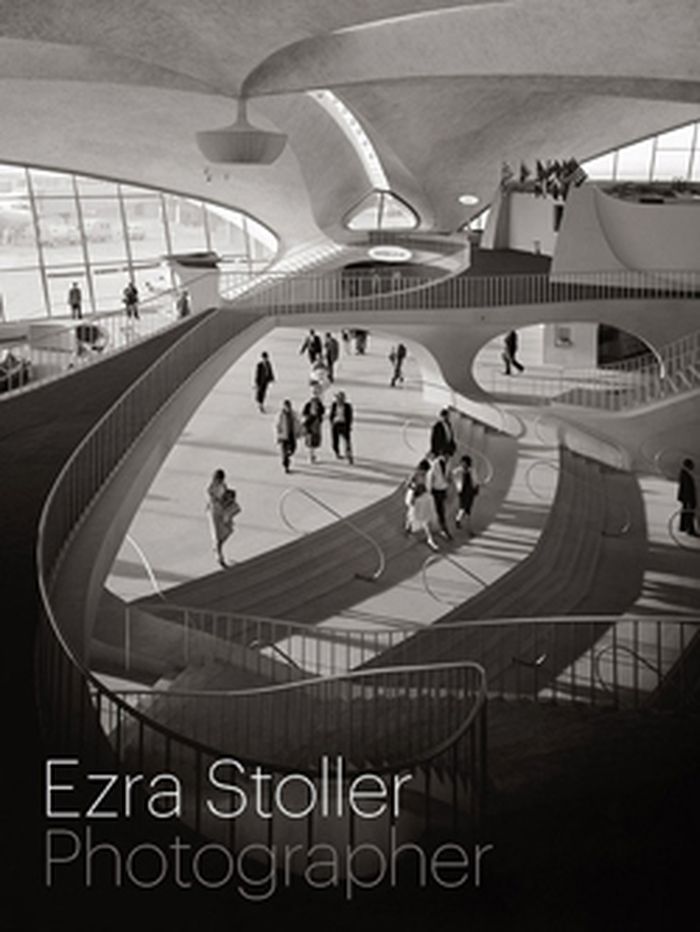
Ezra Stoller, photographer
Ezra Stoller, photographer
Actions:
Prix:
$69.95
(disponible sur commande)
Résumé:
Ezra Stoller's iconic photographs of 20th-century architectural masterpieces, such as Frank Lloyd Wright's Fallingwater and Mies van der Rohe's Seagram Building, are often cited in aiding the rise of modernism in America. Stoller (1915–2004) elevated architectural photography to an art form, capturing the mood of numerous buildings in their best light. Living and(...)
$69.95
(disponible sur commande)
Résumé:
Ezra Stoller's iconic photographs of 20th-century architectural masterpieces, such as Frank Lloyd Wright's Fallingwater and Mies van der Rohe's Seagram Building, are often cited in aiding the rise of modernism in America. Stoller (1915–2004) elevated architectural photography to an art form, capturing the mood of numerous buildings in their best light. Living and(...)
Titre:
Ezra Stoller, photographer
Actions:
Prix:
$69.95
(disponible sur commande)
Résumé:
Ezra Stoller's iconic photographs of 20th-century architectural masterpieces, such as Frank Lloyd Wright's Fallingwater and Mies van der Rohe's Seagram Building, are often cited in aiding the rise of modernism in America. Stoller (1915–2004) elevated architectural photography to an art form, capturing the mood of numerous buildings in their best light. Living and working in New York from the early 1940s to the mid-1970s, Stoller photographed buildings by such architects as Alvar Aalto, Eero Saarinen, Marcel Breuer, Paul Rudolph, and Louis I. Kahn. His striking images earned him the admiration of critics and contemporaries, but few people are aware of the stunning breadth of his oeuvre, which also included domestic and industrial spaces and important editorial depictions of American labor in the 1950s and 1960s. Ezra Stoller, Photographer, a survey of Stoller's artistic accomplishments, examines the photographer's full range with a fresh eye and unprecedented scope, offering a unique commentary on postwar America's changing landscape.
Ezra Stoller, photographer
Actions:
Prix:
$69.95
(disponible sur commande)
Résumé:
Ezra Stoller's iconic photographs of 20th-century architectural masterpieces, such as Frank Lloyd Wright's Fallingwater and Mies van der Rohe's Seagram Building, are often cited in aiding the rise of modernism in America. Stoller (1915–2004) elevated architectural photography to an art form, capturing the mood of numerous buildings in their best light. Living and working in New York from the early 1940s to the mid-1970s, Stoller photographed buildings by such architects as Alvar Aalto, Eero Saarinen, Marcel Breuer, Paul Rudolph, and Louis I. Kahn. His striking images earned him the admiration of critics and contemporaries, but few people are aware of the stunning breadth of his oeuvre, which also included domestic and industrial spaces and important editorial depictions of American labor in the 1950s and 1960s. Ezra Stoller, Photographer, a survey of Stoller's artistic accomplishments, examines the photographer's full range with a fresh eye and unprecedented scope, offering a unique commentary on postwar America's changing landscape.
Classification:
livres
livres
Publication:
novembre 2012
novembre 2012
Sujet:
Monographies photo
Monographies photo
Classification:
livres
livres

Actions:
Prix:
$22.95
(disponible sur commande)
Résumé:
The newest volume in the Conversations series features Japanese architect Tadao Ando. One of the most celebrated living architects, Ando is best known for crafting serenely austere structures that fuse Japanese building traditions with Western modernism. His minimalist masterworks, geometric forms clad in silky-smooth exposed concrete, are suffused with natural light and(...)
$22.95
(disponible sur commande)
Résumé:
The newest volume in the Conversations series features Japanese architect Tadao Ando. One of the most celebrated living architects, Ando is best known for crafting serenely austere structures that fuse Japanese building traditions with Western modernism. His minimalist masterworks, geometric forms clad in silky-smooth exposed concrete, are suffused with natural light and(...)
Titre:
Tadao Ando : conversations with students
Actions:
Prix:
$22.95
(disponible sur commande)
Résumé:
The newest volume in the Conversations series features Japanese architect Tadao Ando. One of the most celebrated living architects, Ando is best known for crafting serenely austere structures that fuse Japanese building traditions with Western modernism. His minimalist masterworks, geometric forms clad in silky-smooth exposed concrete, are suffused with natural light and set in perfect harmony with the landscape. In these highlights from lectures delivered at the University of Tokyos Graduate School of Architecture, Ando candidly describes his experiences as a largely self-taught practitioner, tracing his development from an early interest in the traditional building craft of his native Japan through his political awakening in the turbulent 1960s to his current stature as one of the worlds foremost architects. In addition to exploring his aesthetic influences and working process, Ando offers students a road map not only for maintaining professional integrity, but also for becoming effective agents of change in the world
Tadao Ando : conversations with students
Actions:
Prix:
$22.95
(disponible sur commande)
Résumé:
The newest volume in the Conversations series features Japanese architect Tadao Ando. One of the most celebrated living architects, Ando is best known for crafting serenely austere structures that fuse Japanese building traditions with Western modernism. His minimalist masterworks, geometric forms clad in silky-smooth exposed concrete, are suffused with natural light and set in perfect harmony with the landscape. In these highlights from lectures delivered at the University of Tokyos Graduate School of Architecture, Ando candidly describes his experiences as a largely self-taught practitioner, tracing his development from an early interest in the traditional building craft of his native Japan through his political awakening in the turbulent 1960s to his current stature as one of the worlds foremost architects. In addition to exploring his aesthetic influences and working process, Ando offers students a road map not only for maintaining professional integrity, but also for becoming effective agents of change in the world
Classification:
livres
livres
Publication:
novembre 2012
novembre 2012
Sujet:
Architecture, monographies
Architecture, monographies
Classification:
livres
livres
Prix:
$54.95
(disponible sur commande)
Résumé:
In recent years and decades, dealing with the architectural legacy of the industrial age has been an increasingly common task for urban planning: industrial buildings and sites, infrastructure, and residential areas that have become vacant lots as a result of structural transformation cannot, if only because of their dimensions, be ignored within the urban space.(...)
$54.95
(disponible sur commande)
Résumé:
In recent years and decades, dealing with the architectural legacy of the industrial age has been an increasingly common task for urban planning: industrial buildings and sites, infrastructure, and residential areas that have become vacant lots as a result of structural transformation cannot, if only because of their dimensions, be ignored within the urban space.(...)
Sujet:
Théorie de l’urbanisme
Théorie de l’urbanisme
Publication:
novembre 2011
novembre 2011
Titre:
urbanRESET: how to activate immanent potential of urban spaces
Actions:
Prix:
$54.95
(disponible sur commande)
Résumé:
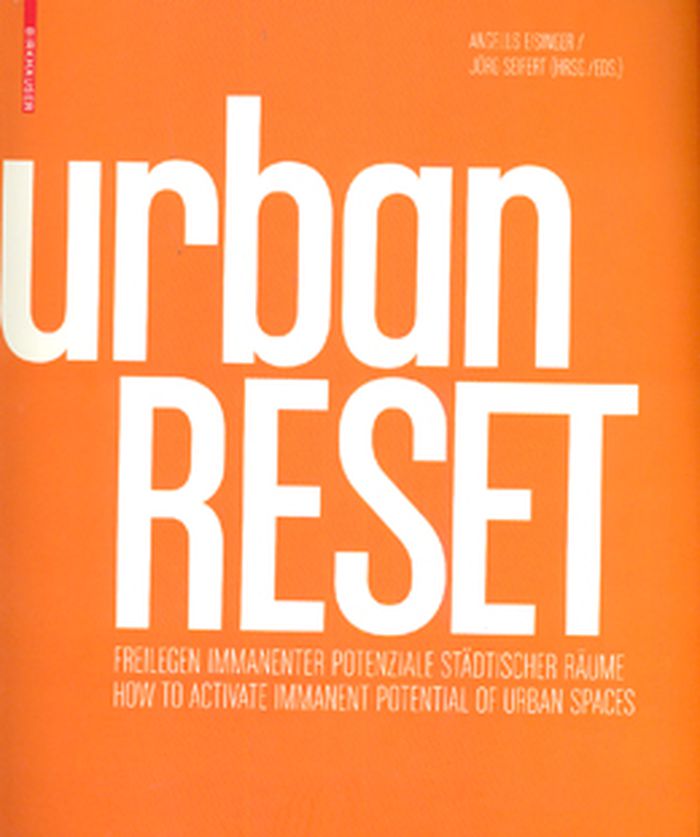
In recent years and decades, dealing with the architectural legacy of the industrial age has been an increasingly common task for urban planning: industrial buildings and sites, infrastructure, and residential areas that have become vacant lots as a result of structural transformation cannot, if only because of their dimensions, be ignored within the urban space. Innovative reinterpretations of such relics that update existing building fabric in a way that goes beyond critical reconstruction or revitalization, such as the Toni Site in Zurich or the Île de Nantes, can be observed throughout Europe these days. The publication urbanRESET brings together succinct examples of this separate category of urban-planning from throughout Europe. The projects are presented in detail with plans and color illustrations. Interviews with key players and theoretical essays show how local processes of reinterpretation and reactivation can produce sustainable effects. urbanRESET sheds light on the common foundations of these works and condenses them into methodological inferences for a forward-looking urban praxis.
urbanRESET: how to activate immanent potential of urban spaces
Actions:
Prix:
$54.95
(disponible sur commande)
Résumé:
In recent years and decades, dealing with the architectural legacy of the industrial age has been an increasingly common task for urban planning: industrial buildings and sites, infrastructure, and residential areas that have become vacant lots as a result of structural transformation cannot, if only because of their dimensions, be ignored within the urban space. Innovative reinterpretations of such relics that update existing building fabric in a way that goes beyond critical reconstruction or revitalization, such as the Toni Site in Zurich or the Île de Nantes, can be observed throughout Europe these days. The publication urbanRESET brings together succinct examples of this separate category of urban-planning from throughout Europe. The projects are presented in detail with plans and color illustrations. Interviews with key players and theoretical essays show how local processes of reinterpretation and reactivation can produce sustainable effects. urbanRESET sheds light on the common foundations of these works and condenses them into methodological inferences for a forward-looking urban praxis.
Classification:
livres
livres
Publication:
novembre 2011
novembre 2011
Sujet:
Théorie de l’urbanisme
Théorie de l’urbanisme
Classification:
livres
livres
Titre:
Denis Wood: Everything sings
Denis Wood: Everything sings
Actions:
Prix:
$31.00
(disponible sur commande)
Résumé:
With artful wit and rigor, cartographer Denis Wood has written numerous books (including the influential bestseller The Power of Maps) that reorient his readers not only to our neighborhoods, homes and bodies, but also to our own very human instinct to understand where we live by mapmaking. At the heart of Wood's investigations is a near-legendary endeavor: the Boylan(...)
$31.00
(disponible sur commande)
Résumé:
With artful wit and rigor, cartographer Denis Wood has written numerous books (including the influential bestseller The Power of Maps) that reorient his readers not only to our neighborhoods, homes and bodies, but also to our own very human instinct to understand where we live by mapmaking. At the heart of Wood's investigations is a near-legendary endeavor: the Boylan(...)
Titre:
Denis Wood: Everything sings
Actions:
Prix:
$31.00
(disponible sur commande)
Résumé:
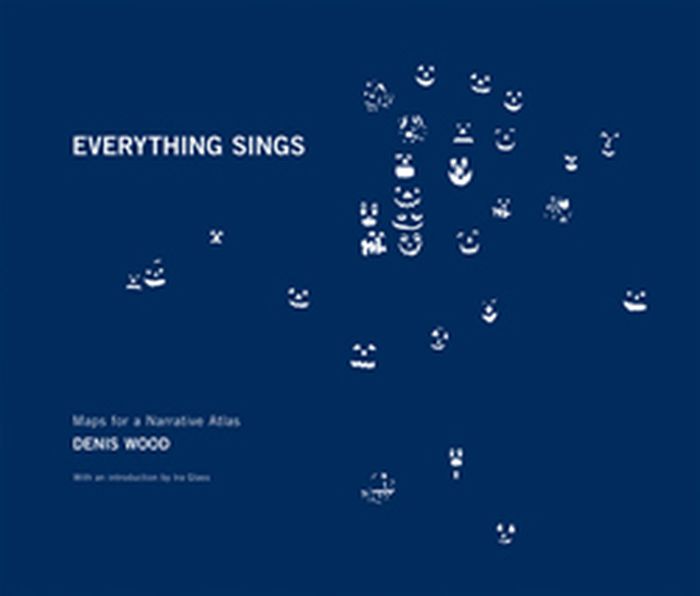
With artful wit and rigor, cartographer Denis Wood has written numerous books (including the influential bestseller The Power of Maps) that reorient his readers not only to our neighborhoods, homes and bodies, but also to our own very human instinct to understand where we live by mapmaking. At the heart of Wood's investigations is a near-legendary endeavor: the Boylan Heights maps, begun in 1982, and now published in Everything Sings. Surveying his century-old, half-square mile neighborhood Boylan Heights in Raleigh, North Carolina, Wood began by paring away the inessential "map crap" (scale, orientation, street grids) and, in searching for the revelatory in the unmapped and the unmappable, he ended up plotting such phenomena as radio waves permeating the air, the light cast by street lights and Halloween pumpkins on porches. Wood's maps accumulate into a multi-layered story about one neighborhood that tells the larger story of what constitutes the places we call home. With an introduction by Ira Glass.
Denis Wood: Everything sings
Actions:
Prix:
$31.00
(disponible sur commande)
Résumé:
With artful wit and rigor, cartographer Denis Wood has written numerous books (including the influential bestseller The Power of Maps) that reorient his readers not only to our neighborhoods, homes and bodies, but also to our own very human instinct to understand where we live by mapmaking. At the heart of Wood's investigations is a near-legendary endeavor: the Boylan Heights maps, begun in 1982, and now published in Everything Sings. Surveying his century-old, half-square mile neighborhood Boylan Heights in Raleigh, North Carolina, Wood began by paring away the inessential "map crap" (scale, orientation, street grids) and, in searching for the revelatory in the unmapped and the unmappable, he ended up plotting such phenomena as radio waves permeating the air, the light cast by street lights and Halloween pumpkins on porches. Wood's maps accumulate into a multi-layered story about one neighborhood that tells the larger story of what constitutes the places we call home. With an introduction by Ira Glass.
Classification:
livres
livres
Publication:
février 2011
février 2011
Classification:
livres
livres
Titre:
A forest in the city
A forest in the city
Actions:
Prix:
$19.95
(disponible sur commande)
Résumé:
''A forest in the city'' looks at the urban forest, starting with a bird’s-eye view of the tree canopy, then swooping down to street level, digging deep into the ground, then moving up through a tree’s trunk, back into the leaves and branches. Trees make our cities more beautiful and provide shade but they also fight climate change and pollution, benefit our health and(...)
$19.95
(disponible sur commande)
Résumé:
''A forest in the city'' looks at the urban forest, starting with a bird’s-eye view of the tree canopy, then swooping down to street level, digging deep into the ground, then moving up through a tree’s trunk, back into the leaves and branches. Trees make our cities more beautiful and provide shade but they also fight climate change and pollution, benefit our health and(...)
Titre:
A forest in the city
Actions:
Prix:
$19.95
(disponible sur commande)
Résumé:
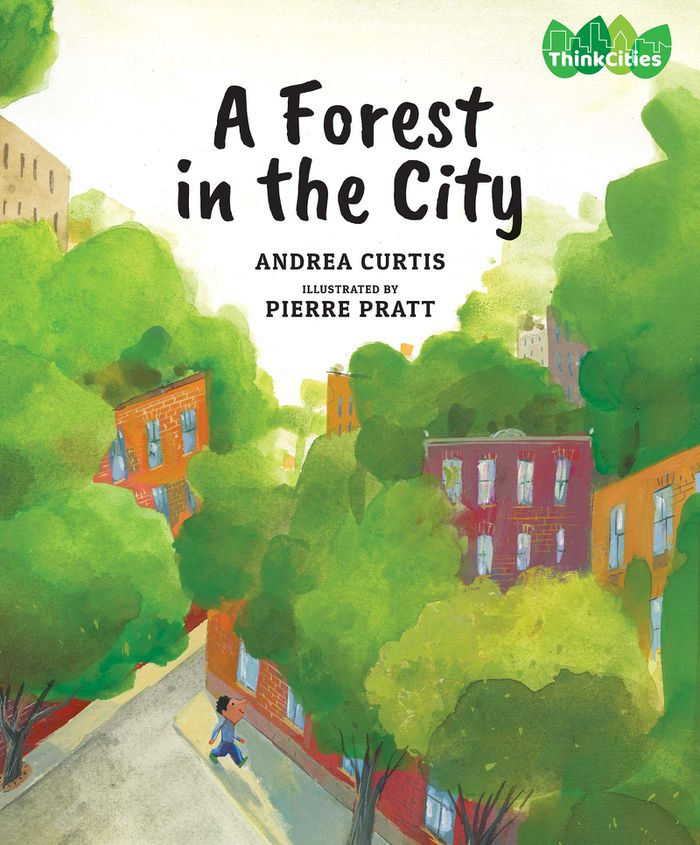
''A forest in the city'' looks at the urban forest, starting with a bird’s-eye view of the tree canopy, then swooping down to street level, digging deep into the ground, then moving up through a tree’s trunk, back into the leaves and branches. Trees make our cities more beautiful and provide shade but they also fight climate change and pollution, benefit our health and connections to one another, provide food and shelter for wildlife, and much more. Yet city trees face an abundance of problems, such as the abundance of concrete, poor soil and challenging light conditions. So how can we create a healthy environment for city trees? Urban foresters are trying to create better growing conditions, plant diverse species, and maintain trees as they age. These strategies, and more, reveal that the urban forest is a complex system—''A forest in the city'' shows readers we are a part of it. Includes a list of activities to help the urban forest and a glossary.
A forest in the city
Actions:
Prix:
$19.95
(disponible sur commande)
Résumé:
''A forest in the city'' looks at the urban forest, starting with a bird’s-eye view of the tree canopy, then swooping down to street level, digging deep into the ground, then moving up through a tree’s trunk, back into the leaves and branches. Trees make our cities more beautiful and provide shade but they also fight climate change and pollution, benefit our health and connections to one another, provide food and shelter for wildlife, and much more. Yet city trees face an abundance of problems, such as the abundance of concrete, poor soil and challenging light conditions. So how can we create a healthy environment for city trees? Urban foresters are trying to create better growing conditions, plant diverse species, and maintain trees as they age. These strategies, and more, reveal that the urban forest is a complex system—''A forest in the city'' shows readers we are a part of it. Includes a list of activities to help the urban forest and a glossary.
Classification:
livres
livres
Publication:
avril 2020
avril 2020
Sujet:
Littérature jeunesse
Littérature jeunesse
Classification:
livres
livres
Titre:
Michael Snow, wavelength
Michael Snow, wavelength
Actions:
Prix:
$18.00
(disponible sur commande)
Résumé:
In 1966, at the height of minimal art in New York, artist Michael Snow chose not to make another object to be placed in a room but instead spent a year planning a film of a room: Wavelength, a forty-five-minute more or less straight-line zoom from the near to the far wall of a loft space, accompanied by a rising sine wave. In this critical study, Elizabeth Legge describes(...)
$18.00
(disponible sur commande)
Résumé:
In 1966, at the height of minimal art in New York, artist Michael Snow chose not to make another object to be placed in a room but instead spent a year planning a film of a room: Wavelength, a forty-five-minute more or less straight-line zoom from the near to the far wall of a loft space, accompanied by a rising sine wave. In this critical study, Elizabeth Legge describes(...)
Titre:
Michael Snow, wavelength
Actions:
Prix:
$18.00
(disponible sur commande)
Résumé:
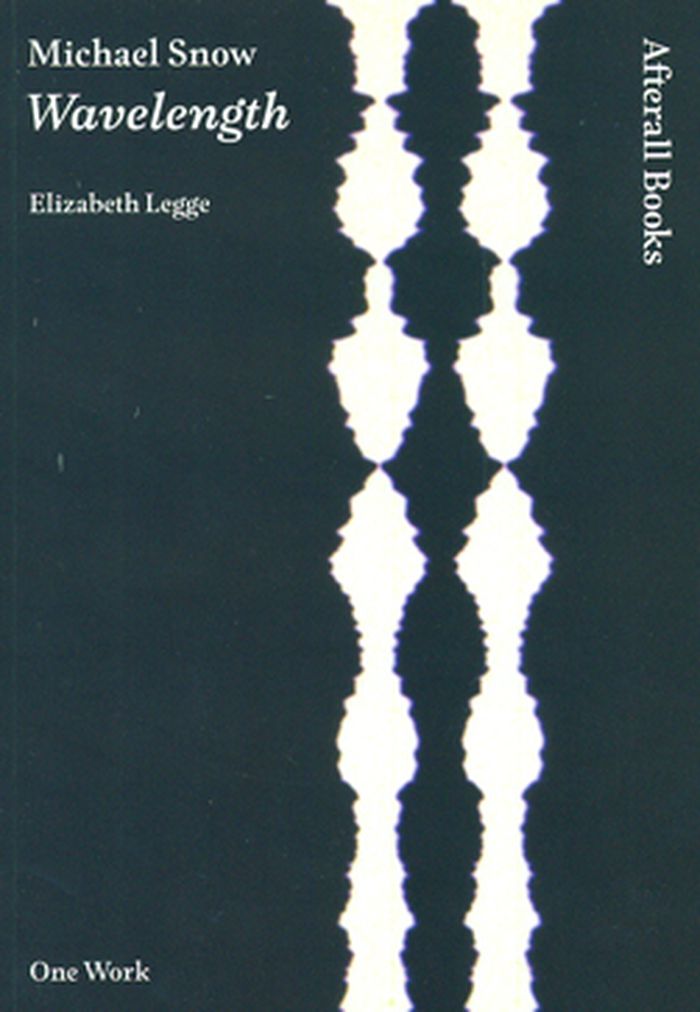
In 1966, at the height of minimal art in New York, artist Michael Snow chose not to make another object to be placed in a room but instead spent a year planning a film of a room: Wavelength, a forty-five-minute more or less straight-line zoom from the near to the far wall of a loft space, accompanied by a rising sine wave. In this critical study, Elizabeth Legge describes Wavelength as a film of virtuosically managed tensions, sensuous beauty, subtle light and color, and recession into perspectival depth. Wavelength won the grand prize for experimental film at Knokke-le-Zoute in 1967, and it was crucial to critics' efforts to establish a vocabulary for temporal art. It was a "wavelength" that could stand up to the French new wave, and it has has functioned ever since as a touchstone for art and film studies, and as a blue screen in front of which a range of ideological and intellectual dramas have been played.
Michael Snow, wavelength
Actions:
Prix:
$18.00
(disponible sur commande)
Résumé:
In 1966, at the height of minimal art in New York, artist Michael Snow chose not to make another object to be placed in a room but instead spent a year planning a film of a room: Wavelength, a forty-five-minute more or less straight-line zoom from the near to the far wall of a loft space, accompanied by a rising sine wave. In this critical study, Elizabeth Legge describes Wavelength as a film of virtuosically managed tensions, sensuous beauty, subtle light and color, and recession into perspectival depth. Wavelength won the grand prize for experimental film at Knokke-le-Zoute in 1967, and it was crucial to critics' efforts to establish a vocabulary for temporal art. It was a "wavelength" that could stand up to the French new wave, and it has has functioned ever since as a touchstone for art and film studies, and as a blue screen in front of which a range of ideological and intellectual dramas have been played.
Classification:
livres
livres
Publication:
octobre 2009
octobre 2009
Sujet:
Théorie de l’art
Théorie de l’art
Classification:
périodiques
périodiques
Titre:
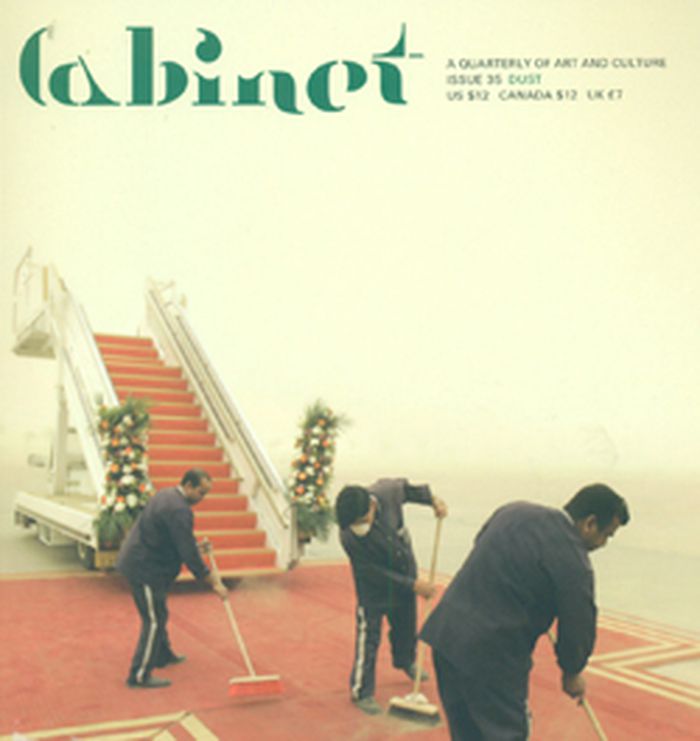
Cabinet 35: dust
Cabinet 35: dust
Actions:
Prix:
$14.00
(disponible en magasin)
Résumé:
Dust is everywhere, a perennial presence in the corners of culture. Dust can be deathly (domestic dust is mostly desiccated human skin), deadly (poisonous dust is the product of industry and war) or beautiful (the dusty matte surface of make-up, a light dusting applied by the confectioner, glittering motes caught in a sunbeam). In British English, "dust" is another name(...)
$14.00
(disponible en magasin)
Résumé:
Dust is everywhere, a perennial presence in the corners of culture. Dust can be deathly (domestic dust is mostly desiccated human skin), deadly (poisonous dust is the product of industry and war) or beautiful (the dusty matte surface of make-up, a light dusting applied by the confectioner, glittering motes caught in a sunbeam). In British English, "dust" is another name(...)
Sujet:
Revues
Revues
Publication:
décembre 2009
décembre 2009
Titre:
Cabinet 35: dust
Actions:
Prix:
$14.00
(disponible en magasin)
Résumé:
Dust is everywhere, a perennial presence in the corners of culture. Dust can be deathly (domestic dust is mostly desiccated human skin), deadly (poisonous dust is the product of industry and war) or beautiful (the dusty matte surface of make-up, a light dusting applied by the confectioner, glittering motes caught in a sunbeam). In British English, "dust" is another name for dirt, or matter in the wrong place, implying that it can be moved from one spot to another, but never--as with matter or metaphor--completely eradicated. Cabinet 35 examines dust's ubiquity. Features include Steven Connor on the manifold forms and patterns of magic dust; Brian Dillon on Proust's vacuum cleaner; and Valerie Smith and Matt Mullican on marble dust drawings. Elsewhere in the issue, Steve Reinke catalogues untimely deaths; Helen Polson muses over the fate of lost teeth; Jeff Dolven reviews Conlon Nancarrow's compositions for musical machines; and Margaret Wertheim takes on the mathematical structure known as E8.
Cabinet 35: dust
Actions:
Prix:
$14.00
(disponible en magasin)
Résumé:
Dust is everywhere, a perennial presence in the corners of culture. Dust can be deathly (domestic dust is mostly desiccated human skin), deadly (poisonous dust is the product of industry and war) or beautiful (the dusty matte surface of make-up, a light dusting applied by the confectioner, glittering motes caught in a sunbeam). In British English, "dust" is another name for dirt, or matter in the wrong place, implying that it can be moved from one spot to another, but never--as with matter or metaphor--completely eradicated. Cabinet 35 examines dust's ubiquity. Features include Steven Connor on the manifold forms and patterns of magic dust; Brian Dillon on Proust's vacuum cleaner; and Valerie Smith and Matt Mullican on marble dust drawings. Elsewhere in the issue, Steve Reinke catalogues untimely deaths; Helen Polson muses over the fate of lost teeth; Jeff Dolven reviews Conlon Nancarrow's compositions for musical machines; and Margaret Wertheim takes on the mathematical structure known as E8.
Classification:
périodiques
périodiques
Publication:
décembre 2009
décembre 2009
Sujet:
Revues
Revues


