


488 Résultats
Classification:
livres
livres
Titre:
Arne Jacobsen : architect
Arne Jacobsen : architect
Actions:
Prix:
$146.95
(disponible sur commande)
Résumé:
The book conveys to the reader an appreciation of Jacobsen and his work as an architect. In the 1920s, the press described Arne Jacobsen as the "leading representative" of functionalism and as "the Danish Corbusier". Ethereal elegance was Jacobsen's hallmark throughout his career; for example his staircases, whose light construction and suspension seem to defy gravity.(...)
$146.95
(disponible sur commande)
Résumé:
The book conveys to the reader an appreciation of Jacobsen and his work as an architect. In the 1920s, the press described Arne Jacobsen as the "leading representative" of functionalism and as "the Danish Corbusier". Ethereal elegance was Jacobsen's hallmark throughout his career; for example his staircases, whose light construction and suspension seem to defy gravity.(...)
Sujet:
Architecture, monographies
Architecture, monographies
Publication:
janvier 1900, Copenhagen
janvier 1900, Copenhagen
Titre:
Arne Jacobsen : architect
Actions:
Prix:
$146.95
(disponible sur commande)
Résumé:
The book conveys to the reader an appreciation of Jacobsen and his work as an architect. In the 1920s, the press described Arne Jacobsen as the "leading representative" of functionalism and as "the Danish Corbusier". Ethereal elegance was Jacobsen's hallmark throughout his career; for example his staircases, whose light construction and suspension seem to defy gravity. All Jacobsen's significant works are described in this book. Among the works studied are Stelling's house, the town halls, the SAS Hotel and the Danish Central Bank. Jacobsen worked as an architect and designer for almost 50 years. During this period, his professional range embraced, among other things furniture, textiles, wallpaper, lamps, porcelain, hollowware, and steel.
Arne Jacobsen : architect
Actions:
Prix:
$146.95
(disponible sur commande)
Résumé:
The book conveys to the reader an appreciation of Jacobsen and his work as an architect. In the 1920s, the press described Arne Jacobsen as the "leading representative" of functionalism and as "the Danish Corbusier". Ethereal elegance was Jacobsen's hallmark throughout his career; for example his staircases, whose light construction and suspension seem to defy gravity. All Jacobsen's significant works are described in this book. Among the works studied are Stelling's house, the town halls, the SAS Hotel and the Danish Central Bank. Jacobsen worked as an architect and designer for almost 50 years. During this period, his professional range embraced, among other things furniture, textiles, wallpaper, lamps, porcelain, hollowware, and steel.
Classification:
livres
livres
Publication:
janvier 1900, Copenhagen
janvier 1900, Copenhagen
Sujet:
Architecture, monographies
Architecture, monographies
Classification:
livres
livres
Actions:
Prix:
$88.00
(disponible sur commande)
Résumé:
Presentation of the little known pioneering work of Arne Jacobsen in the field of architecture. Accompanies the exhibitions at six places of work of Jacobsen and Weitling throughout Germany. Scandinavian design meets German efficiency The architecture by Arne Jacobsen and Otto Weitling is of outstanding importance for post-war modernism in Germany. The calibre of their(...)
$88.00
(disponible sur commande)
Résumé:
Presentation of the little known pioneering work of Arne Jacobsen in the field of architecture. Accompanies the exhibitions at six places of work of Jacobsen and Weitling throughout Germany. Scandinavian design meets German efficiency The architecture by Arne Jacobsen and Otto Weitling is of outstanding importance for post-war modernism in Germany. The calibre of their(...)
Titre:
Gesamtkunstwerke: Architecture by Arne Jacobsen and Otto Weitling in Germany
Actions:
Prix:
$88.00
(disponible sur commande)
Résumé:
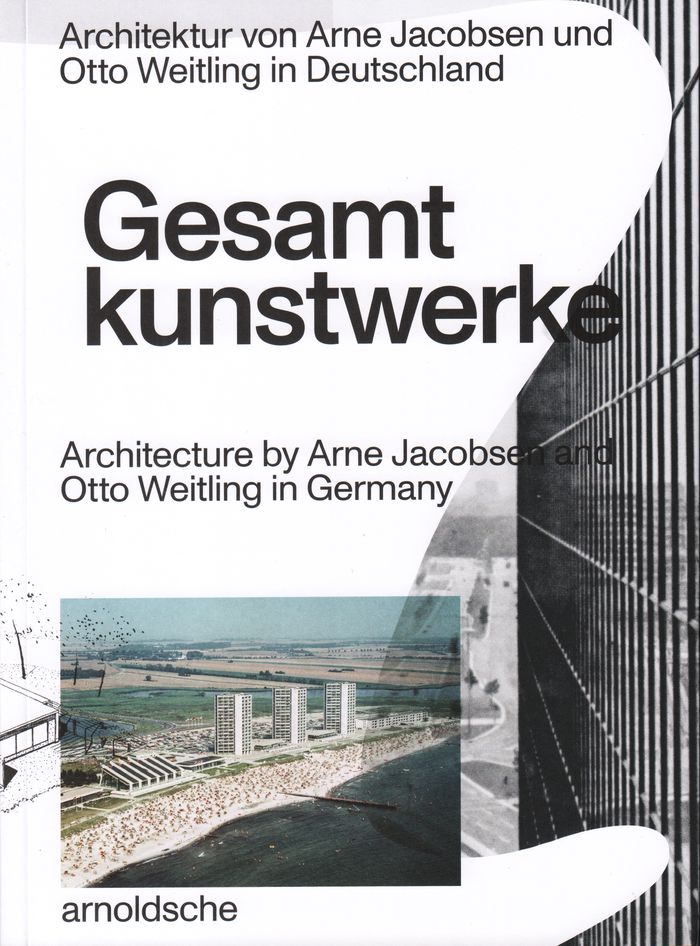
Presentation of the little known pioneering work of Arne Jacobsen in the field of architecture. Accompanies the exhibitions at six places of work of Jacobsen and Weitling throughout Germany. Scandinavian design meets German efficiency The architecture by Arne Jacobsen and Otto Weitling is of outstanding importance for post-war modernism in Germany. The calibre of their projects, however, has been forgotten. "Gesamtkunstkwerke" closes this gap in the appreciation of their work with a comprehensive presentation of seven out of eight German projects by the Danish master architects. Jacobsen and Weitling's Scandinavian functionalism is a reflection of the visions of the former FRG - designs and commissions grounded in democracy, prestige and efficiency. The publication also takes stock of how the legacy of late modernism is being handled.
Gesamtkunstwerke: Architecture by Arne Jacobsen and Otto Weitling in Germany
Actions:
Prix:
$88.00
(disponible sur commande)
Résumé:
Presentation of the little known pioneering work of Arne Jacobsen in the field of architecture. Accompanies the exhibitions at six places of work of Jacobsen and Weitling throughout Germany. Scandinavian design meets German efficiency The architecture by Arne Jacobsen and Otto Weitling is of outstanding importance for post-war modernism in Germany. The calibre of their projects, however, has been forgotten. "Gesamtkunstkwerke" closes this gap in the appreciation of their work with a comprehensive presentation of seven out of eight German projects by the Danish master architects. Jacobsen and Weitling's Scandinavian functionalism is a reflection of the visions of the former FRG - designs and commissions grounded in democracy, prestige and efficiency. The publication also takes stock of how the legacy of late modernism is being handled.
Classification:
livres
livres
Publication:
février 2021
février 2021
Sujet:
Architecture, monographies
Architecture, monographies
Classification:
livres
livres
Actions:
Prix:
$29.95
(disponible sur commande)
Résumé:
In Travels in the History of Architecture, Robert Harbison provides an engaging and concise companion to the great themes and aesthetic movements in architecture from antiquity to the present day. The book begins its journey with the great temples of the Egyptians and the shrines of Classical Greece and Rome and then provides a complete survey of architecture through the(...)
$29.95
(disponible sur commande)
Résumé:
In Travels in the History of Architecture, Robert Harbison provides an engaging and concise companion to the great themes and aesthetic movements in architecture from antiquity to the present day. The book begins its journey with the great temples of the Egyptians and the shrines of Classical Greece and Rome and then provides a complete survey of architecture through the(...)
Titre:
Travels in the history of architecture
Actions:
Prix:
$29.95
(disponible sur commande)
Résumé:
In Travels in the History of Architecture, Robert Harbison provides an engaging and concise companion to the great themes and aesthetic movements in architecture from antiquity to the present day. The book begins its journey with the great temples of the Egyptians and the shrines of Classical Greece and Rome and then provides a complete survey of architecture through the present day. Each chapter of this dynamic and approachable volume focuses on a movement in architectural history, including Byzantine, Baroque, Mannerism, Historicism, Functionalism, and Deconstruction. Unique to this work is Harbison’s wide-ranging approach, which draws on references and examples outside of architecture—from literature, art, sculpture, and history—to further illustrate and contextualize the themes and ideas of each period.
Travels in the history of architecture
Actions:
Prix:
$29.95
(disponible sur commande)
Résumé:
In Travels in the History of Architecture, Robert Harbison provides an engaging and concise companion to the great themes and aesthetic movements in architecture from antiquity to the present day. The book begins its journey with the great temples of the Egyptians and the shrines of Classical Greece and Rome and then provides a complete survey of architecture through the present day. Each chapter of this dynamic and approachable volume focuses on a movement in architectural history, including Byzantine, Baroque, Mannerism, Historicism, Functionalism, and Deconstruction. Unique to this work is Harbison’s wide-ranging approach, which draws on references and examples outside of architecture—from literature, art, sculpture, and history—to further illustrate and contextualize the themes and ideas of each period.
Classification:
livres
livres
Publication:
mars 2011
mars 2011
Sujet:
Théorie de l’architecture
Théorie de l’architecture
Classification:
livres
livres
Prix:
$59.95
(disponible sur commande)
Résumé:
"The Artist as Producer" reshapes our understanding of the fundamental contribution of the Russian avant-garde to the development of modernism. Focusing on the single most important hotbed of Constructivist activity in the early 1920s - the Institute of Artistic Culture (INKhUK) in Moscow - Maria Gough offers a powerful reinterpretation of the work of the first group of(...)
$59.95
(disponible sur commande)
Résumé:
"The Artist as Producer" reshapes our understanding of the fundamental contribution of the Russian avant-garde to the development of modernism. Focusing on the single most important hotbed of Constructivist activity in the early 1920s - the Institute of Artistic Culture (INKhUK) in Moscow - Maria Gough offers a powerful reinterpretation of the work of the first group of(...)
Titre:
The artist as producer : Russian Constructivism in revolution
Actions:
Prix:
$59.95
(disponible sur commande)
Résumé:
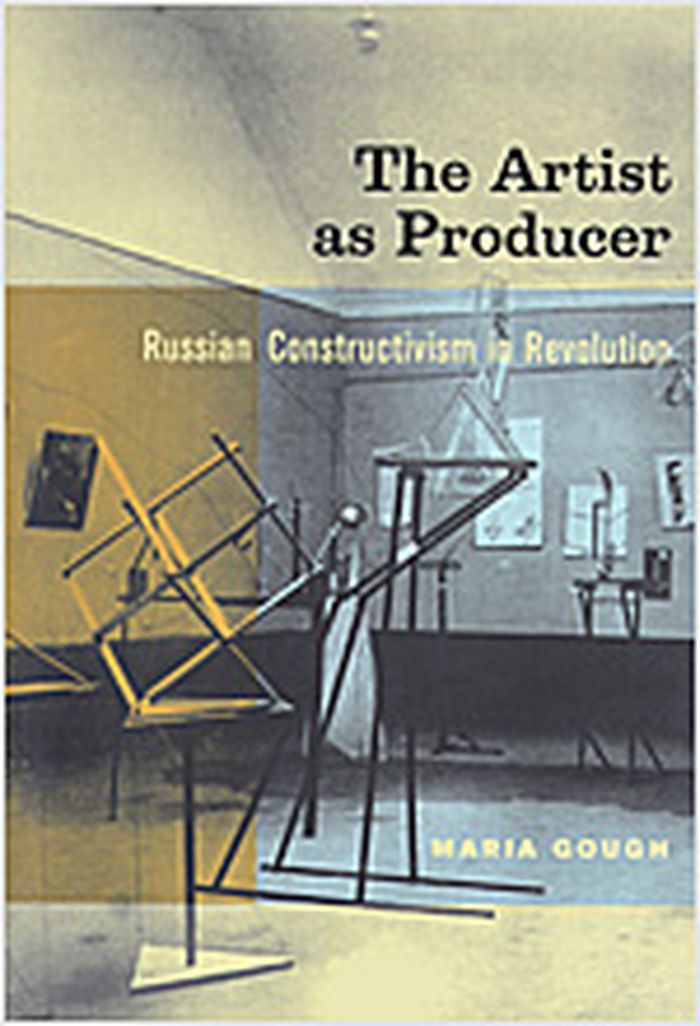
"The Artist as Producer" reshapes our understanding of the fundamental contribution of the Russian avant-garde to the development of modernism. Focusing on the single most important hotbed of Constructivist activity in the early 1920s - the Institute of Artistic Culture (INKhUK) in Moscow - Maria Gough offers a powerful reinterpretation of the work of the first group of artists to call themselves Constructivists. Her lively narrative ranges from famous figures such as Aleksandr Rodchenko to others who are much less well known, such as Karl Ioganson, a key member of the state-funded INKhUK whose work paved the way for an eventual dematerialization of the integral art object. Through the mining of untapped archives and collections in Russia and Latvia and a close reading of key Constructivist works, Gough highlights fundamental differences among the Moscow group in their handling of the experimental new sculptural form - the spatial construction - and of their subsequent shift to industrial production. "The Artist as Producer" upends the standard view that the Moscow group's formalism and abstraction were incompatible with the sociopolitical imperatives of the new Communist state. It challenges the common equation of Constructivism with functionalism and utilitarianism by delineating a contrary tendency toward non-determinism and an alternate orientation to process rather than product. Finally, the book counters the popular perception that Constructivism failed in its ambition to enter production by presenting the first-ever case study of how a Constructivist could, and in fact did, operate within an industrial environment. "The Artist as Producer" offers provocative new perspectives on three critical issues - formalism, functionalism, and failure - that are of central importance to our understanding not only of the Soviet phenomenon but also of the European vanguards more generally.
The artist as producer : Russian Constructivism in revolution
Actions:
Prix:
$59.95
(disponible sur commande)
Résumé:
"The Artist as Producer" reshapes our understanding of the fundamental contribution of the Russian avant-garde to the development of modernism. Focusing on the single most important hotbed of Constructivist activity in the early 1920s - the Institute of Artistic Culture (INKhUK) in Moscow - Maria Gough offers a powerful reinterpretation of the work of the first group of artists to call themselves Constructivists. Her lively narrative ranges from famous figures such as Aleksandr Rodchenko to others who are much less well known, such as Karl Ioganson, a key member of the state-funded INKhUK whose work paved the way for an eventual dematerialization of the integral art object. Through the mining of untapped archives and collections in Russia and Latvia and a close reading of key Constructivist works, Gough highlights fundamental differences among the Moscow group in their handling of the experimental new sculptural form - the spatial construction - and of their subsequent shift to industrial production. "The Artist as Producer" upends the standard view that the Moscow group's formalism and abstraction were incompatible with the sociopolitical imperatives of the new Communist state. It challenges the common equation of Constructivism with functionalism and utilitarianism by delineating a contrary tendency toward non-determinism and an alternate orientation to process rather than product. Finally, the book counters the popular perception that Constructivism failed in its ambition to enter production by presenting the first-ever case study of how a Constructivist could, and in fact did, operate within an industrial environment. "The Artist as Producer" offers provocative new perspectives on three critical issues - formalism, functionalism, and failure - that are of central importance to our understanding not only of the Soviet phenomenon but also of the European vanguards more generally.
Classification:
livres
livres
Publication:
janvier 1900, Berkeley
janvier 1900, Berkeley
Classification:
livres
livres

Actions:
Prix:
$39.95
(disponible sur commande)
Résumé:
The work of Albert Wimmer is characterized by his incessant drive to find ideal answers to the constantly changing demands on architecture. His projects set international standards, also in stadium architecture. His winning entry for the construction of the new Tivoli Stadium in Innsbruck was the foundation for his work in stadium construction. The stadiums in Salzburg,(...)
$39.95
(disponible sur commande)
Résumé:
The work of Albert Wimmer is characterized by his incessant drive to find ideal answers to the constantly changing demands on architecture. His projects set international standards, also in stadium architecture. His winning entry for the construction of the new Tivoli Stadium in Innsbruck was the foundation for his work in stadium construction. The stadiums in Salzburg,(...)
Publication:
juillet 2008, New York
juillet 2008, New York
Titre:
Stadien / stadiums Albert Wimmer
Actions:
Prix:
$39.95
(disponible sur commande)
Résumé:
The work of Albert Wimmer is characterized by his incessant drive to find ideal answers to the constantly changing demands on architecture. His projects set international standards, also in stadium architecture. His winning entry for the construction of the new Tivoli Stadium in Innsbruck was the foundation for his work in stadium construction. The stadiums in Salzburg, Klagenfurt and Nicosia followed. Albert Wimmer is therefore responsible for three of the four Austrian stadiums for the EURO 2008 tournament. Striking architectural design elements characterize the impressive appearance of his stadiums. The underlying functional, economical and social framework conditions pose a new challenge for architecture: the connection between functionalism and experience. Contributions written by internationally respected social and cultural scientists and by architecture theoreticians discuss the social, economical and cultural development of football today.
Stadien / stadiums Albert Wimmer
Actions:
Prix:
$39.95
(disponible sur commande)
Résumé:
The work of Albert Wimmer is characterized by his incessant drive to find ideal answers to the constantly changing demands on architecture. His projects set international standards, also in stadium architecture. His winning entry for the construction of the new Tivoli Stadium in Innsbruck was the foundation for his work in stadium construction. The stadiums in Salzburg, Klagenfurt and Nicosia followed. Albert Wimmer is therefore responsible for three of the four Austrian stadiums for the EURO 2008 tournament. Striking architectural design elements characterize the impressive appearance of his stadiums. The underlying functional, economical and social framework conditions pose a new challenge for architecture: the connection between functionalism and experience. Contributions written by internationally respected social and cultural scientists and by architecture theoreticians discuss the social, economical and cultural development of football today.
Classification:
livres
livres
Publication:
juillet 2008, New York
juillet 2008, New York
Classification:
livres
livres
Prix:
$157.00
(disponible sur commande)
Résumé:
This is the second volume in the four-part series of the Complete Works of Jean Prouvé (1901–84), one of the most significant designers and constructors of this century. This publication(...)
$157.00
(disponible sur commande)
Résumé:
This is the second volume in the four-part series of the Complete Works of Jean Prouvé (1901–84), one of the most significant designers and constructors of this century. This publication(...)
Titre:
Jean Prouvé, oeuvre complète / complete works, volume 2: 1934-1944
Actions:
Prix:
$157.00
(disponible sur commande)
Résumé:
This is the second volume in the four-part series of the Complete Works of Jean Prouvé (1901–84), one of the most significant designers and constructors of this century. This publication covers an important period in Prouvé's life when he designed and produced the lecture theatre seating at the Ecole des Sciences Politiques in Paris and the office furniture for the Parisian electric company. He also created furniture made of stainless steel for a school in Suresnes. In 1934 Prouvé began with the factory production of prefabricated buildings using sheet-steel of which the club house at Buc Airport and the Maison du Peuple in Clichy, one of the most outstanding buildings of Functionalism, are excellent examples. Complementing this detailed catalogue are previously unpublished conversations with Prouvé himself.
Jean Prouvé, oeuvre complète / complete works, volume 2: 1934-1944
Actions:
Prix:
$157.00
(disponible sur commande)
Résumé:
This is the second volume in the four-part series of the Complete Works of Jean Prouvé (1901–84), one of the most significant designers and constructors of this century. This publication covers an important period in Prouvé's life when he designed and produced the lecture theatre seating at the Ecole des Sciences Politiques in Paris and the office furniture for the Parisian electric company. He also created furniture made of stainless steel for a school in Suresnes. In 1934 Prouvé began with the factory production of prefabricated buildings using sheet-steel of which the club house at Buc Airport and the Maison du Peuple in Clichy, one of the most outstanding buildings of Functionalism, are excellent examples. Complementing this detailed catalogue are previously unpublished conversations with Prouvé himself.
Classification:
livres
livres
Publication:
décembre 1999, Basel
décembre 1999, Basel
Sujet:
Architecture, monographies
Architecture, monographies
Classification:
livres
livres
Actions:
Prix:
$63.95
(disponible sur commande)
Résumé:
"The architectural project" considers the practice of architectural design as it has developed during the last two centuries. In this challenging interpretation of design education and its effect on design process and products, Argentinean scholar Alfonso Corona-Martínez emphasizes the distinction between an architectural project, created in the architect's mind(...)
$63.95
(disponible sur commande)
Résumé:
"The architectural project" considers the practice of architectural design as it has developed during the last two centuries. In this challenging interpretation of design education and its effect on design process and products, Argentinean scholar Alfonso Corona-Martínez emphasizes the distinction between an architectural project, created in the architect's mind(...)
Publication:
janvier 2003, Coolege Station
janvier 2003, Coolege Station
Titre:
The architectural project - number six : studies in architecture and culture
Actions:
Prix:
$63.95
(disponible sur commande)
Résumé:
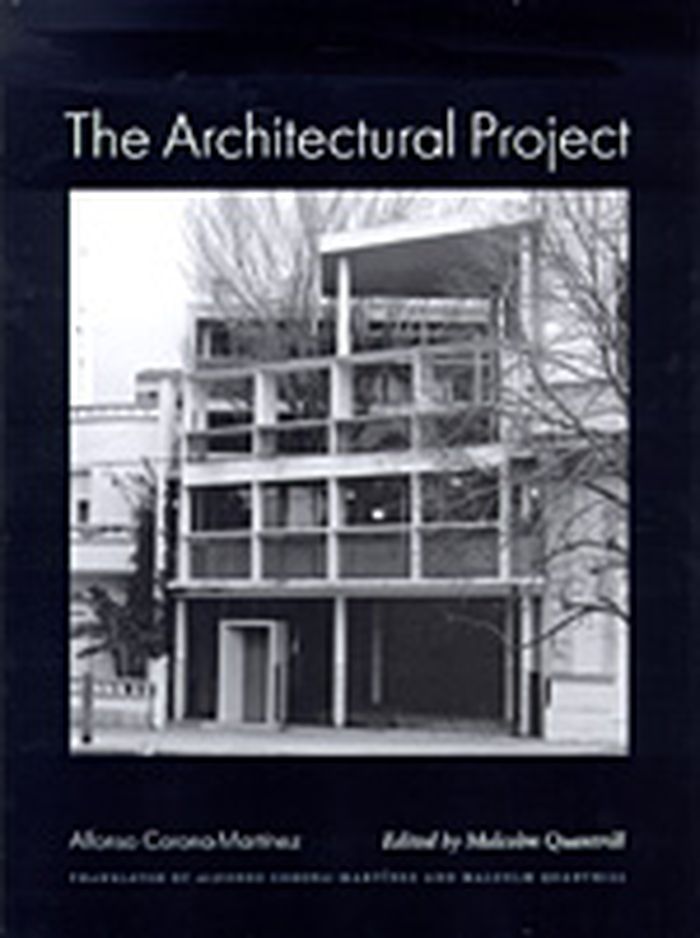
"The architectural project" considers the practice of architectural design as it has developed during the last two centuries. In this challenging interpretation of design education and its effect on design process and products, Argentinean scholar Alfonso Corona-Martínez emphasizes the distinction between an architectural project, created in the architect's mind and materialized as a set of drawings on paper, and the realized three-dimensional building. Corona-Martínez demonstrates how representation plays a substantial role in determining both the notion and the character of architecture, and he traces this relationship from the Renaissance into the Modern era, giving detailed considerations of Functionalism and Typology. His argument clarifies the continuity in the practice of design method through the nineteenth and twentieth centuries, a continuity that has been obscured by the emphasis on changing goals instead of design procedures.
The architectural project - number six : studies in architecture and culture
Actions:
Prix:
$63.95
(disponible sur commande)
Résumé:
"The architectural project" considers the practice of architectural design as it has developed during the last two centuries. In this challenging interpretation of design education and its effect on design process and products, Argentinean scholar Alfonso Corona-Martínez emphasizes the distinction between an architectural project, created in the architect's mind and materialized as a set of drawings on paper, and the realized three-dimensional building. Corona-Martínez demonstrates how representation plays a substantial role in determining both the notion and the character of architecture, and he traces this relationship from the Renaissance into the Modern era, giving detailed considerations of Functionalism and Typology. His argument clarifies the continuity in the practice of design method through the nineteenth and twentieth centuries, a continuity that has been obscured by the emphasis on changing goals instead of design procedures.
Classification:
livres
livres
Publication:
janvier 2003, Coolege Station
janvier 2003, Coolege Station
Classification:
livres
livres
Actions:
Prix:
$21.50
(disponible sur commande)
Résumé:
"Armed surfaces" presents DRD Lab's investigations into contemporary reality and a new typology for living. An analysis of transitional moments in daily life instigates a re-examination of Modern Functionalism as an ideology of standardisation and normalcy. The DRD Lab uses theory, spatial and cultural analysis, dynamic measurement, temporal positioning and their(...)
$21.50
(disponible sur commande)
Résumé:
"Armed surfaces" presents DRD Lab's investigations into contemporary reality and a new typology for living. An analysis of transitional moments in daily life instigates a re-examination of Modern Functionalism as an ideology of standardisation and normalcy. The DRD Lab uses theory, spatial and cultural analysis, dynamic measurement, temporal positioning and their(...)
Titre:
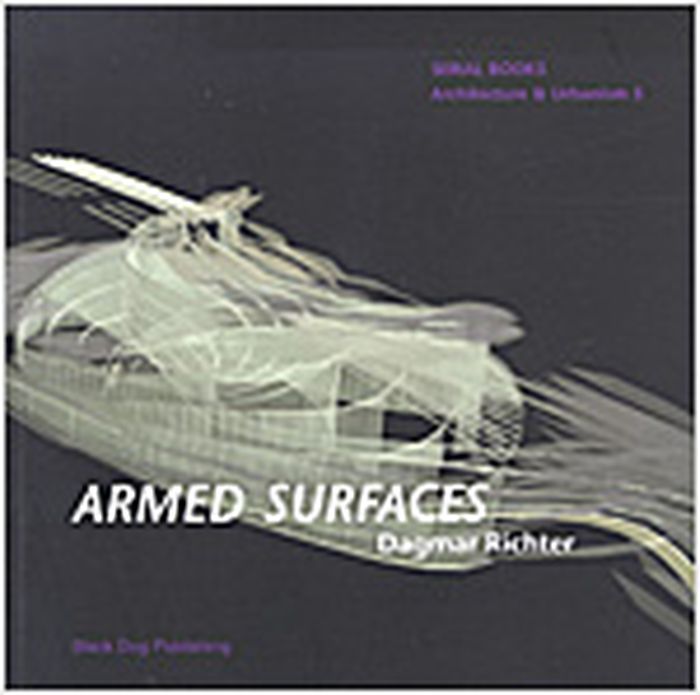
Dagmar Richter / DR_D : armed surfaces (serial books architecture & urbanism 5)
Actions:
Prix:
$21.50
(disponible sur commande)
Résumé:
"Armed surfaces" presents DRD Lab's investigations into contemporary reality and a new typology for living. An analysis of transitional moments in daily life instigates a re-examination of Modern Functionalism as an ideology of standardisation and normalcy. The DRD Lab uses theory, spatial and cultural analysis, dynamic measurement, temporal positioning and their collected data to develop a non-standard diagram which exposes the new role of architectural surfaces as 'performing surfaces'. This concept is explored through a series of research-oriented projects which include 'custom mass produced' contemporary housing, a performance induced landscape and an urban frontage. In the diverse projects which she undertakes, Richter seeks to radically reinvent urban design through a game of 'retracing' and 'restitution', founded in the notion that information is what qualifies space. The book explores new solutions to architecture and planning exposing an alternative view of architecture.
Dagmar Richter / DR_D : armed surfaces (serial books architecture & urbanism 5)
Actions:
Prix:
$21.50
(disponible sur commande)
Résumé:
"Armed surfaces" presents DRD Lab's investigations into contemporary reality and a new typology for living. An analysis of transitional moments in daily life instigates a re-examination of Modern Functionalism as an ideology of standardisation and normalcy. The DRD Lab uses theory, spatial and cultural analysis, dynamic measurement, temporal positioning and their collected data to develop a non-standard diagram which exposes the new role of architectural surfaces as 'performing surfaces'. This concept is explored through a series of research-oriented projects which include 'custom mass produced' contemporary housing, a performance induced landscape and an urban frontage. In the diverse projects which she undertakes, Richter seeks to radically reinvent urban design through a game of 'retracing' and 'restitution', founded in the notion that information is what qualifies space. The book explores new solutions to architecture and planning exposing an alternative view of architecture.
Classification:
livres
livres
Publication:
janvier 2005, London
janvier 2005, London
Sujet:
petits formats
petits formats
Classification:
livres
livres
Actions:
Prix:
$37.95
(disponible sur commande)
Résumé:
The twentieth-century architect Mies van der Rohe once declared that 'Architecture starts when you carefully put two bricks together'. In "Travels in the History of Architecture", renowned architectural writer Robert Harbison looks closely at these bricks, taking us on a journey through the great themes and movements of architecture, from antiquity to the present day.(...)
$37.95
(disponible sur commande)
Résumé:
The twentieth-century architect Mies van der Rohe once declared that 'Architecture starts when you carefully put two bricks together'. In "Travels in the History of Architecture", renowned architectural writer Robert Harbison looks closely at these bricks, taking us on a journey through the great themes and movements of architecture, from antiquity to the present day.(...)
Titre:
Travels in the history of architecture
Actions:
Prix:
$37.95
(disponible sur commande)
Résumé:
The twentieth-century architect Mies van der Rohe once declared that 'Architecture starts when you carefully put two bricks together'. In "Travels in the History of Architecture", renowned architectural writer Robert Harbison looks closely at these bricks, taking us on a journey through the great themes and movements of architecture, from antiquity to the present day. Taking as a starting place his own experience of the physical fabric of buildings, Harbison interprets the conceptions of the original architects and makers, pointing out carefully crafted detail and inspiring form along the way. Beginning with the great temples and tombs of the Egyptians, and the monuments and shrines of Greek and Roman architecture, and concluding with the museums of the twenty-first century, each chapter of his Travels focuses on a moment in architectural history, including Byzantine, Baroque, Mannerism, Historicism, Functionalism and Decon structionism.
Travels in the history of architecture
Actions:
Prix:
$37.95
(disponible sur commande)
Résumé:
The twentieth-century architect Mies van der Rohe once declared that 'Architecture starts when you carefully put two bricks together'. In "Travels in the History of Architecture", renowned architectural writer Robert Harbison looks closely at these bricks, taking us on a journey through the great themes and movements of architecture, from antiquity to the present day. Taking as a starting place his own experience of the physical fabric of buildings, Harbison interprets the conceptions of the original architects and makers, pointing out carefully crafted detail and inspiring form along the way. Beginning with the great temples and tombs of the Egyptians, and the monuments and shrines of Greek and Roman architecture, and concluding with the museums of the twenty-first century, each chapter of his Travels focuses on a moment in architectural history, including Byzantine, Baroque, Mannerism, Historicism, Functionalism and Decon structionism.
Classification:
livres
livres
Publication:
mai 2009
mai 2009
Sujet:
Théorie de l’architecture
Théorie de l’architecture
Classification:
livres
livres
Actions:
Prix:
$77.95
(disponible en magasin)
Résumé:
Gianni Pettena was a founding member of the radical Florentine architecture movement in the 1960s and 1970s, albeit always maintaining an independent position. As well as critiquing modernist functionalism, he frequented galleries, artists, and critics of the day, and became noted for his purposeful reluctance to actual design. Pettena’s youthful work in the United States(...)
$77.95
(disponible en magasin)
Résumé:
Gianni Pettena was a founding member of the radical Florentine architecture movement in the 1960s and 1970s, albeit always maintaining an independent position. As well as critiquing modernist functionalism, he frequented galleries, artists, and critics of the day, and became noted for his purposeful reluctance to actual design. Pettena’s youthful work in the United States(...)
Titre:
Tutto, tutto, tutto...o quasi
Actions:
Prix:
$77.95
(disponible en magasin)
Résumé:
Gianni Pettena was a founding member of the radical Florentine architecture movement in the 1960s and 1970s, albeit always maintaining an independent position. As well as critiquing modernist functionalism, he frequented galleries, artists, and critics of the day, and became noted for his purposeful reluctance to actual design. Pettena’s youthful work in the United States and assiduous frequentation of (an)architects such as Buckminster Fuller and James Wines, who early on paid attention to ecology, the suburbs and "to making insignificant places significant," may be interpreted in this light. More generally, the uniqueness of his long career is informed by his rejection of discipline-based roles and methodologies, creating temporary works while constantly seeking alliances with conceptual art, Austrian radical design, Land Art and experimental music. This book documents (almost) all of his works, backed up by an extensive anthology of his writings.
Tutto, tutto, tutto...o quasi
Actions:
Prix:
$77.95
(disponible en magasin)
Résumé:
Gianni Pettena was a founding member of the radical Florentine architecture movement in the 1960s and 1970s, albeit always maintaining an independent position. As well as critiquing modernist functionalism, he frequented galleries, artists, and critics of the day, and became noted for his purposeful reluctance to actual design. Pettena’s youthful work in the United States and assiduous frequentation of (an)architects such as Buckminster Fuller and James Wines, who early on paid attention to ecology, the suburbs and "to making insignificant places significant," may be interpreted in this light. More generally, the uniqueness of his long career is informed by his rejection of discipline-based roles and methodologies, creating temporary works while constantly seeking alliances with conceptual art, Austrian radical design, Land Art and experimental music. This book documents (almost) all of his works, backed up by an extensive anthology of his writings.
Classification:
livres
livres
Publication:
septembre 2022
septembre 2022
Sujet:
Design, monographies
Design, monographies


