


4907 Résultats
Classification:
livres
livres
Titre:
Obsidian situations
Obsidian situations
Actions:
Prix:
$20.00
(disponible en magasin)
Résumé:
Tricia Middleton’s debut verse-novel brings the artist’s genius for summoning the psychic life of the object world to the page, here trading in the resonant material vocabulary that she has honed to perfection conjuring the wayward spirits of late-stage capitalism in sculptural form, for the equally resplendent wordplay of incisive observational poetry. Ostensibly set(...)
$20.00
(disponible en magasin)
Résumé:
Tricia Middleton’s debut verse-novel brings the artist’s genius for summoning the psychic life of the object world to the page, here trading in the resonant material vocabulary that she has honed to perfection conjuring the wayward spirits of late-stage capitalism in sculptural form, for the equally resplendent wordplay of incisive observational poetry. Ostensibly set(...)
Titre:
Obsidian situations
Actions:
Prix:
$20.00
(disponible en magasin)
Résumé:
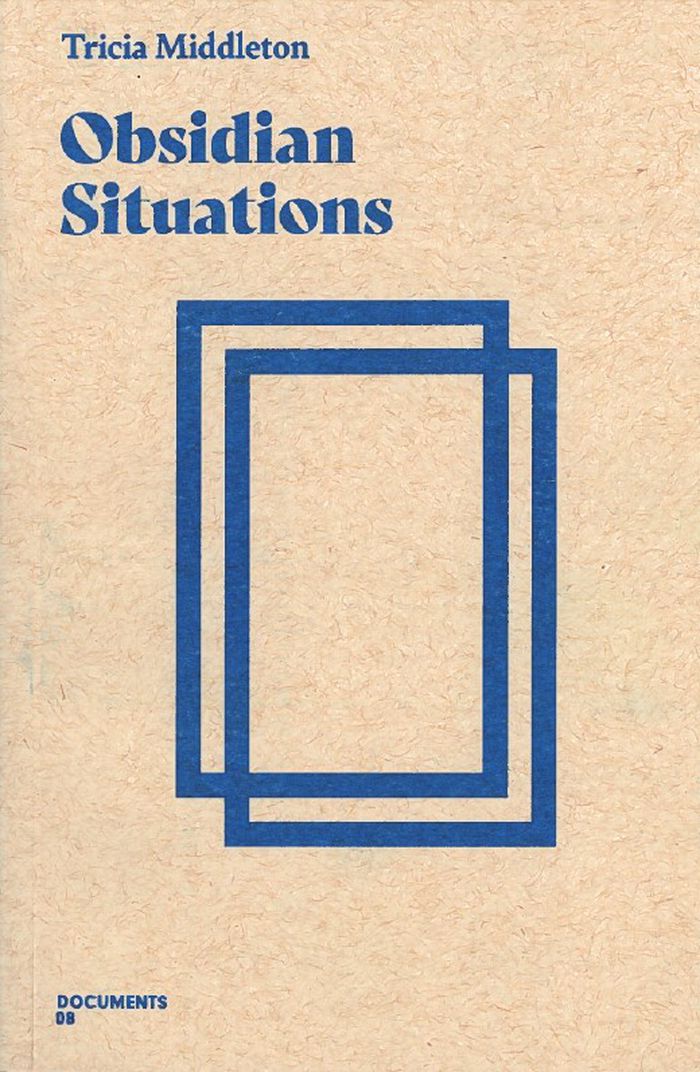
Tricia Middleton’s debut verse-novel brings the artist’s genius for summoning the psychic life of the object world to the page, here trading in the resonant material vocabulary that she has honed to perfection conjuring the wayward spirits of late-stage capitalism in sculptural form, for the equally resplendent wordplay of incisive observational poetry. Ostensibly set in present-day Paris, ''Obsidian situations'' spans centuries, telling a story about the epigenetics of suffering, survival, and redemption in social and cultural form. Alternating between myriad personae—sometimes artist or artwork, poet or amorphous cloud—the anonymous, decidedly female, narrator that serves as our guide to the city of light channels the souls of works of art and ideas, of artists, philosophers, courtesans and, most heartrending of all, des Enfants-Trouvés through incantatory soliloquies that call to account the half-life of Enlightenment ideals propping up the soft and saggy moral economy of the L’age Anthropocentric. As a force of self-definition and a body objectified—and so subject to the same degradation as any and all things—our champion encounters ‘situations’ that are in equal parts hilarious and heartbreaking, horrifying and wretched, breathtakingly beautiful, poignant, and mad. It’s a world of museums and collectors, artists and curators, lovers and mothers, daughters and others, charged with desire and repulsion, longing and rejection, death and devastation that, ironically, can only be transformed in art and in poetry and in dreams.
Obsidian situations
Actions:
Prix:
$20.00
(disponible en magasin)
Résumé:
Tricia Middleton’s debut verse-novel brings the artist’s genius for summoning the psychic life of the object world to the page, here trading in the resonant material vocabulary that she has honed to perfection conjuring the wayward spirits of late-stage capitalism in sculptural form, for the equally resplendent wordplay of incisive observational poetry. Ostensibly set in present-day Paris, ''Obsidian situations'' spans centuries, telling a story about the epigenetics of suffering, survival, and redemption in social and cultural form. Alternating between myriad personae—sometimes artist or artwork, poet or amorphous cloud—the anonymous, decidedly female, narrator that serves as our guide to the city of light channels the souls of works of art and ideas, of artists, philosophers, courtesans and, most heartrending of all, des Enfants-Trouvés through incantatory soliloquies that call to account the half-life of Enlightenment ideals propping up the soft and saggy moral economy of the L’age Anthropocentric. As a force of self-definition and a body objectified—and so subject to the same degradation as any and all things—our champion encounters ‘situations’ that are in equal parts hilarious and heartbreaking, horrifying and wretched, breathtakingly beautiful, poignant, and mad. It’s a world of museums and collectors, artists and curators, lovers and mothers, daughters and others, charged with desire and repulsion, longing and rejection, death and devastation that, ironically, can only be transformed in art and in poetry and in dreams.
Classification:
livres
livres
Publication:
janvier 2023
janvier 2023
Sujet:
Littérature et poésie
Littérature et poésie
Classification:
livres
livres
Actions:
Prix:
$105.00
(disponible sur commande)
Résumé:
This catalogue is published in conjunction with "Il modo italian - Italian design and avant-garde in the 20th century", an exhibition produced by the Montreal Museum of Fine Arts in collaboration with the Royal Ontario Museum, Toronto, and the Mart – Museo di Arte Moderna e Contemporanea di Trento e Rovereto. Italian design has spanned the whole of the twentieth century,(...)
$105.00
(disponible sur commande)
Résumé:
This catalogue is published in conjunction with "Il modo italian - Italian design and avant-garde in the 20th century", an exhibition produced by the Montreal Museum of Fine Arts in collaboration with the Royal Ontario Museum, Toronto, and the Mart – Museo di Arte Moderna e Contemporanea di Trento e Rovereto. Italian design has spanned the whole of the twentieth century,(...)
Titre:
Il modo italiaono - Italian design and avant-garde in the 20th Century
Actions:
Prix:
$105.00
(disponible sur commande)
Résumé:
This catalogue is published in conjunction with "Il modo italian - Italian design and avant-garde in the 20th century", an exhibition produced by the Montreal Museum of Fine Arts in collaboration with the Royal Ontario Museum, Toronto, and the Mart – Museo di Arte Moderna e Contemporanea di Trento e Rovereto. Italian design has spanned the whole of the twentieth century, leaving a highly distinctive mark on the way that the form of objects of everyday use is perceived in industrial and contemporary society. This “Italian way” has succeeded, through a complex and hesitant process of industrial innovation and technological updating, in developing an independent and multifaceted culture of design capable of marrying the country’s rich craft tradition with an often fiercely resisted aspiration to modernity made up of flashes of improvisation and irony, and associated with an arduous bent for experimentation. The exhibition, with around 400 works chosen from among the most representative of artistic research and the culture of design in Italy in the twentieth century, is arranged chronologically, with four sections that define the different periods in the philosophical, economic, and aesthetic discourse that has accompanied the recent history of art and design in Italy. The survey brings to light the “philosophies” of design and the “aesthetics” that found a strong and dialectical expression right through the last century in Italy, and that are at the root of the country’s characteristic and lively cultural debate between art and design.
Il modo italiaono - Italian design and avant-garde in the 20th Century
Actions:
Prix:
$105.00
(disponible sur commande)
Résumé:
This catalogue is published in conjunction with "Il modo italian - Italian design and avant-garde in the 20th century", an exhibition produced by the Montreal Museum of Fine Arts in collaboration with the Royal Ontario Museum, Toronto, and the Mart – Museo di Arte Moderna e Contemporanea di Trento e Rovereto. Italian design has spanned the whole of the twentieth century, leaving a highly distinctive mark on the way that the form of objects of everyday use is perceived in industrial and contemporary society. This “Italian way” has succeeded, through a complex and hesitant process of industrial innovation and technological updating, in developing an independent and multifaceted culture of design capable of marrying the country’s rich craft tradition with an often fiercely resisted aspiration to modernity made up of flashes of improvisation and irony, and associated with an arduous bent for experimentation. The exhibition, with around 400 works chosen from among the most representative of artistic research and the culture of design in Italy in the twentieth century, is arranged chronologically, with four sections that define the different periods in the philosophical, economic, and aesthetic discourse that has accompanied the recent history of art and design in Italy. The survey brings to light the “philosophies” of design and the “aesthetics” that found a strong and dialectical expression right through the last century in Italy, and that are at the root of the country’s characteristic and lively cultural debate between art and design.
Classification:
livres
livres
Publication:
mai 2006, Milano / Montreal
mai 2006, Milano / Montreal
Sujet:
Design d’intérieur
Design d’intérieur
Classification:
livres
livres
Actions:
Prix:
$52.95
(disponible sur commande)
Résumé:
The book reconstructs the story of Serbian modernism as a local history within a major movement and views the buildings designed in Belgrade in the 1920s and 1930s as part of a larger cultural phenomenon. Because so many of the buildings discussed are disintegrating or have been destroyed or altered beyond recognition, the book serves not only as a documentary and(...)
$52.95
(disponible sur commande)
Résumé:
The book reconstructs the story of Serbian modernism as a local history within a major movement and views the buildings designed in Belgrade in the 1920s and 1930s as part of a larger cultural phenomenon. Because so many of the buildings discussed are disintegrating or have been destroyed or altered beyond recognition, the book serves not only as a documentary and(...)
Publication:
juin 2003, Cambridge, Mass.
juin 2003, Cambridge, Mass.
Titre:
Modernism in Serbia : the elusive margins of Belgrade architecture 1919-1941
Actions:
Prix:
$52.95
(disponible sur commande)
Résumé:
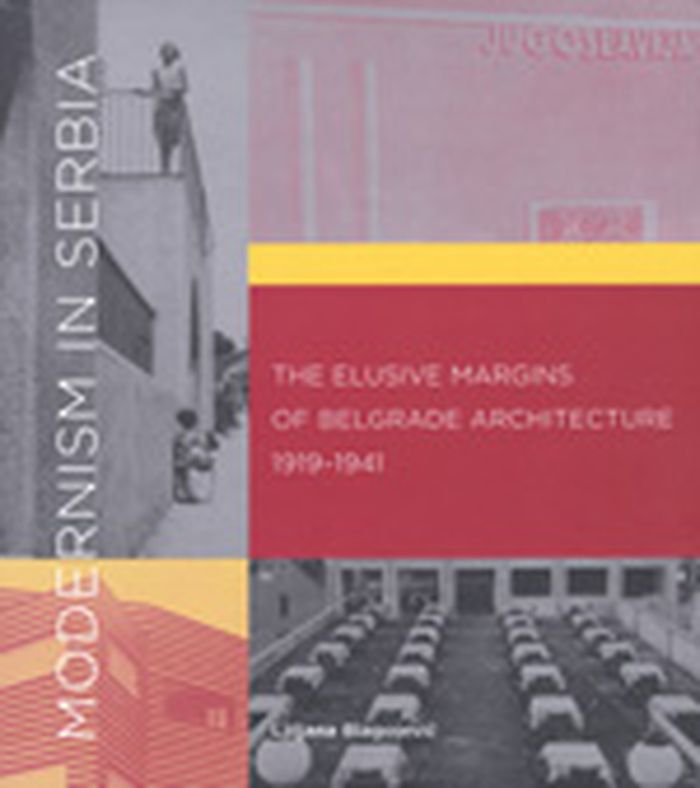
The book reconstructs the story of Serbian modernism as a local history within a major movement and views the buildings designed in Belgrade in the 1920s and 1930s as part of a larger cultural phenomenon. Because so many of the buildings discussed are disintegrating or have been destroyed or altered beyond recognition, the book serves not only as a documentary and critical study but also as a preservation resource. Most of the photographs and plans have never been published outside of Serbia, if at all. In restoring this work to its rightful place in the history of modern architecture, the book also sheds new light on a number of other stories. These include the influence of Le Corbusier and of the Yugoslav avant-garde movement Zenitism and the impact of international modern movements on the theoretical underpinnings of Serbian modernism. One of the subplots follows the story of the Group of Architects of the Modern Movement in Belgrade and its four founding members, Milan Zlokovic, Branislav Kojic, Jan Dubovy, and Dusan Babic. Through anexamination of their work and that of other modern architects, most notably Dragisa Brasovan and Nikola Dobrovic, the book discusses the identity of Serbian modernism as it was established in the period from 1925 to 1940. The book also identifies those buildings that represent the purest examples of Serbian modernism and analyzes the qualities that make them quintessentially local forms while part of the larger modernist movement
Modernism in Serbia : the elusive margins of Belgrade architecture 1919-1941
Actions:
Prix:
$52.95
(disponible sur commande)
Résumé:
The book reconstructs the story of Serbian modernism as a local history within a major movement and views the buildings designed in Belgrade in the 1920s and 1930s as part of a larger cultural phenomenon. Because so many of the buildings discussed are disintegrating or have been destroyed or altered beyond recognition, the book serves not only as a documentary and critical study but also as a preservation resource. Most of the photographs and plans have never been published outside of Serbia, if at all. In restoring this work to its rightful place in the history of modern architecture, the book also sheds new light on a number of other stories. These include the influence of Le Corbusier and of the Yugoslav avant-garde movement Zenitism and the impact of international modern movements on the theoretical underpinnings of Serbian modernism. One of the subplots follows the story of the Group of Architects of the Modern Movement in Belgrade and its four founding members, Milan Zlokovic, Branislav Kojic, Jan Dubovy, and Dusan Babic. Through anexamination of their work and that of other modern architects, most notably Dragisa Brasovan and Nikola Dobrovic, the book discusses the identity of Serbian modernism as it was established in the period from 1925 to 1940. The book also identifies those buildings that represent the purest examples of Serbian modernism and analyzes the qualities that make them quintessentially local forms while part of the larger modernist movement
Classification:
livres
livres
Publication:
juin 2003, Cambridge, Mass.
juin 2003, Cambridge, Mass.
Classification:
livres
livres
Actions:
Prix:
$97.50
(disponible sur commande)
Résumé:
In 1919 the Social Democrat city council of Vienna initiated a radical program of reforms designed to reshape the city's infrastructure along socialist lines. The centrepiece and most enduring achievement of "Red" Vienna was the construction of the Wiener (...)
$97.50
(disponible sur commande)
Résumé:
In 1919 the Social Democrat city council of Vienna initiated a radical program of reforms designed to reshape the city's infrastructure along socialist lines. The centrepiece and most enduring achievement of "Red" Vienna was the construction of the Wiener (...)
Titre:
The architecture of red Vienna 1919-1934
Actions:
Prix:
$97.50
(disponible sur commande)
Résumé:
In 1919 the Social Democrat city council of Vienna initiated a radical program of reforms designed to reshape the city's infrastructure along socialist lines. The centrepiece and most enduring achievement of "Red" Vienna was the construction of the Wiener Gemeindebauten, 400 communal housing blocks, distributed throughout the city, in which workers' dwellings were incorporated with kindergartens, libraries, medical clinics, theaters, cooperative stores, and other public facilities. The 64,000 units housed one tenth of the city's population. Throughout this socialist building campaign, however, Austria was ruled by a conservative, clerical, and antisocialist political majority. Thus the architecture of Red Vienna took shape in the midst of highly charged, and often violent, political conflict between left and right. In this book, Eve Blau looks at how that ideological conflict shaped the buildings of Red Vienna--in terms of their programme, spatial conception, language, and use--as well as how political meaning itself is manifested in architecture. She shows how the architecture of Red Vienna constructed meaning in relation to the ideological conflicts that defined Austrian politics in the interwar period--how it was shaped by the conditions of its making, and how it engaged its own codes, practices, and history to stake out a political position in relation to those conditions. Her investigation sheds light both on the complex relationship among political program, architectural practice, and urban history in interwar Vienna, and on the process by which architecture can generate a collective discourse that includes all members of society.
The architecture of red Vienna 1919-1934
Actions:
Prix:
$97.50
(disponible sur commande)
Résumé:
In 1919 the Social Democrat city council of Vienna initiated a radical program of reforms designed to reshape the city's infrastructure along socialist lines. The centrepiece and most enduring achievement of "Red" Vienna was the construction of the Wiener Gemeindebauten, 400 communal housing blocks, distributed throughout the city, in which workers' dwellings were incorporated with kindergartens, libraries, medical clinics, theaters, cooperative stores, and other public facilities. The 64,000 units housed one tenth of the city's population. Throughout this socialist building campaign, however, Austria was ruled by a conservative, clerical, and antisocialist political majority. Thus the architecture of Red Vienna took shape in the midst of highly charged, and often violent, political conflict between left and right. In this book, Eve Blau looks at how that ideological conflict shaped the buildings of Red Vienna--in terms of their programme, spatial conception, language, and use--as well as how political meaning itself is manifested in architecture. She shows how the architecture of Red Vienna constructed meaning in relation to the ideological conflicts that defined Austrian politics in the interwar period--how it was shaped by the conditions of its making, and how it engaged its own codes, practices, and history to stake out a political position in relation to those conditions. Her investigation sheds light both on the complex relationship among political program, architectural practice, and urban history in interwar Vienna, and on the process by which architecture can generate a collective discourse that includes all members of society.
Classification:
livres
livres
Publication:
décembre 1998, Cambridge, Mass.
décembre 1998, Cambridge, Mass.
Sujet:
Modernisme
Modernisme
Classification:
livres
livres
Actions:
Prix:
$44.95
(disponible sur commande)
Résumé:
The French Riviera has been a fabled resort for more than a century. As an enclave for the rich and famous, as well as a scenic tourist spot, it represents all that is beautiful and amusing. But for many of the twentieth century's finest painters, sculptors, photographers, (...)
$44.95
(disponible sur commande)
Résumé:
The French Riviera has been a fabled resort for more than a century. As an enclave for the rich and famous, as well as a scenic tourist spot, it represents all that is beautiful and amusing. But for many of the twentieth century's finest painters, sculptors, photographers, (...)
Publication:
mai 2001, Cambridge,MA
mai 2001, Cambridge,MA
Titre:
Making Paradise: Art, Modernity, and the Myth of the French Riviera
Actions:
Prix:
$44.95
(disponible sur commande)
Résumé:
The French Riviera has been a fabled resort for more than a century. As an enclave for the rich and famous, as well as a scenic tourist spot, it represents all that is beautiful and amusing. But for many of the twentieth century's finest painters, sculptors, photographers, and architects it has been much more: a place of potent myth and extraordinary creativity. Picasso, Matisse, Beckmann, Brancusi, Lartigue, Le Corbusier, and Eileen Gray, among many others, were inspired to create some of their greatest work on the Côte d'Azur. This study examines the impact of modernity and the artistic imagination on an idyllic landscape. Touching on the issues of pleasure and escape, work and leisure, and desire and ecstasy, "Making Paradise" offers a fresh look at the Côte d'Azur and its historical significance as a site for modernist innovation from 1890 to the present. Beginning with the neoimpressionists, moving to the Fauves, and ending with such contemporary artists as David Hockney and Faith Ringgold, the book examines the splendid light and terrain of the southeastern coast of France and the region's influence on the artists who worked and played there. Like the book, the exhibition it accompanies features unexpected juxtapostitions: masterworks by Bonnard and Picasso with the photographs of Lartigue and Model; the villas of Le Corbusier, Gray, and Mallet-Stevens with designs for the Ballets Russes de Monte Carlo; and ceramics of Picasso with the found-object constructions of the École de Nice of the early 1960s.
Making Paradise: Art, Modernity, and the Myth of the French Riviera
Actions:
Prix:
$44.95
(disponible sur commande)
Résumé:
The French Riviera has been a fabled resort for more than a century. As an enclave for the rich and famous, as well as a scenic tourist spot, it represents all that is beautiful and amusing. But for many of the twentieth century's finest painters, sculptors, photographers, and architects it has been much more: a place of potent myth and extraordinary creativity. Picasso, Matisse, Beckmann, Brancusi, Lartigue, Le Corbusier, and Eileen Gray, among many others, were inspired to create some of their greatest work on the Côte d'Azur. This study examines the impact of modernity and the artistic imagination on an idyllic landscape. Touching on the issues of pleasure and escape, work and leisure, and desire and ecstasy, "Making Paradise" offers a fresh look at the Côte d'Azur and its historical significance as a site for modernist innovation from 1890 to the present. Beginning with the neoimpressionists, moving to the Fauves, and ending with such contemporary artists as David Hockney and Faith Ringgold, the book examines the splendid light and terrain of the southeastern coast of France and the region's influence on the artists who worked and played there. Like the book, the exhibition it accompanies features unexpected juxtapostitions: masterworks by Bonnard and Picasso with the photographs of Lartigue and Model; the villas of Le Corbusier, Gray, and Mallet-Stevens with designs for the Ballets Russes de Monte Carlo; and ceramics of Picasso with the found-object constructions of the École de Nice of the early 1960s.
Classification:
livres
livres
Publication:
mai 2001, Cambridge,MA
mai 2001, Cambridge,MA
Classification:
livres
livres

Actions:
Prix:
$115.00
(disponible en magasin)
Résumé:
With the publication of his serialized photo-essay Hikari to Kage (Light and Shadow) in the first issues of the magazine, Shashin Jidai, Daido Moriyama announced his return to photography after nearly a decade. Moriyama had been mired in an acute creative slump from his mid thirties, since the publication of his seminal book, Shashin yo Sayonara (Farewell Photography) in(...)
$115.00
(disponible en magasin)
Résumé:
With the publication of his serialized photo-essay Hikari to Kage (Light and Shadow) in the first issues of the magazine, Shashin Jidai, Daido Moriyama announced his return to photography after nearly a decade. Moriyama had been mired in an acute creative slump from his mid thirties, since the publication of his seminal book, Shashin yo Sayonara (Farewell Photography) in(...)
Titre:
Daido Moriyama Shashin Jidai 1981-1988
Actions:
Prix:
$115.00
(disponible en magasin)
Résumé:
With the publication of his serialized photo-essay Hikari to Kage (Light and Shadow) in the first issues of the magazine, Shashin Jidai, Daido Moriyama announced his return to photography after nearly a decade. Moriyama had been mired in an acute creative slump from his mid thirties, since the publication of his seminal book, Shashin yo Sayonara (Farewell Photography) in 1972. Unable to take nearly any photos for a prolonged period, he turned to illicit drugs, ultimately wasting away to little more than 40 kgs before he hit physical and emotional rock bottom. Lured back by Akira Hasegawa, Shashin Jidai’s editor, he was invited to contribute photographs for each issue. This began a long relationship between Moriyama and Shashin Jidai. He would ultimately make a total of six serialized essays that appeared through sixty-three issues (in every issue but one) until its’ demise in April 1988. During this period Moriyama worked almost exclusively for Shasin Jidai and was given a free hand to explore and experiment and in the process evolved a new aesthetic that still informs his photography today. Tragically, more than eighty percent of his negatives were lost from this pivotal body of work. In Daido Moriyama Shashin Jidai 1981–1988 the complete run of essays or chapters that appeared concurrently in Shashin Jidai are brought together for the first time, representing the only way to appreciate them without acquiring the original magazines themselves.
Daido Moriyama Shashin Jidai 1981-1988
Actions:
Prix:
$115.00
(disponible en magasin)
Résumé:
With the publication of his serialized photo-essay Hikari to Kage (Light and Shadow) in the first issues of the magazine, Shashin Jidai, Daido Moriyama announced his return to photography after nearly a decade. Moriyama had been mired in an acute creative slump from his mid thirties, since the publication of his seminal book, Shashin yo Sayonara (Farewell Photography) in 1972. Unable to take nearly any photos for a prolonged period, he turned to illicit drugs, ultimately wasting away to little more than 40 kgs before he hit physical and emotional rock bottom. Lured back by Akira Hasegawa, Shashin Jidai’s editor, he was invited to contribute photographs for each issue. This began a long relationship between Moriyama and Shashin Jidai. He would ultimately make a total of six serialized essays that appeared through sixty-three issues (in every issue but one) until its’ demise in April 1988. During this period Moriyama worked almost exclusively for Shasin Jidai and was given a free hand to explore and experiment and in the process evolved a new aesthetic that still informs his photography today. Tragically, more than eighty percent of his negatives were lost from this pivotal body of work. In Daido Moriyama Shashin Jidai 1981–1988 the complete run of essays or chapters that appeared concurrently in Shashin Jidai are brought together for the first time, representing the only way to appreciate them without acquiring the original magazines themselves.
Classification:
livres
livres
Publication:
novembre 2023
novembre 2023
Sujet:
Monographies photo
Monographies photo
Classification:
livres
livres

Titre:
Strange details
Strange details
Actions:
Prix:
$41.95
(disponible sur commande)
Résumé:
Confronted with the intricate construction details of Italian architect Carlo Scarpa's Querini Stampalia Gallery--steel joined at odd intervals, concrete spilled out of concatenated forms, stone cut in labyrinthine patterns--Michael Cadwell abandoned his attempts to categorize them theoretically and resolved instead to appreciate their idiosyncrasies and evoke their(...)
$41.95
(disponible sur commande)
Résumé:
Confronted with the intricate construction details of Italian architect Carlo Scarpa's Querini Stampalia Gallery--steel joined at odd intervals, concrete spilled out of concatenated forms, stone cut in labyrinthine patterns--Michael Cadwell abandoned his attempts to categorize them theoretically and resolved instead to appreciate their idiosyncrasies and evoke their(...)
Titre:
Strange details
Actions:
Prix:
$41.95
(disponible sur commande)
Résumé:
Confronted with the intricate construction details of Italian architect Carlo Scarpa's Querini Stampalia Gallery--steel joined at odd intervals, concrete spilled out of concatenated forms, stone cut in labyrinthine patterns--Michael Cadwell abandoned his attempts to categorize them theoretically and resolved instead to appreciate their idiosyncrasies and evoke their all-embracing affects. What he had dismissed as a collection of fetishes he came to understand as a coherently constructed world that was nonetheless persistently strange. In Strange Details, Cadwell looks at the work of four canonical architects who "made strange" with the most resistant aspect of architecture--construction. In buildings that were pivotal in their careers, Scarpa, Frank Lloyd Wright, Mies van der Rohe, and Louis Kahn all created details that undercut our critical and analytical terra firma. Cadwell explores the strangeness in the material menagerie of Scarpa's Querini Stampalia, the wood light frame construction of Wright's Jacobs House, the welded steel frame of Mies's Farnsworth House, and the reinforced concrete of Kahn's Yale Center for British Art. Each of these architects, he finds, reconfigures the rudimentary facts of construction, creating a subtle but undeniable shift in a building’s physicality. And for each of them, nature is strange, and its strangeness infects; nature unmoors exhausted cultural ideas, constricted analytical procedures, and outmoded production techniques. An awakening to nature's strangeness forces a new sense of the world, one that we can detect in these architects' configurations of the world's materials--their strange details.
Strange details
Actions:
Prix:
$41.95
(disponible sur commande)
Résumé:
Confronted with the intricate construction details of Italian architect Carlo Scarpa's Querini Stampalia Gallery--steel joined at odd intervals, concrete spilled out of concatenated forms, stone cut in labyrinthine patterns--Michael Cadwell abandoned his attempts to categorize them theoretically and resolved instead to appreciate their idiosyncrasies and evoke their all-embracing affects. What he had dismissed as a collection of fetishes he came to understand as a coherently constructed world that was nonetheless persistently strange. In Strange Details, Cadwell looks at the work of four canonical architects who "made strange" with the most resistant aspect of architecture--construction. In buildings that were pivotal in their careers, Scarpa, Frank Lloyd Wright, Mies van der Rohe, and Louis Kahn all created details that undercut our critical and analytical terra firma. Cadwell explores the strangeness in the material menagerie of Scarpa's Querini Stampalia, the wood light frame construction of Wright's Jacobs House, the welded steel frame of Mies's Farnsworth House, and the reinforced concrete of Kahn's Yale Center for British Art. Each of these architects, he finds, reconfigures the rudimentary facts of construction, creating a subtle but undeniable shift in a building’s physicality. And for each of them, nature is strange, and its strangeness infects; nature unmoors exhausted cultural ideas, constricted analytical procedures, and outmoded production techniques. An awakening to nature's strangeness forces a new sense of the world, one that we can detect in these architects' configurations of the world's materials--their strange details.
Classification:
livres
livres
Publication:
juin 2007
juin 2007
Sujet:
Théorie de l’architecture
Théorie de l’architecture
Classification:
livres
livres
Actions:
Prix:
$68.00
(disponible sur commande)
Résumé:
British architect Cedric Price (1934–2003) had a lifelong fascination with the mechanization of society and its effect on people’s lives. In the 1960s and ’70s, Price began to look for answers to some of the pressing problems he saw in society in the tenets of architecture and design. His intense intellectual curiosity soon led him to other disciplines, including the(...)
$68.00
(disponible sur commande)
Résumé:
British architect Cedric Price (1934–2003) had a lifelong fascination with the mechanization of society and its effect on people’s lives. In the 1960s and ’70s, Price began to look for answers to some of the pressing problems he saw in society in the tenets of architecture and design. His intense intellectual curiosity soon led him to other disciplines, including the(...)
Titre:
The city and the architecture of change: the work and radical visions of Cedric Price
Actions:
Prix:
$68.00
(disponible sur commande)
Résumé:
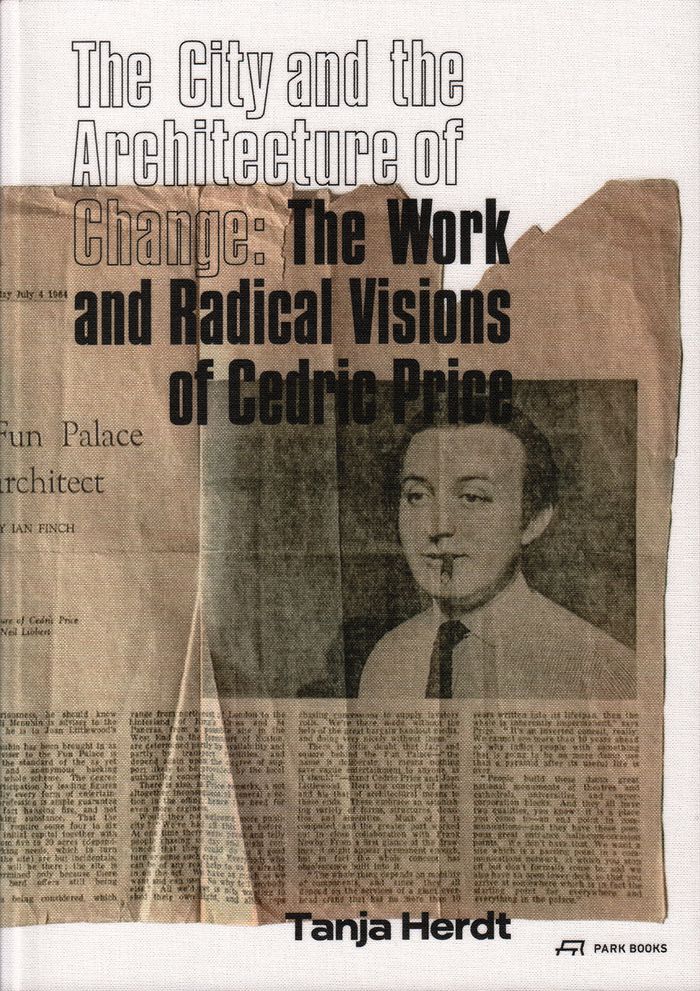
British architect Cedric Price (1934–2003) had a lifelong fascination with the mechanization of society and its effect on people’s lives. In the 1960s and ’70s, Price began to look for answers to some of the pressing problems he saw in society in the tenets of architecture and design. His intense intellectual curiosity soon led him to other disciplines, including the social and natural sciences, while his sense of humor and self-irony—which also extended to his profession—allowed him to keep his ideas in perspective. With "The city and the architecture of change", Tanja Herdt offers a comprehensive look back at the life and work of Price. Based on extensive research, including previously unpublished materials, Herdt provides a thorough account of Price’s key architectural concepts and visions, and then analyzes his perspectives on the city as a system, the influence of products and contemporary culture on architecture, and the role of science and technology in architecture and design. Apart from providing new insights into Price’s well-known and studied projects, such as Fun Palace and Potteries Thinkbelt, Herdt also brings to light many lesser-known works from the 1970s like McAppy and The Generator. She concludes by refuting the common perception of Cedric Price as an “anti-architect.” Richly illustrated with plans and photographs, many of which have never been published before, "The city and the architecture of change" affords a glimpse into the mind of this highly creative and forward-thinking architect.
The city and the architecture of change: the work and radical visions of Cedric Price
Actions:
Prix:
$68.00
(disponible sur commande)
Résumé:
British architect Cedric Price (1934–2003) had a lifelong fascination with the mechanization of society and its effect on people’s lives. In the 1960s and ’70s, Price began to look for answers to some of the pressing problems he saw in society in the tenets of architecture and design. His intense intellectual curiosity soon led him to other disciplines, including the social and natural sciences, while his sense of humor and self-irony—which also extended to his profession—allowed him to keep his ideas in perspective. With "The city and the architecture of change", Tanja Herdt offers a comprehensive look back at the life and work of Price. Based on extensive research, including previously unpublished materials, Herdt provides a thorough account of Price’s key architectural concepts and visions, and then analyzes his perspectives on the city as a system, the influence of products and contemporary culture on architecture, and the role of science and technology in architecture and design. Apart from providing new insights into Price’s well-known and studied projects, such as Fun Palace and Potteries Thinkbelt, Herdt also brings to light many lesser-known works from the 1970s like McAppy and The Generator. She concludes by refuting the common perception of Cedric Price as an “anti-architect.” Richly illustrated with plans and photographs, many of which have never been published before, "The city and the architecture of change" affords a glimpse into the mind of this highly creative and forward-thinking architect.
Classification:
livres
livres
Publication:
octobre 2017
octobre 2017
Sujet:
Architecture, monographies
Architecture, monographies
Classification:
livres
livres
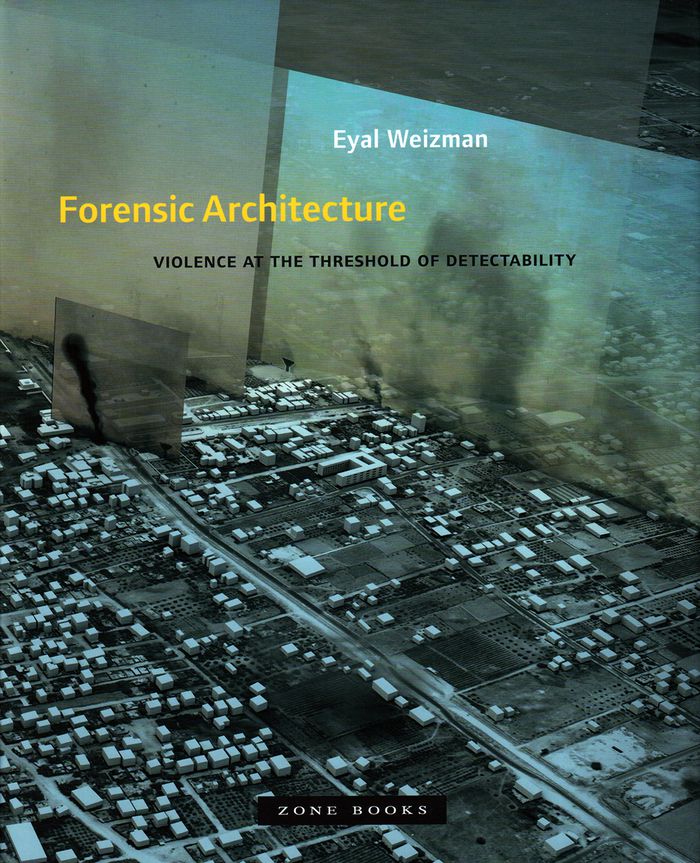
Titre:
Forensic architecture
Forensic architecture
Actions:
Prix:
$49.95
(disponible sur commande)
Résumé:
In recent years, the group Forensic Architecture began using novel research methods to undertake a series of investigations into human rights abuses. Today, the group provides crucial evidence for international courts and works with a wide range of activist groups, NGOs, Amnesty International, and the UN. Forensic Architecture has not only shed new light on human rights(...)
$49.95
(disponible sur commande)
Résumé:
In recent years, the group Forensic Architecture began using novel research methods to undertake a series of investigations into human rights abuses. Today, the group provides crucial evidence for international courts and works with a wide range of activist groups, NGOs, Amnesty International, and the UN. Forensic Architecture has not only shed new light on human rights(...)
Titre:
Forensic architecture
Actions:
Prix:
$49.95
(disponible sur commande)
Résumé:
In recent years, the group Forensic Architecture began using novel research methods to undertake a series of investigations into human rights abuses. Today, the group provides crucial evidence for international courts and works with a wide range of activist groups, NGOs, Amnesty International, and the UN. Forensic Architecture has not only shed new light on human rights violations and state crimes across the globe, but has also created a new form of investigative practice that bears its name. The group uses architecture as an optical device to investigate armed conflicts and environmental destruction, as well as to cross-reference a variety of evidence sources, such as new media, remote sensing, material analysis, witness testimony, and crowd-sourcing. In "Forensic architecture", Eyal Weizman, the group’s founder, provides, for the first time, an in-depth introduction to the history, practice, assumptions, potentials, and double binds of this practice. The book includes an extensive array of images, maps, and detailed documentation that records the intricate work the group has performed. Traversing multiple scales and durations, the case studies in this volume include the analysis of the shrapnel fragments in a room struck by drones in Pakistan, the reconstruction of a contested shooting in the West Bank, the architectural recreation of a secret Syrian detention center from the memory of its survivors, a blow-by-blow account of a day-long battle in Gaza, and an investigation of environmental violence and climate change in the Guatemalan highlands and elsewhere.
Forensic architecture
Actions:
Prix:
$49.95
(disponible sur commande)
Résumé:
In recent years, the group Forensic Architecture began using novel research methods to undertake a series of investigations into human rights abuses. Today, the group provides crucial evidence for international courts and works with a wide range of activist groups, NGOs, Amnesty International, and the UN. Forensic Architecture has not only shed new light on human rights violations and state crimes across the globe, but has also created a new form of investigative practice that bears its name. The group uses architecture as an optical device to investigate armed conflicts and environmental destruction, as well as to cross-reference a variety of evidence sources, such as new media, remote sensing, material analysis, witness testimony, and crowd-sourcing. In "Forensic architecture", Eyal Weizman, the group’s founder, provides, for the first time, an in-depth introduction to the history, practice, assumptions, potentials, and double binds of this practice. The book includes an extensive array of images, maps, and detailed documentation that records the intricate work the group has performed. Traversing multiple scales and durations, the case studies in this volume include the analysis of the shrapnel fragments in a room struck by drones in Pakistan, the reconstruction of a contested shooting in the West Bank, the architectural recreation of a secret Syrian detention center from the memory of its survivors, a blow-by-blow account of a day-long battle in Gaza, and an investigation of environmental violence and climate change in the Guatemalan highlands and elsewhere.
Classification:
livres
livres
Publication:
avril 2017
avril 2017
Sujet:
Théorie de l’architecture
Théorie de l’architecture
Classification:
livres
livres

Actions:
Prix:
$67.50
(disponible sur commande)
Résumé:
The buildings of the past were constructed with readily available and local materials, such as stone, wood, or handmade bricks. Architects in the modern era, however, can choose from an ever increasing number of new materials, each one allowing for different advances in design. And yet the traditional materials have never been entirely supplanted; they still form an(...)
$67.50
(disponible sur commande)
Résumé:
The buildings of the past were constructed with readily available and local materials, such as stone, wood, or handmade bricks. Architects in the modern era, however, can choose from an ever increasing number of new materials, each one allowing for different advances in design. And yet the traditional materials have never been entirely supplanted; they still form an(...)
Publication:
octobre 2019
octobre 2019
Titre:
Building on tradition: repurposing traditional materials in architecture
Actions:
Prix:
$67.50
(disponible sur commande)
Résumé:
The buildings of the past were constructed with readily available and local materials, such as stone, wood, or handmade bricks. Architects in the modern era, however, can choose from an ever increasing number of new materials, each one allowing for different advances in design. And yet the traditional materials have never been entirely supplanted; they still form an important part of the architectural range and are still used by architects the world over. The humble brick, for example, has remained a constant throughout the history of architecture, as has timber with its flexibility and warm tones. But today such elements can be used in conjunction with newer materials to highlight their natural beauty in many different ways: creating a stunning metal facade, wrapping a building with a cool, sleek stone finish, designing a wall with an eye-catching interesting texture, or adding depth or warmth to an internal design. Traditional metals are also finding new use, being employed to coat a structure in a light metal skin that reflects the sunlight, or embedded onto a building to add interest and texture. This book journeys through a curated selection of stunning examples from across the world, showcasing how each material is creatively used over a diverse range of building types and styles, and illustrating the myriad possibilities and forms available to the modern architect who chooses to rework these age-old materials into a brand-new decorative yet functional form.
Building on tradition: repurposing traditional materials in architecture
Actions:
Prix:
$67.50
(disponible sur commande)
Résumé:
The buildings of the past were constructed with readily available and local materials, such as stone, wood, or handmade bricks. Architects in the modern era, however, can choose from an ever increasing number of new materials, each one allowing for different advances in design. And yet the traditional materials have never been entirely supplanted; they still form an important part of the architectural range and are still used by architects the world over. The humble brick, for example, has remained a constant throughout the history of architecture, as has timber with its flexibility and warm tones. But today such elements can be used in conjunction with newer materials to highlight their natural beauty in many different ways: creating a stunning metal facade, wrapping a building with a cool, sleek stone finish, designing a wall with an eye-catching interesting texture, or adding depth or warmth to an internal design. Traditional metals are also finding new use, being employed to coat a structure in a light metal skin that reflects the sunlight, or embedded onto a building to add interest and texture. This book journeys through a curated selection of stunning examples from across the world, showcasing how each material is creatively used over a diverse range of building types and styles, and illustrating the myriad possibilities and forms available to the modern architect who chooses to rework these age-old materials into a brand-new decorative yet functional form.
Classification:
livres
livres
Publication:
octobre 2019
octobre 2019


