


4907 Résultats
Classification:
livres
livres
Actions:
Prix:
$66.50
(disponible sur commande)
Résumé:
During the 1970s, the National Endowment for the Arts Photography Surveys granted money to photograph American cities at the bicentennial and years that followed. In “Through the Lens of the City: NEA Photography Surveys of the 1970s”, Mark Rice brings to light this long-neglected photographic endeavour. From 1976 to 1981, the NEA supported more than seventy projects(...)
$66.50
(disponible sur commande)
Résumé:
During the 1970s, the National Endowment for the Arts Photography Surveys granted money to photograph American cities at the bicentennial and years that followed. In “Through the Lens of the City: NEA Photography Surveys of the 1970s”, Mark Rice brings to light this long-neglected photographic endeavour. From 1976 to 1981, the NEA supported more than seventy projects(...)
Titre:
Through the lens of the city : NEA photography surveys of the 1970s
Actions:
Prix:
$66.50
(disponible sur commande)
Résumé:
During the 1970s, the National Endowment for the Arts Photography Surveys granted money to photograph American cities at the bicentennial and years that followed. In “Through the Lens of the City: NEA Photography Surveys of the 1970s”, Mark Rice brings to light this long-neglected photographic endeavour. From 1976 to 1981, the NEA supported more than seventy projects that examined a wide range of people and places in America. Artists involved included such well known photographers as Bruce Davidson, Lee Friedlander, and Joel Meyerowitz and many photographers who became widely known after their work with the surveys, such as Robert Adams, Joe Deal, Terry Evans, and Wendy Ewald. Rice argues that the NEA Photographic Surveys drew from two wells: a widespread sense of nostalgia and an intense public interest in photography. Looking at the works from eight key cities-Atlanta, Buffalo, Durham, East Baltimore, Galveston, Long Beach, Los Angeles, and Venice-the book uncovers marked differences as well as startling similarities in the concerns manifested by different photographers in far-flung places. Although the surveys are interesting both for their artistic merits and for their place in the history of American photography, they are equally important as a documentation of bicentennial-era America and a close examination of American cities. A major shift in the ideals of civil engineering and urban planning was underway in the 1970s. At the same time, ideas and theories about photography were changing along with our notions of what the city could and should be. These surveys, capturing American cities in a fascinating period of flux, show us American photographers matching artistry to subject matter in new and exciting ways.
Through the lens of the city : NEA photography surveys of the 1970s
Actions:
Prix:
$66.50
(disponible sur commande)
Résumé:
During the 1970s, the National Endowment for the Arts Photography Surveys granted money to photograph American cities at the bicentennial and years that followed. In “Through the Lens of the City: NEA Photography Surveys of the 1970s”, Mark Rice brings to light this long-neglected photographic endeavour. From 1976 to 1981, the NEA supported more than seventy projects that examined a wide range of people and places in America. Artists involved included such well known photographers as Bruce Davidson, Lee Friedlander, and Joel Meyerowitz and many photographers who became widely known after their work with the surveys, such as Robert Adams, Joe Deal, Terry Evans, and Wendy Ewald. Rice argues that the NEA Photographic Surveys drew from two wells: a widespread sense of nostalgia and an intense public interest in photography. Looking at the works from eight key cities-Atlanta, Buffalo, Durham, East Baltimore, Galveston, Long Beach, Los Angeles, and Venice-the book uncovers marked differences as well as startling similarities in the concerns manifested by different photographers in far-flung places. Although the surveys are interesting both for their artistic merits and for their place in the history of American photography, they are equally important as a documentation of bicentennial-era America and a close examination of American cities. A major shift in the ideals of civil engineering and urban planning was underway in the 1970s. At the same time, ideas and theories about photography were changing along with our notions of what the city could and should be. These surveys, capturing American cities in a fascinating period of flux, show us American photographers matching artistry to subject matter in new and exciting ways.
Classification:
livres
livres
Publication:
janvier 2005, Jackson, Mississippi
janvier 2005, Jackson, Mississippi
Sujet:
Théorie de la photographie
Théorie de la photographie
Classification:
livres
livres
Prix:
$58.95
(disponible sur commande)
Résumé:
The Pan Am Building and the reaction to it signalled the end of an era. Begun when the modernist aesthetic and the architectural star system ruled architectural theory and practice, the completed building became a symbol of modernism's fall from grace. In “The Pan Am Building and the Shattering of the Modernist Dream”, Meredith Clausen tells the story as both history and(...)
$58.95
(disponible sur commande)
Résumé:
The Pan Am Building and the reaction to it signalled the end of an era. Begun when the modernist aesthetic and the architectural star system ruled architectural theory and practice, the completed building became a symbol of modernism's fall from grace. In “The Pan Am Building and the Shattering of the Modernist Dream”, Meredith Clausen tells the story as both history and(...)
Publication:
décembre 2004, Cambridge, Mass.
décembre 2004, Cambridge, Mass.
Titre:
The Pan Am building and the shattering of the modernist dream
Actions:
Prix:
$58.95
(disponible sur commande)
Résumé:
The Pan Am Building and the reaction to it signalled the end of an era. Begun when the modernist aesthetic and the architectural star system ruled architectural theory and practice, the completed building became a symbol of modernism's fall from grace. In “The Pan Am Building and the Shattering of the Modernist Dream”, Meredith Clausen tells the story as both history and cautionary tale -- a case study of how not to plan and execute a large-scale urban project that seems especially relevant in light of the World Trade Center and the ongoing discussions over what should be built in its place. The Pan Am Building was despised by many as soon as the plans were announced in 1958. The star power of the celebrity architects -- those deans of modernism, Walter Gropius and Pietro Belluschi -- overrode critics' objections. When construction was completed in 1963, it became more than an architectural question; this "mute, massive, over-scaled octagonal slab," as Clausen describes it, built over Grand Central Terminal, blocked the view down Park Avenue, created deep shadows where there had been sunlight, and poured 25,000 office workers on the sidewalks each morning and evening. As Clausen tells it, the story of the building -- which was undistinguished architecturally but important because of its location and its moment in history -- encompasses the end of modernism's social idealism, the decline of Gropius's and Belluschi's reputations, the victory of private interests over public good, the revival of architectural criticism in the press (both Ada Louise Huxtable and Jane Jacobs emerged as prominent and influential critics), the birth of the historic preservation movement, and the changing culture and politics of New York City.
The Pan Am building and the shattering of the modernist dream
Actions:
Prix:
$58.95
(disponible sur commande)
Résumé:
The Pan Am Building and the reaction to it signalled the end of an era. Begun when the modernist aesthetic and the architectural star system ruled architectural theory and practice, the completed building became a symbol of modernism's fall from grace. In “The Pan Am Building and the Shattering of the Modernist Dream”, Meredith Clausen tells the story as both history and cautionary tale -- a case study of how not to plan and execute a large-scale urban project that seems especially relevant in light of the World Trade Center and the ongoing discussions over what should be built in its place. The Pan Am Building was despised by many as soon as the plans were announced in 1958. The star power of the celebrity architects -- those deans of modernism, Walter Gropius and Pietro Belluschi -- overrode critics' objections. When construction was completed in 1963, it became more than an architectural question; this "mute, massive, over-scaled octagonal slab," as Clausen describes it, built over Grand Central Terminal, blocked the view down Park Avenue, created deep shadows where there had been sunlight, and poured 25,000 office workers on the sidewalks each morning and evening. As Clausen tells it, the story of the building -- which was undistinguished architecturally but important because of its location and its moment in history -- encompasses the end of modernism's social idealism, the decline of Gropius's and Belluschi's reputations, the victory of private interests over public good, the revival of architectural criticism in the press (both Ada Louise Huxtable and Jane Jacobs emerged as prominent and influential critics), the birth of the historic preservation movement, and the changing culture and politics of New York City.
Classification:
livres
livres
Publication:
décembre 2004, Cambridge, Mass.
décembre 2004, Cambridge, Mass.
Classification:
livres
livres
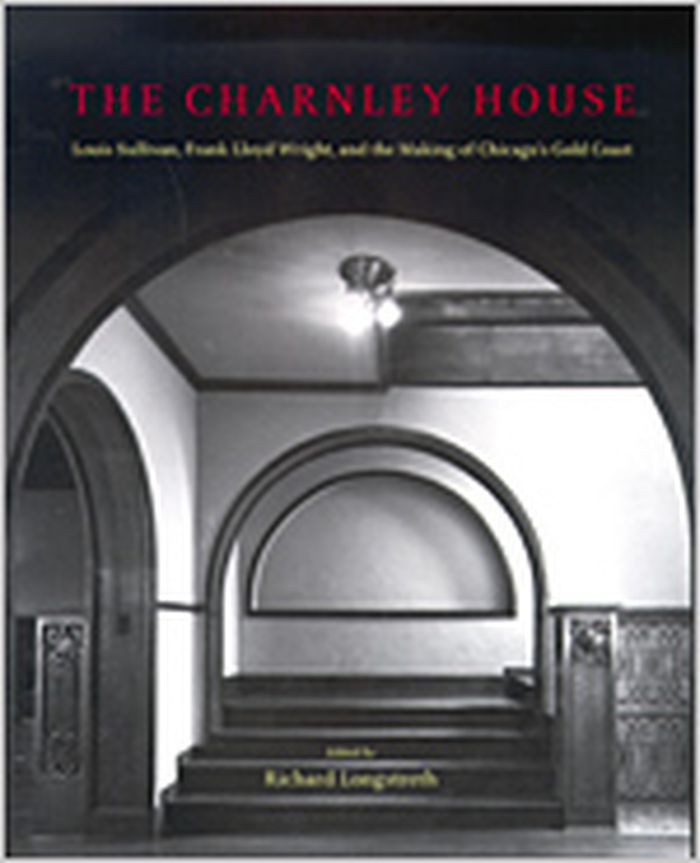
Titre:
The Charnley house : Louis Sullivan, Frank Lloyd Wright, and the making of Chicago's Gold Coast
The Charnley house : Louis Sullivan, Frank Lloyd Wright, and the making of Chicago's Gold Coast
Actions:
Prix:
$71.95
(disponible sur commande)
Résumé:
Situated in Chicago's famed Gold Coast, just north of the Magnificent Mile, the Charnley house is one of the finest dwellings in the city and considered worldwide to be a stunning example of avant-garde architecture. Now the headquarters of the Society of Architectural Historians and designated a National Historic Landmark in 1998, the house was built in 1892 at a(...)
$71.95
(disponible sur commande)
Résumé:
Situated in Chicago's famed Gold Coast, just north of the Magnificent Mile, the Charnley house is one of the finest dwellings in the city and considered worldwide to be a stunning example of avant-garde architecture. Now the headquarters of the Society of Architectural Historians and designated a National Historic Landmark in 1998, the house was built in 1892 at a(...)
Titre:
The Charnley house : Louis Sullivan, Frank Lloyd Wright, and the making of Chicago's Gold Coast
Actions:
Prix:
$71.95
(disponible sur commande)
Résumé:
Situated in Chicago's famed Gold Coast, just north of the Magnificent Mile, the Charnley house is one of the finest dwellings in the city and considered worldwide to be a stunning example of avant-garde architecture. Now the headquarters of the Society of Architectural Historians and designated a National Historic Landmark in 1998, the house was built in 1892 at a critical moment in urban and architectural history. "The Charnley House" is the first authoritative publication on the building, which has long been discussed in surveys but never before examined in detail. In this collection of original essays, six well-known architectural historians illuminate various aspects of the house, both inside and out, as they consider its remarkable formal and spatial qualities, its historical significance in the development of Chicago's elite residential neighborhood, and its place in the context of American domestic architecture. Equally important, the contributors tackle the knotty, decades-old issue concerning the building's designer. While many have ascribed the scheme to Frank Lloyd Wright, Louis Sullivan's chief assistant at the time, this book sheds new light on how the house relates significantly to the work of both master and apprentice. The continuing debate over the house's "authorship" highlights the importance of the Charnley house in the history of modern architecture as the seminal work of residential design in the United States. These thoroughly researched interpretations, supplemented by an abundance of never before published illustrations, analyze this house of distinction with the care and detail it deserves. Beautifully restored in late 1980s, the Charnley house now has a book worthy of it.
The Charnley house : Louis Sullivan, Frank Lloyd Wright, and the making of Chicago's Gold Coast
Actions:
Prix:
$71.95
(disponible sur commande)
Résumé:
Situated in Chicago's famed Gold Coast, just north of the Magnificent Mile, the Charnley house is one of the finest dwellings in the city and considered worldwide to be a stunning example of avant-garde architecture. Now the headquarters of the Society of Architectural Historians and designated a National Historic Landmark in 1998, the house was built in 1892 at a critical moment in urban and architectural history. "The Charnley House" is the first authoritative publication on the building, which has long been discussed in surveys but never before examined in detail. In this collection of original essays, six well-known architectural historians illuminate various aspects of the house, both inside and out, as they consider its remarkable formal and spatial qualities, its historical significance in the development of Chicago's elite residential neighborhood, and its place in the context of American domestic architecture. Equally important, the contributors tackle the knotty, decades-old issue concerning the building's designer. While many have ascribed the scheme to Frank Lloyd Wright, Louis Sullivan's chief assistant at the time, this book sheds new light on how the house relates significantly to the work of both master and apprentice. The continuing debate over the house's "authorship" highlights the importance of the Charnley house in the history of modern architecture as the seminal work of residential design in the United States. These thoroughly researched interpretations, supplemented by an abundance of never before published illustrations, analyze this house of distinction with the care and detail it deserves. Beautifully restored in late 1980s, the Charnley house now has a book worthy of it.
Classification:
livres
livres
Publication:
mai 2004, Chicago
mai 2004, Chicago
Sujet:
Architecture, monographies
Architecture, monographies
Classification:
livres
livres
Actions:
Prix:
$67.95
(disponible sur commande)
Résumé:
Between 1949 and 1953, Robert Frank continually returned to Europe from his new home in New York to take photographs in France, Switzerland, Spain, and Great Britain, photographs that show the development of his uniquely humanist, poetic, and realist eye. In 1951 and early 1952, Frank visited London--"I liked the light, I liked the fog."--and set out to photograph the(...)
$67.95
(disponible sur commande)
Résumé:
Between 1949 and 1953, Robert Frank continually returned to Europe from his new home in New York to take photographs in France, Switzerland, Spain, and Great Britain, photographs that show the development of his uniquely humanist, poetic, and realist eye. In 1951 and early 1952, Frank visited London--"I liked the light, I liked the fog."--and set out to photograph the(...)
Sujet:
Monographies photo
Monographies photo
Publication:
juin 2003, Zurich, Berlin and New York
juin 2003, Zurich, Berlin and New York
Titre:
Robert Frank : London / Wales
Actions:
Prix:
$67.95
(disponible sur commande)
Résumé:
Between 1949 and 1953, Robert Frank continually returned to Europe from his new home in New York to take photographs in France, Switzerland, Spain, and Great Britain, photographs that show the development of his uniquely humanist, poetic, and realist eye. In 1951 and early 1952, Frank visited London--"I liked the light, I liked the fog."--and set out to photograph the unique atmosphere of the city. He followed British financiers around the City, capturing them in their traditional top hats and long coats, creating images that depict them in a poetic dance with their fog-shrouded environment. He shot pictures of workers, men delivering coal, children playing on the streets, people waiting or relaxing in the parks, and images of poverty. In these photographs he juxtaposed money and work, wealth and poverty, creating a dynamic photographic project that has never been shown before in its entirety. Then, in March 1953, before the impending nationalization of the country's coal mines, Frank travelled to the town of Careau, in Wales, to photograph the coal miners whose lives revolved around their work. One miner, Ben James, and his family became the subject of a picture essay (originally published in a 1955 issue of U.S. Camera) in which Frank downplayed the classic modernist photographic moment in favor of a more provocative form that offered informal, revealing glances rather than an official document. In "Robert Frank: London/Wales", Frank returns for the first time to these old negatives. The volume explores a stylistic transformation in his work, a period of development which saw his mode of photography move from an innovative romanticism to a highly charged, metaphorical realism.
Robert Frank : London / Wales
Actions:
Prix:
$67.95
(disponible sur commande)
Résumé:
Between 1949 and 1953, Robert Frank continually returned to Europe from his new home in New York to take photographs in France, Switzerland, Spain, and Great Britain, photographs that show the development of his uniquely humanist, poetic, and realist eye. In 1951 and early 1952, Frank visited London--"I liked the light, I liked the fog."--and set out to photograph the unique atmosphere of the city. He followed British financiers around the City, capturing them in their traditional top hats and long coats, creating images that depict them in a poetic dance with their fog-shrouded environment. He shot pictures of workers, men delivering coal, children playing on the streets, people waiting or relaxing in the parks, and images of poverty. In these photographs he juxtaposed money and work, wealth and poverty, creating a dynamic photographic project that has never been shown before in its entirety. Then, in March 1953, before the impending nationalization of the country's coal mines, Frank travelled to the town of Careau, in Wales, to photograph the coal miners whose lives revolved around their work. One miner, Ben James, and his family became the subject of a picture essay (originally published in a 1955 issue of U.S. Camera) in which Frank downplayed the classic modernist photographic moment in favor of a more provocative form that offered informal, revealing glances rather than an official document. In "Robert Frank: London/Wales", Frank returns for the first time to these old negatives. The volume explores a stylistic transformation in his work, a period of development which saw his mode of photography move from an innovative romanticism to a highly charged, metaphorical realism.
Classification:
livres
livres
Publication:
juin 2003, Zurich, Berlin and New York
juin 2003, Zurich, Berlin and New York
Sujet:
Monographies photo
Monographies photo
Classification:
livres
livres
Actions:
Prix:
$55.00
(disponible sur commande)
Résumé:
Aalto's career overlapped both chronologically and ideologically with those of Le Corbusier and Mies van der Rohe, but his commitment to a humanitarian ideal, inspired by nature, set him apart from his purist Modernist contemporaries. His beautiful buildings, including the Paimio Sanatorium, Villa Mairea, Jyvaskla Worker's Club, Church of the Three Crosses and Baker House(...)
$55.00
(disponible sur commande)
Résumé:
Aalto's career overlapped both chronologically and ideologically with those of Le Corbusier and Mies van der Rohe, but his commitment to a humanitarian ideal, inspired by nature, set him apart from his purist Modernist contemporaries. His beautiful buildings, including the Paimio Sanatorium, Villa Mairea, Jyvaskla Worker's Club, Church of the Three Crosses and Baker House(...)
Sujet:
Architecture, monographies
Architecture, monographies
Publication:
avril 2007, London
avril 2007, London
Titre:
Alvar Aalto : trough the eyes of shigeru ban
Actions:
Prix:
$55.00
(disponible sur commande)
Résumé:
Aalto's career overlapped both chronologically and ideologically with those of Le Corbusier and Mies van der Rohe, but his commitment to a humanitarian ideal, inspired by nature, set him apart from his purist Modernist contemporaries. His beautiful buildings, including the Paimio Sanatorium, Villa Mairea, Jyvaskla Worker's Club, Church of the Three Crosses and Baker House Dormitory, with their curving facades, careful interaction of wood, concrete and brick, and innovative uses of emerging technologies, show the touch of a true master. With contributions from Colin St John Wilson (architect of the British Library), Juhani Pallasmaa (Aalto specialist at the University of Technology, Helsinki), as well as an exclusive interview with Shigeru Ban, Alvar Aalto: Through the Eyes of Shigeru Ban offers a refreshing new take on Aalto's architecture and design. Added to this, three new translations of Aalto's own writings provide an insight into the workings of his mind, and the theoretical and philosophical discussions that he was engaging with in the 1920s and 30s. Beautifully illustrated, Alvar Aalto: Through the Eyes of Shigeru Ban features stunning new images by photographer Judith Turner, whose abstract interpretation of Aalto's work brings out the poetry of his buildings, and shows them in a whole new light. Hitherto unseen archive images from the Aalto foundation are also published for the first time, making this a truly unique publication. The environmental concerns of the twenty-first century mean that Aalto’s legacies have become ever more apparent. This timely retrospective pays tribute to one of the great masters of architecture and is essential reading for architects, designers and anyone interested in the origins of contemporary architecture and culture.
Alvar Aalto : trough the eyes of shigeru ban
Actions:
Prix:
$55.00
(disponible sur commande)
Résumé:
Aalto's career overlapped both chronologically and ideologically with those of Le Corbusier and Mies van der Rohe, but his commitment to a humanitarian ideal, inspired by nature, set him apart from his purist Modernist contemporaries. His beautiful buildings, including the Paimio Sanatorium, Villa Mairea, Jyvaskla Worker's Club, Church of the Three Crosses and Baker House Dormitory, with their curving facades, careful interaction of wood, concrete and brick, and innovative uses of emerging technologies, show the touch of a true master. With contributions from Colin St John Wilson (architect of the British Library), Juhani Pallasmaa (Aalto specialist at the University of Technology, Helsinki), as well as an exclusive interview with Shigeru Ban, Alvar Aalto: Through the Eyes of Shigeru Ban offers a refreshing new take on Aalto's architecture and design. Added to this, three new translations of Aalto's own writings provide an insight into the workings of his mind, and the theoretical and philosophical discussions that he was engaging with in the 1920s and 30s. Beautifully illustrated, Alvar Aalto: Through the Eyes of Shigeru Ban features stunning new images by photographer Judith Turner, whose abstract interpretation of Aalto's work brings out the poetry of his buildings, and shows them in a whole new light. Hitherto unseen archive images from the Aalto foundation are also published for the first time, making this a truly unique publication. The environmental concerns of the twenty-first century mean that Aalto’s legacies have become ever more apparent. This timely retrospective pays tribute to one of the great masters of architecture and is essential reading for architects, designers and anyone interested in the origins of contemporary architecture and culture.
Classification:
livres
livres
Publication:
avril 2007, London
avril 2007, London
Sujet:
Architecture, monographies
Architecture, monographies
Classification:
livres
livres
Prix:
$75.95
(disponible sur commande)
Résumé:
More than one hundred exhibitions of Frank Lloyd Wright's work were mounted between 1894 and his death in 1959. Wright organized the majority of these exhibitions himself and viewed them as crucial to his self-presentation as his extensive writings. He used them to promote his designs, appeal to new viewers, and persuade his detractors. Wright on Exhibit presents the(...)
$75.95
(disponible sur commande)
Résumé:
More than one hundred exhibitions of Frank Lloyd Wright's work were mounted between 1894 and his death in 1959. Wright organized the majority of these exhibitions himself and viewed them as crucial to his self-presentation as his extensive writings. He used them to promote his designs, appeal to new viewers, and persuade his detractors. Wright on Exhibit presents the(...)
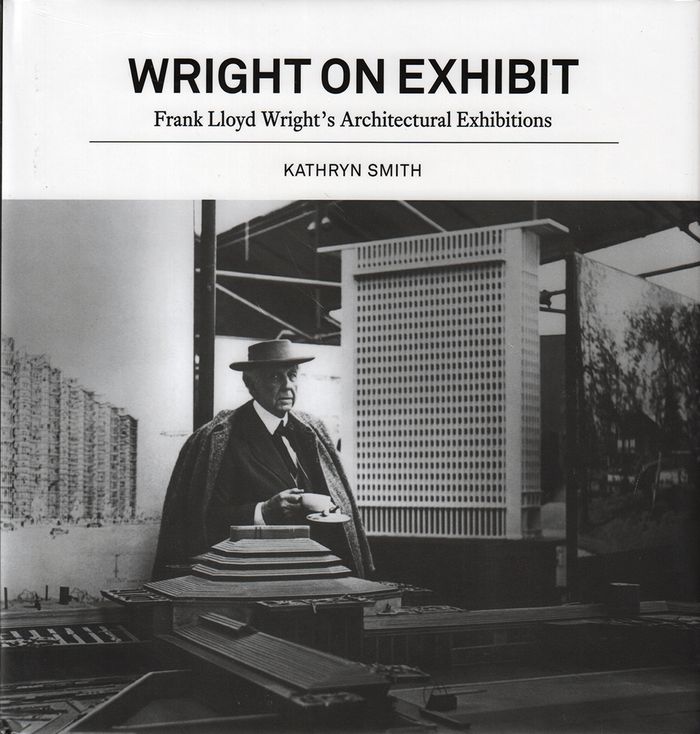
Titre:
Wright on exhibit: Frank Lloyd Wright's architectural exhibitions
Actions:
Prix:
$75.95
(disponible sur commande)
Résumé:
More than one hundred exhibitions of Frank Lloyd Wright's work were mounted between 1894 and his death in 1959. Wright organized the majority of these exhibitions himself and viewed them as crucial to his self-presentation as his extensive writings. He used them to promote his designs, appeal to new viewers, and persuade his detractors. Wright on Exhibit presents the first history of this neglected aspect of the architect’s influential career. Drawing extensively from Wright’s unpublished correspondence, Kathryn Smith challenges the preconceived notion of Wright as a self-promoter who displayed his work in search of money, clients, and fame. She shows how he was an artist-architect projecting an avant-garde program, an innovator who expanded the palette of installation design as technology evolved, and a social activist driven to revolutionize society through design. While Wright’s earliest exhibitions were largely for other architects, by the 1930s he was creating public installations intended to inspire debate and change public perceptions about architecture. The nature of his exhibitions expanded with the times beyond models, drawings, and photographs to include more immersive tools such as slides, film, and even a full-scale structure built especially for his 1953 retrospective at the Guggenheim Museum. Placing Wright’s exhibitions side by side with his writings, Smith shows how integral these exhibitions were to his vision and sheds light on the broader discourse concerning architecture and modernism during the first half of the twentieth century. Wright on Exhibit features color renderings, photos, and plans, as well as a checklist of exhibitions and an illustrated catalog of extant and lost models made under Wright’s supervision.
Wright on exhibit: Frank Lloyd Wright's architectural exhibitions
Actions:
Prix:
$75.95
(disponible sur commande)
Résumé:
More than one hundred exhibitions of Frank Lloyd Wright's work were mounted between 1894 and his death in 1959. Wright organized the majority of these exhibitions himself and viewed them as crucial to his self-presentation as his extensive writings. He used them to promote his designs, appeal to new viewers, and persuade his detractors. Wright on Exhibit presents the first history of this neglected aspect of the architect’s influential career. Drawing extensively from Wright’s unpublished correspondence, Kathryn Smith challenges the preconceived notion of Wright as a self-promoter who displayed his work in search of money, clients, and fame. She shows how he was an artist-architect projecting an avant-garde program, an innovator who expanded the palette of installation design as technology evolved, and a social activist driven to revolutionize society through design. While Wright’s earliest exhibitions were largely for other architects, by the 1930s he was creating public installations intended to inspire debate and change public perceptions about architecture. The nature of his exhibitions expanded with the times beyond models, drawings, and photographs to include more immersive tools such as slides, film, and even a full-scale structure built especially for his 1953 retrospective at the Guggenheim Museum. Placing Wright’s exhibitions side by side with his writings, Smith shows how integral these exhibitions were to his vision and sheds light on the broader discourse concerning architecture and modernism during the first half of the twentieth century. Wright on Exhibit features color renderings, photos, and plans, as well as a checklist of exhibitions and an illustrated catalog of extant and lost models made under Wright’s supervision.
Classification:
livres
livres
Publication:
mai 2017
mai 2017
Sujet:
Architecture, monographies
Architecture, monographies
Classification:
livres
livres
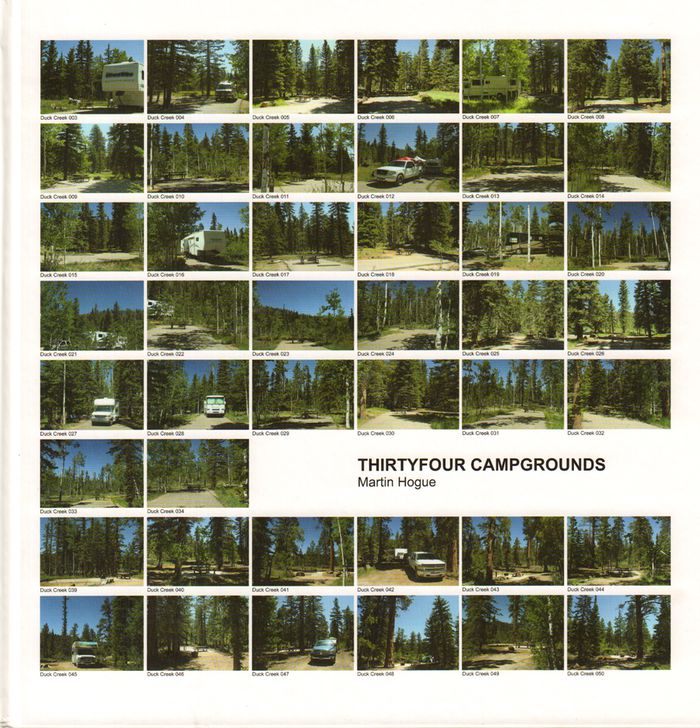
Titre:
Thirtyfour campgrounds
Thirtyfour campgrounds
Actions:
Prix:
$51.00
(disponible sur commande)
Résumé:
Camping can make us feel a powerful connection to nature and our rugged backwoods forebears. Campers once confronted the elemental facts of life, but now, the millions of Americans taking to the road on camping trips are more likely to drive to a campground, hook up service conduits, connect to WiFi, drop their awnings, and set out patio chairs. It is as if, Martin Hogue(...)
$51.00
(disponible sur commande)
Résumé:
Camping can make us feel a powerful connection to nature and our rugged backwoods forebears. Campers once confronted the elemental facts of life, but now, the millions of Americans taking to the road on camping trips are more likely to drive to a campground, hook up service conduits, connect to WiFi, drop their awnings, and set out patio chairs. It is as if, Martin Hogue(...)
Titre:
Thirtyfour campgrounds
Actions:
Prix:
$51.00
(disponible sur commande)
Résumé:
Camping can make us feel a powerful connection to nature and our rugged backwoods forebears. Campers once confronted the elemental facts of life, but now, the millions of Americans taking to the road on camping trips are more likely to drive to a campground, hook up service conduits, connect to WiFi, drop their awnings, and set out patio chairs. It is as if, Martin Hogue observes, each campsite functions as a stage upon which campers perform a series of ritualized activities (pitching the tent, building a fire, cooking over flames). In Thirtyfour Campgrounds, Hogue investigates these sites, individually and in multiples, offering a photographic and typological survey of nearly 6,500 American campsites, mapping subtle differences within the apparently identical. The central part of the book consists of color photographs of individual campsites, downloaded from such online reservation websites as reserveamerica.com and recreation.gov, organized by zip code, and arranged in grids across the pages. Hogue nods to artist Ed Ruscha's Thirtyfour Parking Lots for his title and its attitude, and to the work of Bernd and Hilla Becher for the serial arrangement of images in grids. The campsite pictures seem at first endlessly repetitious; but then the repetition makes way for difference. Time reveals itself in fading light and passing clouds, the weather changes between photographs of neighboring sites, leaves turn color and fall, in an unexpected kind of time-lapse photography. This is a book that was made so seriously that it must (not) be taken too seriously. More scientific than any campground literature, Thirtyfour Campgrounds calls the very nature of scientific survey, research, and publication into question.
Thirtyfour campgrounds
Actions:
Prix:
$51.00
(disponible sur commande)
Résumé:
Camping can make us feel a powerful connection to nature and our rugged backwoods forebears. Campers once confronted the elemental facts of life, but now, the millions of Americans taking to the road on camping trips are more likely to drive to a campground, hook up service conduits, connect to WiFi, drop their awnings, and set out patio chairs. It is as if, Martin Hogue observes, each campsite functions as a stage upon which campers perform a series of ritualized activities (pitching the tent, building a fire, cooking over flames). In Thirtyfour Campgrounds, Hogue investigates these sites, individually and in multiples, offering a photographic and typological survey of nearly 6,500 American campsites, mapping subtle differences within the apparently identical. The central part of the book consists of color photographs of individual campsites, downloaded from such online reservation websites as reserveamerica.com and recreation.gov, organized by zip code, and arranged in grids across the pages. Hogue nods to artist Ed Ruscha's Thirtyfour Parking Lots for his title and its attitude, and to the work of Bernd and Hilla Becher for the serial arrangement of images in grids. The campsite pictures seem at first endlessly repetitious; but then the repetition makes way for difference. Time reveals itself in fading light and passing clouds, the weather changes between photographs of neighboring sites, leaves turn color and fall, in an unexpected kind of time-lapse photography. This is a book that was made so seriously that it must (not) be taken too seriously. More scientific than any campground literature, Thirtyfour Campgrounds calls the very nature of scientific survey, research, and publication into question.
Classification:
livres
livres
Publication:
septembre 2016
septembre 2016
Sujet:
Théorie du paysage
Théorie du paysage
Classification:
livres
livres
Actions:
Prix:
$14.00
(disponible sur commande)
Résumé:
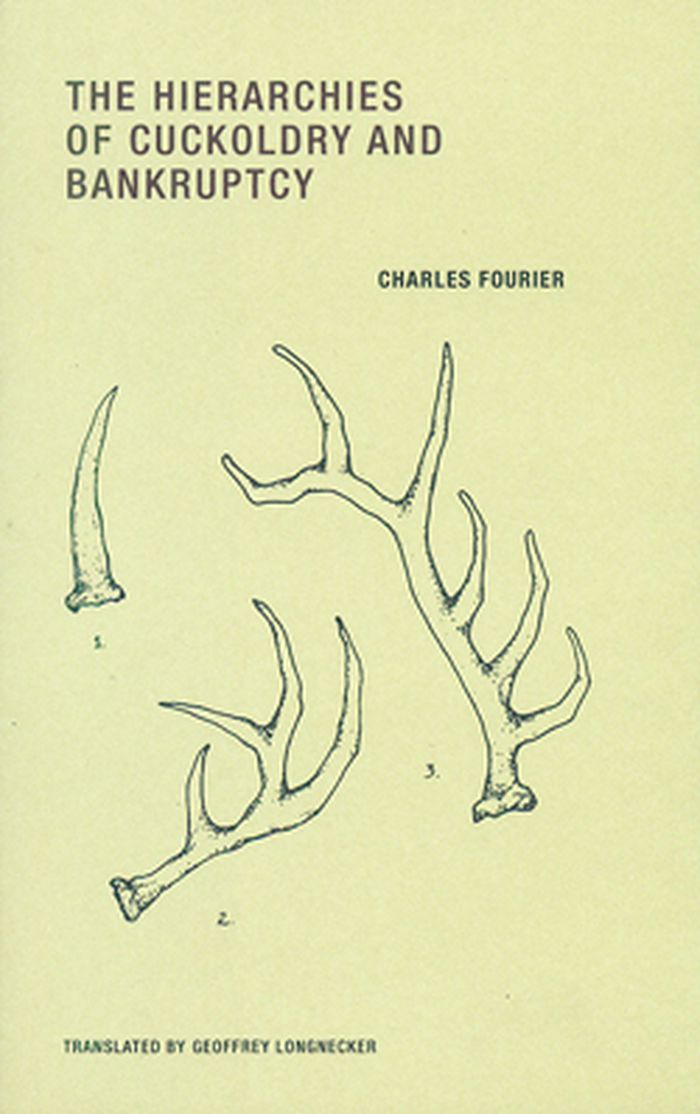
Admired by Marx and Engels, the Surrealists, the Situationists, Walter Benjamin and Roland Barthes, the great utopian socialist Charles Fourier (1772-1837) has been many things to many people: a proto-feminist, a Surrealist ancestor, a cantankerous cosmologist, a social critic and humorist and to this day one of France's truest visionary thinkers. He was also, as this(...)
$14.00
(disponible sur commande)
Résumé:
Admired by Marx and Engels, the Surrealists, the Situationists, Walter Benjamin and Roland Barthes, the great utopian socialist Charles Fourier (1772-1837) has been many things to many people: a proto-feminist, a Surrealist ancestor, a cantankerous cosmologist, a social critic and humorist and to this day one of France's truest visionary thinkers. He was also, as this(...)
Titre:
The hierarchies of cuckoldry and bankruptcy
Actions:
Prix:
$14.00
(disponible sur commande)
Résumé:
Admired by Marx and Engels, the Surrealists, the Situationists, Walter Benjamin and Roland Barthes, the great utopian socialist Charles Fourier (1772-1837) has been many things to many people: a proto-feminist, a Surrealist ancestor, a cantankerous cosmologist, a social critic and humorist and to this day one of France's truest visionary thinkers. He was also, as this volume demonstrates, a maniacal taxonomist. In this zoological guidebook to cuckoldry and commerce, Fourier offers a caustic critique of the bankruptcy of marriage and the prostitution of the economy, and the hypocrisies of a civilization that over-regulates sexual congress while allowing the financial sector to screw over the public. Gathered together here for the first time are Fourier's two “Hierarchies” --humorously regimented parades of civilization's cheaters and cheated-on in the domestic sphere of sex and the economic sphere of buying and selling commodities. “The Hierarchy of Cuckoldry” --translated into English for the first time--presents 72 species of the male cuckold, ranging from such “common class” cases as the Health-Conscious Cuckolds, to the short-horned Sympathetic, Optimist and Mystical Cuckolds, and the Long-horned varieties of the Irate, Disgraced and Posthumous Cuckolds. For Fourier, these amount to 72 manifestations of women's “secret insurrection” against the institution of marriage. “The Hierarchy of Bankruptcy” presents 36 species of the fraudulent bankrupt: a range of Light, Grandiose, and Contemptible shades of financial manipulators who force creditors, cities and even nations to bail them out of ultimately profitable bankruptcies. In these attacks on the morality of monogamy and the perils of laissez-faire capitalism, Fourier's “Hierarchies” resonate uncannily with our contemporary world.
The hierarchies of cuckoldry and bankruptcy
Actions:
Prix:
$14.00
(disponible sur commande)
Résumé:
Admired by Marx and Engels, the Surrealists, the Situationists, Walter Benjamin and Roland Barthes, the great utopian socialist Charles Fourier (1772-1837) has been many things to many people: a proto-feminist, a Surrealist ancestor, a cantankerous cosmologist, a social critic and humorist and to this day one of France's truest visionary thinkers. He was also, as this volume demonstrates, a maniacal taxonomist. In this zoological guidebook to cuckoldry and commerce, Fourier offers a caustic critique of the bankruptcy of marriage and the prostitution of the economy, and the hypocrisies of a civilization that over-regulates sexual congress while allowing the financial sector to screw over the public. Gathered together here for the first time are Fourier's two “Hierarchies” --humorously regimented parades of civilization's cheaters and cheated-on in the domestic sphere of sex and the economic sphere of buying and selling commodities. “The Hierarchy of Cuckoldry” --translated into English for the first time--presents 72 species of the male cuckold, ranging from such “common class” cases as the Health-Conscious Cuckolds, to the short-horned Sympathetic, Optimist and Mystical Cuckolds, and the Long-horned varieties of the Irate, Disgraced and Posthumous Cuckolds. For Fourier, these amount to 72 manifestations of women's “secret insurrection” against the institution of marriage. “The Hierarchy of Bankruptcy” presents 36 species of the fraudulent bankrupt: a range of Light, Grandiose, and Contemptible shades of financial manipulators who force creditors, cities and even nations to bail them out of ultimately profitable bankruptcies. In these attacks on the morality of monogamy and the perils of laissez-faire capitalism, Fourier's “Hierarchies” resonate uncannily with our contemporary world.
Classification:
livres
livres
Publication:
octobre 2011
octobre 2011
Sujet:
Théorie/ philosophie
Théorie/ philosophie
Classification:
livres
livres
Exemplaires:
Description:
239 pages : illustrations ; 24 cm
Description:
239 pages : illustrations ; 24 cm
Auteur:
Sujet:
Publication:
New York : Harmony Books, [1986]
New York : Harmony Books, [1986]
Titre:
When Brooklyn was the world, 1920-1957 / Elliot Willensky.
Actions:
Exemplaires:
Description:
239 pages : illustrations ; 24 cm
When Brooklyn was the world, 1920-1957 / Elliot Willensky.
Actions:
Exemplaires:
Description:
239 pages : illustrations ; 24 cm
Classification:
livres
livres
Publication:
New York : Harmony Books, [1986]
New York : Harmony Books, [1986]
Auteur:
Sujet:
Classification:
vidéo
vidéo
Actions:
Description:
1 online resource (1 video file (43 minutes)) : sound, color
Auteur:
Sujet:
Publication:
London, England : Pidgeon Digital, 2001.
London, England : Pidgeon Digital, 2001.
Titre:
Exploring the City / [presented by] Norman Foster (Foster + Partners).
Actions:
Description:
1 online resource (1 video file (43 minutes)) : sound, color
Exploring the City / [presented by] Norman Foster (Foster + Partners).
Actions:
Description:
1 online resource (1 video file (43 minutes)) : sound, color
Classification:
vidéo
vidéo
Publication:
London, England : Pidgeon Digital, 2001.
London, England : Pidgeon Digital, 2001.
Auteur:
Sujet:


