


4907 Résultats
Classification:
livres
livres
Actions:
Prix:
$65.00
(disponible en magasin)
Résumé:
In the summer of 2018, Ursula Biemann was commissioned to undertake an extended field trip across the South of Colombia. Many surprising developments ensued from this initial journey in the Amazonian rainforest where the histories of colonial conquest and natural science intertwine. Forest Mind is the result of a series of territorial engagements through video-making,(...)
$65.00
(disponible en magasin)
Résumé:
In the summer of 2018, Ursula Biemann was commissioned to undertake an extended field trip across the South of Colombia. Many surprising developments ensued from this initial journey in the Amazonian rainforest where the histories of colonial conquest and natural science intertwine. Forest Mind is the result of a series of territorial engagements through video-making,(...)
Titre:
Forest mind: On the interconnection of all life
Actions:
Prix:
$65.00
(disponible en magasin)
Résumé:
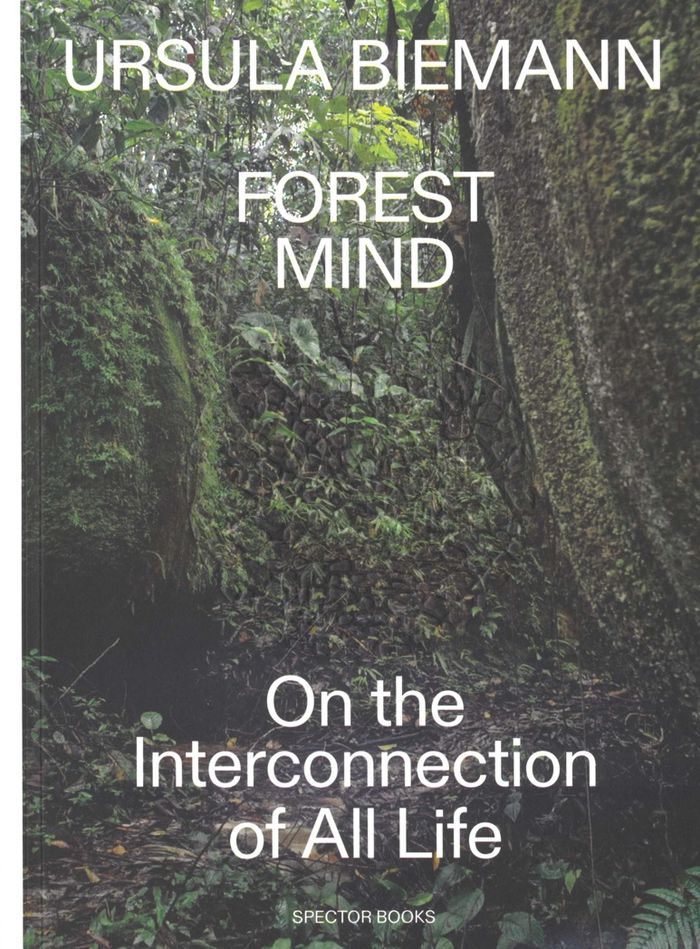
In the summer of 2018, Ursula Biemann was commissioned to undertake an extended field trip across the South of Colombia. Many surprising developments ensued from this initial journey in the Amazonian rainforest where the histories of colonial conquest and natural science intertwine. Forest Mind is the result of a series of territorial engagements through video-making, photography, academic research, personal narrative, and the co-creation of an Indigenous University with the Inga people of Colombia. The explorations focus on the intelligence in nature from both shamanic and scientific perspectives. In these tropical forests, human and nonhuman territorial projects become entangled, calling for new ways of generating knowledge that spur the imagination. The Indigenous science of Ayahuasca as it is practiced by the traditional medics in Amazonia, is largely based in visions evoked by the psychoactive plant. Here, knowing does not only occur from a distance by describing, naming, and exploiting, but as an encounter between minds and worlds. The artist’s research brings to light contemporary Western science that has already been practiced by ancestral medics for millennia, allowing them to interact at the molecular level of DNA. Experimenting with new genetic technologies in collaboration with the ETH lab in Zurich, the visual universe of this project partially derives from biological materials and video-images of the rainforest which were encoded in one and the same DNA strand. In this personal quest, Swiss artist and author Ursula Biemann pursues her long-term inquiry at the intersection of art, ecology and indigenous cosmologies. The artist book presents a biosemiotics project that takes a deep dive into the mechanics of the interconnectedness of all life, and reflects on the active, performative role images play in merging mind and forest.
Forest mind: On the interconnection of all life
Actions:
Prix:
$65.00
(disponible en magasin)
Résumé:
In the summer of 2018, Ursula Biemann was commissioned to undertake an extended field trip across the South of Colombia. Many surprising developments ensued from this initial journey in the Amazonian rainforest where the histories of colonial conquest and natural science intertwine. Forest Mind is the result of a series of territorial engagements through video-making, photography, academic research, personal narrative, and the co-creation of an Indigenous University with the Inga people of Colombia. The explorations focus on the intelligence in nature from both shamanic and scientific perspectives. In these tropical forests, human and nonhuman territorial projects become entangled, calling for new ways of generating knowledge that spur the imagination. The Indigenous science of Ayahuasca as it is practiced by the traditional medics in Amazonia, is largely based in visions evoked by the psychoactive plant. Here, knowing does not only occur from a distance by describing, naming, and exploiting, but as an encounter between minds and worlds. The artist’s research brings to light contemporary Western science that has already been practiced by ancestral medics for millennia, allowing them to interact at the molecular level of DNA. Experimenting with new genetic technologies in collaboration with the ETH lab in Zurich, the visual universe of this project partially derives from biological materials and video-images of the rainforest which were encoded in one and the same DNA strand. In this personal quest, Swiss artist and author Ursula Biemann pursues her long-term inquiry at the intersection of art, ecology and indigenous cosmologies. The artist book presents a biosemiotics project that takes a deep dive into the mechanics of the interconnectedness of all life, and reflects on the active, performative role images play in merging mind and forest.
Classification:
livres
livres
Publication:
octobre 2022
octobre 2022
Classification:
livres
livres
Titre:
Guy Debord
Guy Debord
Actions:
Prix:
$21.50
(disponible sur commande)
Résumé:
Guy Debord (1931–94) was one of the most important and intriguing intellectual figures of the twentieth century. Filmmaker and poet, urban critic and political theorist, adventurer and activist extraordinaire during Paris’s May 1968 uprisings, Debord was simultaneously behind and ahead of his times. Best-known as guru of the avant-garde revolutionary movement the(...)
$21.50
(disponible sur commande)
Résumé:
Guy Debord (1931–94) was one of the most important and intriguing intellectual figures of the twentieth century. Filmmaker and poet, urban critic and political theorist, adventurer and activist extraordinaire during Paris’s May 1968 uprisings, Debord was simultaneously behind and ahead of his times. Best-known as guru of the avant-garde revolutionary movement the(...)
Titre:
Guy Debord
Actions:
Prix:
$21.50
(disponible sur commande)
Résumé:
Guy Debord (1931–94) was one of the most important and intriguing intellectual figures of the twentieth century. Filmmaker and poet, urban critic and political theorist, adventurer and activist extraordinaire during Paris’s May 1968 uprisings, Debord was simultaneously behind and ahead of his times. Best-known as guru of the avant-garde revolutionary movement the Situationist International (1957-72), and for a classic indictment of post-war capitalist consumerism The Society of the Spectacle (1967), Debord’s life and work remains fascinating to this day. Yet the man himself remained elusive and enigmatic throughout his life. Master urban tactician in the 1950s, political muckraker, organizer and theorist during the 1960s, vagabond throughout the 1970s, fleeing to Spain and Italy, he lived as a recluse during the 1980s and early 1990s in an isolated farmhouse in Champot (Auvergne), behind a high stone wall. Guy Debord crosses over that Champot wall, pushes back Debord’s shutters and peers through his windows. It crosses his threshold, drinks his wine, and listens to him talk. Andrew Merrifield focuses on the particulars of Debord’s life, shedding light on this admirable yet apparently impenetrable figure, a free spirit who was radically at odds with life but at the same time loved many things in it, and thought them worth fighting for. The book reveals the dynamics of the man, his ideas, and his times – which have much to say to our own, equally troubled times. The ideas of Guy Debord, who died only 10 years ago, continue to expose the fragility of our democracy and the mismatch between people and political power today; this book shows that the lessons of Debord are as fresh, subversive, and relevant now as they were forty years ago.
Guy Debord
Actions:
Prix:
$21.50
(disponible sur commande)
Résumé:
Guy Debord (1931–94) was one of the most important and intriguing intellectual figures of the twentieth century. Filmmaker and poet, urban critic and political theorist, adventurer and activist extraordinaire during Paris’s May 1968 uprisings, Debord was simultaneously behind and ahead of his times. Best-known as guru of the avant-garde revolutionary movement the Situationist International (1957-72), and for a classic indictment of post-war capitalist consumerism The Society of the Spectacle (1967), Debord’s life and work remains fascinating to this day. Yet the man himself remained elusive and enigmatic throughout his life. Master urban tactician in the 1950s, political muckraker, organizer and theorist during the 1960s, vagabond throughout the 1970s, fleeing to Spain and Italy, he lived as a recluse during the 1980s and early 1990s in an isolated farmhouse in Champot (Auvergne), behind a high stone wall. Guy Debord crosses over that Champot wall, pushes back Debord’s shutters and peers through his windows. It crosses his threshold, drinks his wine, and listens to him talk. Andrew Merrifield focuses on the particulars of Debord’s life, shedding light on this admirable yet apparently impenetrable figure, a free spirit who was radically at odds with life but at the same time loved many things in it, and thought them worth fighting for. The book reveals the dynamics of the man, his ideas, and his times – which have much to say to our own, equally troubled times. The ideas of Guy Debord, who died only 10 years ago, continue to expose the fragility of our democracy and the mismatch between people and political power today; this book shows that the lessons of Debord are as fresh, subversive, and relevant now as they were forty years ago.
Classification:
livres
livres
Publication:
octobre 2005, London
octobre 2005, London
Sujet:
Théorie de l’architecture
Théorie de l’architecture
Classification:
livres
livres
Actions:
Prix:
$48.00
(disponible sur commande)
Résumé:
The forced polarity between form and function in considerations of architecture - opposing art to social interests, ethics to poetic expression - obscures the deep connections between ethical and poetical values in architectural tradition. Architecture has been, and must continue to be, writes Alberto Pérez-Gómez, built upon love. Modernity has rightly rejected past(...)
$48.00
(disponible sur commande)
Résumé:
The forced polarity between form and function in considerations of architecture - opposing art to social interests, ethics to poetic expression - obscures the deep connections between ethical and poetical values in architectural tradition. Architecture has been, and must continue to be, writes Alberto Pérez-Gómez, built upon love. Modernity has rightly rejected past(...)
Sujet:
Théorie de l’architecture
Théorie de l’architecture
Publication:
janvier 2006, Cambridge, Mass.
janvier 2006, Cambridge, Mass.
Titre:
Built upon love : architectural longing after ethics and aesthetics
Actions:
Prix:
$48.00
(disponible sur commande)
Résumé:
The forced polarity between form and function in considerations of architecture - opposing art to social interests, ethics to poetic expression - obscures the deep connections between ethical and poetical values in architectural tradition. Architecture has been, and must continue to be, writes Alberto Pérez-Gómez, built upon love. Modernity has rightly rejected past architectural excesses, but, Pérez-Gómez argues, the materialistic and technological alternatives it proposes do not answer satisfactorily the complex desire that defines humanity. True architecture is concerned with far more than fashionable form, affordable homes, and sustainable development; it responds to a desire for an eloquent place to dwell- one that lovingly provides a sense of order resonant with our dreams. In "Built upon love" Pérez-Gómez uncovers the relationship between love and architecture in order to find the points of contact between poetics and ethics - between the architect's wish to design a beautiful world and architecture's imperative to provide a better place for society. Eros, as first imagined by the early lyric poets of classical Greece, is the invisible force at the root of our capacity to create and comprehend the poetic image. Pérez-Gómez examines the nature of architectural form in the light of eros, seduction, and the tradition of the poetic image in Western architecture. He charts the ethical dimension of architecture, tracing the connections between philia - the love of friends that entails mutual responsibility among equals - and architectural program. He explores the position of architecture at the limits of language and discusses the analogical language of philia in modernist architectural theory. Finally, he uncovers connections between ethics and poetics, describing a contemporary practice of architecture under the sign of love, incorporating both eros and philia.
Built upon love : architectural longing after ethics and aesthetics
Actions:
Prix:
$48.00
(disponible sur commande)
Résumé:
The forced polarity between form and function in considerations of architecture - opposing art to social interests, ethics to poetic expression - obscures the deep connections between ethical and poetical values in architectural tradition. Architecture has been, and must continue to be, writes Alberto Pérez-Gómez, built upon love. Modernity has rightly rejected past architectural excesses, but, Pérez-Gómez argues, the materialistic and technological alternatives it proposes do not answer satisfactorily the complex desire that defines humanity. True architecture is concerned with far more than fashionable form, affordable homes, and sustainable development; it responds to a desire for an eloquent place to dwell- one that lovingly provides a sense of order resonant with our dreams. In "Built upon love" Pérez-Gómez uncovers the relationship between love and architecture in order to find the points of contact between poetics and ethics - between the architect's wish to design a beautiful world and architecture's imperative to provide a better place for society. Eros, as first imagined by the early lyric poets of classical Greece, is the invisible force at the root of our capacity to create and comprehend the poetic image. Pérez-Gómez examines the nature of architectural form in the light of eros, seduction, and the tradition of the poetic image in Western architecture. He charts the ethical dimension of architecture, tracing the connections between philia - the love of friends that entails mutual responsibility among equals - and architectural program. He explores the position of architecture at the limits of language and discusses the analogical language of philia in modernist architectural theory. Finally, he uncovers connections between ethics and poetics, describing a contemporary practice of architecture under the sign of love, incorporating both eros and philia.
Classification:
livres
livres
Publication:
janvier 2006, Cambridge, Mass.
janvier 2006, Cambridge, Mass.
Sujet:
Théorie de l’architecture
Théorie de l’architecture
Classification:
livres
livres
Prix:
$37.50
(disponible sur commande)
Résumé:
Despite Bill Brandt’s fame and considerable influence on the development of modern photography, the photographs in this book are a little known body of work. The work was carried out between 1939 and 1943 when Brandt worked on a commercial assignment for the Bournville Village Trust. The prints and negatives have been with BVT for some 60 years and the work has never(...)
$37.50
(disponible sur commande)
Résumé:
Despite Bill Brandt’s fame and considerable influence on the development of modern photography, the photographs in this book are a little known body of work. The work was carried out between 1939 and 1943 when Brandt worked on a commercial assignment for the Bournville Village Trust. The prints and negatives have been with BVT for some 60 years and the work has never(...)
Titre:
Homes fit for heroes : photographs by Bill Brandt, 1939-1943
Actions:
Prix:
$37.50
(disponible sur commande)
Résumé:
Despite Bill Brandt’s fame and considerable influence on the development of modern photography, the photographs in this book are a little known body of work. The work was carried out between 1939 and 1943 when Brandt worked on a commercial assignment for the Bournville Village Trust. The prints and negatives have been with BVT for some 60 years and the work has never been previously published. The photographs illustrate the living conditions in a range of housing types. For example, the back-to-back slums built in the nineteenth century through to modern municipal housing built in the 1930s. The majority of the photographs were taken in Birmingham but also some in London where he looked at ‘old residential’ properties near to his own home in Camden Hill. London was undoubtedly one of Brandt’s favourite subjects and these photographs, taken around 1943, are amongst a much larger body of work Brandt shot in the capital city during the war-years. The Bourneville Village Trust was set up by George Cadbury in 1900 to manage the Bournville Estate, the model housing development which he created near his factory on the outskirts of Birmingham. The objects of the trust included: “the amelioration of the conditions of the working class population of Birmingham and elsewhere in Great Britain”. Many books and articles published around this time sought to address the issue of the living conditions of the working classes and photography played a key role. The images form distinct picture stories where direct contrasts are made between slum and municipal housing. Brandt also uses light very carefully within these images to emphasise these contrasts. A number of the stories follow a distinct narrative sequence – through the idea of ‘a day in the life’ – a device frequently used in the influential magazine, "Picture Post", for which Brandt often worked.
Homes fit for heroes : photographs by Bill Brandt, 1939-1943
Actions:
Prix:
$37.50
(disponible sur commande)
Résumé:
Despite Bill Brandt’s fame and considerable influence on the development of modern photography, the photographs in this book are a little known body of work. The work was carried out between 1939 and 1943 when Brandt worked on a commercial assignment for the Bournville Village Trust. The prints and negatives have been with BVT for some 60 years and the work has never been previously published. The photographs illustrate the living conditions in a range of housing types. For example, the back-to-back slums built in the nineteenth century through to modern municipal housing built in the 1930s. The majority of the photographs were taken in Birmingham but also some in London where he looked at ‘old residential’ properties near to his own home in Camden Hill. London was undoubtedly one of Brandt’s favourite subjects and these photographs, taken around 1943, are amongst a much larger body of work Brandt shot in the capital city during the war-years. The Bourneville Village Trust was set up by George Cadbury in 1900 to manage the Bournville Estate, the model housing development which he created near his factory on the outskirts of Birmingham. The objects of the trust included: “the amelioration of the conditions of the working class population of Birmingham and elsewhere in Great Britain”. Many books and articles published around this time sought to address the issue of the living conditions of the working classes and photography played a key role. The images form distinct picture stories where direct contrasts are made between slum and municipal housing. Brandt also uses light very carefully within these images to emphasise these contrasts. A number of the stories follow a distinct narrative sequence – through the idea of ‘a day in the life’ – a device frequently used in the influential magazine, "Picture Post", for which Brandt often worked.
Classification:
livres
livres
Publication:
novembre 2004, Birmingham
novembre 2004, Birmingham
Sujet:
Monographies photo
Monographies photo
Classification:
livres
livres
Prix:
$90.95
(disponible en magasin)
Résumé:
Roger Fenton (1819-1869) was England’s most celebrated and influential photographer during the 1850s, the “golden age” of this radically new medium. Fenton’s majestic pictures of cathedrals, country houses, and varied countryside were without peer in England--as were his views of the royal castles and Houses of Parliament that embodied Britain’s power. But Fenton’s(...)
$90.95
(disponible en magasin)
Résumé:
Roger Fenton (1819-1869) was England’s most celebrated and influential photographer during the 1850s, the “golden age” of this radically new medium. Fenton’s majestic pictures of cathedrals, country houses, and varied countryside were without peer in England--as were his views of the royal castles and Houses of Parliament that embodied Britain’s power. But Fenton’s(...)
Sujet:
Monographies photo
Monographies photo
Publication:
novembre 2004, New Haven, London
novembre 2004, New Haven, London
Titre:
All the mighty world : the photographs of Roger Fenton, 1852-1860
Actions:
Prix:
$90.95
(disponible en magasin)
Résumé:
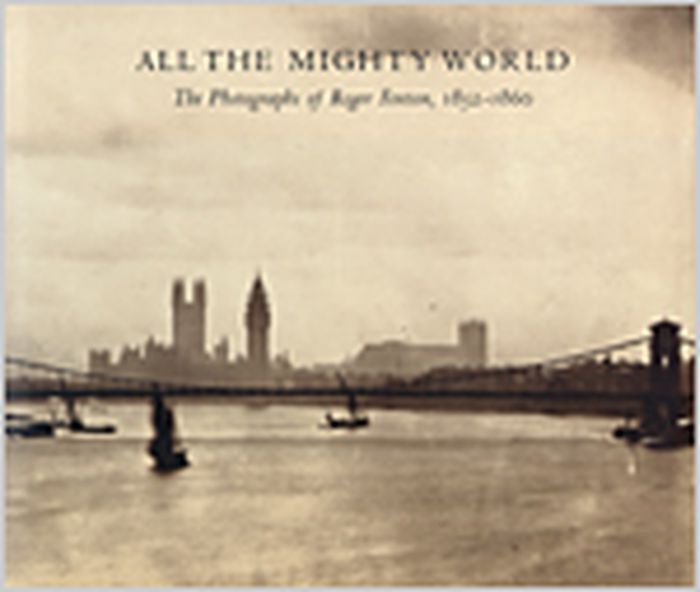
Roger Fenton (1819-1869) was England’s most celebrated and influential photographer during the 1850s, the “golden age” of this radically new medium. Fenton’s majestic pictures of cathedrals, country houses, and varied countryside were without peer in England--as were his views of the royal castles and Houses of Parliament that embodied Britain’s power. But Fenton’s choice of subjects ranged more widely still: he was among the first to photograph the Kremlin and other landmarks of Moscow and Kiev; he was commissioned in 1855 to document the Crimean War, producing early war photographs; and he created theatrical Orientalist costume pictures and a startling series of lush still lifes. Fenton had first studied law and painting, but soon after he took up the camera he was making photographs that were technically superb and highly original in their handling of composition, perspective, atmosphere, and light. Always he strove to demonstrate that photography could equal the art of painting and even surpass it. He was the force behind the founding of the Photographic Society (later the Royal Photographic Society), which worked to advance the profession and encouraged the exhibition of members’ works throughout Britain. In a career of a single decade, Fenton did much to transform photography into a medium of powerful expression and visual delight. This exquisitely produced book--the first comprehensive publication on Fenton in almost twenty years--presents eighty-five of the artist’s finest photographs and discusses every aspect of his work and his remarkable career. This catalogue accompanies an exhibition on view at the National Gallery of Art, Washington, D.C. (October 17, 2004, to January 2, 2005); the J. Paul Getty Museum, Los Angeles (February 1 to April 25, 2005); The Metropolitan Museum of Art, New York (May 16 to August 14, 2005); and Tate Britain, London (September 25, 2005, to January 2, 2006).
All the mighty world : the photographs of Roger Fenton, 1852-1860
Actions:
Prix:
$90.95
(disponible en magasin)
Résumé:
Roger Fenton (1819-1869) was England’s most celebrated and influential photographer during the 1850s, the “golden age” of this radically new medium. Fenton’s majestic pictures of cathedrals, country houses, and varied countryside were without peer in England--as were his views of the royal castles and Houses of Parliament that embodied Britain’s power. But Fenton’s choice of subjects ranged more widely still: he was among the first to photograph the Kremlin and other landmarks of Moscow and Kiev; he was commissioned in 1855 to document the Crimean War, producing early war photographs; and he created theatrical Orientalist costume pictures and a startling series of lush still lifes. Fenton had first studied law and painting, but soon after he took up the camera he was making photographs that were technically superb and highly original in their handling of composition, perspective, atmosphere, and light. Always he strove to demonstrate that photography could equal the art of painting and even surpass it. He was the force behind the founding of the Photographic Society (later the Royal Photographic Society), which worked to advance the profession and encouraged the exhibition of members’ works throughout Britain. In a career of a single decade, Fenton did much to transform photography into a medium of powerful expression and visual delight. This exquisitely produced book--the first comprehensive publication on Fenton in almost twenty years--presents eighty-five of the artist’s finest photographs and discusses every aspect of his work and his remarkable career. This catalogue accompanies an exhibition on view at the National Gallery of Art, Washington, D.C. (October 17, 2004, to January 2, 2005); the J. Paul Getty Museum, Los Angeles (February 1 to April 25, 2005); The Metropolitan Museum of Art, New York (May 16 to August 14, 2005); and Tate Britain, London (September 25, 2005, to January 2, 2006).
Classification:
livres
livres
Publication:
novembre 2004, New Haven, London
novembre 2004, New Haven, London
Sujet:
Monographies photo
Monographies photo
Classification:
livres
livres
Actions:
Prix:
$33.50
(disponible en magasin)
Résumé:
For almost 100 years, Coney Island was the most popular seaside destination in the United States. Each year, millions escaped the heat of New York City to savor the thrills of the Cyclone roller coaster and Wonder Wheel at the Astroland amusement park. They came to sample an original Nathan's Famous hot dog, witness the first demolition derby, or to take a chance at a(...)
$33.50
(disponible en magasin)
Résumé:
For almost 100 years, Coney Island was the most popular seaside destination in the United States. Each year, millions escaped the heat of New York City to savor the thrills of the Cyclone roller coaster and Wonder Wheel at the Astroland amusement park. They came to sample an original Nathan's Famous hot dog, witness the first demolition derby, or to take a chance at a(...)
Publication:
avril 2007, New York
avril 2007, New York
Titre:
Coney island : the parchute pavilion competition
Actions:
Prix:
$33.50
(disponible en magasin)
Résumé:
For almost 100 years, Coney Island was the most popular seaside destination in the United States. Each year, millions escaped the heat of New York City to savor the thrills of the Cyclone roller coaster and Wonder Wheel at the Astroland amusement park. They came to sample an original Nathan's Famous hot dog, witness the first demolition derby, or to take a chance at a game of three-card Monte on the legendary boardwalk. The advent of air-conditioning, concerns about Coney's "tawdry" entertainment, and faster transportation to other beaches hastened the demise of what had become a uniquely American icon of entertainment and a defining terminus of New York at the water's edge. In an effort to revitalize the area, the Van Alen Institute, in concert with the Coney Island Development Corporation, held the Parachute Pavilion Competition, a contest to design a year-round pavilion in the shadow of the Parachute Jump, a landmark built for the 1939 World's Fair. Coney Island: The Parachute Pavilion Competition presents all 864 submissions—from the feasible to the fantastic—received from around the world. The winning design by London-based Carmody Groarke Hardie is a mesmerizing attraction in its own right, composed of two provocative trapezoids illuminated by thousands of colored light bulbs. The design respects the historic icon under which it is located but also promises to become an icon in its own right and bring the fun-loving spirit of Coney Island into the twenty-first century. Featuring essays, photographic documentation, and jury comments, Coney Island: The Parachute Pavilion Competition is a critical resource for students, designers, city officials, and anyone interested in Coney Island and the reinvention of the historic recreation sites of our cities.
Coney island : the parchute pavilion competition
Actions:
Prix:
$33.50
(disponible en magasin)
Résumé:
For almost 100 years, Coney Island was the most popular seaside destination in the United States. Each year, millions escaped the heat of New York City to savor the thrills of the Cyclone roller coaster and Wonder Wheel at the Astroland amusement park. They came to sample an original Nathan's Famous hot dog, witness the first demolition derby, or to take a chance at a game of three-card Monte on the legendary boardwalk. The advent of air-conditioning, concerns about Coney's "tawdry" entertainment, and faster transportation to other beaches hastened the demise of what had become a uniquely American icon of entertainment and a defining terminus of New York at the water's edge. In an effort to revitalize the area, the Van Alen Institute, in concert with the Coney Island Development Corporation, held the Parachute Pavilion Competition, a contest to design a year-round pavilion in the shadow of the Parachute Jump, a landmark built for the 1939 World's Fair. Coney Island: The Parachute Pavilion Competition presents all 864 submissions—from the feasible to the fantastic—received from around the world. The winning design by London-based Carmody Groarke Hardie is a mesmerizing attraction in its own right, composed of two provocative trapezoids illuminated by thousands of colored light bulbs. The design respects the historic icon under which it is located but also promises to become an icon in its own right and bring the fun-loving spirit of Coney Island into the twenty-first century. Featuring essays, photographic documentation, and jury comments, Coney Island: The Parachute Pavilion Competition is a critical resource for students, designers, city officials, and anyone interested in Coney Island and the reinvention of the historic recreation sites of our cities.
Classification:
livres
livres
Publication:
avril 2007, New York
avril 2007, New York
Classification:
livres
livres
Actions:
Exemplaires:
Description:
xxiv, 214 pages, 24 unnumbered pages of plates : illustrations ; 22 cm.
Description:
xxiv, 214 pages, 24 unnumbered pages of plates : illustrations ; 22 cm.
Auteur:
Sujet:
Publication:
San Diego : Harcourt Brace Jovanovich, 1985, ©1984.
San Diego : Harcourt Brace Jovanovich, 1985, ©1984.
Titre:
A Vanished Present : The Memoirs of Alexander Pasternak / edited and translated by Ann Pasternak Slater.
Actions:
Exemplaires:
Description:
xxiv, 214 pages, 24 unnumbered pages of plates : illustrations ; 22 cm.
A Vanished Present : The Memoirs of Alexander Pasternak / edited and translated by Ann Pasternak Slater.
Actions:
Exemplaires:
Description:
xxiv, 214 pages, 24 unnumbered pages of plates : illustrations ; 22 cm.
Classification:
livres
livres
Publication:
San Diego : Harcourt Brace Jovanovich, 1985, ©1984.
San Diego : Harcourt Brace Jovanovich, 1985, ©1984.
Auteur:
Sujet:
Classification:
livres
livres
Actions:
Exemplaires:
Description:
196 pages : illustrations ; 23 cm
Description:
196 pages : illustrations ; 23 cm
Auteur:
Sujet:
Publication:
Austin : University of Texas Press, 2017., ©2017
Austin : University of Texas Press, 2017., ©2017
Titre:
Marfa : the transformation of a West Texas town / Kathleen Shafer.
Actions:
Exemplaires:
Description:
196 pages : illustrations ; 23 cm
Marfa : the transformation of a West Texas town / Kathleen Shafer.
Actions:
Exemplaires:
Description:
196 pages : illustrations ; 23 cm
Classification:
livres
livres
Publication:
Austin : University of Texas Press, 2017., ©2017
Austin : University of Texas Press, 2017., ©2017
Auteur:
Sujet:
Classification:
livres
livres
Exemplaires:
Description:
xv, 463 pages : illustrations ; 24 cm
Description:
xv, 463 pages : illustrations ; 24 cm
Auteur:
Sujet:
Publication:
New Haven : Yale University Press, [2014], ©2014
New Haven : Yale University Press, [2014], ©2014
Titre:
Weimar : from Enlightenment to the present / Michael H. Kater.
Actions:
Exemplaires:
Description:
xv, 463 pages : illustrations ; 24 cm
Weimar : from Enlightenment to the present / Michael H. Kater.
Actions:
Exemplaires:
Description:
xv, 463 pages : illustrations ; 24 cm
Classification:
livres
livres
Publication:
New Haven : Yale University Press, [2014], ©2014
New Haven : Yale University Press, [2014], ©2014
Auteur:
Sujet:
Classification:
livres
livres
Titre:
Militant Modernism.
Militant Modernism.
Actions:
Description:
1 online resource (187 pages)
Auteur:
Sujet:
Publication:
Winchester : O Books, 2008.
Winchester : O Books, 2008.
Classification:
livres
livres
Publication:
Winchester : O Books, 2008.
Winchester : O Books, 2008.
Auteur:
Sujet:


