


10583 Résultats
Classification:
livres
livres
Actions:
Prix:
$25.00
(disponible sur commande)
Résumé:
This pioneering work is the first to trace how our understanding of the causes of human behavior has changed radically over the course of European and American cultural history since 1830. Focusing on the act of murder, as documented vividly by more than a hundred novels including "Crime and Punishment, An American Tragedy, The Trial," and "Lolita," Stephen Kern devotes(...)
$25.00
(disponible sur commande)
Résumé:
This pioneering work is the first to trace how our understanding of the causes of human behavior has changed radically over the course of European and American cultural history since 1830. Focusing on the act of murder, as documented vividly by more than a hundred novels including "Crime and Punishment, An American Tragedy, The Trial," and "Lolita," Stephen Kern devotes(...)
Sujet:
Théorie de l’architecture
Théorie de l’architecture
Publication:
septembre 2006, Princeton, Oxford
septembre 2006, Princeton, Oxford
Titre:
A cultural history of causality
Actions:
Prix:
$25.00
(disponible sur commande)
Résumé:
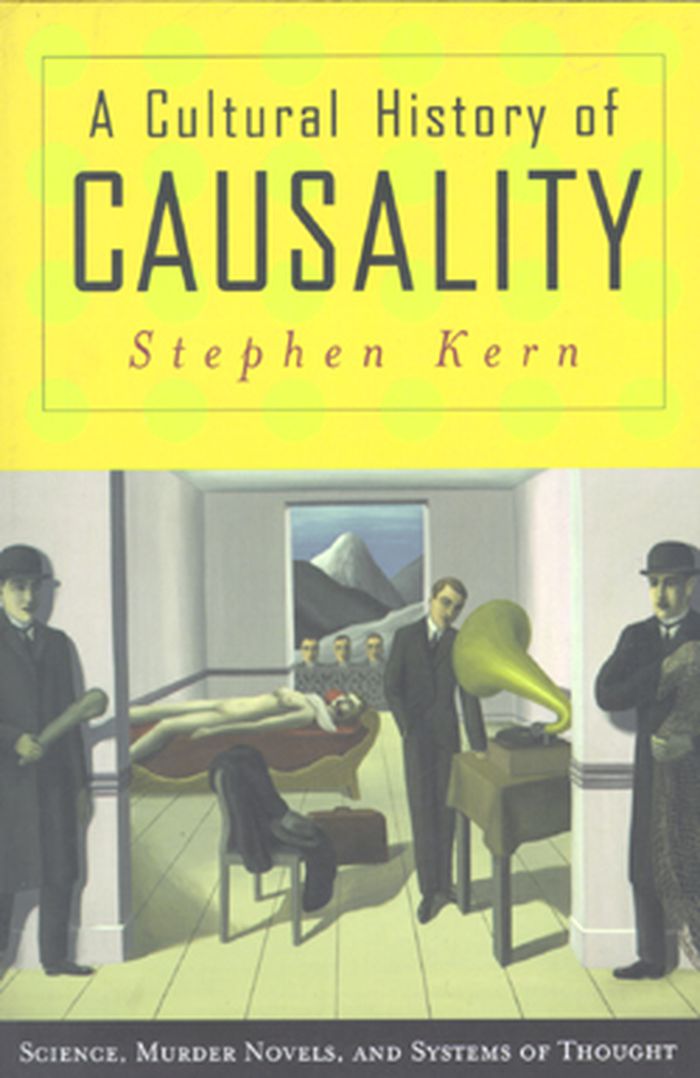
This pioneering work is the first to trace how our understanding of the causes of human behavior has changed radically over the course of European and American cultural history since 1830. Focusing on the act of murder, as documented vividly by more than a hundred novels including "Crime and Punishment, An American Tragedy, The Trial," and "Lolita," Stephen Kern devotes each chapter of "A Cultural History of Causality" to examining a specific causal factor or motive for murder--ancestry, childhood, language, sexuality, emotion, mind, society, and ideology. In addition to drawing on particular novels, each chapter considers the sciences (genetics, endocrinology, physiology, neuroscience) and systems of thought (psychoanalysis, linguistics, sociology, forensic psychiatry, and existential philosophy) most germane to each causal factor or motive.
A cultural history of causality
Actions:
Prix:
$25.00
(disponible sur commande)
Résumé:
This pioneering work is the first to trace how our understanding of the causes of human behavior has changed radically over the course of European and American cultural history since 1830. Focusing on the act of murder, as documented vividly by more than a hundred novels including "Crime and Punishment, An American Tragedy, The Trial," and "Lolita," Stephen Kern devotes each chapter of "A Cultural History of Causality" to examining a specific causal factor or motive for murder--ancestry, childhood, language, sexuality, emotion, mind, society, and ideology. In addition to drawing on particular novels, each chapter considers the sciences (genetics, endocrinology, physiology, neuroscience) and systems of thought (psychoanalysis, linguistics, sociology, forensic psychiatry, and existential philosophy) most germane to each causal factor or motive.
Classification:
livres
livres
Publication:
septembre 2006, Princeton, Oxford
septembre 2006, Princeton, Oxford
Sujet:
Théorie de l’architecture
Théorie de l’architecture
Classification:
livres
livres
Actions:
Prix:
$19.50
(disponible sur commande)
Résumé:
The virtues of being open to new and transformative experiences are rhapsodized but not really illuminated in this discursive and somewhat gauzy set of linked essays. Cultural historian Solnit, an NBCC award winner for River of Shadows: Eadweard Muybridge and the Technological Wild West, allows the subject of getting lost to lead her where it will, from early American(...)
$19.50
(disponible sur commande)
Résumé:
The virtues of being open to new and transformative experiences are rhapsodized but not really illuminated in this discursive and somewhat gauzy set of linked essays. Cultural historian Solnit, an NBCC award winner for River of Shadows: Eadweard Muybridge and the Technological Wild West, allows the subject of getting lost to lead her where it will, from early American(...)
Sujet:
Théorie de l’architecture
Théorie de l’architecture
Publication:
janvier 1900, New York, Toronto
janvier 1900, New York, Toronto
Titre:
A field guide to getting lost
Actions:
Prix:
$19.50
(disponible sur commande)
Résumé:
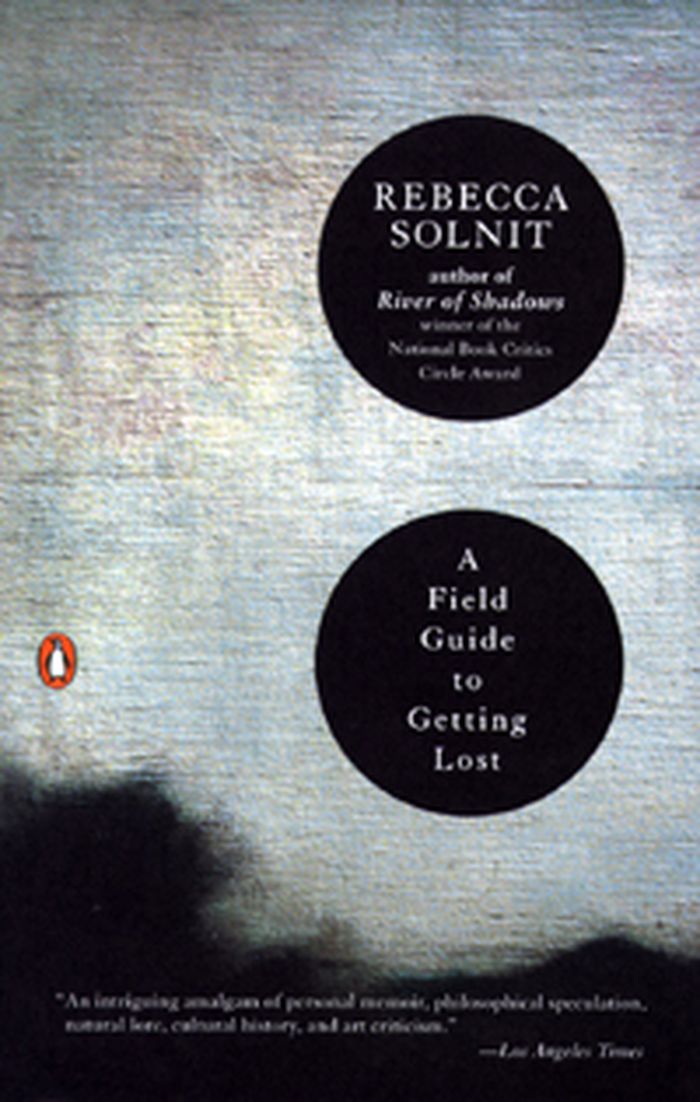
The virtues of being open to new and transformative experiences are rhapsodized but not really illuminated in this discursive and somewhat gauzy set of linked essays. Cultural historian Solnit, an NBCC award winner for River of Shadows: Eadweard Muybridge and the Technological Wild West, allows the subject of getting lost to lead her where it will, from early American captivity narratives to the avant-garde artist Yves Klein. She interlaces personal and familial histories of disorientation and reinvention, writing of her Russian Jewish forebears' arrival in the New World, her experiences driving around the American west and listening to country music, and her youthful immersion in the punk rock demimonde. Unfortunately, the conceit of embracing the unknown is not enough to impart thematic unity to these essays; one piece ties together the author's love affair with a reclusive man, desert fauna, Hitchcock's Vertigo and the blind seer Tiresias in ways that will indeed leave readers feeling lost. Solnit's writing is as abstract and intangible as her subject, veering between oceanic lyricism ("Blue is the color of longing for the distance you never arrive in") and pensées about the limitations of human understanding ("Between words is silence, around ink whiteness, behind every map's information is what's left out, the unmapped and unmappable") that seem profound but are actually banal once you think about them.
A field guide to getting lost
Actions:
Prix:
$19.50
(disponible sur commande)
Résumé:
The virtues of being open to new and transformative experiences are rhapsodized but not really illuminated in this discursive and somewhat gauzy set of linked essays. Cultural historian Solnit, an NBCC award winner for River of Shadows: Eadweard Muybridge and the Technological Wild West, allows the subject of getting lost to lead her where it will, from early American captivity narratives to the avant-garde artist Yves Klein. She interlaces personal and familial histories of disorientation and reinvention, writing of her Russian Jewish forebears' arrival in the New World, her experiences driving around the American west and listening to country music, and her youthful immersion in the punk rock demimonde. Unfortunately, the conceit of embracing the unknown is not enough to impart thematic unity to these essays; one piece ties together the author's love affair with a reclusive man, desert fauna, Hitchcock's Vertigo and the blind seer Tiresias in ways that will indeed leave readers feeling lost. Solnit's writing is as abstract and intangible as her subject, veering between oceanic lyricism ("Blue is the color of longing for the distance you never arrive in") and pensées about the limitations of human understanding ("Between words is silence, around ink whiteness, behind every map's information is what's left out, the unmapped and unmappable") that seem profound but are actually banal once you think about them.
Classification:
livres
livres
Publication:
janvier 1900, New York, Toronto
janvier 1900, New York, Toronto
Sujet:
Théorie de l’architecture
Théorie de l’architecture
Classification:
livres
livres
Actions:
Prix:
$47.00
(disponible sur commande)
Résumé:
Political conflicts, humanitarian disasters, wars and migrations – we live in an age of global unrest and discontinuity. While official reactions consist in the search for means of stabilization and restraint, the dynamics of deregulation are giving rise to a situation characterized by global parallel systems: parallel architectures, parallel societies, parallel(...)
$47.00
(disponible sur commande)
Résumé:
Political conflicts, humanitarian disasters, wars and migrations – we live in an age of global unrest and discontinuity. While official reactions consist in the search for means of stabilization and restraint, the dynamics of deregulation are giving rise to a situation characterized by global parallel systems: parallel architectures, parallel societies, parallel(...)
Sujet:
Théorie de l’architecture
Théorie de l’architecture
Publication:
août 2008, Rotterdam
août 2008, Rotterdam
Titre:
Networked cultures: parallel architectures and the politics of space
Actions:
Prix:
$47.00
(disponible sur commande)
Résumé:
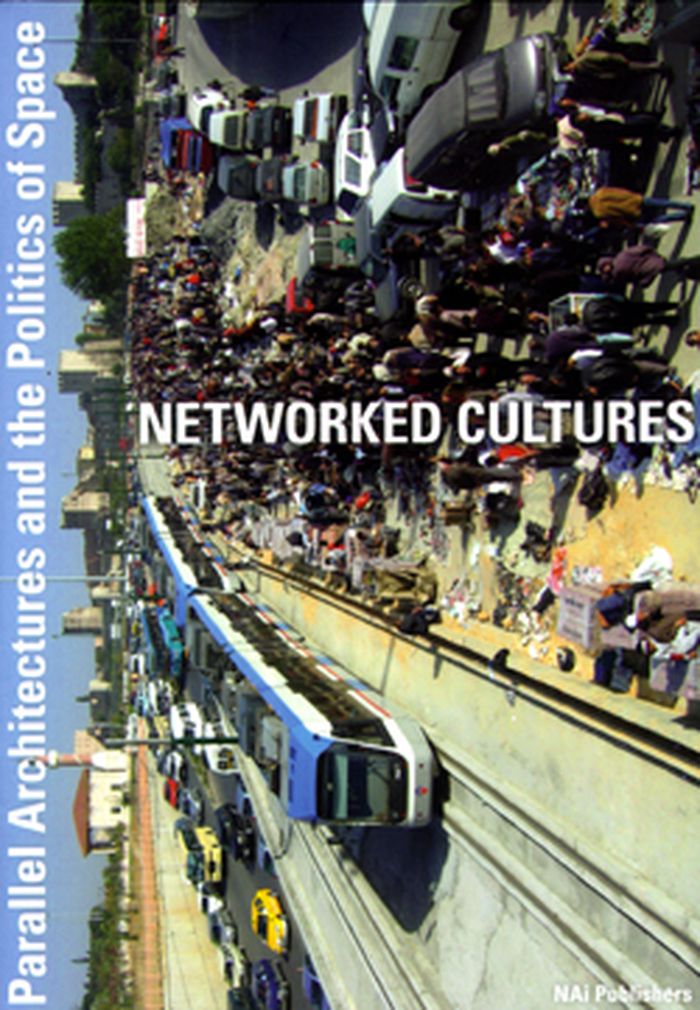
Political conflicts, humanitarian disasters, wars and migrations – we live in an age of global unrest and discontinuity. While official reactions consist in the search for means of stabilization and restraint, the dynamics of deregulation are giving rise to a situation characterized by global parallel systems: parallel architectures, parallel societies, parallel lives. This book offers an insight into the complex spatial and social realities of globalization, from city-like informal markets in Moscow and the post-war self-urbanization in Kosovo to the border economies of the Mediterranean and the parallel worlds of today’s burgeoning megacities. In this state of uncertainties, networks have become the most powerful tool in how we organize our lives. The emerging struggle between network formations produces a space that is both fragmented and contested, yet testifies to the creativity of its inhabitants. As a result, our cities have become topologies of overlapping realities and narratives as much as they are geographical entities. Networked Cultures traces these conflictual negotiations in dialogue with artists, architects, curators and theorists whose work explores possibilities for a multi-inhabitation of territories and narratives across cultural, social or geographic boundaries. Their shared knowledge and accompanying case studies provide stirring insights as well as imaginative encounters with a world of networks – our world. The enclosed DVD features conversations with the contributors to this book that follow the thematic strands along which the collaborative format of Networked Cultures has evolved: Network Creativity – Contested Spaces – Trading Places – Parallel Worlds.
Networked cultures: parallel architectures and the politics of space
Actions:
Prix:
$47.00
(disponible sur commande)
Résumé:
Political conflicts, humanitarian disasters, wars and migrations – we live in an age of global unrest and discontinuity. While official reactions consist in the search for means of stabilization and restraint, the dynamics of deregulation are giving rise to a situation characterized by global parallel systems: parallel architectures, parallel societies, parallel lives. This book offers an insight into the complex spatial and social realities of globalization, from city-like informal markets in Moscow and the post-war self-urbanization in Kosovo to the border economies of the Mediterranean and the parallel worlds of today’s burgeoning megacities. In this state of uncertainties, networks have become the most powerful tool in how we organize our lives. The emerging struggle between network formations produces a space that is both fragmented and contested, yet testifies to the creativity of its inhabitants. As a result, our cities have become topologies of overlapping realities and narratives as much as they are geographical entities. Networked Cultures traces these conflictual negotiations in dialogue with artists, architects, curators and theorists whose work explores possibilities for a multi-inhabitation of territories and narratives across cultural, social or geographic boundaries. Their shared knowledge and accompanying case studies provide stirring insights as well as imaginative encounters with a world of networks – our world. The enclosed DVD features conversations with the contributors to this book that follow the thematic strands along which the collaborative format of Networked Cultures has evolved: Network Creativity – Contested Spaces – Trading Places – Parallel Worlds.
Classification:
livres
livres
Publication:
août 2008, Rotterdam
août 2008, Rotterdam
Sujet:
Théorie de l’architecture
Théorie de l’architecture
Classification:
livres
livres
Actions:
Prix:
$35.00
(disponible sur commande)
Résumé:
The works of Mies van der Rohe are often described as silent, or as withdrawal or negation, as the last line of resistance against the forces of technology and capitalism, precisely because they interiorize these forces, but thereby also allow us to reflect on them. This essay attempts to understand the unavoidable plurality of this silence, to unearth its philosophical(...)
$35.00
(disponible sur commande)
Résumé:
The works of Mies van der Rohe are often described as silent, or as withdrawal or negation, as the last line of resistance against the forces of technology and capitalism, precisely because they interiorize these forces, but thereby also allow us to reflect on them. This essay attempts to understand the unavoidable plurality of this silence, to unearth its philosophical(...)
Titre:
The silences of Mies: 02.AKAD
Actions:
Prix:
$35.00
(disponible sur commande)
Résumé:
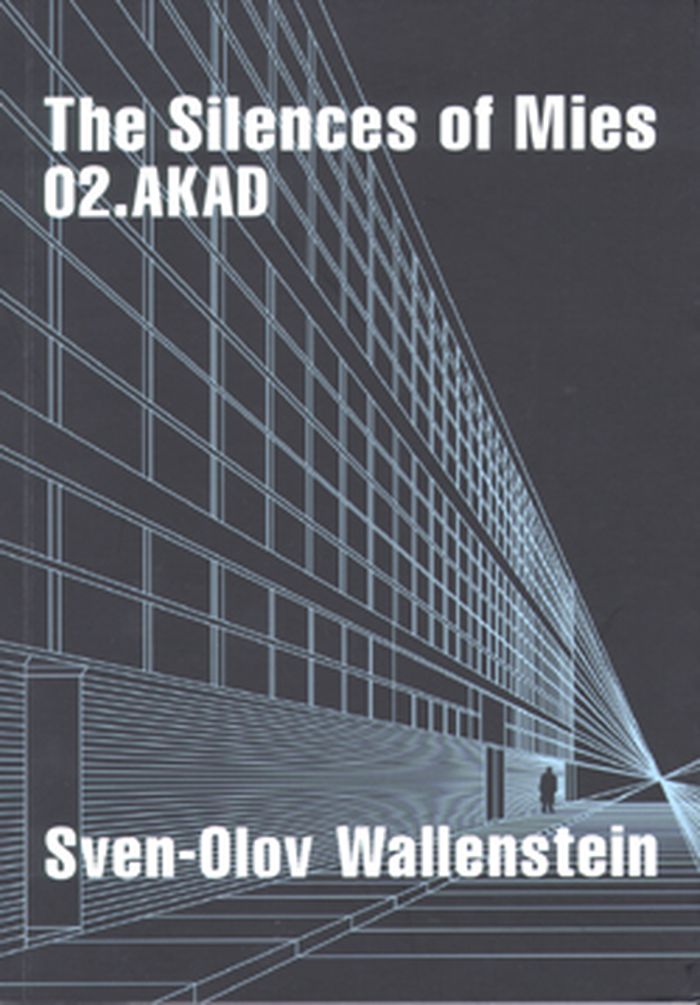
The works of Mies van der Rohe are often described as silent, or as withdrawal or negation, as the last line of resistance against the forces of technology and capitalism, precisely because they interiorize these forces, but thereby also allow us to reflect on them. This essay attempts to understand the unavoidable plurality of this silence, to unearth its philosophical genealogy, and to connect it to the present moment, when the possibility and very sense of criticality as a strategy of negativity seem more questinable than ever. Sven-Olov Wallenstein teaches philosophy and aesthetics at the University College of Södertörn in Stockholm, and is the editor-in-chief of Site magazine.
The silences of Mies: 02.AKAD
Actions:
Prix:
$35.00
(disponible sur commande)
Résumé:
The works of Mies van der Rohe are often described as silent, or as withdrawal or negation, as the last line of resistance against the forces of technology and capitalism, precisely because they interiorize these forces, but thereby also allow us to reflect on them. This essay attempts to understand the unavoidable plurality of this silence, to unearth its philosophical genealogy, and to connect it to the present moment, when the possibility and very sense of criticality as a strategy of negativity seem more questinable than ever. Sven-Olov Wallenstein teaches philosophy and aesthetics at the University College of Södertörn in Stockholm, and is the editor-in-chief of Site magazine.
Classification:
livres
livres
Publication:
janvier 1900, Stockholm
janvier 1900, Stockholm
Sujet:
Théorie de l’architecture
Théorie de l’architecture
Classification:
livres
livres
Prix:
$41.00
(disponible sur commande)
Résumé:
Ramia Mazé is a design researcher, manager, and educator. Her own education is in interaction design (an MA from the Royal College of Art, London) and in architecture (BA from Barnard College, Columbia University, New York). She has worked as a designer at MetaDesign San Francisco, Philips Research Lab in the UK, and on a freelance basis. At the Interactive Institute in(...)
$41.00
(disponible sur commande)
Résumé:
Ramia Mazé is a design researcher, manager, and educator. Her own education is in interaction design (an MA from the Royal College of Art, London) and in architecture (BA from Barnard College, Columbia University, New York). She has worked as a designer at MetaDesign San Francisco, Philips Research Lab in the UK, and on a freelance basis. At the Interactive Institute in(...)
Titre:
Occupying time: design, technology, and the form of interaction
Actions:
Prix:
$41.00
(disponible sur commande)
Résumé:
Ramia Mazé is a design researcher, manager, and educator. Her own education is in interaction design (an MA from the Royal College of Art, London) and in architecture (BA from Barnard College, Columbia University, New York). She has worked as a designer at MetaDesign San Francisco, Philips Research Lab in the UK, and on a freelance basis. At the Interactive Institute in Sweden since 2001, she has been involved in a series of interdiciplinary and international research projects - it is this work that forms the basis of this book. Occupying Time: Design, Technology, and the Form of Interaction is her PhD thesis in interaction design through Malmö University, in collaboration with Blekinge Technical University, and sponsored by the Interactive Institute.
Occupying time: design, technology, and the form of interaction
Actions:
Prix:
$41.00
(disponible sur commande)
Résumé:
Ramia Mazé is a design researcher, manager, and educator. Her own education is in interaction design (an MA from the Royal College of Art, London) and in architecture (BA from Barnard College, Columbia University, New York). She has worked as a designer at MetaDesign San Francisco, Philips Research Lab in the UK, and on a freelance basis. At the Interactive Institute in Sweden since 2001, she has been involved in a series of interdiciplinary and international research projects - it is this work that forms the basis of this book. Occupying Time: Design, Technology, and the Form of Interaction is her PhD thesis in interaction design through Malmö University, in collaboration with Blekinge Technical University, and sponsored by the Interactive Institute.
Classification:
livres
livres
Publication:
janvier 1900, Stockholm
janvier 1900, Stockholm
Sujet:
Théorie de l’architecture
Théorie de l’architecture
Classification:
livres
livres
Titre:
Form & formlessness
Form & formlessness
Actions:
Prix:
$42.00
(disponible sur commande)
Résumé:
Form and Formlessness is an experimental research project that investigates how aesthetic abstractions are developed through three approaches: An educational approach concerned with developing an aesthetic discipline, supporting a formgiving process aimed to create tangible artifacts. An art-based approach supporting an open exploration of distortion and formlessness. A(...)
$42.00
(disponible sur commande)
Résumé:
Form and Formlessness is an experimental research project that investigates how aesthetic abstractions are developed through three approaches: An educational approach concerned with developing an aesthetic discipline, supporting a formgiving process aimed to create tangible artifacts. An art-based approach supporting an open exploration of distortion and formlessness. A(...)
Titre:
Form & formlessness
Actions:
Prix:
$42.00
(disponible sur commande)
Résumé:
Form and Formlessness is an experimental research project that investigates how aesthetic abstractions are developed through three approaches: An educational approach concerned with developing an aesthetic discipline, supporting a formgiving process aimed to create tangible artifacts. An art-based approach supporting an open exploration of distortion and formlessness. A cross-disciplinary exploratory approach concerned with aesthetic experiences shared in laborations demonstrating complexity and transformation. The thesis offers methods and models that both support and challenge the normative concepts of beauty, with high relevance for teaching 3-D formgiving aesthetics and research by design methodologies.
Form & formlessness
Actions:
Prix:
$42.00
(disponible sur commande)
Résumé:
Form and Formlessness is an experimental research project that investigates how aesthetic abstractions are developed through three approaches: An educational approach concerned with developing an aesthetic discipline, supporting a formgiving process aimed to create tangible artifacts. An art-based approach supporting an open exploration of distortion and formlessness. A cross-disciplinary exploratory approach concerned with aesthetic experiences shared in laborations demonstrating complexity and transformation. The thesis offers methods and models that both support and challenge the normative concepts of beauty, with high relevance for teaching 3-D formgiving aesthetics and research by design methodologies.
Classification:
livres
livres
Publication:
septembre 2007, Stockholm
septembre 2007, Stockholm
Sujet:
Théorie du design
Théorie du design
Classification:
livres
livres
Actions:
Prix:
$39.00
(disponible sur commande)
Résumé:
This thesis investigates the role of the term plot in mediating relations between architecture and narrativity. Examining organisational strategies in the creation of real and virtual spaces, it identifies literary works by novelists who have resisted, or subverted, plot conventions in fiction (Joris-Karl Huysmans, Edmond de Goncourt, Xavier de Maistre and Neal(...)
$39.00
(disponible sur commande)
Résumé:
This thesis investigates the role of the term plot in mediating relations between architecture and narrativity. Examining organisational strategies in the creation of real and virtual spaces, it identifies literary works by novelists who have resisted, or subverted, plot conventions in fiction (Joris-Karl Huysmans, Edmond de Goncourt, Xavier de Maistre and Neal(...)
Titre:
Losing the plot: architecture and narrativity in fin-de-siècle media cultures
Actions:
Prix:
$39.00
(disponible sur commande)
Résumé:
This thesis investigates the role of the term plot in mediating relations between architecture and narrativity. Examining organisational strategies in the creation of real and virtual spaces, it identifies literary works by novelists who have resisted, or subverted, plot conventions in fiction (Joris-Karl Huysmans, Edmond de Goncourt, Xavier de Maistre and Neal Stephenson), and introduces architectural spaces such as Thomas Edison s film-studio Black Maria, and the plotless productions of early cinematography, to juxtapose concepts of plot and spatiality in a study of the production and consumption of pre-digital virtual spaces.
Losing the plot: architecture and narrativity in fin-de-siècle media cultures
Actions:
Prix:
$39.00
(disponible sur commande)
Résumé:
This thesis investigates the role of the term plot in mediating relations between architecture and narrativity. Examining organisational strategies in the creation of real and virtual spaces, it identifies literary works by novelists who have resisted, or subverted, plot conventions in fiction (Joris-Karl Huysmans, Edmond de Goncourt, Xavier de Maistre and Neal Stephenson), and introduces architectural spaces such as Thomas Edison s film-studio Black Maria, and the plotless productions of early cinematography, to juxtapose concepts of plot and spatiality in a study of the production and consumption of pre-digital virtual spaces.
Classification:
livres
livres
Publication:
janvier 1900, Stockholm
janvier 1900, Stockholm
Sujet:
Théorie de l’architecture
Théorie de l’architecture
Classification:
livres
livres
Actions:
Prix:
$21.95
(disponible sur commande)
Résumé:
Dès l'origine, la Ville lutte contre la Mort : pour combler le déficit des épidémies et des nuisances qui la déciment, elle est contrainte de puiser dans le réservoir de la campagne environnante. Cette ponction a commencé en Basse Mésopotamie trois mille ans avant J.-C. et s'est poursuivie pendant cinquante siècles. Pourtant le modèle urbain est en train de mourir sous(...)
$21.95
(disponible sur commande)
Résumé:
Dès l'origine, la Ville lutte contre la Mort : pour combler le déficit des épidémies et des nuisances qui la déciment, elle est contrainte de puiser dans le réservoir de la campagne environnante. Cette ponction a commencé en Basse Mésopotamie trois mille ans avant J.-C. et s'est poursuivie pendant cinquante siècles. Pourtant le modèle urbain est en train de mourir sous(...)
Titre:
Écologie urbaine: entre la ville et la mort
Actions:
Prix:
$21.95
(disponible sur commande)
Résumé:
Dès l'origine, la Ville lutte contre la Mort : pour combler le déficit des épidémies et des nuisances qui la déciment, elle est contrainte de puiser dans le réservoir de la campagne environnante. Cette ponction a commencé en Basse Mésopotamie trois mille ans avant J.-C. et s'est poursuivie pendant cinquante siècles. Pourtant le modèle urbain est en train de mourir sous nos yeux : fin des paysans, villes en crue, fécondité en décrue. Ce livre décrit les défis biologiques qui ont menacé la ville et raconte les révolutions successives qui ont permis d'y faire face. Aventure qui débouche aujourd'hui sur une question inéluctable : comment surmonter les déséquilibres colossaux que l'ère industrielle a accumulés? L'évolution de la ville, partout dans le monde, engendre de nouveaux défis et appelle une nouvelle révolution, dans les consciences comme dans les pratiques.
Écologie urbaine: entre la ville et la mort
Actions:
Prix:
$21.95
(disponible sur commande)
Résumé:
Dès l'origine, la Ville lutte contre la Mort : pour combler le déficit des épidémies et des nuisances qui la déciment, elle est contrainte de puiser dans le réservoir de la campagne environnante. Cette ponction a commencé en Basse Mésopotamie trois mille ans avant J.-C. et s'est poursuivie pendant cinquante siècles. Pourtant le modèle urbain est en train de mourir sous nos yeux : fin des paysans, villes en crue, fécondité en décrue. Ce livre décrit les défis biologiques qui ont menacé la ville et raconte les révolutions successives qui ont permis d'y faire face. Aventure qui débouche aujourd'hui sur une question inéluctable : comment surmonter les déséquilibres colossaux que l'ère industrielle a accumulés? L'évolution de la ville, partout dans le monde, engendre de nouveaux défis et appelle une nouvelle révolution, dans les consciences comme dans les pratiques.
Classification:
livres
livres
Publication:
avril 2008
avril 2008
Sujet:
Théorie de l’urbanisme
Théorie de l’urbanisme
Classification:
livres
livres

Actions:
Prix:
$34.95
(disponible sur commande)
Résumé:
Dating back to Guy Debord and the Situationists of 1960s Paris, the discipline of psychogeography explores the 'effects of geographical environment... on the emotions and behaviour of individuals', according to Debord. Will Self, a long-distance walker, relates to place intimately, as pedrestians often do, and in this collection he aims to unravel how mdern life has(...)
$34.95
(disponible sur commande)
Résumé:
Dating back to Guy Debord and the Situationists of 1960s Paris, the discipline of psychogeography explores the 'effects of geographical environment... on the emotions and behaviour of individuals', according to Debord. Will Self, a long-distance walker, relates to place intimately, as pedrestians often do, and in this collection he aims to unravel how mdern life has(...)
Sujet:
Théorie de l’architecture
Théorie de l’architecture
Publication:
novembre 2007, New York
novembre 2007, New York
Titre:
Psychogeography: disentangling the modern conundrum of psyche and place
Actions:
Prix:
$34.95
(disponible sur commande)
Résumé:
Dating back to Guy Debord and the Situationists of 1960s Paris, the discipline of psychogeography explores the 'effects of geographical environment... on the emotions and behaviour of individuals', according to Debord. Will Self, a long-distance walker, relates to place intimately, as pedrestians often do, and in this collection he aims to unravel how mdern life has warped this essential connection.
Psychogeography: disentangling the modern conundrum of psyche and place
Actions:
Prix:
$34.95
(disponible sur commande)
Résumé:
Dating back to Guy Debord and the Situationists of 1960s Paris, the discipline of psychogeography explores the 'effects of geographical environment... on the emotions and behaviour of individuals', according to Debord. Will Self, a long-distance walker, relates to place intimately, as pedrestians often do, and in this collection he aims to unravel how mdern life has warped this essential connection.
Classification:
livres
livres
Publication:
novembre 2007, New York
novembre 2007, New York
Sujet:
Théorie de l’architecture
Théorie de l’architecture
Classification:
livres
livres
Titre:
London the biography
London the biography
Actions:
Prix:
$37.95
(disponible sur commande)
Résumé:
Novelist and biographer Ackroyd (The Plato Papers; T.S. Eliot; etc.) offers a huge, enthralling "biography" of the city of London. The reader segues through this litany of lists and anthology of anecdotes via the sketchiest of topical linkages, but no matter not a page is dull, until brief closing chapters in which Ackroyd succumbs to bathos, for which he's(...)
$37.95
(disponible sur commande)
Résumé:
Novelist and biographer Ackroyd (The Plato Papers; T.S. Eliot; etc.) offers a huge, enthralling "biography" of the city of London. The reader segues through this litany of lists and anthology of anecdotes via the sketchiest of topical linkages, but no matter not a page is dull, until brief closing chapters in which Ackroyd succumbs to bathos, for which he's(...)
Titre:
London the biography
Actions:
Prix:
$37.95
(disponible sur commande)
Résumé:
Novelist and biographer Ackroyd (The Plato Papers; T.S. Eliot; etc.) offers a huge, enthralling "biography" of the city of London. The reader segues through this litany of lists and anthology of anecdotes via the sketchiest of topical linkages, but no matter not a page is dull, until brief closing chapters in which Ackroyd succumbs to bathos, for which he's instantaneously redeemed by the preceding chapters. He admits to using no original research, openly crediting his printed sources. Ackroyd examines London from its pre-history through today, artfully selecting, organizing and pacing stories, and rendering the past in witty and imaginative ways. "The opium quarter of Limehouse," he tells readers, for example, "is now represented by a Chinese take-away." Fast food, it seems, was always part of the London scene. When poet Thomas Southey asked a pastry cook why she kept her shop open in the worst weather, she told him that otherwise she would lose business, "so many were the persons who took up buns or biscuits as they passed by and threw their pence in, not allowing themselves time to enter." Ackroyd covers unrest and peace, fires and ruins, river and rail transport, crime and punishment, wealth and poverty, markets and churches, uncontrolled growth and barely controlled filth. If there is a hero among the throngs, it may be engineer Joseph Bazalgette, who in 1855 began building 1,265 miles of sewers to contain the Stygian odor of progress and keep the huge, ugly metropolis livable. No one should mind the extraordinary price of this extraordinary achievement. B illus., maps not seen by PW. (On sale Oct. 16)Forecast: Published to acclaim in England, this is virtually guaranteed major review coverage here, and the publisher will also shoot for national media. Anglophiles and others will rejoice.
London the biography
Actions:
Prix:
$37.95
(disponible sur commande)
Résumé:
Novelist and biographer Ackroyd (The Plato Papers; T.S. Eliot; etc.) offers a huge, enthralling "biography" of the city of London. The reader segues through this litany of lists and anthology of anecdotes via the sketchiest of topical linkages, but no matter not a page is dull, until brief closing chapters in which Ackroyd succumbs to bathos, for which he's instantaneously redeemed by the preceding chapters. He admits to using no original research, openly crediting his printed sources. Ackroyd examines London from its pre-history through today, artfully selecting, organizing and pacing stories, and rendering the past in witty and imaginative ways. "The opium quarter of Limehouse," he tells readers, for example, "is now represented by a Chinese take-away." Fast food, it seems, was always part of the London scene. When poet Thomas Southey asked a pastry cook why she kept her shop open in the worst weather, she told him that otherwise she would lose business, "so many were the persons who took up buns or biscuits as they passed by and threw their pence in, not allowing themselves time to enter." Ackroyd covers unrest and peace, fires and ruins, river and rail transport, crime and punishment, wealth and poverty, markets and churches, uncontrolled growth and barely controlled filth. If there is a hero among the throngs, it may be engineer Joseph Bazalgette, who in 1855 began building 1,265 miles of sewers to contain the Stygian odor of progress and keep the huge, ugly metropolis livable. No one should mind the extraordinary price of this extraordinary achievement. B illus., maps not seen by PW. (On sale Oct. 16)Forecast: Published to acclaim in England, this is virtually guaranteed major review coverage here, and the publisher will also shoot for national media. Anglophiles and others will rejoice.
Classification:
livres
livres
Publication:
septembre 2001, London
septembre 2001, London
Sujet:
Théorie de l’urbanisme
Théorie de l’urbanisme


