


6233 Résultats
Classification:
archives
Niveau de description archivistique:
Fonds
archives
Niveau de description archivistique:
Fonds
Titre:
Fonds Myron Goldsmith
Fonds Myron Goldsmith
Numéro de référence:
AP032
Résumé:
The Myron Goldsmith fonds consists primarily of 30.4 metres of textual documents, including notebooks, research and reading notes, travel journals, documentation files, correspondence, sketchbooks and personal and office papers. There are also 2,800 original drawings and prints, 10,000 photographs and slides, and 5 architectural models. The material ranges in date from c.1933 to 1996. In shedding light on Goldsmith's student years and working career, the fonds' rich collection of documents also provides material on activities in the architectural profession, architectural education, and architectural and engineering theory and building techniques through the 1940s to the 1990s.
AP032
Résumé:
The Myron Goldsmith fonds consists primarily of 30.4 metres of textual documents, including notebooks, research and reading notes, travel journals, documentation files, correspondence, sketchbooks and personal and office papers. There are also 2,800 original drawings and prints, 10,000 photographs and slides, and 5 architectural models. The material ranges in date from c.1933 to 1996. In shedding light on Goldsmith's student years and working career, the fonds' rich collection of documents also provides material on activities in the architectural profession, architectural education, and architectural and engineering theory and building techniques through the 1940s to the 1990s.
Personnes et institutions:
Date:
1933-1996
1933-1996
Titre:
Fonds Myron Goldsmith
Actions:
AP032
Résumé:
The Myron Goldsmith fonds consists primarily of 30.4 metres of textual documents, including notebooks, research and reading notes, travel journals, documentation files, correspondence, sketchbooks and personal and office papers. There are also 2,800 original drawings and prints, 10,000 photographs and slides, and 5 architectural models. The material ranges in date from c.1933 to 1996. In shedding light on Goldsmith's student years and working career, the fonds' rich collection of documents also provides material on activities in the architectural profession, architectural education, and architectural and engineering theory and building techniques through the 1940s to the 1990s.
Fonds Myron Goldsmith
Actions:
AP032
Résumé:
The Myron Goldsmith fonds consists primarily of 30.4 metres of textual documents, including notebooks, research and reading notes, travel journals, documentation files, correspondence, sketchbooks and personal and office papers. There are also 2,800 original drawings and prints, 10,000 photographs and slides, and 5 architectural models. The material ranges in date from c.1933 to 1996. In shedding light on Goldsmith's student years and working career, the fonds' rich collection of documents also provides material on activities in the architectural profession, architectural education, and architectural and engineering theory and building techniques through the 1940s to the 1990s.
Classification:
archives
Niveau de description archivistique:
Fonds
archives
Niveau de description archivistique:
Fonds
Date:
1933-1996
1933-1996
Personnes et institutions:
Classification:
articles
articles

Titre:
De la terre au ciel
De la terre au ciel
Actions:
Elise Misao Hunchuck écrit à Montserrat Bonvehí Rosich
Classification:
archives
Niveau de description archivistique:
Fonds
archives
Niveau de description archivistique:
Fonds
Numéro de référence:
AP226
Résumé:
The Toyo Ito & Associates, Architects fonds, 1970 – 2011, documents the studio’s architectural work and involvement in selected exhibitions in the 1970s and 1980s. The records in this fonds represent 34 architectural projects, including built, unbuilt, and conceptual projects. The majority of the projects are located in Japan and are mostly documented through drawings as well as a limited number of videos, models, panels, textual records, and photographs. The fonds also contains records related to Toyo Ito & Associates, Architects’ participation in three exhibitions in the USA and the UK in 1978 and 1986.
AP226
Résumé:
The Toyo Ito & Associates, Architects fonds, 1970 – 2011, documents the studio’s architectural work and involvement in selected exhibitions in the 1970s and 1980s. The records in this fonds represent 34 architectural projects, including built, unbuilt, and conceptual projects. The majority of the projects are located in Japan and are mostly documented through drawings as well as a limited number of videos, models, panels, textual records, and photographs. The fonds also contains records related to Toyo Ito & Associates, Architects’ participation in three exhibitions in the USA and the UK in 1978 and 1986.
Personnes et institutions:
Date:
1970 - 2011
1970 - 2011
Titre:
Toyo Ito & Associates, Architects fonds
Actions:
AP226
Résumé:
The Toyo Ito & Associates, Architects fonds, 1970 – 2011, documents the studio’s architectural work and involvement in selected exhibitions in the 1970s and 1980s. The records in this fonds represent 34 architectural projects, including built, unbuilt, and conceptual projects. The majority of the projects are located in Japan and are mostly documented through drawings as well as a limited number of videos, models, panels, textual records, and photographs. The fonds also contains records related to Toyo Ito & Associates, Architects’ participation in three exhibitions in the USA and the UK in 1978 and 1986.
Toyo Ito & Associates, Architects fonds
Actions:
AP226
Résumé:
The Toyo Ito & Associates, Architects fonds, 1970 – 2011, documents the studio’s architectural work and involvement in selected exhibitions in the 1970s and 1980s. The records in this fonds represent 34 architectural projects, including built, unbuilt, and conceptual projects. The majority of the projects are located in Japan and are mostly documented through drawings as well as a limited number of videos, models, panels, textual records, and photographs. The fonds also contains records related to Toyo Ito & Associates, Architects’ participation in three exhibitions in the USA and the UK in 1978 and 1986.
Classification:
archives
Niveau de description archivistique:
Fonds
archives
Niveau de description archivistique:
Fonds
Date:
1970 - 2011
1970 - 2011
Personnes et institutions:
Classification:
documents textuels
documents textuels
Numéro de référence:
AP206.S2.070
Description:
File was originally housed in a binder along with content arranged in AP206.S2.069 and AP206.S2.071. This file includes the following papers: "Urbanisation and Environment," paper outline "Amrita Sher Gill by Mulk Raj Anand," review, 1989 "Art," 1989 "Let your Deeds Match your Ideas," 1987 "Planning the Indian City by Mahesh N. Buch," review "Worthwhile Idea," newspaper article "Reminiscences of Le Corbusier," 1987 "Chandigarh in Retrospect," 1987 "Reflections on Charpai," 1987 "Chandigarh: An Introduction," 1988 "Work Culture for 90s" "Blueprint for Survival" "Urbanisation and Environment" "Corbusier's Design Process as I Experienced it"
AP206.S2.070
Description:
File was originally housed in a binder along with content arranged in AP206.S2.069 and AP206.S2.071. This file includes the following papers: "Urbanisation and Environment," paper outline "Amrita Sher Gill by Mulk Raj Anand," review, 1989 "Art," 1989 "Let your Deeds Match your Ideas," 1987 "Planning the Indian City by Mahesh N. Buch," review "Worthwhile Idea," newspaper article "Reminiscences of Le Corbusier," 1987 "Chandigarh in Retrospect," 1987 "Reflections on Charpai," 1987 "Chandigarh: An Introduction," 1988 "Work Culture for 90s" "Blueprint for Survival" "Urbanisation and Environment" "Corbusier's Design Process as I Experienced it"
Personnes et institutions:
Date:
1985-1990
1985-1990
Titre:
Published and unpublished papers (folder 2 of 3)
Actions:
AP206.S2.070
Description:
File was originally housed in a binder along with content arranged in AP206.S2.069 and AP206.S2.071. This file includes the following papers: "Urbanisation and Environment," paper outline "Amrita Sher Gill by Mulk Raj Anand," review, 1989 "Art," 1989 "Let your Deeds Match your Ideas," 1987 "Planning the Indian City by Mahesh N. Buch," review "Worthwhile Idea," newspaper article "Reminiscences of Le Corbusier," 1987 "Chandigarh in Retrospect," 1987 "Reflections on Charpai," 1987 "Chandigarh: An Introduction," 1988 "Work Culture for 90s" "Blueprint for Survival" "Urbanisation and Environment" "Corbusier's Design Process as I Experienced it"
Published and unpublished papers (folder 2 of 3)
Actions:
AP206.S2.070
Description:
File was originally housed in a binder along with content arranged in AP206.S2.069 and AP206.S2.071. This file includes the following papers: "Urbanisation and Environment," paper outline "Amrita Sher Gill by Mulk Raj Anand," review, 1989 "Art," 1989 "Let your Deeds Match your Ideas," 1987 "Planning the Indian City by Mahesh N. Buch," review "Worthwhile Idea," newspaper article "Reminiscences of Le Corbusier," 1987 "Chandigarh in Retrospect," 1987 "Reflections on Charpai," 1987 "Chandigarh: An Introduction," 1988 "Work Culture for 90s" "Blueprint for Survival" "Urbanisation and Environment" "Corbusier's Design Process as I Experienced it"
Classification:
documents textuels
documents textuels
Date:
1985-1990
1985-1990
Personnes et institutions:
Classification:
dessins, oeuvres d'art
Quantité:
4 portfolio(s)
dessins, oeuvres d'art
Quantité:
4 portfolio(s)
Actions:
Numéro de référence:
DR1974:0002:030:001-065
Description:
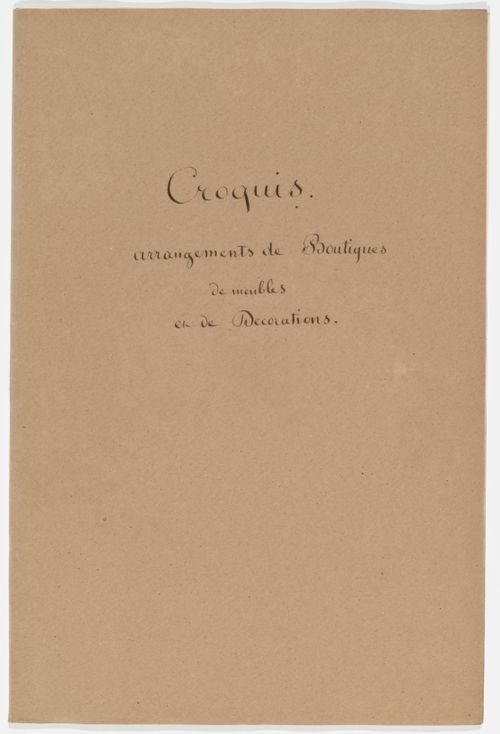
The four portfolios of drawings and prints in this group are entitled: Croquis à placer en papier; Croquis divers; Vues d'Italie; and Croquis arrangement de boutiques, de meubles, et de decorations (DR1974:0002:030:001 - DR1974:0002:030:008; DR1974:0002:030:009 - DR1974:0002:030:030; DR1974:0002:030:031 - DR1974:0002:030:050; DR1974:0002:030:051 - DR1974:0002:030:065. -- Porfolio Croquis à placer en papier, comprises three unidentified topographical views in graphite, a drawing of furnishings from the Palais Matteï, Italy [?], a still life of fruit, and a drawing of an elephant. -- Portfolio Croquis divers, comprises both record and design drawings - ranging from sketches to renderings - of varied subject matter. The record drawings include a rendering of the Hôtel de ville, Brussels, and line drawings of a baldachin and an urban square. The design drawings for buildings and interiors in Classical, Gothic and Exotic Revival styles are probably by Hubert Rohault de Fleury and include: line and finished drawings for a dairy after Jean François Joseph LeCointre; an imaginary church, perhaps inspired by Pugin; and a hôtel on rue de Varennes, Paris. Several drawings and prints depict military subject matter: fortifications after Louis de Cormontaigne, a battery, a cannon, and revolutionary battle scenes, some in Paris. Also included are several drawings of non-architectural subject matter - a coat of arms, perhaps of the Bougainville family, cossack soldiers, a boar hunt, a rock formation and lithographic maps of Istria and Rhodes. -- Portfolio Vues d'Italie, consists of mostly freehand drawings of Italian views and buildings in Paestum, Arezzo, Naples, Rome, Caprarola, Florence, Fidenza, Genoa, and Tivoli. The buildings and urban spaces include: Villa Belvedere, Naples; the Cathedral of Borgo S. Donino; the Temple of Vesta, Tivoli; the Campidoglio, Piazza del Popolo, Palais Maccarani, Arc de Septimus Severus, Ste. Pudenziana, and Baslica of Constantine, all in Rome. The presence of preparatory drawings for some of these views suggests they were intended to be published, either as individual prints or in a book. -- Portfolio Croquis arrangement de boutiques, de meuble et de decorations, comprises mostly finished watercolour drawings for Empire style interiors and furniture, probably designed by Hubert Rohault de Fleury. Also included are an elevation for a storefront for Batton Magasin de Fleurs Fines, drawings for two garden structures, and elevations for classical interiors and mouldings.
DR1974:0002:030:001-065
Description:
The four portfolios of drawings and prints in this group are entitled: Croquis à placer en papier; Croquis divers; Vues d'Italie; and Croquis arrangement de boutiques, de meubles, et de decorations (DR1974:0002:030:001 - DR1974:0002:030:008; DR1974:0002:030:009 - DR1974:0002:030:030; DR1974:0002:030:031 - DR1974:0002:030:050; DR1974:0002:030:051 - DR1974:0002:030:065. -- Porfolio Croquis à placer en papier, comprises three unidentified topographical views in graphite, a drawing of furnishings from the Palais Matteï, Italy [?], a still life of fruit, and a drawing of an elephant. -- Portfolio Croquis divers, comprises both record and design drawings - ranging from sketches to renderings - of varied subject matter. The record drawings include a rendering of the Hôtel de ville, Brussels, and line drawings of a baldachin and an urban square. The design drawings for buildings and interiors in Classical, Gothic and Exotic Revival styles are probably by Hubert Rohault de Fleury and include: line and finished drawings for a dairy after Jean François Joseph LeCointre; an imaginary church, perhaps inspired by Pugin; and a hôtel on rue de Varennes, Paris. Several drawings and prints depict military subject matter: fortifications after Louis de Cormontaigne, a battery, a cannon, and revolutionary battle scenes, some in Paris. Also included are several drawings of non-architectural subject matter - a coat of arms, perhaps of the Bougainville family, cossack soldiers, a boar hunt, a rock formation and lithographic maps of Istria and Rhodes. -- Portfolio Vues d'Italie, consists of mostly freehand drawings of Italian views and buildings in Paestum, Arezzo, Naples, Rome, Caprarola, Florence, Fidenza, Genoa, and Tivoli. The buildings and urban spaces include: Villa Belvedere, Naples; the Cathedral of Borgo S. Donino; the Temple of Vesta, Tivoli; the Campidoglio, Piazza del Popolo, Palais Maccarani, Arc de Septimus Severus, Ste. Pudenziana, and Baslica of Constantine, all in Rome. The presence of preparatory drawings for some of these views suggests they were intended to be published, either as individual prints or in a book. -- Portfolio Croquis arrangement de boutiques, de meuble et de decorations, comprises mostly finished watercolour drawings for Empire style interiors and furniture, probably designed by Hubert Rohault de Fleury. Also included are an elevation for a storefront for Batton Magasin de Fleurs Fines, drawings for two garden structures, and elevations for classical interiors and mouldings.
Personnes et institutions:
Sujet:
architecture, design d'intérieur, ingénierie, militaire, sculpture, topographique, urbanisme
architecture, design d'intérieur, ingénierie, militaire, sculpture, topographique, urbanisme
Date:
printed first half of the 19th century
printed first half of the 19th century
Titre:
Four portfolios of drawings of Italian views, interior designs, Empire style furniture, military subjects, and other diverse subject matter
Actions:
DR1974:0002:030:001-065
Description:
The four portfolios of drawings and prints in this group are entitled: Croquis à placer en papier; Croquis divers; Vues d'Italie; and Croquis arrangement de boutiques, de meubles, et de decorations (DR1974:0002:030:001 - DR1974:0002:030:008; DR1974:0002:030:009 - DR1974:0002:030:030; DR1974:0002:030:031 - DR1974:0002:030:050; DR1974:0002:030:051 - DR1974:0002:030:065. -- Porfolio Croquis à placer en papier, comprises three unidentified topographical views in graphite, a drawing of furnishings from the Palais Matteï, Italy [?], a still life of fruit, and a drawing of an elephant. -- Portfolio Croquis divers, comprises both record and design drawings - ranging from sketches to renderings - of varied subject matter. The record drawings include a rendering of the Hôtel de ville, Brussels, and line drawings of a baldachin and an urban square. The design drawings for buildings and interiors in Classical, Gothic and Exotic Revival styles are probably by Hubert Rohault de Fleury and include: line and finished drawings for a dairy after Jean François Joseph LeCointre; an imaginary church, perhaps inspired by Pugin; and a hôtel on rue de Varennes, Paris. Several drawings and prints depict military subject matter: fortifications after Louis de Cormontaigne, a battery, a cannon, and revolutionary battle scenes, some in Paris. Also included are several drawings of non-architectural subject matter - a coat of arms, perhaps of the Bougainville family, cossack soldiers, a boar hunt, a rock formation and lithographic maps of Istria and Rhodes. -- Portfolio Vues d'Italie, consists of mostly freehand drawings of Italian views and buildings in Paestum, Arezzo, Naples, Rome, Caprarola, Florence, Fidenza, Genoa, and Tivoli. The buildings and urban spaces include: Villa Belvedere, Naples; the Cathedral of Borgo S. Donino; the Temple of Vesta, Tivoli; the Campidoglio, Piazza del Popolo, Palais Maccarani, Arc de Septimus Severus, Ste. Pudenziana, and Baslica of Constantine, all in Rome. The presence of preparatory drawings for some of these views suggests they were intended to be published, either as individual prints or in a book. -- Portfolio Croquis arrangement de boutiques, de meuble et de decorations, comprises mostly finished watercolour drawings for Empire style interiors and furniture, probably designed by Hubert Rohault de Fleury. Also included are an elevation for a storefront for Batton Magasin de Fleurs Fines, drawings for two garden structures, and elevations for classical interiors and mouldings.
Four portfolios of drawings of Italian views, interior designs, Empire style furniture, military subjects, and other diverse subject matter
Actions:
DR1974:0002:030:001-065
Description:
The four portfolios of drawings and prints in this group are entitled: Croquis à placer en papier; Croquis divers; Vues d'Italie; and Croquis arrangement de boutiques, de meubles, et de decorations (DR1974:0002:030:001 - DR1974:0002:030:008; DR1974:0002:030:009 - DR1974:0002:030:030; DR1974:0002:030:031 - DR1974:0002:030:050; DR1974:0002:030:051 - DR1974:0002:030:065. -- Porfolio Croquis à placer en papier, comprises three unidentified topographical views in graphite, a drawing of furnishings from the Palais Matteï, Italy [?], a still life of fruit, and a drawing of an elephant. -- Portfolio Croquis divers, comprises both record and design drawings - ranging from sketches to renderings - of varied subject matter. The record drawings include a rendering of the Hôtel de ville, Brussels, and line drawings of a baldachin and an urban square. The design drawings for buildings and interiors in Classical, Gothic and Exotic Revival styles are probably by Hubert Rohault de Fleury and include: line and finished drawings for a dairy after Jean François Joseph LeCointre; an imaginary church, perhaps inspired by Pugin; and a hôtel on rue de Varennes, Paris. Several drawings and prints depict military subject matter: fortifications after Louis de Cormontaigne, a battery, a cannon, and revolutionary battle scenes, some in Paris. Also included are several drawings of non-architectural subject matter - a coat of arms, perhaps of the Bougainville family, cossack soldiers, a boar hunt, a rock formation and lithographic maps of Istria and Rhodes. -- Portfolio Vues d'Italie, consists of mostly freehand drawings of Italian views and buildings in Paestum, Arezzo, Naples, Rome, Caprarola, Florence, Fidenza, Genoa, and Tivoli. The buildings and urban spaces include: Villa Belvedere, Naples; the Cathedral of Borgo S. Donino; the Temple of Vesta, Tivoli; the Campidoglio, Piazza del Popolo, Palais Maccarani, Arc de Septimus Severus, Ste. Pudenziana, and Baslica of Constantine, all in Rome. The presence of preparatory drawings for some of these views suggests they were intended to be published, either as individual prints or in a book. -- Portfolio Croquis arrangement de boutiques, de meuble et de decorations, comprises mostly finished watercolour drawings for Empire style interiors and furniture, probably designed by Hubert Rohault de Fleury. Also included are an elevation for a storefront for Batton Magasin de Fleurs Fines, drawings for two garden structures, and elevations for classical interiors and mouldings.
Classification:
dessins, oeuvres d'art
Quantité:
4 portfolio(s)
dessins, oeuvres d'art
Quantité:
4 portfolio(s)
Date:
printed first half of the 19th century
printed first half of the 19th century
Personnes et institutions:
Sujet:
architecture, design d'intérieur, ingénierie, militaire, sculpture, topographique, urbanisme
architecture, design d'intérieur, ingénierie, militaire, sculpture, topographique, urbanisme
Niveau de description archivistique:
Projet
Projet
Numéro de référence:
AP198.S1.1997.PR02
Description:
Project records document the design process for OCEAN North’s competition entry for the Jyväskylä Music and Arts Centre in 1997. The project was titled Terra Cultura by OCEAN North. The international competition called to create a multi-usage space that would include a venue for the symphonic orchestra, a music school, exhibition spaces, and the possibility to host a variety of small cultural events in the Finnish city of Jyväskylä. The proposed site is in the center of the town, across the street from the Jyväskylä city church and its park, and nearby buildings designed by Alvar Aalto. OCEAN North’s concept presents a topological surface as an extension of the surrounding urban scape with two masses that would host the formal functions of the building (concert hall, music school, exhibition halls). The two volumes, or raised blocks, are divided along a diagonal elevated space, which is the extension of the ground’s topological surface filled and dubbed “Liquid Flow Space” by the design team. In their interview with Greg Lynn, Johan Bettum and Kivi Sotamaa mentioned that the idea for Jyväskylä was that it was a cloud. Digital files, in particular, show the process to achieve the projected design. Drawings provide views of streamed particles and of resulting peels. They also include plans, elevations and axonometric views of the structure. Most files are raster or vector images, likely saved from CAD software. A few files are in CAD formats such as Microstation, 3D Studio and form*Z. Digital files also present sine wave analysis and resulting charts for each component of the program. The analysis and charts present the relationships between various components of the building’s program such as the Art Museum, the Concert Halls, the technical space, and the Common facilities. These files are raster images and spreadsheets. Photographs of the site in Jyväskylä and of models built by OCEAN North were digitized and are included with the digital working files. Physical drawings are chiefly floor plans for the building, but also include sections and sketches. Finally, project files include photographic prints of two built models. One of these models, a small model of the conceptual masses of the building structure, is itself in the archive. Photographs show the model in the context of a city scape model. The second model, not part of the archive at CCA, was built at a bigger scale and was an intricate cardboard and wooden stick structure. Sources: Softspace: from a representation of form to a simulation of space, Edited by Sean Lally and Jessica Young. London, New York: Routledge, 2007. Greg Lynn, ed. Archaeology of the Digital 17: OCEAN North, Jyväskylä Music and Arts Centre, Montréal: Canadian Centre for Architecture, 2017. ePub.
AP198.S1.1997.PR02
Description:
Project records document the design process for OCEAN North’s competition entry for the Jyväskylä Music and Arts Centre in 1997. The project was titled Terra Cultura by OCEAN North. The international competition called to create a multi-usage space that would include a venue for the symphonic orchestra, a music school, exhibition spaces, and the possibility to host a variety of small cultural events in the Finnish city of Jyväskylä. The proposed site is in the center of the town, across the street from the Jyväskylä city church and its park, and nearby buildings designed by Alvar Aalto. OCEAN North’s concept presents a topological surface as an extension of the surrounding urban scape with two masses that would host the formal functions of the building (concert hall, music school, exhibition halls). The two volumes, or raised blocks, are divided along a diagonal elevated space, which is the extension of the ground’s topological surface filled and dubbed “Liquid Flow Space” by the design team. In their interview with Greg Lynn, Johan Bettum and Kivi Sotamaa mentioned that the idea for Jyväskylä was that it was a cloud. Digital files, in particular, show the process to achieve the projected design. Drawings provide views of streamed particles and of resulting peels. They also include plans, elevations and axonometric views of the structure. Most files are raster or vector images, likely saved from CAD software. A few files are in CAD formats such as Microstation, 3D Studio and form*Z. Digital files also present sine wave analysis and resulting charts for each component of the program. The analysis and charts present the relationships between various components of the building’s program such as the Art Museum, the Concert Halls, the technical space, and the Common facilities. These files are raster images and spreadsheets. Photographs of the site in Jyväskylä and of models built by OCEAN North were digitized and are included with the digital working files. Physical drawings are chiefly floor plans for the building, but also include sections and sketches. Finally, project files include photographic prints of two built models. One of these models, a small model of the conceptual masses of the building structure, is itself in the archive. Photographs show the model in the context of a city scape model. The second model, not part of the archive at CCA, was built at a bigger scale and was an intricate cardboard and wooden stick structure. Sources: Softspace: from a representation of form to a simulation of space, Edited by Sean Lally and Jessica Young. London, New York: Routledge, 2007. Greg Lynn, ed. Archaeology of the Digital 17: OCEAN North, Jyväskylä Music and Arts Centre, Montréal: Canadian Centre for Architecture, 2017. ePub.
Personnes et institutions:
Date:
1997
1997
Titre:
Terra Cultura – Jyväskylä Music and Arts Centre, international competition entry
Actions:
AP198.S1.1997.PR02
Description:
Project records document the design process for OCEAN North’s competition entry for the Jyväskylä Music and Arts Centre in 1997. The project was titled Terra Cultura by OCEAN North. The international competition called to create a multi-usage space that would include a venue for the symphonic orchestra, a music school, exhibition spaces, and the possibility to host a variety of small cultural events in the Finnish city of Jyväskylä. The proposed site is in the center of the town, across the street from the Jyväskylä city church and its park, and nearby buildings designed by Alvar Aalto. OCEAN North’s concept presents a topological surface as an extension of the surrounding urban scape with two masses that would host the formal functions of the building (concert hall, music school, exhibition halls). The two volumes, or raised blocks, are divided along a diagonal elevated space, which is the extension of the ground’s topological surface filled and dubbed “Liquid Flow Space” by the design team. In their interview with Greg Lynn, Johan Bettum and Kivi Sotamaa mentioned that the idea for Jyväskylä was that it was a cloud. Digital files, in particular, show the process to achieve the projected design. Drawings provide views of streamed particles and of resulting peels. They also include plans, elevations and axonometric views of the structure. Most files are raster or vector images, likely saved from CAD software. A few files are in CAD formats such as Microstation, 3D Studio and form*Z. Digital files also present sine wave analysis and resulting charts for each component of the program. The analysis and charts present the relationships between various components of the building’s program such as the Art Museum, the Concert Halls, the technical space, and the Common facilities. These files are raster images and spreadsheets. Photographs of the site in Jyväskylä and of models built by OCEAN North were digitized and are included with the digital working files. Physical drawings are chiefly floor plans for the building, but also include sections and sketches. Finally, project files include photographic prints of two built models. One of these models, a small model of the conceptual masses of the building structure, is itself in the archive. Photographs show the model in the context of a city scape model. The second model, not part of the archive at CCA, was built at a bigger scale and was an intricate cardboard and wooden stick structure. Sources: Softspace: from a representation of form to a simulation of space, Edited by Sean Lally and Jessica Young. London, New York: Routledge, 2007. Greg Lynn, ed. Archaeology of the Digital 17: OCEAN North, Jyväskylä Music and Arts Centre, Montréal: Canadian Centre for Architecture, 2017. ePub.
Terra Cultura – Jyväskylä Music and Arts Centre, international competition entry
Actions:
AP198.S1.1997.PR02
Description:
Project records document the design process for OCEAN North’s competition entry for the Jyväskylä Music and Arts Centre in 1997. The project was titled Terra Cultura by OCEAN North. The international competition called to create a multi-usage space that would include a venue for the symphonic orchestra, a music school, exhibition spaces, and the possibility to host a variety of small cultural events in the Finnish city of Jyväskylä. The proposed site is in the center of the town, across the street from the Jyväskylä city church and its park, and nearby buildings designed by Alvar Aalto. OCEAN North’s concept presents a topological surface as an extension of the surrounding urban scape with two masses that would host the formal functions of the building (concert hall, music school, exhibition halls). The two volumes, or raised blocks, are divided along a diagonal elevated space, which is the extension of the ground’s topological surface filled and dubbed “Liquid Flow Space” by the design team. In their interview with Greg Lynn, Johan Bettum and Kivi Sotamaa mentioned that the idea for Jyväskylä was that it was a cloud. Digital files, in particular, show the process to achieve the projected design. Drawings provide views of streamed particles and of resulting peels. They also include plans, elevations and axonometric views of the structure. Most files are raster or vector images, likely saved from CAD software. A few files are in CAD formats such as Microstation, 3D Studio and form*Z. Digital files also present sine wave analysis and resulting charts for each component of the program. The analysis and charts present the relationships between various components of the building’s program such as the Art Museum, the Concert Halls, the technical space, and the Common facilities. These files are raster images and spreadsheets. Photographs of the site in Jyväskylä and of models built by OCEAN North were digitized and are included with the digital working files. Physical drawings are chiefly floor plans for the building, but also include sections and sketches. Finally, project files include photographic prints of two built models. One of these models, a small model of the conceptual masses of the building structure, is itself in the archive. Photographs show the model in the context of a city scape model. The second model, not part of the archive at CCA, was built at a bigger scale and was an intricate cardboard and wooden stick structure. Sources: Softspace: from a representation of form to a simulation of space, Edited by Sean Lally and Jessica Young. London, New York: Routledge, 2007. Greg Lynn, ed. Archaeology of the Digital 17: OCEAN North, Jyväskylä Music and Arts Centre, Montréal: Canadian Centre for Architecture, 2017. ePub.
Niveau de description archivistique:
Project
Project
Date:
1997
1997
Personnes et institutions:
Classification:
événements
événements
Actions:
Description:
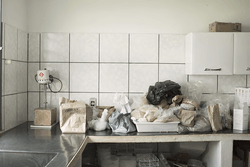
Alors que le climat de la Terre atteint un état d’instabilité constante, la prise de conscience de l’impact du réchauffement planétaire sur les droits de l’homme et l’augmentation des conflits sociaux, ne fait que s’accentuer. Une moindre attention a été accordée aux façons dont la violence politique et l’abus de droits humains, dans le passé comme dans le présent,(...)
Alors que le climat de la Terre atteint un état d’instabilité constante, la prise de conscience de l’impact du réchauffement planétaire sur les droits de l’homme et l’augmentation des conflits sociaux, ne fait que s’accentuer. Une moindre attention a été accordée aux façons dont la violence politique et l’abus de droits humains, dans le passé comme dans le présent,(...)
Localisation:
Théâtre Paul-Demarais
Théâtre Paul-Demarais
Date:
1 décembre 2016, 18h
1 décembre 2016, 18h
Titre:
Dans les frontières du changement climatique (Vers une politique des droits non humains)
Actions:
Description:
Alors que le climat de la Terre atteint un état d’instabilité constante, la prise de conscience de l’impact du réchauffement planétaire sur les droits de l’homme et l’augmentation des conflits sociaux, ne fait que s’accentuer. Une moindre attention a été accordée aux façons dont la violence politique et l’abus de droits humains, dans le passé comme dans le présent,(...)
Dans les frontières du changement climatique (Vers une politique des droits non humains)
Actions:
Description:
Alors que le climat de la Terre atteint un état d’instabilité constante, la prise de conscience de l’impact du réchauffement planétaire sur les droits de l’homme et l’augmentation des conflits sociaux, ne fait que s’accentuer. Une moindre attention a été accordée aux façons dont la violence politique et l’abus de droits humains, dans le passé comme dans le présent,(...)
Classification:
événements
événements
Date:
1 décembre 2016
18h
1 décembre 2016
18h
Localisation:
Théâtre Paul-Demarais
Théâtre Paul-Demarais
Niveau de description archivistique:
Projet
Projet
Numéro de référence:
AP206.S1.1963.PR01
Description:
This project series documents the Punjab Agricultural University in Ludhiana, India from 1963-1968. With Prakash as the senior architect, this project consisted of the design of the entire campus, including the boys' hostel and mess, and the Agricultural Engineering College (AEC). Under this project, Prakash also designed campuses for the University in Hisar and Palampur. The boys' hostel, constructed first, consisted of a long, rectangular volume of exposed brick and concrete columns. Balconies lined its exterior, alternating on each floor so that every balcony had a view of the sky above. A covered walkway connected the hostel to the square mess, which was turned 45 degrees on its axis. The AEC, the campus's main building, was a long, single-storey building with a series of enclosed courtyards. Round exhaust openings were the only element that marked the building's façade. Prakash, developing his love of sculpture at this time, also crafted a large outdoor sculpture for the campus's main courtyard.[1] This project is recorded through a reprographic copy of a plan of the boys' hostel dating from around 1963. [1]Vikramaditya Prakash, One Continuous Line: Art, Architecture and Urbanism of Aditya Prakash (Ahmedabad, India: Mapin Publishing Pvt. Ltd., 2019), 107-132.
AP206.S1.1963.PR01
Description:
This project series documents the Punjab Agricultural University in Ludhiana, India from 1963-1968. With Prakash as the senior architect, this project consisted of the design of the entire campus, including the boys' hostel and mess, and the Agricultural Engineering College (AEC). Under this project, Prakash also designed campuses for the University in Hisar and Palampur. The boys' hostel, constructed first, consisted of a long, rectangular volume of exposed brick and concrete columns. Balconies lined its exterior, alternating on each floor so that every balcony had a view of the sky above. A covered walkway connected the hostel to the square mess, which was turned 45 degrees on its axis. The AEC, the campus's main building, was a long, single-storey building with a series of enclosed courtyards. Round exhaust openings were the only element that marked the building's façade. Prakash, developing his love of sculpture at this time, also crafted a large outdoor sculpture for the campus's main courtyard.[1] This project is recorded through a reprographic copy of a plan of the boys' hostel dating from around 1963. [1]Vikramaditya Prakash, One Continuous Line: Art, Architecture and Urbanism of Aditya Prakash (Ahmedabad, India: Mapin Publishing Pvt. Ltd., 2019), 107-132.
Personnes et institutions:
Date:
circa 1963
circa 1963
Titre:
Punjab Agricultural University, Ludhiana, India (1963-1968)
Actions:
AP206.S1.1963.PR01
Description:
This project series documents the Punjab Agricultural University in Ludhiana, India from 1963-1968. With Prakash as the senior architect, this project consisted of the design of the entire campus, including the boys' hostel and mess, and the Agricultural Engineering College (AEC). Under this project, Prakash also designed campuses for the University in Hisar and Palampur. The boys' hostel, constructed first, consisted of a long, rectangular volume of exposed brick and concrete columns. Balconies lined its exterior, alternating on each floor so that every balcony had a view of the sky above. A covered walkway connected the hostel to the square mess, which was turned 45 degrees on its axis. The AEC, the campus's main building, was a long, single-storey building with a series of enclosed courtyards. Round exhaust openings were the only element that marked the building's façade. Prakash, developing his love of sculpture at this time, also crafted a large outdoor sculpture for the campus's main courtyard.[1] This project is recorded through a reprographic copy of a plan of the boys' hostel dating from around 1963. [1]Vikramaditya Prakash, One Continuous Line: Art, Architecture and Urbanism of Aditya Prakash (Ahmedabad, India: Mapin Publishing Pvt. Ltd., 2019), 107-132.
Punjab Agricultural University, Ludhiana, India (1963-1968)
Actions:
AP206.S1.1963.PR01
Description:
This project series documents the Punjab Agricultural University in Ludhiana, India from 1963-1968. With Prakash as the senior architect, this project consisted of the design of the entire campus, including the boys' hostel and mess, and the Agricultural Engineering College (AEC). Under this project, Prakash also designed campuses for the University in Hisar and Palampur. The boys' hostel, constructed first, consisted of a long, rectangular volume of exposed brick and concrete columns. Balconies lined its exterior, alternating on each floor so that every balcony had a view of the sky above. A covered walkway connected the hostel to the square mess, which was turned 45 degrees on its axis. The AEC, the campus's main building, was a long, single-storey building with a series of enclosed courtyards. Round exhaust openings were the only element that marked the building's façade. Prakash, developing his love of sculpture at this time, also crafted a large outdoor sculpture for the campus's main courtyard.[1] This project is recorded through a reprographic copy of a plan of the boys' hostel dating from around 1963. [1]Vikramaditya Prakash, One Continuous Line: Art, Architecture and Urbanism of Aditya Prakash (Ahmedabad, India: Mapin Publishing Pvt. Ltd., 2019), 107-132.
Niveau de description archivistique:
Project
Project
Date:
circa 1963
circa 1963
Personnes et institutions:
Classification:
expositions
expositions
Actions:
Description:
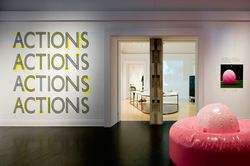
Des architectes, des artistes et des collectifs en provenance de plusieurs pays redéfinissent des activités en apparence anodines comme le jardinage, le recyclage, le jeu ou la marche. Confrontées aux normes de comportement urbain communément admises, leurs actions vont parfois jusqu’à défier les prescriptions de la loi. Les groupes ou les individus mis en scène dans(...)
Des architectes, des artistes et des collectifs en provenance de plusieurs pays redéfinissent des activités en apparence anodines comme le jardinage, le recyclage, le jeu ou la marche. Confrontées aux normes de comportement urbain communément admises, leurs actions vont parfois jusqu’à défier les prescriptions de la loi. Les groupes ou les individus mis en scène dans(...)
Localisation:
Salles principales
Salles principales
Date:
26 novembre 2008 au 19 avril 2009
26 novembre 2008 au 19 avril 2009
Titre:
Actions : comment s’approprier la ville
Actions:
Description:
Des architectes, des artistes et des collectifs en provenance de plusieurs pays redéfinissent des activités en apparence anodines comme le jardinage, le recyclage, le jeu ou la marche. Confrontées aux normes de comportement urbain communément admises, leurs actions vont parfois jusqu’à défier les prescriptions de la loi. Les groupes ou les individus mis en scène dans(...)
Actions : comment s’approprier la ville
Actions:
Description:
Des architectes, des artistes et des collectifs en provenance de plusieurs pays redéfinissent des activités en apparence anodines comme le jardinage, le recyclage, le jeu ou la marche. Confrontées aux normes de comportement urbain communément admises, leurs actions vont parfois jusqu’à défier les prescriptions de la loi. Les groupes ou les individus mis en scène dans(...)
Classification:
expositions
expositions
Date:
26 novembre 2008 au
19 avril 2009
26 novembre 2008 au
19 avril 2009
Localisation:
Salles principales
Salles principales
Classification:
événements
événements
Actions:
Description:
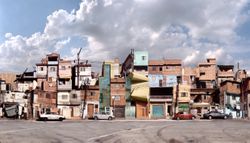
Ce jeudi au CCA, en collaboration avec le Cities Programme of the London School of Economics, Gerald Frug, conférencier James Stirling Memorial sur la ville 2010-2011, parle de la conception des systèmes de gouvernance urbaine et de ses répercussions sur le travail des urbanistes et des architectes. Cliquez ici pour l’événement Facebook.
Ce jeudi au CCA, en collaboration avec le Cities Programme of the London School of Economics, Gerald Frug, conférencier James Stirling Memorial sur la ville 2010-2011, parle de la conception des systèmes de gouvernance urbaine et de ses répercussions sur le travail des urbanistes et des architectes. Cliquez ici pour l’événement Facebook.
Date:
21 octobre 2010
21 octobre 2010
Titre:
Gerald Frug : L’architecture de la gouvernance
Actions:
Description:
Ce jeudi au CCA, en collaboration avec le Cities Programme of the London School of Economics, Gerald Frug, conférencier James Stirling Memorial sur la ville 2010-2011, parle de la conception des systèmes de gouvernance urbaine et de ses répercussions sur le travail des urbanistes et des architectes. Cliquez ici pour l’événement Facebook.
Gerald Frug : L’architecture de la gouvernance
Actions:
Description:
Ce jeudi au CCA, en collaboration avec le Cities Programme of the London School of Economics, Gerald Frug, conférencier James Stirling Memorial sur la ville 2010-2011, parle de la conception des systèmes de gouvernance urbaine et de ses répercussions sur le travail des urbanistes et des architectes. Cliquez ici pour l’événement Facebook.
Classification:
événements
événements
Date:
21 octobre 2010
21 octobre 2010


