


497 Résultats
Classification:
livres
livres
Titre:
This is Rome
This is Rome
Actions:
Prix:
$22.00
(disponible sur commande)
Résumé:
Like the other Sasek classics, this is a facsimile edition of the original book. The brilliant, vibrant illustrations have been meticulously preserved, remaining true to his vision more than 40 years later. Facts have been updated for the 21st-century, appearing on a "This is . . . Today" page at the back of the book. These charming illustrations, coupled with Sasek's(...)
$22.00
(disponible sur commande)
Résumé:
Like the other Sasek classics, this is a facsimile edition of the original book. The brilliant, vibrant illustrations have been meticulously preserved, remaining true to his vision more than 40 years later. Facts have been updated for the 21st-century, appearing on a "This is . . . Today" page at the back of the book. These charming illustrations, coupled with Sasek's(...)
Titre:
This is Rome
Actions:
Prix:
$22.00
(disponible sur commande)
Résumé:
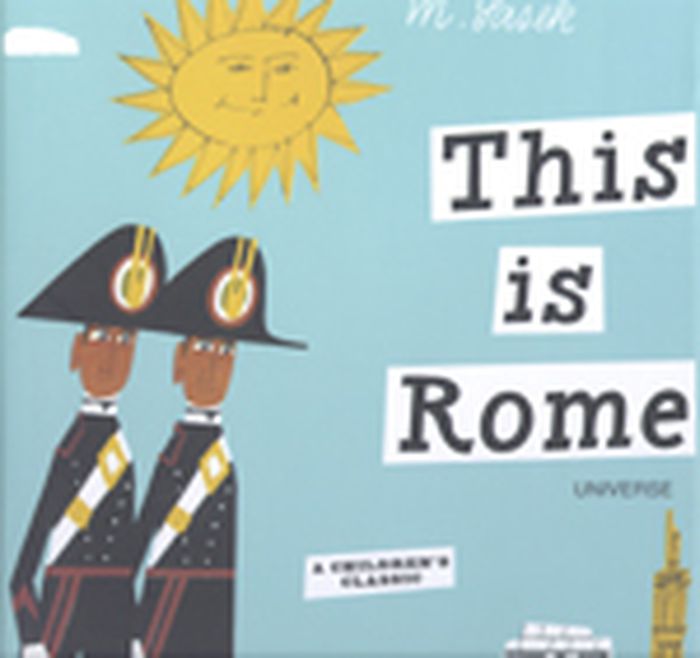
Like the other Sasek classics, this is a facsimile edition of the original book. The brilliant, vibrant illustrations have been meticulously preserved, remaining true to his vision more than 40 years later. Facts have been updated for the 21st-century, appearing on a "This is . . . Today" page at the back of the book. These charming illustrations, coupled with Sasek's witty, playful narrative, make for a perfect souvenir that will delight both children and their parents, many of whom will remember the series from their own childhoods. This is Rome, first published in 1960, traces the history of Roman civilization to bring to life the Rome of the 60's. Sasek navigates Rome's busy, winding streets to visit such glorious historical landmarks as the statues of Michelangelo, Vatican City, the Pantheon, and the Fontana di Trevi-and to show us the eccentricities of modern Roman life, from its colorful trains, trams, and taxis to its chic espresso bars and pasta houses.
This is Rome
Actions:
Prix:
$22.00
(disponible sur commande)
Résumé:
Like the other Sasek classics, this is a facsimile edition of the original book. The brilliant, vibrant illustrations have been meticulously preserved, remaining true to his vision more than 40 years later. Facts have been updated for the 21st-century, appearing on a "This is . . . Today" page at the back of the book. These charming illustrations, coupled with Sasek's witty, playful narrative, make for a perfect souvenir that will delight both children and their parents, many of whom will remember the series from their own childhoods. This is Rome, first published in 1960, traces the history of Roman civilization to bring to life the Rome of the 60's. Sasek navigates Rome's busy, winding streets to visit such glorious historical landmarks as the statues of Michelangelo, Vatican City, the Pantheon, and the Fontana di Trevi-and to show us the eccentricities of modern Roman life, from its colorful trains, trams, and taxis to its chic espresso bars and pasta houses.
Classification:
livres
livres
Publication:
février 2007, New York
février 2007, New York
Sujet:
Littérature jeunesse
Littérature jeunesse
Classification:
livres
livres
Titre:
After the city
After the city
Actions:
Prix:
$20.00
(disponible sur commande)
Résumé:
The city's reign over our senses, our moods, our very ways of being is outmoded. The suburban metropolis has superseded the city. The new building materials are non-material: electricity, telephony, weather, time, and so forth. Consequently, according to Lars Lerup, architecture and architects must be rethought. Until now, architects have been trained to serve the(...)
$20.00
(disponible sur commande)
Résumé:
The city's reign over our senses, our moods, our very ways of being is outmoded. The suburban metropolis has superseded the city. The new building materials are non-material: electricity, telephony, weather, time, and so forth. Consequently, according to Lars Lerup, architecture and architects must be rethought. Until now, architects have been trained to serve the(...)
Titre:
After the city
Actions:
Prix:
$20.00
(disponible sur commande)
Résumé:
The city's reign over our senses, our moods, our very ways of being is outmoded. The suburban metropolis has superseded the city. The new building materials are non-material: electricity, telephony, weather, time, and so forth. Consequently, according to Lars Lerup, architecture and architects must be rethought. Until now, architects have been trained to serve the elite few, as reflected in a belief in customization and the uniqueness of each project. Instead, Lerup holds, architectural educators should promote teamwork and the design of authorless objects, combined with an integration of design and practice. Before we can rethink the architectural curriculum, however, we must rethink the metropolis. And rethink the metropolis is just what Lerup does. In an intellectually far-ranging yet intensely personal manner, he moves from contemplation of the form and philosophical implications of the Pantheon to a discussion of how Levittown residents seek and create community. The result is an exhilarating work with profound practical implications. Unlike the many who view suburbia with paranoid dismay, Lerup takes an optimistic view of the new, open metropolis--for him not the site of unavoidable uniformity and mediocrity, but an exciting new frontier.
After the city
Actions:
Prix:
$20.00
(disponible sur commande)
Résumé:
The city's reign over our senses, our moods, our very ways of being is outmoded. The suburban metropolis has superseded the city. The new building materials are non-material: electricity, telephony, weather, time, and so forth. Consequently, according to Lars Lerup, architecture and architects must be rethought. Until now, architects have been trained to serve the elite few, as reflected in a belief in customization and the uniqueness of each project. Instead, Lerup holds, architectural educators should promote teamwork and the design of authorless objects, combined with an integration of design and practice. Before we can rethink the architectural curriculum, however, we must rethink the metropolis. And rethink the metropolis is just what Lerup does. In an intellectually far-ranging yet intensely personal manner, he moves from contemplation of the form and philosophical implications of the Pantheon to a discussion of how Levittown residents seek and create community. The result is an exhilarating work with profound practical implications. Unlike the many who view suburbia with paranoid dismay, Lerup takes an optimistic view of the new, open metropolis--for him not the site of unavoidable uniformity and mediocrity, but an exciting new frontier.
Classification:
livres
livres
Publication:
octobre 2001, Cambridge, Mass.
octobre 2001, Cambridge, Mass.
Sujet:
Théorie de l’urbanisme
Théorie de l’urbanisme
Classification:
livres
livres
Titre:
After the city
After the city
Actions:
Prix:
$63.50
(disponible sur commande)
Résumé:
The city's reign over our senses, our moods, our very ways of being is outmoded. The suburban metropolis has superseded the city. The new building materials are non-material: electricity, telephony, weather, time, and so forth. Consequently, according to Lars Lerup, architecture and architects must be rethought. Until now, architects have been trained to serve the(...)
$63.50
(disponible sur commande)
Résumé:
The city's reign over our senses, our moods, our very ways of being is outmoded. The suburban metropolis has superseded the city. The new building materials are non-material: electricity, telephony, weather, time, and so forth. Consequently, according to Lars Lerup, architecture and architects must be rethought. Until now, architects have been trained to serve the(...)
Titre:
After the city
Actions:
Prix:
$63.50
(disponible sur commande)
Résumé:
The city's reign over our senses, our moods, our very ways of being is outmoded. The suburban metropolis has superseded the city. The new building materials are non-material: electricity, telephony, weather, time, and so forth. Consequently, according to Lars Lerup, architecture and architects must be rethought. Until now, architects have been trained to serve the elite few, as reflected in a belief in customization and the uniqueness of each project. Instead, Lerup holds, architectural educators should promote teamwork and the design of authorless objects, combined with an integration of design and practice. Before we can rethink the architectural curriculum, however, we must rethink the metropolis. And rethink the metropolis is just what Lerup does. In an intellectually far-ranging yet intensely personal manner, he moves from contemplation of the form and philosophical implications of the Pantheon to a discussion of how Levittown residents seek and create community. The result is an exhilarating work with profound practical implications. Unlike the many who view suburbia with paranoid dismay, Lerup takes an optimistic view of the new, open metropolis--for him not the site of unavoidable uniformity and mediocrity, but an exciting new frontier.
After the city
Actions:
Prix:
$63.50
(disponible sur commande)
Résumé:
The city's reign over our senses, our moods, our very ways of being is outmoded. The suburban metropolis has superseded the city. The new building materials are non-material: electricity, telephony, weather, time, and so forth. Consequently, according to Lars Lerup, architecture and architects must be rethought. Until now, architects have been trained to serve the elite few, as reflected in a belief in customization and the uniqueness of each project. Instead, Lerup holds, architectural educators should promote teamwork and the design of authorless objects, combined with an integration of design and practice. Before we can rethink the architectural curriculum, however, we must rethink the metropolis. And rethink the metropolis is just what Lerup does. In an intellectually far-ranging yet intensely personal manner, he moves from contemplation of the form and philosophical implications of the Pantheon to a discussion of how Levittown residents seek and create community. The result is an exhilarating work with profound practical implications. Unlike the many who view suburbia with paranoid dismay, Lerup takes an optimistic view of the new, open metropolis--for him not the site of unavoidable uniformity and mediocrity, but an exciting new frontier.
Classification:
livres
livres
Publication:
mai 2000, Cambridge, Mass.
mai 2000, Cambridge, Mass.
Sujet:
Théorie de l’urbanisme
Théorie de l’urbanisme
Classification:
livres
livres
Actions:
Prix:
$71.50
(disponible sur commande)
Résumé:
In Renaissance Rome, ancient ruins were preserved as often as they were mined for their materials. Although the question of what to preserve and how continued to be subject to debate, preservation acquired renewed force and urgency in the fifteenth and sixteenth centuries as the new papal capital rose upon the ruins of the ancient city. Preservation practices became more(...)
$71.50
(disponible sur commande)
Résumé:
In Renaissance Rome, ancient ruins were preserved as often as they were mined for their materials. Although the question of what to preserve and how continued to be subject to debate, preservation acquired renewed force and urgency in the fifteenth and sixteenth centuries as the new papal capital rose upon the ruins of the ancient city. Preservation practices became more(...)
Titre:
The ruin of the eternal city : Antiquity & preservation in renaissance Rome
Actions:
Prix:
$71.50
(disponible sur commande)
Résumé:
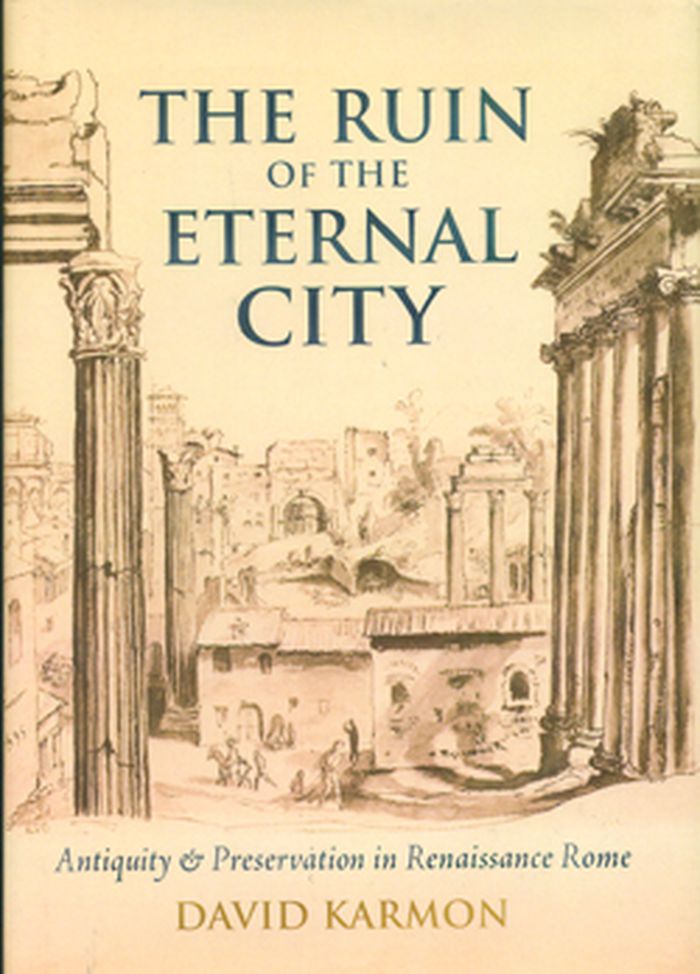
In Renaissance Rome, ancient ruins were preserved as often as they were mined for their materials. Although the question of what to preserve and how continued to be subject to debate, preservation acquired renewed force and urgency in the fifteenth and sixteenth centuries as the new papal capital rose upon the ruins of the ancient city. Preservation practices became more focused and effective in Renaissance Rome than ever before. "The Ruin of the Eternal City" offers a new interpretation of the ongoing life of ancient buildings within the expanding early modern city. While historians and archaeologists have long affirmed that early modern builders disregarded the protection of antiquity, this study provides the first systematic analysis of preservation problems as perceived by the Renaissance popes, the civic magistrates, and ordinary citizens. Based on new evidence and recent conservation theory, this compelling study explores how civic officials balanced the defense of specific sites against the pressing demands imposed by population growth, circulation, and notions of urban decorum. Above all, the preservation of antiquity remained an indispensable tool to advance competing political agendas in the papal capital. A broad range of preservation policies and practices are examined at the half-ruined Colosseum, the intact Pantheon, and the little-known but essential Renaissance bridge known as the Ponte Santa Maria.
The ruin of the eternal city : Antiquity & preservation in renaissance Rome
Actions:
Prix:
$71.50
(disponible sur commande)
Résumé:
In Renaissance Rome, ancient ruins were preserved as often as they were mined for their materials. Although the question of what to preserve and how continued to be subject to debate, preservation acquired renewed force and urgency in the fifteenth and sixteenth centuries as the new papal capital rose upon the ruins of the ancient city. Preservation practices became more focused and effective in Renaissance Rome than ever before. "The Ruin of the Eternal City" offers a new interpretation of the ongoing life of ancient buildings within the expanding early modern city. While historians and archaeologists have long affirmed that early modern builders disregarded the protection of antiquity, this study provides the first systematic analysis of preservation problems as perceived by the Renaissance popes, the civic magistrates, and ordinary citizens. Based on new evidence and recent conservation theory, this compelling study explores how civic officials balanced the defense of specific sites against the pressing demands imposed by population growth, circulation, and notions of urban decorum. Above all, the preservation of antiquity remained an indispensable tool to advance competing political agendas in the papal capital. A broad range of preservation policies and practices are examined at the half-ruined Colosseum, the intact Pantheon, and the little-known but essential Renaissance bridge known as the Ponte Santa Maria.
Classification:
livres
livres
Publication:
avril 2011
avril 2011
Classification:
livres
livres
Titre:
Jeff Wall: the crooked path
Jeff Wall: the crooked path
Actions:
Prix:
$55.00
(disponible sur commande)
Résumé:
The photography of Jeff Wall (born 1946) is consciously and profoundly saturated in the social: in the Vancouver art community from which he first emerged, fully formed, in the late 1970s; in the racial and gender politics of our times, which he analyses with marvelous clarity in his huge photographic light boxes that declare an equal status with painting through their(...)
$55.00
(disponible sur commande)
Résumé:
The photography of Jeff Wall (born 1946) is consciously and profoundly saturated in the social: in the Vancouver art community from which he first emerged, fully formed, in the late 1970s; in the racial and gender politics of our times, which he analyses with marvelous clarity in his huge photographic light boxes that declare an equal status with painting through their(...)
Titre:
Jeff Wall: the crooked path
Actions:
Prix:
$55.00
(disponible sur commande)
Résumé:
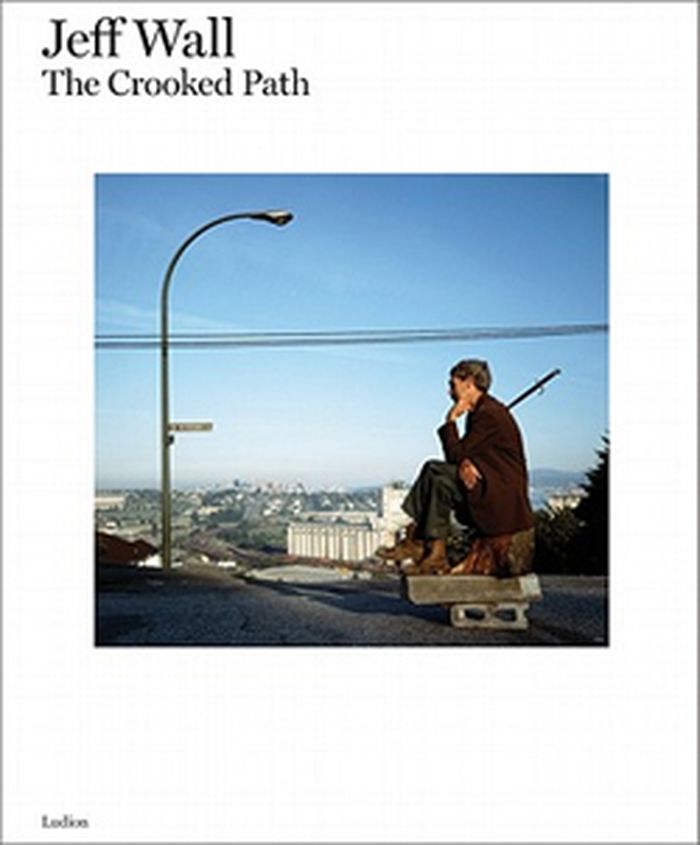
The photography of Jeff Wall (born 1946) is consciously and profoundly saturated in the social: in the Vancouver art community from which he first emerged, fully formed, in the late 1970s; in the racial and gender politics of our times, which he analyses with marvelous clarity in his huge photographic light boxes that declare an equal status with painting through their scale and their carefully plotted depth and grandeur; in the art history pantheon that informs his staged compositions, from Hokusai to Velásquez and Manet; and in his influence on at least two generations of photographers, most notably the Düsseldorf school (Andreas Gursky once cited Wall as “a great model for me” ). This publication examines the cultural context for Wall's tremendous achievement in photography. Wall himself has chosen 25 of his own photographs, taken between the late 1970s and the present, and has constellated them among the visionary company his work keeps, alongside reproductions of works by Marcel Duchamp, Diane Arbus, Eugene Atget, Wols, Andreas Gursky, David Claerbout, Thomas Struth, Frank Stella, Robert Smithson, Rodney Graham, Ian Wallace, Lawrence Wiener and R.W. Fassbinder. This book orients Wall's photography across ten themed chapters, each of which is prefaced with an interview with Wall by Hans De Wolf. Also included are testimonies and essays by fellow artists and art historians, such as Luc Tuymans, Lawrence Weiner, Michael Fried and David Campany.
Jeff Wall: the crooked path
Actions:
Prix:
$55.00
(disponible sur commande)
Résumé:
The photography of Jeff Wall (born 1946) is consciously and profoundly saturated in the social: in the Vancouver art community from which he first emerged, fully formed, in the late 1970s; in the racial and gender politics of our times, which he analyses with marvelous clarity in his huge photographic light boxes that declare an equal status with painting through their scale and their carefully plotted depth and grandeur; in the art history pantheon that informs his staged compositions, from Hokusai to Velásquez and Manet; and in his influence on at least two generations of photographers, most notably the Düsseldorf school (Andreas Gursky once cited Wall as “a great model for me” ). This publication examines the cultural context for Wall's tremendous achievement in photography. Wall himself has chosen 25 of his own photographs, taken between the late 1970s and the present, and has constellated them among the visionary company his work keeps, alongside reproductions of works by Marcel Duchamp, Diane Arbus, Eugene Atget, Wols, Andreas Gursky, David Claerbout, Thomas Struth, Frank Stella, Robert Smithson, Rodney Graham, Ian Wallace, Lawrence Wiener and R.W. Fassbinder. This book orients Wall's photography across ten themed chapters, each of which is prefaced with an interview with Wall by Hans De Wolf. Also included are testimonies and essays by fellow artists and art historians, such as Luc Tuymans, Lawrence Weiner, Michael Fried and David Campany.
Classification:
livres
livres
Publication:
septembre 2011
septembre 2011
Sujet:
Monographies photo
Monographies photo
Classification:
livres
livres
Titre:
Rachel Harrison If I did it
Rachel Harrison If I did it
Actions:
Prix:
$56.00
(disponible sur commande)
Résumé:
Gracing the cover jacket of Rachel Harrison's highly anticipated second monograph is an informal monument to the man who holds the Americas' namesake. The only hint to this memorial for the 15th century Italian explorer, Amerigo Vespucci, is an apple resting on an outcropping of neon-green cement; of course the fact that the apple is not only artificial but has a bite(...)
$56.00
(disponible sur commande)
Résumé:
Gracing the cover jacket of Rachel Harrison's highly anticipated second monograph is an informal monument to the man who holds the Americas' namesake. The only hint to this memorial for the 15th century Italian explorer, Amerigo Vespucci, is an apple resting on an outcropping of neon-green cement; of course the fact that the apple is not only artificial but has a bite(...)
Publication:
mars 2008, Zurich
mars 2008, Zurich
Titre:
Rachel Harrison If I did it
Actions:
Prix:
$56.00
(disponible sur commande)
Résumé:
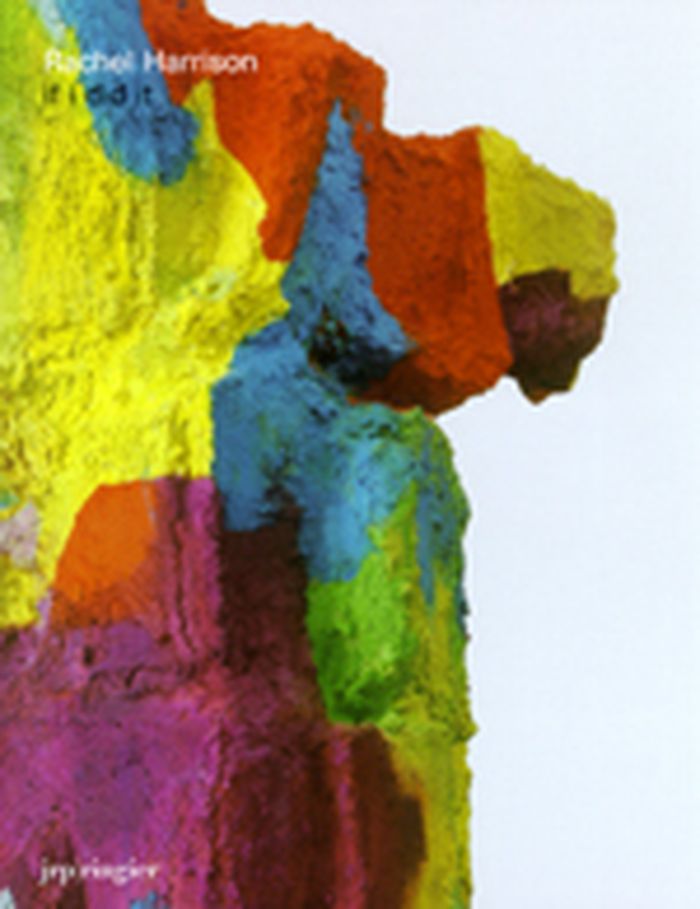
Gracing the cover jacket of Rachel Harrison's highly anticipated second monograph is an informal monument to the man who holds the Americas' namesake. The only hint to this memorial for the 15th century Italian explorer, Amerigo Vespucci, is an apple resting on an outcropping of neon-green cement; of course the fact that the apple is not only artificial but has a bite taken out of it suggests otherwise to the discovery of these "Edenic" continents. This slight yet important fact raises the basic concept of if i did it: the active disavowal of art's political function as a museological testament to the "progress" of social history. By tossing off this monumental propensity, Harrison builds "antimonuments;" not so much sculptures but lumpen aggregates of pop psychology. In addition to Vespucci, throughout the book, one finds that celebrities Johnny Depp and Tiger Woods are included in a pantheon with John Locke and 18th century Corsican revolutionary Pasquale Paoli, meanwhile Al Gore checks the temperature, Claude Levi-Strauss checks the door with a taxidermied hen and rooster and a bi-curious Alexander the Great is the master of ceremonies. The title, taken from O.J. Simpson's infamous "hypothetical" account of his murder of Nicole Brown Simpson and Donald Goldman, groups this role call of high- and low- brow idols into a nonhierarchical tableau where cultural and political value are allotted only where one sees fit.
Rachel Harrison If I did it
Actions:
Prix:
$56.00
(disponible sur commande)
Résumé:
Gracing the cover jacket of Rachel Harrison's highly anticipated second monograph is an informal monument to the man who holds the Americas' namesake. The only hint to this memorial for the 15th century Italian explorer, Amerigo Vespucci, is an apple resting on an outcropping of neon-green cement; of course the fact that the apple is not only artificial but has a bite taken out of it suggests otherwise to the discovery of these "Edenic" continents. This slight yet important fact raises the basic concept of if i did it: the active disavowal of art's political function as a museological testament to the "progress" of social history. By tossing off this monumental propensity, Harrison builds "antimonuments;" not so much sculptures but lumpen aggregates of pop psychology. In addition to Vespucci, throughout the book, one finds that celebrities Johnny Depp and Tiger Woods are included in a pantheon with John Locke and 18th century Corsican revolutionary Pasquale Paoli, meanwhile Al Gore checks the temperature, Claude Levi-Strauss checks the door with a taxidermied hen and rooster and a bi-curious Alexander the Great is the master of ceremonies. The title, taken from O.J. Simpson's infamous "hypothetical" account of his murder of Nicole Brown Simpson and Donald Goldman, groups this role call of high- and low- brow idols into a nonhierarchical tableau where cultural and political value are allotted only where one sees fit.
Classification:
livres
livres
Publication:
mars 2008, Zurich
mars 2008, Zurich
Classification:
livres
livres
Actions:
Prix:
$62.50
(disponible sur commande)
Résumé:
The avant-garde movements of Central Europe were an integral part of modernism’s evolution as it reached its peak throughout the continent during the 1920s. Written documents--manifestoes, artists’ statements, and reviews--were the lifeblood of these movements and, during the periods when political events conspired to isolate them, one of their few means of communication(...)
$62.50
(disponible sur commande)
Résumé:
The avant-garde movements of Central Europe were an integral part of modernism’s evolution as it reached its peak throughout the continent during the 1920s. Written documents--manifestoes, artists’ statements, and reviews--were the lifeblood of these movements and, during the periods when political events conspired to isolate them, one of their few means of communication(...)
Sujet:
Modernisme
Modernisme
Publication:
septembre 2002, Cambridge, Mass.
septembre 2002, Cambridge, Mass.
Titre:
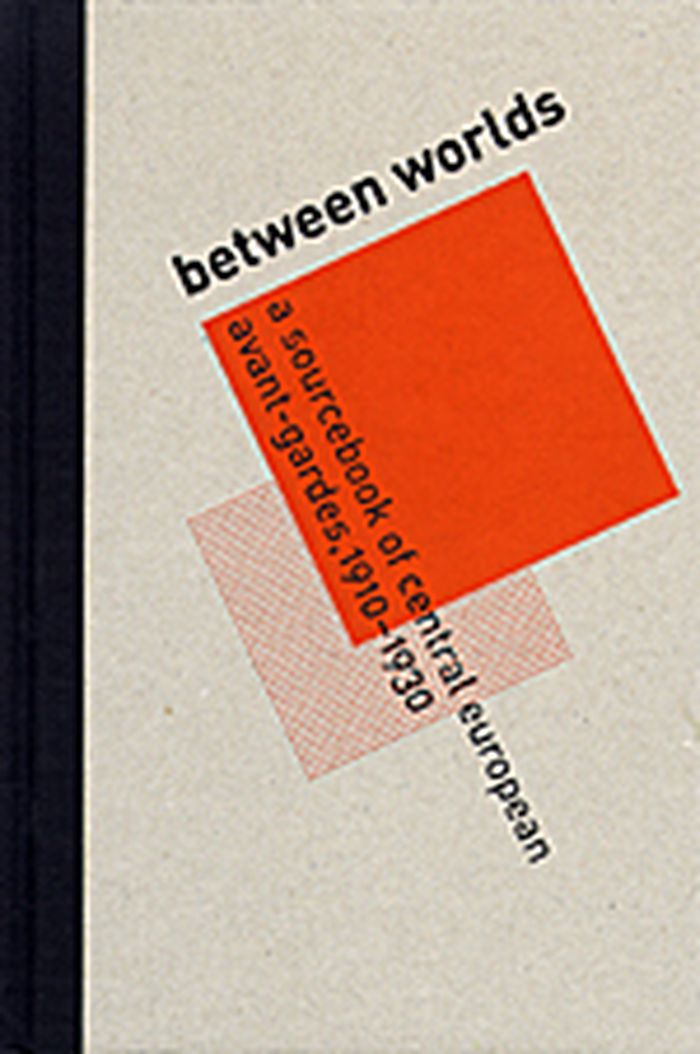
Between worlds : a sourcebook of Central European avant-garde, 1910-1930
Actions:
Prix:
$62.50
(disponible sur commande)
Résumé:
The avant-garde movements of Central Europe were an integral part of modernism’s evolution as it reached its peak throughout the continent during the 1920s. Written documents--manifestoes, artists’ statements, and reviews--were the lifeblood of these movements and, during the periods when political events conspired to isolate them, one of their few means of communication and exchange. Much of this crucial evidence has become lost to us, and the artistic avant-gardes of Central Europe have been a blind spot of modernist studies. Until their narratives have been recovered, the story of modernism will remain incomplete. In this book an international team of scholars has selected an essential compendium of documents that take an important step toward regaining this lost perspective. "Between worlds" contains primary documents of the avant-gardes in Austria, the Czech lands, Germany, Hungary, Poland, Romania, and Yugoslavia from 1910 to 1930. The manifestoes and magazines of Western European radical art circles are well known to Western scholars, but few have researched the pages of magazines such as Zenit, Integral, Punct, 75 HP, Tank, and Ma. We know about Italian Futurism but not about Polish Futurism. Few Westerners are aware that French surrealist magazines drew much of their inspiration from Czech publications. The hundreds of documents in the book, almost all of them translated into English for the first time, bring back into circulation landmark texts by the major writers, editors, artists, magazines, and movements of Central Europe. With this publication they are restored to their rightful place in the pantheon of modernism.
Between worlds : a sourcebook of Central European avant-garde, 1910-1930
Actions:
Prix:
$62.50
(disponible sur commande)
Résumé:
The avant-garde movements of Central Europe were an integral part of modernism’s evolution as it reached its peak throughout the continent during the 1920s. Written documents--manifestoes, artists’ statements, and reviews--were the lifeblood of these movements and, during the periods when political events conspired to isolate them, one of their few means of communication and exchange. Much of this crucial evidence has become lost to us, and the artistic avant-gardes of Central Europe have been a blind spot of modernist studies. Until their narratives have been recovered, the story of modernism will remain incomplete. In this book an international team of scholars has selected an essential compendium of documents that take an important step toward regaining this lost perspective. "Between worlds" contains primary documents of the avant-gardes in Austria, the Czech lands, Germany, Hungary, Poland, Romania, and Yugoslavia from 1910 to 1930. The manifestoes and magazines of Western European radical art circles are well known to Western scholars, but few have researched the pages of magazines such as Zenit, Integral, Punct, 75 HP, Tank, and Ma. We know about Italian Futurism but not about Polish Futurism. Few Westerners are aware that French surrealist magazines drew much of their inspiration from Czech publications. The hundreds of documents in the book, almost all of them translated into English for the first time, bring back into circulation landmark texts by the major writers, editors, artists, magazines, and movements of Central Europe. With this publication they are restored to their rightful place in the pantheon of modernism.
Classification:
livres
livres
Publication:
septembre 2002, Cambridge, Mass.
septembre 2002, Cambridge, Mass.
Sujet:
Modernisme
Modernisme


