


10583 Résultats
Classification:
livres
livres
Titre:
The Craftsman
The Craftsman
Actions:
Prix:
$27.50
(disponible sur commande)
Résumé:
«As Richard Sennett makes clear in this lucid and compelling book, craftsmanship one connected people to their work by conferring pride and meaning. The loss of craftmanship and of a society that values it has impoverished us in ways we have long forgotten but Sennett helps us understand.» Robert B. Reich
$27.50
(disponible sur commande)
Résumé:
«As Richard Sennett makes clear in this lucid and compelling book, craftsmanship one connected people to their work by conferring pride and meaning. The loss of craftmanship and of a society that values it has impoverished us in ways we have long forgotten but Sennett helps us understand.» Robert B. Reich
Titre:
The Craftsman
Actions:
Prix:
$27.50
(disponible sur commande)
Résumé:
«As Richard Sennett makes clear in this lucid and compelling book, craftsmanship one connected people to their work by conferring pride and meaning. The loss of craftmanship and of a society that values it has impoverished us in ways we have long forgotten but Sennett helps us understand.» Robert B. Reich
The Craftsman
Actions:
Prix:
$27.50
(disponible sur commande)
Résumé:
«As Richard Sennett makes clear in this lucid and compelling book, craftsmanship one connected people to their work by conferring pride and meaning. The loss of craftmanship and of a society that values it has impoverished us in ways we have long forgotten but Sennett helps us understand.» Robert B. Reich
Classification:
livres
livres
Publication:
mars 2008, New Haven, London
mars 2008, New Haven, London
Sujet:
Théorie de l’architecture
Théorie de l’architecture
Classification:
livres
livres
Actions:
Prix:
$29.95
(disponible sur commande)
Résumé:
When it was first released in 1962, The Shape of Time presented a radically new approach to the study of art history. Drawing upon new insights in fields such as anthropology and linguistics, George Kubler replaced the notion of style as the basis for histories of art with the concept of historical sequence and continuous change across time. Kubler’s classic work is now(...)
$29.95
(disponible sur commande)
Résumé:
When it was first released in 1962, The Shape of Time presented a radically new approach to the study of art history. Drawing upon new insights in fields such as anthropology and linguistics, George Kubler replaced the notion of style as the basis for histories of art with the concept of historical sequence and continuous change across time. Kubler’s classic work is now(...)
Titre:
The shape of time: remarks on the history of things
Actions:
Prix:
$29.95
(disponible sur commande)
Résumé:
When it was first released in 1962, The Shape of Time presented a radically new approach to the study of art history. Drawing upon new insights in fields such as anthropology and linguistics, George Kubler replaced the notion of style as the basis for histories of art with the concept of historical sequence and continuous change across time. Kubler’s classic work is now made available in a freshly designed edition
The shape of time: remarks on the history of things
Actions:
Prix:
$29.95
(disponible sur commande)
Résumé:
When it was first released in 1962, The Shape of Time presented a radically new approach to the study of art history. Drawing upon new insights in fields such as anthropology and linguistics, George Kubler replaced the notion of style as the basis for histories of art with the concept of historical sequence and continuous change across time. Kubler’s classic work is now made available in a freshly designed edition
Classification:
livres
livres
Publication:
février 2008, New Haven & London
février 2008, New Haven & London
Sujet:
Théorie de l’art
Théorie de l’art
Classification:
livres
livres
Actions:
Prix:
$24.00
(disponible sur commande)
Résumé:
A radical reconceptualization of modernism, this book traces the appearance of the modern artist to the Paris of the 1830s and links the emergence of an enduring modernist aesthetic to the fleeting forms of popular culture.
$24.00
(disponible sur commande)
Résumé:
A radical reconceptualization of modernism, this book traces the appearance of the modern artist to the Paris of the 1830s and links the emergence of an enduring modernist aesthetic to the fleeting forms of popular culture.
Titre:
Popular Bohemia: modernism and urban culture in nineteenth-century Paris
Actions:
Prix:
$24.00
(disponible sur commande)
Résumé:
A radical reconceptualization of modernism, this book traces the appearance of the modern artist to the Paris of the 1830s and links the emergence of an enduring modernist aesthetic to the fleeting forms of popular culture.
Popular Bohemia: modernism and urban culture in nineteenth-century Paris
Actions:
Prix:
$24.00
(disponible sur commande)
Résumé:
A radical reconceptualization of modernism, this book traces the appearance of the modern artist to the Paris of the 1830s and links the emergence of an enduring modernist aesthetic to the fleeting forms of popular culture.
Classification:
livres
livres
Publication:
mars 2008, Boston
mars 2008, Boston
Sujet:
Théorie de l’urbanisme
Théorie de l’urbanisme
Classification:
livres
livres
Titre:
Persons and things
Persons and things
Actions:
Prix:
$35.00
(disponible sur commande)
Résumé:
Moving effortlessly between symbolist poetry and Barbie dolls, artificial intelligence and Kleist, Kant, and Winnicott, Barbara Johnson not only clarifies psychological and social dynamics; she also re-dramatizes the work of important tropes—without ever losing sight of the ethical imperative with which she begins: the need to treat persons as persons. In "Persons and(...)
$35.00
(disponible sur commande)
Résumé:
Moving effortlessly between symbolist poetry and Barbie dolls, artificial intelligence and Kleist, Kant, and Winnicott, Barbara Johnson not only clarifies psychological and social dynamics; she also re-dramatizes the work of important tropes—without ever losing sight of the ethical imperative with which she begins: the need to treat persons as persons. In "Persons and(...)
Titre:
Persons and things
Actions:
Prix:
$35.00
(disponible sur commande)
Résumé:
Moving effortlessly between symbolist poetry and Barbie dolls, artificial intelligence and Kleist, Kant, and Winnicott, Barbara Johnson not only clarifies psychological and social dynamics; she also re-dramatizes the work of important tropes—without ever losing sight of the ethical imperative with which she begins: the need to treat persons as persons. In "Persons and Things", Johnson turns deconstruction around to make a fundamental contribution to the new aesthetics. She begins with the most elementary thing we know : deconstruction calls attention to gaps and reveals that their claims upon us are fraudulent. Johnson revolutionizes the method by showing that the inanimate thing exposed as a delusion is central to fantasy life, that fantasy life, however deluded, should be taken seriously, and that although a work of art “is formed around something missing,” this “void is its vanishing point, not its essence.” She shows deftly and delicately that the void inside Keats’s urn, Heidegger’s jug, or Wallace Stevens’s jar forms the center around which we tend to organize our worlds. The new aesthetics should restore fluidities between persons and things. In pursuing it, Johnson calls upon Ovid, Keats, Poe, Plath, and others who have inhabited this in-between space. The entire process operates via a subtlety that only a critic of Johnson’s caliber could reveal to us.
Persons and things
Actions:
Prix:
$35.00
(disponible sur commande)
Résumé:
Moving effortlessly between symbolist poetry and Barbie dolls, artificial intelligence and Kleist, Kant, and Winnicott, Barbara Johnson not only clarifies psychological and social dynamics; she also re-dramatizes the work of important tropes—without ever losing sight of the ethical imperative with which she begins: the need to treat persons as persons. In "Persons and Things", Johnson turns deconstruction around to make a fundamental contribution to the new aesthetics. She begins with the most elementary thing we know : deconstruction calls attention to gaps and reveals that their claims upon us are fraudulent. Johnson revolutionizes the method by showing that the inanimate thing exposed as a delusion is central to fantasy life, that fantasy life, however deluded, should be taken seriously, and that although a work of art “is formed around something missing,” this “void is its vanishing point, not its essence.” She shows deftly and delicately that the void inside Keats’s urn, Heidegger’s jug, or Wallace Stevens’s jar forms the center around which we tend to organize our worlds. The new aesthetics should restore fluidities between persons and things. In pursuing it, Johnson calls upon Ovid, Keats, Poe, Plath, and others who have inhabited this in-between space. The entire process operates via a subtlety that only a critic of Johnson’s caliber could reveal to us.
Classification:
livres
livres
Publication:
avril 2008, Cambridge, London
avril 2008, Cambridge, London
Sujet:
Théorie de l’architecture
Théorie de l’architecture
Classification:
livres
livres
Titre:
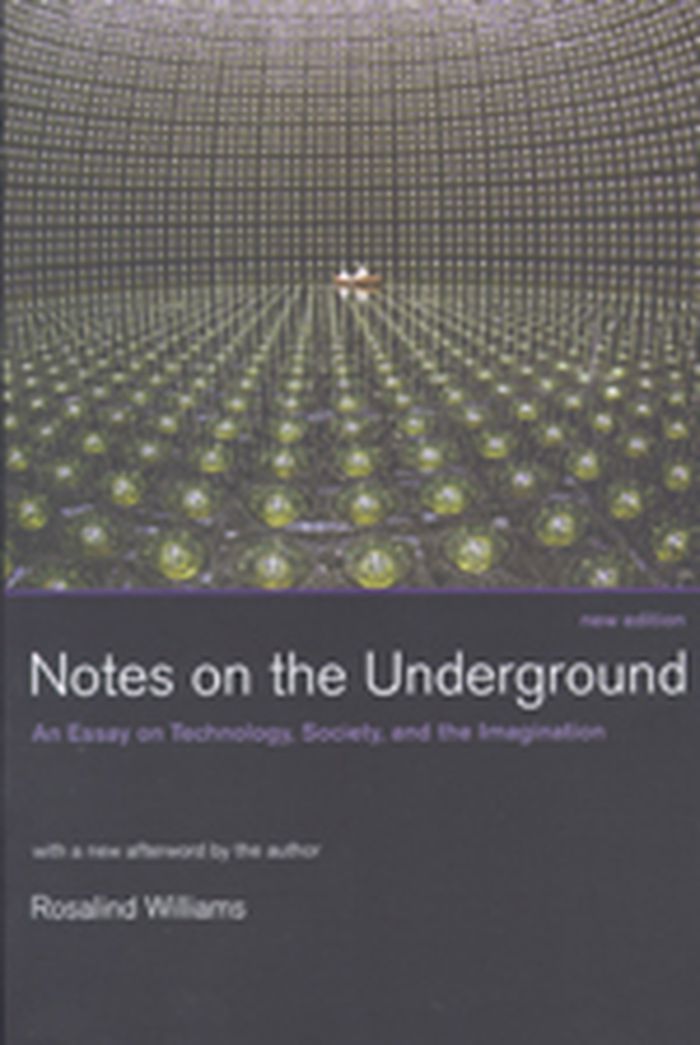
Notes on the Underground
Notes on the Underground
Actions:
Prix:
$24.95
(disponible sur commande)
Résumé:
The underground has always played a prominent role in human imaginings, both as a place of refuge and as a source of fear. The late nineteenth century saw a new fascination with the underground as Western societies tried to cope with the pervasive changes of a new social and technological order. In Notes on the Underground, Rosalind Williams takes us inside that critical(...)
$24.95
(disponible sur commande)
Résumé:
The underground has always played a prominent role in human imaginings, both as a place of refuge and as a source of fear. The late nineteenth century saw a new fascination with the underground as Western societies tried to cope with the pervasive changes of a new social and technological order. In Notes on the Underground, Rosalind Williams takes us inside that critical(...)
Titre:
Notes on the Underground
Actions:
Prix:
$24.95
(disponible sur commande)
Résumé:
The underground has always played a prominent role in human imaginings, both as a place of refuge and as a source of fear. The late nineteenth century saw a new fascination with the underground as Western societies tried to cope with the pervasive changes of a new social and technological order. In Notes on the Underground, Rosalind Williams takes us inside that critical historical moment, giving equal coverage to actual and imaginary undergrounds. She looks at the real-life invasions of the underground that occurred as modern urban infrastructures of sewers and subways were laid, and at the simultaneous archaeological excavations that were unearthing both human history and the planet’s deep past. She also examines the subterranean stories of Verne, Wells, Forster, Hugo, Bulwer-Lytton, and other writers who proposed alternative visions of the coming technological civilization. Williams argues that these imagined and real underground environments provide models of human life in a world dominated by human presence and offer a prophetic look at today’s technology-dominated society. In a new afterword written for this edition, Williams points out that her book traces the emergence in the nineteenth century of what we would now call an environmental consciousness--an awareness that there will be consequences when humans live in a sealed, finite environment. Today we are more aware than ever of our limited biosphere and how vulnerable it is. Notes on the Underground, now even more than when it first appeared, offers a guide to the human, cultural, and technical consequences of what Williams calls "the human empire on earth."
Notes on the Underground
Actions:
Prix:
$24.95
(disponible sur commande)
Résumé:
The underground has always played a prominent role in human imaginings, both as a place of refuge and as a source of fear. The late nineteenth century saw a new fascination with the underground as Western societies tried to cope with the pervasive changes of a new social and technological order. In Notes on the Underground, Rosalind Williams takes us inside that critical historical moment, giving equal coverage to actual and imaginary undergrounds. She looks at the real-life invasions of the underground that occurred as modern urban infrastructures of sewers and subways were laid, and at the simultaneous archaeological excavations that were unearthing both human history and the planet’s deep past. She also examines the subterranean stories of Verne, Wells, Forster, Hugo, Bulwer-Lytton, and other writers who proposed alternative visions of the coming technological civilization. Williams argues that these imagined and real underground environments provide models of human life in a world dominated by human presence and offer a prophetic look at today’s technology-dominated society. In a new afterword written for this edition, Williams points out that her book traces the emergence in the nineteenth century of what we would now call an environmental consciousness--an awareness that there will be consequences when humans live in a sealed, finite environment. Today we are more aware than ever of our limited biosphere and how vulnerable it is. Notes on the Underground, now even more than when it first appeared, offers a guide to the human, cultural, and technical consequences of what Williams calls "the human empire on earth."
Classification:
livres
livres
Publication:
mars 2008, Cambridge
mars 2008, Cambridge
Sujet:
Théorie de l’architecture
Théorie de l’architecture
Classification:
livres
livres

Actions:
Prix:
$25.95
(disponible sur commande)
Résumé:
"This is a book about science, technology, and love," writes Sherry Turkle. In it, we learn how a love for science can start with a love for an object--a microscope, a modem, a mud pie, a pair of dice, a fishing rod. Objects fire imagination and set young people on a path to a career in science. In this collection, distinguished scientists, engineers, and designers as(...)
$25.95
(disponible sur commande)
Résumé:
"This is a book about science, technology, and love," writes Sherry Turkle. In it, we learn how a love for science can start with a love for an object--a microscope, a modem, a mud pie, a pair of dice, a fishing rod. Objects fire imagination and set young people on a path to a career in science. In this collection, distinguished scientists, engineers, and designers as(...)
Titre:
Falling for science: objects in mind
Actions:
Prix:
$25.95
(disponible sur commande)
Résumé:
"This is a book about science, technology, and love," writes Sherry Turkle. In it, we learn how a love for science can start with a love for an object--a microscope, a modem, a mud pie, a pair of dice, a fishing rod. Objects fire imagination and set young people on a path to a career in science. In this collection, distinguished scientists, engineers, and designers as well as twenty-five years of MIT students describe how objects encountered in childhood became part of the fabric of their scientific selves. In two major essays that frame the collection, Turkle tells a story of inspiration and connection through objects that is often neglected in standard science education and in our preoccupation with the virtual. The senior scientists' essays trace the arc of a life: the gears of a toy car introduce the chain of cause and effect to artificial intelligence pioneer Seymour Papert; microscopes disclose the mystery of how things work to MIT President and neuroanatomist Susan Hockfield; architect Moshe Safdie describes how his boyhood fascination with steps, terraces, and the wax hexagons of beehives lead him to a life immersed in the complexities of design. The student essays tell stories that echo these narratives: plastic eggs in an Easter basket reveal the power of centripetal force; experiments with baking illuminate the geology of planets; LEGO bricks model worlds, carefully engineered and colonized. All of these voices--students and mentors-testify to the power of objects to awaken and inform young scientific minds. This is a truth that is simple, intuitive, and easily overlooked.
Falling for science: objects in mind
Actions:
Prix:
$25.95
(disponible sur commande)
Résumé:
"This is a book about science, technology, and love," writes Sherry Turkle. In it, we learn how a love for science can start with a love for an object--a microscope, a modem, a mud pie, a pair of dice, a fishing rod. Objects fire imagination and set young people on a path to a career in science. In this collection, distinguished scientists, engineers, and designers as well as twenty-five years of MIT students describe how objects encountered in childhood became part of the fabric of their scientific selves. In two major essays that frame the collection, Turkle tells a story of inspiration and connection through objects that is often neglected in standard science education and in our preoccupation with the virtual. The senior scientists' essays trace the arc of a life: the gears of a toy car introduce the chain of cause and effect to artificial intelligence pioneer Seymour Papert; microscopes disclose the mystery of how things work to MIT President and neuroanatomist Susan Hockfield; architect Moshe Safdie describes how his boyhood fascination with steps, terraces, and the wax hexagons of beehives lead him to a life immersed in the complexities of design. The student essays tell stories that echo these narratives: plastic eggs in an Easter basket reveal the power of centripetal force; experiments with baking illuminate the geology of planets; LEGO bricks model worlds, carefully engineered and colonized. All of these voices--students and mentors-testify to the power of objects to awaken and inform young scientific minds. This is a truth that is simple, intuitive, and easily overlooked.
Classification:
livres
livres
Publication:
mai 2008, Cambridge, London
mai 2008, Cambridge, London
Sujet:
Théorie du design
Théorie du design
Classification:
livres
livres
Actions:
Prix:
$42.95
(disponible sur commande)
Résumé:
In this book, Anthony Vidler examines the work of four historians of architectural modernism and the ways in which their histories were constructed as more or less overt programs for the theory and practice of design in a contemporary context. Vidler looks at the historical approaches of Emil Kaufmann, Colin Rowe, Reyner Banham, and Manfredo Tafuri, and the specific(...)
$42.95
(disponible sur commande)
Résumé:
In this book, Anthony Vidler examines the work of four historians of architectural modernism and the ways in which their histories were constructed as more or less overt programs for the theory and practice of design in a contemporary context. Vidler looks at the historical approaches of Emil Kaufmann, Colin Rowe, Reyner Banham, and Manfredo Tafuri, and the specific(...)
Titre:
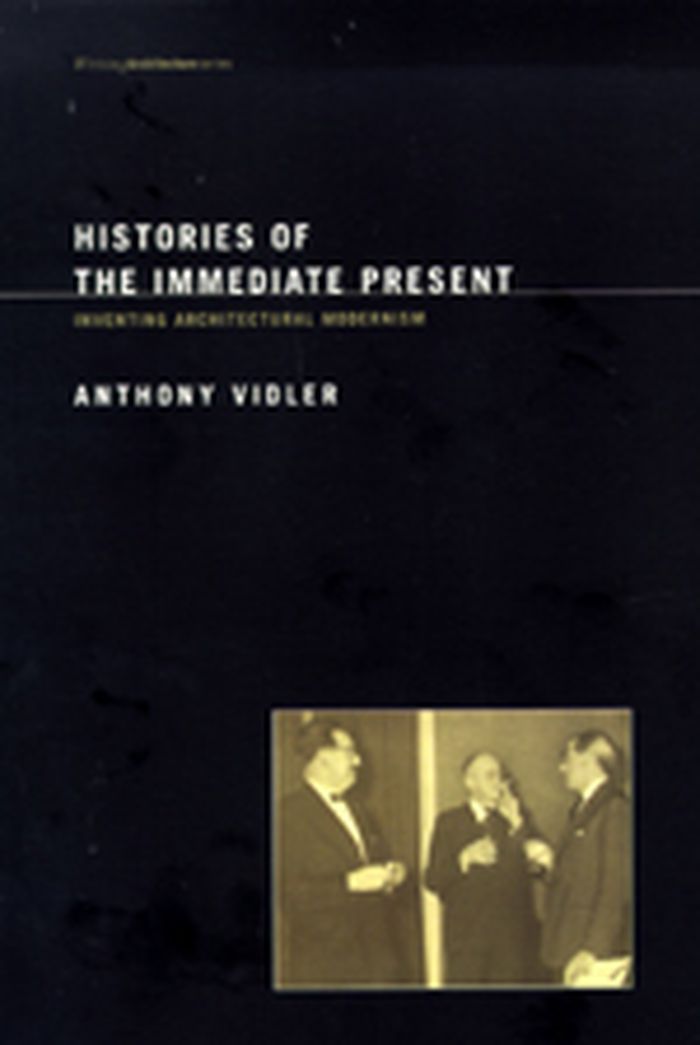
Histories of the immediate present: inventing architectural modernism
Actions:
Prix:
$42.95
(disponible sur commande)
Résumé:
In this book, Anthony Vidler examines the work of four historians of architectural modernism and the ways in which their histories were constructed as more or less overt programs for the theory and practice of design in a contemporary context. Vidler looks at the historical approaches of Emil Kaufmann, Colin Rowe, Reyner Banham, and Manfredo Tafuri, and the specific versions of modernism advanced by their historical narratives. Vidler shows that the modernism conceived by Kaufmann was, like the late Enlightenment projects he revered, one of pure, geometrical forms and elemental composition; that of Rowe saw mannerist ambiguity and complexity in contemporary design; Banham's modernism took its cue from the aspirations of the futurists; and the "Renaissance modernism" of Tafuri found its source in the division between the technical experimentation of Brunelleschi and the cultural nostalgia of Alberti.
Histories of the immediate present: inventing architectural modernism
Actions:
Prix:
$42.95
(disponible sur commande)
Résumé:
In this book, Anthony Vidler examines the work of four historians of architectural modernism and the ways in which their histories were constructed as more or less overt programs for the theory and practice of design in a contemporary context. Vidler looks at the historical approaches of Emil Kaufmann, Colin Rowe, Reyner Banham, and Manfredo Tafuri, and the specific versions of modernism advanced by their historical narratives. Vidler shows that the modernism conceived by Kaufmann was, like the late Enlightenment projects he revered, one of pure, geometrical forms and elemental composition; that of Rowe saw mannerist ambiguity and complexity in contemporary design; Banham's modernism took its cue from the aspirations of the futurists; and the "Renaissance modernism" of Tafuri found its source in the division between the technical experimentation of Brunelleschi and the cultural nostalgia of Alberti.
Classification:
livres
livres
Publication:
mars 2008, Cambridge
mars 2008, Cambridge
Sujet:
Théorie de l’architecture
Théorie de l’architecture
Classification:
livres
livres

Actions:
Prix:
$19.95
(disponible sur commande)
Résumé:
Welcome to Blubberland--a world of quadruple-garaged mansions, vast malls, gated communities, stretch limos, and posh resorts. Blubberland is a place, but it is also a state of mind: we expect to be happy (trophy house, SUV in the driveway, home entertainment system, pension fund, cosmetic surgery), but in fact we've grown increasingly bloated, bored, and miserable. In(...)
$19.95
(disponible sur commande)
Résumé:
Welcome to Blubberland--a world of quadruple-garaged mansions, vast malls, gated communities, stretch limos, and posh resorts. Blubberland is a place, but it is also a state of mind: we expect to be happy (trophy house, SUV in the driveway, home entertainment system, pension fund, cosmetic surgery), but in fact we've grown increasingly bloated, bored, and miserable. In(...)
Titre:
Blubberland: the dangers of happiness
Actions:
Prix:
$19.95
(disponible sur commande)
Résumé:
Welcome to Blubberland--a world of quadruple-garaged mansions, vast malls, gated communities, stretch limos, and posh resorts. Blubberland is a place, but it is also a state of mind: we expect to be happy (trophy house, SUV in the driveway, home entertainment system, pension fund, cosmetic surgery), but in fact we've grown increasingly bloated, bored, and miserable. In Blubberland, award-winning critic Elizabeth Farrelly looks at our "superfluous superfluity," our huge eco-footprint, and asks why we find it so hard to abandon habits we know to be destructive. Why can't we build human-scale cities, design meaningful public spaces, eat reasonable meals, and stop assaulting nature? Farrelly, trained as an architect, begins this story with architecture, urban sprawl, and housing, but she does not end there. She also looks at "affluenza," childhood asthma, diabetes, addiction, beauty, ugliness, narcissism, climate change, mega-churches, big box retailers, sustainability, depression, anorexia, and the links that collect all of these issues under the same roof--the roof, as it were, of the McMansion. As "big" becomes more and more pervasive, and success is seen in increasingly measurable and material terms, the goal of happiness jeopardizes our survival. Blubberland is a smart, thoughtful, and stylish argument for turning things around.
Blubberland: the dangers of happiness
Actions:
Prix:
$19.95
(disponible sur commande)
Résumé:
Welcome to Blubberland--a world of quadruple-garaged mansions, vast malls, gated communities, stretch limos, and posh resorts. Blubberland is a place, but it is also a state of mind: we expect to be happy (trophy house, SUV in the driveway, home entertainment system, pension fund, cosmetic surgery), but in fact we've grown increasingly bloated, bored, and miserable. In Blubberland, award-winning critic Elizabeth Farrelly looks at our "superfluous superfluity," our huge eco-footprint, and asks why we find it so hard to abandon habits we know to be destructive. Why can't we build human-scale cities, design meaningful public spaces, eat reasonable meals, and stop assaulting nature? Farrelly, trained as an architect, begins this story with architecture, urban sprawl, and housing, but she does not end there. She also looks at "affluenza," childhood asthma, diabetes, addiction, beauty, ugliness, narcissism, climate change, mega-churches, big box retailers, sustainability, depression, anorexia, and the links that collect all of these issues under the same roof--the roof, as it were, of the McMansion. As "big" becomes more and more pervasive, and success is seen in increasingly measurable and material terms, the goal of happiness jeopardizes our survival. Blubberland is a smart, thoughtful, and stylish argument for turning things around.
Classification:
livres
livres
Publication:
mars 2008, Cambridge, London
mars 2008, Cambridge, London
Sujet:
Théorie de l’urbanisme
Théorie de l’urbanisme
Classification:
livres
livres

Titre:
Irigaray for architects
Irigaray for architects
Actions:
Prix:
$37.50
(disponible en magasin)
Résumé:
This book, the third in the Thinkers for Architects series, examines the relevance of Luce Irigaray's work for architecture. Eight thematic chapters explore the bodily, spatio-temporal, political and cultural value of her ideas for making, discussing and experiencing architecture. In particular, each chapter makes accessible Irgaray's ideas about 'sexed' spaces with(...)
$37.50
(disponible en magasin)
Résumé:
This book, the third in the Thinkers for Architects series, examines the relevance of Luce Irigaray's work for architecture. Eight thematic chapters explore the bodily, spatio-temporal, political and cultural value of her ideas for making, discussing and experiencing architecture. In particular, each chapter makes accessible Irgaray's ideas about 'sexed' spaces with(...)
Titre:
Irigaray for architects
Actions:
Prix:
$37.50
(disponible en magasin)
Résumé:
This book, the third in the Thinkers for Architects series, examines the relevance of Luce Irigaray's work for architecture. Eight thematic chapters explore the bodily, spatio-temporal, political and cultural value of her ideas for making, discussing and experiencing architecture. In particular, each chapter makes accessible Irgaray's ideas about 'sexed' spaces with reference to her key texts.
Irigaray for architects
Actions:
Prix:
$37.50
(disponible en magasin)
Résumé:
This book, the third in the Thinkers for Architects series, examines the relevance of Luce Irigaray's work for architecture. Eight thematic chapters explore the bodily, spatio-temporal, political and cultural value of her ideas for making, discussing and experiencing architecture. In particular, each chapter makes accessible Irgaray's ideas about 'sexed' spaces with reference to her key texts.
Classification:
livres
livres
Publication:
novembre 2007, London, New York
novembre 2007, London, New York
Sujet:
Théorie de l’architecture
Théorie de l’architecture
Classification:
livres
livres
Prix:
$50.95
(disponible sur commande)
Résumé:
Contributions by Agnes Förster, Alain Thierstein, Christian Kruse, Simin Davoudi, Maurits Schaafsma, Wilhelm Natrup, Reinhard Frei, Wil Zonneveld, Heiri Leuthold, Ursula Stein, Henrik Schultz, Julian Petrin, Remo Burkhard, Eckart Lange, Urs Primas, Meret Wandeler, Beatrix Bencseky. For the majority of politicians, planners, institutions, and residents the features of(...)
$50.95
(disponible sur commande)
Résumé:
Contributions by Agnes Förster, Alain Thierstein, Christian Kruse, Simin Davoudi, Maurits Schaafsma, Wilhelm Natrup, Reinhard Frei, Wil Zonneveld, Heiri Leuthold, Ursula Stein, Henrik Schultz, Julian Petrin, Remo Burkhard, Eckart Lange, Urs Primas, Meret Wandeler, Beatrix Bencseky. For the majority of politicians, planners, institutions, and residents the features of(...)
Sujet:
Théorie de l’urbanisme
Théorie de l’urbanisme
Publication:
février 2008, Baden
février 2008, Baden
Titre:
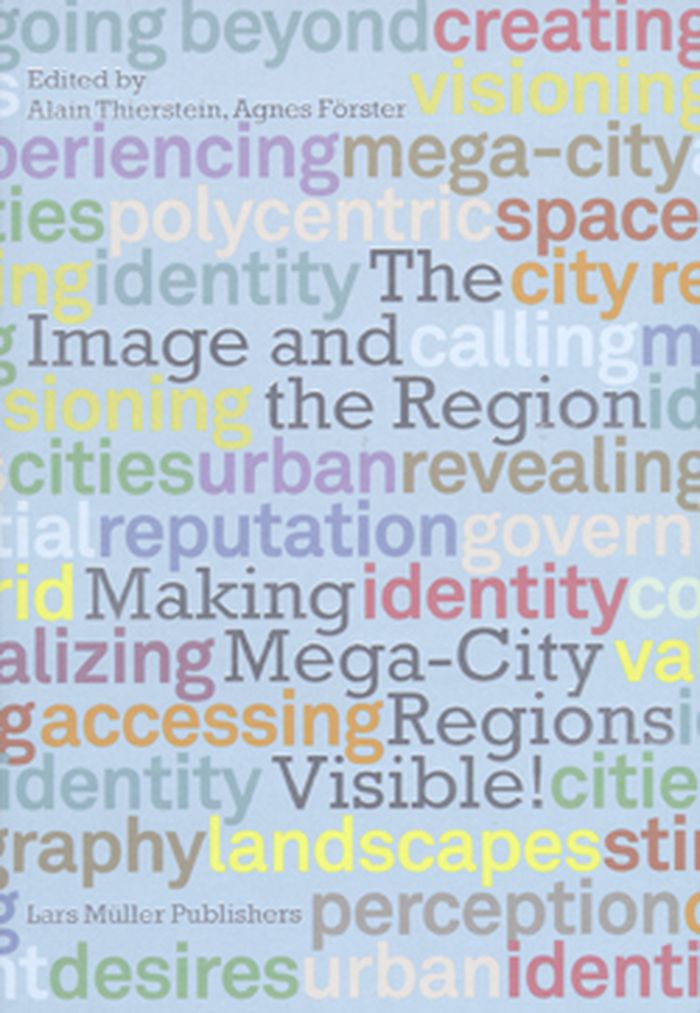
The image and the region - making mega-city regions visible!
Actions:
Prix:
$50.95
(disponible sur commande)
Résumé:
Contributions by Agnes Förster, Alain Thierstein, Christian Kruse, Simin Davoudi, Maurits Schaafsma, Wilhelm Natrup, Reinhard Frei, Wil Zonneveld, Heiri Leuthold, Ursula Stein, Henrik Schultz, Julian Petrin, Remo Burkhard, Eckart Lange, Urs Primas, Meret Wandeler, Beatrix Bencseky. For the majority of politicians, planners, institutions, and residents the features of mega-city regions remain invisible. They are scarcely charted; there are no concepts for representing them or any direct sensory understanding of them in everyday life. The book is based on the understanding that the visual depiction of mega-city regions is fundamental to identifying, acting, and developing within existing concentrations of urban populations. Through essays from various disciplines the book approaches the phenomenon and discusses the necessity to visualize mega-city regions.
The image and the region - making mega-city regions visible!
Actions:
Prix:
$50.95
(disponible sur commande)
Résumé:
Contributions by Agnes Förster, Alain Thierstein, Christian Kruse, Simin Davoudi, Maurits Schaafsma, Wilhelm Natrup, Reinhard Frei, Wil Zonneveld, Heiri Leuthold, Ursula Stein, Henrik Schultz, Julian Petrin, Remo Burkhard, Eckart Lange, Urs Primas, Meret Wandeler, Beatrix Bencseky. For the majority of politicians, planners, institutions, and residents the features of mega-city regions remain invisible. They are scarcely charted; there are no concepts for representing them or any direct sensory understanding of them in everyday life. The book is based on the understanding that the visual depiction of mega-city regions is fundamental to identifying, acting, and developing within existing concentrations of urban populations. Through essays from various disciplines the book approaches the phenomenon and discusses the necessity to visualize mega-city regions.
Classification:
livres
livres
Publication:
février 2008, Baden
février 2008, Baden
Sujet:
Théorie de l’urbanisme
Théorie de l’urbanisme


