


4996 Résultats
Classification:
livres
livres
Prix:
$29.95
(disponible sur commande)
Résumé:
Designers and pundits explore what it means to be a designer in a corporate-driven, over-branded, global consumer culture. The book tackles design responsibility with a scope and diversity previously unseen. Forty essays and interviews espouse viewpoints covering a wide range of social, professional, political, and cultural topics including: reality branding, game design(...)
$29.95
(disponible sur commande)
Résumé:
Designers and pundits explore what it means to be a designer in a corporate-driven, over-branded, global consumer culture. The book tackles design responsibility with a scope and diversity previously unseen. Forty essays and interviews espouse viewpoints covering a wide range of social, professional, political, and cultural topics including: reality branding, game design(...)
Publication:
mai 2003, New York
mai 2003, New York
Titre:
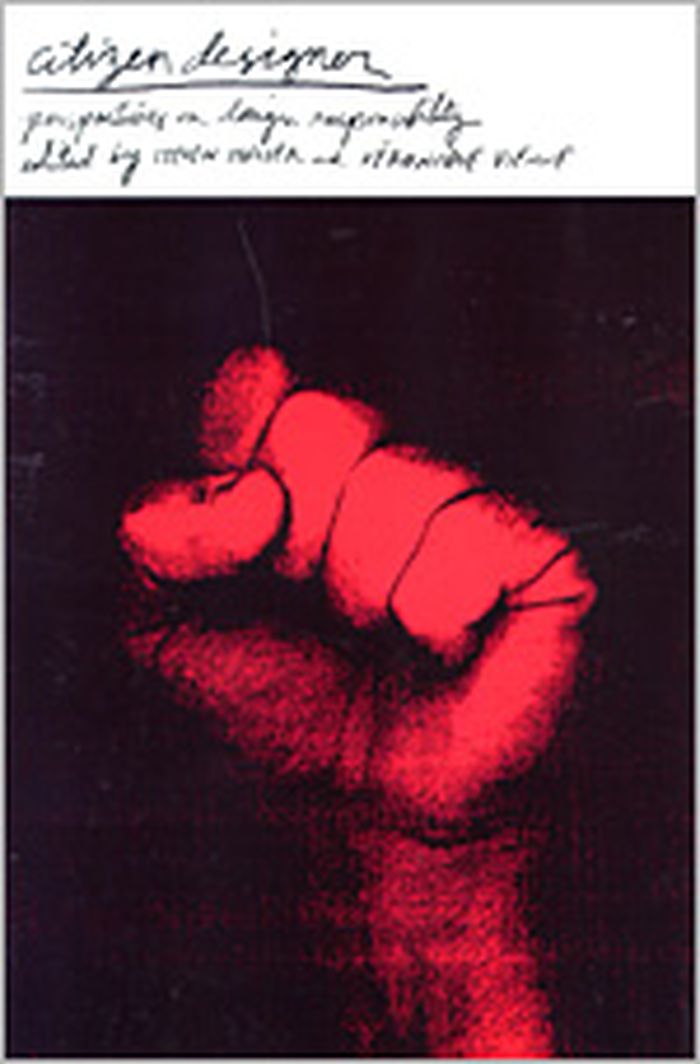
Citizen designer : perspectives on design responsibility
Actions:
Prix:
$29.95
(disponible sur commande)
Résumé:
Designers and pundits explore what it means to be a designer in a corporate-driven, over-branded, global consumer culture. The book tackles design responsibility with a scope and diversity previously unseen. Forty essays and interviews espouse viewpoints covering a wide range of social, professional, political, and cultural topics including: reality branding, game design and school violence, socially responsible advertising and exploitation, and design as a force for improving the environment. Edited by two advocates of socially responsible design, Citizen Designer responds to the tough questions being asked by today’s designers: How can a designer effect social or political change? Can design be more than a service to clients? When does a designer have to take responsibility for a client’s actions? At what point must a designer take a stand? This book encourages designers and students of design to carefully research the clients they work with; to be alert about corporate, political, and social developments; and to design socially responsible products. With essays by: Hugh Aldersey-Williams, Julie Baugnet, Leslie Becker, Roy R. Behrens, Nancy Bernard, J.D. Biersdorfer, Anne Bush, Robbie Conal, Michael Dooley, Stuart Ewen, Thomas Frank, Ken Garland, Peter Hall, Mr. Keedy, Maud Lavin, Victor Margolin, Carolyn McCarron, Katherine McCoy, David Reinfurt, Chris Riley, Chase A. Rogers, Michael Schmidt, Judith Schwartz, Matt Soar, Gunnar Swanson, Susan S. Szenasy, Teal Triggs, Tucker Viemeister, David Vogler, and Cheryl Towler Weese. And interviews with: Fabrizio Gilardino, Milton Glaser, Kalle Lasn, Robert Menard, Don Norman, Mark Randall, David Sterling, Stanley Tigerman, and Shawn Wolfe.
Citizen designer : perspectives on design responsibility
Actions:
Prix:
$29.95
(disponible sur commande)
Résumé:
Designers and pundits explore what it means to be a designer in a corporate-driven, over-branded, global consumer culture. The book tackles design responsibility with a scope and diversity previously unseen. Forty essays and interviews espouse viewpoints covering a wide range of social, professional, political, and cultural topics including: reality branding, game design and school violence, socially responsible advertising and exploitation, and design as a force for improving the environment. Edited by two advocates of socially responsible design, Citizen Designer responds to the tough questions being asked by today’s designers: How can a designer effect social or political change? Can design be more than a service to clients? When does a designer have to take responsibility for a client’s actions? At what point must a designer take a stand? This book encourages designers and students of design to carefully research the clients they work with; to be alert about corporate, political, and social developments; and to design socially responsible products. With essays by: Hugh Aldersey-Williams, Julie Baugnet, Leslie Becker, Roy R. Behrens, Nancy Bernard, J.D. Biersdorfer, Anne Bush, Robbie Conal, Michael Dooley, Stuart Ewen, Thomas Frank, Ken Garland, Peter Hall, Mr. Keedy, Maud Lavin, Victor Margolin, Carolyn McCarron, Katherine McCoy, David Reinfurt, Chris Riley, Chase A. Rogers, Michael Schmidt, Judith Schwartz, Matt Soar, Gunnar Swanson, Susan S. Szenasy, Teal Triggs, Tucker Viemeister, David Vogler, and Cheryl Towler Weese. And interviews with: Fabrizio Gilardino, Milton Glaser, Kalle Lasn, Robert Menard, Don Norman, Mark Randall, David Sterling, Stanley Tigerman, and Shawn Wolfe.
Classification:
livres
livres
Publication:
mai 2003, New York
mai 2003, New York
Classification:
livres
livres
Titre:
The language of ornament
The language of ornament
Actions:
Prix:
$22.99
(disponible sur commande)
Résumé:
Ornament, the art of decorative patterning, includes some of the most spectacular creations of human imagination and skill. Although the fashion for unadorned form pushed ornament to the(...)
$22.99
(disponible sur commande)
Résumé:
Ornament, the art of decorative patterning, includes some of the most spectacular creations of human imagination and skill. Although the fashion for unadorned form pushed ornament to the(...)
Titre:
The language of ornament
Actions:
Prix:
$22.99
(disponible sur commande)
Résumé:
Ornament, the art of decorative patterning, includes some of the most spectacular creations of human imagination and skill. Although the fashion for unadorned form pushed ornament to the margins of Western taste in the twentieth century, an ornamental revival is now under way. This book introduces the global panorama of ornament and will be of value to crafts people, collectors, and students of art history. Trilling's approach is both visual and historical. With over 200 illustrations, he presents the dazzling variety of ornament so that the reader can appreciate both its inherent form and the role it has played in everything from the monumental architecture of Mycenaean Greece to the inlaid vessels of Zhou Dynasty China, from the bronze mirrors of Early Celtic Britain to the carved and woven ornament of the Indians of Alaska and British Columbia. The characteristics of individual styles are balanced against their evolution and interaction from the Paleolithic Age to the present day. Special attention is paid to patterns that migrate across large stretches of space and time, showing how ornament becomes a record of cultural interaction through trade, conquest, and the spread of religions. Finally, Trilling explores the fate of ornament since the beginning of modernism in the early twentieth century. Modernism actually nurtured a vibrant and original ornamental style of its own, one so different from traditional ornament that its true nature went virtually unrecognized. Ornament in the postmodern era is open to any number of possible innovations, combining the modernist legacy with forms and principles from the world of traditional ornament.
The language of ornament
Actions:
Prix:
$22.99
(disponible sur commande)
Résumé:
Ornament, the art of decorative patterning, includes some of the most spectacular creations of human imagination and skill. Although the fashion for unadorned form pushed ornament to the margins of Western taste in the twentieth century, an ornamental revival is now under way. This book introduces the global panorama of ornament and will be of value to crafts people, collectors, and students of art history. Trilling's approach is both visual and historical. With over 200 illustrations, he presents the dazzling variety of ornament so that the reader can appreciate both its inherent form and the role it has played in everything from the monumental architecture of Mycenaean Greece to the inlaid vessels of Zhou Dynasty China, from the bronze mirrors of Early Celtic Britain to the carved and woven ornament of the Indians of Alaska and British Columbia. The characteristics of individual styles are balanced against their evolution and interaction from the Paleolithic Age to the present day. Special attention is paid to patterns that migrate across large stretches of space and time, showing how ornament becomes a record of cultural interaction through trade, conquest, and the spread of religions. Finally, Trilling explores the fate of ornament since the beginning of modernism in the early twentieth century. Modernism actually nurtured a vibrant and original ornamental style of its own, one so different from traditional ornament that its true nature went virtually unrecognized. Ornament in the postmodern era is open to any number of possible innovations, combining the modernist legacy with forms and principles from the world of traditional ornament.
Classification:
livres
livres
Publication:
juin 2001, London
juin 2001, London
Sujet:
Ornementation
Ornementation
Classification:
livres
livres
Actions:
Prix:
$34.95
(disponible sur commande)
Résumé:
Offers an innovative approach to understanding the cultural history of Tel Aviv by exploring the mythical dimension and texture of the city. Founded in 1909 as a "garden suburb" of the Mediterranean port of Jaffa, Tel Aviv soon became a model of Jewish self-rule and was celebrated as a jewel in the crown of Hebrew revival. Over time the city has transformed into a(...)
$34.95
(disponible sur commande)
Résumé:
Offers an innovative approach to understanding the cultural history of Tel Aviv by exploring the mythical dimension and texture of the city. Founded in 1909 as a "garden suburb" of the Mediterranean port of Jaffa, Tel Aviv soon became a model of Jewish self-rule and was celebrated as a jewel in the crown of Hebrew revival. Over time the city has transformed into a(...)
Publication:
octobre 2006, New York
octobre 2006, New York
Titre:
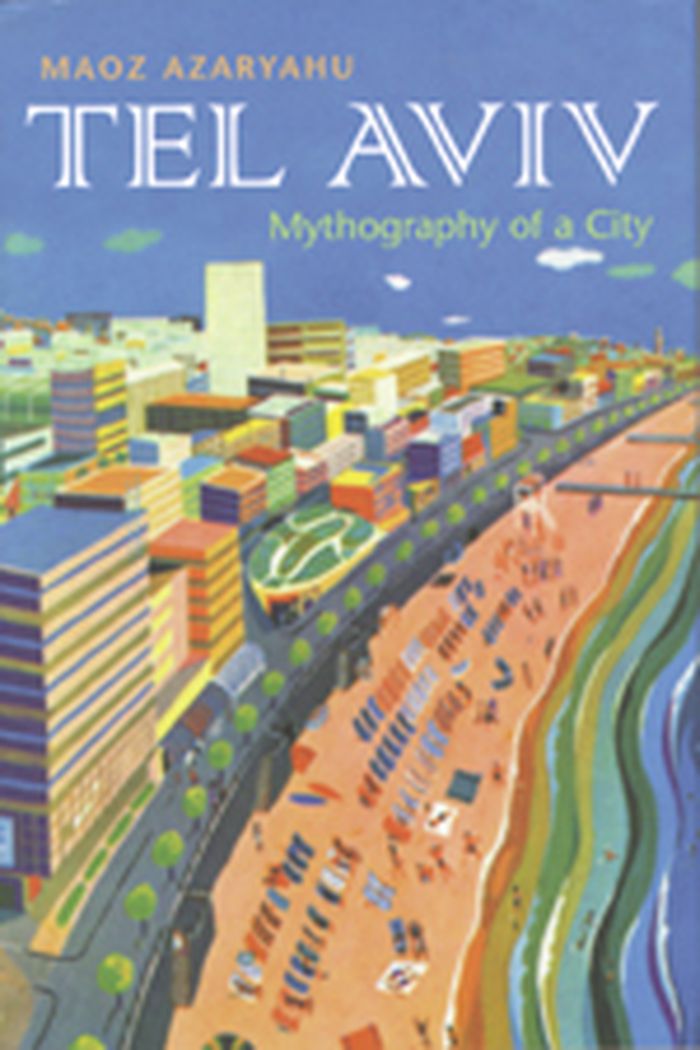
Tel Aviv : mythography of a city
Actions:
Prix:
$34.95
(disponible sur commande)
Résumé:
Offers an innovative approach to understanding the cultural history of Tel Aviv by exploring the mythical dimension and texture of the city. Founded in 1909 as a "garden suburb" of the Mediterranean port of Jaffa, Tel Aviv soon became a model of Jewish self-rule and was celebrated as a jewel in the crown of Hebrew revival. Over time the city has transformed into a lively metropolis, renowned for its architecture and culture, openness and vitality. A young city about to celebrate its 100th anniversity, the mythic Tel Aviv continues to represent a fundamental idea that transcends the physical texture of the city and the everyday experiences of its residents. Combining historical research and cultural analysis, Maoz Azaryahu explores the different myths that have been part of the vernacular and perception of the city. He relates Tel Aviv’s mythology to its physicality through buildings, streets, personal experiences, and municipal policies. With critical insight, he evaluates specific myths and their propagation in the spheres of both official and popular culture. Azaryahu explores three distinct stages in the history of the mythic Tel Aviv: "The First Hebrew City" assesses Tel Aviv as Zionist vision and seed of the actual city; "Non-Stop City" depicts trendy, global post-Zionist Tel Aviv; and "The White City" describes Tel Aviv’s architectural landscape, created in the 1930s and imbued with nostalgia and local prestige. Tel Aviv: Mythography of a City will appeal to urban geographers, cultural historians, scholars of myth, and students of Israeli society and culture.
Tel Aviv : mythography of a city
Actions:
Prix:
$34.95
(disponible sur commande)
Résumé:
Offers an innovative approach to understanding the cultural history of Tel Aviv by exploring the mythical dimension and texture of the city. Founded in 1909 as a "garden suburb" of the Mediterranean port of Jaffa, Tel Aviv soon became a model of Jewish self-rule and was celebrated as a jewel in the crown of Hebrew revival. Over time the city has transformed into a lively metropolis, renowned for its architecture and culture, openness and vitality. A young city about to celebrate its 100th anniversity, the mythic Tel Aviv continues to represent a fundamental idea that transcends the physical texture of the city and the everyday experiences of its residents. Combining historical research and cultural analysis, Maoz Azaryahu explores the different myths that have been part of the vernacular and perception of the city. He relates Tel Aviv’s mythology to its physicality through buildings, streets, personal experiences, and municipal policies. With critical insight, he evaluates specific myths and their propagation in the spheres of both official and popular culture. Azaryahu explores three distinct stages in the history of the mythic Tel Aviv: "The First Hebrew City" assesses Tel Aviv as Zionist vision and seed of the actual city; "Non-Stop City" depicts trendy, global post-Zionist Tel Aviv; and "The White City" describes Tel Aviv’s architectural landscape, created in the 1930s and imbued with nostalgia and local prestige. Tel Aviv: Mythography of a City will appeal to urban geographers, cultural historians, scholars of myth, and students of Israeli society and culture.
Classification:
livres
livres
Publication:
octobre 2006, New York
octobre 2006, New York
Classification:
livres
livres
Actions:
Prix:
$69.95
(disponible sur commande)
Résumé:
''On intricacy'' is perhaps unusual in that it’s not a monograph, nor is it a hagiography. John Meunier is still alive. ''On intricacy'' celebrates and proselytises the ideas that John has articulated throughout his career. ''On intricacy'' is not a book about him as such, nor simply a book by him, but a book with him, and it reflects his life’s work as an architect and(...)
$69.95
(disponible sur commande)
Résumé:
''On intricacy'' is perhaps unusual in that it’s not a monograph, nor is it a hagiography. John Meunier is still alive. ''On intricacy'' celebrates and proselytises the ideas that John has articulated throughout his career. ''On intricacy'' is not a book about him as such, nor simply a book by him, but a book with him, and it reflects his life’s work as an architect and(...)
Titre:
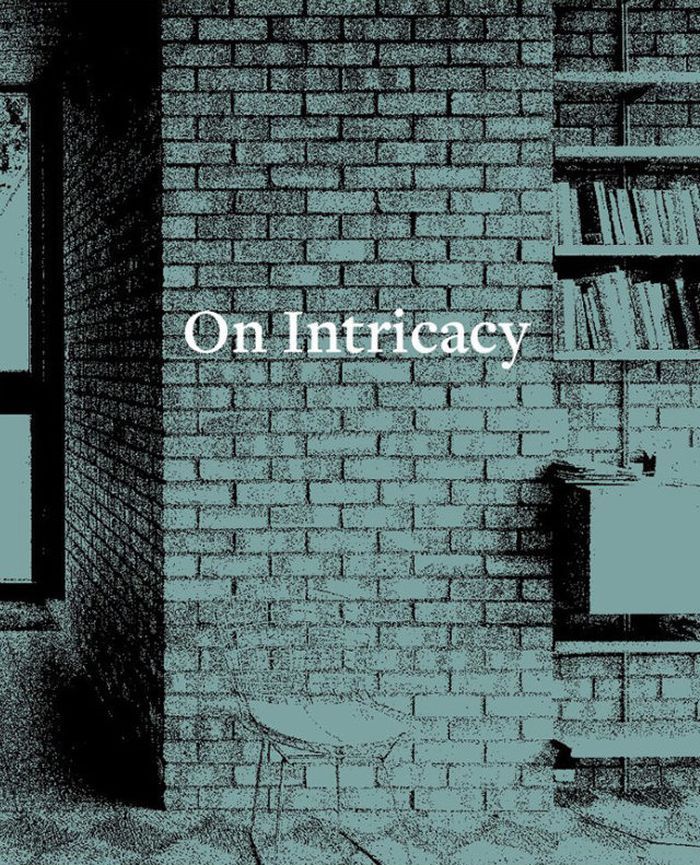
On intricacy: The work of John Meunier Architect
Actions:
Prix:
$69.95
(disponible sur commande)
Résumé:
''On intricacy'' is perhaps unusual in that it’s not a monograph, nor is it a hagiography. John Meunier is still alive. ''On intricacy'' celebrates and proselytises the ideas that John has articulated throughout his career. ''On intricacy'' is not a book about him as such, nor simply a book by him, but a book with him, and it reflects his life’s work as an architect and teacher, in the UK and USA. ''On intricacy'' continues conversations between John Meunier and Patrick Lynch that first appeared in Issue 2 of the Journal of Civic Architecture. It also includes essays by Meunier, Lynch and the architect Simon Henley, as well as new photography of The Meunier House at Cambridge by David Grandorge. Intricacy is not so much an aesthetic term, although it is a sign of quality in artistic work, as something intrinsic to human situations. Intricacy is something that architecture does or doesn’t reflect, and when it does, it tends to be life-like, vital, and therefore good. ''On intricacy'' is a visual and written polemic reflecting the hard-won wisdom of a practical life. ''On intricacy'' is also a biography of sorts of a man born into a relatively recent, but also a very different age. It tells an inspiring story from a period of hope and opportunity in the 20th century. ''On intricacy'' will be welcomed by students, historians and practising architects, and by anyone concerned with the deep reciprocity of ethics and aesthetics in human ecology and culture.
On intricacy: The work of John Meunier Architect
Actions:
Prix:
$69.95
(disponible sur commande)
Résumé:
''On intricacy'' is perhaps unusual in that it’s not a monograph, nor is it a hagiography. John Meunier is still alive. ''On intricacy'' celebrates and proselytises the ideas that John has articulated throughout his career. ''On intricacy'' is not a book about him as such, nor simply a book by him, but a book with him, and it reflects his life’s work as an architect and teacher, in the UK and USA. ''On intricacy'' continues conversations between John Meunier and Patrick Lynch that first appeared in Issue 2 of the Journal of Civic Architecture. It also includes essays by Meunier, Lynch and the architect Simon Henley, as well as new photography of The Meunier House at Cambridge by David Grandorge. Intricacy is not so much an aesthetic term, although it is a sign of quality in artistic work, as something intrinsic to human situations. Intricacy is something that architecture does or doesn’t reflect, and when it does, it tends to be life-like, vital, and therefore good. ''On intricacy'' is a visual and written polemic reflecting the hard-won wisdom of a practical life. ''On intricacy'' is also a biography of sorts of a man born into a relatively recent, but also a very different age. It tells an inspiring story from a period of hope and opportunity in the 20th century. ''On intricacy'' will be welcomed by students, historians and practising architects, and by anyone concerned with the deep reciprocity of ethics and aesthetics in human ecology and culture.
Classification:
livres
livres
Publication:
janvier 2020
janvier 2020
Sujet:
Architecture, monographies
Architecture, monographies
Classification:
livres
livres
Actions:
Prix:
$42.00
(disponible sur commande)
Résumé:
Born in Estonia 1901 and brought to America in 1906, the architect Louis Kahn grew up in poverty in Philadelphia. By the time of his mysterious death in 1974, he was widely recognized as one of the greatest architects of his era. Yet this enormous reputation was based on only a handful of masterpieces, all built during the last fifteen years of his life. Wendy Lesser’s(...)
$42.00
(disponible sur commande)
Résumé:
Born in Estonia 1901 and brought to America in 1906, the architect Louis Kahn grew up in poverty in Philadelphia. By the time of his mysterious death in 1974, he was widely recognized as one of the greatest architects of his era. Yet this enormous reputation was based on only a handful of masterpieces, all built during the last fifteen years of his life. Wendy Lesser’s(...)
Titre:
You say to brick: the life of Louis Kahn
Actions:
Prix:
$42.00
(disponible sur commande)
Résumé:
Born in Estonia 1901 and brought to America in 1906, the architect Louis Kahn grew up in poverty in Philadelphia. By the time of his mysterious death in 1974, he was widely recognized as one of the greatest architects of his era. Yet this enormous reputation was based on only a handful of masterpieces, all built during the last fifteen years of his life. Wendy Lesser’s You Say to Brick: The Life of Louis Kahn is a major exploration of the architect’s life and work. Kahn, perhaps more than any other twentieth-century American architect, was a “public” architect. Rather than focusing on corporate commissions, he devoted himself to designing research facilities, government centers, museums, libraries, and other structures that would serve the public good. But this warm, captivating person, beloved by students and admired by colleagues, was also a secretive man hiding under a series of masks. Kahn himself, however, is not the only complex subject that comes vividly to life in these pages. His signature achievements—like the Salk Institute in La Jolla, the National Assembly Building of Bangladesh, and the Indian Institute of Management in Ahmedabad—can at first seem as enigmatic and beguiling as the man who designed them. In attempts to describe these structures, we are often forced to speak in contradictions and paradoxes: structures that seem at once unmistakably modern and ancient; enormous built spaces that offer a sense of intimate containment; designs in which light itself seems tangible, a raw material as tactile as travertine or Kahn’s beloved concrete.
You say to brick: the life of Louis Kahn
Actions:
Prix:
$42.00
(disponible sur commande)
Résumé:
Born in Estonia 1901 and brought to America in 1906, the architect Louis Kahn grew up in poverty in Philadelphia. By the time of his mysterious death in 1974, he was widely recognized as one of the greatest architects of his era. Yet this enormous reputation was based on only a handful of masterpieces, all built during the last fifteen years of his life. Wendy Lesser’s You Say to Brick: The Life of Louis Kahn is a major exploration of the architect’s life and work. Kahn, perhaps more than any other twentieth-century American architect, was a “public” architect. Rather than focusing on corporate commissions, he devoted himself to designing research facilities, government centers, museums, libraries, and other structures that would serve the public good. But this warm, captivating person, beloved by students and admired by colleagues, was also a secretive man hiding under a series of masks. Kahn himself, however, is not the only complex subject that comes vividly to life in these pages. His signature achievements—like the Salk Institute in La Jolla, the National Assembly Building of Bangladesh, and the Indian Institute of Management in Ahmedabad—can at first seem as enigmatic and beguiling as the man who designed them. In attempts to describe these structures, we are often forced to speak in contradictions and paradoxes: structures that seem at once unmistakably modern and ancient; enormous built spaces that offer a sense of intimate containment; designs in which light itself seems tangible, a raw material as tactile as travertine or Kahn’s beloved concrete.
Classification:
livres
livres
Publication:
mars 2017
mars 2017
Sujet:
Architecture, monographies
Architecture, monographies
Classification:
livres
livres
Actions:
Prix:
$34.95
(disponible sur commande)
Résumé:
In this wide-ranging book, renowned philosopher and cultural theorist Peter Sloterdijk examines art in all its rich and varied forms: from music to architecture, light to movement, and design to typography. Moving between the visible and the invisible, the audible and the inaudible, his analyses span the centuries, from ancient civilizations to contemporary Hollywood.(...)
$34.95
(disponible sur commande)
Résumé:
In this wide-ranging book, renowned philosopher and cultural theorist Peter Sloterdijk examines art in all its rich and varied forms: from music to architecture, light to movement, and design to typography. Moving between the visible and the invisible, the audible and the inaudible, his analyses span the centuries, from ancient civilizations to contemporary Hollywood.(...)
Titre:
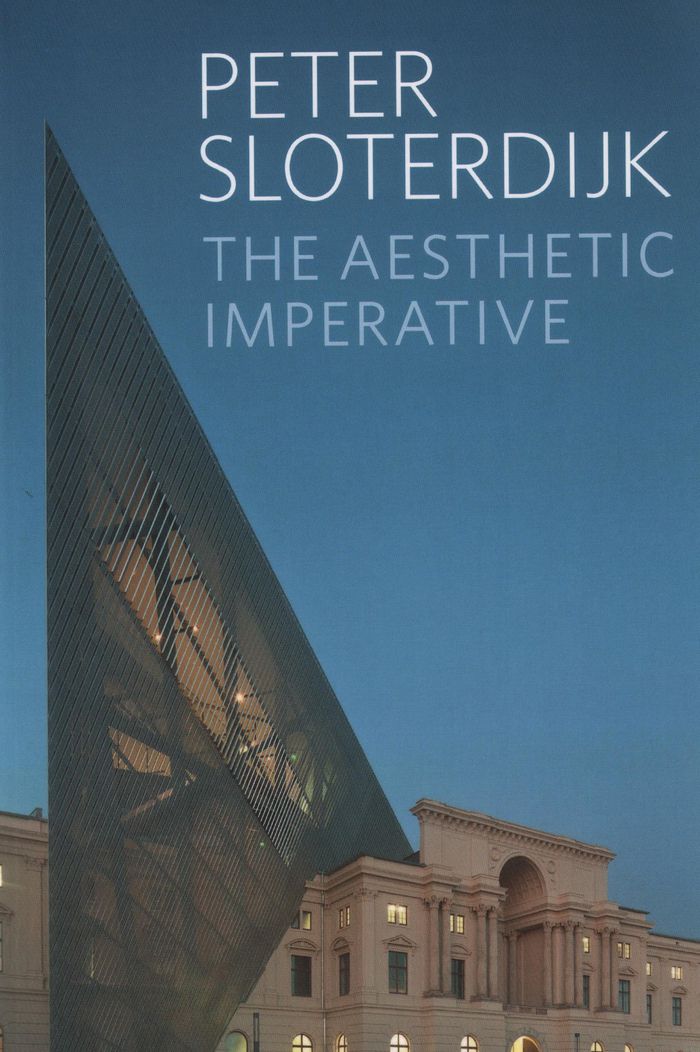
The aesthetic imperative: writings on art
Actions:
Prix:
$34.95
(disponible sur commande)
Résumé:
In this wide-ranging book, renowned philosopher and cultural theorist Peter Sloterdijk examines art in all its rich and varied forms: from music to architecture, light to movement, and design to typography. Moving between the visible and the invisible, the audible and the inaudible, his analyses span the centuries, from ancient civilizations to contemporary Hollywood. With great verve and insight he considers the key issues that have faced thinkers from Aristotle to Adorno, looking at art in its relation to ethics, epistemology, metaphysics, society, politics, anthropology and the subject.Sloterdijk explores a great variety of topics, including the Greek-Roman invention of postcards, medieval barter with purgatory and relics, the capitalist art market, the black boxes and white cubes of modernism, the rise of world’s fairs in the 19th century, the growth of museum and memorial culture, images of the city and the role of creativity. In doing so, Sloterdijk extends his characteristic method of defamiliarisation to transform the way we look at works of art and movements. His bold and original approach leads us away from the well-trodden paths of conventional art history to develop a theory of aesthetics which rejects strict categorisation, emphasising instead the crucial importance of individual subjectivity as a counter to the latent dangers of collective culture.This sustained collection of reflections, at once playful, serious and provocative, goes to the very heart of Sloterdijk’s enduring philosophical preoccupation with the aesthetic. It will be essential reading for students and scholars of philosophy and aesthetics and will appeal to anyone interested in culture and the arts more generally.
The aesthetic imperative: writings on art
Actions:
Prix:
$34.95
(disponible sur commande)
Résumé:
In this wide-ranging book, renowned philosopher and cultural theorist Peter Sloterdijk examines art in all its rich and varied forms: from music to architecture, light to movement, and design to typography. Moving between the visible and the invisible, the audible and the inaudible, his analyses span the centuries, from ancient civilizations to contemporary Hollywood. With great verve and insight he considers the key issues that have faced thinkers from Aristotle to Adorno, looking at art in its relation to ethics, epistemology, metaphysics, society, politics, anthropology and the subject.Sloterdijk explores a great variety of topics, including the Greek-Roman invention of postcards, medieval barter with purgatory and relics, the capitalist art market, the black boxes and white cubes of modernism, the rise of world’s fairs in the 19th century, the growth of museum and memorial culture, images of the city and the role of creativity. In doing so, Sloterdijk extends his characteristic method of defamiliarisation to transform the way we look at works of art and movements. His bold and original approach leads us away from the well-trodden paths of conventional art history to develop a theory of aesthetics which rejects strict categorisation, emphasising instead the crucial importance of individual subjectivity as a counter to the latent dangers of collective culture.This sustained collection of reflections, at once playful, serious and provocative, goes to the very heart of Sloterdijk’s enduring philosophical preoccupation with the aesthetic. It will be essential reading for students and scholars of philosophy and aesthetics and will appeal to anyone interested in culture and the arts more generally.
Classification:
livres
livres
Publication:
avril 2017
avril 2017
Sujet:
Théorie de l’art
Théorie de l’art
Classification:
périodiques
périodiques
Actions:
Prix:
$32.95
(disponible sur commande)
Résumé:
“Transparency is overrated,” Jacques Herzog asserted roughly a year ago at the opening of the Vitra Schaudepot in Weil am Rhein. Is that really the case? In the present issue, we explore this topic and take stock of the present situation. Admittedly, the emblematic character of transparent architecture has lost much of its relevance since the post-war years – its charisma(...)
$32.95
(disponible sur commande)
Résumé:
“Transparency is overrated,” Jacques Herzog asserted roughly a year ago at the opening of the Vitra Schaudepot in Weil am Rhein. Is that really the case? In the present issue, we explore this topic and take stock of the present situation. Admittedly, the emblematic character of transparent architecture has lost much of its relevance since the post-war years – its charisma(...)
Titre:
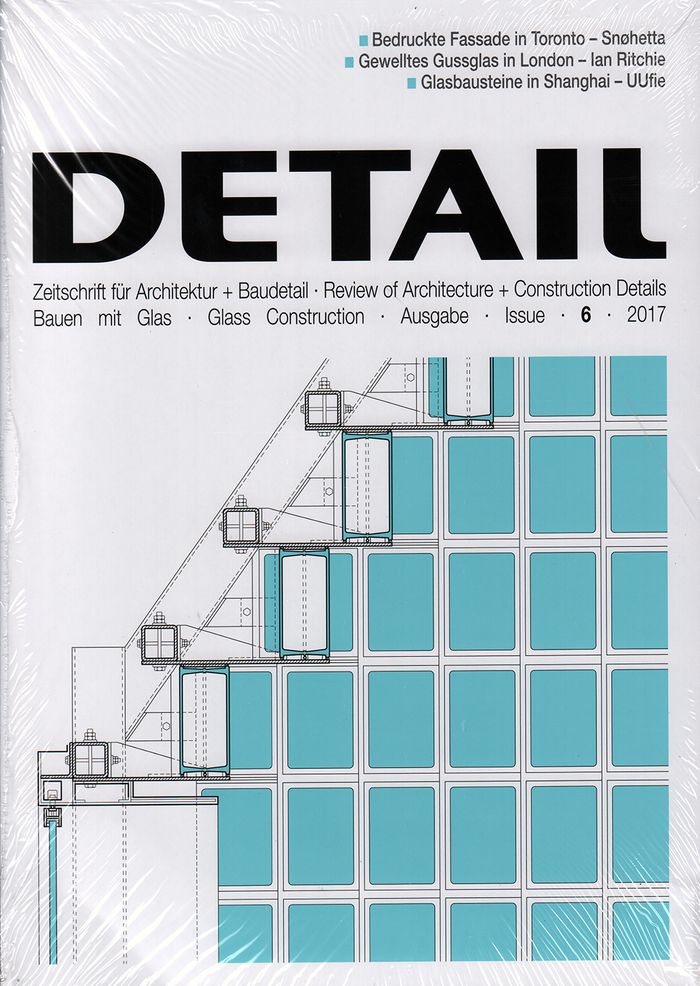
Detail 6 2017: glass construction
Actions:
Prix:
$32.95
(disponible sur commande)
Résumé:
“Transparency is overrated,” Jacques Herzog asserted roughly a year ago at the opening of the Vitra Schaudepot in Weil am Rhein. Is that really the case? In the present issue, we explore this topic and take stock of the present situation. Admittedly, the emblematic character of transparent architecture has lost much of its relevance since the post-war years – its charisma as a symbol of democracy. Yet buildings of glass are far more varied today, and their architecture is in many ways unique. In this issue of Detail, Heide Wessely has selected some groundbreaking schemes. With its printed-glass facade, the Ryerson University structure in Toronto by Snøhetta offers students variously lighted internal spaces, which they, in turn, can use for different study scenarios. With pivoting, printed-glass louvres, the facade of the bank in Nantes by AIA Associés responds to insolation to create a climatic buffer zone. The thermally insulated cast-glass elements in the outer skin of the Sainsbury Wellcome Centre in London by Ian Ritchie Architects screen the interior of the research institute from the street, while allowing diffused, non-glare light into the working spaces. In contrast, the glass pavilion in Manchester and the glazed atrium in Baker Street, London, are functional and restrained extensions to existing buildings. The Discussion section in this issue explores the potential of glass in the many housing towers that are springing up in cities today; and in his Technology article, Kars Haarhuis takes a look at innovative hybrid structures in which concrete or steel are combined with glass in a load-bearing form.
Detail 6 2017: glass construction
Actions:
Prix:
$32.95
(disponible sur commande)
Résumé:
“Transparency is overrated,” Jacques Herzog asserted roughly a year ago at the opening of the Vitra Schaudepot in Weil am Rhein. Is that really the case? In the present issue, we explore this topic and take stock of the present situation. Admittedly, the emblematic character of transparent architecture has lost much of its relevance since the post-war years – its charisma as a symbol of democracy. Yet buildings of glass are far more varied today, and their architecture is in many ways unique. In this issue of Detail, Heide Wessely has selected some groundbreaking schemes. With its printed-glass facade, the Ryerson University structure in Toronto by Snøhetta offers students variously lighted internal spaces, which they, in turn, can use for different study scenarios. With pivoting, printed-glass louvres, the facade of the bank in Nantes by AIA Associés responds to insolation to create a climatic buffer zone. The thermally insulated cast-glass elements in the outer skin of the Sainsbury Wellcome Centre in London by Ian Ritchie Architects screen the interior of the research institute from the street, while allowing diffused, non-glare light into the working spaces. In contrast, the glass pavilion in Manchester and the glazed atrium in Baker Street, London, are functional and restrained extensions to existing buildings. The Discussion section in this issue explores the potential of glass in the many housing towers that are springing up in cities today; and in his Technology article, Kars Haarhuis takes a look at innovative hybrid structures in which concrete or steel are combined with glass in a load-bearing form.
Classification:
périodiques
périodiques
Publication:
juin 2017
juin 2017
Sujet:
Revues
Revues
Classification:
audio
audio
Actions:
Description:
1 online resource.
Auteur:
Sujet:
Publication:
[Place of publication not identified] : Lateral Addition, 2019.
[Place of publication not identified] : Lateral Addition, 2019.
Classification:
audio
audio
Publication:
[Place of publication not identified] : Lateral Addition, 2019.
[Place of publication not identified] : Lateral Addition, 2019.
Auteur:
Sujet:
Classification:
périodiques
périodiques
Titre:
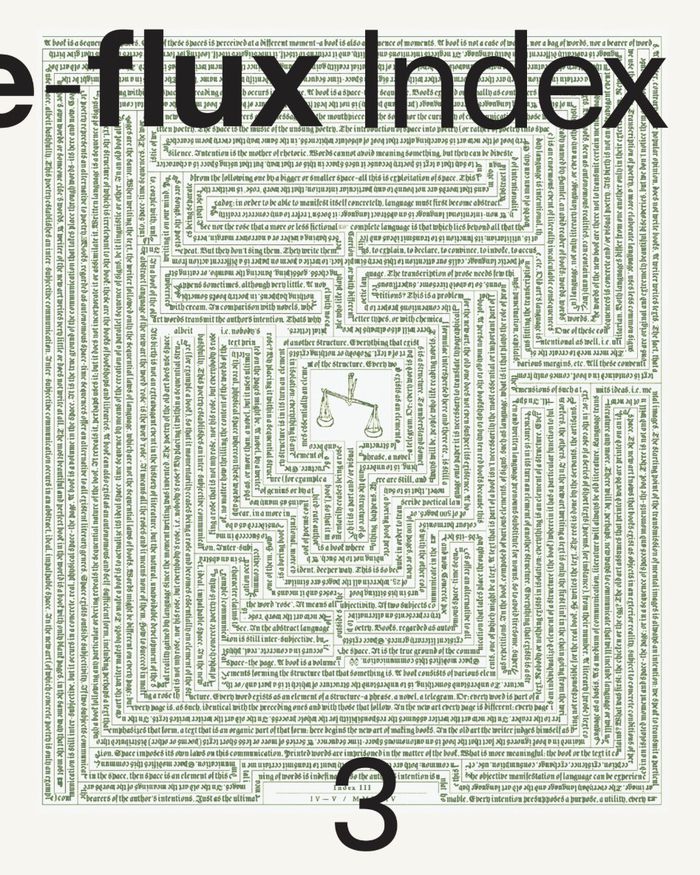
e-flux index #3
e-flux index #3
Actions:
Prix:
$65.00
(disponible en magasin)
Résumé:
Today we are accustomed to the apophatic gesture of free-speech fundamentalists and far-right demagogues, who use the flimsy legal cover of “just asking questions” to broadcast ever more widely the most violent and reactionary forms of hate speech. In resisting this enclosure of thought, art and theory continue to be instructive, if not essential activities. The late(...)
$65.00
(disponible en magasin)
Résumé:
Today we are accustomed to the apophatic gesture of free-speech fundamentalists and far-right demagogues, who use the flimsy legal cover of “just asking questions” to broadcast ever more widely the most violent and reactionary forms of hate speech. In resisting this enclosure of thought, art and theory continue to be instructive, if not essential activities. The late(...)
Titre:
e-flux index #3
Actions:
Prix:
$65.00
(disponible en magasin)
Résumé:
Today we are accustomed to the apophatic gesture of free-speech fundamentalists and far-right demagogues, who use the flimsy legal cover of “just asking questions” to broadcast ever more widely the most violent and reactionary forms of hate speech. In resisting this enclosure of thought, art and theory continue to be instructive, if not essential activities. The late Lawrence Weiner memorably declared that “the purpose of art is to ask questions… it doesn’t answer anybody’s question but gives them the means to answer a particular question at a particular moment.” All the better when those questions can provoke a certain illuminating friction with the contradictions of one’s environment and disrupt the automaticity of one’s learned responses, remaining themselves ambiguous or unanswered—because unanswerable. This third issue of e-flux Index, bringing together all the content commissioned and published by e-flux between April and May 2024, contains many such unexpected and unanswered (or unanswerable) questions across its 76 contributions, each of which cut across and reach beyond existing disciplines and borders: “Who is willing to care?”; “Who is the addressee at the end of the regulated pipelines of the English language?”; “Yes, but is it edible?”; “Why does everyone hate college students?”; “Is some form of suffering the condition for the emergence of an organic type of intelligence?”; “What does it mean to make a film today, in 2024, when most of our image consumption has been transferred to other (smaller) screens and other media?; “How to represent history?”; “Whose lives are worth remembering—or even, living?”; “How is it possible to speak the language of imperial renaissance and decolonization in the same breath?”; “Today is which day of the revolution?”—“Are these all just notes for a poem?”
e-flux index #3
Actions:
Prix:
$65.00
(disponible en magasin)
Résumé:
Today we are accustomed to the apophatic gesture of free-speech fundamentalists and far-right demagogues, who use the flimsy legal cover of “just asking questions” to broadcast ever more widely the most violent and reactionary forms of hate speech. In resisting this enclosure of thought, art and theory continue to be instructive, if not essential activities. The late Lawrence Weiner memorably declared that “the purpose of art is to ask questions… it doesn’t answer anybody’s question but gives them the means to answer a particular question at a particular moment.” All the better when those questions can provoke a certain illuminating friction with the contradictions of one’s environment and disrupt the automaticity of one’s learned responses, remaining themselves ambiguous or unanswered—because unanswerable. This third issue of e-flux Index, bringing together all the content commissioned and published by e-flux between April and May 2024, contains many such unexpected and unanswered (or unanswerable) questions across its 76 contributions, each of which cut across and reach beyond existing disciplines and borders: “Who is willing to care?”; “Who is the addressee at the end of the regulated pipelines of the English language?”; “Yes, but is it edible?”; “Why does everyone hate college students?”; “Is some form of suffering the condition for the emergence of an organic type of intelligence?”; “What does it mean to make a film today, in 2024, when most of our image consumption has been transferred to other (smaller) screens and other media?; “How to represent history?”; “Whose lives are worth remembering—or even, living?”; “How is it possible to speak the language of imperial renaissance and decolonization in the same breath?”; “Today is which day of the revolution?”—“Are these all just notes for a poem?”
Classification:
périodiques
périodiques
Publication:
décembre 2024
décembre 2024
Sujet:
Revues
Revues
Classification:
livres
livres
Actions:
Prix:
$33.50
(disponible en magasin)
Résumé:
For almost 100 years, Coney Island was the most popular seaside destination in the United States. Each year, millions escaped the heat of New York City to savor the thrills of the Cyclone roller coaster and Wonder Wheel at the Astroland amusement park. They came to sample an original Nathan's Famous hot dog, witness the first demolition derby, or to take a chance at a(...)
$33.50
(disponible en magasin)
Résumé:
For almost 100 years, Coney Island was the most popular seaside destination in the United States. Each year, millions escaped the heat of New York City to savor the thrills of the Cyclone roller coaster and Wonder Wheel at the Astroland amusement park. They came to sample an original Nathan's Famous hot dog, witness the first demolition derby, or to take a chance at a(...)
Publication:
avril 2007, New York
avril 2007, New York
Titre:
Coney island : the parchute pavilion competition
Actions:
Prix:
$33.50
(disponible en magasin)
Résumé:
For almost 100 years, Coney Island was the most popular seaside destination in the United States. Each year, millions escaped the heat of New York City to savor the thrills of the Cyclone roller coaster and Wonder Wheel at the Astroland amusement park. They came to sample an original Nathan's Famous hot dog, witness the first demolition derby, or to take a chance at a game of three-card Monte on the legendary boardwalk. The advent of air-conditioning, concerns about Coney's "tawdry" entertainment, and faster transportation to other beaches hastened the demise of what had become a uniquely American icon of entertainment and a defining terminus of New York at the water's edge. In an effort to revitalize the area, the Van Alen Institute, in concert with the Coney Island Development Corporation, held the Parachute Pavilion Competition, a contest to design a year-round pavilion in the shadow of the Parachute Jump, a landmark built for the 1939 World's Fair. Coney Island: The Parachute Pavilion Competition presents all 864 submissions—from the feasible to the fantastic—received from around the world. The winning design by London-based Carmody Groarke Hardie is a mesmerizing attraction in its own right, composed of two provocative trapezoids illuminated by thousands of colored light bulbs. The design respects the historic icon under which it is located but also promises to become an icon in its own right and bring the fun-loving spirit of Coney Island into the twenty-first century. Featuring essays, photographic documentation, and jury comments, Coney Island: The Parachute Pavilion Competition is a critical resource for students, designers, city officials, and anyone interested in Coney Island and the reinvention of the historic recreation sites of our cities.
Coney island : the parchute pavilion competition
Actions:
Prix:
$33.50
(disponible en magasin)
Résumé:
For almost 100 years, Coney Island was the most popular seaside destination in the United States. Each year, millions escaped the heat of New York City to savor the thrills of the Cyclone roller coaster and Wonder Wheel at the Astroland amusement park. They came to sample an original Nathan's Famous hot dog, witness the first demolition derby, or to take a chance at a game of three-card Monte on the legendary boardwalk. The advent of air-conditioning, concerns about Coney's "tawdry" entertainment, and faster transportation to other beaches hastened the demise of what had become a uniquely American icon of entertainment and a defining terminus of New York at the water's edge. In an effort to revitalize the area, the Van Alen Institute, in concert with the Coney Island Development Corporation, held the Parachute Pavilion Competition, a contest to design a year-round pavilion in the shadow of the Parachute Jump, a landmark built for the 1939 World's Fair. Coney Island: The Parachute Pavilion Competition presents all 864 submissions—from the feasible to the fantastic—received from around the world. The winning design by London-based Carmody Groarke Hardie is a mesmerizing attraction in its own right, composed of two provocative trapezoids illuminated by thousands of colored light bulbs. The design respects the historic icon under which it is located but also promises to become an icon in its own right and bring the fun-loving spirit of Coney Island into the twenty-first century. Featuring essays, photographic documentation, and jury comments, Coney Island: The Parachute Pavilion Competition is a critical resource for students, designers, city officials, and anyone interested in Coney Island and the reinvention of the historic recreation sites of our cities.
Classification:
livres
livres
Publication:
avril 2007, New York
avril 2007, New York


