


59 Résultats
Classification:
livres
livres
Actions:
Prix:
$21.95
(disponible sur commande)
Résumé:
Then first part of a trilogy of books exploring the science of patterns in nature, this book looks at how shapes form. From soap bubbles to honeycombs, delicate shell patterns, and even the developing body parts of a complex animal like ourselves, the author uncovers patterns in growth and form in all corners of the natural world, explains how these patterns are(...)
$21.95
(disponible sur commande)
Résumé:
Then first part of a trilogy of books exploring the science of patterns in nature, this book looks at how shapes form. From soap bubbles to honeycombs, delicate shell patterns, and even the developing body parts of a complex animal like ourselves, the author uncovers patterns in growth and form in all corners of the natural world, explains how these patterns are(...)
Titre:
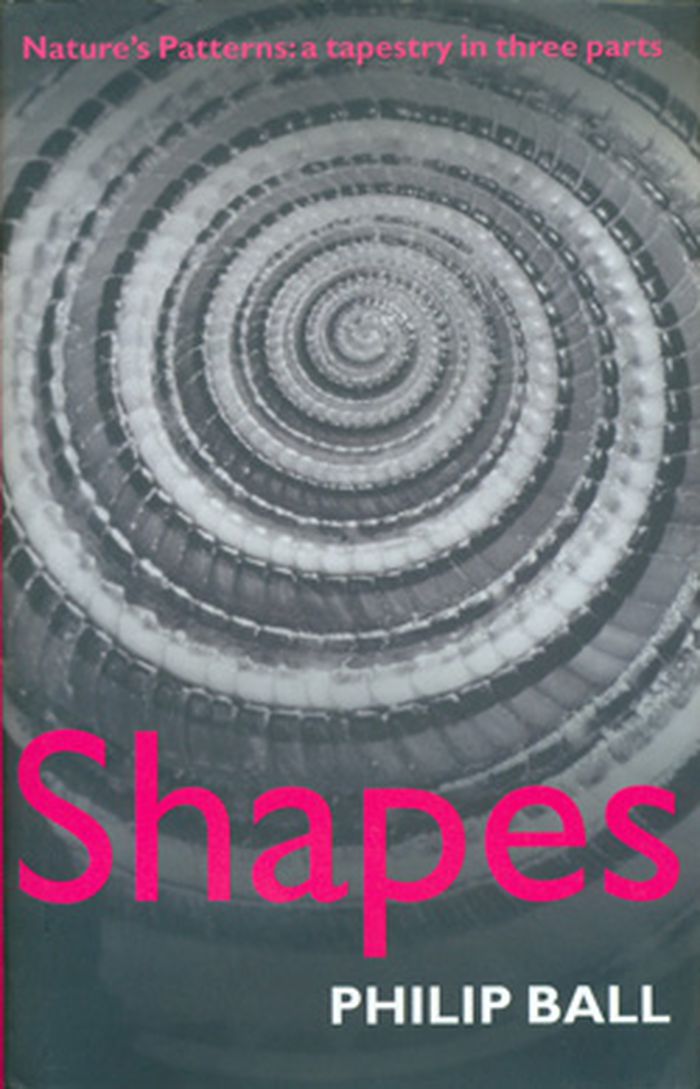
Shapes: nature's patterns: a tapertry in three parts
Actions:
Prix:
$21.95
(disponible sur commande)
Résumé:
Then first part of a trilogy of books exploring the science of patterns in nature, this book looks at how shapes form. From soap bubbles to honeycombs, delicate shell patterns, and even the developing body parts of a complex animal like ourselves, the author uncovers patterns in growth and form in all corners of the natural world, explains how these patterns are self-made, and describes why similar shapes and structures may be found in very different settings, orchestrated by nothing more than simple physical forces. This book will make you look at the world with fresh eyes, seeing order and form in places you'd least expect.
Shapes: nature's patterns: a tapertry in three parts
Actions:
Prix:
$21.95
(disponible sur commande)
Résumé:
Then first part of a trilogy of books exploring the science of patterns in nature, this book looks at how shapes form. From soap bubbles to honeycombs, delicate shell patterns, and even the developing body parts of a complex animal like ourselves, the author uncovers patterns in growth and form in all corners of the natural world, explains how these patterns are self-made, and describes why similar shapes and structures may be found in very different settings, orchestrated by nothing more than simple physical forces. This book will make you look at the world with fresh eyes, seeing order and form in places you'd least expect.
Classification:
livres
livres
Publication:
avril 2008, Oxford
avril 2008, Oxford
Sujet:
Théorie du paysage
Théorie du paysage
Classification:
livres
livres
Titre:
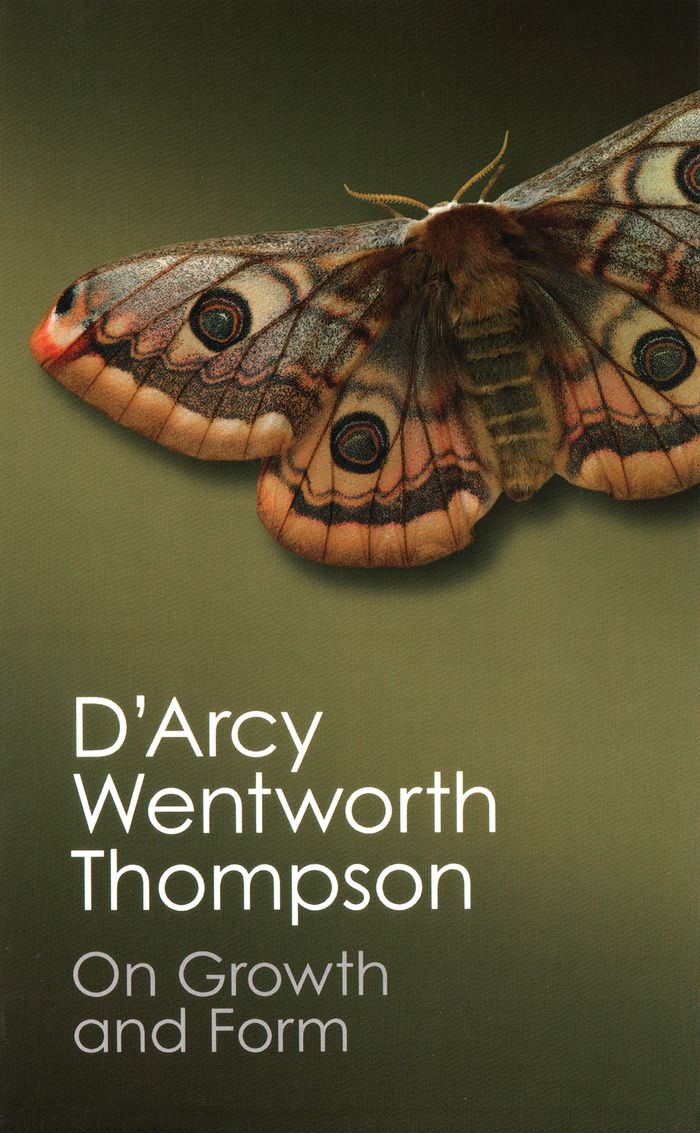
On growth and form
On growth and form
Actions:
Prix:
$21.95
(disponible sur commande)
Résumé:
Why do living things and physical phenomena take the form they do? D'Arcy Thompson's classic "On Growth and Form" looks at the way things grow and the shapes they take. Analysing biological processes in their mathematical and physical aspects, this historic work, first published in 1917, has also become renowned for the sheer poetry of its descriptions. A great scientist(...)
$21.95
(disponible sur commande)
Résumé:
Why do living things and physical phenomena take the form they do? D'Arcy Thompson's classic "On Growth and Form" looks at the way things grow and the shapes they take. Analysing biological processes in their mathematical and physical aspects, this historic work, first published in 1917, has also become renowned for the sheer poetry of its descriptions. A great scientist(...)
Publication:
juillet 2014
juillet 2014
Titre:
On growth and form
Actions:
Prix:
$21.95
(disponible sur commande)
Résumé:
Why do living things and physical phenomena take the form they do? D'Arcy Thompson's classic "On Growth and Form" looks at the way things grow and the shapes they take. Analysing biological processes in their mathematical and physical aspects, this historic work, first published in 1917, has also become renowned for the sheer poetry of its descriptions. A great scientist sensitive to the fascinations and beauty of the natural world tells of jumping fleas and slipper limpets; of buds and seeds; of bees' cells and rain drops; of the potter's thumb and the spider's web; of a film of soap and a bubble of oil; of a splash of a pebble in a pond.
On growth and form
Actions:
Prix:
$21.95
(disponible sur commande)
Résumé:
Why do living things and physical phenomena take the form they do? D'Arcy Thompson's classic "On Growth and Form" looks at the way things grow and the shapes they take. Analysing biological processes in their mathematical and physical aspects, this historic work, first published in 1917, has also become renowned for the sheer poetry of its descriptions. A great scientist sensitive to the fascinations and beauty of the natural world tells of jumping fleas and slipper limpets; of buds and seeds; of bees' cells and rain drops; of the potter's thumb and the spider's web; of a film of soap and a bubble of oil; of a splash of a pebble in a pond.
Classification:
livres
livres
Publication:
juillet 2014
juillet 2014
Classification:
livres
livres
Actions:
Prix:
$48.95
(disponible sur commande)
Résumé:
In the nineteenth century, inexpensive editions of Jane Austen's novels targeted to Britain's working classes were sold at railway stations, traded for soap wrappers, and awarded as school prizes. At just pennies a copy, these reprints were some of the earliest mass-market paperbacks, with Austen's beloved stories squeezed into tight columns on thin, cheap paper. Few of(...)
$48.95
(disponible sur commande)
Résumé:
In the nineteenth century, inexpensive editions of Jane Austen's novels targeted to Britain's working classes were sold at railway stations, traded for soap wrappers, and awarded as school prizes. At just pennies a copy, these reprints were some of the earliest mass-market paperbacks, with Austen's beloved stories squeezed into tight columns on thin, cheap paper. Few of(...)
Titre:
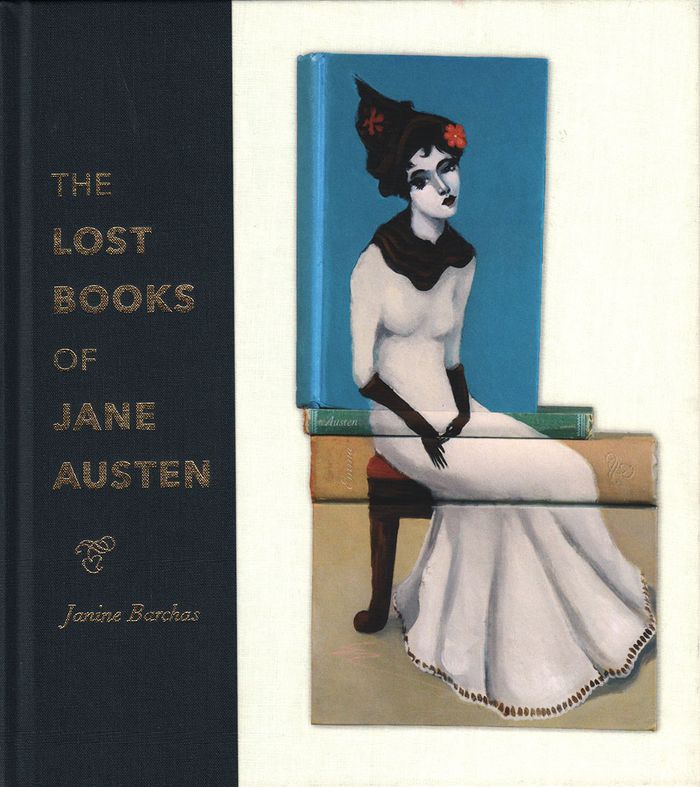
The lost books of Jane Austen
Actions:
Prix:
$48.95
(disponible sur commande)
Résumé:
In the nineteenth century, inexpensive editions of Jane Austen's novels targeted to Britain's working classes were sold at railway stations, traded for soap wrappers, and awarded as school prizes. At just pennies a copy, these reprints were some of the earliest mass-market paperbacks, with Austen's beloved stories squeezed into tight columns on thin, cheap paper. Few of these hard-lived bargain books survive, yet they made a substantial difference to Austen's early readership. These were the books bought and read by ordinary people. ''The lost books of Jane Austen'' is a unique history of these rare and forgotten Austen volumes. Such shoddy editions, Janine Barchas argues, were instrumental in bringing Austen's work and reputation before the general public. Only by examining them can we grasp the chaotic range of Austen's popular reach among working-class readers.
The lost books of Jane Austen
Actions:
Prix:
$48.95
(disponible sur commande)
Résumé:
In the nineteenth century, inexpensive editions of Jane Austen's novels targeted to Britain's working classes were sold at railway stations, traded for soap wrappers, and awarded as school prizes. At just pennies a copy, these reprints were some of the earliest mass-market paperbacks, with Austen's beloved stories squeezed into tight columns on thin, cheap paper. Few of these hard-lived bargain books survive, yet they made a substantial difference to Austen's early readership. These were the books bought and read by ordinary people. ''The lost books of Jane Austen'' is a unique history of these rare and forgotten Austen volumes. Such shoddy editions, Janine Barchas argues, were instrumental in bringing Austen's work and reputation before the general public. Only by examining them can we grasp the chaotic range of Austen's popular reach among working-class readers.
Classification:
livres
livres
Publication:
octobre 2019
octobre 2019
Classification:
livres
livres
Actions:
Prix:
$31.50
(disponible sur commande)
Résumé:
Frank Lloyd Wright’s Larkin building has become an icon of modern architecture. And the fact that it was demolished only forty-six years after its 1904 completion makes Jack Quinan’s study of the building — which housed a Buffalo, New York, soap company — all the more valuable. Quinan’s history draws on engineering documents, personal accounts of the building, and(...)
$31.50
(disponible sur commande)
Résumé:
Frank Lloyd Wright’s Larkin building has become an icon of modern architecture. And the fact that it was demolished only forty-six years after its 1904 completion makes Jack Quinan’s study of the building — which housed a Buffalo, New York, soap company — all the more valuable. Quinan’s history draws on engineering documents, personal accounts of the building, and(...)
Titre:
Frank Lloyd Wright's Larkin building : myth and fact
Actions:
Prix:
$31.50
(disponible sur commande)
Résumé:
Frank Lloyd Wright’s Larkin building has become an icon of modern architecture. And the fact that it was demolished only forty-six years after its 1904 completion makes Jack Quinan’s study of the building — which housed a Buffalo, New York, soap company — all the more valuable. Quinan’s history draws on engineering documents, personal accounts of the building, and other papers he acquired from the family of Darwin D. Martin, a Larkin executive who proposed commissioning Wright to design the company’s offices. With access to these rare sources, Quinan reveals how a young Wright landed the commission and traces the evolution of his cutting-edge plans. Quinan then takes Wright studies to a new level, examining the Larkin building as a structure at the center of economic and personal relationships. Illustrated with more than one hundred photographs, floor plans, maps, and diagrams, Frank Lloyd Wright’s Larkin Building provides a concise but complete record of how the building was conceived, built, evaluated, and finally demolished in what has been called a tragic loss for American architecture.
Frank Lloyd Wright's Larkin building : myth and fact
Actions:
Prix:
$31.50
(disponible sur commande)
Résumé:
Frank Lloyd Wright’s Larkin building has become an icon of modern architecture. And the fact that it was demolished only forty-six years after its 1904 completion makes Jack Quinan’s study of the building — which housed a Buffalo, New York, soap company — all the more valuable. Quinan’s history draws on engineering documents, personal accounts of the building, and other papers he acquired from the family of Darwin D. Martin, a Larkin executive who proposed commissioning Wright to design the company’s offices. With access to these rare sources, Quinan reveals how a young Wright landed the commission and traces the evolution of his cutting-edge plans. Quinan then takes Wright studies to a new level, examining the Larkin building as a structure at the center of economic and personal relationships. Illustrated with more than one hundred photographs, floor plans, maps, and diagrams, Frank Lloyd Wright’s Larkin Building provides a concise but complete record of how the building was conceived, built, evaluated, and finally demolished in what has been called a tragic loss for American architecture.
Classification:
livres
livres
Publication:
mai 2006, Chicago, London
mai 2006, Chicago, London
Sujet:
Architecture, monographies
Architecture, monographies
Classification:
livres
livres
Actions:
Prix:
$18.95
(disponible sur commande)
Résumé:
The model industrial village of Port Sunlight was founded by the soap manufacturer W. H. Lever (later Lord Leverhulme) in 1888 for the factory workers of his firm of Lever Brothers. The village was acclaimed from the first as exemplifying the best in English town planning and house design, and greatly influenced subsequent industrial villages such as Bournville, and the(...)
$18.95
(disponible sur commande)
Résumé:
The model industrial village of Port Sunlight was founded by the soap manufacturer W. H. Lever (later Lord Leverhulme) in 1888 for the factory workers of his firm of Lever Brothers. The village was acclaimed from the first as exemplifying the best in English town planning and house design, and greatly influenced subsequent industrial villages such as Bournville, and the(...)
Sujet:
Logements collectifs
Logements collectifs
Publication:
juillet 2006, Liverpool
juillet 2006, Liverpool
Titre:
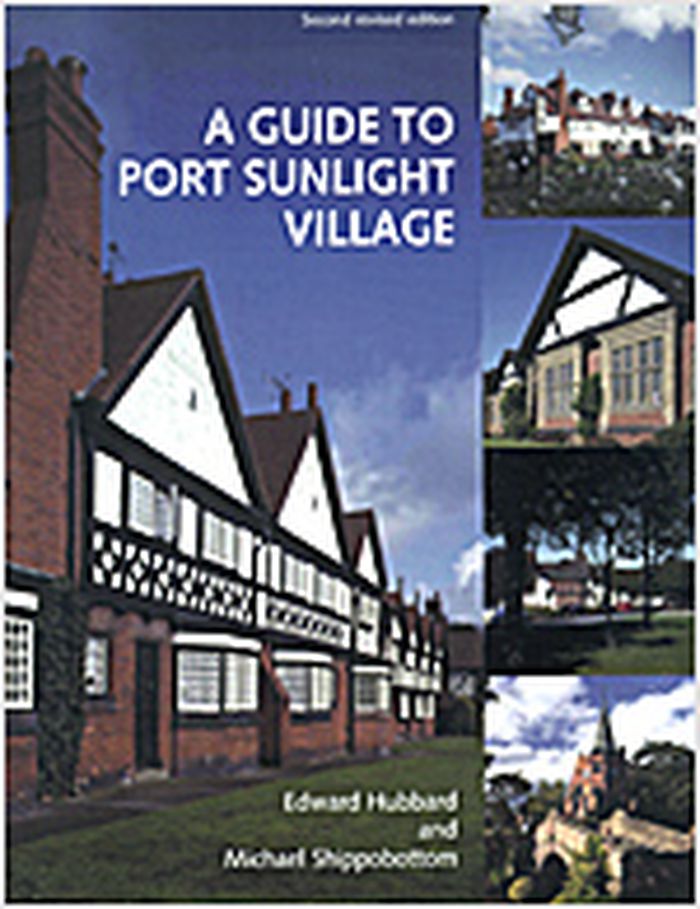
A guide to Port Sunlight Village, revised edition
Actions:
Prix:
$18.95
(disponible sur commande)
Résumé:
The model industrial village of Port Sunlight was founded by the soap manufacturer W. H. Lever (later Lord Leverhulme) in 1888 for the factory workers of his firm of Lever Brothers. The village was acclaimed from the first as exemplifying the best in English town planning and house design, and greatly influenced subsequent industrial villages such as Bournville, and the garden city movement more generally. This guide considers the village in its historical context, with particular emphasis on the planning and architectural aspects. It explains the social and visual significance of Port Sunlight and the reasons for its being unique in the history of town planning, as well as looking at the way its development was influenced by changing fashions in civic design. The relevance of Lever’s own character and interests – his social conscience, his love of art and beauty and his architectural enthusiasms – is also examined. Two tours, one for pedestrians and one for car drivers, which include and describe the most significant buildings of the village, are an additional feature of the guide.
A guide to Port Sunlight Village, revised edition
Actions:
Prix:
$18.95
(disponible sur commande)
Résumé:
The model industrial village of Port Sunlight was founded by the soap manufacturer W. H. Lever (later Lord Leverhulme) in 1888 for the factory workers of his firm of Lever Brothers. The village was acclaimed from the first as exemplifying the best in English town planning and house design, and greatly influenced subsequent industrial villages such as Bournville, and the garden city movement more generally. This guide considers the village in its historical context, with particular emphasis on the planning and architectural aspects. It explains the social and visual significance of Port Sunlight and the reasons for its being unique in the history of town planning, as well as looking at the way its development was influenced by changing fashions in civic design. The relevance of Lever’s own character and interests – his social conscience, his love of art and beauty and his architectural enthusiasms – is also examined. Two tours, one for pedestrians and one for car drivers, which include and describe the most significant buildings of the village, are an additional feature of the guide.
Classification:
livres
livres
Publication:
juillet 2006, Liverpool
juillet 2006, Liverpool
Sujet:
Logements collectifs
Logements collectifs
Classification:
livres
livres
Actions:
Prix:
$55.00
(disponible en magasin)
Résumé:
Dallegret’s own life and work denies anything so predictable as a neat synopsis, but in essence his work, beginning in Paris in the late 1950s and early 60s, and later taking in New York and Montréal, absorbs everything from intricate line drawings for a series of astrological vehicles and designs for a number of machines (from those that assist in cooking a meal to(...)
$55.00
(disponible en magasin)
Résumé:
Dallegret’s own life and work denies anything so predictable as a neat synopsis, but in essence his work, beginning in Paris in the late 1950s and early 60s, and later taking in New York and Montréal, absorbs everything from intricate line drawings for a series of astrological vehicles and designs for a number of machines (from those that assist in cooking a meal to(...)
Publication:
novembre 2011
novembre 2011
Titre:
GOD & CO François Dallegret Beyond the Bubble
Actions:
Prix:
$55.00
(disponible en magasin)
Résumé:
Dallegret’s own life and work denies anything so predictable as a neat synopsis, but in essence his work, beginning in Paris in the late 1950s and early 60s, and later taking in New York and Montréal, absorbs everything from intricate line drawings for a series of astrological vehicles and designs for a number of machines (from those that assist in cooking a meal to others that generate literature) to the ‘A Home Is Not a House’ collaboration with the critic Reyner Banham; a drugstore/gallery in Montréal; proposals for a new Montréal Palais Metro; designs for chairs, more cars and yet more machines; a film collaborative set up to shoot a western; contributions to the Montréal 67 Expo; engraved bars of soap; subversive credit cards; ‘ironique’ villas and light installations. The book will illustrate a great many of these works and contains essays on Dallegret’s life and legacy by the historians Alessandra Ponte and Laurent Stalder. GOD & CO is published to accompany an exhibition at the Architectural Association, London.
GOD & CO François Dallegret Beyond the Bubble
Actions:
Prix:
$55.00
(disponible en magasin)
Résumé:
Dallegret’s own life and work denies anything so predictable as a neat synopsis, but in essence his work, beginning in Paris in the late 1950s and early 60s, and later taking in New York and Montréal, absorbs everything from intricate line drawings for a series of astrological vehicles and designs for a number of machines (from those that assist in cooking a meal to others that generate literature) to the ‘A Home Is Not a House’ collaboration with the critic Reyner Banham; a drugstore/gallery in Montréal; proposals for a new Montréal Palais Metro; designs for chairs, more cars and yet more machines; a film collaborative set up to shoot a western; contributions to the Montréal 67 Expo; engraved bars of soap; subversive credit cards; ‘ironique’ villas and light installations. The book will illustrate a great many of these works and contains essays on Dallegret’s life and legacy by the historians Alessandra Ponte and Laurent Stalder. GOD & CO is published to accompany an exhibition at the Architectural Association, London.
Classification:
livres
livres
Publication:
novembre 2011
novembre 2011
Classification:
livres
livres
Prix:
$13.50
(disponible en magasin)
Résumé:
One day in 1973, acting on a whim, Daniel Meadows and Martin Parr, final year photography students at Manchester Polytechnic, attended a Granada TV open day to view the newly reconstructed set of Coronation Street. There they learned that location filming of the popular soap opera was shortly to end. This was because wholesale regeneration of Salford’s housing stock was(...)
$13.50
(disponible en magasin)
Résumé:
One day in 1973, acting on a whim, Daniel Meadows and Martin Parr, final year photography students at Manchester Polytechnic, attended a Granada TV open day to view the newly reconstructed set of Coronation Street. There they learned that location filming of the popular soap opera was shortly to end. This was because wholesale regeneration of Salford’s housing stock was(...)
Titre:
Daniel Meadows & Martin Parr — June Street, Salford 1973
Actions:
Prix:
$13.50
(disponible en magasin)
Résumé:
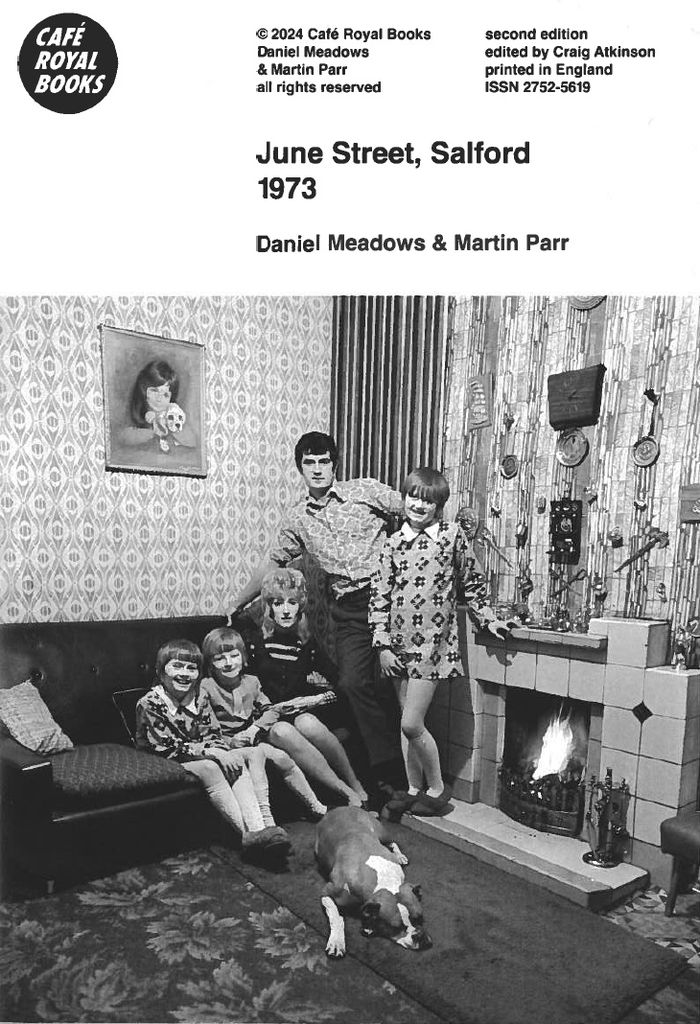
One day in 1973, acting on a whim, Daniel Meadows and Martin Parr, final year photography students at Manchester Polytechnic, attended a Granada TV open day to view the newly reconstructed set of Coronation Street. There they learned that location filming of the popular soap opera was shortly to end. This was because wholesale regeneration of Salford’s housing stock was sweeping away the ranks of Victorian terraced streets and their paving of stone setts, the very features which defined how a TV audience expected ‘the north’ to look. If the drama were to continue to look like itself, exterior scenes would henceforth be shot only at the studio. This discovery inspired Meadows and Parr to go looking for a former classic ‘Street’-like location to document before the bulldozers moved in. They settled on June Street in Ordsall, twenty houses which were still fully occupied. Over eight weeks or so, using the college Hasselblad and a bright photoflood lightbulb (screwed into the ceiling socket), they photographed each household — adults, children, dogs, cats, the budgie and, in one case, a tortoise — sitting together in their front rooms. When it was all done, they invited everyone to take part in a group photograph.
Daniel Meadows & Martin Parr — June Street, Salford 1973
Actions:
Prix:
$13.50
(disponible en magasin)
Résumé:
One day in 1973, acting on a whim, Daniel Meadows and Martin Parr, final year photography students at Manchester Polytechnic, attended a Granada TV open day to view the newly reconstructed set of Coronation Street. There they learned that location filming of the popular soap opera was shortly to end. This was because wholesale regeneration of Salford’s housing stock was sweeping away the ranks of Victorian terraced streets and their paving of stone setts, the very features which defined how a TV audience expected ‘the north’ to look. If the drama were to continue to look like itself, exterior scenes would henceforth be shot only at the studio. This discovery inspired Meadows and Parr to go looking for a former classic ‘Street’-like location to document before the bulldozers moved in. They settled on June Street in Ordsall, twenty houses which were still fully occupied. Over eight weeks or so, using the college Hasselblad and a bright photoflood lightbulb (screwed into the ceiling socket), they photographed each household — adults, children, dogs, cats, the budgie and, in one case, a tortoise — sitting together in their front rooms. When it was all done, they invited everyone to take part in a group photograph.
Classification:
livres
livres
Publication:
janvier 2026
janvier 2026
Sujet:
Monographies photo
Monographies photo
Classification:
livres
livres
Prix:
$27.00
(disponible sur commande)
Résumé:
Imagine a world without things. There would be nothing to describe, nothing to explain, remark, interpret, or complain about. Without things, we would stop speaking; we would become as mute as things are alleged to be. In nine original essays, internationally renowned historians of art and of science seek to understand how objects become charged with significance without(...)
$27.00
(disponible sur commande)
Résumé:
Imagine a world without things. There would be nothing to describe, nothing to explain, remark, interpret, or complain about. Without things, we would stop speaking; we would become as mute as things are alleged to be. In nine original essays, internationally renowned historians of art and of science seek to understand how objects become charged with significance without(...)
Titre:
Things that talk : Object lessons from art and science
Actions:
Prix:
$27.00
(disponible sur commande)
Résumé:
Imagine a world without things. There would be nothing to describe, nothing to explain, remark, interpret, or complain about. Without things, we would stop speaking; we would become as mute as things are alleged to be. In nine original essays, internationally renowned historians of art and of science seek to understand how objects become charged with significance without losing their gritty materiality. True to the particularity of things, each of the essays singles out one object for close attention: a Bosch drawing, the freestanding column, a Prussian island, soap bubbles, early photographs, glass flowers, Rorschach blots, newspaper clippings, paintings by Jackson Pollock. Each is revealed to be a node around which meanings accrete thickly. But not just any meanings: what these things are made of and how they are made shape what they can mean. Neither the pure texts of semiotics nor the brute objects of positivism, these things are saturated with cultural significance. Things become talkative when they fuse matter and meaning; they lapse into speechlessness when their matter and meanings no longer mesh. Each of the nine objects examined in this book had its historical moment, when the match of this thing to that thought seemed irresistible. At these junctures, certain things become objects of fascination, association, and endless consideration; they begin to talk. Things that talk fleetingly realize the dream of a perfect language, in which words and world merge.
Things that talk : Object lessons from art and science
Actions:
Prix:
$27.00
(disponible sur commande)
Résumé:
Imagine a world without things. There would be nothing to describe, nothing to explain, remark, interpret, or complain about. Without things, we would stop speaking; we would become as mute as things are alleged to be. In nine original essays, internationally renowned historians of art and of science seek to understand how objects become charged with significance without losing their gritty materiality. True to the particularity of things, each of the essays singles out one object for close attention: a Bosch drawing, the freestanding column, a Prussian island, soap bubbles, early photographs, glass flowers, Rorschach blots, newspaper clippings, paintings by Jackson Pollock. Each is revealed to be a node around which meanings accrete thickly. But not just any meanings: what these things are made of and how they are made shape what they can mean. Neither the pure texts of semiotics nor the brute objects of positivism, these things are saturated with cultural significance. Things become talkative when they fuse matter and meaning; they lapse into speechlessness when their matter and meanings no longer mesh. Each of the nine objects examined in this book had its historical moment, when the match of this thing to that thought seemed irresistible. At these junctures, certain things become objects of fascination, association, and endless consideration; they begin to talk. Things that talk fleetingly realize the dream of a perfect language, in which words and world merge.
Classification:
livres
livres
Publication:
novembre 2007, New York
novembre 2007, New York
Sujet:
Théorie/ philosophie
Théorie/ philosophie
Classification:
livres
livres
Prix:
$49.00
(disponible sur commande)
Résumé:
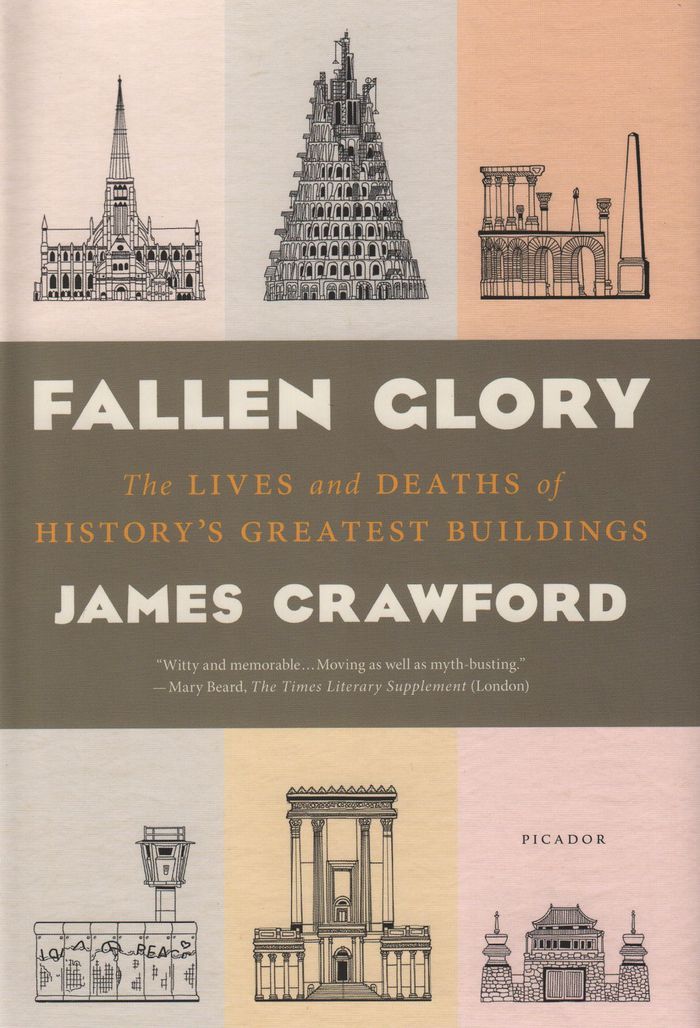
Buildings are more like us than we realize. They can be born into wealth or poverty, enjoying every privilege or struggling to make ends meet. They have parents - gods, kings and emperors, governments, visionaries and madmen - as well as friends and enemies. They have duties and responsibilities. They can endure crises of faith and purpose. They can succeed or fail. They(...)
$49.00
(disponible sur commande)
Résumé:
Buildings are more like us than we realize. They can be born into wealth or poverty, enjoying every privilege or struggling to make ends meet. They have parents - gods, kings and emperors, governments, visionaries and madmen - as well as friends and enemies. They have duties and responsibilities. They can endure crises of faith and purpose. They can succeed or fail. They(...)
Titre:
Fallen glory: the lives and deaths of history's greatest buildings
Actions:
Prix:
$49.00
(disponible sur commande)
Résumé:
Buildings are more like us than we realize. They can be born into wealth or poverty, enjoying every privilege or struggling to make ends meet. They have parents - gods, kings and emperors, governments, visionaries and madmen - as well as friends and enemies. They have duties and responsibilities. They can endure crises of faith and purpose. They can succeed or fail. They can live. And, sooner or later, they die. In "Fallen glory", James Crawford uncovers the biographies of some of the world's most fascinating lost and ruined buildings, from the dawn of civilization to the cyber era. The lives of these iconic structures are packed with drama and intrigue. Soap operas on the grandest scale, they feature war and religion, politics and art, love and betrayal, catastrophe and hope. Frequently their afterlives have been no less dramatic - their memories used and abused down the millennia for purposes both sacred and profane. They provide the stage for a startling array of characters, including Gilgamesh, the Cretan Minotaur, Agamemnon, Nefertiti, Genghis Khan, Henry VIII, Catherine the Great, Adolf Hitler, and even Bruce Springsteen. The twenty-one structures Crawford focuses on include The Tower of Babel, The Temple of Jerusalem, The Library of Alexandria, The Bastille, Kowloon Walled City, the Berlin Wall, and the Twin Towers of the World Trade Center. Ranging from the deserts of Iraq, the banks of the Nile and the cloud forests of Peru, to the great cities of Jerusalem, Istanbul, Paris, Rome, London and New York, Fallen Glory is a unique guide to a world of vanished architecture. And, by picking through the fragments of our past, it asks what history's scattered ruins can tell us about our own future.
Fallen glory: the lives and deaths of history's greatest buildings
Actions:
Prix:
$49.00
(disponible sur commande)
Résumé:
Buildings are more like us than we realize. They can be born into wealth or poverty, enjoying every privilege or struggling to make ends meet. They have parents - gods, kings and emperors, governments, visionaries and madmen - as well as friends and enemies. They have duties and responsibilities. They can endure crises of faith and purpose. They can succeed or fail. They can live. And, sooner or later, they die. In "Fallen glory", James Crawford uncovers the biographies of some of the world's most fascinating lost and ruined buildings, from the dawn of civilization to the cyber era. The lives of these iconic structures are packed with drama and intrigue. Soap operas on the grandest scale, they feature war and religion, politics and art, love and betrayal, catastrophe and hope. Frequently their afterlives have been no less dramatic - their memories used and abused down the millennia for purposes both sacred and profane. They provide the stage for a startling array of characters, including Gilgamesh, the Cretan Minotaur, Agamemnon, Nefertiti, Genghis Khan, Henry VIII, Catherine the Great, Adolf Hitler, and even Bruce Springsteen. The twenty-one structures Crawford focuses on include The Tower of Babel, The Temple of Jerusalem, The Library of Alexandria, The Bastille, Kowloon Walled City, the Berlin Wall, and the Twin Towers of the World Trade Center. Ranging from the deserts of Iraq, the banks of the Nile and the cloud forests of Peru, to the great cities of Jerusalem, Istanbul, Paris, Rome, London and New York, Fallen Glory is a unique guide to a world of vanished architecture. And, by picking through the fragments of our past, it asks what history's scattered ruins can tell us about our own future.
Classification:
livres
livres
Publication:
mars 2017
mars 2017
Sujet:
Théorie de l’architecture
Théorie de l’architecture


