


5170 Résultats
Classification:
livres
livres
Prix:
$79.00
(disponible sur commande)
Résumé:
Of the architects who made Palm Springs a crucible of midcentury American modernism, William F. Cody (1916-1978) was one of the most prolific, diverse, and iconic. Directing a practice ranging from residences to commercial centers and industrial complexes to master plans, Cody's designs are so recognizable that they provide visual shorthand for what is widely hailed as(...)
$79.00
(disponible sur commande)
Résumé:
Of the architects who made Palm Springs a crucible of midcentury American modernism, William F. Cody (1916-1978) was one of the most prolific, diverse, and iconic. Directing a practice ranging from residences to commercial centers and industrial complexes to master plans, Cody's designs are so recognizable that they provide visual shorthand for what is widely hailed as(...)
Sujet:
Architecture, monographies
Architecture, monographies
Publication:
septembre 2021
septembre 2021
Titre:
Master of the midcentury: the architecture of Williiam F. Cody
Actions:
Prix:
$79.00
(disponible sur commande)
Résumé:
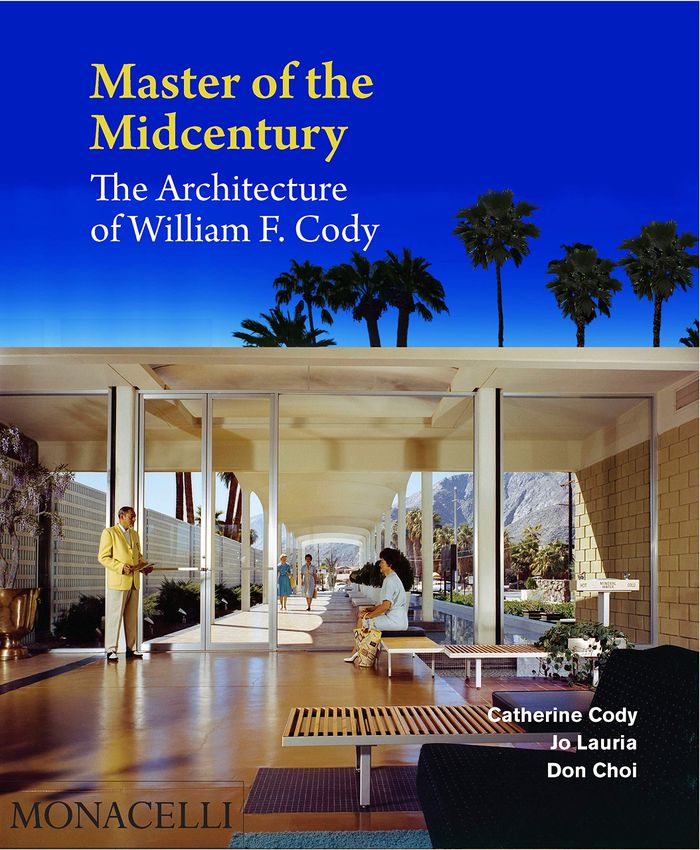
Of the architects who made Palm Springs a crucible of midcentury American modernism, William F. Cody (1916-1978) was one of the most prolific, diverse, and iconic. Directing a practice ranging from residences to commercial centers and industrial complexes to master plans, Cody's designs are so recognizable that they provide visual shorthand for what is widely hailed as "Desert Modern." While his architecture was disciplined and technically innovative, Cody did not practice an austere modernism; he imbued in his projects a love for social spaces, rich with patterns, texture, color, and art. Though the majority of Cody's built work was concentrated in California and Arizona, he had commissions in other western states, Hawaii, Mexico, Honduras, and Cuba. From icons like the Del Marcos Hotel (1946), to inventive country clubs like the Eldorado (1957), to houses for celebrities (Frank Sinatra, Bing Crosby, Walt Disney), Cody's projects defined the emerging West Coast lifestyle that combined luxury, leisure, and experimental design. Cody also pushed the boundaries of engineering, with beams and roof slabs so thin that his buildings seemed to defy gravity.
Master of the midcentury: the architecture of Williiam F. Cody
Actions:
Prix:
$79.00
(disponible sur commande)
Résumé:
Of the architects who made Palm Springs a crucible of midcentury American modernism, William F. Cody (1916-1978) was one of the most prolific, diverse, and iconic. Directing a practice ranging from residences to commercial centers and industrial complexes to master plans, Cody's designs are so recognizable that they provide visual shorthand for what is widely hailed as "Desert Modern." While his architecture was disciplined and technically innovative, Cody did not practice an austere modernism; he imbued in his projects a love for social spaces, rich with patterns, texture, color, and art. Though the majority of Cody's built work was concentrated in California and Arizona, he had commissions in other western states, Hawaii, Mexico, Honduras, and Cuba. From icons like the Del Marcos Hotel (1946), to inventive country clubs like the Eldorado (1957), to houses for celebrities (Frank Sinatra, Bing Crosby, Walt Disney), Cody's projects defined the emerging West Coast lifestyle that combined luxury, leisure, and experimental design. Cody also pushed the boundaries of engineering, with beams and roof slabs so thin that his buildings seemed to defy gravity.
Classification:
livres
livres
Publication:
septembre 2021
septembre 2021
Sujet:
Architecture, monographies
Architecture, monographies
Classification:
livres
livres
Titre:
Deborah Berke
Deborah Berke
Actions:
Prix:
$65.00
(disponible sur commande)
Résumé:
This book is the first to explore Berke’s remarkable career as an architect, designer, teacher, and writer who has forged a strong and evolving aesthetic. As examined in a series of engaging essays, Berke’s architecture blends tectonic coherence, a keen sensitivity to the intrinsic qualities of materials, and meticulous attention to detail. While all of her work possesses(...)
$65.00
(disponible sur commande)
Résumé:
This book is the first to explore Berke’s remarkable career as an architect, designer, teacher, and writer who has forged a strong and evolving aesthetic. As examined in a series of engaging essays, Berke’s architecture blends tectonic coherence, a keen sensitivity to the intrinsic qualities of materials, and meticulous attention to detail. While all of her work possesses(...)
Titre:
Deborah Berke
Actions:
Prix:
$65.00
(disponible sur commande)
Résumé:
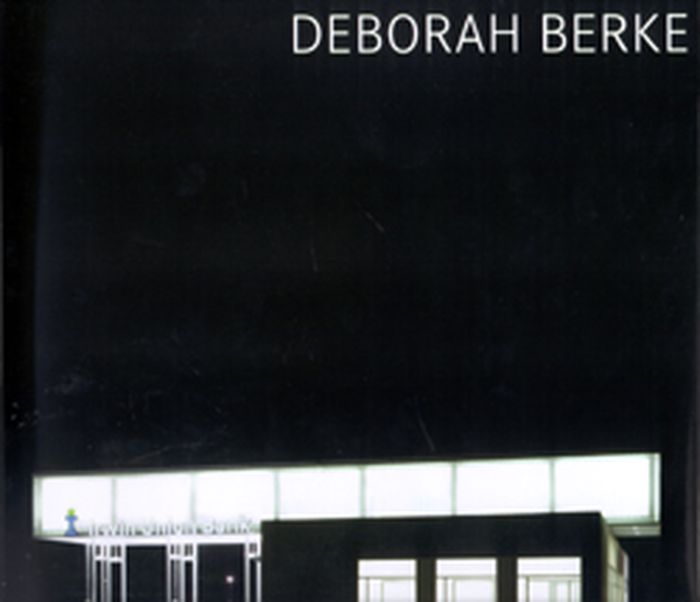
This book is the first to explore Berke’s remarkable career as an architect, designer, teacher, and writer who has forged a strong and evolving aesthetic. As examined in a series of engaging essays, Berke’s architecture blends tectonic coherence, a keen sensitivity to the intrinsic qualities of materials, and meticulous attention to detail. While all of her work possesses these distinctive attributes, each project is subtly rooted in its context and ennobles the uses specific to that space. Through newly commissioned photographs, twenty-one of Berke’s thought-provoking projects appear here, including the Irwin Union Bank, Yale School of Art, 21c Museum Hotel, and Marianne Boesky Gallery. Also featured are Berke’s reflections on her growing interest in the “here and now”—an approach to architecture intended to counteract the banal placelessness of much of our environment by designing buildings that are intensely bound to and grounded in their sites. Tracy Myers is curator at the Heinz Architectural Center of the Carnegie Museum of Art, Pittsburgh. Amy Hempel is a fiction writer whose publications include Tumble Home (1997) and The Dog of the Marriage (2005).
Deborah Berke
Actions:
Prix:
$65.00
(disponible sur commande)
Résumé:
This book is the first to explore Berke’s remarkable career as an architect, designer, teacher, and writer who has forged a strong and evolving aesthetic. As examined in a series of engaging essays, Berke’s architecture blends tectonic coherence, a keen sensitivity to the intrinsic qualities of materials, and meticulous attention to detail. While all of her work possesses these distinctive attributes, each project is subtly rooted in its context and ennobles the uses specific to that space. Through newly commissioned photographs, twenty-one of Berke’s thought-provoking projects appear here, including the Irwin Union Bank, Yale School of Art, 21c Museum Hotel, and Marianne Boesky Gallery. Also featured are Berke’s reflections on her growing interest in the “here and now”—an approach to architecture intended to counteract the banal placelessness of much of our environment by designing buildings that are intensely bound to and grounded in their sites. Tracy Myers is curator at the Heinz Architectural Center of the Carnegie Museum of Art, Pittsburgh. Amy Hempel is a fiction writer whose publications include Tumble Home (1997) and The Dog of the Marriage (2005).
Classification:
livres
livres
Publication:
novembre 2008, New Haven, London
novembre 2008, New Haven, London
Sujet:
Architecture, monographies
Architecture, monographies
Classification:
livres
livres
Actions:
Prix:
$27.95
(disponible sur commande)
Résumé:
Where will you go when the trouble starts? For countless people around the world, the answer is that bomb shelter down in the basement. In fact, people from around the world have been building shelters to protect themselves from catastrophe—natural disaster, war, nuclear events—for centuries. "Waiting for the End of the World" is photographer Richard Ross's journey into(...)
$27.95
(disponible sur commande)
Résumé:
Where will you go when the trouble starts? For countless people around the world, the answer is that bomb shelter down in the basement. In fact, people from around the world have been building shelters to protect themselves from catastrophe—natural disaster, war, nuclear events—for centuries. "Waiting for the End of the World" is photographer Richard Ross's journey into(...)
Titre:
Waiting for the end of the world
Actions:
Prix:
$27.95
(disponible sur commande)
Résumé:
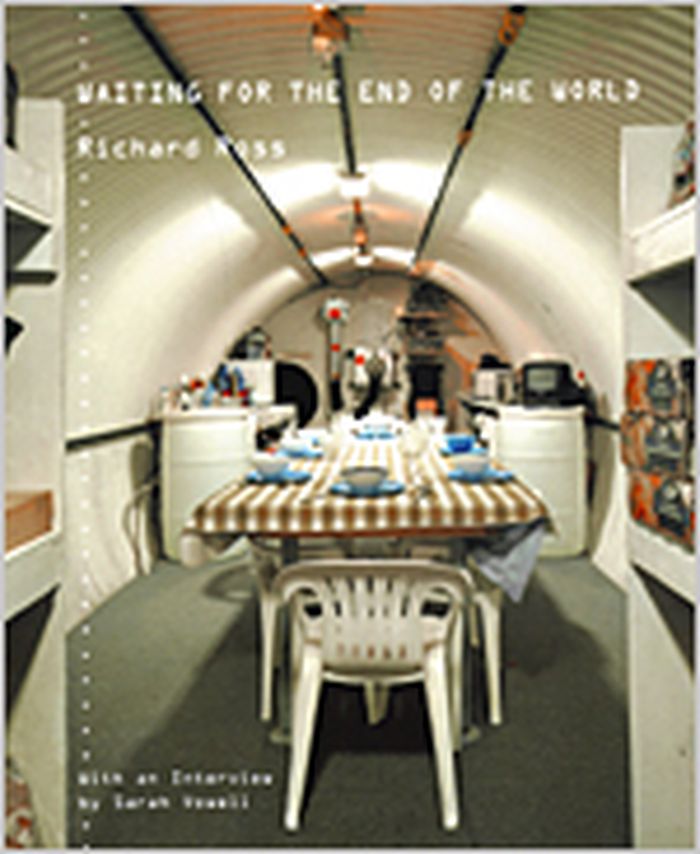
Where will you go when the trouble starts? For countless people around the world, the answer is that bomb shelter down in the basement. In fact, people from around the world have been building shelters to protect themselves from catastrophe—natural disaster, war, nuclear events—for centuries. "Waiting for the End of the World" is photographer Richard Ross's journey into this quirky, somewhat paranoid, and occasionally beautiful underground world. Ross has documented not only the bomb shelters of the United States, but also examples from Vietnam, Russia, England, Turkey, and even Switzerland, where citizens are required by law to have a bomb shelter. Ross's subjects include the Greenbrier Hotel in West Virginia, where a shelter was built to house the entire U.S. Congress, shelters in Beijing, where the Chinese built a complete city underground, and Hittite shelters in Eastern Turkey built some 4,000 years ago. His ethereal images show spaces that at once provide only the barest necessities for survival but maintain a level of idiosyncratic personality that testify to the endurance—and wackiness—of the human spirit. "Waiting for the End of the World" features an interview by author and social commentator Sarah Vowell.
Waiting for the end of the world
Actions:
Prix:
$27.95
(disponible sur commande)
Résumé:
Where will you go when the trouble starts? For countless people around the world, the answer is that bomb shelter down in the basement. In fact, people from around the world have been building shelters to protect themselves from catastrophe—natural disaster, war, nuclear events—for centuries. "Waiting for the End of the World" is photographer Richard Ross's journey into this quirky, somewhat paranoid, and occasionally beautiful underground world. Ross has documented not only the bomb shelters of the United States, but also examples from Vietnam, Russia, England, Turkey, and even Switzerland, where citizens are required by law to have a bomb shelter. Ross's subjects include the Greenbrier Hotel in West Virginia, where a shelter was built to house the entire U.S. Congress, shelters in Beijing, where the Chinese built a complete city underground, and Hittite shelters in Eastern Turkey built some 4,000 years ago. His ethereal images show spaces that at once provide only the barest necessities for survival but maintain a level of idiosyncratic personality that testify to the endurance—and wackiness—of the human spirit. "Waiting for the End of the World" features an interview by author and social commentator Sarah Vowell.
Classification:
livres
livres
Publication:
juin 2004, New York
juin 2004, New York
Sujet:
Monographies photo
Monographies photo
Classification:
livres
livres
Titre:
Adam Bartos : boulevard
Adam Bartos : boulevard
Actions:
Prix:
$65.00
(disponible sur commande)
Résumé:
"Boulevard" is a visual tale of two disparate cities: Paris and Los Angeles. In the early seventies, Adam Bartos began to use color photography to document the contemporary urban landscape, infusing his images with a certain quietude and finding composition in even the most random corners of life. He often focused his lens on his native New York, and he published a(...)
$65.00
(disponible sur commande)
Résumé:
"Boulevard" is a visual tale of two disparate cities: Paris and Los Angeles. In the early seventies, Adam Bartos began to use color photography to document the contemporary urban landscape, infusing his images with a certain quietude and finding composition in even the most random corners of life. He often focused his lens on his native New York, and he published a(...)
Titre:
Adam Bartos : boulevard
Actions:
Prix:
$65.00
(disponible sur commande)
Résumé:
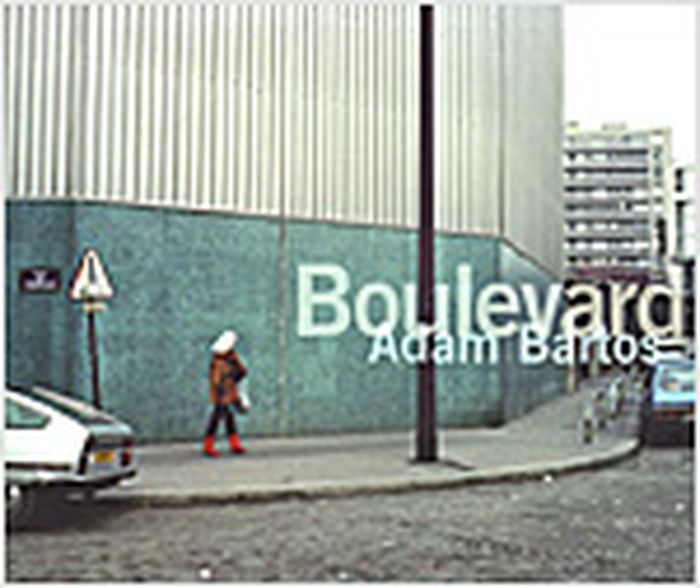
"Boulevard" is a visual tale of two disparate cities: Paris and Los Angeles. In the early seventies, Adam Bartos began to use color photography to document the contemporary urban landscape, infusing his images with a certain quietude and finding composition in even the most random corners of life. He often focused his lens on his native New York, and he published a monumental series of photographs of the modern architecture of the United Nations. In the late seventies, and then again in the early eighties, Bartos traveled to Los Angeles and Paris, taking his camera with him. The two trips would have a strong and lasting impact on his vision, and yet until recently, he had never considered the two cities — or bodies of work — together. In "Boulevard", this is not the L.A. or Paris of postcards. As we venture through the scarcely inhabited hotel rooms, backyards, gas stations, and inevitably, city streets, we are struck by the graphical relationships and the surprisingly similar color palates. There is a magnetic attraction and repulsion between these two photo series and cities — polar opposites that, at unexpected moments, converge and suddenly attract. With a preface by Geoff Dyer.
Adam Bartos : boulevard
Actions:
Prix:
$65.00
(disponible sur commande)
Résumé:
"Boulevard" is a visual tale of two disparate cities: Paris and Los Angeles. In the early seventies, Adam Bartos began to use color photography to document the contemporary urban landscape, infusing his images with a certain quietude and finding composition in even the most random corners of life. He often focused his lens on his native New York, and he published a monumental series of photographs of the modern architecture of the United Nations. In the late seventies, and then again in the early eighties, Bartos traveled to Los Angeles and Paris, taking his camera with him. The two trips would have a strong and lasting impact on his vision, and yet until recently, he had never considered the two cities — or bodies of work — together. In "Boulevard", this is not the L.A. or Paris of postcards. As we venture through the scarcely inhabited hotel rooms, backyards, gas stations, and inevitably, city streets, we are struck by the graphical relationships and the surprisingly similar color palates. There is a magnetic attraction and repulsion between these two photo series and cities — polar opposites that, at unexpected moments, converge and suddenly attract. With a preface by Geoff Dyer.
Classification:
livres
livres
Publication:
janvier 2006, Göttingen
janvier 2006, Göttingen
Sujet:
Monographies photo
Monographies photo
Classification:
livres
livres
Actions:
Prix:
$15.00
(disponible sur commande)
Résumé:
Price, a disciple of Frank Furness who practiced in Philadelphia from 1883 to 1916, established the architectural character of two of the nation's great resorts, Atlantic City and Miami, thus shaping the architecture of the Roaring Twenties. Although his (...)
$15.00
(disponible sur commande)
Résumé:
Price, a disciple of Frank Furness who practiced in Philadelphia from 1883 to 1916, established the architectural character of two of the nation's great resorts, Atlantic City and Miami, thus shaping the architecture of the Roaring Twenties. Although his (...)
Titre:
William L. Price : Arts and Crafts to modern design
Actions:
Prix:
$15.00
(disponible sur commande)
Résumé:
Price, a disciple of Frank Furness who practiced in Philadelphia from 1883 to 1916, established the architectural character of two of the nation's great resorts, Atlantic City and Miami, thus shaping the architecture of the Roaring Twenties. Although his largest and best-known projects, the Art Deco Traymore Hotel in Atlantic City and the Chicago Freight Terminal, have been, his arts and crafts utopian community in Rose Valley, Pennsylvania and his Garden City community in Arden, Delaware survive to attest to the vigor of his ideas and the leadership he exerted. Price left a legacy of exquisite houses, railway stations, and commercial structures stretching from Atlantic City to Chicago and from Canada to Florida that was widely emulated and recalls the best works of Frank Lloyd Wright and Greene & Greene. In addition, Price was an accomplished writer and furniture designer whose work was regularly featured in Gustav Stickley's "The Craftsman". Price's role in shaping American architecture is uncovered in this lavishly illustrated volume, which documents the architect's complete works including over 350 hotels, houses, and pieces of furni-ture, bringing to light this little-known American master.
William L. Price : Arts and Crafts to modern design
Actions:
Prix:
$15.00
(disponible sur commande)
Résumé:
Price, a disciple of Frank Furness who practiced in Philadelphia from 1883 to 1916, established the architectural character of two of the nation's great resorts, Atlantic City and Miami, thus shaping the architecture of the Roaring Twenties. Although his largest and best-known projects, the Art Deco Traymore Hotel in Atlantic City and the Chicago Freight Terminal, have been, his arts and crafts utopian community in Rose Valley, Pennsylvania and his Garden City community in Arden, Delaware survive to attest to the vigor of his ideas and the leadership he exerted. Price left a legacy of exquisite houses, railway stations, and commercial structures stretching from Atlantic City to Chicago and from Canada to Florida that was widely emulated and recalls the best works of Frank Lloyd Wright and Greene & Greene. In addition, Price was an accomplished writer and furniture designer whose work was regularly featured in Gustav Stickley's "The Craftsman". Price's role in shaping American architecture is uncovered in this lavishly illustrated volume, which documents the architect's complete works including over 350 hotels, houses, and pieces of furni-ture, bringing to light this little-known American master.
Classification:
livres
livres
Publication:
avril 2000, New York
avril 2000, New York
Sujet:
livres soldés
livres soldés
Classification:
audio
audio
Titre:
Pardon My French.
Pardon My French.
Actions:
Description:
1 online resource.
Auteur:
Sujet:
Publication:
[Place of publication not identified] : Junior Aspirin Records, 2013., [Place of publication not identified] : Stop Making Sense, 2013.
[Place of publication not identified] : Junior Aspirin Records, 2013., [Place of publication not identified] : Stop Making Sense, 2013.
Classification:
audio
audio
Publication:
[Place of publication not identified] : Junior Aspirin Records, 2013., [Place of publication not identified] : Stop Making Sense, 2013.
[Place of publication not identified] : Junior Aspirin Records, 2013., [Place of publication not identified] : Stop Making Sense, 2013.
Auteur:
Sujet:
Classification:
livres
livres
Actions:
Exemplaires:
Description:
xi, 322 pages, 8 unnumbered pages of plates : illustrations (some color) ; 25 cm
Description:
xi, 322 pages, 8 unnumbered pages of plates : illustrations (some color) ; 25 cm
Auteur:
Sujet:
Publication:
New York : Basic Books, a member of the Perseus Books Group, [2016]
New York : Basic Books, a member of the Perseus Books Group, [2016]
Titre:
The long weekend : life in the English country house, 1918-1939 / Adrian Tinniswood.
Actions:
Exemplaires:
Description:
xi, 322 pages, 8 unnumbered pages of plates : illustrations (some color) ; 25 cm
The long weekend : life in the English country house, 1918-1939 / Adrian Tinniswood.
Actions:
Exemplaires:
Description:
xi, 322 pages, 8 unnumbered pages of plates : illustrations (some color) ; 25 cm
Classification:
livres
livres
Publication:
New York : Basic Books, a member of the Perseus Books Group, [2016]
New York : Basic Books, a member of the Perseus Books Group, [2016]
Auteur:
Sujet:
Classification:
livres
livres
Titre:
Lance Wyman: Mexico
Lance Wyman: Mexico
Actions:
Prix:
$50.00
(disponible sur commande)
Résumé:
Widely admired for his powerful but whimsical imagery, Lance Wyman is a leading figure of contemporary graphic design. Throughout a career that spans over 50 years, Wyman has made his name by designing for museums, zoos, metro stations and the 2008 Barack Obama presidential campaign. But it was when he won a competition at age 29 to design the Mexico Olympic graphics for(...)
$50.00
(disponible sur commande)
Résumé:
Widely admired for his powerful but whimsical imagery, Lance Wyman is a leading figure of contemporary graphic design. Throughout a career that spans over 50 years, Wyman has made his name by designing for museums, zoos, metro stations and the 2008 Barack Obama presidential campaign. But it was when he won a competition at age 29 to design the Mexico Olympic graphics for(...)
Titre:
Lance Wyman: Mexico
Actions:
Prix:
$50.00
(disponible sur commande)
Résumé:
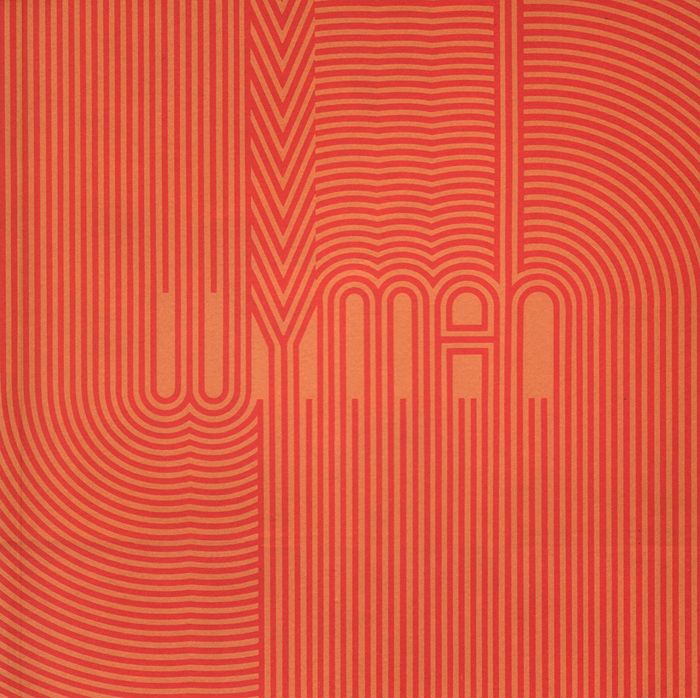
Widely admired for his powerful but whimsical imagery, Lance Wyman is a leading figure of contemporary graphic design. Throughout a career that spans over 50 years, Wyman has made his name by designing for museums, zoos, metro stations and the 2008 Barack Obama presidential campaign. But it was when he won a competition at age 29 to design the Mexico Olympic graphics for the 1968 games that Wyman launched his career; his work is now a cornerstone for understanding the visual culture of present-day Mexico. In lieu of the extravagance typical of Olympic designs, Wyman offered something refreshing, spacious and above all modern as he unwittingly entered a tumultuous and revolutionary moment in Mexican history. His bold image of a modern Mexico would last beyond the nation's moment in the international spotlight; Wyman stayed for another four years, designing graphic systems for the Mexico City Metro, Central de Abasto and Camino Real Hotel. This bilingual English-Spanish monograph is the very first retrospective publication on the designer's work. Published in conjunction with an exhibition at MUAC in Mexico City, the book celebrates the influence of Wyman's system of visual icons—work so iconic that we find its traces in the emojis available on iPhones today.
Lance Wyman: Mexico
Actions:
Prix:
$50.00
(disponible sur commande)
Résumé:
Widely admired for his powerful but whimsical imagery, Lance Wyman is a leading figure of contemporary graphic design. Throughout a career that spans over 50 years, Wyman has made his name by designing for museums, zoos, metro stations and the 2008 Barack Obama presidential campaign. But it was when he won a competition at age 29 to design the Mexico Olympic graphics for the 1968 games that Wyman launched his career; his work is now a cornerstone for understanding the visual culture of present-day Mexico. In lieu of the extravagance typical of Olympic designs, Wyman offered something refreshing, spacious and above all modern as he unwittingly entered a tumultuous and revolutionary moment in Mexican history. His bold image of a modern Mexico would last beyond the nation's moment in the international spotlight; Wyman stayed for another four years, designing graphic systems for the Mexico City Metro, Central de Abasto and Camino Real Hotel. This bilingual English-Spanish monograph is the very first retrospective publication on the designer's work. Published in conjunction with an exhibition at MUAC in Mexico City, the book celebrates the influence of Wyman's system of visual icons—work so iconic that we find its traces in the emojis available on iPhones today.
Classification:
livres
livres
Publication:
avril 2015
avril 2015
Classification:
livres
livres
Prix:
$46.95
(disponible en magasin)
Résumé:
In the ten years since the first edition of "A Guide to Canadian Architectural Styles" was published, the heritage movement has gained strength, sensitizing many to the value of our architectural legacy. This new edition reflects an enriched understanding of architecture that focuses more on the visual and cultural setting of the built environment and less on individual(...)
$46.95
(disponible en magasin)
Résumé:
In the ten years since the first edition of "A Guide to Canadian Architectural Styles" was published, the heritage movement has gained strength, sensitizing many to the value of our architectural legacy. This new edition reflects an enriched understanding of architecture that focuses more on the visual and cultural setting of the built environment and less on individual(...)
Sujet:
Architecture du Canada
Architecture du Canada
Publication:
septembre 2003, Peterborough, Ontario
septembre 2003, Peterborough, Ontario
Titre:
A guide to Canadian architectural styles, second edition
Actions:
Prix:
$46.95
(disponible en magasin)
Résumé:
In the ten years since the first edition of "A Guide to Canadian Architectural Styles" was published, the heritage movement has gained strength, sensitizing many to the value of our architectural legacy. This new edition reflects an enriched understanding of architecture that focuses more on the visual and cultural setting of the built environment and less on individual works seen in isolation. Today, we cherish the buildings that characterize the original Main Street / rue Principale - the bank building, the shops, the old hotel, the post office, the city hall. There is more recognition for older inner-city neighbourhoods, with their row housing, churches, and community halls as well as for our often romantic attachment to vernacular rural architecture. This interest in more ordinary-looking architecture marks both the democratization of Canada's heritage movement and its coming of age, for the value of these more modest structures lies in their unique ability to sustain a sense of identity. This book provides an essential profile of the origins and development of the many architectural styles across Canada, from early settlement to the postmodern period, and discusses special forms such as religious, civic, domestic, commercial, and industrial design. While remaining true to the accessible format of the first edition, the second offers updated and considerably expanded text, as well as many more illustrations.
A guide to Canadian architectural styles, second edition
Actions:
Prix:
$46.95
(disponible en magasin)
Résumé:
In the ten years since the first edition of "A Guide to Canadian Architectural Styles" was published, the heritage movement has gained strength, sensitizing many to the value of our architectural legacy. This new edition reflects an enriched understanding of architecture that focuses more on the visual and cultural setting of the built environment and less on individual works seen in isolation. Today, we cherish the buildings that characterize the original Main Street / rue Principale - the bank building, the shops, the old hotel, the post office, the city hall. There is more recognition for older inner-city neighbourhoods, with their row housing, churches, and community halls as well as for our often romantic attachment to vernacular rural architecture. This interest in more ordinary-looking architecture marks both the democratization of Canada's heritage movement and its coming of age, for the value of these more modest structures lies in their unique ability to sustain a sense of identity. This book provides an essential profile of the origins and development of the many architectural styles across Canada, from early settlement to the postmodern period, and discusses special forms such as religious, civic, domestic, commercial, and industrial design. While remaining true to the accessible format of the first edition, the second offers updated and considerably expanded text, as well as many more illustrations.
Classification:
livres
livres
Publication:
septembre 2003, Peterborough, Ontario
septembre 2003, Peterborough, Ontario
Sujet:
Architecture du Canada
Architecture du Canada
Classification:
livres
livres
Actions:
Prix:
$74.00
(disponible sur commande)
Résumé:
Once the world’s tallest skyscraper, the Woolworth Building is noted for its striking but incongruous synthesis of Beaux-Arts architecture, fanciful Gothic ornamentation, and audacious steel-framed engineering. Here, in the first history of this great urban landmark, Gail Fenske argues that its design serves as a compelling lens through which to view the distinctive urban(...)
$74.00
(disponible sur commande)
Résumé:
Once the world’s tallest skyscraper, the Woolworth Building is noted for its striking but incongruous synthesis of Beaux-Arts architecture, fanciful Gothic ornamentation, and audacious steel-framed engineering. Here, in the first history of this great urban landmark, Gail Fenske argues that its design serves as a compelling lens through which to view the distinctive urban(...)
Titre:
The skyscraper and the city: the woolworth building and the making of modern New York
Actions:
Prix:
$74.00
(disponible sur commande)
Résumé:
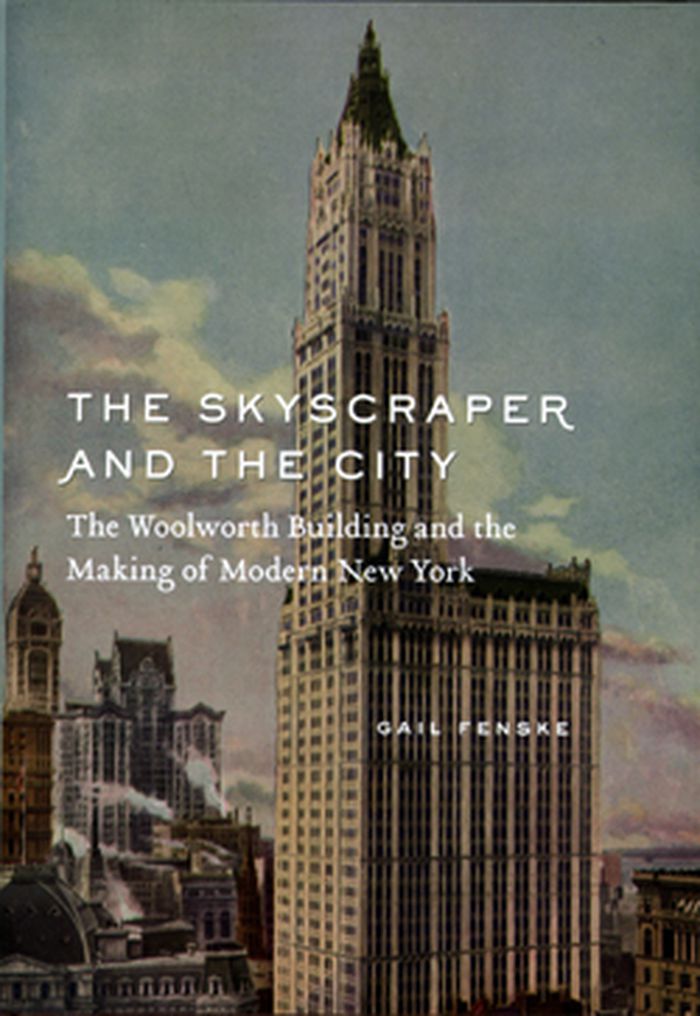
Once the world’s tallest skyscraper, the Woolworth Building is noted for its striking but incongruous synthesis of Beaux-Arts architecture, fanciful Gothic ornamentation, and audacious steel-framed engineering. Here, in the first history of this great urban landmark, Gail Fenske argues that its design serves as a compelling lens through which to view the distinctive urban culture of Progressive-era New York. Fenske shows here that the building’s multiplicity of meanings reflected the cultural contradictions that defined New York City’s modernity. For Frank Woolworth—founder of the famous five-and-dime store chain—the building served as a towering trademark, for advocates of the City Beautiful movement it suggested a majestic hotel de ville, for technological enthusiasts it represented the boldest of experiments in vertical construction, and for tenants it provided an evocative setting for high-style consumption. Tourists, meanwhile, experienced a spectacular sightseeing destination and avant-garde artists discovered a twentieth-century future. In emphasizing this faceted significance, Fenske illuminates the process of conceiving, financing, and constructing skyscrapers as well as the mass phenomena of consumerism, marketing, news media, and urban spectatorship that surround them. As the representative example of the skyscraper as a “cathedral of commerce,” the Woolworth Building remains a commanding presence in the skyline of lower Manhattan, and the generously illustrated Skyscraper and the City is a worthy testament to its importance in American culture.
The skyscraper and the city: the woolworth building and the making of modern New York
Actions:
Prix:
$74.00
(disponible sur commande)
Résumé:
Once the world’s tallest skyscraper, the Woolworth Building is noted for its striking but incongruous synthesis of Beaux-Arts architecture, fanciful Gothic ornamentation, and audacious steel-framed engineering. Here, in the first history of this great urban landmark, Gail Fenske argues that its design serves as a compelling lens through which to view the distinctive urban culture of Progressive-era New York. Fenske shows here that the building’s multiplicity of meanings reflected the cultural contradictions that defined New York City’s modernity. For Frank Woolworth—founder of the famous five-and-dime store chain—the building served as a towering trademark, for advocates of the City Beautiful movement it suggested a majestic hotel de ville, for technological enthusiasts it represented the boldest of experiments in vertical construction, and for tenants it provided an evocative setting for high-style consumption. Tourists, meanwhile, experienced a spectacular sightseeing destination and avant-garde artists discovered a twentieth-century future. In emphasizing this faceted significance, Fenske illuminates the process of conceiving, financing, and constructing skyscrapers as well as the mass phenomena of consumerism, marketing, news media, and urban spectatorship that surround them. As the representative example of the skyscraper as a “cathedral of commerce,” the Woolworth Building remains a commanding presence in the skyline of lower Manhattan, and the generously illustrated Skyscraper and the City is a worthy testament to its importance in American culture.
Classification:
livres
livres
Publication:
mai 2008, Chicago, London
mai 2008, Chicago, London
Sujet:
Gratte-ciels
Gratte-ciels


