


6049 Résultats
Classification:
livres
livres
Actions:
Prix:
$69.95
(disponible sur commande)
Résumé:
An artist, curator, critic, and teacher, Ian Carr-Harris has been a central figure in Toronto’s art scene since the 1970s. By collecting his impressive output of essays, critical experiments, and reviews into a single volume, Tracings documents the growth of conceptual art and postmodernism in Canadian art, as well as the expansion of mediums and spaces, while providing(...)
$69.95
(disponible sur commande)
Résumé:
An artist, curator, critic, and teacher, Ian Carr-Harris has been a central figure in Toronto’s art scene since the 1970s. By collecting his impressive output of essays, critical experiments, and reviews into a single volume, Tracings documents the growth of conceptual art and postmodernism in Canadian art, as well as the expansion of mediums and spaces, while providing(...)
Titre:
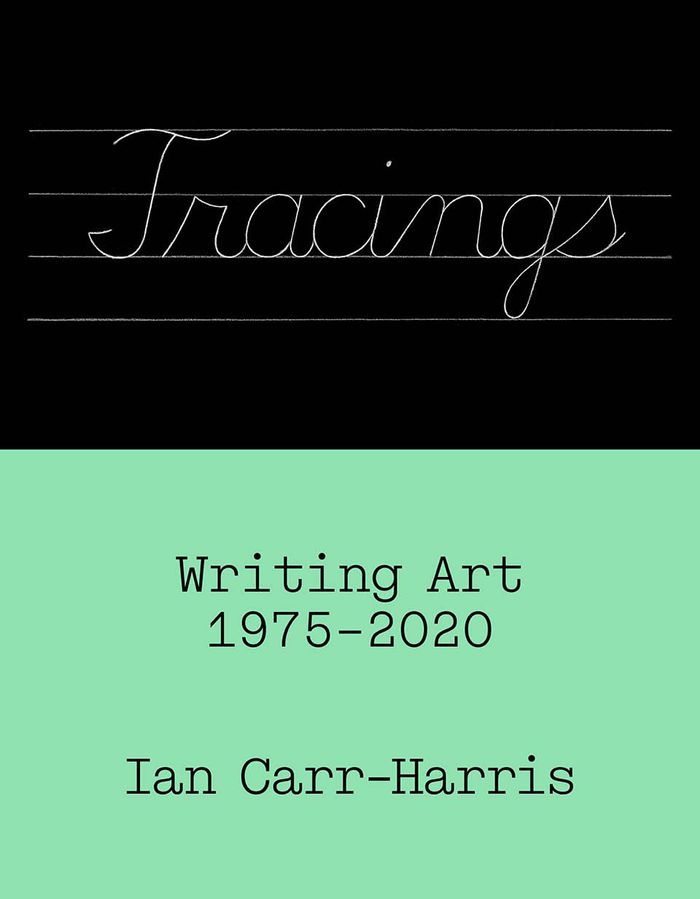
Tracings: Writing art, 1975-2020
Actions:
Prix:
$69.95
(disponible sur commande)
Résumé:
An artist, curator, critic, and teacher, Ian Carr-Harris has been a central figure in Toronto’s art scene since the 1970s. By collecting his impressive output of essays, critical experiments, and reviews into a single volume, Tracings documents the growth of conceptual art and postmodernism in Canadian art, as well as the expansion of mediums and spaces, while providing insights into methods of representation and the role of criticism in contemporary art. In clear and intelligent prose, Carr-Harris offers detailed studies of individual artists and exhibitions as well as theoretically informed reflections on broader cultural concerns. Whether writing about the complexities involved in the construction and transmission of knowledge, meaning, and historical narrative; discussing the material matters of government cultural funding, patronage, and artist-run centres; or describing his own process and artworks, these pieces reveal a literary love of language and a nuanced and investigative mind at work. Throughout his writing, he considers themes of identity, cultural nationalism, postcolonialism, institutionalism, the act of viewing, and relations of power. An introduction by Dan Adler situates Carr-Harris’s work within the context of his contemporaries, collaborators, and cultural environment, pointing out the mutually reinforcing qualities and relationships between his art and his writing. Covering decades of critical thought and engagement, "Tracings" confirms why Ian Carr-Harris has indelibly written himself into Canadian art.
Tracings: Writing art, 1975-2020
Actions:
Prix:
$69.95
(disponible sur commande)
Résumé:
An artist, curator, critic, and teacher, Ian Carr-Harris has been a central figure in Toronto’s art scene since the 1970s. By collecting his impressive output of essays, critical experiments, and reviews into a single volume, Tracings documents the growth of conceptual art and postmodernism in Canadian art, as well as the expansion of mediums and spaces, while providing insights into methods of representation and the role of criticism in contemporary art. In clear and intelligent prose, Carr-Harris offers detailed studies of individual artists and exhibitions as well as theoretically informed reflections on broader cultural concerns. Whether writing about the complexities involved in the construction and transmission of knowledge, meaning, and historical narrative; discussing the material matters of government cultural funding, patronage, and artist-run centres; or describing his own process and artworks, these pieces reveal a literary love of language and a nuanced and investigative mind at work. Throughout his writing, he considers themes of identity, cultural nationalism, postcolonialism, institutionalism, the act of viewing, and relations of power. An introduction by Dan Adler situates Carr-Harris’s work within the context of his contemporaries, collaborators, and cultural environment, pointing out the mutually reinforcing qualities and relationships between his art and his writing. Covering decades of critical thought and engagement, "Tracings" confirms why Ian Carr-Harris has indelibly written himself into Canadian art.
Classification:
livres
livres
Publication:
novembre 2024
novembre 2024
Sujet:
Théorie de l’art
Théorie de l’art
Classification:
livres
livres
Titre:
Screening the city
Screening the city
Actions:
Prix:
$29.00
(disponible sur commande)
Résumé:
In this provocative collection of essays, films as diverse as "The Man with a Movie Camera", "Annie Hall", "Street of Crocodiles", "Boyz N the Hood", "Three Colors Red", and "Crash" are examined in terms of the relationship between cinema and the changing urban experience in Europe and the United States since the early twentieth century. Peter Jelavich, for example, links(...)
$29.00
(disponible sur commande)
Résumé:
In this provocative collection of essays, films as diverse as "The Man with a Movie Camera", "Annie Hall", "Street of Crocodiles", "Boyz N the Hood", "Three Colors Red", and "Crash" are examined in terms of the relationship between cinema and the changing urban experience in Europe and the United States since the early twentieth century. Peter Jelavich, for example, links(...)
Sujet:
Théorie de l’urbanisme
Théorie de l’urbanisme
Publication:
mars 2003, London / New York
mars 2003, London / New York
Titre:
Screening the city
Actions:
Prix:
$29.00
(disponible sur commande)
Résumé:
In this provocative collection of essays, films as diverse as "The Man with a Movie Camera", "Annie Hall", "Street of Crocodiles", "Boyz N the Hood", "Three Colors Red", and "Crash" are examined in terms of the relationship between cinema and the changing urban experience in Europe and the United States since the early twentieth century. Peter Jelavich, for example, links the suppression of the creative, liberal Weimar Berlin in the 1931 film "Berlin Alexanderplatz" to the rise of the Nazi regime and the end of one of the great eras of modernist experimentation in German visual culture; Jessie Labov considers Kieslowski’s treatment of the Warsaw housing blok in "Dekalog" in terms of Solidarity’s strategy of resisting totalitarianism in 1980's Poland; Allan Siegel examines the motif of the city in a broad range of American and international cinema to demonstrate how film and society since the 1960's have been driven by the fading of mass political radicalism and the triumph of privatization and capital; Paula Massood uses the socially illuminating theories of Mikhail Bakhtin to examine the representation of the ghetto and urban underclass in recent African-American films such as "Menace II Society"; and Matthew Gandy examines the focus on disease in Todd Haynes’s "[Safe]" as a metaphor for social and spatial breakdown in contemporary Los Angeles.
Screening the city
Actions:
Prix:
$29.00
(disponible sur commande)
Résumé:
In this provocative collection of essays, films as diverse as "The Man with a Movie Camera", "Annie Hall", "Street of Crocodiles", "Boyz N the Hood", "Three Colors Red", and "Crash" are examined in terms of the relationship between cinema and the changing urban experience in Europe and the United States since the early twentieth century. Peter Jelavich, for example, links the suppression of the creative, liberal Weimar Berlin in the 1931 film "Berlin Alexanderplatz" to the rise of the Nazi regime and the end of one of the great eras of modernist experimentation in German visual culture; Jessie Labov considers Kieslowski’s treatment of the Warsaw housing blok in "Dekalog" in terms of Solidarity’s strategy of resisting totalitarianism in 1980's Poland; Allan Siegel examines the motif of the city in a broad range of American and international cinema to demonstrate how film and society since the 1960's have been driven by the fading of mass political radicalism and the triumph of privatization and capital; Paula Massood uses the socially illuminating theories of Mikhail Bakhtin to examine the representation of the ghetto and urban underclass in recent African-American films such as "Menace II Society"; and Matthew Gandy examines the focus on disease in Todd Haynes’s "[Safe]" as a metaphor for social and spatial breakdown in contemporary Los Angeles.
Classification:
livres
livres
Publication:
mars 2003, London / New York
mars 2003, London / New York
Sujet:
Théorie de l’urbanisme
Théorie de l’urbanisme
Classification:
livres
livres
Actions:
Prix:
$52.00
(disponible sur commande)
Résumé:
Getting the picture, constructing (and deconstructing) the picture, finding the picture, viewing the picture, being in the picture , changing the pictures --these are all phrases that apply to the fascinating world of 'putting people in the picture' in visual research within the Social Sciences. Putting People in the Picture: Visual Methodologies for Social Change focuses(...)
$52.00
(disponible sur commande)
Résumé:
Getting the picture, constructing (and deconstructing) the picture, finding the picture, viewing the picture, being in the picture , changing the pictures --these are all phrases that apply to the fascinating world of 'putting people in the picture' in visual research within the Social Sciences. Putting People in the Picture: Visual Methodologies for Social Change focuses(...)
Sujet:
Théorie de la photographie
Théorie de la photographie
Publication:
mai 2008, Rotterdam
mai 2008, Rotterdam
Titre:
Putting people in the picture: visual methodologies for social change
Actions:
Prix:
$52.00
(disponible sur commande)
Résumé:
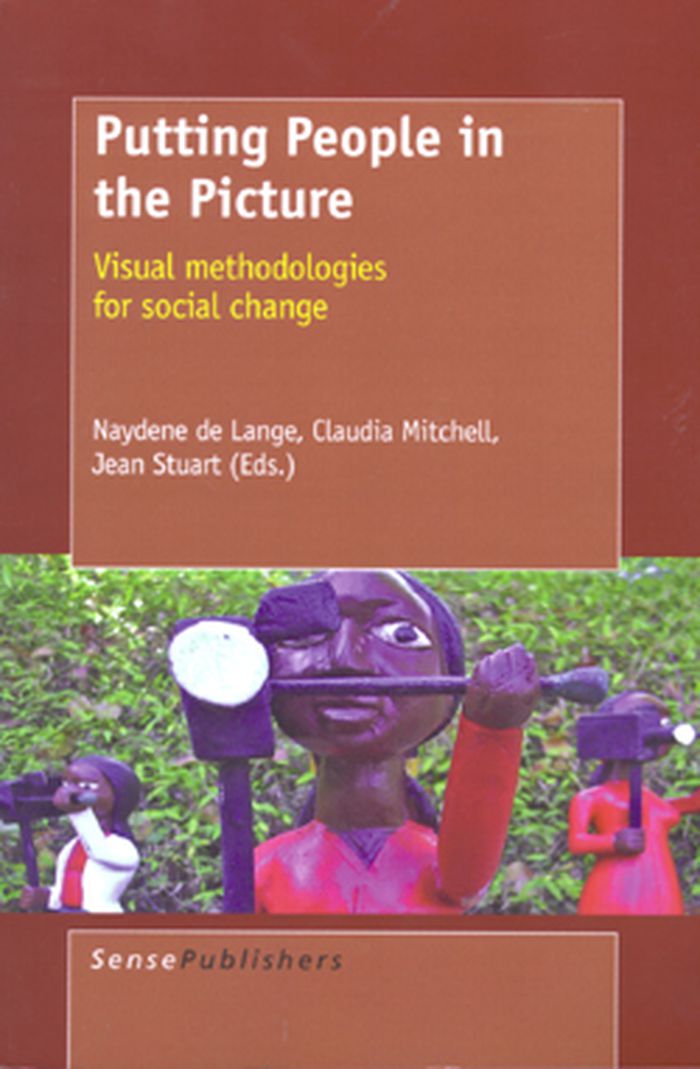
Getting the picture, constructing (and deconstructing) the picture, finding the picture, viewing the picture, being in the picture , changing the pictures --these are all phrases that apply to the fascinating world of 'putting people in the picture' in visual research within the Social Sciences. Putting People in the Picture: Visual Methodologies for Social Change focuses on the ways in which researchers, practitioners and activists are using such techniques as photo voice, collaborative video, drawings and other visual and arts-based tools as modes of inquiry, as modes of representation and as modes of disseminating findings in social research. The various chapters address methodological, analytical, interpretive, aesthetic, technical and ethical concerns in using visual methodologies in work with young people, teachers, community health care workers -- and even the self-as-researcher. The range of issues addressed in the work is broad, and includes work in the areas of HIV & AIDS, schooling, poverty, gender violence, race, and children's visions for the future. While the studies are situated within a variety of social contexts, the focus is primarily on work in Southern Africa. The book takes up some of the theoretical and practical challenges offered by Visual Sociology, Image- based Research, Media Studies, Rural Development, and Community-based and Participatory Research, and in so doing offers audiences an array of visual approaches to studying and bringing about social change.
Putting people in the picture: visual methodologies for social change
Actions:
Prix:
$52.00
(disponible sur commande)
Résumé:
Getting the picture, constructing (and deconstructing) the picture, finding the picture, viewing the picture, being in the picture , changing the pictures --these are all phrases that apply to the fascinating world of 'putting people in the picture' in visual research within the Social Sciences. Putting People in the Picture: Visual Methodologies for Social Change focuses on the ways in which researchers, practitioners and activists are using such techniques as photo voice, collaborative video, drawings and other visual and arts-based tools as modes of inquiry, as modes of representation and as modes of disseminating findings in social research. The various chapters address methodological, analytical, interpretive, aesthetic, technical and ethical concerns in using visual methodologies in work with young people, teachers, community health care workers -- and even the self-as-researcher. The range of issues addressed in the work is broad, and includes work in the areas of HIV & AIDS, schooling, poverty, gender violence, race, and children's visions for the future. While the studies are situated within a variety of social contexts, the focus is primarily on work in Southern Africa. The book takes up some of the theoretical and practical challenges offered by Visual Sociology, Image- based Research, Media Studies, Rural Development, and Community-based and Participatory Research, and in so doing offers audiences an array of visual approaches to studying and bringing about social change.
Classification:
livres
livres
Publication:
mai 2008, Rotterdam
mai 2008, Rotterdam
Sujet:
Théorie de la photographie
Théorie de la photographie
Classification:
livres
livres

Actions:
Prix:
$27.95
(disponible sur commande)
Résumé:
"Filth" is concerned with what waste reveals about the culture that creates it. From floating barges of urban refuse to dung-encrusted works of art, from toxic landfills to dirty movies, filth has become a major presence and a point of volatile contention in modern life. This book explores the question of what filth has to do with culture: what critical role the lost,(...)
$27.95
(disponible sur commande)
Résumé:
"Filth" is concerned with what waste reveals about the culture that creates it. From floating barges of urban refuse to dung-encrusted works of art, from toxic landfills to dirty movies, filth has become a major presence and a point of volatile contention in modern life. This book explores the question of what filth has to do with culture: what critical role the lost,(...)
Sujet:
Théorie de l’architecture
Théorie de l’architecture
Publication:
janvier 2005, Minneapolis
janvier 2005, Minneapolis
Titre:
Filth : dirt, disgust, and modern life
Actions:
Prix:
$27.95
(disponible sur commande)
Résumé:
"Filth" is concerned with what waste reveals about the culture that creates it. From floating barges of urban refuse to dung-encrusted works of art, from toxic landfills to dirty movies, filth has become a major presence and a point of volatile contention in modern life. This book explores the question of what filth has to do with culture: what critical role the lost, the rejected, the abject, and the dirty play in social management and identity formation. It suggests the ongoing power of culturally mandated categories of exclusion and repression. Focusing on filth in literary and cultural materials from London, Paris, and their colonial outposts in the nineteenth and early twentieth centuries, the essays in "Filth" - all but one previously unpublished - range over topics as diverse as the building of sewers in nineteenth-century European metropolises, the link between interior design and bourgeois sanitary phobias, the fictional representation of labouring women and foreigners as polluting, and relations among disease, disorder, and sexual-racial disharmony. "Filth" provides the first sustained consideration, both theoretical and historical, of a subject whose power to horrify, fascinate, and repel is as old as civilization itself. Contributors: David S. Barnes, Neil Blackadder, Joseph Bristow, Joseph W. Childers, Eileen Cleere, Natalka Freeland, Pamela K. Gilbert, Christopher Hamlin, William Kupinse, Benjamin Lazier, David L. Pike, David Trotter.
Filth : dirt, disgust, and modern life
Actions:
Prix:
$27.95
(disponible sur commande)
Résumé:
"Filth" is concerned with what waste reveals about the culture that creates it. From floating barges of urban refuse to dung-encrusted works of art, from toxic landfills to dirty movies, filth has become a major presence and a point of volatile contention in modern life. This book explores the question of what filth has to do with culture: what critical role the lost, the rejected, the abject, and the dirty play in social management and identity formation. It suggests the ongoing power of culturally mandated categories of exclusion and repression. Focusing on filth in literary and cultural materials from London, Paris, and their colonial outposts in the nineteenth and early twentieth centuries, the essays in "Filth" - all but one previously unpublished - range over topics as diverse as the building of sewers in nineteenth-century European metropolises, the link between interior design and bourgeois sanitary phobias, the fictional representation of labouring women and foreigners as polluting, and relations among disease, disorder, and sexual-racial disharmony. "Filth" provides the first sustained consideration, both theoretical and historical, of a subject whose power to horrify, fascinate, and repel is as old as civilization itself. Contributors: David S. Barnes, Neil Blackadder, Joseph Bristow, Joseph W. Childers, Eileen Cleere, Natalka Freeland, Pamela K. Gilbert, Christopher Hamlin, William Kupinse, Benjamin Lazier, David L. Pike, David Trotter.
Classification:
livres
livres
Publication:
janvier 2005, Minneapolis
janvier 2005, Minneapolis
Sujet:
Théorie de l’architecture
Théorie de l’architecture
Classification:
livres
livres
Actions:
Prix:
$32.95
(disponible sur commande)
Résumé:
Public toilets provide a unique opportunity for interrogating how conventional assumptions about the body, sexuality, privacy, and technology are formed in public spaces and inscribed through design across cultures. This collection of original essays from international scholars is the first to explore the cultural meanings, histories, and ideologies of public toilets as(...)
$32.95
(disponible sur commande)
Résumé:
Public toilets provide a unique opportunity for interrogating how conventional assumptions about the body, sexuality, privacy, and technology are formed in public spaces and inscribed through design across cultures. This collection of original essays from international scholars is the first to explore the cultural meanings, histories, and ideologies of public toilets as(...)
Titre:
Ladies and gents ; public toilets and gender
Actions:
Prix:
$32.95
(disponible sur commande)
Résumé:
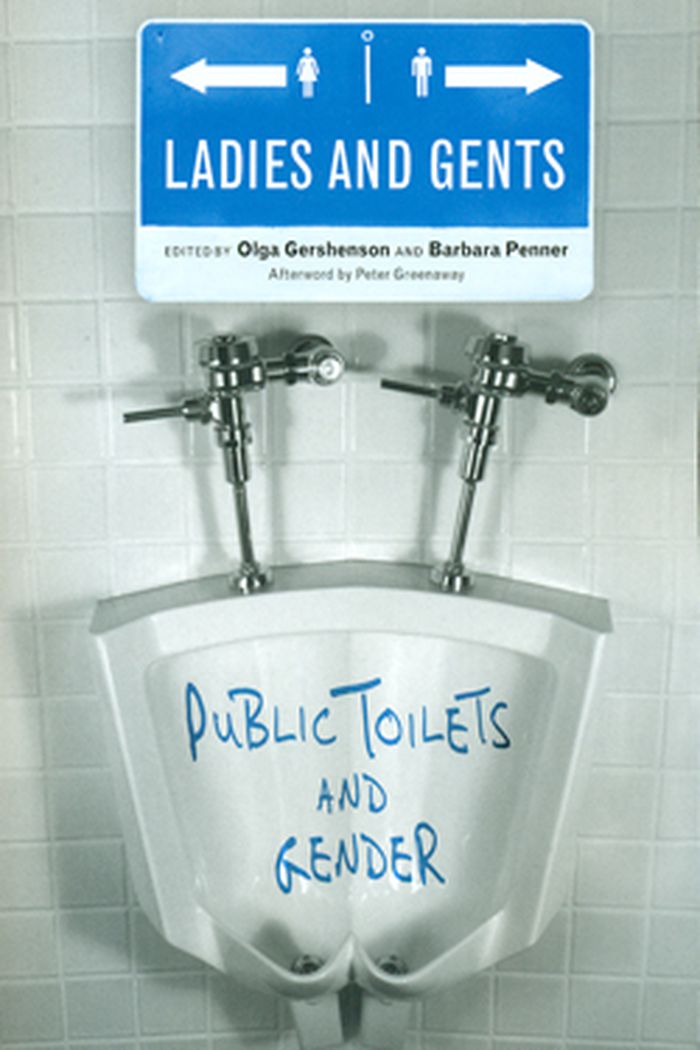
Public toilets provide a unique opportunity for interrogating how conventional assumptions about the body, sexuality, privacy, and technology are formed in public spaces and inscribed through design across cultures. This collection of original essays from international scholars is the first to explore the cultural meanings, histories, and ideologies of public toilets as gendered spaces. The publication consists of two sets of essays. The first, "Potty Politics: Toilets, Gender and Identity," establishes the importance of accessible, secure public toilets to the creation of inclusive cities, work, and learning environments. The second set of essays, "Toilet Art : Design and Cultural Representations," discusses public toilets as spaces of representation and representational spaces, with reference to architectural design, humor, film, theater, art, and popular culture. Visual materials and original artwork are included throughout, depicting subjects as varied as female urinals, art installations sited in public restrooms, and the toilet in contemporary art. Taken together, these seventeen essays demonstrate that public toilets are often sites where gendered bodies compete for resources and recognition — and the stakes are high. Contributors include: Nathan Abrams, Jami L. Anderson, Johan Andersson, Kathryn H. Anthony, Kathy Battista, Andrew Brown-May, Ben Campkin, Meghan Dufresne, Peg Fraser, Deborah Gans, Clara Greed, Robin Lydenberg, Claudia Mitchell, Alison Moore, Frances Pheasant-Kelly, Bushra Rehman, Alex Schweder, Naomi Stead, and the editors.
Ladies and gents ; public toilets and gender
Actions:
Prix:
$32.95
(disponible sur commande)
Résumé:
Public toilets provide a unique opportunity for interrogating how conventional assumptions about the body, sexuality, privacy, and technology are formed in public spaces and inscribed through design across cultures. This collection of original essays from international scholars is the first to explore the cultural meanings, histories, and ideologies of public toilets as gendered spaces. The publication consists of two sets of essays. The first, "Potty Politics: Toilets, Gender and Identity," establishes the importance of accessible, secure public toilets to the creation of inclusive cities, work, and learning environments. The second set of essays, "Toilet Art : Design and Cultural Representations," discusses public toilets as spaces of representation and representational spaces, with reference to architectural design, humor, film, theater, art, and popular culture. Visual materials and original artwork are included throughout, depicting subjects as varied as female urinals, art installations sited in public restrooms, and the toilet in contemporary art. Taken together, these seventeen essays demonstrate that public toilets are often sites where gendered bodies compete for resources and recognition — and the stakes are high. Contributors include: Nathan Abrams, Jami L. Anderson, Johan Andersson, Kathryn H. Anthony, Kathy Battista, Andrew Brown-May, Ben Campkin, Meghan Dufresne, Peg Fraser, Deborah Gans, Clara Greed, Robin Lydenberg, Claudia Mitchell, Alison Moore, Frances Pheasant-Kelly, Bushra Rehman, Alex Schweder, Naomi Stead, and the editors.
Classification:
livres
livres
Publication:
juillet 2009
juillet 2009
Sujet:
Théorie de l’urbanisme
Théorie de l’urbanisme
Classification:
livres
livres
Actions:
Prix:
$12.00
(disponible en magasin)
Résumé:
During the crucifixion Christ is said to have sustained 5 wounds: 1 in each hand and foot from the nails of the cross, and the 5th was formed when the side of Christ was pierced by the sword of Longinus. These 5 wounds became objects of specific veneration in the late Middle Ages and in manuscripts the side wound is usually depicted as a mandorla: an almond/diamond/vulvic(...)
$12.00
(disponible en magasin)
Résumé:
During the crucifixion Christ is said to have sustained 5 wounds: 1 in each hand and foot from the nails of the cross, and the 5th was formed when the side of Christ was pierced by the sword of Longinus. These 5 wounds became objects of specific veneration in the late Middle Ages and in manuscripts the side wound is usually depicted as a mandorla: an almond/diamond/vulvic(...)
Titre:
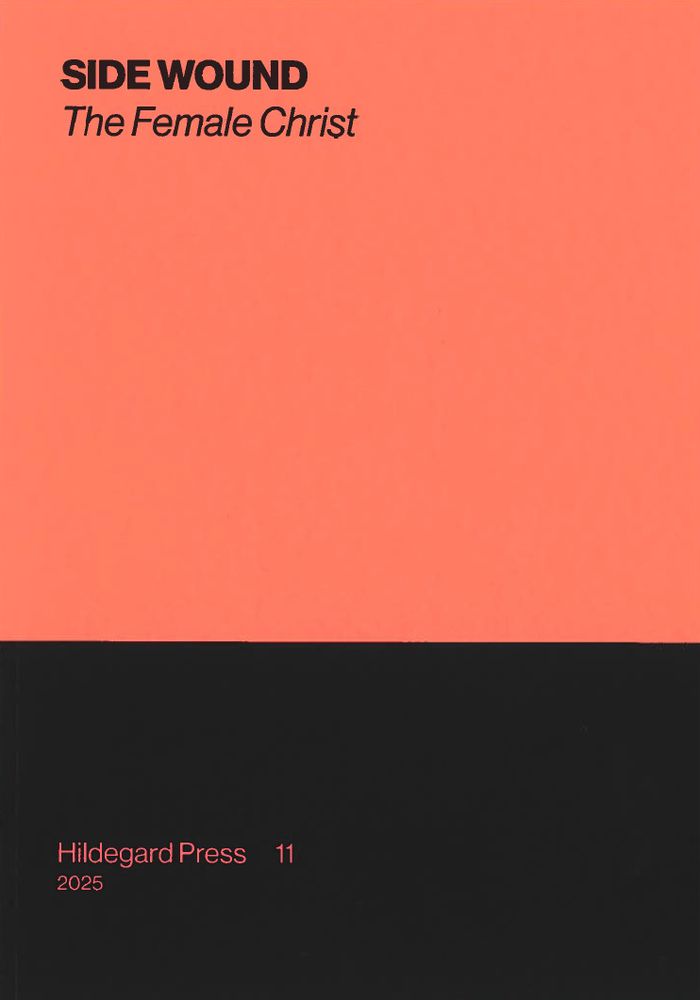
Side wound: the female Christ
Actions:
Prix:
$12.00
(disponible en magasin)
Résumé:
During the crucifixion Christ is said to have sustained 5 wounds: 1 in each hand and foot from the nails of the cross, and the 5th was formed when the side of Christ was pierced by the sword of Longinus. These 5 wounds became objects of specific veneration in the late Middle Ages and in manuscripts the side wound is usually depicted as a mandorla: an almond/diamond/vulvic shape, generally isolated from Christ's body and oriented vertically on the page. It is the vulvic shape of these images, and their implications, that this publication takes as its focus. Images of the side wound were used as talismans, one could gain magical protections by looking at them, touching, ingesting, or wrapping them around your body, and they are often found on birth girdles: rolls of parchment with magical formulae for easing birth. Mystics of this time speak of drinking from the wound, kissing it, entering it, living within it, and subsequently being birthed from the wound. The vulvic representation of the wound produced a state where Christ was seen as neither fully male, nor fully female, but rather as an unstably sexed figure, asserting a constant fluidity. Through this side wound Christ became a mother, lover, object of erotic desire, and a portal for the whole universe to emerge from.
Side wound: the female Christ
Actions:
Prix:
$12.00
(disponible en magasin)
Résumé:
During the crucifixion Christ is said to have sustained 5 wounds: 1 in each hand and foot from the nails of the cross, and the 5th was formed when the side of Christ was pierced by the sword of Longinus. These 5 wounds became objects of specific veneration in the late Middle Ages and in manuscripts the side wound is usually depicted as a mandorla: an almond/diamond/vulvic shape, generally isolated from Christ's body and oriented vertically on the page. It is the vulvic shape of these images, and their implications, that this publication takes as its focus. Images of the side wound were used as talismans, one could gain magical protections by looking at them, touching, ingesting, or wrapping them around your body, and they are often found on birth girdles: rolls of parchment with magical formulae for easing birth. Mystics of this time speak of drinking from the wound, kissing it, entering it, living within it, and subsequently being birthed from the wound. The vulvic representation of the wound produced a state where Christ was seen as neither fully male, nor fully female, but rather as an unstably sexed figure, asserting a constant fluidity. Through this side wound Christ became a mother, lover, object of erotic desire, and a portal for the whole universe to emerge from.
Classification:
livres
livres
Publication:
janvier 2025
janvier 2025
Sujet:
Zines
Zines
Classification:
livres
livres
Prix:
$34.95
(disponible sur commande)
Résumé:
In this second volume in the Chora series, contributing authors take an interdisciplinary approach to architecture and other cultural concerns, challenging readers to consider alternatives to conventional aesthetic and technological reductions. Karsten Harris provides a new and long-overdue reading of Martin Heidegger's well-known(...)
$34.95
(disponible sur commande)
Résumé:
In this second volume in the Chora series, contributing authors take an interdisciplinary approach to architecture and other cultural concerns, challenging readers to consider alternatives to conventional aesthetic and technological reductions. Karsten Harris provides a new and long-overdue reading of Martin Heidegger's well-known(...)
Sujet:
Théorie de l’architecture
Théorie de l’architecture
Publication:
septembre 1996, Montréal
septembre 1996, Montréal
Titre:
Chora 2 : intervals in the philosophy of architecture
Actions:
Prix:
$34.95
(disponible sur commande)
Résumé:
In this second volume in the Chora series, contributing authors take an interdisciplinary approach to architecture and other cultural concerns, challenging readers to consider alternatives to conventional aesthetic and technological reductions. Karsten Harris provides a new and long-overdue reading of Martin Heidegger's well-known essay "Building Dwelling Thinking." Donald Kunze and Stephen Parcell consider possibilities of meaningful architectural space for a visual culture, continuing themes they addressed in Chora 1. Further reflections on the spaces of literature, cinema, and architecture include an interview with French writer and film maker Alain Robbe-Grillet and articles by Dagmar Motycka Weston on the surrealist city, Tracey Eve Winton on the museum as a paradigmatic modern building, and Terrance Galvin on spiritual space in the works of Jean Cocteau. Jean-Pierre Chupin and Bram Ratner explore historical themes in their essays on French Renaissance architect Philibert de l'Orme and the Jewish myth of the Golem. Gregory Caicco addresses ethical questions in his essay on the Greek agora and the death of Socrates, as does Lily Chi in her meditation on the critical issue of use in architectural works. A concern with architectural representation and generative strategies for the making of architecture is present throughout, especially in the essay by Joanna Merwood on the provocative House by British artist Rachel Whiteread.
Chora 2 : intervals in the philosophy of architecture
Actions:
Prix:
$34.95
(disponible sur commande)
Résumé:
In this second volume in the Chora series, contributing authors take an interdisciplinary approach to architecture and other cultural concerns, challenging readers to consider alternatives to conventional aesthetic and technological reductions. Karsten Harris provides a new and long-overdue reading of Martin Heidegger's well-known essay "Building Dwelling Thinking." Donald Kunze and Stephen Parcell consider possibilities of meaningful architectural space for a visual culture, continuing themes they addressed in Chora 1. Further reflections on the spaces of literature, cinema, and architecture include an interview with French writer and film maker Alain Robbe-Grillet and articles by Dagmar Motycka Weston on the surrealist city, Tracey Eve Winton on the museum as a paradigmatic modern building, and Terrance Galvin on spiritual space in the works of Jean Cocteau. Jean-Pierre Chupin and Bram Ratner explore historical themes in their essays on French Renaissance architect Philibert de l'Orme and the Jewish myth of the Golem. Gregory Caicco addresses ethical questions in his essay on the Greek agora and the death of Socrates, as does Lily Chi in her meditation on the critical issue of use in architectural works. A concern with architectural representation and generative strategies for the making of architecture is present throughout, especially in the essay by Joanna Merwood on the provocative House by British artist Rachel Whiteread.
Classification:
livres
livres
Publication:
septembre 1996, Montréal
septembre 1996, Montréal
Sujet:
Théorie de l’architecture
Théorie de l’architecture
Classification:
livres
livres

Actions:
Prix:
$119.00
(disponible sur commande)
Résumé:
''The importance of a drawing is immense, because it’s the architect’s language,'' said the architect Louis Kahn to his masterclass in 1967. While most studies of Kahn focus on his built works or theory and use drawings mainly to illustrate these, this publication chooses to focus on Kahn's drawings as primary sources of insight into his architectural intelligence and(...)
$119.00
(disponible sur commande)
Résumé:
''The importance of a drawing is immense, because it’s the architect’s language,'' said the architect Louis Kahn to his masterclass in 1967. While most studies of Kahn focus on his built works or theory and use drawings mainly to illustrate these, this publication chooses to focus on Kahn's drawings as primary sources of insight into his architectural intelligence and(...)
Publication:
octobre 2020
octobre 2020
Titre:
Louis Kahn: The importance of a drawing
Actions:
Prix:
$119.00
(disponible sur commande)
Résumé:
''The importance of a drawing is immense, because it’s the architect’s language,'' said the architect Louis Kahn to his masterclass in 1967. While most studies of Kahn focus on his built works or theory and use drawings mainly to illustrate these, this publication chooses to focus on Kahn's drawings as primary sources of insight into his architectural intelligence and imagination. Lavishly illustrated with over 900 high-quality reproductions of work by Kahn and his associates, incisively presented by a group of acclaimed architectural experts, ''The importance of a drawing'' is a deep immersion into Kahn’s work and his design process. A testament to Kahn’s masterly craft, this volume also makes a provocative primer on architectural representation by posing timely questions on how architects use drawings to see, learn, conjecture and reveal. Destined to become a standard reference on Kahn, this book is an essential addition to the libraries of established designers as well as students of architecture. The result of years of extensive research, ''The importance of a drawing'' contains original contributions and historical texts from Michael Merrill, Michael Benedikt, Michael B. Cadwell, Louis I. Kahn, Nathaniel Kahn, Sue Ann Kahn, David Leatherbarrow, Michael J. Lewis, Robert McCarter, Marshall D. Meyers, Jane Murphy, Harriet Pattison, Gina Pollara, Colin Rowe, David Van Zanten, Richard Wesley and William Whitaker.
Louis Kahn: The importance of a drawing
Actions:
Prix:
$119.00
(disponible sur commande)
Résumé:
''The importance of a drawing is immense, because it’s the architect’s language,'' said the architect Louis Kahn to his masterclass in 1967. While most studies of Kahn focus on his built works or theory and use drawings mainly to illustrate these, this publication chooses to focus on Kahn's drawings as primary sources of insight into his architectural intelligence and imagination. Lavishly illustrated with over 900 high-quality reproductions of work by Kahn and his associates, incisively presented by a group of acclaimed architectural experts, ''The importance of a drawing'' is a deep immersion into Kahn’s work and his design process. A testament to Kahn’s masterly craft, this volume also makes a provocative primer on architectural representation by posing timely questions on how architects use drawings to see, learn, conjecture and reveal. Destined to become a standard reference on Kahn, this book is an essential addition to the libraries of established designers as well as students of architecture. The result of years of extensive research, ''The importance of a drawing'' contains original contributions and historical texts from Michael Merrill, Michael Benedikt, Michael B. Cadwell, Louis I. Kahn, Nathaniel Kahn, Sue Ann Kahn, David Leatherbarrow, Michael J. Lewis, Robert McCarter, Marshall D. Meyers, Jane Murphy, Harriet Pattison, Gina Pollara, Colin Rowe, David Van Zanten, Richard Wesley and William Whitaker.
Classification:
livres
livres
Publication:
octobre 2020
octobre 2020
Classification:
livres
livres
Actions:
Prix:
$42.00
(disponible sur commande)
Résumé:
Aline B. Louchheim (1914–1972) was an art critic on assignment for the New York Times in 1953 when she first met the Finnish-American architect Eero Saarinen. She would become his wife and the driving force behind his rise to critical prominence. ''When Eero met his match'' draws on the couple’s personal correspondence to reconstruct the early days of their thrilling(...)
$42.00
(disponible sur commande)
Résumé:
Aline B. Louchheim (1914–1972) was an art critic on assignment for the New York Times in 1953 when she first met the Finnish-American architect Eero Saarinen. She would become his wife and the driving force behind his rise to critical prominence. ''When Eero met his match'' draws on the couple’s personal correspondence to reconstruct the early days of their thrilling(...)
Titre:
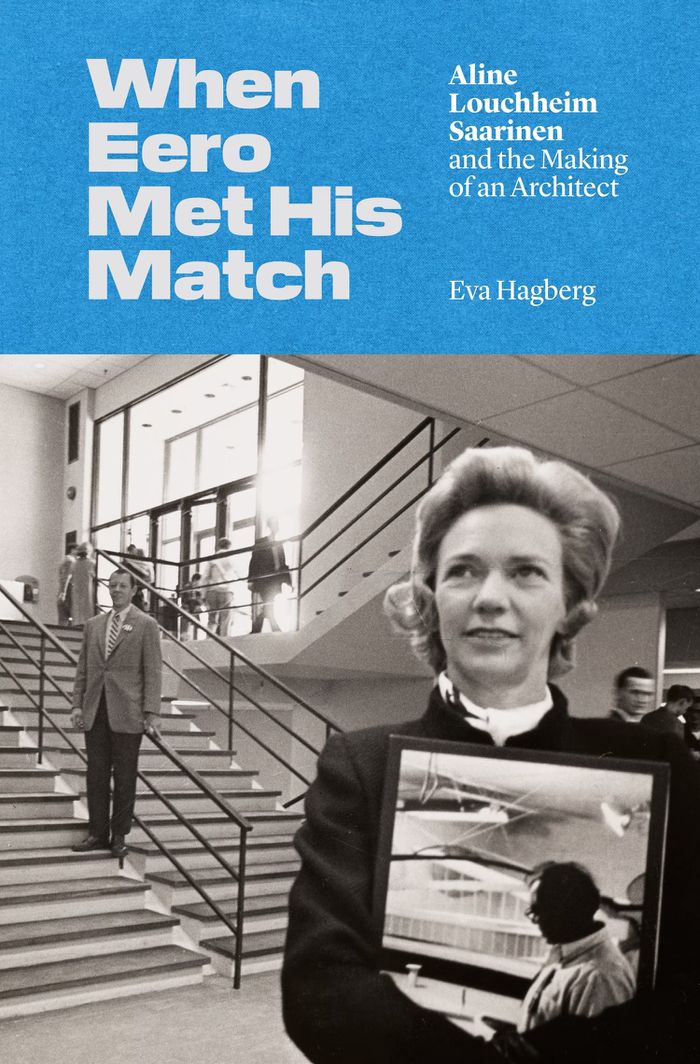
When Eero met his match: Aline Louchheim Saarinen and the making of an architect
Actions:
Prix:
$42.00
(disponible sur commande)
Résumé:
Aline B. Louchheim (1914–1972) was an art critic on assignment for the New York Times in 1953 when she first met the Finnish-American architect Eero Saarinen. She would become his wife and the driving force behind his rise to critical prominence. ''When Eero met his match'' draws on the couple’s personal correspondence to reconstruct the early days of their thrilling courtship and traces Louchheim’s gradual takeover of Saarinen’s public narrative in the 1950s, the decade when his career soared to unprecedented heights. Drawing on her own experiences as an architecture journalist on the receiving end of press pitches and then as a secret publicist for high-end architects, Eva Hagberg paints an unforgettable portrait of Louchheim while revealing the inner workings of a media world that has always relied on secrecy, friendship, and the exchange of favors. She describes how Louchheim codified the practices of architectural publicity that have become widely adopted today, and shows how, without Louchheim as his wife and publicist, Saarinen’s work would not have been nearly as well known. Providing a new understanding of postwar architectural history in the United States, ''When Eero met his match'' is both a poignant love story and a superb biographical study that challenges us to reconsider the relationship between fame and media representation, and the ways the narratives of others can become our own.
When Eero met his match: Aline Louchheim Saarinen and the making of an architect
Actions:
Prix:
$42.00
(disponible sur commande)
Résumé:
Aline B. Louchheim (1914–1972) was an art critic on assignment for the New York Times in 1953 when she first met the Finnish-American architect Eero Saarinen. She would become his wife and the driving force behind his rise to critical prominence. ''When Eero met his match'' draws on the couple’s personal correspondence to reconstruct the early days of their thrilling courtship and traces Louchheim’s gradual takeover of Saarinen’s public narrative in the 1950s, the decade when his career soared to unprecedented heights. Drawing on her own experiences as an architecture journalist on the receiving end of press pitches and then as a secret publicist for high-end architects, Eva Hagberg paints an unforgettable portrait of Louchheim while revealing the inner workings of a media world that has always relied on secrecy, friendship, and the exchange of favors. She describes how Louchheim codified the practices of architectural publicity that have become widely adopted today, and shows how, without Louchheim as his wife and publicist, Saarinen’s work would not have been nearly as well known. Providing a new understanding of postwar architectural history in the United States, ''When Eero met his match'' is both a poignant love story and a superb biographical study that challenges us to reconsider the relationship between fame and media representation, and the ways the narratives of others can become our own.
Classification:
livres
livres
Publication:
septembre 2022
septembre 2022
Sujet:
Théorie de l’architecture
Théorie de l’architecture
Classification:
livres
livres
Actions:
Prix:
$12.95
(disponible sur commande)
Résumé:
Une étude de la représentation et de la signification des jardins dans les oeuvres de romanciers tels que J.-J. Rousseau, M. Duras, Colette, P. Modiano, M. Proust, etc.
$12.95
(disponible sur commande)
Résumé:
Une étude de la représentation et de la signification des jardins dans les oeuvres de romanciers tels que J.-J. Rousseau, M. Duras, Colette, P. Modiano, M. Proust, etc.
Titre:
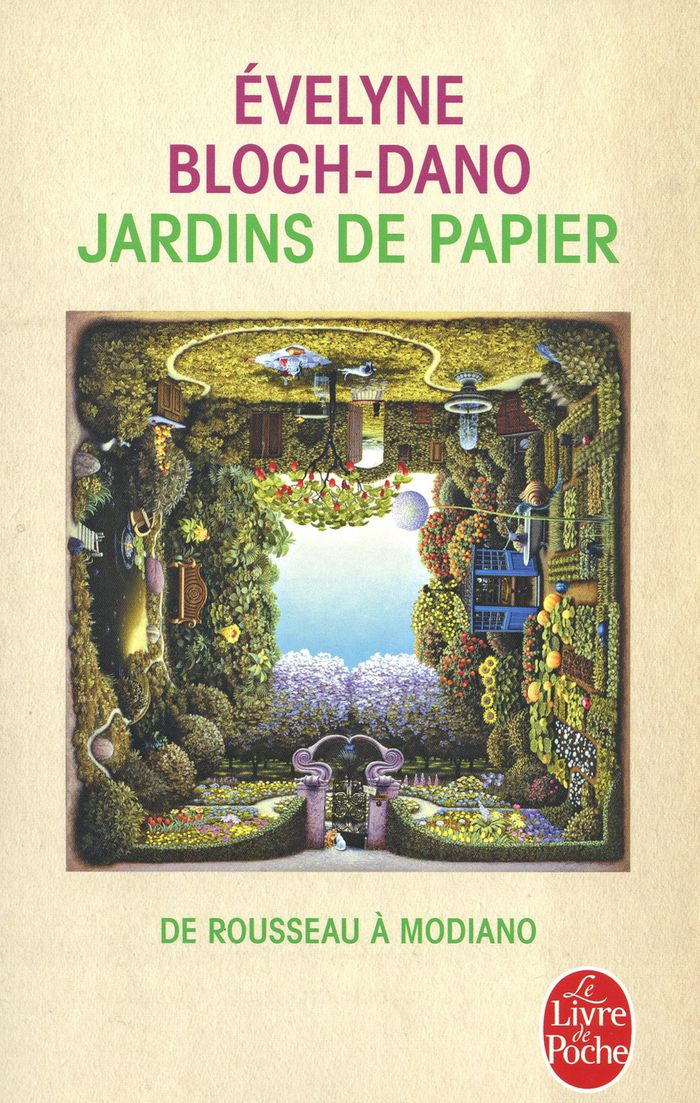
Jardins de papier : de Rousseau à Modiano
Actions:
Prix:
$12.95
(disponible sur commande)
Résumé:
Une étude de la représentation et de la signification des jardins dans les oeuvres de romanciers tels que J.-J. Rousseau, M. Duras, Colette, P. Modiano, M. Proust, etc.
Jardins de papier : de Rousseau à Modiano
Actions:
Prix:
$12.95
(disponible sur commande)
Résumé:
Une étude de la représentation et de la signification des jardins dans les oeuvres de romanciers tels que J.-J. Rousseau, M. Duras, Colette, P. Modiano, M. Proust, etc.
Classification:
livres
livres
Publication:
juin 2016
juin 2016
Sujet:
Théorie du paysage
Théorie du paysage


