


10586 Résultats
Classification:
livres
livres
Prix:
$64.00
(disponible sur commande)
Résumé:
From Great Britain, Belgium, Finland, and Italy to Russia, Kazakhstan, and China, cities are shrinking everywhere. While urban-planning debates of recent years have mainly focused on the growth of the megalopolis, in other places zones of shrinkage were actually developing. Enormous population losses and high unemployment contribute to this process, which is further(...)
$64.00
(disponible sur commande)
Résumé:
From Great Britain, Belgium, Finland, and Italy to Russia, Kazakhstan, and China, cities are shrinking everywhere. While urban-planning debates of recent years have mainly focused on the growth of the megalopolis, in other places zones of shrinkage were actually developing. Enormous population losses and high unemployment contribute to this process, which is further(...)
Titre:
Shrinking cities, volume one : international research
Actions:
Prix:
$64.00
(disponible sur commande)
Résumé:
From Great Britain, Belgium, Finland, and Italy to Russia, Kazakhstan, and China, cities are shrinking everywhere. While urban-planning debates of recent years have mainly focused on the growth of the megalopolis, in other places zones of shrinkage were actually developing. Enormous population losses and high unemployment contribute to this process, which is further accelerated by globalization and the transition to post-Socialism. This book examines the causes and dynamics of the shrinking process for the first time on an international level. Citing concrete examples from Manchester and Liverpool in Great Britain, Detroit in the United States, Ivanovo in Russia, and Halle and Leipzig in Germany, it compares living conditions and cultural change in shrinking urban regions. Artistic intercessions help sensitize the public to a global phenomenon which poses a completely new social challenge.
Shrinking cities, volume one : international research
Actions:
Prix:
$64.00
(disponible sur commande)
Résumé:
From Great Britain, Belgium, Finland, and Italy to Russia, Kazakhstan, and China, cities are shrinking everywhere. While urban-planning debates of recent years have mainly focused on the growth of the megalopolis, in other places zones of shrinkage were actually developing. Enormous population losses and high unemployment contribute to this process, which is further accelerated by globalization and the transition to post-Socialism. This book examines the causes and dynamics of the shrinking process for the first time on an international level. Citing concrete examples from Manchester and Liverpool in Great Britain, Detroit in the United States, Ivanovo in Russia, and Halle and Leipzig in Germany, it compares living conditions and cultural change in shrinking urban regions. Artistic intercessions help sensitize the public to a global phenomenon which poses a completely new social challenge.
Classification:
livres
livres
Publication:
janvier 1900, Ostfildern
janvier 1900, Ostfildern
Sujet:
Théorie de l’urbanisme
Théorie de l’urbanisme
Classification:
livres
livres
Actions:
Prix:
$30.00
(disponible sur commande)
Résumé:
Amidst city concrete and suburban sprawl, Americans are discovering new ways to reconnect with the natural world. From community gardens in New York's Lower East Side to homeless shelters in California, the search for a more sustainable future has led grassroots groups to a profound reconnection to place and to the natural world. Studies of the health consequences of(...)
$30.00
(disponible sur commande)
Résumé:
Amidst city concrete and suburban sprawl, Americans are discovering new ways to reconnect with the natural world. From community gardens in New York's Lower East Side to homeless shelters in California, the search for a more sustainable future has led grassroots groups to a profound reconnection to place and to the natural world. Studies of the health consequences of(...)
Titre:
Urban place : reconnecting with the natural world
Actions:
Prix:
$30.00
(disponible sur commande)
Résumé:
Amidst city concrete and suburban sprawl, Americans are discovering new ways to reconnect with the natural world. From community gardens in New York's Lower East Side to homeless shelters in California, the search for a more sustainable future has led grassroots groups to a profound reconnection to place and to the natural world. Studies of the health consequences of renewing a connection with nature support the urgency of providing green surroundings as cities expand and the majority of the earth's population lives in urban areas. Medical research results, from groups as diverse as healthy volunteers, surgery patients, and heart attack survivors, suggest that contact with nature may improve health and well-being. Engagement with nearby natural places also provides restoration from mental fatigue and support for more resilient and cooperative behavior. Aspects of stronger community life are fostered by access to nature, suggesting that there are significant social as well as physical and psychological benefits from connection with the natural world. This volume brings together research from anthropology, sociology, public health, psychology, and landscape architecture to highlight how awareness of locale and a meaningful renewal of attachment with the earth are connected to delight in learning about nature as well as to civic action and new forms of community. Community garden coalitions, organic market advocates, and greenspace preservationists resist the power of global forces, enacting visions of a different future. Their creative efforts tell a story of a constructive and dynamic middle ground between private plots and public action, between human health and ecosystem health, between individual attachment and urban sustainability.
Urban place : reconnecting with the natural world
Actions:
Prix:
$30.00
(disponible sur commande)
Résumé:
Amidst city concrete and suburban sprawl, Americans are discovering new ways to reconnect with the natural world. From community gardens in New York's Lower East Side to homeless shelters in California, the search for a more sustainable future has led grassroots groups to a profound reconnection to place and to the natural world. Studies of the health consequences of renewing a connection with nature support the urgency of providing green surroundings as cities expand and the majority of the earth's population lives in urban areas. Medical research results, from groups as diverse as healthy volunteers, surgery patients, and heart attack survivors, suggest that contact with nature may improve health and well-being. Engagement with nearby natural places also provides restoration from mental fatigue and support for more resilient and cooperative behavior. Aspects of stronger community life are fostered by access to nature, suggesting that there are significant social as well as physical and psychological benefits from connection with the natural world. This volume brings together research from anthropology, sociology, public health, psychology, and landscape architecture to highlight how awareness of locale and a meaningful renewal of attachment with the earth are connected to delight in learning about nature as well as to civic action and new forms of community. Community garden coalitions, organic market advocates, and greenspace preservationists resist the power of global forces, enacting visions of a different future. Their creative efforts tell a story of a constructive and dynamic middle ground between private plots and public action, between human health and ecosystem health, between individual attachment and urban sustainability.
Classification:
livres
livres
Publication:
janvier 1900, Cambridge, London
janvier 1900, Cambridge, London
Sujet:
Théorie de l’urbanisme
Théorie de l’urbanisme
Classification:
livres
livres
Actions:
Prix:
$75.00
(disponible sur commande)
Résumé:
In "Cities and complexity", Michael Batty offers a comprehensive view of urban dynamics in the context of complexity theory, presenting models that demonstrate how complexity theory can embrace a myriad of processes and elements that combine into organic wholes. He argues that bottom-up processes -- in which the outcomes are always uncertain -- can combine with new forms(...)
$75.00
(disponible sur commande)
Résumé:
In "Cities and complexity", Michael Batty offers a comprehensive view of urban dynamics in the context of complexity theory, presenting models that demonstrate how complexity theory can embrace a myriad of processes and elements that combine into organic wholes. He argues that bottom-up processes -- in which the outcomes are always uncertain -- can combine with new forms(...)
Titre:
Cities and complexity : understanding cities with cellular automata, agent-based models, and fractals
Actions:
Prix:
$75.00
(disponible sur commande)
Résumé:
In "Cities and complexity", Michael Batty offers a comprehensive view of urban dynamics in the context of complexity theory, presenting models that demonstrate how complexity theory can embrace a myriad of processes and elements that combine into organic wholes. He argues that bottom-up processes -- in which the outcomes are always uncertain -- can combine with new forms of geometry associated with fractal patterns and chaotic dynamics to provide theories that are applicable to highly complex systems such as cities. Batty begins with models based on cellular automata (CA), simulating urban dynamics through the local actions of automata. He then introduces agent-based models (ABM), in which agents are mobile and move between locations. These models relate to many scales, from the scale of the street to patterns and structure at the scale of the urban region. Finally, Batty develops applications of all these models to specific urban situations, discussing concepts of criticality, threshold, surprise, novelty, and phase transition in the context of spatial developments. Every theory and model presented in the book is developed through examples that range from the simplified and hypothetical to the actual. Deploying extensive visual, mathematical, and textual material, "Cities and complexity" will be read both by urban researchers and by complexity theorists with an interest in new kinds of computational models.
Cities and complexity : understanding cities with cellular automata, agent-based models, and fractals
Actions:
Prix:
$75.00
(disponible sur commande)
Résumé:
In "Cities and complexity", Michael Batty offers a comprehensive view of urban dynamics in the context of complexity theory, presenting models that demonstrate how complexity theory can embrace a myriad of processes and elements that combine into organic wholes. He argues that bottom-up processes -- in which the outcomes are always uncertain -- can combine with new forms of geometry associated with fractal patterns and chaotic dynamics to provide theories that are applicable to highly complex systems such as cities. Batty begins with models based on cellular automata (CA), simulating urban dynamics through the local actions of automata. He then introduces agent-based models (ABM), in which agents are mobile and move between locations. These models relate to many scales, from the scale of the street to patterns and structure at the scale of the urban region. Finally, Batty develops applications of all these models to specific urban situations, discussing concepts of criticality, threshold, surprise, novelty, and phase transition in the context of spatial developments. Every theory and model presented in the book is developed through examples that range from the simplified and hypothetical to the actual. Deploying extensive visual, mathematical, and textual material, "Cities and complexity" will be read both by urban researchers and by complexity theorists with an interest in new kinds of computational models.
Classification:
livres
livres
Publication:
janvier 1900, Cambridge
janvier 1900, Cambridge
Sujet:
Théorie de l’urbanisme
Théorie de l’urbanisme
Classification:
livres
livres
Actions:
Prix:
$26.00
(disponible sur commande)
Résumé:
Standards and codes dictate virtually all aspects of urban development. The same standards for subdividing land, grading, laying streets and utilities, and configuring rights-of-way and street widths to accommodate cars (rather than pedestrians) have been adopted in many areas of the world regardless of variations in local environments. In "The code of the city", Eran(...)
$26.00
(disponible sur commande)
Résumé:
Standards and codes dictate virtually all aspects of urban development. The same standards for subdividing land, grading, laying streets and utilities, and configuring rights-of-way and street widths to accommodate cars (rather than pedestrians) have been adopted in many areas of the world regardless of variations in local environments. In "The code of the city", Eran(...)
Titre:
The code of the city : standards and the hidden language of place making
Actions:
Prix:
$26.00
(disponible sur commande)
Résumé:
Standards and codes dictate virtually all aspects of urban development. The same standards for subdividing land, grading, laying streets and utilities, and configuring rights-of-way and street widths to accommodate cars (rather than pedestrians) have been adopted in many areas of the world regardless of variations in local environments. In "The code of the city", Eran Ben-Joseph examines the relationship between standards and place making. He traces the evolution of codes and standards and analyzes their impact on the modern city and its suburbs, arguing that it is time for development regulations to reflect site-specific and localized physical design.
The code of the city : standards and the hidden language of place making
Actions:
Prix:
$26.00
(disponible sur commande)
Résumé:
Standards and codes dictate virtually all aspects of urban development. The same standards for subdividing land, grading, laying streets and utilities, and configuring rights-of-way and street widths to accommodate cars (rather than pedestrians) have been adopted in many areas of the world regardless of variations in local environments. In "The code of the city", Eran Ben-Joseph examines the relationship between standards and place making. He traces the evolution of codes and standards and analyzes their impact on the modern city and its suburbs, arguing that it is time for development regulations to reflect site-specific and localized physical design.
Classification:
livres
livres
Publication:
janvier 1900, Cambridge, Mass.
janvier 1900, Cambridge, Mass.
Sujet:
Théorie de l’urbanisme
Théorie de l’urbanisme
Classification:
livres
livres
Prix:
$43.95
(disponible sur commande)
Résumé:
City planning initiatives and redesign of urban structures often become mired in debate and delay. Despite the fact that cities are considered to be dynamic and flexible spaces- never finished but always under construction- it is very difficult to change existing urban structures; they become fixed, obdurate, securely anchored in their own histories as well as in the(...)
$43.95
(disponible sur commande)
Résumé:
City planning initiatives and redesign of urban structures often become mired in debate and delay. Despite the fact that cities are considered to be dynamic and flexible spaces- never finished but always under construction- it is very difficult to change existing urban structures; they become fixed, obdurate, securely anchored in their own histories as well as in the(...)
Titre:
Unbuilding cities : obduracy in urban sociotechnical change
Actions:
Prix:
$43.95
(disponible sur commande)
Résumé:
City planning initiatives and redesign of urban structures often become mired in debate and delay. Despite the fact that cities are considered to be dynamic and flexible spaces- never finished but always under construction- it is very difficult to change existing urban structures; they become fixed, obdurate, securely anchored in their own histories as well as in the histories of their surroundings. In "Unbuilding cities", Anique Hommels looks at the tension between the malleability of urban space and its obduracy, focusing on sites and structures that have been subjected to "unbuilding"-redesign or reconfiguration. She brings the concepts of science and technology studies (STS) to bear on the study of cities. Viewing the city as a large sociotechnological artifact, she demonstrates the usefulness of STS tools that were developed to analyze other technological artifacts and explores in detail the role of obduracy in sociotechnical change. Her analysis distinguishes three concepts of obduracy: interactionist, in which actors with diverging views are constrained by fixed ways of thinking and interacting; relational, in which change is difficult because of technology's embeddedness in sociotechnical networks; and enduring, in which persistent traditions influence the development of technology over time. Hommels examines the tensions between obduracy and change in three urban redesign projects in the Netherlands: a renovated city center that fell into drabness and disrepair; a highway system that runs through a densely populated urban area; and a high-rise housing project, designed according to modernist precepts and built for middle-class families, that became a haven for unemployment and crime. "Unbuilding cities" contributes to a productive fusion of STS and urban studies.
Unbuilding cities : obduracy in urban sociotechnical change
Actions:
Prix:
$43.95
(disponible sur commande)
Résumé:
City planning initiatives and redesign of urban structures often become mired in debate and delay. Despite the fact that cities are considered to be dynamic and flexible spaces- never finished but always under construction- it is very difficult to change existing urban structures; they become fixed, obdurate, securely anchored in their own histories as well as in the histories of their surroundings. In "Unbuilding cities", Anique Hommels looks at the tension between the malleability of urban space and its obduracy, focusing on sites and structures that have been subjected to "unbuilding"-redesign or reconfiguration. She brings the concepts of science and technology studies (STS) to bear on the study of cities. Viewing the city as a large sociotechnological artifact, she demonstrates the usefulness of STS tools that were developed to analyze other technological artifacts and explores in detail the role of obduracy in sociotechnical change. Her analysis distinguishes three concepts of obduracy: interactionist, in which actors with diverging views are constrained by fixed ways of thinking and interacting; relational, in which change is difficult because of technology's embeddedness in sociotechnical networks; and enduring, in which persistent traditions influence the development of technology over time. Hommels examines the tensions between obduracy and change in three urban redesign projects in the Netherlands: a renovated city center that fell into drabness and disrepair; a highway system that runs through a densely populated urban area; and a high-rise housing project, designed according to modernist precepts and built for middle-class families, that became a haven for unemployment and crime. "Unbuilding cities" contributes to a productive fusion of STS and urban studies.
Classification:
livres
livres
Publication:
novembre 2005, Cambridge, Mass.
novembre 2005, Cambridge, Mass.
Sujet:
Théorie de l’urbanisme
Théorie de l’urbanisme
Classification:
livres
livres
Actions:
Prix:
$81.50
(disponible en magasin)
Résumé:
In this volume, twenty scholars explore the work of two of the twentieth century’s greatest architectural historians: the American Henry-Russell Hitchcock (1903–1987) and the Englishman Sir John Summerson (1904–1992). Both men undertook architectural training and became key polemical figures in the establishment of Modernism in the 1930s. After the war, and especially in(...)
$81.50
(disponible en magasin)
Résumé:
In this volume, twenty scholars explore the work of two of the twentieth century’s greatest architectural historians: the American Henry-Russell Hitchcock (1903–1987) and the Englishman Sir John Summerson (1904–1992). Both men undertook architectural training and became key polemical figures in the establishment of Modernism in the 1930s. After the war, and especially in(...)
Titre:
Summersopn and Hitchcock : centenary essays on architectural historiography
Actions:
Prix:
$81.50
(disponible en magasin)
Résumé:
In this volume, twenty scholars explore the work of two of the twentieth century’s greatest architectural historians: the American Henry-Russell Hitchcock (1903–1987) and the Englishman Sir John Summerson (1904–1992). Both men undertook architectural training and became key polemical figures in the establishment of Modernism in the 1930s. After the war, and especially in the 1950s, both turned more exclusively to historical research and writing. While their areas of interest overlapped, their approaches greatly differed. The contributors to the book investigate the work and methodologies of Summerson and Hitchcock, from their interests in the Northern European (as opposed to Italian) Renaissance, through their studies of the nineteenth century as a precursor to their own times, to their involvement in contemporary issues of design and conservation. The book enhances our understanding of the influences that shaped these two important figures and of the place of architecture within the social and cultural environment.
Summersopn and Hitchcock : centenary essays on architectural historiography
Actions:
Prix:
$81.50
(disponible en magasin)
Résumé:
In this volume, twenty scholars explore the work of two of the twentieth century’s greatest architectural historians: the American Henry-Russell Hitchcock (1903–1987) and the Englishman Sir John Summerson (1904–1992). Both men undertook architectural training and became key polemical figures in the establishment of Modernism in the 1930s. After the war, and especially in the 1950s, both turned more exclusively to historical research and writing. While their areas of interest overlapped, their approaches greatly differed. The contributors to the book investigate the work and methodologies of Summerson and Hitchcock, from their interests in the Northern European (as opposed to Italian) Renaissance, through their studies of the nineteenth century as a precursor to their own times, to their involvement in contemporary issues of design and conservation. The book enhances our understanding of the influences that shaped these two important figures and of the place of architecture within the social and cultural environment.
Classification:
livres
livres
Publication:
janvier 2006, New Haven, London
janvier 2006, New Haven, London
Sujet:
Théorie de l’architecture
Théorie de l’architecture
Classification:
livres
livres
Actions:
Prix:
$37.50
(disponible en magasin)
Résumé:
After September 11, Smith asserts, late modern architecture suddenly seemed an indulgence. With close readings of key buildings - including Jørn Utzon’s Sydney Opera House, Minoru Yamasaki’s World Trade Center, Frank Gehry’s Guggenheim Museum Bilbao, and Richard Meier’s Getty Center - Smith traces the growth of the architecture of modernity and then charts its aftermath(...)
$37.50
(disponible en magasin)
Résumé:
After September 11, Smith asserts, late modern architecture suddenly seemed an indulgence. With close readings of key buildings - including Jørn Utzon’s Sydney Opera House, Minoru Yamasaki’s World Trade Center, Frank Gehry’s Guggenheim Museum Bilbao, and Richard Meier’s Getty Center - Smith traces the growth of the architecture of modernity and then charts its aftermath(...)
Titre:
The architecture of aftermath
Actions:
Prix:
$37.50
(disponible en magasin)
Résumé:
After September 11, Smith asserts, late modern architecture suddenly seemed an indulgence. With close readings of key buildings - including Jørn Utzon’s Sydney Opera House, Minoru Yamasaki’s World Trade Center, Frank Gehry’s Guggenheim Museum Bilbao, and Richard Meier’s Getty Center - Smith traces the growth of the architecture of modernity and then charts its aftermath in the conditions of contemporaneity. Smith focuses on the very culture of aftermath itself, exploring how global politics, clashing cultures, and symbolic warfare have changed the way we experience destination architecture. Like other artists everywhere, architects are responding to the idea of aftermath by questioning the viability of their forms and the validity of their purposes.
The architecture of aftermath
Actions:
Prix:
$37.50
(disponible en magasin)
Résumé:
After September 11, Smith asserts, late modern architecture suddenly seemed an indulgence. With close readings of key buildings - including Jørn Utzon’s Sydney Opera House, Minoru Yamasaki’s World Trade Center, Frank Gehry’s Guggenheim Museum Bilbao, and Richard Meier’s Getty Center - Smith traces the growth of the architecture of modernity and then charts its aftermath in the conditions of contemporaneity. Smith focuses on the very culture of aftermath itself, exploring how global politics, clashing cultures, and symbolic warfare have changed the way we experience destination architecture. Like other artists everywhere, architects are responding to the idea of aftermath by questioning the viability of their forms and the validity of their purposes.
Classification:
livres
livres
Publication:
janvier 2006, Chicago
janvier 2006, Chicago
Sujet:
Théorie de l’architecture
Théorie de l’architecture
Classification:
livres
livres
Prix:
$62.50
(disponible sur commande)
Résumé:
The narrative of the artist's life and work is one of the oldest models in the Western literature of the visual arts. In "Art as existence", Gabriele Guercio investigates the metamorphosis of the artist's monograph, tracing its formal and conceptual trajectories from Vasari's sixteenth-century "Lives of the painters, sculptors, and architects" (which provided the model(...)
$62.50
(disponible sur commande)
Résumé:
The narrative of the artist's life and work is one of the oldest models in the Western literature of the visual arts. In "Art as existence", Gabriele Guercio investigates the metamorphosis of the artist's monograph, tracing its formal and conceptual trajectories from Vasari's sixteenth-century "Lives of the painters, sculptors, and architects" (which provided the model(...)
Titre:
Art as existence : the artist's monograph and its project
Actions:
Prix:
$62.50
(disponible sur commande)
Résumé:
The narrative of the artist's life and work is one of the oldest models in the Western literature of the visual arts. In "Art as existence", Gabriele Guercio investigates the metamorphosis of the artist's monograph, tracing its formal and conceptual trajectories from Vasari's sixteenth-century "Lives of the painters, sculptors, and architects" (which provided the model and source for the genre) through its apogee in the nineteenth century and decline in the twentieth. He looks at the legacy of the life-and-work model and considers its prospects in an intellectual universe of deconstructionism, psychoanalysis, feminism, and postcolonialism. Since Vasari, the monograph has been notable for its fluidity and variety; it can be scrupulous and exact, probing and revelatory, poetic and imaginative, or any combination of these. In the nineteenth century, the monograph combined art-historical, biographical, and critical methods, and even added elements of fiction. Guercio explores some significant books that illustrate key phases in the model's evolution, including works by Gustav Friedrich Waagen, A. C. Quatremère de Quincy, Johann David Passavant, Bernard Berenson, and others. The hidden project of the artist's monograph, Guercio claims, comes from a utopian impulse; by commuting biography into art and art into biography, the life-and-work model equates art and existence, construing otherwise distinct works of an artist as chapters of a life story. Guercio calls for a contemporary reconsideration of the life-and-work model, arguing that the ultimate legacy of the artist's monograph does not lie in its established modes of writing but in its greater project and in the intimate portrait that we gain of the nature of creativity.
Art as existence : the artist's monograph and its project
Actions:
Prix:
$62.50
(disponible sur commande)
Résumé:
The narrative of the artist's life and work is one of the oldest models in the Western literature of the visual arts. In "Art as existence", Gabriele Guercio investigates the metamorphosis of the artist's monograph, tracing its formal and conceptual trajectories from Vasari's sixteenth-century "Lives of the painters, sculptors, and architects" (which provided the model and source for the genre) through its apogee in the nineteenth century and decline in the twentieth. He looks at the legacy of the life-and-work model and considers its prospects in an intellectual universe of deconstructionism, psychoanalysis, feminism, and postcolonialism. Since Vasari, the monograph has been notable for its fluidity and variety; it can be scrupulous and exact, probing and revelatory, poetic and imaginative, or any combination of these. In the nineteenth century, the monograph combined art-historical, biographical, and critical methods, and even added elements of fiction. Guercio explores some significant books that illustrate key phases in the model's evolution, including works by Gustav Friedrich Waagen, A. C. Quatremère de Quincy, Johann David Passavant, Bernard Berenson, and others. The hidden project of the artist's monograph, Guercio claims, comes from a utopian impulse; by commuting biography into art and art into biography, the life-and-work model equates art and existence, construing otherwise distinct works of an artist as chapters of a life story. Guercio calls for a contemporary reconsideration of the life-and-work model, arguing that the ultimate legacy of the artist's monograph does not lie in its established modes of writing but in its greater project and in the intimate portrait that we gain of the nature of creativity.
Classification:
livres
livres
Publication:
janvier 1900, Cambridge, London
janvier 1900, Cambridge, London
Sujet:
Théorie de l’art
Théorie de l’art
Classification:
livres
livres

Actions:
Prix:
$39.95
(disponible sur commande)
Résumé:
As we spend more and more of our time staring at the screens of movies, televisions, computers, and handheld devices--"windows" full of moving images, texts, and icons--how the world is framed has become as important as what is in the frame. In The Virtual Window, Anne Friedberg examines the window as metaphor, as architectural component, and as an opening to the(...)
$39.95
(disponible sur commande)
Résumé:
As we spend more and more of our time staring at the screens of movies, televisions, computers, and handheld devices--"windows" full of moving images, texts, and icons--how the world is framed has become as important as what is in the frame. In The Virtual Window, Anne Friedberg examines the window as metaphor, as architectural component, and as an opening to the(...)
Titre:
The virtual window : from Alberti to Microsoft
Actions:
Prix:
$39.95
(disponible sur commande)
Résumé:
As we spend more and more of our time staring at the screens of movies, televisions, computers, and handheld devices--"windows" full of moving images, texts, and icons--how the world is framed has become as important as what is in the frame. In The Virtual Window, Anne Friedberg examines the window as metaphor, as architectural component, and as an opening to the dematerialized reality we see on the screen. In De pictura (1435), Leon Battista Alberti famously instructed painters to consider the frame of the painting as an open window. Taking Alberti's metaphor as her starting point, Friedberg tracks shifts in the perspectival paradigm as she gives us histories of the architectural window, developments in glass and transparency, and the emerging apparatuses of photography, cinema, television, and digital imaging. Single-point perspective--Alberti's metaphorical window--has long been challenged by modern painting, modern architecture, and moving-image technologies. And yet, notes Friedberg, for most of the twentieth century the dominant form of the moving image was a single image in a single frame. The fractured modernism exemplified by cubist painting, for example, remained largely confined to experimental, avant-garde work. On the computer screen, however, where multiple "windows" coexist and overlap, perspective may have met its end. In this wide-ranging book, Friedberg considers such topics as the framed view of the camera obscura, Le Corbusier's mandates for the architectural window, Eisenstein's opinions on the shape of the movie screen, and the multiple images and nested windows commonly displayed on screens today. The Virtual Window proposes a new logic of visuality, framed and virtual: an architecture not only of space but of time.
The virtual window : from Alberti to Microsoft
Actions:
Prix:
$39.95
(disponible sur commande)
Résumé:
As we spend more and more of our time staring at the screens of movies, televisions, computers, and handheld devices--"windows" full of moving images, texts, and icons--how the world is framed has become as important as what is in the frame. In The Virtual Window, Anne Friedberg examines the window as metaphor, as architectural component, and as an opening to the dematerialized reality we see on the screen. In De pictura (1435), Leon Battista Alberti famously instructed painters to consider the frame of the painting as an open window. Taking Alberti's metaphor as her starting point, Friedberg tracks shifts in the perspectival paradigm as she gives us histories of the architectural window, developments in glass and transparency, and the emerging apparatuses of photography, cinema, television, and digital imaging. Single-point perspective--Alberti's metaphorical window--has long been challenged by modern painting, modern architecture, and moving-image technologies. And yet, notes Friedberg, for most of the twentieth century the dominant form of the moving image was a single image in a single frame. The fractured modernism exemplified by cubist painting, for example, remained largely confined to experimental, avant-garde work. On the computer screen, however, where multiple "windows" coexist and overlap, perspective may have met its end. In this wide-ranging book, Friedberg considers such topics as the framed view of the camera obscura, Le Corbusier's mandates for the architectural window, Eisenstein's opinions on the shape of the movie screen, and the multiple images and nested windows commonly displayed on screens today. The Virtual Window proposes a new logic of visuality, framed and virtual: an architecture not only of space but of time.
Classification:
livres
livres
Publication:
janvier 2006, Cambridge
janvier 2006, Cambridge
Sujet:
Théorie de l’architecture
Théorie de l’architecture
Classification:
livres
livres
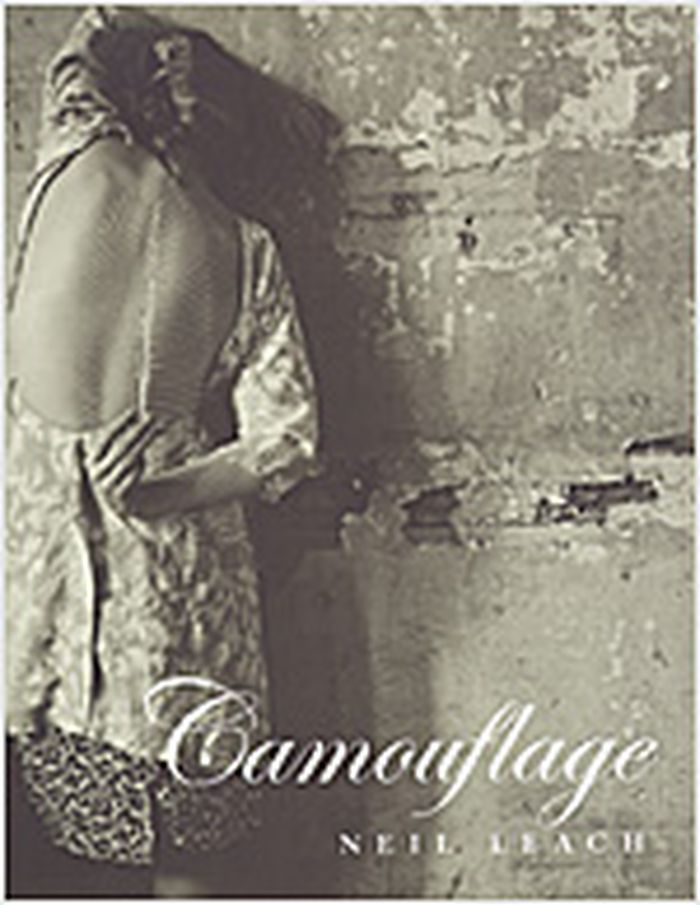
Titre:
Camouflage
Camouflage
Actions:
Prix:
$28.95
(disponible sur commande)
Résumé:
The desire for camouflage is a desire to feel connected--to find our place in the world and to feel at home. In Camouflage Neil Leach analyzes this desire and its consequences for architectural concerns. Design, Leach argues, can aid the process of assimilation we go through when we adapt to our surroundings. Design can provide a form of connectivity--a mediation between(...)
$28.95
(disponible sur commande)
Résumé:
The desire for camouflage is a desire to feel connected--to find our place in the world and to feel at home. In Camouflage Neil Leach analyzes this desire and its consequences for architectural concerns. Design, Leach argues, can aid the process of assimilation we go through when we adapt to our surroundings. Design can provide a form of connectivity--a mediation between(...)
Titre:
Camouflage
Actions:
Prix:
$28.95
(disponible sur commande)
Résumé:
The desire for camouflage is a desire to feel connected--to find our place in the world and to feel at home. In Camouflage Neil Leach analyzes this desire and its consequences for architectural concerns. Design, Leach argues, can aid the process of assimilation we go through when we adapt to our surroundings. Design can provide a form of connectivity--a mediation between us and our environment--and it can contribute to a sense of belonging. Architecture, and indeed all forms of design and creativity--fashion, art, cinema, and others--can be an effective realm for forging a sense of belonging and establishing an identity. Camouflage offers a range of overlapping and intersecting theoretical perspectives--from an overview of psychoanalytic insights to an account of the magical properties of architectural models--that together suggest a way to rethink our relationship to the world and the role that design plays in that relationship.
Camouflage
Actions:
Prix:
$28.95
(disponible sur commande)
Résumé:
The desire for camouflage is a desire to feel connected--to find our place in the world and to feel at home. In Camouflage Neil Leach analyzes this desire and its consequences for architectural concerns. Design, Leach argues, can aid the process of assimilation we go through when we adapt to our surroundings. Design can provide a form of connectivity--a mediation between us and our environment--and it can contribute to a sense of belonging. Architecture, and indeed all forms of design and creativity--fashion, art, cinema, and others--can be an effective realm for forging a sense of belonging and establishing an identity. Camouflage offers a range of overlapping and intersecting theoretical perspectives--from an overview of psychoanalytic insights to an account of the magical properties of architectural models--that together suggest a way to rethink our relationship to the world and the role that design plays in that relationship.
Classification:
livres
livres
Publication:
juin 2006, Cambridge
juin 2006, Cambridge
Sujet:
Théorie de l’architecture
Théorie de l’architecture


