


7452 Résultats
Classification:
expositions
expositions
Actions:
Description:
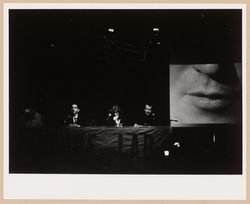
Culture Lab est une série de symposiums multidisciplinaires initiée et dirigée par Brian Boigon de 1991 à 1994. L’exposition fournit de nouveux indices sur les formes et les canaux par lesquels les discours architecturaux sont façonnés et circulent.
Culture Lab est une série de symposiums multidisciplinaires initiée et dirigée par Brian Boigon de 1991 à 1994. L’exposition fournit de nouveux indices sur les formes et les canaux par lesquels les discours architecturaux sont façonnés et circulent.
Localisation:
Salle octogonale Mot(s)-clé(s):
Culture Lab, numérique, divertissement, Farzin Lotfi-Jam, Sanford Kwinter
Salle octogonale Mot(s)-clé(s):
Culture Lab, numérique, divertissement, Farzin Lotfi-Jam, Sanford Kwinter
Date:
26 février 2026 au 30 août 2026
26 février 2026 au 30 août 2026
Titre:
Architecture, divertissement, interactivité : Culture Lab, Toronto 1991-1994
Actions:
Description:
Culture Lab est une série de symposiums multidisciplinaires initiée et dirigée par Brian Boigon de 1991 à 1994. L’exposition fournit de nouveux indices sur les formes et les canaux par lesquels les discours architecturaux sont façonnés et circulent.
Architecture, divertissement, interactivité : Culture Lab, Toronto 1991-1994
Actions:
Description:
Culture Lab est une série de symposiums multidisciplinaires initiée et dirigée par Brian Boigon de 1991 à 1994. L’exposition fournit de nouveux indices sur les formes et les canaux par lesquels les discours architecturaux sont façonnés et circulent.
Classification:
expositions
expositions
Date:
26 février 2026 au
30 août 2026
26 février 2026 au
30 août 2026
Localisation:
Salle octogonale Mot(s)-clé(s):
Culture Lab, numérique, divertissement, Farzin Lotfi-Jam, Sanford Kwinter
Salle octogonale Mot(s)-clé(s):
Culture Lab, numérique, divertissement, Farzin Lotfi-Jam, Sanford Kwinter
Classification:
dessins, documents textuels, né numérique
dessins, documents textuels, né numérique
Numéro de référence:
AP194.S1.1995.PR01.006
Description:
File consists of the content from a CD labelled "Synthetic Landscape, Phase 3, vol.3". Digital files chiefly consists of administrative records related to a grant application and visual material and textual records of a proposed presentation at the 1998 AA exhibition. For this purpose, there are also files from previous phases of Synthetic Landscape and from the Jyväskylä project. Most common file formats: Encapsulated PostScript File Format Microsoft Word Document, Tagged Image File Format, Microsoft Excel 97 Workbook (xls), Microsoft Excel 5.0/95 Workbook (xls), QuarkXPress
AP194.S1.1995.PR01.006
Description:
File consists of the content from a CD labelled "Synthetic Landscape, Phase 3, vol.3". Digital files chiefly consists of administrative records related to a grant application and visual material and textual records of a proposed presentation at the 1998 AA exhibition. For this purpose, there are also files from previous phases of Synthetic Landscape and from the Jyväskylä project. Most common file formats: Encapsulated PostScript File Format Microsoft Word Document, Tagged Image File Format, Microsoft Excel 97 Workbook (xls), Microsoft Excel 5.0/95 Workbook (xls), QuarkXPress
Personnes et institutions:
Date:
1996-1999
1996-1999
Titre:
Exhibition proposal and grant-related administrative records for Synthetic Landscape phase 3
Actions:
AP194.S1.1995.PR01.006
Description:
File consists of the content from a CD labelled "Synthetic Landscape, Phase 3, vol.3". Digital files chiefly consists of administrative records related to a grant application and visual material and textual records of a proposed presentation at the 1998 AA exhibition. For this purpose, there are also files from previous phases of Synthetic Landscape and from the Jyväskylä project. Most common file formats: Encapsulated PostScript File Format Microsoft Word Document, Tagged Image File Format, Microsoft Excel 97 Workbook (xls), Microsoft Excel 5.0/95 Workbook (xls), QuarkXPress
Exhibition proposal and grant-related administrative records for Synthetic Landscape phase 3
Actions:
AP194.S1.1995.PR01.006
Description:
File consists of the content from a CD labelled "Synthetic Landscape, Phase 3, vol.3". Digital files chiefly consists of administrative records related to a grant application and visual material and textual records of a proposed presentation at the 1998 AA exhibition. For this purpose, there are also files from previous phases of Synthetic Landscape and from the Jyväskylä project. Most common file formats: Encapsulated PostScript File Format Microsoft Word Document, Tagged Image File Format, Microsoft Excel 97 Workbook (xls), Microsoft Excel 5.0/95 Workbook (xls), QuarkXPress
Classification:
dessins, documents textuels, né numérique
dessins, documents textuels, né numérique
Date:
1996-1999
1996-1999
Personnes et institutions:
Niveau de description archivistique:
Projet
Projet
Numéro de référence:
AP164.S1.2002.D8
Description:
The project series documents the design for a residential tower for youth in the district of Sant Andreu, Barcelona. The design was for the account of the City Council and the Patronat Municipal de l'Habitatge. The promoter REGESA, Societat Urbanística Metropolitana Rehabilitació i Gestió, worked with Abalos & Herreros for this project that was never built. The project site was located between the streets Ferran Junoy, Tucuman and Borredà, nearby the shopping center La Maquinista. The firm identified this project as number 152. Records document first and second iterations of the design for the tower, primarily differentiated by the base of the building. The first design includes a rectangular base. The firm identified this iteration of the project as number 152-1. The second design of the tower includes a triangular base for the building. The firm identified this iteration as number 152-2. Documenting the project are conceptual, design development, presentation and working drawings, cartographic, digital and reference materials, project descriptions, correspondence, proposals, budgets, notes, agendas, contracts, invoices, trade catalogues, and paper models. Records predominantly date from 2001 to 2007.
AP164.S1.2002.D8
Description:
The project series documents the design for a residential tower for youth in the district of Sant Andreu, Barcelona. The design was for the account of the City Council and the Patronat Municipal de l'Habitatge. The promoter REGESA, Societat Urbanística Metropolitana Rehabilitació i Gestió, worked with Abalos & Herreros for this project that was never built. The project site was located between the streets Ferran Junoy, Tucuman and Borredà, nearby the shopping center La Maquinista. The firm identified this project as number 152. Records document first and second iterations of the design for the tower, primarily differentiated by the base of the building. The first design includes a rectangular base. The firm identified this iteration of the project as number 152-1. The second design of the tower includes a triangular base for the building. The firm identified this iteration as number 152-2. Documenting the project are conceptual, design development, presentation and working drawings, cartographic, digital and reference materials, project descriptions, correspondence, proposals, budgets, notes, agendas, contracts, invoices, trade catalogues, and paper models. Records predominantly date from 2001 to 2007.
Personnes et institutions:
Date:
1985-2007
1985-2007
Titre:
10JH, Sant Andreu viviendas para jóvenes, Barcelona, Spain (2002)
Actions:
AP164.S1.2002.D8
Description:
The project series documents the design for a residential tower for youth in the district of Sant Andreu, Barcelona. The design was for the account of the City Council and the Patronat Municipal de l'Habitatge. The promoter REGESA, Societat Urbanística Metropolitana Rehabilitació i Gestió, worked with Abalos & Herreros for this project that was never built. The project site was located between the streets Ferran Junoy, Tucuman and Borredà, nearby the shopping center La Maquinista. The firm identified this project as number 152. Records document first and second iterations of the design for the tower, primarily differentiated by the base of the building. The first design includes a rectangular base. The firm identified this iteration of the project as number 152-1. The second design of the tower includes a triangular base for the building. The firm identified this iteration as number 152-2. Documenting the project are conceptual, design development, presentation and working drawings, cartographic, digital and reference materials, project descriptions, correspondence, proposals, budgets, notes, agendas, contracts, invoices, trade catalogues, and paper models. Records predominantly date from 2001 to 2007.
10JH, Sant Andreu viviendas para jóvenes, Barcelona, Spain (2002)
Actions:
AP164.S1.2002.D8
Description:
The project series documents the design for a residential tower for youth in the district of Sant Andreu, Barcelona. The design was for the account of the City Council and the Patronat Municipal de l'Habitatge. The promoter REGESA, Societat Urbanística Metropolitana Rehabilitació i Gestió, worked with Abalos & Herreros for this project that was never built. The project site was located between the streets Ferran Junoy, Tucuman and Borredà, nearby the shopping center La Maquinista. The firm identified this project as number 152. Records document first and second iterations of the design for the tower, primarily differentiated by the base of the building. The first design includes a rectangular base. The firm identified this iteration of the project as number 152-1. The second design of the tower includes a triangular base for the building. The firm identified this iteration as number 152-2. Documenting the project are conceptual, design development, presentation and working drawings, cartographic, digital and reference materials, project descriptions, correspondence, proposals, budgets, notes, agendas, contracts, invoices, trade catalogues, and paper models. Records predominantly date from 2001 to 2007.
Niveau de description archivistique:
Project
Project
Date:
1985-2007
1985-2007
Personnes et institutions:
Niveau de description archivistique:
Projet
Projet
Numéro de référence:
AP207.S1.2017.PR02
Description:
The project series documents "Architecture Forgiven by Nature", an installation design by Pettena in 2017. The installation consists of an old water tower at the top of a hill in Brufa, covered with a metal grill. The intention is for plants to grow from the grill and hide the tower behind vegetation. The installation also included a staircase hidden behind the metal grill to give access to the top of the tower, so it could be used as a belvedere. "An additional function therefore joins the usual one, as nature helps to integrate a banal architecture into the landscape while also changing it into a place of consciousness and better understanding of both the environment and the art world." [1] The project is also known as "Torre di Brufa". The project series contains a drawing, printouts of digital renderings, plans of the structure surrounding the water tower, and video of Pettena showing the model of the tower. Source: [1] Gianni Pettena website, https://www.giannipettena.it/italiano/opere-1/nat-tower-in-brufa-2017/ (last accessed 28 January 2020)
AP207.S1.2017.PR02
Description:
The project series documents "Architecture Forgiven by Nature", an installation design by Pettena in 2017. The installation consists of an old water tower at the top of a hill in Brufa, covered with a metal grill. The intention is for plants to grow from the grill and hide the tower behind vegetation. The installation also included a staircase hidden behind the metal grill to give access to the top of the tower, so it could be used as a belvedere. "An additional function therefore joins the usual one, as nature helps to integrate a banal architecture into the landscape while also changing it into a place of consciousness and better understanding of both the environment and the art world." [1] The project is also known as "Torre di Brufa". The project series contains a drawing, printouts of digital renderings, plans of the structure surrounding the water tower, and video of Pettena showing the model of the tower. Source: [1] Gianni Pettena website, https://www.giannipettena.it/italiano/opere-1/nat-tower-in-brufa-2017/ (last accessed 28 January 2020)
Personnes et institutions:
Date:
2006-2017
2006-2017
Titre:
Architecture Forgiven by Nature (2017)
Actions:
AP207.S1.2017.PR02
Description:
The project series documents "Architecture Forgiven by Nature", an installation design by Pettena in 2017. The installation consists of an old water tower at the top of a hill in Brufa, covered with a metal grill. The intention is for plants to grow from the grill and hide the tower behind vegetation. The installation also included a staircase hidden behind the metal grill to give access to the top of the tower, so it could be used as a belvedere. "An additional function therefore joins the usual one, as nature helps to integrate a banal architecture into the landscape while also changing it into a place of consciousness and better understanding of both the environment and the art world." [1] The project is also known as "Torre di Brufa". The project series contains a drawing, printouts of digital renderings, plans of the structure surrounding the water tower, and video of Pettena showing the model of the tower. Source: [1] Gianni Pettena website, https://www.giannipettena.it/italiano/opere-1/nat-tower-in-brufa-2017/ (last accessed 28 January 2020)
Architecture Forgiven by Nature (2017)
Actions:
AP207.S1.2017.PR02
Description:
The project series documents "Architecture Forgiven by Nature", an installation design by Pettena in 2017. The installation consists of an old water tower at the top of a hill in Brufa, covered with a metal grill. The intention is for plants to grow from the grill and hide the tower behind vegetation. The installation also included a staircase hidden behind the metal grill to give access to the top of the tower, so it could be used as a belvedere. "An additional function therefore joins the usual one, as nature helps to integrate a banal architecture into the landscape while also changing it into a place of consciousness and better understanding of both the environment and the art world." [1] The project is also known as "Torre di Brufa". The project series contains a drawing, printouts of digital renderings, plans of the structure surrounding the water tower, and video of Pettena showing the model of the tower. Source: [1] Gianni Pettena website, https://www.giannipettena.it/italiano/opere-1/nat-tower-in-brufa-2017/ (last accessed 28 January 2020)
Niveau de description archivistique:
Project
Project
Date:
2006-2017
2006-2017
Personnes et institutions:
Niveau de description archivistique:
Projet
Projet
Numéro de référence:
AP075.S1.2005.PR04
Description:
Project series documents Cornelia Hahn Oberlander's landscale project for the King David High School garden, on Willow Street, in Vancouver. The project consists in a biblical garden that features plants and trees mentionned in the the Torah to teach biblical heritage to the students of the school outdoors as well as indoors. It includes signage of individual species with quotations from the Torah in Hebrew, English & Latin. Oberlander worked in this project in the mid-2000s with architect firm Acton Ostry Architects Inc. The project series contains research and documentation, correspondence, including with client and contractors, landscape specifications, project description, financial documents, physical and digital document related to the plant selection, and a few photographs of the construction. The project is also documented through design development drawings, such as landscape plans, elevations, details for the signs, some presentation drawings, and a sample of the plan identification signs. The material for this project also comprises documents related to landscape maintenance of the garden, including maintenance history summary and contract with contractor for maintenance of trees.
AP075.S1.2005.PR04
Description:
Project series documents Cornelia Hahn Oberlander's landscale project for the King David High School garden, on Willow Street, in Vancouver. The project consists in a biblical garden that features plants and trees mentionned in the the Torah to teach biblical heritage to the students of the school outdoors as well as indoors. It includes signage of individual species with quotations from the Torah in Hebrew, English & Latin. Oberlander worked in this project in the mid-2000s with architect firm Acton Ostry Architects Inc. The project series contains research and documentation, correspondence, including with client and contractors, landscape specifications, project description, financial documents, physical and digital document related to the plant selection, and a few photographs of the construction. The project is also documented through design development drawings, such as landscape plans, elevations, details for the signs, some presentation drawings, and a sample of the plan identification signs. The material for this project also comprises documents related to landscape maintenance of the garden, including maintenance history summary and contract with contractor for maintenance of trees.
Personnes et institutions:
Date:
2005-2011
2005-2011
Titre:
King David High School Biblical Garden, Vancouver, British Columbia (2005-2008)
Actions:
AP075.S1.2005.PR04
Description:
Project series documents Cornelia Hahn Oberlander's landscale project for the King David High School garden, on Willow Street, in Vancouver. The project consists in a biblical garden that features plants and trees mentionned in the the Torah to teach biblical heritage to the students of the school outdoors as well as indoors. It includes signage of individual species with quotations from the Torah in Hebrew, English & Latin. Oberlander worked in this project in the mid-2000s with architect firm Acton Ostry Architects Inc. The project series contains research and documentation, correspondence, including with client and contractors, landscape specifications, project description, financial documents, physical and digital document related to the plant selection, and a few photographs of the construction. The project is also documented through design development drawings, such as landscape plans, elevations, details for the signs, some presentation drawings, and a sample of the plan identification signs. The material for this project also comprises documents related to landscape maintenance of the garden, including maintenance history summary and contract with contractor for maintenance of trees.
King David High School Biblical Garden, Vancouver, British Columbia (2005-2008)
Actions:
AP075.S1.2005.PR04
Description:
Project series documents Cornelia Hahn Oberlander's landscale project for the King David High School garden, on Willow Street, in Vancouver. The project consists in a biblical garden that features plants and trees mentionned in the the Torah to teach biblical heritage to the students of the school outdoors as well as indoors. It includes signage of individual species with quotations from the Torah in Hebrew, English & Latin. Oberlander worked in this project in the mid-2000s with architect firm Acton Ostry Architects Inc. The project series contains research and documentation, correspondence, including with client and contractors, landscape specifications, project description, financial documents, physical and digital document related to the plant selection, and a few photographs of the construction. The project is also documented through design development drawings, such as landscape plans, elevations, details for the signs, some presentation drawings, and a sample of the plan identification signs. The material for this project also comprises documents related to landscape maintenance of the garden, including maintenance history summary and contract with contractor for maintenance of trees.
Niveau de description archivistique:
Project
Project
Date:
2005-2011
2005-2011
Personnes et institutions:
Niveau de description archivistique:
Projet
Projet
Numéro de référence:
AP075.S1.1990.PR10
Description:
Project series documents Cornelia Hahn Oberlander's landscape project for Hugo Eppich Residence on Groveland Road, near the corner with Evremount Drive, in West Vancouver, British Columbia. Oberlander worked on this project in 1984-1987 with architect Arthur Erickson. The concept for this project was to create a garden on sloped property and include a water feature. Oberlander designed a wooded area with pathways to wander in and a reflecting pond with water lilies at the bottom of the property, just under the house terrace. The project was completed in 1987. The project series contains design development drawings, such as landscape plans, planting plans, site plans and grading plans, and site plans used for reference. The project is also documented throught concept notes by Oberlander, correspondence with clients, architects and contractors, meetings notes, plant lists, and photographs of the landscaping work and the digging of the pond. The project series also contains a digital recording of the TV show "Homes by Design" with an interview about Hugo Eppich Residence and Arthur Erickson's work.
AP075.S1.1990.PR10
Description:
Project series documents Cornelia Hahn Oberlander's landscape project for Hugo Eppich Residence on Groveland Road, near the corner with Evremount Drive, in West Vancouver, British Columbia. Oberlander worked on this project in 1984-1987 with architect Arthur Erickson. The concept for this project was to create a garden on sloped property and include a water feature. Oberlander designed a wooded area with pathways to wander in and a reflecting pond with water lilies at the bottom of the property, just under the house terrace. The project was completed in 1987. The project series contains design development drawings, such as landscape plans, planting plans, site plans and grading plans, and site plans used for reference. The project is also documented throught concept notes by Oberlander, correspondence with clients, architects and contractors, meetings notes, plant lists, and photographs of the landscaping work and the digging of the pond. The project series also contains a digital recording of the TV show "Homes by Design" with an interview about Hugo Eppich Residence and Arthur Erickson's work.
Personnes et institutions:
Date:
1984-2006
1984-2006
Titre:
Hugo Eppich Residence, West Vancouver, British Columbia (1990)
Actions:
AP075.S1.1990.PR10
Description:
Project series documents Cornelia Hahn Oberlander's landscape project for Hugo Eppich Residence on Groveland Road, near the corner with Evremount Drive, in West Vancouver, British Columbia. Oberlander worked on this project in 1984-1987 with architect Arthur Erickson. The concept for this project was to create a garden on sloped property and include a water feature. Oberlander designed a wooded area with pathways to wander in and a reflecting pond with water lilies at the bottom of the property, just under the house terrace. The project was completed in 1987. The project series contains design development drawings, such as landscape plans, planting plans, site plans and grading plans, and site plans used for reference. The project is also documented throught concept notes by Oberlander, correspondence with clients, architects and contractors, meetings notes, plant lists, and photographs of the landscaping work and the digging of the pond. The project series also contains a digital recording of the TV show "Homes by Design" with an interview about Hugo Eppich Residence and Arthur Erickson's work.
Hugo Eppich Residence, West Vancouver, British Columbia (1990)
Actions:
AP075.S1.1990.PR10
Description:
Project series documents Cornelia Hahn Oberlander's landscape project for Hugo Eppich Residence on Groveland Road, near the corner with Evremount Drive, in West Vancouver, British Columbia. Oberlander worked on this project in 1984-1987 with architect Arthur Erickson. The concept for this project was to create a garden on sloped property and include a water feature. Oberlander designed a wooded area with pathways to wander in and a reflecting pond with water lilies at the bottom of the property, just under the house terrace. The project was completed in 1987. The project series contains design development drawings, such as landscape plans, planting plans, site plans and grading plans, and site plans used for reference. The project is also documented throught concept notes by Oberlander, correspondence with clients, architects and contractors, meetings notes, plant lists, and photographs of the landscaping work and the digging of the pond. The project series also contains a digital recording of the TV show "Homes by Design" with an interview about Hugo Eppich Residence and Arthur Erickson's work.
Niveau de description archivistique:
Project
Project
Date:
1984-2006
1984-2006
Personnes et institutions:
Classification:
photographies
photographies
Numéro de référence:
ARCH275184
Description:
5 documentation binders filed under "Education" containing presentation photographs, slides and negatives for: Simon Fraser University, theatre, married students' residence, womens' residence, classroom block; University of British Columbia, faculty club addition and alterations; Champlain Heights Elementary School; Technical University, Saudi Arabia; Textile School, North Carolina State University; Biological Sciences Unit 2, University of California; Clinical Sciences Building, University of California; Washington State University, Downtown Campus. Also includes digital prints, some project information sheets, copies of plans, printed material and newspaper clippings related to the projects.
ARCH275184
Description:
5 documentation binders filed under "Education" containing presentation photographs, slides and negatives for: Simon Fraser University, theatre, married students' residence, womens' residence, classroom block; University of British Columbia, faculty club addition and alterations; Champlain Heights Elementary School; Technical University, Saudi Arabia; Textile School, North Carolina State University; Biological Sciences Unit 2, University of California; Clinical Sciences Building, University of California; Washington State University, Downtown Campus. Also includes digital prints, some project information sheets, copies of plans, printed material and newspaper clippings related to the projects.
Personnes et institutions:
Date:
1 October 1990
1 October 1990
Titre:
Presentation slides, project information sheets, plans and paper clippings for various education buildings projects
Actions:
ARCH275184
Description:
5 documentation binders filed under "Education" containing presentation photographs, slides and negatives for: Simon Fraser University, theatre, married students' residence, womens' residence, classroom block; University of British Columbia, faculty club addition and alterations; Champlain Heights Elementary School; Technical University, Saudi Arabia; Textile School, North Carolina State University; Biological Sciences Unit 2, University of California; Clinical Sciences Building, University of California; Washington State University, Downtown Campus. Also includes digital prints, some project information sheets, copies of plans, printed material and newspaper clippings related to the projects.
Presentation slides, project information sheets, plans and paper clippings for various education buildings projects
Actions:
ARCH275184
Description:
5 documentation binders filed under "Education" containing presentation photographs, slides and negatives for: Simon Fraser University, theatre, married students' residence, womens' residence, classroom block; University of British Columbia, faculty club addition and alterations; Champlain Heights Elementary School; Technical University, Saudi Arabia; Textile School, North Carolina State University; Biological Sciences Unit 2, University of California; Clinical Sciences Building, University of California; Washington State University, Downtown Campus. Also includes digital prints, some project information sheets, copies of plans, printed material and newspaper clippings related to the projects.
Classification:
photographies
photographies
Date:
1 October 1990
1 October 1990
Personnes et institutions:
Classification:
né numérique
né numérique
Numéro de référence:
CD041.S1.004
Description:
File includes both a disk image and digital files carved from the disk image using the Sleuth Kit command line utility tsk_recover. Most common file formats: Unidentified, DVD data file and backup data file, Video Object File (MPEG-2 subset), OLE2 Compound Document Format. One video file contains approximately 25 minutes of an interview with Eva Vescei on June 26, 2012 and used in the film "The Spirit of it... tout était possible !" Other video files, likely containing the rest of the interview, are empty and cannot be watched.
CD041.S1.004
Description:
File includes both a disk image and digital files carved from the disk image using the Sleuth Kit command line utility tsk_recover. Most common file formats: Unidentified, DVD data file and backup data file, Video Object File (MPEG-2 subset), OLE2 Compound Document Format. One video file contains approximately 25 minutes of an interview with Eva Vescei on June 26, 2012 and used in the film "The Spirit of it... tout était possible !" Other video files, likely containing the rest of the interview, are empty and cannot be watched.
Personnes et institutions:
Date:
2014
2014
Titre:
Interview of Eva Hollo Vecsei about Place Bonaventure, Montréal, Québec
Actions:
CD041.S1.004
Description:
File includes both a disk image and digital files carved from the disk image using the Sleuth Kit command line utility tsk_recover. Most common file formats: Unidentified, DVD data file and backup data file, Video Object File (MPEG-2 subset), OLE2 Compound Document Format. One video file contains approximately 25 minutes of an interview with Eva Vescei on June 26, 2012 and used in the film "The Spirit of it... tout était possible !" Other video files, likely containing the rest of the interview, are empty and cannot be watched.
Interview of Eva Hollo Vecsei about Place Bonaventure, Montréal, Québec
Actions:
CD041.S1.004
Description:
File includes both a disk image and digital files carved from the disk image using the Sleuth Kit command line utility tsk_recover. Most common file formats: Unidentified, DVD data file and backup data file, Video Object File (MPEG-2 subset), OLE2 Compound Document Format. One video file contains approximately 25 minutes of an interview with Eva Vescei on June 26, 2012 and used in the film "The Spirit of it... tout était possible !" Other video files, likely containing the rest of the interview, are empty and cannot be watched.
Classification:
né numérique
né numérique
Date:
2014
2014
Personnes et institutions:
Classification:
événements
événements
Actions:
Localisation:
Théâtre Paul-Desmarais
Théâtre Paul-Desmarais
Date:
18 septembre 2008 , 18h
18 septembre 2008 , 18h
Classification:
événements
événements
Date:
18 septembre 2008
18h
18 septembre 2008
18h
Localisation:
Théâtre Paul-Desmarais
Théâtre Paul-Desmarais
Classification:
né numérique
Quantité:
25 digital file(s)
né numérique
Quantité:
25 digital file(s)
Numéro de référence:
AP174.S1.2006.D2.002
Description:
Contains two sets of animations relating to the MMOG and Monster iterations of the Strand Tower. One set of animations dating from 2006 appears to have been created for use at the Museum of Contemporary Art, Los Angeles, and contains instructions from Devyn Wesier on how to combine the individual .mov files into a continuous loop. The second set of animations contains higher resolution renders of the digital models created by the firm in 2014. Original directory name: "ANIMATIONS". Most common file formats: Quicktime, MPEG-4 Media File, DS_store file (MAC), Plain Text File
AP174.S1.2006.D2.002
Description:
Contains two sets of animations relating to the MMOG and Monster iterations of the Strand Tower. One set of animations dating from 2006 appears to have been created for use at the Museum of Contemporary Art, Los Angeles, and contains instructions from Devyn Wesier on how to combine the individual .mov files into a continuous loop. The second set of animations contains higher resolution renders of the digital models created by the firm in 2014. Original directory name: "ANIMATIONS". Most common file formats: Quicktime, MPEG-4 Media File, DS_store file (MAC), Plain Text File
Personnes et institutions:
Date:
2006-2014
2006-2014
Titre:
Presentation animations
Actions:
AP174.S1.2006.D2.002
Description:
Contains two sets of animations relating to the MMOG and Monster iterations of the Strand Tower. One set of animations dating from 2006 appears to have been created for use at the Museum of Contemporary Art, Los Angeles, and contains instructions from Devyn Wesier on how to combine the individual .mov files into a continuous loop. The second set of animations contains higher resolution renders of the digital models created by the firm in 2014. Original directory name: "ANIMATIONS". Most common file formats: Quicktime, MPEG-4 Media File, DS_store file (MAC), Plain Text File
Presentation animations
Actions:
AP174.S1.2006.D2.002
Description:
Contains two sets of animations relating to the MMOG and Monster iterations of the Strand Tower. One set of animations dating from 2006 appears to have been created for use at the Museum of Contemporary Art, Los Angeles, and contains instructions from Devyn Wesier on how to combine the individual .mov files into a continuous loop. The second set of animations contains higher resolution renders of the digital models created by the firm in 2014. Original directory name: "ANIMATIONS". Most common file formats: Quicktime, MPEG-4 Media File, DS_store file (MAC), Plain Text File
Classification:
né numérique
Quantité:
25 digital file(s)
né numérique
Quantité:
25 digital file(s)
Date:
2006-2014
2006-2014
Personnes et institutions:


