


5697 Résultats
Classification:
livres
livres
Actions:
Prix:
$89.95
(disponible sur commande)
Résumé:
The architecture of ordinary people represents more than ninety per cent of the world's buildings, including some 800 million homes. Dwellings is about the types and forms of vernacular houses around the world. It documents the form of traditional buildings that are self-built by their owner-occupiers or built by members of a community, recording the means of construction(...)
$89.95
(disponible sur commande)
Résumé:
The architecture of ordinary people represents more than ninety per cent of the world's buildings, including some 800 million homes. Dwellings is about the types and forms of vernacular houses around the world. It documents the form of traditional buildings that are self-built by their owner-occupiers or built by members of a community, recording the means of construction(...)
Titre:
Dwellings : the vernacular house world wide
Actions:
Prix:
$89.95
(disponible sur commande)
Résumé:
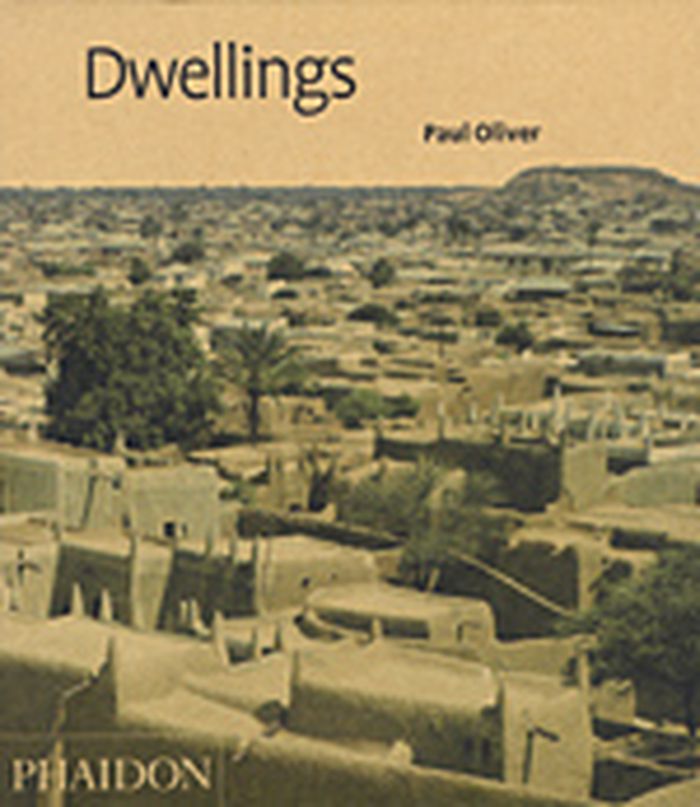
The architecture of ordinary people represents more than ninety per cent of the world's buildings, including some 800 million homes. Dwellings is about the types and forms of vernacular houses around the world. It documents the form of traditional buildings that are self-built by their owner-occupiers or built by members of a community, recording the means of construction and decoration of the house in many different cultures. First published by Phaidon in 1987, "Dwellings", in its new updated, revised and expanded format, takes into account new scholarship in the field, including the author's own fieldwork, and also acknowledges theoretical developments in the areas of cultural geography, gender studies, sociology and anthropology. "Dwellings" is a reference work on domestic buildings and also a useful survey for understanding how different communities cope with issues of climate, migration, mass development, and symbolic and cultural meaning in architecture.
Dwellings : the vernacular house world wide
Actions:
Prix:
$89.95
(disponible sur commande)
Résumé:
The architecture of ordinary people represents more than ninety per cent of the world's buildings, including some 800 million homes. Dwellings is about the types and forms of vernacular houses around the world. It documents the form of traditional buildings that are self-built by their owner-occupiers or built by members of a community, recording the means of construction and decoration of the house in many different cultures. First published by Phaidon in 1987, "Dwellings", in its new updated, revised and expanded format, takes into account new scholarship in the field, including the author's own fieldwork, and also acknowledges theoretical developments in the areas of cultural geography, gender studies, sociology and anthropology. "Dwellings" is a reference work on domestic buildings and also a useful survey for understanding how different communities cope with issues of climate, migration, mass development, and symbolic and cultural meaning in architecture.
Classification:
livres
livres
Publication:
janvier 2003, London
janvier 2003, London
Sujet:
Architecture écologique
Architecture écologique
Classification:
livres
livres
Actions:
Prix:
$38.00
(disponible en magasin)
Résumé:
''Common Treasures'' is a new series of books about the challenges faced by rural communities, written by people who are working on the ground and in the fields. Each volume gathers the very best essays about climate adaptation, food production and land use, and presents them as alternatives to the prevailing political discourse. Ambitious thinking about the future of(...)
$38.00
(disponible en magasin)
Résumé:
''Common Treasures'' is a new series of books about the challenges faced by rural communities, written by people who are working on the ground and in the fields. Each volume gathers the very best essays about climate adaptation, food production and land use, and presents them as alternatives to the prevailing political discourse. Ambitious thinking about the future of(...)
Sujet:
Théorie de l’architecture
Théorie de l’architecture
Publication:
février 2026
février 2026
Titre:
Common treasures. Vol. I: Food, farming & land
Actions:
Prix:
$38.00
(disponible en magasin)
Résumé:
''Common Treasures'' is a new series of books about the challenges faced by rural communities, written by people who are working on the ground and in the fields. Each volume gathers the very best essays about climate adaptation, food production and land use, and presents them as alternatives to the prevailing political discourse. Ambitious thinking about the future of rural places requires connecting traditionally separate disciplines: architecture with agriculture; planning law with land workers’ livelihoods; food systems with local economies; community resilience with land ownership; and housing development with regenerative land use. From essays considering the reintroduction of British wool and flax, more sustainable ways to produce food, to the issues caused by second home ownership and the setting up of community land trusts, these books are a practical and inspirational blueprint created by those whose lives and work is engaged with the countryside every day.
Common treasures. Vol. I: Food, farming & land
Actions:
Prix:
$38.00
(disponible en magasin)
Résumé:
''Common Treasures'' is a new series of books about the challenges faced by rural communities, written by people who are working on the ground and in the fields. Each volume gathers the very best essays about climate adaptation, food production and land use, and presents them as alternatives to the prevailing political discourse. Ambitious thinking about the future of rural places requires connecting traditionally separate disciplines: architecture with agriculture; planning law with land workers’ livelihoods; food systems with local economies; community resilience with land ownership; and housing development with regenerative land use. From essays considering the reintroduction of British wool and flax, more sustainable ways to produce food, to the issues caused by second home ownership and the setting up of community land trusts, these books are a practical and inspirational blueprint created by those whose lives and work is engaged with the countryside every day.
Classification:
livres
livres
Publication:
février 2026
février 2026
Sujet:
Théorie de l’architecture
Théorie de l’architecture
Classification:
livres
livres
Titre:
True urbanism
True urbanism
Actions:
Prix:
$49.95
(disponible sur commande)
Résumé:
Mark Hinshaw has a proposition for Americans: Come out of your bunker, throw open the gate, and meet the neighborhood. True Urbanism, his passionate and highly readable appeal for re-engagement with city life, celebrates the growing number of people who reject sterile, paint-by-numbers subdivisions in favor of rich, vibrant, and often unpredictable urban(...)
$49.95
(disponible sur commande)
Résumé:
Mark Hinshaw has a proposition for Americans: Come out of your bunker, throw open the gate, and meet the neighborhood. True Urbanism, his passionate and highly readable appeal for re-engagement with city life, celebrates the growing number of people who reject sterile, paint-by-numbers subdivisions in favor of rich, vibrant, and often unpredictable urban(...)
Titre:
True urbanism
Actions:
Prix:
$49.95
(disponible sur commande)
Résumé:
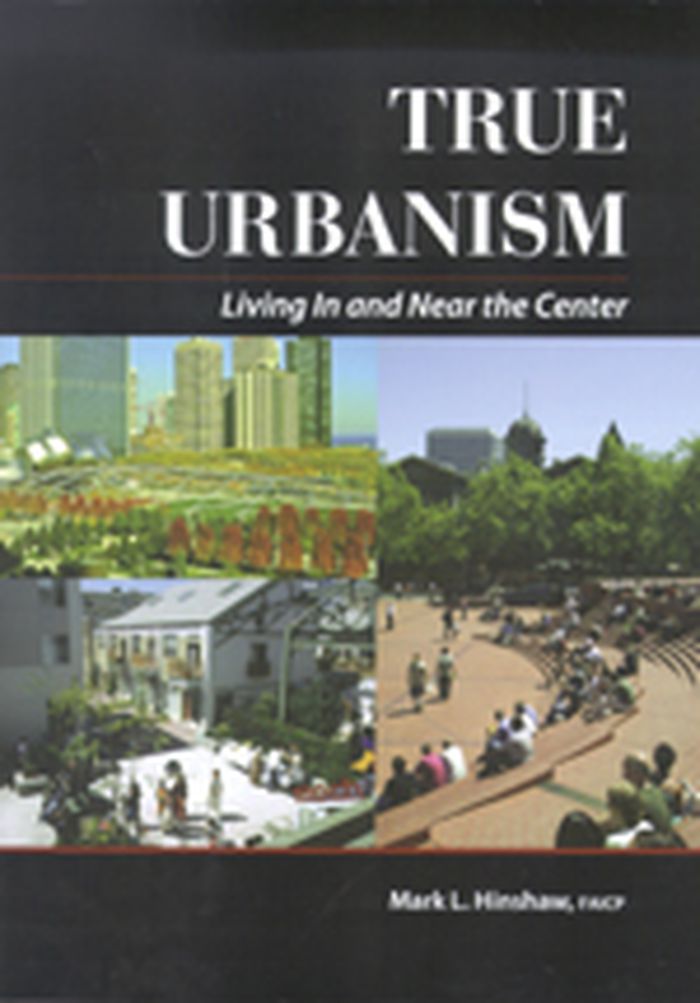
Mark Hinshaw has a proposition for Americans: Come out of your bunker, throw open the gate, and meet the neighborhood. True Urbanism, his passionate and highly readable appeal for re-engagement with city life, celebrates the growing number of people who reject sterile, paint-by-numbers subdivisions in favor of rich, vibrant, and often unpredictable urban neighborhoods. Through a series of fascinating case studies, this volume demonstrates how cities can create mixed-use districts dense enough to support a variety of locally owned businesses, lively street life, and cultural institutions, while also outlining design guidelines that allow for architectural creativity and regulations that promote housing development for every income and age level. Now that the dust has settled from the late-twentieth-century development boom, this vivid account of cities large and small will show communities how to shed their lingering antiurban tendencies in favor of embracing density as destiny.
True urbanism
Actions:
Prix:
$49.95
(disponible sur commande)
Résumé:
Mark Hinshaw has a proposition for Americans: Come out of your bunker, throw open the gate, and meet the neighborhood. True Urbanism, his passionate and highly readable appeal for re-engagement with city life, celebrates the growing number of people who reject sterile, paint-by-numbers subdivisions in favor of rich, vibrant, and often unpredictable urban neighborhoods. Through a series of fascinating case studies, this volume demonstrates how cities can create mixed-use districts dense enough to support a variety of locally owned businesses, lively street life, and cultural institutions, while also outlining design guidelines that allow for architectural creativity and regulations that promote housing development for every income and age level. Now that the dust has settled from the late-twentieth-century development boom, this vivid account of cities large and small will show communities how to shed their lingering antiurban tendencies in favor of embracing density as destiny.
Classification:
livres
livres
Publication:
septembre 2007, Chicago
septembre 2007, Chicago
Sujet:
Théorie de l’urbanisme
Théorie de l’urbanisme
Classification:
livres
livres
Actions:
Prix:
$37.70
(disponible en magasin)
Résumé:
"Five ways to make architecture political" presents an innovative pragmatist agenda that will inspire new thinking about the politics of design and architectural practice. Moving beyond conventional conversations about design and politics, the book shows how recent developments in political philosophy can transform our understanding of the role of the architect. It asks:(...)
$37.70
(disponible en magasin)
Résumé:
"Five ways to make architecture political" presents an innovative pragmatist agenda that will inspire new thinking about the politics of design and architectural practice. Moving beyond conventional conversations about design and politics, the book shows how recent developments in political philosophy can transform our understanding of the role of the architect. It asks:(...)
Titre:
Five ways to make architecture political: An introduction to the politics of design practice
Actions:
Prix:
$37.70
(disponible en magasin)
Résumé:
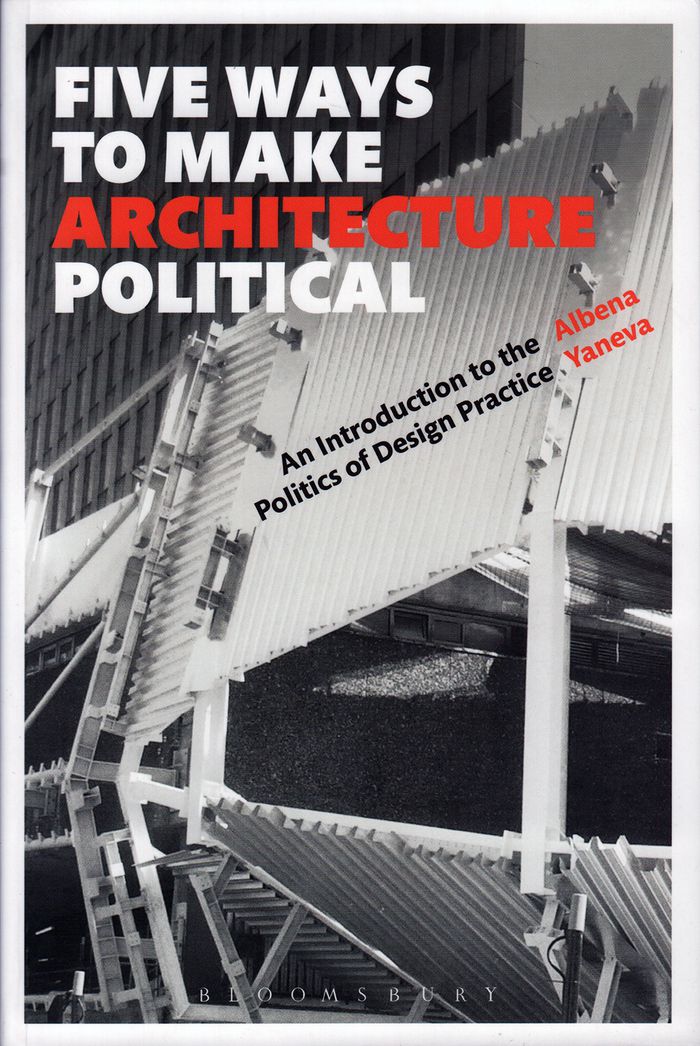
"Five ways to make architecture political" presents an innovative pragmatist agenda that will inspire new thinking about the politics of design and architectural practice. Moving beyond conventional conversations about design and politics, the book shows how recent developments in political philosophy can transform our understanding of the role of the architect. It asks: how, when, and under what circumstances can design practice generate political relations? How can architectural design become more 'political'? Five central chapters, which can be read alone or in sequence, explore the answers to these questions. Powerfully pragmatic in approach, each presents one of the 'five ways to make architecture political', and each is illustrated by case studies from a range of contemporary situations around the world. We see how politics happens in architectural practice, learn how different design technologies have political effects, and follow how architects reach different publics, trigger reactions and affect different communities worldwide.
Five ways to make architecture political: An introduction to the politics of design practice
Actions:
Prix:
$37.70
(disponible en magasin)
Résumé:
"Five ways to make architecture political" presents an innovative pragmatist agenda that will inspire new thinking about the politics of design and architectural practice. Moving beyond conventional conversations about design and politics, the book shows how recent developments in political philosophy can transform our understanding of the role of the architect. It asks: how, when, and under what circumstances can design practice generate political relations? How can architectural design become more 'political'? Five central chapters, which can be read alone or in sequence, explore the answers to these questions. Powerfully pragmatic in approach, each presents one of the 'five ways to make architecture political', and each is illustrated by case studies from a range of contemporary situations around the world. We see how politics happens in architectural practice, learn how different design technologies have political effects, and follow how architects reach different publics, trigger reactions and affect different communities worldwide.
Classification:
livres
livres
Publication:
mai 2017
mai 2017
Sujet:
Théorie de l’architecture
Théorie de l’architecture
Classification:
livres
livres
Titre:
Potato (Object Lessons)
Potato (Object Lessons)
Actions:
Prix:
$21.95
(disponible sur commande)
Résumé:
''Object Lessons'' is a series of short, beautifully designed books about the hidden lives of ordinary things. Baked potatoes, Bombay potatoes, pommes frites . . . everyone eats potatoes, but what do they mean? To the United Nations they mean global food security (potatoes are the world's fourth most important food crop). To 18th-century philosophers they promised(...)
$21.95
(disponible sur commande)
Résumé:
''Object Lessons'' is a series of short, beautifully designed books about the hidden lives of ordinary things. Baked potatoes, Bombay potatoes, pommes frites . . . everyone eats potatoes, but what do they mean? To the United Nations they mean global food security (potatoes are the world's fourth most important food crop). To 18th-century philosophers they promised(...)
Titre:
Potato (Object Lessons)
Actions:
Prix:
$21.95
(disponible sur commande)
Résumé:
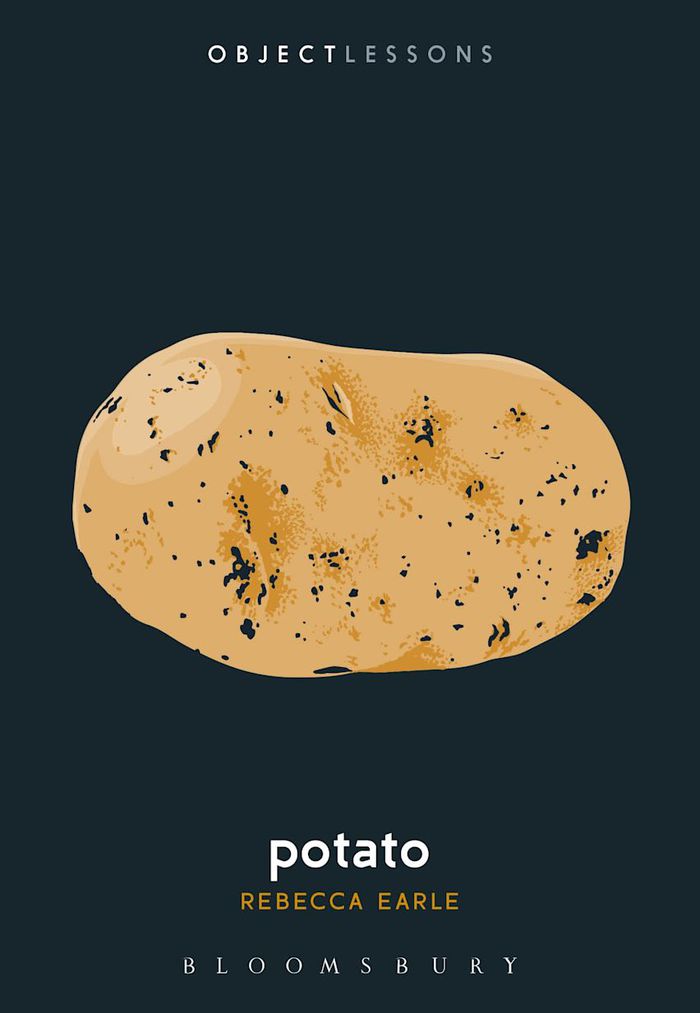
''Object Lessons'' is a series of short, beautifully designed books about the hidden lives of ordinary things. Baked potatoes, Bombay potatoes, pommes frites . . . everyone eats potatoes, but what do they mean? To the United Nations they mean global food security (potatoes are the world's fourth most important food crop). To 18th-century philosophers they promised happiness. Nutritionists warn that too many increase your risk of hypertension. For the poet Seamus Heaney they conjured up both his mother and the 19th-century Irish famine. What stories lie behind the ordinary potato? The potato is entangled with the birth of the liberal state and the idea that individuals, rather than communities, should form the building blocks of society. Potatoes also speak about family, and our quest for communion with the universe. Thinking about potatoes turns out to be a good way of thinking about some of the important tensions in our world.
Potato (Object Lessons)
Actions:
Prix:
$21.95
(disponible sur commande)
Résumé:
''Object Lessons'' is a series of short, beautifully designed books about the hidden lives of ordinary things. Baked potatoes, Bombay potatoes, pommes frites . . . everyone eats potatoes, but what do they mean? To the United Nations they mean global food security (potatoes are the world's fourth most important food crop). To 18th-century philosophers they promised happiness. Nutritionists warn that too many increase your risk of hypertension. For the poet Seamus Heaney they conjured up both his mother and the 19th-century Irish famine. What stories lie behind the ordinary potato? The potato is entangled with the birth of the liberal state and the idea that individuals, rather than communities, should form the building blocks of society. Potatoes also speak about family, and our quest for communion with the universe. Thinking about potatoes turns out to be a good way of thinking about some of the important tensions in our world.
Classification:
livres
livres
Publication:
mars 2019
mars 2019
Sujet:
Bouffe
Bouffe
Classification:
livres
livres
Actions:
Prix:
$35.95
(disponible sur commande)
Résumé:
In "Punctuations" Michael J. Shapiro examines how punctuation—conceived not as a series of marks but as a metaphor for the ways in which artists engage with intelligibility—opens pathways for thinking through the possibilities for oppositional politics. Drawing on Theodor Adorno, Alain Robbe-Grillet, and Roland Barthes, Shapiro demonstrates how punctuation's capacity to(...)
$35.95
(disponible sur commande)
Résumé:
In "Punctuations" Michael J. Shapiro examines how punctuation—conceived not as a series of marks but as a metaphor for the ways in which artists engage with intelligibility—opens pathways for thinking through the possibilities for oppositional politics. Drawing on Theodor Adorno, Alain Robbe-Grillet, and Roland Barthes, Shapiro demonstrates how punctuation's capacity to(...)
Titre:
Punctuations: how the arts think the political
Actions:
Prix:
$35.95
(disponible sur commande)
Résumé:
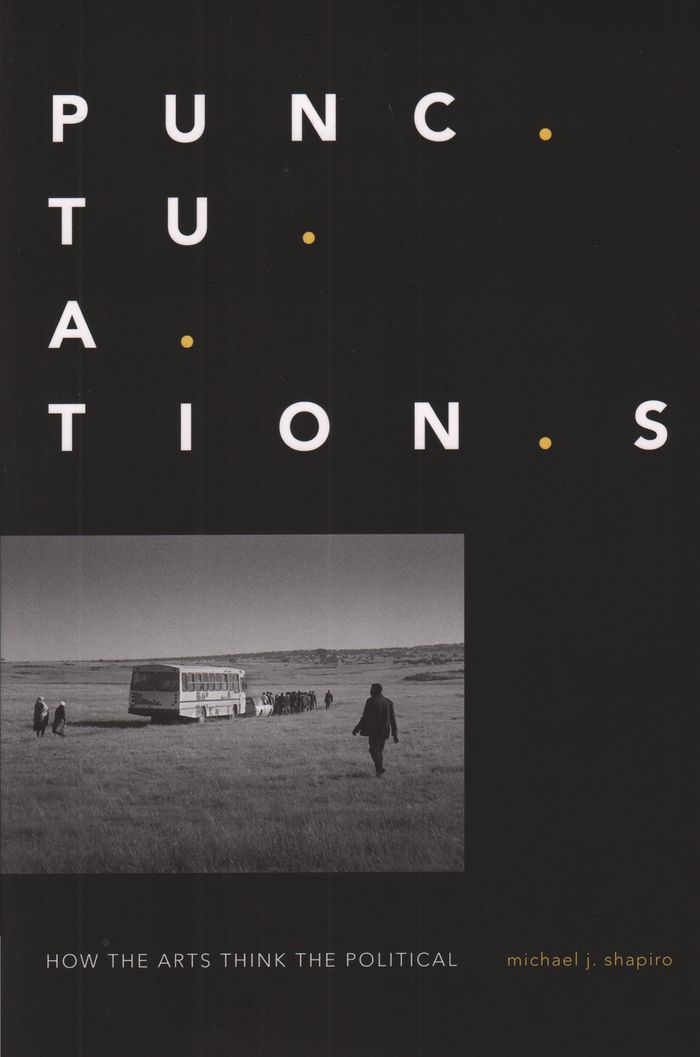
In "Punctuations" Michael J. Shapiro examines how punctuation—conceived not as a series of marks but as a metaphor for the ways in which artists engage with intelligibility—opens pathways for thinking through the possibilities for oppositional politics. Drawing on Theodor Adorno, Alain Robbe-Grillet, and Roland Barthes, Shapiro demonstrates how punctuation's capacity to create unexpected rhythmic pacing makes it an ideal tool for writers, musicians, filmmakers, and artists to challenge structures of power. In works ranging from film scores and jazz compositions to literature, architecture, and photography, Shapiro shows how the use of punctuation reveals the contestability of dominant narratives in ways that prompt readers, viewers, and listeners to reflect on their acceptance of those narratives. Such uses of punctuation, he theorizes, offer models for disrupting structures of authority, thereby fostering the creation of alternative communities of sense from which to base political mobilization.
Punctuations: how the arts think the political
Actions:
Prix:
$35.95
(disponible sur commande)
Résumé:
In "Punctuations" Michael J. Shapiro examines how punctuation—conceived not as a series of marks but as a metaphor for the ways in which artists engage with intelligibility—opens pathways for thinking through the possibilities for oppositional politics. Drawing on Theodor Adorno, Alain Robbe-Grillet, and Roland Barthes, Shapiro demonstrates how punctuation's capacity to create unexpected rhythmic pacing makes it an ideal tool for writers, musicians, filmmakers, and artists to challenge structures of power. In works ranging from film scores and jazz compositions to literature, architecture, and photography, Shapiro shows how the use of punctuation reveals the contestability of dominant narratives in ways that prompt readers, viewers, and listeners to reflect on their acceptance of those narratives. Such uses of punctuation, he theorizes, offer models for disrupting structures of authority, thereby fostering the creation of alternative communities of sense from which to base political mobilization.
Classification:
livres
livres
Publication:
novembre 2019
novembre 2019
Sujet:
Théorie de l’art
Théorie de l’art
Classification:
livres
livres
Prix:
$57.95
(disponible sur commande)
Résumé:
''Suffragette City'' brings together a collection of illustrated essays dedicated to exploring and analysing cases in which women have resourcefully leveraged or defied the politics of gender to form and reform architecture and urbanism. Throughout much of modern history, women have been assigned to the margins and expected to play passive social roles. This book draws on(...)
$57.95
(disponible sur commande)
Résumé:
''Suffragette City'' brings together a collection of illustrated essays dedicated to exploring and analysing cases in which women have resourcefully leveraged or defied the politics of gender to form and reform architecture and urbanism. Throughout much of modern history, women have been assigned to the margins and expected to play passive social roles. This book draws on(...)
Publication:
septembre 2019
septembre 2019
Titre:
Suffragette city: women, politics and the built environment
Actions:
Prix:
$57.95
(disponible sur commande)
Résumé:
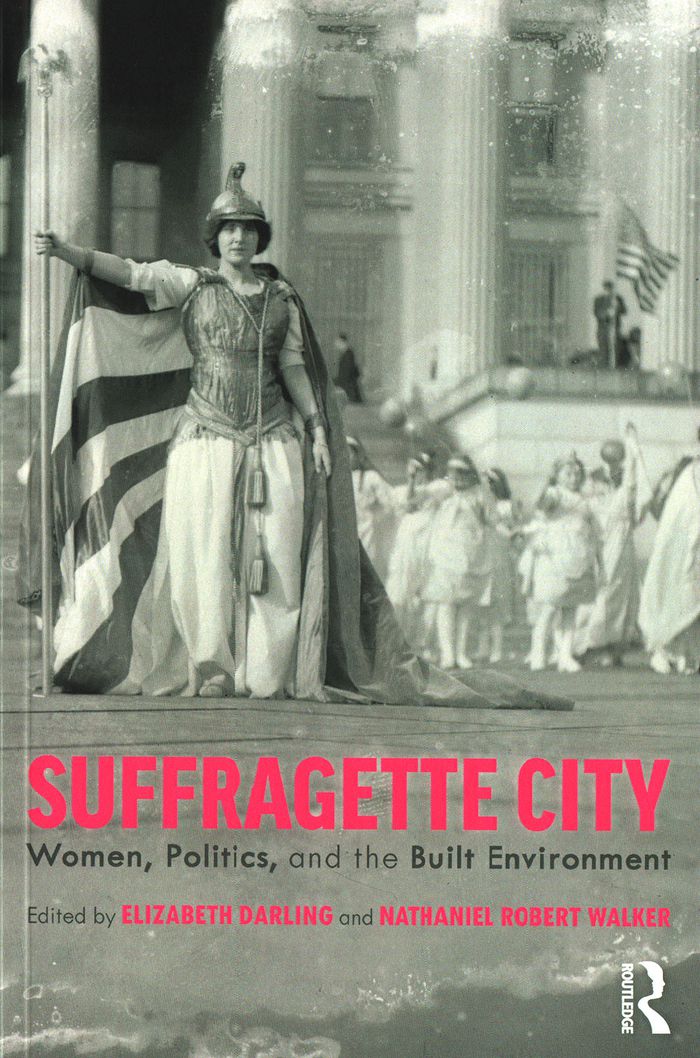
''Suffragette City'' brings together a collection of illustrated essays dedicated to exploring and analysing cases in which women have resourcefully leveraged or defied the politics of gender to form and reform architecture and urbanism. Throughout much of modern history, women have been assigned to the margins and expected to play passive social roles. This book draws on nineteenth- and twentieth-century architectural case studies from the English-speaking world, including the USA, South Africa, Scotland, India and England, to examine places and moments when women stepped into the centre of public life and claimed opportunities to shape the fabrics of their communities. Their engagements with the built environment consistently transcended architecture to achieve the level of urbanism, as whole networks of relationships came into their purview, transforming the architecture of socio-political connection as well as the confronting the physical divisions that have historically lain along racial, economic and gendered lines.
Suffragette city: women, politics and the built environment
Actions:
Prix:
$57.95
(disponible sur commande)
Résumé:
''Suffragette City'' brings together a collection of illustrated essays dedicated to exploring and analysing cases in which women have resourcefully leveraged or defied the politics of gender to form and reform architecture and urbanism. Throughout much of modern history, women have been assigned to the margins and expected to play passive social roles. This book draws on nineteenth- and twentieth-century architectural case studies from the English-speaking world, including the USA, South Africa, Scotland, India and England, to examine places and moments when women stepped into the centre of public life and claimed opportunities to shape the fabrics of their communities. Their engagements with the built environment consistently transcended architecture to achieve the level of urbanism, as whole networks of relationships came into their purview, transforming the architecture of socio-political connection as well as the confronting the physical divisions that have historically lain along racial, economic and gendered lines.
Classification:
livres
livres
Publication:
septembre 2019
septembre 2019
Classification:
livres
livres
Prix:
$38.50
(disponible sur commande)
Résumé:
This book explores the aspirations and tastes of new suburban communities in interwar England for domestic architecture and design that was both modern and nostalgic in a period where homeownership became the norm. It investigates the ways in which new suburban class and gender identities were forged through the architecture, design and decoration of the home through(...)
$38.50
(disponible sur commande)
Résumé:
This book explores the aspirations and tastes of new suburban communities in interwar England for domestic architecture and design that was both modern and nostalgic in a period where homeownership became the norm. It investigates the ways in which new suburban class and gender identities were forged through the architecture, design and decoration of the home through(...)
Titre:
Ideal homes, 1918-39: Domestic design and suburban modernism
Actions:
Prix:
$38.50
(disponible sur commande)
Résumé:
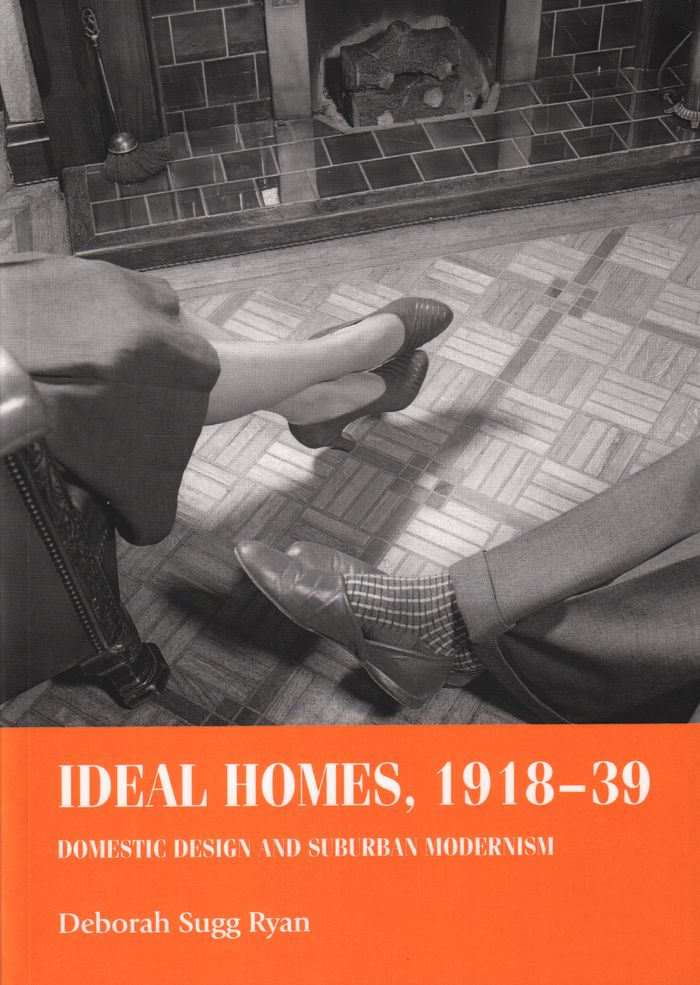
This book explores the aspirations and tastes of new suburban communities in interwar England for domestic architecture and design that was both modern and nostalgic in a period where homeownership became the norm. It investigates the ways in which new suburban class and gender identities were forged through the architecture, design and decoration of the home through choices such as ebony elephants placed on mantelpieces and modern Easiwork dressers in kitchens. It argues that a specifically suburban modernism emerged, which looked backwards to the past whilst looking forward to the future. Thus the inter-war "idea" home was both a retreat from the outside world and a site of change and experimentation. It also examines how the interwar home is lived in today. The book will appeal to academics and students in design, social and cultural history as well as a wider readership curious about interwar homes.
Ideal homes, 1918-39: Domestic design and suburban modernism
Actions:
Prix:
$38.50
(disponible sur commande)
Résumé:
This book explores the aspirations and tastes of new suburban communities in interwar England for domestic architecture and design that was both modern and nostalgic in a period where homeownership became the norm. It investigates the ways in which new suburban class and gender identities were forged through the architecture, design and decoration of the home through choices such as ebony elephants placed on mantelpieces and modern Easiwork dressers in kitchens. It argues that a specifically suburban modernism emerged, which looked backwards to the past whilst looking forward to the future. Thus the inter-war "idea" home was both a retreat from the outside world and a site of change and experimentation. It also examines how the interwar home is lived in today. The book will appeal to academics and students in design, social and cultural history as well as a wider readership curious about interwar homes.
Classification:
livres
livres
Publication:
mai 2018
mai 2018
Sujet:
Théorie de l’architecture
Théorie de l’architecture
Classification:
livres
livres
Titre:
Overlooked america
Overlooked america
Actions:
Prix:
$49.95
(disponible sur commande)
Résumé:
In the aftermath of Hurricane Katrina, America was horrified by an onslaught of media accounts about those left stranded, homeless, or dead in New Orleans. And as further investigation made clear, residents of impoverished neighborhoods were the most vulnerable to disaster. In short, they were overlooked - much like the homeless, jobless, poor, and disabled victims of the(...)
$49.95
(disponible sur commande)
Résumé:
In the aftermath of Hurricane Katrina, America was horrified by an onslaught of media accounts about those left stranded, homeless, or dead in New Orleans. And as further investigation made clear, residents of impoverished neighborhoods were the most vulnerable to disaster. In short, they were overlooked - much like the homeless, jobless, poor, and disabled victims of the(...)
Titre:
Overlooked america
Actions:
Prix:
$49.95
(disponible sur commande)
Résumé:
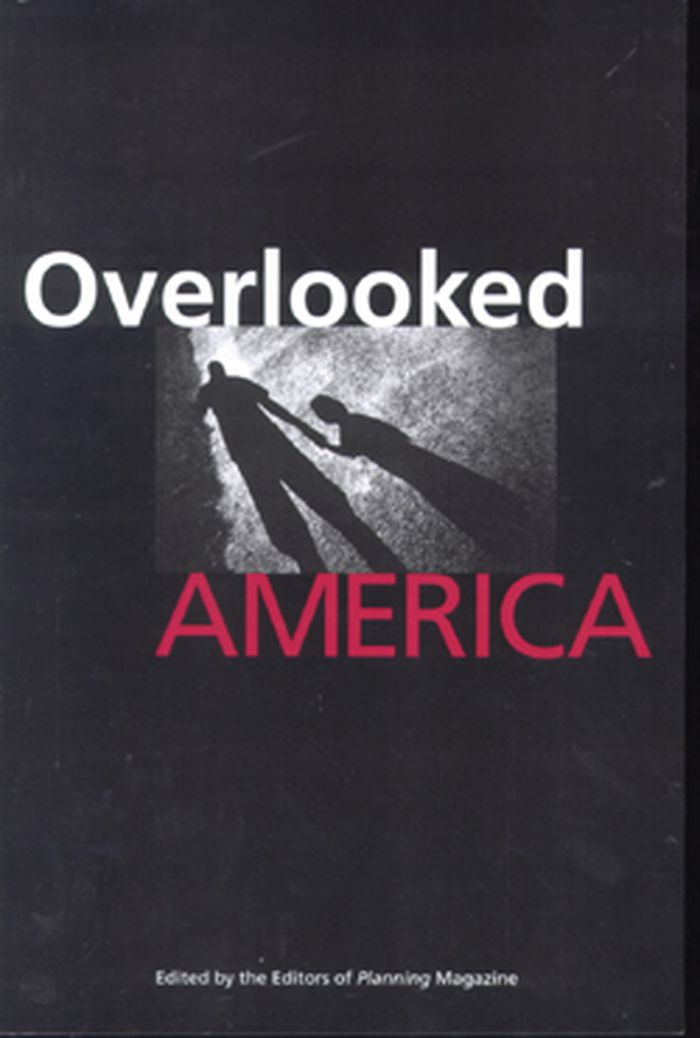
In the aftermath of Hurricane Katrina, America was horrified by an onslaught of media accounts about those left stranded, homeless, or dead in New Orleans. And as further investigation made clear, residents of impoverished neighborhoods were the most vulnerable to disaster. In short, they were overlooked - much like the homeless, jobless, poor, and disabled victims of the everyday disasters of poverty and neglect whose lives are explored in "Overlooked America".A compilation of articles published in "Planning" magazine between 2006 and 2008, this eye-opening anthology offers a fresh look at how planners and communities affect the everyday lives of marginalized citizens. Featuring on-the-ground perspectives and expert interpretations, "Overlooked America" tackles a broad range of social problems to ask why a nation replete with resources is home to so many needy individuals and families. This ambitious volume is both a chronicle of systemic disaster and a plea for change.
Overlooked america
Actions:
Prix:
$49.95
(disponible sur commande)
Résumé:
In the aftermath of Hurricane Katrina, America was horrified by an onslaught of media accounts about those left stranded, homeless, or dead in New Orleans. And as further investigation made clear, residents of impoverished neighborhoods were the most vulnerable to disaster. In short, they were overlooked - much like the homeless, jobless, poor, and disabled victims of the everyday disasters of poverty and neglect whose lives are explored in "Overlooked America".A compilation of articles published in "Planning" magazine between 2006 and 2008, this eye-opening anthology offers a fresh look at how planners and communities affect the everyday lives of marginalized citizens. Featuring on-the-ground perspectives and expert interpretations, "Overlooked America" tackles a broad range of social problems to ask why a nation replete with resources is home to so many needy individuals and families. This ambitious volume is both a chronicle of systemic disaster and a plea for change.
Classification:
livres
livres
Publication:
août 2008, Chicago, Washington
août 2008, Chicago, Washington
Sujet:
Théorie de l’urbanisme
Théorie de l’urbanisme
Classification:
livres
livres
Titre:
Why preservation matters
Why preservation matters
Actions:
Prix:
$34.95
(disponible sur commande)
Résumé:
Every day, millions of people enter old buildings, pass monuments, and gaze at landscapes unaware that these acts are possible only thanks to the preservation movement. As we approach the October 2016 anniversary of the United States National Historic Preservation Act, historian Max Page offers a thoughtful assessment of the movement’s past and charts a path toward a more(...)
$34.95
(disponible sur commande)
Résumé:
Every day, millions of people enter old buildings, pass monuments, and gaze at landscapes unaware that these acts are possible only thanks to the preservation movement. As we approach the October 2016 anniversary of the United States National Historic Preservation Act, historian Max Page offers a thoughtful assessment of the movement’s past and charts a path toward a more(...)
Titre:
Why preservation matters
Actions:
Prix:
$34.95
(disponible sur commande)
Résumé:
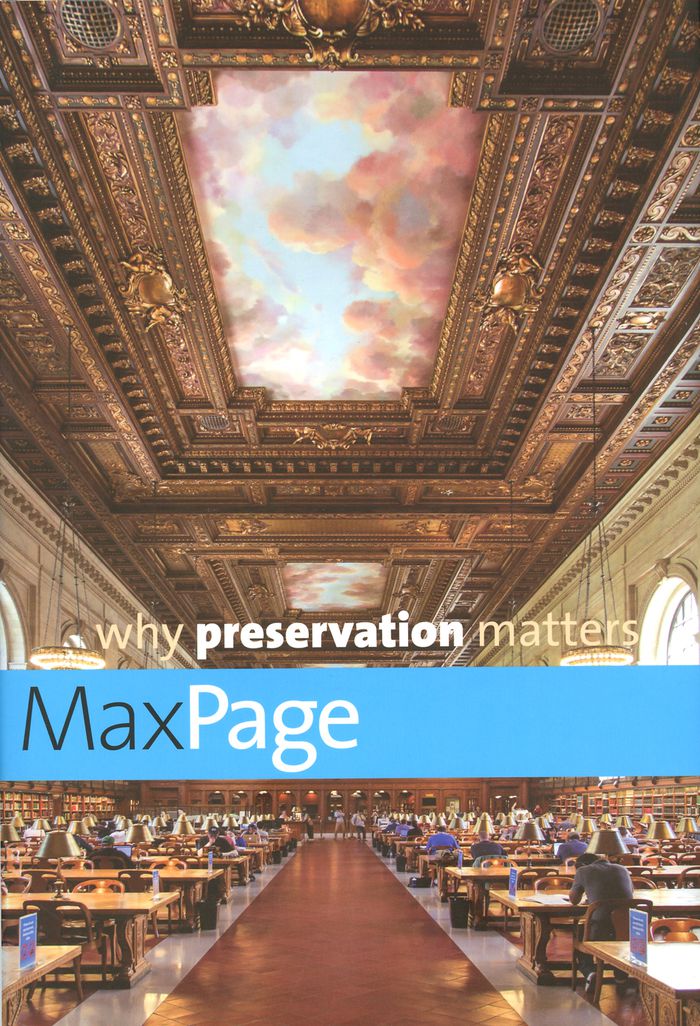
Every day, millions of people enter old buildings, pass monuments, and gaze at landscapes unaware that these acts are possible only thanks to the preservation movement. As we approach the October 2016 anniversary of the United States National Historic Preservation Act, historian Max Page offers a thoughtful assessment of the movement’s past and charts a path toward a more progressive future. Page argues that if preservation is to play a central role in building more-just communities, it must transform itself to stand against gentrification, work more closely with the environmental sustainability movement, and challenge societies to confront their pasts. Touching on the history of the preservation movement in the United States and ranging the world, Page searches for inspiration on how to rejuvenate historic preservation for the next fifty years. This illuminating work will be widely read by urban planners, historians, and anyone with a stake in the past.
Why preservation matters
Actions:
Prix:
$34.95
(disponible sur commande)
Résumé:
Every day, millions of people enter old buildings, pass monuments, and gaze at landscapes unaware that these acts are possible only thanks to the preservation movement. As we approach the October 2016 anniversary of the United States National Historic Preservation Act, historian Max Page offers a thoughtful assessment of the movement’s past and charts a path toward a more progressive future. Page argues that if preservation is to play a central role in building more-just communities, it must transform itself to stand against gentrification, work more closely with the environmental sustainability movement, and challenge societies to confront their pasts. Touching on the history of the preservation movement in the United States and ranging the world, Page searches for inspiration on how to rejuvenate historic preservation for the next fifty years. This illuminating work will be widely read by urban planners, historians, and anyone with a stake in the past.
Classification:
livres
livres
Publication:
octobre 2016
octobre 2016


