


6640 Résultats
Classification:
livres
livres
Actions:
Prix:
$49.00
(disponible sur commande)
Résumé:
It is impossible to imagine Austrian architecture and contemporary history without Karl Schwanzer, who would have marked his hundredth birthday in 2018. His buildings, like the BMW administration building in Munich, caused quite a furor domestically and abroad; his institute at the Technical University of Vienna influenced offices like Coop Himmelb(l)au, Haus-Rucker-Co,(...)
$49.00
(disponible sur commande)
Résumé:
It is impossible to imagine Austrian architecture and contemporary history without Karl Schwanzer, who would have marked his hundredth birthday in 2018. His buildings, like the BMW administration building in Munich, caused quite a furor domestically and abroad; his institute at the Technical University of Vienna influenced offices like Coop Himmelb(l)au, Haus-Rucker-Co,(...)
Sujet:
Architecture, monographies
Architecture, monographies
Publication:
février 2019
février 2019
Titre:
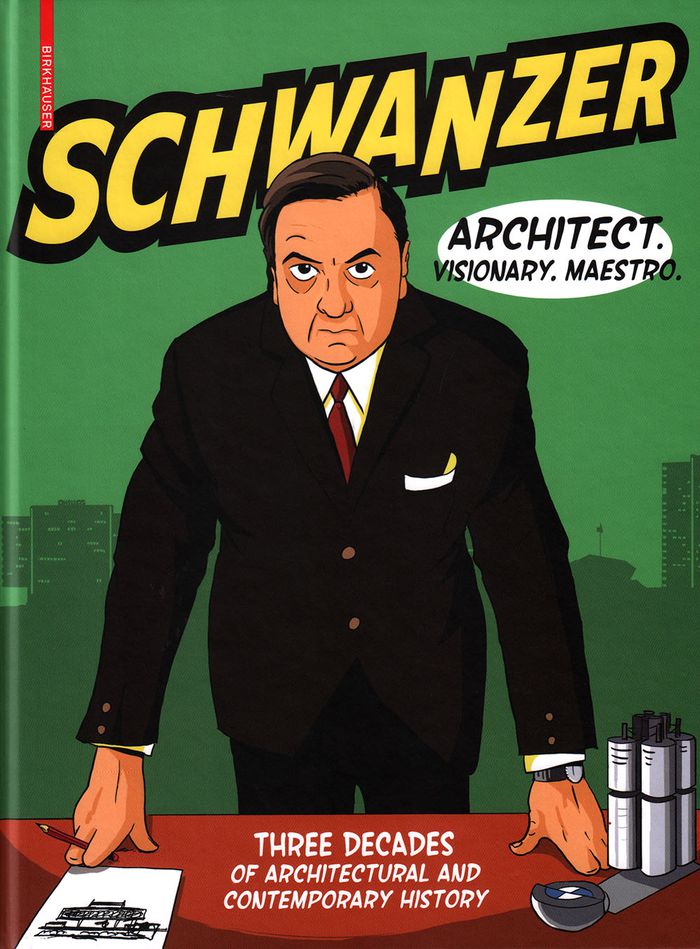
Schwanzer: architect, visionary, maestro.
Actions:
Prix:
$49.00
(disponible sur commande)
Résumé:
It is impossible to imagine Austrian architecture and contemporary history without Karl Schwanzer, who would have marked his hundredth birthday in 2018. His buildings, like the BMW administration building in Munich, caused quite a furor domestically and abroad; his institute at the Technical University of Vienna influenced offices like Coop Himmelb(l)au, Haus-Rucker-Co, Missing Link and ZUEND-UP. Posthumously, Schwanzer rose to cult status among his staff, students and clients, conferred especially for his passionate way of working, sparing no effort or expense, and for his relentless search for the optimum solution. In every sense, his life and work were unconventional. The idea to relate them in the form of a graphic novel is also quite unconventional, but certainly a logical consequence!
Schwanzer: architect, visionary, maestro.
Actions:
Prix:
$49.00
(disponible sur commande)
Résumé:
It is impossible to imagine Austrian architecture and contemporary history without Karl Schwanzer, who would have marked his hundredth birthday in 2018. His buildings, like the BMW administration building in Munich, caused quite a furor domestically and abroad; his institute at the Technical University of Vienna influenced offices like Coop Himmelb(l)au, Haus-Rucker-Co, Missing Link and ZUEND-UP. Posthumously, Schwanzer rose to cult status among his staff, students and clients, conferred especially for his passionate way of working, sparing no effort or expense, and for his relentless search for the optimum solution. In every sense, his life and work were unconventional. The idea to relate them in the form of a graphic novel is also quite unconventional, but certainly a logical consequence!
Classification:
livres
livres
Publication:
février 2019
février 2019
Sujet:
Architecture, monographies
Architecture, monographies
Classification:
livres
livres
Actions:
Prix:
$33.95
(disponible sur commande)
Résumé:
Tokyo is Japan’s cultural and commercial epicenter, bursting with vibrancy and life. Its buildings, both historical and contemporary, are a direct reflection of its history and its people. Kengo Kuma was only ten years old when he found himself so inspired by Tokyo’s cityscape that he decided to become an architect. Here he tells the story of his career through(...)
$33.95
(disponible sur commande)
Résumé:
Tokyo is Japan’s cultural and commercial epicenter, bursting with vibrancy and life. Its buildings, both historical and contemporary, are a direct reflection of its history and its people. Kengo Kuma was only ten years old when he found himself so inspired by Tokyo’s cityscape that he decided to become an architect. Here he tells the story of his career through(...)
Titre:
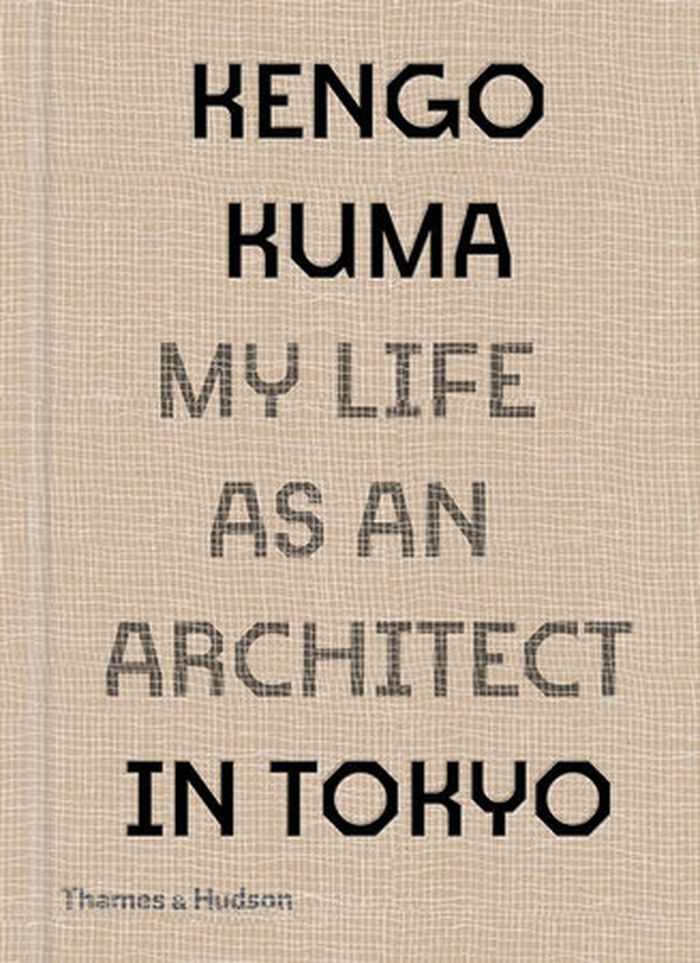
Kengo Kuma: My life as an architect in Tokyo
Actions:
Prix:
$33.95
(disponible sur commande)
Résumé:
Tokyo is Japan’s cultural and commercial epicenter, bursting with vibrancy and life. Its buildings, both historical and contemporary, are a direct reflection of its history and its people. Kengo Kuma was only ten years old when he found himself so inspired by Tokyo’s cityscape that he decided to become an architect. Here he tells the story of his career through twenty-five inspirational buildings in the city. Kuma’s passion is evident on every page, as well as his curiosity about construction methods and his wealth of knowledge about buildings around the world, making this a unique commentary on Tokyo’s dynamic architecture. ''Kengo Kuma: My life as an architect in Tokyo'' is an intimate and truly inspiring book, revealing the beauty that exists in the world’s everyday spaces.
Kengo Kuma: My life as an architect in Tokyo
Actions:
Prix:
$33.95
(disponible sur commande)
Résumé:
Tokyo is Japan’s cultural and commercial epicenter, bursting with vibrancy and life. Its buildings, both historical and contemporary, are a direct reflection of its history and its people. Kengo Kuma was only ten years old when he found himself so inspired by Tokyo’s cityscape that he decided to become an architect. Here he tells the story of his career through twenty-five inspirational buildings in the city. Kuma’s passion is evident on every page, as well as his curiosity about construction methods and his wealth of knowledge about buildings around the world, making this a unique commentary on Tokyo’s dynamic architecture. ''Kengo Kuma: My life as an architect in Tokyo'' is an intimate and truly inspiring book, revealing the beauty that exists in the world’s everyday spaces.
Classification:
livres
livres
Publication:
février 2021
février 2021
Sujet:
Architecture, monographies
Architecture, monographies
Classification:
livres
livres
Exemplaires:
Description:
xvii, 626 pages, 16 unnumbered leaves of plates : illustrations ; 26 cm
Description:
xvii, 626 pages, 16 unnumbered leaves of plates : illustrations ; 26 cm
Auteur:
Sujet:
Publication:
Princeton, N.J. : Princeton University Press, ©1981.
Princeton, N.J. : Princeton University Press, ©1981.
Titre:
Michelangelo and the language of art / by David Summers.
Actions:
Exemplaires:
Description:
xvii, 626 pages, 16 unnumbered leaves of plates : illustrations ; 26 cm
Michelangelo and the language of art / by David Summers.
Actions:
Exemplaires:
Description:
xvii, 626 pages, 16 unnumbered leaves of plates : illustrations ; 26 cm
Classification:
livres
livres
Publication:
Princeton, N.J. : Princeton University Press, ©1981.
Princeton, N.J. : Princeton University Press, ©1981.
Auteur:
Sujet:
Classification:
livres
livres
Actions:
Prix:
$45.00
(disponible sur commande)
Résumé:
This book proposes two goals: to analyze the innovations that the twenty-first century is introducing to the world of design, to the passage from the strong and concentrated modernity of the twentieth century to the weak and diffuse current one, and to investigate whether there is, in this passage, the possibility of imagining a future for non-figurative architecture. An(...)
$45.00
(disponible sur commande)
Résumé:
This book proposes two goals: to analyze the innovations that the twenty-first century is introducing to the world of design, to the passage from the strong and concentrated modernity of the twentieth century to the weak and diffuse current one, and to investigate whether there is, in this passage, the possibility of imagining a future for non-figurative architecture. An(...)
Titre:
Weak and diffuse modernity : the world of projects at the beginning of the 21st century
Actions:
Prix:
$45.00
(disponible sur commande)
Résumé:
This book proposes two goals: to analyze the innovations that the twenty-first century is introducing to the world of design, to the passage from the strong and concentrated modernity of the twentieth century to the weak and diffuse current one, and to investigate whether there is, in this passage, the possibility of imagining a future for non-figurative architecture. An architecture that becomes an urban semiosphere, surpassing its constructing limits and becoming a producer of immaterial qualities that change over time. […] Today’s urban condition is made up of services, information technologies networks, product systems, environmental componential practice, microclimates, commercial information, and above all perceptive structures that produce systems of sensorial and intelligent tunnels that are contained within architecture, but cannot be represented by architecture’s figurative codes. […] It’s not the first time that architecture attempts to go ‘beyond architecture’, but in the twenty-first century this utopia seems to be for the most part realized within the contemporary city.” This is a long essay comprising a decade of reflections and designs, in an attempt to reconcile conceptual reflections on architecture and the contemporary city, with a constant inclination towards a vision for the future. With this text, Andrea Branzi gives us a courageous act of faith and optimism towards an architecture that is still capable of listening to the city’s heart, while at the same time giving never-before-seen answers for the future of living together.
Weak and diffuse modernity : the world of projects at the beginning of the 21st century
Actions:
Prix:
$45.00
(disponible sur commande)
Résumé:
This book proposes two goals: to analyze the innovations that the twenty-first century is introducing to the world of design, to the passage from the strong and concentrated modernity of the twentieth century to the weak and diffuse current one, and to investigate whether there is, in this passage, the possibility of imagining a future for non-figurative architecture. An architecture that becomes an urban semiosphere, surpassing its constructing limits and becoming a producer of immaterial qualities that change over time. […] Today’s urban condition is made up of services, information technologies networks, product systems, environmental componential practice, microclimates, commercial information, and above all perceptive structures that produce systems of sensorial and intelligent tunnels that are contained within architecture, but cannot be represented by architecture’s figurative codes. […] It’s not the first time that architecture attempts to go ‘beyond architecture’, but in the twenty-first century this utopia seems to be for the most part realized within the contemporary city.” This is a long essay comprising a decade of reflections and designs, in an attempt to reconcile conceptual reflections on architecture and the contemporary city, with a constant inclination towards a vision for the future. With this text, Andrea Branzi gives us a courageous act of faith and optimism towards an architecture that is still capable of listening to the city’s heart, while at the same time giving never-before-seen answers for the future of living together.
Classification:
livres
livres
Publication:
septembre 2006, Milan
septembre 2006, Milan
Classification:
livres
livres
Titre:
Architects house themselves : breaking new ground / Michael Webb ; foreword by J. Carter Brown.
Architects house themselves : breaking new ground / Michael Webb ; foreword by J. Carter Brown.
Actions:
Exemplaires:
Description:
224 pages : illustrations (some color) ; 29 cm
Description:
224 pages : illustrations (some color) ; 29 cm
Auteur:
Sujet:
Publication:
Washington, D.C. : Preservation Press, National Trust for Historic Preservation, ©1994.
Washington, D.C. : Preservation Press, National Trust for Historic Preservation, ©1994.
Titre:
Architects house themselves : breaking new ground / Michael Webb ; foreword by J. Carter Brown.
Actions:
Exemplaires:
Description:
224 pages : illustrations (some color) ; 29 cm
Architects house themselves : breaking new ground / Michael Webb ; foreword by J. Carter Brown.
Actions:
Exemplaires:
Description:
224 pages : illustrations (some color) ; 29 cm
Classification:
livres
livres
Publication:
Washington, D.C. : Preservation Press, National Trust for Historic Preservation, ©1994.
Washington, D.C. : Preservation Press, National Trust for Historic Preservation, ©1994.
Auteur:
Sujet:
Classification:
livres
livres
Prix:
$25.00
(disponible en magasin)
Résumé:
The celebrated architect and Pritzker Prize-winner speaks with series editor Hans Ulrich Obrist about the projects that established her distinctive, deconstructivist style, and shares her thoughts about contemporary architecture. Conceptual and structural questions are discussed with great precision, providing insight into one of the world's most influential architectural firms.
$25.00
(disponible en magasin)
Résumé:
The celebrated architect and Pritzker Prize-winner speaks with series editor Hans Ulrich Obrist about the projects that established her distinctive, deconstructivist style, and shares her thoughts about contemporary architecture. Conceptual and structural questions are discussed with great precision, providing insight into one of the world's most influential architectural firms.
Titre:
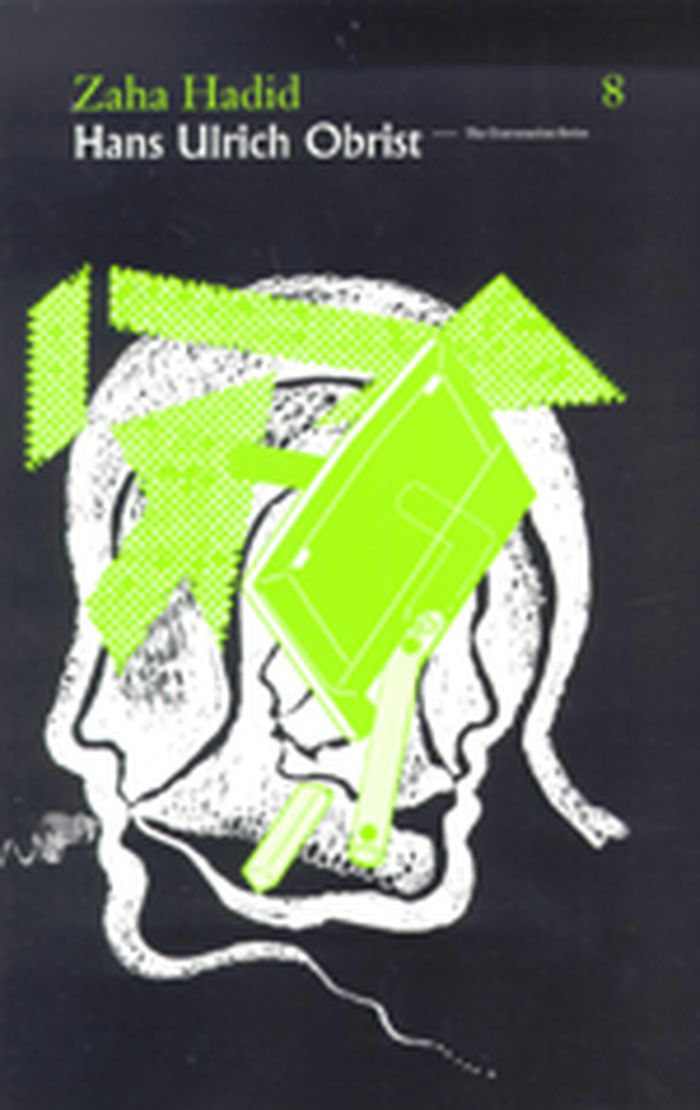
Zara Hadid / Hans Ulrich Obrist : The conversation series
Actions:
Prix:
$25.00
(disponible en magasin)
Résumé:
The celebrated architect and Pritzker Prize-winner speaks with series editor Hans Ulrich Obrist about the projects that established her distinctive, deconstructivist style, and shares her thoughts about contemporary architecture. Conceptual and structural questions are discussed with great precision, providing insight into one of the world's most influential architectural firms.
Zara Hadid / Hans Ulrich Obrist : The conversation series
Actions:
Prix:
$25.00
(disponible en magasin)
Résumé:
The celebrated architect and Pritzker Prize-winner speaks with series editor Hans Ulrich Obrist about the projects that established her distinctive, deconstructivist style, and shares her thoughts about contemporary architecture. Conceptual and structural questions are discussed with great precision, providing insight into one of the world's most influential architectural firms.
Classification:
livres
livres
Publication:
octobre 2007, Cologne
octobre 2007, Cologne
Classification:
livres
livres
Actions:
Prix:
$57.00
(disponible sur commande)
Résumé:
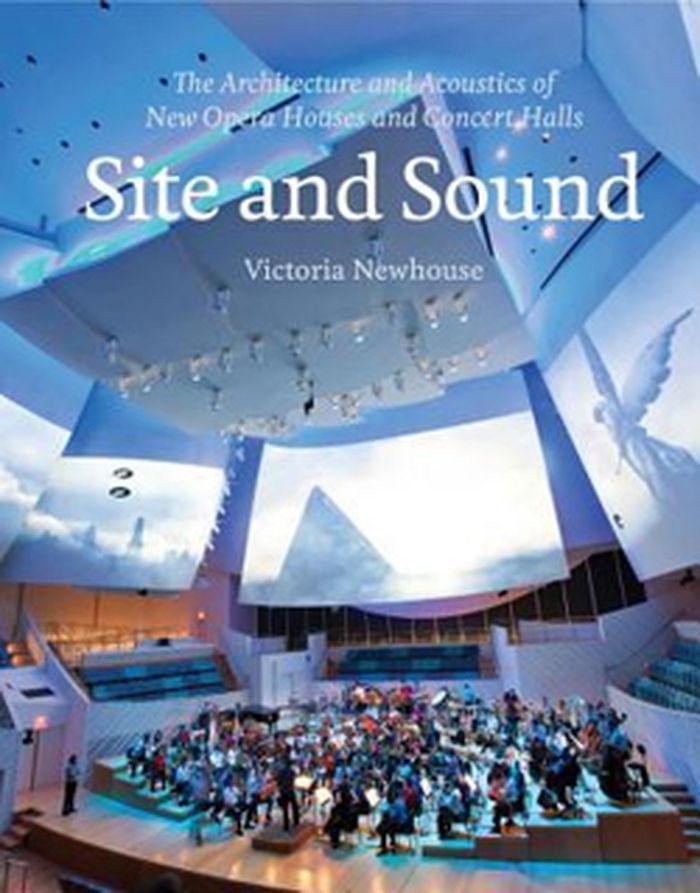
In this publication, Victoria Newhouse addresses the aesthetics and acoustics in concert halls and opera houses of the past, present, and future. Site and Sound explores the daunting, perennial question: Does the music serve the space, or the other way around? Newhouse starts with a survey of venues from ancient Greek and Roman times and progresses to(...)
$57.00
(disponible sur commande)
Résumé:
In this publication, Victoria Newhouse addresses the aesthetics and acoustics in concert halls and opera houses of the past, present, and future. Site and Sound explores the daunting, perennial question: Does the music serve the space, or the other way around? Newhouse starts with a survey of venues from ancient Greek and Roman times and progresses to(...)
Publication:
avril 2012
avril 2012
Titre:
Site and sound: the architecture and accoustics of new opera houses and concert halls
Actions:
Prix:
$57.00
(disponible sur commande)
Résumé:
In this publication, Victoria Newhouse addresses the aesthetics and acoustics in concert halls and opera houses of the past, present, and future. Site and Sound explores the daunting, perennial question: Does the music serve the space, or the other way around? Newhouse starts with a survey of venues from ancient Greek and Roman times and progresses to contemporary works around the world. She singles out Lincoln Center in particular for its long history and its transitions and remodelings over the years. Two major chapters cover the present: one focuses on recent work in the West, including the National Opera House of Norway in Oslo by Snohetta (2008), the Casa da Musica in Porto, Portugal, by Rem Koolhaas (2005), and many more; the second examines the boom in concert halls in China. A final chapter looks at projects that are currently planned and the future of an architecture for music.
Site and sound: the architecture and accoustics of new opera houses and concert halls
Actions:
Prix:
$57.00
(disponible sur commande)
Résumé:
In this publication, Victoria Newhouse addresses the aesthetics and acoustics in concert halls and opera houses of the past, present, and future. Site and Sound explores the daunting, perennial question: Does the music serve the space, or the other way around? Newhouse starts with a survey of venues from ancient Greek and Roman times and progresses to contemporary works around the world. She singles out Lincoln Center in particular for its long history and its transitions and remodelings over the years. Two major chapters cover the present: one focuses on recent work in the West, including the National Opera House of Norway in Oslo by Snohetta (2008), the Casa da Musica in Porto, Portugal, by Rem Koolhaas (2005), and many more; the second examines the boom in concert halls in China. A final chapter looks at projects that are currently planned and the future of an architecture for music.
Classification:
livres
livres
Publication:
avril 2012
avril 2012
Classification:
livres
livres
Actions:
Prix:
$63.00
(disponible sur commande)
Résumé:
Pioneering architecture in Graz: the radical architecture project known as the Friendly Alien - the new building for the Kunsthaus Graz - was developed by the British star architects Peter Cook and Colin Fournier. Within the scope of Graz 2003 - Kulturhauptstadt Europas (Graz 2003 - Cultural Capital of Europe) the city of Graz provided the possibility for the two(...)
$63.00
(disponible sur commande)
Résumé:
Pioneering architecture in Graz: the radical architecture project known as the Friendly Alien - the new building for the Kunsthaus Graz - was developed by the British star architects Peter Cook and Colin Fournier. Within the scope of Graz 2003 - Kulturhauptstadt Europas (Graz 2003 - Cultural Capital of Europe) the city of Graz provided the possibility for the two(...)
Titre:
A friendly alien : ein Kunsthaus für Graz - Peter Cook, Colin Fournier Architects
Actions:
Prix:
$63.00
(disponible sur commande)
Résumé:
Pioneering architecture in Graz: the radical architecture project known as the Friendly Alien - the new building for the Kunsthaus Graz - was developed by the British star architects Peter Cook and Colin Fournier. Within the scope of Graz 2003 - Kulturhauptstadt Europas (Graz 2003 - Cultural Capital of Europe) the city of Graz provided the possibility for the two London-based architects Peter Cook and Colin Fournier to transform a visionary concept into built reality: the Kunsthaus Graz, a new and unique site for international exhibitions of modern and contemporary art. With this radical architecture project, Graz received a futuristic-looking building which satisfies to a high degree both the psychological and the functional demands of a visitor-oriented international art museum. The unusual biomorphic forms of the Friendly Alien make for a suspenseful dialog with the historic old town, especially with the century-old Graz landmark, the cubic clock-tower high up on castle hill. The documentation at hand presents the development of the Friendly Alien from a Utopian concept to a highly complex functional body. The extensive photographic material includes first-rate computer simulations and sheds light on the urban environment and its history, shows the unique architectural features of the building, and investigates with an "x-ray view" the complex network of static and technical utilities in the "skin", the nerve center of the Friendly Alien.
A friendly alien : ein Kunsthaus für Graz - Peter Cook, Colin Fournier Architects
Actions:
Prix:
$63.00
(disponible sur commande)
Résumé:
Pioneering architecture in Graz: the radical architecture project known as the Friendly Alien - the new building for the Kunsthaus Graz - was developed by the British star architects Peter Cook and Colin Fournier. Within the scope of Graz 2003 - Kulturhauptstadt Europas (Graz 2003 - Cultural Capital of Europe) the city of Graz provided the possibility for the two London-based architects Peter Cook and Colin Fournier to transform a visionary concept into built reality: the Kunsthaus Graz, a new and unique site for international exhibitions of modern and contemporary art. With this radical architecture project, Graz received a futuristic-looking building which satisfies to a high degree both the psychological and the functional demands of a visitor-oriented international art museum. The unusual biomorphic forms of the Friendly Alien make for a suspenseful dialog with the historic old town, especially with the century-old Graz landmark, the cubic clock-tower high up on castle hill. The documentation at hand presents the development of the Friendly Alien from a Utopian concept to a highly complex functional body. The extensive photographic material includes first-rate computer simulations and sheds light on the urban environment and its history, shows the unique architectural features of the building, and investigates with an "x-ray view" the complex network of static and technical utilities in the "skin", the nerve center of the Friendly Alien.
Classification:
livres
livres
Publication:
octobre 2003, Ostfildern
octobre 2003, Ostfildern
Sujet:
Architecture, monographies
Architecture, monographies
Classification:
livres
livres
Prix:
$71.00
(disponible en magasin)
Résumé:
The new alpine 'hut' on Monte Rosa, at an altitude of 2883 meters (9458 feet) near Zermatt was opened in September 2009. This innovative building emerged from a collaborative effort between the Swiss Federal Institute of Technology (ETH) in Zurich, the Swiss Alpine Club (SAC), and many experts and specialist manufacturers. It is also the result of pioneering technologies(...)
$71.00
(disponible en magasin)
Résumé:
The new alpine 'hut' on Monte Rosa, at an altitude of 2883 meters (9458 feet) near Zermatt was opened in September 2009. This innovative building emerged from a collaborative effort between the Swiss Federal Institute of Technology (ETH) in Zurich, the Swiss Alpine Club (SAC), and many experts and specialist manufacturers. It is also the result of pioneering technologies(...)
Publication:
avril 2010
avril 2010
Titre:
New Monte Rosa Hut SAC: self-sufficient building in the high Alps
Actions:
Prix:
$71.00
(disponible en magasin)
Résumé:
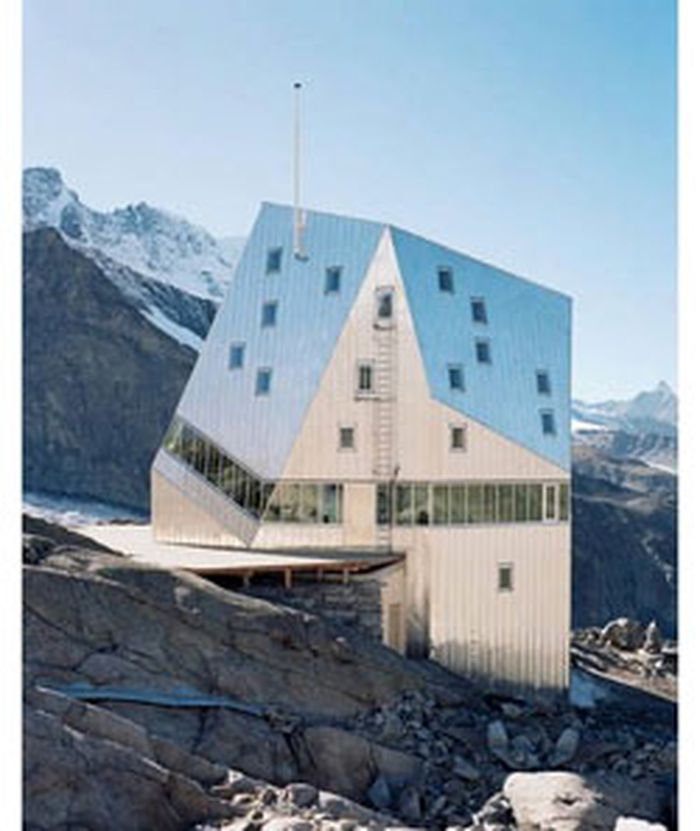
The new alpine 'hut' on Monte Rosa, at an altitude of 2883 meters (9458 feet) near Zermatt was opened in September 2009. This innovative building emerged from a collaborative effort between the Swiss Federal Institute of Technology (ETH) in Zurich, the Swiss Alpine Club (SAC), and many experts and specialist manufacturers. It is also the result of pioneering technologies in design, calculation and building construction. In the form of discussions, essays on special topics, photographs and plans, this volume documents the building's genesis and planning and the construction of what is a milestone in high alpine architecture.
New Monte Rosa Hut SAC: self-sufficient building in the high Alps
Actions:
Prix:
$71.00
(disponible en magasin)
Résumé:
The new alpine 'hut' on Monte Rosa, at an altitude of 2883 meters (9458 feet) near Zermatt was opened in September 2009. This innovative building emerged from a collaborative effort between the Swiss Federal Institute of Technology (ETH) in Zurich, the Swiss Alpine Club (SAC), and many experts and specialist manufacturers. It is also the result of pioneering technologies in design, calculation and building construction. In the form of discussions, essays on special topics, photographs and plans, this volume documents the building's genesis and planning and the construction of what is a milestone in high alpine architecture.
Classification:
livres
livres
Publication:
avril 2010
avril 2010
Classification:
livres
livres
Titre:
The building
The building
Actions:
Prix:
$54.00
(disponible sur commande)
Résumé:
For nearly fifty years “the building” has primarily been viewed as a means rather than an end within architectural history and theory. This volume presents an alternative to that trend by reconceiving it as a central discursive category in its own right. Contributors—including architects and academics from world-renowned institutions—offer insightful discussions of key(...)
$54.00
(disponible sur commande)
Résumé:
For nearly fifty years “the building” has primarily been viewed as a means rather than an end within architectural history and theory. This volume presents an alternative to that trend by reconceiving it as a central discursive category in its own right. Contributors—including architects and academics from world-renowned institutions—offer insightful discussions of key(...)
Publication:
octobre 2016
octobre 2016
Titre:
The building
Actions:
Prix:
$54.00
(disponible sur commande)
Résumé:
For nearly fifty years “the building” has primarily been viewed as a means rather than an end within architectural history and theory. This volume presents an alternative to that trend by reconceiving it as a central discursive category in its own right. Contributors—including architects and academics from world-renowned institutions—offer insightful discussions of key architectural structures conceived in Europe, Asia, and the U.S.A. over the last three decades. In doing so they propel architectural thinking’s importance as a domain of knowledge. Further, in exploring those structures through a number of questions both intra- and meta-disciplinary, this book suggests ways in which buildings can trigger conceptual frameworks whose influence extends well beyond architecture. A balanced text-to-image ratio caters to readers in both practice and academia.
The building
Actions:
Prix:
$54.00
(disponible sur commande)
Résumé:
For nearly fifty years “the building” has primarily been viewed as a means rather than an end within architectural history and theory. This volume presents an alternative to that trend by reconceiving it as a central discursive category in its own right. Contributors—including architects and academics from world-renowned institutions—offer insightful discussions of key architectural structures conceived in Europe, Asia, and the U.S.A. over the last three decades. In doing so they propel architectural thinking’s importance as a domain of knowledge. Further, in exploring those structures through a number of questions both intra- and meta-disciplinary, this book suggests ways in which buildings can trigger conceptual frameworks whose influence extends well beyond architecture. A balanced text-to-image ratio caters to readers in both practice and academia.
Classification:
livres
livres
Publication:
octobre 2016
octobre 2016


