


13794 Résultats
Classification:
livres
livres
Titre:
Architecture depends
Architecture depends
Actions:
Prix:
$33.95
(disponible en magasin)
Résumé:
Architecture depends - on what? On people, time, politics, ethics, mess: the real world. Architecture, Jeremy Till argues with conviction in this engaging, sometimes pugnacious book, cannot help itself; it is dependent for its very existence on things outside itself. Despite the claims of autonomy, purity, and control that architects like to make about their practice,(...)
$33.95
(disponible en magasin)
Résumé:
Architecture depends - on what? On people, time, politics, ethics, mess: the real world. Architecture, Jeremy Till argues with conviction in this engaging, sometimes pugnacious book, cannot help itself; it is dependent for its very existence on things outside itself. Despite the claims of autonomy, purity, and control that architects like to make about their practice,(...)
Titre:
Architecture depends
Actions:
Prix:
$33.95
(disponible en magasin)
Résumé:
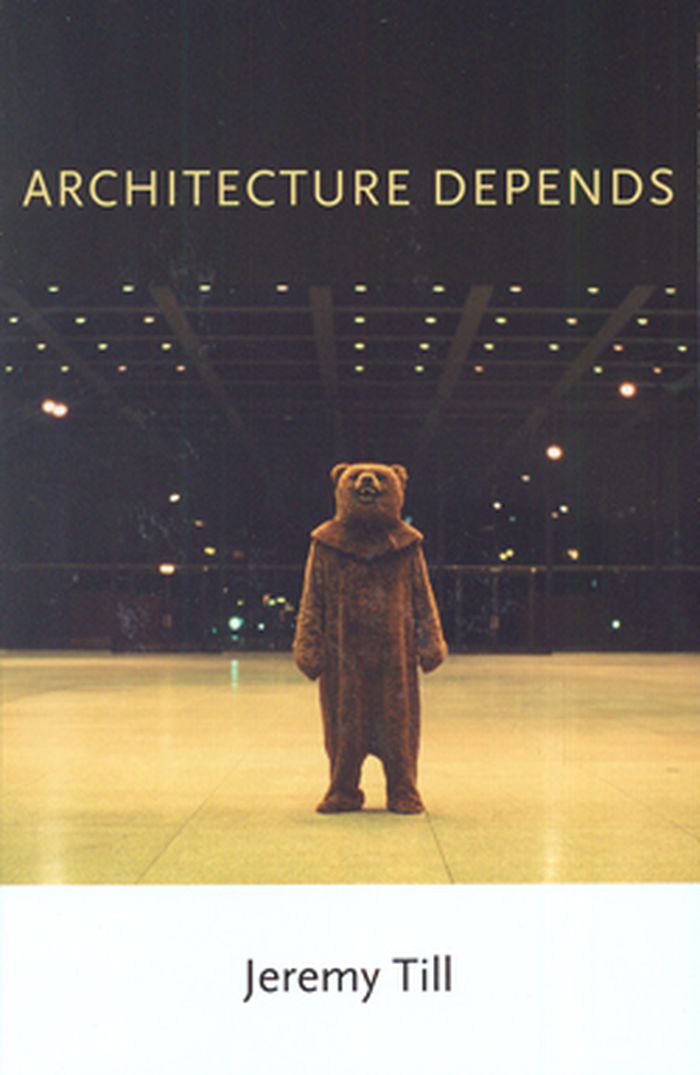
Architecture depends - on what? On people, time, politics, ethics, mess: the real world. Architecture, Jeremy Till argues with conviction in this engaging, sometimes pugnacious book, cannot help itself; it is dependent for its very existence on things outside itself. Despite the claims of autonomy, purity, and control that architects like to make about their practice, architecture is buffeted by uncertainty and contingency. Circumstances invariably intervene to upset the architect's best-laid plans - at every stage in the process, from design through construction to occupancy. Architects, however, tend to deny this, fearing contingency and preferring to pursue perfection. With Architecture Depends, architect and critic Jeremy Till offers a proposal for rescuing architects from themselves: a way to bridge the gap between what architecture actually is and what architects want it to be. Mixing anecdote, design, social theory, and personal experience, Till's writing is always accessible, moving freely between high and low registers, much like his suggestions for architecture itself.
Architecture depends
Actions:
Prix:
$33.95
(disponible en magasin)
Résumé:
Architecture depends - on what? On people, time, politics, ethics, mess: the real world. Architecture, Jeremy Till argues with conviction in this engaging, sometimes pugnacious book, cannot help itself; it is dependent for its very existence on things outside itself. Despite the claims of autonomy, purity, and control that architects like to make about their practice, architecture is buffeted by uncertainty and contingency. Circumstances invariably intervene to upset the architect's best-laid plans - at every stage in the process, from design through construction to occupancy. Architects, however, tend to deny this, fearing contingency and preferring to pursue perfection. With Architecture Depends, architect and critic Jeremy Till offers a proposal for rescuing architects from themselves: a way to bridge the gap between what architecture actually is and what architects want it to be. Mixing anecdote, design, social theory, and personal experience, Till's writing is always accessible, moving freely between high and low registers, much like his suggestions for architecture itself.
Classification:
livres
livres
Publication:
avril 2013
avril 2013
Sujet:
Théorie de l’architecture
Théorie de l’architecture
Classification:
livres
livres
Actions:
Prix:
$41.90
(disponible sur commande)
Résumé:
The work of Gilles Deleuze and Felix Guattari has been inspirational for architects and architectural theorists in recent years. It has influenced the design work of architects as diverse as Greg Lynn and David Chipperfield, and is regularly cited by avant-gardist architects and by students, but usually without being well understood. The first collaboration between(...)
$41.90
(disponible sur commande)
Résumé:
The work of Gilles Deleuze and Felix Guattari has been inspirational for architects and architectural theorists in recent years. It has influenced the design work of architects as diverse as Greg Lynn and David Chipperfield, and is regularly cited by avant-gardist architects and by students, but usually without being well understood. The first collaboration between(...)
Sujet:
Théorie de l’architecture
Théorie de l’architecture
Publication:
octobre 2007, Abingdon, New York
octobre 2007, Abingdon, New York
Titre:
Deleuze & Guattari for Architects
Actions:
Prix:
$41.90
(disponible sur commande)
Résumé:
The work of Gilles Deleuze and Felix Guattari has been inspirational for architects and architectural theorists in recent years. It has influenced the design work of architects as diverse as Greg Lynn and David Chipperfield, and is regularly cited by avant-gardist architects and by students, but usually without being well understood. The first collaboration between Deleuze and Guattari was Anti-Oedipus: Capitalism and Schizophrenia, which was taken up as a manifesto for the post-structuralist life, and was associated with the spirit of the student revolts of 1968. Their ideas promote creativity and innovation, and their work is wide-ranging, complex and endlessly stimulating. They range across politics, psychoanalysis, physics, art and literature, changing preconceptions along the way. Deleuze & Guattari for Architects is a perfect introduction for students of architecture in design studio at all levels, students of architecture pursuing undergraduate and postgraduate courses in architectural theory, academics and interested architectural practitioners.
Deleuze & Guattari for Architects
Actions:
Prix:
$41.90
(disponible sur commande)
Résumé:
The work of Gilles Deleuze and Felix Guattari has been inspirational for architects and architectural theorists in recent years. It has influenced the design work of architects as diverse as Greg Lynn and David Chipperfield, and is regularly cited by avant-gardist architects and by students, but usually without being well understood. The first collaboration between Deleuze and Guattari was Anti-Oedipus: Capitalism and Schizophrenia, which was taken up as a manifesto for the post-structuralist life, and was associated with the spirit of the student revolts of 1968. Their ideas promote creativity and innovation, and their work is wide-ranging, complex and endlessly stimulating. They range across politics, psychoanalysis, physics, art and literature, changing preconceptions along the way. Deleuze & Guattari for Architects is a perfect introduction for students of architecture in design studio at all levels, students of architecture pursuing undergraduate and postgraduate courses in architectural theory, academics and interested architectural practitioners.
Classification:
livres
livres
Publication:
octobre 2007, Abingdon, New York
octobre 2007, Abingdon, New York
Sujet:
Théorie de l’architecture
Théorie de l’architecture
Classification:
livres
livres
Actions:
Prix:
$73.95
(disponible sur commande)
Résumé:
Part-to-part relationships and the approach to governing their sensibilities is at the root of all architecture. The need for engaging in a dialogue around these systems is essential to contemporary architectural discourse and practice. ''Assembly'' builds on and extends the investigations of materials and representation techniques in the editors’ previous books, ''Matter(...)
$73.95
(disponible sur commande)
Résumé:
Part-to-part relationships and the approach to governing their sensibilities is at the root of all architecture. The need for engaging in a dialogue around these systems is essential to contemporary architectural discourse and practice. ''Assembly'' builds on and extends the investigations of materials and representation techniques in the editors’ previous books, ''Matter(...)
Sujet:
Théorie de l’architecture
Théorie de l’architecture
Publication:
janvier 2025
janvier 2025
Titre:
Assembly: Matter, lineament, and aggregated systems in architectural production
Actions:
Prix:
$73.95
(disponible sur commande)
Résumé:
Part-to-part relationships and the approach to governing their sensibilities is at the root of all architecture. The need for engaging in a dialogue around these systems is essential to contemporary architectural discourse and practice. ''Assembly'' builds on and extends the investigations of materials and representation techniques in the editors’ previous books, ''Matter and Lineament''. This book uses a collection of detailed case studies, explained by first-person authors, about experimental and innovative takes on assembling architecture. Bridging theory and practice, 17 projects and their principled approaches each demonstrate an important vein of inquiry within the topic. Essays probe issues such as latent and overt geometry, fabrication and technology, part-to-part elements, joinery and representation, material vernacular geometries, labor and place-based contextual assemblies, detailing, and pedagogical examinations. This text articulates the traditions and trends of material as the defining premise in the contemporary making of architecture. Its outcomes are applicable to beginning students of architecture and advanced practitioners alike.
Assembly: Matter, lineament, and aggregated systems in architectural production
Actions:
Prix:
$73.95
(disponible sur commande)
Résumé:
Part-to-part relationships and the approach to governing their sensibilities is at the root of all architecture. The need for engaging in a dialogue around these systems is essential to contemporary architectural discourse and practice. ''Assembly'' builds on and extends the investigations of materials and representation techniques in the editors’ previous books, ''Matter and Lineament''. This book uses a collection of detailed case studies, explained by first-person authors, about experimental and innovative takes on assembling architecture. Bridging theory and practice, 17 projects and their principled approaches each demonstrate an important vein of inquiry within the topic. Essays probe issues such as latent and overt geometry, fabrication and technology, part-to-part elements, joinery and representation, material vernacular geometries, labor and place-based contextual assemblies, detailing, and pedagogical examinations. This text articulates the traditions and trends of material as the defining premise in the contemporary making of architecture. Its outcomes are applicable to beginning students of architecture and advanced practitioners alike.
Classification:
livres
livres
Publication:
janvier 2025
janvier 2025
Sujet:
Théorie de l’architecture
Théorie de l’architecture
Classification:
livres
livres
Actions:
Prix:
$65.00
(disponible sur commande)
Résumé:
Kazuo Shinohara’s (1925–2006) book Residential Architecture is considered one of the most significant pieces of writing on Japanese architecture of the late twentieth century. First published in Japan in 1964 as Jutaku kenchiku, the book was mandatory reading for generations of students of architecture in Japan and has deeply influenced many of the best-known Japanese(...)
$65.00
(disponible sur commande)
Résumé:
Kazuo Shinohara’s (1925–2006) book Residential Architecture is considered one of the most significant pieces of writing on Japanese architecture of the late twentieth century. First published in Japan in 1964 as Jutaku kenchiku, the book was mandatory reading for generations of students of architecture in Japan and has deeply influenced many of the best-known Japanese(...)
Sujet:
Théorie de l’architecture
Théorie de l’architecture
Publication:
mai 2026
mai 2026
Titre:
Residential architecture: Kazuo Shinohara
Actions:
Prix:
$65.00
(disponible sur commande)
Résumé:
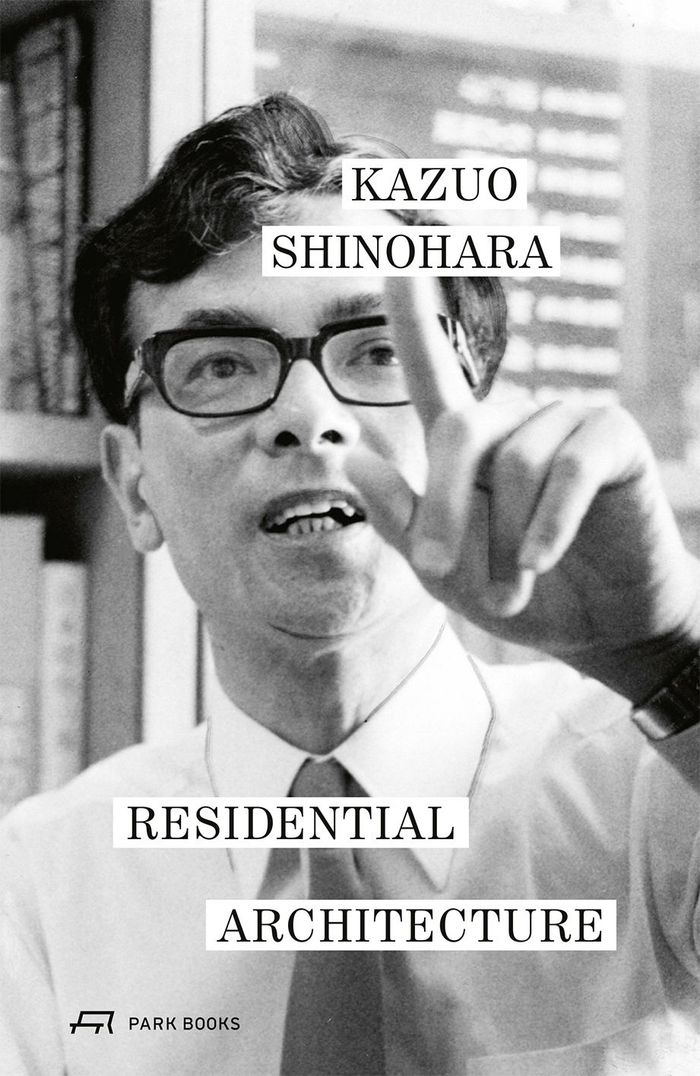
Kazuo Shinohara’s (1925–2006) book Residential Architecture is considered one of the most significant pieces of writing on Japanese architecture of the late twentieth century. First published in Japan in 1964 as Jutaku kenchiku, the book was mandatory reading for generations of students of architecture in Japan and has deeply influenced many of the best-known Japanese designers, such as Toyo Ito, Kazuyo Sejima, Ryue Nishizawa, and others. Translated by architectural historian David B. Stewart (1942–2025) and architects Shin-ichi Okuyama (born 1961) and Kenichi Nakamura (born 1958), Shinohara’s reflections on housing are available in English for the first time, making multifaceted insights into the fundamentals of his outstanding work accessible to a global audience. In the first of three chapters, Shinohara writes about traditional Japanese architecture, thus explaining the foundation of his theory and practice, followed by a description of his design method, which he further illustrates through the examples of his first seven designs for homes.
Residential architecture: Kazuo Shinohara
Actions:
Prix:
$65.00
(disponible sur commande)
Résumé:
Kazuo Shinohara’s (1925–2006) book Residential Architecture is considered one of the most significant pieces of writing on Japanese architecture of the late twentieth century. First published in Japan in 1964 as Jutaku kenchiku, the book was mandatory reading for generations of students of architecture in Japan and has deeply influenced many of the best-known Japanese designers, such as Toyo Ito, Kazuyo Sejima, Ryue Nishizawa, and others. Translated by architectural historian David B. Stewart (1942–2025) and architects Shin-ichi Okuyama (born 1961) and Kenichi Nakamura (born 1958), Shinohara’s reflections on housing are available in English for the first time, making multifaceted insights into the fundamentals of his outstanding work accessible to a global audience. In the first of three chapters, Shinohara writes about traditional Japanese architecture, thus explaining the foundation of his theory and practice, followed by a description of his design method, which he further illustrates through the examples of his first seven designs for homes.
Classification:
livres
livres
Publication:
mai 2026
mai 2026
Sujet:
Théorie de l’architecture
Théorie de l’architecture
Classification:
livres
livres
Actions:
Prix:
$30.00
(disponible sur commande)
Résumé:
"Geography of the gaze" offers a new history and theory of how the way we look at things influences what we see. Focusing on Western Europe from the seventeenth to the nineteenth century, Renzo Dibbini shows how developments in science, art, mapping, and visual epistemology affected the way natural and artificial landscapes were perceived and portrayed. He begins with(...)
$30.00
(disponible sur commande)
Résumé:
"Geography of the gaze" offers a new history and theory of how the way we look at things influences what we see. Focusing on Western Europe from the seventeenth to the nineteenth century, Renzo Dibbini shows how developments in science, art, mapping, and visual epistemology affected the way natural and artificial landscapes were perceived and portrayed. He begins with(...)
Sujet:
Théorie du paysage
Théorie du paysage
Publication:
avril 2002, Chicago
avril 2002, Chicago
Titre:
Geography of the gaze : urban and rural vision in early modern Europe
Actions:
Prix:
$30.00
(disponible sur commande)
Résumé:
"Geography of the gaze" offers a new history and theory of how the way we look at things influences what we see. Focusing on Western Europe from the seventeenth to the nineteenth century, Renzo Dibbini shows how developments in science, art, mapping, and visual epistemology affected the way natural and artificial landscapes were perceived and portrayed. He begins with the idea of the "view" explaining its role in the invention of landscape painting and in the definition of landscape as a cultural space. Among other topics, Dubbini explores how the descriptive and pictorial techniques used in mariners' charts, view-oriented atlases, military cartography, and garden design were linked to the proliferation of highly realistic paintings of landscapes and city scenes; how the "picturesque" system for defining and composing landscapes affected not just art but also archaeology and engineering; and how the ever-changing modern cityspaces inspired new ways of seeing and representing the urban scene in Impressionist painting, photography, and stereoscopy. Transladed by Lydia G. Cochrane.
Geography of the gaze : urban and rural vision in early modern Europe
Actions:
Prix:
$30.00
(disponible sur commande)
Résumé:
"Geography of the gaze" offers a new history and theory of how the way we look at things influences what we see. Focusing on Western Europe from the seventeenth to the nineteenth century, Renzo Dibbini shows how developments in science, art, mapping, and visual epistemology affected the way natural and artificial landscapes were perceived and portrayed. He begins with the idea of the "view" explaining its role in the invention of landscape painting and in the definition of landscape as a cultural space. Among other topics, Dubbini explores how the descriptive and pictorial techniques used in mariners' charts, view-oriented atlases, military cartography, and garden design were linked to the proliferation of highly realistic paintings of landscapes and city scenes; how the "picturesque" system for defining and composing landscapes affected not just art but also archaeology and engineering; and how the ever-changing modern cityspaces inspired new ways of seeing and representing the urban scene in Impressionist painting, photography, and stereoscopy. Transladed by Lydia G. Cochrane.
Classification:
livres
livres
Publication:
avril 2002, Chicago
avril 2002, Chicago
Sujet:
Théorie du paysage
Théorie du paysage
Classification:
livres
livres
Actions:
Prix:
$42.95
(disponible en magasin)
Résumé:
First published in 1996, "The eyes of the skin" is a classic of architectural theory. It asks the far-reaching question why, when there are five senses, is one single sense-- sight-- so predominant in architectural culture and design? With the ascendancy of the digital and the all-pervasive use of the image electronically, the subject is all the more pressing and topical(...)
$42.95
(disponible en magasin)
Résumé:
First published in 1996, "The eyes of the skin" is a classic of architectural theory. It asks the far-reaching question why, when there are five senses, is one single sense-- sight-- so predominant in architectural culture and design? With the ascendancy of the digital and the all-pervasive use of the image electronically, the subject is all the more pressing and topical(...)
Titre:
The eyes of the skin, 4th edition
Actions:
Prix:
$42.95
(disponible en magasin)
Résumé:
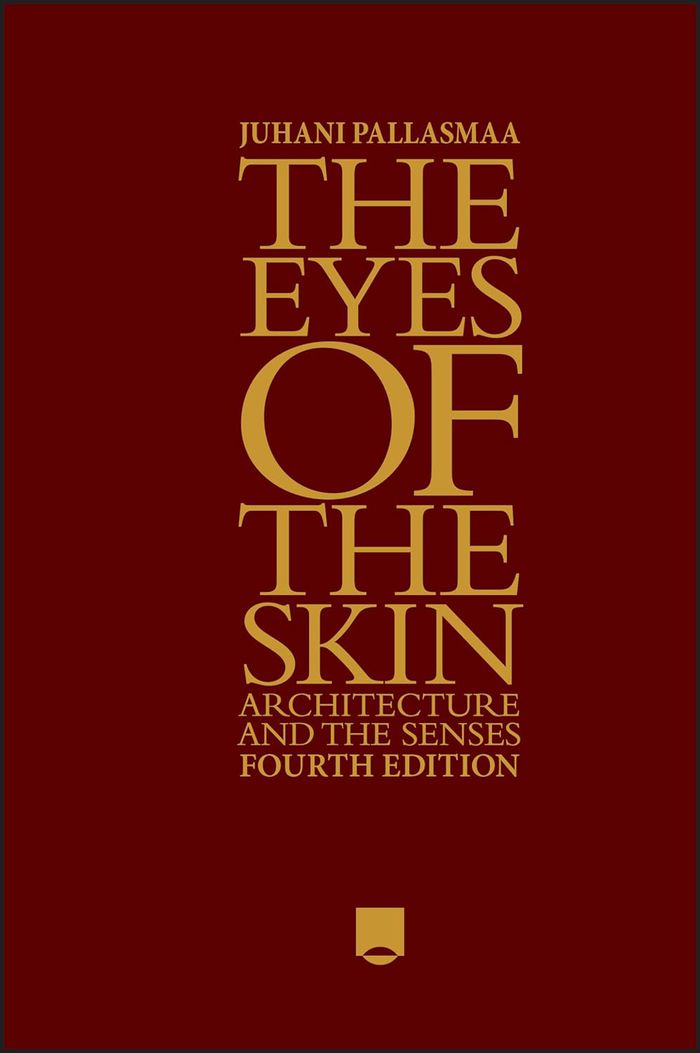
First published in 1996, "The eyes of the skin" is a classic of architectural theory. It asks the far-reaching question why, when there are five senses, is one single sense-- sight-- so predominant in architectural culture and design? With the ascendancy of the digital and the all-pervasive use of the image electronically, the subject is all the more pressing and topical since the first edition’s publication. Juhani Pallasmaa argues that the suppression of the other four sensory realms has led to the overall impoverishment of our built environment, often diminishing the emphasis on the spatial experience of a building and architecture’s ability to inspire, engage and be wholly life enhancing. For a student reading this text for the first time, "The eyes of the skin" is a revelation. It provides a fresh, compelling insight into architectural culture which continues to inspire more than a quarter-century after its initial publication.
The eyes of the skin, 4th edition
Actions:
Prix:
$42.95
(disponible en magasin)
Résumé:
First published in 1996, "The eyes of the skin" is a classic of architectural theory. It asks the far-reaching question why, when there are five senses, is one single sense-- sight-- so predominant in architectural culture and design? With the ascendancy of the digital and the all-pervasive use of the image electronically, the subject is all the more pressing and topical since the first edition’s publication. Juhani Pallasmaa argues that the suppression of the other four sensory realms has led to the overall impoverishment of our built environment, often diminishing the emphasis on the spatial experience of a building and architecture’s ability to inspire, engage and be wholly life enhancing. For a student reading this text for the first time, "The eyes of the skin" is a revelation. It provides a fresh, compelling insight into architectural culture which continues to inspire more than a quarter-century after its initial publication.
Classification:
livres
livres
Publication:
mars 2024
mars 2024
Sujet:
Théorie de l’architecture
Théorie de l’architecture
Classification:
livres
livres
Actions:
Prix:
$45.95
(disponible en magasin)
Résumé:
From "Magic and myth-work to care and repair" is a two-part book bringing together fourteen essays broadly concerned with the "fiction of the self" and with practices and explorations beyond that fiction. Each part of the book approaches this theme from a different angle. The first part, entitled "On magic and myth-work," deals with practices of transformation and with(...)
$45.95
(disponible en magasin)
Résumé:
From "Magic and myth-work to care and repair" is a two-part book bringing together fourteen essays broadly concerned with the "fiction of the self" and with practices and explorations beyond that fiction. Each part of the book approaches this theme from a different angle. The first part, entitled "On magic and myth-work," deals with practices of transformation and with(...)
Titre:
From magic and myth-work to care and repair
Actions:
Prix:
$45.95
(disponible en magasin)
Résumé:
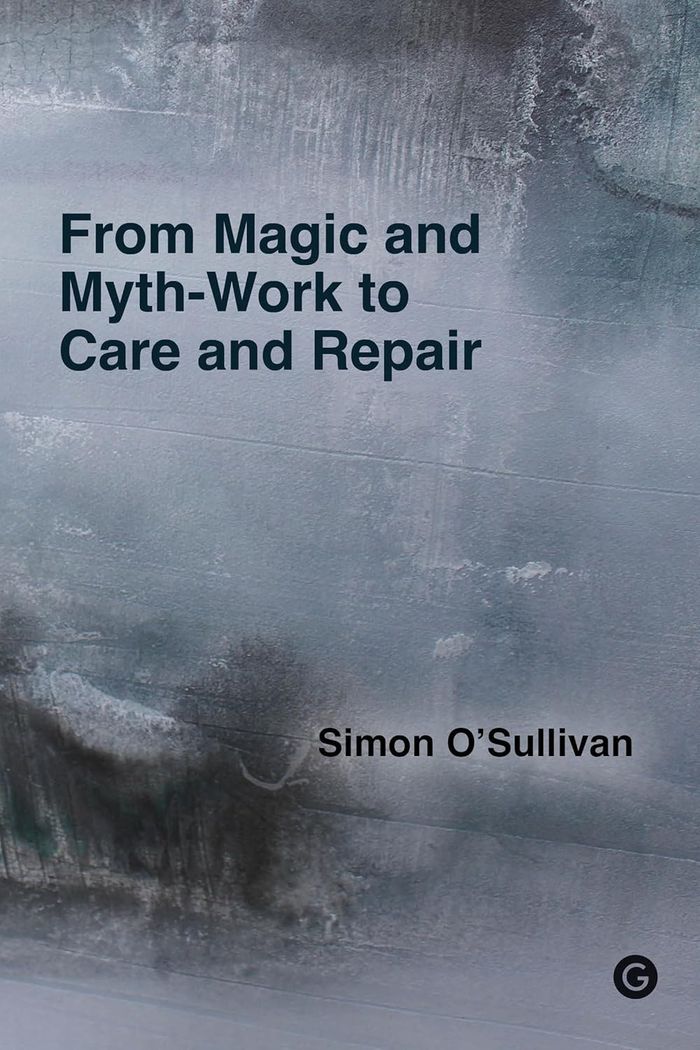
From "Magic and myth-work to care and repair" is a two-part book bringing together fourteen essays broadly concerned with the "fiction of the self" and with practices and explorations beyond that fiction. Each part of the book approaches this theme from a different angle. The first part, entitled "On magic and myth-work," deals with practices of transformation and with contemporary myth-making in relation to landscape, performance, and writing. The second part, “On Care and Repair,” gathers together essays that are more personal, but that also look to various technologies (or devices) of self-care alongside ideas of collaboration and the collective. Crucial throughout this exploration are questions of agency and self-narration, but also how these connect to larger issues around historical trauma, neoliberalism, and ecological crisis. The essays reference many other texts and fellow travellers, and also draw on the author's own experiences (and teaching) within various art and theory worlds, as well as with performance, magical practices, gaming, and Buddhism.
From magic and myth-work to care and repair
Actions:
Prix:
$45.95
(disponible en magasin)
Résumé:
From "Magic and myth-work to care and repair" is a two-part book bringing together fourteen essays broadly concerned with the "fiction of the self" and with practices and explorations beyond that fiction. Each part of the book approaches this theme from a different angle. The first part, entitled "On magic and myth-work," deals with practices of transformation and with contemporary myth-making in relation to landscape, performance, and writing. The second part, “On Care and Repair,” gathers together essays that are more personal, but that also look to various technologies (or devices) of self-care alongside ideas of collaboration and the collective. Crucial throughout this exploration are questions of agency and self-narration, but also how these connect to larger issues around historical trauma, neoliberalism, and ecological crisis. The essays reference many other texts and fellow travellers, and also draw on the author's own experiences (and teaching) within various art and theory worlds, as well as with performance, magical practices, gaming, and Buddhism.
Classification:
livres
livres
Publication:
septembre 2024
septembre 2024
Sujet:
Théorie de l’art
Théorie de l’art
Classification:
livres
livres
Titre:
CARTHA: Building identity
CARTHA: Building identity
Actions:
Prix:
$49.95
(disponible sur commande)
Résumé:
In their new book, the international CARTHA network engages with the question of forming identity in society and the role that architecture plays in this process. Inspired by Jacques Lacan’s approach from psychoanalysis, CARTHA’s members break down the identity-formation process into four sub-steps, which they explore in interviews: Maarten Delbeke, professor of history(...)
$49.95
(disponible sur commande)
Résumé:
In their new book, the international CARTHA network engages with the question of forming identity in society and the role that architecture plays in this process. Inspired by Jacques Lacan’s approach from psychoanalysis, CARTHA’s members break down the identity-formation process into four sub-steps, which they explore in interviews: Maarten Delbeke, professor of history(...)
Sujet:
Théorie de l’architecture
Théorie de l’architecture
Publication:
août 2024
août 2024
Titre:
CARTHA: Building identity
Actions:
Prix:
$49.95
(disponible sur commande)
Résumé:
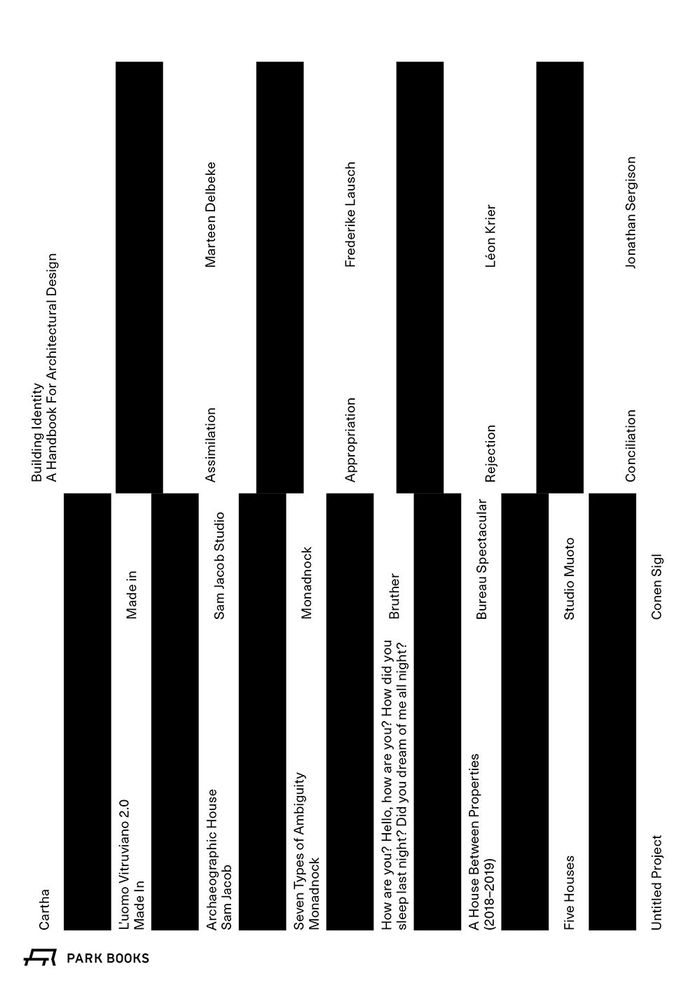
In their new book, the international CARTHA network engages with the question of forming identity in society and the role that architecture plays in this process. Inspired by Jacques Lacan’s approach from psychoanalysis, CARTHA’s members break down the identity-formation process into four sub-steps, which they explore in interviews: Maarten Delbeke, professor of history and theory of architecture at ETH Zurich, talks about ''Assimilation''; Frederike Lausch, researcher at TU Darmstadt’s Department of Architecture, about ''Appropriation''; Rob Krier, Berlin and Liguria-based architect and sculptor, about ''Denial'', and Jonathan Sergison, London-based architect, about ''Reconciliation''. These conversations make up the cornerstones for a new, experimental design methodology, which has been tested in practice by architecture firms Bruther (Bordeaux), Bureau Spectacular (Los Angeles), Conen Sigl (Zurich), Made In (Geneva / Zurich), Monadnock (Rotterdam), Studio Muoto (Paris), and Sam Jacob Studio (London). ''CARTHA—Building Identity'' features a variety of buildings—houses, cottages, apartments—designed in the context of these insights.
CARTHA: Building identity
Actions:
Prix:
$49.95
(disponible sur commande)
Résumé:
In their new book, the international CARTHA network engages with the question of forming identity in society and the role that architecture plays in this process. Inspired by Jacques Lacan’s approach from psychoanalysis, CARTHA’s members break down the identity-formation process into four sub-steps, which they explore in interviews: Maarten Delbeke, professor of history and theory of architecture at ETH Zurich, talks about ''Assimilation''; Frederike Lausch, researcher at TU Darmstadt’s Department of Architecture, about ''Appropriation''; Rob Krier, Berlin and Liguria-based architect and sculptor, about ''Denial'', and Jonathan Sergison, London-based architect, about ''Reconciliation''. These conversations make up the cornerstones for a new, experimental design methodology, which has been tested in practice by architecture firms Bruther (Bordeaux), Bureau Spectacular (Los Angeles), Conen Sigl (Zurich), Made In (Geneva / Zurich), Monadnock (Rotterdam), Studio Muoto (Paris), and Sam Jacob Studio (London). ''CARTHA—Building Identity'' features a variety of buildings—houses, cottages, apartments—designed in the context of these insights.
Classification:
livres
livres
Publication:
août 2024
août 2024
Sujet:
Théorie de l’architecture
Théorie de l’architecture
Classification:
livres
livres
Actions:
Prix:
$32.95
(disponible sur commande)
Résumé:
In "The surrounds" renowned urbanist AbdouMaliq Simone offers a new theorization of the interface of the urban and the political. Working at the intersection of Black studies, urban theory, and decolonial and Islamic thought, Simone centers the surrounds—those urban spaces beyond control and capture that exist as a locus of rebellion and invention. He shows that even in(...)
$32.95
(disponible sur commande)
Résumé:
In "The surrounds" renowned urbanist AbdouMaliq Simone offers a new theorization of the interface of the urban and the political. Working at the intersection of Black studies, urban theory, and decolonial and Islamic thought, Simone centers the surrounds—those urban spaces beyond control and capture that exist as a locus of rebellion and invention. He shows that even in(...)
Titre:
The surrounds: Urban life within and beyond capture
Actions:
Prix:
$32.95
(disponible sur commande)
Résumé:
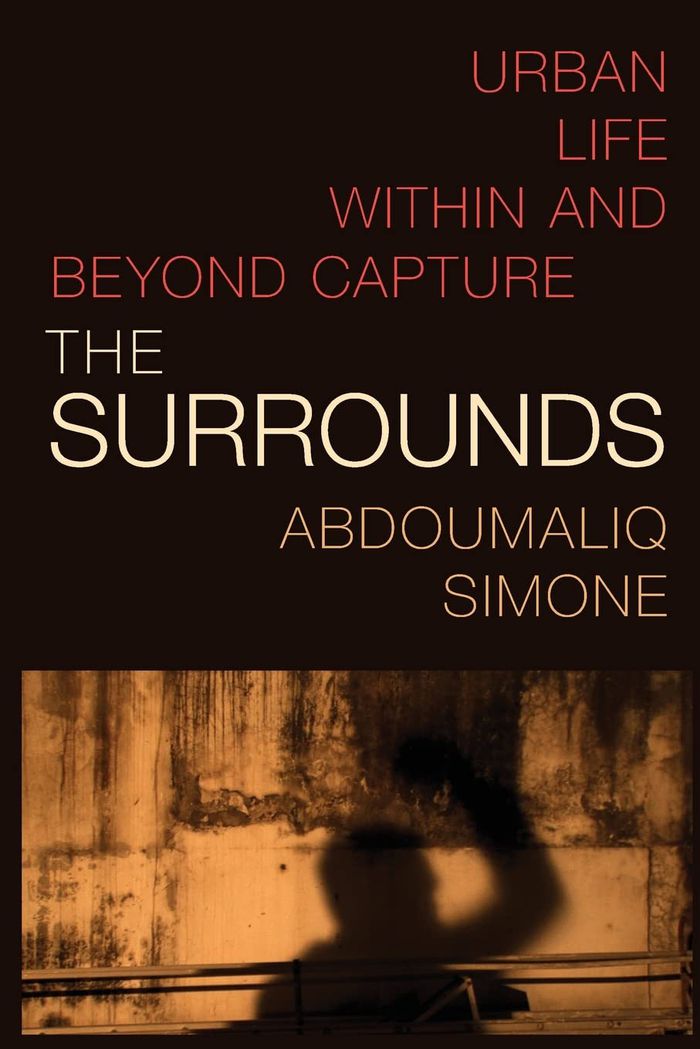
In "The surrounds" renowned urbanist AbdouMaliq Simone offers a new theorization of the interface of the urban and the political. Working at the intersection of Black studies, urban theory, and decolonial and Islamic thought, Simone centers the surrounds—those urban spaces beyond control and capture that exist as a locus of rebellion and invention. He shows that even in clearly defined city environments, whether industrial, carceral, administrative, or domestic, residents use spaces for purposes they were not designed for: schools become housing, markets turn into classrooms, tax offices transform into repair shops. The surrounds, Simone contends, are where nothing fits according to design. They are where forgotten and marginalized populations invent new relations and ways of living and being, continuously reshaping what individuals and collectives can do. Focusing less on what new worlds may come to be and more on what people are creating now, Simone shows how the surrounds are an integral part of the expansiveness of urban imagination.
The surrounds: Urban life within and beyond capture
Actions:
Prix:
$32.95
(disponible sur commande)
Résumé:
In "The surrounds" renowned urbanist AbdouMaliq Simone offers a new theorization of the interface of the urban and the political. Working at the intersection of Black studies, urban theory, and decolonial and Islamic thought, Simone centers the surrounds—those urban spaces beyond control and capture that exist as a locus of rebellion and invention. He shows that even in clearly defined city environments, whether industrial, carceral, administrative, or domestic, residents use spaces for purposes they were not designed for: schools become housing, markets turn into classrooms, tax offices transform into repair shops. The surrounds, Simone contends, are where nothing fits according to design. They are where forgotten and marginalized populations invent new relations and ways of living and being, continuously reshaping what individuals and collectives can do. Focusing less on what new worlds may come to be and more on what people are creating now, Simone shows how the surrounds are an integral part of the expansiveness of urban imagination.
Classification:
livres
livres
Publication:
juin 2022
juin 2022
Sujet:
Théorie de l’urbanisme
Théorie de l’urbanisme
Classification:
livres
livres
Actions:
Prix:
$33.95
(disponible sur commande)
Résumé:
For Bataille, "the absence of myth" had itself become the myth of the modern age. In a world that had "lost the secret of its cohesion," Bataille saw surrealism as both a symptom and the beginning of an attempt to address this loss. His writings on this theme are the result of profound reflection in the wake of World War Two. "The absence of myth" is the most incisive(...)
$33.95
(disponible sur commande)
Résumé:
For Bataille, "the absence of myth" had itself become the myth of the modern age. In a world that had "lost the secret of its cohesion," Bataille saw surrealism as both a symptom and the beginning of an attempt to address this loss. His writings on this theme are the result of profound reflection in the wake of World War Two. "The absence of myth" is the most incisive(...)
Titre:
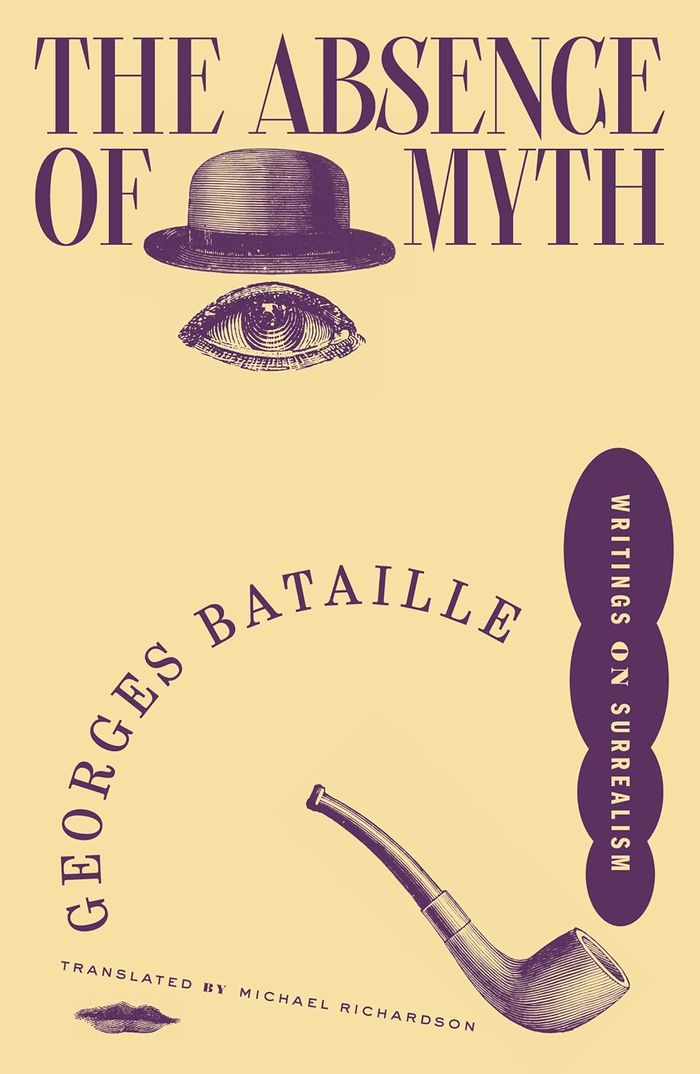
The absence of myth: Writings on surrealism
Actions:
Prix:
$33.95
(disponible sur commande)
Résumé:
For Bataille, "the absence of myth" had itself become the myth of the modern age. In a world that had "lost the secret of its cohesion," Bataille saw surrealism as both a symptom and the beginning of an attempt to address this loss. His writings on this theme are the result of profound reflection in the wake of World War Two. "The absence of myth" is the most incisive study yet made of surrealism, insisting on its importance as a cultural and social phenomenon with far-reaching consequences. Clarifying Bataille’s links with the surrealist movement, and throwing revealing light on his complex and greatly misunderstood relationship with Andre Breton, "The absence of myth" shows Bataille to be a much more radical figure than his postmodernist devotees would have us believe: a man who continually tried to extend Marxist social theory; a pessimistic thinker, but one as far removed from nihilism as can be.
The absence of myth: Writings on surrealism
Actions:
Prix:
$33.95
(disponible sur commande)
Résumé:
For Bataille, "the absence of myth" had itself become the myth of the modern age. In a world that had "lost the secret of its cohesion," Bataille saw surrealism as both a symptom and the beginning of an attempt to address this loss. His writings on this theme are the result of profound reflection in the wake of World War Two. "The absence of myth" is the most incisive study yet made of surrealism, insisting on its importance as a cultural and social phenomenon with far-reaching consequences. Clarifying Bataille’s links with the surrealist movement, and throwing revealing light on his complex and greatly misunderstood relationship with Andre Breton, "The absence of myth" shows Bataille to be a much more radical figure than his postmodernist devotees would have us believe: a man who continually tried to extend Marxist social theory; a pessimistic thinker, but one as far removed from nihilism as can be.
Classification:
livres
livres
Publication:
novembre 2024
novembre 2024
Sujet:
Théorie de l’art
Théorie de l’art


