


5813 Résultats
Classification:
livres
livres
Actions:
Prix:
$23.95
(disponible sur commande)
Résumé:
More than ever, architectural design is seen as a means to promote commercial goals rather than as an end in itself. Frank Gehry’s Guggenheim Museum in Bilbao, for example, simply cannot be considered apart from its intended role as a catalyst for the economic revitalization of Bilbao and its ability to attract tourist dollars, regardless of its architectural merits. A(...)
$23.95
(disponible sur commande)
Résumé:
More than ever, architectural design is seen as a means to promote commercial goals rather than as an end in itself. Frank Gehry’s Guggenheim Museum in Bilbao, for example, simply cannot be considered apart from its intended role as a catalyst for the economic revitalization of Bilbao and its ability to attract tourist dollars, regardless of its architectural merits. A(...)
Sujet:
Théorie de l’architecture
Théorie de l’architecture
Publication:
novembre 2005, Minneapolis, London
novembre 2005, Minneapolis, London
Titre:
Commodification and spectacle in architecture
Actions:
Prix:
$23.95
(disponible sur commande)
Résumé:
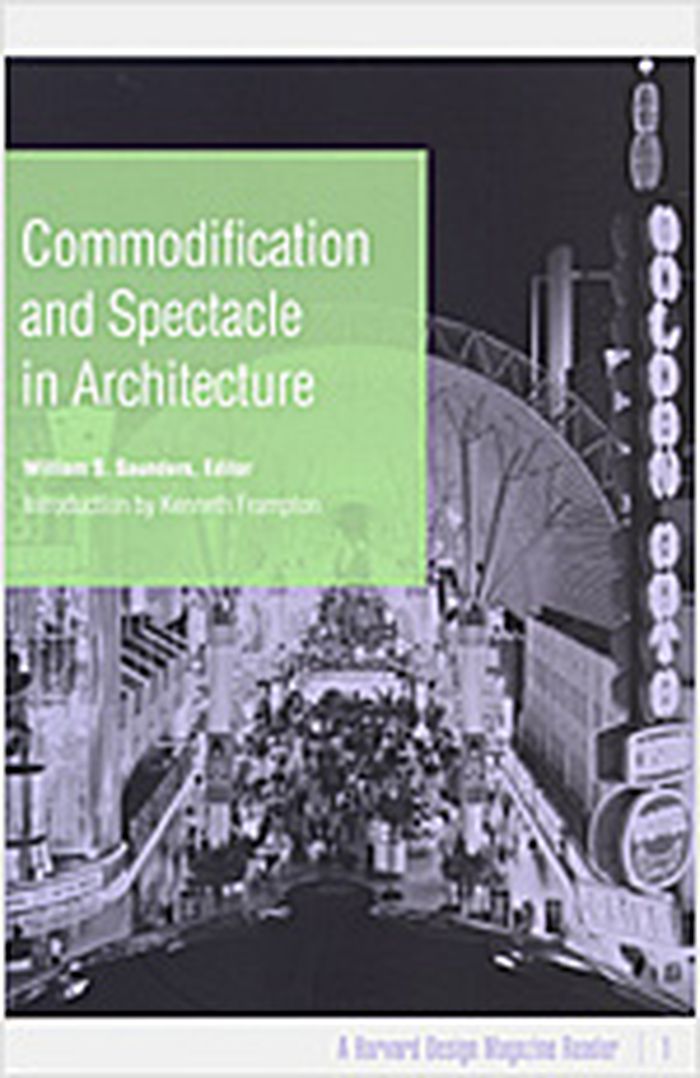
More than ever, architectural design is seen as a means to promote commercial goals rather than as an end in itself. Frank Gehry’s Guggenheim Museum in Bilbao, for example, simply cannot be considered apart from its intended role as a catalyst for the economic revitalization of Bilbao and its ability to attract tourist dollars, regardless of its architectural merits. A built environment intended to seduce consumers is more likely to offer instant gratification than to invite independent thought and reflection. But how harmful, if at all, is this unprecedented commercialization of architecture? Framed with an introduction by Kenneth Frampton, the contributions to "Commodification and spectacle in architecture" stake out a variety of positions in the debate over the extent to which it is possible—or desirable—to escape from, resist, or suggest plausible alternatives to the dominant culture of consumer capitalism. Rejecting any dreamy nostalgia for an idealized present or past in which design is completely divorced from commerce—and, in some cases, celebrating the pleasures of spectacle—the individual essays range from indictments of particular architects and critiques of the profession to broader concerns about what the phenomenon of commodification means for the practice of democracy and the health of society. Bringing together an impressive and varied group of critics and practitioners, "Commodification and spectacle in architecture" will help to sharpen the discussion of how design can respond to our hypercommodified culture.
Commodification and spectacle in architecture
Actions:
Prix:
$23.95
(disponible sur commande)
Résumé:
More than ever, architectural design is seen as a means to promote commercial goals rather than as an end in itself. Frank Gehry’s Guggenheim Museum in Bilbao, for example, simply cannot be considered apart from its intended role as a catalyst for the economic revitalization of Bilbao and its ability to attract tourist dollars, regardless of its architectural merits. A built environment intended to seduce consumers is more likely to offer instant gratification than to invite independent thought and reflection. But how harmful, if at all, is this unprecedented commercialization of architecture? Framed with an introduction by Kenneth Frampton, the contributions to "Commodification and spectacle in architecture" stake out a variety of positions in the debate over the extent to which it is possible—or desirable—to escape from, resist, or suggest plausible alternatives to the dominant culture of consumer capitalism. Rejecting any dreamy nostalgia for an idealized present or past in which design is completely divorced from commerce—and, in some cases, celebrating the pleasures of spectacle—the individual essays range from indictments of particular architects and critiques of the profession to broader concerns about what the phenomenon of commodification means for the practice of democracy and the health of society. Bringing together an impressive and varied group of critics and practitioners, "Commodification and spectacle in architecture" will help to sharpen the discussion of how design can respond to our hypercommodified culture.
Classification:
livres
livres
Publication:
novembre 2005, Minneapolis, London
novembre 2005, Minneapolis, London
Sujet:
Théorie de l’architecture
Théorie de l’architecture
Classification:
livres
livres
Actions:
Prix:
$67.50
(disponible sur commande)
Résumé:
Owning a home is the pinnacle of the American Dream, the ultimate status symbol of the middle class. But is the dream in crisis? As the suburban single-family home has been endlessly multiplied and mass-marketed, it has become entwined with environmental catastrophe and economic crisis. Never before have we been so badly in need of a reconsideration of our cultural values(...)
$67.50
(disponible sur commande)
Résumé:
Owning a home is the pinnacle of the American Dream, the ultimate status symbol of the middle class. But is the dream in crisis? As the suburban single-family home has been endlessly multiplied and mass-marketed, it has become entwined with environmental catastrophe and economic crisis. Never before have we been so badly in need of a reconsideration of our cultural values(...)
Titre:
Atlas of another America: an architectural fiction
Actions:
Prix:
$67.50
(disponible sur commande)
Résumé:
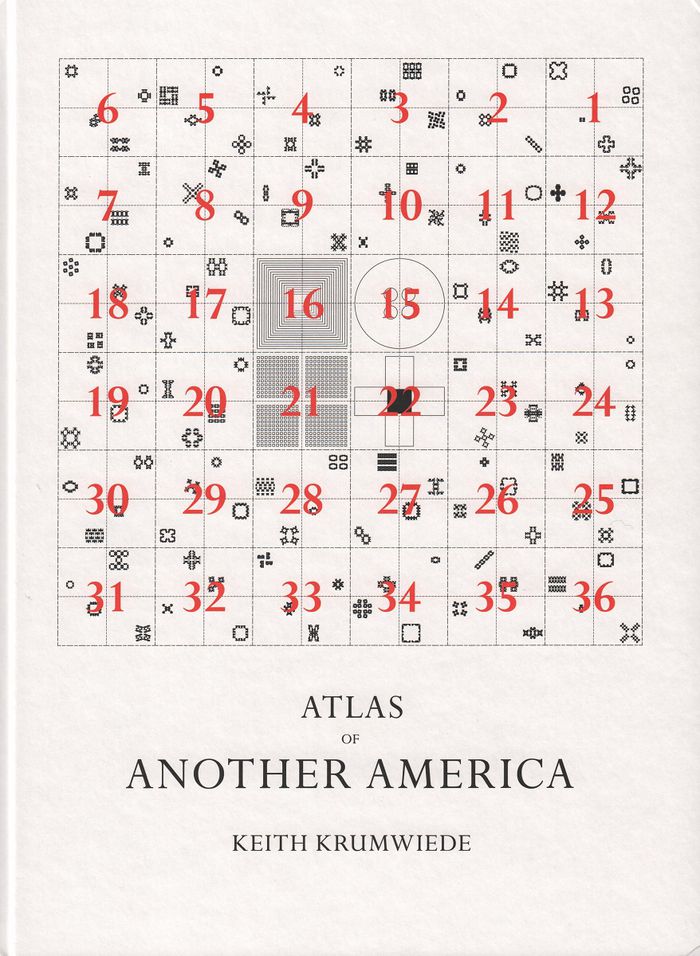
Owning a home is the pinnacle of the American Dream, the ultimate status symbol of the middle class. But is the dream in crisis? As the suburban single-family home has been endlessly multiplied and mass-marketed, it has become entwined with environmental catastrophe and economic crisis. Never before have we been so badly in need of a reconsideration of our cultural values and consumption from an architectural perspective. With "An atlas of another America!, Keith Krumwiede has written a bold and highly original work of speculative architectural fiction that calls on Americans—and, increasingly, the rest of the world—to seriously reconsider the concept of the single-family home. Krumwiede’s “Freedomland” is a fictional utopia of communal superhomes constructed from the remains of the suburban metropolis. Eschewing formal innovation for its own sake, Freedomland’s radical architects rely on artful appropriation and the reorganization of found forms. Krumwiede produces the complete plans for Freedomland in the style of a historical architectural treatise, supplemented with more than two hundred plans and drawings and five essays that draw on a long lineage of architectural thought—from Piranesi to Ledoux, Branzi, and Koolhaas. Among the essays, “Atypical Plans” is a redaction of Koolhaas’s landmark text “Typical Plan,” “Supermodel Homes” looks at the mad genius of developer David Weekley,” and “New Homes for America” is a short story in which a young architect produces new forms of communal living.
Atlas of another America: an architectural fiction
Actions:
Prix:
$67.50
(disponible sur commande)
Résumé:
Owning a home is the pinnacle of the American Dream, the ultimate status symbol of the middle class. But is the dream in crisis? As the suburban single-family home has been endlessly multiplied and mass-marketed, it has become entwined with environmental catastrophe and economic crisis. Never before have we been so badly in need of a reconsideration of our cultural values and consumption from an architectural perspective. With "An atlas of another America!, Keith Krumwiede has written a bold and highly original work of speculative architectural fiction that calls on Americans—and, increasingly, the rest of the world—to seriously reconsider the concept of the single-family home. Krumwiede’s “Freedomland” is a fictional utopia of communal superhomes constructed from the remains of the suburban metropolis. Eschewing formal innovation for its own sake, Freedomland’s radical architects rely on artful appropriation and the reorganization of found forms. Krumwiede produces the complete plans for Freedomland in the style of a historical architectural treatise, supplemented with more than two hundred plans and drawings and five essays that draw on a long lineage of architectural thought—from Piranesi to Ledoux, Branzi, and Koolhaas. Among the essays, “Atypical Plans” is a redaction of Koolhaas’s landmark text “Typical Plan,” “Supermodel Homes” looks at the mad genius of developer David Weekley,” and “New Homes for America” is a short story in which a young architect produces new forms of communal living.
Classification:
livres
livres
Publication:
février 2017
février 2017
Sujet:
Banlieues
Banlieues
Classification:
livres
livres
Prix:
$39.95
(disponible sur commande)
Résumé:
"Borderwall as architecture" is an artistic and intellectual hand grenade of a book, and a timely re-examination of what the physical barrier that divides the United States of America from the United Mexican States is and could be. It is both a protest against the wall and a projection about its future. Through a series of propositions suggesting that the nearly seven(...)
$39.95
(disponible sur commande)
Résumé:
"Borderwall as architecture" is an artistic and intellectual hand grenade of a book, and a timely re-examination of what the physical barrier that divides the United States of America from the United Mexican States is and could be. It is both a protest against the wall and a projection about its future. Through a series of propositions suggesting that the nearly seven(...)
Titre:
Borderwall as architecture: a manifesto for the US-Mexico boundary
Actions:
Prix:
$39.95
(disponible sur commande)
Résumé:
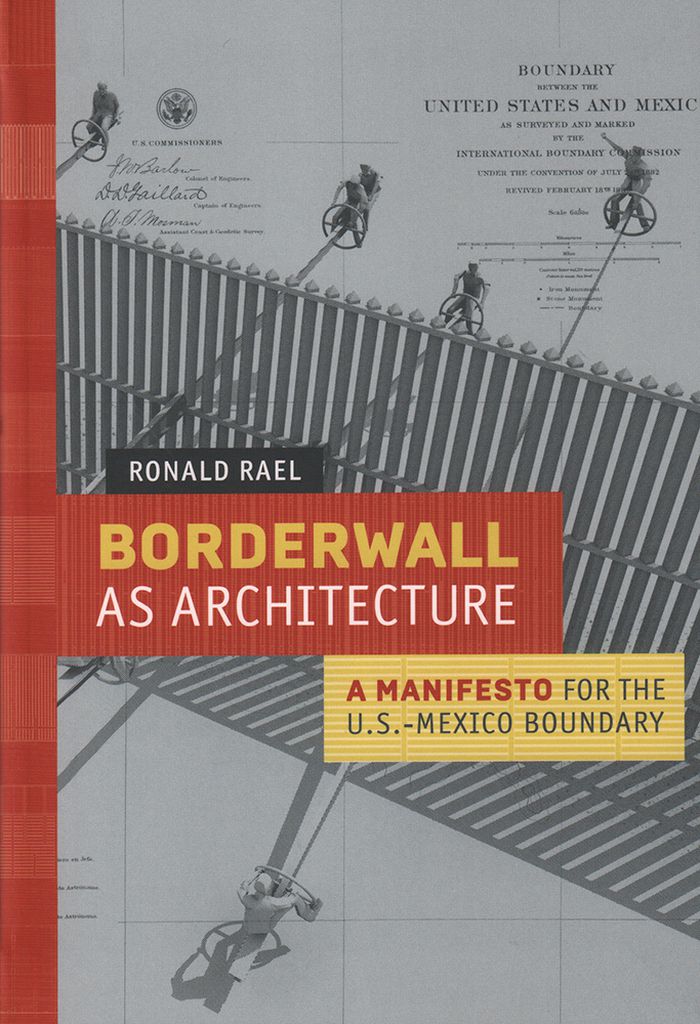
"Borderwall as architecture" is an artistic and intellectual hand grenade of a book, and a timely re-examination of what the physical barrier that divides the United States of America from the United Mexican States is and could be. It is both a protest against the wall and a projection about its future. Through a series of propositions suggesting that the nearly seven hundred miles of wall is an opportunity for economic and social development along the border that encourages its conceptual and physical dismantling, the book takes readers on a journey along a wall that cuts through a “third nation”—the Divided States of America. On the way the transformative effects of the wall on people, animals, and the natural and built landscape are exposed and interrogated through the story of people who, on both sides of the border, transform the wall, challenging its existence in remarkably creative ways. Coupled with these real-life accounts are counterproposals for the wall, created by Rael’s studio, that reimagine, hyperbolize, or question the wall and its construction, cost, performance, and meaning. Rael proposes that despite the intended use of the wall, which is to keep people out and away, the wall is instead an attractor, engaging both sides in a common dialogue. Included is a collection of reflections on the wall and its consequences by leading experts Michael Dear, Norma Iglesias-Prieto, Marcello Di Cintio, and Teddy Cruz.
Borderwall as architecture: a manifesto for the US-Mexico boundary
Actions:
Prix:
$39.95
(disponible sur commande)
Résumé:
"Borderwall as architecture" is an artistic and intellectual hand grenade of a book, and a timely re-examination of what the physical barrier that divides the United States of America from the United Mexican States is and could be. It is both a protest against the wall and a projection about its future. Through a series of propositions suggesting that the nearly seven hundred miles of wall is an opportunity for economic and social development along the border that encourages its conceptual and physical dismantling, the book takes readers on a journey along a wall that cuts through a “third nation”—the Divided States of America. On the way the transformative effects of the wall on people, animals, and the natural and built landscape are exposed and interrogated through the story of people who, on both sides of the border, transform the wall, challenging its existence in remarkably creative ways. Coupled with these real-life accounts are counterproposals for the wall, created by Rael’s studio, that reimagine, hyperbolize, or question the wall and its construction, cost, performance, and meaning. Rael proposes that despite the intended use of the wall, which is to keep people out and away, the wall is instead an attractor, engaging both sides in a common dialogue. Included is a collection of reflections on the wall and its consequences by leading experts Michael Dear, Norma Iglesias-Prieto, Marcello Di Cintio, and Teddy Cruz.
Classification:
livres
livres
Publication:
mai 2017
mai 2017
Sujet:
Théorie de l’architecture
Théorie de l’architecture
Classification:
livres
livres
Actions:
Prix:
$56.95
(disponible sur commande)
Résumé:
In Outlaw Territories, Felicity Scott traces the relation of architecture and urbanism to human unsettlement and territorial insecurity during the 1960s and 1970s. Investigating a set of responses to the growing urban unrest in the developed and developing worlds, Scott revisits an era when the discipline of architecture staked out a role in global environmental(...)
$56.95
(disponible sur commande)
Résumé:
In Outlaw Territories, Felicity Scott traces the relation of architecture and urbanism to human unsettlement and territorial insecurity during the 1960s and 1970s. Investigating a set of responses to the growing urban unrest in the developed and developing worlds, Scott revisits an era when the discipline of architecture staked out a role in global environmental(...)
Titre:
Outlaw Territories: Environments of Insecurity/ Architectures of Counterinsurgency
Actions:
Prix:
$56.95
(disponible sur commande)
Résumé:
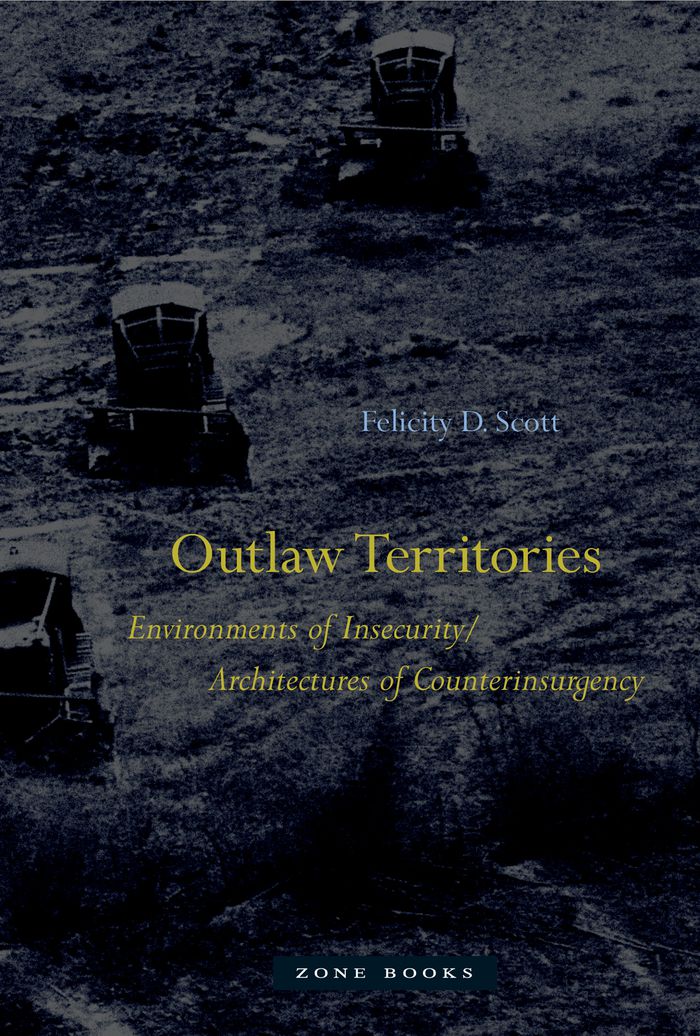
In Outlaw Territories, Felicity Scott traces the relation of architecture and urbanism to human unsettlement and territorial insecurity during the 1960s and 1970s. Investigating a set of responses to the growing urban unrest in the developed and developing worlds, Scott revisits an era when the discipline of architecture staked out a role in global environmental governance and the biopolitical management of populations. She describes architecture’s response to the displacement of persons brought on by migration, urbanization, environmental catastrophe, and warfare, and she traces architecture’s relationship to the material, environmental, psychological, and geopolitical transformations brought on by postindustrial technologies and neoliberal capitalism after World War II. At the height of the U.S.-led war in Vietnam and Cambodia, with ongoing decolonization struggles in many parts of the world, architecture not only emerged as a target of political agitation because of its inherent normativity but also became heavily enmeshed with military, legal, and humanitarian apparatuses, participating in scientific and technological research dedicated to questions of international management and security. Once architecture became aligned with a global matrix of forces concerned with the environment, economic development, migration, genocide, and war, its role shifted at times toward providing strategic expertise for institutions born of neoliberal capitalism. Scott investigates this nexus and questions how and to what ends architecture and the environment came to be intimately connected to the expanded exercise of power within the shifting geopolitical frameworks at this time.
Outlaw Territories: Environments of Insecurity/ Architectures of Counterinsurgency
Actions:
Prix:
$56.95
(disponible sur commande)
Résumé:
In Outlaw Territories, Felicity Scott traces the relation of architecture and urbanism to human unsettlement and territorial insecurity during the 1960s and 1970s. Investigating a set of responses to the growing urban unrest in the developed and developing worlds, Scott revisits an era when the discipline of architecture staked out a role in global environmental governance and the biopolitical management of populations. She describes architecture’s response to the displacement of persons brought on by migration, urbanization, environmental catastrophe, and warfare, and she traces architecture’s relationship to the material, environmental, psychological, and geopolitical transformations brought on by postindustrial technologies and neoliberal capitalism after World War II. At the height of the U.S.-led war in Vietnam and Cambodia, with ongoing decolonization struggles in many parts of the world, architecture not only emerged as a target of political agitation because of its inherent normativity but also became heavily enmeshed with military, legal, and humanitarian apparatuses, participating in scientific and technological research dedicated to questions of international management and security. Once architecture became aligned with a global matrix of forces concerned with the environment, economic development, migration, genocide, and war, its role shifted at times toward providing strategic expertise for institutions born of neoliberal capitalism. Scott investigates this nexus and questions how and to what ends architecture and the environment came to be intimately connected to the expanded exercise of power within the shifting geopolitical frameworks at this time.
Classification:
livres
livres
Publication:
février 2016
février 2016
Sujet:
Théorie de l’architecture
Théorie de l’architecture
Classification:
livres
livres
Actions:
Prix:
$46.95
(disponible sur commande)
Résumé:
Hans Haacke’s art articulates the interdependence of multiple elements. An artwork is not merely an object but is also its context—the economic, social, and political conditions of the art world and the world at large. Among his best-known works are MoMA-Poll (1970), which polled museumgoers on their opinions about Nelson Rockefeller and the Nixon administration’s(...)
$46.95
(disponible sur commande)
Résumé:
Hans Haacke’s art articulates the interdependence of multiple elements. An artwork is not merely an object but is also its context—the economic, social, and political conditions of the art world and the world at large. Among his best-known works are MoMA-Poll (1970), which polled museumgoers on their opinions about Nelson Rockefeller and the Nixon administration’s(...)
Titre:
Working conditions: the writings of Hans Haacke
Actions:
Prix:
$46.95
(disponible sur commande)
Résumé:
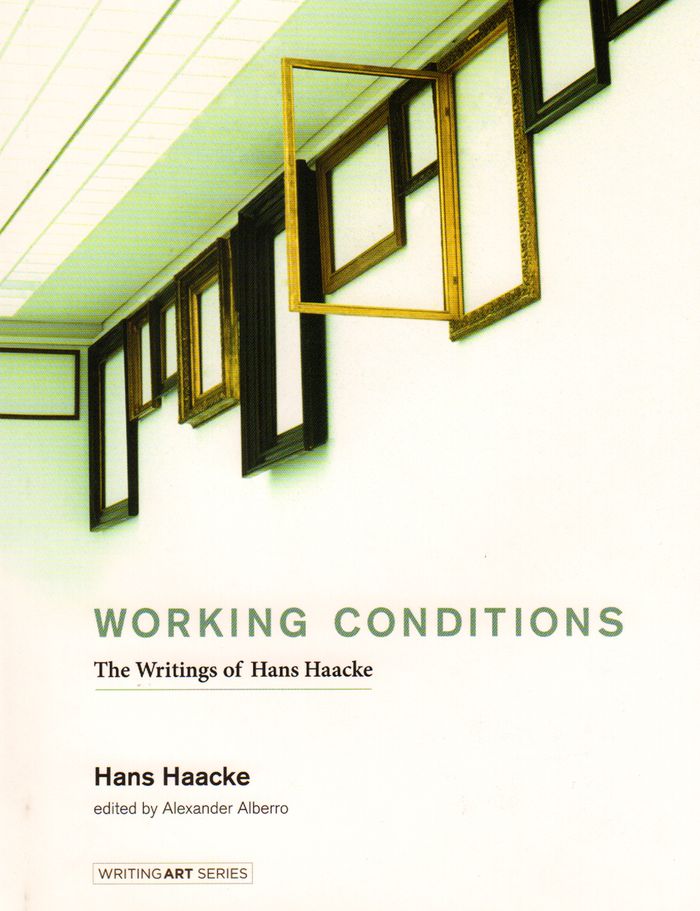
Hans Haacke’s art articulates the interdependence of multiple elements. An artwork is not merely an object but is also its context—the economic, social, and political conditions of the art world and the world at large. Among his best-known works are MoMA-Poll (1970), which polled museumgoers on their opinions about Nelson Rockefeller and the Nixon administration’s Indochina policy; Gallery-Goers’ Birthplace and Residence Profile (1969), which canvassed visitors to the Howard Wise Gallery in Manhattan; and the famously canceled 1971 solo exhibition at the Guggenheim Museum, which was meant to display, among other things, works on two New York real estate empires. This volume collects writings by Haacke that explain and document his practice. The texts, some of which have never before been published, run from straightforward descriptions to wide-ranging reflections and full-throated polemics. They include correspondence with MoMA and the Guggenheim and a letter refusing to represent the United States at the 1969 São Paulo Biennial; the title piece, “Working Conditions,” which discusses corporate influence on the art world; Haacke’s thinking about “real-time social systems”; and texts written for museum catalogs on various artworks, including GERMANIA, in the German Pavilion of the 1993 Venice Biennial; DER BEVÖLKERUNG (To the Population) of 2000 at the Berlin Reichstag; Mixed Messages, an exhibition of objects from the Victoria and Albert Museum (2001); and Gift Horse, unveiled on the fourth plinth in Trafalgar Square in 2015.
Working conditions: the writings of Hans Haacke
Actions:
Prix:
$46.95
(disponible sur commande)
Résumé:
Hans Haacke’s art articulates the interdependence of multiple elements. An artwork is not merely an object but is also its context—the economic, social, and political conditions of the art world and the world at large. Among his best-known works are MoMA-Poll (1970), which polled museumgoers on their opinions about Nelson Rockefeller and the Nixon administration’s Indochina policy; Gallery-Goers’ Birthplace and Residence Profile (1969), which canvassed visitors to the Howard Wise Gallery in Manhattan; and the famously canceled 1971 solo exhibition at the Guggenheim Museum, which was meant to display, among other things, works on two New York real estate empires. This volume collects writings by Haacke that explain and document his practice. The texts, some of which have never before been published, run from straightforward descriptions to wide-ranging reflections and full-throated polemics. They include correspondence with MoMA and the Guggenheim and a letter refusing to represent the United States at the 1969 São Paulo Biennial; the title piece, “Working Conditions,” which discusses corporate influence on the art world; Haacke’s thinking about “real-time social systems”; and texts written for museum catalogs on various artworks, including GERMANIA, in the German Pavilion of the 1993 Venice Biennial; DER BEVÖLKERUNG (To the Population) of 2000 at the Berlin Reichstag; Mixed Messages, an exhibition of objects from the Victoria and Albert Museum (2001); and Gift Horse, unveiled on the fourth plinth in Trafalgar Square in 2015.
Classification:
livres
livres
Publication:
octobre 2016
octobre 2016
Sujet:
Théorie de l’art
Théorie de l’art
Classification:
livres
livres
Titre:
Capital and language
Capital and language
Actions:
Prix:
$14.95
(disponible sur commande)
Résumé:
The Swiss-Italian economist Christian Marazzi is one of the core theorists of the Italian postfordist movement, along with Antonio Negri, Paolo Virno, and Bifo (Franco Berardi). But although his work is often cited by scholars (particularly by those in the field of "Cognitive Capitalism"), his writing has never appeared in English. This translation of his most recent(...)
$14.95
(disponible sur commande)
Résumé:
The Swiss-Italian economist Christian Marazzi is one of the core theorists of the Italian postfordist movement, along with Antonio Negri, Paolo Virno, and Bifo (Franco Berardi). But although his work is often cited by scholars (particularly by those in the field of "Cognitive Capitalism"), his writing has never appeared in English. This translation of his most recent(...)
Titre:
Capital and language
Actions:
Prix:
$14.95
(disponible sur commande)
Résumé:
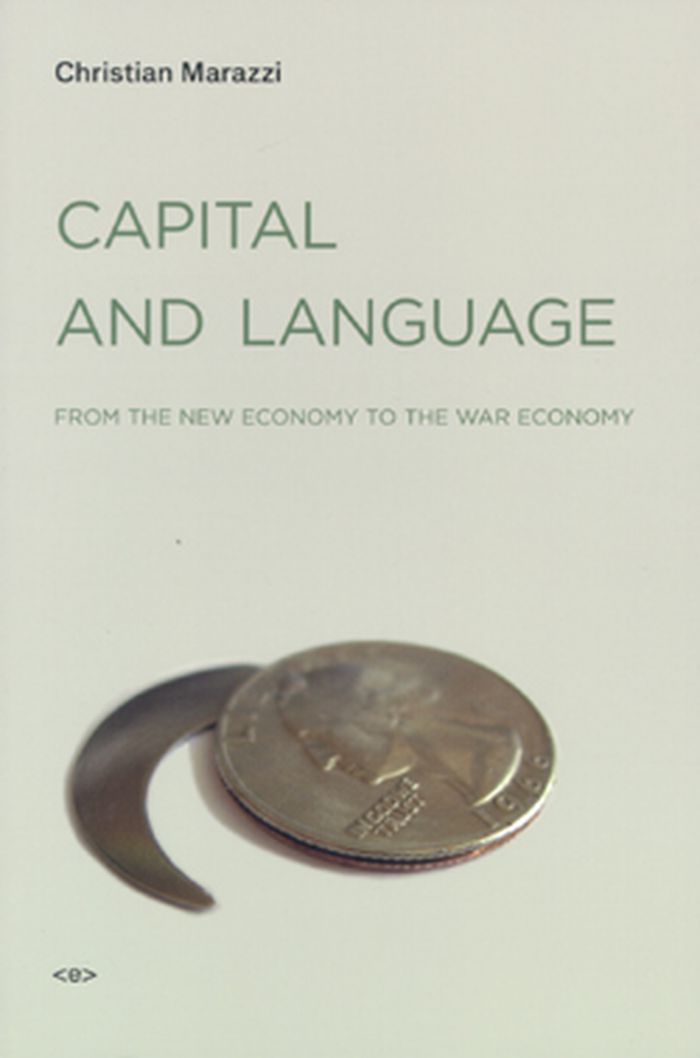
The Swiss-Italian economist Christian Marazzi is one of the core theorists of the Italian postfordist movement, along with Antonio Negri, Paolo Virno, and Bifo (Franco Berardi). But although his work is often cited by scholars (particularly by those in the field of "Cognitive Capitalism"), his writing has never appeared in English. This translation of his most recent work, Capital and Language (published in Italian in 2002), finally makes Marazzi's work available to an English-speaking audience. Capital and Language takes as its starting point the fact that the extreme volatility of financial markets is generally attributed to the discrepancy between the "real economy" (that of material goods produced and sold) and the more speculative monetary-financial economy. But this distinction has long ceased to apply in the postfordist New Economy, in which both spheres are structurally affected by language and communication. In Capital and Language Marazzi argues that the changes in financial markets and the transformation of labor into immaterial labor (that is, its reliance on abstract knowledge, general intellect, and social cooperation) are just two sides of the same coin. Capital and Language focuses on the causes behind the international economic and financial depression of 2001, and on the primary instrument that the U.S. government has since been using to face them: war. Marazzi points to capitalism’s fourth stage (after mercantilism, industrialism, and the postfordist culmination of the New Economy): the "War Economy" that is already upon us.
Capital and language
Actions:
Prix:
$14.95
(disponible sur commande)
Résumé:
The Swiss-Italian economist Christian Marazzi is one of the core theorists of the Italian postfordist movement, along with Antonio Negri, Paolo Virno, and Bifo (Franco Berardi). But although his work is often cited by scholars (particularly by those in the field of "Cognitive Capitalism"), his writing has never appeared in English. This translation of his most recent work, Capital and Language (published in Italian in 2002), finally makes Marazzi's work available to an English-speaking audience. Capital and Language takes as its starting point the fact that the extreme volatility of financial markets is generally attributed to the discrepancy between the "real economy" (that of material goods produced and sold) and the more speculative monetary-financial economy. But this distinction has long ceased to apply in the postfordist New Economy, in which both spheres are structurally affected by language and communication. In Capital and Language Marazzi argues that the changes in financial markets and the transformation of labor into immaterial labor (that is, its reliance on abstract knowledge, general intellect, and social cooperation) are just two sides of the same coin. Capital and Language focuses on the causes behind the international economic and financial depression of 2001, and on the primary instrument that the U.S. government has since been using to face them: war. Marazzi points to capitalism’s fourth stage (after mercantilism, industrialism, and the postfordist culmination of the New Economy): the "War Economy" that is already upon us.
Classification:
livres
livres
Publication:
septembre 2008, Los Angeles
septembre 2008, Los Angeles
Sujet:
Théorie/ philosophie
Théorie/ philosophie
Classification:
livres
livres
Prix:
$20.95
(disponible sur commande)
Résumé:
In 1950, only 30 percent of the world's population lived in cities. By 2007, the planet's population has doubled, and today, as many people live in cities as populated the entire planet in 1950. Eighty percent of the planet's greenhouse gases are created by these energy-intensive urban centers. Thus, the key to creating climate change solutions resides with cities.(...)
$20.95
(disponible sur commande)
Résumé:
In 1950, only 30 percent of the world's population lived in cities. By 2007, the planet's population has doubled, and today, as many people live in cities as populated the entire planet in 1950. Eighty percent of the planet's greenhouse gases are created by these energy-intensive urban centers. Thus, the key to creating climate change solutions resides with cities.(...)
Titre:
Urban meltdown: cities, climate change and politics as usual
Actions:
Prix:
$20.95
(disponible sur commande)
Résumé:
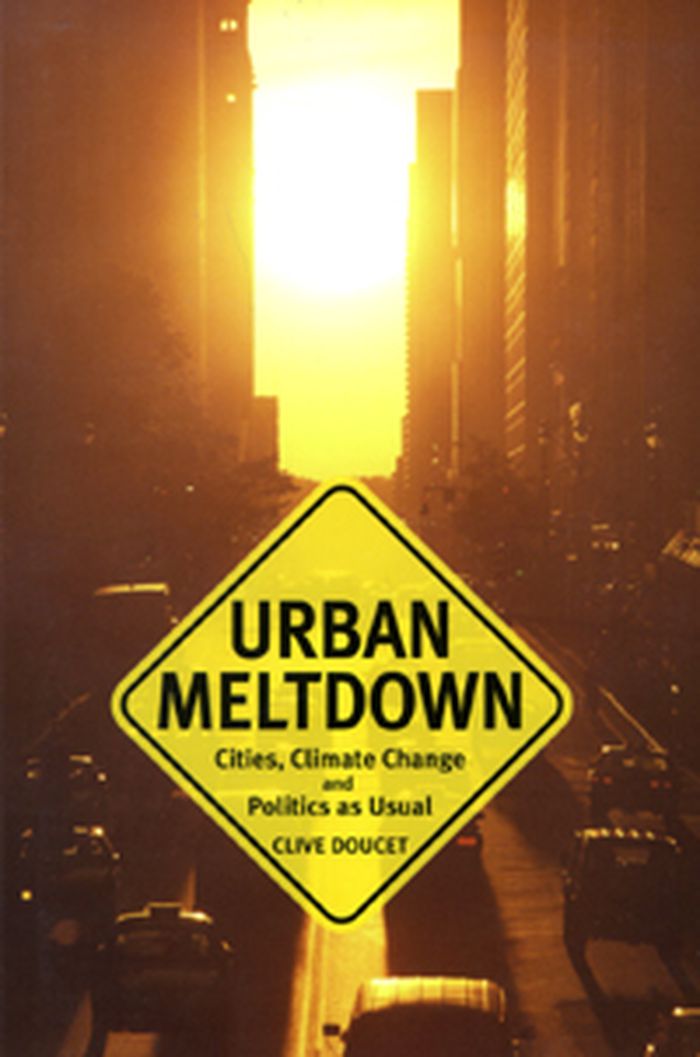
In 1950, only 30 percent of the world's population lived in cities. By 2007, the planet's population has doubled, and today, as many people live in cities as populated the entire planet in 1950. Eighty percent of the planet's greenhouse gases are created by these energy-intensive urban centers. Thus, the key to creating climate change solutions resides with cities. Author and Ottawa city councilor Clive Doucet provides a razor-sharp insider's perspective, stating his central theme: "It's not about planning. It's about politics." Climate change is proceeding so quickly not for lack of knowledge, but because politicians who deviate from the car-based sprawl model cannot get elected. Urban Meltdown describes how we got here, why we got here, and what can be done about it, as evidenced by the author's observations that: Economic growth has no built-in environmental accountability. Until the political thinking about growth and the progress model itself is changed, our environmental concerns will never be properly addressed. We need a new governance paradigm at all three levels. The cautionary tale of how the 1960s tried to take us down a different route failed, not for lack of leadership but because the system didn't permit it. Urban Meltdown reveals, castigates, and inspires. This is an important book for anyone who cares about thinking differently, acting differently, and making a difference. Clive Doucet is an urban activist, well-known journalist, best-selling author, and the first poet ever elected to Ottawa City Council.
Urban meltdown: cities, climate change and politics as usual
Actions:
Prix:
$20.95
(disponible sur commande)
Résumé:
In 1950, only 30 percent of the world's population lived in cities. By 2007, the planet's population has doubled, and today, as many people live in cities as populated the entire planet in 1950. Eighty percent of the planet's greenhouse gases are created by these energy-intensive urban centers. Thus, the key to creating climate change solutions resides with cities. Author and Ottawa city councilor Clive Doucet provides a razor-sharp insider's perspective, stating his central theme: "It's not about planning. It's about politics." Climate change is proceeding so quickly not for lack of knowledge, but because politicians who deviate from the car-based sprawl model cannot get elected. Urban Meltdown describes how we got here, why we got here, and what can be done about it, as evidenced by the author's observations that: Economic growth has no built-in environmental accountability. Until the political thinking about growth and the progress model itself is changed, our environmental concerns will never be properly addressed. We need a new governance paradigm at all three levels. The cautionary tale of how the 1960s tried to take us down a different route failed, not for lack of leadership but because the system didn't permit it. Urban Meltdown reveals, castigates, and inspires. This is an important book for anyone who cares about thinking differently, acting differently, and making a difference. Clive Doucet is an urban activist, well-known journalist, best-selling author, and the first poet ever elected to Ottawa City Council.
Classification:
livres
livres
Publication:
octobre 2007, Gabriola Island
octobre 2007, Gabriola Island
Sujet:
Architecture écologique
Architecture écologique
Classification:
livres
livres
Actions:
Prix:
$105.00
(disponible sur commande)
Résumé:
This catalogue is published in conjunction with "Il modo italian - Italian design and avant-garde in the 20th century", an exhibition produced by the Montreal Museum of Fine Arts in collaboration with the Royal Ontario Museum, Toronto, and the Mart – Museo di Arte Moderna e Contemporanea di Trento e Rovereto. Italian design has spanned the whole of the twentieth century,(...)
$105.00
(disponible sur commande)
Résumé:
This catalogue is published in conjunction with "Il modo italian - Italian design and avant-garde in the 20th century", an exhibition produced by the Montreal Museum of Fine Arts in collaboration with the Royal Ontario Museum, Toronto, and the Mart – Museo di Arte Moderna e Contemporanea di Trento e Rovereto. Italian design has spanned the whole of the twentieth century,(...)
Titre:
Il modo italiaono - Italian design and avant-garde in the 20th Century
Actions:
Prix:
$105.00
(disponible sur commande)
Résumé:
This catalogue is published in conjunction with "Il modo italian - Italian design and avant-garde in the 20th century", an exhibition produced by the Montreal Museum of Fine Arts in collaboration with the Royal Ontario Museum, Toronto, and the Mart – Museo di Arte Moderna e Contemporanea di Trento e Rovereto. Italian design has spanned the whole of the twentieth century, leaving a highly distinctive mark on the way that the form of objects of everyday use is perceived in industrial and contemporary society. This “Italian way” has succeeded, through a complex and hesitant process of industrial innovation and technological updating, in developing an independent and multifaceted culture of design capable of marrying the country’s rich craft tradition with an often fiercely resisted aspiration to modernity made up of flashes of improvisation and irony, and associated with an arduous bent for experimentation. The exhibition, with around 400 works chosen from among the most representative of artistic research and the culture of design in Italy in the twentieth century, is arranged chronologically, with four sections that define the different periods in the philosophical, economic, and aesthetic discourse that has accompanied the recent history of art and design in Italy. The survey brings to light the “philosophies” of design and the “aesthetics” that found a strong and dialectical expression right through the last century in Italy, and that are at the root of the country’s characteristic and lively cultural debate between art and design.
Il modo italiaono - Italian design and avant-garde in the 20th Century
Actions:
Prix:
$105.00
(disponible sur commande)
Résumé:
This catalogue is published in conjunction with "Il modo italian - Italian design and avant-garde in the 20th century", an exhibition produced by the Montreal Museum of Fine Arts in collaboration with the Royal Ontario Museum, Toronto, and the Mart – Museo di Arte Moderna e Contemporanea di Trento e Rovereto. Italian design has spanned the whole of the twentieth century, leaving a highly distinctive mark on the way that the form of objects of everyday use is perceived in industrial and contemporary society. This “Italian way” has succeeded, through a complex and hesitant process of industrial innovation and technological updating, in developing an independent and multifaceted culture of design capable of marrying the country’s rich craft tradition with an often fiercely resisted aspiration to modernity made up of flashes of improvisation and irony, and associated with an arduous bent for experimentation. The exhibition, with around 400 works chosen from among the most representative of artistic research and the culture of design in Italy in the twentieth century, is arranged chronologically, with four sections that define the different periods in the philosophical, economic, and aesthetic discourse that has accompanied the recent history of art and design in Italy. The survey brings to light the “philosophies” of design and the “aesthetics” that found a strong and dialectical expression right through the last century in Italy, and that are at the root of the country’s characteristic and lively cultural debate between art and design.
Classification:
livres
livres
Publication:
mai 2006, Milano / Montreal
mai 2006, Milano / Montreal
Sujet:
Design d’intérieur
Design d’intérieur
Classification:
périodiques
périodiques
Titre:
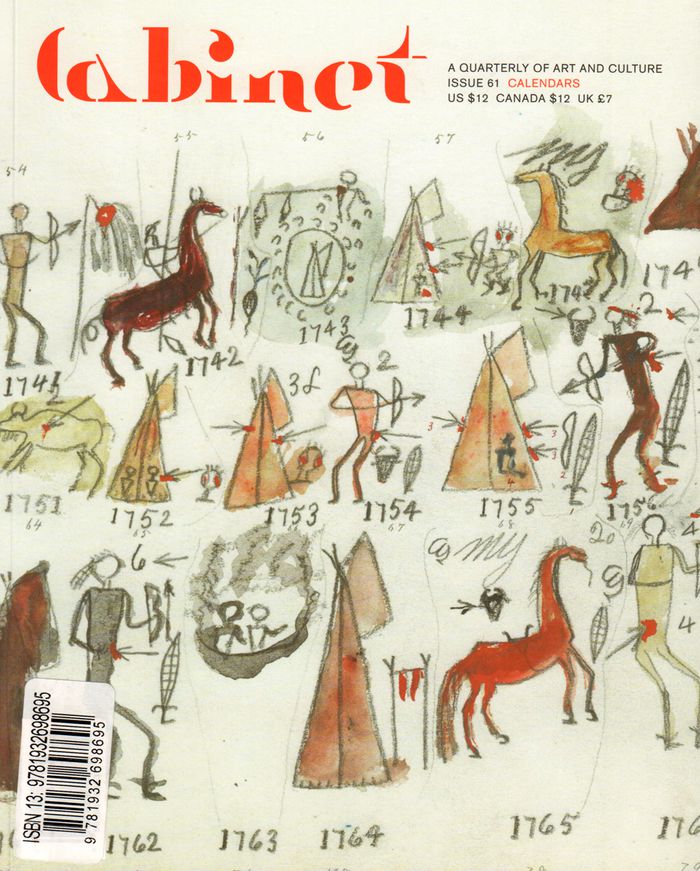
Cabinet 61: Calendars
Cabinet 61: Calendars
Actions:
Prix:
$15.00
(disponible sur commande)
Résumé:
This description of "Cabinet issue 61" was written on 1 September 2015. Which also happens to be 17 Dhu al-Qada 1436. And 17 Elul 5775. And 19 Wu 4713. The passage of time may be immutable, but the innumerable systems (Gregorian, Islamic, Hebrew and Chinese, respectively, above) that have been used to order our experience of Earth’s transit through the solar system(...)
$15.00
(disponible sur commande)
Résumé:
This description of "Cabinet issue 61" was written on 1 September 2015. Which also happens to be 17 Dhu al-Qada 1436. And 17 Elul 5775. And 19 Wu 4713. The passage of time may be immutable, but the innumerable systems (Gregorian, Islamic, Hebrew and Chinese, respectively, above) that have been used to order our experience of Earth’s transit through the solar system(...)
Titre:
Cabinet 61: Calendars
Actions:
Prix:
$15.00
(disponible sur commande)
Résumé:
This description of "Cabinet issue 61" was written on 1 September 2015. Which also happens to be 17 Dhu al-Qada 1436. And 17 Elul 5775. And 19 Wu 4713. The passage of time may be immutable, but the innumerable systems (Gregorian, Islamic, Hebrew and Chinese, respectively, above) that have been used to order our experience of Earth’s transit through the solar system suggest that our methods of measuring it are not. With its roots in the Latin kalendae—meaning "the called," the word refers to the practice of Roman priests "calling" the first day of each Roman month—the calendar has long had a profound relationship to the state’s economic, religious and political power. And the common trajectory of calendars’ development during mid- to late antiquity, from empirical, flexible systems to schematic, fixed ones, also has telling parallels with shifts in broader social, scientific and technological attitudes. "Cabinet issue 61", with a special section on "Calendars," includes Sebastian Lunefeld on why so many radical political movements have tried to institute calendar reform; Joanna Dopico on 19th-century French sociologist August Comte’s positivist calendar; and Gordon Landon on why some cultures developed, and continue to use, lunar calendars. Elsewhere in the issue: David Serlin on the long history of battlefield bandages with instructions printed on them; Tom Levin on early "voicemail," messages recorded on vinyl and mailed to loved ones; and Christopher Turner on the rise and fall of scratch-and-sniff films.
Cabinet 61: Calendars
Actions:
Prix:
$15.00
(disponible sur commande)
Résumé:
This description of "Cabinet issue 61" was written on 1 September 2015. Which also happens to be 17 Dhu al-Qada 1436. And 17 Elul 5775. And 19 Wu 4713. The passage of time may be immutable, but the innumerable systems (Gregorian, Islamic, Hebrew and Chinese, respectively, above) that have been used to order our experience of Earth’s transit through the solar system suggest that our methods of measuring it are not. With its roots in the Latin kalendae—meaning "the called," the word refers to the practice of Roman priests "calling" the first day of each Roman month—the calendar has long had a profound relationship to the state’s economic, religious and political power. And the common trajectory of calendars’ development during mid- to late antiquity, from empirical, flexible systems to schematic, fixed ones, also has telling parallels with shifts in broader social, scientific and technological attitudes. "Cabinet issue 61", with a special section on "Calendars," includes Sebastian Lunefeld on why so many radical political movements have tried to institute calendar reform; Joanna Dopico on 19th-century French sociologist August Comte’s positivist calendar; and Gordon Landon on why some cultures developed, and continue to use, lunar calendars. Elsewhere in the issue: David Serlin on the long history of battlefield bandages with instructions printed on them; Tom Levin on early "voicemail," messages recorded on vinyl and mailed to loved ones; and Christopher Turner on the rise and fall of scratch-and-sniff films.
Classification:
périodiques
périodiques
Publication:
février 2017
février 2017
Sujet:
Revues
Revues
Classification:
livres
livres

Actions:
Prix:
$56.00
(disponible sur commande)
Résumé:
Originally published in 1983, ''Writings 1973-1983 on Works 1969-1979,'' by Los Angeles artist Michael Asher (1943-2012) presents select documentation of 33 works through writings, photographs, architectural floor plans, exhibition announcements and other ephemera. For most of his career, Asher did not create traditional art objects; instead, he altered the existing(...)
$56.00
(disponible sur commande)
Résumé:
Originally published in 1983, ''Writings 1973-1983 on Works 1969-1979,'' by Los Angeles artist Michael Asher (1943-2012) presents select documentation of 33 works through writings, photographs, architectural floor plans, exhibition announcements and other ephemera. For most of his career, Asher did not create traditional art objects; instead, he altered the existing(...)
Titre:
Michael Asher: writings 1973–1983 on works 1969–1979
Actions:
Prix:
$56.00
(disponible sur commande)
Résumé:
Originally published in 1983, ''Writings 1973-1983 on Works 1969-1979,'' by Los Angeles artist Michael Asher (1943-2012) presents select documentation of 33 works through writings, photographs, architectural floor plans, exhibition announcements and other ephemera. For most of his career, Asher did not create traditional art objects; instead, he altered the existing institutional apparatus through which art is presented, creating work that intervened in the architectural, social or economic systems that undergird how art is produced and experienced. For example, in 1974, he removed the partition wall dividing the office and gallery space of the Claire S. Copley Gallery in Los Angeles, revealing the day-to-day activities of the gallery to the public. In another work from 1979, Asher had a bronze replica of a late 18th-century sculpture of George Washington moved from the exterior of the Art Institute of Chicago to a museum gallery that housed 18th-century art, reintroducing the statue to its original period context and shifting its function from public monument to indoor sculpture. Due to its site- and time-specific nature, Asher’s work generally ceased to exist after an exhibition, which makes this highly sought-after book an invaluable resource. As the artist states in the introduction: ''This book as a finished product will have a material permanence that contradicts the actual impermanence of the art-work, yet paradoxically functions as a testimony to that impermanence of my production.''
Michael Asher: writings 1973–1983 on works 1969–1979
Actions:
Prix:
$56.00
(disponible sur commande)
Résumé:
Originally published in 1983, ''Writings 1973-1983 on Works 1969-1979,'' by Los Angeles artist Michael Asher (1943-2012) presents select documentation of 33 works through writings, photographs, architectural floor plans, exhibition announcements and other ephemera. For most of his career, Asher did not create traditional art objects; instead, he altered the existing institutional apparatus through which art is presented, creating work that intervened in the architectural, social or economic systems that undergird how art is produced and experienced. For example, in 1974, he removed the partition wall dividing the office and gallery space of the Claire S. Copley Gallery in Los Angeles, revealing the day-to-day activities of the gallery to the public. In another work from 1979, Asher had a bronze replica of a late 18th-century sculpture of George Washington moved from the exterior of the Art Institute of Chicago to a museum gallery that housed 18th-century art, reintroducing the statue to its original period context and shifting its function from public monument to indoor sculpture. Due to its site- and time-specific nature, Asher’s work generally ceased to exist after an exhibition, which makes this highly sought-after book an invaluable resource. As the artist states in the introduction: ''This book as a finished product will have a material permanence that contradicts the actual impermanence of the art-work, yet paradoxically functions as a testimony to that impermanence of my production.''
Classification:
livres
livres
Publication:
novembre 2020
novembre 2020
Sujet:
Théorie de l’art
Théorie de l’art


