


5813 Résultats
Classification:
livres
livres
Actions:
Exemplaires:
Description:
xix, 249 pages : illustrations, maps ; 25 cm
Description:
xix, 249 pages : illustrations, maps ; 25 cm
Auteur:
Sujet:
- Bridges, Medieval England.,
- Bridges England History.,
- Ponts médiévaux Angleterre.,
- Ponts Angleterre Histoire.,
- Bridges,
- Bridges, Medieval,
- Brücke,
- Bruggen (weg- en waterbouw),
- Vervoer.,
- Bridges, Medieval Great Britain.,
- Bridges Great Britain History.,
- pont voie de communication Angleterre (Grande-Bretagne) Moyen-Âge 18e s.,
- Transport.,
- England,
- Bridges over Welland, Till, Trent.,
- History
Publication:
Oxford : Clarendon Press ; New York : Oxford University Press, 2004.
Oxford : Clarendon Press ; New York : Oxford University Press, 2004.
Titre:
The bridges of medieval England : transport and society, 400-1800 / David Harrison.
Actions:
Exemplaires:
Description:
xix, 249 pages : illustrations, maps ; 25 cm
The bridges of medieval England : transport and society, 400-1800 / David Harrison.
Actions:
Exemplaires:
Description:
xix, 249 pages : illustrations, maps ; 25 cm
Classification:
livres
livres
Publication:
Oxford : Clarendon Press ; New York : Oxford University Press, 2004.
Oxford : Clarendon Press ; New York : Oxford University Press, 2004.
Auteur:
Sujet:
- Bridges, Medieval England.,
- Bridges England History.,
- Ponts médiévaux Angleterre.,
- Ponts Angleterre Histoire.,
- Bridges,
- Bridges, Medieval,
- Brücke,
- Bruggen (weg- en waterbouw),
- Vervoer.,
- Bridges, Medieval Great Britain.,
- Bridges Great Britain History.,
- pont voie de communication Angleterre (Grande-Bretagne) Moyen-Âge 18e s.,
- Transport.,
- England,
- Bridges over Welland, Till, Trent.,
- History
Classification:
vidéo
vidéo
Actions:
Exemplaires:
Description:
1 videodisc (approximately 51 min.) : sound, color ; 4 3/4 in.
Description:
1 videodisc (approximately 51 min.) : sound, color ; 4 3/4 in.
Auteur:
- Hattum, Rob van,,
- Somer, Madeleine,,
- Spiegel, Karin,,
- McDonough, William.,
- Braungart, Michael, 1958-,
- Icarus Films.,
- VPRO.,
- First Run/Icarus Films.,
- Tegenlicht (Television program)
Sujet:
- McDonough, William.,
- Braungart, Michael, 1958-,
- Recycling (Waste, etc.),
- Industrial management Environmental aspects.,
- Green chemistry.,
- Biodegradable products.,
- Environmental economics.,
- Environmental responsibility.,
- Buildings Environmental engineering.,
- Product design Environmental aspects.,
- Manufactures Environmental aspects.,
- Sustainable architecture.,
- Recyclage (Déchets, etc.),
- Gestion d'entreprise Aspect de l'environnement.,
- Chimie verte.,
- Produits biodégradables.,
- Économie de l'environnement.,
- Responsabilité environnementale.,
- Constructions Technique de l'environnement.,
- Conception de produit Aspect de l'environnement.,
- Produits manufacturés Aspect de l'environnement.,
- Architecture durable.,
- recycling.,
- biodegradable.,
- Environmental chemistry Industrial applications.,
- Documentary films.,
- Documentaries (motion picture genre),
- Optical disks.,
- Video recordings.,
- DVDs.,
- documentary film.,
- Feature films,
- Documentary television programs.,
- Nonfiction television programs.,
- Documentaires.,
- Documentaires télévisés.,
- Émissions télévisées autres que de fiction.
Publication:
Brooklyn, NY : Icarus Films, 2006.
Brooklyn, NY : Icarus Films, 2006.
Titre:
Waste = food / A First Run/Icarus Films release ; Backlight ; VPRO ; director, Rob van Hattum ; producers, Madeleine Somer, Karin Spiegel.
Actions:
Exemplaires:
Description:
1 videodisc (approximately 51 min.) : sound, color ; 4 3/4 in.
Waste = food / A First Run/Icarus Films release ; Backlight ; VPRO ; director, Rob van Hattum ; producers, Madeleine Somer, Karin Spiegel.
Actions:
Exemplaires:
Description:
1 videodisc (approximately 51 min.) : sound, color ; 4 3/4 in.
Classification:
vidéo
vidéo
Publication:
Brooklyn, NY : Icarus Films, 2006.
Brooklyn, NY : Icarus Films, 2006.
Auteur:
- Hattum, Rob van,,
- Somer, Madeleine,,
- Spiegel, Karin,,
- McDonough, William.,
- Braungart, Michael, 1958-,
- Icarus Films.,
- VPRO.,
- First Run/Icarus Films.,
- Tegenlicht (Television program)
Sujet:
- McDonough, William.,
- Braungart, Michael, 1958-,
- Recycling (Waste, etc.),
- Industrial management Environmental aspects.,
- Green chemistry.,
- Biodegradable products.,
- Environmental economics.,
- Environmental responsibility.,
- Buildings Environmental engineering.,
- Product design Environmental aspects.,
- Manufactures Environmental aspects.,
- Sustainable architecture.,
- Recyclage (Déchets, etc.),
- Gestion d'entreprise Aspect de l'environnement.,
- Chimie verte.,
- Produits biodégradables.,
- Économie de l'environnement.,
- Responsabilité environnementale.,
- Constructions Technique de l'environnement.,
- Conception de produit Aspect de l'environnement.,
- Produits manufacturés Aspect de l'environnement.,
- Architecture durable.,
- recycling.,
- biodegradable.,
- Environmental chemistry Industrial applications.,
- Documentary films.,
- Documentaries (motion picture genre),
- Optical disks.,
- Video recordings.,
- DVDs.,
- documentary film.,
- Feature films,
- Documentary television programs.,
- Nonfiction television programs.,
- Documentaires.,
- Documentaires télévisés.,
- Émissions télévisées autres que de fiction.
Classification:
livres
livres
Titre:
Formica forever.
Formica forever.
Actions:
Exemplaires:
Description:
407 pages : color illustrations ; 24 cm
Description:
407 pages : color illustrations ; 24 cm
Sujet:
- Formica Corporation History.,
- Formica Group.,
- Formica Corporation,
- Laminated plastics United States History.,
- Plastics industry and trade United States History.,
- Plastics in interior decoration History.,
- Advertising Plastics History.,
- Matières plastiques stratifiées États-Unis Histoire.,
- Matières plastiques Industrie États-Unis Histoire.,
- Matières plastiques en décoration intérieure Histoire.,
- Architecture/Interior Design - General.,
- Design/Industrial.,
- Business & Economics/Infrastructure.,
- Architecture/Individual Architects & Firms - Monographs.,
- Laminated plastics History. United States.,
- Plastics industry and trade History. United States.,
- Advertising Plastics,
- Laminated plastics,
- Plastics in interior decoration,
- Plastics industry and trade,
- Waldameise,
- Innenarchitektur,
- Werbung,
- Unternehmen,
- Laminat.,
- Inredning design.,
- United States,
- History
Publication:
Cincinnati, Ohio : Formica Corporation ; New York, NY : Published in association with Metropolis Books, 2013.
Cincinnati, Ohio : Formica Corporation ; New York, NY : Published in association with Metropolis Books, 2013.
Classification:
livres
livres
Publication:
Cincinnati, Ohio : Formica Corporation ; New York, NY : Published in association with Metropolis Books, 2013.
Cincinnati, Ohio : Formica Corporation ; New York, NY : Published in association with Metropolis Books, 2013.
Sujet:
- Formica Corporation History.,
- Formica Group.,
- Formica Corporation,
- Laminated plastics United States History.,
- Plastics industry and trade United States History.,
- Plastics in interior decoration History.,
- Advertising Plastics History.,
- Matières plastiques stratifiées États-Unis Histoire.,
- Matières plastiques Industrie États-Unis Histoire.,
- Matières plastiques en décoration intérieure Histoire.,
- Architecture/Interior Design - General.,
- Design/Industrial.,
- Business & Economics/Infrastructure.,
- Architecture/Individual Architects & Firms - Monographs.,
- Laminated plastics History. United States.,
- Plastics industry and trade History. United States.,
- Advertising Plastics,
- Laminated plastics,
- Plastics in interior decoration,
- Plastics industry and trade,
- Waldameise,
- Innenarchitektur,
- Werbung,
- Unternehmen,
- Laminat.,
- Inredning design.,
- United States,
- History
Classification:
livres
livres
Actions:
Exemplaires:
Description:
xxv, 373 pages : illustrations, maps ; 23 cm
Description:
xxv, 373 pages : illustrations, maps ; 23 cm
Auteur:
Sujet:
- City planning Environmental aspects.,
- Urban ecology (Sociology),
- Sustainable development.,
- Urbanisme Aspect de l'environnement.,
- Écologie urbaine.,
- Développement durable.,
- urban environments.,
- sustainable development.,
- Stadtsanierung,
- Nachhaltigkeit,
- Stadtumbau,
- Stadtökologie
Publication:
Gabriola Island, BC : New Society Publishers, ©2006.
Gabriola Island, BC : New Society Publishers, ©2006.
Titre:
Ecocities : rebuilding cities in balance with nature / Richard Register.
Actions:
Exemplaires:
Description:
xxv, 373 pages : illustrations, maps ; 23 cm
Ecocities : rebuilding cities in balance with nature / Richard Register.
Actions:
Exemplaires:
Description:
xxv, 373 pages : illustrations, maps ; 23 cm
Classification:
livres
livres
Publication:
Gabriola Island, BC : New Society Publishers, ©2006.
Gabriola Island, BC : New Society Publishers, ©2006.
Auteur:
Sujet:
- City planning Environmental aspects.,
- Urban ecology (Sociology),
- Sustainable development.,
- Urbanisme Aspect de l'environnement.,
- Écologie urbaine.,
- Développement durable.,
- urban environments.,
- sustainable development.,
- Stadtsanierung,
- Nachhaltigkeit,
- Stadtumbau,
- Stadtökologie
Classification:
livres
livres
Exemplaires:
Description:
416 pages : illustrations ; 24 cm
Description:
416 pages : illustrations ; 24 cm
Auteur:
- Charles Jencks -- Andreas Huyssen -- Umberto Eco -- Linda Hutcheon -- Jim Collins -- Margaret Rose -- Jean-François Lyotard -- Jean Baudrillard -- Jürgen Habermas -- John Barth -- David Lodge -- Ihab Hassan -- Paolo Portoghesi -- Charles Jencks -- Norman K. Denzin -- Heinrich Klotz -- Daniel Bell -- Robin Murray -- Edward W. Soja -- David Harvey -- Susan Rubin Suleiman -- Craig Owens -- Tito Arecchi -- David Ray Griffin -- David Ray Griffin -- David Bohm -- Charles Birch -- Edward Goldsmith -- Hans Küng.,
- Jencks, Charles,
Sujet:
- Postmodernism.,
- Civilization, Modern 1950-,
- posztmodernizmus,
- Postmodernisme.,
- Civilisation 1950-,
- Civilization, Modern,
- Postmoderne,
- Architekturtheorie,
- Postmodernitat.,
- Postmodernisme et littérature.,
- Littérature Esthétique.
Publication:
London : Academy Editions ; New York : St. Martin' Press, 1992.
London : Academy Editions ; New York : St. Martin' Press, 1992.
Titre:
The Post-modern reader / edited by Charles Jencks.
Actions:
Exemplaires:
Description:
416 pages : illustrations ; 24 cm
The Post-modern reader / edited by Charles Jencks.
Actions:
Exemplaires:
Description:
416 pages : illustrations ; 24 cm
Classification:
livres
livres
Publication:
London : Academy Editions ; New York : St. Martin' Press, 1992.
London : Academy Editions ; New York : St. Martin' Press, 1992.
Auteur:
- Charles Jencks -- Andreas Huyssen -- Umberto Eco -- Linda Hutcheon -- Jim Collins -- Margaret Rose -- Jean-François Lyotard -- Jean Baudrillard -- Jürgen Habermas -- John Barth -- David Lodge -- Ihab Hassan -- Paolo Portoghesi -- Charles Jencks -- Norman K. Denzin -- Heinrich Klotz -- Daniel Bell -- Robin Murray -- Edward W. Soja -- David Harvey -- Susan Rubin Suleiman -- Craig Owens -- Tito Arecchi -- David Ray Griffin -- David Ray Griffin -- David Bohm -- Charles Birch -- Edward Goldsmith -- Hans Küng.,
- Jencks, Charles,
Sujet:
- Postmodernism.,
- Civilization, Modern 1950-,
- posztmodernizmus,
- Postmodernisme.,
- Civilisation 1950-,
- Civilization, Modern,
- Postmoderne,
- Architekturtheorie,
- Postmodernitat.,
- Postmodernisme et littérature.,
- Littérature Esthétique.
Classification:
livres
livres
Actions:
Prix:
$37.95
(disponible sur commande)
Résumé:
The idea of fashion under socialism conjures up images of babushka headscarves and black market blue jeans. And yet, as Djurdja Bartlett shows in this groundbreaking book, the socialist East had an intimate relationship with fashion. Official antagonism—which cast fashion as frivolous and antirevolutionary—eventually gave way to grudging acceptance and creeping(...)
$37.95
(disponible sur commande)
Résumé:
The idea of fashion under socialism conjures up images of babushka headscarves and black market blue jeans. And yet, as Djurdja Bartlett shows in this groundbreaking book, the socialist East had an intimate relationship with fashion. Official antagonism—which cast fashion as frivolous and antirevolutionary—eventually gave way to grudging acceptance and creeping(...)
Titre:
Fashion East : the spectre that haunted socialism
Actions:
Prix:
$37.95
(disponible sur commande)
Résumé:
The idea of fashion under socialism conjures up images of babushka headscarves and black market blue jeans. And yet, as Djurdja Bartlett shows in this groundbreaking book, the socialist East had an intimate relationship with fashion. Official antagonism—which cast fashion as frivolous and antirevolutionary—eventually gave way to grudging acceptance and creeping consumerism. Bartlett outlines three phases in socialist fashion, and illustrates them with abundant images from magazines of the period: postrevolutionary utopian dress, official state-sanctioned socialist fashion, and samizdat-style everyday fashion. Utopian dress, ranging from the geometric abstraction of the constructivists under Bolshevism in the Soviet Union to the no-frills desexualized uniform of a factory worker in Czechoslovakia, reflected the revolutionary urge for a clean break with the past. The highly centralized socialist fashion system, part of Stalinist industrialization, offered official prototypes of high fashion that were never available in stores—mythical images of smart and luxurious dresses that symbolized the economic progress that socialist regimes dreamed of. Everyday fashion, starting in the 1950s, was an unofficial, do-it-yourself enterprise: Western fashions obtained through semiclandestine channels or sewn at home. The state tolerated the demand for Western fashion, promising the burgeoning middle class consumer goods in exchange for political loyalty. Bartlett traces the progress of socialist fashion in the Soviet Union, Czechoslovakia, Hungary, East Germany, Poland, and Yugoslavia, drawing on state-sponsored socialist women’s magazines, etiquette books, socialist manuals on dress, private archives, and her own interviews with designers, fashion editors, and other key figures. Fashion, she suggests, with all its ephemerality and dynamism, was in perpetual conflict with the socialist regimes’ fear of change and need for control. It was, to echo the famous first sentence from the Communist Manifesto, the spectre that haunted socialism until the end.
Fashion East : the spectre that haunted socialism
Actions:
Prix:
$37.95
(disponible sur commande)
Résumé:
The idea of fashion under socialism conjures up images of babushka headscarves and black market blue jeans. And yet, as Djurdja Bartlett shows in this groundbreaking book, the socialist East had an intimate relationship with fashion. Official antagonism—which cast fashion as frivolous and antirevolutionary—eventually gave way to grudging acceptance and creeping consumerism. Bartlett outlines three phases in socialist fashion, and illustrates them with abundant images from magazines of the period: postrevolutionary utopian dress, official state-sanctioned socialist fashion, and samizdat-style everyday fashion. Utopian dress, ranging from the geometric abstraction of the constructivists under Bolshevism in the Soviet Union to the no-frills desexualized uniform of a factory worker in Czechoslovakia, reflected the revolutionary urge for a clean break with the past. The highly centralized socialist fashion system, part of Stalinist industrialization, offered official prototypes of high fashion that were never available in stores—mythical images of smart and luxurious dresses that symbolized the economic progress that socialist regimes dreamed of. Everyday fashion, starting in the 1950s, was an unofficial, do-it-yourself enterprise: Western fashions obtained through semiclandestine channels or sewn at home. The state tolerated the demand for Western fashion, promising the burgeoning middle class consumer goods in exchange for political loyalty. Bartlett traces the progress of socialist fashion in the Soviet Union, Czechoslovakia, Hungary, East Germany, Poland, and Yugoslavia, drawing on state-sponsored socialist women’s magazines, etiquette books, socialist manuals on dress, private archives, and her own interviews with designers, fashion editors, and other key figures. Fashion, she suggests, with all its ephemerality and dynamism, was in perpetual conflict with the socialist regimes’ fear of change and need for control. It was, to echo the famous first sentence from the Communist Manifesto, the spectre that haunted socialism until the end.
Classification:
livres
livres
Publication:
octobre 2010
octobre 2010
Sujet:
Création de mode
Création de mode
Classification:
livres
livres
Prix:
$27.95
(disponible sur commande)
Résumé:
Los Angeles--the place without a sense of place, famous for sprawl and overdevelopment and defined by its car-clogged freeways--might seem inhospitable to efforts to connect with nature and community. But in Reinventing Los Angeles, educator and activist Robert Gottlieb describes how imaginative and innovative social movements have coalesced around the issues of water(...)
$27.95
(disponible sur commande)
Résumé:
Los Angeles--the place without a sense of place, famous for sprawl and overdevelopment and defined by its car-clogged freeways--might seem inhospitable to efforts to connect with nature and community. But in Reinventing Los Angeles, educator and activist Robert Gottlieb describes how imaginative and innovative social movements have coalesced around the issues of water(...)
Titre:
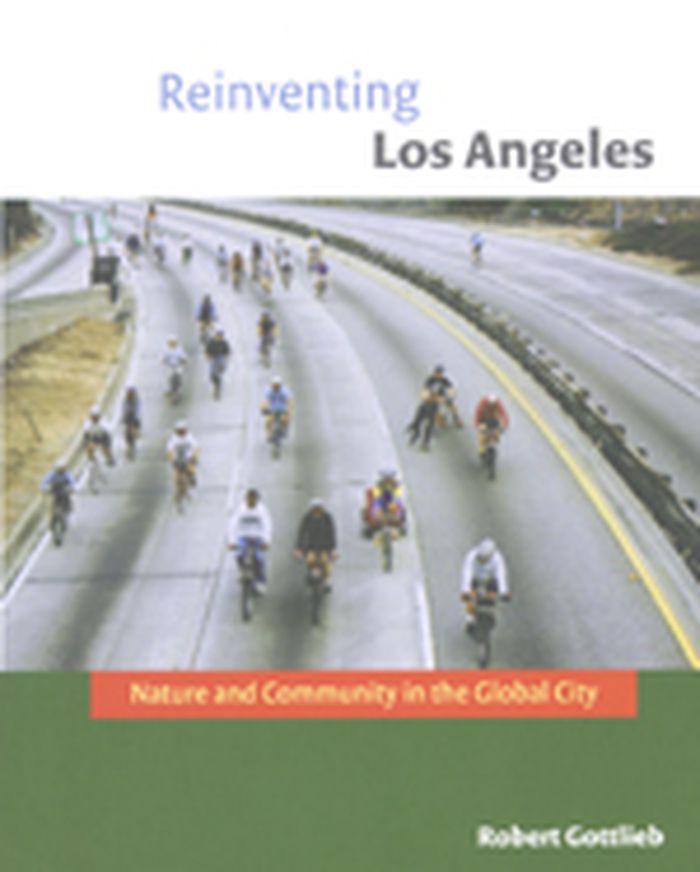
Reinventing Los Angeles : Nature and community in the global city
Actions:
Prix:
$27.95
(disponible sur commande)
Résumé:
Los Angeles--the place without a sense of place, famous for sprawl and overdevelopment and defined by its car-clogged freeways--might seem inhospitable to efforts to connect with nature and community. But in Reinventing Los Angeles, educator and activist Robert Gottlieb describes how imaginative and innovative social movements have coalesced around the issues of water development, cars and freeways, and land use, to create a more livable and sustainable city. Gottlieb traces the emergence of Los Angeles as a global city in the twentieth century and describes its continuing evolution today. He examines the powerful influences of immigration and economic globalization as they intersect with changes in the politics of water, transportation, and land use, and illustrates each of these core concerns with an account of grass roots and activist responses: efforts to reenvision the concrete-bound, fenced-off Los Angeles River as a natural resource; "Arroyofest," the closing of the Pasadena Freeway for a Sunday of walking and bike riding; and immigrants’ initiatives to create urban gardens and connect with their countries of origin. Reinventing Los Angeles is a unique blend of personal narrative (Gottlieb himself participated in several of the grass roots actions described in the book) and historical and theoretical discussion. It provides a road map for a new environmentalism of everyday life, demonstrating the opportunities for renewal in a global city. Robert Gottlieb is Henry R. Luce Professor of Urban and Environmental Policy and Director of the Urban and Environmental Policy Institute at Occidental College in Los Angeles. He is the author of Environmentalism Unbound: Exploring New Pathways for Change (MIT Press), Forcing the Spring: The Transformation of the American Environmental Movement, and other books.
Reinventing Los Angeles : Nature and community in the global city
Actions:
Prix:
$27.95
(disponible sur commande)
Résumé:
Los Angeles--the place without a sense of place, famous for sprawl and overdevelopment and defined by its car-clogged freeways--might seem inhospitable to efforts to connect with nature and community. But in Reinventing Los Angeles, educator and activist Robert Gottlieb describes how imaginative and innovative social movements have coalesced around the issues of water development, cars and freeways, and land use, to create a more livable and sustainable city. Gottlieb traces the emergence of Los Angeles as a global city in the twentieth century and describes its continuing evolution today. He examines the powerful influences of immigration and economic globalization as they intersect with changes in the politics of water, transportation, and land use, and illustrates each of these core concerns with an account of grass roots and activist responses: efforts to reenvision the concrete-bound, fenced-off Los Angeles River as a natural resource; "Arroyofest," the closing of the Pasadena Freeway for a Sunday of walking and bike riding; and immigrants’ initiatives to create urban gardens and connect with their countries of origin. Reinventing Los Angeles is a unique blend of personal narrative (Gottlieb himself participated in several of the grass roots actions described in the book) and historical and theoretical discussion. It provides a road map for a new environmentalism of everyday life, demonstrating the opportunities for renewal in a global city. Robert Gottlieb is Henry R. Luce Professor of Urban and Environmental Policy and Director of the Urban and Environmental Policy Institute at Occidental College in Los Angeles. He is the author of Environmentalism Unbound: Exploring New Pathways for Change (MIT Press), Forcing the Spring: The Transformation of the American Environmental Movement, and other books.
Classification:
livres
livres
Publication:
novembre 2007, Massachusetts
novembre 2007, Massachusetts
Sujet:
Théorie de l’urbanisme
Théorie de l’urbanisme
Classification:
périodiques
périodiques
Titre:
Quaderns 229 : borders
Quaderns 229 : borders
Actions:
Prix:
$39.95
(disponible sur commande)
Résumé:
Issue 229 of the magazine Quaderns explores the theme of the border in its literal sense -the border as a political and cultural separation between countries or geographical areas- but also as a place which gives rise to cultural crossovers alongside its function as separator. This issue looks firstly at the transformation of two formerly divided(...)
$39.95
(disponible sur commande)
Résumé:
Issue 229 of the magazine Quaderns explores the theme of the border in its literal sense -the border as a political and cultural separation between countries or geographical areas- but also as a place which gives rise to cultural crossovers alongside its function as separator. This issue looks firstly at the transformation of two formerly divided(...)
Sujet:
Revues
Revues
Publication:
juin 2001, Barcelona
juin 2001, Barcelona
Titre:
Quaderns 229 : borders
Actions:
Prix:
$39.95
(disponible sur commande)
Résumé:
Issue 229 of the magazine Quaderns explores the theme of the border in its literal sense -the border as a political and cultural separation between countries or geographical areas- but also as a place which gives rise to cultural crossovers alongside its function as separator. This issue looks firstly at the transformation of two formerly divided cities, Berlin and Beirut, which are currently undergoing processes of integration of what used to be opposing sectors and of recovery as city-centre spaces of the wastelands generated by division. Then it analyses the present-day situation in two border areas characterised by strong economic and cultural contrasts between the two sides of the dividing line: the border between the United States and Mexico, and the Strait of Gibraltar. The works of architects and artists who have recently worked in these places are taken as a starting point for debate about the strategies brought to bear in frontier territory by urbanism, art and architecture. The issue includes an introductory text by Saskia Sassen and features Mathias Sauerbruch on Berlin, Álvaro Siza on Ceuta, Rafael Moneo and Ousama Kabbani on Beirut, and Gloria Anzaldúa on the border between Mexico and the United States. It also presents a series of works actually carried out in these cities by Sauerbruch & Hutton, Álvaro Siza and Rafael Moneo, along with projects by Berger-Parkinnen, Kollhof & Kollhoff, Gustav Lange, OMA/Rem Koolhaas and Peter Zumthor, among others, and features a dossier with projects carried out in other countries by Catalan architects, including works by Miralles-Tagliabue, J. Ll. Mateo and Elías Torres. The theme is completed by an extensive photo reportage by Camilo José Vergara about the Mexican border.
Quaderns 229 : borders
Actions:
Prix:
$39.95
(disponible sur commande)
Résumé:
Issue 229 of the magazine Quaderns explores the theme of the border in its literal sense -the border as a political and cultural separation between countries or geographical areas- but also as a place which gives rise to cultural crossovers alongside its function as separator. This issue looks firstly at the transformation of two formerly divided cities, Berlin and Beirut, which are currently undergoing processes of integration of what used to be opposing sectors and of recovery as city-centre spaces of the wastelands generated by division. Then it analyses the present-day situation in two border areas characterised by strong economic and cultural contrasts between the two sides of the dividing line: the border between the United States and Mexico, and the Strait of Gibraltar. The works of architects and artists who have recently worked in these places are taken as a starting point for debate about the strategies brought to bear in frontier territory by urbanism, art and architecture. The issue includes an introductory text by Saskia Sassen and features Mathias Sauerbruch on Berlin, Álvaro Siza on Ceuta, Rafael Moneo and Ousama Kabbani on Beirut, and Gloria Anzaldúa on the border between Mexico and the United States. It also presents a series of works actually carried out in these cities by Sauerbruch & Hutton, Álvaro Siza and Rafael Moneo, along with projects by Berger-Parkinnen, Kollhof & Kollhoff, Gustav Lange, OMA/Rem Koolhaas and Peter Zumthor, among others, and features a dossier with projects carried out in other countries by Catalan architects, including works by Miralles-Tagliabue, J. Ll. Mateo and Elías Torres. The theme is completed by an extensive photo reportage by Camilo José Vergara about the Mexican border.
Classification:
périodiques
périodiques
Publication:
juin 2001, Barcelona
juin 2001, Barcelona
Sujet:
Revues
Revues
Classification:
livres
livres
Titre:
Sprawl : a compact history
Sprawl : a compact history
Actions:
Prix:
$34.50
(disponible sur commande)
Résumé:
As anyone who has flown into Los Angeles at dusk or Houston at midday knows, urban areas today defy traditional notions of what a city is. Our old definitions of urban, suburban, and rural fail to capture the complexity of these vast regions with their superhighways, subdivisions, industrial areas, office parks, and resort areas pushing far out into the countryside.(...)
$34.50
(disponible sur commande)
Résumé:
As anyone who has flown into Los Angeles at dusk or Houston at midday knows, urban areas today defy traditional notions of what a city is. Our old definitions of urban, suburban, and rural fail to capture the complexity of these vast regions with their superhighways, subdivisions, industrial areas, office parks, and resort areas pushing far out into the countryside.(...)
Titre:
Sprawl : a compact history
Actions:
Prix:
$34.50
(disponible sur commande)
Résumé:
As anyone who has flown into Los Angeles at dusk or Houston at midday knows, urban areas today defy traditional notions of what a city is. Our old definitions of urban, suburban, and rural fail to capture the complexity of these vast regions with their superhighways, subdivisions, industrial areas, office parks, and resort areas pushing far out into the countryside. Detractors call it sprawl and assert that it is economically inefficient, socially inequitable, environmentally irresponsible, and aesthetically ugly. Robert Bruegmann calls it a logical consequence of economic growth and the democratization of society, with benefits that urban planners have failed to recognize. In his history of the expanded city, Bruegmann overturns every assumption we have about sprawl. Taking a long view of urban development, he demonstrates that sprawl is neither recent nor particularly American but as old as cities themselves, just as characteristic of ancient Rome and eighteenth-century Paris as it is of Atlanta or Los Angeles. Nor is sprawl the disaster claimed by many contemporary observers. Although sprawl, like any settlement pattern, has undoubtedly produced problems that must be addressed, it has also provided millions of people with the kinds of mobility, privacy, and choice that were once the exclusive prerogatives of the rich and powerful. The first major book to strip urban sprawl of its pejorative connotations, Sprawl offers a completely new vision of the city and its growth. Bruegmann leads readers to the powerful conclusion that ''in its immense complexity and constant change, the city-whether dense and concentrated at its core, looser and more sprawling in suburbia, or in the vast tracts of exurban penumbra that extend dozens, even hundreds, of miles-is the grandest and most marvelous work of mankind.''
Sprawl : a compact history
Actions:
Prix:
$34.50
(disponible sur commande)
Résumé:
As anyone who has flown into Los Angeles at dusk or Houston at midday knows, urban areas today defy traditional notions of what a city is. Our old definitions of urban, suburban, and rural fail to capture the complexity of these vast regions with their superhighways, subdivisions, industrial areas, office parks, and resort areas pushing far out into the countryside. Detractors call it sprawl and assert that it is economically inefficient, socially inequitable, environmentally irresponsible, and aesthetically ugly. Robert Bruegmann calls it a logical consequence of economic growth and the democratization of society, with benefits that urban planners have failed to recognize. In his history of the expanded city, Bruegmann overturns every assumption we have about sprawl. Taking a long view of urban development, he demonstrates that sprawl is neither recent nor particularly American but as old as cities themselves, just as characteristic of ancient Rome and eighteenth-century Paris as it is of Atlanta or Los Angeles. Nor is sprawl the disaster claimed by many contemporary observers. Although sprawl, like any settlement pattern, has undoubtedly produced problems that must be addressed, it has also provided millions of people with the kinds of mobility, privacy, and choice that were once the exclusive prerogatives of the rich and powerful. The first major book to strip urban sprawl of its pejorative connotations, Sprawl offers a completely new vision of the city and its growth. Bruegmann leads readers to the powerful conclusion that ''in its immense complexity and constant change, the city-whether dense and concentrated at its core, looser and more sprawling in suburbia, or in the vast tracts of exurban penumbra that extend dozens, even hundreds, of miles-is the grandest and most marvelous work of mankind.''
Classification:
livres
livres
Publication:
octobre 2005, Chicago, London
octobre 2005, Chicago, London
Sujet:
Théorie de l’urbanisme
Théorie de l’urbanisme
Classification:
livres
livres
Actions:
Prix:
$56.50
(disponible sur commande)
Résumé:
At its opening on July 16, 2004, Chicago’s Millennium Park was hailed as one of the most important millennium projects in the world. “Politicians come and go; business leaders come and go,” proclaimed mayor Richard M. Daley, “but artists really define a city.” Part park, part outdoor art museum, part cultural center, and part performance space, Millennium Park is now an(...)
$56.50
(disponible sur commande)
Résumé:
At its opening on July 16, 2004, Chicago’s Millennium Park was hailed as one of the most important millennium projects in the world. “Politicians come and go; business leaders come and go,” proclaimed mayor Richard M. Daley, “but artists really define a city.” Part park, part outdoor art museum, part cultural center, and part performance space, Millennium Park is now an(...)
Publication:
avril 2006, Chicago, London
avril 2006, Chicago, London
Titre:
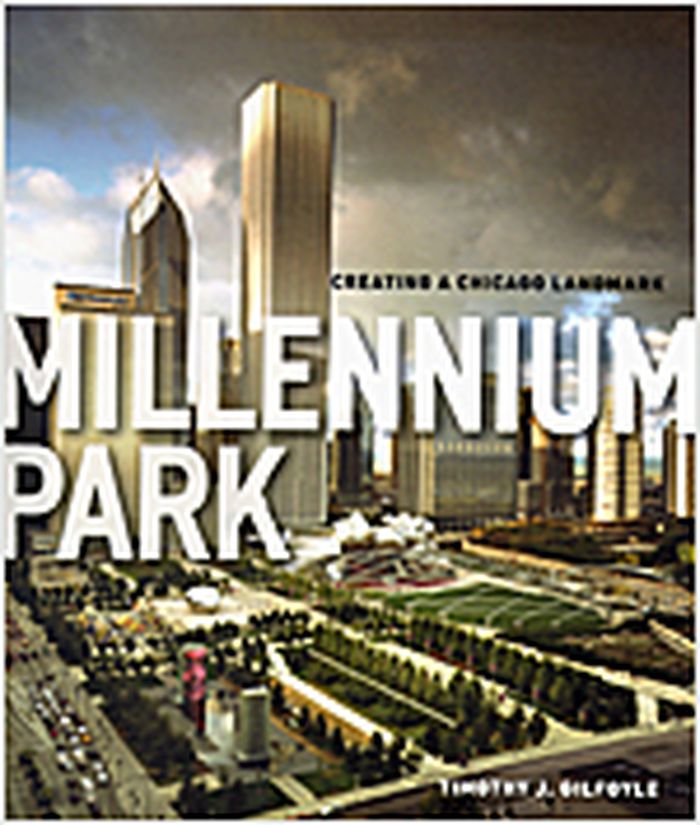
Millennium park : creating a Chicago landscape
Actions:
Prix:
$56.50
(disponible sur commande)
Résumé:
At its opening on July 16, 2004, Chicago’s Millennium Park was hailed as one of the most important millennium projects in the world. “Politicians come and go; business leaders come and go,” proclaimed mayor Richard M. Daley, “but artists really define a city.” Part park, part outdoor art museum, part cultural center, and part performance space, Millennium Park is now an unprecedented combination of distinctive architecture, monumental sculpture, and innovative landscaping. Including structures and works by Frank Gehry, Anish Kapoor, Jaume Plensa, and Kathryn Gustafson, the park represents the collaborative efforts of hundreds to turn an unused railroad yard in the heart of the city into a world-class civic space—and, in the process, to create an entirely new kind of cultural philanthropy. Timothy Gilfoyle here offers a biography of this phenomenal undertaking, beginning before 1850 when the site of the park, the “city’s front yard,” was part of Lake Michigan. Gilfoyle studied the history of downtown; spent years with the planners, artists, and public officials behind Millennium Park; documented it at every stage of its construction; and traced the skeins of financing through municipal government, global corporations, private foundations, and wealthy civic leaders. The result is an illustrated testament to the park, the city, and all those attempting to think and act on a monumental scale. And underlying Gilfoyle’s history is also a revealing study of the globalization of art, the use of culture as an engine of economic expansion, and the nature of political and philanthropic power. Born out of civic idealism, raised in political controversy, and maturing into a symbol of the new Chicago, Millennium Park is truly a twenty-first-century landmark, and it now has the history it deserves.
Millennium park : creating a Chicago landscape
Actions:
Prix:
$56.50
(disponible sur commande)
Résumé:
At its opening on July 16, 2004, Chicago’s Millennium Park was hailed as one of the most important millennium projects in the world. “Politicians come and go; business leaders come and go,” proclaimed mayor Richard M. Daley, “but artists really define a city.” Part park, part outdoor art museum, part cultural center, and part performance space, Millennium Park is now an unprecedented combination of distinctive architecture, monumental sculpture, and innovative landscaping. Including structures and works by Frank Gehry, Anish Kapoor, Jaume Plensa, and Kathryn Gustafson, the park represents the collaborative efforts of hundreds to turn an unused railroad yard in the heart of the city into a world-class civic space—and, in the process, to create an entirely new kind of cultural philanthropy. Timothy Gilfoyle here offers a biography of this phenomenal undertaking, beginning before 1850 when the site of the park, the “city’s front yard,” was part of Lake Michigan. Gilfoyle studied the history of downtown; spent years with the planners, artists, and public officials behind Millennium Park; documented it at every stage of its construction; and traced the skeins of financing through municipal government, global corporations, private foundations, and wealthy civic leaders. The result is an illustrated testament to the park, the city, and all those attempting to think and act on a monumental scale. And underlying Gilfoyle’s history is also a revealing study of the globalization of art, the use of culture as an engine of economic expansion, and the nature of political and philanthropic power. Born out of civic idealism, raised in political controversy, and maturing into a symbol of the new Chicago, Millennium Park is truly a twenty-first-century landmark, and it now has the history it deserves.
Classification:
livres
livres
Publication:
avril 2006, Chicago, London
avril 2006, Chicago, London


