


13794 Résultats
Classification:
livres
livres
Prix:
$54.00
(disponible sur commande)
Résumé:
We tend to think of architecture as a practice in permanence, but what if we looked instead for an architecture of transience? In "Things that move," Tim Anstey does just that: rather than assuming that architecture is, at a certain level, stationary, he considers how architecture moves subjects (referring to its emotive potential in the experience it creates); how it(...)
$54.00
(disponible sur commande)
Résumé:
We tend to think of architecture as a practice in permanence, but what if we looked instead for an architecture of transience? In "Things that move," Tim Anstey does just that: rather than assuming that architecture is, at a certain level, stationary, he considers how architecture moves subjects (referring to its emotive potential in the experience it creates); how it(...)
Titre:
Things that move: A hinterland in architectural history
Actions:
Prix:
$54.00
(disponible sur commande)
Résumé:
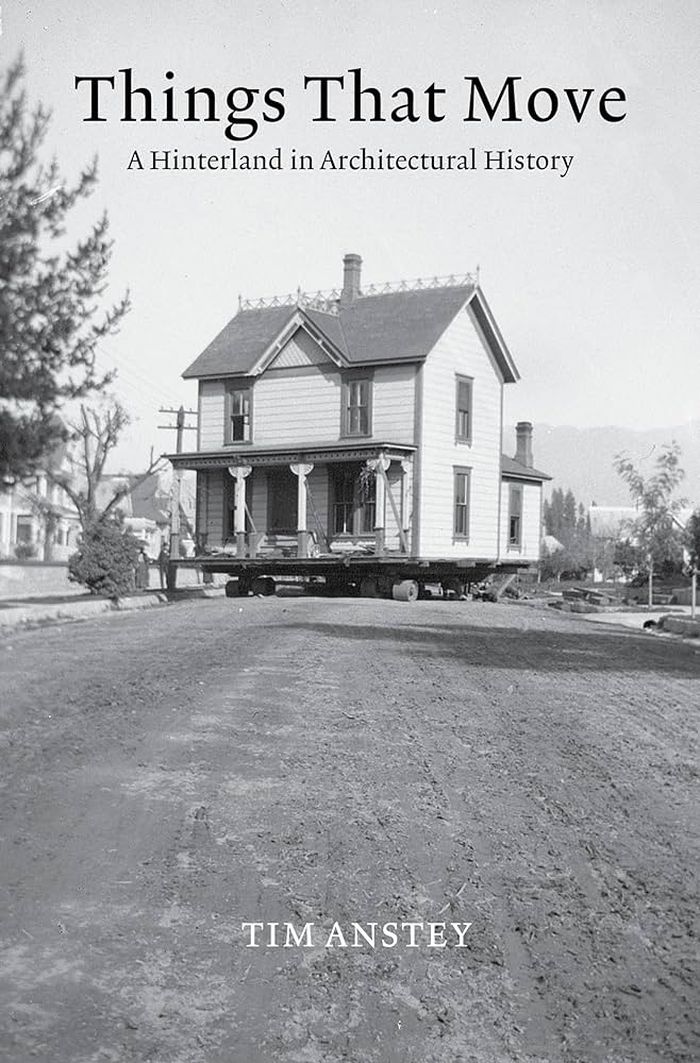
We tend to think of architecture as a practice in permanence, but what if we looked instead for an architecture of transience? In "Things that move," Tim Anstey does just that: rather than assuming that architecture is, at a certain level, stationary, he considers how architecture moves subjects (referring to its emotive potential in the experience it creates); how it moves objects (referring to how it choreographs bodies in motion); and how it is itself moved (referring to the mixture of materials, laws, affordances, and images that introduce movement into any architectural condition). The first of the book's three sections, "Cargoes," highlights the mobile peripheries of architectural history through the eighteenth and nineteenth centuries. It asks what kinds of knowledge can be included in a discussion of architecture, noting the connections between discourses of the lithe and the technical, on the one hand, and those associated with the production of monumental, static compositions on the other. The second section, “Dispatches,” reinterprets early architectural theory by examining the Renaissance ideal of decorum, the nature of the architectural work, and the ways in which architects are constituted as authors. The last part of the book, “Vehicles,” considers building in terms of literal and metaphorical movement, using two cases from the twentieth century that investigate the relationship between architecture and cultural memory. Using a broadly forensic approach to connect details in otherwise disparate cases, "Things that move" is a breathtakingly capacious architectural account that will change the way readers understand buildings, their becoming, and their significance.
Things that move: A hinterland in architectural history
Actions:
Prix:
$54.00
(disponible sur commande)
Résumé:
We tend to think of architecture as a practice in permanence, but what if we looked instead for an architecture of transience? In "Things that move," Tim Anstey does just that: rather than assuming that architecture is, at a certain level, stationary, he considers how architecture moves subjects (referring to its emotive potential in the experience it creates); how it moves objects (referring to how it choreographs bodies in motion); and how it is itself moved (referring to the mixture of materials, laws, affordances, and images that introduce movement into any architectural condition). The first of the book's three sections, "Cargoes," highlights the mobile peripheries of architectural history through the eighteenth and nineteenth centuries. It asks what kinds of knowledge can be included in a discussion of architecture, noting the connections between discourses of the lithe and the technical, on the one hand, and those associated with the production of monumental, static compositions on the other. The second section, “Dispatches,” reinterprets early architectural theory by examining the Renaissance ideal of decorum, the nature of the architectural work, and the ways in which architects are constituted as authors. The last part of the book, “Vehicles,” considers building in terms of literal and metaphorical movement, using two cases from the twentieth century that investigate the relationship between architecture and cultural memory. Using a broadly forensic approach to connect details in otherwise disparate cases, "Things that move" is a breathtakingly capacious architectural account that will change the way readers understand buildings, their becoming, and their significance.
Classification:
livres
livres
Publication:
avril 2024
avril 2024
Sujet:
Théorie de l’architecture
Théorie de l’architecture
Classification:
livres
livres
Actions:
Prix:
$34.95
(disponible sur commande)
Résumé:
In this wide-ranging book, renowned philosopher and cultural theorist Peter Sloterdijk examines art in all its rich and varied forms: from music to architecture, light to movement, and design to typography. Moving between the visible and the invisible, the audible and the inaudible, his analyses span the centuries, from ancient civilizations to contemporary Hollywood.(...)
$34.95
(disponible sur commande)
Résumé:
In this wide-ranging book, renowned philosopher and cultural theorist Peter Sloterdijk examines art in all its rich and varied forms: from music to architecture, light to movement, and design to typography. Moving between the visible and the invisible, the audible and the inaudible, his analyses span the centuries, from ancient civilizations to contemporary Hollywood.(...)
Titre:
The aesthetic imperative: writings on art
Actions:
Prix:
$34.95
(disponible sur commande)
Résumé:
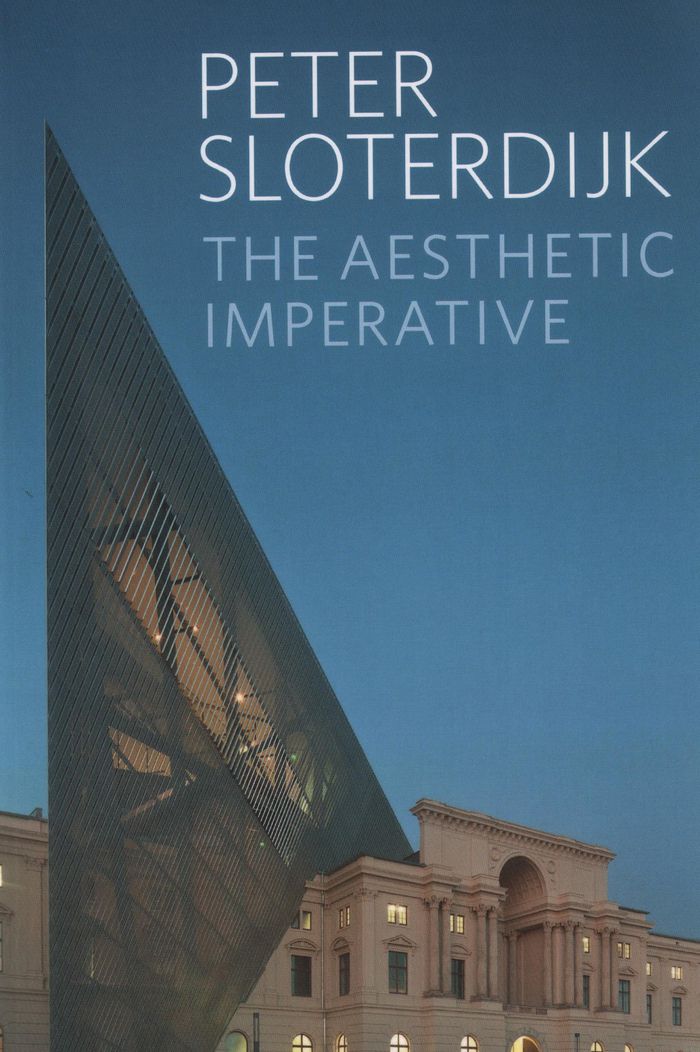
In this wide-ranging book, renowned philosopher and cultural theorist Peter Sloterdijk examines art in all its rich and varied forms: from music to architecture, light to movement, and design to typography. Moving between the visible and the invisible, the audible and the inaudible, his analyses span the centuries, from ancient civilizations to contemporary Hollywood. With great verve and insight he considers the key issues that have faced thinkers from Aristotle to Adorno, looking at art in its relation to ethics, epistemology, metaphysics, society, politics, anthropology and the subject.Sloterdijk explores a great variety of topics, including the Greek-Roman invention of postcards, medieval barter with purgatory and relics, the capitalist art market, the black boxes and white cubes of modernism, the rise of world’s fairs in the 19th century, the growth of museum and memorial culture, images of the city and the role of creativity. In doing so, Sloterdijk extends his characteristic method of defamiliarisation to transform the way we look at works of art and movements. His bold and original approach leads us away from the well-trodden paths of conventional art history to develop a theory of aesthetics which rejects strict categorisation, emphasising instead the crucial importance of individual subjectivity as a counter to the latent dangers of collective culture.This sustained collection of reflections, at once playful, serious and provocative, goes to the very heart of Sloterdijk’s enduring philosophical preoccupation with the aesthetic. It will be essential reading for students and scholars of philosophy and aesthetics and will appeal to anyone interested in culture and the arts more generally.
The aesthetic imperative: writings on art
Actions:
Prix:
$34.95
(disponible sur commande)
Résumé:
In this wide-ranging book, renowned philosopher and cultural theorist Peter Sloterdijk examines art in all its rich and varied forms: from music to architecture, light to movement, and design to typography. Moving between the visible and the invisible, the audible and the inaudible, his analyses span the centuries, from ancient civilizations to contemporary Hollywood. With great verve and insight he considers the key issues that have faced thinkers from Aristotle to Adorno, looking at art in its relation to ethics, epistemology, metaphysics, society, politics, anthropology and the subject.Sloterdijk explores a great variety of topics, including the Greek-Roman invention of postcards, medieval barter with purgatory and relics, the capitalist art market, the black boxes and white cubes of modernism, the rise of world’s fairs in the 19th century, the growth of museum and memorial culture, images of the city and the role of creativity. In doing so, Sloterdijk extends his characteristic method of defamiliarisation to transform the way we look at works of art and movements. His bold and original approach leads us away from the well-trodden paths of conventional art history to develop a theory of aesthetics which rejects strict categorisation, emphasising instead the crucial importance of individual subjectivity as a counter to the latent dangers of collective culture.This sustained collection of reflections, at once playful, serious and provocative, goes to the very heart of Sloterdijk’s enduring philosophical preoccupation with the aesthetic. It will be essential reading for students and scholars of philosophy and aesthetics and will appeal to anyone interested in culture and the arts more generally.
Classification:
livres
livres
Publication:
avril 2017
avril 2017
Sujet:
Théorie de l’art
Théorie de l’art
Classification:
livres
livres
Titre:
Architecture goes wild
Architecture goes wild
Actions:
Prix:
$29.95
(disponible sur commande)
Résumé:
In his writings, architect Kas Oosterhuis bridges the gap between theory and practice. His observations are based on the principle of concrete science fiction. He is convinced that every construct - hardware or software - that can be formulated as a consistent set of rules is realizable within the social constraints of our present-day culture. In his essay(...)
$29.95
(disponible sur commande)
Résumé:
In his writings, architect Kas Oosterhuis bridges the gap between theory and practice. His observations are based on the principle of concrete science fiction. He is convinced that every construct - hardware or software - that can be formulated as a consistent set of rules is realizable within the social constraints of our present-day culture. In his essay(...)
Titre:
Architecture goes wild
Actions:
Prix:
$29.95
(disponible sur commande)
Résumé:
In his writings, architect Kas Oosterhuis bridges the gap between theory and practice. His observations are based on the principle of concrete science fiction. He is convinced that every construct - hardware or software - that can be formulated as a consistent set of rules is realizable within the social constraints of our present-day culture. In his essay 'Space_Time_Volume' Kas Oosterhuis places himself in the local and temporary delamination point between the micro- and macroworlds. He speculates on a seamless continuity of these worlds where the instrumental human position is only one of many possible positions. Our perception of the universe is based on observations made by instruments. Language is seen as such an instrument. In 'Wild Bodies' Oosterhuis asserts that all true architecture inevitably will be programmed to perform in real time. This point of view is based on the observation that traditional fixed and static architecture is a highly unlikely state among all possible ones. An architectural construct is regarded as a body with real-time behaviour that is always in motion. Computer programs speak the new instrumental language in which potential new worlds are described. 'Automotive Styling' declares the human driver of the automobile to be the voluntary prisoner of the physical car-road communications network. In 'Vectorial Bodies' the human driver is nothing less than fuzzy software programming the car to lead it to his destinations. There is no place for romantic ideas such as freedom of movement, but there is the overwhelming desire of carbon-based life forms to exchange data with industrial and digital life forms.
Architecture goes wild
Actions:
Prix:
$29.95
(disponible sur commande)
Résumé:
In his writings, architect Kas Oosterhuis bridges the gap between theory and practice. His observations are based on the principle of concrete science fiction. He is convinced that every construct - hardware or software - that can be formulated as a consistent set of rules is realizable within the social constraints of our present-day culture. In his essay 'Space_Time_Volume' Kas Oosterhuis places himself in the local and temporary delamination point between the micro- and macroworlds. He speculates on a seamless continuity of these worlds where the instrumental human position is only one of many possible positions. Our perception of the universe is based on observations made by instruments. Language is seen as such an instrument. In 'Wild Bodies' Oosterhuis asserts that all true architecture inevitably will be programmed to perform in real time. This point of view is based on the observation that traditional fixed and static architecture is a highly unlikely state among all possible ones. An architectural construct is regarded as a body with real-time behaviour that is always in motion. Computer programs speak the new instrumental language in which potential new worlds are described. 'Automotive Styling' declares the human driver of the automobile to be the voluntary prisoner of the physical car-road communications network. In 'Vectorial Bodies' the human driver is nothing less than fuzzy software programming the car to lead it to his destinations. There is no place for romantic ideas such as freedom of movement, but there is the overwhelming desire of carbon-based life forms to exchange data with industrial and digital life forms.
Classification:
livres
livres
Publication:
mars 2001, Rotterdam
mars 2001, Rotterdam
Sujet:
Théorie de l’architecture
Théorie de l’architecture
Classification:
livres
livres
Actions:
Exemplaires:
Description:
xiii, 202 pages : illustrations ; 24 cm
Description:
xiii, 202 pages : illustrations ; 24 cm
Auteur:
Sujet:
- Plant layout.,
- Mass production United States.,
- Production engineering.,
- Industrial efficiency United States.,
- Implantation (Organisation),
- Production de masse États-Unis.,
- Technique de la production.,
- Efficience dans l'industrie États-Unis.,
- Industrial efficiency,
- Mass production,
- Massenfertigung,
- Industriebau,
- Fabrieksgebouwen.,
- Massaproductie.,
- United States,
- USA,
- Hochschulschrift.
Publication:
Baltimore : Johns Hopkins University Press, ©1996.
Baltimore : Johns Hopkins University Press, ©1996.
Titre:
The rational factory : architecture, technology, and work in America's age of mass production / Lindy Biggs.
Actions:
Exemplaires:
Description:
xiii, 202 pages : illustrations ; 24 cm
The rational factory : architecture, technology, and work in America's age of mass production / Lindy Biggs.
Actions:
Exemplaires:
Description:
xiii, 202 pages : illustrations ; 24 cm
Classification:
livres
livres
Publication:
Baltimore : Johns Hopkins University Press, ©1996.
Baltimore : Johns Hopkins University Press, ©1996.
Auteur:
Sujet:
- Plant layout.,
- Mass production United States.,
- Production engineering.,
- Industrial efficiency United States.,
- Implantation (Organisation),
- Production de masse États-Unis.,
- Technique de la production.,
- Efficience dans l'industrie États-Unis.,
- Industrial efficiency,
- Mass production,
- Massenfertigung,
- Industriebau,
- Fabrieksgebouwen.,
- Massaproductie.,
- United States,
- USA,
- Hochschulschrift.
Classification:
livres
livres
Actions:
Exemplaires:
Description:
xxx, 331 pages : illustrations, map ; 26 cm
Description:
xxx, 331 pages : illustrations, map ; 26 cm
Auteur:
Sujet:
- Maillart, Robert, 1872-1940.,
- Maillart, Robert 1872-1940,
- Maillart, Robert.,
- Maillart, Robert, (1872-1940),
- British Centre Die Brücke Düsseldorf,
- EKA/EDK-Tagung,
- Civil engineers Switzerland Biography.,
- Concrete bridges Switzerland Design and construction.,
- Architecture Switzerland Aesthetics.,
- Structural design.,
- Ingénieurs civils Suisse Biographies.,
- Ponts en béton Suisse Conception et construction.,
- Architecture Suisse Esthétique.,
- Constructions Calcul.,
- Architecture Aesthetics.,
- Civil engineers.,
- Concrete bridges Design and construction.,
- Stahlbetonbrücke,
- Architektur,
- Civiele techniek.,
- Gebouwen.,
- Architects Switzerland 20th century Biography.,
- Ponts Conception et construction Suisse.,
- Architecture 1900-1945 Suisse.,
- Switzerland.,
- Architecture Aesthetics Switzerland,
- Bridges, Concrete Design and construction Switzerland,
- Civil engineers Biography Switzerland,
- Biographie.,
- collective biographies.,
- Biographies.
Publication:
Cambridge ; New York, NY, USA ; Melbourne, Australia : Cambridge University Press, 1997.
Cambridge ; New York, NY, USA ; Melbourne, Australia : Cambridge University Press, 1997.
Titre:
Robert Maillart : builder, designer, and artist / David P. Billington.
Actions:
Exemplaires:
Description:
xxx, 331 pages : illustrations, map ; 26 cm
Robert Maillart : builder, designer, and artist / David P. Billington.
Actions:
Exemplaires:
Description:
xxx, 331 pages : illustrations, map ; 26 cm
Classification:
livres
livres
Publication:
Cambridge ; New York, NY, USA ; Melbourne, Australia : Cambridge University Press, 1997.
Cambridge ; New York, NY, USA ; Melbourne, Australia : Cambridge University Press, 1997.
Auteur:
Sujet:
- Maillart, Robert, 1872-1940.,
- Maillart, Robert 1872-1940,
- Maillart, Robert.,
- Maillart, Robert, (1872-1940),
- British Centre Die Brücke Düsseldorf,
- EKA/EDK-Tagung,
- Civil engineers Switzerland Biography.,
- Concrete bridges Switzerland Design and construction.,
- Architecture Switzerland Aesthetics.,
- Structural design.,
- Ingénieurs civils Suisse Biographies.,
- Ponts en béton Suisse Conception et construction.,
- Architecture Suisse Esthétique.,
- Constructions Calcul.,
- Architecture Aesthetics.,
- Civil engineers.,
- Concrete bridges Design and construction.,
- Stahlbetonbrücke,
- Architektur,
- Civiele techniek.,
- Gebouwen.,
- Architects Switzerland 20th century Biography.,
- Ponts Conception et construction Suisse.,
- Architecture 1900-1945 Suisse.,
- Switzerland.,
- Architecture Aesthetics Switzerland,
- Bridges, Concrete Design and construction Switzerland,
- Civil engineers Biography Switzerland,
- Biographie.,
- collective biographies.,
- Biographies.
Classification:
livres
livres
Actions:
Exemplaires:
Description:
92 pages : illustrations (some color) ; 28 cm + 1 audio disc (digital ; 4 3/4 in.)
- Bibliothèque main slipcase 235408 | NA44.W949.9 S75 2004 | slipcase | Disponible
- Bibliothèque main 235403 | NA44.W949.9 S75 2004 | Disponible
Description:
92 pages : illustrations (some color) ; 28 cm + 1 audio disc (digital ; 4 3/4 in.)
Auteur:
Sujet:
- Wright, Frank Lloyd, 1867-1959.,
- Frank Lloyd Wright Archives.,
- Architects United States Biography.,
- Organic architecture United States.,
- Architecture United States History 20th century Sources.,
- Architecture United States 20th century Sources.,
- Biography as a literary form.,
- Biography.,
- Biographies as Topic.,
- Architectes États-Unis Biographies.,
- Architecture organique États-Unis.,
- Architecture États-Unis Histoire 20e siècle Sources.,
- Biographie (Genre littéraire),
- Biographies.,
- biographies (literary genre),
- biography (general genre),
- Architects,
- Architecture,
- Organic architecture,
- United States,
- Interview,
- compact discs.,
- optical disks.,
- quotations (texts),
- interviews.,
- correspondence.,
- CD-ROMs.,
- Quotations,
- Interviews,
- History,
- Sources,
- Books.,
- Citations.
Publication:
Philadelphia, Pa. : Running Press, ©2004.
Philadelphia, Pa. : Running Press, ©2004.
Titre:
Frank Lloyd Wright : the interactive portfolio : rare removable treasures, hand-drawn sketches, original letters, and more from the official archives / Margo Stipe.
Actions:
Exemplaires:
Description:
92 pages : illustrations (some color) ; 28 cm + 1 audio disc (digital ; 4 3/4 in.)
Frank Lloyd Wright : the interactive portfolio : rare removable treasures, hand-drawn sketches, original letters, and more from the official archives / Margo Stipe.
Actions:
Exemplaires:
- Bibliothèque main slipcase 235408 | NA44.W949.9 S75 2004 | slipcase | Disponible
- Bibliothèque main 235403 | NA44.W949.9 S75 2004 | Disponible
Description:
92 pages : illustrations (some color) ; 28 cm + 1 audio disc (digital ; 4 3/4 in.)
Classification:
livres
livres
Publication:
Philadelphia, Pa. : Running Press, ©2004.
Philadelphia, Pa. : Running Press, ©2004.
Auteur:
Sujet:
- Wright, Frank Lloyd, 1867-1959.,
- Frank Lloyd Wright Archives.,
- Architects United States Biography.,
- Organic architecture United States.,
- Architecture United States History 20th century Sources.,
- Architecture United States 20th century Sources.,
- Biography as a literary form.,
- Biography.,
- Biographies as Topic.,
- Architectes États-Unis Biographies.,
- Architecture organique États-Unis.,
- Architecture États-Unis Histoire 20e siècle Sources.,
- Biographie (Genre littéraire),
- Biographies.,
- biographies (literary genre),
- biography (general genre),
- Architects,
- Architecture,
- Organic architecture,
- United States,
- Interview,
- compact discs.,
- optical disks.,
- quotations (texts),
- interviews.,
- correspondence.,
- CD-ROMs.,
- Quotations,
- Interviews,
- History,
- Sources,
- Books.,
- Citations.
Classification:
livres
livres
Actions:
Prix:
$96.00
(disponible sur commande)
Résumé:
Recognized in his own time for extraordinary architectural achievements, Leon Battista Alberti (14041472) five hundred years after his death continues to influence the practice and theory of architecture. This book is the first full-scale study of Alberti's life and architecture in more than a quarter century. Robert Tavernor provides a biographical account of the(...)
$96.00
(disponible sur commande)
Résumé:
Recognized in his own time for extraordinary architectural achievements, Leon Battista Alberti (14041472) five hundred years after his death continues to influence the practice and theory of architecture. This book is the first full-scale study of Alberti's life and architecture in more than a quarter century. Robert Tavernor provides a biographical account of the(...)
Titre:
On Alberti and the art of building
Actions:
Prix:
$96.00
(disponible sur commande)
Résumé:
Recognized in his own time for extraordinary architectural achievements, Leon Battista Alberti (14041472) five hundred years after his death continues to influence the practice and theory of architecture. This book is the first full-scale study of Alberti's life and architecture in more than a quarter century. Robert Tavernor provides a biographical account of the Italian architect and a detailed consideration of each of the building projects with which he was involved. With new reconstructions of Alberti's buildings and new interpretations of his design intentions, this book will fascinate every reader with an interest in Renaissance architecture. From Alberti's supreme knowledge of the thought and buildings of antiquity, he developed a set of writings on science and the visual arts, including his important treatise on architecture, De re aedificatoria. In this volume, Tavernor examines Alberti's architectural writings and his practical example, his relations with his patrons, how he extended his theory into practice through major building projects across Italy, and how he succeeded in raising the status of architecture to an art-one that sought harmony with the natural world. Focusing on the analysis of Alberti's buildings, the author sets each in historical context; provides a building history; and considers source material, proportional systems, and iconography. He concludes the book with a fresh view of Alberti's theory and practice and a summary of his design process.
On Alberti and the art of building
Actions:
Prix:
$96.00
(disponible sur commande)
Résumé:
Recognized in his own time for extraordinary architectural achievements, Leon Battista Alberti (14041472) five hundred years after his death continues to influence the practice and theory of architecture. This book is the first full-scale study of Alberti's life and architecture in more than a quarter century. Robert Tavernor provides a biographical account of the Italian architect and a detailed consideration of each of the building projects with which he was involved. With new reconstructions of Alberti's buildings and new interpretations of his design intentions, this book will fascinate every reader with an interest in Renaissance architecture. From Alberti's supreme knowledge of the thought and buildings of antiquity, he developed a set of writings on science and the visual arts, including his important treatise on architecture, De re aedificatoria. In this volume, Tavernor examines Alberti's architectural writings and his practical example, his relations with his patrons, how he extended his theory into practice through major building projects across Italy, and how he succeeded in raising the status of architecture to an art-one that sought harmony with the natural world. Focusing on the analysis of Alberti's buildings, the author sets each in historical context; provides a building history; and considers source material, proportional systems, and iconography. He concludes the book with a fresh view of Alberti's theory and practice and a summary of his design process.
Classification:
livres
livres
Publication:
décembre 1998, New Haven
décembre 1998, New Haven
Sujet:
Traités
Traités
Classification:
livres
livres

Actions:
Prix:
$48.00
(disponible sur commande)
Résumé:
Is there a cultural logic of what we have come to call the information age? Have the technologies and techniques centered on the computer provided not only tools but also the metaphors through which we now understand the social and economic formation of our world? In Control, Seb Franklin addresses the conditions of knowledge that make the concept of the "information(...)
$48.00
(disponible sur commande)
Résumé:
Is there a cultural logic of what we have come to call the information age? Have the technologies and techniques centered on the computer provided not only tools but also the metaphors through which we now understand the social and economic formation of our world? In Control, Seb Franklin addresses the conditions of knowledge that make the concept of the "information(...)
Titre:
Control: digitality as cultural logic
Actions:
Prix:
$48.00
(disponible sur commande)
Résumé:
Is there a cultural logic of what we have come to call the information age? Have the technologies and techniques centered on the computer provided not only tools but also the metaphors through which we now understand the social and economic formation of our world? In Control, Seb Franklin addresses the conditions of knowledge that make the concept of the "information economy" possible while at the same time obscuring its effects on material social spaces. In so doing, Franklin traces three intertwined threads: the relationships among information, labor, and social management that emerged in the nineteenth century; the mid-twentieth-century diffusion of computational metaphors; and the appearance of informatic principles in certain contemporary socioeconomic and cultural practices. Drawing on critical theory, media theory, and the history of science, Franklin names control as the episteme grounding late capitalism. Beyond any specific device or set of technically mediated practices, digitality functions within this episteme as the logical basis for reshaped concepts of labor, subjectivity, and collectivity, as well as for the intensification of older modes of exclusion and dispossession. In tracking the pervasiveness of this logical mode into the present, Franklin locates the cultural traces of control across a diverse body of objects and practices, from cybernetics to economic theory and management styles, and from concepts of language and subjectivity to literary texts, films, and video games.
Control: digitality as cultural logic
Actions:
Prix:
$48.00
(disponible sur commande)
Résumé:
Is there a cultural logic of what we have come to call the information age? Have the technologies and techniques centered on the computer provided not only tools but also the metaphors through which we now understand the social and economic formation of our world? In Control, Seb Franklin addresses the conditions of knowledge that make the concept of the "information economy" possible while at the same time obscuring its effects on material social spaces. In so doing, Franklin traces three intertwined threads: the relationships among information, labor, and social management that emerged in the nineteenth century; the mid-twentieth-century diffusion of computational metaphors; and the appearance of informatic principles in certain contemporary socioeconomic and cultural practices. Drawing on critical theory, media theory, and the history of science, Franklin names control as the episteme grounding late capitalism. Beyond any specific device or set of technically mediated practices, digitality functions within this episteme as the logical basis for reshaped concepts of labor, subjectivity, and collectivity, as well as for the intensification of older modes of exclusion and dispossession. In tracking the pervasiveness of this logical mode into the present, Franklin locates the cultural traces of control across a diverse body of objects and practices, from cybernetics to economic theory and management styles, and from concepts of language and subjectivity to literary texts, films, and video games.
Classification:
livres
livres
Publication:
novembre 2015
novembre 2015
Classification:
livres
livres
Actions:
Exemplaires:
Description:
xix, 256 pages : illustrations ; 26 cm
Description:
xix, 256 pages : illustrations ; 26 cm
Auteur:
Sujet:
- Architecture and globalization.,
- Architecture and society.,
- Architecture, British colonial.,
- City planning Asia Case studies.,
- Postcolonialism Asia Case studies.,
- Architecture et mondialisation.,
- Architecture et société.,
- Architecture coloniale britannique.,
- Urbanisme Asie Études de cas.,
- Postcolonialisme Asie Études de cas.,
- City planning,
- Postcolonialism,
- Postkolonialismus,
- Architekturtheorie,
- Globalisierung,
- Architektur,
- Gesellschaft,
- Stadtplanung,
- Bouwkunst.,
- Openbare ruimte.,
- Stadscultuur.,
- Internationalisatie.,
- Architecture Aspect social.,
- Urbanisme 20e siècle.,
- Urbanisme Asie Cas, Études de.,
- Asie Influence coloniale.,
- Architecture.,
- Mondialisation.,
- Postcolonialisme.,
- Société,
- Urbanisme.,
- Asia,
- Asien,
- Case studies.,
- Études de cas.
Publication:
London ; New York : Routledge, 2004.
London ; New York : Routledge, 2004.
Titre:
Spaces of global cultures : architecture, urbanism, identity / Anthony D. King.
Actions:
Exemplaires:
Description:
xix, 256 pages : illustrations ; 26 cm
Spaces of global cultures : architecture, urbanism, identity / Anthony D. King.
Actions:
Exemplaires:
Description:
xix, 256 pages : illustrations ; 26 cm
Classification:
livres
livres
Publication:
London ; New York : Routledge, 2004.
London ; New York : Routledge, 2004.
Auteur:
Sujet:
- Architecture and globalization.,
- Architecture and society.,
- Architecture, British colonial.,
- City planning Asia Case studies.,
- Postcolonialism Asia Case studies.,
- Architecture et mondialisation.,
- Architecture et société.,
- Architecture coloniale britannique.,
- Urbanisme Asie Études de cas.,
- Postcolonialisme Asie Études de cas.,
- City planning,
- Postcolonialism,
- Postkolonialismus,
- Architekturtheorie,
- Globalisierung,
- Architektur,
- Gesellschaft,
- Stadtplanung,
- Bouwkunst.,
- Openbare ruimte.,
- Stadscultuur.,
- Internationalisatie.,
- Architecture Aspect social.,
- Urbanisme 20e siècle.,
- Urbanisme Asie Cas, Études de.,
- Asie Influence coloniale.,
- Architecture.,
- Mondialisation.,
- Postcolonialisme.,
- Société,
- Urbanisme.,
- Asia,
- Asien,
- Case studies.,
- Études de cas.
Classification:
livres
livres
Titre:
Photoshow
Photoshow
Actions:
Prix:
$61.50
(disponible sur commande)
Résumé:
Even before being printed in a book to narrate true life (as much as it may seem brutal or idillyc), or to recall the features of a face, since its early years photography has been “exhibited” to audiences. An history of photography narrated through exhibitions and the theory that has accompanied it has never been carried out yet. It would be very interesting,(...)
$61.50
(disponible sur commande)
Résumé:
Even before being printed in a book to narrate true life (as much as it may seem brutal or idillyc), or to recall the features of a face, since its early years photography has been “exhibited” to audiences. An history of photography narrated through exhibitions and the theory that has accompanied it has never been carried out yet. It would be very interesting,(...)
Titre:
Photoshow
Actions:
Prix:
$61.50
(disponible sur commande)
Résumé:
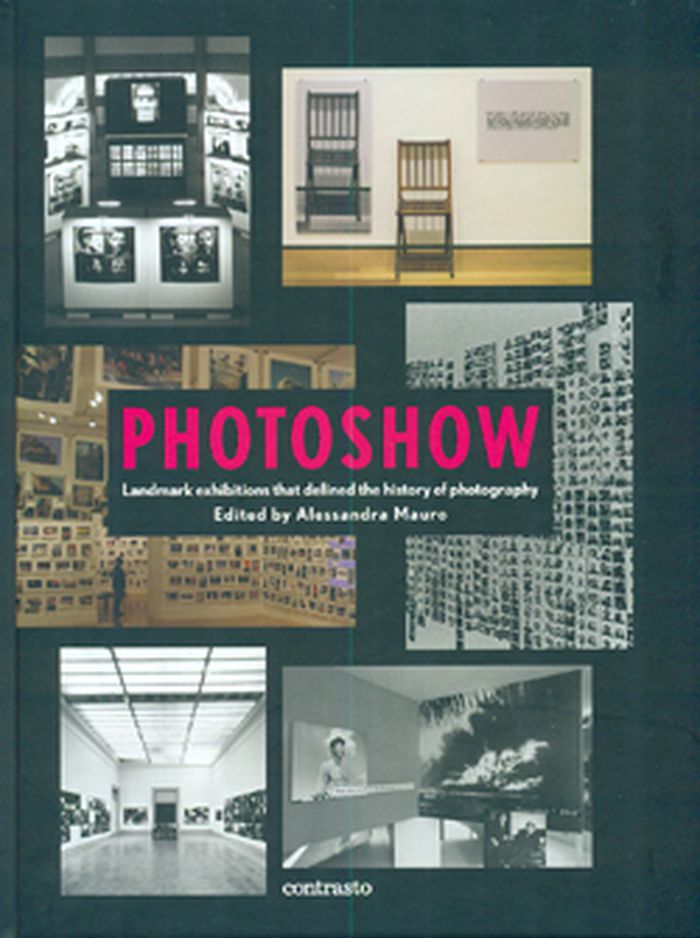
Even before being printed in a book to narrate true life (as much as it may seem brutal or idillyc), or to recall the features of a face, since its early years photography has been “exhibited” to audiences. An history of photography narrated through exhibitions and the theory that has accompanied it has never been carried out yet. It would be very interesting, furthermore, to trace back the different aesthetic schools and communication theories that have pointed out the evolution of the history of photography and its public moments par excellence: exhibitions. Installations manifest values, ideologies, politics and aesthetics. An history of photography exhibitions would represent a different and original way of studying photography as a means of expression and contemporary communication. Nowadays photography plays its role on the art and collection market with an unexpected strength and vigour. The discovery and success of a new talent on the market depends on the common work of private galleries, public spaces and the international limelight. The activity of American and European Photography Museums, the numerous great art events and festivals – especially dedicated to the world and market of photography, art galleries that discover new talents and new ways of exhibiting them, all this contributes to a system that works perfectly well presenting new ways of expression for photography, actually widely recognized as heritage of humanity.
Photoshow
Actions:
Prix:
$61.50
(disponible sur commande)
Résumé:
Even before being printed in a book to narrate true life (as much as it may seem brutal or idillyc), or to recall the features of a face, since its early years photography has been “exhibited” to audiences. An history of photography narrated through exhibitions and the theory that has accompanied it has never been carried out yet. It would be very interesting, furthermore, to trace back the different aesthetic schools and communication theories that have pointed out the evolution of the history of photography and its public moments par excellence: exhibitions. Installations manifest values, ideologies, politics and aesthetics. An history of photography exhibitions would represent a different and original way of studying photography as a means of expression and contemporary communication. Nowadays photography plays its role on the art and collection market with an unexpected strength and vigour. The discovery and success of a new talent on the market depends on the common work of private galleries, public spaces and the international limelight. The activity of American and European Photography Museums, the numerous great art events and festivals – especially dedicated to the world and market of photography, art galleries that discover new talents and new ways of exhibiting them, all this contributes to a system that works perfectly well presenting new ways of expression for photography, actually widely recognized as heritage of humanity.
Classification:
livres
livres
Publication:
novembre 2014
novembre 2014
Sujet:
Théorie de la photographie
Théorie de la photographie


