


600 Résultats
Classification:
périodiques
périodiques
Actions:
Prix:
$32.95
(disponible en magasin)
Résumé:
ome places or epochs are identified with certain colours: Siena for example, which lent its name to yellowish-brown pig-ments, or the Habsburg era with its Imperial yellow. Tel Aviv, has its White City – a UNESCO World Heritage site designed by Jewish architects who studied at the Bauhaus. White is the colour identified with the Modern Movement, of course, but the(...)
$32.95
(disponible en magasin)
Résumé:
ome places or epochs are identified with certain colours: Siena for example, which lent its name to yellowish-brown pig-ments, or the Habsburg era with its Imperial yellow. Tel Aviv, has its White City – a UNESCO World Heritage site designed by Jewish architects who studied at the Bauhaus. White is the colour identified with the Modern Movement, of course, but the(...)
Titre:
Detail 12 2016 : colour materials finishes
Actions:
Prix:
$32.95
(disponible en magasin)
Résumé:
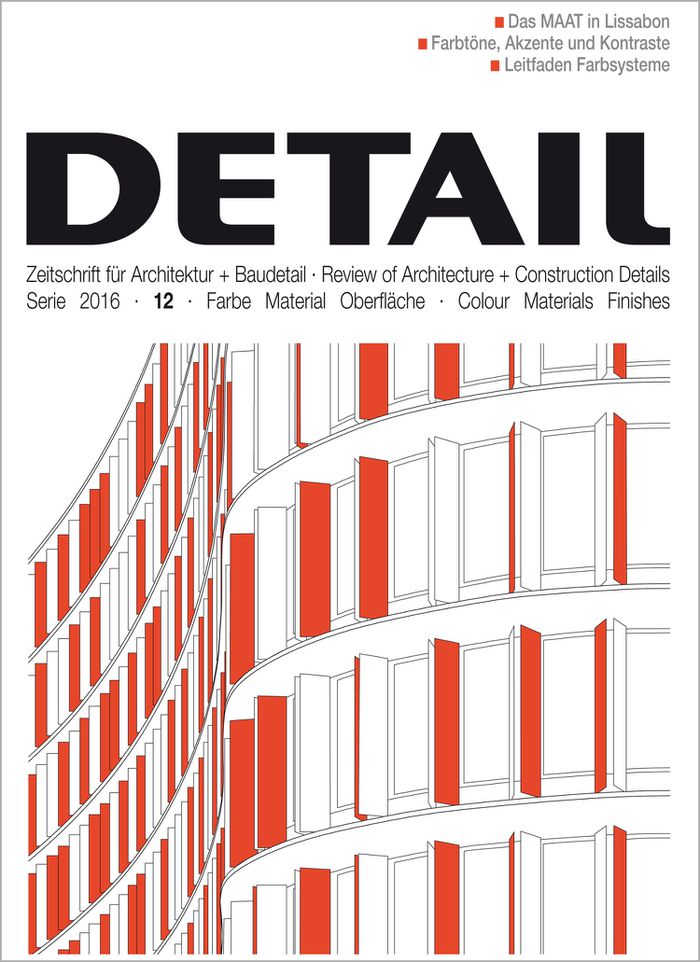
ome places or epochs are identified with certain colours: Siena for example, which lent its name to yellowish-brown pig-ments, or the Habsburg era with its Imperial yellow. Tel Aviv, has its White City – a UNESCO World Heritage site designed by Jewish architects who studied at the Bauhaus. White is the colour identified with the Modern Movement, of course, but the coloured interiors of the masters’ houses in Dessau by Walter Gropius show that not everything was reduced to that hue. There are probably just as many colour theories as there are colour tones; but the streets in our towns and cities are rarely characterized by a consistent colour scheme. In this respect, the materials and their surface finishes play a dominant role. In our December issue, we present various architectural concepts that focus on the effects of colour. For example, the Sparren-burg Visitors’ Centre in Bielefeld with its tamped concrete facades enters into a dialogue with the historical surroundings, while the polychrome glazing of Sauerbruch Hutton’s office building in London forms a deliberate counterpoint to the urban environment. As one can see, architecture has to come to terms with colour. There is no such thing as neutrality.
Detail 12 2016 : colour materials finishes
Actions:
Prix:
$32.95
(disponible en magasin)
Résumé:
ome places or epochs are identified with certain colours: Siena for example, which lent its name to yellowish-brown pig-ments, or the Habsburg era with its Imperial yellow. Tel Aviv, has its White City – a UNESCO World Heritage site designed by Jewish architects who studied at the Bauhaus. White is the colour identified with the Modern Movement, of course, but the coloured interiors of the masters’ houses in Dessau by Walter Gropius show that not everything was reduced to that hue. There are probably just as many colour theories as there are colour tones; but the streets in our towns and cities are rarely characterized by a consistent colour scheme. In this respect, the materials and their surface finishes play a dominant role. In our December issue, we present various architectural concepts that focus on the effects of colour. For example, the Sparren-burg Visitors’ Centre in Bielefeld with its tamped concrete facades enters into a dialogue with the historical surroundings, while the polychrome glazing of Sauerbruch Hutton’s office building in London forms a deliberate counterpoint to the urban environment. As one can see, architecture has to come to terms with colour. There is no such thing as neutrality.
Classification:
périodiques
périodiques
Publication:
décembre 2016
décembre 2016
Sujet:
Revues
Revues
Classification:
livres
livres
Titre:
The Bauhaus: #itsalldesign
The Bauhaus: #itsalldesign
Actions:
Prix:
$95.00
(disponible sur commande)
Résumé:
This volume offers a comprehensive overview of the extended concept of design that was initiated at the Bauhaus. Alongside rare exhibits from design, architecture, art, film and photography--some of which have never previously been published--the book documents the development processes as well as the socio-political concepts behind the Bauhaus. To underline their(...)
$95.00
(disponible sur commande)
Résumé:
This volume offers a comprehensive overview of the extended concept of design that was initiated at the Bauhaus. Alongside rare exhibits from design, architecture, art, film and photography--some of which have never previously been published--the book documents the development processes as well as the socio-political concepts behind the Bauhaus. To underline their(...)
Titre:
The Bauhaus: #itsalldesign
Actions:
Prix:
$95.00
(disponible sur commande)
Résumé:
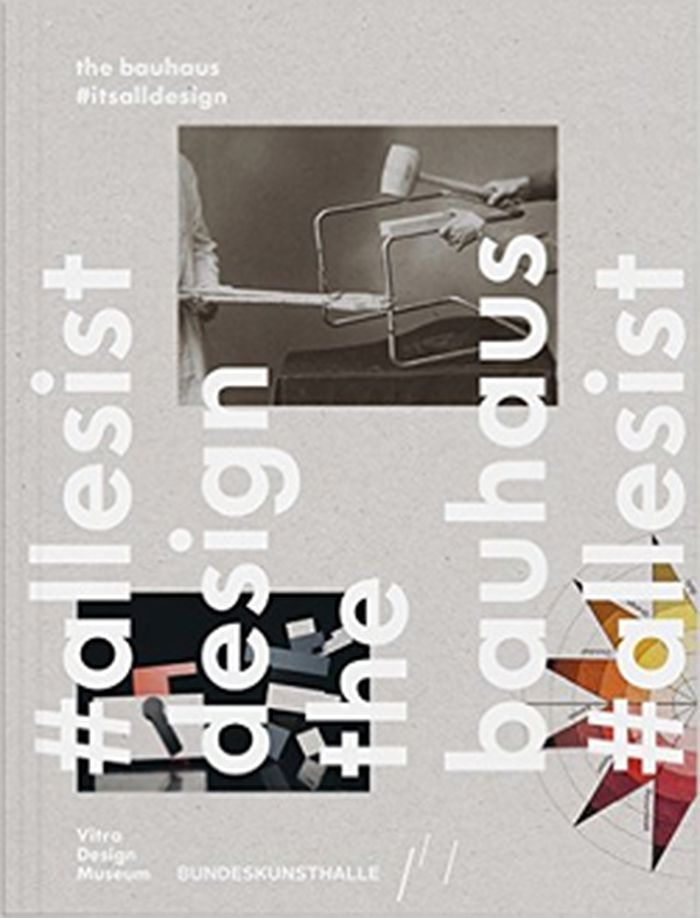
This volume offers a comprehensive overview of the extended concept of design that was initiated at the Bauhaus. Alongside rare exhibits from design, architecture, art, film and photography--some of which have never previously been published--the book documents the development processes as well as the socio-political concepts behind the Bauhaus. To underline their relevance for today's creative practice, these ideas are contrasted to current themes in design such as the digital revolution, and the works of numerous present-day artists and designers. The lavishly illustrated publication features essays by renowned authors such as Arthur Rüegg and Jan Boelen, a glossary of the basic ideas behind design at the Bauhaus, as well as a detailed catalogue section. Among others, Olaf Nicolai, Adrian Sauer, Wilfried Kühn and Joseph Grima have created artistic works on the topic especially for the exhibition. Numerous short articles by distinguished designers, artists and architects from all over the world, who, with their ideas, projects and theories reflect on the topicality of the Bauhaus and its influence on 21st-century design, form part of this new and contemporary look at the movement. With works by Josef Albers, Marcel Breuer, Walter Gropius, Marianne Brandt, Wassily Kandinsky, Ludwig Mies van der Rohe, Herbert Bayer and many others.
The Bauhaus: #itsalldesign
Actions:
Prix:
$95.00
(disponible sur commande)
Résumé:
This volume offers a comprehensive overview of the extended concept of design that was initiated at the Bauhaus. Alongside rare exhibits from design, architecture, art, film and photography--some of which have never previously been published--the book documents the development processes as well as the socio-political concepts behind the Bauhaus. To underline their relevance for today's creative practice, these ideas are contrasted to current themes in design such as the digital revolution, and the works of numerous present-day artists and designers. The lavishly illustrated publication features essays by renowned authors such as Arthur Rüegg and Jan Boelen, a glossary of the basic ideas behind design at the Bauhaus, as well as a detailed catalogue section. Among others, Olaf Nicolai, Adrian Sauer, Wilfried Kühn and Joseph Grima have created artistic works on the topic especially for the exhibition. Numerous short articles by distinguished designers, artists and architects from all over the world, who, with their ideas, projects and theories reflect on the topicality of the Bauhaus and its influence on 21st-century design, form part of this new and contemporary look at the movement. With works by Josef Albers, Marcel Breuer, Walter Gropius, Marianne Brandt, Wassily Kandinsky, Ludwig Mies van der Rohe, Herbert Bayer and many others.
Classification:
livres
livres
Publication:
octobre 2015
octobre 2015
Sujet:
Modernisme
Modernisme
Classification:
livres
livres
Actions:
Prix:
$97.90
(disponible en magasin)
Résumé:
The sketch is a window into the architects mind. As creative designers, architects are interested in how other architects, particularly successful ones, think through the use of drawings to approach their work. Historically designers have sought inspiration for their own work through an insight into the minds and workings of people they often regard as geniuses. This(...)
$97.90
(disponible en magasin)
Résumé:
The sketch is a window into the architects mind. As creative designers, architects are interested in how other architects, particularly successful ones, think through the use of drawings to approach their work. Historically designers have sought inspiration for their own work through an insight into the minds and workings of people they often regard as geniuses. This(...)
Titre:
Architects' drawings: a selection of sketches by world famous archittects through history
Actions:
Prix:
$97.90
(disponible en magasin)
Résumé:
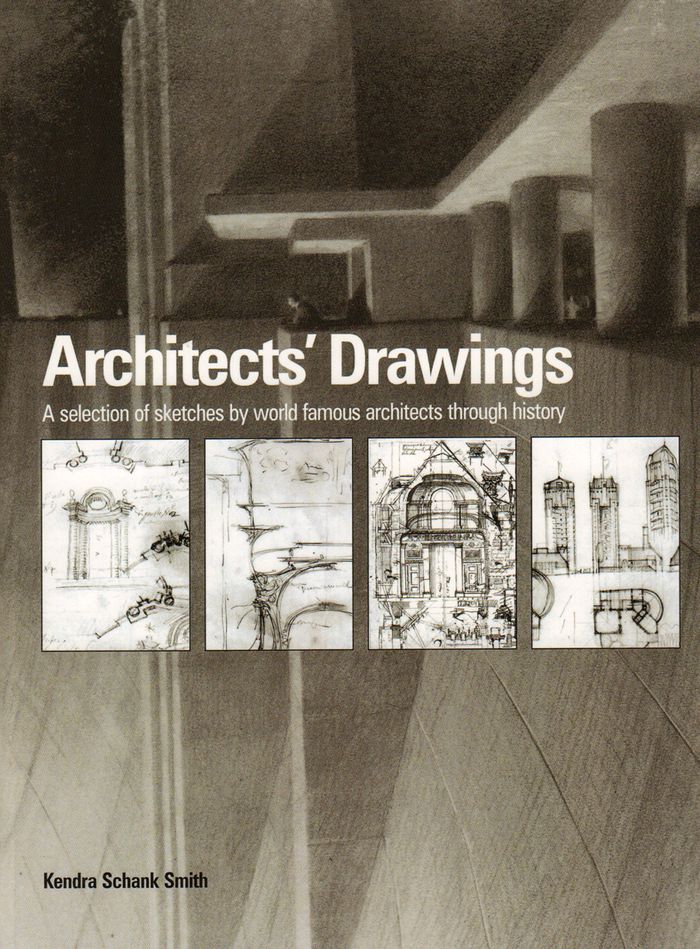
The sketch is a window into the architects mind. As creative designers, architects are interested in how other architects, particularly successful ones, think through the use of drawings to approach their work. Historically designers have sought inspiration for their own work through an insight into the minds and workings of people they often regard as geniuses. This collection of sketches aims to provide this insight. Here for the first time, a wide range of world famous architects' sketches from the Renaissance to the present day can be seen in a single volume. The sketches have been selected to represent the concepts or philosophies of the key movements in architecture in order to develop an overall picture of the role of the sketch in the development of architecture. The book illustrates the work of designers as diverse as Andrea Palladio, Erich Mendelsohn, Sir Edwin Lutyens, Gianlorenzo Bernini, Le Corbusier, Michelangelo, Alvar Aalto, Sir John Soane, Francesco Borromini, Walter Gropius, and contemporary architects Tadao Ando, Zaha Hadid and Frank Gehry to name but a few. Each chronologically placed sketch is accompanied by text providing details about the architect’s life, a look at the sketch in context, and the connection to specific buildings where appropriate. Style, media and meaning are also discussed, developing an explanation of the architect’s thinking and intentions.
Architects' drawings: a selection of sketches by world famous archittects through history
Actions:
Prix:
$97.90
(disponible en magasin)
Résumé:
The sketch is a window into the architects mind. As creative designers, architects are interested in how other architects, particularly successful ones, think through the use of drawings to approach their work. Historically designers have sought inspiration for their own work through an insight into the minds and workings of people they often regard as geniuses. This collection of sketches aims to provide this insight. Here for the first time, a wide range of world famous architects' sketches from the Renaissance to the present day can be seen in a single volume. The sketches have been selected to represent the concepts or philosophies of the key movements in architecture in order to develop an overall picture of the role of the sketch in the development of architecture. The book illustrates the work of designers as diverse as Andrea Palladio, Erich Mendelsohn, Sir Edwin Lutyens, Gianlorenzo Bernini, Le Corbusier, Michelangelo, Alvar Aalto, Sir John Soane, Francesco Borromini, Walter Gropius, and contemporary architects Tadao Ando, Zaha Hadid and Frank Gehry to name but a few. Each chronologically placed sketch is accompanied by text providing details about the architect’s life, a look at the sketch in context, and the connection to specific buildings where appropriate. Style, media and meaning are also discussed, developing an explanation of the architect’s thinking and intentions.
Classification:
livres
livres
Publication:
février 2016
février 2016
Sujet:
Dessin d’architecture
Dessin d’architecture
Classification:
livres
livres
Prix:
$41.95
(disponible sur commande)
Résumé:
Beginning with the inception of the U.S. embassy building program in 1926, and continuing through the 1996 competition for a new embassy in Berlin, "The Architecture of Diplomacy" examines a remarkable(...)
$41.95
(disponible sur commande)
Résumé:
Beginning with the inception of the U.S. embassy building program in 1926, and continuing through the 1996 competition for a new embassy in Berlin, "The Architecture of Diplomacy" examines a remarkable(...)
Publication:
août 1998, New York
août 1998, New York
Titre:
The architecture of diplomacy : building America's embassies
Actions:
Prix:
$41.95
(disponible sur commande)
Résumé:
Beginning with the inception of the U.S. embassy building program in 1926, and continuing through the 1996 competition for a new embassy in Berlin, "The Architecture of Diplomacy" examines a remarkable yet little-known chapter in architectural history. It focuses on the 1950s, when modernism became linked with the idea of freedom and the State Department's Office of Foreign Buildings Operations began to showcase modern architecture in its embassies. Architects could build abroad in styles never sanctioned at home, resulting in unusual and sometimes outlandish designs intended to express an "open" America overseas. Indeed, the embassy building program was part of the nation's larger effort to establish and assert its superpower status following World War II. Terrorist threats and espionage scandals also shaped the worldwide building program, and continue to affect it today. "The Architecture of Diplomacy" features the stories behind the Rio de Janiero and Havana embassies by Harrison & Abramovitz, Ralph Rapson's designs for Stockholm and Copenhagen, Gordon Bunshaft's work in Germany, Eero Saarinen's constructions in London and Oslo, and Edward Durell Stone's embassy in New Delhi. Other architects involved in the program included Arquitectonica; Pietro Belluschi; Marcel Breuer; Walter Gropius; Kallmann, McKinnell & Wood; Richard Neutra; and Skidmore, Owings & Merrill. Author Jane C. Loeffler obtained access to original correspondence, drawings, and photographs that have never been published.
The architecture of diplomacy : building America's embassies
Actions:
Prix:
$41.95
(disponible sur commande)
Résumé:
Beginning with the inception of the U.S. embassy building program in 1926, and continuing through the 1996 competition for a new embassy in Berlin, "The Architecture of Diplomacy" examines a remarkable yet little-known chapter in architectural history. It focuses on the 1950s, when modernism became linked with the idea of freedom and the State Department's Office of Foreign Buildings Operations began to showcase modern architecture in its embassies. Architects could build abroad in styles never sanctioned at home, resulting in unusual and sometimes outlandish designs intended to express an "open" America overseas. Indeed, the embassy building program was part of the nation's larger effort to establish and assert its superpower status following World War II. Terrorist threats and espionage scandals also shaped the worldwide building program, and continue to affect it today. "The Architecture of Diplomacy" features the stories behind the Rio de Janiero and Havana embassies by Harrison & Abramovitz, Ralph Rapson's designs for Stockholm and Copenhagen, Gordon Bunshaft's work in Germany, Eero Saarinen's constructions in London and Oslo, and Edward Durell Stone's embassy in New Delhi. Other architects involved in the program included Arquitectonica; Pietro Belluschi; Marcel Breuer; Walter Gropius; Kallmann, McKinnell & Wood; Richard Neutra; and Skidmore, Owings & Merrill. Author Jane C. Loeffler obtained access to original correspondence, drawings, and photographs that have never been published.
Classification:
livres
livres
Publication:
août 1998, New York
août 1998, New York
Classification:
livres
livres
Actions:
Prix:
$26.95
(disponible sur commande)
Résumé:
The dream of scientific management was a rationalized machine world where life would approach the perfection of an assembly line. But since its early twentieth-century peak this dream has come to seem a dehumanizing nightmare. Henry Ford's assembly lines turned out a quarter of a million cars in 1914, but all of them were black. Forgotten has been the unparalleled new(...)
$26.95
(disponible sur commande)
Résumé:
The dream of scientific management was a rationalized machine world where life would approach the perfection of an assembly line. But since its early twentieth-century peak this dream has come to seem a dehumanizing nightmare. Henry Ford's assembly lines turned out a quarter of a million cars in 1914, but all of them were black. Forgotten has been the unparalleled new(...)
Titre:
The taylorized beauty of the mechanical
Actions:
Prix:
$26.95
(disponible sur commande)
Résumé:
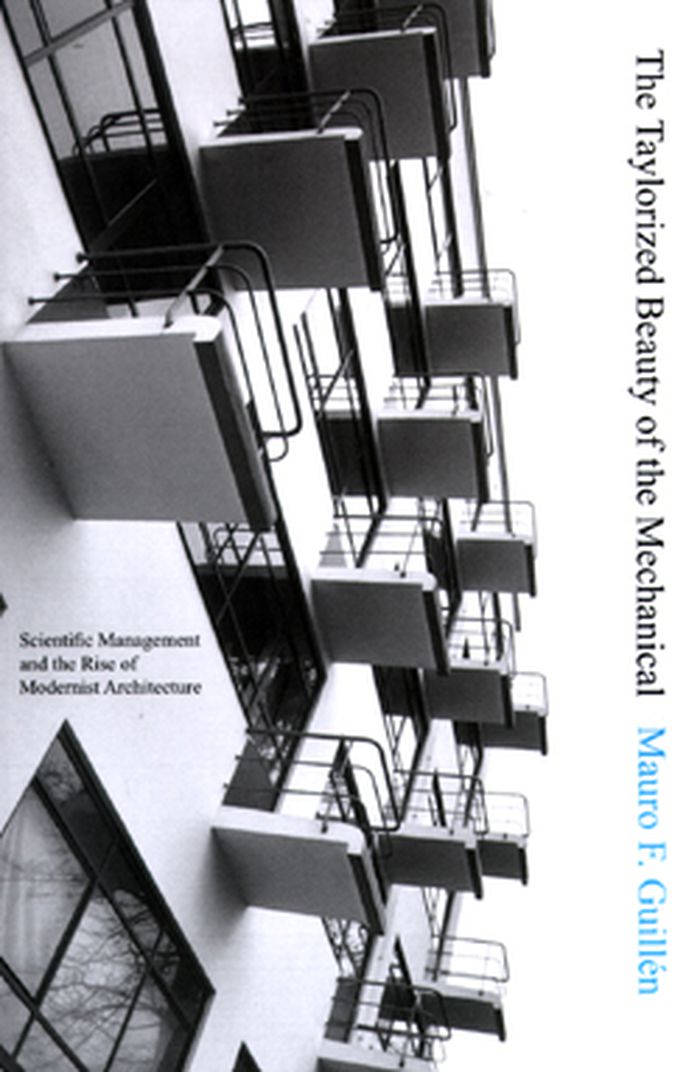
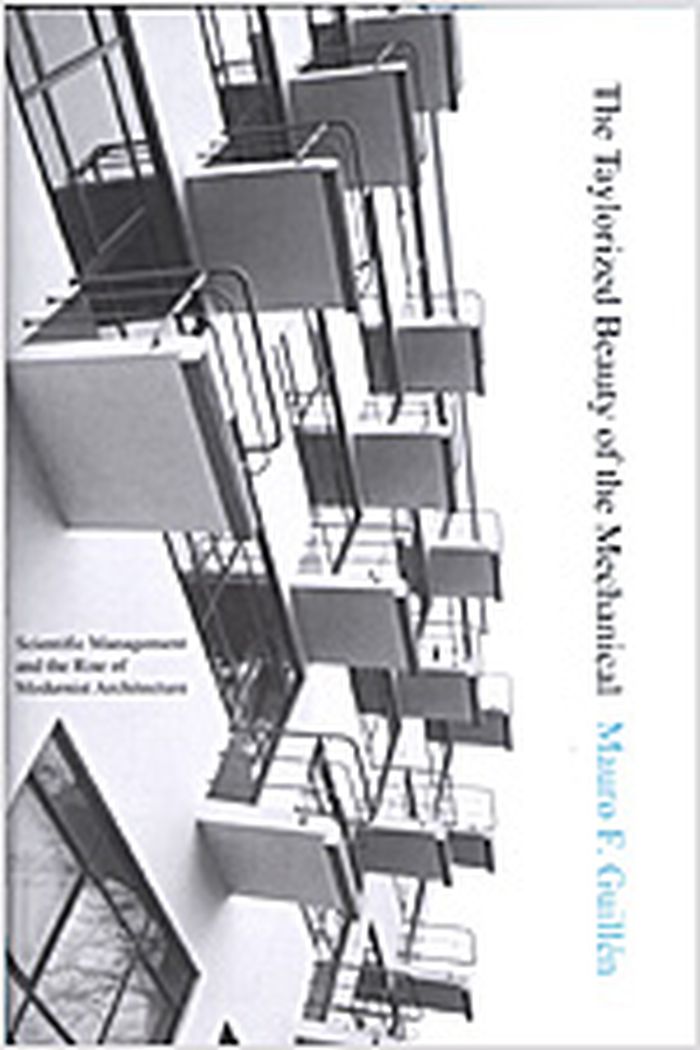
The dream of scientific management was a rationalized machine world where life would approach the perfection of an assembly line. But since its early twentieth-century peak this dream has come to seem a dehumanizing nightmare. Henry Ford's assembly lines turned out a quarter of a million cars in 1914, but all of them were black. Forgotten has been the unparalleled new aesthetic beauty once seen in the ideas of Ford and scientific management pioneer Frederick Winslow Taylor. In The Taylorized Beauty of the Mechanical, Mauro Guillén recovers this history and retells the story of the emergence of modernist architecture as a romance with the ideas of scientific management--one that permanently reshaped the profession of architecture. Modernist architecture's pioneers, Guillén shows, found in scientific management the promise of a new, functional, machine-like--and beautiful--architecture, and the prospect of a new role for the architect as technical professional and social reformer. Taylor and Ford had a signal influence on Bauhaus founder Walter Gropius and on Le Corbusier and his Towards a New Architecture, the most important manifesto of modernist architecture. Architects were so enamored with the ideas of scientific management that they adopted them even when there was no functional advantage to do so. Not a traditional architectural history but rather a sociological study of the profession of architecture during its early modernist period, The Taylorized Beauty of the Mechanical provides a new understanding of the degree to which modernist architecture emerged from a tradition of engineering and industrial management.
The taylorized beauty of the mechanical
Actions:
Prix:
$26.95
(disponible sur commande)
Résumé:
The dream of scientific management was a rationalized machine world where life would approach the perfection of an assembly line. But since its early twentieth-century peak this dream has come to seem a dehumanizing nightmare. Henry Ford's assembly lines turned out a quarter of a million cars in 1914, but all of them were black. Forgotten has been the unparalleled new aesthetic beauty once seen in the ideas of Ford and scientific management pioneer Frederick Winslow Taylor. In The Taylorized Beauty of the Mechanical, Mauro Guillén recovers this history and retells the story of the emergence of modernist architecture as a romance with the ideas of scientific management--one that permanently reshaped the profession of architecture. Modernist architecture's pioneers, Guillén shows, found in scientific management the promise of a new, functional, machine-like--and beautiful--architecture, and the prospect of a new role for the architect as technical professional and social reformer. Taylor and Ford had a signal influence on Bauhaus founder Walter Gropius and on Le Corbusier and his Towards a New Architecture, the most important manifesto of modernist architecture. Architects were so enamored with the ideas of scientific management that they adopted them even when there was no functional advantage to do so. Not a traditional architectural history but rather a sociological study of the profession of architecture during its early modernist period, The Taylorized Beauty of the Mechanical provides a new understanding of the degree to which modernist architecture emerged from a tradition of engineering and industrial management.
Classification:
livres
livres
Publication:
décembre 2008, Princeton
décembre 2008, Princeton
Sujet:
Théorie de l’architecture
Théorie de l’architecture
Classification:
livres
livres
Titre:
The taylorized beauty of the mechanical : scientific managment and rise of modernist architecture
The taylorized beauty of the mechanical : scientific managment and rise of modernist architecture
Actions:
Prix:
$37.50
(disponible sur commande)
Résumé:
The dream of scientific management was a rationalized machine world where life would approach the perfection of an assembly line. But since its early twentieth-century peak this dream has come to seem a dehumanizing nightmare. Henry Ford's assembly lines turned out a quarter of a million cars in 1914, but all of them were black. Forgotten has been the unparalleled new(...)
$37.50
(disponible sur commande)
Résumé:
The dream of scientific management was a rationalized machine world where life would approach the perfection of an assembly line. But since its early twentieth-century peak this dream has come to seem a dehumanizing nightmare. Henry Ford's assembly lines turned out a quarter of a million cars in 1914, but all of them were black. Forgotten has been the unparalleled new(...)
Publication:
juillet 2006, Princeton / Oxford
juillet 2006, Princeton / Oxford
Titre:
The taylorized beauty of the mechanical : scientific managment and rise of modernist architecture
Actions:
Prix:
$37.50
(disponible sur commande)
Résumé:
The dream of scientific management was a rationalized machine world where life would approach the perfection of an assembly line. But since its early twentieth-century peak this dream has come to seem a dehumanizing nightmare. Henry Ford's assembly lines turned out a quarter of a million cars in 1914, but all of them were black. Forgotten has been the unparalleled new aesthetic beauty once seen in the ideas of Ford and scientific management pioneer Frederick Winslow Taylor. In "The taylorized beauty of the mechanical", Mauro Guillén recovers this history and retells the story of the emergence of modernist architecture as a romance with the ideas of scientific management - one that permanently reshaped the profession of architecture. Modernist architecture's pioneers, Guillén shows, found in scientific management the promise of a new, functional, machine-like--and beautiful--architecture, and the prospect of a new role for the architect as technical professional and social reformer. Taylor and Ford had a signal influence on Bauhaus founder Walter Gropius and on Le Corbusier and his Towards a New Architecture, the most important manifesto of modernist architecture. Architects were so enamored with the ideas of scientific management that they adopted them even when there was no functional advantage to do so. Not a traditional architectural history but rather a sociological study of the profession of architecture during its early modernist period, "The taylorized beauty of the mechanical" provides a new understanding of the degree to which modernist architecture emerged from a tradition of engineering and industrial management.
The taylorized beauty of the mechanical : scientific managment and rise of modernist architecture
Actions:
Prix:
$37.50
(disponible sur commande)
Résumé:
The dream of scientific management was a rationalized machine world where life would approach the perfection of an assembly line. But since its early twentieth-century peak this dream has come to seem a dehumanizing nightmare. Henry Ford's assembly lines turned out a quarter of a million cars in 1914, but all of them were black. Forgotten has been the unparalleled new aesthetic beauty once seen in the ideas of Ford and scientific management pioneer Frederick Winslow Taylor. In "The taylorized beauty of the mechanical", Mauro Guillén recovers this history and retells the story of the emergence of modernist architecture as a romance with the ideas of scientific management - one that permanently reshaped the profession of architecture. Modernist architecture's pioneers, Guillén shows, found in scientific management the promise of a new, functional, machine-like--and beautiful--architecture, and the prospect of a new role for the architect as technical professional and social reformer. Taylor and Ford had a signal influence on Bauhaus founder Walter Gropius and on Le Corbusier and his Towards a New Architecture, the most important manifesto of modernist architecture. Architects were so enamored with the ideas of scientific management that they adopted them even when there was no functional advantage to do so. Not a traditional architectural history but rather a sociological study of the profession of architecture during its early modernist period, "The taylorized beauty of the mechanical" provides a new understanding of the degree to which modernist architecture emerged from a tradition of engineering and industrial management.
Classification:
livres
livres
Publication:
juillet 2006, Princeton / Oxford
juillet 2006, Princeton / Oxford
Classification:
livres
livres
Titre:
Gunnar Asplund
Gunnar Asplund
Actions:
Prix:
$99.95
(disponible sur commande)
Résumé:
Although a contemporary of Walter Gropius and Le Corbusier, Asplund pursued an architecture that does not fit easily into their view of Modernism as a movement that rejected the applied styles and ornamentation of the nineteenth century. Instead, Asplund was at ease with classical or vernacular elements blending with modernist ideals, and displayed a sensitive(...)
$99.95
(disponible sur commande)
Résumé:
Although a contemporary of Walter Gropius and Le Corbusier, Asplund pursued an architecture that does not fit easily into their view of Modernism as a movement that rejected the applied styles and ornamentation of the nineteenth century. Instead, Asplund was at ease with classical or vernacular elements blending with modernist ideals, and displayed a sensitive(...)
Titre:
Gunnar Asplund
Actions:
Prix:
$99.95
(disponible sur commande)
Résumé:
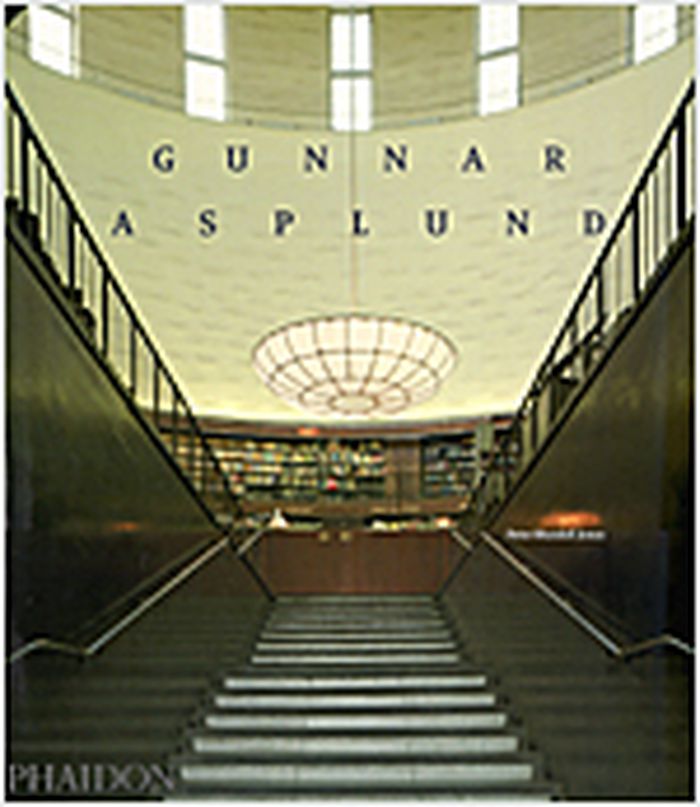
Although a contemporary of Walter Gropius and Le Corbusier, Asplund pursued an architecture that does not fit easily into their view of Modernism as a movement that rejected the applied styles and ornamentation of the nineteenth century. Instead, Asplund was at ease with classical or vernacular elements blending with modernist ideals, and displayed a sensitive understanding of the relationship between architecture and its surrounding landscape. His abilities are amply demonstrated in masterpieces like the Woodland Cemetery. In 1915 Asplund and Sigurd Lewerentz won the competition to plan a new cemetery for Stockholm. Their romantic plan, in which a symbolically straight, narrow pathway abruptly curves blindly away into the forest, and with open fields capped by burial-mound-like hillocks, earned both of them further commissions for buildings within the cemetery. Asplund’s Woodland Chapel of 1920 is tucked into the forest and uses classical elements such as Doric columns, but sparingly and in unusual ways, while manipulating scale in ways that further the spiritual and contemplative nature of the building. The Crematorium and Monument Hall of 1935 are dignified and powerful, unornamented but not austere, to offer comfort to those who use them. The Gothenburg Law Courts, another critical work which was finally completed in 1937, shows how Asplund relates the architecture of Modernism to a historical plan and façade. Buildings such as the architect’s own summer house at Stennäs and the crematoria at Kviberg and Skövde, dating from the later part of his life when he had begun to embrace Modernism, still show traditional classical and vernacular influences and are evidence that not all forms of Modernism constituted a fresh start.
Gunnar Asplund
Actions:
Prix:
$99.95
(disponible sur commande)
Résumé:
Although a contemporary of Walter Gropius and Le Corbusier, Asplund pursued an architecture that does not fit easily into their view of Modernism as a movement that rejected the applied styles and ornamentation of the nineteenth century. Instead, Asplund was at ease with classical or vernacular elements blending with modernist ideals, and displayed a sensitive understanding of the relationship between architecture and its surrounding landscape. His abilities are amply demonstrated in masterpieces like the Woodland Cemetery. In 1915 Asplund and Sigurd Lewerentz won the competition to plan a new cemetery for Stockholm. Their romantic plan, in which a symbolically straight, narrow pathway abruptly curves blindly away into the forest, and with open fields capped by burial-mound-like hillocks, earned both of them further commissions for buildings within the cemetery. Asplund’s Woodland Chapel of 1920 is tucked into the forest and uses classical elements such as Doric columns, but sparingly and in unusual ways, while manipulating scale in ways that further the spiritual and contemplative nature of the building. The Crematorium and Monument Hall of 1935 are dignified and powerful, unornamented but not austere, to offer comfort to those who use them. The Gothenburg Law Courts, another critical work which was finally completed in 1937, shows how Asplund relates the architecture of Modernism to a historical plan and façade. Buildings such as the architect’s own summer house at Stennäs and the crematoria at Kviberg and Skövde, dating from the later part of his life when he had begun to embrace Modernism, still show traditional classical and vernacular influences and are evidence that not all forms of Modernism constituted a fresh start.
Classification:
livres
livres
Publication:
octobre 2004, London
octobre 2004, London
Sujet:
Architecture, monographies
Architecture, monographies
Classification:
livres
livres
Prix:
$58.95
(disponible sur commande)
Résumé:
The Pan Am Building and the reaction to it signalled the end of an era. Begun when the modernist aesthetic and the architectural star system ruled architectural theory and practice, the completed building became a symbol of modernism's fall from grace. In “The Pan Am Building and the Shattering of the Modernist Dream”, Meredith Clausen tells the story as both history and(...)
$58.95
(disponible sur commande)
Résumé:
The Pan Am Building and the reaction to it signalled the end of an era. Begun when the modernist aesthetic and the architectural star system ruled architectural theory and practice, the completed building became a symbol of modernism's fall from grace. In “The Pan Am Building and the Shattering of the Modernist Dream”, Meredith Clausen tells the story as both history and(...)
Publication:
décembre 2004, Cambridge, Mass.
décembre 2004, Cambridge, Mass.
Titre:
The Pan Am building and the shattering of the modernist dream
Actions:
Prix:
$58.95
(disponible sur commande)
Résumé:
The Pan Am Building and the reaction to it signalled the end of an era. Begun when the modernist aesthetic and the architectural star system ruled architectural theory and practice, the completed building became a symbol of modernism's fall from grace. In “The Pan Am Building and the Shattering of the Modernist Dream”, Meredith Clausen tells the story as both history and cautionary tale -- a case study of how not to plan and execute a large-scale urban project that seems especially relevant in light of the World Trade Center and the ongoing discussions over what should be built in its place. The Pan Am Building was despised by many as soon as the plans were announced in 1958. The star power of the celebrity architects -- those deans of modernism, Walter Gropius and Pietro Belluschi -- overrode critics' objections. When construction was completed in 1963, it became more than an architectural question; this "mute, massive, over-scaled octagonal slab," as Clausen describes it, built over Grand Central Terminal, blocked the view down Park Avenue, created deep shadows where there had been sunlight, and poured 25,000 office workers on the sidewalks each morning and evening. As Clausen tells it, the story of the building -- which was undistinguished architecturally but important because of its location and its moment in history -- encompasses the end of modernism's social idealism, the decline of Gropius's and Belluschi's reputations, the victory of private interests over public good, the revival of architectural criticism in the press (both Ada Louise Huxtable and Jane Jacobs emerged as prominent and influential critics), the birth of the historic preservation movement, and the changing culture and politics of New York City.
The Pan Am building and the shattering of the modernist dream
Actions:
Prix:
$58.95
(disponible sur commande)
Résumé:
The Pan Am Building and the reaction to it signalled the end of an era. Begun when the modernist aesthetic and the architectural star system ruled architectural theory and practice, the completed building became a symbol of modernism's fall from grace. In “The Pan Am Building and the Shattering of the Modernist Dream”, Meredith Clausen tells the story as both history and cautionary tale -- a case study of how not to plan and execute a large-scale urban project that seems especially relevant in light of the World Trade Center and the ongoing discussions over what should be built in its place. The Pan Am Building was despised by many as soon as the plans were announced in 1958. The star power of the celebrity architects -- those deans of modernism, Walter Gropius and Pietro Belluschi -- overrode critics' objections. When construction was completed in 1963, it became more than an architectural question; this "mute, massive, over-scaled octagonal slab," as Clausen describes it, built over Grand Central Terminal, blocked the view down Park Avenue, created deep shadows where there had been sunlight, and poured 25,000 office workers on the sidewalks each morning and evening. As Clausen tells it, the story of the building -- which was undistinguished architecturally but important because of its location and its moment in history -- encompasses the end of modernism's social idealism, the decline of Gropius's and Belluschi's reputations, the victory of private interests over public good, the revival of architectural criticism in the press (both Ada Louise Huxtable and Jane Jacobs emerged as prominent and influential critics), the birth of the historic preservation movement, and the changing culture and politics of New York City.
Classification:
livres
livres
Publication:
décembre 2004, Cambridge, Mass.
décembre 2004, Cambridge, Mass.
Classification:
livres
livres
Titre:
Louis I. Kahn
Louis I. Kahn
Actions:
Prix:
$115.00
(disponible sur commande)
Résumé:
Born in Estonia in 1901, Louis Isidore Kahn was to become one of the United States’ most important architects of the post-war period, alongside the Modern masters Mies van der Rohe, Walter Gropius and Le Corbusier. Although renowned for a number of seminal modern works, he came to question many of the precepts of the Modern Movement. In particular, he questioned the(...)
$115.00
(disponible sur commande)
Résumé:
Born in Estonia in 1901, Louis Isidore Kahn was to become one of the United States’ most important architects of the post-war period, alongside the Modern masters Mies van der Rohe, Walter Gropius and Le Corbusier. Although renowned for a number of seminal modern works, he came to question many of the precepts of the Modern Movement. In particular, he questioned the(...)
Titre:
Louis I. Kahn
Actions:
Prix:
$115.00
(disponible sur commande)
Résumé:
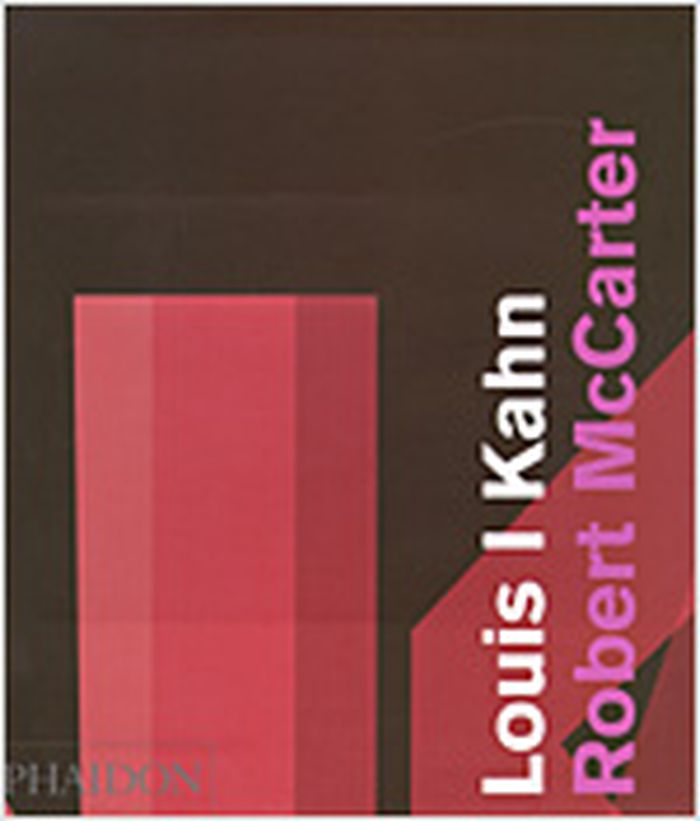
Born in Estonia in 1901, Louis Isidore Kahn was to become one of the United States’ most important architects of the post-war period, alongside the Modern masters Mies van der Rohe, Walter Gropius and Le Corbusier. Although renowned for a number of seminal modern works, he came to question many of the precepts of the Modern Movement. In particular, he questioned the ability of the International Style of Modernism to house the social spaces required by the latter half of the century. In 1947 Kahn was appointed Professor at Yale University. He was to continue teaching throughout his architectural career, influencing a younger generation of architects along the way. His teaching enabled him to further develop his own concepts and to inform his ever-evolving definition of design. He was drawn to investigate monumentality in architecture, creating buildings out of heavy, solid materials and forms and incorporating vivid plays of light, in complete contrast to the lightweight glass and steel structures being created elsewhere by his peers. This monumentality was also imbued with his concern for the ritual of human experience. His career, although extending to just over twenty years, was a rich and varied one, where he continually readdressed the issues of light, mass, structure, monumentality, geometry and materials. This monograph follows a predominantly chronological order, identifying major themes and examining key works according to these themes. A comprehensive list of projects by Kahn spanning his lifetime and drawn from the Louis I Kahn Collection at the University of Pennsylvania Archives is also included, listing over 231 projects, of which at least 30 were previously unattributed.
Louis I. Kahn
Actions:
Prix:
$115.00
(disponible sur commande)
Résumé:
Born in Estonia in 1901, Louis Isidore Kahn was to become one of the United States’ most important architects of the post-war period, alongside the Modern masters Mies van der Rohe, Walter Gropius and Le Corbusier. Although renowned for a number of seminal modern works, he came to question many of the precepts of the Modern Movement. In particular, he questioned the ability of the International Style of Modernism to house the social spaces required by the latter half of the century. In 1947 Kahn was appointed Professor at Yale University. He was to continue teaching throughout his architectural career, influencing a younger generation of architects along the way. His teaching enabled him to further develop his own concepts and to inform his ever-evolving definition of design. He was drawn to investigate monumentality in architecture, creating buildings out of heavy, solid materials and forms and incorporating vivid plays of light, in complete contrast to the lightweight glass and steel structures being created elsewhere by his peers. This monumentality was also imbued with his concern for the ritual of human experience. His career, although extending to just over twenty years, was a rich and varied one, where he continually readdressed the issues of light, mass, structure, monumentality, geometry and materials. This monograph follows a predominantly chronological order, identifying major themes and examining key works according to these themes. A comprehensive list of projects by Kahn spanning his lifetime and drawn from the Louis I Kahn Collection at the University of Pennsylvania Archives is also included, listing over 231 projects, of which at least 30 were previously unattributed.
Classification:
livres
livres
Publication:
mars 2005, London, New York
mars 2005, London, New York
Sujet:
Architecture, monographies
Architecture, monographies
Classification:
livres
livres
Actions:
Prix:
$99.95
(disponible sur commande)
Résumé:
Eliot Noyes (1910–77) was a remarkable figure in twentieth-century design. An architect who began his career working in the office of Walter Gropius and Marcel Breuer, he went on to become the first Director of the Industrial Design department at MoMA in the 1940s. From the late 1950s until his death in 1977 he was Consulting Director of Design for IBM, Mobil Oil,(...)
$99.95
(disponible sur commande)
Résumé:
Eliot Noyes (1910–77) was a remarkable figure in twentieth-century design. An architect who began his career working in the office of Walter Gropius and Marcel Breuer, he went on to become the first Director of the Industrial Design department at MoMA in the 1940s. From the late 1950s until his death in 1977 he was Consulting Director of Design for IBM, Mobil Oil,(...)
Titre:
Eliot Noyes : a pioneer of design and architecture in the age of American modernism
Actions:
Prix:
$99.95
(disponible sur commande)
Résumé:
Eliot Noyes (1910–77) was a remarkable figure in twentieth-century design. An architect who began his career working in the office of Walter Gropius and Marcel Breuer, he went on to become the first Director of the Industrial Design department at MoMA in the 1940s. From the late 1950s until his death in 1977 he was Consulting Director of Design for IBM, Mobil Oil, Westinghouse and Cummins Engine Company, and was responsible for bringing about a change in the way that these corporations, and others that followed, were to think about design and its impact on business. He enlisted pioneering designers, notably Charles Eames, Paul Rand, Ivan Chermayeff and Tom Geismar, to help him bring about innovative architectural, graphic and industrial design. He was personally responsible for the design of some notable twentieth-century classics, such as IBM’s Selectric typewriter and Mobil Oil’s service stations and petrol pumps. His own work includes architectural projects, such as the award-winning Noyes' family residence in Connecticut. This monograph traces the life of this unique architect, designer and businessman who devoted a great deal of his career to encouraging large American businesses to respect and develop policies that were rich in cultural expression. The author has had extended access to the Noyes' archive of personal as well as business projects, materials and letters, and he has carried out extended interviews with a great deal of Noyes' acquaintances and relations. His comprehensive and lively text is accompanied by archival and new colour photography, drawings, plans and a diverse range of documentary material, much of which is previously unpublished.
Eliot Noyes : a pioneer of design and architecture in the age of American modernism
Actions:
Prix:
$99.95
(disponible sur commande)
Résumé:
Eliot Noyes (1910–77) was a remarkable figure in twentieth-century design. An architect who began his career working in the office of Walter Gropius and Marcel Breuer, he went on to become the first Director of the Industrial Design department at MoMA in the 1940s. From the late 1950s until his death in 1977 he was Consulting Director of Design for IBM, Mobil Oil, Westinghouse and Cummins Engine Company, and was responsible for bringing about a change in the way that these corporations, and others that followed, were to think about design and its impact on business. He enlisted pioneering designers, notably Charles Eames, Paul Rand, Ivan Chermayeff and Tom Geismar, to help him bring about innovative architectural, graphic and industrial design. He was personally responsible for the design of some notable twentieth-century classics, such as IBM’s Selectric typewriter and Mobil Oil’s service stations and petrol pumps. His own work includes architectural projects, such as the award-winning Noyes' family residence in Connecticut. This monograph traces the life of this unique architect, designer and businessman who devoted a great deal of his career to encouraging large American businesses to respect and develop policies that were rich in cultural expression. The author has had extended access to the Noyes' archive of personal as well as business projects, materials and letters, and he has carried out extended interviews with a great deal of Noyes' acquaintances and relations. His comprehensive and lively text is accompanied by archival and new colour photography, drawings, plans and a diverse range of documentary material, much of which is previously unpublished.
Classification:
livres
livres
Publication:
octobre 2006, London, New York
octobre 2006, London, New York
Sujet:
Design, monographies
Design, monographies


