


7452 Résultats
Classification:
événements
événements
Titre:
Images parlantes, un circuit
Images parlantes, un circuit
Actions:
Description:
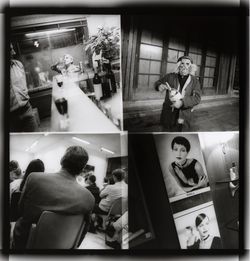
Tout au long d’un parcours d’interventions et d’installations en neuf segments à travers les espaces du CCA, Francesca Ammon, Davide Deriu, Reto Geiser, Sara Goldsmith, Catalina Mejía Moreno, Bas Princen, Mika Savela et Peter Sealy nous proposent de réfléchir aux relations essentielles et créatives qui unissent photographie et architecture. Au cours des dix huit(...)
Tout au long d’un parcours d’interventions et d’installations en neuf segments à travers les espaces du CCA, Francesca Ammon, Davide Deriu, Reto Geiser, Sara Goldsmith, Catalina Mejía Moreno, Bas Princen, Mika Savela et Peter Sealy nous proposent de réfléchir aux relations essentielles et créatives qui unissent photographie et architecture. Au cours des dix huit(...)
Mot(s)-clé(s):
Andrew W. Mellon Foundation, photographie, photographies, Francesca Ammon, Davide Deriu, Reto Geiser, Sara Goldsmith, Catalina Mejía Moreno, Bas Princen, Mika Savela, Peter Sealy
Andrew W. Mellon Foundation, photographie, photographies, Francesca Ammon, Davide Deriu, Reto Geiser, Sara Goldsmith, Catalina Mejía Moreno, Bas Princen, Mika Savela, Peter Sealy
Date:
14 octobre 2017, 16h
14 octobre 2017, 16h
Titre:
Images parlantes, un circuit
Actions:
Description:
Tout au long d’un parcours d’interventions et d’installations en neuf segments à travers les espaces du CCA, Francesca Ammon, Davide Deriu, Reto Geiser, Sara Goldsmith, Catalina Mejía Moreno, Bas Princen, Mika Savela et Peter Sealy nous proposent de réfléchir aux relations essentielles et créatives qui unissent photographie et architecture. Au cours des dix huit(...)
Images parlantes, un circuit
Actions:
Description:
Tout au long d’un parcours d’interventions et d’installations en neuf segments à travers les espaces du CCA, Francesca Ammon, Davide Deriu, Reto Geiser, Sara Goldsmith, Catalina Mejía Moreno, Bas Princen, Mika Savela et Peter Sealy nous proposent de réfléchir aux relations essentielles et créatives qui unissent photographie et architecture. Au cours des dix huit(...)
Classification:
événements
événements
Date:
14 octobre 2017
16h
14 octobre 2017
16h
Niveau de description archivistique:
Série(s)
Série(s)
Titre:
Projects and events
Projects and events
Numéro de référence:
AP170.S3
Description:
Series 3, Projects and events, 1992 – 2014, documents each major installation of the Hyposurface project and consists of more than 10,000 digital files. These files include exhibition layout planning, Aegis simulator software demonstrating Hyposurface, event photographs and video, and ACDC and Aegis software related to specific events. This series also includes the majority of the material Paul Steenhuisen G5 Mac computer and the related Hyposurface audio installations. The bulk of the materials dates from 2000 – 2007. Events represented include Venice Biennale (Venice, 2000); CeBIT Technology Fair (Hannover, Germany, 2002); International Manufacturing Technology Show (IMTS, Chicago, 2006); BIO exhibition (Boston, 2007); and the Canadian Centre for Architecture (Montreal, 2013-2014). This series also contains a number of unidentified projects, including projects in Brisbane, Australia; Amsterdam, the Netherlands; and possibly Russia and Spain. There is also video documentation related to a Hyposurface proposal for BMW, as well as what appears to be a tour of Kuka Robotics staff through dECOi’s laboratory. This series contains nearly 3100 Aegis pattern files, which are identifiable by their file extension (.aeg). An additional 3100 files are plain text files, executable files, or an unidentified format, and appear to relate to other dECOi software. This series notably contains more than 2000 audio files related to the Paul Steenhuisen installations. The rest of the series contains largely still images and video, as well as a small number of AutoCAD and Rhino files. This series overlaps with Series 2: Software and related documentation. This series contains only software related to a specific project or event, while Series 2 contains software generally related to Hyposurface.
AP170.S3
Description:
Series 3, Projects and events, 1992 – 2014, documents each major installation of the Hyposurface project and consists of more than 10,000 digital files. These files include exhibition layout planning, Aegis simulator software demonstrating Hyposurface, event photographs and video, and ACDC and Aegis software related to specific events. This series also includes the majority of the material Paul Steenhuisen G5 Mac computer and the related Hyposurface audio installations. The bulk of the materials dates from 2000 – 2007. Events represented include Venice Biennale (Venice, 2000); CeBIT Technology Fair (Hannover, Germany, 2002); International Manufacturing Technology Show (IMTS, Chicago, 2006); BIO exhibition (Boston, 2007); and the Canadian Centre for Architecture (Montreal, 2013-2014). This series also contains a number of unidentified projects, including projects in Brisbane, Australia; Amsterdam, the Netherlands; and possibly Russia and Spain. There is also video documentation related to a Hyposurface proposal for BMW, as well as what appears to be a tour of Kuka Robotics staff through dECOi’s laboratory. This series contains nearly 3100 Aegis pattern files, which are identifiable by their file extension (.aeg). An additional 3100 files are plain text files, executable files, or an unidentified format, and appear to relate to other dECOi software. This series notably contains more than 2000 audio files related to the Paul Steenhuisen installations. The rest of the series contains largely still images and video, as well as a small number of AutoCAD and Rhino files. This series overlaps with Series 2: Software and related documentation. This series contains only software related to a specific project or event, while Series 2 contains software generally related to Hyposurface.
Personnes et institutions:
Date:
1992 - 2014
1992 - 2014
Titre:
Projects and events
Actions:
AP170.S3
Description:
Series 3, Projects and events, 1992 – 2014, documents each major installation of the Hyposurface project and consists of more than 10,000 digital files. These files include exhibition layout planning, Aegis simulator software demonstrating Hyposurface, event photographs and video, and ACDC and Aegis software related to specific events. This series also includes the majority of the material Paul Steenhuisen G5 Mac computer and the related Hyposurface audio installations. The bulk of the materials dates from 2000 – 2007. Events represented include Venice Biennale (Venice, 2000); CeBIT Technology Fair (Hannover, Germany, 2002); International Manufacturing Technology Show (IMTS, Chicago, 2006); BIO exhibition (Boston, 2007); and the Canadian Centre for Architecture (Montreal, 2013-2014). This series also contains a number of unidentified projects, including projects in Brisbane, Australia; Amsterdam, the Netherlands; and possibly Russia and Spain. There is also video documentation related to a Hyposurface proposal for BMW, as well as what appears to be a tour of Kuka Robotics staff through dECOi’s laboratory. This series contains nearly 3100 Aegis pattern files, which are identifiable by their file extension (.aeg). An additional 3100 files are plain text files, executable files, or an unidentified format, and appear to relate to other dECOi software. This series notably contains more than 2000 audio files related to the Paul Steenhuisen installations. The rest of the series contains largely still images and video, as well as a small number of AutoCAD and Rhino files. This series overlaps with Series 2: Software and related documentation. This series contains only software related to a specific project or event, while Series 2 contains software generally related to Hyposurface.
Projects and events
Actions:
AP170.S3
Description:
Series 3, Projects and events, 1992 – 2014, documents each major installation of the Hyposurface project and consists of more than 10,000 digital files. These files include exhibition layout planning, Aegis simulator software demonstrating Hyposurface, event photographs and video, and ACDC and Aegis software related to specific events. This series also includes the majority of the material Paul Steenhuisen G5 Mac computer and the related Hyposurface audio installations. The bulk of the materials dates from 2000 – 2007. Events represented include Venice Biennale (Venice, 2000); CeBIT Technology Fair (Hannover, Germany, 2002); International Manufacturing Technology Show (IMTS, Chicago, 2006); BIO exhibition (Boston, 2007); and the Canadian Centre for Architecture (Montreal, 2013-2014). This series also contains a number of unidentified projects, including projects in Brisbane, Australia; Amsterdam, the Netherlands; and possibly Russia and Spain. There is also video documentation related to a Hyposurface proposal for BMW, as well as what appears to be a tour of Kuka Robotics staff through dECOi’s laboratory. This series contains nearly 3100 Aegis pattern files, which are identifiable by their file extension (.aeg). An additional 3100 files are plain text files, executable files, or an unidentified format, and appear to relate to other dECOi software. This series notably contains more than 2000 audio files related to the Paul Steenhuisen installations. The rest of the series contains largely still images and video, as well as a small number of AutoCAD and Rhino files. This series overlaps with Series 2: Software and related documentation. This series contains only software related to a specific project or event, while Series 2 contains software generally related to Hyposurface.
Niveau de description archivistique:
Series
Series
Date:
1992 - 2014
1992 - 2014
Personnes et institutions:
Niveau de description archivistique:
Série(s)
Série(s)
Titre:
Architectural projects
Architectural projects
Numéro de référence:
AP164.S1
Description:
This series documents the architectural projects of Ábalos&Herreros from 1986 to 2006 and represents over 150 projects, including exhibitions. The firm worked on a wide variety of projects from commercial and residential structures to libraries and sewage treatment plants. The firm's design process was research oriented and involved conversations between Ábalos and Herreros, office collaborators, artists who partook in the projects, as well as other architects. Several projects found in this series were developed in collaboration with other architects including: José Manuel Ábalos; Salvador Pérez Arroyo; Filippo Costi; Ángel Jaramillo Esteban; Javier Fresneda; Eduardo Horta; Martín Marciano; Ángel Jaramillo Sánchez; Renata Sentkiewicz; and Héctor Vigliecca. Most projects were designed for the city of Madrid and the Community of Madrid. Projects were also developed for other sites in Spain, including the Canary Islands, as well as for sites in Portugal, Germany, the United States, and Brazil. Ábalos & Herreros often created new projects from the firm's existing work. The firm also identified their projects numerically. These identification numbers are documented at the project series level for each project. Among the materials documenting the firm's projects are conceptual, design development, presentation, and working drawings, as well as panels. There are also several CAD drawings and prints of born digital drawings. Documenting the firms conceptual process are collages and photomontages. Photographic materials included in this series depict project sites and built projects. Also included are a variety of research reference materials, correspondence, project documentation, and project submissions. Although creating models was not a common practice for the firm, there are a few project series which include models.
AP164.S1
Description:
This series documents the architectural projects of Ábalos&Herreros from 1986 to 2006 and represents over 150 projects, including exhibitions. The firm worked on a wide variety of projects from commercial and residential structures to libraries and sewage treatment plants. The firm's design process was research oriented and involved conversations between Ábalos and Herreros, office collaborators, artists who partook in the projects, as well as other architects. Several projects found in this series were developed in collaboration with other architects including: José Manuel Ábalos; Salvador Pérez Arroyo; Filippo Costi; Ángel Jaramillo Esteban; Javier Fresneda; Eduardo Horta; Martín Marciano; Ángel Jaramillo Sánchez; Renata Sentkiewicz; and Héctor Vigliecca. Most projects were designed for the city of Madrid and the Community of Madrid. Projects were also developed for other sites in Spain, including the Canary Islands, as well as for sites in Portugal, Germany, the United States, and Brazil. Ábalos & Herreros often created new projects from the firm's existing work. The firm also identified their projects numerically. These identification numbers are documented at the project series level for each project. Among the materials documenting the firm's projects are conceptual, design development, presentation, and working drawings, as well as panels. There are also several CAD drawings and prints of born digital drawings. Documenting the firms conceptual process are collages and photomontages. Photographic materials included in this series depict project sites and built projects. Also included are a variety of research reference materials, correspondence, project documentation, and project submissions. Although creating models was not a common practice for the firm, there are a few project series which include models.
Personnes et institutions:
Date:
1953-2009
1953-2009
Titre:
Architectural projects
Actions:
AP164.S1
Description:
This series documents the architectural projects of Ábalos&Herreros from 1986 to 2006 and represents over 150 projects, including exhibitions. The firm worked on a wide variety of projects from commercial and residential structures to libraries and sewage treatment plants. The firm's design process was research oriented and involved conversations between Ábalos and Herreros, office collaborators, artists who partook in the projects, as well as other architects. Several projects found in this series were developed in collaboration with other architects including: José Manuel Ábalos; Salvador Pérez Arroyo; Filippo Costi; Ángel Jaramillo Esteban; Javier Fresneda; Eduardo Horta; Martín Marciano; Ángel Jaramillo Sánchez; Renata Sentkiewicz; and Héctor Vigliecca. Most projects were designed for the city of Madrid and the Community of Madrid. Projects were also developed for other sites in Spain, including the Canary Islands, as well as for sites in Portugal, Germany, the United States, and Brazil. Ábalos & Herreros often created new projects from the firm's existing work. The firm also identified their projects numerically. These identification numbers are documented at the project series level for each project. Among the materials documenting the firm's projects are conceptual, design development, presentation, and working drawings, as well as panels. There are also several CAD drawings and prints of born digital drawings. Documenting the firms conceptual process are collages and photomontages. Photographic materials included in this series depict project sites and built projects. Also included are a variety of research reference materials, correspondence, project documentation, and project submissions. Although creating models was not a common practice for the firm, there are a few project series which include models.
Architectural projects
Actions:
AP164.S1
Description:
This series documents the architectural projects of Ábalos&Herreros from 1986 to 2006 and represents over 150 projects, including exhibitions. The firm worked on a wide variety of projects from commercial and residential structures to libraries and sewage treatment plants. The firm's design process was research oriented and involved conversations between Ábalos and Herreros, office collaborators, artists who partook in the projects, as well as other architects. Several projects found in this series were developed in collaboration with other architects including: José Manuel Ábalos; Salvador Pérez Arroyo; Filippo Costi; Ángel Jaramillo Esteban; Javier Fresneda; Eduardo Horta; Martín Marciano; Ángel Jaramillo Sánchez; Renata Sentkiewicz; and Héctor Vigliecca. Most projects were designed for the city of Madrid and the Community of Madrid. Projects were also developed for other sites in Spain, including the Canary Islands, as well as for sites in Portugal, Germany, the United States, and Brazil. Ábalos & Herreros often created new projects from the firm's existing work. The firm also identified their projects numerically. These identification numbers are documented at the project series level for each project. Among the materials documenting the firm's projects are conceptual, design development, presentation, and working drawings, as well as panels. There are also several CAD drawings and prints of born digital drawings. Documenting the firms conceptual process are collages and photomontages. Photographic materials included in this series depict project sites and built projects. Also included are a variety of research reference materials, correspondence, project documentation, and project submissions. Although creating models was not a common practice for the firm, there are a few project series which include models.
Niveau de description archivistique:
Series
Series
Date:
1953-2009
1953-2009
Personnes et institutions:
Classification:
films
films
Actions:
Description:
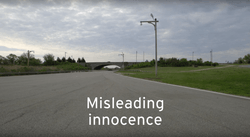
Ce film, conçu par Francesco Garutti et dirigé par Shahab Mihandoust, explore l’histoire de la conception d’un ensemble de ponts autoroutiers, commandés dans les années 1920 et 1930 par Robert Moses. L’histoire suggère que ces ponts autoroutiers aient été délibérément conçus pour empêcher le passage d’autobus de sorte que seules les voitures – et les personnes ayant les(...)
Ce film, conçu par Francesco Garutti et dirigé par Shahab Mihandoust, explore l’histoire de la conception d’un ensemble de ponts autoroutiers, commandés dans les années 1920 et 1930 par Robert Moses. L’histoire suggère que ces ponts autoroutiers aient été délibérément conçus pour empêcher le passage d’autobus de sorte que seules les voitures – et les personnes ayant les(...)
Date:
août 2014
août 2014
Titre:
Misleading Innocence (tracing what a bridge can do)
Actions:
Description:
Ce film, conçu par Francesco Garutti et dirigé par Shahab Mihandoust, explore l’histoire de la conception d’un ensemble de ponts autoroutiers, commandés dans les années 1920 et 1930 par Robert Moses. L’histoire suggère que ces ponts autoroutiers aient été délibérément conçus pour empêcher le passage d’autobus de sorte que seules les voitures – et les personnes ayant les(...)
Misleading Innocence (tracing what a bridge can do)
Actions:
Description:
Ce film, conçu par Francesco Garutti et dirigé par Shahab Mihandoust, explore l’histoire de la conception d’un ensemble de ponts autoroutiers, commandés dans les années 1920 et 1930 par Robert Moses. L’histoire suggère que ces ponts autoroutiers aient été délibérément conçus pour empêcher le passage d’autobus de sorte que seules les voitures – et les personnes ayant les(...)
Classification:
films
films
Date:
août 2014 au
août 2014
août 2014 au
août 2014
Niveau de description archivistique:
Projet
Projet
Numéro de référence:
AP164.S1.2000.D9
Description:
The project series documents the competition entry and infrastructure development of the northeast coast park (Parque litoral nord-est, Barcelona Forum 2004, Sant Adrià de Besòs) and adjoining recycling plant (Edificio de oficinas y planta integral de RSU) in Santa Adriá de Besòs, Barcelona, Spain. The firm identified this project as number 133. The competition was organized by the Barcelona City Council and was part of a larger plan to develop new infrastructure for Barcelona, as the Host City for the International Forum of Cultures held in 2004. A number of architects and firms were involved in other projects related to the infrastructure plan, like the South East Coastal Park & Auditoriums by the Foreign Office Architects (See AP171.S1.2000.D6). The park included several other features, like the design of urban furniture (Pep and Xurret benches, and a fence), an artificial mountain, a youth hostel, a small security building and a pier. Only the park, the artificial mountain and the benches were built. The firm arranged work for this project with the following numbers: 133-1, 133-2, 133-6 to 133-8, and 133-10. The CCA did not receive materials classified under numbers 133-9 and 133-11. The recycling plant includes, among other things, office space, an ecomuseum, and a garden. Abalos and Herreros won the competition for design, construction and exploitation of the plant. The firm worked in collaboration with the firm Tersa, S.A. The firm assigned numbers 133-3 to 133-5 to identify this work. Documenting the project are design development and working drawings, correspondence, invoices, minutes, project descriptions, studies, budgets, contracts, reference, photographic and digital materials, and a videocassette.
AP164.S1.2000.D9
Description:
The project series documents the competition entry and infrastructure development of the northeast coast park (Parque litoral nord-est, Barcelona Forum 2004, Sant Adrià de Besòs) and adjoining recycling plant (Edificio de oficinas y planta integral de RSU) in Santa Adriá de Besòs, Barcelona, Spain. The firm identified this project as number 133. The competition was organized by the Barcelona City Council and was part of a larger plan to develop new infrastructure for Barcelona, as the Host City for the International Forum of Cultures held in 2004. A number of architects and firms were involved in other projects related to the infrastructure plan, like the South East Coastal Park & Auditoriums by the Foreign Office Architects (See AP171.S1.2000.D6). The park included several other features, like the design of urban furniture (Pep and Xurret benches, and a fence), an artificial mountain, a youth hostel, a small security building and a pier. Only the park, the artificial mountain and the benches were built. The firm arranged work for this project with the following numbers: 133-1, 133-2, 133-6 to 133-8, and 133-10. The CCA did not receive materials classified under numbers 133-9 and 133-11. The recycling plant includes, among other things, office space, an ecomuseum, and a garden. Abalos and Herreros won the competition for design, construction and exploitation of the plant. The firm worked in collaboration with the firm Tersa, S.A. The firm assigned numbers 133-3 to 133-5 to identify this work. Documenting the project are design development and working drawings, correspondence, invoices, minutes, project descriptions, studies, budgets, contracts, reference, photographic and digital materials, and a videocassette.
Personnes et institutions:
Date:
1994-2007
1994-2007
Titre:
Barcelona Forum 2004, Santa Adrià de Besòs, Barcelona, Spain (2000)
Actions:
AP164.S1.2000.D9
Description:
The project series documents the competition entry and infrastructure development of the northeast coast park (Parque litoral nord-est, Barcelona Forum 2004, Sant Adrià de Besòs) and adjoining recycling plant (Edificio de oficinas y planta integral de RSU) in Santa Adriá de Besòs, Barcelona, Spain. The firm identified this project as number 133. The competition was organized by the Barcelona City Council and was part of a larger plan to develop new infrastructure for Barcelona, as the Host City for the International Forum of Cultures held in 2004. A number of architects and firms were involved in other projects related to the infrastructure plan, like the South East Coastal Park & Auditoriums by the Foreign Office Architects (See AP171.S1.2000.D6). The park included several other features, like the design of urban furniture (Pep and Xurret benches, and a fence), an artificial mountain, a youth hostel, a small security building and a pier. Only the park, the artificial mountain and the benches were built. The firm arranged work for this project with the following numbers: 133-1, 133-2, 133-6 to 133-8, and 133-10. The CCA did not receive materials classified under numbers 133-9 and 133-11. The recycling plant includes, among other things, office space, an ecomuseum, and a garden. Abalos and Herreros won the competition for design, construction and exploitation of the plant. The firm worked in collaboration with the firm Tersa, S.A. The firm assigned numbers 133-3 to 133-5 to identify this work. Documenting the project are design development and working drawings, correspondence, invoices, minutes, project descriptions, studies, budgets, contracts, reference, photographic and digital materials, and a videocassette.
Barcelona Forum 2004, Santa Adrià de Besòs, Barcelona, Spain (2000)
Actions:
AP164.S1.2000.D9
Description:
The project series documents the competition entry and infrastructure development of the northeast coast park (Parque litoral nord-est, Barcelona Forum 2004, Sant Adrià de Besòs) and adjoining recycling plant (Edificio de oficinas y planta integral de RSU) in Santa Adriá de Besòs, Barcelona, Spain. The firm identified this project as number 133. The competition was organized by the Barcelona City Council and was part of a larger plan to develop new infrastructure for Barcelona, as the Host City for the International Forum of Cultures held in 2004. A number of architects and firms were involved in other projects related to the infrastructure plan, like the South East Coastal Park & Auditoriums by the Foreign Office Architects (See AP171.S1.2000.D6). The park included several other features, like the design of urban furniture (Pep and Xurret benches, and a fence), an artificial mountain, a youth hostel, a small security building and a pier. Only the park, the artificial mountain and the benches were built. The firm arranged work for this project with the following numbers: 133-1, 133-2, 133-6 to 133-8, and 133-10. The CCA did not receive materials classified under numbers 133-9 and 133-11. The recycling plant includes, among other things, office space, an ecomuseum, and a garden. Abalos and Herreros won the competition for design, construction and exploitation of the plant. The firm worked in collaboration with the firm Tersa, S.A. The firm assigned numbers 133-3 to 133-5 to identify this work. Documenting the project are design development and working drawings, correspondence, invoices, minutes, project descriptions, studies, budgets, contracts, reference, photographic and digital materials, and a videocassette.
Niveau de description archivistique:
Project
Project
Date:
1994-2007
1994-2007
Personnes et institutions:
Niveau de description archivistique:
Série(s)
Série(s)
Numéro de référence:
AP207.S1
Description:
The series documents Pettena’s artistic, architectural and design projects from 1966 to 2018. It includes material related to his performances, installations, furniture designs, architectural projects, films he produced, and series of photographic projects. The series includes projects created during Pettena’s residencies in the United States, such as “Vestirsi Di Siede [Wearable Chairs]” (1971), “Ice House I” (1971) and “Ice House II” (1972), and “Tumbleweeds Catcher” (1972). The series also contains material showing Pettena’s growing interest in the preservation and conservation of historical buildings with projects like the new Town Hall of Canazei (1990-1997) and the preservation and conversion of the Forte Inglese in Portoferraio (1992). The presence of nature in architecture and it’s influence on the architect’s work, a recurring theme in Pettena’s work, is also documented in this series with projects such as his proposal “Grass architecture” for the Trigon competition in 1971, the photographic series “Case Conquistate Dal Verde” (1985), and the installation “Architecture forgiven by nature” (2017). The series contains sketches, renderings, and plans, either originals or reprographic copies, and photographs for installation projects and his furniture designs. It also contains drawings, notes, storyboards, and photographs of the performances. There are also films, in digital formats, and film stills for short movie projects produced by Pettena. Also included, are two models: a small wooden model for ”Rumble” sofa” (1967) and a model of for “Archipensierio” (2001-2018) installation of 2001. Finally, the series contains, sketches, floor plans, site plans, sections and elevations, reference drawings and photographs, proposals, and cost estimates for architectural projects such as the Canazei Town Hall (1990-1997), Fort Inglese conversion (1992), and for Pettena’s residence on Elba (1972-2012).
AP207.S1
Description:
The series documents Pettena’s artistic, architectural and design projects from 1966 to 2018. It includes material related to his performances, installations, furniture designs, architectural projects, films he produced, and series of photographic projects. The series includes projects created during Pettena’s residencies in the United States, such as “Vestirsi Di Siede [Wearable Chairs]” (1971), “Ice House I” (1971) and “Ice House II” (1972), and “Tumbleweeds Catcher” (1972). The series also contains material showing Pettena’s growing interest in the preservation and conservation of historical buildings with projects like the new Town Hall of Canazei (1990-1997) and the preservation and conversion of the Forte Inglese in Portoferraio (1992). The presence of nature in architecture and it’s influence on the architect’s work, a recurring theme in Pettena’s work, is also documented in this series with projects such as his proposal “Grass architecture” for the Trigon competition in 1971, the photographic series “Case Conquistate Dal Verde” (1985), and the installation “Architecture forgiven by nature” (2017). The series contains sketches, renderings, and plans, either originals or reprographic copies, and photographs for installation projects and his furniture designs. It also contains drawings, notes, storyboards, and photographs of the performances. There are also films, in digital formats, and film stills for short movie projects produced by Pettena. Also included, are two models: a small wooden model for ”Rumble” sofa” (1967) and a model of for “Archipensierio” (2001-2018) installation of 2001. Finally, the series contains, sketches, floor plans, site plans, sections and elevations, reference drawings and photographs, proposals, and cost estimates for architectural projects such as the Canazei Town Hall (1990-1997), Fort Inglese conversion (1992), and for Pettena’s residence on Elba (1972-2012).
Personnes et institutions:
Date:
1966-2018
1966-2018
Titre:
Works
Actions:
AP207.S1
Description:
The series documents Pettena’s artistic, architectural and design projects from 1966 to 2018. It includes material related to his performances, installations, furniture designs, architectural projects, films he produced, and series of photographic projects. The series includes projects created during Pettena’s residencies in the United States, such as “Vestirsi Di Siede [Wearable Chairs]” (1971), “Ice House I” (1971) and “Ice House II” (1972), and “Tumbleweeds Catcher” (1972). The series also contains material showing Pettena’s growing interest in the preservation and conservation of historical buildings with projects like the new Town Hall of Canazei (1990-1997) and the preservation and conversion of the Forte Inglese in Portoferraio (1992). The presence of nature in architecture and it’s influence on the architect’s work, a recurring theme in Pettena’s work, is also documented in this series with projects such as his proposal “Grass architecture” for the Trigon competition in 1971, the photographic series “Case Conquistate Dal Verde” (1985), and the installation “Architecture forgiven by nature” (2017). The series contains sketches, renderings, and plans, either originals or reprographic copies, and photographs for installation projects and his furniture designs. It also contains drawings, notes, storyboards, and photographs of the performances. There are also films, in digital formats, and film stills for short movie projects produced by Pettena. Also included, are two models: a small wooden model for ”Rumble” sofa” (1967) and a model of for “Archipensierio” (2001-2018) installation of 2001. Finally, the series contains, sketches, floor plans, site plans, sections and elevations, reference drawings and photographs, proposals, and cost estimates for architectural projects such as the Canazei Town Hall (1990-1997), Fort Inglese conversion (1992), and for Pettena’s residence on Elba (1972-2012).
Works
Actions:
AP207.S1
Description:
The series documents Pettena’s artistic, architectural and design projects from 1966 to 2018. It includes material related to his performances, installations, furniture designs, architectural projects, films he produced, and series of photographic projects. The series includes projects created during Pettena’s residencies in the United States, such as “Vestirsi Di Siede [Wearable Chairs]” (1971), “Ice House I” (1971) and “Ice House II” (1972), and “Tumbleweeds Catcher” (1972). The series also contains material showing Pettena’s growing interest in the preservation and conservation of historical buildings with projects like the new Town Hall of Canazei (1990-1997) and the preservation and conversion of the Forte Inglese in Portoferraio (1992). The presence of nature in architecture and it’s influence on the architect’s work, a recurring theme in Pettena’s work, is also documented in this series with projects such as his proposal “Grass architecture” for the Trigon competition in 1971, the photographic series “Case Conquistate Dal Verde” (1985), and the installation “Architecture forgiven by nature” (2017). The series contains sketches, renderings, and plans, either originals or reprographic copies, and photographs for installation projects and his furniture designs. It also contains drawings, notes, storyboards, and photographs of the performances. There are also films, in digital formats, and film stills for short movie projects produced by Pettena. Also included, are two models: a small wooden model for ”Rumble” sofa” (1967) and a model of for “Archipensierio” (2001-2018) installation of 2001. Finally, the series contains, sketches, floor plans, site plans, sections and elevations, reference drawings and photographs, proposals, and cost estimates for architectural projects such as the Canazei Town Hall (1990-1997), Fort Inglese conversion (1992), and for Pettena’s residence on Elba (1972-2012).
Niveau de description archivistique:
Series
Series
Date:
1966-2018
1966-2018
Personnes et institutions:
Niveau de description archivistique:
Projet
Projet
Numéro de référence:
AP075.S1.2006.PR01
Description:
Project series documents Cornelia Hahn Oberlander's landscape project for the restauration of the Evergreen Building, a ten-story office tower on West Pender Street, in Vancouver, British Columbia. The building was previously known as the Laxton Building. The project consisted in renovations work to the building, design by architect Arthur Erickson in the 1980. Oberlander herself worked with Erickson at the time. After helping to save the building from demolition in the early 2000s, Oberlander worked as a landscape consultant for Omicron Architecture Engineering Construction Co. in 2006-2007. She was consulted for the restoration of the landscaping at the street level and the replanting of the planted balconies she had created while working with Erickson. As the building facade consisted in a stepped facade with an alternance of zigzag floor plates and straight floor plates, Oberlander chose cascading plants for the zigzag floors and upright planting for the straight floors. "Since the plants were brought to the structure's edges, the geometries of the building were dramatically amplified." [1] The Evergreen Building received a heritage status in the mid-2000s. This project series contains only materials related to the 2006-2007 renovations project. The project series comprises sketches, design development drawings, including site plans, plantings plans and landscape elevations, and buildings plans used as reference. The project series is also documented through corrsepondence, including correspondence with architects and contractors, specifications, plant lists, digital files of a presentation on the existing site condition, financial material, and research material for the project. Source: [1] Herrington, Susan. Cornelia Hahn Oberlander: Making the Modern Landscape, University of Virginia Press, 2014, 304 pages, p. 139.
AP075.S1.2006.PR01
Description:
Project series documents Cornelia Hahn Oberlander's landscape project for the restauration of the Evergreen Building, a ten-story office tower on West Pender Street, in Vancouver, British Columbia. The building was previously known as the Laxton Building. The project consisted in renovations work to the building, design by architect Arthur Erickson in the 1980. Oberlander herself worked with Erickson at the time. After helping to save the building from demolition in the early 2000s, Oberlander worked as a landscape consultant for Omicron Architecture Engineering Construction Co. in 2006-2007. She was consulted for the restoration of the landscaping at the street level and the replanting of the planted balconies she had created while working with Erickson. As the building facade consisted in a stepped facade with an alternance of zigzag floor plates and straight floor plates, Oberlander chose cascading plants for the zigzag floors and upright planting for the straight floors. "Since the plants were brought to the structure's edges, the geometries of the building were dramatically amplified." [1] The Evergreen Building received a heritage status in the mid-2000s. This project series contains only materials related to the 2006-2007 renovations project. The project series comprises sketches, design development drawings, including site plans, plantings plans and landscape elevations, and buildings plans used as reference. The project series is also documented through corrsepondence, including correspondence with architects and contractors, specifications, plant lists, digital files of a presentation on the existing site condition, financial material, and research material for the project. Source: [1] Herrington, Susan. Cornelia Hahn Oberlander: Making the Modern Landscape, University of Virginia Press, 2014, 304 pages, p. 139.
Personnes et institutions:
Date:
2006-2007
2006-2007
Titre:
Evergreen Building restoration, Vancouver, British Columbia (2006)
Actions:
AP075.S1.2006.PR01
Description:
Project series documents Cornelia Hahn Oberlander's landscape project for the restauration of the Evergreen Building, a ten-story office tower on West Pender Street, in Vancouver, British Columbia. The building was previously known as the Laxton Building. The project consisted in renovations work to the building, design by architect Arthur Erickson in the 1980. Oberlander herself worked with Erickson at the time. After helping to save the building from demolition in the early 2000s, Oberlander worked as a landscape consultant for Omicron Architecture Engineering Construction Co. in 2006-2007. She was consulted for the restoration of the landscaping at the street level and the replanting of the planted balconies she had created while working with Erickson. As the building facade consisted in a stepped facade with an alternance of zigzag floor plates and straight floor plates, Oberlander chose cascading plants for the zigzag floors and upright planting for the straight floors. "Since the plants were brought to the structure's edges, the geometries of the building were dramatically amplified." [1] The Evergreen Building received a heritage status in the mid-2000s. This project series contains only materials related to the 2006-2007 renovations project. The project series comprises sketches, design development drawings, including site plans, plantings plans and landscape elevations, and buildings plans used as reference. The project series is also documented through corrsepondence, including correspondence with architects and contractors, specifications, plant lists, digital files of a presentation on the existing site condition, financial material, and research material for the project. Source: [1] Herrington, Susan. Cornelia Hahn Oberlander: Making the Modern Landscape, University of Virginia Press, 2014, 304 pages, p. 139.
Evergreen Building restoration, Vancouver, British Columbia (2006)
Actions:
AP075.S1.2006.PR01
Description:
Project series documents Cornelia Hahn Oberlander's landscape project for the restauration of the Evergreen Building, a ten-story office tower on West Pender Street, in Vancouver, British Columbia. The building was previously known as the Laxton Building. The project consisted in renovations work to the building, design by architect Arthur Erickson in the 1980. Oberlander herself worked with Erickson at the time. After helping to save the building from demolition in the early 2000s, Oberlander worked as a landscape consultant for Omicron Architecture Engineering Construction Co. in 2006-2007. She was consulted for the restoration of the landscaping at the street level and the replanting of the planted balconies she had created while working with Erickson. As the building facade consisted in a stepped facade with an alternance of zigzag floor plates and straight floor plates, Oberlander chose cascading plants for the zigzag floors and upright planting for the straight floors. "Since the plants were brought to the structure's edges, the geometries of the building were dramatically amplified." [1] The Evergreen Building received a heritage status in the mid-2000s. This project series contains only materials related to the 2006-2007 renovations project. The project series comprises sketches, design development drawings, including site plans, plantings plans and landscape elevations, and buildings plans used as reference. The project series is also documented through corrsepondence, including correspondence with architects and contractors, specifications, plant lists, digital files of a presentation on the existing site condition, financial material, and research material for the project. Source: [1] Herrington, Susan. Cornelia Hahn Oberlander: Making the Modern Landscape, University of Virginia Press, 2014, 304 pages, p. 139.
Niveau de description archivistique:
Project
Project
Date:
2006-2007
2006-2007
Personnes et institutions:
Classification:
événements
événements
Actions:
Classification:
événements
événements
Date:
3 mai 2018
3 mai 2018
Niveau de description archivistique:
Projet
Projet
Titre:
Dreaming Architecture (2016)
Dreaming Architecture (2016)
Numéro de référence:
AP207.S1.2016.PR01
Description:
The project series documents "Dreaming Architecture", a digitally created performance by Pettena in 2016. The performance consists of a photograph of a long baroque art gallery. Added to the photograph is an image of Pettena seated with legs crossed draped in a robe. Pettena appears to be floating in the middle of room. The project is a reference to "Il Mestiere Dell'Architetto" (2002) that represents the difficulties and possible impasses in architecture. However here "the symbolic interpretation of architecture is here ideally transformed by overcoming, in the dream, the difficulties and restrictions of choices and paths, as well as the risks of mistakes and downfalls." [1] The project series contains a photograph of the performance. Source: [1] Gianni Pettena website, https://www.giannipettena.it/italiano/opere-1/perf-dreaming-architecture-2016-1/ (last accessed 28 January 2020)
AP207.S1.2016.PR01
Description:
The project series documents "Dreaming Architecture", a digitally created performance by Pettena in 2016. The performance consists of a photograph of a long baroque art gallery. Added to the photograph is an image of Pettena seated with legs crossed draped in a robe. Pettena appears to be floating in the middle of room. The project is a reference to "Il Mestiere Dell'Architetto" (2002) that represents the difficulties and possible impasses in architecture. However here "the symbolic interpretation of architecture is here ideally transformed by overcoming, in the dream, the difficulties and restrictions of choices and paths, as well as the risks of mistakes and downfalls." [1] The project series contains a photograph of the performance. Source: [1] Gianni Pettena website, https://www.giannipettena.it/italiano/opere-1/perf-dreaming-architecture-2016-1/ (last accessed 28 January 2020)
Personnes et institutions:
Date:
circa 2016
circa 2016
Titre:
Dreaming Architecture (2016)
Actions:
AP207.S1.2016.PR01
Description:
The project series documents "Dreaming Architecture", a digitally created performance by Pettena in 2016. The performance consists of a photograph of a long baroque art gallery. Added to the photograph is an image of Pettena seated with legs crossed draped in a robe. Pettena appears to be floating in the middle of room. The project is a reference to "Il Mestiere Dell'Architetto" (2002) that represents the difficulties and possible impasses in architecture. However here "the symbolic interpretation of architecture is here ideally transformed by overcoming, in the dream, the difficulties and restrictions of choices and paths, as well as the risks of mistakes and downfalls." [1] The project series contains a photograph of the performance. Source: [1] Gianni Pettena website, https://www.giannipettena.it/italiano/opere-1/perf-dreaming-architecture-2016-1/ (last accessed 28 January 2020)
Dreaming Architecture (2016)
Actions:
AP207.S1.2016.PR01
Description:
The project series documents "Dreaming Architecture", a digitally created performance by Pettena in 2016. The performance consists of a photograph of a long baroque art gallery. Added to the photograph is an image of Pettena seated with legs crossed draped in a robe. Pettena appears to be floating in the middle of room. The project is a reference to "Il Mestiere Dell'Architetto" (2002) that represents the difficulties and possible impasses in architecture. However here "the symbolic interpretation of architecture is here ideally transformed by overcoming, in the dream, the difficulties and restrictions of choices and paths, as well as the risks of mistakes and downfalls." [1] The project series contains a photograph of the performance. Source: [1] Gianni Pettena website, https://www.giannipettena.it/italiano/opere-1/perf-dreaming-architecture-2016-1/ (last accessed 28 January 2020)
Niveau de description archivistique:
Project
Project
Date:
circa 2016
circa 2016
Personnes et institutions:
Niveau de description archivistique:
Sous-série
Sous-série
Numéro de référence:
AP178.S1.2002.PR05.SS1
Description:
This project subseries documents the Parque de Vidago Complexo Termal e Hotel Palace in Vidago, Portugal. While the records were held in the office’s archives this project was assigned the number 49/00. The office assigned the date 2002 to this project. The project consisted of major renovations to update and modernize the Vidago Palace Hotel, originally opened in 1910, and the addition of a new thermal spa. Architects José Pedro Lopes Vieira and Diogo Rosa Lã were responsible for the interior decoration of the Palace Hotel, while Siza designed the Spa. The full or partial demolition of some parts of the hotel and nearby buildings was necessary to maintain the original character of the resort. In contrast to the historic hotel, the new spa was contemporary and minimalist with marble interiors. It included pools, Turkish baths, treatment and relaxation rooms, a gym, bars and meditation area. This project subseries is documented through drawings, photographic materials, study models and textual records dating from 2002-2012. These materials primarily document the spa but documentation for the surrounding site, Palace Hotel, Fonte Salus (spring), gatehouse and Serralves exhibition space is also included. The drawings are largely reprographic copies of printed CAD drawings and include sketches, studies, plans, details, sections, elevations, demolition drawings and mechanical, electrical and structural drawings. The textual records include correspondence, meeting minutes, studies, building programs, furniture and spa equipment documentation, budgets and contracts. A large amount of documentation on various electrical, structural and mechanical systems is also included. The photographic materials are mostly printed digital photos showing buildings across the site, pre and post construction work and reference images. There are also a number of photos, postcards and brochures showing historical images of the hotel.
AP178.S1.2002.PR05.SS1
Description:
This project subseries documents the Parque de Vidago Complexo Termal e Hotel Palace in Vidago, Portugal. While the records were held in the office’s archives this project was assigned the number 49/00. The office assigned the date 2002 to this project. The project consisted of major renovations to update and modernize the Vidago Palace Hotel, originally opened in 1910, and the addition of a new thermal spa. Architects José Pedro Lopes Vieira and Diogo Rosa Lã were responsible for the interior decoration of the Palace Hotel, while Siza designed the Spa. The full or partial demolition of some parts of the hotel and nearby buildings was necessary to maintain the original character of the resort. In contrast to the historic hotel, the new spa was contemporary and minimalist with marble interiors. It included pools, Turkish baths, treatment and relaxation rooms, a gym, bars and meditation area. This project subseries is documented through drawings, photographic materials, study models and textual records dating from 2002-2012. These materials primarily document the spa but documentation for the surrounding site, Palace Hotel, Fonte Salus (spring), gatehouse and Serralves exhibition space is also included. The drawings are largely reprographic copies of printed CAD drawings and include sketches, studies, plans, details, sections, elevations, demolition drawings and mechanical, electrical and structural drawings. The textual records include correspondence, meeting minutes, studies, building programs, furniture and spa equipment documentation, budgets and contracts. A large amount of documentation on various electrical, structural and mechanical systems is also included. The photographic materials are mostly printed digital photos showing buildings across the site, pre and post construction work and reference images. There are also a number of photos, postcards and brochures showing historical images of the hotel.
Personnes et institutions:
Date:
2002-2012
2002-2012
Titre:
Parque de Vidago, Complexo Termal e Hotel Palace [Vidago Palace Hotel and Spa], Vidago, Portugal (2002)
Actions:
AP178.S1.2002.PR05.SS1
Description:
This project subseries documents the Parque de Vidago Complexo Termal e Hotel Palace in Vidago, Portugal. While the records were held in the office’s archives this project was assigned the number 49/00. The office assigned the date 2002 to this project. The project consisted of major renovations to update and modernize the Vidago Palace Hotel, originally opened in 1910, and the addition of a new thermal spa. Architects José Pedro Lopes Vieira and Diogo Rosa Lã were responsible for the interior decoration of the Palace Hotel, while Siza designed the Spa. The full or partial demolition of some parts of the hotel and nearby buildings was necessary to maintain the original character of the resort. In contrast to the historic hotel, the new spa was contemporary and minimalist with marble interiors. It included pools, Turkish baths, treatment and relaxation rooms, a gym, bars and meditation area. This project subseries is documented through drawings, photographic materials, study models and textual records dating from 2002-2012. These materials primarily document the spa but documentation for the surrounding site, Palace Hotel, Fonte Salus (spring), gatehouse and Serralves exhibition space is also included. The drawings are largely reprographic copies of printed CAD drawings and include sketches, studies, plans, details, sections, elevations, demolition drawings and mechanical, electrical and structural drawings. The textual records include correspondence, meeting minutes, studies, building programs, furniture and spa equipment documentation, budgets and contracts. A large amount of documentation on various electrical, structural and mechanical systems is also included. The photographic materials are mostly printed digital photos showing buildings across the site, pre and post construction work and reference images. There are also a number of photos, postcards and brochures showing historical images of the hotel.
Parque de Vidago, Complexo Termal e Hotel Palace [Vidago Palace Hotel and Spa], Vidago, Portugal (2002)
Actions:
AP178.S1.2002.PR05.SS1
Description:
This project subseries documents the Parque de Vidago Complexo Termal e Hotel Palace in Vidago, Portugal. While the records were held in the office’s archives this project was assigned the number 49/00. The office assigned the date 2002 to this project. The project consisted of major renovations to update and modernize the Vidago Palace Hotel, originally opened in 1910, and the addition of a new thermal spa. Architects José Pedro Lopes Vieira and Diogo Rosa Lã were responsible for the interior decoration of the Palace Hotel, while Siza designed the Spa. The full or partial demolition of some parts of the hotel and nearby buildings was necessary to maintain the original character of the resort. In contrast to the historic hotel, the new spa was contemporary and minimalist with marble interiors. It included pools, Turkish baths, treatment and relaxation rooms, a gym, bars and meditation area. This project subseries is documented through drawings, photographic materials, study models and textual records dating from 2002-2012. These materials primarily document the spa but documentation for the surrounding site, Palace Hotel, Fonte Salus (spring), gatehouse and Serralves exhibition space is also included. The drawings are largely reprographic copies of printed CAD drawings and include sketches, studies, plans, details, sections, elevations, demolition drawings and mechanical, electrical and structural drawings. The textual records include correspondence, meeting minutes, studies, building programs, furniture and spa equipment documentation, budgets and contracts. A large amount of documentation on various electrical, structural and mechanical systems is also included. The photographic materials are mostly printed digital photos showing buildings across the site, pre and post construction work and reference images. There are also a number of photos, postcards and brochures showing historical images of the hotel.
Niveau de description archivistique:
Project
Project
Date:
2002-2012
2002-2012
Personnes et institutions:


