


6062 Résultats
Classification:
livres
livres
Actions:
Exemplaires:
Description:
xxviii, 326 pages : illustrations, plans ; 26 cm.
Description:
xxviii, 326 pages : illustrations, plans ; 26 cm.
Auteur:
Sujet:
Publication:
Aldershot, England ; Burlington, VT : Ashgate/Variorum, ©2005.
Aldershot, England ; Burlington, VT : Ashgate/Variorum, ©2005.
Titre:
Early Islamic art, 650-1100 / Oleg Grabar.
Actions:
Exemplaires:
Description:
xxviii, 326 pages : illustrations, plans ; 26 cm.
Early Islamic art, 650-1100 / Oleg Grabar.
Actions:
Exemplaires:
Description:
xxviii, 326 pages : illustrations, plans ; 26 cm.
Classification:
livres
livres
Publication:
Aldershot, England ; Burlington, VT : Ashgate/Variorum, ©2005.
Aldershot, England ; Burlington, VT : Ashgate/Variorum, ©2005.
Auteur:
Sujet:
Classification:
livres
livres
Actions:
Exemplaires:
Description:
255 pages : illustrations (chiefly color), portraits (chiefly color) ; 22 cm
Description:
255 pages : illustrations (chiefly color), portraits (chiefly color) ; 22 cm
Auteur:
Sujet:
Publication:
Melbourne, Australia : Images Publishing Group, 2022., ©2022
Melbourne, Australia : Images Publishing Group, 2022., ©2022
Titre:
Imagine buildings floating like clouds : thoughts and visions on contemporary architecture from 101 key creatives / Vladimir Belogolovsky.
Actions:
Exemplaires:
Description:
255 pages : illustrations (chiefly color), portraits (chiefly color) ; 22 cm
Imagine buildings floating like clouds : thoughts and visions on contemporary architecture from 101 key creatives / Vladimir Belogolovsky.
Actions:
Exemplaires:
Description:
255 pages : illustrations (chiefly color), portraits (chiefly color) ; 22 cm
Classification:
livres
livres
Publication:
Melbourne, Australia : Images Publishing Group, 2022., ©2022
Melbourne, Australia : Images Publishing Group, 2022., ©2022
Auteur:
Sujet:
Classification:
livres
livres
Actions:
Exemplaires:
Description:
236 pages : illustrations ; 18 cm
Description:
236 pages : illustrations ; 18 cm
Auteur:
Sujet:
Publication:
Manama, Kingdom of Bahrain : Bahrain Authority for Culture & Antiquities, 2023.
Manama, Kingdom of Bahrain : Bahrain Authority for Culture & Antiquities, 2023.
Titre:
Sweating assets : on climate conditioning and ecology / Curated by Latifa Alkhayat & Maryam Aljomairi
Actions:
Exemplaires:
Description:
236 pages : illustrations ; 18 cm
Sweating assets : on climate conditioning and ecology / Curated by Latifa Alkhayat & Maryam Aljomairi
Actions:
Exemplaires:
Description:
236 pages : illustrations ; 18 cm
Classification:
livres
livres
Publication:
Manama, Kingdom of Bahrain : Bahrain Authority for Culture & Antiquities, 2023.
Manama, Kingdom of Bahrain : Bahrain Authority for Culture & Antiquities, 2023.
Auteur:
Sujet:
Classification:
livres
livres
Actions:
Exemplaires:
Description:
375 pages : illustrations ; 25 cm
Description:
375 pages : illustrations ; 25 cm
Auteur:
Sujet:
Publication:
Rotterdam : NAI Publishers ; New York, NY : DAP/Distributed Art Publishers [distributor], ©2000.
Rotterdam : NAI Publishers ; New York, NY : DAP/Distributed Art Publishers [distributor], ©2000.
Titre:
Housing for the millions : John Habraken and the SAR (1960-2000) / Koos Bosma, Dorine van Hoogstraten, Martijn Vos.
Actions:
Exemplaires:
Description:
375 pages : illustrations ; 25 cm
Housing for the millions : John Habraken and the SAR (1960-2000) / Koos Bosma, Dorine van Hoogstraten, Martijn Vos.
Actions:
Exemplaires:
Description:
375 pages : illustrations ; 25 cm
Classification:
livres
livres
Publication:
Rotterdam : NAI Publishers ; New York, NY : DAP/Distributed Art Publishers [distributor], ©2000.
Rotterdam : NAI Publishers ; New York, NY : DAP/Distributed Art Publishers [distributor], ©2000.
Auteur:
Sujet:
Classification:
livres
livres
Prix:
$45.00
(disponible sur commande)
Résumé:
As digital technology advances at breakneck speed, images are circulating quicker than ever before. But what is the status of the image in the digital era? In this publication, art historian Hubert Burda (born 1940) examines the "iconic turn" in ten themed chapters and conversations with leading cultural theorists. In the first chapter, "The View Through the Window,"(...)
$45.00
(disponible sur commande)
Résumé:
As digital technology advances at breakneck speed, images are circulating quicker than ever before. But what is the status of the image in the digital era? In this publication, art historian Hubert Burda (born 1940) examines the "iconic turn" in ten themed chapters and conversations with leading cultural theorists. In the first chapter, "The View Through the Window,"(...)
Sujet:
Épistémologie et réseau
Épistémologie et réseau
Publication:
août 2011
août 2011
Titre:
The digital wunderkammer : 10 chapters on the iconic turn
Actions:
Prix:
$45.00
(disponible sur commande)
Résumé:
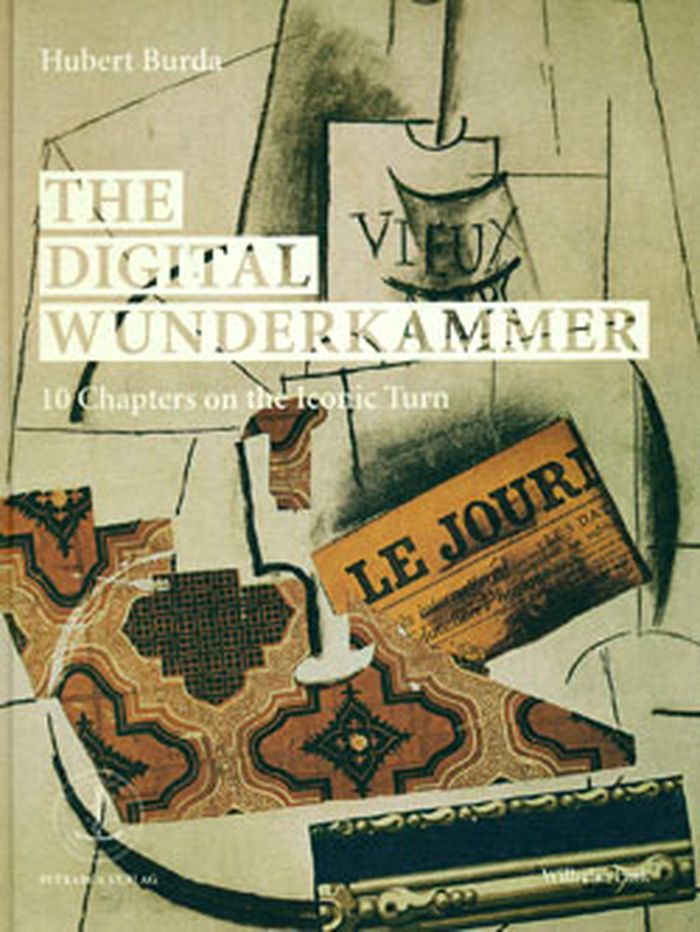
As digital technology advances at breakneck speed, images are circulating quicker than ever before. But what is the status of the image in the digital era? In this publication, art historian Hubert Burda (born 1940) examines the "iconic turn" in ten themed chapters and conversations with leading cultural theorists. In the first chapter, "The View Through the Window," Burda traces the connection between perspectival painting and the television, demonstrating in the second chapter how the image requires a frame, which in turn requires a material vehicle - the topic of the third chapter - that in our era has become a non-material vehicle with its own formal parameters. In the fourth chapter, "The Mobile Image," Burda shows how images have always been linked to portability, but now migrate to an unprecedented degree, so that anyone with a personal device can globally disseminate, say, footage from a concert via Youtube. A discussion of the capacity of individual images to placate or ennervate leads to a seventh chapter on the appetite for the Sublime and the rhetoric and representation of power throughout art history. Following a discussion of the democratization of celebrity culture, Burda proposes that the Google search box is perhaps the most interesting "interface" of our times, analogous to the seventeenth-century cabinet of curiosities (or wunderkammer). Conversations with Friedrich Kittler, Peter Sloterdijk, Bazon Brock, Horst Bredekamp and Hans Belting further extend this imaginative debate on the "iconic turn."
The digital wunderkammer : 10 chapters on the iconic turn
Actions:
Prix:
$45.00
(disponible sur commande)
Résumé:
As digital technology advances at breakneck speed, images are circulating quicker than ever before. But what is the status of the image in the digital era? In this publication, art historian Hubert Burda (born 1940) examines the "iconic turn" in ten themed chapters and conversations with leading cultural theorists. In the first chapter, "The View Through the Window," Burda traces the connection between perspectival painting and the television, demonstrating in the second chapter how the image requires a frame, which in turn requires a material vehicle - the topic of the third chapter - that in our era has become a non-material vehicle with its own formal parameters. In the fourth chapter, "The Mobile Image," Burda shows how images have always been linked to portability, but now migrate to an unprecedented degree, so that anyone with a personal device can globally disseminate, say, footage from a concert via Youtube. A discussion of the capacity of individual images to placate or ennervate leads to a seventh chapter on the appetite for the Sublime and the rhetoric and representation of power throughout art history. Following a discussion of the democratization of celebrity culture, Burda proposes that the Google search box is perhaps the most interesting "interface" of our times, analogous to the seventeenth-century cabinet of curiosities (or wunderkammer). Conversations with Friedrich Kittler, Peter Sloterdijk, Bazon Brock, Horst Bredekamp and Hans Belting further extend this imaginative debate on the "iconic turn."
Classification:
livres
livres
Publication:
août 2011
août 2011
Sujet:
Épistémologie et réseau
Épistémologie et réseau
Classification:
livres
livres
Titre:
The architectural model: histories of the miniature and the prototype, the exemplar and the muse
The architectural model: histories of the miniature and the prototype, the exemplar and the muse
Actions:
Prix:
$60.00
(disponible sur commande)
Résumé:
For more than five hundred years, architects have employed three-dimensional models as tools to test, refine, and illustrate their ideas. But, as Matthew Mindrup shows, the uses of physical architectural models extend beyond mere representation. An architectural model can also simulate, instruct, inspire, and generate architectural designs. It can be, among other things,(...)
$60.00
(disponible sur commande)
Résumé:
For more than five hundred years, architects have employed three-dimensional models as tools to test, refine, and illustrate their ideas. But, as Matthew Mindrup shows, the uses of physical architectural models extend beyond mere representation. An architectural model can also simulate, instruct, inspire, and generate architectural designs. It can be, among other things,(...)
Titre:
The architectural model: histories of the miniature and the prototype, the exemplar and the muse
Actions:
Prix:
$60.00
(disponible sur commande)
Résumé:
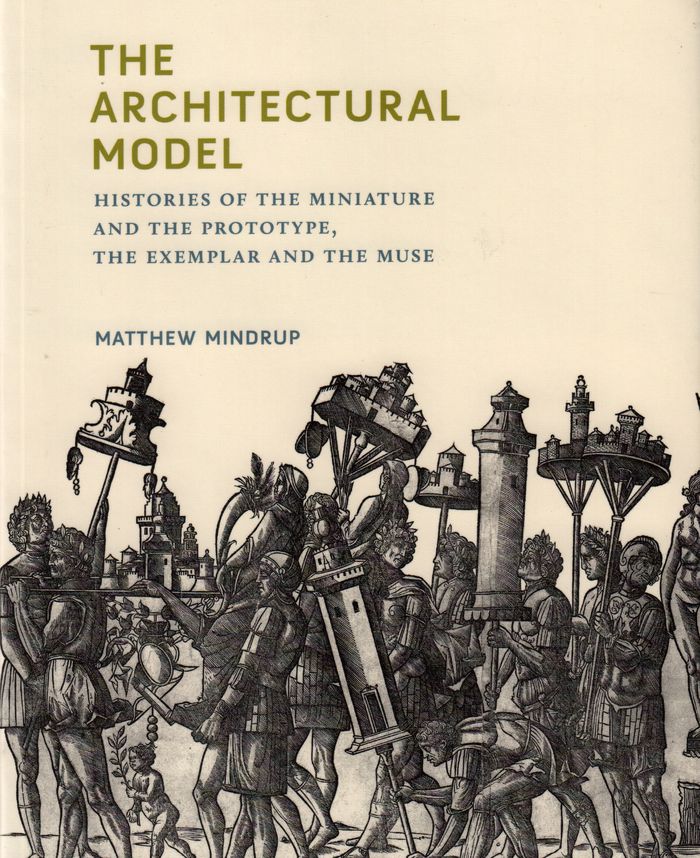
For more than five hundred years, architects have employed three-dimensional models as tools to test, refine, and illustrate their ideas. But, as Matthew Mindrup shows, the uses of physical architectural models extend beyond mere representation. An architectural model can also simulate, instruct, inspire, and generate architectural designs. It can be, among other things, sign, souvenir, toy, funerary object, didactic tool, medium, or muse. In this book, Mindrup surveys the history of architectural models by investigating their uses, both theoretical and practical. Tracing the architectural model's development from antiquity to the present, Mindrup also offers an interpretive framework for understanding each of its applications in the context of time and place. He first examines models meant to portray extant, fantastic, or proposed structures, describing their use in ancient funerary or dedicatory practices, in which models are endowed with magical power; as a medium for architectural reverie and inspiration; and as prototypes for twentieth-century experimental designs. Mindrup then considers models that exemplify certain architectural uses, exploring the influence of Leon Battista Alberti's dictum that models be simple, lest they distract from the architect's ideas; analyzing the model as a generative tool; and investigating allegorical, analogical, and anagogical interpretations of models. Mindrup's histories show how the model can be a surrogate for the architectural structure itself, or for the experience of its formal, tactile, and sensory complexity; and beyond that, that the manipulation, play, experimentation, and dreaming enabled by models allow us to imagine architecture in new ways.
The architectural model: histories of the miniature and the prototype, the exemplar and the muse
Actions:
Prix:
$60.00
(disponible sur commande)
Résumé:
For more than five hundred years, architects have employed three-dimensional models as tools to test, refine, and illustrate their ideas. But, as Matthew Mindrup shows, the uses of physical architectural models extend beyond mere representation. An architectural model can also simulate, instruct, inspire, and generate architectural designs. It can be, among other things, sign, souvenir, toy, funerary object, didactic tool, medium, or muse. In this book, Mindrup surveys the history of architectural models by investigating their uses, both theoretical and practical. Tracing the architectural model's development from antiquity to the present, Mindrup also offers an interpretive framework for understanding each of its applications in the context of time and place. He first examines models meant to portray extant, fantastic, or proposed structures, describing their use in ancient funerary or dedicatory practices, in which models are endowed with magical power; as a medium for architectural reverie and inspiration; and as prototypes for twentieth-century experimental designs. Mindrup then considers models that exemplify certain architectural uses, exploring the influence of Leon Battista Alberti's dictum that models be simple, lest they distract from the architect's ideas; analyzing the model as a generative tool; and investigating allegorical, analogical, and anagogical interpretations of models. Mindrup's histories show how the model can be a surrogate for the architectural structure itself, or for the experience of its formal, tactile, and sensory complexity; and beyond that, that the manipulation, play, experimentation, and dreaming enabled by models allow us to imagine architecture in new ways.
Classification:
livres
livres
Publication:
octobre 2019
octobre 2019
Sujet:
Théorie de l’architecture
Théorie de l’architecture
Classification:
livres
livres
Actions:
Prix:
$60.00
(disponible sur commande)
Résumé:
In "Picturing Space, Displacing Bodies", Lyle Massey argues that we can only learn how and why certain kinds of spatial representation prevailed over others by carefully considering how Renaissance artists and theorists interpreted perspective. Combining detailed historical studies with broad theoretical and philosophical investigations, this book challenges basic(...)
$60.00
(disponible sur commande)
Résumé:
In "Picturing Space, Displacing Bodies", Lyle Massey argues that we can only learn how and why certain kinds of spatial representation prevailed over others by carefully considering how Renaissance artists and theorists interpreted perspective. Combining detailed historical studies with broad theoretical and philosophical investigations, this book challenges basic(...)
Titre:
Picturing spaces, displacing bodies : anamorphosis in early Modern theories of perspective
Actions:
Prix:
$60.00
(disponible sur commande)
Résumé:
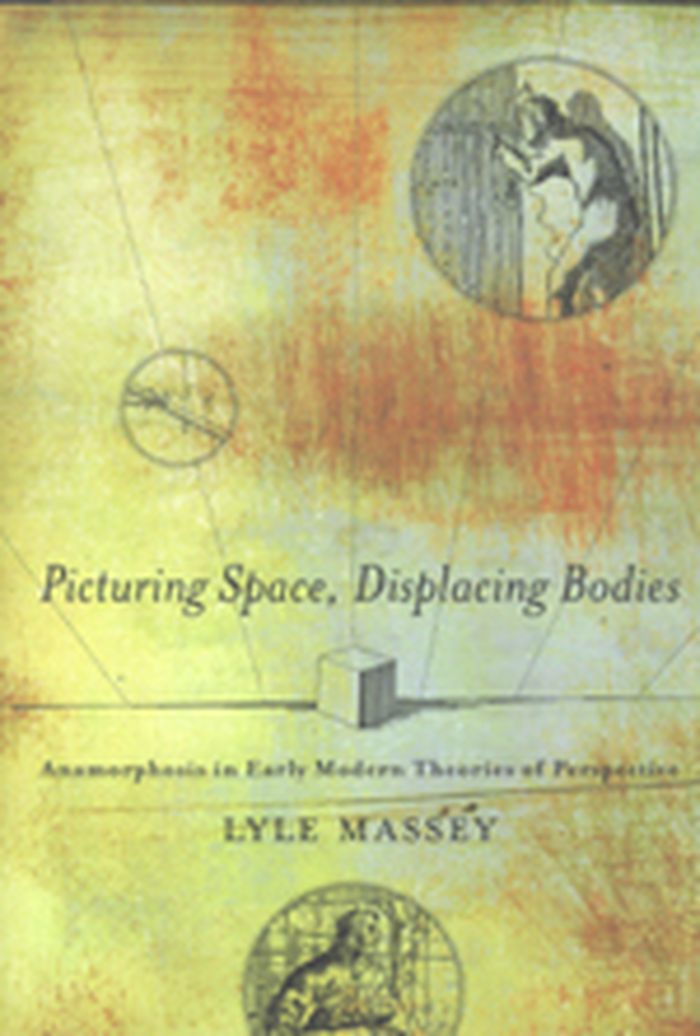
In "Picturing Space, Displacing Bodies", Lyle Massey argues that we can only learn how and why certain kinds of spatial representation prevailed over others by carefully considering how Renaissance artists and theorists interpreted perspective. Combining detailed historical studies with broad theoretical and philosophical investigations, this book challenges basic assumptions about the way early modern artists and theorists represented their relationship to the visible world and how they understood these representations. By analyzing technical feats such as anamorphosis (the perspectival distortion of an object to make it viewable only from a certain angle), drawing machines, and printed diagrams, each chapter highlights the moments when perspective theorists failed to unite a singular, ideal viewpoint with the artist’s or viewer’s viewpoint or were unsuccessful at conjoining fictive and lived space. Showing how these "failures" were subsequently incorporated rather than rejected by perspective theorists, the book presents an important reassessment of the standard view of Renaissance perspective. While many scholars have maintained that perspective rationalized the relationships among optics, space, and painting, "Picturing Space, Displacing Bodies" asserts instead that Renaissance and early modern theorists often revealed a disjunction between geometrical ideals and practical applications. In some cases, they not only identified but also exploited these discrepancies. This discussion of perspective shows that the painter’s geometry did not always conform to the explicitly rational, Cartesian formula that so many have assumed, nor did it historically unfold according to a standard account of scientific development.
Picturing spaces, displacing bodies : anamorphosis in early Modern theories of perspective
Actions:
Prix:
$60.00
(disponible sur commande)
Résumé:
In "Picturing Space, Displacing Bodies", Lyle Massey argues that we can only learn how and why certain kinds of spatial representation prevailed over others by carefully considering how Renaissance artists and theorists interpreted perspective. Combining detailed historical studies with broad theoretical and philosophical investigations, this book challenges basic assumptions about the way early modern artists and theorists represented their relationship to the visible world and how they understood these representations. By analyzing technical feats such as anamorphosis (the perspectival distortion of an object to make it viewable only from a certain angle), drawing machines, and printed diagrams, each chapter highlights the moments when perspective theorists failed to unite a singular, ideal viewpoint with the artist’s or viewer’s viewpoint or were unsuccessful at conjoining fictive and lived space. Showing how these "failures" were subsequently incorporated rather than rejected by perspective theorists, the book presents an important reassessment of the standard view of Renaissance perspective. While many scholars have maintained that perspective rationalized the relationships among optics, space, and painting, "Picturing Space, Displacing Bodies" asserts instead that Renaissance and early modern theorists often revealed a disjunction between geometrical ideals and practical applications. In some cases, they not only identified but also exploited these discrepancies. This discussion of perspective shows that the painter’s geometry did not always conform to the explicitly rational, Cartesian formula that so many have assumed, nor did it historically unfold according to a standard account of scientific development.
Classification:
livres
livres
Publication:
octobre 2007, University Park
octobre 2007, University Park
Sujet:
Théorie de l’architecture
Théorie de l’architecture
Classification:
livres
livres
Actions:
Prix:
$34.99
(disponible sur commande)
Résumé:
This compendium of projects, writings and interviews focuses on how the field of drawing expands synchronously alongside technological and computational developments. Despite numerous developments in technological manufacture and computational design that provide new grounds for designers, the act of drawing still plays a central role as a vehicle for speculation. In(...)
$34.99
(disponible sur commande)
Résumé:
This compendium of projects, writings and interviews focuses on how the field of drawing expands synchronously alongside technological and computational developments. Despite numerous developments in technological manufacture and computational design that provide new grounds for designers, the act of drawing still plays a central role as a vehicle for speculation. In(...)
Titre:
Drawing futures: speculations in contemporary drawing for art and architecture
Actions:
Prix:
$34.99
(disponible sur commande)
Résumé:
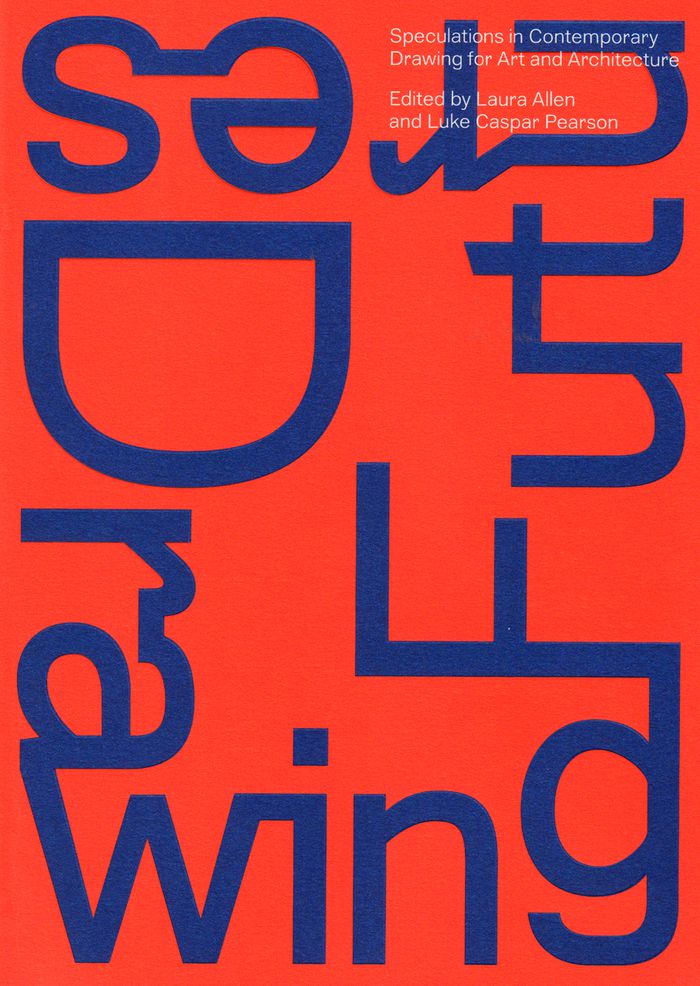
This compendium of projects, writings and interviews focuses on how the field of drawing expands synchronously alongside technological and computational developments. Despite numerous developments in technological manufacture and computational design that provide new grounds for designers, the act of drawing still plays a central role as a vehicle for speculation. In reflection of a society now underpinned by computational networks and interfaces allowing hitherto unprecedented views of the world, the changing status of the drawing and its representation as a political act demands a platform for reflection and innovation. "Drawing futures" critically reassess the act of drawing and where its future may lie. Bringing together practitioners from many creative fields, the book discusses how drawing is changing in relation to new technologies for the production and dissemination of ideas. Drawings seduce, and the drawings in this book are tantalising evidence of this. Yet the aim of Drawing Futures is to illustrate how drawing works as an abundantly rich, diverse, inventive, critical and serious research domain. In this regard, it is a ground-breaking study of the point and promise of drawing; a first of its kind, which both explores the microscopic detail of the craft and envisions the radical possibilities inherent in its expression. The academics, artists and architects whose work lies within conceive of drawing as a rigorous, liberating form of expression. Their contributions work together as a manifesto for the future of an artform that is capable of both utter simplicity and infinite complexity.
Drawing futures: speculations in contemporary drawing for art and architecture
Actions:
Prix:
$34.99
(disponible sur commande)
Résumé:
This compendium of projects, writings and interviews focuses on how the field of drawing expands synchronously alongside technological and computational developments. Despite numerous developments in technological manufacture and computational design that provide new grounds for designers, the act of drawing still plays a central role as a vehicle for speculation. In reflection of a society now underpinned by computational networks and interfaces allowing hitherto unprecedented views of the world, the changing status of the drawing and its representation as a political act demands a platform for reflection and innovation. "Drawing futures" critically reassess the act of drawing and where its future may lie. Bringing together practitioners from many creative fields, the book discusses how drawing is changing in relation to new technologies for the production and dissemination of ideas. Drawings seduce, and the drawings in this book are tantalising evidence of this. Yet the aim of Drawing Futures is to illustrate how drawing works as an abundantly rich, diverse, inventive, critical and serious research domain. In this regard, it is a ground-breaking study of the point and promise of drawing; a first of its kind, which both explores the microscopic detail of the craft and envisions the radical possibilities inherent in its expression. The academics, artists and architects whose work lies within conceive of drawing as a rigorous, liberating form of expression. Their contributions work together as a manifesto for the future of an artform that is capable of both utter simplicity and infinite complexity.
Classification:
livres
livres
Publication:
décembre 2016
décembre 2016
Sujet:
Dessin d’architecture
Dessin d’architecture
Classification:
livres
livres
Actions:
Exemplaires:
Description:
xii, 338 pages : illustrations ; 26 cm
Description:
xii, 338 pages : illustrations ; 26 cm
Auteur:
Sujet:
Publication:
London ; New York : Routledge, 2000.
London ; New York : Routledge, 2000.
Titre:
The city cultures reader / edited by Malcolm Miles, Iain Borden, and Tim Hall.
Actions:
Exemplaires:
Description:
xii, 338 pages : illustrations ; 26 cm
The city cultures reader / edited by Malcolm Miles, Iain Borden, and Tim Hall.
Actions:
Exemplaires:
Description:
xii, 338 pages : illustrations ; 26 cm
Classification:
livres
livres
Publication:
London ; New York : Routledge, 2000.
London ; New York : Routledge, 2000.
Auteur:
Sujet:
Classification:
livres
livres
Actions:
Exemplaires:
Description:
xii, 384 pages : illustrations, maps ; 25 cm
Description:
xii, 384 pages : illustrations, maps ; 25 cm
Auteur:
Sujet:
Publication:
Durham [NC] : Duke University Press, 2010.
Durham [NC] : Duke University Press, 2010.
Titre:
The heavens on earth : observatories and astronomy in nineteenth-century science and culture / edited by David Aubin, Charlotte Bigg, and H. Otto Sibum.
Actions:
Exemplaires:
Description:
xii, 384 pages : illustrations, maps ; 25 cm
The heavens on earth : observatories and astronomy in nineteenth-century science and culture / edited by David Aubin, Charlotte Bigg, and H. Otto Sibum.
Actions:
Exemplaires:
Description:
xii, 384 pages : illustrations, maps ; 25 cm
Classification:
livres
livres
Publication:
Durham [NC] : Duke University Press, 2010.
Durham [NC] : Duke University Press, 2010.
Auteur:
Sujet:


