


6578 Résultats
Classification:
livres
livres
Prix:
$85.95
(disponible sur commande)
Résumé:
To confront the Anthropocene, designers must increasingly move between scales and across disciplines to develop new structures of knowledge and tools of representation: from the embodied to the technical, the investigative to the projective. Ultimately, this volume asks: What stakes are embedded in contemporary architectural environmental media, and how are designers(...)
$85.95
(disponible sur commande)
Résumé:
To confront the Anthropocene, designers must increasingly move between scales and across disciplines to develop new structures of knowledge and tools of representation: from the embodied to the technical, the investigative to the projective. Ultimately, this volume asks: What stakes are embedded in contemporary architectural environmental media, and how are designers(...)
Titre:
Architecture as environmental media: Rendering the planetary
Actions:
Prix:
$85.95
(disponible sur commande)
Résumé:
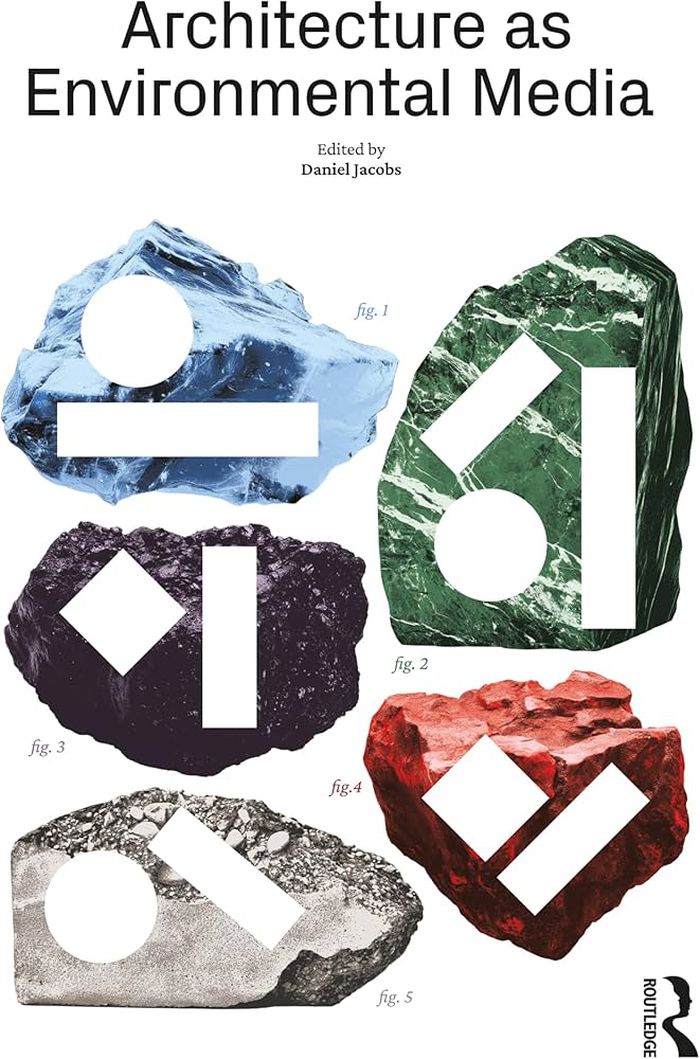
To confront the Anthropocene, designers must increasingly move between scales and across disciplines to develop new structures of knowledge and tools of representation: from the embodied to the technical, the investigative to the projective. Ultimately, this volume asks: What stakes are embedded in contemporary architectural environmental media, and how are designers re-imagining this media landscape today? Chapters in the book explore counter-cartographies of migration and materials, forest ecologies and theories of abundance, hyperreal visualization and environmental simulation, architecture’s extractive and colonial systems, and pedagogies and practices for environmental futures. This book organizes these efforts into three threads of media practice: rendering visible, rendering sensible, and rendering actionable. While these categories are inextricably intertwined, they represent distinct tactical approaches to media production, each exploring possible methods to develop new knowledge systems, shift aesthetic regimes, and transform collective politics.
Architecture as environmental media: Rendering the planetary
Actions:
Prix:
$85.95
(disponible sur commande)
Résumé:
To confront the Anthropocene, designers must increasingly move between scales and across disciplines to develop new structures of knowledge and tools of representation: from the embodied to the technical, the investigative to the projective. Ultimately, this volume asks: What stakes are embedded in contemporary architectural environmental media, and how are designers re-imagining this media landscape today? Chapters in the book explore counter-cartographies of migration and materials, forest ecologies and theories of abundance, hyperreal visualization and environmental simulation, architecture’s extractive and colonial systems, and pedagogies and practices for environmental futures. This book organizes these efforts into three threads of media practice: rendering visible, rendering sensible, and rendering actionable. While these categories are inextricably intertwined, they represent distinct tactical approaches to media production, each exploring possible methods to develop new knowledge systems, shift aesthetic regimes, and transform collective politics.
Classification:
livres
livres
Publication:
décembre 2025
décembre 2025
Sujet:
L'écologie de l'architecure
L'écologie de l'architecure
Classification:
livres
livres
Prix:
$52.50
(disponible sur commande)
Résumé:
The dominant architectures in our culture of development consist of generic protocols for building offices, airports, houses, and highways. For Keller Easterling these organizational formats are not merely the context of design efforts. They are the design. Bridging the gap between architecture and infrastructure, Easterling views architecture as part of an ecology of(...)
$52.50
(disponible sur commande)
Résumé:
The dominant architectures in our culture of development consist of generic protocols for building offices, airports, houses, and highways. For Keller Easterling these organizational formats are not merely the context of design efforts. They are the design. Bridging the gap between architecture and infrastructure, Easterling views architecture as part of an ecology of(...)
Titre:
Organization space : landscapes, highways, and houses in America
Actions:
Prix:
$52.50
(disponible sur commande)
Résumé:
The dominant architectures in our culture of development consist of generic protocols for building offices, airports, houses, and highways. For Keller Easterling these organizational formats are not merely the context of design efforts. They are the design. Bridging the gap between architecture and infrastructure, Easterling views architecture as part of an ecology of interrelationships and linkages, and she treats the expression of organizational character as part of the architectural endeavor. Easterling also makes the case that these organizational formats are improvisational and responsive to circumstantial change, to mistakes, anomalies, and seemingly illogical market forces. By treating these irregularities opportunistically, she offers architects working within the customary development protocols new sites for making and altering space. By showing the reciprocal relations between systems of thinking and modes of designing, Easterling establishes unexpected congruencies between natural and built environments, virtual and physical systems, highway and communication networks, and corporate and spatial organizations. She frames her unconventional notion of site not in terms of singular entities, but in terms of relationships between multiple sites that are both individually and collectively adjustable.
Organization space : landscapes, highways, and houses in America
Actions:
Prix:
$52.50
(disponible sur commande)
Résumé:
The dominant architectures in our culture of development consist of generic protocols for building offices, airports, houses, and highways. For Keller Easterling these organizational formats are not merely the context of design efforts. They are the design. Bridging the gap between architecture and infrastructure, Easterling views architecture as part of an ecology of interrelationships and linkages, and she treats the expression of organizational character as part of the architectural endeavor. Easterling also makes the case that these organizational formats are improvisational and responsive to circumstantial change, to mistakes, anomalies, and seemingly illogical market forces. By treating these irregularities opportunistically, she offers architects working within the customary development protocols new sites for making and altering space. By showing the reciprocal relations between systems of thinking and modes of designing, Easterling establishes unexpected congruencies between natural and built environments, virtual and physical systems, highway and communication networks, and corporate and spatial organizations. She frames her unconventional notion of site not in terms of singular entities, but in terms of relationships between multiple sites that are both individually and collectively adjustable.
Classification:
livres
livres
Publication:
novembre 1999, Cambridge
novembre 1999, Cambridge
Sujet:
Théorie de l’architecture
Théorie de l’architecture
Classification:
livres
livres
Prix:
$49.95
(disponible sur commande)
Résumé:
"Last Landscapes" is an exploration of the cult and celebration of death, loss and memory. It traces the history and design of burial places throughout Europe and the USA, ranging from the picturesque tradition of the village churchyard to tightly packed ‘cities of the dead’, such as the Jewish Cemetery in Prague and Père Lachaise in Paris. Other landscapes that feature(...)
$49.95
(disponible sur commande)
Résumé:
"Last Landscapes" is an exploration of the cult and celebration of death, loss and memory. It traces the history and design of burial places throughout Europe and the USA, ranging from the picturesque tradition of the village churchyard to tightly packed ‘cities of the dead’, such as the Jewish Cemetery in Prague and Père Lachaise in Paris. Other landscapes that feature(...)
Titre:
Last landscapes : the architecture of the cemetery in the west
Actions:
Prix:
$49.95
(disponible sur commande)
Résumé:
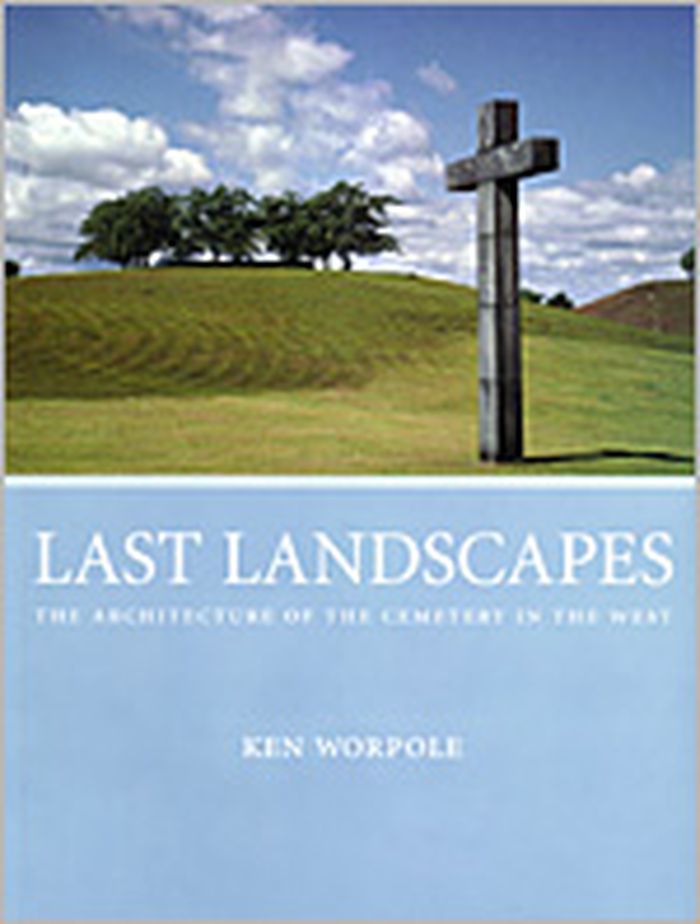
"Last Landscapes" is an exploration of the cult and celebration of death, loss and memory. It traces the history and design of burial places throughout Europe and the USA, ranging from the picturesque tradition of the village churchyard to tightly packed ‘cities of the dead’, such as the Jewish Cemetery in Prague and Père Lachaise in Paris. Other landscapes that feature in this book include the war cemeteries of northern France, Viking burial islands in central Sweden, Etruscan tombs and early Christian catacombs in Italy, the 17th-century Portuguese–Jewish cemetery 'Beth Haim' at Ouderkerk in the Netherlands, Forest Lawns in California, Derek Jarman’s garden in Kent and the Stockholm Woodland Cemetery. It is a fact that architecture ‘began with the tomb', yet, as Ken Worpole shows us in Last Landscapes, many historic cemeteries have been demolished or abandoned in recent times (notably the case with Jewish cemeteries in Eastern Europe), and there has been an increasing loss of inscription and memorialization in the modern urban cemetery. Too often cemeteries today are both poorly designed and physically and culturally marginalized. Worse, cremation denies a full architectural response to the mystery and solemnity of death. The author explores how modes of disposal – burial, cremation, inhumation in mausoleums and wall tombs – vary across Europe and North America, according to religious and other cultural influences. And Last Landscapes raises profound questions as to how, in an age of mass cremation, architects and landscape designers might create meaningful structures and settings in the absence of a body, since for most of history the human body itself has provided the fundamental structural scale. This evocative book also contemplates other forms of memorialization within modern societies, from sculptures to parks, most notably the extraordinary Duisberg Park, set in a former giant steelworks in Germany’s Ruhr Valley.
Last landscapes : the architecture of the cemetery in the west
Actions:
Prix:
$49.95
(disponible sur commande)
Résumé:
"Last Landscapes" is an exploration of the cult and celebration of death, loss and memory. It traces the history and design of burial places throughout Europe and the USA, ranging from the picturesque tradition of the village churchyard to tightly packed ‘cities of the dead’, such as the Jewish Cemetery in Prague and Père Lachaise in Paris. Other landscapes that feature in this book include the war cemeteries of northern France, Viking burial islands in central Sweden, Etruscan tombs and early Christian catacombs in Italy, the 17th-century Portuguese–Jewish cemetery 'Beth Haim' at Ouderkerk in the Netherlands, Forest Lawns in California, Derek Jarman’s garden in Kent and the Stockholm Woodland Cemetery. It is a fact that architecture ‘began with the tomb', yet, as Ken Worpole shows us in Last Landscapes, many historic cemeteries have been demolished or abandoned in recent times (notably the case with Jewish cemeteries in Eastern Europe), and there has been an increasing loss of inscription and memorialization in the modern urban cemetery. Too often cemeteries today are both poorly designed and physically and culturally marginalized. Worse, cremation denies a full architectural response to the mystery and solemnity of death. The author explores how modes of disposal – burial, cremation, inhumation in mausoleums and wall tombs – vary across Europe and North America, according to religious and other cultural influences. And Last Landscapes raises profound questions as to how, in an age of mass cremation, architects and landscape designers might create meaningful structures and settings in the absence of a body, since for most of history the human body itself has provided the fundamental structural scale. This evocative book also contemplates other forms of memorialization within modern societies, from sculptures to parks, most notably the extraordinary Duisberg Park, set in a former giant steelworks in Germany’s Ruhr Valley.
Classification:
livres
livres
Publication:
juin 2003, London
juin 2003, London
Sujet:
Jardins
Jardins
Classification:
livres
livres
Actions:
Prix:
$34.95
(disponible sur commande)
Résumé:
In Power from the North, Caroline Desbiens explores how this culture of hydroelectricity helped shape the material landscape during the first phase of the James Bay hydroelectric project. She analyzes the cultural forces that contributed to the transformation of the La Grande River into a hydroelectric complex. Policy makers and Quebecers did not, she argues, view those(...)
$34.95
(disponible sur commande)
Résumé:
In Power from the North, Caroline Desbiens explores how this culture of hydroelectricity helped shape the material landscape during the first phase of the James Bay hydroelectric project. She analyzes the cultural forces that contributed to the transformation of the La Grande River into a hydroelectric complex. Policy makers and Quebecers did not, she argues, view those(...)
Titre:
Power from the North: territory, identity, and the culture of hydroelectricity in Quebec
Actions:
Prix:
$34.95
(disponible sur commande)
Résumé:
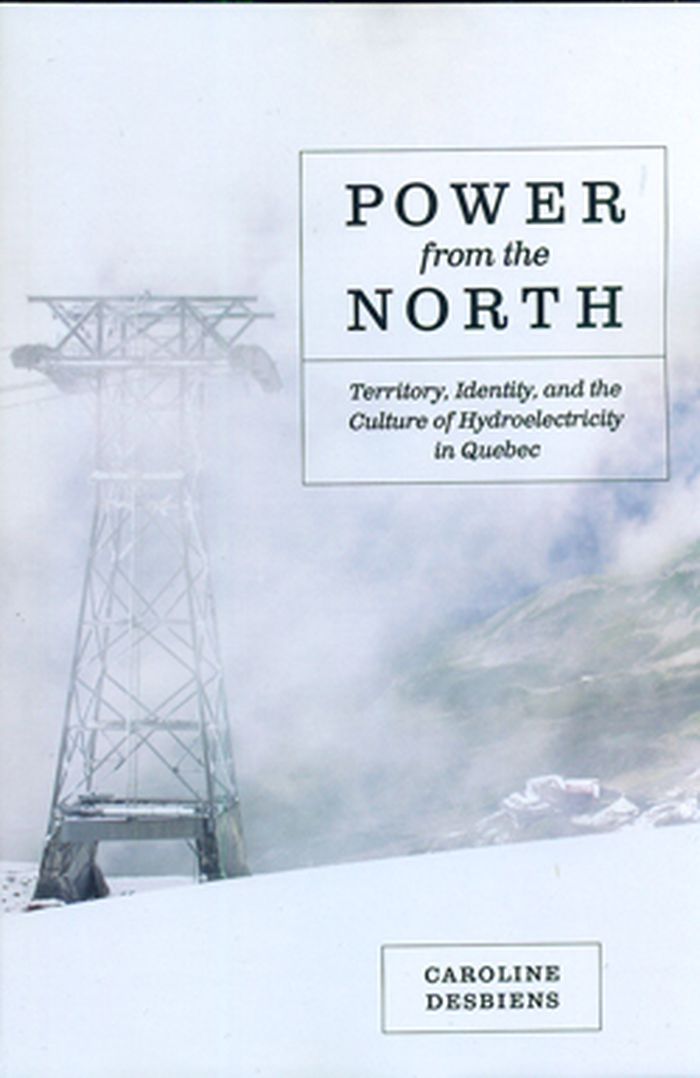
In Power from the North, Caroline Desbiens explores how this culture of hydroelectricity helped shape the material landscape during the first phase of the James Bay hydroelectric project. She analyzes the cultural forces that contributed to the transformation of the La Grande River into a hydroelectric complex. Policy makers and Quebecers did not, she argues, view those who built the dams as mere workers -- they saw them as pioneers in a previously uninhabited landscape now inscribed with the codes of culture and spectacle. This book reveals that drawing power from the North involves not only the cultural erasure of Aboriginal homelands but also rewriting the region’s history in the language of identity and territoriality. To reverse this trend, Desbiens calls for a truly sustainable resource management, one in which all actors bring an awareness of their own cultural histories and visions of nature, North, and nation to the negotiating table.
Power from the North: territory, identity, and the culture of hydroelectricity in Quebec
Actions:
Prix:
$34.95
(disponible sur commande)
Résumé:
In Power from the North, Caroline Desbiens explores how this culture of hydroelectricity helped shape the material landscape during the first phase of the James Bay hydroelectric project. She analyzes the cultural forces that contributed to the transformation of the La Grande River into a hydroelectric complex. Policy makers and Quebecers did not, she argues, view those who built the dams as mere workers -- they saw them as pioneers in a previously uninhabited landscape now inscribed with the codes of culture and spectacle. This book reveals that drawing power from the North involves not only the cultural erasure of Aboriginal homelands but also rewriting the region’s history in the language of identity and territoriality. To reverse this trend, Desbiens calls for a truly sustainable resource management, one in which all actors bring an awareness of their own cultural histories and visions of nature, North, and nation to the negotiating table.
Classification:
livres
livres
Publication:
février 2014
février 2014
Sujet:
Architecture du Québec
Architecture du Québec
Classification:
livres
livres
Actions:
Prix:
$46.95
(disponible sur commande)
Résumé:
"Criticat" is an independent journal of architectural criticism published twice annually. Based in Paris, it was founded in 2007 by a group of architects, historians, and critics on a simple premise: that informed and daring criticism could bring architecture back into everyday public discourse. Twenty-three exemplary articles have been selected from the journal's first(...)
$46.95
(disponible sur commande)
Résumé:
"Criticat" is an independent journal of architectural criticism published twice annually. Based in Paris, it was founded in 2007 by a group of architects, historians, and critics on a simple premise: that informed and daring criticism could bring architecture back into everyday public discourse. Twenty-three exemplary articles have been selected from the journal's first(...)
Titre:
Yours critically: writings on architecture from issues 1-10 of Criticat
Actions:
Prix:
$46.95
(disponible sur commande)
Résumé:
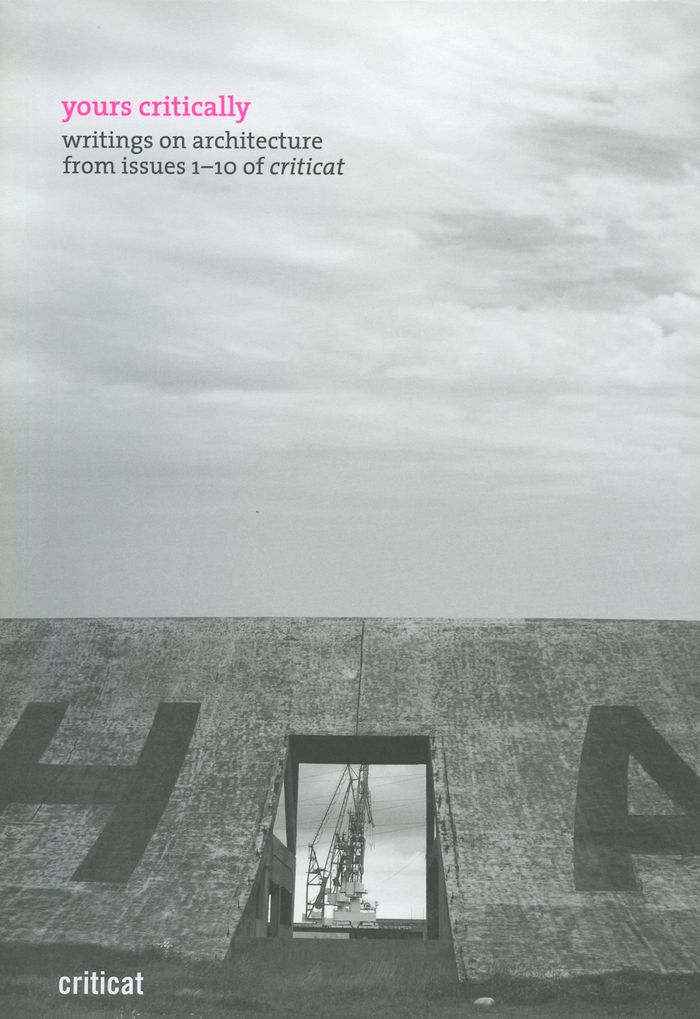
"Criticat" is an independent journal of architectural criticism published twice annually. Based in Paris, it was founded in 2007 by a group of architects, historians, and critics on a simple premise: that informed and daring criticism could bring architecture back into everyday public discourse. Twenty-three exemplary articles have been selected from the journal's first ten issues, and appear here in English for the first time. Individual investigations tackle subjects from around the globe: projects by Frank Gehry and Jürgen Mayer h, high-rise buildings in Paris, the purity of New Zealand's landscape, New York's High Line, and much more.
Yours critically: writings on architecture from issues 1-10 of Criticat
Actions:
Prix:
$46.95
(disponible sur commande)
Résumé:
"Criticat" is an independent journal of architectural criticism published twice annually. Based in Paris, it was founded in 2007 by a group of architects, historians, and critics on a simple premise: that informed and daring criticism could bring architecture back into everyday public discourse. Twenty-three exemplary articles have been selected from the journal's first ten issues, and appear here in English for the first time. Individual investigations tackle subjects from around the globe: projects by Frank Gehry and Jürgen Mayer h, high-rise buildings in Paris, the purity of New Zealand's landscape, New York's High Line, and much more.
Classification:
livres
livres
Publication:
juin 2016
juin 2016
Sujet:
Théorie de l’architecture
Théorie de l’architecture
Classification:
livres
livres
Titre:
Archiprix 2012
Archiprix 2012
Actions:
Prix:
$40.00
(disponible sur commande)
Résumé:
Each year the Dutch institutions which teach architecture, urban design and landscape architecture select their best final-year projects.
$40.00
(disponible sur commande)
Résumé:
Each year the Dutch institutions which teach architecture, urban design and landscape architecture select their best final-year projects.
Titre:
Archiprix 2012
Actions:
Prix:
$40.00
(disponible sur commande)
Résumé:
Each year the Dutch institutions which teach architecture, urban design and landscape architecture select their best final-year projects.
Archiprix 2012
Actions:
Prix:
$40.00
(disponible sur commande)
Résumé:
Each year the Dutch institutions which teach architecture, urban design and landscape architecture select their best final-year projects.
Classification:
livres
livres
Publication:
décembre 2012
décembre 2012
Sujet:
Architecture contemporaine
Architecture contemporaine
Classification:
livres
livres
Prix:
$66.00
(disponible sur commande)
Résumé:
''Lost Days, Endless Nights'' tells a history from below—an account of the lives of the forgotten and dispossessed of Los Angeles: the unemployed, the precariously employed, the evicted, the alienated, the unhoused, the anxious, the exhausted. Through an analysis of abandoned archival works, experimental films, and other projects, Andrew Witt offers an expansive account(...)
$66.00
(disponible sur commande)
Résumé:
''Lost Days, Endless Nights'' tells a history from below—an account of the lives of the forgotten and dispossessed of Los Angeles: the unemployed, the precariously employed, the evicted, the alienated, the unhoused, the anxious, the exhausted. Through an analysis of abandoned archival works, experimental films, and other projects, Andrew Witt offers an expansive account(...)
Titre:
Lost days, endless nights: Photography and film from Los Angeles
Actions:
Prix:
$66.00
(disponible sur commande)
Résumé:
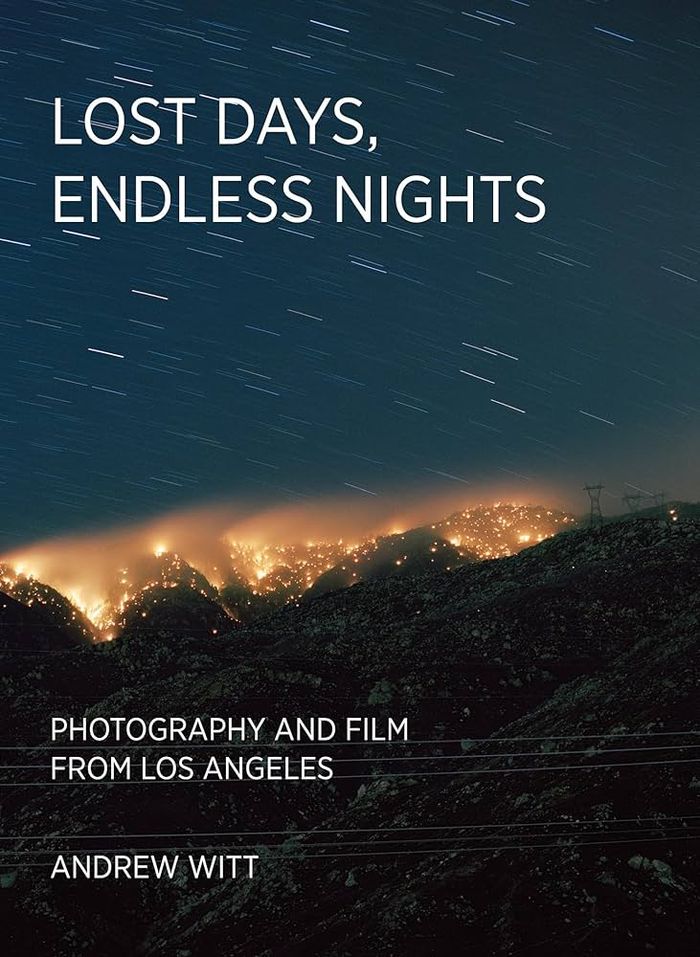
''Lost Days, Endless Nights'' tells a history from below—an account of the lives of the forgotten and dispossessed of Los Angeles: the unemployed, the precariously employed, the evicted, the alienated, the unhoused, the anxious, the exhausted. Through an analysis of abandoned archival works, experimental films, and other projects, Andrew Witt offers an expansive account of the artists who have lived or worked in Los Angeles, delving into the region's history and geography, highlighting its racial, gender, and class conflicts. Presented as a series of nine case studies, Witt explores how artists as diverse as Agnès Varda, Dana Lixenberg, Allan Sekula, Catherine Opie, John Divola, Gregory Halpern, Paul Sepuya, and Guadalupe Rosales have reimagined and reshaped our understanding of contemporary Los Angeles. The book features portraits of those who struggle and attempt to get by in the city: dock workers, students, bus riders, petty criminals, office workers, immigrants, queer and trans activists. Set against the landscape of economic turmoil and environmental crises that shadowed the 1970s, Witt highlights the urgent need for a historical perspective of cultural retrieval and counternarrative. Extending into the present, ''Lost Days, Endless Nights'' advocates for an approach that actively embraces the works and projects that have been overlooked and evicted from the historical imaginary
Lost days, endless nights: Photography and film from Los Angeles
Actions:
Prix:
$66.00
(disponible sur commande)
Résumé:
''Lost Days, Endless Nights'' tells a history from below—an account of the lives of the forgotten and dispossessed of Los Angeles: the unemployed, the precariously employed, the evicted, the alienated, the unhoused, the anxious, the exhausted. Through an analysis of abandoned archival works, experimental films, and other projects, Andrew Witt offers an expansive account of the artists who have lived or worked in Los Angeles, delving into the region's history and geography, highlighting its racial, gender, and class conflicts. Presented as a series of nine case studies, Witt explores how artists as diverse as Agnès Varda, Dana Lixenberg, Allan Sekula, Catherine Opie, John Divola, Gregory Halpern, Paul Sepuya, and Guadalupe Rosales have reimagined and reshaped our understanding of contemporary Los Angeles. The book features portraits of those who struggle and attempt to get by in the city: dock workers, students, bus riders, petty criminals, office workers, immigrants, queer and trans activists. Set against the landscape of economic turmoil and environmental crises that shadowed the 1970s, Witt highlights the urgent need for a historical perspective of cultural retrieval and counternarrative. Extending into the present, ''Lost Days, Endless Nights'' advocates for an approach that actively embraces the works and projects that have been overlooked and evicted from the historical imaginary
Classification:
livres
livres
Publication:
décembre 2024
décembre 2024
Classification:
livres
livres
Titre:
AD: Protocell architecture
AD: Protocell architecture
Actions:
Prix:
$48.00
(disponible en magasin)
Résumé:
Throughout the ages architects have attempted to capture the essence of living systems as design inspiration. However, practitioners of the built environment have had to deal with a fundamental split between the artificial urban landscape and nature owing to a technological 'gap' that means architects have been unable to make effective use of biological systems in urban(...)
$48.00
(disponible en magasin)
Résumé:
Throughout the ages architects have attempted to capture the essence of living systems as design inspiration. However, practitioners of the built environment have had to deal with a fundamental split between the artificial urban landscape and nature owing to a technological 'gap' that means architects have been unable to make effective use of biological systems in urban(...)
Titre:
AD: Protocell architecture
Actions:
Prix:
$48.00
(disponible en magasin)
Résumé:
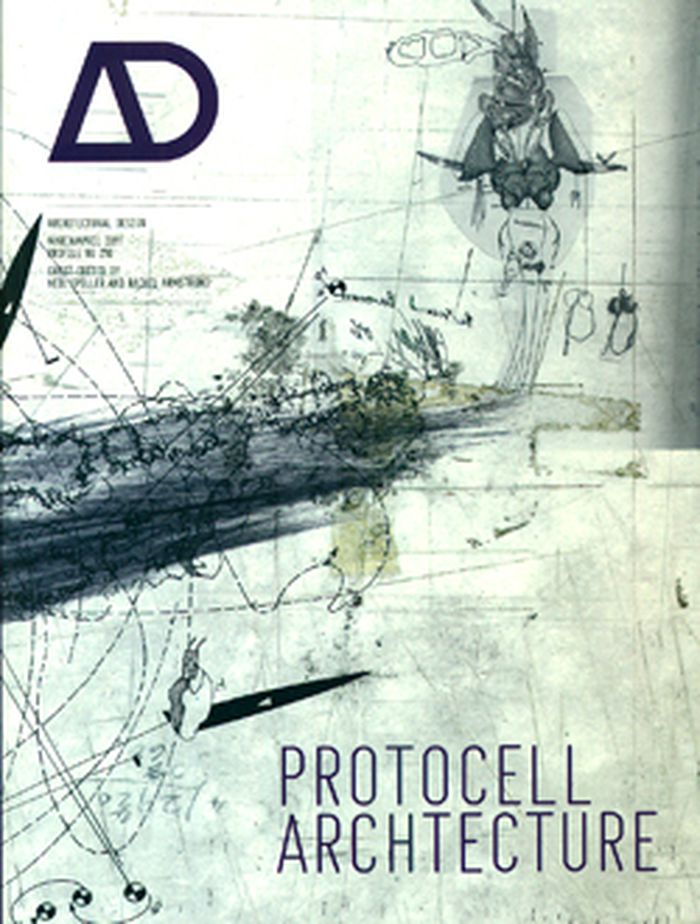
Throughout the ages architects have attempted to capture the essence of living systems as design inspiration. However, practitioners of the built environment have had to deal with a fundamental split between the artificial urban landscape and nature owing to a technological 'gap' that means architects have been unable to make effective use of biological systems in urban environments. This edition of AD that shows for the first time that contemporary architects can create and construct architectures that are bottom up, synthetically biological, green and have no recourse to shallow bio-mimicry. In the next few decades, synthetic biology is set to have as much, if not more, impact on architecture as cyberspace and the digital. The key to these amazing architectural innovations is the Protocell. Contributors include: Rachel Armstrong; Martin Hanczyc; Lee Cronin; Mark Morris Architects include: Neil Spiller; Nic Clear; IwamotoScott; Paul Preissner; Omar Khan;Dan Slavinsky; Philip Beesley; Neri Oxman
AD: Protocell architecture
Actions:
Prix:
$48.00
(disponible en magasin)
Résumé:
Throughout the ages architects have attempted to capture the essence of living systems as design inspiration. However, practitioners of the built environment have had to deal with a fundamental split between the artificial urban landscape and nature owing to a technological 'gap' that means architects have been unable to make effective use of biological systems in urban environments. This edition of AD that shows for the first time that contemporary architects can create and construct architectures that are bottom up, synthetically biological, green and have no recourse to shallow bio-mimicry. In the next few decades, synthetic biology is set to have as much, if not more, impact on architecture as cyberspace and the digital. The key to these amazing architectural innovations is the Protocell. Contributors include: Rachel Armstrong; Martin Hanczyc; Lee Cronin; Mark Morris Architects include: Neil Spiller; Nic Clear; IwamotoScott; Paul Preissner; Omar Khan;Dan Slavinsky; Philip Beesley; Neri Oxman
Classification:
livres
livres
Publication:
avril 2011
avril 2011
Sujet:
Revues
Revues
Classification:
livres
livres
Actions:
Exemplaires:
Description:
viii, 120 pages : illustrations (some color) ; 29 cm
Description:
viii, 120 pages : illustrations (some color) ; 29 cm
Auteur:
Sujet:
Publication:
Toronto : Royal Ontario Museum : University of Toronto Press, 1993.
Toronto : Royal Ontario Museum : University of Toronto Press, 1993.
Titre:
Documenting design : works on paper in the European collection of the Royal Ontario Museum / Howard Creel Collinson.
Actions:
Exemplaires:
Description:
viii, 120 pages : illustrations (some color) ; 29 cm
Documenting design : works on paper in the European collection of the Royal Ontario Museum / Howard Creel Collinson.
Actions:
Exemplaires:
Description:
viii, 120 pages : illustrations (some color) ; 29 cm
Classification:
livres
livres
Publication:
Toronto : Royal Ontario Museum : University of Toronto Press, 1993.
Toronto : Royal Ontario Museum : University of Toronto Press, 1993.
Auteur:
Sujet:
Classification:
livres
livres
Prix:
$55.00
(disponible sur commande)
Résumé:
''Atmosphere anatomies'' illustrates the relationship between landscape architecture and urbanism with atmosphere as a design medium for sensory and physiological welfare. The essays examine the design techniques and contexts of projects in which atmosphere is brought to the fore. Throughout, photo-essays by Iwan Baan showcase selected design projects as milieus for(...)
$55.00
(disponible sur commande)
Résumé:
''Atmosphere anatomies'' illustrates the relationship between landscape architecture and urbanism with atmosphere as a design medium for sensory and physiological welfare. The essays examine the design techniques and contexts of projects in which atmosphere is brought to the fore. Throughout, photo-essays by Iwan Baan showcase selected design projects as milieus for(...)
Titre:
Atmosphere anatomies: on design, weather, and sensation
Actions:
Prix:
$55.00
(disponible sur commande)
Résumé:
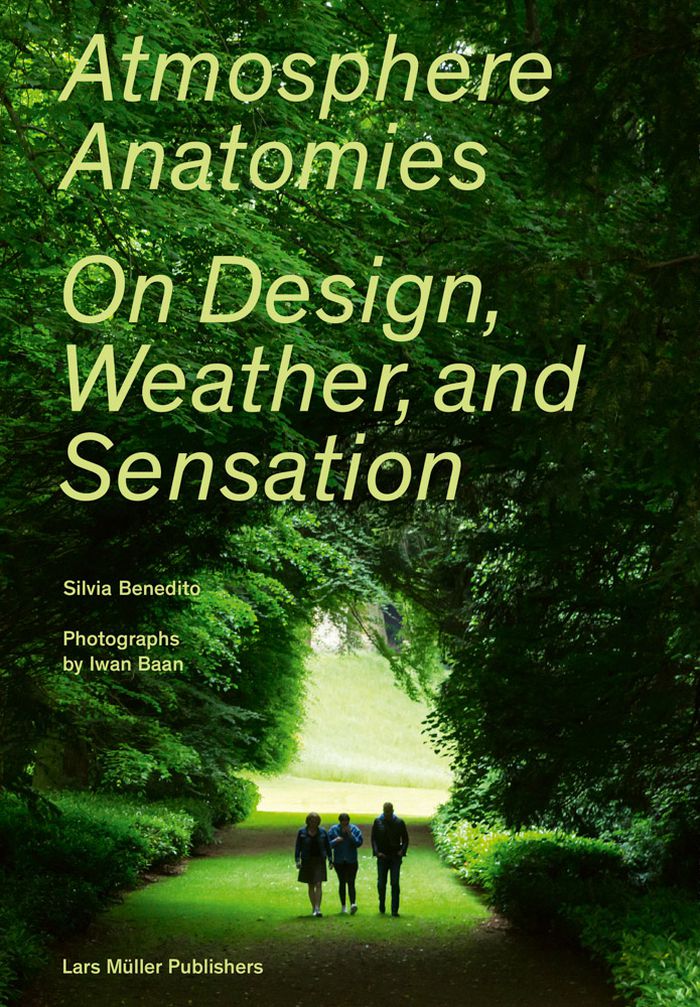
''Atmosphere anatomies'' illustrates the relationship between landscape architecture and urbanism with atmosphere as a design medium for sensory and physiological welfare. The essays examine the design techniques and contexts of projects in which atmosphere is brought to the fore. Throughout, photo-essays by Iwan Baan showcase selected design projects as milieus for everyday life. The book concludes with a combined taxonomy of design techniques. The critical and visual examinations of these projects—from William Kent to Lawrence Halprin, Carlos Villanueva to Alexandre Chemetoff, Le Corbusier to Lina Bo Bardi—illustrate that the continual integration of atmosphere as medium in the design process creates spaces with social, emotional and environmental relevance.
Atmosphere anatomies: on design, weather, and sensation
Actions:
Prix:
$55.00
(disponible sur commande)
Résumé:
''Atmosphere anatomies'' illustrates the relationship between landscape architecture and urbanism with atmosphere as a design medium for sensory and physiological welfare. The essays examine the design techniques and contexts of projects in which atmosphere is brought to the fore. Throughout, photo-essays by Iwan Baan showcase selected design projects as milieus for everyday life. The book concludes with a combined taxonomy of design techniques. The critical and visual examinations of these projects—from William Kent to Lawrence Halprin, Carlos Villanueva to Alexandre Chemetoff, Le Corbusier to Lina Bo Bardi—illustrate that the continual integration of atmosphere as medium in the design process creates spaces with social, emotional and environmental relevance.
Classification:
livres
livres
Publication:
janvier 2021
janvier 2021
Sujet:
Paysages urbains
Paysages urbains


