


2522 Résultats
Niveau de description archivistique:
Projet
Projet
Numéro de référence:
AP075.S1.2008.PR02
Description:
Project series documents Cornelia Hahn Oberlander's project for the Inuvik School, later known as East Three School, in Inuvik, Northwest Territories. The project consisted in the landscape design and a playground design for the new school replacing the Sir Alexander MacKenzie elementary school and the Samuel Herne Secondary School. Oberlander worked on this project from 2008 to 2012 with architects Pin/Taylor. During her design process, Oberlander consulted the teachers, parents, staff and students on ways to express their culture in the landscape design. She also had to adapt her design to the extreme climate of the region. Oberlander located the play court at the angle of the two buildings of the elementary school and the secondary school, to shelter it from the wind, and allowing small children to play outside. The plant selection was made by "harvesting local site and surrounding area for plant material" [1] and was also inspired by traditional cuisine. The project was completed in 2012. The project series also includes some documents related to a project possibly unrealized of the Jim Koe Park also in Inuvik, near the school. The project series contains design development drawings and working drawings, such as planting plans, irrigation plans, grading plans, landscape sections, and site plans. The drawings also includes sets of building plans used as reference. The project is also documented through correspondence, including with architects, suppliers, and consultants, specifications, scope of work, schematic design and design reports from architectural firm, minutes of meetings, and research material. Source: [1] Herrington, Susan. Cornelia Hahn Oberlander: Making the Modern Landscape, University of Virginia Press, 2014, 304 pages, p. 197.
AP075.S1.2008.PR02
Description:
Project series documents Cornelia Hahn Oberlander's project for the Inuvik School, later known as East Three School, in Inuvik, Northwest Territories. The project consisted in the landscape design and a playground design for the new school replacing the Sir Alexander MacKenzie elementary school and the Samuel Herne Secondary School. Oberlander worked on this project from 2008 to 2012 with architects Pin/Taylor. During her design process, Oberlander consulted the teachers, parents, staff and students on ways to express their culture in the landscape design. She also had to adapt her design to the extreme climate of the region. Oberlander located the play court at the angle of the two buildings of the elementary school and the secondary school, to shelter it from the wind, and allowing small children to play outside. The plant selection was made by "harvesting local site and surrounding area for plant material" [1] and was also inspired by traditional cuisine. The project was completed in 2012. The project series also includes some documents related to a project possibly unrealized of the Jim Koe Park also in Inuvik, near the school. The project series contains design development drawings and working drawings, such as planting plans, irrigation plans, grading plans, landscape sections, and site plans. The drawings also includes sets of building plans used as reference. The project is also documented through correspondence, including with architects, suppliers, and consultants, specifications, scope of work, schematic design and design reports from architectural firm, minutes of meetings, and research material. Source: [1] Herrington, Susan. Cornelia Hahn Oberlander: Making the Modern Landscape, University of Virginia Press, 2014, 304 pages, p. 197.
Personnes et institutions:
Date:
1999-2014
1999-2014
Titre:
Inuvik School, Inuvik, Northwest Territories (2008)
Actions:
AP075.S1.2008.PR02
Description:
Project series documents Cornelia Hahn Oberlander's project for the Inuvik School, later known as East Three School, in Inuvik, Northwest Territories. The project consisted in the landscape design and a playground design for the new school replacing the Sir Alexander MacKenzie elementary school and the Samuel Herne Secondary School. Oberlander worked on this project from 2008 to 2012 with architects Pin/Taylor. During her design process, Oberlander consulted the teachers, parents, staff and students on ways to express their culture in the landscape design. She also had to adapt her design to the extreme climate of the region. Oberlander located the play court at the angle of the two buildings of the elementary school and the secondary school, to shelter it from the wind, and allowing small children to play outside. The plant selection was made by "harvesting local site and surrounding area for plant material" [1] and was also inspired by traditional cuisine. The project was completed in 2012. The project series also includes some documents related to a project possibly unrealized of the Jim Koe Park also in Inuvik, near the school. The project series contains design development drawings and working drawings, such as planting plans, irrigation plans, grading plans, landscape sections, and site plans. The drawings also includes sets of building plans used as reference. The project is also documented through correspondence, including with architects, suppliers, and consultants, specifications, scope of work, schematic design and design reports from architectural firm, minutes of meetings, and research material. Source: [1] Herrington, Susan. Cornelia Hahn Oberlander: Making the Modern Landscape, University of Virginia Press, 2014, 304 pages, p. 197.
Inuvik School, Inuvik, Northwest Territories (2008)
Actions:
AP075.S1.2008.PR02
Description:
Project series documents Cornelia Hahn Oberlander's project for the Inuvik School, later known as East Three School, in Inuvik, Northwest Territories. The project consisted in the landscape design and a playground design for the new school replacing the Sir Alexander MacKenzie elementary school and the Samuel Herne Secondary School. Oberlander worked on this project from 2008 to 2012 with architects Pin/Taylor. During her design process, Oberlander consulted the teachers, parents, staff and students on ways to express their culture in the landscape design. She also had to adapt her design to the extreme climate of the region. Oberlander located the play court at the angle of the two buildings of the elementary school and the secondary school, to shelter it from the wind, and allowing small children to play outside. The plant selection was made by "harvesting local site and surrounding area for plant material" [1] and was also inspired by traditional cuisine. The project was completed in 2012. The project series also includes some documents related to a project possibly unrealized of the Jim Koe Park also in Inuvik, near the school. The project series contains design development drawings and working drawings, such as planting plans, irrigation plans, grading plans, landscape sections, and site plans. The drawings also includes sets of building plans used as reference. The project is also documented through correspondence, including with architects, suppliers, and consultants, specifications, scope of work, schematic design and design reports from architectural firm, minutes of meetings, and research material. Source: [1] Herrington, Susan. Cornelia Hahn Oberlander: Making the Modern Landscape, University of Virginia Press, 2014, 304 pages, p. 197.
Niveau de description archivistique:
Project
Project
Date:
1999-2014
1999-2014
Personnes et institutions:
Classification:
événements
événements
Actions:
Description:
Kieran Long parle de la difficulté de décrire une ville dans toute sa richesse. Londres regorge d’histoires et de significations bien vivantes pour ses citoyens, mais dont il est apparemment difficile de parler, car trop riches et trop complexes pour que ceux qui décident des évolutions de la ville se laissent influencer. L’absence de réceptivité des promoteurs, hommes(...)
Kieran Long parle de la difficulté de décrire une ville dans toute sa richesse. Londres regorge d’histoires et de significations bien vivantes pour ses citoyens, mais dont il est apparemment difficile de parler, car trop riches et trop complexes pour que ceux qui décident des évolutions de la ville se laissent influencer. L’absence de réceptivité des promoteurs, hommes(...)
Localisation:
Théâtre Paul-Desmarais
Théâtre Paul-Desmarais
Date:
10 mars 2011 , 19h
10 mars 2011 , 19h
Titre:
L'enseignement de... Londres : Kieran Long
Actions:
Description:
Kieran Long parle de la difficulté de décrire une ville dans toute sa richesse. Londres regorge d’histoires et de significations bien vivantes pour ses citoyens, mais dont il est apparemment difficile de parler, car trop riches et trop complexes pour que ceux qui décident des évolutions de la ville se laissent influencer. L’absence de réceptivité des promoteurs, hommes(...)
L'enseignement de... Londres : Kieran Long
Actions:
Description:
Kieran Long parle de la difficulté de décrire une ville dans toute sa richesse. Londres regorge d’histoires et de significations bien vivantes pour ses citoyens, mais dont il est apparemment difficile de parler, car trop riches et trop complexes pour que ceux qui décident des évolutions de la ville se laissent influencer. L’absence de réceptivité des promoteurs, hommes(...)
Classification:
événements
événements
Date:
10 mars 2011
19h
10 mars 2011
19h
Localisation:
Théâtre Paul-Desmarais
Théâtre Paul-Desmarais
Classification:
événements
événements
Actions:
Description:
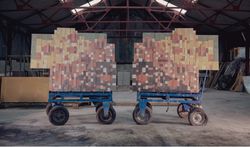
Nous vous invitons à nous rejoindre dans le théâtre pour une conférence duo de chercheurs Cooking Section le jeudi 13 février à 18h. Des élevages de saumon aux semences brevetées, Cooking Sections examinent les systèmes qui façonnent les écologies planétaires par le biais de lalimentation.
Nous vous invitons à nous rejoindre dans le théâtre pour une conférence duo de chercheurs Cooking Section le jeudi 13 février à 18h. Des élevages de saumon aux semences brevetées, Cooking Sections examinent les systèmes qui façonnent les écologies planétaires par le biais de lalimentation.
Localisation:
Théâtre Paul-Desmarais Mot(s)-clé(s):
Cooking sections, saumon, OMG, écologie, aliment
Théâtre Paul-Desmarais Mot(s)-clé(s):
Cooking sections, saumon, OMG, écologie, aliment
Date:
13 février 2025, 18h
13 février 2025, 18h
Titre:
Sur le terrain avec Cooking Sections
Actions:
Description:
Nous vous invitons à nous rejoindre dans le théâtre pour une conférence duo de chercheurs Cooking Section le jeudi 13 février à 18h. Des élevages de saumon aux semences brevetées, Cooking Sections examinent les systèmes qui façonnent les écologies planétaires par le biais de lalimentation.
Sur le terrain avec Cooking Sections
Actions:
Description:
Nous vous invitons à nous rejoindre dans le théâtre pour une conférence duo de chercheurs Cooking Section le jeudi 13 février à 18h. Des élevages de saumon aux semences brevetées, Cooking Sections examinent les systèmes qui façonnent les écologies planétaires par le biais de lalimentation.
Classification:
événements
événements
Date:
13 février 2025
18h
13 février 2025
18h
Localisation:
Théâtre Paul-Desmarais Mot(s)-clé(s):
Cooking sections, saumon, OMG, écologie, aliment
Théâtre Paul-Desmarais Mot(s)-clé(s):
Cooking sections, saumon, OMG, écologie, aliment
Classification:
expositions
expositions
Actions:
Description:
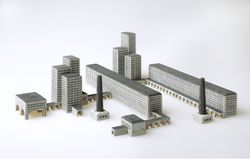
Les progrès de la technique, aussi bien que les conditions sociales, politiques et économiques, ont de tout temps influencé les architectes. L’exposition Les jouets et la tradition moderniste examine la manière dont les fabricants de jouets ont reçu les multiples idées novatrices des architectes modernes. Plusieurs des jouets exposés ont été conçus par des figures(...)
Les progrès de la technique, aussi bien que les conditions sociales, politiques et économiques, ont de tout temps influencé les architectes. L’exposition Les jouets et la tradition moderniste examine la manière dont les fabricants de jouets ont reçu les multiples idées novatrices des architectes modernes. Plusieurs des jouets exposés ont été conçus par des figures(...)
Date:
16 décembre 1993 au 1 mai 1994
16 décembre 1993 au 1 mai 1994
Titre:
Les jouets et la tradition moderniste
Actions:
Description:
Les progrès de la technique, aussi bien que les conditions sociales, politiques et économiques, ont de tout temps influencé les architectes. L’exposition Les jouets et la tradition moderniste examine la manière dont les fabricants de jouets ont reçu les multiples idées novatrices des architectes modernes. Plusieurs des jouets exposés ont été conçus par des figures(...)
Les jouets et la tradition moderniste
Actions:
Description:
Les progrès de la technique, aussi bien que les conditions sociales, politiques et économiques, ont de tout temps influencé les architectes. L’exposition Les jouets et la tradition moderniste examine la manière dont les fabricants de jouets ont reçu les multiples idées novatrices des architectes modernes. Plusieurs des jouets exposés ont été conçus par des figures(...)
Classification:
expositions
expositions
Date:
16 décembre 1993 au
1 mai 1994
16 décembre 1993 au
1 mai 1994
Niveau de description archivistique:
Série(s)
Série(s)
Numéro de référence:
AP193.S1
Description:
Series 1, Water Flux and Scrambled Flat, 2002-2010, documents the conception and evolution of a project that was originally a farm building and later became a geology and glaciology museum and research center focused on the Swiss Alps. The project was never realized. R&Sie(n) conceptualized Scrambled Flat as an experimental farm. The project goal was to reconcile European Union’s agricultural regulations, imposing a separation between animal and human living, to the community of Évolène traditional way of living, contiguously with animals, benefiting from the resources they offer. As conceived, Scrambled Flat creates an environment where fluidity between the existence of the animals and the humans is materialized. The size of the form is also adapted from a typical local rural house and exploits the heat of the animals and the insulation of the hay. For this project, R&Sie(n) approached the mayor of the community with the design proposition. The mayor then called for a competition, while also changing the program to an ecology museum and research center illustrating the local effects of global warming and the thawing of the Alps. R&Sie(n) won the competition with Water Flux, a reinterpretation of Scrambled Flat. The project was intended to uncover and exorcise the anxieties of ecological disaster, and the principle of flux related to seasonal change and, more broadly, climate change. The firm designed rooms that reproduce the geological and meteorological environment of the high mountains making it visible and experimental, offering refrigerated spaces for art installations and scientific demonstrations. The concept was also to build with the use of new technologies such as digital modelling, point scanning, and computer numerical control (CNC), combined with ancient local knowledge of knocking on trees to decide which specific pines have the best wood for construction. The building is designed to be constructed with local lamellar wood milled by nearby CNC. The resulting parts would be used for the structure, the insulation, the waterproofing and both the interior and exterior finishes. The design includes a grille wrapping the building, reproducing the profile of traditional houses and enclosure and making it possible to hold the snow inside a typo-morphological imprint. Therefore, the transformable envelope of the building reacts to the rhythm of the seasons. In the winter, the structure would appear like a solid cut-out of ice and snow, with cavities similar to those found in glaciers. In the summer, it would resemble piles of stones used in these areas to make borders. A small pool would collect rainwater and supply it to an interior artificial snowmaking system designed for the gallery. Transformation of the water is an integral part of the design. The records contain images of plans, sections, details for the structure of the façade, renderings, plans of the engineered structure, and photographs documenting the conception of the models with the CNC machinery. The Rhino 3D modelling files are also part of the records along with AutoCAD models and a video documenting the process. The records contain two physical models: a smaller polymer model at 1:20 scale representing the whole structure of the building, and a larger 1:1 latch wood fragment representing detail of the structure in its integrality.
AP193.S1
Description:
Series 1, Water Flux and Scrambled Flat, 2002-2010, documents the conception and evolution of a project that was originally a farm building and later became a geology and glaciology museum and research center focused on the Swiss Alps. The project was never realized. R&Sie(n) conceptualized Scrambled Flat as an experimental farm. The project goal was to reconcile European Union’s agricultural regulations, imposing a separation between animal and human living, to the community of Évolène traditional way of living, contiguously with animals, benefiting from the resources they offer. As conceived, Scrambled Flat creates an environment where fluidity between the existence of the animals and the humans is materialized. The size of the form is also adapted from a typical local rural house and exploits the heat of the animals and the insulation of the hay. For this project, R&Sie(n) approached the mayor of the community with the design proposition. The mayor then called for a competition, while also changing the program to an ecology museum and research center illustrating the local effects of global warming and the thawing of the Alps. R&Sie(n) won the competition with Water Flux, a reinterpretation of Scrambled Flat. The project was intended to uncover and exorcise the anxieties of ecological disaster, and the principle of flux related to seasonal change and, more broadly, climate change. The firm designed rooms that reproduce the geological and meteorological environment of the high mountains making it visible and experimental, offering refrigerated spaces for art installations and scientific demonstrations. The concept was also to build with the use of new technologies such as digital modelling, point scanning, and computer numerical control (CNC), combined with ancient local knowledge of knocking on trees to decide which specific pines have the best wood for construction. The building is designed to be constructed with local lamellar wood milled by nearby CNC. The resulting parts would be used for the structure, the insulation, the waterproofing and both the interior and exterior finishes. The design includes a grille wrapping the building, reproducing the profile of traditional houses and enclosure and making it possible to hold the snow inside a typo-morphological imprint. Therefore, the transformable envelope of the building reacts to the rhythm of the seasons. In the winter, the structure would appear like a solid cut-out of ice and snow, with cavities similar to those found in glaciers. In the summer, it would resemble piles of stones used in these areas to make borders. A small pool would collect rainwater and supply it to an interior artificial snowmaking system designed for the gallery. Transformation of the water is an integral part of the design. The records contain images of plans, sections, details for the structure of the façade, renderings, plans of the engineered structure, and photographs documenting the conception of the models with the CNC machinery. The Rhino 3D modelling files are also part of the records along with AutoCAD models and a video documenting the process. The records contain two physical models: a smaller polymer model at 1:20 scale representing the whole structure of the building, and a larger 1:1 latch wood fragment representing detail of the structure in its integrality.
Personnes et institutions:
Date:
2002-2010
2002-2010
Titre:
Water Flux and Scrambled Flat
Actions:
AP193.S1
Description:
Series 1, Water Flux and Scrambled Flat, 2002-2010, documents the conception and evolution of a project that was originally a farm building and later became a geology and glaciology museum and research center focused on the Swiss Alps. The project was never realized. R&Sie(n) conceptualized Scrambled Flat as an experimental farm. The project goal was to reconcile European Union’s agricultural regulations, imposing a separation between animal and human living, to the community of Évolène traditional way of living, contiguously with animals, benefiting from the resources they offer. As conceived, Scrambled Flat creates an environment where fluidity between the existence of the animals and the humans is materialized. The size of the form is also adapted from a typical local rural house and exploits the heat of the animals and the insulation of the hay. For this project, R&Sie(n) approached the mayor of the community with the design proposition. The mayor then called for a competition, while also changing the program to an ecology museum and research center illustrating the local effects of global warming and the thawing of the Alps. R&Sie(n) won the competition with Water Flux, a reinterpretation of Scrambled Flat. The project was intended to uncover and exorcise the anxieties of ecological disaster, and the principle of flux related to seasonal change and, more broadly, climate change. The firm designed rooms that reproduce the geological and meteorological environment of the high mountains making it visible and experimental, offering refrigerated spaces for art installations and scientific demonstrations. The concept was also to build with the use of new technologies such as digital modelling, point scanning, and computer numerical control (CNC), combined with ancient local knowledge of knocking on trees to decide which specific pines have the best wood for construction. The building is designed to be constructed with local lamellar wood milled by nearby CNC. The resulting parts would be used for the structure, the insulation, the waterproofing and both the interior and exterior finishes. The design includes a grille wrapping the building, reproducing the profile of traditional houses and enclosure and making it possible to hold the snow inside a typo-morphological imprint. Therefore, the transformable envelope of the building reacts to the rhythm of the seasons. In the winter, the structure would appear like a solid cut-out of ice and snow, with cavities similar to those found in glaciers. In the summer, it would resemble piles of stones used in these areas to make borders. A small pool would collect rainwater and supply it to an interior artificial snowmaking system designed for the gallery. Transformation of the water is an integral part of the design. The records contain images of plans, sections, details for the structure of the façade, renderings, plans of the engineered structure, and photographs documenting the conception of the models with the CNC machinery. The Rhino 3D modelling files are also part of the records along with AutoCAD models and a video documenting the process. The records contain two physical models: a smaller polymer model at 1:20 scale representing the whole structure of the building, and a larger 1:1 latch wood fragment representing detail of the structure in its integrality.
Water Flux and Scrambled Flat
Actions:
AP193.S1
Description:
Series 1, Water Flux and Scrambled Flat, 2002-2010, documents the conception and evolution of a project that was originally a farm building and later became a geology and glaciology museum and research center focused on the Swiss Alps. The project was never realized. R&Sie(n) conceptualized Scrambled Flat as an experimental farm. The project goal was to reconcile European Union’s agricultural regulations, imposing a separation between animal and human living, to the community of Évolène traditional way of living, contiguously with animals, benefiting from the resources they offer. As conceived, Scrambled Flat creates an environment where fluidity between the existence of the animals and the humans is materialized. The size of the form is also adapted from a typical local rural house and exploits the heat of the animals and the insulation of the hay. For this project, R&Sie(n) approached the mayor of the community with the design proposition. The mayor then called for a competition, while also changing the program to an ecology museum and research center illustrating the local effects of global warming and the thawing of the Alps. R&Sie(n) won the competition with Water Flux, a reinterpretation of Scrambled Flat. The project was intended to uncover and exorcise the anxieties of ecological disaster, and the principle of flux related to seasonal change and, more broadly, climate change. The firm designed rooms that reproduce the geological and meteorological environment of the high mountains making it visible and experimental, offering refrigerated spaces for art installations and scientific demonstrations. The concept was also to build with the use of new technologies such as digital modelling, point scanning, and computer numerical control (CNC), combined with ancient local knowledge of knocking on trees to decide which specific pines have the best wood for construction. The building is designed to be constructed with local lamellar wood milled by nearby CNC. The resulting parts would be used for the structure, the insulation, the waterproofing and both the interior and exterior finishes. The design includes a grille wrapping the building, reproducing the profile of traditional houses and enclosure and making it possible to hold the snow inside a typo-morphological imprint. Therefore, the transformable envelope of the building reacts to the rhythm of the seasons. In the winter, the structure would appear like a solid cut-out of ice and snow, with cavities similar to those found in glaciers. In the summer, it would resemble piles of stones used in these areas to make borders. A small pool would collect rainwater and supply it to an interior artificial snowmaking system designed for the gallery. Transformation of the water is an integral part of the design. The records contain images of plans, sections, details for the structure of the façade, renderings, plans of the engineered structure, and photographs documenting the conception of the models with the CNC machinery. The Rhino 3D modelling files are also part of the records along with AutoCAD models and a video documenting the process. The records contain two physical models: a smaller polymer model at 1:20 scale representing the whole structure of the building, and a larger 1:1 latch wood fragment representing detail of the structure in its integrality.
Niveau de description archivistique:
Series
Series
Date:
2002-2010
2002-2010
Personnes et institutions:
Classification:
documents textuels
documents textuels
Numéro de référence:
ARCH264628
Description:
Le manuscrit traite de la construction de murs en fonction des conditions climatiques en Inde.
ARCH264628
Description:
Le manuscrit traite de la construction de murs en fonction des conditions climatiques en Inde.
Personnes et institutions:
Date:
s.d.
s.d.
Titre:
Fragment d'un manuscrit relatif à la construction de murs en Inde
Actions:
ARCH264628
Description:
Le manuscrit traite de la construction de murs en fonction des conditions climatiques en Inde.
Fragment d'un manuscrit relatif à la construction de murs en Inde
Actions:
ARCH264628
Description:
Le manuscrit traite de la construction de murs en fonction des conditions climatiques en Inde.
Classification:
documents textuels
documents textuels
Date:
s.d.
s.d.
Personnes et institutions:
Classification:
dessins
dessins
Numéro de référence:
AP178.S1.1988.PR07.SS6.018.2
Description:
This file includes details of concrete, reinforcement, electricity, ventilation, climatization, roof, sewage, and water network.
AP178.S1.1988.PR07.SS6.018.2
Description:
This file includes details of concrete, reinforcement, electricity, ventilation, climatization, roof, sewage, and water network.
Personnes et institutions:
Date:
July 2004
July 2004
Titre:
Mechanical, technical, and structural drawings, Edifício Leonel, Bloco B, Reconstrução do Chiado, Lisbon (folder 2 of 4)
Actions:
AP178.S1.1988.PR07.SS6.018.2
Description:
This file includes details of concrete, reinforcement, electricity, ventilation, climatization, roof, sewage, and water network.
Mechanical, technical, and structural drawings, Edifício Leonel, Bloco B, Reconstrução do Chiado, Lisbon (folder 2 of 4)
Actions:
AP178.S1.1988.PR07.SS6.018.2
Description:
This file includes details of concrete, reinforcement, electricity, ventilation, climatization, roof, sewage, and water network.
Classification:
dessins
dessins
Date:
July 2004
July 2004
Personnes et institutions:
Classification:
documents textuels
documents textuels
Numéro de référence:
ARCH264626
Description:
La grille permet l'analyse et la régularisation des conditions climatiques afin d'assurer le confort.
ARCH264626
Description:
La grille permet l'analyse et la régularisation des conditions climatiques afin d'assurer le confort.
Personnes et institutions:
Date:
s.d.
s.d.
Titre:
Manuscrit traitant d'une grille climatique adaptée au Punjab
Actions:
ARCH264626
Description:
La grille permet l'analyse et la régularisation des conditions climatiques afin d'assurer le confort.
Manuscrit traitant d'une grille climatique adaptée au Punjab
Actions:
ARCH264626
Description:
La grille permet l'analyse et la régularisation des conditions climatiques afin d'assurer le confort.
Classification:
documents textuels
documents textuels
Date:
s.d.
s.d.
Personnes et institutions:
Niveau de description archivistique:
Série(s)
Série(s)
Titre:
Écrits
Écrits
Numéro de référence:
AP146.S3
Description:
La série documente un article écrit par Giovanni De Paoli sur "l'importance des implications du climat sur l'architecture et sur le développement d’outils numériques".
AP146.S3
Description:
La série documente un article écrit par Giovanni De Paoli sur "l'importance des implications du climat sur l'architecture et sur le développement d’outils numériques".
Personnes et institutions:
Date:
2004
2004
Titre:
Écrits
Actions:
AP146.S3
Description:
La série documente un article écrit par Giovanni De Paoli sur "l'importance des implications du climat sur l'architecture et sur le développement d’outils numériques".
Écrits
Actions:
AP146.S3
Description:
La série documente un article écrit par Giovanni De Paoli sur "l'importance des implications du climat sur l'architecture et sur le développement d’outils numériques".
Niveau de description archivistique:
Série 3
Série 3
Date:
2004
2004
Personnes et institutions:
Classification:
dessins, documents textuels
dessins, documents textuels
Numéro de référence:
ARCH270936
Description:
Contains working drawings: details, elevations, plans, sections and site plans, for the lighting, sanitation, electricity, foundation and climatization.
ARCH270936
Description:
Contains working drawings: details, elevations, plans, sections and site plans, for the lighting, sanitation, electricity, foundation and climatization.
Personnes et institutions:
Date:
October 1989
October 1989
Titre:
Proyecto de ampliación y reforma del edificio de oficinas de RENFE en Fuencarral: proyecto de ejecución
Actions:
ARCH270936
Description:
Contains working drawings: details, elevations, plans, sections and site plans, for the lighting, sanitation, electricity, foundation and climatization.
Proyecto de ampliación y reforma del edificio de oficinas de RENFE en Fuencarral: proyecto de ejecución
Actions:
ARCH270936
Description:
Contains working drawings: details, elevations, plans, sections and site plans, for the lighting, sanitation, electricity, foundation and climatization.
Classification:
dessins, documents textuels
dessins, documents textuels
Date:
October 1989
October 1989
Personnes et institutions:


