


70 Résultats
Classification:
livres
livres
Titre:
Jimi Hendrix: soundscapes
Jimi Hendrix: soundscapes
Actions:
Prix:
$36.00
(disponible sur commande)
Résumé:
Jimi Hendrix, one of the great instrumentalists in rock history, pioneered an amplified sound that extended the scope of the guitar into the urban landscape. ''Jimi Hendrix: Soundscapes'' traces Hendrix’s personal and musical trajectory through the places in which he played, following him from the Pacific Northwest to the California coast, through the South and on to New(...)
$36.00
(disponible sur commande)
Résumé:
Jimi Hendrix, one of the great instrumentalists in rock history, pioneered an amplified sound that extended the scope of the guitar into the urban landscape. ''Jimi Hendrix: Soundscapes'' traces Hendrix’s personal and musical trajectory through the places in which he played, following him from the Pacific Northwest to the California coast, through the South and on to New(...)
Titre:
Jimi Hendrix: soundscapes
Actions:
Prix:
$36.00
(disponible sur commande)
Résumé:
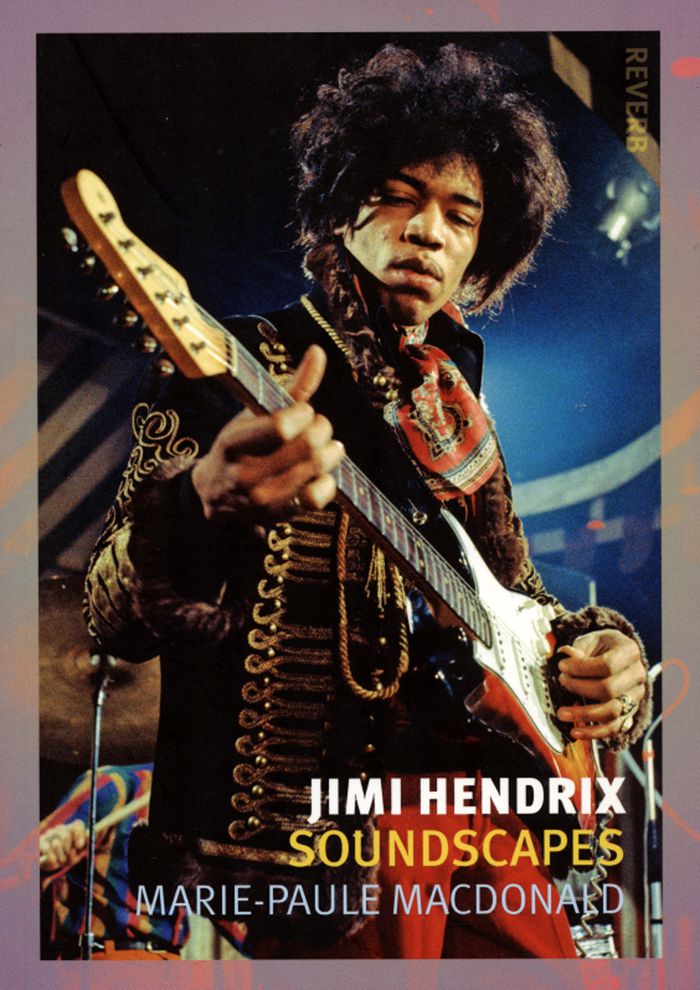
Jimi Hendrix, one of the great instrumentalists in rock history, pioneered an amplified sound that extended the scope of the guitar into the urban landscape. ''Jimi Hendrix: Soundscapes'' traces Hendrix’s personal and musical trajectory through the places in which he played, following him from the Pacific Northwest to the California coast, through the South and on to New York City, and from his musical beginnings as a youth in Seattle to his debut, touring career and his last weeks in London.
Jimi Hendrix: soundscapes
Actions:
Prix:
$36.00
(disponible sur commande)
Résumé:
Jimi Hendrix, one of the great instrumentalists in rock history, pioneered an amplified sound that extended the scope of the guitar into the urban landscape. ''Jimi Hendrix: Soundscapes'' traces Hendrix’s personal and musical trajectory through the places in which he played, following him from the Pacific Northwest to the California coast, through the South and on to New York City, and from his musical beginnings as a youth in Seattle to his debut, touring career and his last weeks in London.
Classification:
livres
livres
Publication:
mai 2016
mai 2016
Sujet:
Acoustique
Acoustique
Classification:
livres
livres
Prix:
$44.95
(disponible sur commande)
Résumé:
Une vaste recherche sur la notion d'écologie acoustique et sonore (les sonorités du paysage : la sonosphère, le Soundscape) et sa transition vers une nouvelle écosophie sonore, intégrant la multidimensionalité de l'écoute pour proposer d'entendre (et donc à la fois d'écouter, de comprendre et de vouloir) autrement.
$44.95
(disponible sur commande)
Résumé:
Une vaste recherche sur la notion d'écologie acoustique et sonore (les sonorités du paysage : la sonosphère, le Soundscape) et sa transition vers une nouvelle écosophie sonore, intégrant la multidimensionalité de l'écoute pour proposer d'entendre (et donc à la fois d'écouter, de comprendre et de vouloir) autrement.
Titre:
Les sonorités du monde : De l'écologie sonore à l'écosophie sonore
Actions:
Prix:
$44.95
(disponible sur commande)
Résumé:
Une vaste recherche sur la notion d'écologie acoustique et sonore (les sonorités du paysage : la sonosphère, le Soundscape) et sa transition vers une nouvelle écosophie sonore, intégrant la multidimensionalité de l'écoute pour proposer d'entendre (et donc à la fois d'écouter, de comprendre et de vouloir) autrement.
Les sonorités du monde : De l'écologie sonore à l'écosophie sonore
Actions:
Prix:
$44.95
(disponible sur commande)
Résumé:
Une vaste recherche sur la notion d'écologie acoustique et sonore (les sonorités du paysage : la sonosphère, le Soundscape) et sa transition vers une nouvelle écosophie sonore, intégrant la multidimensionalité de l'écoute pour proposer d'entendre (et donc à la fois d'écouter, de comprendre et de vouloir) autrement.
Classification:
livres
livres
Publication:
octobre 2023
octobre 2023
Sujet:
Acoustique
Acoustique
Classification:
livres
livres
Actions:
Prix:
$34.95
(disponible sur commande)
Résumé:
Never before has the everyday soundtrack of urban space been so cacophonous. Since the 1970s, sound researchers have attempted to classify noise, music, and everyday sounds using concepts such as Pierre Shafer's sound object and R. Murray Schafer's soundscape. Recently, the most significant team of soundscape researchers in the world has been concerned with the effects of(...)
$34.95
(disponible sur commande)
Résumé:
Never before has the everyday soundtrack of urban space been so cacophonous. Since the 1970s, sound researchers have attempted to classify noise, music, and everyday sounds using concepts such as Pierre Shafer's sound object and R. Murray Schafer's soundscape. Recently, the most significant team of soundscape researchers in the world has been concerned with the effects of(...)
Titre:
Sonic experience : a guide to everyday sounds
Actions:
Prix:
$34.95
(disponible sur commande)
Résumé:
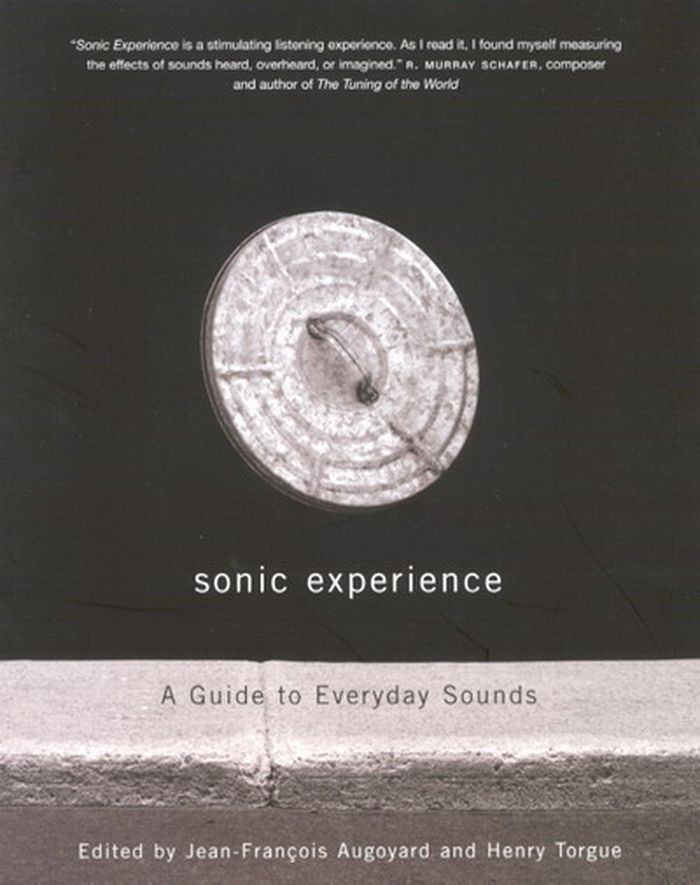
Never before has the everyday soundtrack of urban space been so cacophonous. Since the 1970s, sound researchers have attempted to classify noise, music, and everyday sounds using concepts such as Pierre Shafer's sound object and R. Murray Schafer's soundscape. Recently, the most significant team of soundscape researchers in the world has been concerned with the effects of sounds on listeners. In a multidisciplinary work spanning musicology, electro-acoustic composition, architecture, urban studies, communication, phenomenology, social theory, physics, and psychology, Jean-François Augoyard, Henry Torgue, and their associates at the Centre for Research on Sonic Space and the Urban Environment (CRESSON) in Grenoble, France, provide an alphabetical sourcebook of eighty sonic/auditory effects. Their accounts of sonic effects such as echo, anticipation, vibrato, and wha-wha integrate information about the objective physical spaces in which sounds occur with cultural contexts and individual auditory experience. "Sonic experience" attempts to rehabilitate general acoustic awareness, combining accessible definitions and literary examples with more in-depth technical information for specialists.
Sonic experience : a guide to everyday sounds
Actions:
Prix:
$34.95
(disponible sur commande)
Résumé:
Never before has the everyday soundtrack of urban space been so cacophonous. Since the 1970s, sound researchers have attempted to classify noise, music, and everyday sounds using concepts such as Pierre Shafer's sound object and R. Murray Schafer's soundscape. Recently, the most significant team of soundscape researchers in the world has been concerned with the effects of sounds on listeners. In a multidisciplinary work spanning musicology, electro-acoustic composition, architecture, urban studies, communication, phenomenology, social theory, physics, and psychology, Jean-François Augoyard, Henry Torgue, and their associates at the Centre for Research on Sonic Space and the Urban Environment (CRESSON) in Grenoble, France, provide an alphabetical sourcebook of eighty sonic/auditory effects. Their accounts of sonic effects such as echo, anticipation, vibrato, and wha-wha integrate information about the objective physical spaces in which sounds occur with cultural contexts and individual auditory experience. "Sonic experience" attempts to rehabilitate general acoustic awareness, combining accessible definitions and literary examples with more in-depth technical information for specialists.
Classification:
livres
livres
Publication:
mars 2006, Montreal
mars 2006, Montreal
Sujet:
Acoustique
Acoustique
Classification:
livres
livres
Actions:
Prix:
$39.95
(disponible sur commande)
Résumé:
Meyers analyses the shape of sound; architecture and sound; form; materiality; windows; the urban soundscape, its politics, aesthetics and social character; reflection; virtuality; sound art; and silence. This publication offers new theoretical insights into sound and the spatial experience accompanied by several key case studies. These include Meyers work with Stephen(...)
$39.95
(disponible sur commande)
Résumé:
Meyers analyses the shape of sound; architecture and sound; form; materiality; windows; the urban soundscape, its politics, aesthetics and social character; reflection; virtuality; sound art; and silence. This publication offers new theoretical insights into sound and the spatial experience accompanied by several key case studies. These include Meyers work with Stephen(...)
Titre:
Victoria Meyers: shape of sound
Actions:
Prix:
$39.95
(disponible sur commande)
Résumé:
Meyers analyses the shape of sound; architecture and sound; form; materiality; windows; the urban soundscape, its politics, aesthetics and social character; reflection; virtuality; sound art; and silence. This publication offers new theoretical insights into sound and the spatial experience accompanied by several key case studies. These include Meyers work with Stephen Vitiello, whose piece A Bell For Every Minute animated the New York High Line project, and her collaborations with composer and sound artist Michael Schumacher.
Victoria Meyers: shape of sound
Actions:
Prix:
$39.95
(disponible sur commande)
Résumé:
Meyers analyses the shape of sound; architecture and sound; form; materiality; windows; the urban soundscape, its politics, aesthetics and social character; reflection; virtuality; sound art; and silence. This publication offers new theoretical insights into sound and the spatial experience accompanied by several key case studies. These include Meyers work with Stephen Vitiello, whose piece A Bell For Every Minute animated the New York High Line project, and her collaborations with composer and sound artist Michael Schumacher.
Classification:
livres
livres
Publication:
juillet 2013
juillet 2013
Sujet:
Architecture, monographies
Architecture, monographies
Classification:
livres
livres
Actions:
Exemplaires:
Description:
88 pages : illustrations ; 27 cm
Description:
88 pages : illustrations ; 27 cm
Auteur:
Sujet:
Publication:
Taiwan : National Taiwan Museum of Fine Arts, 2023.
Taiwan : National Taiwan Museum of Fine Arts, 2023.
Titre:
Diachronic apparatuses of Taiwan : architecture as on-going details within landscape / chief editor, Chia-Cheng Wang
Actions:
Exemplaires:
Description:
88 pages : illustrations ; 27 cm
Diachronic apparatuses of Taiwan : architecture as on-going details within landscape / chief editor, Chia-Cheng Wang
Actions:
Exemplaires:
Description:
88 pages : illustrations ; 27 cm
Classification:
livres
livres
Publication:
Taiwan : National Taiwan Museum of Fine Arts, 2023.
Taiwan : National Taiwan Museum of Fine Arts, 2023.
Auteur:
Sujet:
Classification:
livres
livres
Actions:
Exemplaires:
Description:
258 pages : illustrations (some color) ; 25 cm
Description:
258 pages : illustrations (some color) ; 25 cm
Auteur:
Sujet:
Publication:
Cambridge, Mass. : MIT Press : MIT List Visual Arts Center, 2006.
Cambridge, Mass. : MIT Press : MIT List Visual Arts Center, 2006.
Titre:
Sensorium : embodied experience, technology, and contemporary art / edited by Caroline A. Jones ; essays by Bill Arning [and others] ; abecedarius entries by Bill Arning [and others] ; artist statements by Mathieu Briand [and others].
Actions:
Exemplaires:
Description:
258 pages : illustrations (some color) ; 25 cm
Sensorium : embodied experience, technology, and contemporary art / edited by Caroline A. Jones ; essays by Bill Arning [and others] ; abecedarius entries by Bill Arning [and others] ; artist statements by Mathieu Briand [and others].
Actions:
Exemplaires:
Description:
258 pages : illustrations (some color) ; 25 cm
Classification:
livres
livres
Publication:
Cambridge, Mass. : MIT Press : MIT List Visual Arts Center, 2006.
Cambridge, Mass. : MIT Press : MIT List Visual Arts Center, 2006.
Auteur:
Sujet:
Classification:
livres
livres
Actions:
Prix:
$55.00
(disponible sur commande)
Résumé:
The immersive soundscape installations and intimate environments of the Canadian artist duo Janet Cardiff (born 1957) and Georges Bures Miller (born 1960) present an ongoing series of chapters in the life of the ghost in the machine. Their works describe tales of tag-sale menace and shared loneliness through aural means, wholly reconceiving the gallery experience. A(...)
$55.00
(disponible sur commande)
Résumé:
The immersive soundscape installations and intimate environments of the Canadian artist duo Janet Cardiff (born 1957) and Georges Bures Miller (born 1960) present an ongoing series of chapters in the life of the ghost in the machine. Their works describe tales of tag-sale menace and shared loneliness through aural means, wholly reconceiving the gallery experience. A(...)
Titre:
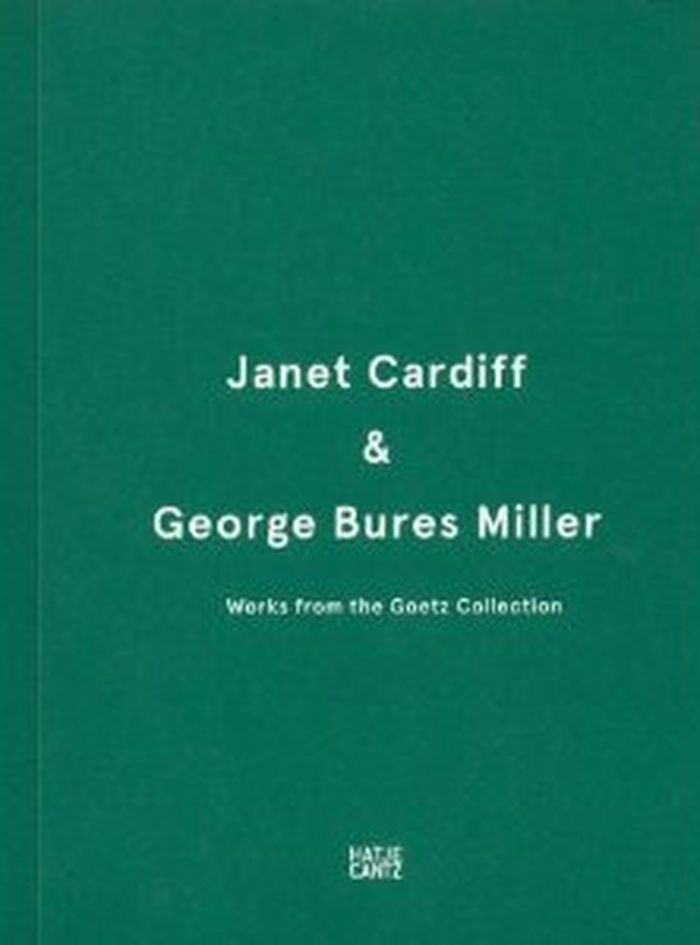
Janet Cardiff & George Bures Miller: works from the Goetz collection
Actions:
Prix:
$55.00
(disponible sur commande)
Résumé:
The immersive soundscape installations and intimate environments of the Canadian artist duo Janet Cardiff (born 1957) and Georges Bures Miller (born 1960) present an ongoing series of chapters in the life of the ghost in the machine. Their works describe tales of tag-sale menace and shared loneliness through aural means, wholly reconceiving the gallery experience. A pioneering collector of new media art, Ingvild Goetz has assembled a significant series of works by Cardiff and Miller over the years, and this publication presents this important collection for the first time. Texts by Goetz, Okwui Enwezor, León Krempel and Rainald Schumacher provide background details and references to each work that shed light on its place in the artists’ oeuvre, with a particular focus on the couple’s very personal and theatrical use of sound.
Janet Cardiff & George Bures Miller: works from the Goetz collection
Actions:
Prix:
$55.00
(disponible sur commande)
Résumé:
The immersive soundscape installations and intimate environments of the Canadian artist duo Janet Cardiff (born 1957) and Georges Bures Miller (born 1960) present an ongoing series of chapters in the life of the ghost in the machine. Their works describe tales of tag-sale menace and shared loneliness through aural means, wholly reconceiving the gallery experience. A pioneering collector of new media art, Ingvild Goetz has assembled a significant series of works by Cardiff and Miller over the years, and this publication presents this important collection for the first time. Texts by Goetz, Okwui Enwezor, León Krempel and Rainald Schumacher provide background details and references to each work that shed light on its place in the artists’ oeuvre, with a particular focus on the couple’s very personal and theatrical use of sound.
Classification:
livres
livres
Publication:
août 2012
août 2012
Classification:
livres
livres
Actions:
Prix:
$59.95
(disponible sur commande)
Résumé:
From the strictly regimented church bells to the freewheeling chatter of civic life, Renaissance Florence was a city built not just of stone but of sound as well. An evocative alternative to the dominant visual understanding of urban spaces, The Noisy Renaissance examines the premodern city as an acoustic phenomenon in which citizens used sound to navigate space and(...)
$59.95
(disponible sur commande)
Résumé:
From the strictly regimented church bells to the freewheeling chatter of civic life, Renaissance Florence was a city built not just of stone but of sound as well. An evocative alternative to the dominant visual understanding of urban spaces, The Noisy Renaissance examines the premodern city as an acoustic phenomenon in which citizens used sound to navigate space and(...)
Titre:
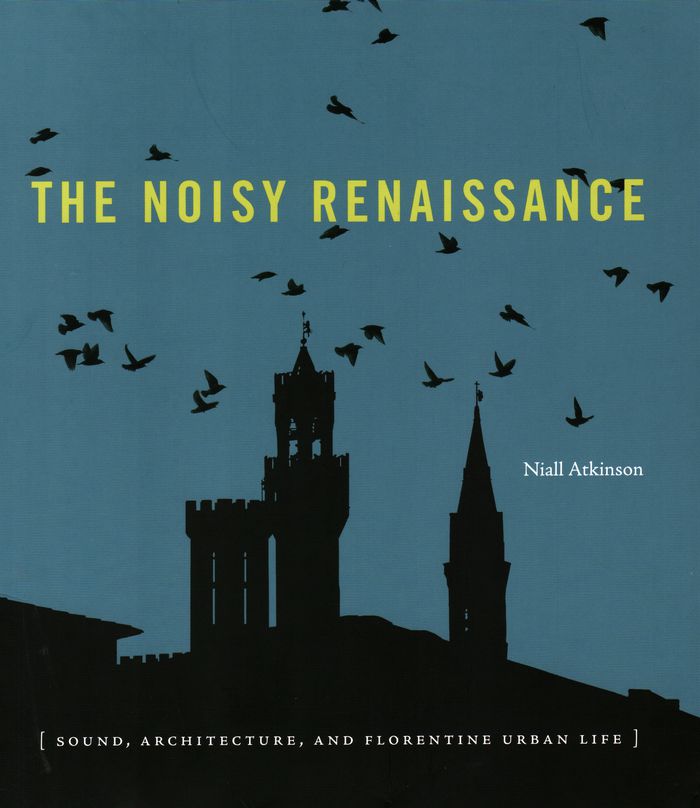
The noisy Renaissance: sound, architecture and Florentine urban life
Actions:
Prix:
$59.95
(disponible sur commande)
Résumé:
From the strictly regimented church bells to the freewheeling chatter of civic life, Renaissance Florence was a city built not just of stone but of sound as well. An evocative alternative to the dominant visual understanding of urban spaces, The Noisy Renaissance examines the premodern city as an acoustic phenomenon in which citizens used sound to navigate space and society. Analyzing a range of documentary and literary evidence, art and architectural historian Niall Atkinson creates an “acoustic topography” of Florence. The dissemination of official messages, the rhythm of prayer, and the murmur of rumor and gossip combined to form a soundscape that became a foundation in the creation and maintenance of the urban community just as much as the city’s physical buildings. Sound in this space triggered a wide variety of social behaviors and spatial relations: hierarchical, personal, communal, political, domestic, sexual, spiritual, and religious.
The noisy Renaissance: sound, architecture and Florentine urban life
Actions:
Prix:
$59.95
(disponible sur commande)
Résumé:
From the strictly regimented church bells to the freewheeling chatter of civic life, Renaissance Florence was a city built not just of stone but of sound as well. An evocative alternative to the dominant visual understanding of urban spaces, The Noisy Renaissance examines the premodern city as an acoustic phenomenon in which citizens used sound to navigate space and society. Analyzing a range of documentary and literary evidence, art and architectural historian Niall Atkinson creates an “acoustic topography” of Florence. The dissemination of official messages, the rhythm of prayer, and the murmur of rumor and gossip combined to form a soundscape that became a foundation in the creation and maintenance of the urban community just as much as the city’s physical buildings. Sound in this space triggered a wide variety of social behaviors and spatial relations: hierarchical, personal, communal, political, domestic, sexual, spiritual, and religious.
Classification:
livres
livres
Publication:
octobre 2017
octobre 2017
Classification:
livres
livres

Prix:
$54.00
(disponible sur commande)
Résumé:
The relationship between sound and space has become central to both creative practices in music and sound art and contemporary scholarship on sound. Entire subfields have emerged in connection to the spatial aspects of sound, from spatial audio and sound installation to acoustic ecology and soundscape studies. But how did our understanding of sound become spatial? In(...)
$54.00
(disponible sur commande)
Résumé:
The relationship between sound and space has become central to both creative practices in music and sound art and contemporary scholarship on sound. Entire subfields have emerged in connection to the spatial aspects of sound, from spatial audio and sound installation to acoustic ecology and soundscape studies. But how did our understanding of sound become spatial? In(...)
Titre:
Stereophonica: Sound and space in science, technology and the arts
Actions:
Prix:
$54.00
(disponible sur commande)
Résumé:
The relationship between sound and space has become central to both creative practices in music and sound art and contemporary scholarship on sound. Entire subfields have emerged in connection to the spatial aspects of sound, from spatial audio and sound installation to acoustic ecology and soundscape studies. But how did our understanding of sound become spatial? In ''Stereophonica,'' Gascia Ouzounian examines a series of historical episodes that transformed ideas of sound and space, from the advent of stereo technologies in the nineteenth century to visual representations of sonic environments today. Developing a uniquely interdisciplinary perspective, Ouzounian draws on both the history of science and technology and the history of music and sound art. She investigates the binaural apparatus that allowed nineteenth-century listeners to observe sound in three dimensions; examines the development of military technologies for sound location during World War I; revisits experiments in stereo sound at Bell Telephone Laboratories in the 1930s; and considers the creation of "optimized acoustical environments" for theaters and factories. She explores the development of multichannel "spatial music" in the 1950s and sound installation art in the 1960s; analyzes the mapping of soundscapes; and investigates contemporary approaches to sonic urbanism, sonic practices that reimagine urban environments through sound.
Stereophonica: Sound and space in science, technology and the arts
Actions:
Prix:
$54.00
(disponible sur commande)
Résumé:
The relationship between sound and space has become central to both creative practices in music and sound art and contemporary scholarship on sound. Entire subfields have emerged in connection to the spatial aspects of sound, from spatial audio and sound installation to acoustic ecology and soundscape studies. But how did our understanding of sound become spatial? In ''Stereophonica,'' Gascia Ouzounian examines a series of historical episodes that transformed ideas of sound and space, from the advent of stereo technologies in the nineteenth century to visual representations of sonic environments today. Developing a uniquely interdisciplinary perspective, Ouzounian draws on both the history of science and technology and the history of music and sound art. She investigates the binaural apparatus that allowed nineteenth-century listeners to observe sound in three dimensions; examines the development of military technologies for sound location during World War I; revisits experiments in stereo sound at Bell Telephone Laboratories in the 1930s; and considers the creation of "optimized acoustical environments" for theaters and factories. She explores the development of multichannel "spatial music" in the 1950s and sound installation art in the 1960s; analyzes the mapping of soundscapes; and investigates contemporary approaches to sonic urbanism, sonic practices that reimagine urban environments through sound.
Classification:
livres
livres
Publication:
février 2021
février 2021
Sujet:
Acoustique
Acoustique
Classification:
livres
livres

Actions:
Prix:
$37.95
(disponible sur commande)
Résumé:
Profoundly intimate yet immediately giving onto distant spaces, both an ‘organ of fear’ and an echo chamber of anticipated pleasures, an uncontrollable flow subject to unconscious selection and augmentation, the subtlety, complexity, and variety of modes of hearing has meant that sound has rarely received the same philosophical attention as the visual. In "The order of(...)
$37.95
(disponible sur commande)
Résumé:
Profoundly intimate yet immediately giving onto distant spaces, both an ‘organ of fear’ and an echo chamber of anticipated pleasures, an uncontrollable flow subject to unconscious selection and augmentation, the subtlety, complexity, and variety of modes of hearing has meant that sound has rarely received the same philosophical attention as the visual. In "The order of(...)
Titre:
The order of sounds: a sonorous archipelago
Actions:
Prix:
$37.95
(disponible sur commande)
Résumé:
Profoundly intimate yet immediately giving onto distant spaces, both an ‘organ of fear’ and an echo chamber of anticipated pleasures, an uncontrollable flow subject to unconscious selection and augmentation, the subtlety, complexity, and variety of modes of hearing has meant that sound has rarely received the same philosophical attention as the visual. In "The order of sounds", François J. Bonnet makes a compelling case for the irreducible heterogeneity of ‘sound’, navigating between the physical models constructed by psychophysics and refined through recording technologies, and the synthetic production of what is heard. From primitive vigilance and sonic mythologies to digital sampling and sound installations, he examines the ways in which we make sound speak to us, in an analysis of listening as a plurivocal phenomenon drawing on Foucault, Deleuze and Guattari, Barthes, Nancy, Adorno, and de Certeau, and experimental pioneers such as Tesla, Bell, and Raudive. Stringent critiques of the ‘soundscape’ and ‘reduced listening’ demonstrate that univocal ontologies of sound are always partial and politicized; for listening is always a selective fetishism, a hallucination of sound filtered by desire and convention, territorialized by discourse and its authorities. Bonnet proposes neither a disciplined listening that targets sound ‘itself’, nor an ‘ocean of sound’ in which we might lose ourselves, but instead maps out a sonorous archipelago—a heterogeneous set of shifting sonic territories shaped and aggregated by the vicissitudes of desire and discourse.
The order of sounds: a sonorous archipelago
Actions:
Prix:
$37.95
(disponible sur commande)
Résumé:
Profoundly intimate yet immediately giving onto distant spaces, both an ‘organ of fear’ and an echo chamber of anticipated pleasures, an uncontrollable flow subject to unconscious selection and augmentation, the subtlety, complexity, and variety of modes of hearing has meant that sound has rarely received the same philosophical attention as the visual. In "The order of sounds", François J. Bonnet makes a compelling case for the irreducible heterogeneity of ‘sound’, navigating between the physical models constructed by psychophysics and refined through recording technologies, and the synthetic production of what is heard. From primitive vigilance and sonic mythologies to digital sampling and sound installations, he examines the ways in which we make sound speak to us, in an analysis of listening as a plurivocal phenomenon drawing on Foucault, Deleuze and Guattari, Barthes, Nancy, Adorno, and de Certeau, and experimental pioneers such as Tesla, Bell, and Raudive. Stringent critiques of the ‘soundscape’ and ‘reduced listening’ demonstrate that univocal ontologies of sound are always partial and politicized; for listening is always a selective fetishism, a hallucination of sound filtered by desire and convention, territorialized by discourse and its authorities. Bonnet proposes neither a disciplined listening that targets sound ‘itself’, nor an ‘ocean of sound’ in which we might lose ourselves, but instead maps out a sonorous archipelago—a heterogeneous set of shifting sonic territories shaped and aggregated by the vicissitudes of desire and discourse.
Classification:
livres
livres
Publication:
mai 2016
mai 2016
Sujet:
Acoustique
Acoustique


