


602 Résultats
Classification:
livres
livres
Actions:
Prix:
$60.00
(disponible sur commande)
Résumé:
In 1892 seventeen Haida artists were commissioned to carve a model of HlGaagilda Llnagaay (the village of Skidegate on Haida Gwaii, British Columbia) for the 1893 World’s Fair in Chicago. The Skidegate model, featuring twenty-nine large houses and forty-two poles, is the only known model village in North America carved by nineteenth-century Indigenous residents of the(...)
$60.00
(disponible sur commande)
Résumé:
In 1892 seventeen Haida artists were commissioned to carve a model of HlGaagilda Llnagaay (the village of Skidegate on Haida Gwaii, British Columbia) for the 1893 World’s Fair in Chicago. The Skidegate model, featuring twenty-nine large houses and forty-two poles, is the only known model village in North America carved by nineteenth-century Indigenous residents of the(...)
Titre:
Skidegate House Models: From Haida Gwaii to the Chicago World's Fair and Beyond
Actions:
Prix:
$60.00
(disponible sur commande)
Résumé:
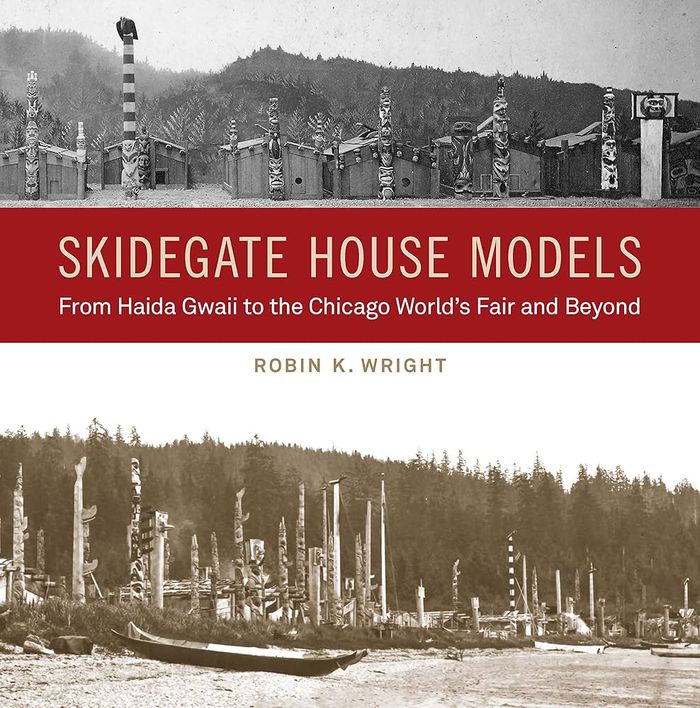
In 1892 seventeen Haida artists were commissioned to carve a model of HlGaagilda Llnagaay (the village of Skidegate on Haida Gwaii, British Columbia) for the 1893 World’s Fair in Chicago. The Skidegate model, featuring twenty-nine large houses and forty-two poles, is the only known model village in North America carved by nineteenth-century Indigenous residents of the village it portrayed. Based on over twenty years of collaborative research with the Skidegate Haida community, the book features vital cultural context. Robin K. Wright explores how Haida people represented their culture to the outside world at a time when they were suffering from devastating population loss due to introduced diseases and from ongoing attempts by the settler government to suppress their culture by making the potlatch illegal. While promoters of the Chicago World’s Fair used the village to celebrate the perceived “progress” of the dominant society, for Skidegate residents it provided a means to preserve their history and culture. After the exposition, many models were dispersed to the Field Museum of Natural History and other collections, but fourteen of the model houses have not yet been located. The book provides extensive archival information and photographs that contextualize the model village and might help locate the missing houses. Wright’s community-engaged research offers valuable insights into Northwest Coast art history.
Skidegate House Models: From Haida Gwaii to the Chicago World's Fair and Beyond
Actions:
Prix:
$60.00
(disponible sur commande)
Résumé:
In 1892 seventeen Haida artists were commissioned to carve a model of HlGaagilda Llnagaay (the village of Skidegate on Haida Gwaii, British Columbia) for the 1893 World’s Fair in Chicago. The Skidegate model, featuring twenty-nine large houses and forty-two poles, is the only known model village in North America carved by nineteenth-century Indigenous residents of the village it portrayed. Based on over twenty years of collaborative research with the Skidegate Haida community, the book features vital cultural context. Robin K. Wright explores how Haida people represented their culture to the outside world at a time when they were suffering from devastating population loss due to introduced diseases and from ongoing attempts by the settler government to suppress their culture by making the potlatch illegal. While promoters of the Chicago World’s Fair used the village to celebrate the perceived “progress” of the dominant society, for Skidegate residents it provided a means to preserve their history and culture. After the exposition, many models were dispersed to the Field Museum of Natural History and other collections, but fourteen of the model houses have not yet been located. The book provides extensive archival information and photographs that contextualize the model village and might help locate the missing houses. Wright’s community-engaged research offers valuable insights into Northwest Coast art history.
Classification:
livres
livres
Publication:
avril 2024
avril 2024
Sujet:
Architecture autochtone
Architecture autochtone
Classification:
livres
livres
Actions:
Prix:
$41.95
(disponible sur commande)
Résumé:
During the economic boom of the 1990's, art museums expanded dramatically in size, scope, and ambition. They came to be seen as new civic centers : on the one hand as places of entertainment, leisure, and commerce, on the other as socially therapeutic institutions. But museums were also criticized for everything from elitism to looting or illegally exporting works from(...)
$41.95
(disponible sur commande)
Résumé:
During the economic boom of the 1990's, art museums expanded dramatically in size, scope, and ambition. They came to be seen as new civic centers : on the one hand as places of entertainment, leisure, and commerce, on the other as socially therapeutic institutions. But museums were also criticized for everything from elitism to looting or illegally exporting works from(...)
Publication:
janvier 2004, Princeton / Cambridge, Mass.
janvier 2004, Princeton / Cambridge, Mass.
Titre:
Whose muse? : art museums and the public trust
Actions:
Prix:
$41.95
(disponible sur commande)
Résumé:
During the economic boom of the 1990's, art museums expanded dramatically in size, scope, and ambition. They came to be seen as new civic centers : on the one hand as places of entertainment, leisure, and commerce, on the other as socially therapeutic institutions. But museums were also criticized for everything from elitism to looting or illegally exporting works from other countries, to exhibiting works offensive to the public taste. "Whose Muse?" brings together five directors of leading American and British art museums who together offer a forward-looking alternative to such prevailing views. While their approaches differ, certain themes recur : as museums have become increasingly complex and costly to manage, and as government support has waned, the temptation is great to follow policies driven not by a mission but by the market. However, the directors concur that public trust can be upheld only if museums continue to see their core mission as building collections that reflect a nation's artistic legacy and providing informed and unfettered access to them. The book, based on a lecture series of the same title held in 2000-2001 by the Harvard Program for Art Museum Directors, also includes an introduction by Cuno and a fascinating - and surprisingly frank - roundtable discussion among the participating directors. A rare collection of sustained reflections by prominent museum directors on the current state of affairs in their profession, this book is without equal. It will be read widely not only by museum professionals, trustees, critics, and scholars, but also by the art-loving public itself.
Whose muse? : art museums and the public trust
Actions:
Prix:
$41.95
(disponible sur commande)
Résumé:
During the economic boom of the 1990's, art museums expanded dramatically in size, scope, and ambition. They came to be seen as new civic centers : on the one hand as places of entertainment, leisure, and commerce, on the other as socially therapeutic institutions. But museums were also criticized for everything from elitism to looting or illegally exporting works from other countries, to exhibiting works offensive to the public taste. "Whose Muse?" brings together five directors of leading American and British art museums who together offer a forward-looking alternative to such prevailing views. While their approaches differ, certain themes recur : as museums have become increasingly complex and costly to manage, and as government support has waned, the temptation is great to follow policies driven not by a mission but by the market. However, the directors concur that public trust can be upheld only if museums continue to see their core mission as building collections that reflect a nation's artistic legacy and providing informed and unfettered access to them. The book, based on a lecture series of the same title held in 2000-2001 by the Harvard Program for Art Museum Directors, also includes an introduction by Cuno and a fascinating - and surprisingly frank - roundtable discussion among the participating directors. A rare collection of sustained reflections by prominent museum directors on the current state of affairs in their profession, this book is without equal. It will be read widely not only by museum professionals, trustees, critics, and scholars, but also by the art-loving public itself.
Classification:
livres
livres
Publication:
janvier 2004, Princeton / Cambridge, Mass.
janvier 2004, Princeton / Cambridge, Mass.


