


627 Résultats
Classification:
livres
livres

Actions:
Prix:
$30.00
(disponible sur commande)
Résumé:
In the modern era, the archive--official or personal--has become the most significant means by which historical knowledge and memory are collected, stored, and recovered. The archive has thus emerged as a key site of inquiry in such fields as anthropology, critical theory, history, and, especially, recent art. Traces and testimonies of such events as World War II and(...)
$30.00
(disponible sur commande)
Résumé:
In the modern era, the archive--official or personal--has become the most significant means by which historical knowledge and memory are collected, stored, and recovered. The archive has thus emerged as a key site of inquiry in such fields as anthropology, critical theory, history, and, especially, recent art. Traces and testimonies of such events as World War II and(...)
Publication:
novembre 2006, London / Cambridge
novembre 2006, London / Cambridge
Titre:
The archive: Documents of contemporary art
Actions:
Prix:
$30.00
(disponible sur commande)
Résumé:
In the modern era, the archive--official or personal--has become the most significant means by which historical knowledge and memory are collected, stored, and recovered. The archive has thus emerged as a key site of inquiry in such fields as anthropology, critical theory, history, and, especially, recent art. Traces and testimonies of such events as World War II and ensuing conflicts, the emergence of the postcolonial era, and the fall of communism have each provoked a reconsideration of the authority given the archive--no longer viewed as a neutral, transparent site of record but as a contested subject and medium in itself. This volume surveys the full diversity of our transformed theoretical and critical notions of the archive--as idea and as physical presence--from Freud's "mystic writing pad" to Derrida's "archive fever"; from Christian Boltanski's first autobiographical explorations of archival material in the 1960s to the practice of artists as various as Susan Hiller, Ilya Kabakov, Thomas Hirshhorn, Renée Green, and The Atlas Group in the present.
The archive: Documents of contemporary art
Actions:
Prix:
$30.00
(disponible sur commande)
Résumé:
In the modern era, the archive--official or personal--has become the most significant means by which historical knowledge and memory are collected, stored, and recovered. The archive has thus emerged as a key site of inquiry in such fields as anthropology, critical theory, history, and, especially, recent art. Traces and testimonies of such events as World War II and ensuing conflicts, the emergence of the postcolonial era, and the fall of communism have each provoked a reconsideration of the authority given the archive--no longer viewed as a neutral, transparent site of record but as a contested subject and medium in itself. This volume surveys the full diversity of our transformed theoretical and critical notions of the archive--as idea and as physical presence--from Freud's "mystic writing pad" to Derrida's "archive fever"; from Christian Boltanski's first autobiographical explorations of archival material in the 1960s to the practice of artists as various as Susan Hiller, Ilya Kabakov, Thomas Hirshhorn, Renée Green, and The Atlas Group in the present.
Classification:
livres
livres
Publication:
novembre 2006, London / Cambridge
novembre 2006, London / Cambridge
Classification:
livres
livres
Prix:
$54.95
(disponible sur commande)
Résumé:
In ''Of other spaces'' Foucault coined the term ''heterotopias'' to signify ''all the other real sites that can be found within the culture'' which ''are simultaneously represented, contested, and inverted.'' For Foucault, heterotopic spaces were first of all spaces of crisis, or transformative spaces, however these have given way to heterotopias of deviation and spaces(...)
$54.95
(disponible sur commande)
Résumé:
In ''Of other spaces'' Foucault coined the term ''heterotopias'' to signify ''all the other real sites that can be found within the culture'' which ''are simultaneously represented, contested, and inverted.'' For Foucault, heterotopic spaces were first of all spaces of crisis, or transformative spaces, however these have given way to heterotopias of deviation and spaces(...)
Titre:
Spaces of crisis and critique : heterotopias beyond Foucault
Actions:
Prix:
$54.95
(disponible sur commande)
Résumé:
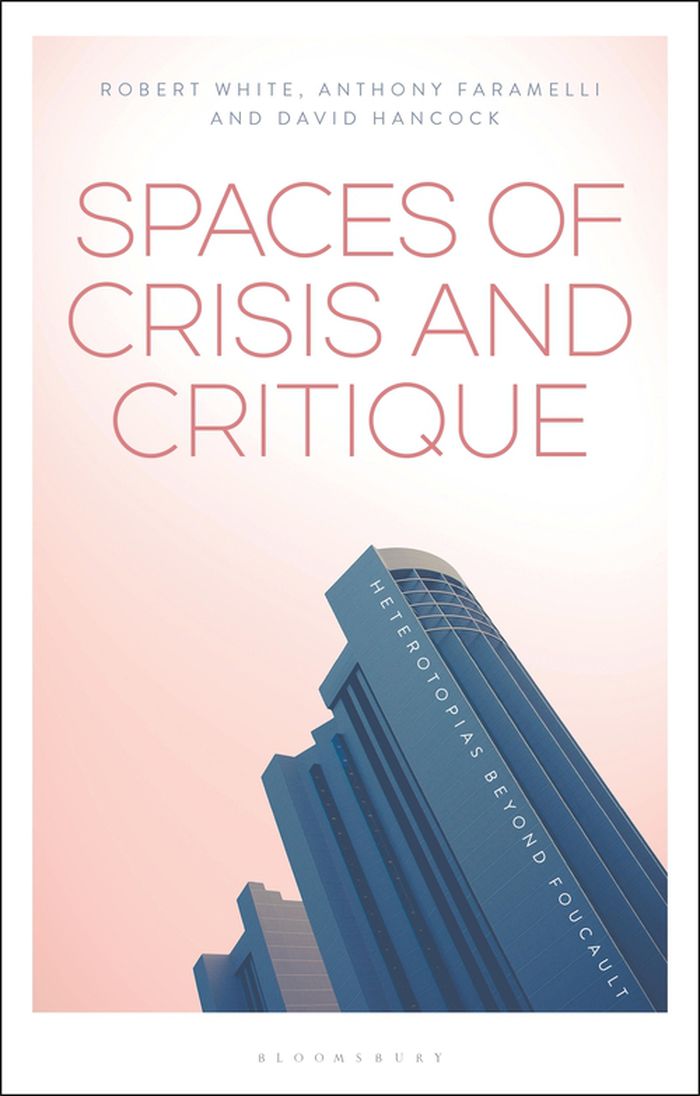
In ''Of other spaces'' Foucault coined the term ''heterotopias'' to signify ''all the other real sites that can be found within the culture'' which ''are simultaneously represented, contested, and inverted.'' For Foucault, heterotopic spaces were first of all spaces of crisis, or transformative spaces, however these have given way to heterotopias of deviation and spaces of discipline, such as psychiatric hospitals or prisons. Foucault's essay provokes us to think through how spaces of crisis and critique function to open up disruptive, subversive or minoritarian fields within philosophical, political, cultural or aesthetic discourses. This book takes this interdisciplinary and international approach to the spatial, challenging existing borders, boundaries, and horizons; from Claire Colebrook's chapter unpacking the heterotopic spaces of America and Mexico that lie beyond reductive ideological spaces of light and darkness, to a Foucauldian reading of the Zapatista resistance. With essays on politics, philosophy, literature, post-colonial studies, and aesthetics from established and emerging academics, this book answers Foucault's call to give us a better understanding of our present cultural epoch.
Spaces of crisis and critique : heterotopias beyond Foucault
Actions:
Prix:
$54.95
(disponible sur commande)
Résumé:
In ''Of other spaces'' Foucault coined the term ''heterotopias'' to signify ''all the other real sites that can be found within the culture'' which ''are simultaneously represented, contested, and inverted.'' For Foucault, heterotopic spaces were first of all spaces of crisis, or transformative spaces, however these have given way to heterotopias of deviation and spaces of discipline, such as psychiatric hospitals or prisons. Foucault's essay provokes us to think through how spaces of crisis and critique function to open up disruptive, subversive or minoritarian fields within philosophical, political, cultural or aesthetic discourses. This book takes this interdisciplinary and international approach to the spatial, challenging existing borders, boundaries, and horizons; from Claire Colebrook's chapter unpacking the heterotopic spaces of America and Mexico that lie beyond reductive ideological spaces of light and darkness, to a Foucauldian reading of the Zapatista resistance. With essays on politics, philosophy, literature, post-colonial studies, and aesthetics from established and emerging academics, this book answers Foucault's call to give us a better understanding of our present cultural epoch.
Classification:
livres
livres
Publication:
mars 2020
mars 2020
Sujet:
Théorie/ philosophie
Théorie/ philosophie
Classification:
livres
livres
Prix:
$38.95
(disponible sur commande)
Résumé:
Beautiful Data is both a history of big data and interactivity, and a sophisticated meditation on ideas about vision and cognition in the second half of the twentieth century. Contending that our forms of attention, observation, and truth are contingent and contested, Orit Halpern historicizes the ways that we are trained, and train ourselves, to observe and analyze the(...)
$38.95
(disponible sur commande)
Résumé:
Beautiful Data is both a history of big data and interactivity, and a sophisticated meditation on ideas about vision and cognition in the second half of the twentieth century. Contending that our forms of attention, observation, and truth are contingent and contested, Orit Halpern historicizes the ways that we are trained, and train ourselves, to observe and analyze the(...)
Titre:
Beautiful data: a history of vision and reason since 1945
Actions:
Prix:
$38.95
(disponible sur commande)
Résumé:
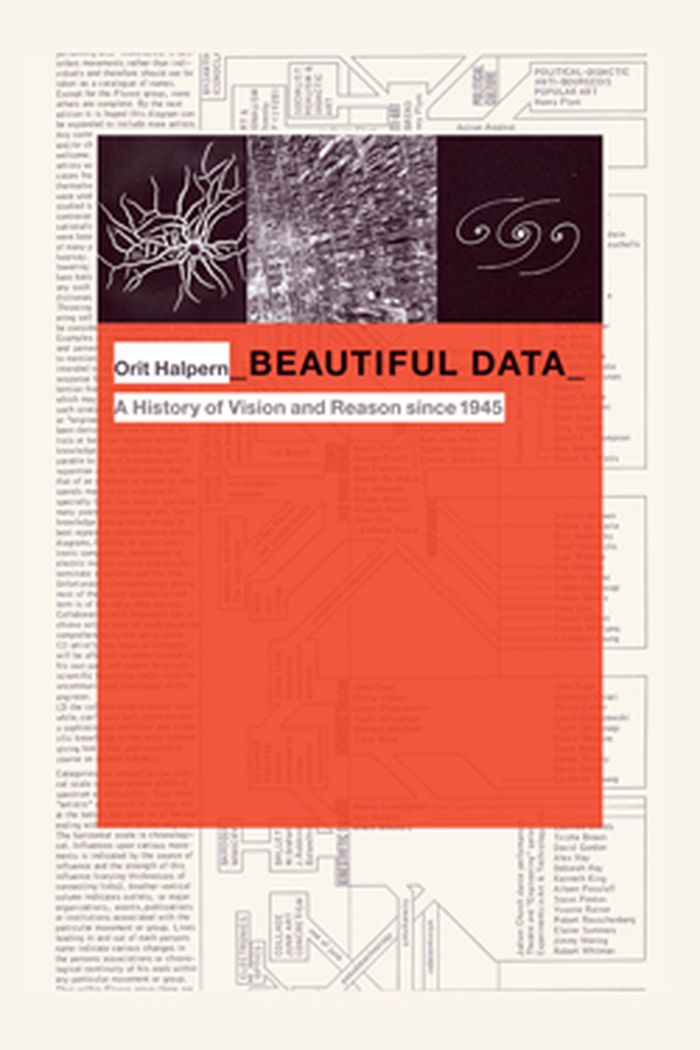
Beautiful Data is both a history of big data and interactivity, and a sophisticated meditation on ideas about vision and cognition in the second half of the twentieth century. Contending that our forms of attention, observation, and truth are contingent and contested, Orit Halpern historicizes the ways that we are trained, and train ourselves, to observe and analyze the world. Tracing the postwar impact of cybernetics and the communication sciences on the social and human sciences, design, arts, and urban planning, she finds a radical shift in attitudes toward recording and displaying information. These changed attitudes produced what she calls communicative objectivity: new forms of observation, rationality, and economy based on the management and analysis of data. Halpern complicates assumptions about the value of data and visualization, arguing that changes in how we manage and train perception, and define reason and intelligence, are also transformations in governmentality. She also challenges the paradoxical belief that we are experiencing a crisis of attention caused by digital media, a crisis that can be resolved only through intensified media consumption.
Beautiful data: a history of vision and reason since 1945
Actions:
Prix:
$38.95
(disponible sur commande)
Résumé:
Beautiful Data is both a history of big data and interactivity, and a sophisticated meditation on ideas about vision and cognition in the second half of the twentieth century. Contending that our forms of attention, observation, and truth are contingent and contested, Orit Halpern historicizes the ways that we are trained, and train ourselves, to observe and analyze the world. Tracing the postwar impact of cybernetics and the communication sciences on the social and human sciences, design, arts, and urban planning, she finds a radical shift in attitudes toward recording and displaying information. These changed attitudes produced what she calls communicative objectivity: new forms of observation, rationality, and economy based on the management and analysis of data. Halpern complicates assumptions about the value of data and visualization, arguing that changes in how we manage and train perception, and define reason and intelligence, are also transformations in governmentality. She also challenges the paradoxical belief that we are experiencing a crisis of attention caused by digital media, a crisis that can be resolved only through intensified media consumption.
Classification:
livres
livres
Publication:
août 2014
août 2014
Sujet:
Théorie de l’architecture
Théorie de l’architecture
Classification:
né numérique
né numérique
Titre:
Zifzafa.
Zifzafa.
Actions:
Description:
1 online resource
Auteur:
Sujet:
Publication:
[Place of publication not identified] : Earshot, 2025.
[Place of publication not identified] : Earshot, 2025.
Classification:
né numérique
né numérique
Publication:
[Place of publication not identified] : Earshot, 2025.
[Place of publication not identified] : Earshot, 2025.
Auteur:
Sujet:
Classification:
livres
livres
Actions:
Exemplaires:
Description:
xi, 350 pages : illustrations (some colour), plans (some colour) ; 26 cm.
Description:
xi, 350 pages : illustrations (some colour), plans (some colour) ; 26 cm.
Auteur:
Sujet:
Publication:
Montreal ; Kingston ; London ; Chicago : McGill-Queen's University Press, [2021], ©2021
Montreal ; Kingston ; London ; Chicago : McGill-Queen's University Press, [2021], ©2021
Titre:
Photogenic Montreal : activisms and archives in a post-industrial city / edited by Martha Langford, Johanne Sloan.
Actions:
Exemplaires:
Description:
xi, 350 pages : illustrations (some colour), plans (some colour) ; 26 cm.
Photogenic Montreal : activisms and archives in a post-industrial city / edited by Martha Langford, Johanne Sloan.
Actions:
Exemplaires:
Description:
xi, 350 pages : illustrations (some colour), plans (some colour) ; 26 cm.
Classification:
livres
livres
Publication:
Montreal ; Kingston ; London ; Chicago : McGill-Queen's University Press, [2021], ©2021
Montreal ; Kingston ; London ; Chicago : McGill-Queen's University Press, [2021], ©2021
Auteur:
Sujet:
Classification:
livres
livres
Actions:
Exemplaires:
Description:
xii, 284 pages : illustrations ; 24 cm
Description:
xii, 284 pages : illustrations ; 24 cm
Auteur:
Sujet:
Publication:
London ; New York : Routledge, 2012.
London ; New York : Routledge, 2012.
Titre:
Cities for people, not for profit : critical urban theory and the right to the city / edited by Neil Brenner, Peter Marcuse and Margit Mayer.
Actions:
Exemplaires:
Description:
xii, 284 pages : illustrations ; 24 cm
Cities for people, not for profit : critical urban theory and the right to the city / edited by Neil Brenner, Peter Marcuse and Margit Mayer.
Actions:
Exemplaires:
Description:
xii, 284 pages : illustrations ; 24 cm
Classification:
livres
livres
Publication:
London ; New York : Routledge, 2012.
London ; New York : Routledge, 2012.
Auteur:
Sujet:
Classification:
livres
livres
Actions:
Exemplaires:
Description:
x, 257 pages : illustrations, map ; 25 cm
Description:
x, 257 pages : illustrations, map ; 25 cm
Auteur:
Sujet:
Publication:
Durham [N.C.] : Duke University Press, [2006], ©2006
Durham [N.C.] : Duke University Press, [2006], ©2006
Titre:
Global shadows : Africa in the neoliberal world order / James Ferguson.
Actions:
Exemplaires:
Description:
x, 257 pages : illustrations, map ; 25 cm
Global shadows : Africa in the neoliberal world order / James Ferguson.
Actions:
Exemplaires:
Description:
x, 257 pages : illustrations, map ; 25 cm
Classification:
livres
livres
Publication:
Durham [N.C.] : Duke University Press, [2006], ©2006
Durham [N.C.] : Duke University Press, [2006], ©2006
Auteur:
Sujet:
Classification:
livres
livres

Actions:
Prix:
$71.95
(disponible sur commande)
Résumé:
Situated at the intersection of architecture, art, public culture, and political theory, ''Socializing architecture'' urges architects and urbanists to intervene in the contested space between public and private interests, to design political and civic processes that mediate top-down and bottom-up urban resources, and to mobilize a new public imagination toward a more(...)
$71.95
(disponible sur commande)
Résumé:
Situated at the intersection of architecture, art, public culture, and political theory, ''Socializing architecture'' urges architects and urbanists to intervene in the contested space between public and private interests, to design political and civic processes that mediate top-down and bottom-up urban resources, and to mobilize a new public imagination toward a more(...)
Publication:
mars 2023
mars 2023
Titre:
Socializing architecture: Top-down/bottom-up
Actions:
Prix:
$71.95
(disponible sur commande)
Résumé:
Situated at the intersection of architecture, art, public culture, and political theory, ''Socializing architecture'' urges architects and urbanists to intervene in the contested space between public and private interests, to design political and civic processes that mediate top-down and bottom-up urban resources, and to mobilize a new public imagination toward a more just and equitable urbanization. Drawn from decades of lived experience, Teddy Cruz and Fonna Forman engage the San Diego–Tijuana border region as a global laboratory to address the central challenges of urbanization today: deepening social and economic inequality, dramatic migratory shifts, explosive urban informality, climate disruption, the thickening of border walls, and the decline of public thinking. ''Socializing architecture'' follows ''Spatializing justice'' (Cruz and Forman, 2022). It is organized into two main sections—essays and projects—and continues to build a compelling case for architects and urban designers to do more than design buildings and physical systems. Through analysis and diverse case studies, the authors show architects and urbanists how to alter the exclusionary policies that produce public crisis and instead realize new political and economic strategies that advance a more equitable and convivial architecture.
Socializing architecture: Top-down/bottom-up
Actions:
Prix:
$71.95
(disponible sur commande)
Résumé:
Situated at the intersection of architecture, art, public culture, and political theory, ''Socializing architecture'' urges architects and urbanists to intervene in the contested space between public and private interests, to design political and civic processes that mediate top-down and bottom-up urban resources, and to mobilize a new public imagination toward a more just and equitable urbanization. Drawn from decades of lived experience, Teddy Cruz and Fonna Forman engage the San Diego–Tijuana border region as a global laboratory to address the central challenges of urbanization today: deepening social and economic inequality, dramatic migratory shifts, explosive urban informality, climate disruption, the thickening of border walls, and the decline of public thinking. ''Socializing architecture'' follows ''Spatializing justice'' (Cruz and Forman, 2022). It is organized into two main sections—essays and projects—and continues to build a compelling case for architects and urban designers to do more than design buildings and physical systems. Through analysis and diverse case studies, the authors show architects and urbanists how to alter the exclusionary policies that produce public crisis and instead realize new political and economic strategies that advance a more equitable and convivial architecture.
Classification:
livres
livres
Publication:
mars 2023
mars 2023
Classification:
livres
livres
Actions:
Prix:
$42.00
(disponible en magasin)
Résumé:
Conceived as part of the one-year investigation Catching Up with Life, A Section of Now aims to re-establish a dialogue between architecture and society that would allow for architecture to begin to contend with and address our changed and changing social norms. The publication serves as a meditation on new behaviours, rituals, and values and their spatial implications(...)
$42.00
(disponible en magasin)
Résumé:
Conceived as part of the one-year investigation Catching Up with Life, A Section of Now aims to re-establish a dialogue between architecture and society that would allow for architecture to begin to contend with and address our changed and changing social norms. The publication serves as a meditation on new behaviours, rituals, and values and their spatial implications(...)
Titre:
A section of Now: Norms and Rituals as Sites for Architectural Intervention
Actions:
Prix:
$42.00
(disponible en magasin)
Résumé:
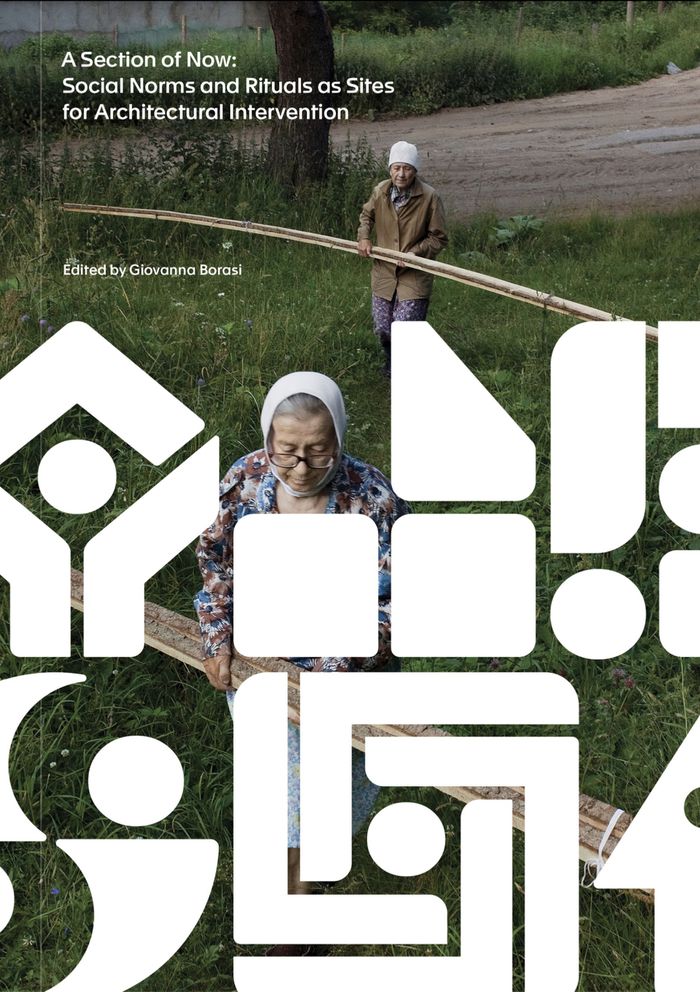
Conceived as part of the one-year investigation Catching Up with Life, A Section of Now aims to re-establish a dialogue between architecture and society that would allow for architecture to begin to contend with and address our changed and changing social norms. The publication serves as a meditation on new behaviours, rituals, and values and their spatial implications and seeks to catalyze urban and architectural interventions that accommodate, influence, and, in some cases, pre-empt our new lived realities. Authors address topics ranging from the safety of digital spaces to how normative life trajectories affect the elderly and the many selves each of us puts forward, while architects present frameworks for spaces for blended families, thirty-year-old retirees, and contested monuments, among many others. Bringing together analytical essays about the contemporary moment and the direction in which society is moving, projective texts that outline new architectural types to address societal needs, alongside television series, photography, and architecture and design projects, A Section of Now outlines a new relationship between the spaces in which we live and the ways we live within them.
A section of Now: Norms and Rituals as Sites for Architectural Intervention
Actions:
Prix:
$42.00
(disponible en magasin)
Résumé:
Conceived as part of the one-year investigation Catching Up with Life, A Section of Now aims to re-establish a dialogue between architecture and society that would allow for architecture to begin to contend with and address our changed and changing social norms. The publication serves as a meditation on new behaviours, rituals, and values and their spatial implications and seeks to catalyze urban and architectural interventions that accommodate, influence, and, in some cases, pre-empt our new lived realities. Authors address topics ranging from the safety of digital spaces to how normative life trajectories affect the elderly and the many selves each of us puts forward, while architects present frameworks for spaces for blended families, thirty-year-old retirees, and contested monuments, among many others. Bringing together analytical essays about the contemporary moment and the direction in which society is moving, projective texts that outline new architectural types to address societal needs, alongside television series, photography, and architecture and design projects, A Section of Now outlines a new relationship between the spaces in which we live and the ways we live within them.
Classification:
livres
livres
Publication:
août 2021
août 2021
Sujet:
Publications du CCA
Publications du CCA
Classification:
livres
livres
Actions:
Prix:
$29.95
(disponible sur commande)
Résumé:
In the late 1990s, three monuments -- Crab Park "Boulder," "Marker of Change," and Standing "with Courage, Strength and Pride" -- were built in Vancouver's Downtown Eastside. Located within a few city blocks of one another, the monuments were grassroots initiatives that challenged the norms of civic art by claiming a place in public space for society's more(...)
$29.95
(disponible sur commande)
Résumé:
In the late 1990s, three monuments -- Crab Park "Boulder," "Marker of Change," and Standing "with Courage, Strength and Pride" -- were built in Vancouver's Downtown Eastside. Located within a few city blocks of one another, the monuments were grassroots initiatives that challenged the norms of civic art by claiming a place in public space for society's more(...)
Titre:
Speaking for a long time : public space & social memory in Vancouver
Actions:
Prix:
$29.95
(disponible sur commande)
Résumé:
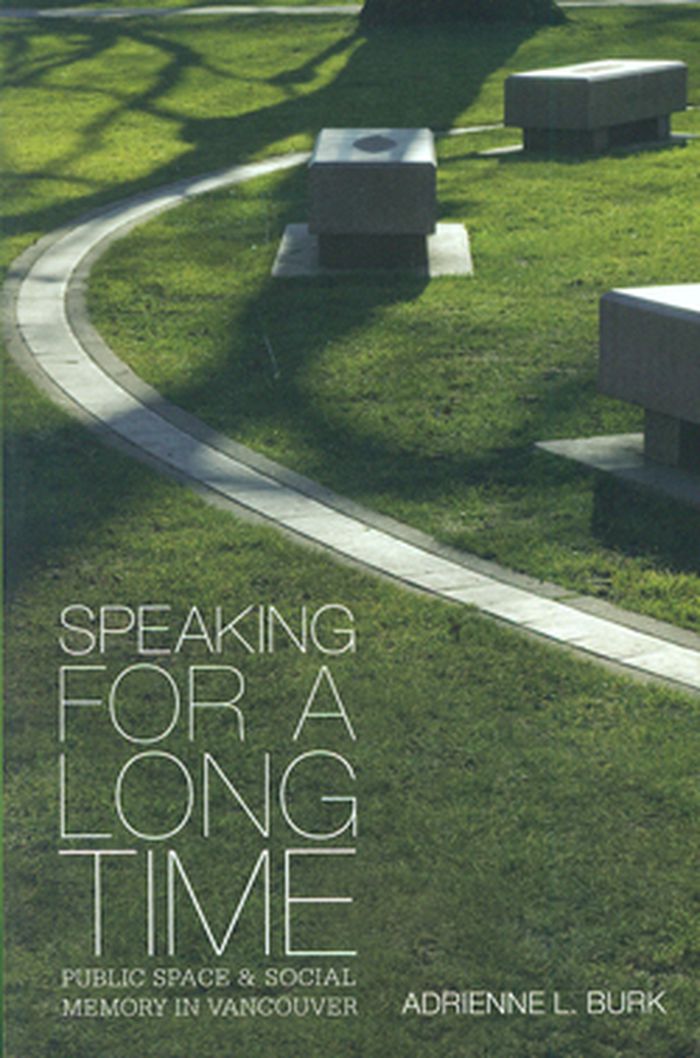
In the late 1990s, three monuments -- Crab Park "Boulder," "Marker of Change," and Standing "with Courage, Strength and Pride" -- were built in Vancouver's Downtown Eastside. Located within a few city blocks of one another, the monuments were grassroots initiatives that challenged the norms of civic art by claiming a place in public space for society's more vulnerable groups, and each figured in debates about many kinds of violence. "Speaking for a Long Time" offers unique insights into the creation of memorials and the multiple, often contested meanings that can be attached to them in local communities. Part 1, "Act," explores the monuments' origin stories and highlights the distinctive perspectives of their founders. Part 2, "Frame," places these narratives in the context of modern debates and theories on public space and social memory. Part 3, "Forge," returns to the Downtown Eastside to show how the resilience and agency of grassroots activists can give the socially marginalized a visible presence in our urban landscapes. This vivid account of the creation of memory-scapes in a marginalized community asks us to reconsider what constitutes public art that will "speak for a long time."
Speaking for a long time : public space & social memory in Vancouver
Actions:
Prix:
$29.95
(disponible sur commande)
Résumé:
In the late 1990s, three monuments -- Crab Park "Boulder," "Marker of Change," and Standing "with Courage, Strength and Pride" -- were built in Vancouver's Downtown Eastside. Located within a few city blocks of one another, the monuments were grassroots initiatives that challenged the norms of civic art by claiming a place in public space for society's more vulnerable groups, and each figured in debates about many kinds of violence. "Speaking for a Long Time" offers unique insights into the creation of memorials and the multiple, often contested meanings that can be attached to them in local communities. Part 1, "Act," explores the monuments' origin stories and highlights the distinctive perspectives of their founders. Part 2, "Frame," places these narratives in the context of modern debates and theories on public space and social memory. Part 3, "Forge," returns to the Downtown Eastside to show how the resilience and agency of grassroots activists can give the socially marginalized a visible presence in our urban landscapes. This vivid account of the creation of memory-scapes in a marginalized community asks us to reconsider what constitutes public art that will "speak for a long time."
Classification:
livres
livres
Publication:
avril 2011
avril 2011
Sujet:
Architecture du Canada
Architecture du Canada


