


624 Résultats
Classification:
livres
livres
Titre:
Imagining MIT
Imagining MIT
Actions:
Prix:
$25.95
(disponible sur commande)
Résumé:
In the 1990s, MIT began a billion-dollar building program that transformed its outdated, run-down campus into an architectural showplace. Funded by the high-tech boom of the 1990s and driven by a pent-up demand for new space, MIT's ambitious rebuilding produced five major works of architecture: Kevin Roche's Zesiger Sports and Fitness Center, Steven Holl's Simmons Hall,(...)
$25.95
(disponible sur commande)
Résumé:
In the 1990s, MIT began a billion-dollar building program that transformed its outdated, run-down campus into an architectural showplace. Funded by the high-tech boom of the 1990s and driven by a pent-up demand for new space, MIT's ambitious rebuilding produced five major works of architecture: Kevin Roche's Zesiger Sports and Fitness Center, Steven Holl's Simmons Hall,(...)
Sujet:
Théorie de l’architecture
Théorie de l’architecture
Publication:
mai 2007, Cambridge / London
mai 2007, Cambridge / London
Titre:
Imagining MIT
Actions:
Prix:
$25.95
(disponible sur commande)
Résumé:
In the 1990s, MIT began a billion-dollar building program that transformed its outdated, run-down campus into an architectural showplace. Funded by the high-tech boom of the 1990s and driven by a pent-up demand for new space, MIT's ambitious rebuilding produced five major works of architecture: Kevin Roche's Zesiger Sports and Fitness Center, Steven Holl's Simmons Hall, Frank Gehry's Stata Center, Charles Correa's Brain and Cognitive Science Complex, and Fumihiko Maki's still-unrealized project for the Media Laboratory. In Imagining MIT, William Mitchell (who served as architectural adviser to MIT president Charles Vest) offers a critical, behind-the-scenes view of MIT's new buildings and the complex processes that produced them. The story is not simply one of commissions, projects, CAD, and hardhats; it is about all the forces that come into play--including money, politics, institutional dynamics, and ideology--when a major university campus is imagined, designed, and built. Lavishly illustrated with architectural photographs, drawings, plans, and models, with color images throughout, Imagining MIT shows both the opportunities and the obstacles facing architectural production and city building at the dawn of a new millennium.
Imagining MIT
Actions:
Prix:
$25.95
(disponible sur commande)
Résumé:
In the 1990s, MIT began a billion-dollar building program that transformed its outdated, run-down campus into an architectural showplace. Funded by the high-tech boom of the 1990s and driven by a pent-up demand for new space, MIT's ambitious rebuilding produced five major works of architecture: Kevin Roche's Zesiger Sports and Fitness Center, Steven Holl's Simmons Hall, Frank Gehry's Stata Center, Charles Correa's Brain and Cognitive Science Complex, and Fumihiko Maki's still-unrealized project for the Media Laboratory. In Imagining MIT, William Mitchell (who served as architectural adviser to MIT president Charles Vest) offers a critical, behind-the-scenes view of MIT's new buildings and the complex processes that produced them. The story is not simply one of commissions, projects, CAD, and hardhats; it is about all the forces that come into play--including money, politics, institutional dynamics, and ideology--when a major university campus is imagined, designed, and built. Lavishly illustrated with architectural photographs, drawings, plans, and models, with color images throughout, Imagining MIT shows both the opportunities and the obstacles facing architectural production and city building at the dawn of a new millennium.
Classification:
livres
livres
Publication:
mai 2007, Cambridge / London
mai 2007, Cambridge / London
Sujet:
Théorie de l’architecture
Théorie de l’architecture
Classification:
livres
livres
Prix:
$59.95
(disponible sur commande)
Résumé:
From its origins in the Midwest in the early nineteenth century, the technique of light timber framing—also known at the time as "Chicago construction"—quickly came to underwrite the territorial and ideological expansion of the United States. Softwood construction was inherently practical, as its materials were readily available and required little skill to assemble. The(...)
$59.95
(disponible sur commande)
Résumé:
From its origins in the Midwest in the early nineteenth century, the technique of light timber framing—also known at the time as "Chicago construction"—quickly came to underwrite the territorial and ideological expansion of the United States. Softwood construction was inherently practical, as its materials were readily available and required little skill to assemble. The(...)
Sujet:
Constructions en bois
Constructions en bois
Publication:
septembre 2023
septembre 2023
Titre:
American framing: the architecture of a specific anonymity
Actions:
Prix:
$59.95
(disponible sur commande)
Résumé:
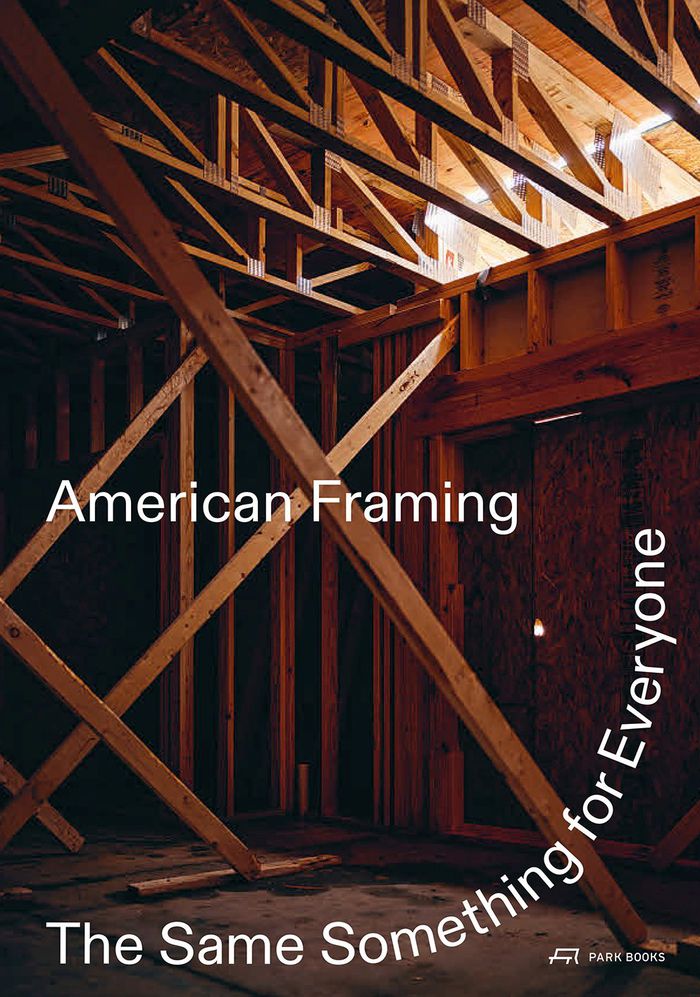
From its origins in the Midwest in the early nineteenth century, the technique of light timber framing—also known at the time as "Chicago construction"—quickly came to underwrite the territorial and ideological expansion of the United States. Softwood construction was inherently practical, as its materials were readily available and required little skill to assemble. The result was a built environment that erased typological and class distinctions: no amount of money can buy you a better 2 x 4. This fundamental sameness paradoxically underlies the American culture of individuality, unifying all superficial differences. It has been both a cause and effect of the country’s high regard for novelty, in contrast with the stability that is often assumed to be essential to architecture. "American framing" is a visual and textual exploration of the social, environmental, and architectural conditions and consequences of this ubiquitous form of construction. For architecture, it offers a story of an American project that is bored with tradition, eager to choose economy over technical skill, and accepting of a relaxed idea of craft in the pursuit of something useful and new—the forming of an architecture that enables architecture.
American framing: the architecture of a specific anonymity
Actions:
Prix:
$59.95
(disponible sur commande)
Résumé:
From its origins in the Midwest in the early nineteenth century, the technique of light timber framing—also known at the time as "Chicago construction"—quickly came to underwrite the territorial and ideological expansion of the United States. Softwood construction was inherently practical, as its materials were readily available and required little skill to assemble. The result was a built environment that erased typological and class distinctions: no amount of money can buy you a better 2 x 4. This fundamental sameness paradoxically underlies the American culture of individuality, unifying all superficial differences. It has been both a cause and effect of the country’s high regard for novelty, in contrast with the stability that is often assumed to be essential to architecture. "American framing" is a visual and textual exploration of the social, environmental, and architectural conditions and consequences of this ubiquitous form of construction. For architecture, it offers a story of an American project that is bored with tradition, eager to choose economy over technical skill, and accepting of a relaxed idea of craft in the pursuit of something useful and new—the forming of an architecture that enables architecture.
Classification:
livres
livres
Publication:
septembre 2023
septembre 2023
Sujet:
Constructions en bois
Constructions en bois
Classification:
livres
livres
Actions:
Exemplaires:
Description:
223 pages : color illustrations ; 29 cm
Description:
223 pages : color illustrations ; 29 cm
Auteur:
Sujet:
Publication:
New York : Monacelli Press, 2006.
New York : Monacelli Press, 2006.
Titre:
LA 2000+ : new architecture in Los Angeles / John Leighton Chase.
Actions:
Exemplaires:
Description:
223 pages : color illustrations ; 29 cm
LA 2000+ : new architecture in Los Angeles / John Leighton Chase.
Actions:
Exemplaires:
Description:
223 pages : color illustrations ; 29 cm
Classification:
livres
livres
Publication:
New York : Monacelli Press, 2006.
New York : Monacelli Press, 2006.
Auteur:
Sujet:
Classification:
livres
livres
Titre:
Architecture and abstraction
Architecture and abstraction
Actions:
Prix:
$45.95
(disponible en magasin)
Résumé:
In this theoretical study of abstraction in architecture—the first of its kind—Pier Vittorio Aureli argues for a reconsideration of abstraction, its meanings, and its sources. Although architects have typically interpreted abstraction in formal terms—the purposeful reduction of the complexities of design to its essentials—Aureli shows that abstraction instead arises from(...)
$45.95
(disponible en magasin)
Résumé:
In this theoretical study of abstraction in architecture—the first of its kind—Pier Vittorio Aureli argues for a reconsideration of abstraction, its meanings, and its sources. Although architects have typically interpreted abstraction in formal terms—the purposeful reduction of the complexities of design to its essentials—Aureli shows that abstraction instead arises from(...)
Titre:
Architecture and abstraction
Actions:
Prix:
$45.95
(disponible en magasin)
Résumé:
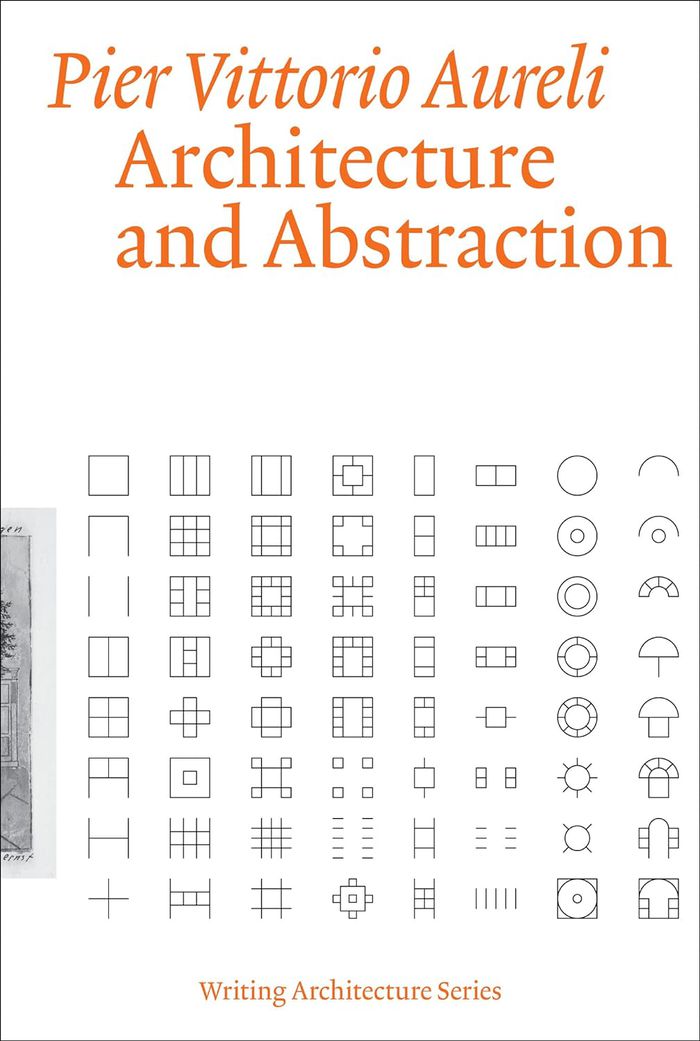
In this theoretical study of abstraction in architecture—the first of its kind—Pier Vittorio Aureli argues for a reconsideration of abstraction, its meanings, and its sources. Although architects have typically interpreted abstraction in formal terms—the purposeful reduction of the complexities of design to its essentials—Aureli shows that abstraction instead arises from the material conditions of building production. In a lively study informed by Walter Benjamin, Karl Marx, Alfred Sohn-Rethel, and other social theorists, Architecture and Abstraction presents abstraction in architecture not as an aesthetic tendency but as a movement that arises from modern divisions of labor and consequent social asymmetries. These divisions were anticipated by the architecture of antiquity, which established a distinction between manual and intellectual labor, and placed the former in service to the latter. Further abstractions arose as geometry, used for measuring territories, became the intermediary between land and money and eventually produced the logic of the grid. In our own time, architectural abstraction serves the logic of capitalism and embraces the premise that all things can be exchanged—even experience itself is a commodity. To resist this turn, Aureli seeks a critique of architecture that begins not by scaling philosophical heights, but by standing at the ground level of material practice.
Architecture and abstraction
Actions:
Prix:
$45.95
(disponible en magasin)
Résumé:
In this theoretical study of abstraction in architecture—the first of its kind—Pier Vittorio Aureli argues for a reconsideration of abstraction, its meanings, and its sources. Although architects have typically interpreted abstraction in formal terms—the purposeful reduction of the complexities of design to its essentials—Aureli shows that abstraction instead arises from the material conditions of building production. In a lively study informed by Walter Benjamin, Karl Marx, Alfred Sohn-Rethel, and other social theorists, Architecture and Abstraction presents abstraction in architecture not as an aesthetic tendency but as a movement that arises from modern divisions of labor and consequent social asymmetries. These divisions were anticipated by the architecture of antiquity, which established a distinction between manual and intellectual labor, and placed the former in service to the latter. Further abstractions arose as geometry, used for measuring territories, became the intermediary between land and money and eventually produced the logic of the grid. In our own time, architectural abstraction serves the logic of capitalism and embraces the premise that all things can be exchanged—even experience itself is a commodity. To resist this turn, Aureli seeks a critique of architecture that begins not by scaling philosophical heights, but by standing at the ground level of material practice.
Classification:
livres
livres
Publication:
mai 2023
mai 2023
Sujet:
Théorie de l’architecture
Théorie de l’architecture
Classification:
livres
livres
Prix:
$38.00
(disponible sur commande)
Résumé:
In 1924 two architects, William Van Alen and Craig Severance (former friends and successful partners, but now bitter adversaries), set out to imprint their individual marks on the rapidly evolving skyline of New York City. Each man desired to build the city’s tallest building, or ‘skyscraper.’ Van Alen was a creative genius who envisioned a bold, contemporary building(...)
$38.00
(disponible sur commande)
Résumé:
In 1924 two architects, William Van Alen and Craig Severance (former friends and successful partners, but now bitter adversaries), set out to imprint their individual marks on the rapidly evolving skyline of New York City. Each man desired to build the city’s tallest building, or ‘skyscraper.’ Van Alen was a creative genius who envisioned a bold, contemporary building(...)
Titre:
Higher : a historic race to the sky and the making of a city
Actions:
Prix:
$38.00
(disponible sur commande)
Résumé:
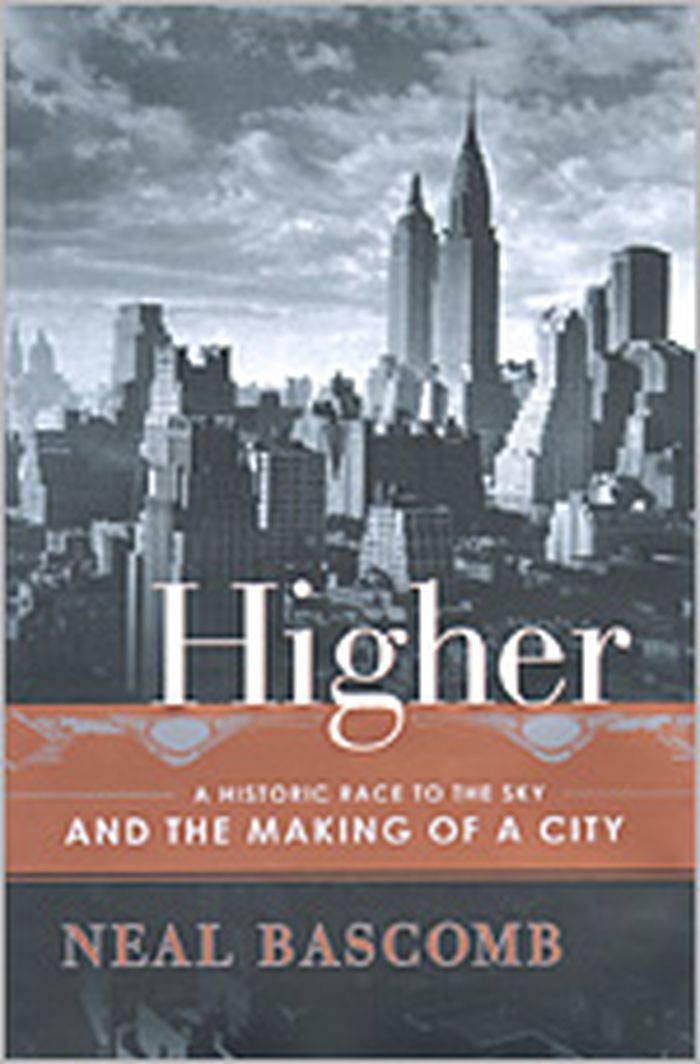
In 1924 two architects, William Van Alen and Craig Severance (former friends and successful partners, but now bitter adversaries), set out to imprint their individual marks on the rapidly evolving skyline of New York City. Each man desired to build the city’s tallest building, or ‘skyscraper.’ Van Alen was a creative genius who envisioned a bold, contemporary building that would move beyond the tired architecture of the previous century. By a stroke of good fortune he found a larger-than-life patron in automobile magnate Walter Chrysler, and they set out to build the legendary Chrysler building. Severance, by comparison, was a brilliant businessman, and he tapped his circle of downtown, old-money investors to begin construction on the Manhattan Company Building at 40 Wall Street. From ground-breaking to bricklaying, Van Alen and Severance fought a duel of wills. Each man was forced to revamp his architectural design in an attempt to push higher, to overcome his rival in mid-construction, as the structures rose, floor by floor, in record time. Yet just as the battle was underway, a third party entered the arena and announced plans to build an even larger building. This project would be overseen by one of Chrysler’s principal rivals--a representative of the General Motors group--and the building ultimately became known as The Empire State Building.
Higher : a historic race to the sky and the making of a city
Actions:
Prix:
$38.00
(disponible sur commande)
Résumé:
In 1924 two architects, William Van Alen and Craig Severance (former friends and successful partners, but now bitter adversaries), set out to imprint their individual marks on the rapidly evolving skyline of New York City. Each man desired to build the city’s tallest building, or ‘skyscraper.’ Van Alen was a creative genius who envisioned a bold, contemporary building that would move beyond the tired architecture of the previous century. By a stroke of good fortune he found a larger-than-life patron in automobile magnate Walter Chrysler, and they set out to build the legendary Chrysler building. Severance, by comparison, was a brilliant businessman, and he tapped his circle of downtown, old-money investors to begin construction on the Manhattan Company Building at 40 Wall Street. From ground-breaking to bricklaying, Van Alen and Severance fought a duel of wills. Each man was forced to revamp his architectural design in an attempt to push higher, to overcome his rival in mid-construction, as the structures rose, floor by floor, in record time. Yet just as the battle was underway, a third party entered the arena and announced plans to build an even larger building. This project would be overseen by one of Chrysler’s principal rivals--a representative of the General Motors group--and the building ultimately became known as The Empire State Building.
Classification:
livres
livres
Publication:
septembre 2003, New York
septembre 2003, New York
Sujet:
Gratte-ciels
Gratte-ciels
Classification:
livres
livres
Actions:
Prix:
$44.95
(disponible sur commande)
Résumé:
Why would two talented and employable young graphic designers start up their own practice without any clients, in the midst of a recession, and in a city brimming with world-renowned designers? "Karlssonwilker inc.'s tellmewhy" is the improbable story of such a ventureor act of bravura or insanityon the part of Hjalti Karlsson and Jan Wilker, and offers a telling,(...)
$44.95
(disponible sur commande)
Résumé:
Why would two talented and employable young graphic designers start up their own practice without any clients, in the midst of a recession, and in a city brimming with world-renowned designers? "Karlssonwilker inc.'s tellmewhy" is the improbable story of such a ventureor act of bravura or insanityon the part of Hjalti Karlsson and Jan Wilker, and offers a telling,(...)
Publication:
octobre 2003, New York
octobre 2003, New York
Titre:
Karlssonwilker inc.'s tellmewhy : the first 24 months of a New York design company
Actions:
Prix:
$44.95
(disponible sur commande)
Résumé:
Why would two talented and employable young graphic designers start up their own practice without any clients, in the midst of a recession, and in a city brimming with world-renowned designers? "Karlssonwilker inc.'s tellmewhy" is the improbable story of such a ventureor act of bravura or insanityon the part of Hjalti Karlsson and Jan Wilker, and offers a telling, humorous, and always human insight into the workings of a young startup design studio, showcasing every project they did in their first two years. A book as iconoclastic as their designs, tellmewhy features fresh stories of karlssonwilker's ordinary office and its less-than-romantic tales about rooftop parties, battles with immigration, missed meetings, and money problems. Despite these storiesand because of otherskarlssonwilker has produced an impressive body of design work in two short years. Tellmewhy shows the happy endings, including signage for a Philadelphia restaurant, logo designs for a New York fashion house, and CD packaging for both independent and major music labels. And it presents unrealized designs, like an ad campaign for a TV network. All share the designers' creative and humorous take on design. Karlssonwilker intersperses these examples with its singular illustrated diagrams, faux flow charts linking the partners' biographies, work, social lives, and whatever comes to their unique minds. A foreword by former employer Stefan Sagmeister recalls karlssonwilker's start in his design office.
Karlssonwilker inc.'s tellmewhy : the first 24 months of a New York design company
Actions:
Prix:
$44.95
(disponible sur commande)
Résumé:
Why would two talented and employable young graphic designers start up their own practice without any clients, in the midst of a recession, and in a city brimming with world-renowned designers? "Karlssonwilker inc.'s tellmewhy" is the improbable story of such a ventureor act of bravura or insanityon the part of Hjalti Karlsson and Jan Wilker, and offers a telling, humorous, and always human insight into the workings of a young startup design studio, showcasing every project they did in their first two years. A book as iconoclastic as their designs, tellmewhy features fresh stories of karlssonwilker's ordinary office and its less-than-romantic tales about rooftop parties, battles with immigration, missed meetings, and money problems. Despite these storiesand because of otherskarlssonwilker has produced an impressive body of design work in two short years. Tellmewhy shows the happy endings, including signage for a Philadelphia restaurant, logo designs for a New York fashion house, and CD packaging for both independent and major music labels. And it presents unrealized designs, like an ad campaign for a TV network. All share the designers' creative and humorous take on design. Karlssonwilker intersperses these examples with its singular illustrated diagrams, faux flow charts linking the partners' biographies, work, social lives, and whatever comes to their unique minds. A foreword by former employer Stefan Sagmeister recalls karlssonwilker's start in his design office.
Classification:
livres
livres
Publication:
octobre 2003, New York
octobre 2003, New York
Classification:
livres
livres

Prix:
$25.95
(disponible sur commande)
Résumé:
This publication sheds light on the reflections that led to the creation of EXIT, the 360° video installation created for the exhibition spaces of the Fondation Cartier pour l'art contemporain in Paris. Based on an idea by French philosopher and urbanist, Paul Virilio, the 360° video installation EXIT was created in 2008 by the New York-based studio of artists and(...)
$25.95
(disponible sur commande)
Résumé:
This publication sheds light on the reflections that led to the creation of EXIT, the 360° video installation created for the exhibition spaces of the Fondation Cartier pour l'art contemporain in Paris. Based on an idea by French philosopher and urbanist, Paul Virilio, the 360° video installation EXIT was created in 2008 by the New York-based studio of artists and(...)
Titre:
Diller Scofidio + Renfro: Exit: Based on an idea by Paul Virilio
Actions:
Prix:
$25.95
(disponible sur commande)
Résumé:
This publication sheds light on the reflections that led to the creation of EXIT, the 360° video installation created for the exhibition spaces of the Fondation Cartier pour l'art contemporain in Paris. Based on an idea by French philosopher and urbanist, Paul Virilio, the 360° video installation EXIT was created in 2008 by the New York-based studio of artists and architects Diller Scofidio + Renfro for the exhibition spaces of the Fondation Cartier pour l'art contemporain in Paris. Composed of a series of animated maps generated by data, this immersive installation investigates human migrations today and their leading causes, including the impact of climate change. Through six scenarios - Population Shifts: Cities; Remittances: Sending Money Home; Political Refugees and Forced Migration; Rising Seas, Sinking Cities; Natural Disasters; and Speechless and Deforestation - it provides the rare opportunity to understand visually the complex relationships between the various economic, political and environmental factors underpinning contemporary human migrations. The work was updated entirely in 2015, reflecting the alarming evolution of the data since it was first presented in 2008. Through various texts, descriptions of the animated maps, and numerous illustrations, this book sheds light on the reflections that led to the creation of EXIT, and proposes to delve deeper into the very notions and questions that it raises and that are more relevant today than ever.
Diller Scofidio + Renfro: Exit: Based on an idea by Paul Virilio
Actions:
Prix:
$25.95
(disponible sur commande)
Résumé:
This publication sheds light on the reflections that led to the creation of EXIT, the 360° video installation created for the exhibition spaces of the Fondation Cartier pour l'art contemporain in Paris. Based on an idea by French philosopher and urbanist, Paul Virilio, the 360° video installation EXIT was created in 2008 by the New York-based studio of artists and architects Diller Scofidio + Renfro for the exhibition spaces of the Fondation Cartier pour l'art contemporain in Paris. Composed of a series of animated maps generated by data, this immersive installation investigates human migrations today and their leading causes, including the impact of climate change. Through six scenarios - Population Shifts: Cities; Remittances: Sending Money Home; Political Refugees and Forced Migration; Rising Seas, Sinking Cities; Natural Disasters; and Speechless and Deforestation - it provides the rare opportunity to understand visually the complex relationships between the various economic, political and environmental factors underpinning contemporary human migrations. The work was updated entirely in 2015, reflecting the alarming evolution of the data since it was first presented in 2008. Through various texts, descriptions of the animated maps, and numerous illustrations, this book sheds light on the reflections that led to the creation of EXIT, and proposes to delve deeper into the very notions and questions that it raises and that are more relevant today than ever.
Classification:
livres
livres
Publication:
novembre 2019
novembre 2019
Sujet:
Architecture, monographies
Architecture, monographies
Classification:
périodiques
périodiques
Titre:
Scapegoat 04: currency
Scapegoat 04: currency
Actions:
Prix:
$20.00
(disponible sur commande)
Résumé:
Currency is structured by a fundamental contradiction between its necessary circulation and its stubborn foundation in sovereign territories. On the one hand, it is designed to represent value and facilitate its exchange in standardized, fungible units; on the other, its relative scarcity generates a strong incentive to hoard it, withdrawing and storing its value,(...)
$20.00
(disponible sur commande)
Résumé:
Currency is structured by a fundamental contradiction between its necessary circulation and its stubborn foundation in sovereign territories. On the one hand, it is designed to represent value and facilitate its exchange in standardized, fungible units; on the other, its relative scarcity generates a strong incentive to hoard it, withdrawing and storing its value,(...)
Titre:
Scapegoat 04: currency
Actions:
Prix:
$20.00
(disponible sur commande)
Résumé:
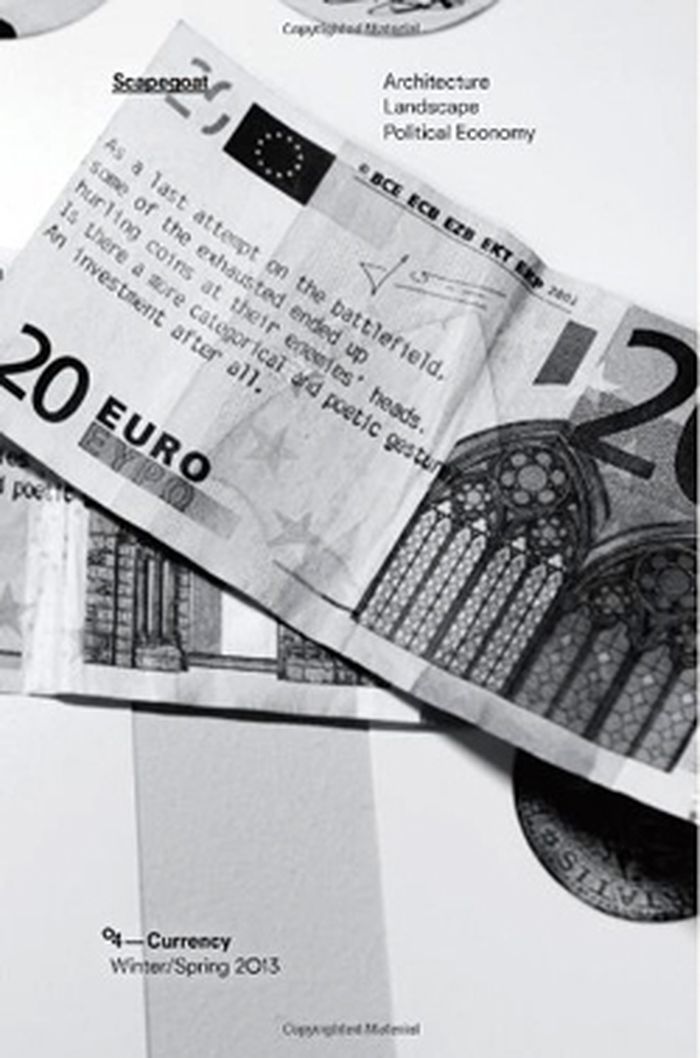
Currency is structured by a fundamental contradiction between its necessary circulation and its stubborn foundation in sovereign territories. On the one hand, it is designed to represent value and facilitate its exchange in standardized, fungible units; on the other, its relative scarcity generates a strong incentive to hoard it, withdrawing and storing its value, converting it into fixed assets such as property whose existence relies on the same institutions of coercion that maintain national borders. Today's globalized capitalism only exacerbates this paradox. The ascendency of finance capital in North America and Europe has created a condition where the accumulation of capital is based almost purely on speculation, and money is multiplied through its circulation. At the same time, the struggle to secure the territories and bodies that guarantee it has become ever more desperate as civilian spaces have been more and more militarized. The result has been an increasingly complex space of value, where the borders that produce its distinctions are no longer located at a nation's edges, but rather lie both within and beyond it. The diverse contributions to Scapegoat's fifth issue, Currency, investigate these contradictory tendencies within the spatiality of currency and present ways that they can be resisted. We follow a line that runs from the material to the immaterial, exploring divergent scales and topologies in the process.
Scapegoat 04: currency
Actions:
Prix:
$20.00
(disponible sur commande)
Résumé:
Currency is structured by a fundamental contradiction between its necessary circulation and its stubborn foundation in sovereign territories. On the one hand, it is designed to represent value and facilitate its exchange in standardized, fungible units; on the other, its relative scarcity generates a strong incentive to hoard it, withdrawing and storing its value, converting it into fixed assets such as property whose existence relies on the same institutions of coercion that maintain national borders. Today's globalized capitalism only exacerbates this paradox. The ascendency of finance capital in North America and Europe has created a condition where the accumulation of capital is based almost purely on speculation, and money is multiplied through its circulation. At the same time, the struggle to secure the territories and bodies that guarantee it has become ever more desperate as civilian spaces have been more and more militarized. The result has been an increasingly complex space of value, where the borders that produce its distinctions are no longer located at a nation's edges, but rather lie both within and beyond it. The diverse contributions to Scapegoat's fifth issue, Currency, investigate these contradictory tendencies within the spatiality of currency and present ways that they can be resisted. We follow a line that runs from the material to the immaterial, exploring divergent scales and topologies in the process.
Classification:
périodiques
périodiques
Publication:
juin 2013
juin 2013
Sujet:
Revues
Revues
Classification:
livres
livres
Titre:
London : bread and circuses
London : bread and circuses
Actions:
Prix:
$29.00
(disponible sur commande)
Résumé:
Wherever and whenever state and church, state and autocracy, political and architectural ambition have met and loved one another hungrily, domes have raised their imperious, lofty heads. At once magnificent and messy, old-fashioned and ultra-modern, opulent and squalid, London is something of a mongrel city, cross-bred over the centuries from cut-throat commerce, high(...)
$29.00
(disponible sur commande)
Résumé:
Wherever and whenever state and church, state and autocracy, political and architectural ambition have met and loved one another hungrily, domes have raised their imperious, lofty heads. At once magnificent and messy, old-fashioned and ultra-modern, opulent and squalid, London is something of a mongrel city, cross-bred over the centuries from cut-throat commerce, high(...)
Titre:
London : bread and circuses
Actions:
Prix:
$29.00
(disponible sur commande)
Résumé:
Wherever and whenever state and church, state and autocracy, political and architectural ambition have met and loved one another hungrily, domes have raised their imperious, lofty heads. At once magnificent and messy, old-fashioned and ultra-modern, opulent and squalid, London is something of a mongrel city, cross-bred over the centuries from cut-throat commerce, high finance and unrestrained creativity. For all its inventiveness, however, it is now also a city unable to provide its citizens with decent public transport, housing or services, beset and betrayed by governments who take from it but refuse to give back. In the lead-up to the much-hyped Millennium, a fortune was spent on lavish building projects—giant wheels, great courts, titanic art galleries, ambitious museums, a Brobdingnagian dome—but little in the way of public services, intelligent urban planning and infrastructure except by default. Has the right kind of money been spent on the wrong sort of projects? Who, in this pluralistic age, will cut through the layers of bureaucracy to restore some of the city’s unruly splendour? In this elegant and polemical book, the architecture critic Jonathan Glancey explores London’s Millennial follies and asks how and where London might now channel its energies. Combining anecdote and analysis with a sustained critique of the way the city is governed and financed, he draws a detailed picture of the state London’s in and speculates on how it might be transformed.
London : bread and circuses
Actions:
Prix:
$29.00
(disponible sur commande)
Résumé:
Wherever and whenever state and church, state and autocracy, political and architectural ambition have met and loved one another hungrily, domes have raised their imperious, lofty heads. At once magnificent and messy, old-fashioned and ultra-modern, opulent and squalid, London is something of a mongrel city, cross-bred over the centuries from cut-throat commerce, high finance and unrestrained creativity. For all its inventiveness, however, it is now also a city unable to provide its citizens with decent public transport, housing or services, beset and betrayed by governments who take from it but refuse to give back. In the lead-up to the much-hyped Millennium, a fortune was spent on lavish building projects—giant wheels, great courts, titanic art galleries, ambitious museums, a Brobdingnagian dome—but little in the way of public services, intelligent urban planning and infrastructure except by default. Has the right kind of money been spent on the wrong sort of projects? Who, in this pluralistic age, will cut through the layers of bureaucracy to restore some of the city’s unruly splendour? In this elegant and polemical book, the architecture critic Jonathan Glancey explores London’s Millennial follies and asks how and where London might now channel its energies. Combining anecdote and analysis with a sustained critique of the way the city is governed and financed, he draws a detailed picture of the state London’s in and speculates on how it might be transformed.
Classification:
livres
livres
Publication:
novembre 2001, London
novembre 2001, London
Classification:
livres
livres
Titre:
Our world to change!
Our world to change!
Actions:
Prix:
$20.00
(disponible sur commande)
Résumé:
What are the central global issues humanity is facing today? How dire is the future really going to be? And what are possible ways to turn this world into a better one? These are the questions that the book "Our world to change!" adresses. This publication does not only explain figures related to economics, finance, ecology, nutrition and immigration, but also presents(...)
$20.00
(disponible sur commande)
Résumé:
What are the central global issues humanity is facing today? How dire is the future really going to be? And what are possible ways to turn this world into a better one? These are the questions that the book "Our world to change!" adresses. This publication does not only explain figures related to economics, finance, ecology, nutrition and immigration, but also presents(...)
Titre:
Our world to change!
Actions:
Prix:
$20.00
(disponible sur commande)
Résumé:
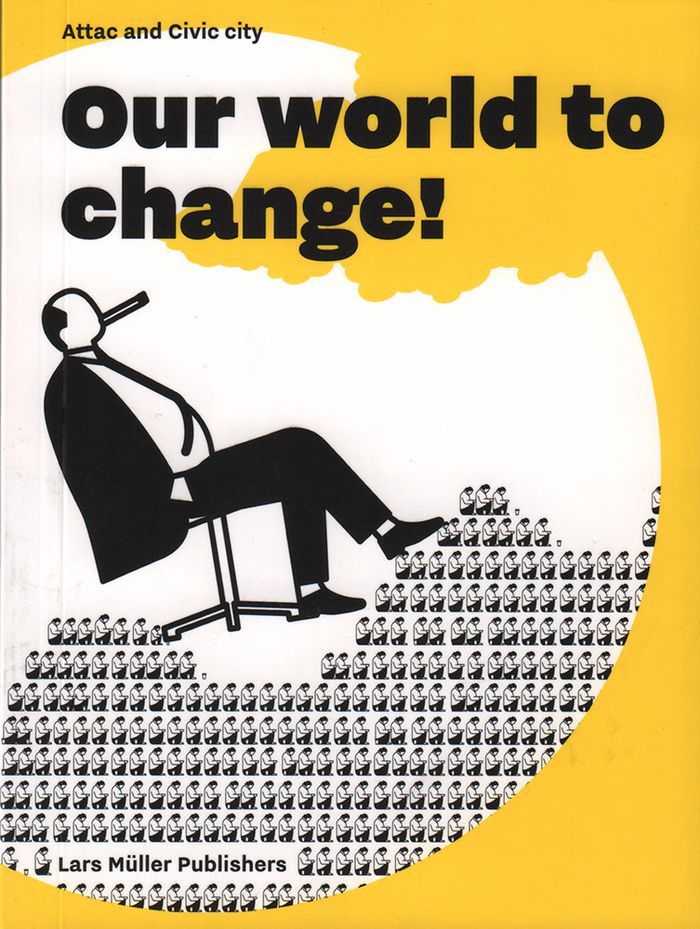
What are the central global issues humanity is facing today? How dire is the future really going to be? And what are possible ways to turn this world into a better one? These are the questions that the book "Our world to change!" adresses. This publication does not only explain figures related to economics, finance, ecology, nutrition and immigration, but also presents suggestions and alternatives from specialists in these fields – a book that every informed citizen should keep under their pillow. The overall goal of "Our world to change!" ! is to visualize the state of our world and possible ways to change it. For this mission the Intégral Ruedi Baur graphic design studio teamed up with the globalization-critical organization Attac, which provided the necessary data. By visualizing facts that concern each and everyone of us, "Our world to change!" ! makes pressing topics visible. This is necessary since issues like inequality and climate change are often viewed as complex, abstract topics.Our World to Change! is a formal homage to the sociologist Otto Neurath and the graphic designer Gerd Arntz, who created the Isotype – an international education system by typographical images – in the 1920s. Graphic designer Ruedi Baur, who also co-founded the institute for critical design research Civic city together with Vera Baur, revived Otto Neuraths iconic Isotype figures to visualize the state of the world today. While these figurines were already part of last years' art biennial Manifesta 11, controversially themed "What people do for money", in "Our world to change!" they take a more radical stance in critizising global inequality.
Our world to change!
Actions:
Prix:
$20.00
(disponible sur commande)
Résumé:
What are the central global issues humanity is facing today? How dire is the future really going to be? And what are possible ways to turn this world into a better one? These are the questions that the book "Our world to change!" adresses. This publication does not only explain figures related to economics, finance, ecology, nutrition and immigration, but also presents suggestions and alternatives from specialists in these fields – a book that every informed citizen should keep under their pillow. The overall goal of "Our world to change!" ! is to visualize the state of our world and possible ways to change it. For this mission the Intégral Ruedi Baur graphic design studio teamed up with the globalization-critical organization Attac, which provided the necessary data. By visualizing facts that concern each and everyone of us, "Our world to change!" ! makes pressing topics visible. This is necessary since issues like inequality and climate change are often viewed as complex, abstract topics.Our World to Change! is a formal homage to the sociologist Otto Neurath and the graphic designer Gerd Arntz, who created the Isotype – an international education system by typographical images – in the 1920s. Graphic designer Ruedi Baur, who also co-founded the institute for critical design research Civic city together with Vera Baur, revived Otto Neuraths iconic Isotype figures to visualize the state of the world today. While these figurines were already part of last years' art biennial Manifesta 11, controversially themed "What people do for money", in "Our world to change!" they take a more radical stance in critizising global inequality.
Classification:
livres
livres
Publication:
janvier 2017
janvier 2017


