


4284 Résultats
Niveau de description archivistique:
Projet
Projet
Numéro de référence:
AP075.S1.1954.PR01
Description:
This project series documents the design for a play area on18th and Bigler Streets in Philadelphia, Pennsylvania. This was Oberlander's first solo project which she worked on from 1951 to 1954, while still working for Oscar Stonorov. The playground opened in September 1954. The northeast section of the playground was dedicated to adults and older children, with places to sit and spaces for basketball, badminton, bocce and, a horseshoe pit. The southeast quarter was dedicated to smaller children, with play sculptures, water play and, a sand pit. The project series contains design development drawings, such as landscape plans and site plans with details, working drawings and technical drawings. It also comprises a presentation panel showing the completed playground and the play sculptures, and photographs of the playground. The project is also documented through textual records, such as a folder of correspondence, a project submission, press clippings and copies of articles on the play area. Source: Herrington, Susan. Cornelia Hahn Oberlander: Making the Modern Landscape, University of Virginia Press, 2014, 304 pages.
AP075.S1.1954.PR01
Description:
This project series documents the design for a play area on18th and Bigler Streets in Philadelphia, Pennsylvania. This was Oberlander's first solo project which she worked on from 1951 to 1954, while still working for Oscar Stonorov. The playground opened in September 1954. The northeast section of the playground was dedicated to adults and older children, with places to sit and spaces for basketball, badminton, bocce and, a horseshoe pit. The southeast quarter was dedicated to smaller children, with play sculptures, water play and, a sand pit. The project series contains design development drawings, such as landscape plans and site plans with details, working drawings and technical drawings. It also comprises a presentation panel showing the completed playground and the play sculptures, and photographs of the playground. The project is also documented through textual records, such as a folder of correspondence, a project submission, press clippings and copies of articles on the play area. Source: Herrington, Susan. Cornelia Hahn Oberlander: Making the Modern Landscape, University of Virginia Press, 2014, 304 pages.
Personnes et institutions:
Date:
1942-1956
1942-1956
Titre:
Recreational area, 18th and Bigler Streets, Philadelphia, Pennsylvania (1954)
Actions:
AP075.S1.1954.PR01
Description:
This project series documents the design for a play area on18th and Bigler Streets in Philadelphia, Pennsylvania. This was Oberlander's first solo project which she worked on from 1951 to 1954, while still working for Oscar Stonorov. The playground opened in September 1954. The northeast section of the playground was dedicated to adults and older children, with places to sit and spaces for basketball, badminton, bocce and, a horseshoe pit. The southeast quarter was dedicated to smaller children, with play sculptures, water play and, a sand pit. The project series contains design development drawings, such as landscape plans and site plans with details, working drawings and technical drawings. It also comprises a presentation panel showing the completed playground and the play sculptures, and photographs of the playground. The project is also documented through textual records, such as a folder of correspondence, a project submission, press clippings and copies of articles on the play area. Source: Herrington, Susan. Cornelia Hahn Oberlander: Making the Modern Landscape, University of Virginia Press, 2014, 304 pages.
Recreational area, 18th and Bigler Streets, Philadelphia, Pennsylvania (1954)
Actions:
AP075.S1.1954.PR01
Description:
This project series documents the design for a play area on18th and Bigler Streets in Philadelphia, Pennsylvania. This was Oberlander's first solo project which she worked on from 1951 to 1954, while still working for Oscar Stonorov. The playground opened in September 1954. The northeast section of the playground was dedicated to adults and older children, with places to sit and spaces for basketball, badminton, bocce and, a horseshoe pit. The southeast quarter was dedicated to smaller children, with play sculptures, water play and, a sand pit. The project series contains design development drawings, such as landscape plans and site plans with details, working drawings and technical drawings. It also comprises a presentation panel showing the completed playground and the play sculptures, and photographs of the playground. The project is also documented through textual records, such as a folder of correspondence, a project submission, press clippings and copies of articles on the play area. Source: Herrington, Susan. Cornelia Hahn Oberlander: Making the Modern Landscape, University of Virginia Press, 2014, 304 pages.
Niveau de description archivistique:
Project
Project
Date:
1942-1956
1942-1956
Personnes et institutions:
Niveau de description archivistique:
Projet
Projet
Numéro de référence:
AP164.S1.2002.D16
Description:
The project series documents the competition entry for the development of the International fair of the South, in the municipality of Getafe, Spain. The firm identified this project as number 159a. “The project puts the emphasis on two esencial [sic] questions: on the one hand a system which allows to resolve the fair’s pavillons simple and elegantly joining criteria of light, structure and water in a system of constructive rationality and average economy. On the other han[d a]n organization of the public and constructed space in phases which allow to understand the technology area of the south as something complete and shaped since the first of them has been developed. The proposed exhibition pavillions [sic] come from a technical reasoning based in the balance of structural width, central light and drainage of the roof, a result of several projects of similar scale which the office has developed in the last years.” (ARCH270975) Abalos & Herreros initially grouped this project with the competition Fira 2000 - Barcelona (AP164.S1.2002.D14). Documenting the project are presentation drawings, project descriptions, correspondence, studies, competition documents and specifications.
AP164.S1.2002.D16
Description:
The project series documents the competition entry for the development of the International fair of the South, in the municipality of Getafe, Spain. The firm identified this project as number 159a. “The project puts the emphasis on two esencial [sic] questions: on the one hand a system which allows to resolve the fair’s pavillons simple and elegantly joining criteria of light, structure and water in a system of constructive rationality and average economy. On the other han[d a]n organization of the public and constructed space in phases which allow to understand the technology area of the south as something complete and shaped since the first of them has been developed. The proposed exhibition pavillions [sic] come from a technical reasoning based in the balance of structural width, central light and drainage of the roof, a result of several projects of similar scale which the office has developed in the last years.” (ARCH270975) Abalos & Herreros initially grouped this project with the competition Fira 2000 - Barcelona (AP164.S1.2002.D14). Documenting the project are presentation drawings, project descriptions, correspondence, studies, competition documents and specifications.
Personnes et institutions:
Date:
circa 2002-2003
circa 2002-2003
Titre:
Fisur-Getafe (Concurso), Getafe, Spain (2002)
Actions:
AP164.S1.2002.D16
Description:
The project series documents the competition entry for the development of the International fair of the South, in the municipality of Getafe, Spain. The firm identified this project as number 159a. “The project puts the emphasis on two esencial [sic] questions: on the one hand a system which allows to resolve the fair’s pavillons simple and elegantly joining criteria of light, structure and water in a system of constructive rationality and average economy. On the other han[d a]n organization of the public and constructed space in phases which allow to understand the technology area of the south as something complete and shaped since the first of them has been developed. The proposed exhibition pavillions [sic] come from a technical reasoning based in the balance of structural width, central light and drainage of the roof, a result of several projects of similar scale which the office has developed in the last years.” (ARCH270975) Abalos & Herreros initially grouped this project with the competition Fira 2000 - Barcelona (AP164.S1.2002.D14). Documenting the project are presentation drawings, project descriptions, correspondence, studies, competition documents and specifications.
Fisur-Getafe (Concurso), Getafe, Spain (2002)
Actions:
AP164.S1.2002.D16
Description:
The project series documents the competition entry for the development of the International fair of the South, in the municipality of Getafe, Spain. The firm identified this project as number 159a. “The project puts the emphasis on two esencial [sic] questions: on the one hand a system which allows to resolve the fair’s pavillons simple and elegantly joining criteria of light, structure and water in a system of constructive rationality and average economy. On the other han[d a]n organization of the public and constructed space in phases which allow to understand the technology area of the south as something complete and shaped since the first of them has been developed. The proposed exhibition pavillions [sic] come from a technical reasoning based in the balance of structural width, central light and drainage of the roof, a result of several projects of similar scale which the office has developed in the last years.” (ARCH270975) Abalos & Herreros initially grouped this project with the competition Fira 2000 - Barcelona (AP164.S1.2002.D14). Documenting the project are presentation drawings, project descriptions, correspondence, studies, competition documents and specifications.
Niveau de description archivistique:
Project
Project
Date:
circa 2002-2003
circa 2002-2003
Personnes et institutions:
Niveau de description archivistique:
Projet
Projet
Numéro de référence:
AP164.S1.2004.D9
Description:
The project series documents the entry for a competition organised by the École Polytechnique Fédérale de Lausanne. The firm identified this project as number 187. “The Learning Center occupies the closest point to the two existing pedestrian accesses and distributes its programme in two large pieces: the green platform which puts in relation the different levels of mobility and houses the active program and the helix which defines the library as a huge ascending space which winds around itself at the interior as well as exterior culminating in an observatory which contains a restaurant. An isolated pavilion emerges over the green platform as a scenic counterpoint. […] Three materials: water, lawn and show form the base of the choice of materials and chromatic proposal supported by a regular structure of white concrete.” (ARCH270975) Abalos & Herreros and Renata Sentkiewicz worked with Olivia de Oliveira, Blaise Sahy, Verónica Meléndez, Juanju González Castellón, Rubén Briongos and Teresa Galí. Documenting the project are conceptual, design development and presentation drawings, cartographic, graphic, photographic and reference materials, correspondence, and presentation documents.
AP164.S1.2004.D9
Description:
The project series documents the entry for a competition organised by the École Polytechnique Fédérale de Lausanne. The firm identified this project as number 187. “The Learning Center occupies the closest point to the two existing pedestrian accesses and distributes its programme in two large pieces: the green platform which puts in relation the different levels of mobility and houses the active program and the helix which defines the library as a huge ascending space which winds around itself at the interior as well as exterior culminating in an observatory which contains a restaurant. An isolated pavilion emerges over the green platform as a scenic counterpoint. […] Three materials: water, lawn and show form the base of the choice of materials and chromatic proposal supported by a regular structure of white concrete.” (ARCH270975) Abalos & Herreros and Renata Sentkiewicz worked with Olivia de Oliveira, Blaise Sahy, Verónica Meléndez, Juanju González Castellón, Rubén Briongos and Teresa Galí. Documenting the project are conceptual, design development and presentation drawings, cartographic, graphic, photographic and reference materials, correspondence, and presentation documents.
Personnes et institutions:
Date:
1986, 2003-2004, predominant 2004
1986, 2003-2004, predominant 2004
Titre:
EPFL learning center, Lausanne, Switzerland (2004)
Actions:
AP164.S1.2004.D9
Description:
The project series documents the entry for a competition organised by the École Polytechnique Fédérale de Lausanne. The firm identified this project as number 187. “The Learning Center occupies the closest point to the two existing pedestrian accesses and distributes its programme in two large pieces: the green platform which puts in relation the different levels of mobility and houses the active program and the helix which defines the library as a huge ascending space which winds around itself at the interior as well as exterior culminating in an observatory which contains a restaurant. An isolated pavilion emerges over the green platform as a scenic counterpoint. […] Three materials: water, lawn and show form the base of the choice of materials and chromatic proposal supported by a regular structure of white concrete.” (ARCH270975) Abalos & Herreros and Renata Sentkiewicz worked with Olivia de Oliveira, Blaise Sahy, Verónica Meléndez, Juanju González Castellón, Rubén Briongos and Teresa Galí. Documenting the project are conceptual, design development and presentation drawings, cartographic, graphic, photographic and reference materials, correspondence, and presentation documents.
EPFL learning center, Lausanne, Switzerland (2004)
Actions:
AP164.S1.2004.D9
Description:
The project series documents the entry for a competition organised by the École Polytechnique Fédérale de Lausanne. The firm identified this project as number 187. “The Learning Center occupies the closest point to the two existing pedestrian accesses and distributes its programme in two large pieces: the green platform which puts in relation the different levels of mobility and houses the active program and the helix which defines the library as a huge ascending space which winds around itself at the interior as well as exterior culminating in an observatory which contains a restaurant. An isolated pavilion emerges over the green platform as a scenic counterpoint. […] Three materials: water, lawn and show form the base of the choice of materials and chromatic proposal supported by a regular structure of white concrete.” (ARCH270975) Abalos & Herreros and Renata Sentkiewicz worked with Olivia de Oliveira, Blaise Sahy, Verónica Meléndez, Juanju González Castellón, Rubén Briongos and Teresa Galí. Documenting the project are conceptual, design development and presentation drawings, cartographic, graphic, photographic and reference materials, correspondence, and presentation documents.
Niveau de description archivistique:
Project
Project
Date:
1986, 2003-2004, predominant 2004
1986, 2003-2004, predominant 2004
Personnes et institutions:
Classification:
événements
événements
Actions:
Description:
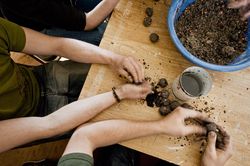
L’artiste montréalaise Gina Badger propose un atelier autour de la confection de véritables « bombes de semences », ces boules faites de compost, d’argile, d’eau et de graines que l’on peut lancer en ville pour créer des jardins. L’atelier est présenté en collaboration avec DARE-DARE (Centre de diffusion d’art multidisciplinaire de Montréal). En complément de l’exposition(...)
L’artiste montréalaise Gina Badger propose un atelier autour de la confection de véritables « bombes de semences », ces boules faites de compost, d’argile, d’eau et de graines que l’on peut lancer en ville pour créer des jardins. L’atelier est présenté en collaboration avec DARE-DARE (Centre de diffusion d’art multidisciplinaire de Montréal). En complément de l’exposition(...)
Date:
14 mars 2009
14 mars 2009
Titre:
Confectionner des bombes de semences
Actions:
Description:
L’artiste montréalaise Gina Badger propose un atelier autour de la confection de véritables « bombes de semences », ces boules faites de compost, d’argile, d’eau et de graines que l’on peut lancer en ville pour créer des jardins. L’atelier est présenté en collaboration avec DARE-DARE (Centre de diffusion d’art multidisciplinaire de Montréal). En complément de l’exposition(...)
Confectionner des bombes de semences
Actions:
Description:
L’artiste montréalaise Gina Badger propose un atelier autour de la confection de véritables « bombes de semences », ces boules faites de compost, d’argile, d’eau et de graines que l’on peut lancer en ville pour créer des jardins. L’atelier est présenté en collaboration avec DARE-DARE (Centre de diffusion d’art multidisciplinaire de Montréal). En complément de l’exposition(...)
Classification:
événements
événements
Date:
14 mars 2009
14 mars 2009
Classification:
archives
Niveau de description archivistique:
Fonds
archives
Niveau de description archivistique:
Fonds
Titre:
Fonds Amancio Williams
Fonds Amancio Williams
Numéro de référence:
AP205
Résumé:
The Amancio Williams fonds documents Williams' career as an architect and designer from the 1940s to the late 1980s. The fonds documents his work for over 80 architectural, urban planning and furniture design projects, as well as the administration of his architecture practice, and his professional activities through correspondence, photographic material, and promotional materials.
AP205
Résumé:
The Amancio Williams fonds documents Williams' career as an architect and designer from the 1940s to the late 1980s. The fonds documents his work for over 80 architectural, urban planning and furniture design projects, as well as the administration of his architecture practice, and his professional activities through correspondence, photographic material, and promotional materials.
Personnes et institutions:
Date:
1848-2010s
1848-2010s
Titre:
Fonds Amancio Williams
Actions:
AP205
Résumé:
The Amancio Williams fonds documents Williams' career as an architect and designer from the 1940s to the late 1980s. The fonds documents his work for over 80 architectural, urban planning and furniture design projects, as well as the administration of his architecture practice, and his professional activities through correspondence, photographic material, and promotional materials.
Fonds Amancio Williams
Actions:
AP205
Résumé:
The Amancio Williams fonds documents Williams' career as an architect and designer from the 1940s to the late 1980s. The fonds documents his work for over 80 architectural, urban planning and furniture design projects, as well as the administration of his architecture practice, and his professional activities through correspondence, photographic material, and promotional materials.
Classification:
archives
Niveau de description archivistique:
Fonds
archives
Niveau de description archivistique:
Fonds
Date:
1848-2010s
1848-2010s
Personnes et institutions:
Classification:
dessins
Quantité:
25 File
dessins
Quantité:
25 File
Numéro de référence:
ARCH41159
Description:
Signal and A.S.D.I.C. building galley racks, hoods and tables, grade elevations for physical training building, watermeters, C.P.O. building galley layout and smoke pipe, hospital emergency power and lighting building, water meter pits, electrical conduits, steam piping, proposed fire alarm system, bowling alley for Physical Training building, wall and lockers for bowling alley, C.P.O. building beams and columns diagram
ARCH41159
Description:
Signal and A.S.D.I.C. building galley racks, hoods and tables, grade elevations for physical training building, watermeters, C.P.O. building galley layout and smoke pipe, hospital emergency power and lighting building, water meter pits, electrical conduits, steam piping, proposed fire alarm system, bowling alley for Physical Training building, wall and lockers for bowling alley, C.P.O. building beams and columns diagram
Personnes et institutions:
Titre:
Signal and A.S.D.I.C. building galley racks, hoods and tables, grade elevations for physical training building
Actions:
ARCH41159
Description:
Signal and A.S.D.I.C. building galley racks, hoods and tables, grade elevations for physical training building, watermeters, C.P.O. building galley layout and smoke pipe, hospital emergency power and lighting building, water meter pits, electrical conduits, steam piping, proposed fire alarm system, bowling alley for Physical Training building, wall and lockers for bowling alley, C.P.O. building beams and columns diagram
Signal and A.S.D.I.C. building galley racks, hoods and tables, grade elevations for physical training building
Actions:
ARCH41159
Description:
Signal and A.S.D.I.C. building galley racks, hoods and tables, grade elevations for physical training building, watermeters, C.P.O. building galley layout and smoke pipe, hospital emergency power and lighting building, water meter pits, electrical conduits, steam piping, proposed fire alarm system, bowling alley for Physical Training building, wall and lockers for bowling alley, C.P.O. building beams and columns diagram
Classification:
dessins
Quantité:
25 File
dessins
Quantité:
25 File
Personnes et institutions:
Classification:
événements
événements
Titre:
Manque pas le bateau!
Manque pas le bateau!
Actions:
Description:
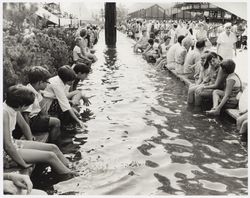
À quoi pourrait ressembler une ville qui adapterait ses infrastructures en les rendant imperméables, flottantes et, pourquoi pas, amphibies? Considérant la hausse attendue du niveau de la mer à l’échelle planétaire, l’articulation entre la ville et l’eau sous toutes ses formes – océans, fleuves, canaux, voies navigables – sera amenée à changer dans les années à venir.(...)
À quoi pourrait ressembler une ville qui adapterait ses infrastructures en les rendant imperméables, flottantes et, pourquoi pas, amphibies? Considérant la hausse attendue du niveau de la mer à l’échelle planétaire, l’articulation entre la ville et l’eau sous toutes ses formes – océans, fleuves, canaux, voies navigables – sera amenée à changer dans les années à venir.(...)
Date:
février 2017 au mars 2017
février 2017 au mars 2017
Titre:
Manque pas le bateau!
Actions:
Description:
À quoi pourrait ressembler une ville qui adapterait ses infrastructures en les rendant imperméables, flottantes et, pourquoi pas, amphibies? Considérant la hausse attendue du niveau de la mer à l’échelle planétaire, l’articulation entre la ville et l’eau sous toutes ses formes – océans, fleuves, canaux, voies navigables – sera amenée à changer dans les années à venir.(...)
Manque pas le bateau!
Actions:
Description:
À quoi pourrait ressembler une ville qui adapterait ses infrastructures en les rendant imperméables, flottantes et, pourquoi pas, amphibies? Considérant la hausse attendue du niveau de la mer à l’échelle planétaire, l’articulation entre la ville et l’eau sous toutes ses formes – océans, fleuves, canaux, voies navigables – sera amenée à changer dans les années à venir.(...)
Classification:
événements
événements
Date:
février 2017 au
mars 2017
février 2017 au
mars 2017
Classification:
dessins
Quantité:
14 File
dessins
Quantité:
14 File
Numéro de référence:
ARCH41264
Description:
dentist's laboratory for General Offices, wickets, doors for General Offices, grating and catch-pit for Central Heating Plant, A.A. dome for Torpedo and Gunnery School, exterior steps, doors and breeching for chimney for Central Heating Plant, pipe trench and water main to temporary barracks, entrance to Torpedo and Gunnery School, windows for Signal A.S.D.I.C. Building, partition and window for hospital
ARCH41264
Description:
dentist's laboratory for General Offices, wickets, doors for General Offices, grating and catch-pit for Central Heating Plant, A.A. dome for Torpedo and Gunnery School, exterior steps, doors and breeching for chimney for Central Heating Plant, pipe trench and water main to temporary barracks, entrance to Torpedo and Gunnery School, windows for Signal A.S.D.I.C. Building, partition and window for hospital
Personnes et institutions:
Titre:
Dentist's laboratory for General Offices, wickets, doors for General Offices
Actions:
ARCH41264
Description:
dentist's laboratory for General Offices, wickets, doors for General Offices, grating and catch-pit for Central Heating Plant, A.A. dome for Torpedo and Gunnery School, exterior steps, doors and breeching for chimney for Central Heating Plant, pipe trench and water main to temporary barracks, entrance to Torpedo and Gunnery School, windows for Signal A.S.D.I.C. Building, partition and window for hospital
Dentist's laboratory for General Offices, wickets, doors for General Offices
Actions:
ARCH41264
Description:
dentist's laboratory for General Offices, wickets, doors for General Offices, grating and catch-pit for Central Heating Plant, A.A. dome for Torpedo and Gunnery School, exterior steps, doors and breeching for chimney for Central Heating Plant, pipe trench and water main to temporary barracks, entrance to Torpedo and Gunnery School, windows for Signal A.S.D.I.C. Building, partition and window for hospital
Classification:
dessins
Quantité:
14 File
dessins
Quantité:
14 File
Personnes et institutions:
Classification:
photographies
photographies
Numéro de référence:
ARCH269017
Description:
Group consists of photographs of the Capitol's complex buildings in Chandigarh, India. There are 7 photographs of the Assembly including details of the building's façades and a photograph of the interior. There are also 4 photographs of the High Court including details of the building's façade. The group also includes 5 photographs of the Secretariat including two photographs of the impluvium receiving water from the chanels.
ARCH269017
Description:
Group consists of photographs of the Capitol's complex buildings in Chandigarh, India. There are 7 photographs of the Assembly including details of the building's façades and a photograph of the interior. There are also 4 photographs of the High Court including details of the building's façade. The group also includes 5 photographs of the Secretariat including two photographs of the impluvium receiving water from the chanels.
Personnes et institutions:
Date:
s.d.
s.d.
Titre:
Photographs of the Capitol's buildings in Chandigarh, India
Actions:
ARCH269017
Description:
Group consists of photographs of the Capitol's complex buildings in Chandigarh, India. There are 7 photographs of the Assembly including details of the building's façades and a photograph of the interior. There are also 4 photographs of the High Court including details of the building's façade. The group also includes 5 photographs of the Secretariat including two photographs of the impluvium receiving water from the chanels.
Photographs of the Capitol's buildings in Chandigarh, India
Actions:
ARCH269017
Description:
Group consists of photographs of the Capitol's complex buildings in Chandigarh, India. There are 7 photographs of the Assembly including details of the building's façades and a photograph of the interior. There are also 4 photographs of the High Court including details of the building's façade. The group also includes 5 photographs of the Secretariat including two photographs of the impluvium receiving water from the chanels.
Classification:
photographies
photographies
Date:
s.d.
s.d.
Personnes et institutions:
Niveau de description archivistique:
Projet
Projet
Numéro de référence:
AP075.S1.2004.PR01
Description:
Project series documents Cornelia Hahn Oberlander's landscape project for the renovations of Buchanan Building at the University of British Columbia, Vancouver. Oberlander worked on this project in 2004 with architectural firm Busby, Perkins + Will Architects. The project consisted in a redesign of the landscaping for the two coutyards separated by a central pavilion and surrounded by the four other blocks of the Buchanan Building. The concept was to created a courtyard for ceremonies and activities and a courtyard for scultpure and contemplation. The east courtyard, designed for sitting and contemplation, included paved pathways circulating amount patches of grass and flower beds, with seating alvoces under the preserved trees to add shade. The west courtyard, designed for activities, consisted in a large parved area with a curving edge along the east side of the courtyard to provide seating and includes a covered café and a water feature. The project series contains sketches by Oberlander, design development drawings, including site plans, landscape plans and concept plans for the courtyards, and presentations drawings, including renderings. The project is also documented through correspondence, including correspondence with architects and consultants, research material, contract, financial documents, specifications, meeting notes, and photographs of existing landscaping.
AP075.S1.2004.PR01
Description:
Project series documents Cornelia Hahn Oberlander's landscape project for the renovations of Buchanan Building at the University of British Columbia, Vancouver. Oberlander worked on this project in 2004 with architectural firm Busby, Perkins + Will Architects. The project consisted in a redesign of the landscaping for the two coutyards separated by a central pavilion and surrounded by the four other blocks of the Buchanan Building. The concept was to created a courtyard for ceremonies and activities and a courtyard for scultpure and contemplation. The east courtyard, designed for sitting and contemplation, included paved pathways circulating amount patches of grass and flower beds, with seating alvoces under the preserved trees to add shade. The west courtyard, designed for activities, consisted in a large parved area with a curving edge along the east side of the courtyard to provide seating and includes a covered café and a water feature. The project series contains sketches by Oberlander, design development drawings, including site plans, landscape plans and concept plans for the courtyards, and presentations drawings, including renderings. The project is also documented through correspondence, including correspondence with architects and consultants, research material, contract, financial documents, specifications, meeting notes, and photographs of existing landscaping.
Personnes et institutions:
Date:
2004-2009
2004-2009
Titre:
Buchanan Building renovations, University of British Columbia, Vancouver, British Columbia (2004-2009)
Actions:
AP075.S1.2004.PR01
Description:
Project series documents Cornelia Hahn Oberlander's landscape project for the renovations of Buchanan Building at the University of British Columbia, Vancouver. Oberlander worked on this project in 2004 with architectural firm Busby, Perkins + Will Architects. The project consisted in a redesign of the landscaping for the two coutyards separated by a central pavilion and surrounded by the four other blocks of the Buchanan Building. The concept was to created a courtyard for ceremonies and activities and a courtyard for scultpure and contemplation. The east courtyard, designed for sitting and contemplation, included paved pathways circulating amount patches of grass and flower beds, with seating alvoces under the preserved trees to add shade. The west courtyard, designed for activities, consisted in a large parved area with a curving edge along the east side of the courtyard to provide seating and includes a covered café and a water feature. The project series contains sketches by Oberlander, design development drawings, including site plans, landscape plans and concept plans for the courtyards, and presentations drawings, including renderings. The project is also documented through correspondence, including correspondence with architects and consultants, research material, contract, financial documents, specifications, meeting notes, and photographs of existing landscaping.
Buchanan Building renovations, University of British Columbia, Vancouver, British Columbia (2004-2009)
Actions:
AP075.S1.2004.PR01
Description:
Project series documents Cornelia Hahn Oberlander's landscape project for the renovations of Buchanan Building at the University of British Columbia, Vancouver. Oberlander worked on this project in 2004 with architectural firm Busby, Perkins + Will Architects. The project consisted in a redesign of the landscaping for the two coutyards separated by a central pavilion and surrounded by the four other blocks of the Buchanan Building. The concept was to created a courtyard for ceremonies and activities and a courtyard for scultpure and contemplation. The east courtyard, designed for sitting and contemplation, included paved pathways circulating amount patches of grass and flower beds, with seating alvoces under the preserved trees to add shade. The west courtyard, designed for activities, consisted in a large parved area with a curving edge along the east side of the courtyard to provide seating and includes a covered café and a water feature. The project series contains sketches by Oberlander, design development drawings, including site plans, landscape plans and concept plans for the courtyards, and presentations drawings, including renderings. The project is also documented through correspondence, including correspondence with architects and consultants, research material, contract, financial documents, specifications, meeting notes, and photographs of existing landscaping.
Niveau de description archivistique:
Project
Project
Date:
2004-2009
2004-2009
Personnes et institutions:


