


6235 Résultats
Classification:
livres
livres
Titre:
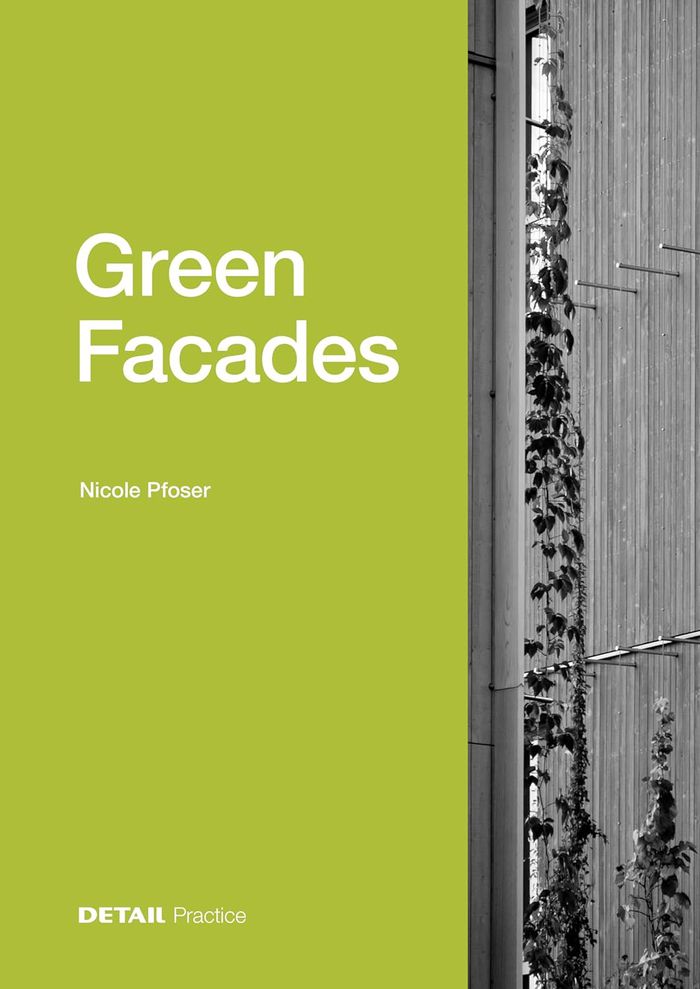
Green facades
Green facades
Actions:
Prix:
$99.95
(disponible sur commande)
Résumé:
Climate change, extreme weather conditions, the degradation of biodiversity, CO2 and fine-dust pollution in cities demand action. How can architecture make a contribution to achieving a paradigm shift? Can architecture not only be designed to be removable and recyclable, but to be additionally green as well? Can architecture also be an ecological system? What is(...)
$99.95
(disponible sur commande)
Résumé:
Climate change, extreme weather conditions, the degradation of biodiversity, CO2 and fine-dust pollution in cities demand action. How can architecture make a contribution to achieving a paradigm shift? Can architecture not only be designed to be removable and recyclable, but to be additionally green as well? Can architecture also be an ecological system? What is(...)
Titre:
Green facades
Actions:
Prix:
$99.95
(disponible sur commande)
Résumé:
Climate change, extreme weather conditions, the degradation of biodiversity, CO2 and fine-dust pollution in cities demand action. How can architecture make a contribution to achieving a paradigm shift? Can architecture not only be designed to be removable and recyclable, but to be additionally green as well? Can architecture also be an ecological system? What is blue-green architecture? Architects face the demand to fully exploit unused potential and find ways to use plants as tools for design. This is both the case in the development of spaces as well as urban environments, but particularly on buildings themselves. "Green facades" provides architects with the necessary specialist knowledge to competently deal with the living architecture on the building envelope.
Green facades
Actions:
Prix:
$99.95
(disponible sur commande)
Résumé:
Climate change, extreme weather conditions, the degradation of biodiversity, CO2 and fine-dust pollution in cities demand action. How can architecture make a contribution to achieving a paradigm shift? Can architecture not only be designed to be removable and recyclable, but to be additionally green as well? Can architecture also be an ecological system? What is blue-green architecture? Architects face the demand to fully exploit unused potential and find ways to use plants as tools for design. This is both the case in the development of spaces as well as urban environments, but particularly on buildings themselves. "Green facades" provides architects with the necessary specialist knowledge to competently deal with the living architecture on the building envelope.
Classification:
livres
livres
Publication:
février 2024
février 2024
Sujet:
Architecture écologique
Architecture écologique
Classification:
livres
livres
Titre:
Walking as research practice
Walking as research practice
Actions:
Prix:
$59.95
(disponible sur commande)
Résumé:
What might be considered the research output of a walking practice? An important caveat to this would be to ask where and when the research occurs in relation to the walk, the walking, and the walkers. Does the walk activate our senses, or do our senses demand that we walk? Since walking involves encounters with various objects and subjects, how might it help us emphasise(...)
$59.95
(disponible sur commande)
Résumé:
What might be considered the research output of a walking practice? An important caveat to this would be to ask where and when the research occurs in relation to the walk, the walking, and the walkers. Does the walk activate our senses, or do our senses demand that we walk? Since walking involves encounters with various objects and subjects, how might it help us emphasise(...)
Titre:
Walking as research practice
Actions:
Prix:
$59.95
(disponible sur commande)
Résumé:
What might be considered the research output of a walking practice? An important caveat to this would be to ask where and when the research occurs in relation to the walk, the walking, and the walkers. Does the walk activate our senses, or do our senses demand that we walk? Since walking involves encounters with various objects and subjects, how might it help us emphasise our connection to the more-than-human world? In addition, walking reveals different entry points to a city. Could walking provide a path toward more socially just urban spaces and commons? With an introduction by design critic and educator Alice Twemlow and urbanist and researcher Tânia A. Cardoso. Published in collaboration with Soapbox Journal.
Walking as research practice
Actions:
Prix:
$59.95
(disponible sur commande)
Résumé:
What might be considered the research output of a walking practice? An important caveat to this would be to ask where and when the research occurs in relation to the walk, the walking, and the walkers. Does the walk activate our senses, or do our senses demand that we walk? Since walking involves encounters with various objects and subjects, how might it help us emphasise our connection to the more-than-human world? In addition, walking reveals different entry points to a city. Could walking provide a path toward more socially just urban spaces and commons? With an introduction by design critic and educator Alice Twemlow and urbanist and researcher Tânia A. Cardoso. Published in collaboration with Soapbox Journal.
Classification:
livres
livres
Publication:
septembre 2024
septembre 2024
Sujet:
Théorie de l’art
Théorie de l’art
Classification:
livres
livres
Prix:
$44.95
(disponible sur commande)
Résumé:
In 2005 a BMW H2R hydrogen-powered vehicle was delivered to Studio Olafur Eliasson and then stripped bare of its outer shell. To create a new skin several form studies have been carried out in a temporary geodesic dome, constructed in the yard of the studio. The final surface of the car consists of layers of ice, frozen around two intricate nets, mirrored plates and(...)
$44.95
(disponible sur commande)
Résumé:
In 2005 a BMW H2R hydrogen-powered vehicle was delivered to Studio Olafur Eliasson and then stripped bare of its outer shell. To create a new skin several form studies have been carried out in a temporary geodesic dome, constructed in the yard of the studio. The final surface of the car consists of layers of ice, frozen around two intricate nets, mirrored plates and(...)
Titre:
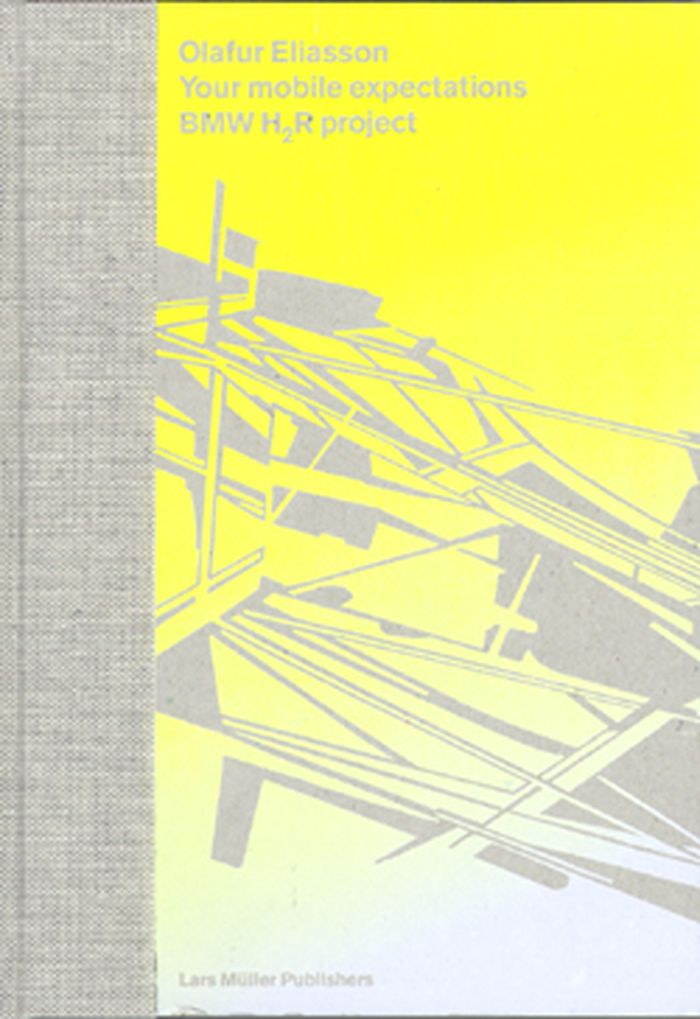
Olafur Eliasson: your mobile expectations. BMW H2R project
Actions:
Prix:
$44.95
(disponible sur commande)
Résumé:
In 2005 a BMW H2R hydrogen-powered vehicle was delivered to Studio Olafur Eliasson and then stripped bare of its outer shell. To create a new skin several form studies have been carried out in a temporary geodesic dome, constructed in the yard of the studio. The final surface of the car consists of layers of ice, frozen around two intricate nets, mirrored plates and light. The “Climate car” can only exist in a microclimate with a temperature of minus 6 degrees Celsius or below. Including conversations between Olafur Eliasson and a number of distinguished thinkers, such as architect and artist Yona Friedman, urban theorist Bart Lootsma, and Head of Design BMW Christopher Bangle.
Olafur Eliasson: your mobile expectations. BMW H2R project
Actions:
Prix:
$44.95
(disponible sur commande)
Résumé:
In 2005 a BMW H2R hydrogen-powered vehicle was delivered to Studio Olafur Eliasson and then stripped bare of its outer shell. To create a new skin several form studies have been carried out in a temporary geodesic dome, constructed in the yard of the studio. The final surface of the car consists of layers of ice, frozen around two intricate nets, mirrored plates and light. The “Climate car” can only exist in a microclimate with a temperature of minus 6 degrees Celsius or below. Including conversations between Olafur Eliasson and a number of distinguished thinkers, such as architect and artist Yona Friedman, urban theorist Bart Lootsma, and Head of Design BMW Christopher Bangle.
Classification:
livres
livres
Publication:
juin 2008, Baden
juin 2008, Baden
Classification:
livres
livres
Prix:
$57.50
(disponible sur commande)
Résumé:
The book "Writingplace: investigations in architecture and literature" marks a step forward in an emerging debate on literary means in architecture. It offers a series of reflections on written language as a crucial element of architecture culture, and on the potential of using literary methods in architectural and urban research, education and design. For everyone(...)
$57.50
(disponible sur commande)
Résumé:
The book "Writingplace: investigations in architecture and literature" marks a step forward in an emerging debate on literary means in architecture. It offers a series of reflections on written language as a crucial element of architecture culture, and on the potential of using literary methods in architectural and urban research, education and design. For everyone(...)
Titre:
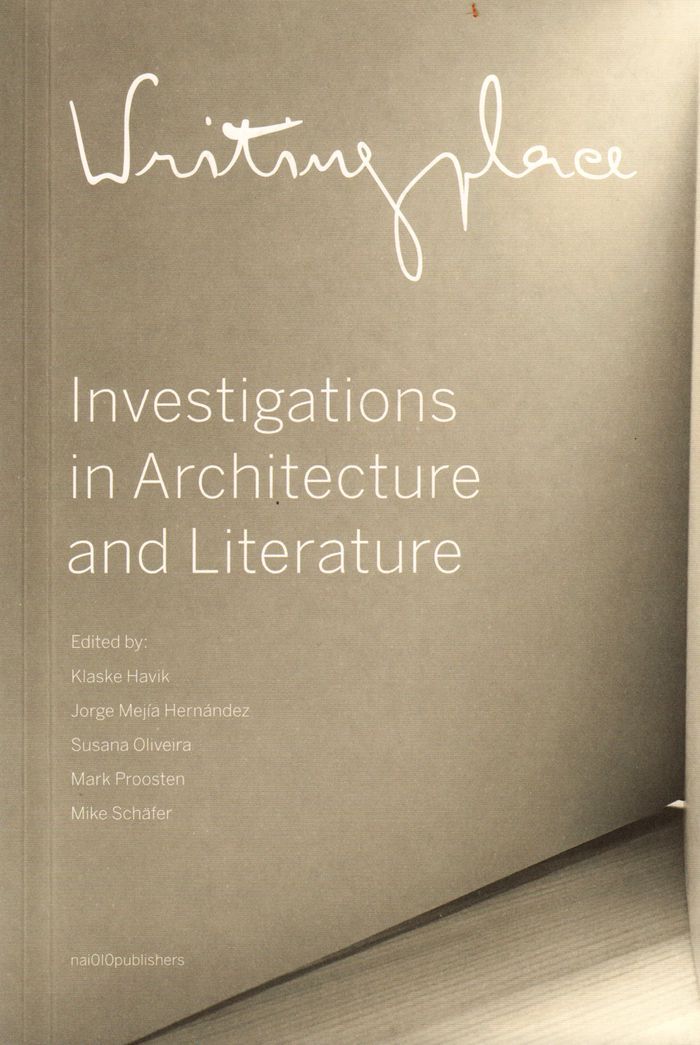
Writingplace: investigations in architecture and literature
Actions:
Prix:
$57.50
(disponible sur commande)
Résumé:
The book "Writingplace: investigations in architecture and literature" marks a step forward in an emerging debate on literary means in architecture. It offers a series of reflections on written language as a crucial element of architecture culture, and on the potential of using literary methods in architectural and urban research, education and design. For everyone interested in the transdisciplinary encounters between architecture and literature, the book offers both theoretical contributions that address notions such as narrative and literary imagination, and contemporary explorations regarding the operability of literary approaches. Writingplace includes contributions by experts in the fi eld such as Bart Keunen, Alberto Pérez Gómez, Wim van den Bergh, Klaske Havik, Katja Grillner and Wim Cuyvers.
Writingplace: investigations in architecture and literature
Actions:
Prix:
$57.50
(disponible sur commande)
Résumé:
The book "Writingplace: investigations in architecture and literature" marks a step forward in an emerging debate on literary means in architecture. It offers a series of reflections on written language as a crucial element of architecture culture, and on the potential of using literary methods in architectural and urban research, education and design. For everyone interested in the transdisciplinary encounters between architecture and literature, the book offers both theoretical contributions that address notions such as narrative and literary imagination, and contemporary explorations regarding the operability of literary approaches. Writingplace includes contributions by experts in the fi eld such as Bart Keunen, Alberto Pérez Gómez, Wim van den Bergh, Klaske Havik, Katja Grillner and Wim Cuyvers.
Classification:
livres
livres
Publication:
avril 2016
avril 2016
Classification:
livres
livres
Prix:
$49.00
(disponible sur commande)
Résumé:
"Constructed narratives" brings together essays and several recently completed buildings by David Adjaye, in the United States and elsewhere. In the essays, Adjaye shows how his approach to the design of temporary pavilions and furniture, private houses, and installations at the 2015 Venice Biennale feeds into his designs for public buildings. Other essays discuss his(...)
$49.00
(disponible sur commande)
Résumé:
"Constructed narratives" brings together essays and several recently completed buildings by David Adjaye, in the United States and elsewhere. In the essays, Adjaye shows how his approach to the design of temporary pavilions and furniture, private houses, and installations at the 2015 Venice Biennale feeds into his designs for public buildings. Other essays discuss his(...)
Titre:
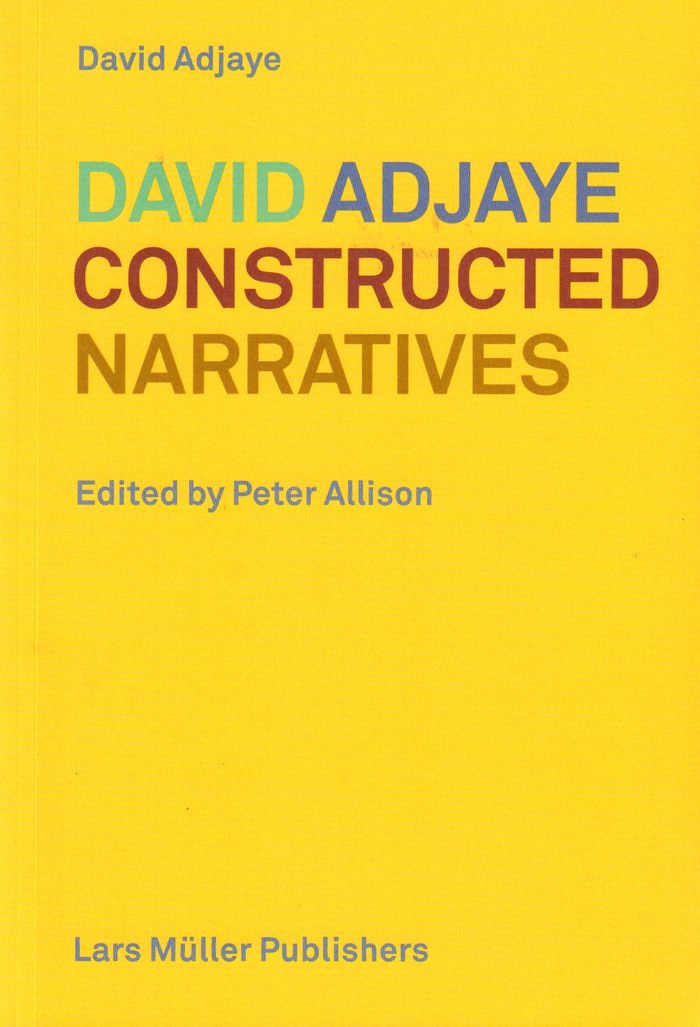
David Adjaye, Constructed narratives: essays and projects
Actions:
Prix:
$49.00
(disponible sur commande)
Résumé:
"Constructed narratives" brings together essays and several recently completed buildings by David Adjaye, in the United States and elsewhere. In the essays, Adjaye shows how his approach to the design of temporary pavilions and furniture, private houses, and installations at the 2015 Venice Biennale feeds into his designs for public buildings. Other essays discuss his engagement with geography, the urban environment, his approach to materiality, and architectural types. The presented projects include two public libraries and the National Museum of African American History and Culture, all in Washington D.C., a residential mixed-use building in New York, and a hybrid art-retail building in Beirut. Two of Adjaye’s current projects are also included.
David Adjaye, Constructed narratives: essays and projects
Actions:
Prix:
$49.00
(disponible sur commande)
Résumé:
"Constructed narratives" brings together essays and several recently completed buildings by David Adjaye, in the United States and elsewhere. In the essays, Adjaye shows how his approach to the design of temporary pavilions and furniture, private houses, and installations at the 2015 Venice Biennale feeds into his designs for public buildings. Other essays discuss his engagement with geography, the urban environment, his approach to materiality, and architectural types. The presented projects include two public libraries and the National Museum of African American History and Culture, all in Washington D.C., a residential mixed-use building in New York, and a hybrid art-retail building in Beirut. Two of Adjaye’s current projects are also included.
Classification:
livres
livres
Publication:
novembre 2016
novembre 2016
Sujet:
Architecture, monographies
Architecture, monographies
Classification:
livres
livres
Titre:
GRAFT: architecture activism
GRAFT: architecture activism
Actions:
Prix:
$65.95
(disponible sur commande)
Résumé:
Founded in Los Angeles in 1998, GRAFT is a global architectural practice which now maintains branches in Berlin and Beijing. The international practice, which is involved in architectural, urban, and product design – as well as branding – is known for its experimental and interdisciplinary designs as well as for its strong social commitment. The publication will document(...)
$65.95
(disponible sur commande)
Résumé:
Founded in Los Angeles in 1998, GRAFT is a global architectural practice which now maintains branches in Berlin and Beijing. The international practice, which is involved in architectural, urban, and product design – as well as branding – is known for its experimental and interdisciplinary designs as well as for its strong social commitment. The publication will document(...)
Titre:
GRAFT: architecture activism
Actions:
Prix:
$65.95
(disponible sur commande)
Résumé:
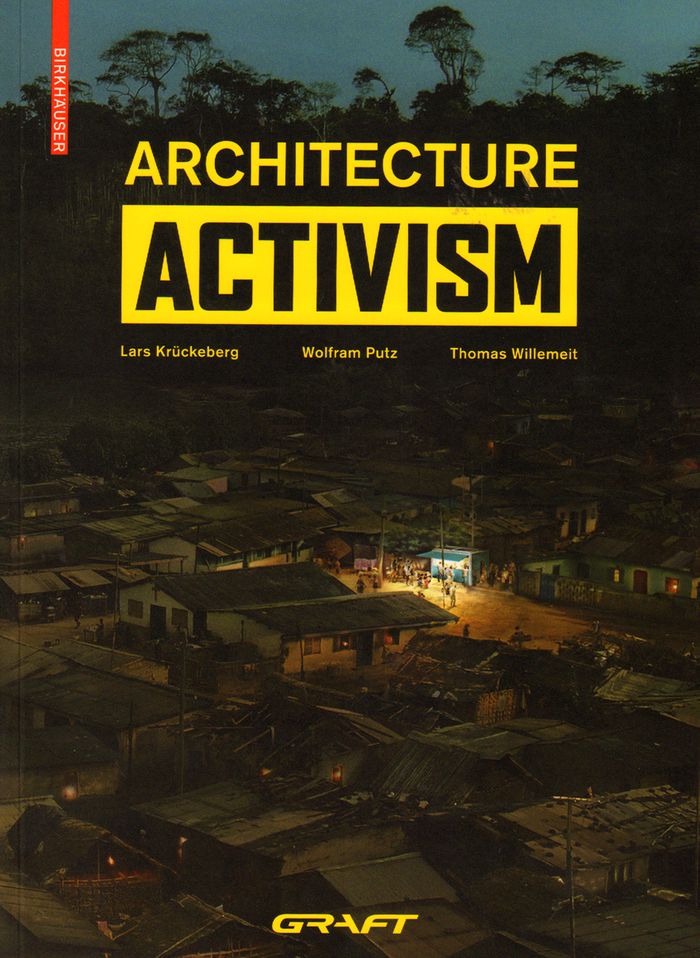
Founded in Los Angeles in 1998, GRAFT is a global architectural practice which now maintains branches in Berlin and Beijing. The international practice, which is involved in architectural, urban, and product design – as well as branding – is known for its experimental and interdisciplinary designs as well as for its strong social commitment. The publication will document only projects characteristic of this social responsibility – it portrays architecture as an active tool for driving, in a global context, the development of places worth living in. One key project is the Solar Kiosk developed in 2012, a high-output, solar-based unit which is already used by many communities in Sub-Saharan Africa to secure their power supply.
GRAFT: architecture activism
Actions:
Prix:
$65.95
(disponible sur commande)
Résumé:
Founded in Los Angeles in 1998, GRAFT is a global architectural practice which now maintains branches in Berlin and Beijing. The international practice, which is involved in architectural, urban, and product design – as well as branding – is known for its experimental and interdisciplinary designs as well as for its strong social commitment. The publication will document only projects characteristic of this social responsibility – it portrays architecture as an active tool for driving, in a global context, the development of places worth living in. One key project is the Solar Kiosk developed in 2012, a high-output, solar-based unit which is already used by many communities in Sub-Saharan Africa to secure their power supply.
Classification:
livres
livres
Publication:
mai 2016
mai 2016
Sujet:
Architecture, monographies
Architecture, monographies
Classification:
livres
livres

Actions:
Prix:
$47.00
(disponible en magasin)
Résumé:
While he was working to complete the Allmannajuvet Zinc Mine Museum in southern Norway in 2016, Swiss architect Peter Zumthor asked Norwegian architectural historian Mari Lending to engage in a dialogue about the project. In meandering, impressionistic style, and drawing on their favorite writers, such as Johann Peter Hebel, Stendhal, Nabokov, and T. S. Eliot, their(...)
$47.00
(disponible en magasin)
Résumé:
While he was working to complete the Allmannajuvet Zinc Mine Museum in southern Norway in 2016, Swiss architect Peter Zumthor asked Norwegian architectural historian Mari Lending to engage in a dialogue about the project. In meandering, impressionistic style, and drawing on their favorite writers, such as Johann Peter Hebel, Stendhal, Nabokov, and T. S. Eliot, their(...)
Titre:
Zumthor: A feeling of history
Actions:
Prix:
$47.00
(disponible en magasin)
Résumé:
While he was working to complete the Allmannajuvet Zinc Mine Museum in southern Norway in 2016, Swiss architect Peter Zumthor asked Norwegian architectural historian Mari Lending to engage in a dialogue about the project. In meandering, impressionistic style, and drawing on their favorite writers, such as Johann Peter Hebel, Stendhal, Nabokov, and T. S. Eliot, their exchanges explore how history, time, and temporalities reverberate across Zumthor’s oeuvre. Looking back, Zumthor ponders on how a feeling of history has informed his attempts at emotional reconstruction by means of building, from architectural interventions in dramatic landscapes to his design for the redevelopment of the Los Angeles County Museum of Art, which conceived the building on a suitably grand urban scale.
Zumthor: A feeling of history
Actions:
Prix:
$47.00
(disponible en magasin)
Résumé:
While he was working to complete the Allmannajuvet Zinc Mine Museum in southern Norway in 2016, Swiss architect Peter Zumthor asked Norwegian architectural historian Mari Lending to engage in a dialogue about the project. In meandering, impressionistic style, and drawing on their favorite writers, such as Johann Peter Hebel, Stendhal, Nabokov, and T. S. Eliot, their exchanges explore how history, time, and temporalities reverberate across Zumthor’s oeuvre. Looking back, Zumthor ponders on how a feeling of history has informed his attempts at emotional reconstruction by means of building, from architectural interventions in dramatic landscapes to his design for the redevelopment of the Los Angeles County Museum of Art, which conceived the building on a suitably grand urban scale.
Classification:
livres
livres
Publication:
octobre 2018
octobre 2018
Sujet:
Architecture, monographies
Architecture, monographies
Classification:
livres
livres

Prix:
$71.95
(disponible sur commande)
Résumé:
Space, place and territory are concepts that lie at the core of geography and urban planning, environmental studies and sociology. Although space, place and territory are indeed polysemic and polemic, they have particular characteristics that distinguish them from each other. They are interdependent but not interchangeable, and the differences between them explain how we(...)
$71.95
(disponible sur commande)
Résumé:
Space, place and territory are concepts that lie at the core of geography and urban planning, environmental studies and sociology. Although space, place and territory are indeed polysemic and polemic, they have particular characteristics that distinguish them from each other. They are interdependent but not interchangeable, and the differences between them explain how we(...)
Titre:
Space, place and territory: a critical review on spatialities
Actions:
Prix:
$71.95
(disponible sur commande)
Résumé:
Space, place and territory are concepts that lie at the core of geography and urban planning, environmental studies and sociology. Although space, place and territory are indeed polysemic and polemic, they have particular characteristics that distinguish them from each other. They are interdependent but not interchangeable, and the differences between them explain how we simultaneously perceive, conceive and design multiple spatialities. After drawing the conceptual framework of space, place and territory, the book explores how we sense space in the most visceral ways, and how the overlay of meanings attached to the sensorial characteristics of space change the way we perceive it – smell, spatial experiences using electroence phalography, and the changing meaning of darkness are discussed.
Space, place and territory: a critical review on spatialities
Actions:
Prix:
$71.95
(disponible sur commande)
Résumé:
Space, place and territory are concepts that lie at the core of geography and urban planning, environmental studies and sociology. Although space, place and territory are indeed polysemic and polemic, they have particular characteristics that distinguish them from each other. They are interdependent but not interchangeable, and the differences between them explain how we simultaneously perceive, conceive and design multiple spatialities. After drawing the conceptual framework of space, place and territory, the book explores how we sense space in the most visceral ways, and how the overlay of meanings attached to the sensorial characteristics of space change the way we perceive it – smell, spatial experiences using electroence phalography, and the changing meaning of darkness are discussed.
Classification:
livres
livres
Publication:
août 2018
août 2018
Sujet:
Théorie de l’architecture
Théorie de l’architecture
Classification:
livres
livres
Actions:
Prix:
$74.95
(disponible sur commande)
Résumé:
London is one of the world’s greatest cities, and its architecture is a unique heritage. The Tower of London is an urban castle unique in Europe, St Paul’s is one of the world’s greatest domed cathedrals, and the squares and crescents of the West End inspired Haussmann’s Paris. Private ownership has shaped the city, and architects have served a wide variety of(...)
$74.95
(disponible sur commande)
Résumé:
London is one of the world’s greatest cities, and its architecture is a unique heritage. The Tower of London is an urban castle unique in Europe, St Paul’s is one of the world’s greatest domed cathedrals, and the squares and crescents of the West End inspired Haussmann’s Paris. Private ownership has shaped the city, and architects have served a wide variety of(...)
Publication:
avril 2006, New Haven / London
avril 2006, New Haven / London
Titre:
London : an architectural history
Actions:
Prix:
$74.95
(disponible sur commande)
Résumé:
London is one of the world’s greatest cities, and its architecture is a unique heritage. The Tower of London is an urban castle unique in Europe, St Paul’s is one of the world’s greatest domed cathedrals, and the squares and crescents of the West End inspired Haussmann’s Paris. Private ownership has shaped the city, and architects have served a wide variety of clients. London’s Classical era produced an elegant townscape between 1600 and 1830, but medieval, Tudor, and Victorian London were a potpourri of buildings large and small, each making its own design statement. "In London : an architectural history", the author takes the reader through two thousand years of architecture from the sublime to the mundane.
London : an architectural history
Actions:
Prix:
$74.95
(disponible sur commande)
Résumé:
London is one of the world’s greatest cities, and its architecture is a unique heritage. The Tower of London is an urban castle unique in Europe, St Paul’s is one of the world’s greatest domed cathedrals, and the squares and crescents of the West End inspired Haussmann’s Paris. Private ownership has shaped the city, and architects have served a wide variety of clients. London’s Classical era produced an elegant townscape between 1600 and 1830, but medieval, Tudor, and Victorian London were a potpourri of buildings large and small, each making its own design statement. "In London : an architectural history", the author takes the reader through two thousand years of architecture from the sublime to the mundane.
Classification:
livres
livres
Publication:
avril 2006, New Haven / London
avril 2006, New Haven / London
Classification:
périodiques
périodiques
Actions:
Prix:
$51.95
(disponible sur commande)
Résumé:
Welcoming another direction in their investigations, A+T presents a new publication that focuses on hybrid buildings. Specific in their use and design, this new generation of building structures enable a combination of different programmes and encourages a range of urban uses including housing, public spaces, offices and civic facilities. Among the twelve high-rise hybrid(...)
$51.95
(disponible sur commande)
Résumé:
Welcoming another direction in their investigations, A+T presents a new publication that focuses on hybrid buildings. Specific in their use and design, this new generation of building structures enable a combination of different programmes and encourages a range of urban uses including housing, public spaces, offices and civic facilities. Among the twelve high-rise hybrid(...)
Titre:
a+t : hybrids 1 : high-rise mixed-use buildings
Actions:
Prix:
$51.95
(disponible sur commande)
Résumé:
Welcoming another direction in their investigations, A+T presents a new publication that focuses on hybrid buildings. Specific in their use and design, this new generation of building structures enable a combination of different programmes and encourages a range of urban uses including housing, public spaces, offices and civic facilities. Among the twelve high-rise hybrid projects examined are Steven Holl Architects' Linked Hybrid, Beijing; RCR arcquitectes' The Edge, Dubai; the Tour Signal, Puteaux by Jean Nouvel and OMA's Dubai Renaissance, Dubai. Further, four recent projects in New York are examined in the context of the future place for skyscrapers in architecture. All works are accompanied by plans, elevations, photographs, computerised images and technical notes.
a+t : hybrids 1 : high-rise mixed-use buildings
Actions:
Prix:
$51.95
(disponible sur commande)
Résumé:
Welcoming another direction in their investigations, A+T presents a new publication that focuses on hybrid buildings. Specific in their use and design, this new generation of building structures enable a combination of different programmes and encourages a range of urban uses including housing, public spaces, offices and civic facilities. Among the twelve high-rise hybrid projects examined are Steven Holl Architects' Linked Hybrid, Beijing; RCR arcquitectes' The Edge, Dubai; the Tour Signal, Puteaux by Jean Nouvel and OMA's Dubai Renaissance, Dubai. Further, four recent projects in New York are examined in the context of the future place for skyscrapers in architecture. All works are accompanied by plans, elevations, photographs, computerised images and technical notes.
Classification:
périodiques
périodiques
Publication:
novembre 2008, Vitoria-Gasteiz
novembre 2008, Vitoria-Gasteiz
Sujet:
Revues
Revues


