


6651 Résultats
Classification:
livres
livres

Titre:
The second digital turn
The second digital turn
Actions:
Prix:
$33.95
(disponible sur commande)
Résumé:
Almost a generation ago, the early software for computer aided design and manufacturing (CAD/CAM) spawned a style of smooth and curving lines and surfaces that gave visible form to the first digital age, and left an indelible mark on contemporary architecture. But today's digitally intelligent architecture no longer looks that way. In The Second Digital Turn, Mario Carpo(...)
$33.95
(disponible sur commande)
Résumé:
Almost a generation ago, the early software for computer aided design and manufacturing (CAD/CAM) spawned a style of smooth and curving lines and surfaces that gave visible form to the first digital age, and left an indelible mark on contemporary architecture. But today's digitally intelligent architecture no longer looks that way. In The Second Digital Turn, Mario Carpo(...)
Titre:
The second digital turn
Actions:
Prix:
$33.95
(disponible sur commande)
Résumé:
Almost a generation ago, the early software for computer aided design and manufacturing (CAD/CAM) spawned a style of smooth and curving lines and surfaces that gave visible form to the first digital age, and left an indelible mark on contemporary architecture. But today's digitally intelligent architecture no longer looks that way. In The Second Digital Turn, Mario Carpo explains that this is because the design professions are now coming to terms with a new kind of digital tools they have adopted—no longer tools for making but tools for thinking. In the early 1990s the design professions were the first to intuit and interpret the new technical logic of the digital age: digital mass-customization (the use of digital tools to mass-produce variations at no extra cost) has already changed the way we produce and consume almost everything, and the same technology applied to commerce at large is now heralding a new society without scale—a flat marginal cost society where bigger markets will not make anything cheaper. But today, the unprecedented power of computation also favors a new kind of science where prediction can be based on sheer information retrieval, and form finding by simulation and optimization can replace deduction from mathematical formulas. Designers have been toying with machine thinking and machine learning for some time, and the apparently unfathomable complexity of the physical shapes they are now creating already expresses a new form of artificial intelligence, outside the tradition of modern science and alien to the organic logic of our mind.
The second digital turn
Actions:
Prix:
$33.95
(disponible sur commande)
Résumé:
Almost a generation ago, the early software for computer aided design and manufacturing (CAD/CAM) spawned a style of smooth and curving lines and surfaces that gave visible form to the first digital age, and left an indelible mark on contemporary architecture. But today's digitally intelligent architecture no longer looks that way. In The Second Digital Turn, Mario Carpo explains that this is because the design professions are now coming to terms with a new kind of digital tools they have adopted—no longer tools for making but tools for thinking. In the early 1990s the design professions were the first to intuit and interpret the new technical logic of the digital age: digital mass-customization (the use of digital tools to mass-produce variations at no extra cost) has already changed the way we produce and consume almost everything, and the same technology applied to commerce at large is now heralding a new society without scale—a flat marginal cost society where bigger markets will not make anything cheaper. But today, the unprecedented power of computation also favors a new kind of science where prediction can be based on sheer information retrieval, and form finding by simulation and optimization can replace deduction from mathematical formulas. Designers have been toying with machine thinking and machine learning for some time, and the apparently unfathomable complexity of the physical shapes they are now creating already expresses a new form of artificial intelligence, outside the tradition of modern science and alien to the organic logic of our mind.
Classification:
livres
livres
Publication:
octobre 2017
octobre 2017
Sujet:
Architecture numérique
Architecture numérique
Classification:
livres
livres
Actions:
Prix:
$40.00
(disponible sur commande)
Résumé:
Wim Wenders (born 1945) started taking photographs at the age of 7. By the age of 12 he had equipped himself with his own darkroom, and by 17 he had acquired his first Leica. A few years later he was to emerge as a leading light in the New German Cinema movement of the late 1960s, making his feature-length directorial debut with Summer in the City (1970). Throughout his(...)
$40.00
(disponible sur commande)
Résumé:
Wim Wenders (born 1945) started taking photographs at the age of 7. By the age of 12 he had equipped himself with his own darkroom, and by 17 he had acquired his first Leica. A few years later he was to emerge as a leading light in the New German Cinema movement of the late 1960s, making his feature-length directorial debut with Summer in the City (1970). Throughout his(...)
Titre:
Wim Wenders : places, strange and quiet
Actions:
Prix:
$40.00
(disponible sur commande)
Résumé:
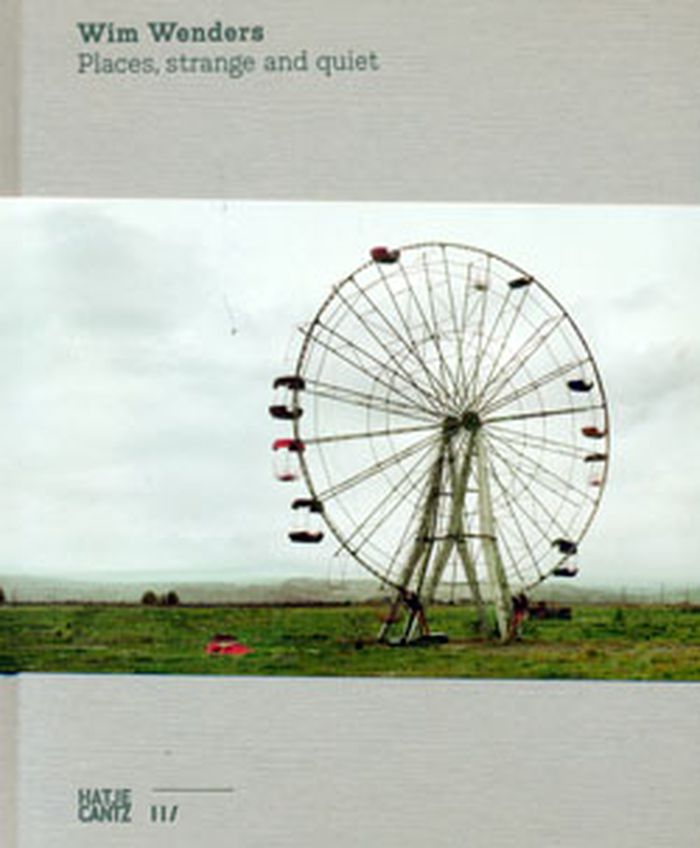
Wim Wenders (born 1945) started taking photographs at the age of 7. By the age of 12 he had equipped himself with his own darkroom, and by 17 he had acquired his first Leica. A few years later he was to emerge as a leading light in the New German Cinema movement of the late 1960s, making his feature-length directorial debut with Summer in the City (1970). Throughout his subsequent global acclaim as a director, Wenders has doggedly maintained his life as a photographer. In fact, the two careers have served each other well, as many of his photographs are created while location-scouting for films. His image repertoire of neglected industrial buildings, vacant lots, cemeteries, dilapidated urban niches and courtyards express a mixture of bemusement, melancholy and dislocation. “When you travel a lot, and when you love to just wander around and get lost, you can end up in the strangest spots,” Wenders says. “It must be some sort of built-in radar that often directs me to places that are strangely quiet, or quietly strange.” These strange and quiet color photographs are accompanied by poetical captions, some of which elucidate what is depicted, others of which lightly supplement with an anecdote (one characteristically deadpan caption accompanies an image of a cowboy clown standing at a rodeo: “It is amazing how many different ideas of 'fun' co-exist in this world” ). This publication gathers photographs from 1983 to 2011 in a full panorama of Wenders' photography to date.
Wim Wenders : places, strange and quiet
Actions:
Prix:
$40.00
(disponible sur commande)
Résumé:
Wim Wenders (born 1945) started taking photographs at the age of 7. By the age of 12 he had equipped himself with his own darkroom, and by 17 he had acquired his first Leica. A few years later he was to emerge as a leading light in the New German Cinema movement of the late 1960s, making his feature-length directorial debut with Summer in the City (1970). Throughout his subsequent global acclaim as a director, Wenders has doggedly maintained his life as a photographer. In fact, the two careers have served each other well, as many of his photographs are created while location-scouting for films. His image repertoire of neglected industrial buildings, vacant lots, cemeteries, dilapidated urban niches and courtyards express a mixture of bemusement, melancholy and dislocation. “When you travel a lot, and when you love to just wander around and get lost, you can end up in the strangest spots,” Wenders says. “It must be some sort of built-in radar that often directs me to places that are strangely quiet, or quietly strange.” These strange and quiet color photographs are accompanied by poetical captions, some of which elucidate what is depicted, others of which lightly supplement with an anecdote (one characteristically deadpan caption accompanies an image of a cowboy clown standing at a rodeo: “It is amazing how many different ideas of 'fun' co-exist in this world” ). This publication gathers photographs from 1983 to 2011 in a full panorama of Wenders' photography to date.
Classification:
livres
livres
Publication:
juillet 2011
juillet 2011
Sujet:
Monographies photo
Monographies photo
Classification:
livres
livres

Actions:
Prix:
$32.00
(disponible sur commande)
Résumé:
In this brilliantly written, fast-paced book, based on three years of uncompromising reporting, a bewildering age of global change and inequality is made human. Annawadi is a makeshift settlement in the shadow of luxury hotels near the Mumbai airport, and as India starts to prosper, Annawadians are electric with hope. Abdul, a reflective and enterprising Muslim(...)
$32.00
(disponible sur commande)
Résumé:
In this brilliantly written, fast-paced book, based on three years of uncompromising reporting, a bewildering age of global change and inequality is made human. Annawadi is a makeshift settlement in the shadow of luxury hotels near the Mumbai airport, and as India starts to prosper, Annawadians are electric with hope. Abdul, a reflective and enterprising Muslim(...)
Titre:
Behind the beautiful forevers : life, death and hope in a Mumbai undercity
Actions:
Prix:
$32.00
(disponible sur commande)
Résumé:
In this brilliantly written, fast-paced book, based on three years of uncompromising reporting, a bewildering age of global change and inequality is made human. Annawadi is a makeshift settlement in the shadow of luxury hotels near the Mumbai airport, and as India starts to prosper, Annawadians are electric with hope. Abdul, a reflective and enterprising Muslim teenager, sees “a fortune beyond counting” in the recyclable garbage that richer people throw away. Asha, a woman of formidable wit and deep scars from a childhood in rural poverty, has identified an alternate route to the middle class: political corruption. With a little luck, her sensitive, beautiful daughter—Annawadi’s “most-everything girl”—will soon become its first female college graduate. And even the poorest Annawadians, like Kalu, a fifteen-year-old scrap-metal thief, believe themselves inching closer to the good lives and good times they call “the full enjoy.” But then Abdul the garbage sorter is falsely accused in a shocking tragedy; terror and a global recession rock the city; and suppressed tensions over religion, caste, sex, power and economic envy turn brutal. As the tenderest individual hopes intersect with the greatest global truths, the true contours of a competitive age are revealed. And so, too, are the imaginations and courage of the people of Annawadi. With intelligence, humor, and deep insight into what connects human beings to one another in an era of tumultuous change, Behind the Beautiful Forevers carries the reader headlong into one of the twenty-first century’s hidden worlds, and into the lives of people impossible to forget.
Behind the beautiful forevers : life, death and hope in a Mumbai undercity
Actions:
Prix:
$32.00
(disponible sur commande)
Résumé:
In this brilliantly written, fast-paced book, based on three years of uncompromising reporting, a bewildering age of global change and inequality is made human. Annawadi is a makeshift settlement in the shadow of luxury hotels near the Mumbai airport, and as India starts to prosper, Annawadians are electric with hope. Abdul, a reflective and enterprising Muslim teenager, sees “a fortune beyond counting” in the recyclable garbage that richer people throw away. Asha, a woman of formidable wit and deep scars from a childhood in rural poverty, has identified an alternate route to the middle class: political corruption. With a little luck, her sensitive, beautiful daughter—Annawadi’s “most-everything girl”—will soon become its first female college graduate. And even the poorest Annawadians, like Kalu, a fifteen-year-old scrap-metal thief, believe themselves inching closer to the good lives and good times they call “the full enjoy.” But then Abdul the garbage sorter is falsely accused in a shocking tragedy; terror and a global recession rock the city; and suppressed tensions over religion, caste, sex, power and economic envy turn brutal. As the tenderest individual hopes intersect with the greatest global truths, the true contours of a competitive age are revealed. And so, too, are the imaginations and courage of the people of Annawadi. With intelligence, humor, and deep insight into what connects human beings to one another in an era of tumultuous change, Behind the Beautiful Forevers carries the reader headlong into one of the twenty-first century’s hidden worlds, and into the lives of people impossible to forget.
Classification:
livres
livres
Publication:
février 2012
février 2012
Sujet:
Arch Moyen-Orient
Arch Moyen-Orient
Classification:
livres
livres
Actions:
Exemplaires:
Description:
317 pages, 79 unnumbered leaves of plates : 140 color illustrations ; 29 cm
Description:
317 pages, 79 unnumbered leaves of plates : 140 color illustrations ; 29 cm
Auteur:
Sujet:
Publication:
Paris : Aux éditions René Kieffer, 1922.
Paris : Aux éditions René Kieffer, 1922.
Titre:
Le père Goriot / par Honoré de Balzac ; illustrations en couleurs de Quint.
Actions:
Exemplaires:
Description:
317 pages, 79 unnumbered leaves of plates : 140 color illustrations ; 29 cm
Le père Goriot / par Honoré de Balzac ; illustrations en couleurs de Quint.
Actions:
Exemplaires:
Description:
317 pages, 79 unnumbered leaves of plates : 140 color illustrations ; 29 cm
Classification:
livres
livres
Publication:
Paris : Aux éditions René Kieffer, 1922.
Paris : Aux éditions René Kieffer, 1922.
Auteur:
Sujet:
Classification:
livres
livres
Actions:
Exemplaires:
Description:
287 pages : color illustrations, portraits ; 30 cm
Description:
287 pages : color illustrations, portraits ; 30 cm
Auteur:
Sujet:
Publication:
Versailles : Éditions Jonglez, 2020.
Versailles : Éditions Jonglez, 2020.
Titre:
Le crépuscule des cinémas / une enquête photographique de Simon Edelstein ; préface de Francis Lacloche.
Actions:
Exemplaires:
Description:
287 pages : color illustrations, portraits ; 30 cm
Le crépuscule des cinémas / une enquête photographique de Simon Edelstein ; préface de Francis Lacloche.
Actions:
Exemplaires:
Description:
287 pages : color illustrations, portraits ; 30 cm
Classification:
livres
livres
Publication:
Versailles : Éditions Jonglez, 2020.
Versailles : Éditions Jonglez, 2020.
Auteur:
Sujet:
Classification:
livres
livres
Actions:
Exemplaires:
Description:
272 pages : color illustrations ; 30 cm
Description:
272 pages : color illustrations ; 30 cm
Auteur:
Sujet:
Publication:
New York, N.Y. : Monacelli Press, 1994.
New York, N.Y. : Monacelli Press, 1994.
Titre:
Shaker built : the form and function of Shaker architecture / Paul Rocheleau and June Sprigg ; edited and designed by David Larkin.
Actions:
Exemplaires:
Description:
272 pages : color illustrations ; 30 cm
Shaker built : the form and function of Shaker architecture / Paul Rocheleau and June Sprigg ; edited and designed by David Larkin.
Actions:
Exemplaires:
Description:
272 pages : color illustrations ; 30 cm
Classification:
livres
livres
Publication:
New York, N.Y. : Monacelli Press, 1994.
New York, N.Y. : Monacelli Press, 1994.
Auteur:
Sujet:
Classification:
livres
livres
Actions:
Exemplaires:
Description:
321 pages ; 27 cm.
Description:
321 pages ; 27 cm.
Auteur:
Sujet:
Publication:
Philadelphia : University of Pennsylvania Press, [2017]
Philadelphia : University of Pennsylvania Press, [2017]
Titre:
Modern coliseum : stadiums and American culture / Benjamin D. Lisle.
Actions:
Exemplaires:
Description:
321 pages ; 27 cm.
Modern coliseum : stadiums and American culture / Benjamin D. Lisle.
Actions:
Exemplaires:
Description:
321 pages ; 27 cm.
Classification:
livres
livres
Publication:
Philadelphia : University of Pennsylvania Press, [2017]
Philadelphia : University of Pennsylvania Press, [2017]
Auteur:
Sujet:
Classification:
périodiques
périodiques
Actions:
Prix:
$39.95
(disponible en magasin)
Résumé:
OASE 66 investigates the expression and use of architecture in science fiction and specifically in cyberpunk (cyberfiction). Science fiction, originally a literary and later a film genre, explores the relation between scientific and technological developments and their possible social-cultural influences and effects. Understanding science fiction as the twentieth-century(...)
$39.95
(disponible en magasin)
Résumé:
OASE 66 investigates the expression and use of architecture in science fiction and specifically in cyberpunk (cyberfiction). Science fiction, originally a literary and later a film genre, explores the relation between scientific and technological developments and their possible social-cultural influences and effects. Understanding science fiction as the twentieth-century(...)
Sujet:
Revues
Revues
Publication:
juillet 2005, Rotterdam
juillet 2005, Rotterdam
Titre:
OASE 66 : virtually here : ruimte in cyberfictie / space in cyberfiction
Actions:
Prix:
$39.95
(disponible en magasin)
Résumé:
OASE 66 investigates the expression and use of architecture in science fiction and specifically in cyberpunk (cyberfiction). Science fiction, originally a literary and later a film genre, explores the relation between scientific and technological developments and their possible social-cultural influences and effects. Understanding science fiction as the twentieth-century venue for imaginative extrapolations of possible futures, and cyberpunk as a subcategory of science fiction dealing specifically with the information age, they both seem to offer an interesting arena in which to compare various articulations of the future architectural environment. With contributions by Lara Schrijver, Pnina Avidar, Gül Kaçmaz Erk, M. Cristine Boyer, Neil Spiller and Sidney Eve Matrix. Design by Karel Martens & Chantal Hendriksen; Werkplaats Typografie.
OASE 66 : virtually here : ruimte in cyberfictie / space in cyberfiction
Actions:
Prix:
$39.95
(disponible en magasin)
Résumé:
OASE 66 investigates the expression and use of architecture in science fiction and specifically in cyberpunk (cyberfiction). Science fiction, originally a literary and later a film genre, explores the relation between scientific and technological developments and their possible social-cultural influences and effects. Understanding science fiction as the twentieth-century venue for imaginative extrapolations of possible futures, and cyberpunk as a subcategory of science fiction dealing specifically with the information age, they both seem to offer an interesting arena in which to compare various articulations of the future architectural environment. With contributions by Lara Schrijver, Pnina Avidar, Gül Kaçmaz Erk, M. Cristine Boyer, Neil Spiller and Sidney Eve Matrix. Design by Karel Martens & Chantal Hendriksen; Werkplaats Typografie.
Classification:
périodiques
périodiques
Publication:
juillet 2005, Rotterdam
juillet 2005, Rotterdam
Sujet:
Revues
Revues
Classification:
livres
livres
Actions:
Prix:
$85.00
(disponible sur commande)
Résumé:
This book examines the key role of the digital image in architecture over four decades – in the process of digitizing knowledge in theory and practice – as well as its influence on architectural design and visualization: The transition from the analogue to the digital age is analyzed on the basis of 51 design visualizations, from hand drawings to photomontage to computer(...)
$85.00
(disponible sur commande)
Résumé:
This book examines the key role of the digital image in architecture over four decades – in the process of digitizing knowledge in theory and practice – as well as its influence on architectural design and visualization: The transition from the analogue to the digital age is analyzed on the basis of 51 design visualizations, from hand drawings to photomontage to computer(...)
Sujet:
Architecture numérique
Architecture numérique
Publication:
novembre 2024
novembre 2024
Titre:
Architecture transformed: the digital image in architecture 1980-2020
Actions:
Prix:
$85.00
(disponible sur commande)
Résumé:
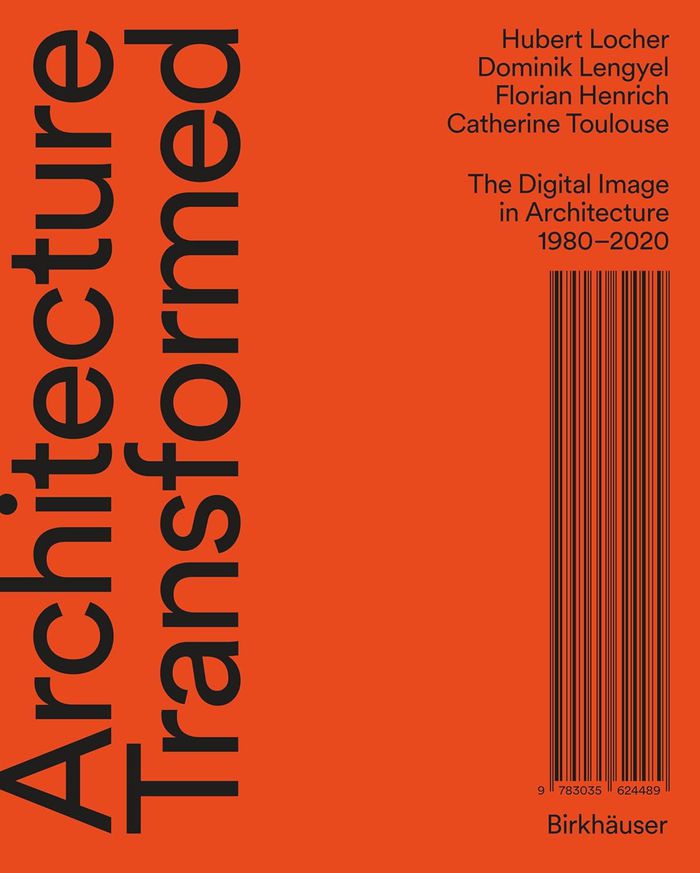
This book examines the key role of the digital image in architecture over four decades – in the process of digitizing knowledge in theory and practice – as well as its influence on architectural design and visualization: The transition from the analogue to the digital age is analyzed on the basis of 51 design visualizations, from hand drawings to photomontage to computer renderings, in order to illustrate how architecture has been impacted by digital methods and media. "Architecture transformed" is the result of a collaboration between the Deutsches Dokumentationszentrum für Kunstgeschichte – Bildarchiv Foto Marburg and the Chair of Architecture and Visualization at Brandenburg University of Technology Cottbus-Senftenberg as part of the German Research Foundation program entitled "The Digital Image."
Architecture transformed: the digital image in architecture 1980-2020
Actions:
Prix:
$85.00
(disponible sur commande)
Résumé:
This book examines the key role of the digital image in architecture over four decades – in the process of digitizing knowledge in theory and practice – as well as its influence on architectural design and visualization: The transition from the analogue to the digital age is analyzed on the basis of 51 design visualizations, from hand drawings to photomontage to computer renderings, in order to illustrate how architecture has been impacted by digital methods and media. "Architecture transformed" is the result of a collaboration between the Deutsches Dokumentationszentrum für Kunstgeschichte – Bildarchiv Foto Marburg and the Chair of Architecture and Visualization at Brandenburg University of Technology Cottbus-Senftenberg as part of the German Research Foundation program entitled "The Digital Image."
Classification:
livres
livres
Publication:
novembre 2024
novembre 2024
Sujet:
Architecture numérique
Architecture numérique
Classification:
livres
livres
Actions:
Prix:
$59.50
(disponible en magasin)
Résumé:
This book starts with the premise that waste is inevitable in human society—and ends with a meditation on its inevitability. The Idea of Waste explores how we have grappled with both the material reality and the specter of this shapeshifting phenomenon throughout history—utilizing it, dreaming of overcoming it, yet never escaping it. John Scanlan explores what waste is(...)
$59.50
(disponible en magasin)
Résumé:
This book starts with the premise that waste is inevitable in human society—and ends with a meditation on its inevitability. The Idea of Waste explores how we have grappled with both the material reality and the specter of this shapeshifting phenomenon throughout history—utilizing it, dreaming of overcoming it, yet never escaping it. John Scanlan explores what waste is(...)
Titre:
The idea of waste: On the limits of human life
Actions:
Prix:
$59.50
(disponible en magasin)
Résumé:
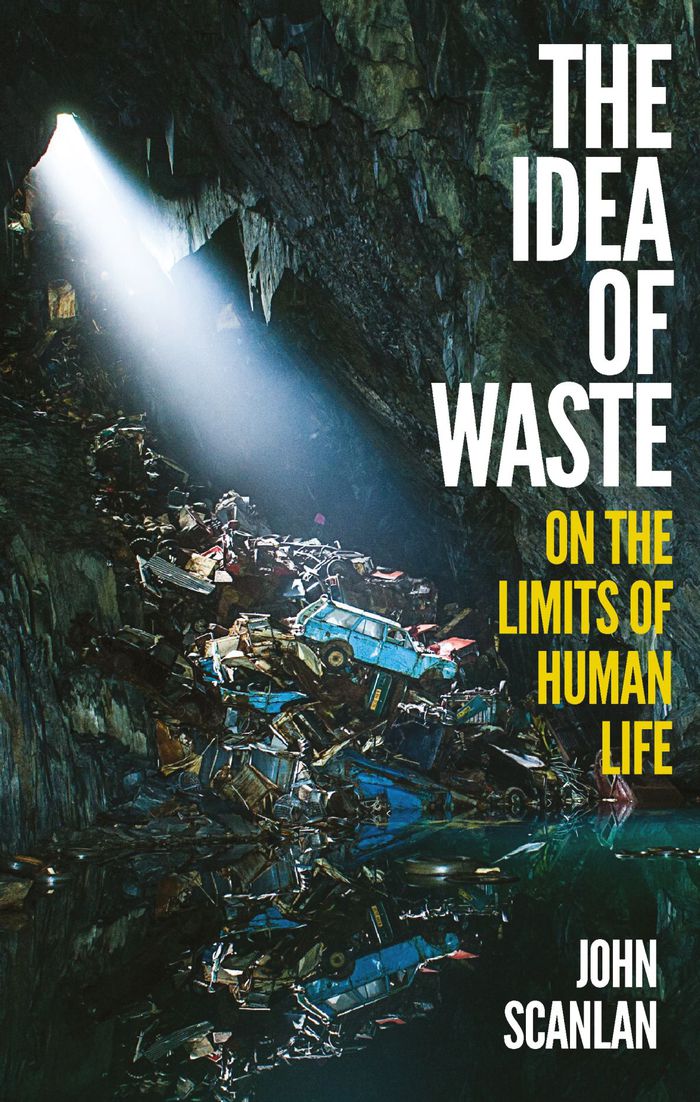
This book starts with the premise that waste is inevitable in human society—and ends with a meditation on its inevitability. The Idea of Waste explores how we have grappled with both the material reality and the specter of this shapeshifting phenomenon throughout history—utilizing it, dreaming of overcoming it, yet never escaping it. John Scanlan explores what waste is and why it seems to be intrinsic to human life, at every turn, in every age and epoch. Finally, he demonstrates how waste never disappears, but rather only proliferates anew. Scanlan’s compelling narrative shows waste to be both an enduring material consequence of human activity and an idea or state of being.
The idea of waste: On the limits of human life
Actions:
Prix:
$59.50
(disponible en magasin)
Résumé:
This book starts with the premise that waste is inevitable in human society—and ends with a meditation on its inevitability. The Idea of Waste explores how we have grappled with both the material reality and the specter of this shapeshifting phenomenon throughout history—utilizing it, dreaming of overcoming it, yet never escaping it. John Scanlan explores what waste is and why it seems to be intrinsic to human life, at every turn, in every age and epoch. Finally, he demonstrates how waste never disappears, but rather only proliferates anew. Scanlan’s compelling narrative shows waste to be both an enduring material consequence of human activity and an idea or state of being.
Classification:
livres
livres
Publication:
mai 2025
mai 2025
Sujet:
Social
Social


