


13794 Résultats
Classification:
livres
livres
Titre:
Yard, street, park : the design of suburban open space / Cynthia L. Girling, Kenneth I. Helphand.
Yard, street, park : the design of suburban open space / Cynthia L. Girling, Kenneth I. Helphand.
Actions:
Exemplaires:
Description:
ix, 245 pages : illustrations, maps ; 29 cm
Description:
ix, 245 pages : illustrations, maps ; 29 cm
Auteur:
Sujet:
Publication:
New York : J. Wiley, ©1994.
New York : J. Wiley, ©1994.
Titre:
Yard, street, park : the design of suburban open space / Cynthia L. Girling, Kenneth I. Helphand.
Actions:
Exemplaires:
Description:
ix, 245 pages : illustrations, maps ; 29 cm
Yard, street, park : the design of suburban open space / Cynthia L. Girling, Kenneth I. Helphand.
Actions:
Exemplaires:
Description:
ix, 245 pages : illustrations, maps ; 29 cm
Classification:
livres
livres
Publication:
New York : J. Wiley, ©1994.
New York : J. Wiley, ©1994.
Auteur:
Sujet:
Classification:
livres
livres
Actions:
Exemplaires:
Description:
x, 420 pages, 8 unnumbered pages of plates : illustrations ; 24 cm
Description:
x, 420 pages, 8 unnumbered pages of plates : illustrations ; 24 cm
Auteur:
Sujet:
Publication:
London : J. Cape, 2001.
London : J. Cape, 2001.
Titre:
The game of war : the life and death of Guy Debord / Andrew Hussey.
Actions:
Exemplaires:
Description:
x, 420 pages, 8 unnumbered pages of plates : illustrations ; 24 cm
The game of war : the life and death of Guy Debord / Andrew Hussey.
Actions:
Exemplaires:
Description:
x, 420 pages, 8 unnumbered pages of plates : illustrations ; 24 cm
Classification:
livres
livres
Publication:
London : J. Cape, 2001.
London : J. Cape, 2001.
Auteur:
Sujet:
Classification:
livres
livres
Actions:
Exemplaires:
Description:
xxviii, 326 pages : illustrations, plans ; 26 cm.
Description:
xxviii, 326 pages : illustrations, plans ; 26 cm.
Auteur:
Sujet:
Publication:
Aldershot, England ; Burlington, VT : Ashgate/Variorum, ©2005.
Aldershot, England ; Burlington, VT : Ashgate/Variorum, ©2005.
Titre:
Early Islamic art, 650-1100 / Oleg Grabar.
Actions:
Exemplaires:
Description:
xxviii, 326 pages : illustrations, plans ; 26 cm.
Early Islamic art, 650-1100 / Oleg Grabar.
Actions:
Exemplaires:
Description:
xxviii, 326 pages : illustrations, plans ; 26 cm.
Classification:
livres
livres
Publication:
Aldershot, England ; Burlington, VT : Ashgate/Variorum, ©2005.
Aldershot, England ; Burlington, VT : Ashgate/Variorum, ©2005.
Auteur:
Sujet:
Classification:
livres
livres

Actions:
Prix:
$25.95
(disponible en magasin)
Résumé:
From the excesses of world expositions to myths of better living through technology, modernist design, in its European-based guises, has excluded and oppressed the very people whose lands and lives it reshaped. This book first asks how modernist design has encompassed and advanced the harmful project of colonization—then shows how design might address these harms by(...)
$25.95
(disponible en magasin)
Résumé:
From the excesses of world expositions to myths of better living through technology, modernist design, in its European-based guises, has excluded and oppressed the very people whose lands and lives it reshaped. This book first asks how modernist design has encompassed and advanced the harmful project of colonization—then shows how design might address these harms by(...)
Titre:
Decolonizing design: A cultural justice guidebook
Actions:
Prix:
$25.95
(disponible en magasin)
Résumé:
From the excesses of world expositions to myths of better living through technology, modernist design, in its European-based guises, has excluded and oppressed the very people whose lands and lives it reshaped. This book first asks how modernist design has encompassed and advanced the harmful project of colonization—then shows how design might address these harms by recentering its theory and practice in global Indigenous cultures and histories. A leading figure in the movement to decolonize design, Dori Tunstall uses hard-hitting real-life examples and case studies drawn from over fifteen years of working to transform institutions to better reflect the lived experiences of Indigenous, Black, and People of Color communities. Her book is at once enlightening, inspiring, and practical, interweaving her lived experiences with extensive research to show what decolonizing design means, how it heals, and how to practice it in our institutions today.
Decolonizing design: A cultural justice guidebook
Actions:
Prix:
$25.95
(disponible en magasin)
Résumé:
From the excesses of world expositions to myths of better living through technology, modernist design, in its European-based guises, has excluded and oppressed the very people whose lands and lives it reshaped. This book first asks how modernist design has encompassed and advanced the harmful project of colonization—then shows how design might address these harms by recentering its theory and practice in global Indigenous cultures and histories. A leading figure in the movement to decolonize design, Dori Tunstall uses hard-hitting real-life examples and case studies drawn from over fifteen years of working to transform institutions to better reflect the lived experiences of Indigenous, Black, and People of Color communities. Her book is at once enlightening, inspiring, and practical, interweaving her lived experiences with extensive research to show what decolonizing design means, how it heals, and how to practice it in our institutions today.
Classification:
livres
livres
Publication:
février 2023
février 2023
Sujet:
Social
Social
Classification:
livres
livres
Titre:
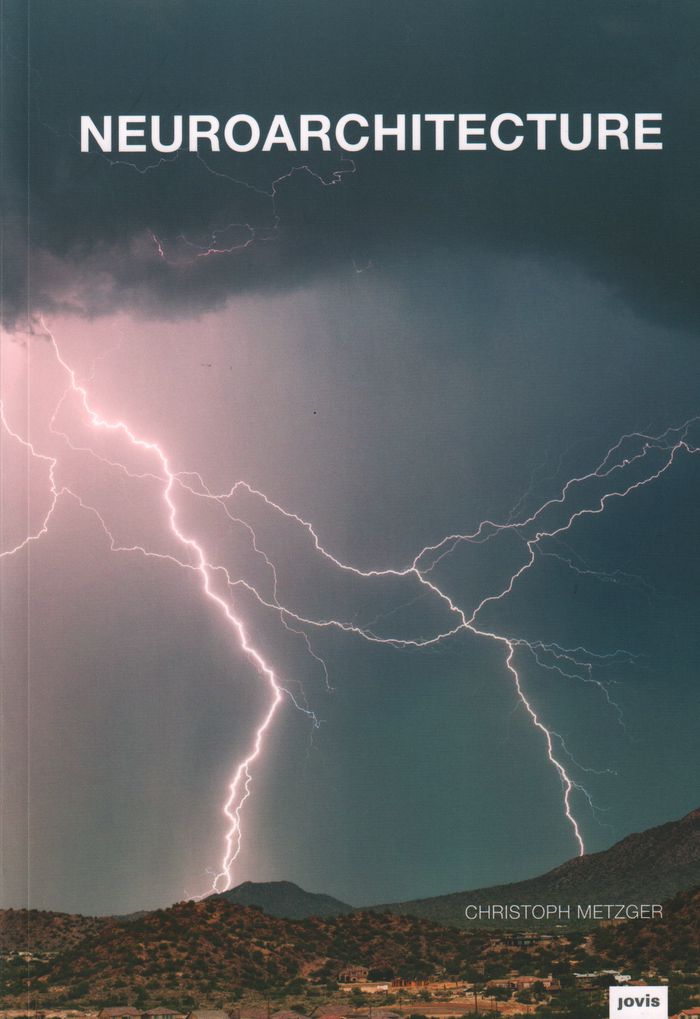
Neuroarchitecture
Neuroarchitecture
Actions:
Prix:
$46.95
(disponible sur commande)
Résumé:
Architectural spaces are anchors for our memory. We find our place in the room by means of our sensory perception; the brain makes use of surfaces and spatial systems in order to organize the world we live in. Taking this principle as a given, this volume tracks what happens when the results of recent neuroscientific research are applied to architectural practice. In this(...)
$46.95
(disponible sur commande)
Résumé:
Architectural spaces are anchors for our memory. We find our place in the room by means of our sensory perception; the brain makes use of surfaces and spatial systems in order to organize the world we live in. Taking this principle as a given, this volume tracks what happens when the results of recent neuroscientific research are applied to architectural practice. In this(...)
Titre:
Neuroarchitecture
Actions:
Prix:
$46.95
(disponible sur commande)
Résumé:
Architectural spaces are anchors for our memory. We find our place in the room by means of our sensory perception; the brain makes use of surfaces and spatial systems in order to organize the world we live in. Taking this principle as a given, this volume tracks what happens when the results of recent neuroscientific research are applied to architectural practice. In this volume, architectural theorist Christoph Metzger analyzes buildings designed by Alvar Aalto, Sou Fujimoto, Hugo Häring, Philip Johnson, Hermann Muthesius, Juhani Pallasmaa, James Stirling, Frank Lloyd Wright and Peter Zumthor in order to develop criteria for a modern, human-focused architecture that builds on neuroscientific knowledge. "Neuroarchitecture" links neuroscience, perception theory and Gestalt psychology, as well as music, art and architecture, in a holistic approach that focuses on the laws of structure formation and the movement of the individual within architectural space.
Neuroarchitecture
Actions:
Prix:
$46.95
(disponible sur commande)
Résumé:
Architectural spaces are anchors for our memory. We find our place in the room by means of our sensory perception; the brain makes use of surfaces and spatial systems in order to organize the world we live in. Taking this principle as a given, this volume tracks what happens when the results of recent neuroscientific research are applied to architectural practice. In this volume, architectural theorist Christoph Metzger analyzes buildings designed by Alvar Aalto, Sou Fujimoto, Hugo Häring, Philip Johnson, Hermann Muthesius, Juhani Pallasmaa, James Stirling, Frank Lloyd Wright and Peter Zumthor in order to develop criteria for a modern, human-focused architecture that builds on neuroscientific knowledge. "Neuroarchitecture" links neuroscience, perception theory and Gestalt psychology, as well as music, art and architecture, in a holistic approach that focuses on the laws of structure formation and the movement of the individual within architectural space.
Classification:
livres
livres
Publication:
juillet 2018
juillet 2018
Sujet:
Architecture contemporaine
Architecture contemporaine
Classification:
livres
livres
Actions:
Prix:
$32.95
(disponible sur commande)
Résumé:
The book "Art forms in nature" is a collection of prints, made by the scientist Ernst Haeckel, of an enormous variety of flora and fauna from the sea–including microscopic Radiolaria, starfish, and jelly fish. Since Prestel published it in 1998, the book has been a favorite with artists, designers, illustrators, and anyone who enjoys the wondrous forms of the natural(...)
$32.95
(disponible sur commande)
Résumé:
The book "Art forms in nature" is a collection of prints, made by the scientist Ernst Haeckel, of an enormous variety of flora and fauna from the sea–including microscopic Radiolaria, starfish, and jelly fish. Since Prestel published it in 1998, the book has been a favorite with artists, designers, illustrators, and anyone who enjoys the wondrous forms of the natural(...)
Titre:
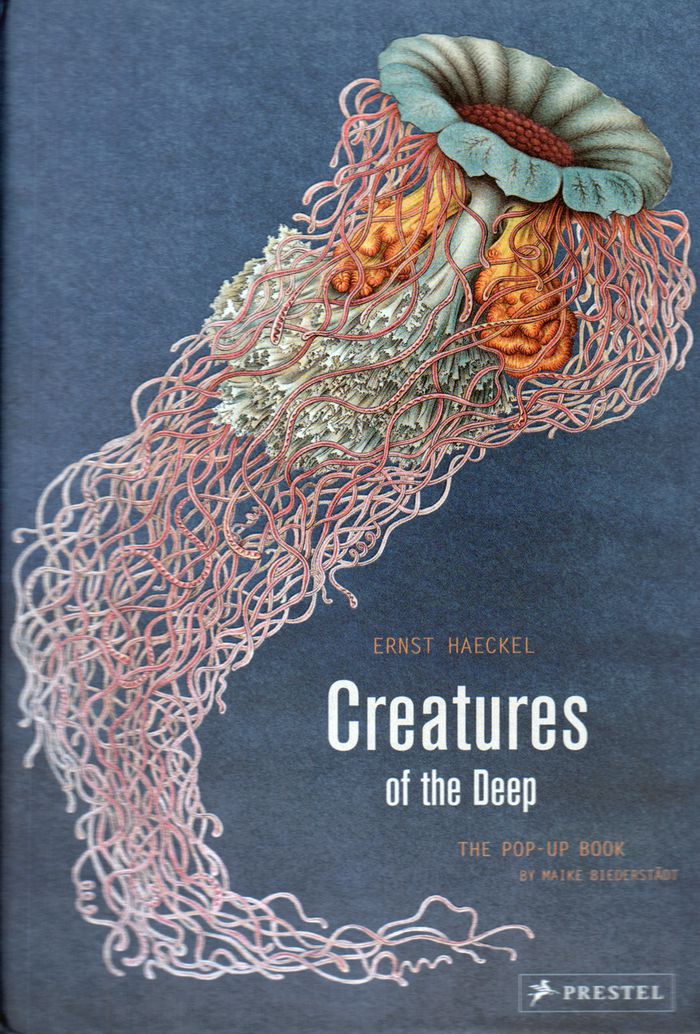
Creatures of the deep: the pop-up book
Actions:
Prix:
$32.95
(disponible sur commande)
Résumé:
The book "Art forms in nature" is a collection of prints, made by the scientist Ernst Haeckel, of an enormous variety of flora and fauna from the sea–including microscopic Radiolaria, starfish, and jelly fish. Since Prestel published it in 1998, the book has been a favorite with artists, designers, illustrators, and anyone who enjoys the wondrous forms of the natural world. Now paper engineer Maike Biederstaedt has transformed Haeckel’s transcendent work into a threedimensional book that allows readers to appreciate Haeckel’s vivid colors, exceptional precision, and fascination with patterns and geometry. This stunning book features seven pop-ups that allow readers to see nature’s brilliance the way that Haeckel did—as marvelous, mathematically based creations that support his theory of the unity of all living things. Certain to appeal to his huge variety of fans, this pop-up version of a timeless classic will be treasured for years to come.
Creatures of the deep: the pop-up book
Actions:
Prix:
$32.95
(disponible sur commande)
Résumé:
The book "Art forms in nature" is a collection of prints, made by the scientist Ernst Haeckel, of an enormous variety of flora and fauna from the sea–including microscopic Radiolaria, starfish, and jelly fish. Since Prestel published it in 1998, the book has been a favorite with artists, designers, illustrators, and anyone who enjoys the wondrous forms of the natural world. Now paper engineer Maike Biederstaedt has transformed Haeckel’s transcendent work into a threedimensional book that allows readers to appreciate Haeckel’s vivid colors, exceptional precision, and fascination with patterns and geometry. This stunning book features seven pop-ups that allow readers to see nature’s brilliance the way that Haeckel did—as marvelous, mathematically based creations that support his theory of the unity of all living things. Certain to appeal to his huge variety of fans, this pop-up version of a timeless classic will be treasured for years to come.
Classification:
livres
livres
Publication:
novembre 2016
novembre 2016
Sujet:
Pop Up
Pop Up
Classification:
livres
livres
Actions:
Prix:
$34.95
(disponible sur commande)
Résumé:
Art museums have emerged in recent decades as the most vibrant and popular of all cultural institutions. Though art museums have never been more popular, their direction and values are now being contested as never before, both in the media and in the art world itself. This engaging thematic history of the art museum from its inception in the eighteenth century to the(...)
$34.95
(disponible sur commande)
Résumé:
Art museums have emerged in recent decades as the most vibrant and popular of all cultural institutions. Though art museums have never been more popular, their direction and values are now being contested as never before, both in the media and in the art world itself. This engaging thematic history of the art museum from its inception in the eighteenth century to the(...)
Titre:
The Art Museum from Boullée to Bilbao
Actions:
Prix:
$34.95
(disponible sur commande)
Résumé:
Art museums have emerged in recent decades as the most vibrant and popular of all cultural institutions. Though art museums have never been more popular, their direction and values are now being contested as never before, both in the media and in the art world itself. This engaging thematic history of the art museum from its inception in the eighteenth century to the present offers an essential framework for understanding contemporary debates as they have evolved in Europe and the United States. From the visionary museums of Boullée in the eighteenth century to the new Guggenheim in Bilbao and beyond, it explores key aspects of museum theory and practice: ideals and mission; architecture; collecting, classification, and display; the public; commercialism; and restitution and repatriation. The only single volume to give a comprehensive account of the issues critical to museums, the book also highlights the challenges they will face in the future.
The Art Museum from Boullée to Bilbao
Actions:
Prix:
$34.95
(disponible sur commande)
Résumé:
Art museums have emerged in recent decades as the most vibrant and popular of all cultural institutions. Though art museums have never been more popular, their direction and values are now being contested as never before, both in the media and in the art world itself. This engaging thematic history of the art museum from its inception in the eighteenth century to the present offers an essential framework for understanding contemporary debates as they have evolved in Europe and the United States. From the visionary museums of Boullée in the eighteenth century to the new Guggenheim in Bilbao and beyond, it explores key aspects of museum theory and practice: ideals and mission; architecture; collecting, classification, and display; the public; commercialism; and restitution and repatriation. The only single volume to give a comprehensive account of the issues critical to museums, the book also highlights the challenges they will face in the future.
Classification:
livres
livres
Publication:
novembre 2007, Berkeley, Los Angeles
novembre 2007, Berkeley, Los Angeles
Sujet:
Muséologie
Muséologie
Classification:
livres
livres
Titre:
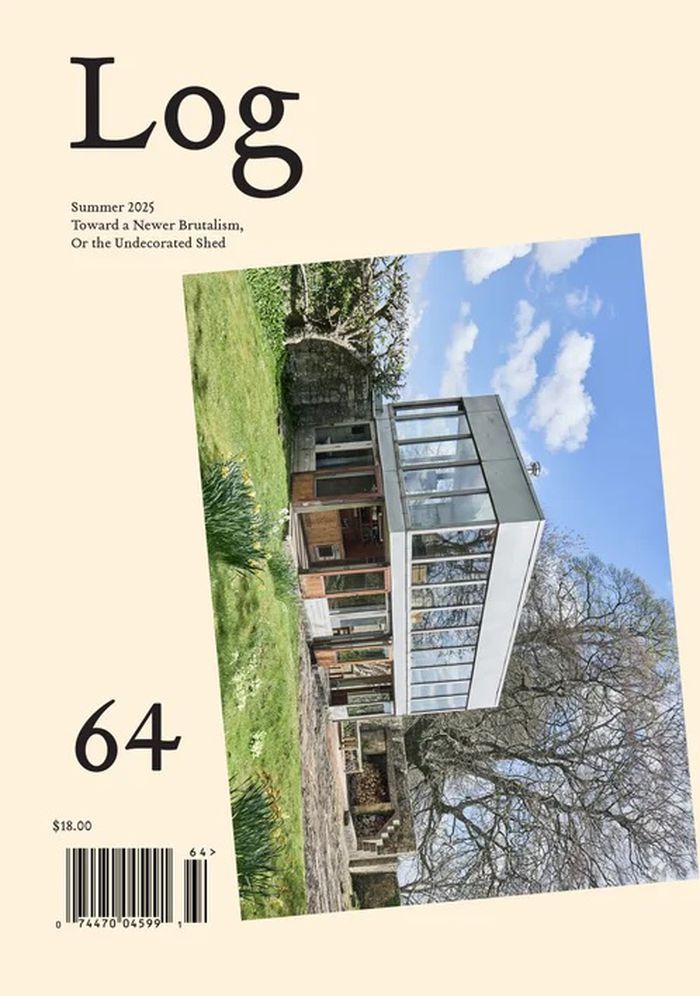
Log 64: summer 2025
Log 64: summer 2025
Actions:
Prix:
$25.00
(disponible en magasin)
Résumé:
As guest editor Emmett Zeifman wrote in his prompt for Toward a Newer Brutalism, or the Undecorated Shed, “Log 64 appropriates New Brutalism as a found theory of architecture that looks like exactly what it is made of.” To wit, Matthew Au, David Eskenazi, Mira Henry, Mireia Luzárraga and Débora Mesa discuss the assembly of materials, while material flammability is the(...)
$25.00
(disponible en magasin)
Résumé:
As guest editor Emmett Zeifman wrote in his prompt for Toward a Newer Brutalism, or the Undecorated Shed, “Log 64 appropriates New Brutalism as a found theory of architecture that looks like exactly what it is made of.” To wit, Matthew Au, David Eskenazi, Mira Henry, Mireia Luzárraga and Débora Mesa discuss the assembly of materials, while material flammability is the(...)
Titre:
Log 64: summer 2025
Actions:
Prix:
$25.00
(disponible en magasin)
Résumé:
As guest editor Emmett Zeifman wrote in his prompt for Toward a Newer Brutalism, or the Undecorated Shed, “Log 64 appropriates New Brutalism as a found theory of architecture that looks like exactly what it is made of.” To wit, Matthew Au, David Eskenazi, Mira Henry, Mireia Luzárraga and Débora Mesa discuss the assembly of materials, while material flammability is the concern of Dan Spiegel and Megumi Aihara. Clark Thenhaus manipulates 3D printed concrete, Zak Garone Leazer and Fernando Garrido Carreras interrogate stone, Salmaan Craig addresses the properties of heat, and Andrea Machado Romero and Eric Kyle Cheung pose maintenance as a design question. The envelopes of heating and cooling plants are analyzed by Daniel Jacobs and Brittany Utting; Mohamed Sharif heralds SO – IL’s rejection of the double-loaded apartment building corridor; and Anna Neimark celebrates Gehry Associates return to a Brutalist architecture in homes for veterans in West Los Angeles.
Log 64: summer 2025
Actions:
Prix:
$25.00
(disponible en magasin)
Résumé:
As guest editor Emmett Zeifman wrote in his prompt for Toward a Newer Brutalism, or the Undecorated Shed, “Log 64 appropriates New Brutalism as a found theory of architecture that looks like exactly what it is made of.” To wit, Matthew Au, David Eskenazi, Mira Henry, Mireia Luzárraga and Débora Mesa discuss the assembly of materials, while material flammability is the concern of Dan Spiegel and Megumi Aihara. Clark Thenhaus manipulates 3D printed concrete, Zak Garone Leazer and Fernando Garrido Carreras interrogate stone, Salmaan Craig addresses the properties of heat, and Andrea Machado Romero and Eric Kyle Cheung pose maintenance as a design question. The envelopes of heating and cooling plants are analyzed by Daniel Jacobs and Brittany Utting; Mohamed Sharif heralds SO – IL’s rejection of the double-loaded apartment building corridor; and Anna Neimark celebrates Gehry Associates return to a Brutalist architecture in homes for veterans in West Los Angeles.
Classification:
livres
livres
Publication:
juillet 2025
juillet 2025
Sujet:
Revues
Revues
Classification:
livres
livres
Prix:
$45.95
(disponible sur commande)
Résumé:
This book, devoted to the contributions of the Austro-American artist and architect Friedrich Kiesler to the field of design, presents previously unpublished material relating to his innovative furniture designs and prototypes from the 1930s and 1940s. Letters, diary entries, and photographs document the New York cultural environment in which Friedrich Kiesler lived and(...)
$45.95
(disponible sur commande)
Résumé:
This book, devoted to the contributions of the Austro-American artist and architect Friedrich Kiesler to the field of design, presents previously unpublished material relating to his innovative furniture designs and prototypes from the 1930s and 1940s. Letters, diary entries, and photographs document the New York cultural environment in which Friedrich Kiesler lived and(...)
Sujet:
Design, monographies
Design, monographies
Publication:
mai 2005, Ostfildern-Ruit
mai 2005, Ostfildern-Ruit
Titre:
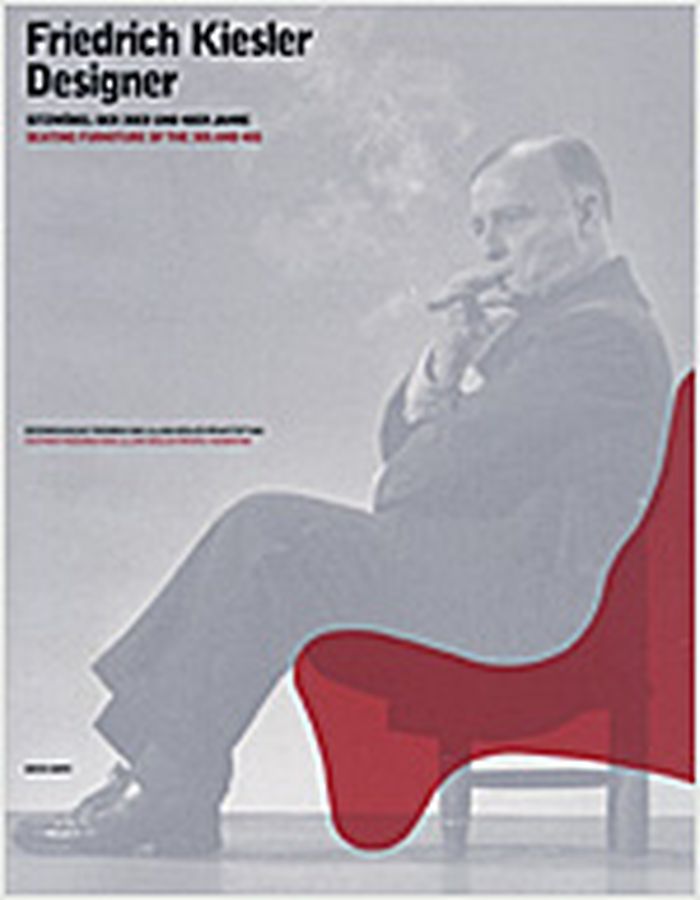
Friedrich Kiesler designer : seating furniture of the 30s and 40s
Actions:
Prix:
$45.95
(disponible sur commande)
Résumé:
This book, devoted to the contributions of the Austro-American artist and architect Friedrich Kiesler to the field of design, presents previously unpublished material relating to his innovative furniture designs and prototypes from the 1930s and 1940s. Letters, diary entries, and photographs document the New York cultural environment in which Friedrich Kiesler lived and worked and illuminate the role he played in the contemporary design scene. After emigrating to New York in 1925, Kiesler soon became an important mediator between European and American positions in the fields of design and architecture. In the ensuing years, he designed furniture and exhibitions and articulated the fundamental principles of a critical theory of functional architecture and design. Such concepts as flexibility, dynamism, and multifunctionality were crucial elements of his theoretical constructs. With an introduction by Monika Pessler, texts by Tulga Beyerle, Harald Krejci, and a preface by Dieter Bogner and Heinz F. Hofer-Wittmann.
Friedrich Kiesler designer : seating furniture of the 30s and 40s
Actions:
Prix:
$45.95
(disponible sur commande)
Résumé:
This book, devoted to the contributions of the Austro-American artist and architect Friedrich Kiesler to the field of design, presents previously unpublished material relating to his innovative furniture designs and prototypes from the 1930s and 1940s. Letters, diary entries, and photographs document the New York cultural environment in which Friedrich Kiesler lived and worked and illuminate the role he played in the contemporary design scene. After emigrating to New York in 1925, Kiesler soon became an important mediator between European and American positions in the fields of design and architecture. In the ensuing years, he designed furniture and exhibitions and articulated the fundamental principles of a critical theory of functional architecture and design. Such concepts as flexibility, dynamism, and multifunctionality were crucial elements of his theoretical constructs. With an introduction by Monika Pessler, texts by Tulga Beyerle, Harald Krejci, and a preface by Dieter Bogner and Heinz F. Hofer-Wittmann.
Classification:
livres
livres
Publication:
mai 2005, Ostfildern-Ruit
mai 2005, Ostfildern-Ruit
Sujet:
Design, monographies
Design, monographies
Classification:
livres
livres
Actions:
Prix:
$60.00
(disponible sur commande)
Résumé:
What comes after the Anthropocene? Can we depart from our human-centered perspective to build a future for the benefit of all species? What tools and techniques might help us get there? These are the questions investigated by the long-term interdisciplinary project "Interspecies future", which brings together perspectives from art, science, and technology to explore what(...)
$60.00
(disponible sur commande)
Résumé:
What comes after the Anthropocene? Can we depart from our human-centered perspective to build a future for the benefit of all species? What tools and techniques might help us get there? These are the questions investigated by the long-term interdisciplinary project "Interspecies future", which brings together perspectives from art, science, and technology to explore what(...)
Titre:
Interspecies future: a primer
Actions:
Prix:
$60.00
(disponible sur commande)
Résumé:
What comes after the Anthropocene? Can we depart from our human-centered perspective to build a future for the benefit of all species? What tools and techniques might help us get there? These are the questions investigated by the long-term interdisciplinary project "Interspecies future", which brings together perspectives from art, science, and technology to explore what this future might look like. First initiated in 2022 by LAS Art Foundation, this project explores new pathways for planetary thinking and collective intelligence. With more than 60 contributions, this interactive reader is the first book to provide an extensive foundation of key concepts, debates, and case studies that propose ways to re-frame, repair, and re-imagine interspecies relations. "Interspecies future: A primer" draws on recent advancements in planetary computation and machine learning, new discoveries in non-human intelligence, as well as post-human theory and Indigenous knowledge.
Interspecies future: a primer
Actions:
Prix:
$60.00
(disponible sur commande)
Résumé:
What comes after the Anthropocene? Can we depart from our human-centered perspective to build a future for the benefit of all species? What tools and techniques might help us get there? These are the questions investigated by the long-term interdisciplinary project "Interspecies future", which brings together perspectives from art, science, and technology to explore what this future might look like. First initiated in 2022 by LAS Art Foundation, this project explores new pathways for planetary thinking and collective intelligence. With more than 60 contributions, this interactive reader is the first book to provide an extensive foundation of key concepts, debates, and case studies that propose ways to re-frame, repair, and re-imagine interspecies relations. "Interspecies future: A primer" draws on recent advancements in planetary computation and machine learning, new discoveries in non-human intelligence, as well as post-human theory and Indigenous knowledge.
Classification:
livres
livres
Publication:
septembre 2024
septembre 2024
Sujet:
Faune et flore
Faune et flore


