


6300 Résultats
Classification:
livres
livres
Actions:
Exemplaires:
Description:
503 pages : illustrations (chiefly color) ; 25 cm
Description:
503 pages : illustrations (chiefly color) ; 25 cm
Auteur:
Sujet:
Publication:
Paris : Centre Pompidou, 2016., ©2015
Paris : Centre Pompidou, 2016., ©2015
Titre:
Collection architecture : la collection du Centre Pompidou, Musée national d'art moderne-Centre de création industrielle / direction d'ouvrage, Olivier Cinqualbre.
Actions:
Exemplaires:
Description:
503 pages : illustrations (chiefly color) ; 25 cm
Collection architecture : la collection du Centre Pompidou, Musée national d'art moderne-Centre de création industrielle / direction d'ouvrage, Olivier Cinqualbre.
Actions:
Exemplaires:
Description:
503 pages : illustrations (chiefly color) ; 25 cm
Classification:
livres
livres
Publication:
Paris : Centre Pompidou, 2016., ©2015
Paris : Centre Pompidou, 2016., ©2015
Auteur:
Sujet:
Classification:
livres
livres
Actions:
Exemplaires:
Description:
105 pages ; 17 cm.
Description:
105 pages ; 17 cm.
Auteur:
Sujet:
Publication:
Neuvy-en-Champagne : Le Passager clandestin, [2016]
Neuvy-en-Champagne : Le Passager clandestin, [2016]
Titre:
Gravelle, Zisly : et les anarchistes naturiens contre la civilisation industrielle / François Jarrige présente.
Actions:
Exemplaires:
Description:
105 pages ; 17 cm.
Gravelle, Zisly : et les anarchistes naturiens contre la civilisation industrielle / François Jarrige présente.
Actions:
Exemplaires:
Description:
105 pages ; 17 cm.
Classification:
livres
livres
Publication:
Neuvy-en-Champagne : Le Passager clandestin, [2016]
Neuvy-en-Champagne : Le Passager clandestin, [2016]
Auteur:
Sujet:
Classification:
livres
livres
Actions:
Exemplaires:
Description:
431 pages : illustrations (chiefly color), plans ; 25 cm
Description:
431 pages : illustrations (chiefly color), plans ; 25 cm
Auteur:
Sujet:
Publication:
Lausanne : Presses polytechniques et universitaires romandes, 2019.
Lausanne : Presses polytechniques et universitaires romandes, 2019.
Titre:
Le charpentier et l'architecte : une histoire de la construction en bois au Japon / Benoît Jacquet, Teruaki Matsuzaki, Manuel Tardits.
Actions:
Exemplaires:
Description:
431 pages : illustrations (chiefly color), plans ; 25 cm
Le charpentier et l'architecte : une histoire de la construction en bois au Japon / Benoît Jacquet, Teruaki Matsuzaki, Manuel Tardits.
Actions:
Exemplaires:
Description:
431 pages : illustrations (chiefly color), plans ; 25 cm
Classification:
livres
livres
Publication:
Lausanne : Presses polytechniques et universitaires romandes, 2019.
Lausanne : Presses polytechniques et universitaires romandes, 2019.
Auteur:
Sujet:
Classification:
livres
livres
Actions:
Exemplaires:
Description:
159 pages : illustrations ; 28 cm
Description:
159 pages : illustrations ; 28 cm
Auteur:
Sujet:
Publication:
Thizy : Patrimoines Haut-Beaujolais, ©2010.
Thizy : Patrimoines Haut-Beaujolais, ©2010.
Titre:
La vie de château : châteaux et maisons bourgeoises du Haut-Beaujolais, 1850-1914 / Ecomusée du Haut-Beaujolais ; Anne Barre ...
Actions:
Exemplaires:
Description:
159 pages : illustrations ; 28 cm
La vie de château : châteaux et maisons bourgeoises du Haut-Beaujolais, 1850-1914 / Ecomusée du Haut-Beaujolais ; Anne Barre ...
Actions:
Exemplaires:
Description:
159 pages : illustrations ; 28 cm
Classification:
livres
livres
Publication:
Thizy : Patrimoines Haut-Beaujolais, ©2010.
Thizy : Patrimoines Haut-Beaujolais, ©2010.
Auteur:
Sujet:
Classification:
livres
livres

Prix:
$33.95
(disponible sur commande)
Résumé:
Big Tech firms dominate the global economy. But what value do they actually produce? In this brilliant survey of global tech economy, Nick Dyer-Witheford and Alessandra Mularoni argue that the role of firms like Amazon and Google, Palantir and Uber, is in the automation of circulation. By applying digital technologies to processes of market exchange—everything from(...)
$33.95
(disponible sur commande)
Résumé:
Big Tech firms dominate the global economy. But what value do they actually produce? In this brilliant survey of global tech economy, Nick Dyer-Witheford and Alessandra Mularoni argue that the role of firms like Amazon and Google, Palantir and Uber, is in the automation of circulation. By applying digital technologies to processes of market exchange—everything from(...)
Titre:
Cybernetic circulation complex: Big tech and planetary crisis
Actions:
Prix:
$33.95
(disponible sur commande)
Résumé:
Big Tech firms dominate the global economy. But what value do they actually produce? In this brilliant survey of global tech economy, Nick Dyer-Witheford and Alessandra Mularoni argue that the role of firms like Amazon and Google, Palantir and Uber, is in the automation of circulation. By applying digital technologies to processes of market exchange—everything from advertising and shopping, to logistics and financial services—Big Tech aims to subject these activities to the level of control and predictability that capital has secured in industrial production. But there is a way out of the multiple crises that Big Tech has helped precipitate. If we are to break their grip on the global economy then it’ll take more than just antitrust legislation or reducing individual time online. By understanding the central role Big Tech plays in contemporary capitalism, Dyer-Witheford and Mularoni argue that what is required instead is a new, ambitious and comprehensive program of democratic collective planning that can move us beyond capitalism. ''Cybernetic Circulation Complex'' offers not only a compelling analysis of the power of Big Tech and their role in our current global crises, but a roadmap for a new form of life: biocommunism, a digital degrowth that can help us steer between the double boundaries of ecological sustainability and equitable social development.
Cybernetic circulation complex: Big tech and planetary crisis
Actions:
Prix:
$33.95
(disponible sur commande)
Résumé:
Big Tech firms dominate the global economy. But what value do they actually produce? In this brilliant survey of global tech economy, Nick Dyer-Witheford and Alessandra Mularoni argue that the role of firms like Amazon and Google, Palantir and Uber, is in the automation of circulation. By applying digital technologies to processes of market exchange—everything from advertising and shopping, to logistics and financial services—Big Tech aims to subject these activities to the level of control and predictability that capital has secured in industrial production. But there is a way out of the multiple crises that Big Tech has helped precipitate. If we are to break their grip on the global economy then it’ll take more than just antitrust legislation or reducing individual time online. By understanding the central role Big Tech plays in contemporary capitalism, Dyer-Witheford and Mularoni argue that what is required instead is a new, ambitious and comprehensive program of democratic collective planning that can move us beyond capitalism. ''Cybernetic Circulation Complex'' offers not only a compelling analysis of the power of Big Tech and their role in our current global crises, but a roadmap for a new form of life: biocommunism, a digital degrowth that can help us steer between the double boundaries of ecological sustainability and equitable social development.
Classification:
livres
livres
Publication:
février 2025
février 2025
Sujet:
Social
Social
Classification:
livres
livres
Prix:
$46.95
(disponible en magasin)
Résumé:
In the ten years since the first edition of "A Guide to Canadian Architectural Styles" was published, the heritage movement has gained strength, sensitizing many to the value of our architectural legacy. This new edition reflects an enriched understanding of architecture that focuses more on the visual and cultural setting of the built environment and less on individual(...)
$46.95
(disponible en magasin)
Résumé:
In the ten years since the first edition of "A Guide to Canadian Architectural Styles" was published, the heritage movement has gained strength, sensitizing many to the value of our architectural legacy. This new edition reflects an enriched understanding of architecture that focuses more on the visual and cultural setting of the built environment and less on individual(...)
Sujet:
Architecture du Canada
Architecture du Canada
Publication:
septembre 2003, Peterborough, Ontario
septembre 2003, Peterborough, Ontario
Titre:
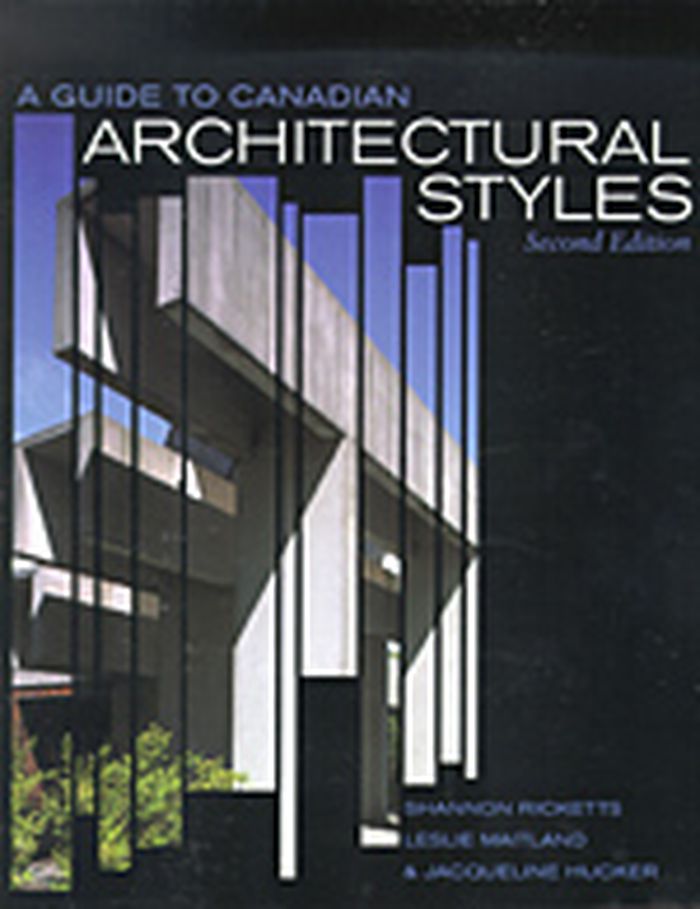
A guide to Canadian architectural styles, second edition
Actions:
Prix:
$46.95
(disponible en magasin)
Résumé:
In the ten years since the first edition of "A Guide to Canadian Architectural Styles" was published, the heritage movement has gained strength, sensitizing many to the value of our architectural legacy. This new edition reflects an enriched understanding of architecture that focuses more on the visual and cultural setting of the built environment and less on individual works seen in isolation. Today, we cherish the buildings that characterize the original Main Street / rue Principale - the bank building, the shops, the old hotel, the post office, the city hall. There is more recognition for older inner-city neighbourhoods, with their row housing, churches, and community halls as well as for our often romantic attachment to vernacular rural architecture. This interest in more ordinary-looking architecture marks both the democratization of Canada's heritage movement and its coming of age, for the value of these more modest structures lies in their unique ability to sustain a sense of identity. This book provides an essential profile of the origins and development of the many architectural styles across Canada, from early settlement to the postmodern period, and discusses special forms such as religious, civic, domestic, commercial, and industrial design. While remaining true to the accessible format of the first edition, the second offers updated and considerably expanded text, as well as many more illustrations.
A guide to Canadian architectural styles, second edition
Actions:
Prix:
$46.95
(disponible en magasin)
Résumé:
In the ten years since the first edition of "A Guide to Canadian Architectural Styles" was published, the heritage movement has gained strength, sensitizing many to the value of our architectural legacy. This new edition reflects an enriched understanding of architecture that focuses more on the visual and cultural setting of the built environment and less on individual works seen in isolation. Today, we cherish the buildings that characterize the original Main Street / rue Principale - the bank building, the shops, the old hotel, the post office, the city hall. There is more recognition for older inner-city neighbourhoods, with their row housing, churches, and community halls as well as for our often romantic attachment to vernacular rural architecture. This interest in more ordinary-looking architecture marks both the democratization of Canada's heritage movement and its coming of age, for the value of these more modest structures lies in their unique ability to sustain a sense of identity. This book provides an essential profile of the origins and development of the many architectural styles across Canada, from early settlement to the postmodern period, and discusses special forms such as religious, civic, domestic, commercial, and industrial design. While remaining true to the accessible format of the first edition, the second offers updated and considerably expanded text, as well as many more illustrations.
Classification:
livres
livres
Publication:
septembre 2003, Peterborough, Ontario
septembre 2003, Peterborough, Ontario
Sujet:
Architecture du Canada
Architecture du Canada
Classification:
livres
livres
Actions:
Prix:
$37.95
(disponible sur commande)
Résumé:
This first comprehensive architectural guide on Dessau-Roßlau and Wörlitz, compiled by the Stiftung Bauhaus Dessau and the Kulturstiftung DessauWörlitz, presents an expert overview of more than 120 buildings and rural expanses with great care and attention given to detail. A multifaceted overall picture arises of a region which not only draws on its rich cultural and(...)
$37.95
(disponible sur commande)
Résumé:
This first comprehensive architectural guide on Dessau-Roßlau and Wörlitz, compiled by the Stiftung Bauhaus Dessau and the Kulturstiftung DessauWörlitz, presents an expert overview of more than 120 buildings and rural expanses with great care and attention given to detail. A multifaceted overall picture arises of a region which not only draws on its rich cultural and(...)
Titre:
Dessau / Wörlitz architectural guide
Actions:
Prix:
$37.95
(disponible sur commande)
Résumé:
This first comprehensive architectural guide on Dessau-Roßlau and Wörlitz, compiled by the Stiftung Bauhaus Dessau and the Kulturstiftung DessauWörlitz, presents an expert overview of more than 120 buildings and rural expanses with great care and attention given to detail. A multifaceted overall picture arises of a region which not only draws on its rich cultural and historic heritage, but also plans for the future and ventures out into new terrain. In the shape of the Gartenreich Dessau-Wörlitz and the Bauhaus ensemble, the city of Dessau-Roßlau and its environs encompass two UNESCO World Heritage sites. These encompass architectural subjects and expanses, both urban and rural, which invite much attention beyond the region itself and have had a lasting impact on the international stage. Beyond this, however, there are a whole host of notable historic and contemporary buildings in Dessau and its surroundings. As the residence of the princes and dukes of Anhalt in the age of Enlightenment and a centre of intellectual and cultural expansion at European level, the city developed into a significant industrial location as of the second half of the nineteenth century. Today, Dessau’s architectural profile is marked by contrasts: alongside restored historic buildings and standard socialist dwellings, there are also experimental refurbishment projects and ambitious new developments to be found.
Dessau / Wörlitz architectural guide
Actions:
Prix:
$37.95
(disponible sur commande)
Résumé:
This first comprehensive architectural guide on Dessau-Roßlau and Wörlitz, compiled by the Stiftung Bauhaus Dessau and the Kulturstiftung DessauWörlitz, presents an expert overview of more than 120 buildings and rural expanses with great care and attention given to detail. A multifaceted overall picture arises of a region which not only draws on its rich cultural and historic heritage, but also plans for the future and ventures out into new terrain. In the shape of the Gartenreich Dessau-Wörlitz and the Bauhaus ensemble, the city of Dessau-Roßlau and its environs encompass two UNESCO World Heritage sites. These encompass architectural subjects and expanses, both urban and rural, which invite much attention beyond the region itself and have had a lasting impact on the international stage. Beyond this, however, there are a whole host of notable historic and contemporary buildings in Dessau and its surroundings. As the residence of the princes and dukes of Anhalt in the age of Enlightenment and a centre of intellectual and cultural expansion at European level, the city developed into a significant industrial location as of the second half of the nineteenth century. Today, Dessau’s architectural profile is marked by contrasts: alongside restored historic buildings and standard socialist dwellings, there are also experimental refurbishment projects and ambitious new developments to be found.
Classification:
livres
livres
Publication:
décembre 2016
décembre 2016
Sujet:
Guides des villes
Guides des villes
Classification:
livres
livres
Titre:
The arts and crafts movement
The arts and crafts movement
Actions:
Prix:
$89.95
(disponible sur commande)
Résumé:
Dating from the 1850s to the First World War, the Arts and Crafts movement was an international phenomenon of enormous scope and influence. It encompassed everything from architecture to town planning, metalwork and embroidery, in places as diverse as California and Budapest. Born of thinkers and practitioners in Victorian England its ideological currents reflect the(...)
$89.95
(disponible sur commande)
Résumé:
Dating from the 1850s to the First World War, the Arts and Crafts movement was an international phenomenon of enormous scope and influence. It encompassed everything from architecture to town planning, metalwork and embroidery, in places as diverse as California and Budapest. Born of thinkers and practitioners in Victorian England its ideological currents reflect the(...)
Titre:
The arts and crafts movement
Actions:
Prix:
$89.95
(disponible sur commande)
Résumé:
Dating from the 1850s to the First World War, the Arts and Crafts movement was an international phenomenon of enormous scope and influence. It encompassed everything from architecture to town planning, metalwork and embroidery, in places as diverse as California and Budapest. Born of thinkers and practitioners in Victorian England its ideological currents reflect the era’s most pressing social, political and artistic concerns. In this book Rosalind Blakesley explores the common ideas that give cohesion to a movement of otherwise bewildering breadth and stylistic heterogeneity. At the origins of the movement was a reaction against industrialization, the long-standing division between traditional crafts and fine art and the over-elaborate ornamentation which disguised an object or building’s true 'function'. Early British Arts and Crafts practitioners campaigned for a revival of old craft techniques, for the elevation of the applied arts and for 'honesty' in design, ideas that were picked up and developed across Europe and the United States, with national variants quickly emerging. Germany, for example, recognized the potential of industrial techniques and experimented with standardization in design; in Finland, then annexed to Russia, Arts and Crafts was allied to the search for self-expression and a national style in art. Examining both acknowledged Arts and Crafts centres and lesser-known communities, Rosalind Blakesley concludes her survey with an evaluation of the Movement’s significance in the twenty-first century.
The arts and crafts movement
Actions:
Prix:
$89.95
(disponible sur commande)
Résumé:
Dating from the 1850s to the First World War, the Arts and Crafts movement was an international phenomenon of enormous scope and influence. It encompassed everything from architecture to town planning, metalwork and embroidery, in places as diverse as California and Budapest. Born of thinkers and practitioners in Victorian England its ideological currents reflect the era’s most pressing social, political and artistic concerns. In this book Rosalind Blakesley explores the common ideas that give cohesion to a movement of otherwise bewildering breadth and stylistic heterogeneity. At the origins of the movement was a reaction against industrialization, the long-standing division between traditional crafts and fine art and the over-elaborate ornamentation which disguised an object or building’s true 'function'. Early British Arts and Crafts practitioners campaigned for a revival of old craft techniques, for the elevation of the applied arts and for 'honesty' in design, ideas that were picked up and developed across Europe and the United States, with national variants quickly emerging. Germany, for example, recognized the potential of industrial techniques and experimented with standardization in design; in Finland, then annexed to Russia, Arts and Crafts was allied to the search for self-expression and a national style in art. Examining both acknowledged Arts and Crafts centres and lesser-known communities, Rosalind Blakesley concludes her survey with an evaluation of the Movement’s significance in the twenty-first century.
Classification:
livres
livres
Publication:
octobre 2006, London
octobre 2006, London
Sujet:
Design d’intérieur
Design d’intérieur
Classification:
livres
livres

Actions:
Prix:
$37.50
(disponible sur commande)
Résumé:
As our everyday social and cultural experiences are increasingly mediated by electronic products--from "intelligent" toasters to iPods--it is the design of these products that shapes our experience of the "electrosphere" in which we live. Designers of electronic products, writes Anthony Dunne in "Hertzian tales", must begin to think more broadly about the aesthetic role(...)
$37.50
(disponible sur commande)
Résumé:
As our everyday social and cultural experiences are increasingly mediated by electronic products--from "intelligent" toasters to iPods--it is the design of these products that shapes our experience of the "electrosphere" in which we live. Designers of electronic products, writes Anthony Dunne in "Hertzian tales", must begin to think more broadly about the aesthetic role(...)
Titre:
Hertzian tales : electronic products, aesthetic experience, and critical design
Actions:
Prix:
$37.50
(disponible sur commande)
Résumé:
As our everyday social and cultural experiences are increasingly mediated by electronic products--from "intelligent" toasters to iPods--it is the design of these products that shapes our experience of the "electrosphere" in which we live. Designers of electronic products, writes Anthony Dunne in "Hertzian tales", must begin to think more broadly about the aesthetic role of electronic products in everyday life. Industrial design has the potential to enrich our daily lives--to improve the quality of our relationship to the artificial environment of technology, and even, argues Dunne, to be subverted for socially beneficial ends. The cultural speculations and conceptual design proposals in "Hertzian tales" are not utopian visions or blueprints; instead, they embody a critique of present-day practices, "mixing criticism with optimism." Six essays explore design approaches for developing the aesthetic potential of electronic products outside a commercial context--considering such topics as the post-optimal object and the aesthetics of user-unfriendliness--and five proposals offer commentary in the form of objects, videos, and images. Very little has changed in the world of design since "Hertzian tales" was first published by the Royal College of Art in 1999, writes Dunne in his preface to this MIT Press edition : "Design is not engaging with the social, cultural, and ethical implications of the technologies it makes so sexy and consumable." His project and proposals challenge it to do so.
Hertzian tales : electronic products, aesthetic experience, and critical design
Actions:
Prix:
$37.50
(disponible sur commande)
Résumé:
As our everyday social and cultural experiences are increasingly mediated by electronic products--from "intelligent" toasters to iPods--it is the design of these products that shapes our experience of the "electrosphere" in which we live. Designers of electronic products, writes Anthony Dunne in "Hertzian tales", must begin to think more broadly about the aesthetic role of electronic products in everyday life. Industrial design has the potential to enrich our daily lives--to improve the quality of our relationship to the artificial environment of technology, and even, argues Dunne, to be subverted for socially beneficial ends. The cultural speculations and conceptual design proposals in "Hertzian tales" are not utopian visions or blueprints; instead, they embody a critique of present-day practices, "mixing criticism with optimism." Six essays explore design approaches for developing the aesthetic potential of electronic products outside a commercial context--considering such topics as the post-optimal object and the aesthetics of user-unfriendliness--and five proposals offer commentary in the form of objects, videos, and images. Very little has changed in the world of design since "Hertzian tales" was first published by the Royal College of Art in 1999, writes Dunne in his preface to this MIT Press edition : "Design is not engaging with the social, cultural, and ethical implications of the technologies it makes so sexy and consumable." His project and proposals challenge it to do so.
Classification:
livres
livres
Publication:
mars 2006, Cambridge, Mass.
mars 2006, Cambridge, Mass.
Sujet:
Théorie du design
Théorie du design
Classification:
livres
livres
Actions:
Prix:
$27.95
(disponible sur commande)
Résumé:
Olivetti’s headquarters in Ivrea, near Turin, were designed by several leading architects of post-war Italy (Figini, Pollini, Gardella, Zanuso, Sottsass, Valle etc.) and offer an exceptional case study of the relationship between architectural culture and a leading, progressive company. This book offers a critical interpretation of the rich, unique architectural(...)
$27.95
(disponible sur commande)
Résumé:
Olivetti’s headquarters in Ivrea, near Turin, were designed by several leading architects of post-war Italy (Figini, Pollini, Gardella, Zanuso, Sottsass, Valle etc.) and offer an exceptional case study of the relationship between architectural culture and a leading, progressive company. This book offers a critical interpretation of the rich, unique architectural(...)
Publication:
octobre 2000, Milano
octobre 2000, Milano
Titre:
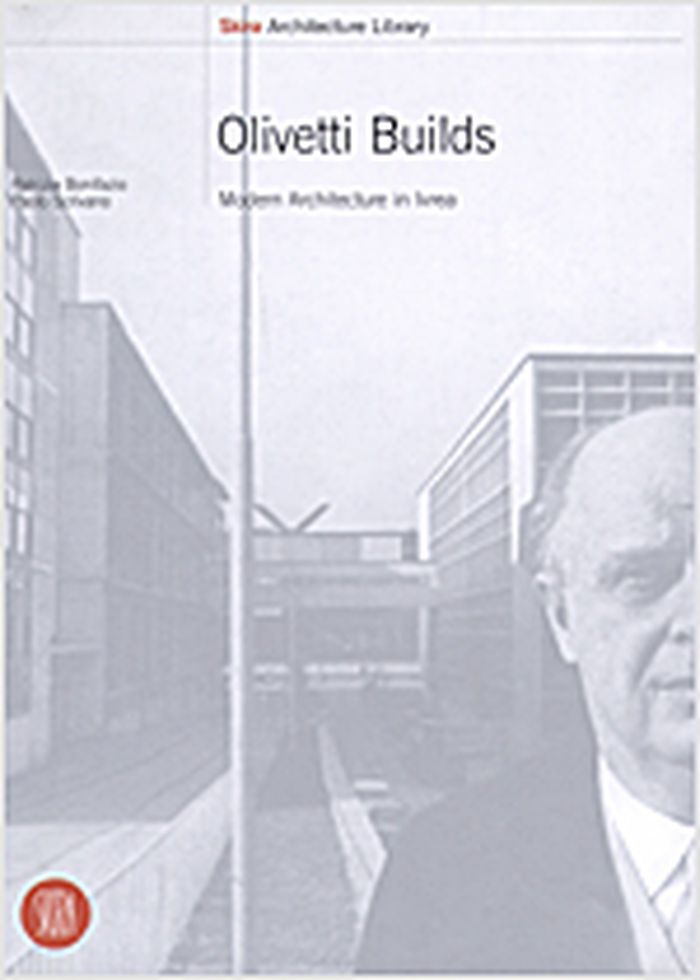
Olivetti builds : modern architecture in Ivrea
Actions:
Prix:
$27.95
(disponible sur commande)
Résumé:
Olivetti’s headquarters in Ivrea, near Turin, were designed by several leading architects of post-war Italy (Figini, Pollini, Gardella, Zanuso, Sottsass, Valle etc.) and offer an exceptional case study of the relationship between architectural culture and a leading, progressive company. This book offers a critical interpretation of the rich, unique architectural patrimony of Ivrea, seat of Olivetti’s headquarters, the most famous typewriter company in the world. A detailed catalogue of the open-air museum of modern architecture in Ivrea, the text reconstructs the events from the ’thirties to the ’fifties surrounding Adriano Olivetti and his relationship with architecture and urban planning. In the mid-thirties Adriano Olivetti began not only a renewal of industrial production, but also a long process of construction of the territory and its landscape. Beginning in 1945 Ivrea became a reference point not only for Italian intellectuals interested in constructing a new civil society, but also a mecca for architects and urban planners, who brought his ideas to life through their work. Architects such as Luigi Figini and Gino Pollini, Ignazio Gardella, Marco Zanuso, Eduardo Vittoria, Ettore Sottsass, Gino Valle, urban planners such as Giovanni Astengo, Carlo Doglio, Luigi Piccinato not only gave form to the community but also, through the individual works built in Ivrea, contributed to the complex Italian and international architectural debate.
Olivetti builds : modern architecture in Ivrea
Actions:
Prix:
$27.95
(disponible sur commande)
Résumé:
Olivetti’s headquarters in Ivrea, near Turin, were designed by several leading architects of post-war Italy (Figini, Pollini, Gardella, Zanuso, Sottsass, Valle etc.) and offer an exceptional case study of the relationship between architectural culture and a leading, progressive company. This book offers a critical interpretation of the rich, unique architectural patrimony of Ivrea, seat of Olivetti’s headquarters, the most famous typewriter company in the world. A detailed catalogue of the open-air museum of modern architecture in Ivrea, the text reconstructs the events from the ’thirties to the ’fifties surrounding Adriano Olivetti and his relationship with architecture and urban planning. In the mid-thirties Adriano Olivetti began not only a renewal of industrial production, but also a long process of construction of the territory and its landscape. Beginning in 1945 Ivrea became a reference point not only for Italian intellectuals interested in constructing a new civil society, but also a mecca for architects and urban planners, who brought his ideas to life through their work. Architects such as Luigi Figini and Gino Pollini, Ignazio Gardella, Marco Zanuso, Eduardo Vittoria, Ettore Sottsass, Gino Valle, urban planners such as Giovanni Astengo, Carlo Doglio, Luigi Piccinato not only gave form to the community but also, through the individual works built in Ivrea, contributed to the complex Italian and international architectural debate.
Classification:
livres
livres
Publication:
octobre 2000, Milano
octobre 2000, Milano


