


13794 Résultats
Classification:
livres
livres
Actions:
Prix:
$54.00
(disponible en magasin)
Résumé:
Penumbra, from the Latin paene (almost) and umbra (shadow), can be defined as an intermediate zone of transition between light and shadow. Penumbra is therefore that space, both physical and imaginary, where everything is possible: it is the place of the uncanny, where presence and/or absence can produce wonder or horror. This AD positions the presence of this(...)
$54.00
(disponible en magasin)
Résumé:
Penumbra, from the Latin paene (almost) and umbra (shadow), can be defined as an intermediate zone of transition between light and shadow. Penumbra is therefore that space, both physical and imaginary, where everything is possible: it is the place of the uncanny, where presence and/or absence can produce wonder or horror. This AD positions the presence of this(...)
Titre:
AD 93:4 In praise of penumbra
Actions:
Prix:
$54.00
(disponible en magasin)
Résumé:
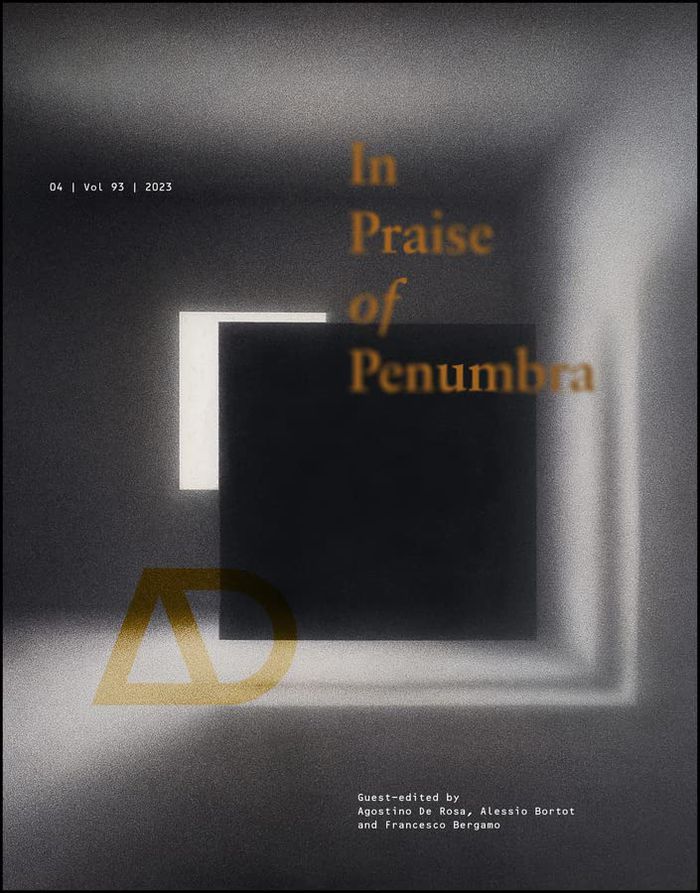
Penumbra, from the Latin paene (almost) and umbra (shadow), can be defined as an intermediate zone of transition between light and shadow. Penumbra is therefore that space, both physical and imaginary, where everything is possible: it is the place of the uncanny, where presence and/or absence can produce wonder or horror. This AD positions the presence of this archetype in the contemporary world of architecture, investigating the ways it permeates different expressive forms – from critical theory to architectural drawing, from design and planning to photography. The contributors illustrate and discuss how penumbra has shaped their creativity and modified their approach to the design process. As a physical phenomenon, penumbra has supra-historical and global connotations; nonetheless, different cultures elaborate its symbolism in different ways. Its wide semantic spectrum powerfully inspires creative forms that hover between fullness and emptiness, presence and absence, past and future. The critical perspectives in this issue offer a wide analysis of penumbra’s expressive potential and the key to an in-depth understanding of this elusive layer of reality.
AD 93:4 In praise of penumbra
Actions:
Prix:
$54.00
(disponible en magasin)
Résumé:
Penumbra, from the Latin paene (almost) and umbra (shadow), can be defined as an intermediate zone of transition between light and shadow. Penumbra is therefore that space, both physical and imaginary, where everything is possible: it is the place of the uncanny, where presence and/or absence can produce wonder or horror. This AD positions the presence of this archetype in the contemporary world of architecture, investigating the ways it permeates different expressive forms – from critical theory to architectural drawing, from design and planning to photography. The contributors illustrate and discuss how penumbra has shaped their creativity and modified their approach to the design process. As a physical phenomenon, penumbra has supra-historical and global connotations; nonetheless, different cultures elaborate its symbolism in different ways. Its wide semantic spectrum powerfully inspires creative forms that hover between fullness and emptiness, presence and absence, past and future. The critical perspectives in this issue offer a wide analysis of penumbra’s expressive potential and the key to an in-depth understanding of this elusive layer of reality.
Classification:
livres
livres
Publication:
juillet 2023
juillet 2023
Sujet:
Revues
Revues
Classification:
livres
livres
Actions:
Prix:
$39.95
(disponible sur commande)
Résumé:
Since the early twentieth century, contemporary art and art theory have creatively challenged the status of representation. During that time, the court of law has come to rely on a variety of new representational modes and technologies. The law is increasingly staged on a screen and the photographs, video documents, audio recordings used as evidence are not entirely(...)
$39.95
(disponible sur commande)
Résumé:
Since the early twentieth century, contemporary art and art theory have creatively challenged the status of representation. During that time, the court of law has come to rely on a variety of new representational modes and technologies. The law is increasingly staged on a screen and the photographs, video documents, audio recordings used as evidence are not entirely(...)
Publication:
janvier 2012
janvier 2012
Titre:
A thousand eyes: media technology, law and esthetics
Actions:
Prix:
$39.95
(disponible sur commande)
Résumé:
Since the early twentieth century, contemporary art and art theory have creatively challenged the status of representation. During that time, the court of law has come to rely on a variety of new representational modes and technologies. The law is increasingly staged on a screen and the photographs, video documents, audio recordings used as evidence are not entirely distinct from their correlates in contemporary art, cinema and mass media. What questions of representation, judgment and justice cross borders between art and the law? Through the contribution of internationally renowned artists and scholars, this anthology explores how the aesthetics of new media technology and its spatial implementations affect the judicial system in relation to fundamental concepts such as truth and representation. Artistic contributions by John Baldessari, Dan Graham, Harun Farocki, Stan Douglas, Aernout Mik, Agency, Judy Radul, Renzo Martens, Ana Torfs, The Atlas Group, René Magritte, Model Court, Rana Hamadeh, Thomas Demand, Les Levine Essays by Julie A. Cassiday, Costas Douzinas, Piyel Haldar, Martin Jay, Peter Goodrich, Richard Mohr, Judy Radul, Avital Ronell, Eyal Sivan, Cornelia Vismann
A thousand eyes: media technology, law and esthetics
Actions:
Prix:
$39.95
(disponible sur commande)
Résumé:
Since the early twentieth century, contemporary art and art theory have creatively challenged the status of representation. During that time, the court of law has come to rely on a variety of new representational modes and technologies. The law is increasingly staged on a screen and the photographs, video documents, audio recordings used as evidence are not entirely distinct from their correlates in contemporary art, cinema and mass media. What questions of representation, judgment and justice cross borders between art and the law? Through the contribution of internationally renowned artists and scholars, this anthology explores how the aesthetics of new media technology and its spatial implementations affect the judicial system in relation to fundamental concepts such as truth and representation. Artistic contributions by John Baldessari, Dan Graham, Harun Farocki, Stan Douglas, Aernout Mik, Agency, Judy Radul, Renzo Martens, Ana Torfs, The Atlas Group, René Magritte, Model Court, Rana Hamadeh, Thomas Demand, Les Levine Essays by Julie A. Cassiday, Costas Douzinas, Piyel Haldar, Martin Jay, Peter Goodrich, Richard Mohr, Judy Radul, Avital Ronell, Eyal Sivan, Cornelia Vismann
Classification:
livres
livres
Publication:
janvier 2012
janvier 2012
Classification:
périodiques
périodiques
Actions:
Prix:
$24.00
(disponible sur commande)
Résumé:
Issue 85 of Texte zur Kunst is dedicated to art historiography. This is now the third time that we seek to shed light on the methods and principles of this humane discipline, the discourses of which form the crucial foundation of our magazine. While the 1994 issue under the heading “Art History Under Construction” put the import of theories from the Anglo-American(...)
$24.00
(disponible sur commande)
Résumé:
Issue 85 of Texte zur Kunst is dedicated to art historiography. This is now the third time that we seek to shed light on the methods and principles of this humane discipline, the discourses of which form the crucial foundation of our magazine. While the 1994 issue under the heading “Art History Under Construction” put the import of theories from the Anglo-American(...)
Titre:
Texte zur Kunst 85: Art History revisited
Actions:
Prix:
$24.00
(disponible sur commande)
Résumé:
Issue 85 of Texte zur Kunst is dedicated to art historiography. This is now the third time that we seek to shed light on the methods and principles of this humane discipline, the discourses of which form the crucial foundation of our magazine. While the 1994 issue under the heading “Art History Under Construction” put the import of theories from the Anglo-American countries to Germany up for debate, an issue from 2006 was concerned with reflecting on the state of affairs of a discipline that at the time was extremely influenced by visual studies and an increasing enthusiasm for “contemporary art”. The current issue, in contrast, focuses on the norms to which historiography is subjected and the effects produced by its view to the past. In seven essays, common art-historical paradigms are called into question and examined a new perspective. Established academic notions are revised on the one hand; while selected themes are taken up to elucidate the principles of knowledge and theory production on the other.
Texte zur Kunst 85: Art History revisited
Actions:
Prix:
$24.00
(disponible sur commande)
Résumé:
Issue 85 of Texte zur Kunst is dedicated to art historiography. This is now the third time that we seek to shed light on the methods and principles of this humane discipline, the discourses of which form the crucial foundation of our magazine. While the 1994 issue under the heading “Art History Under Construction” put the import of theories from the Anglo-American countries to Germany up for debate, an issue from 2006 was concerned with reflecting on the state of affairs of a discipline that at the time was extremely influenced by visual studies and an increasing enthusiasm for “contemporary art”. The current issue, in contrast, focuses on the norms to which historiography is subjected and the effects produced by its view to the past. In seven essays, common art-historical paradigms are called into question and examined a new perspective. Established academic notions are revised on the one hand; while selected themes are taken up to elucidate the principles of knowledge and theory production on the other.
Classification:
périodiques
périodiques
Publication:
mars 2012
mars 2012
Sujet:
Revues
Revues
Classification:
livres
livres
Actions:
Prix:
$59.95
(disponible sur commande)
Résumé:
The Spanish architect Rafael Moneo has won numerous awards (including the prestigious Pritzker Architecture Prize), yet this publication is the first to offer a critical study of his career as a whole—not only his many built works and projects but also his contributions to teaching and his writings. The book begins with a comprehensive biography, covering Moneo’s(...)
$59.95
(disponible sur commande)
Résumé:
The Spanish architect Rafael Moneo has won numerous awards (including the prestigious Pritzker Architecture Prize), yet this publication is the first to offer a critical study of his career as a whole—not only his many built works and projects but also his contributions to teaching and his writings. The book begins with a comprehensive biography, covering Moneo’s(...)
Sujet:
Architecture, monographies
Architecture, monographies
Publication:
juin 2015
juin 2015
Titre:
Rafael Moneo: building, teaching, writing
Actions:
Prix:
$59.95
(disponible sur commande)
Résumé:
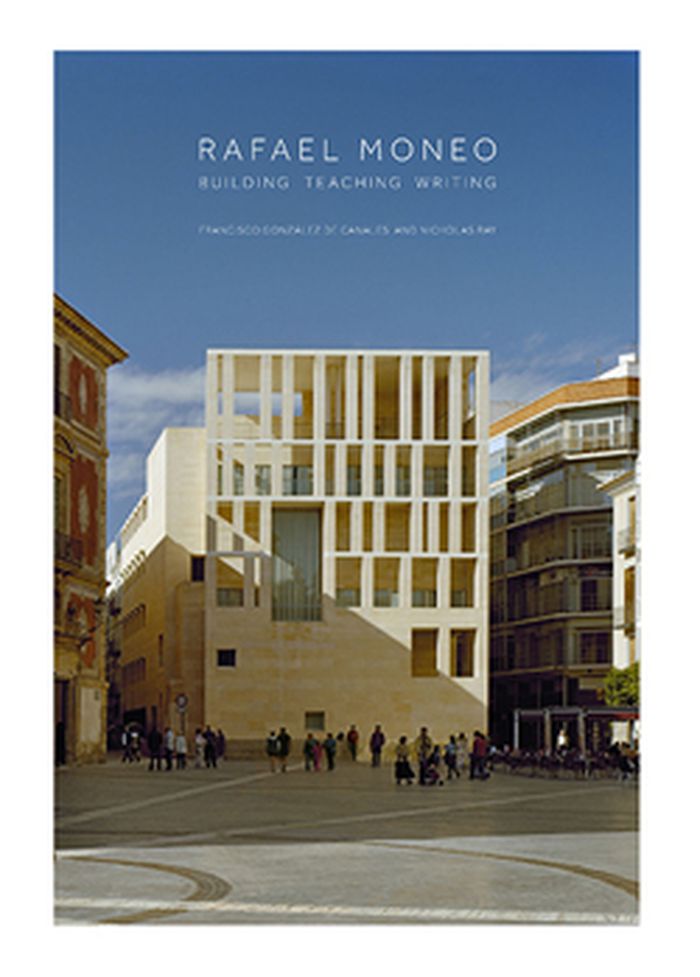
The Spanish architect Rafael Moneo has won numerous awards (including the prestigious Pritzker Architecture Prize), yet this publication is the first to offer a critical study of his career as a whole—not only his many built works and projects but also his contributions to teaching and his writings. The book begins with a comprehensive biography, covering Moneo’s education, teaching appointments, and encounters with historians and architects in Europe and the United States, such as Peter Eisenman, Jørn Utzon, and Bruno Zevi. Also included is a discussion of some of the buildings that he has designed, notably the Prado Museum extension and Atocha Station in Madrid. The following section examines in more detail seven key buildings chosen to illustrate crucial developments in Moneo’s thinking, from the Bankinter, Madrid, to the Cathedral of Our Lady of the Angels, Los Angeles. The last a section considers his architectural philosophy: his design approach, his idea of the canon, his theory of composition, his notion of form, and his confrontation with reality—in construction and context.
Rafael Moneo: building, teaching, writing
Actions:
Prix:
$59.95
(disponible sur commande)
Résumé:
The Spanish architect Rafael Moneo has won numerous awards (including the prestigious Pritzker Architecture Prize), yet this publication is the first to offer a critical study of his career as a whole—not only his many built works and projects but also his contributions to teaching and his writings. The book begins with a comprehensive biography, covering Moneo’s education, teaching appointments, and encounters with historians and architects in Europe and the United States, such as Peter Eisenman, Jørn Utzon, and Bruno Zevi. Also included is a discussion of some of the buildings that he has designed, notably the Prado Museum extension and Atocha Station in Madrid. The following section examines in more detail seven key buildings chosen to illustrate crucial developments in Moneo’s thinking, from the Bankinter, Madrid, to the Cathedral of Our Lady of the Angels, Los Angeles. The last a section considers his architectural philosophy: his design approach, his idea of the canon, his theory of composition, his notion of form, and his confrontation with reality—in construction and context.
Classification:
livres
livres
Publication:
juin 2015
juin 2015
Sujet:
Architecture, monographies
Architecture, monographies
Classification:
périodiques
périodiques
Actions:
Prix:
$35.00
(disponible sur commande)
Résumé:
OASE 90 investigates the expectation behind existing value models in architecture. Many problems in today’s architecture world would vanish if every once in a while it was clearer what is meant by good architecture. The ‘crisis of criticism’, for instance, is a symptom of the impossibility of knowing (or daring to know) what good architecture is. Over the past century,(...)
$35.00
(disponible sur commande)
Résumé:
OASE 90 investigates the expectation behind existing value models in architecture. Many problems in today’s architecture world would vanish if every once in a while it was clearer what is meant by good architecture. The ‘crisis of criticism’, for instance, is a symptom of the impossibility of knowing (or daring to know) what good architecture is. Over the past century,(...)
Titre:
OASE 90: What is good architecture?
Actions:
Prix:
$35.00
(disponible sur commande)
Résumé:
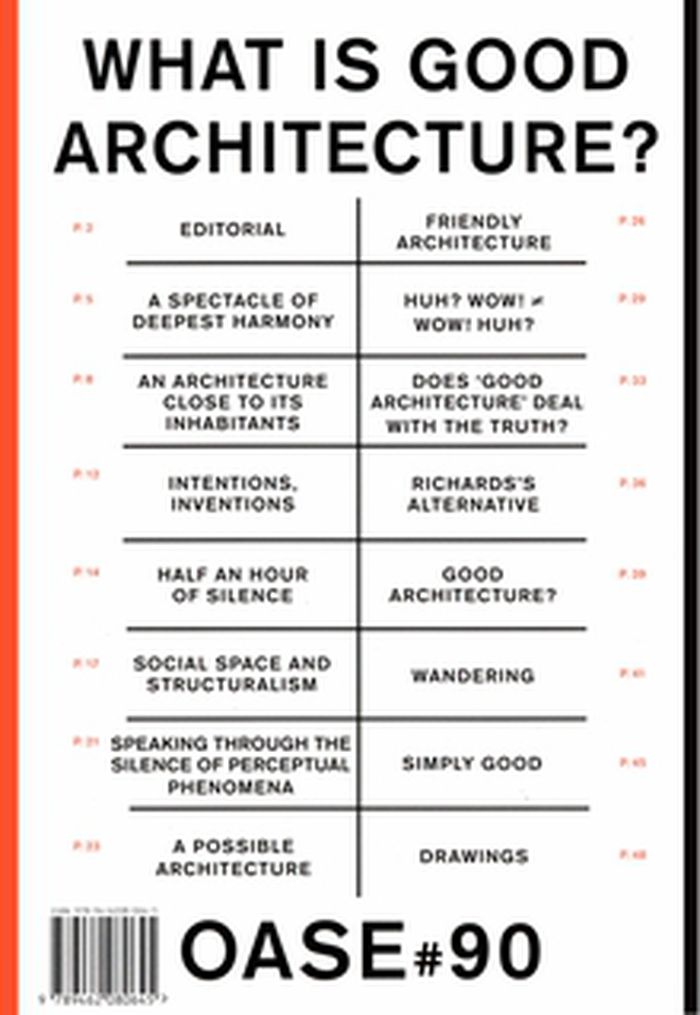
OASE 90 investigates the expectation behind existing value models in architecture. Many problems in today’s architecture world would vanish if every once in a while it was clearer what is meant by good architecture. The ‘crisis of criticism’, for instance, is a symptom of the impossibility of knowing (or daring to know) what good architecture is. Over the past century, models for architecture evaluation such as modernism and postmodernism have been modified by supermodernism and retromodernism, and more recently by sustainability. Nevertheless, it is impossible to work with architecture – in design, theory or history – without making assumptions about criteria for quality. This issue uncovers and makes explicit the assumptions underlying these models, by posing the simple question ‘What is good architecture?’ in different ways and have it answered by people whose ‘main occupation’ is architecture. This issue of OASE can be like a banquet at which each guest selects something entirely different from the menu in a well-reasoned and forthright way – and so keeps the architecture party going.
OASE 90: What is good architecture?
Actions:
Prix:
$35.00
(disponible sur commande)
Résumé:
OASE 90 investigates the expectation behind existing value models in architecture. Many problems in today’s architecture world would vanish if every once in a while it was clearer what is meant by good architecture. The ‘crisis of criticism’, for instance, is a symptom of the impossibility of knowing (or daring to know) what good architecture is. Over the past century, models for architecture evaluation such as modernism and postmodernism have been modified by supermodernism and retromodernism, and more recently by sustainability. Nevertheless, it is impossible to work with architecture – in design, theory or history – without making assumptions about criteria for quality. This issue uncovers and makes explicit the assumptions underlying these models, by posing the simple question ‘What is good architecture?’ in different ways and have it answered by people whose ‘main occupation’ is architecture. This issue of OASE can be like a banquet at which each guest selects something entirely different from the menu in a well-reasoned and forthright way – and so keeps the architecture party going.
Classification:
périodiques
périodiques
Publication:
août 2013
août 2013
Sujet:
Revues
Revues
Classification:
livres
livres
Actions:
Prix:
$74.95
(disponible en magasin)
Résumé:
By structuring this volume around the concept of form, Stefano Corbo links together Eisenman’s architecture with his theory. The book argues that form is the sphere of mediation between our body, our inner world and the exterior world and, as such, it enables connections to be made between philosophy and architecture. From the start of his career on, Eisenman has been(...)
$74.95
(disponible en magasin)
Résumé:
By structuring this volume around the concept of form, Stefano Corbo links together Eisenman’s architecture with his theory. The book argues that form is the sphere of mediation between our body, our inner world and the exterior world and, as such, it enables connections to be made between philosophy and architecture. From the start of his career on, Eisenman has been(...)
Titre:
From formalism to weak form: The architecture and philosophy of Peter Eisenman
Actions:
Prix:
$74.95
(disponible en magasin)
Résumé:
By structuring this volume around the concept of form, Stefano Corbo links together Eisenman’s architecture with his theory. The book argues that form is the sphere of mediation between our body, our inner world and the exterior world and, as such, it enables connections to be made between philosophy and architecture. From the start of his career on, Eisenman has been deeply interested in the problem of form in architecture and has constantly challenged the classical concept of it. For him, form is not simply a cognitive tool that determines a physical structure, which discriminates all that is active from what is passive, what is inside from what is outside. He has always tried to connect his own work with the cultural manifestations of the time. These different moments underline different phases, different projects, different programmatic manifestos; and above all, an evolving notion of form. Taking a multi-disciplinary approach based on the intersections between architecture and philosophy, this book investigates all these definitions and, in doing so, provides new insights into and a deeper understanding of the complexity of Eisenman’s work.
From formalism to weak form: The architecture and philosophy of Peter Eisenman
Actions:
Prix:
$74.95
(disponible en magasin)
Résumé:
By structuring this volume around the concept of form, Stefano Corbo links together Eisenman’s architecture with his theory. The book argues that form is the sphere of mediation between our body, our inner world and the exterior world and, as such, it enables connections to be made between philosophy and architecture. From the start of his career on, Eisenman has been deeply interested in the problem of form in architecture and has constantly challenged the classical concept of it. For him, form is not simply a cognitive tool that determines a physical structure, which discriminates all that is active from what is passive, what is inside from what is outside. He has always tried to connect his own work with the cultural manifestations of the time. These different moments underline different phases, different projects, different programmatic manifestos; and above all, an evolving notion of form. Taking a multi-disciplinary approach based on the intersections between architecture and philosophy, this book investigates all these definitions and, in doing so, provides new insights into and a deeper understanding of the complexity of Eisenman’s work.
Classification:
livres
livres
Publication:
décembre 2020
décembre 2020
Sujet:
Architecture, monographies
Architecture, monographies
Classification:
livres
livres
Titre:
The phantom scientist
The phantom scientist
Actions:
Prix:
$33.95
(disponible sur commande)
Résumé:
An isolated institute laid out in a Fibonacci sequence, hidden deep in the forest. Twenty-four labs. Twenty-four researchers. Until one of them disappears . . . When physicist Stéphane Douasy arrives to occupy the vacant twenty-fourth lab at the Institute for the Study of Complex and Dynamic Systems, an ominous problem rises in his wake: what has happened to his(...)
$33.95
(disponible sur commande)
Résumé:
An isolated institute laid out in a Fibonacci sequence, hidden deep in the forest. Twenty-four labs. Twenty-four researchers. Until one of them disappears . . . When physicist Stéphane Douasy arrives to occupy the vacant twenty-fourth lab at the Institute for the Study of Complex and Dynamic Systems, an ominous problem rises in his wake: what has happened to his(...)
Titre:
The phantom scientist
Actions:
Prix:
$33.95
(disponible sur commande)
Résumé:
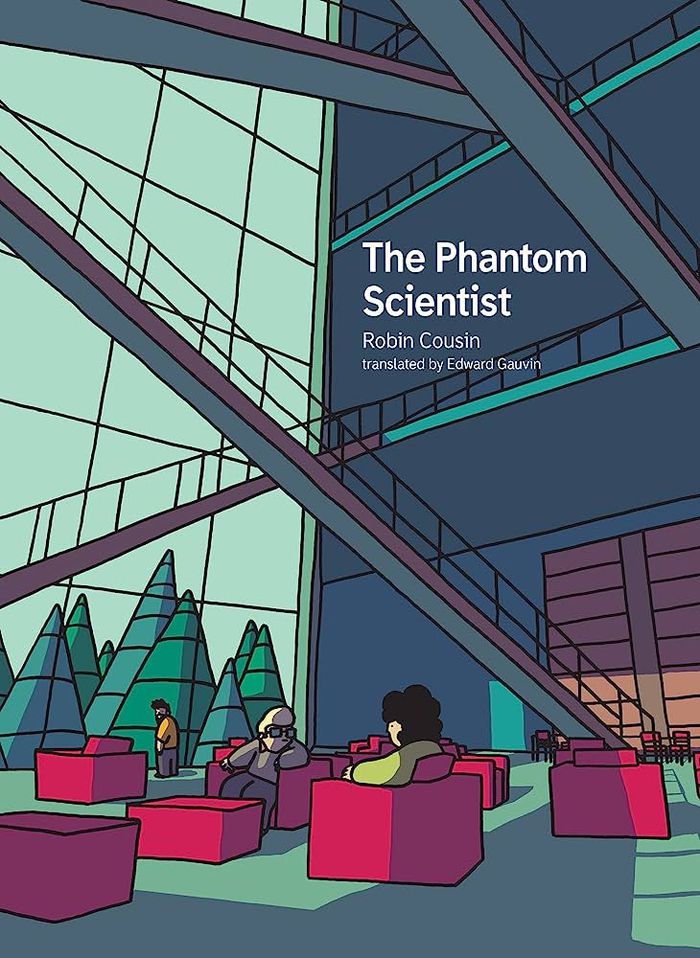
An isolated institute laid out in a Fibonacci sequence, hidden deep in the forest. Twenty-four labs. Twenty-four researchers. Until one of them disappears . . . When physicist Stéphane Douasy arrives to occupy the vacant twenty-fourth lab at the Institute for the Study of Complex and Dynamic Systems, an ominous problem rises in his wake: what has happened to his missing neighbor in Building F? When Stéphane’s neighbors, a discouraged linguist and a computer scientist bent on predicting the future, discover that the missing researcher may have solved the P versus NP problem—a coup in computer science with revolutionary implications for everything from mathematics to philosophy—before vanishing, things turn stranger still, and even more menacing. Solving the mystery of the Institute and its devolution into mayhem and violence every seventh year quickly shifts from being an intellectual exercise to a matter of life and death. ''The phantom scientist'' is part thriller, part mystery, part systems theory—and all enthralling. The tale slyly draws together linguistics, biology, astrophysics, and robotics in a mind-bending puzzle that will thrill and inform readers.
The phantom scientist
Actions:
Prix:
$33.95
(disponible sur commande)
Résumé:
An isolated institute laid out in a Fibonacci sequence, hidden deep in the forest. Twenty-four labs. Twenty-four researchers. Until one of them disappears . . . When physicist Stéphane Douasy arrives to occupy the vacant twenty-fourth lab at the Institute for the Study of Complex and Dynamic Systems, an ominous problem rises in his wake: what has happened to his missing neighbor in Building F? When Stéphane’s neighbors, a discouraged linguist and a computer scientist bent on predicting the future, discover that the missing researcher may have solved the P versus NP problem—a coup in computer science with revolutionary implications for everything from mathematics to philosophy—before vanishing, things turn stranger still, and even more menacing. Solving the mystery of the Institute and its devolution into mayhem and violence every seventh year quickly shifts from being an intellectual exercise to a matter of life and death. ''The phantom scientist'' is part thriller, part mystery, part systems theory—and all enthralling. The tale slyly draws together linguistics, biology, astrophysics, and robotics in a mind-bending puzzle that will thrill and inform readers.
Classification:
livres
livres
Publication:
février 2023
février 2023
Sujet:
Illustration
Illustration
Classification:
livres
livres
Actions:
Prix:
$95.00
(disponible sur commande)
Résumé:
This new book by Labics, one of Italy’s leading architectural firms, is devoted to the country’s architecture of public space. Squares, galleries, loggias, porticoes, and courtyards are the elements that characterize Italy’s historic towns and cities—and that make the experience of these public spaces intense and attractive. Labics sets out to explore these enchanting(...)
$95.00
(disponible sur commande)
Résumé:
This new book by Labics, one of Italy’s leading architectural firms, is devoted to the country’s architecture of public space. Squares, galleries, loggias, porticoes, and courtyards are the elements that characterize Italy’s historic towns and cities—and that make the experience of these public spaces intense and attractive. Labics sets out to explore these enchanting(...)
Publication:
octobre 2023
octobre 2023
Titre:
The architecture of public space
Actions:
Prix:
$95.00
(disponible sur commande)
Résumé:
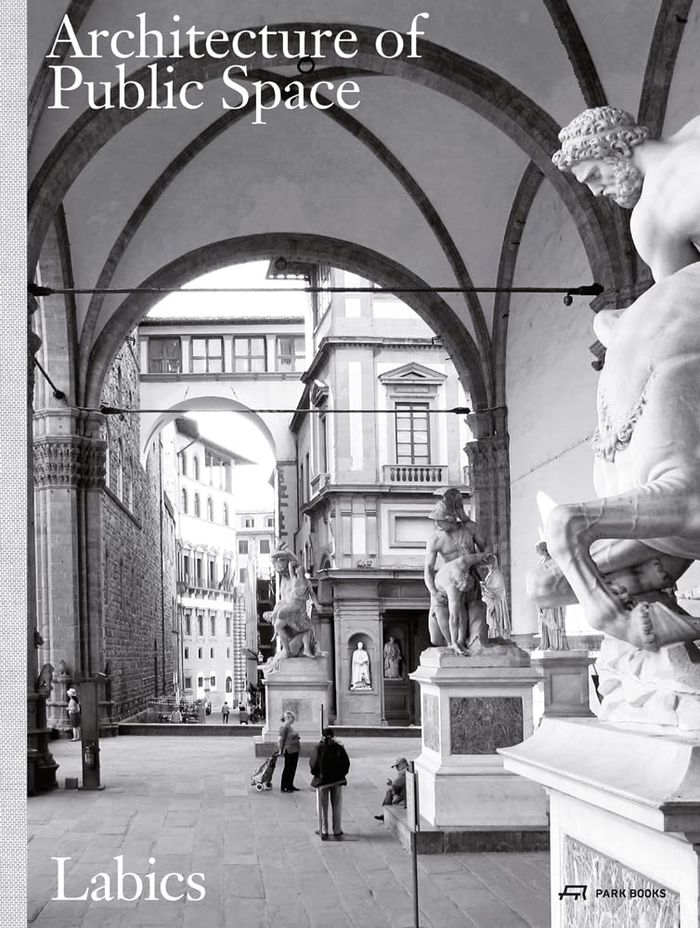
This new book by Labics, one of Italy’s leading architectural firms, is devoted to the country’s architecture of public space. Squares, galleries, loggias, porticoes, and courtyards are the elements that characterize Italy’s historic towns and cities—and that make the experience of these public spaces intense and attractive. Labics sets out to explore these enchanting spaces, to analyze their history and typologies, and to document and describe them through newly produced photographs, plans, and diagrams. They offer a taxonomy of solutions that, as a whole, forms a timeless theory for the design of public spaces. ''The architecture of public ppace'' forms a captivating collection of image material that visually decodes the characteristic core elements of Italian architecture and specifies their role in the definition of public space. The volume highlights the architectural solutions from the thirteenth to the twentieth centuries that produce the particular spatial quality of these urban structures and sets out how they were originally established for and are continuing to be used by the people.
The architecture of public space
Actions:
Prix:
$95.00
(disponible sur commande)
Résumé:
This new book by Labics, one of Italy’s leading architectural firms, is devoted to the country’s architecture of public space. Squares, galleries, loggias, porticoes, and courtyards are the elements that characterize Italy’s historic towns and cities—and that make the experience of these public spaces intense and attractive. Labics sets out to explore these enchanting spaces, to analyze their history and typologies, and to document and describe them through newly produced photographs, plans, and diagrams. They offer a taxonomy of solutions that, as a whole, forms a timeless theory for the design of public spaces. ''The architecture of public ppace'' forms a captivating collection of image material that visually decodes the characteristic core elements of Italian architecture and specifies their role in the definition of public space. The volume highlights the architectural solutions from the thirteenth to the twentieth centuries that produce the particular spatial quality of these urban structures and sets out how they were originally established for and are continuing to be used by the people.
Classification:
livres
livres
Publication:
octobre 2023
octobre 2023
Classification:
livres
livres
Prix:
$35.95
(disponible sur commande)
Résumé:
The city is one of the greatest unsung heroes in cinema -- a modernist inspiration for silent classics such as Metropolis (1926) and a dense urban jungle in The Matrix (1999) -- yet there have been few attempts to grasp the cultural and aesthetic nature of its role in film. This volume is an ambitious collection of writings and photo-essays discussing this complex yet(...)
$35.95
(disponible sur commande)
Résumé:
The city is one of the greatest unsung heroes in cinema -- a modernist inspiration for silent classics such as Metropolis (1926) and a dense urban jungle in The Matrix (1999) -- yet there have been few attempts to grasp the cultural and aesthetic nature of its role in film. This volume is an ambitious collection of writings and photo-essays discussing this complex yet(...)
Publication:
août 2008, London, New York
août 2008, London, New York
Titre:
Cities in transition: the moving image and the modern metropolis
Actions:
Prix:
$35.95
(disponible sur commande)
Résumé:
The city is one of the greatest unsung heroes in cinema -- a modernist inspiration for silent classics such as Metropolis (1926) and a dense urban jungle in The Matrix (1999) -- yet there have been few attempts to grasp the cultural and aesthetic nature of its role in film. This volume is an ambitious collection of writings and photo-essays discussing this complex yet enduring relationship, and how early cinema, digital technology and changing urban geographies have all impacted upon notions and representations of the modern city. Amongst the films discussed are Peeping Tom (1960), Performance (1970), Sans Soleil (1983) and Amores perros (2000). Contributions come from the fields of film studies, cultural theory, architecture and design, as well as filmmakers Patrick Keiller and Chris Petit. Andrew Webber is Reader in Modern German and Comparative Culture at Churchill College, University of Cambridge. He is the author of The European Avant-garde (2004). Emma Wilson is Reader in Contemporary French Literature and Film at Corpus Christi College, University of Cambridge. She is the author of Cinema's Missing Children (2003) and Alain Resnais (2006).
Cities in transition: the moving image and the modern metropolis
Actions:
Prix:
$35.95
(disponible sur commande)
Résumé:
The city is one of the greatest unsung heroes in cinema -- a modernist inspiration for silent classics such as Metropolis (1926) and a dense urban jungle in The Matrix (1999) -- yet there have been few attempts to grasp the cultural and aesthetic nature of its role in film. This volume is an ambitious collection of writings and photo-essays discussing this complex yet enduring relationship, and how early cinema, digital technology and changing urban geographies have all impacted upon notions and representations of the modern city. Amongst the films discussed are Peeping Tom (1960), Performance (1970), Sans Soleil (1983) and Amores perros (2000). Contributions come from the fields of film studies, cultural theory, architecture and design, as well as filmmakers Patrick Keiller and Chris Petit. Andrew Webber is Reader in Modern German and Comparative Culture at Churchill College, University of Cambridge. He is the author of The European Avant-garde (2004). Emma Wilson is Reader in Contemporary French Literature and Film at Corpus Christi College, University of Cambridge. She is the author of Cinema's Missing Children (2003) and Alain Resnais (2006).
Classification:
livres
livres
Publication:
août 2008, London, New York
août 2008, London, New York
Classification:
livres
livres
Actions:
Prix:
$85.00
(disponible sur commande)
Résumé:
Much more than a resort destination, Palm Springs has served as a laboratory of the Modern; here so much architectural innovation and design took form. From the steel-and-glass boxes of Richard Neutra to the earthy organic homes of John Lautner, and everything in between, the solutions of architects and designers—including notably William F. Cody, E. Stewart Williams, and(...)
$85.00
(disponible sur commande)
Résumé:
Much more than a resort destination, Palm Springs has served as a laboratory of the Modern; here so much architectural innovation and design took form. From the steel-and-glass boxes of Richard Neutra to the earthy organic homes of John Lautner, and everything in between, the solutions of architects and designers—including notably William F. Cody, E. Stewart Williams, and(...)
Titre:
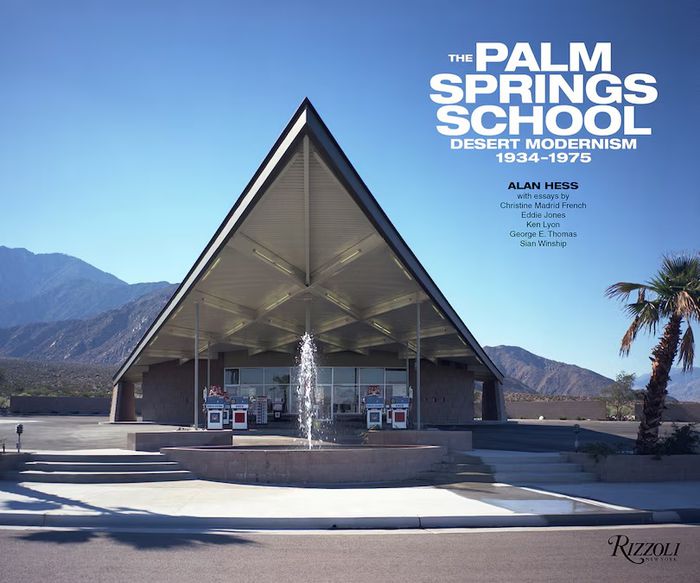
The Palm Springs School: Desert Modernism 1934-1975
Actions:
Prix:
$85.00
(disponible sur commande)
Résumé:
Much more than a resort destination, Palm Springs has served as a laboratory of the Modern; here so much architectural innovation and design took form. From the steel-and-glass boxes of Richard Neutra to the earthy organic homes of John Lautner, and everything in between, the solutions of architects and designers—including notably William F. Cody, E. Stewart Williams, and Albert Frey—were diverse and are ever more relevant in the face of contemporary challenges. Their answers addressed questions that still hold urgency: How to design sustainably in harsh climates? How to use technology efficiently and creatively to meet those challenges? How to build affordable and high-quality mass-produced housing? How to reflect a region’s culture, economy, and distinctive atmosphere? Architects here responded to nature’s climatological demands, and Palm Springs became a center for innovations that were rooted in practice more than theory. Benefitting from the architectural freedoms offered by the remoteness of the California desert, designers explored new approaches that we can now identify as central to the Palm Springs School, shown here in rich archival and contemporary photography.
The Palm Springs School: Desert Modernism 1934-1975
Actions:
Prix:
$85.00
(disponible sur commande)
Résumé:
Much more than a resort destination, Palm Springs has served as a laboratory of the Modern; here so much architectural innovation and design took form. From the steel-and-glass boxes of Richard Neutra to the earthy organic homes of John Lautner, and everything in between, the solutions of architects and designers—including notably William F. Cody, E. Stewart Williams, and Albert Frey—were diverse and are ever more relevant in the face of contemporary challenges. Their answers addressed questions that still hold urgency: How to design sustainably in harsh climates? How to use technology efficiently and creatively to meet those challenges? How to build affordable and high-quality mass-produced housing? How to reflect a region’s culture, economy, and distinctive atmosphere? Architects here responded to nature’s climatological demands, and Palm Springs became a center for innovations that were rooted in practice more than theory. Benefitting from the architectural freedoms offered by the remoteness of the California desert, designers explored new approaches that we can now identify as central to the Palm Springs School, shown here in rich archival and contemporary photography.
Classification:
livres
livres
Publication:
février 2025
février 2025
Sujet:
Modernisme
Modernisme


