


6300 Résultats
Classification:
livres
livres
Actions:
Exemplaires:
Description:
707 pages ; 19 cm.
Description:
707 pages ; 19 cm.
Auteur:
Sujet:
- Urbanization History.,
- Cities and towns Growth History.,
- Urban economics History.,
- Economic development History.,
- Cities and towns History.,
- Urban economics.,
- Urbanisation Histoire.,
- Villes Histoire.,
- Économie urbaine.,
- Villes Croissance Histoire.,
- Économie urbaine Histoire.,
- Développement économique Histoire.,
- Cities and towns,
- Cities and towns Growth,
- Economic development,
- Urbanization,
- Urbanisatie.,
- Stedelijke economie.,
- history.,
- urbanization.,
- economic and social development.,
- industrialization.,
- rural migration.,
- urban area.,
- economic implication.,
- social implication.,
- living conditions.,
- employment.,
- colonialism.,
- agricultural development.,
- ILO mentioned.,
- Economie urbaine Histoire.,
- histoire.,
- urbanisation.,
- développement économique et social.,
- industrialisation.,
- migration rurale.,
- zone urbaine.,
- conséquences économiques.,
- conséquences sociales.,
- conditions de vie.,
- emploi.,
- colonialisme.,
- développement agricole.,
- OIT mentionné,
- historia.,
- urbanización.,
- desarrollo económico y social.,
- industrialización.,
- migración rural.,
- zona urbana.,
- consecuencias económicas.,
- consecuencias sociales.,
- condiciones de vida.,
- empleo.,
- colonialismo.,
- desarrollo agrícola.,
- mención de la OIT.,
- developed countries.,
- developing countries.,
- Europe.,
- pays développés.,
- pays en développement.,
- países desarrollados.,
- países en desarrollo.,
- Europa.,
- History,
- bibliography.,
- bibliographie.,
- bibliografía.
Publication:
[Paris] : Gallimard, ©1985.
[Paris] : Gallimard, ©1985.
Titre:
De Jéricho à Mexico : villes et économie dans l'histoire / Paul Bairoch.
Actions:
Exemplaires:
Description:
707 pages ; 19 cm.
De Jéricho à Mexico : villes et économie dans l'histoire / Paul Bairoch.
Actions:
Exemplaires:
Description:
707 pages ; 19 cm.
Classification:
livres
livres
Publication:
[Paris] : Gallimard, ©1985.
[Paris] : Gallimard, ©1985.
Auteur:
Sujet:
- Urbanization History.,
- Cities and towns Growth History.,
- Urban economics History.,
- Economic development History.,
- Cities and towns History.,
- Urban economics.,
- Urbanisation Histoire.,
- Villes Histoire.,
- Économie urbaine.,
- Villes Croissance Histoire.,
- Économie urbaine Histoire.,
- Développement économique Histoire.,
- Cities and towns,
- Cities and towns Growth,
- Economic development,
- Urbanization,
- Urbanisatie.,
- Stedelijke economie.,
- history.,
- urbanization.,
- economic and social development.,
- industrialization.,
- rural migration.,
- urban area.,
- economic implication.,
- social implication.,
- living conditions.,
- employment.,
- colonialism.,
- agricultural development.,
- ILO mentioned.,
- Economie urbaine Histoire.,
- histoire.,
- urbanisation.,
- développement économique et social.,
- industrialisation.,
- migration rurale.,
- zone urbaine.,
- conséquences économiques.,
- conséquences sociales.,
- conditions de vie.,
- emploi.,
- colonialisme.,
- développement agricole.,
- OIT mentionné,
- historia.,
- urbanización.,
- desarrollo económico y social.,
- industrialización.,
- migración rural.,
- zona urbana.,
- consecuencias económicas.,
- consecuencias sociales.,
- condiciones de vida.,
- empleo.,
- colonialismo.,
- desarrollo agrícola.,
- mención de la OIT.,
- developed countries.,
- developing countries.,
- Europe.,
- pays développés.,
- pays en développement.,
- países desarrollados.,
- países en desarrollo.,
- Europa.,
- History,
- bibliography.,
- bibliographie.,
- bibliografía.
Classification:
livres
livres
Actions:
Exemplaires:
Description:
208 pages : color illustrations ; 24 cm
Description:
208 pages : color illustrations ; 24 cm
Auteur:
Sujet:
- Bamboo construction.,
- Bamboo.,
- Bamboo work.,
- Bamboo furniture.,
- Building materials.,
- Construction Materials,
- Construction en bambou.,
- Bambou.,
- Travail du bambou.,
- Meubles en bambou.,
- Construction Matériaux.,
- bambooware (porcelain ware),
- building materials.,
- bamboo (plant),
- Architecture and Planning.
Publication:
Naarden, Netherlands : Materia Exhibitions B.V., [2017], ©2017
Naarden, Netherlands : Materia Exhibitions B.V., [2017], ©2017
Titre:
Booming bamboo : the (re)discovery of a sustainable material with endless possibilities / Pablo van der Lugt.
Actions:
Exemplaires:
Description:
208 pages : color illustrations ; 24 cm
Booming bamboo : the (re)discovery of a sustainable material with endless possibilities / Pablo van der Lugt.
Actions:
Exemplaires:
Description:
208 pages : color illustrations ; 24 cm
Classification:
livres
livres
Publication:
Naarden, Netherlands : Materia Exhibitions B.V., [2017], ©2017
Naarden, Netherlands : Materia Exhibitions B.V., [2017], ©2017
Auteur:
Sujet:
- Bamboo construction.,
- Bamboo.,
- Bamboo work.,
- Bamboo furniture.,
- Building materials.,
- Construction Materials,
- Construction en bambou.,
- Bambou.,
- Travail du bambou.,
- Meubles en bambou.,
- Construction Matériaux.,
- bambooware (porcelain ware),
- building materials.,
- bamboo (plant),
- Architecture and Planning.
Classification:
livres
livres
Actions:
Exemplaires:
Description:
x, 321 pages : illustrations ; 25 cm.
Description:
x, 321 pages : illustrations ; 25 cm.
Auteur:
- Harry W. Richardson and Chang-Hee Christine Bae -- Gill-Chin Lim -- Sanjoy Chakravorty -- Om Prakash Mathur -- Sang-Chuel Choe -- Ernesto M. Pernia and Philipinas F. Quising -- Christopher Silver -- Hermanus S. Geyer -- Hamilton Tolosa -- Boris Graizbord, Allison Rowland and Adrian Guillermo Aguilar -- Alan Gilbert -- Chang-Hee Christine Bae -- Harry W. Richardson and Peter Gordon -- Nathaniel S. Trumbull -- Andre Sorensen -- Jianming Cai and Victor F. S. Sit -- Syed Ayub Qutub -- Jungyul Sohn, Tschangho John Kim and Geoffrey J. D. Hewings -- Peter J. Marcotullio, Sarah Rothenberg and Miri Nakahara -- Mike Jenks.,
- Richardson, Harry W., 1938-,
- Bae, Chang-Hee Christine,
Sujet:
- City planning Economic aspects Congresses.,
- Community development, Urban Economic aspects Congresses.,
- Urban economics Congresses.,
- Globalization Congresses.,
- Urbanisme Aspect économique Congrès.,
- Développement communautaire urbain Aspect économique Congrès.,
- Économie urbaine Congrès.,
- Mondialisation Congrès.,
- Mondialisation.,
- Développement urbain.,
- Décentralisation.,
- Ressources économiques.,
- Développement régional.,
- Industrialisation.,
- Pays développés.,
- Pays en développement.,
- Congrès.,
- City planning Economic aspects.,
- Community development, Urban Economic aspects.,
- Globalization.,
- Urban economics.,
- Stadsplanning.,
- Internationalisatie.,
- Stadsplanering.,
- Städer ekonomiska aspekter.,
- Globalisering.,
- Urban development,
- Conference papers and proceedings.
Publication:
Berlin : Springer, ©2005.
Berlin : Springer, ©2005.
Titre:
Globalization and urban development / Harry W. Richardson, Chang-Hee C. Bae, editors.
Actions:
Exemplaires:
Description:
x, 321 pages : illustrations ; 25 cm.
Globalization and urban development / Harry W. Richardson, Chang-Hee C. Bae, editors.
Actions:
Exemplaires:
Description:
x, 321 pages : illustrations ; 25 cm.
Classification:
livres
livres
Publication:
Berlin : Springer, ©2005.
Berlin : Springer, ©2005.
Auteur:
- Harry W. Richardson and Chang-Hee Christine Bae -- Gill-Chin Lim -- Sanjoy Chakravorty -- Om Prakash Mathur -- Sang-Chuel Choe -- Ernesto M. Pernia and Philipinas F. Quising -- Christopher Silver -- Hermanus S. Geyer -- Hamilton Tolosa -- Boris Graizbord, Allison Rowland and Adrian Guillermo Aguilar -- Alan Gilbert -- Chang-Hee Christine Bae -- Harry W. Richardson and Peter Gordon -- Nathaniel S. Trumbull -- Andre Sorensen -- Jianming Cai and Victor F. S. Sit -- Syed Ayub Qutub -- Jungyul Sohn, Tschangho John Kim and Geoffrey J. D. Hewings -- Peter J. Marcotullio, Sarah Rothenberg and Miri Nakahara -- Mike Jenks.,
- Richardson, Harry W., 1938-,
- Bae, Chang-Hee Christine,
Sujet:
- City planning Economic aspects Congresses.,
- Community development, Urban Economic aspects Congresses.,
- Urban economics Congresses.,
- Globalization Congresses.,
- Urbanisme Aspect économique Congrès.,
- Développement communautaire urbain Aspect économique Congrès.,
- Économie urbaine Congrès.,
- Mondialisation Congrès.,
- Mondialisation.,
- Développement urbain.,
- Décentralisation.,
- Ressources économiques.,
- Développement régional.,
- Industrialisation.,
- Pays développés.,
- Pays en développement.,
- Congrès.,
- City planning Economic aspects.,
- Community development, Urban Economic aspects.,
- Globalization.,
- Urban economics.,
- Stadsplanning.,
- Internationalisatie.,
- Stadsplanering.,
- Städer ekonomiska aspekter.,
- Globalisering.,
- Urban development,
- Conference papers and proceedings.
Classification:
livres
livres
Titre:
Barcelona grafica
Barcelona grafica
Actions:
Prix:
$87.95
(disponible sur commande)
Résumé:
In producing this book, America Sanchez has photographed and arranged some 1,825 examples of Barcelona urban graphic art: shop signs, door numbers, vignettes, allegories, emblems and pictograms which illustrate the uses of the city and make them legible. In so doing, Sanchez has rescued from anonymity a multitudinous cast of spontaneous graphic artists: sign-writers,(...)
$87.95
(disponible sur commande)
Résumé:
In producing this book, America Sanchez has photographed and arranged some 1,825 examples of Barcelona urban graphic art: shop signs, door numbers, vignettes, allegories, emblems and pictograms which illustrate the uses of the city and make them legible. In so doing, Sanchez has rescued from anonymity a multitudinous cast of spontaneous graphic artists: sign-writers,(...)
Titre:
Barcelona grafica
Actions:
Prix:
$87.95
(disponible sur commande)
Résumé:
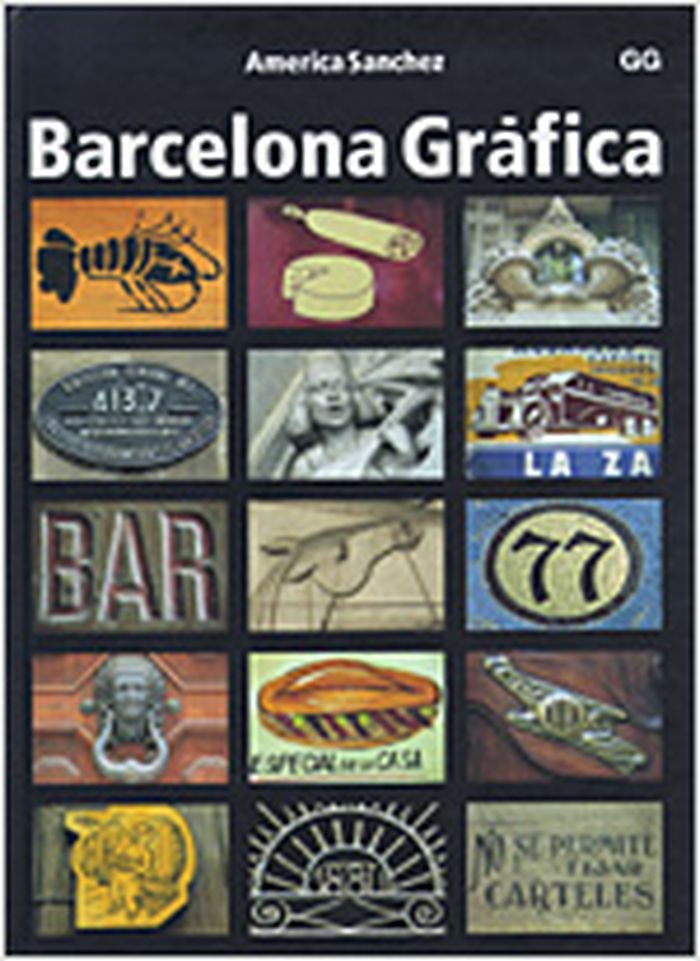
In producing this book, America Sanchez has photographed and arranged some 1,825 examples of Barcelona urban graphic art: shop signs, door numbers, vignettes, allegories, emblems and pictograms which illustrate the uses of the city and make them legible. In so doing, Sanchez has rescued from anonymity a multitudinous cast of spontaneous graphic artists: sign-writers, painters, engravers, carvers, smiths, stained-glass workers. With this, he has inaugurated a new field of study of everyday life, the main themes of which Norberto Chaves discusses in his introductory remarks to the work. A superficial gaze will find nothing here but a collection of curiosities, products of popular inventiveness. The more attentive gaze, however, will discover a genuine graphic treasure. With this book, America Sanchez makes a cultural contribution as important, if not more so, as his estimable work as a graphic designer. As a result, Barcelona can see itself in the mirror of its anonymous graphic art and thereby recoup another aspect of its enormously rich heritage. There are almost two thousand images, representing all the barrios of Barcelona, and classified in some 150 variations on seventeen major themes: the human figure, flora, fauna, figurative and abstract iconography, shields, plaques, tiles, murals, signs, captions, monograms, numbers, ornaments, ironwork. Two hundred and thirty pages and four gatefolds, arbitrarily arranged, the aim of which is to awaken the curiosity of, and to surprise, the "pedestrian". The author himself writes that: "The book is open to a wide range of readings, as a volume of photos, a graphic document of the city's heritage, or as a reference manual of graphic solutions for designers, typographers, architects and interior designers. It is also a meditation on the industrial, commercial and institutional fabric of different eras of the city". This book was originally published in 2001. The new edition includes a red fabric-covered slip-case.
Barcelona grafica
Actions:
Prix:
$87.95
(disponible sur commande)
Résumé:
In producing this book, America Sanchez has photographed and arranged some 1,825 examples of Barcelona urban graphic art: shop signs, door numbers, vignettes, allegories, emblems and pictograms which illustrate the uses of the city and make them legible. In so doing, Sanchez has rescued from anonymity a multitudinous cast of spontaneous graphic artists: sign-writers, painters, engravers, carvers, smiths, stained-glass workers. With this, he has inaugurated a new field of study of everyday life, the main themes of which Norberto Chaves discusses in his introductory remarks to the work. A superficial gaze will find nothing here but a collection of curiosities, products of popular inventiveness. The more attentive gaze, however, will discover a genuine graphic treasure. With this book, America Sanchez makes a cultural contribution as important, if not more so, as his estimable work as a graphic designer. As a result, Barcelona can see itself in the mirror of its anonymous graphic art and thereby recoup another aspect of its enormously rich heritage. There are almost two thousand images, representing all the barrios of Barcelona, and classified in some 150 variations on seventeen major themes: the human figure, flora, fauna, figurative and abstract iconography, shields, plaques, tiles, murals, signs, captions, monograms, numbers, ornaments, ironwork. Two hundred and thirty pages and four gatefolds, arbitrarily arranged, the aim of which is to awaken the curiosity of, and to surprise, the "pedestrian". The author himself writes that: "The book is open to a wide range of readings, as a volume of photos, a graphic document of the city's heritage, or as a reference manual of graphic solutions for designers, typographers, architects and interior designers. It is also a meditation on the industrial, commercial and institutional fabric of different eras of the city". This book was originally published in 2001. The new edition includes a red fabric-covered slip-case.
Classification:
livres
livres
Publication:
avril 2005, Barcelona
avril 2005, Barcelona
Classification:
livres
livres
Titre:
Sprawl : a compact history
Sprawl : a compact history
Actions:
Prix:
$34.50
(disponible sur commande)
Résumé:
As anyone who has flown into Los Angeles at dusk or Houston at midday knows, urban areas today defy traditional notions of what a city is. Our old definitions of urban, suburban, and rural fail to capture the complexity of these vast regions with their superhighways, subdivisions, industrial areas, office parks, and resort areas pushing far out into the countryside.(...)
$34.50
(disponible sur commande)
Résumé:
As anyone who has flown into Los Angeles at dusk or Houston at midday knows, urban areas today defy traditional notions of what a city is. Our old definitions of urban, suburban, and rural fail to capture the complexity of these vast regions with their superhighways, subdivisions, industrial areas, office parks, and resort areas pushing far out into the countryside.(...)
Titre:
Sprawl : a compact history
Actions:
Prix:
$34.50
(disponible sur commande)
Résumé:
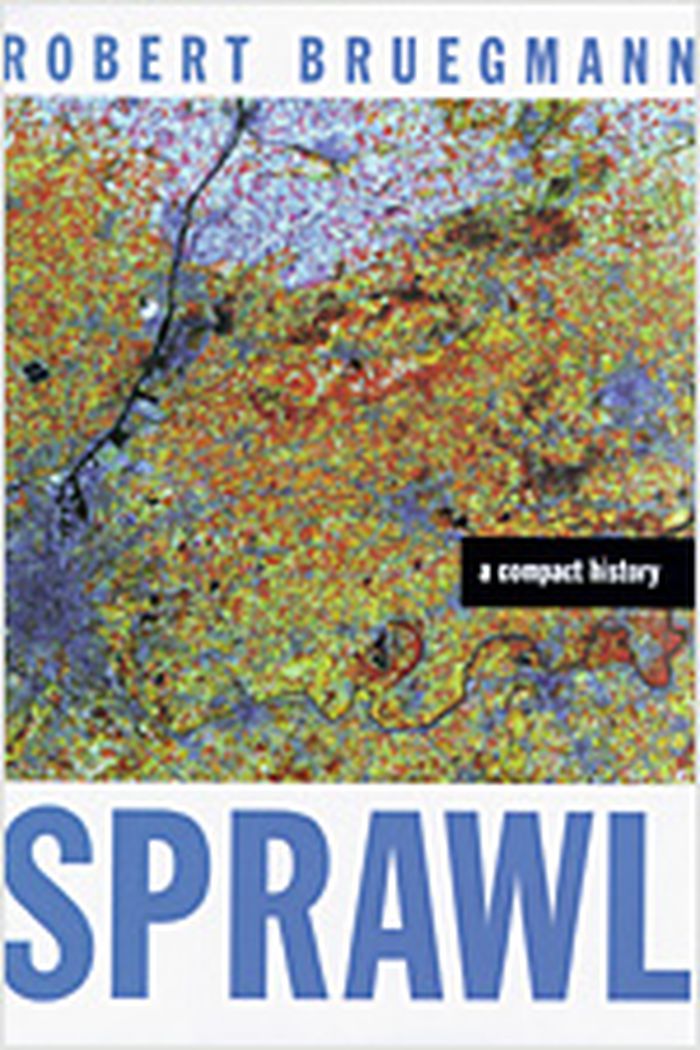
As anyone who has flown into Los Angeles at dusk or Houston at midday knows, urban areas today defy traditional notions of what a city is. Our old definitions of urban, suburban, and rural fail to capture the complexity of these vast regions with their superhighways, subdivisions, industrial areas, office parks, and resort areas pushing far out into the countryside. Detractors call it sprawl and assert that it is economically inefficient, socially inequitable, environmentally irresponsible, and aesthetically ugly. Robert Bruegmann calls it a logical consequence of economic growth and the democratization of society, with benefits that urban planners have failed to recognize. In his history of the expanded city, Bruegmann overturns every assumption we have about sprawl. Taking a long view of urban development, he demonstrates that sprawl is neither recent nor particularly American but as old as cities themselves, just as characteristic of ancient Rome and eighteenth-century Paris as it is of Atlanta or Los Angeles. Nor is sprawl the disaster claimed by many contemporary observers. Although sprawl, like any settlement pattern, has undoubtedly produced problems that must be addressed, it has also provided millions of people with the kinds of mobility, privacy, and choice that were once the exclusive prerogatives of the rich and powerful. The first major book to strip urban sprawl of its pejorative connotations, Sprawl offers a completely new vision of the city and its growth. Bruegmann leads readers to the powerful conclusion that ''in its immense complexity and constant change, the city-whether dense and concentrated at its core, looser and more sprawling in suburbia, or in the vast tracts of exurban penumbra that extend dozens, even hundreds, of miles-is the grandest and most marvelous work of mankind.''
Sprawl : a compact history
Actions:
Prix:
$34.50
(disponible sur commande)
Résumé:
As anyone who has flown into Los Angeles at dusk or Houston at midday knows, urban areas today defy traditional notions of what a city is. Our old definitions of urban, suburban, and rural fail to capture the complexity of these vast regions with their superhighways, subdivisions, industrial areas, office parks, and resort areas pushing far out into the countryside. Detractors call it sprawl and assert that it is economically inefficient, socially inequitable, environmentally irresponsible, and aesthetically ugly. Robert Bruegmann calls it a logical consequence of economic growth and the democratization of society, with benefits that urban planners have failed to recognize. In his history of the expanded city, Bruegmann overturns every assumption we have about sprawl. Taking a long view of urban development, he demonstrates that sprawl is neither recent nor particularly American but as old as cities themselves, just as characteristic of ancient Rome and eighteenth-century Paris as it is of Atlanta or Los Angeles. Nor is sprawl the disaster claimed by many contemporary observers. Although sprawl, like any settlement pattern, has undoubtedly produced problems that must be addressed, it has also provided millions of people with the kinds of mobility, privacy, and choice that were once the exclusive prerogatives of the rich and powerful. The first major book to strip urban sprawl of its pejorative connotations, Sprawl offers a completely new vision of the city and its growth. Bruegmann leads readers to the powerful conclusion that ''in its immense complexity and constant change, the city-whether dense and concentrated at its core, looser and more sprawling in suburbia, or in the vast tracts of exurban penumbra that extend dozens, even hundreds, of miles-is the grandest and most marvelous work of mankind.''
Classification:
livres
livres
Publication:
octobre 2005, Chicago, London
octobre 2005, Chicago, London
Sujet:
Théorie de l’urbanisme
Théorie de l’urbanisme
Classification:
livres
livres
Actions:
Prix:
$44.95
(disponible sur commande)
Résumé:
Essays, plans and projects by various artists,including Max Bill, Heinrich Dunst, Helmut Federle, Per Kirkeby, Katarina Fritsch, Erwin Heerich, Gerhard Merz, Gottfried Honegger, Walther Pichler, Ulrich Rückriem, Bernar Venet, Daniel Buren, Christoph Haerle, Peter Wigglesworth, Donald Judd, Markus Lüpertz, Arnulf Rainer, Richard Serra among others showing their ideas for(...)
$44.95
(disponible sur commande)
Résumé:
Essays, plans and projects by various artists,including Max Bill, Heinrich Dunst, Helmut Federle, Per Kirkeby, Katarina Fritsch, Erwin Heerich, Gerhard Merz, Gottfried Honegger, Walther Pichler, Ulrich Rückriem, Bernar Venet, Daniel Buren, Christoph Haerle, Peter Wigglesworth, Donald Judd, Markus Lüpertz, Arnulf Rainer, Richard Serra among others showing their ideas for(...)
Titre:
Museum architecture : texts and projects by artists
Actions:
Prix:
$44.95
(disponible sur commande)
Résumé:
Essays, plans and projects by various artists,including Max Bill, Heinrich Dunst, Helmut Federle, Per Kirkeby, Katarina Fritsch, Erwin Heerich, Gerhard Merz, Gottfried Honegger, Walther Pichler, Ulrich Rückriem, Bernar Venet, Daniel Buren, Christoph Haerle, Peter Wigglesworth, Donald Judd, Markus Lüpertz, Arnulf Rainer, Richard Serra among others showing their ideas for how museums should be constructed. When discussing the increasing number of museums and exhibition spaces for modern art which have come into being in recent years, the deep-seated differences of opinion between architects and artists keep coming to the fore. The discussion seems to be almost exclusively dominated by the point of view of the architect and defined by his/her interests. The needs of the art itself are being widely neglected and the voice of the artist is simply not being heard. Donald Judd, the American sculptor and minimalist artist, once noted that museums are so rarely built on functional lines these days, the trend being more towards the creation of a showpiece for the architect. Why are painters and sculptors not asked for their input? The very obvious question was addressed by the Espace de l’art concret when in 1997, it asked a number of well-known artists to come up with ideas and projects for a museum for concrete art. They were invited to submit their ideal utopian suggestions as well as very concrete and architectural proposals and written statements. These are documented in this publication, supplemented with the material for the collection owned by the Kunsthaus in Bregenz and expanded with an extensive anthology of texts by artists on this subject. The résumé of the contributions presents a searing criticism of contemporary museum architecture by its most important users. Their voice will at last find an ear in the current architectural discussion about the new cathedrals of the post-industrial society.
Museum architecture : texts and projects by artists
Actions:
Prix:
$44.95
(disponible sur commande)
Résumé:
Essays, plans and projects by various artists,including Max Bill, Heinrich Dunst, Helmut Federle, Per Kirkeby, Katarina Fritsch, Erwin Heerich, Gerhard Merz, Gottfried Honegger, Walther Pichler, Ulrich Rückriem, Bernar Venet, Daniel Buren, Christoph Haerle, Peter Wigglesworth, Donald Judd, Markus Lüpertz, Arnulf Rainer, Richard Serra among others showing their ideas for how museums should be constructed. When discussing the increasing number of museums and exhibition spaces for modern art which have come into being in recent years, the deep-seated differences of opinion between architects and artists keep coming to the fore. The discussion seems to be almost exclusively dominated by the point of view of the architect and defined by his/her interests. The needs of the art itself are being widely neglected and the voice of the artist is simply not being heard. Donald Judd, the American sculptor and minimalist artist, once noted that museums are so rarely built on functional lines these days, the trend being more towards the creation of a showpiece for the architect. Why are painters and sculptors not asked for their input? The very obvious question was addressed by the Espace de l’art concret when in 1997, it asked a number of well-known artists to come up with ideas and projects for a museum for concrete art. They were invited to submit their ideal utopian suggestions as well as very concrete and architectural proposals and written statements. These are documented in this publication, supplemented with the material for the collection owned by the Kunsthaus in Bregenz and expanded with an extensive anthology of texts by artists on this subject. The résumé of the contributions presents a searing criticism of contemporary museum architecture by its most important users. Their voice will at last find an ear in the current architectural discussion about the new cathedrals of the post-industrial society.
Classification:
livres
livres
Publication:
janvier 1900, Cologne
janvier 1900, Cologne
Sujet:
Muséologie
Muséologie
Classification:
livres
livres
Actions:
Prix:
$24.95
(disponible sur commande)
Résumé:
The old dream of social belonging and political sovereignty--the dream of nation--was fraught with anxiety and contradiction for many artists and intellectuals in the 1950s. On the one hand, memories of the Second World War remained vivid and the chauvinism that had enabled it threatened to return with the growing tensions of the Cold War. On the other hand, the need to(...)
$24.95
(disponible sur commande)
Résumé:
The old dream of social belonging and political sovereignty--the dream of nation--was fraught with anxiety and contradiction for many artists and intellectuals in the 1950s. On the one hand, memories of the Second World War remained vivid and the chauvinism that had enabled it threatened to return with the growing tensions of the Cold War. On the other hand, the need to(...)
Titre:
The pivot of the world : photography and its nation
Actions:
Prix:
$24.95
(disponible sur commande)
Résumé:
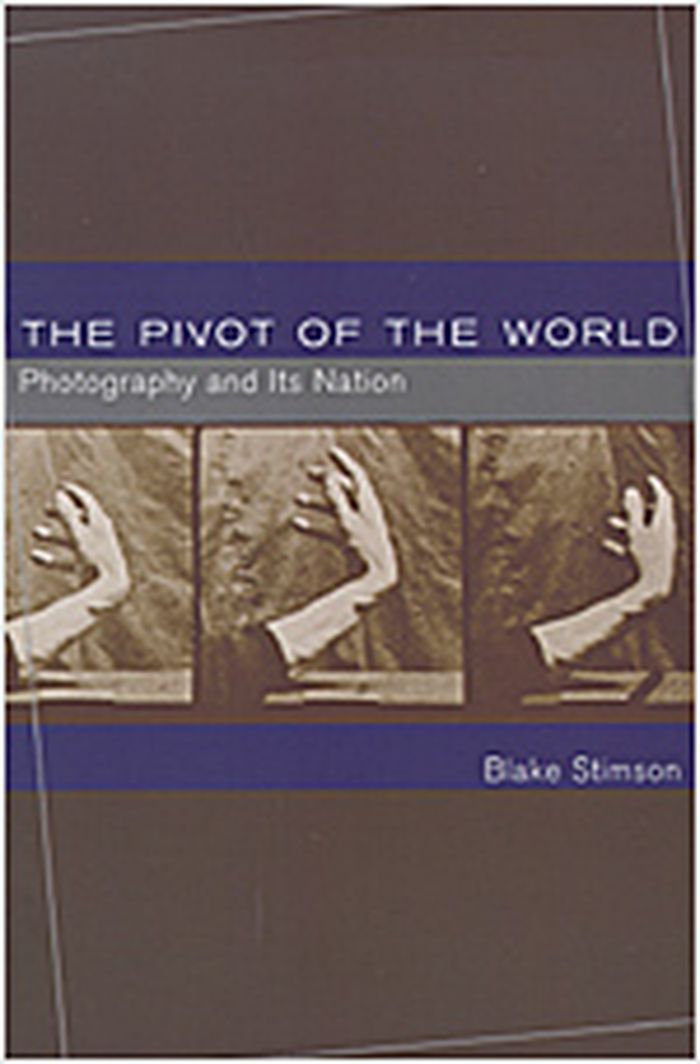
The old dream of social belonging and political sovereignty--the dream of nation--was fraught with anxiety and contradiction for many artists and intellectuals in the 1950s. On the one hand, memories of the Second World War remained vivid and the chauvinism that had enabled it threatened to return with the growing tensions of the Cold War. On the other hand, the need to bind together into a new global identity--into a world nation or "family of man"--seemed ever more pressing as a bulwark against the rapidly expanding threat of a nuclear World War III. The Pivot of the World looks at an exceptional effort to work out that geopolitical tension by cultural means as developed in three hugely ambitious photographic projects: The Family of Man exhibition that opened in 1955 and traveled the world for the next decade; Robert Frank's influential book The Americans, photographed in 1955-1956 and first published in 1958; and Bernd and Hilla Becher's typological record of industrial architecture, begun in 1957 and continuing today. Each of these projects worked to release the dream of nation--of belonging and sovereignty--from its old civic trappings through the medium of photography's serial form, in the experience of one photograph followed by another and another and another, so that all seem at once intimately connected and at the same time autonomous and distinct. Innovations in the serial composition of photographic form could open new possibilities for social form while the modern desire for political belonging could be made cosmopolitan, could be globalized--but in the most human of ways. This epic sense of purpose lasted only for a moment--it had already passed by the beginning of the 1960s--but it bears particular interest for any historical understanding of the contest over globalization that continues to hold such great consequence for us now.
The pivot of the world : photography and its nation
Actions:
Prix:
$24.95
(disponible sur commande)
Résumé:
The old dream of social belonging and political sovereignty--the dream of nation--was fraught with anxiety and contradiction for many artists and intellectuals in the 1950s. On the one hand, memories of the Second World War remained vivid and the chauvinism that had enabled it threatened to return with the growing tensions of the Cold War. On the other hand, the need to bind together into a new global identity--into a world nation or "family of man"--seemed ever more pressing as a bulwark against the rapidly expanding threat of a nuclear World War III. The Pivot of the World looks at an exceptional effort to work out that geopolitical tension by cultural means as developed in three hugely ambitious photographic projects: The Family of Man exhibition that opened in 1955 and traveled the world for the next decade; Robert Frank's influential book The Americans, photographed in 1955-1956 and first published in 1958; and Bernd and Hilla Becher's typological record of industrial architecture, begun in 1957 and continuing today. Each of these projects worked to release the dream of nation--of belonging and sovereignty--from its old civic trappings through the medium of photography's serial form, in the experience of one photograph followed by another and another and another, so that all seem at once intimately connected and at the same time autonomous and distinct. Innovations in the serial composition of photographic form could open new possibilities for social form while the modern desire for political belonging could be made cosmopolitan, could be globalized--but in the most human of ways. This epic sense of purpose lasted only for a moment--it had already passed by the beginning of the 1960s--but it bears particular interest for any historical understanding of the contest over globalization that continues to hold such great consequence for us now.
Classification:
livres
livres
Publication:
janvier 2006, Cambridge, Mass.
janvier 2006, Cambridge, Mass.
Sujet:
Théorie de la photographie
Théorie de la photographie
Classification:
livres
livres
Prix:
$90.00
(disponible sur commande)
Résumé:
Le Corbusier's first trip to the United States in 1935 is generally considered a failure because it produced no commissions. The experience nevertheless had a profound effect on him, both personally and professionally. Sponsored by the Museum of Modern Art in New York, Le Corbusier promoted his ideas through a lecture tour, exhibition, and press conferences, as well as in(...)
$90.00
(disponible sur commande)
Résumé:
Le Corbusier's first trip to the United States in 1935 is generally considered a failure because it produced no commissions. The experience nevertheless had a profound effect on him, both personally and professionally. Sponsored by the Museum of Modern Art in New York, Le Corbusier promoted his ideas through a lecture tour, exhibition, and press conferences, as well as in(...)
Sujet:
Architecture, monographies
Architecture, monographies
Publication:
mai 2001, Cambridge, Mass.
mai 2001, Cambridge, Mass.
Titre:
Le Corbusier in America : travels in the land of the timid
Actions:
Prix:
$90.00
(disponible sur commande)
Résumé:
Le Corbusier's first trip to the United States in 1935 is generally considered a failure because it produced no commissions. The experience nevertheless had a profound effect on him, both personally and professionally. Sponsored by the Museum of Modern Art in New York, Le Corbusier promoted his ideas through a lecture tour, exhibition, and press conferences, as well as in meetings with industrialists, housing reformers, New Deal technocrats, and editors. His lectures were watershed events that advanced the cause of European modernism. Yet he returned to France empty-handed and published a bittersweet account, "Quand les cathédrales étaient blanches: voyage au pays des timides" ("When the Cathedrals Were White: Journey to the Country of Timid People"), which faulted America for lacking the courage to adopt his ideas. In this first major study of Le Corbusier's American tour, Mardges Bacon reconstructs his encounter with America in all its fascinating detail. Through extensive archival research and interviews, she presents a critical history of the tour as well as a nuanced and intimate portrait of the architect. Drawing on the methods of microhistory, she also considers how small ordinary events affect larger biographical, architectural, and cultural developments. Bacon notes that Le Corbusier's dialogue with America was drafted within a spirited European discourse on américanisme. She contends that the trip validated his concept of a "second machine age" that would unite standardized industrial methods with a new humanism. Le Corbusier's subsequent work, she suggests, reflected an "Americanization," evidenced by the introduction of tension structures and the textured skyscraper conceived as an integrated system with functions articulated. She also defines Le Corbusier's role in the debate over New York City high-rise public housing. Appearing here in print for the first time are color reproductions of the pastel drawings that illustrated Le Corbusier's American lectures.
Le Corbusier in America : travels in the land of the timid
Actions:
Prix:
$90.00
(disponible sur commande)
Résumé:
Le Corbusier's first trip to the United States in 1935 is generally considered a failure because it produced no commissions. The experience nevertheless had a profound effect on him, both personally and professionally. Sponsored by the Museum of Modern Art in New York, Le Corbusier promoted his ideas through a lecture tour, exhibition, and press conferences, as well as in meetings with industrialists, housing reformers, New Deal technocrats, and editors. His lectures were watershed events that advanced the cause of European modernism. Yet he returned to France empty-handed and published a bittersweet account, "Quand les cathédrales étaient blanches: voyage au pays des timides" ("When the Cathedrals Were White: Journey to the Country of Timid People"), which faulted America for lacking the courage to adopt his ideas. In this first major study of Le Corbusier's American tour, Mardges Bacon reconstructs his encounter with America in all its fascinating detail. Through extensive archival research and interviews, she presents a critical history of the tour as well as a nuanced and intimate portrait of the architect. Drawing on the methods of microhistory, she also considers how small ordinary events affect larger biographical, architectural, and cultural developments. Bacon notes that Le Corbusier's dialogue with America was drafted within a spirited European discourse on américanisme. She contends that the trip validated his concept of a "second machine age" that would unite standardized industrial methods with a new humanism. Le Corbusier's subsequent work, she suggests, reflected an "Americanization," evidenced by the introduction of tension structures and the textured skyscraper conceived as an integrated system with functions articulated. She also defines Le Corbusier's role in the debate over New York City high-rise public housing. Appearing here in print for the first time are color reproductions of the pastel drawings that illustrated Le Corbusier's American lectures.
Classification:
livres
livres
Publication:
mai 2001, Cambridge, Mass.
mai 2001, Cambridge, Mass.
Sujet:
Architecture, monographies
Architecture, monographies
Classification:
livres
livres
Actions:
Prix:
$67.95
(disponible sur commande)
Résumé:
The dream of the twentieth century was the construction of mass utopia. As the century closes, this dream is being left behind; the belief that industrial modernization can bring about the good society by overcoming material scarcity for all has been challenged by the disintegration(...)
$67.95
(disponible sur commande)
Résumé:
The dream of the twentieth century was the construction of mass utopia. As the century closes, this dream is being left behind; the belief that industrial modernization can bring about the good society by overcoming material scarcity for all has been challenged by the disintegration(...)
Titre:
Dreamworld and catastrophe : the passing of mass utopia in East and West
Actions:
Prix:
$67.95
(disponible sur commande)
Résumé:
The dream of the twentieth century was the construction of mass utopia. As the century closes, this dream is being left behind; the belief that industrial modernization can bring about the good society by overcoming material scarcity for all has been challenged by the disintegration of European socialism, capitalist restructuring, and ecological constraints. The larger social vision has given way to private dreams of material happiness and to political cynicism. Developing the notion of dreamworld as both a poetic description of a collective mental state and an analytical concept, Susan Buck-Morss attempts to come to terms with mass dreamworlds at the moment of their passing. She shows how dreamworlds became dangerous when their energy was used by the structures of power as an instrument of force against the masses. Stressing the similarities between the East and West and using the end of the Cold War as her point of departure, she examines both extremes of mass utopia, dreamworld and catastrophe. The book is in four parts. "Dreamworlds of Democracy" asks whether collective sovereignty can ever be democratic. "Dreamworlds of History" calls for a rethinking of revolution by political and artistic avant-gardes. "Dreamworlds of Mass Culture" explores the affinities between mass culture's socialist and capitalist forms. An "Afterward" places the book in the historical context of the author's collaboration with a group of Moscow philosophers and artists over the past two tumultuous decades. The book is an experiment in visual culture, using images as philosophy, presenting, literally, a way of seeing the past. Its pictorial narratives rescue historical data that with the end of the Cold War are threatened with oblivion and challenge common conceptions of what this century was all about.
Dreamworld and catastrophe : the passing of mass utopia in East and West
Actions:
Prix:
$67.95
(disponible sur commande)
Résumé:
The dream of the twentieth century was the construction of mass utopia. As the century closes, this dream is being left behind; the belief that industrial modernization can bring about the good society by overcoming material scarcity for all has been challenged by the disintegration of European socialism, capitalist restructuring, and ecological constraints. The larger social vision has given way to private dreams of material happiness and to political cynicism. Developing the notion of dreamworld as both a poetic description of a collective mental state and an analytical concept, Susan Buck-Morss attempts to come to terms with mass dreamworlds at the moment of their passing. She shows how dreamworlds became dangerous when their energy was used by the structures of power as an instrument of force against the masses. Stressing the similarities between the East and West and using the end of the Cold War as her point of departure, she examines both extremes of mass utopia, dreamworld and catastrophe. The book is in four parts. "Dreamworlds of Democracy" asks whether collective sovereignty can ever be democratic. "Dreamworlds of History" calls for a rethinking of revolution by political and artistic avant-gardes. "Dreamworlds of Mass Culture" explores the affinities between mass culture's socialist and capitalist forms. An "Afterward" places the book in the historical context of the author's collaboration with a group of Moscow philosophers and artists over the past two tumultuous decades. The book is an experiment in visual culture, using images as philosophy, presenting, literally, a way of seeing the past. Its pictorial narratives rescue historical data that with the end of the Cold War are threatened with oblivion and challenge common conceptions of what this century was all about.
Classification:
livres
livres
Publication:
janvier 1900, Cambridge
janvier 1900, Cambridge
Sujet:
Théorie de l’architecture
Théorie de l’architecture
Classification:
livres
livres
Actions:
Prix:
$45.00
(disponible sur commande)
Résumé:
From the summer of 1933 to the fall of 1934, more than 38 million fairgoers visited a 3-mile stretch along Lake Michigan, home to Chicago’s second World’s Fair. Millions more experienced the Century of Progress International Exposition through newspaper and magazine articles, newsreels, and souvenirs. Together, all marveled at the industrial, scientific, consumer, and(...)
$45.00
(disponible sur commande)
Résumé:
From the summer of 1933 to the fall of 1934, more than 38 million fairgoers visited a 3-mile stretch along Lake Michigan, home to Chicago’s second World’s Fair. Millions more experienced the Century of Progress International Exposition through newspaper and magazine articles, newsreels, and souvenirs. Together, all marveled at the industrial, scientific, consumer, and(...)
Publication:
août 2007, Minneapolis, London
août 2007, Minneapolis, London
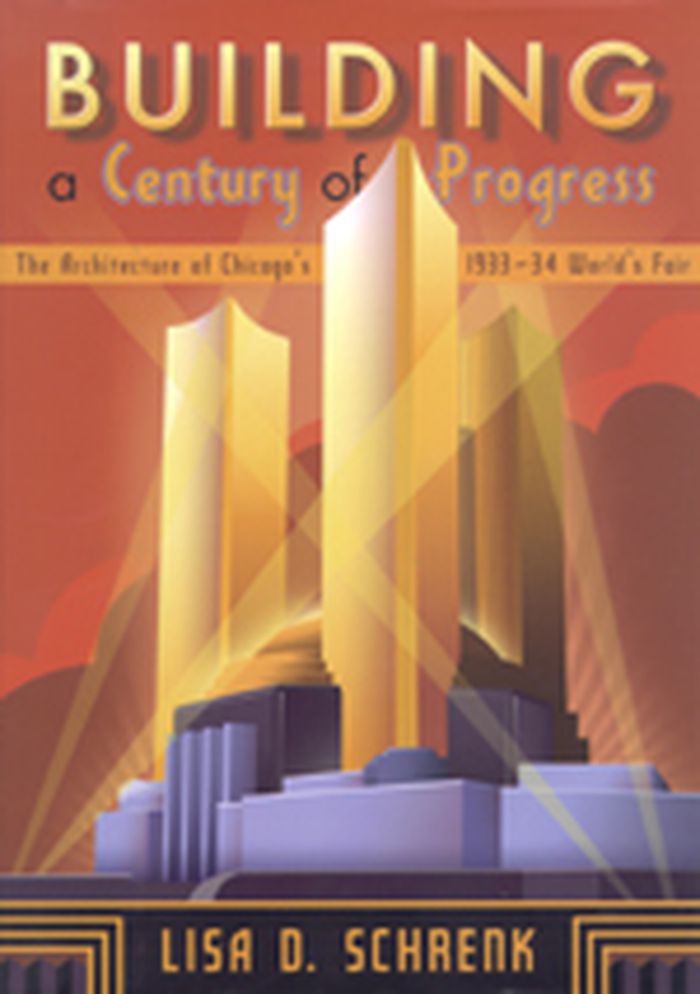
Titre:
Building a century of progress : the architecture of Chicago's 1933-34 World's Fair
Actions:
Prix:
$45.00
(disponible sur commande)
Résumé:
From the summer of 1933 to the fall of 1934, more than 38 million fairgoers visited a 3-mile stretch along Lake Michigan, home to Chicago’s second World’s Fair. Millions more experienced the Century of Progress International Exposition through newspaper and magazine articles, newsreels, and souvenirs. Together, all marveled at the industrial, scientific, consumer, and cultural displays, many of which were housed in fifty massive and colorful exhibition halls, the largest architectural project realized in the United States during the Great Depression. In the richly illustrated "Building a century of progress", Lisa D. Schrenk explores the pivotal role of the 1933 Chicago World’s Fair in modern American architecture. She recounts how the exposition’s architectural commission promoted a broad definition of modern architecture, not relying on purely aesthetic characteristics but instead focusing on new design solutions. The fair’s pavilions incorporated recently introduced building materials such as masonite and gypsum board; structural innovations (for example, the first thin-shell concrete roof and the first suspended roof structures built in the United States); and new construction processes, most notably the use of prefabrication. They also featured curiosities like the giant, constantly operating mayonnaise maker and the glass-walled House of Tomorrow, which had no operable windows. Schrenk shows how the halls’ designs reflected cultural and political developments of the period, including the expanding relationships between science, industry, and government; the rise of a corporate consumer culture; and the impact of the Great Depression. Many of the designs provoked intense responses from critics and other prominent architects, including Frank Lloyd Wright and Ralph Adams Cram, fueling heated debates over the appropriate direction for architecture in the United States. Demonstrating the rich diversity of progressive American building design seen at the fair, this book captures a crucial moment in American modernism.
Building a century of progress : the architecture of Chicago's 1933-34 World's Fair
Actions:
Prix:
$45.00
(disponible sur commande)
Résumé:
From the summer of 1933 to the fall of 1934, more than 38 million fairgoers visited a 3-mile stretch along Lake Michigan, home to Chicago’s second World’s Fair. Millions more experienced the Century of Progress International Exposition through newspaper and magazine articles, newsreels, and souvenirs. Together, all marveled at the industrial, scientific, consumer, and cultural displays, many of which were housed in fifty massive and colorful exhibition halls, the largest architectural project realized in the United States during the Great Depression. In the richly illustrated "Building a century of progress", Lisa D. Schrenk explores the pivotal role of the 1933 Chicago World’s Fair in modern American architecture. She recounts how the exposition’s architectural commission promoted a broad definition of modern architecture, not relying on purely aesthetic characteristics but instead focusing on new design solutions. The fair’s pavilions incorporated recently introduced building materials such as masonite and gypsum board; structural innovations (for example, the first thin-shell concrete roof and the first suspended roof structures built in the United States); and new construction processes, most notably the use of prefabrication. They also featured curiosities like the giant, constantly operating mayonnaise maker and the glass-walled House of Tomorrow, which had no operable windows. Schrenk shows how the halls’ designs reflected cultural and political developments of the period, including the expanding relationships between science, industry, and government; the rise of a corporate consumer culture; and the impact of the Great Depression. Many of the designs provoked intense responses from critics and other prominent architects, including Frank Lloyd Wright and Ralph Adams Cram, fueling heated debates over the appropriate direction for architecture in the United States. Demonstrating the rich diversity of progressive American building design seen at the fair, this book captures a crucial moment in American modernism.
Classification:
livres
livres
Publication:
août 2007, Minneapolis, London
août 2007, Minneapolis, London


