


13794 Résultats
Classification:
livres
livres
Actions:
Exemplaires:
Description:
xii, 186 pages illustrations 22 cm
Description:
xii, 186 pages illustrations 22 cm
Auteur:
Sujet:
Publication:
New York, Dover Publications [1970]
New York, Dover Publications [1970]
Titre:
The divine proportion: a study in mathematical beauty, by H.E. Huntley.
Actions:
Exemplaires:
Description:
xii, 186 pages illustrations 22 cm
The divine proportion: a study in mathematical beauty, by H.E. Huntley.
Actions:
Exemplaires:
Description:
xii, 186 pages illustrations 22 cm
Classification:
livres
livres
Publication:
New York, Dover Publications [1970]
New York, Dover Publications [1970]
Auteur:
Sujet:
Classification:
livres
livres
Actions:
Prix:
$19.95
(disponible en magasin)
Résumé:
In this text, Brenner, Peck and Theodore question the claim that neoliberalism has ended in the wake of the global economic crisis that began in September of 2008. The authors argue that this assumption rests upon an inadequate understanding of the reach and tenacity of the crisis-induced, market-disciplinary forms of regulatory restructuring that have accompanied the(...)
$19.95
(disponible en magasin)
Résumé:
In this text, Brenner, Peck and Theodore question the claim that neoliberalism has ended in the wake of the global economic crisis that began in September of 2008. The authors argue that this assumption rests upon an inadequate understanding of the reach and tenacity of the crisis-induced, market-disciplinary forms of regulatory restructuring that have accompanied the(...)
Publication:
juillet 2011
juillet 2011
Titre:
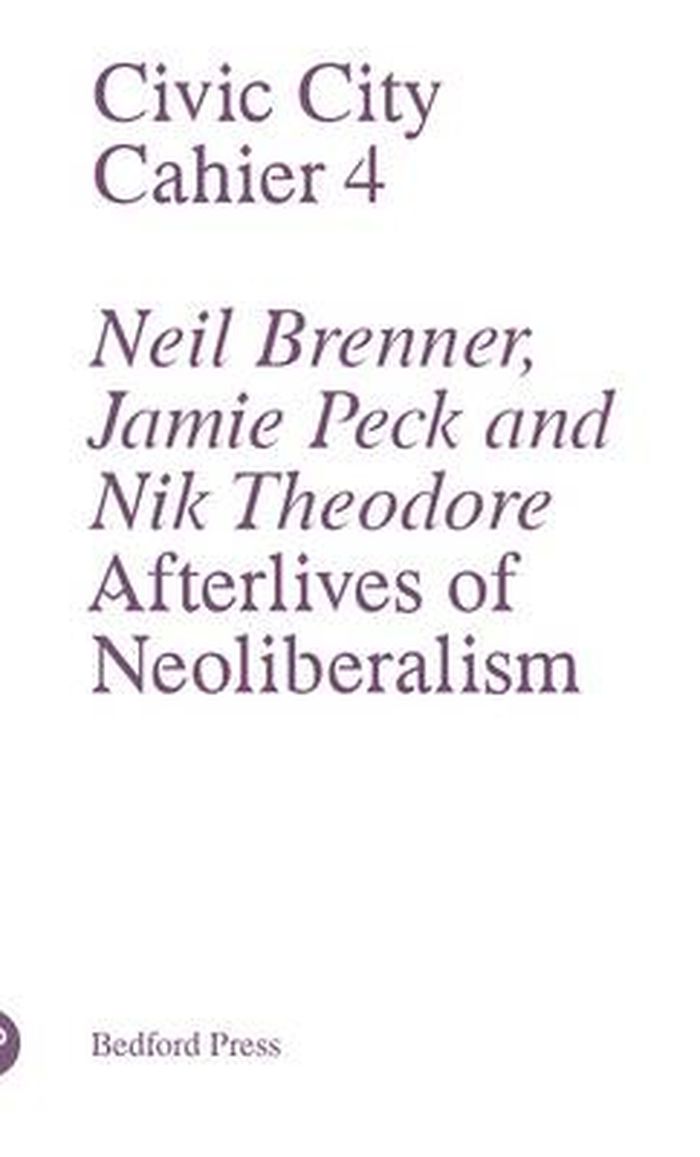
Civic city cahier 4 : Afterlives of neoliberalism
Actions:
Prix:
$19.95
(disponible en magasin)
Résumé:
In this text, Brenner, Peck and Theodore question the claim that neoliberalism has ended in the wake of the global economic crisis that began in September of 2008. The authors argue that this assumption rests upon an inadequate understanding of the reach and tenacity of the crisis-induced, market-disciplinary forms of regulatory restructuring that have accompanied the neoliberalisation of cities, regions and states across the world. In contrast with the over-simplified, monolithic conceptualisations of the global economy that prevail in many popular and academic accounts, the authors emphasise the constitutively uneven, institutionally hybrid and chronically unstable character of neoliberalism. For urban designers, planners and activists working to promote more socially just and democratic forms of urbanism, Brenner, Peck and Theodore insist on the need to radically restructure the macroinstitutional "rules of the game" that variously encourage and disallow localities, cities and regions to adapt to market-based approaches to (re)investment, collective-goods provisioning, and social reproduction. "Absent this", they argue, "the potential of progressive postneoliberal projects will continue to be frustrated by the dead hand of market rule".
Civic city cahier 4 : Afterlives of neoliberalism
Actions:
Prix:
$19.95
(disponible en magasin)
Résumé:
In this text, Brenner, Peck and Theodore question the claim that neoliberalism has ended in the wake of the global economic crisis that began in September of 2008. The authors argue that this assumption rests upon an inadequate understanding of the reach and tenacity of the crisis-induced, market-disciplinary forms of regulatory restructuring that have accompanied the neoliberalisation of cities, regions and states across the world. In contrast with the over-simplified, monolithic conceptualisations of the global economy that prevail in many popular and academic accounts, the authors emphasise the constitutively uneven, institutionally hybrid and chronically unstable character of neoliberalism. For urban designers, planners and activists working to promote more socially just and democratic forms of urbanism, Brenner, Peck and Theodore insist on the need to radically restructure the macroinstitutional "rules of the game" that variously encourage and disallow localities, cities and regions to adapt to market-based approaches to (re)investment, collective-goods provisioning, and social reproduction. "Absent this", they argue, "the potential of progressive postneoliberal projects will continue to be frustrated by the dead hand of market rule".
Classification:
livres
livres
Publication:
juillet 2011
juillet 2011
Classification:
livres
livres
Actions:
Prix:
$60.50
(disponible sur commande)
Résumé:
9/10 Stock Orchard Street, colloquially known as the Straw House, is a house and an office designed by two architects for their own use. Completed in 2000, the buildings were experimental in design, execution and inhabitation, and have resisted categorization, challenged received wisdom and provoked debate, especially among architectural critics. With access to all(...)
$60.50
(disponible sur commande)
Résumé:
9/10 Stock Orchard Street, colloquially known as the Straw House, is a house and an office designed by two architects for their own use. Completed in 2000, the buildings were experimental in design, execution and inhabitation, and have resisted categorization, challenged received wisdom and provoked debate, especially among architectural critics. With access to all(...)
Titre:
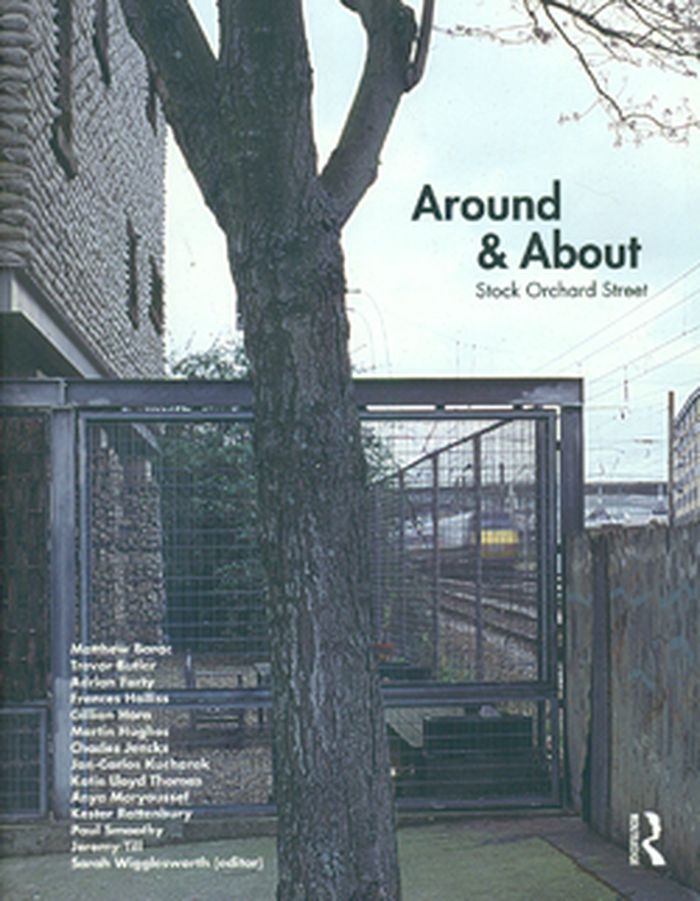
Around & About: Stock Orchard Street
Actions:
Prix:
$60.50
(disponible sur commande)
Résumé:
9/10 Stock Orchard Street, colloquially known as the Straw House, is a house and an office designed by two architects for their own use. Completed in 2000, the buildings were experimental in design, execution and inhabitation, and have resisted categorization, challenged received wisdom and provoked debate, especially among architectural critics. With access to all the material records of the project, this book responds to that debate by presenting multi-faceted narratives from a wide range of writers that have been invited to reflect both positively and negatively on what the buildings represent and how they have performed. Using the buildings as the central case study, it situates them in a broader cultural context, revealing the breadth of conversations and issues engaged by architecture. Highly illustrated with original material, including the authors’ own drawings and with specially-commissioned photographs, this book discusses theory, practice, ethics, material culture, the media, narrative, feminism, sustainability and construction, offering illuminating and sometimes surprising conclusions relevant to lay, professional and academic readers. While offering a wide ranging set of approaches and critiques of its subject, this book provides a unique insight into a building’s conception, construction and reception, and in turn facilitates the engagement with the issues facing architectural practice today.
Around & About: Stock Orchard Street
Actions:
Prix:
$60.50
(disponible sur commande)
Résumé:
9/10 Stock Orchard Street, colloquially known as the Straw House, is a house and an office designed by two architects for their own use. Completed in 2000, the buildings were experimental in design, execution and inhabitation, and have resisted categorization, challenged received wisdom and provoked debate, especially among architectural critics. With access to all the material records of the project, this book responds to that debate by presenting multi-faceted narratives from a wide range of writers that have been invited to reflect both positively and negatively on what the buildings represent and how they have performed. Using the buildings as the central case study, it situates them in a broader cultural context, revealing the breadth of conversations and issues engaged by architecture. Highly illustrated with original material, including the authors’ own drawings and with specially-commissioned photographs, this book discusses theory, practice, ethics, material culture, the media, narrative, feminism, sustainability and construction, offering illuminating and sometimes surprising conclusions relevant to lay, professional and academic readers. While offering a wide ranging set of approaches and critiques of its subject, this book provides a unique insight into a building’s conception, construction and reception, and in turn facilitates the engagement with the issues facing architectural practice today.
Classification:
livres
livres
Publication:
mars 2011
mars 2011
Sujet:
Architecture, monographies
Architecture, monographies
Classification:
livres
livres
Actions:
Prix:
$53.95
(disponible sur commande)
Résumé:
With his astounding building cuts and intersects, Gordon Matta-Clark (1943-1978) opened up elegant geometries in the very structures that seem most substantial and most authoritative in urban existence, revealing the alienations of the urban fabric as convenient fictions and allowing life to flow into the most inhospitable and self-contained of buildings. One of his(...)
$53.95
(disponible sur commande)
Résumé:
With his astounding building cuts and intersects, Gordon Matta-Clark (1943-1978) opened up elegant geometries in the very structures that seem most substantial and most authoritative in urban existence, revealing the alienations of the urban fabric as convenient fictions and allowing life to flow into the most inhospitable and self-contained of buildings. One of his(...)
Publication:
novembre 2011
novembre 2011
Titre:
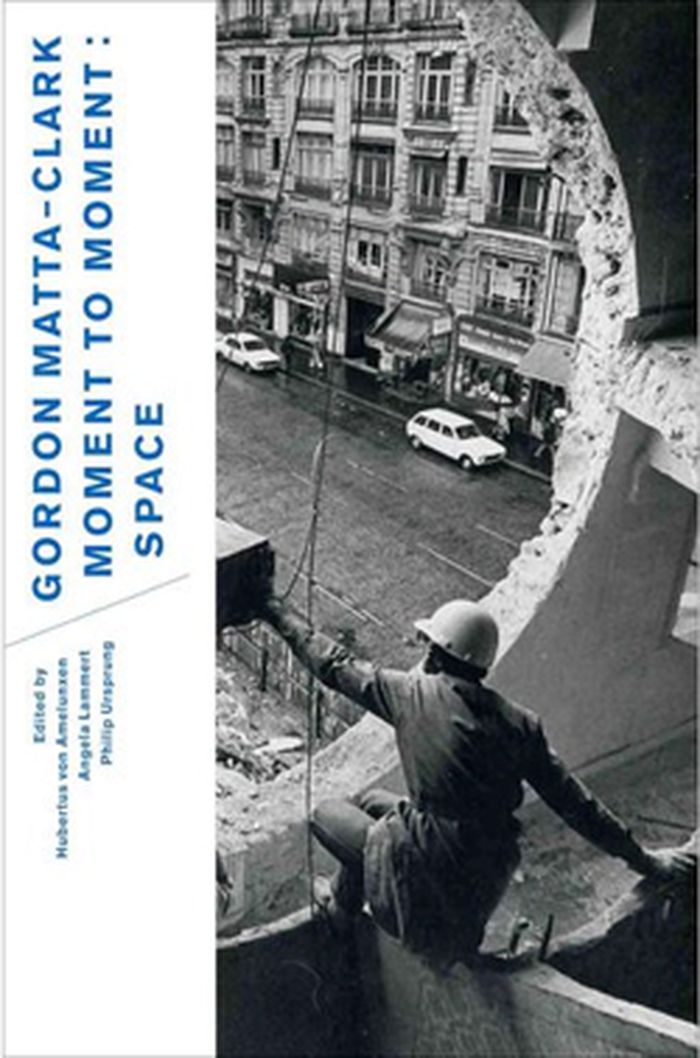
Gordon Matta-Clark, moment to moment : space
Actions:
Prix:
$53.95
(disponible sur commande)
Résumé:
With his astounding building cuts and intersects, Gordon Matta-Clark (1943-1978) opened up elegant geometries in the very structures that seem most substantial and most authoritative in urban existence, revealing the alienations of the urban fabric as convenient fictions and allowing life to flow into the most inhospitable and self-contained of buildings. One of his favorite responses to a work came from a Parisian concierge: “I see the purpose for that hole - it is an experiment in bringing light and air into spaces that never had enough of either.” Throughout his all-too-brief career, Matta-Clark undertook civic aeration on many fronts, cofounding the now legendary Food Restaurant in 1971, buying up empty lots in Queens and evolving his theory of “anarchitecture” in films, photomontages and numerous writings and drawings. Anarchitecture redefined negative space in art as a political act, distinguishing itself from architecture by imagining a cure for its most pernicious effects. Gordon Matta-Clark : Moment to Moment offers a comprehensive overview of this courageous and liberating artist with a wealth of documentation and reproductions from across Matta-Clark's oeuvre, as well as critical commentary from Philip Ursprung, Angela Lammert, Hubertus von Amelunxen, Dan Graham and others.
Gordon Matta-Clark, moment to moment : space
Actions:
Prix:
$53.95
(disponible sur commande)
Résumé:
With his astounding building cuts and intersects, Gordon Matta-Clark (1943-1978) opened up elegant geometries in the very structures that seem most substantial and most authoritative in urban existence, revealing the alienations of the urban fabric as convenient fictions and allowing life to flow into the most inhospitable and self-contained of buildings. One of his favorite responses to a work came from a Parisian concierge: “I see the purpose for that hole - it is an experiment in bringing light and air into spaces that never had enough of either.” Throughout his all-too-brief career, Matta-Clark undertook civic aeration on many fronts, cofounding the now legendary Food Restaurant in 1971, buying up empty lots in Queens and evolving his theory of “anarchitecture” in films, photomontages and numerous writings and drawings. Anarchitecture redefined negative space in art as a political act, distinguishing itself from architecture by imagining a cure for its most pernicious effects. Gordon Matta-Clark : Moment to Moment offers a comprehensive overview of this courageous and liberating artist with a wealth of documentation and reproductions from across Matta-Clark's oeuvre, as well as critical commentary from Philip Ursprung, Angela Lammert, Hubertus von Amelunxen, Dan Graham and others.
Classification:
livres
livres
Publication:
novembre 2011
novembre 2011
Classification:
périodiques
périodiques
Prix:
$54.00
(disponible sur commande)
Résumé:
Multispace exists at the intersection of the physical and digital, and in the blurring of their previously clear dividing lines. Multispace is not a single space, but a hybrid space where, in effect, we occupy multiple spaces simultaneously. We enter it on a Zoom call, when we are in our office and in a meeting with 20 people; when we are cycling down a country lane(...)
$54.00
(disponible sur commande)
Résumé:
Multispace exists at the intersection of the physical and digital, and in the blurring of their previously clear dividing lines. Multispace is not a single space, but a hybrid space where, in effect, we occupy multiple spaces simultaneously. We enter it on a Zoom call, when we are in our office and in a meeting with 20 people; when we are cycling down a country lane(...)
Titre:
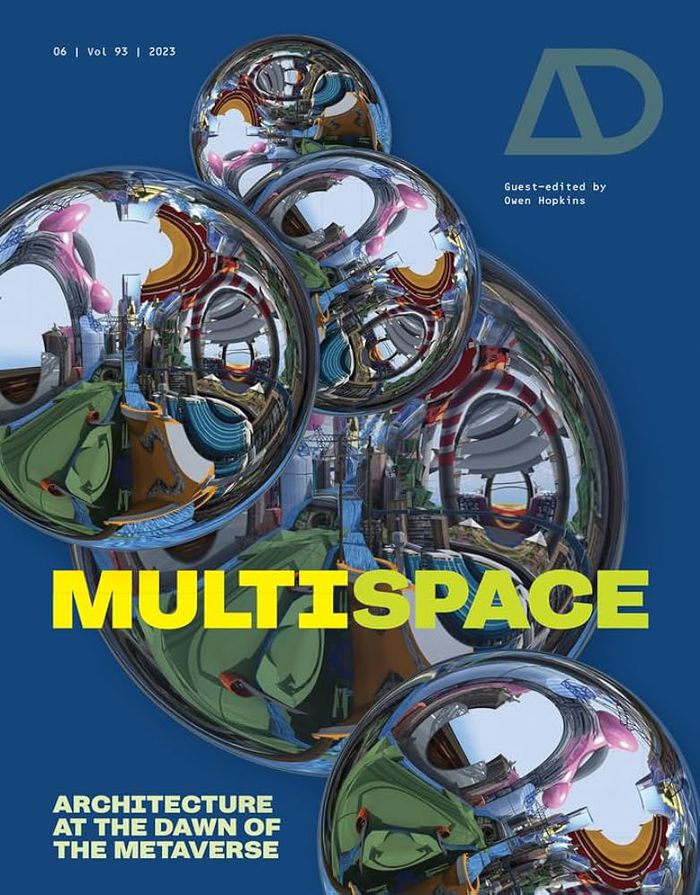
AD 93:6 Multispace: Architecture at the dawn of the metaverse
Actions:
Prix:
$54.00
(disponible sur commande)
Résumé:
Multispace exists at the intersection of the physical and digital, and in the blurring of their previously clear dividing lines. Multispace is not a single space, but a hybrid space where, in effect, we occupy multiple spaces simultaneously. We enter it on a Zoom call, when we are in our office and in a meeting with 20 people; when we are cycling down a country lane whilst racing against thousands of others who also use the Strava app; when we are watching a TV show while live tweeting; or, perhaps most literally, when wandering around the local park looking for creatures that only appear on a smartphone screen. A fundamental question of this AD is why the phenomena that multispace describes are of concern to architects. The answer is that multispace points to a situation that is at root an architectural one. Offering both a collective and highly personalised experience, static and dynamically customisable, and above all at the same time public and private, multispace lies at the centre of a set of tensions, concerns and preoccupations at the core of our conception of architecture as theory and practice. It is the messy space between, with rough and uneven edges that are constantly shifting.
AD 93:6 Multispace: Architecture at the dawn of the metaverse
Actions:
Prix:
$54.00
(disponible sur commande)
Résumé:
Multispace exists at the intersection of the physical and digital, and in the blurring of their previously clear dividing lines. Multispace is not a single space, but a hybrid space where, in effect, we occupy multiple spaces simultaneously. We enter it on a Zoom call, when we are in our office and in a meeting with 20 people; when we are cycling down a country lane whilst racing against thousands of others who also use the Strava app; when we are watching a TV show while live tweeting; or, perhaps most literally, when wandering around the local park looking for creatures that only appear on a smartphone screen. A fundamental question of this AD is why the phenomena that multispace describes are of concern to architects. The answer is that multispace points to a situation that is at root an architectural one. Offering both a collective and highly personalised experience, static and dynamically customisable, and above all at the same time public and private, multispace lies at the centre of a set of tensions, concerns and preoccupations at the core of our conception of architecture as theory and practice. It is the messy space between, with rough and uneven edges that are constantly shifting.
Classification:
périodiques
périodiques
Publication:
novembre 2023
novembre 2023
Sujet:
Revues
Revues
Classification:
livres
livres
Actions:
Prix:
$26.00
(disponible sur commande)
Résumé:
A step-by-step guide to more synthetic, holistic, and integrated urban design strategies, Design Charrettes for Sustainable Communities is a practical manual to accomplish complex community design decisions and create more green, clean, and equitable communities. The design charrette has become an increasingly popular way to engage the public and stakeholders in public(...)
$26.00
(disponible sur commande)
Résumé:
A step-by-step guide to more synthetic, holistic, and integrated urban design strategies, Design Charrettes for Sustainable Communities is a practical manual to accomplish complex community design decisions and create more green, clean, and equitable communities. The design charrette has become an increasingly popular way to engage the public and stakeholders in public(...)
Titre:
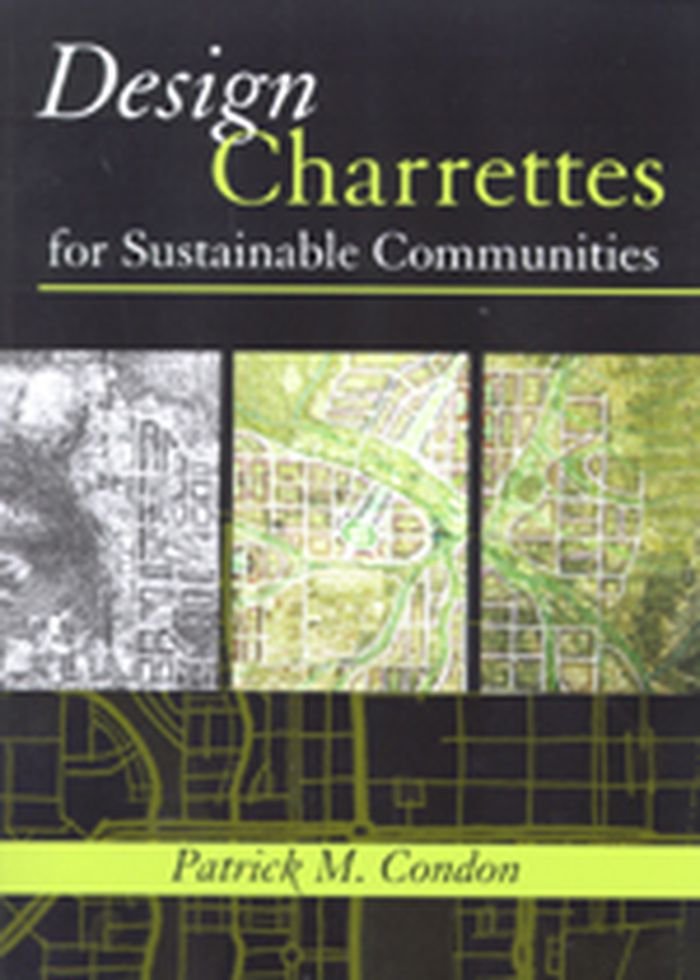
Design charettes for Sustainable communities
Actions:
Prix:
$26.00
(disponible sur commande)
Résumé:
A step-by-step guide to more synthetic, holistic, and integrated urban design strategies, Design Charrettes for Sustainable Communities is a practical manual to accomplish complex community design decisions and create more green, clean, and equitable communities. The design charrette has become an increasingly popular way to engage the public and stakeholders in public planning, and Design Charrettes for Sustainable Communities shows how citizens and officials can use this tool to change the way they make decisions, especially when addressing issues of the sustainable community. Designed to build consensus and cooperation, a successful charrette produces a design that expresses the values and vision of the community. Patrick Condon outlines the key features of the charrette, an inclusive decision-making process that brings together citizens, designers, public officials, and developers in several days of collaborative workshops. Drawing on years of experience designing sustainable urban environments and bringing together communities for charrettes, Condon’s manual provides step-by-step instructions for making this process work to everyone’s benefit. He translates emerging sustainable development concepts and problem-solving theory into concrete principles in order to explain what a charrette is, how to organize one, and how to make it work to produce sustainable urban design results.
Design charettes for Sustainable communities
Actions:
Prix:
$26.00
(disponible sur commande)
Résumé:
A step-by-step guide to more synthetic, holistic, and integrated urban design strategies, Design Charrettes for Sustainable Communities is a practical manual to accomplish complex community design decisions and create more green, clean, and equitable communities. The design charrette has become an increasingly popular way to engage the public and stakeholders in public planning, and Design Charrettes for Sustainable Communities shows how citizens and officials can use this tool to change the way they make decisions, especially when addressing issues of the sustainable community. Designed to build consensus and cooperation, a successful charrette produces a design that expresses the values and vision of the community. Patrick Condon outlines the key features of the charrette, an inclusive decision-making process that brings together citizens, designers, public officials, and developers in several days of collaborative workshops. Drawing on years of experience designing sustainable urban environments and bringing together communities for charrettes, Condon’s manual provides step-by-step instructions for making this process work to everyone’s benefit. He translates emerging sustainable development concepts and problem-solving theory into concrete principles in order to explain what a charrette is, how to organize one, and how to make it work to produce sustainable urban design results.
Classification:
livres
livres
Publication:
novembre 2007
novembre 2007
Sujet:
Architecture écologique
Architecture écologique
Classification:
livres
livres

Prix:
$63.95
(disponible sur commande)
Résumé:
From the avant-garde design of the Islamic Cultural Center in New York City to the simplicity of the Dar al-Islam Mosque in Abiquiu, New Mexico, the American mosque takes many forms of visual and architectural expression. The absence of a single, authoritative model and the plurality of design nuances reflect the heterogeneity of the American Muslim community itself,(...)
$63.95
(disponible sur commande)
Résumé:
From the avant-garde design of the Islamic Cultural Center in New York City to the simplicity of the Dar al-Islam Mosque in Abiquiu, New Mexico, the American mosque takes many forms of visual and architectural expression. The absence of a single, authoritative model and the plurality of design nuances reflect the heterogeneity of the American Muslim community itself,(...)
Titre:
Deconstructing the American mosque : space, gender, and aesthetics
Actions:
Prix:
$63.95
(disponible sur commande)
Résumé:
From the avant-garde design of the Islamic Cultural Center in New York City to the simplicity of the Dar al-Islam Mosque in Abiquiu, New Mexico, the American mosque takes many forms of visual and architectural expression. The absence of a single, authoritative model and the plurality of design nuances reflect the heterogeneity of the American Muslim community itself, which embodies a whole spectrum of ethnic origins, traditions, and religious practices. In this book, Akel Ismail Kahera explores the history and theory of Muslim religious aesthetics in the United States since 1950. Using a notion of deconstruction based on the concepts of "jamal" (beauty), "subject," and "object" found in the writings of Ibn Arabi (d. 1240), he interprets the forms and meanings of several American mosques from across the country. His analysis contributes to three debates within the formulation of a Muslim aesthetics in North America—first, over the meaning, purpose, and function of visual religious expression; second, over the spatial and visual affinities between American and non-American mosques, including the Prophet's mosque at Madinah, Arabia; and third, over the relevance of culture, place, and identity to the making of contemporary religious expression in North America. Akel Ismail Kahera is Assistant Professor of Islamic Studies at the University of Texas at Austin.
Deconstructing the American mosque : space, gender, and aesthetics
Actions:
Prix:
$63.95
(disponible sur commande)
Résumé:
From the avant-garde design of the Islamic Cultural Center in New York City to the simplicity of the Dar al-Islam Mosque in Abiquiu, New Mexico, the American mosque takes many forms of visual and architectural expression. The absence of a single, authoritative model and the plurality of design nuances reflect the heterogeneity of the American Muslim community itself, which embodies a whole spectrum of ethnic origins, traditions, and religious practices. In this book, Akel Ismail Kahera explores the history and theory of Muslim religious aesthetics in the United States since 1950. Using a notion of deconstruction based on the concepts of "jamal" (beauty), "subject," and "object" found in the writings of Ibn Arabi (d. 1240), he interprets the forms and meanings of several American mosques from across the country. His analysis contributes to three debates within the formulation of a Muslim aesthetics in North America—first, over the meaning, purpose, and function of visual religious expression; second, over the spatial and visual affinities between American and non-American mosques, including the Prophet's mosque at Madinah, Arabia; and third, over the relevance of culture, place, and identity to the making of contemporary religious expression in North America. Akel Ismail Kahera is Assistant Professor of Islamic Studies at the University of Texas at Austin.
Classification:
livres
livres
Publication:
janvier 1900, Austin
janvier 1900, Austin
Sujet:
Histoire jusqu’à 1900
Histoire jusqu’à 1900
Classification:
livres
livres
Titre:
Decolonize self-care
Decolonize self-care
Actions:
Prix:
$24.95
(disponible sur commande)
Résumé:
"Decolonize self-care" mounts a sharply critical investigation into contemporary "self-care" practices—particularly those that embrace using mindfulness and other techniques such as tantra and yoga, as well as gluten-free and low-carbohydrate diets. The authors argue that "self-care" has become an industry, and one that is often marketed to and by wealthy, cisgender,(...)
$24.95
(disponible sur commande)
Résumé:
"Decolonize self-care" mounts a sharply critical investigation into contemporary "self-care" practices—particularly those that embrace using mindfulness and other techniques such as tantra and yoga, as well as gluten-free and low-carbohydrate diets. The authors argue that "self-care" has become an industry, and one that is often marketed to and by wealthy, cisgender,(...)
Titre:
Decolonize self-care
Actions:
Prix:
$24.95
(disponible sur commande)
Résumé:
"Decolonize self-care" mounts a sharply critical investigation into contemporary "self-care" practices—particularly those that embrace using mindfulness and other techniques such as tantra and yoga, as well as gluten-free and low-carbohydrate diets. The authors argue that "self-care" has become an industry, and one that is often marketed to and by wealthy, cisgender, white women in the global north. Spurgas and Meleo-Erwin contend that the rhetoric of "feminism" is regularly co-opted in selling self-care, with wealthy white women being the primary consumer target and also those who profit from self-care entrepreneurship. Through careful research and sharp analysis, the authors offer a vision of more radical, communal, collective, anti-racist, and anti-capitalist forms of care for chronic pain, burnout, depression, anxiety, and other conditions, which are often the result of gendered, sexualized, racialized, ableist, and colonialist traumas under late capitalism. Utilizing critical feminist disability studies, madness studies, Black feminist scholarship, decolonial theory, and other intersectional and Marxist feminist critique, the authors re-theorize care outside of and beyond what current self-care rhetorics generally allow. A smart and often laugh-out-loud read, "Decolonize self-care" speaks to academic and lay audiences alike.
Decolonize self-care
Actions:
Prix:
$24.95
(disponible sur commande)
Résumé:
"Decolonize self-care" mounts a sharply critical investigation into contemporary "self-care" practices—particularly those that embrace using mindfulness and other techniques such as tantra and yoga, as well as gluten-free and low-carbohydrate diets. The authors argue that "self-care" has become an industry, and one that is often marketed to and by wealthy, cisgender, white women in the global north. Spurgas and Meleo-Erwin contend that the rhetoric of "feminism" is regularly co-opted in selling self-care, with wealthy white women being the primary consumer target and also those who profit from self-care entrepreneurship. Through careful research and sharp analysis, the authors offer a vision of more radical, communal, collective, anti-racist, and anti-capitalist forms of care for chronic pain, burnout, depression, anxiety, and other conditions, which are often the result of gendered, sexualized, racialized, ableist, and colonialist traumas under late capitalism. Utilizing critical feminist disability studies, madness studies, Black feminist scholarship, decolonial theory, and other intersectional and Marxist feminist critique, the authors re-theorize care outside of and beyond what current self-care rhetorics generally allow. A smart and often laugh-out-loud read, "Decolonize self-care" speaks to academic and lay audiences alike.
Classification:
livres
livres
Publication:
février 2023
février 2023
Sujet:
Social
Social
Classification:
livres
livres
Actions:
Prix:
$26.95
(disponible sur commande)
Résumé:
We see notebooks everywhere we go. But where did these indispensable implements come from? How did they revolutionize our lives? And how can using a notebook help change the way you think? In this wide-ranging history, Roland Allen reveals how the notebook became our most dependable and versatile tool for creative thinking. He tells the notebook stories of Leonardo and(...)
$26.95
(disponible sur commande)
Résumé:
We see notebooks everywhere we go. But where did these indispensable implements come from? How did they revolutionize our lives? And how can using a notebook help change the way you think? In this wide-ranging history, Roland Allen reveals how the notebook became our most dependable and versatile tool for creative thinking. He tells the notebook stories of Leonardo and(...)
Titre:
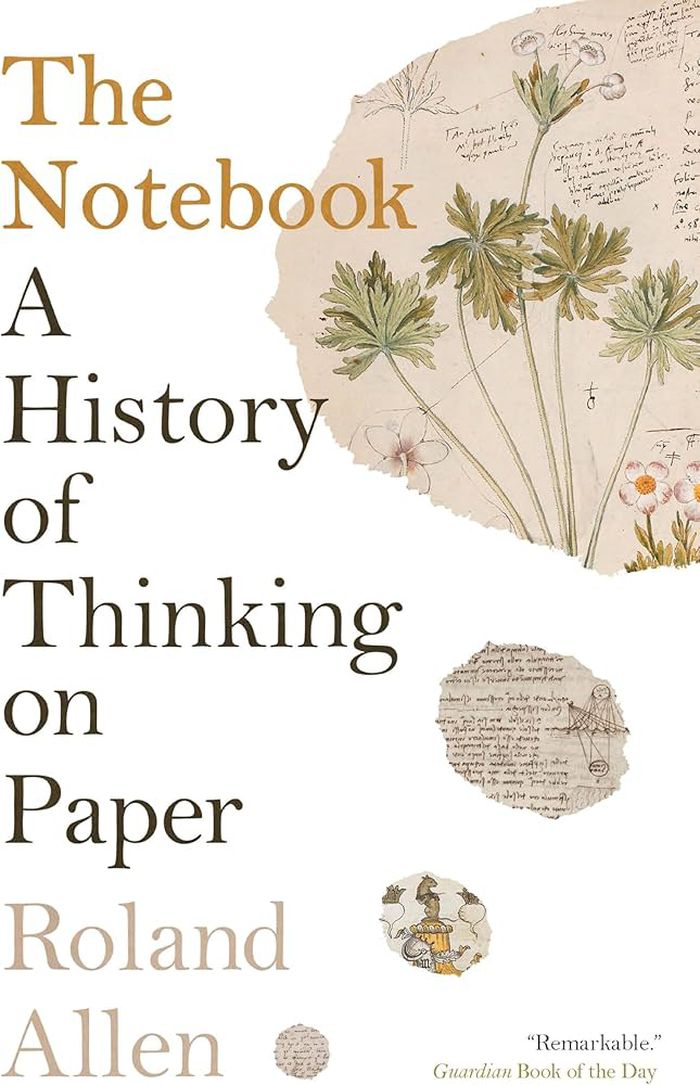
The notebook: A history of thinking on paper
Actions:
Prix:
$26.95
(disponible sur commande)
Résumé:
We see notebooks everywhere we go. But where did these indispensable implements come from? How did they revolutionize our lives? And how can using a notebook help change the way you think? In this wide-ranging history, Roland Allen reveals how the notebook became our most dependable and versatile tool for creative thinking. He tells the notebook stories of Leonardo and Frida Kahlo, Isaac Newton and Marie Curie, and writers from Chaucer to Henry James; shows how Darwin developed his theory of evolution in tiny pocket books and Agatha Christie plotted a hundred murders in scrappy exercise books; and introduces a host of cooks, kings, sailors, fishermen, musicians, engineers, politicians, adventurers, and mathematicians, all of whom used their notebooks as a space to think—and in doing so, shaped the modern world. In an age of AI and digital overload, the humble notebook is more relevant than ever. Allen shows how bullet points can combat ADHD, journals can ease PTSD, and patient diaries soften the trauma of reawakening from coma. The everyday act of moving a pen across paper, he finds, can have profound consequences, changing the way we think and feel: making us more creative, more productive—and maybe even happier.
The notebook: A history of thinking on paper
Actions:
Prix:
$26.95
(disponible sur commande)
Résumé:
We see notebooks everywhere we go. But where did these indispensable implements come from? How did they revolutionize our lives? And how can using a notebook help change the way you think? In this wide-ranging history, Roland Allen reveals how the notebook became our most dependable and versatile tool for creative thinking. He tells the notebook stories of Leonardo and Frida Kahlo, Isaac Newton and Marie Curie, and writers from Chaucer to Henry James; shows how Darwin developed his theory of evolution in tiny pocket books and Agatha Christie plotted a hundred murders in scrappy exercise books; and introduces a host of cooks, kings, sailors, fishermen, musicians, engineers, politicians, adventurers, and mathematicians, all of whom used their notebooks as a space to think—and in doing so, shaped the modern world. In an age of AI and digital overload, the humble notebook is more relevant than ever. Allen shows how bullet points can combat ADHD, journals can ease PTSD, and patient diaries soften the trauma of reawakening from coma. The everyday act of moving a pen across paper, he finds, can have profound consequences, changing the way we think and feel: making us more creative, more productive—and maybe even happier.
Classification:
livres
livres
Publication:
septembre 2024
septembre 2024
Sujet:
Littérature et poésie
Littérature et poésie
Classification:
livres
livres
Actions:
Prix:
$95.00
(disponible sur commande)
Résumé:
In the 15th century the ideas of the great Renaissance artists required the attentions of engineers and artisans to construct and explain the dynamics of their ambitious works. Leonardo da Vinci's helicopter was built in a studio; very probably his submarine was also built. Today that endeavour and enquiry is represented by Mike Smith, whose studio in the Old Kent Road in(...)
$95.00
(disponible sur commande)
Résumé:
In the 15th century the ideas of the great Renaissance artists required the attentions of engineers and artisans to construct and explain the dynamics of their ambitious works. Leonardo da Vinci's helicopter was built in a studio; very probably his submarine was also built. Today that endeavour and enquiry is represented by Mike Smith, whose studio in the Old Kent Road in(...)
Publication:
janvier 1900, London
janvier 1900, London
Titre:
Making art work : the Mike Smith Studio
Actions:
Prix:
$95.00
(disponible sur commande)
Résumé:
In the 15th century the ideas of the great Renaissance artists required the attentions of engineers and artisans to construct and explain the dynamics of their ambitious works. Leonardo da Vinci's helicopter was built in a studio; very probably his submarine was also built. Today that endeavour and enquiry is represented by Mike Smith, whose studio in the Old Kent Road in London furnishes the architecture for the most pressing installations and sculptures of young British artists. He is the carborundum that enables the best artists working in Britain today to realize their work - Rachel Whiteread's monument in Trafalgar Square is a testament to his work. The painter Patsy Craig has unravelled the activities of the Mike Smith Studios, including the symbiosis of the studio with the process of creation of such artists as Damien Hirst, Mona Hatoum, Keith Tyson, Darren Almond and Mark Wallinger. She has collected from the Studio's archives, along with the detritus, the correspondence, notes, ideas, failures and successes of these and other artists at the studio. They are a diary and vade mecum of the construction of a significant theory in current British art. It is an assembly of the very templates of the thinking, design and creation of art in Britain today.
Making art work : the Mike Smith Studio
Actions:
Prix:
$95.00
(disponible sur commande)
Résumé:
In the 15th century the ideas of the great Renaissance artists required the attentions of engineers and artisans to construct and explain the dynamics of their ambitious works. Leonardo da Vinci's helicopter was built in a studio; very probably his submarine was also built. Today that endeavour and enquiry is represented by Mike Smith, whose studio in the Old Kent Road in London furnishes the architecture for the most pressing installations and sculptures of young British artists. He is the carborundum that enables the best artists working in Britain today to realize their work - Rachel Whiteread's monument in Trafalgar Square is a testament to his work. The painter Patsy Craig has unravelled the activities of the Mike Smith Studios, including the symbiosis of the studio with the process of creation of such artists as Damien Hirst, Mona Hatoum, Keith Tyson, Darren Almond and Mark Wallinger. She has collected from the Studio's archives, along with the detritus, the correspondence, notes, ideas, failures and successes of these and other artists at the studio. They are a diary and vade mecum of the construction of a significant theory in current British art. It is an assembly of the very templates of the thinking, design and creation of art in Britain today.
Classification:
livres
livres
Publication:
janvier 1900, London
janvier 1900, London


