


644 Résultats
Classification:
livres
livres
Actions:
Prix:
$71.99
(disponible sur commande)
Résumé:
Irish-born designer Eileen Gray (1878-1976) is widely known today as a pioneer of both Art Deco and Modernism. In a career spanning nearly 80 years she produced innovative designs for furniture, lighting, carpets, interiors and architecture. Much less well known is that throughout her life as a designer and an architect she never stopped producing small paintings and(...)
$71.99
(disponible sur commande)
Résumé:
Irish-born designer Eileen Gray (1878-1976) is widely known today as a pioneer of both Art Deco and Modernism. In a career spanning nearly 80 years she produced innovative designs for furniture, lighting, carpets, interiors and architecture. Much less well known is that throughout her life as a designer and an architect she never stopped producing small paintings and(...)
Titre:
Eileen Gray: the private painter
Actions:
Prix:
$71.99
(disponible sur commande)
Résumé:
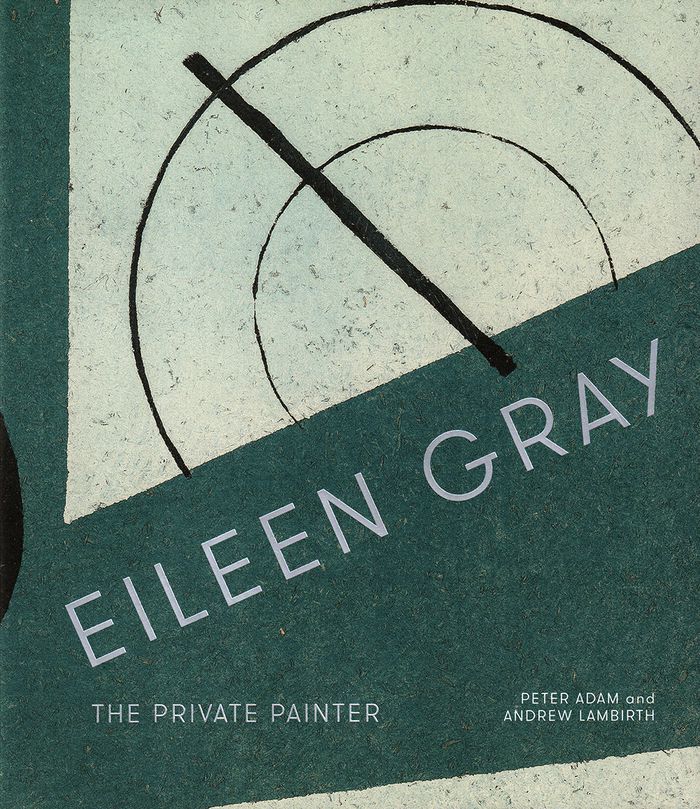
Irish-born designer Eileen Gray (1878-1976) is widely known today as a pioneer of both Art Deco and Modernism. In a career spanning nearly 80 years she produced innovative designs for furniture, lighting, carpets, interiors and architecture. Much less well known is that throughout her life as a designer and an architect she never stopped producing small paintings and drawings. This book is the first to focus on Eileen Gray's important but essentially private work as a painter. Eileen Gray considered herself a designer and an architect, not a painter: she viewed her work as a painter with great modesty, treating it as a private occupation and a vehicle for artistic expression during periods when she could not design furniture. Much of her artwork has disappeared, either lost in the Second World War or destroyed by the artist herself. But a body of works on paper, produced between the 1920s and the 1950s, has survived: elegant, geometric drawings and gouaches of muted tonality and subtle power. This book, which reproduces unseen material from the Eileen Gray archive and draws on Gray's correspondence with her niece Prunella Clough on the nature of painting, will be a revelation to her many followers and admirers.
Eileen Gray: the private painter
Actions:
Prix:
$71.99
(disponible sur commande)
Résumé:
Irish-born designer Eileen Gray (1878-1976) is widely known today as a pioneer of both Art Deco and Modernism. In a career spanning nearly 80 years she produced innovative designs for furniture, lighting, carpets, interiors and architecture. Much less well known is that throughout her life as a designer and an architect she never stopped producing small paintings and drawings. This book is the first to focus on Eileen Gray's important but essentially private work as a painter. Eileen Gray considered herself a designer and an architect, not a painter: she viewed her work as a painter with great modesty, treating it as a private occupation and a vehicle for artistic expression during periods when she could not design furniture. Much of her artwork has disappeared, either lost in the Second World War or destroyed by the artist herself. But a body of works on paper, produced between the 1920s and the 1950s, has survived: elegant, geometric drawings and gouaches of muted tonality and subtle power. This book, which reproduces unseen material from the Eileen Gray archive and draws on Gray's correspondence with her niece Prunella Clough on the nature of painting, will be a revelation to her many followers and admirers.
Classification:
livres
livres
Publication:
octobre 2015
octobre 2015
Sujet:
Design, monographies
Design, monographies
Classification:
livres
livres
Prix:
$67.95
(disponible sur commande)
Résumé:
In the mid-nineteenth century, Napoleon III and his prefect, Georges-Eugène Haussmann, adapted Paris to the requirements of industrial capitalism, endowing the old city with elegant boulevards, an enhanced water supply, modern sewers, and public greenery. Esther da Costa Meyer provides a major reassessment of this ambitious project, which resulted in widespread(...)
$67.95
(disponible sur commande)
Résumé:
In the mid-nineteenth century, Napoleon III and his prefect, Georges-Eugène Haussmann, adapted Paris to the requirements of industrial capitalism, endowing the old city with elegant boulevards, an enhanced water supply, modern sewers, and public greenery. Esther da Costa Meyer provides a major reassessment of this ambitious project, which resulted in widespread(...)
Titre:
Dividing Paris: Urban renewal and social inequality 1852-1870
Actions:
Prix:
$67.95
(disponible sur commande)
Résumé:
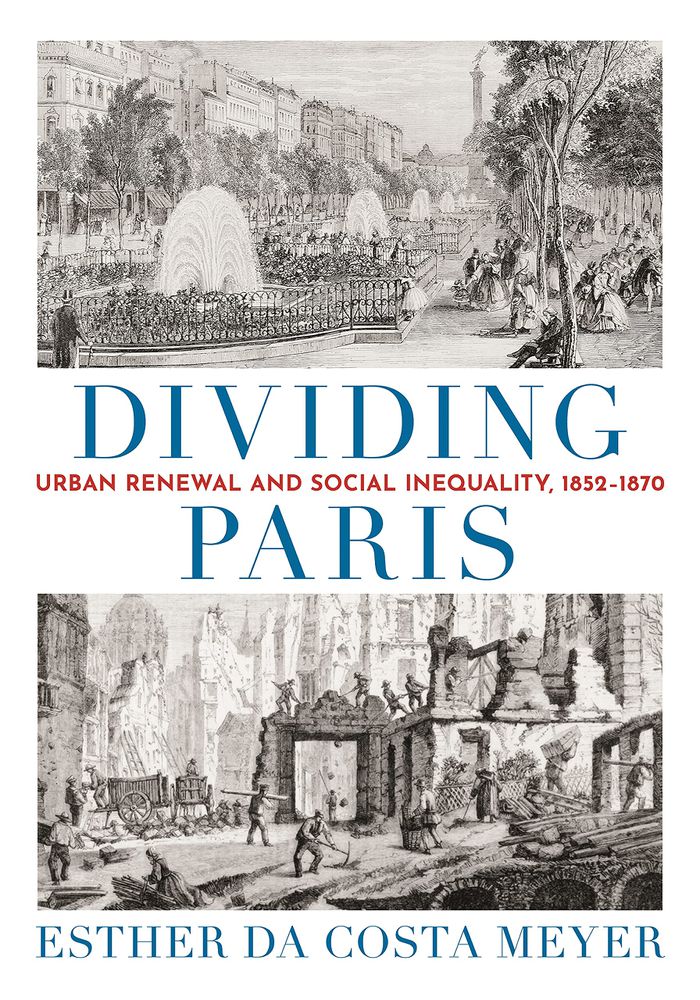
In the mid-nineteenth century, Napoleon III and his prefect, Georges-Eugène Haussmann, adapted Paris to the requirements of industrial capitalism, endowing the old city with elegant boulevards, an enhanced water supply, modern sewers, and public greenery. Esther da Costa Meyer provides a major reassessment of this ambitious project, which resulted in widespread destruction in the historic center, displacing thousands of poor residents and polarizing the urban fabric. Drawing on newspapers, memoirs, and other archival materials, da Costa Meyer explores how people from different social strata?both women and men?experienced the urban reforms implemented by the Second Empire. As hundreds of tenements were destroyed to make way for upscale apartment buildings, thousands of impoverished residents were forced to the periphery, which lacked the services enjoyed by wealthier parts of the city. Challenging the idea of Paris as the capital of modernity, da Costa Meyer shows how the city was the hub of a sprawling colonial empire extending from the Caribbean to Asia, and exposes the underlying violence that enriched it at the expense of overseas territories. This book brings to light the contributions of those who actually built and maintained the impressive infrastructure of Paris, and reveals the consequences of colonial practices for the city's cultural, economic, and political life.
Dividing Paris: Urban renewal and social inequality 1852-1870
Actions:
Prix:
$67.95
(disponible sur commande)
Résumé:
In the mid-nineteenth century, Napoleon III and his prefect, Georges-Eugène Haussmann, adapted Paris to the requirements of industrial capitalism, endowing the old city with elegant boulevards, an enhanced water supply, modern sewers, and public greenery. Esther da Costa Meyer provides a major reassessment of this ambitious project, which resulted in widespread destruction in the historic center, displacing thousands of poor residents and polarizing the urban fabric. Drawing on newspapers, memoirs, and other archival materials, da Costa Meyer explores how people from different social strata?both women and men?experienced the urban reforms implemented by the Second Empire. As hundreds of tenements were destroyed to make way for upscale apartment buildings, thousands of impoverished residents were forced to the periphery, which lacked the services enjoyed by wealthier parts of the city. Challenging the idea of Paris as the capital of modernity, da Costa Meyer shows how the city was the hub of a sprawling colonial empire extending from the Caribbean to Asia, and exposes the underlying violence that enriched it at the expense of overseas territories. This book brings to light the contributions of those who actually built and maintained the impressive infrastructure of Paris, and reveals the consequences of colonial practices for the city's cultural, economic, and political life.
Classification:
livres
livres
Publication:
février 2022
février 2022
Sujet:
Théorie de l’urbanisme
Théorie de l’urbanisme
Classification:
livres
livres
Actions:
Prix:
$51.95
(disponible sur commande)
Résumé:
"The Organizational Complex" is a historical and theoretical analysis of corporate architecture in the United States after the Second World War. Its title refers to the aesthetic and technological extension of the military-industrial complex, in which architecture, computers, and corporations formed a network of objects, images, and discourses that realigned social(...)
$51.95
(disponible sur commande)
Résumé:
"The Organizational Complex" is a historical and theoretical analysis of corporate architecture in the United States after the Second World War. Its title refers to the aesthetic and technological extension of the military-industrial complex, in which architecture, computers, and corporations formed a network of objects, images, and discourses that realigned social(...)
Sujet:
Théorie de l’architecture
Théorie de l’architecture
Publication:
juillet 2003, Cambridge, Massachusetts
juillet 2003, Cambridge, Massachusetts
Titre:
The organizational complex : architecture, media, and corporate space
Actions:
Prix:
$51.95
(disponible sur commande)
Résumé:
"The Organizational Complex" is a historical and theoretical analysis of corporate architecture in the United States after the Second World War. Its title refers to the aesthetic and technological extension of the military-industrial complex, in which architecture, computers, and corporations formed a network of objects, images, and discourses that realigned social relations and transformed the postwar landscape. In-depth case studies of architect Eero Saarinen's work for General Motors, IBM, and Bell Laboratories and analyses of office buildings designed by Skidmore, Owings & Merrill trace the emergence of a systems-based model of organization in architecture, in which the modular curtain wall acts as both an organizational device and a carrier of the corporate image. Such an image--of the corporation as a flexible, integrated system--is seen to correspond with a "humanization" of corporate life, as corporations decentralize both spatially and administratively. Parallel analyses follow the assimilation of cybernetics into aesthetics in the writings of artist and visual theorist Gyorgy Kepes, as art merges with techno-science in the service of a dynamic new "pattern-seeing." Image and system thus converge in the organizational complex, while top-down power dissolves into networked, pattern-based control. Architecture, as one among many media technologies, supplies the patterns--images of organic integration designed to regulate new and unstable human-machine assemblages.
The organizational complex : architecture, media, and corporate space
Actions:
Prix:
$51.95
(disponible sur commande)
Résumé:
"The Organizational Complex" is a historical and theoretical analysis of corporate architecture in the United States after the Second World War. Its title refers to the aesthetic and technological extension of the military-industrial complex, in which architecture, computers, and corporations formed a network of objects, images, and discourses that realigned social relations and transformed the postwar landscape. In-depth case studies of architect Eero Saarinen's work for General Motors, IBM, and Bell Laboratories and analyses of office buildings designed by Skidmore, Owings & Merrill trace the emergence of a systems-based model of organization in architecture, in which the modular curtain wall acts as both an organizational device and a carrier of the corporate image. Such an image--of the corporation as a flexible, integrated system--is seen to correspond with a "humanization" of corporate life, as corporations decentralize both spatially and administratively. Parallel analyses follow the assimilation of cybernetics into aesthetics in the writings of artist and visual theorist Gyorgy Kepes, as art merges with techno-science in the service of a dynamic new "pattern-seeing." Image and system thus converge in the organizational complex, while top-down power dissolves into networked, pattern-based control. Architecture, as one among many media technologies, supplies the patterns--images of organic integration designed to regulate new and unstable human-machine assemblages.
Classification:
livres
livres
Publication:
juillet 2003, Cambridge, Massachusetts
juillet 2003, Cambridge, Massachusetts
Sujet:
Théorie de l’architecture
Théorie de l’architecture
Classification:
livres
livres
Actions:
Prix:
$32.95
(disponible sur commande)
Résumé:
"Peeking through the Keyhole" is about transformations in the way we live and the places we call home. Until the past few decades, transitions in the style of homes and types of households were slow and gradual. With today's instant communication, the way we observe other people, other cultures, and other times has altered, and been altered by, the homes we live in.(...)
$32.95
(disponible sur commande)
Résumé:
"Peeking through the Keyhole" is about transformations in the way we live and the places we call home. Until the past few decades, transitions in the style of homes and types of households were slow and gradual. With today's instant communication, the way we observe other people, other cultures, and other times has altered, and been altered by, the homes we live in.(...)
Sujet:
Théorie de l’architecture
Théorie de l’architecture
Publication:
janvier 2002, Montréal
janvier 2002, Montréal
Titre:
Peeking through the keyhole : the evolution of North American homes
Actions:
Prix:
$32.95
(disponible sur commande)
Résumé:
"Peeking through the Keyhole" is about transformations in the way we live and the places we call home. Until the past few decades, transitions in the style of homes and types of households were slow and gradual. With today's instant communication, the way we observe other people, other cultures, and other times has altered, and been altered by, the homes we live in. Avi Friedman and David Krawitz guide the reader through the trends and changes that have influenced residential design and construction over the last fifty years. From kitchens to home offices to entire neighbourhoods, they unravel the effect of technology and consumerism on the way we perceive and use domestic space, arguing that the home is no longer a product of pure design but a response to factors and forces beyond the control of designers, builders, and users. Each chapter approaches the theme of home from a different vantage point: the first three chapters focus on food and kitchens, communication, construction and renovation; the middle chapters deal with childhood and aging; and the final chapters examine our ideas of home in the context of the broader community and as an object of commerce. The authors demonstrate how much life has changed in the years following the Second World War, showing how transformations in society, the economy, and lifestyles are reflected in our homes.
Peeking through the keyhole : the evolution of North American homes
Actions:
Prix:
$32.95
(disponible sur commande)
Résumé:
"Peeking through the Keyhole" is about transformations in the way we live and the places we call home. Until the past few decades, transitions in the style of homes and types of households were slow and gradual. With today's instant communication, the way we observe other people, other cultures, and other times has altered, and been altered by, the homes we live in. Avi Friedman and David Krawitz guide the reader through the trends and changes that have influenced residential design and construction over the last fifty years. From kitchens to home offices to entire neighbourhoods, they unravel the effect of technology and consumerism on the way we perceive and use domestic space, arguing that the home is no longer a product of pure design but a response to factors and forces beyond the control of designers, builders, and users. Each chapter approaches the theme of home from a different vantage point: the first three chapters focus on food and kitchens, communication, construction and renovation; the middle chapters deal with childhood and aging; and the final chapters examine our ideas of home in the context of the broader community and as an object of commerce. The authors demonstrate how much life has changed in the years following the Second World War, showing how transformations in society, the economy, and lifestyles are reflected in our homes.
Classification:
livres
livres
Publication:
janvier 2002, Montréal
janvier 2002, Montréal
Sujet:
Théorie de l’architecture
Théorie de l’architecture
Classification:
livres
livres
Actions:
Prix:
$49.95
(disponible sur commande)
Résumé:
Over the past decade, a seismic shift in economic and political forces has transformed life in the second-largest city on the West Coast, situated at the most heavily trafficked international border crossing in the world. Tijuana’s newfound wealth and haphazard expansion have changed patterns of migration for the city’s many artists, who once routinely moved north to Los(...)
$49.95
(disponible sur commande)
Résumé:
Over the past decade, a seismic shift in economic and political forces has transformed life in the second-largest city on the West Coast, situated at the most heavily trafficked international border crossing in the world. Tijuana’s newfound wealth and haphazard expansion have changed patterns of migration for the city’s many artists, who once routinely moved north to Los(...)
Titre:
Strange new world : art and design from Tijuana
Actions:
Prix:
$49.95
(disponible sur commande)
Résumé:
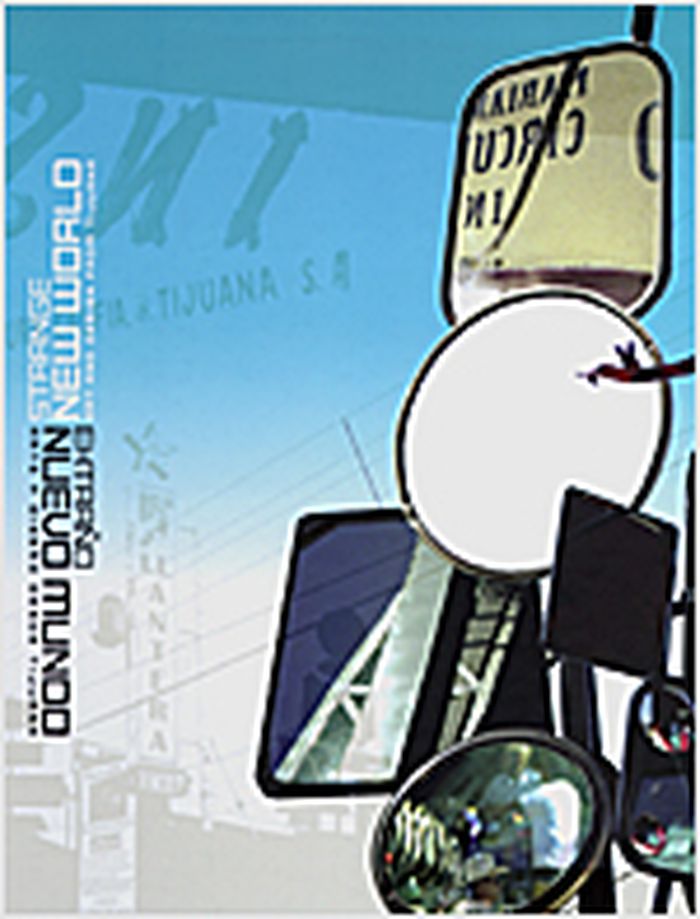
Over the past decade, a seismic shift in economic and political forces has transformed life in the second-largest city on the West Coast, situated at the most heavily trafficked international border crossing in the world. Tijuana’s newfound wealth and haphazard expansion have changed patterns of migration for the city’s many artists, who once routinely moved north to Los Angeles but are now staying or returning, and being joined by friends from Mexico City and beyond. This flourishing, strengthening artistic community has responded to the city’s accelerated evolution with a broad range of work, from painting to conceptually driven installations; from street-level digital video to ambitious photo-documentation, filmmaking and political work; from architectural proposals to product design associated with the "Nortec" musical movement. The work gathered in "Strange new world" embraces Tijuana as a paradigm of a new postmodern form of urbanization shaped by the pressures of economic globalization and cultural transnationalism since 1994. It struggles to make sense of new realities changing the ways in which people live in cities around the globe. Like Aldous Huxley's Brave New World, it is part science fiction, part political commentary and part artistic revolution and cultural critique. Arranged around the concepts of the urban theorist Michael Smith, it features work by ERRE, Einar and Jamex de la Torre and Yvonne Venegas, among others.
Strange new world : art and design from Tijuana
Actions:
Prix:
$49.95
(disponible sur commande)
Résumé:
Over the past decade, a seismic shift in economic and political forces has transformed life in the second-largest city on the West Coast, situated at the most heavily trafficked international border crossing in the world. Tijuana’s newfound wealth and haphazard expansion have changed patterns of migration for the city’s many artists, who once routinely moved north to Los Angeles but are now staying or returning, and being joined by friends from Mexico City and beyond. This flourishing, strengthening artistic community has responded to the city’s accelerated evolution with a broad range of work, from painting to conceptually driven installations; from street-level digital video to ambitious photo-documentation, filmmaking and political work; from architectural proposals to product design associated with the "Nortec" musical movement. The work gathered in "Strange new world" embraces Tijuana as a paradigm of a new postmodern form of urbanization shaped by the pressures of economic globalization and cultural transnationalism since 1994. It struggles to make sense of new realities changing the ways in which people live in cities around the globe. Like Aldous Huxley's Brave New World, it is part science fiction, part political commentary and part artistic revolution and cultural critique. Arranged around the concepts of the urban theorist Michael Smith, it features work by ERRE, Einar and Jamex de la Torre and Yvonne Venegas, among others.
Classification:
livres
livres
Publication:
août 2006, La Jolla
août 2006, La Jolla
Classification:
livres
livres
Prix:
$25.50
(disponible sur commande)
Résumé:
According to Paul Shepheard, architecture is the rearranging of the world for human purposes. Sculpture, machines, and landscapes are all architecture -- every bit as much as buildings are. In his writings, Shepheard examines old assumptions about architecture and replaces the critical theory of the academic with the active theory of the architect-citizen enamored of the(...)
$25.50
(disponible sur commande)
Résumé:
According to Paul Shepheard, architecture is the rearranging of the world for human purposes. Sculpture, machines, and landscapes are all architecture -- every bit as much as buildings are. In his writings, Shepheard examines old assumptions about architecture and replaces the critical theory of the academic with the active theory of the architect-citizen enamored of the(...)
Titre:
Artificial love : a story of machines and architecture
Actions:
Prix:
$25.50
(disponible sur commande)
Résumé:
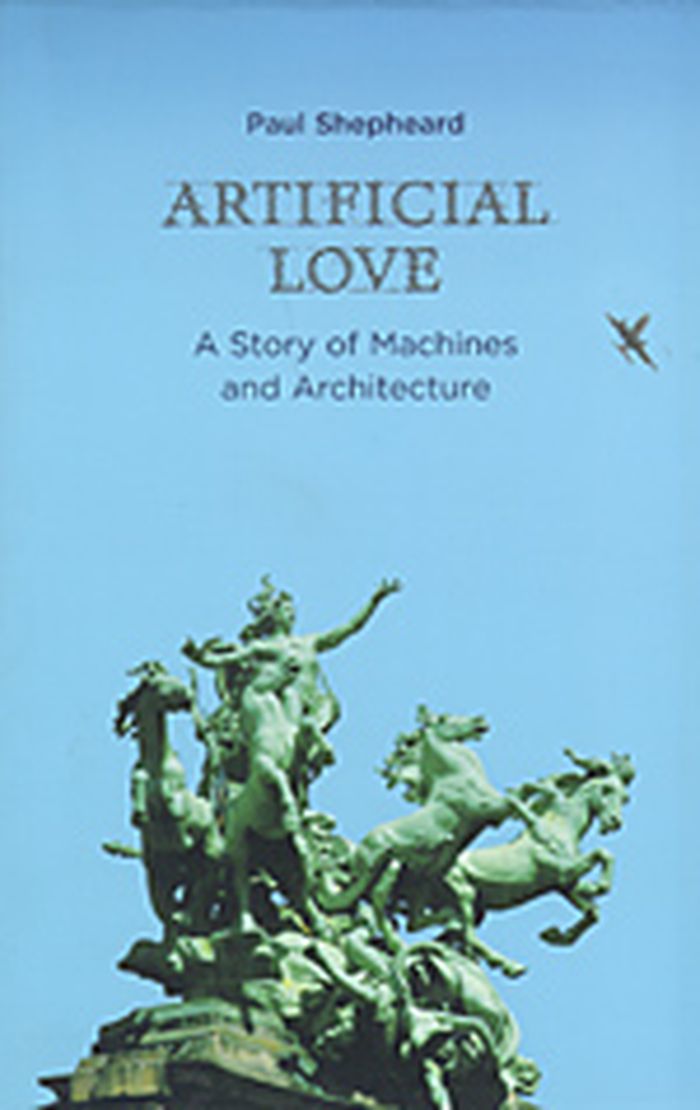
According to Paul Shepheard, architecture is the rearranging of the world for human purposes. Sculpture, machines, and landscapes are all architecture -- every bit as much as buildings are. In his writings, Shepheard examines old assumptions about architecture and replaces the critical theory of the academic with the active theory of the architect-citizen enamored of the world around him. Artificial Love weaves together three stories about architecture into one. The first, about machines as architecture, leads to speculations about technology and the human condition and to the assertion that machines are the sculptures of today. The second story is about the ways that architecture reflects the tribal and personal desires of those who make it. In the West, ideas of community, multiculturalism, and globalization compete furiously, leaving architecture to exist as it always has, as the past in the present. The third story features individual people experiencing their lives in the context of architecture. Here, Shepheard borrows the rhetorical device of Shakespeare's seven ages of man to propose that each person's life imitates the accumulating history of the human species. Shepheard's version of the history of humans is a technological one, in which machines become sculpture and sculpture becomes architecture. For Shepheard, our machines do not separate us from nature. Rather, our technology is our nature, and we cannot but be in harmony with nature. The change that we have wrought in the world, he says, is a wonderful and powerful thing.
Artificial love : a story of machines and architecture
Actions:
Prix:
$25.50
(disponible sur commande)
Résumé:
According to Paul Shepheard, architecture is the rearranging of the world for human purposes. Sculpture, machines, and landscapes are all architecture -- every bit as much as buildings are. In his writings, Shepheard examines old assumptions about architecture and replaces the critical theory of the academic with the active theory of the architect-citizen enamored of the world around him. Artificial Love weaves together three stories about architecture into one. The first, about machines as architecture, leads to speculations about technology and the human condition and to the assertion that machines are the sculptures of today. The second story is about the ways that architecture reflects the tribal and personal desires of those who make it. In the West, ideas of community, multiculturalism, and globalization compete furiously, leaving architecture to exist as it always has, as the past in the present. The third story features individual people experiencing their lives in the context of architecture. Here, Shepheard borrows the rhetorical device of Shakespeare's seven ages of man to propose that each person's life imitates the accumulating history of the human species. Shepheard's version of the history of humans is a technological one, in which machines become sculpture and sculpture becomes architecture. For Shepheard, our machines do not separate us from nature. Rather, our technology is our nature, and we cannot but be in harmony with nature. The change that we have wrought in the world, he says, is a wonderful and powerful thing.
Classification:
livres
livres
Publication:
mai 2003, Cambridge, Mass.
mai 2003, Cambridge, Mass.
Sujet:
Théorie de l’architecture
Théorie de l’architecture
Classification:
livres
livres
Prix:
$67.25
(disponible sur commande)
Résumé:
According to Paul Shepheard, architecture is the rearranging of the world for human purposes. Sculpture, machines, and landscapes are all architecture -- every bit as much as buildings are. In his writings, Shepheard examines old assumptions about architecture and replaces the critical theory of the academic with the active theory of the architect-citizen enamored of the(...)
$67.25
(disponible sur commande)
Résumé:
According to Paul Shepheard, architecture is the rearranging of the world for human purposes. Sculpture, machines, and landscapes are all architecture -- every bit as much as buildings are. In his writings, Shepheard examines old assumptions about architecture and replaces the critical theory of the academic with the active theory of the architect-citizen enamored of the(...)
Titre:
Artificial love : a story of machines and architecture
Actions:
Prix:
$67.25
(disponible sur commande)
Résumé:
According to Paul Shepheard, architecture is the rearranging of the world for human purposes. Sculpture, machines, and landscapes are all architecture -- every bit as much as buildings are. In his writings, Shepheard examines old assumptions about architecture and replaces the critical theory of the academic with the active theory of the architect-citizen enamored of the world around him. Artificial Love weaves together three stories about architecture into one. The first, about machines as architecture, leads to speculations about technology and the human condition and to the assertion that machines are the sculptures of today. The second story is about the ways that architecture reflects the tribal and personal desires of those who make it. In the West, ideas of community, multiculturalism, and globalization compete furiously, leaving architecture to exist as it always has, as the past in the present. The third story features individual people experiencing their lives in the context of architecture. Here, Shepheard borrows the rhetorical device of Shakespeare's seven ages of man to propose that each person's life imitates the accumulating history of the human species. Shepheard's version of the history of humans is a technological one, in which machines become sculpture and sculpture becomes architecture. For Shepheard, our machines do not separate us from nature. Rather, our technology is our nature, and we cannot but be in harmony with nature. The change that we have wrought in the world, he says, is a wonderful and powerful thing.
Artificial love : a story of machines and architecture
Actions:
Prix:
$67.25
(disponible sur commande)
Résumé:
According to Paul Shepheard, architecture is the rearranging of the world for human purposes. Sculpture, machines, and landscapes are all architecture -- every bit as much as buildings are. In his writings, Shepheard examines old assumptions about architecture and replaces the critical theory of the academic with the active theory of the architect-citizen enamored of the world around him. Artificial Love weaves together three stories about architecture into one. The first, about machines as architecture, leads to speculations about technology and the human condition and to the assertion that machines are the sculptures of today. The second story is about the ways that architecture reflects the tribal and personal desires of those who make it. In the West, ideas of community, multiculturalism, and globalization compete furiously, leaving architecture to exist as it always has, as the past in the present. The third story features individual people experiencing their lives in the context of architecture. Here, Shepheard borrows the rhetorical device of Shakespeare's seven ages of man to propose that each person's life imitates the accumulating history of the human species. Shepheard's version of the history of humans is a technological one, in which machines become sculpture and sculpture becomes architecture. For Shepheard, our machines do not separate us from nature. Rather, our technology is our nature, and we cannot but be in harmony with nature. The change that we have wrought in the world, he says, is a wonderful and powerful thing.
Classification:
livres
livres
Publication:
juin 2003, Cambridge, Mass.
juin 2003, Cambridge, Mass.
Sujet:
Théorie de l’architecture
Théorie de l’architecture
Classification:
livres
livres

Actions:
Prix:
$75.00
(disponible en magasin)
Résumé:
Curated and written by her great-nieces, who lived in the house throughout their lives, this book offers an unparalleled glimpse into Frida Kahlo, opening a new perspective into this iconic artist’s family home and refuge. Casa Kahlo was more than a second home—it was a place where Frida could truly be herself away from the house she shared with her husband, the artist(...)
$75.00
(disponible en magasin)
Résumé:
Curated and written by her great-nieces, who lived in the house throughout their lives, this book offers an unparalleled glimpse into Frida Kahlo, opening a new perspective into this iconic artist’s family home and refuge. Casa Kahlo was more than a second home—it was a place where Frida could truly be herself away from the house she shared with her husband, the artist(...)
Publication:
avril 2026
avril 2026
Titre:
Casa Kahlo: Frida Kahlo's home and sanctuary
Actions:
Prix:
$75.00
(disponible en magasin)
Résumé:
Curated and written by her great-nieces, who lived in the house throughout their lives, this book offers an unparalleled glimpse into Frida Kahlo, opening a new perspective into this iconic artist’s family home and refuge. Casa Kahlo was more than a second home—it was a place where Frida could truly be herself away from the house she shared with her husband, the artist Diego Rivera. At Casa Kahlo—surrounded by her artistic family and the vibrant Indigenous culture she immersed herself in—she spent time with her closest confidantes (her sisters), her friends, and her lovers. The house also served as an additional studio space for Kahlo where she taught art classes to a legion of loyal students who referred to themselves as Los Fridos. Remarkably, Casa Kahlo has been occupied by Frida’s family since they bought the house in 1930. Meticulously documenting the interiors, this book features a rich array of personal items and never-before-published letters and postcards to her sisters, her mother, and her most beloved niece Isolda. Hundreds of personal items offer an intimate view into her artistic environment and personal life: from her early drawings and paintings (including the first painting she showed Rivera at eighteen years old) to later drawings; her distinctive jewelry and clothing; key documents, including her birth and marriage certificates; artworks; and keepsakes ranging from dolls to her taxidermy butterfly collection.
Casa Kahlo: Frida Kahlo's home and sanctuary
Actions:
Prix:
$75.00
(disponible en magasin)
Résumé:
Curated and written by her great-nieces, who lived in the house throughout their lives, this book offers an unparalleled glimpse into Frida Kahlo, opening a new perspective into this iconic artist’s family home and refuge. Casa Kahlo was more than a second home—it was a place where Frida could truly be herself away from the house she shared with her husband, the artist Diego Rivera. At Casa Kahlo—surrounded by her artistic family and the vibrant Indigenous culture she immersed herself in—she spent time with her closest confidantes (her sisters), her friends, and her lovers. The house also served as an additional studio space for Kahlo where she taught art classes to a legion of loyal students who referred to themselves as Los Fridos. Remarkably, Casa Kahlo has been occupied by Frida’s family since they bought the house in 1930. Meticulously documenting the interiors, this book features a rich array of personal items and never-before-published letters and postcards to her sisters, her mother, and her most beloved niece Isolda. Hundreds of personal items offer an intimate view into her artistic environment and personal life: from her early drawings and paintings (including the first painting she showed Rivera at eighteen years old) to later drawings; her distinctive jewelry and clothing; key documents, including her birth and marriage certificates; artworks; and keepsakes ranging from dolls to her taxidermy butterfly collection.
Classification:
livres
livres
Publication:
avril 2026
avril 2026
Classification:
livres
livres
Titre:
GRR47 : Iskandariyah Skan
GRR47 : Iskandariyah Skan
Actions:
Prix:
$29.95
(disponible en magasin)
Résumé:
"My previous picture book was about a train trip to Baku, this book documents my ferry trip accross the Mediterranean Sea to Alexandria (or Iskandariyah as it is called in Arabic). I was invited to exhbit my work and conduct a workshop organized by the artist-run Alexandria Contemporary Arts Forum (ACAF). This paperback is a selection of the many drawings that transpired(...)
$29.95
(disponible en magasin)
Résumé:
"My previous picture book was about a train trip to Baku, this book documents my ferry trip accross the Mediterranean Sea to Alexandria (or Iskandariyah as it is called in Arabic). I was invited to exhbit my work and conduct a workshop organized by the artist-run Alexandria Contemporary Arts Forum (ACAF). This paperback is a selection of the many drawings that transpired(...)
Titre:
GRR47 : Iskandariyah Skan
Actions:
Prix:
$29.95
(disponible en magasin)
Résumé:
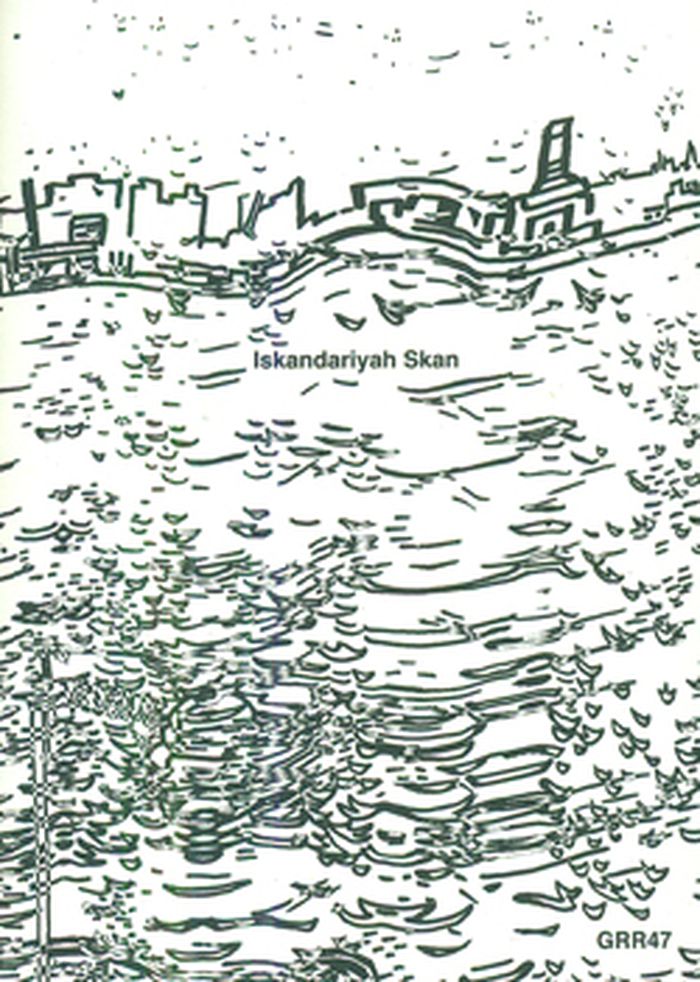
"My previous picture book was about a train trip to Baku, this book documents my ferry trip accross the Mediterranean Sea to Alexandria (or Iskandariyah as it is called in Arabic). I was invited to exhbit my work and conduct a workshop organized by the artist-run Alexandria Contemporary Arts Forum (ACAF). This paperback is a selection of the many drawings that transpired on this amazing journey. Not all my drawings are of a scene that catches my eye. Often it starts with coming across a really comfortable spot where I can sit undisturbed for some time amongst the hustle and rumble of a busy city. This, for me, can be quite meditative. Later, I scan the drawings to upload onto my website and other applications. This time round, I also experimented with the drawings and hope to present this book as my personal development or work in progress. I wish to share the overwhelming experience of drawing the ocean and have tried to capture the simultaneous static second and fluid element of the water by flushing the drawings through a scanner and allowing them to distort as they wish to flow, much like the city, much like life itself." Ingo Giezendanner alias GRRRR, July 2011 Since 1998, Ingo Giezendanner documents his surroundings with pen on paper. He produces zines, murals, books, exhibitions, video clips and maintains a website (GRRRR.net) to create his own world.
GRR47 : Iskandariyah Skan
Actions:
Prix:
$29.95
(disponible en magasin)
Résumé:
"My previous picture book was about a train trip to Baku, this book documents my ferry trip accross the Mediterranean Sea to Alexandria (or Iskandariyah as it is called in Arabic). I was invited to exhbit my work and conduct a workshop organized by the artist-run Alexandria Contemporary Arts Forum (ACAF). This paperback is a selection of the many drawings that transpired on this amazing journey. Not all my drawings are of a scene that catches my eye. Often it starts with coming across a really comfortable spot where I can sit undisturbed for some time amongst the hustle and rumble of a busy city. This, for me, can be quite meditative. Later, I scan the drawings to upload onto my website and other applications. This time round, I also experimented with the drawings and hope to present this book as my personal development or work in progress. I wish to share the overwhelming experience of drawing the ocean and have tried to capture the simultaneous static second and fluid element of the water by flushing the drawings through a scanner and allowing them to distort as they wish to flow, much like the city, much like life itself." Ingo Giezendanner alias GRRRR, July 2011 Since 1998, Ingo Giezendanner documents his surroundings with pen on paper. He produces zines, murals, books, exhibitions, video clips and maintains a website (GRRRR.net) to create his own world.
Classification:
livres
livres
Publication:
juin 2012
juin 2012
Sujet:
Illustration
Illustration
Classification:
livres
livres
Prix:
$39.95
(disponible sur commande)
Résumé:
Beginning with agoraphobia and claustrophobia in the late nineteenth century, followed by shell shock and panic fear after World War I, phobias and anxiety came to be seen as the mental condition of modern life. They became incorporated into the media and arts, in particular the (...)
$39.95
(disponible sur commande)
Résumé:
Beginning with agoraphobia and claustrophobia in the late nineteenth century, followed by shell shock and panic fear after World War I, phobias and anxiety came to be seen as the mental condition of modern life. They became incorporated into the media and arts, in particular the (...)
Titre:
Warped space : art, architecture, and anxiety in modern culture
Actions:
Prix:
$39.95
(disponible sur commande)
Résumé:
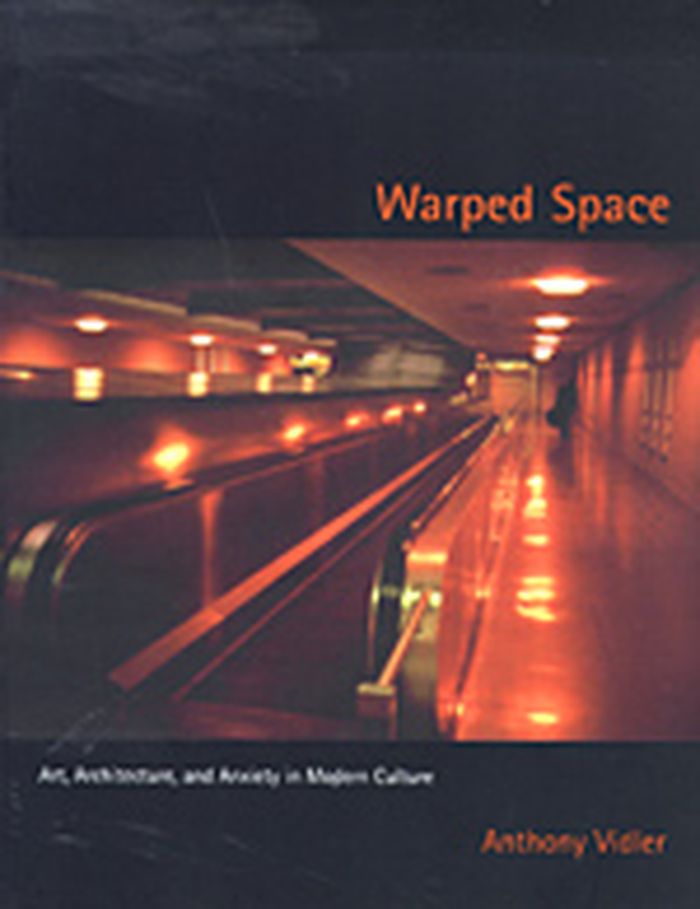
Beginning with agoraphobia and claustrophobia in the late nineteenth century, followed by shell shock and panic fear after World War I, phobias and anxiety came to be seen as the mental condition of modern life. They became incorporated into the media and arts, in particular the spatial arts of architecture, urbanism, and film. This "spatial warping" is now being reshaped by digitalization and virtual reality. Anthony Vidler is concerned with two forms of warped space. The first, a psychological space, is the repository of neuroses and phobias. This space is not empty but full of disturbing forms, including those of architecture and the city. The second kind of warping is produced when artists break the boundaries of genre to depict space in new ways. Vidler traces the emergence of a psychological idea of space from Pascal and Freud to the identification of agoraphobia and claustrophobia in the nineteenth century to twentieth-century theories of spatial alienation and estrangement in the writings of Georg Simmel, Siegfried Kracauer, and Walter Benjamin. Focusing on current conditions of displacement and placelessness, he examines ways in which contemporary artists and architects have produced new forms of spatial warping. The discussion ranges from theorists such as Jacques Lacan and Gilles Deleuze to artists such as Vito Acconci, Mike Kelley, Martha Rosler, and Rachel Whiteread. Finally, Vidler looks at the architectural experiments of Frank Gehry, Coop Himmelblau, Daniel Libeskind, Greg Lynn, Morphosis, and Eric Owen Moss in the light of new digital techniques that, while relying on traditional perspective, have radically transformed the composition, production, and experience of architecture.
Warped space : art, architecture, and anxiety in modern culture
Actions:
Prix:
$39.95
(disponible sur commande)
Résumé:
Beginning with agoraphobia and claustrophobia in the late nineteenth century, followed by shell shock and panic fear after World War I, phobias and anxiety came to be seen as the mental condition of modern life. They became incorporated into the media and arts, in particular the spatial arts of architecture, urbanism, and film. This "spatial warping" is now being reshaped by digitalization and virtual reality. Anthony Vidler is concerned with two forms of warped space. The first, a psychological space, is the repository of neuroses and phobias. This space is not empty but full of disturbing forms, including those of architecture and the city. The second kind of warping is produced when artists break the boundaries of genre to depict space in new ways. Vidler traces the emergence of a psychological idea of space from Pascal and Freud to the identification of agoraphobia and claustrophobia in the nineteenth century to twentieth-century theories of spatial alienation and estrangement in the writings of Georg Simmel, Siegfried Kracauer, and Walter Benjamin. Focusing on current conditions of displacement and placelessness, he examines ways in which contemporary artists and architects have produced new forms of spatial warping. The discussion ranges from theorists such as Jacques Lacan and Gilles Deleuze to artists such as Vito Acconci, Mike Kelley, Martha Rosler, and Rachel Whiteread. Finally, Vidler looks at the architectural experiments of Frank Gehry, Coop Himmelblau, Daniel Libeskind, Greg Lynn, Morphosis, and Eric Owen Moss in the light of new digital techniques that, while relying on traditional perspective, have radically transformed the composition, production, and experience of architecture.
Classification:
livres
livres
Publication:
avril 2002, Cambridge, Mass.
avril 2002, Cambridge, Mass.
Sujet:
Théorie de l’architecture
Théorie de l’architecture


