


6624 Résultats
Classification:
livres
livres
Titre:
Archiflop: a guide to the most spectacular failures in the history of modern contemporary architectu
Archiflop: a guide to the most spectacular failures in the history of modern contemporary architectu
Actions:
Prix:
$51.95
(disponible sur commande)
Résumé:
As soon as it leaves the protective environment of drafting boards, specialized computer programs, and sophisticated 3-D models, every architectural project is inevitably forced to face the circumstances of real life. In most cases, it's a relatively painless experience, it nevertheless progresses without major problems – but sometimes things go wrong and it fails(...)
$51.95
(disponible sur commande)
Résumé:
As soon as it leaves the protective environment of drafting boards, specialized computer programs, and sophisticated 3-D models, every architectural project is inevitably forced to face the circumstances of real life. In most cases, it's a relatively painless experience, it nevertheless progresses without major problems – but sometimes things go wrong and it fails(...)
Titre:
Archiflop: a guide to the most spectacular failures in the history of modern contemporary architectu
Actions:
Prix:
$51.95
(disponible sur commande)
Résumé:
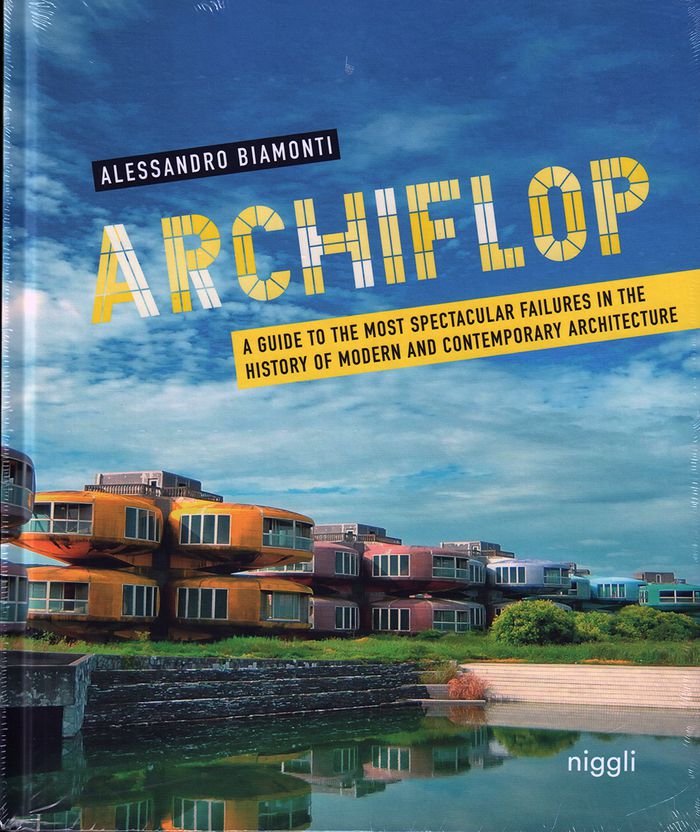
As soon as it leaves the protective environment of drafting boards, specialized computer programs, and sophisticated 3-D models, every architectural project is inevitably forced to face the circumstances of real life. In most cases, it's a relatively painless experience, it nevertheless progresses without major problems – but sometimes things go wrong and it fails miserably! What remains are unfulfilled expectations and broken dreams of overly optimistic architects, owners, and clients. With a tongue in cheek approach, this book presents a selection of the most spectacular architectural flops from the 20th century to the present. Each project is described briefly and its circumstances analyzed and extensively documented via photos. The reader is taken to monumental ghost towns in Asia, grotesque remnants of amusement parks, for example in the USA, and a nuclear power plant in Crimea. The author is not aiming to uncover faults and condemn failed projects but rather to contemplate on how difficult and nearly impossible it is to predict the future for any type of endeavor.
Archiflop: a guide to the most spectacular failures in the history of modern contemporary architectu
Actions:
Prix:
$51.95
(disponible sur commande)
Résumé:
As soon as it leaves the protective environment of drafting boards, specialized computer programs, and sophisticated 3-D models, every architectural project is inevitably forced to face the circumstances of real life. In most cases, it's a relatively painless experience, it nevertheless progresses without major problems – but sometimes things go wrong and it fails miserably! What remains are unfulfilled expectations and broken dreams of overly optimistic architects, owners, and clients. With a tongue in cheek approach, this book presents a selection of the most spectacular architectural flops from the 20th century to the present. Each project is described briefly and its circumstances analyzed and extensively documented via photos. The reader is taken to monumental ghost towns in Asia, grotesque remnants of amusement parks, for example in the USA, and a nuclear power plant in Crimea. The author is not aiming to uncover faults and condemn failed projects but rather to contemplate on how difficult and nearly impossible it is to predict the future for any type of endeavor.
Classification:
livres
livres
Publication:
octobre 2016
octobre 2016
Sujet:
Architecture contemporaine
Architecture contemporaine
Classification:
livres
livres
Titre:
Cities design & evolution
Cities design & evolution
Actions:
Prix:
$86.95
(disponible sur commande)
Résumé:
Why does modern planning sometimes create urban environments that are less attractive and functional than the 'organic urbanism' of traditional cities? "Cities Design and Evolution" takes up the challenge of this question, investigating 'how cities are put together', both in the sense of how the parts are organised in relation to the whole, and how they are created or(...)
$86.95
(disponible sur commande)
Résumé:
Why does modern planning sometimes create urban environments that are less attractive and functional than the 'organic urbanism' of traditional cities? "Cities Design and Evolution" takes up the challenge of this question, investigating 'how cities are put together', both in the sense of how the parts are organised in relation to the whole, and how they are created or(...)
Titre:
Cities design & evolution
Actions:
Prix:
$86.95
(disponible sur commande)
Résumé:
Why does modern planning sometimes create urban environments that are less attractive and functional than the 'organic urbanism' of traditional cities? "Cities Design and Evolution" takes up the challenge of this question, investigating 'how cities are put together', both in the sense of how the parts are organised in relation to the whole, and how they are created or evolve over time."Cities Design and Evolution" offers an engaging and original narrative that interprets planning philosophies from Modernism to New Urbanism, organic theories from Patrick Geddes to Le Corbusier, and evolutionary thinking from Charles Darwin to Richard Dawkins. The book develops a new evolutionary perspective that recognises both the 'designed' and 'organic' nature of cities, and provides a rationale and impetus for fresh approaches to urban planning and design. In what is the first book to significantly apply modern evolutionary thinking to urbanism, "Cities Design and Evolution" promises to stimulate thought, debate and action concerning the nature of cities and future urban planning. The book should appeal to all who are interested in cities, in design and in evolution.
Cities design & evolution
Actions:
Prix:
$86.95
(disponible sur commande)
Résumé:
Why does modern planning sometimes create urban environments that are less attractive and functional than the 'organic urbanism' of traditional cities? "Cities Design and Evolution" takes up the challenge of this question, investigating 'how cities are put together', both in the sense of how the parts are organised in relation to the whole, and how they are created or evolve over time."Cities Design and Evolution" offers an engaging and original narrative that interprets planning philosophies from Modernism to New Urbanism, organic theories from Patrick Geddes to Le Corbusier, and evolutionary thinking from Charles Darwin to Richard Dawkins. The book develops a new evolutionary perspective that recognises both the 'designed' and 'organic' nature of cities, and provides a rationale and impetus for fresh approaches to urban planning and design. In what is the first book to significantly apply modern evolutionary thinking to urbanism, "Cities Design and Evolution" promises to stimulate thought, debate and action concerning the nature of cities and future urban planning. The book should appeal to all who are interested in cities, in design and in evolution.
Classification:
livres
livres
Publication:
janvier 2009, London, New York
janvier 2009, London, New York
Sujet:
Théorie de l’urbanisme
Théorie de l’urbanisme
Classification:
livres
livres
Prix:
$22.00
(disponible sur commande)
Résumé:
When the gates of the 1964–1965 New York World’s Fair swung open on April 24, 1964, the first of more than 51 million lucky visitors entered, ready to witness the cutting edge of worldwide technology and progress. Faced with a disappointing lack of foreign participants due to political contention, the fair instead showcased the best of American industry and science. While(...)
$22.00
(disponible sur commande)
Résumé:
When the gates of the 1964–1965 New York World’s Fair swung open on April 24, 1964, the first of more than 51 million lucky visitors entered, ready to witness the cutting edge of worldwide technology and progress. Faced with a disappointing lack of foreign participants due to political contention, the fair instead showcased the best of American industry and science. While(...)
Publication:
juillet 2008, Charleston, Chicago
juillet 2008, Charleston, Chicago
Titre:
The 1964-1965 New York World's fair: creation and legacy
Actions:
Prix:
$22.00
(disponible sur commande)
Résumé:
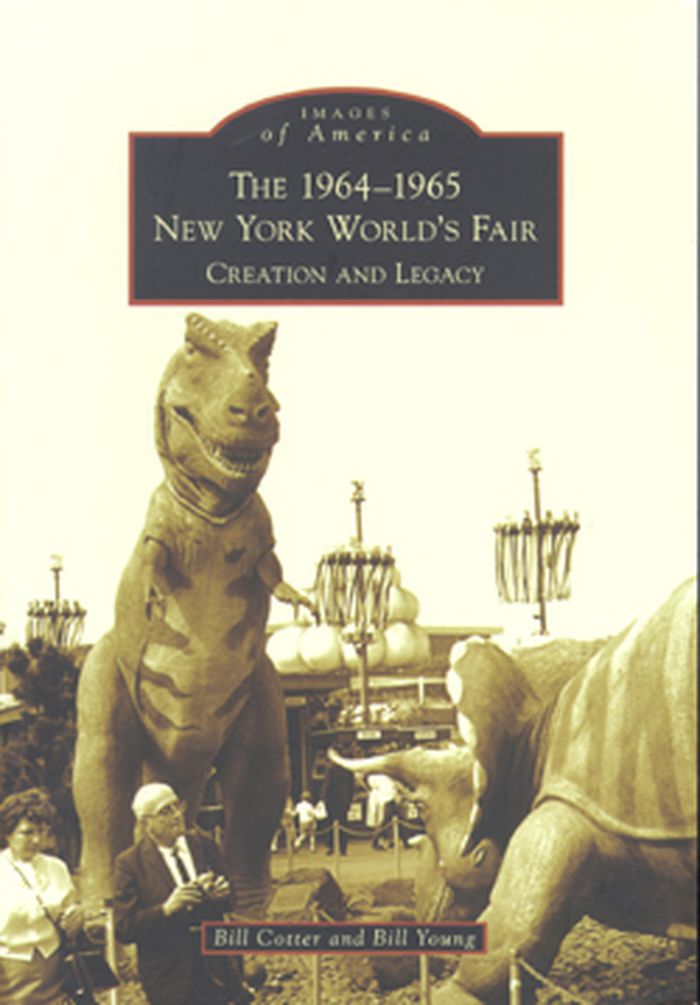
When the gates of the 1964–1965 New York World’s Fair swung open on April 24, 1964, the first of more than 51 million lucky visitors entered, ready to witness the cutting edge of worldwide technology and progress. Faced with a disappointing lack of foreign participants due to political contention, the fair instead showcased the best of American industry and science. While multimillion-dollar pavilions predicted colonies on the moon and hotels under the ocean, other forecasts, such as the promises of computer technology, have surpassed even the most optimistic predictions of the fair. The 1964–1965 New York World’s Fair: Creation and Legacy uses rare, previously unpublished photographs to examine the creation of the fair and the legacies left behind for future generations. Bill Cotter and Bill Young, authors of The 1964–1965 New York World’s Fair, they have contributed to numerous other books, magazine articles, and documentaries on the fair. They also host two popular Web sites devoted to the study and appreciation of this once-in-a-lifetime event.
The 1964-1965 New York World's fair: creation and legacy
Actions:
Prix:
$22.00
(disponible sur commande)
Résumé:
When the gates of the 1964–1965 New York World’s Fair swung open on April 24, 1964, the first of more than 51 million lucky visitors entered, ready to witness the cutting edge of worldwide technology and progress. Faced with a disappointing lack of foreign participants due to political contention, the fair instead showcased the best of American industry and science. While multimillion-dollar pavilions predicted colonies on the moon and hotels under the ocean, other forecasts, such as the promises of computer technology, have surpassed even the most optimistic predictions of the fair. The 1964–1965 New York World’s Fair: Creation and Legacy uses rare, previously unpublished photographs to examine the creation of the fair and the legacies left behind for future generations. Bill Cotter and Bill Young, authors of The 1964–1965 New York World’s Fair, they have contributed to numerous other books, magazine articles, and documentaries on the fair. They also host two popular Web sites devoted to the study and appreciation of this once-in-a-lifetime event.
Classification:
livres
livres
Publication:
juillet 2008, Charleston, Chicago
juillet 2008, Charleston, Chicago
Classification:
livres
livres
Prix:
$18.95
(disponible sur commande)
Résumé:
In 2004 and 2005, Antonio Negri held ten workshops at the Collège International de Philosophie in Paris to formulate a new political grammar of the postmodern. Postmodernity, Negri suggests, can be described as a "porcelain workshop": a delicate and fragile construction that could be destroyed through one clumsy act. Looking across twentieth century history, Negri warns(...)
$18.95
(disponible sur commande)
Résumé:
In 2004 and 2005, Antonio Negri held ten workshops at the Collège International de Philosophie in Paris to formulate a new political grammar of the postmodern. Postmodernity, Negri suggests, can be described as a "porcelain workshop": a delicate and fragile construction that could be destroyed through one clumsy act. Looking across twentieth century history, Negri warns(...)
Titre:
The porcelain workshop: for a new grammar of politics
Actions:
Prix:
$18.95
(disponible sur commande)
Résumé:
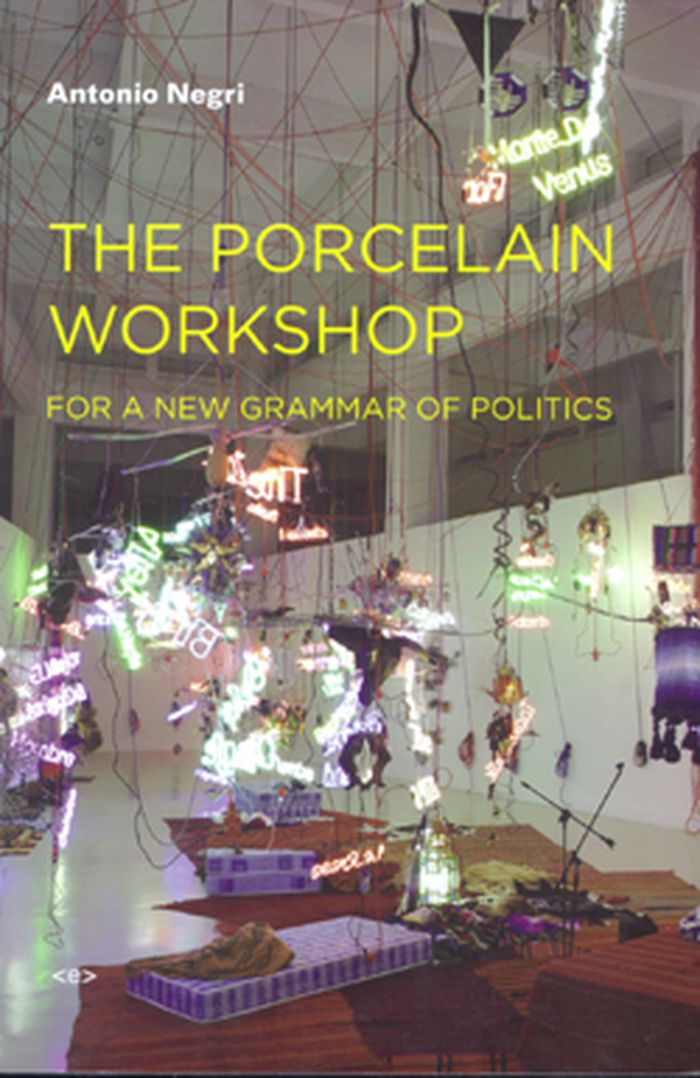
In 2004 and 2005, Antonio Negri held ten workshops at the Collège International de Philosophie in Paris to formulate a new political grammar of the postmodern. Postmodernity, Negri suggests, can be described as a "porcelain workshop": a delicate and fragile construction that could be destroyed through one clumsy act. Looking across twentieth century history, Negri warns that our inability to anticipate future developments has already placed coming generations in serious jeopardy. Describing the years 1917-1968 as the "short century," Negri suggests that by the end of it, all of the familiar markers of modernity (including that of socialism) had lost their relevance. Confronted with an intolerable reality, indignation and the revolutionary will to transform the world have both taken new forms and must be understood anew, free of modernist assumptions. In the impassioned debates recounted in this book, Antonio Negri attempts to describe the formation of an alternative political horizon and looks for a way to define the practices and modes of expression that democracy could take.
The porcelain workshop: for a new grammar of politics
Actions:
Prix:
$18.95
(disponible sur commande)
Résumé:
In 2004 and 2005, Antonio Negri held ten workshops at the Collège International de Philosophie in Paris to formulate a new political grammar of the postmodern. Postmodernity, Negri suggests, can be described as a "porcelain workshop": a delicate and fragile construction that could be destroyed through one clumsy act. Looking across twentieth century history, Negri warns that our inability to anticipate future developments has already placed coming generations in serious jeopardy. Describing the years 1917-1968 as the "short century," Negri suggests that by the end of it, all of the familiar markers of modernity (including that of socialism) had lost their relevance. Confronted with an intolerable reality, indignation and the revolutionary will to transform the world have both taken new forms and must be understood anew, free of modernist assumptions. In the impassioned debates recounted in this book, Antonio Negri attempts to describe the formation of an alternative political horizon and looks for a way to define the practices and modes of expression that democracy could take.
Classification:
livres
livres
Publication:
août 2008, Cambridge, London
août 2008, Cambridge, London
Sujet:
Théorie/ philosophie
Théorie/ philosophie
Classification:
périodiques
périodiques
Actions:
Prix:
$11.00
(disponible sur commande)
Résumé:
Cabinet is an award-winning quarterly magazine of art and culture that confounds expectations of what is typically meant by the words "art," "culture," and sometimes even "magazine." Like the 17th-century cabinet of curiosities to which its name alludes, Cabinet is as interested in the margins of culture as its center. Presenting wide-ranging, multi-disciplinary content(...)
$11.00
(disponible sur commande)
Résumé:
Cabinet is an award-winning quarterly magazine of art and culture that confounds expectations of what is typically meant by the words "art," "culture," and sometimes even "magazine." Like the 17th-century cabinet of curiosities to which its name alludes, Cabinet is as interested in the margins of culture as its center. Presenting wide-ranging, multi-disciplinary content(...)
Titre:
Cabinet 18 : fictional states, 2005
Actions:
Prix:
$11.00
(disponible sur commande)
Résumé:
Cabinet is an award-winning quarterly magazine of art and culture that confounds expectations of what is typically meant by the words "art," "culture," and sometimes even "magazine." Like the 17th-century cabinet of curiosities to which its name alludes, Cabinet is as interested in the margins of culture as its center. Presenting wide-ranging, multi-disciplinary content in each issue through the varied formats of regular columns, essays, interviews, and special artist projects, Cabinet's hybrid sensibility merges the popular appeal of an arts periodical, the visually engaging style of a design magazine, and the in-depth exploration of a scholarly journal. Playful and serious, exuberant and committed, Cabinet's omnivorous appetite for understanding the world makes each of its issues a valuable sourcebook of ideas for a wide range of readers, from artists and designers to scientists and historians. In an age of increasing specialization, Cabinet looks to previous models of the well-rounded thinker to forge a new type of magazine for the intellectually curious reader of the future.
Cabinet 18 : fictional states, 2005
Actions:
Prix:
$11.00
(disponible sur commande)
Résumé:
Cabinet is an award-winning quarterly magazine of art and culture that confounds expectations of what is typically meant by the words "art," "culture," and sometimes even "magazine." Like the 17th-century cabinet of curiosities to which its name alludes, Cabinet is as interested in the margins of culture as its center. Presenting wide-ranging, multi-disciplinary content in each issue through the varied formats of regular columns, essays, interviews, and special artist projects, Cabinet's hybrid sensibility merges the popular appeal of an arts periodical, the visually engaging style of a design magazine, and the in-depth exploration of a scholarly journal. Playful and serious, exuberant and committed, Cabinet's omnivorous appetite for understanding the world makes each of its issues a valuable sourcebook of ideas for a wide range of readers, from artists and designers to scientists and historians. In an age of increasing specialization, Cabinet looks to previous models of the well-rounded thinker to forge a new type of magazine for the intellectually curious reader of the future.
Classification:
périodiques
périodiques
Publication:
octobre 2005, New York
octobre 2005, New York
Sujet:
Revues
Revues
Classification:
périodiques
périodiques
Actions:
Prix:
$12.00
(disponible sur commande)
Résumé:
Cabinet is an award-winning quarterly magazine of art and culture that confounds expectations of what is typically meant by the words "art," "culture," and sometimes even "magazine." Like the 17th-century cabinet of curiosities to which its name alludes, Cabinet is as interested in the margins of culture as its center. Presenting wide-ranging, multi-disciplinary content(...)
$12.00
(disponible sur commande)
Résumé:
Cabinet is an award-winning quarterly magazine of art and culture that confounds expectations of what is typically meant by the words "art," "culture," and sometimes even "magazine." Like the 17th-century cabinet of curiosities to which its name alludes, Cabinet is as interested in the margins of culture as its center. Presenting wide-ranging, multi-disciplinary content(...)
Titre:
Cabinet 15: the average, fall 2004
Actions:
Prix:
$12.00
(disponible sur commande)
Résumé:
Cabinet is an award-winning quarterly magazine of art and culture that confounds expectations of what is typically meant by the words "art," "culture," and sometimes even "magazine." Like the 17th-century cabinet of curiosities to which its name alludes, Cabinet is as interested in the margins of culture as its center. Presenting wide-ranging, multi-disciplinary content in each issue through the varied formats of regular columns, essays, interviews, and special artist projects, Cabinet's hybrid sensibility merges the popular appeal of an arts periodical, the visually engaging style of a design magazine, and the in-depth exploration of a scholarly journal. Playful and serious, exuberant and committed, Cabinet's omnivorous appetite for understanding the world makes each of its issues a valuable sourcebook of ideas for a wide range of readers, from artists and designers to scientists and historians. In an age of increasing specialization, Cabinet looks to previous models of the well-rounded thinker to forge a new type of magazine for the intellectually curious reader of the future.
Cabinet 15: the average, fall 2004
Actions:
Prix:
$12.00
(disponible sur commande)
Résumé:
Cabinet is an award-winning quarterly magazine of art and culture that confounds expectations of what is typically meant by the words "art," "culture," and sometimes even "magazine." Like the 17th-century cabinet of curiosities to which its name alludes, Cabinet is as interested in the margins of culture as its center. Presenting wide-ranging, multi-disciplinary content in each issue through the varied formats of regular columns, essays, interviews, and special artist projects, Cabinet's hybrid sensibility merges the popular appeal of an arts periodical, the visually engaging style of a design magazine, and the in-depth exploration of a scholarly journal. Playful and serious, exuberant and committed, Cabinet's omnivorous appetite for understanding the world makes each of its issues a valuable sourcebook of ideas for a wide range of readers, from artists and designers to scientists and historians. In an age of increasing specialization, Cabinet looks to previous models of the well-rounded thinker to forge a new type of magazine for the intellectually curious reader of the future.
Classification:
périodiques
périodiques
Publication:
février 2004, New York
février 2004, New York
Sujet:
Revues
Revues
Classification:
périodiques
périodiques
Actions:
Prix:
$12.00
(disponible sur commande)
Résumé:
Cabinet is an award-winning quarterly magazine of art and culture that confounds expectations of what is typically meant by the words "art," "culture," and sometimes even "magazine." Like the 17th-century cabinet of curiosities to which its name alludes, Cabinet is as interested in the margins of culture as its center. Presenting wide-ranging, multi-disciplinary content(...)
$12.00
(disponible sur commande)
Résumé:
Cabinet is an award-winning quarterly magazine of art and culture that confounds expectations of what is typically meant by the words "art," "culture," and sometimes even "magazine." Like the 17th-century cabinet of curiosities to which its name alludes, Cabinet is as interested in the margins of culture as its center. Presenting wide-ranging, multi-disciplinary content(...)
Titre:
Cabinet 12: the enemy, fall 2003 - winter 2004
Actions:
Prix:
$12.00
(disponible sur commande)
Résumé:
Cabinet is an award-winning quarterly magazine of art and culture that confounds expectations of what is typically meant by the words "art," "culture," and sometimes even "magazine." Like the 17th-century cabinet of curiosities to which its name alludes, Cabinet is as interested in the margins of culture as its center. Presenting wide-ranging, multi-disciplinary content in each issue through the varied formats of regular columns, essays, interviews, and special artist projects, Cabinet's hybrid sensibility merges the popular appeal of an arts periodical, the visually engaging style of a design magazine, and the in-depth exploration of a scholarly journal. Playful and serious, exuberant and committed, Cabinet's omnivorous appetite for understanding the world makes each of its issues a valuable sourcebook of ideas for a wide range of readers, from artists and designers to scientists and historians. In an age of increasing specialization, Cabinet looks to previous models of the well-rounded thinker to forge a new type of magazine for the intellectually curious reader of the future.
Cabinet 12: the enemy, fall 2003 - winter 2004
Actions:
Prix:
$12.00
(disponible sur commande)
Résumé:
Cabinet is an award-winning quarterly magazine of art and culture that confounds expectations of what is typically meant by the words "art," "culture," and sometimes even "magazine." Like the 17th-century cabinet of curiosities to which its name alludes, Cabinet is as interested in the margins of culture as its center. Presenting wide-ranging, multi-disciplinary content in each issue through the varied formats of regular columns, essays, interviews, and special artist projects, Cabinet's hybrid sensibility merges the popular appeal of an arts periodical, the visually engaging style of a design magazine, and the in-depth exploration of a scholarly journal. Playful and serious, exuberant and committed, Cabinet's omnivorous appetite for understanding the world makes each of its issues a valuable sourcebook of ideas for a wide range of readers, from artists and designers to scientists and historians. In an age of increasing specialization, Cabinet looks to previous models of the well-rounded thinker to forge a new type of magazine for the intellectually curious reader of the future.
Classification:
périodiques
périodiques
Publication:
février 2004, New York
février 2004, New York
Sujet:
Revues
Revues
Classification:
périodiques
périodiques
Titre:
Cabinet 23: fruits
Cabinet 23: fruits
Actions:
Prix:
$11.00
(disponible en magasin)
Résumé:
Cabinet is an award-winning quarterly magazine of art and culture that confounds expectations of what is typically meant by the words "art," "culture," and sometimes even "magazine." Like the 17th-century cabinet of curiosities to which its name alludes, Cabinet is as interested in the margins of culture as its center. Presenting wide-ranging, multi-disciplinary content(...)
$11.00
(disponible en magasin)
Résumé:
Cabinet is an award-winning quarterly magazine of art and culture that confounds expectations of what is typically meant by the words "art," "culture," and sometimes even "magazine." Like the 17th-century cabinet of curiosities to which its name alludes, Cabinet is as interested in the margins of culture as its center. Presenting wide-ranging, multi-disciplinary content(...)
Titre:
Cabinet 23: fruits
Actions:
Prix:
$11.00
(disponible en magasin)
Résumé:
Cabinet is an award-winning quarterly magazine of art and culture that confounds expectations of what is typically meant by the words "art," "culture," and sometimes even "magazine." Like the 17th-century cabinet of curiosities to which its name alludes, Cabinet is as interested in the margins of culture as its center. Presenting wide-ranging, multi-disciplinary content in each issue through the varied formats of regular columns, essays, interviews, and special artist projects, Cabinet's hybrid sensibility merges the popular appeal of an arts periodical, the visually engaging style of a design magazine, and the in-depth exploration of a scholarly journal. Playful and serious, exuberant and committed, Cabinet's omnivorous appetite for understanding the world makes each of its issues a valuable sourcebook of ideas for a wide range of readers, from artists and designers to scientists and historians. In an age of increasing specialization, Cabinet looks to previous models of the well-rounded thinker to forge a new type of magazine for the intellectually curious reader of the future.
Cabinet 23: fruits
Actions:
Prix:
$11.00
(disponible en magasin)
Résumé:
Cabinet is an award-winning quarterly magazine of art and culture that confounds expectations of what is typically meant by the words "art," "culture," and sometimes even "magazine." Like the 17th-century cabinet of curiosities to which its name alludes, Cabinet is as interested in the margins of culture as its center. Presenting wide-ranging, multi-disciplinary content in each issue through the varied formats of regular columns, essays, interviews, and special artist projects, Cabinet's hybrid sensibility merges the popular appeal of an arts periodical, the visually engaging style of a design magazine, and the in-depth exploration of a scholarly journal. Playful and serious, exuberant and committed, Cabinet's omnivorous appetite for understanding the world makes each of its issues a valuable sourcebook of ideas for a wide range of readers, from artists and designers to scientists and historians. In an age of increasing specialization, Cabinet looks to previous models of the well-rounded thinker to forge a new type of magazine for the intellectually curious reader of the future.
Classification:
périodiques
périodiques
Publication:
novembre 2006, New York
novembre 2006, New York
Sujet:
Revues
Revues
Classification:
périodiques
périodiques
Actions:
Prix:
$12.00
(disponible sur commande)
Résumé:
Cabinet is an award-winning quarterly magazine of art and culture that confounds expectations of what is typically meant by the words "art," "culture," and sometimes even "magazine." Like the 17th-century cabinet of curiosities to which its name alludes, Cabinet is as interested in the margins of culture as its center. Presenting wide-ranging, multi-disciplinary content(...)
$12.00
(disponible sur commande)
Résumé:
Cabinet is an award-winning quarterly magazine of art and culture that confounds expectations of what is typically meant by the words "art," "culture," and sometimes even "magazine." Like the 17th-century cabinet of curiosities to which its name alludes, Cabinet is as interested in the margins of culture as its center. Presenting wide-ranging, multi-disciplinary content(...)
Titre:
Cabinet 19: chance, fall 2005
Actions:
Prix:
$12.00
(disponible sur commande)
Résumé:
Cabinet is an award-winning quarterly magazine of art and culture that confounds expectations of what is typically meant by the words "art," "culture," and sometimes even "magazine." Like the 17th-century cabinet of curiosities to which its name alludes, Cabinet is as interested in the margins of culture as its center. Presenting wide-ranging, multi-disciplinary content in each issue through the varied formats of regular columns, essays, interviews, and special artist projects, Cabinet's hybrid sensibility merges the popular appeal of an arts periodical, the visually engaging style of a design magazine, and the in-depth exploration of a scholarly journal. Playful and serious, exuberant and committed, Cabinet's omnivorous appetite for understanding the world makes each of its issues a valuable sourcebook of ideas for a wide range of readers, from artists and designers to scientists and historians. In an age of increasing specialization, Cabinet looks to previous models of the well-rounded thinker to forge a new type of magazine for the intellectually curious reader of the future.
Cabinet 19: chance, fall 2005
Actions:
Prix:
$12.00
(disponible sur commande)
Résumé:
Cabinet is an award-winning quarterly magazine of art and culture that confounds expectations of what is typically meant by the words "art," "culture," and sometimes even "magazine." Like the 17th-century cabinet of curiosities to which its name alludes, Cabinet is as interested in the margins of culture as its center. Presenting wide-ranging, multi-disciplinary content in each issue through the varied formats of regular columns, essays, interviews, and special artist projects, Cabinet's hybrid sensibility merges the popular appeal of an arts periodical, the visually engaging style of a design magazine, and the in-depth exploration of a scholarly journal. Playful and serious, exuberant and committed, Cabinet's omnivorous appetite for understanding the world makes each of its issues a valuable sourcebook of ideas for a wide range of readers, from artists and designers to scientists and historians. In an age of increasing specialization, Cabinet looks to previous models of the well-rounded thinker to forge a new type of magazine for the intellectually curious reader of the future.
Classification:
périodiques
périodiques
Publication:
janvier 2006, New York
janvier 2006, New York
Sujet:
Revues
Revues
Classification:
périodiques
périodiques
Actions:
Prix:
$11.00
(disponible sur commande)
Résumé:
Cabinet is an award-winning quarterly magazine of art and culture that confounds expectations of what is typically meant by the words "art," "culture," and sometimes even "magazine." Like the 17th-century cabinet of curiosities to which its name alludes, Cabinet is as interested in the margins of culture as its center. Presenting wide-ranging, multi-disciplinary content(...)
$11.00
(disponible sur commande)
Résumé:
Cabinet is an award-winning quarterly magazine of art and culture that confounds expectations of what is typically meant by the words "art," "culture," and sometimes even "magazine." Like the 17th-century cabinet of curiosities to which its name alludes, Cabinet is as interested in the margins of culture as its center. Presenting wide-ranging, multi-disciplinary content(...)
Titre:
Cabinet 17: laughter, spring 2005
Actions:
Prix:
$11.00
(disponible sur commande)
Résumé:
Cabinet is an award-winning quarterly magazine of art and culture that confounds expectations of what is typically meant by the words "art," "culture," and sometimes even "magazine." Like the 17th-century cabinet of curiosities to which its name alludes, Cabinet is as interested in the margins of culture as its center. Presenting wide-ranging, multi-disciplinary content in each issue through the varied formats of regular columns, essays, interviews, and special artist projects, Cabinet's hybrid sensibility merges the popular appeal of an arts periodical, the visually engaging style of a design magazine, and the in-depth exploration of a scholarly journal. Playful and serious, exuberant and committed, Cabinet's omnivorous appetite for understanding the world makes each of its issues a valuable sourcebook of ideas for a wide range of readers, from artists and designers to scientists and historians. In an age of increasing specialization, Cabinet looks to previous models of the well-rounded thinker to forge a new type of magazine for the intellectually curious reader of the future.
Cabinet 17: laughter, spring 2005
Actions:
Prix:
$11.00
(disponible sur commande)
Résumé:
Cabinet is an award-winning quarterly magazine of art and culture that confounds expectations of what is typically meant by the words "art," "culture," and sometimes even "magazine." Like the 17th-century cabinet of curiosities to which its name alludes, Cabinet is as interested in the margins of culture as its center. Presenting wide-ranging, multi-disciplinary content in each issue through the varied formats of regular columns, essays, interviews, and special artist projects, Cabinet's hybrid sensibility merges the popular appeal of an arts periodical, the visually engaging style of a design magazine, and the in-depth exploration of a scholarly journal. Playful and serious, exuberant and committed, Cabinet's omnivorous appetite for understanding the world makes each of its issues a valuable sourcebook of ideas for a wide range of readers, from artists and designers to scientists and historians. In an age of increasing specialization, Cabinet looks to previous models of the well-rounded thinker to forge a new type of magazine for the intellectually curious reader of the future.
Classification:
périodiques
périodiques
Publication:
avril 2005, New York
avril 2005, New York
Sujet:
Revues
Revues


